

New children’s books center intergenerational relationships in life and the afterlife
In this episode of NPR's Book of the Day, authors and illustrators discuss new children's books that explore relationships between grandparents and grandchildren, both in life and after death. Melanie Florence and illustrator Matt James share how The One About the Blackbird uses music—particularly the Beatles' "Blackbird"—to depict how bonds persist even through dementia and memory loss. Kevin Maillard and Rafael López discuss their book "And They Walk On," which introduces children to Native American and Mexican cultural perspectives on death, including the Seminole concept of "walking on" and Day of the Dead traditions.
The conversation explores how these creators use visual art techniques—color symbolism, magical realism, and mixed media—to help young readers process grief and loss. Rather than portraying death solely through sadness, these books emphasize continued spiritual connection and the ongoing influence of deceased loved ones through memories, traditions, and sensory reminders. The episode highlights how children's literature can introduce different cultural frameworks for understanding death while honoring intergenerational bonds.
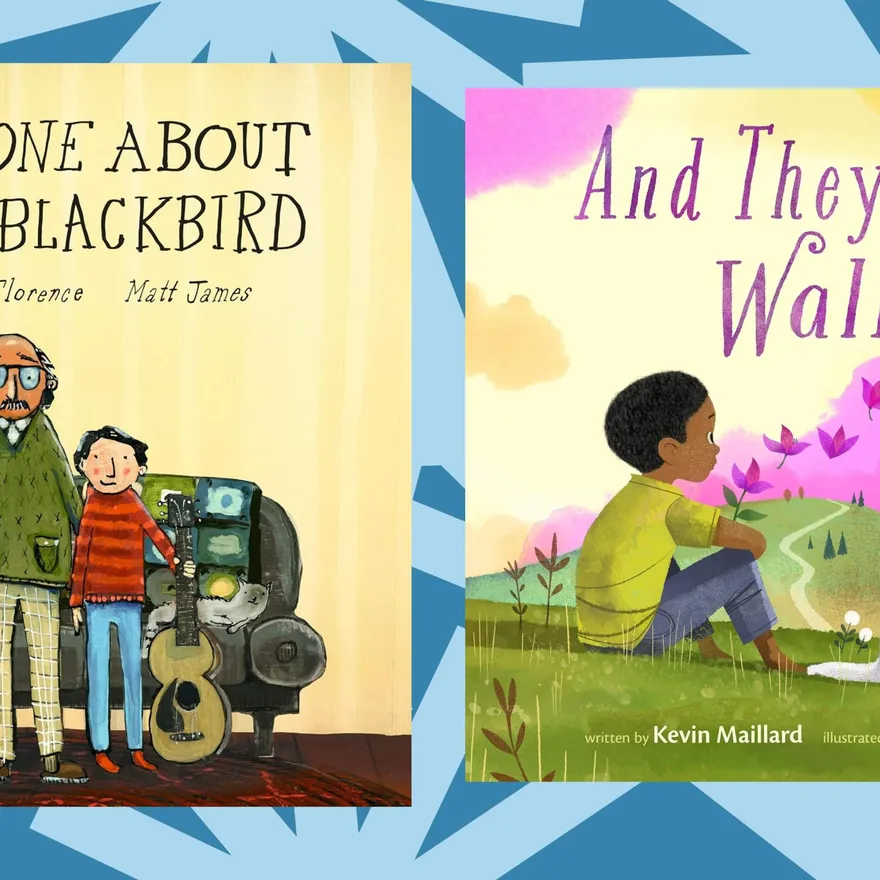

This is a preview of the Shortform summary of the Apr 10, 2026 episode of the NPR's Book of the Day
Sign up for Shortform to access the whole episode summary along with additional materials like counterarguments and context.
1-Page Summary
Intergenerational Bonds Between Grandparents and Grandchildren
Melanie Florence describes how her grandfather profoundly shaped her identity by validating her voice and encouraging her storytelling passion. As a child who felt odd and dramatic, Florence found in her grandfather someone who listened intently and made her feel fascinating, ultimately inspiring her career as a storyteller. This relationship is central to Florence's children's book, The One About the Blackbird, which follows Jack and his musician grandfather as their bond develops through music—from childhood guitar lessons to adulthood. Illustrator Matt James emphasizes the irreplaceable value of these intergenerational moments, reminding readers that opportunities to sit with grandparents, sing, and simply be together are fleeting and deeply meaningful.
Florence credits her Indigenous grandfather with shaping her writing career, as storytelling holds vital cultural significance that continues to inspire her work. Similarly, Kevin Maillard purposefully incorporates Seminole culture and patchwork into his book illustrations—honoring heritage through visual details like patterned clothing and signature accessories. Both creators highlight how grandparents transmit traditions, values, and knowledge that shape grandchildren's identities and creative work across generations.
Music's Power to Unite Generations and Preserve Memory In Dementia
Music holds extraordinary power to bridge cognitive decline, offering joy and connection to those facing memory loss. Matt James describes how his musician parents perform in retirement homes where residents with significant memory loss still recall music from their past, bringing normalcy and sparks of joy. Florence explores this same theme in The One About the Blackbird, noting that even as dementia causes people to forget much, music's power remains, enabling connection and bridging what is otherwise lost.
Florence and James chose the Beatles' "Blackbird" as the narrative centerpiece, drawing from their families' deep connections to Beatles music. The song choice illustrates how familiar melodies trigger emotional responses that endure even when other memories fade, connecting generations and preserving precious memories long after names and places may have disappeared.
Native American "Walking On" & Day of the Dead: Cultural Death Perspectives
Kevin Maillard, of Seminole heritage, explains how Native American communities in Oklahoma use "walked on" when someone dies, viewing death as a transition from physical to spiritual presence. This perspective recognizes the continuing influence loved ones have even after they're gone, with the term reflecting an outlook that deceased family members maintain a spiritual presence in daily life.
Illustrator Rafael López draws parallels between this tradition and his Mexican heritage, observing that "walking on" closely resembles the ethos of the Mexican Day of the Dead. López explains that in Mexico, remembrance is woven into daily life through rituals, food, and memories, marked by vibrant altars, marigolds, and festive imagery that contrast sharply with somber Western death traditions.
Both frameworks reject death as definitive separation. Maillard channels this idea in his children's book "And They Walk On," telling the story of a boy grappling with where his grandmother has gone, exploring the possibility that she remains present in everyday activities. This hopeful, spiritually connected approach encourages readers, especially children, to process grief through continued emotional connection to lost loved ones.
Visual Art Techniques For Processing Emotions of Loss and Remembrance
Visual artists like López, Maillard, and James employ color, symbolism, magical realism, and mixed media to guide young readers through loss, memory, and healing.
López uses color to convey the emotional journey from grief to remembrance. Early illustrations use muted, neutral tones—nearly all green—capturing the heaviness of loss. As the story progresses and the boy remembers his grandmother through imaginative scenarios like a giant whale, color floods the pages, shifting from somber to vivid hues that reflect the transition from grief to joyful remembrance. López emphasizes recurring purple tones, connecting to Day of the Dead traditions where purple symbolizes remembrance, spirituality, and healing.
The book intentionally blurs reality and fantasy through magical realism—a whale with grandma, surreal waiting scenes—leaving readers to wonder what's real versus imaginative memory. This layered approach grounds the story in loss while softening it with imagination and hope, making grief approachable for young readers.
Matt James employs diverse mixed media techniques in his illustrations for The One About the Blackbird, using acrylic and acrylic gouache, painting elements on cardboard to cut out and scan, and crafting diorama effects with record replicas labeled with artists like Paul McCartney. López shares similar hands-on methods, using layered textures with acrylics, watercolors, and inks. Both artists prioritize emotional resonance over technical perfection, with James noting that creating something meaningful forms the true core of his work.
Honoring Loved Ones With Warmth, Joy, and Spiritual Connection Instead of Sadness
Maillard describes his collaboration with López as an opportunity to portray death with warmth and promise rather than just sorrow. Inspired by López's magical realist illustrations, Maillard wanted the story to convey that there can be joy even in loss, emphasizing that those who have died "don't go away"—their presence lingers through ongoing influence. He believes deceased loved ones continue to affect decisions, speech patterns, and relationships, and recognizing this influence brings meaning and allows for joy even while mourning.
Physical objects and sensory reminders sustain these connections. Maillard reflects on going through his grandmother's belongings and being struck by emotional reminders like her hair in a brush or lipstick on a glass, capturing the paradox of simultaneous presence and absence. López describes how color choice strengthens this sensory memory, pointing to a page where the grandmother's apron appears as the only vivid color in an otherwise green kitchen scene.
López shares his personal experience of enduring connection, explaining that decades after his father's death, his mother continues to talk about him, recall his remarks, and play his favorite music. Through daily remembrance, his father "walks with us every day," continuing to shape the family's identity and values—a testament to maintaining loving bonds across generations through warmth, joy, and spiritual connection rather than only sadness.
1-Page Summary
Additional Materials
Counterarguments
- While intergenerational bonds can be meaningful, not all individuals have positive or close relationships with grandparents due to family dynamics, absence, or other factors, so these experiences are not universal.
- The emphasis on music as a bridge for memory and connection may not apply to everyone, as musical preferences and responses to music can vary widely across cultures and individuals.
- The portrayal of death as a transition to ongoing spiritual presence may not align with all cultural, religious, or personal beliefs, and some may find comfort in different frameworks for understanding loss.
- The use of magical realism and vivid colors to process grief in children's literature may not resonate with all readers; some may prefer more realistic or straightforward approaches to discussing death and loss.
- The focus on warmth, joy, and spiritual connection in remembrance may unintentionally minimize or overlook the validity of experiencing and expressing deep sadness or grief.
- Not all families or cultures use physical objects or daily remembrance practices to maintain connections with deceased loved ones; some may have different mourning traditions or may choose to move on in other ways.
- The idea that grandparents are primary transmitters of tradition and identity may overlook the roles of parents, peers, or broader community influences in shaping a child's sense of self.
Actionables
- you can create a family memory box by collecting small objects, handwritten notes, and photos that remind you of loved ones, then use the box during family gatherings to spark storytelling and share traditions across generations; for example, include a favorite recipe card, a piece of fabric, or a song lyric that connects to your heritage or a grandparent’s influence.
- a practical way to honor and visually preserve your cultural heritage is to make a simple collage using magazine cutouts, colored paper, and found materials that represent your family’s traditions, values, and memories, then display it in your home as a daily reminder of your roots and ongoing connections.
- you can set aside a weekly time to listen to or sing songs that were meaningful to your grandparents or other relatives, inviting family members to join and share stories or emotions these songs evoke, which helps bridge generations and keeps memories alive through music and conversation.
Get access to the context and additional materials
Intergenerational Bonds Between Grandparents and Grandchildren
Grandparent-Grandchild Bonds Shape Identity and Values
Melanie Florence describes the profound influence her grandfather had on her life, especially in validating her voice and encouraging her passion for storytelling. As a child, Florence considered herself odd and dramatic, but her grandfather never silenced her. Instead, he listened intently, making her feel fascinating and important. This validation was pivotal in inspiring her to become a storyteller, as he taught her that her stories mattered.
In Florence’s children’s book, The One About the Blackbird, the close bond between grandparent and grandchild is central. The story follows a young boy, Jack, who lives in a house filled with music, much of it coming from his grandfather. Jack’s grandfather, an accomplished musician, introduces him to various instruments, but what Jack loves most is listening to his grandfather play guitar, especially the song about the blackbird. The narrative shows their connection developing from when Jack is a child learning guitar, to adulthood, maintaining their special bond through music. This full-circle story highlights how music can connect generations and keep those relationships alive.
Florence illustrates this intimacy in a touching scene: Jack, inspired by the music, whispers to his grandfather that he wants to play too, afraid he might be told he's too young. His grandfather, however, affirms him, saying, "I always knew you had music in you." These affirmations mirror Florence’s own experience, anchoring her sense of self and validating her dreams.
Illustrator Matt James also emphasizes the irreplaceable value of intergenerational connection. He encourages readers to cherish these moments—sitting next to a grandparent, singing, and simply enjoying time together—reminding us that such opportunities are fleeting and deeply meaningful.
Grandparents Transmit Traditions, Values, and Knowledge Influencing Grandchildren's Lives and Work
Florence credits ...
Here’s what you’ll find in our full summary
Intergenerational Bonds Between Grandparents and Grandchildren
Additional Materials
Counterarguments
- Not all grandparent-grandchild relationships are positive or nurturing; some may be distant, strained, or even absent due to family dynamics, geographic separation, or other factors.
- The influence of grandparents on identity and self-worth can be minimal or negligible in families where grandparents are not present or involved.
- Shared activities like music or storytelling may not be universally valued or practiced in all families or cultures, limiting their impact as a source of connection.
- Affirmations and encouragement can come from a variety of sources, such as parents, teachers, or peers, not exclusively from grandparents.
- The transmission of cultural traditions and values may sometimes be resisted or rejected by grandchildren, especially in multicultural or assimilated contexts.
- Some individuals may feel burdened by expectations to uphold family o ...
Actionables
- you can create a shared family playlist where each grandparent and grandchild adds songs that are meaningful to them, then schedule regular listening sessions to discuss the stories or memories behind each song, deepening emotional bonds and cultural understanding through music.
- a practical way to reinforce cultural traditions is to start a monthly “heritage recipe night” where you and your grandparent cook a dish from your shared background, then record a short video or audio reflection together about what the meal means to your family and how it connects to your identity.
- you can co ...
Get access to the context and additional materials
Music's Power to Unite Generations and Preserve Memory In Dementia
Music holds an extraordinary ability to bridge cognitive decline, offering moments of joy and meaningful connection to individuals facing memory loss. The experiences of Matt James and Melanie Florence, along with the narrative found in Florence's book The One About the Blackbird, underline how deeply embedded familiar music remains, even when other memories fade.
Music Bridges Cognitive Decline, Offering Joy and Connection To Individuals With Memory Loss
Matt James describes how his parents, both musicians, regularly perform in retirement homes for elderly residents, many of whom have memory issues. Despite significant memory loss or cognitive decline, these residents recall music from their past—a phenomenon that brings a sense of normalcy and sparks joy. James observes that music gives these individuals connection and comfort that other activities cannot always provide.
Melanie Florence highlights this same theme in her children's book The One About the Blackbird. The story follows a young boy learning guitar from his grandfather, with music serving as a conduit between generations. Florence notes that her own life inspired this narrative: even as dementia or Alzheimer’s causes people to forget much, the power of music remains, enabling connection and bridging what is otherwise lost.
"Blackbird" Symbolizes Grandfather-Grandson Ties Through Music's Enduring Power
Florence and James chose "Blackbird" by the Beatles as the narrative centerpiece of the book, drawing from their families’ ...
Here’s what you’ll find in our full summary
Music's Power to Unite Generations and Preserve Memory In Dementia
Additional Materials
Counterarguments
- While music can evoke memories and emotions in some individuals with dementia, its effects are not universal; some people may not respond to music in the same way or may even find it distressing.
- The emotional impact of familiar music may depend on personal history and cultural background, so not all individuals will have the same positive associations with songs like "Blackbird."
- Other activities, such as art, physical touch, or storytelling, can also provide comfort and connection for people with memory loss, and may be equally or more effective for some individuals.
- The preservation of musical memory in deme ...
Actionables
- you can create a playlist of songs that hold personal or family significance and play them during regular visits with loved ones experiencing memory loss to spark shared memories and emotional responses; for example, include songs from family road trips, weddings, or childhood lullabies, and use the playlist as a gentle prompt for conversation or simply to enjoy moments of connection together.
- a practical way to foster intergenerational connection is to invite younger family members to learn and perform a favorite song of an older relative, then record the performance and share it during visits, allowing both generations to experience the joy and comfort of familiar music together, even if the older relative’s memory is fadi ...

Get access to the context and additional materials
Native American "Walking On" & Day of the Dead: Cultural Death Perspectives
"Walking On": Native American Term Reframes Death As Transition to Spiritual Presence
Kevin Maillard's Seminole Heritage and "Walking On" Influence
Kevin Maillard, who grew up in Oklahoma and is of Seminole heritage through his mother, explains how Native American communities in Oklahoma use the phrase "walked on" when someone dies. For them, death is viewed not as a final end but as a transition from a physical presence to a spiritual one. Maillard shares that while losing someone remains sad, the perspective includes recognizing the continuing influence loved ones have even after they are gone.
Influence of Deceased Loved Ones: A Linguistic and Cultural View
The term "walking on" reflects more than language; it conveys an outlook that deceased loved ones maintain a spiritual presence, shaping and influencing daily life. This allows their memory and guidance to continue, blurring the line between absence and presence.
Mexican Day of the Dead: Celebrating Deceased Family With Colorful Rituals and Remembrance
Illustrator Rafael López Linked His Heritage to Kevin Maillard's Story, Recognizing Day of the Dead Celebrations Honor Loved Ones Throughout Life
Illustrator Rafael López draws parallels between his Mexican heritage and Kevin Maillard’s experience, observing that "walking on" closely resembles the ethos of the Mexican Day of the Dead. López explains that in Mexico, remembrance is not limited to a single occasion but is interwoven into daily life through rituals, food, and memories celebrating the enduring presence of loved ones.
Day of the Dead: Vibrant Colors and Festive Imagery Contrast Somber Western Death Traditions
López notes that Mexican celebrations of death are infused with color—whether in the food, clothing, or marketplace—demonstrating how emotions are expressed vibrantly. The Day of the Dead is marked by vibrant altars, marigolds, and festive imagery, standing in stark contrast to the somber, muted traditions typical in many Western societies.
Both Frameworks Reject Death ...
Here’s what you’ll find in our full summary
Native American "Walking On" & Day of the Dead: Cultural Death Perspectives
Additional Materials
Counterarguments
- While the "walking on" and Day of the Dead traditions offer comfort to many, not all individuals within Native American or Mexican communities may share these beliefs or find them helpful in processing grief.
- Some may argue that emphasizing the continued presence of the deceased could potentially hinder the acceptance of loss or the process of moving forward for certain individuals.
- The portrayal of Western death traditions as uniformly somber and muted may overlook the diversity and nuance present within Western approaches to mourning and remembrance.
- The blending or comparison of distinct cultural practices (such as "wal ...
Actionables
- you can create a small, everyday ritual that acknowledges the ongoing presence of a loved one, such as setting aside a spot at your dinner table or workspace for a photo or object that reminds you of them, and briefly sharing a thought or memory with them during your daily routine
- This simple act can help you feel connected and supported by their memory, making their influence a natural part of your day.
- a practical way to celebrate the enduring presence of those who have died is to keep a “living influence” journal, where you jot down moments when you notice their values, advice, or quirks showing up in your actions or decisions
- For example, you might write about using a recipe they taught you, repeating a phrase they often said, or making a choice based on their guidance, reinforcing the idea that their spirit continues to shape your life.
- you can use ...


Get access to the context and additional materials
Visual Art Techniques For Processing Emotions of Loss and Remembrance
Visual artists like Rafael López, Kevin Maillard, and Matt James explore grief and remembrance through inventive techniques in children’s literature. They employ color, symbolism, magical realism, and mixed media to guide young readers through the journey of loss, memory, and healing.
Color Conveys Emotional Journey From Grief to Remembrance, With Illustrations Transitioning From Muted Tones to Vibrant Hues
Illustrations Reflect Child's Sadness Over Grandmother's Death
Rafael López describes a spread where the house feels both full and empty as Kevin stands in front of boxes, perhaps holding some of his grandmother’s belongings. The illustration is almost entirely green, with muted, neutral tones capturing the heaviness and sadness at the heart of the child’s loss.
Through Imaginative Scenarios, the Boy Remembers His Grandmother; Colors Brighten, Shifting From Loss To Joyful Remembrance
As the story progresses, the illustrations pivot. Maillard points to a moment where the ordinary gives way to the fantastical: suddenly, a giant whale appears and the grandmother is seen fishing atop it. Color begins to flood the pages, shifting from somber to vivid hues that reflect the child’s transition from grief to joyful remembrance. López uses color as a guide, starting with pale shades and gradually warming the palette as the boy’s memories of his grandmother come alive. The blooming vibrancy in the art parallels the emotional shift from sadness to celebration of the grandmother’s life.
Cultural Significance of Purple in Day of the Dead Celebrations
López emphasizes the recurring use of purple or lavender in the illustrations. This choice connects to the Day of the Dead (Día de los Muertos) traditions in Mexico; during November 2nd’s celebrations, purple banners and flags adorn colonial buildings, symbolizing remembrance, spirituality, and healing. For López, purple serves as both a spiritual anchor and a cultural tribute within the narrative.
Magical Realism Mixes Reality With Fantasy, Questioning Real Events Versus Imaginative Memory
Visions of Grandmother in Surreal Scenes Highlight Multifaceted Grief
The book oscillates between everyday reality and bursts of magical, surreal scenarios—a whale with grandma, a waiting scene by a rock. Maillard and López intentionally blur the lines, leaving the reader to wonder what’s real and what springs from the boy’s imagination. This back-and-forth approach creates a layered sense of grief: grounded in the pain of loss but softened by imagination and hope.
Playful, Warm Take on Processing Loss
Despite the story’s heavy theme, both Maillard and López take a warm, playful approach to processing loss. The illustrations hide little secrets and nods for children to find, and elements like the flowing scarf or cultural motifs in clothing invite connection and comfort, making grief approachable and relatable to young readers.
Matt James Uses Mixed Media Techniques: Painting, Cardboard Cutouts, Handcrafted 3d Elements In Illustrations for the One About the Blackbird
Dioram ...
Here’s what you’ll find in our full summary
Visual Art Techniques For Processing Emotions of Loss and Remembrance
Additional Materials
Counterarguments
- While the use of color progression is effective for some readers, not all children may interpret color symbolism in the same way, potentially limiting the universality of the emotional journey depicted.
- The blending of magical realism and reality may confuse younger readers who struggle to distinguish between fantasy and real-life events, possibly complicating their understanding of grief.
- The focus on cultural motifs such as the Day of the Dead may not resonate with children from different cultural backgrounds, potentially reducing the emotional impact for a diverse audience.
- Prioritizing emotional resonance and charm over technical perfection might lead some readers or critics to undervalue the artistic skill involved, especially in educational or art-focused contexts.
- The ...
Actionables
- You can create a simple memory collage using magazine cutouts, colored paper, and found objects to visually represent a personal journey through loss, starting with muted colors and gradually adding brighter tones as you recall positive memories.
- A practical way to process grief with children is to invent a bedtime storytelling ritual where you blend real memories with gentle, magical elements—like imagining a loved one visiting in a dream or sending messages through nature—to help make remembrance comforting and imaginative.
- You can use everyday items like b ...


Get access to the context and additional materials
Honoring Loved Ones With Warmth, Joy, and Spiritual Connection Instead of Sadness
Remembering those who have passed can move beyond conventional sadness, embracing warmth, joy, and a lasting spiritual connection. The works and reflections of creators like Kevin Maillard and Rafael López show how celebration and remembrance keep loved ones alive in meaningful ways.
Celebrating the Impact of Deceased Loved Ones
Maillard's Use of López's Magical Realism Brings Warmth and Promise To the Grandmother's Death
Kevin Maillard describes his collaboration with Rafael López on their picture book as an opportunity to portray death not just with sorrow but with warmth and promise. Inspired by López's magical realist illustrations, Maillard wanted the story to be fanciful and playful, conveying that there can be joy and warmth even in loss. He emphasizes the promise that those who have died "don't go away"—their presence lingers through their ongoing influence on loved ones.
Narrative Structure Of and They Walk On Transcends Conventional Grief Stages, Highlighting how Joy and Meaning Can Coexist With Loss When Recognizing the Deceased's Ongoing Influence
Maillard believes that deceased loved ones continue to influence daily life—affecting decisions, speech patterns, and relationships. He notes that recognizing how the lives of the deceased touched others brings meaning and allows for joy and deeper connection even as people mourn. The narrative approach in "And They Walk On" moves beyond the familiar stages of grief to highlight this enduring, joyful influence.
Objects and Sensory Reminders Maintain Connections to Departed Loved Ones
Inspiring Paradox of Simultaneous Presence and Absence in Kevin Maillard's Book
Maillard reflects on going through his grandmother's belongings and being struck by the emotional weight of physical reminders: her hair in a brush, the imprint of lipstick on a glass. These objects capture the paradox of a loved one’s simultaneous presence and absence, sustaining emotional bonds and memories.
Grandmother's Apron as a Vivid Memory in Green
Rafael López points out how color choice strengthens sensory memory in their book’s illustrations. He describes a page where the entire spread is green except for the grandmother’s apron, which appears as the only vivid color in the kitchen scene. This visual cue draws attention to the depth of feeling and connection found in everyday objects and memories.
Honoring Deceased Loved Ones Sustains Their Influence on Family Value ...
Here’s what you’ll find in our full summary
Honoring Loved Ones With Warmth, Joy, and Spiritual Connection Instead of Sadness
Additional Materials
Counterarguments
- For some individuals and cultures, grief and sadness are essential and valid responses to loss, and emphasizing warmth and joy may feel dismissive or invalidating of their emotional experience.
- The ongoing influence of deceased loved ones may not always be positive; some people may have complicated or painful relationships with the deceased, making joyful remembrance difficult or inappropriate.
- Not everyone finds comfort in sensory reminders or ritual remembrance; for some, these practices may intensify grief or hinder the healing process.
- The use of magical realism and celebratory narratives in discussing death may not resonate with all audiences, particularly those who prefer a more realistic or ...
Actionables
- You can create a “living influence” journal where you jot down moments when you notice yourself acting, speaking, or making choices in ways that reflect your loved one’s influence, then add a short note about how this makes you feel connected to them.
- A practical way to celebrate ongoing connection is to set aside a specific day each month to intentionally use or display an object that belonged to your loved one, pairing it with a new activity or meal that you think they would have enjoyed, and reflecting on how their presence shapes your current experiences.
- You can design a perso ...
Get access to the context and additional materials

 1-Page Summary
- Intergenerational Bonds Between Grandparents and Grandchildren
- Music's Power to Unite Generations and Preserve Memory In Dementia
- Native American "Walking On" & Day of the Dead: Cultural Death Perspectives
- Visual Art Techniques For Processing Emotions of Loss and Remembrance
- Honoring Loved Ones With Warmth, Joy, and Spiritual Connection Instead of Sadness
Create Summaries for anything on the web
Download the Shortform Chrome extension for your browser
