

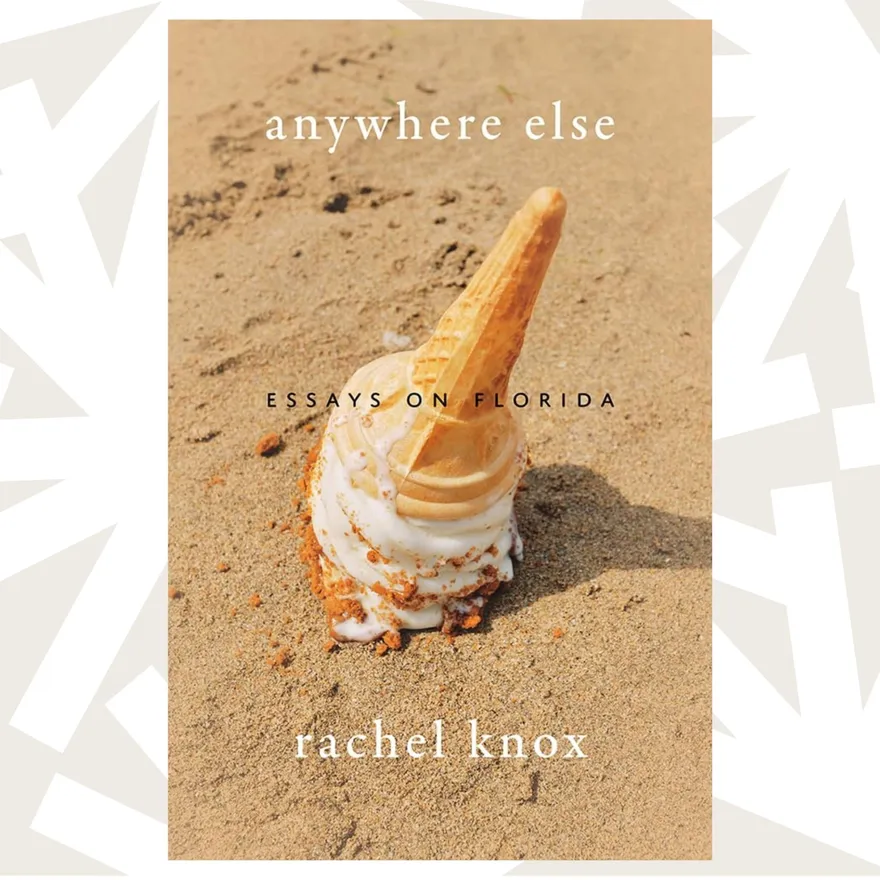
'Anywhere Else' is a book of essays about a love-hate relationship with Florida
In this episode of NPR's Book of the Day, author Rachel Knox discusses her essay collection about Florida and how national media has created a stereotype of the state that disconnects public perception from residents' lived experiences. Knox explains how she uses pop culture references like The X-Files to help outsiders understand Florida beyond its sensational headlines, and how she draws on personal stories—including her experience with the opioid crisis—to reveal the state's hidden complexities.
Knox also shares her journey of leaving Florida for New York to explore her identity, only to return with a dual perspective as both insider and outsider. She discusses the vulnerability required to tell deeply personal stories that had never been shared publicly, explaining that she wrote "Anywhere Else" partly because she couldn't find similar narratives and hoped to connect with readers who might recognize themselves in her experiences.

This is a preview of the Shortform summary of the Apr 7, 2026 episode of the NPR's Book of the Day
Sign up for Shortform to access the whole episode summary along with additional materials like counterarguments and context.
1-Page Summary
Redefining Florida's Image Through Nuanced Storytelling
Rachel Knox addresses how national media's focus on sensational stories has created a wacky stereotype of Florida that disconnects external perceptions from residents' actual experiences. When Knox tells people she's from Florida, their reactions—widened eyes, laughter, bizarre questions—reveal how deeply this stereotype has taken hold. Knox observes that many people only know Florida through headlines or comedic portrayals, missing the real experiences of those who live there. She seeks to provide a more nuanced depiction, showing that Floridians have complex and authentic relationships with their state that deserve respect and deeper exploration beyond mockery.
Exploring Identity Through Pop Culture and Media
Knox explains that her obsession with movies and TV has shaped how she perceives the world and processes her relationship with Florida. When writing essays about her experiences, she deliberately selects familiar media touchstones like The X-Files and the story of Aileen Wuornos, enabling outsiders to engage with her narrative and understand the state beyond stereotypes. In one essay, Knox uses The X-Files episode "Agua Mala" as a framework, where a faceless monster becomes a metaphor for the opioid crisis—something many fear but rarely see in human terms. The crisis became personally inescapable when someone close to her disappeared, and Knox realized the epidemic is a hidden beast affecting countless lives just out of public view.
Journey of Self-Discovery and Enlightened Return
Knox describes a point when she desperately wanted to escape Florida, driven by typical adolescent restlessness and the state's "bubble" atmosphere that made life feel stagnant. She needed to leave and immerse herself in New York to encounter different cultures and explore who she could become outside her Floridian identity. Despite her eagerness to leave, Knox felt a persistent pull toward home and eventually returned, motivated by a deep love-hate relationship with the state. This return enabled her to write about Florida as both an insider and outsider, approaching it with both critical insight and deep affection—a dual perspective that shapes her new collection of essays, "Anywhere Else."
Vulnerability and Personal Storytelling In Connecting With Others
Knox admits that some stories in her book had never been told to anyone, or only to one or two trusted people. Before public release, she shared advance copies with her family for private emotional processing. Knox has no regrets about this vulnerability, finding that it sparked meaningful conversations with family that wouldn't have happened otherwise. She explains that she wrote these stories partly because she was searching for similar narratives and couldn't find them. By sharing her experiences, Knox hoped to connect with isolated readers who might recognize themselves in her book and know they are not alone.
1-Page Summary
Additional Materials
Counterarguments
- While national media often highlights sensational stories, these stories can reflect real issues or unique events that are newsworthy and not entirely disconnected from some residents' experiences.
- The widespread stereotype of Florida may also be influenced by the state's distinctive history, politics, and demographics, not just media sensationalism.
- Some Floridians themselves embrace or joke about the "wacky" Florida image, suggesting that the stereotype is not solely imposed from outside.
- Using pop culture references like The X-Files or Aileen Wuornos may not resonate with all readers and could risk oversimplifying complex issues or experiences.
- Knox's personal journey and feelings about Florida may not be representative of all Floridians, as experiences and relationships with the state can vary widely.
- The dual perspective of insider/outsider is valuable, but some might argue that long-term residents who never left have equally valid and insightful perspectives on Florida.
- Sharing deeply personal stories can foster connection, but it may also risk exposing family or community members to unwanted attention or discomfort.
Actionables
- you can keep a personal journal where you document moments when you notice stereotypes or sensational headlines about your home state or community, then write a short reflection about how your real experiences compare, helping you recognize and challenge external perceptions in your daily life.
- a practical way to deepen your understanding of your own relationship with where you live is to pick a favorite movie or TV show and use it as a lens to reinterpret a local issue or event, writing a brief story or scene that blends your real experiences with the themes or characters from that media.
- you can privately share a story about your connection to your home—one you’ve never told anyone before—with a trusted friend or family member, inviting them to share their own untold stories, which can spark new conversations and help both of you feel more seen and connected.
Get access to the context and additional materials
Redefining Florida's Image Through Nuanced Storytelling
Florida Misunderstood due to Media's Sensational Portrayals, Overlooking Real People With Genuine Attachments
Rachel Knox addresses the widespread misunderstanding of Florida, fueled by national media’s habit of highlighting sensational or outlandish stories that contribute to a wacky stereotype of the state. When Knox tells others she is from Florida, the reaction is rarely one of envy or admiration. Instead, people respond with widened eyes, laughter, or a barrage of bizarre questions—responses that showcase the disconnect between external perceptions and the lived reality of Florida residents.
Florida's Stereotype As Wacky, Disconnected From Residents' Reality
Knox observes that many people only know Florida through headlines or comedic portrayals, overlooking the real experiences of those who actually live there. She hopes to move past the dominant narrative of Florida as merely a punchline, making it clear that while being a Floridian comes with complex emotions, many residents genuinely like living in the state.
Knox Aims to Show That Floridians Have Complex, Authentic Relationships With Their State Deserving Respect and Deeper Exploration Beyond Mockery
Knox seeks to provide a more nuanced depiction, asserting that Floridians have intricate and authentic relationships with their state, relationships that go far beyond what is conveyed in jokes and negative news coverage. By telling these deeper stor ...
Here’s what you’ll find in our full summary
Redefining Florida's Image Through Nuanced Storytelling
Additional Materials
Counterarguments
- Media coverage often focuses on sensational stories from all states, not just Florida; the prevalence of unusual news from Florida may reflect a higher volume of public records and reporting rather than intentional bias.
- Some Floridians themselves embrace and perpetuate the "wacky" Florida image as part of local humor and identity.
- The unique and sometimes extreme events that occur in Florida are statistically notable, which can justify increased media attention compared to other states.
- Stereotypes about regions or states are common across the U.S., and Florida is not uniquely singled out in this regard.
- While nuanced storytelling is valuable, it may not significantly change public perception if unusual news stories ...
Actionables
- you can keep a simple daily log of positive, ordinary, or meaningful moments you experience in your state, then share a few with friends or family outside your area to offer a more balanced perspective than sensational headlines.
- a practical way to challenge stereotypes is to ask people who make jokes or assumptions about your state to share something genuine they know or have heard about it, then respond with your own authentic story or correction.
- you can join onli ...
Get access to the context and additional materials
Exploring Identity Through Pop Culture and Media
Knox Uses Film and TV in Essays to Convey Florida Experiences
Rachel Knox explains that her obsession with movies and TV has long shaped her way of perceiving the world, even from a young age. She naturally gravitates to popular media as the lens through which she processes her relationship with Florida. When writing essays about her experiences, she considers which media representations of Florida feel authentic to her, rather than those that perpetuate stereotypes. By using pop culture as a touchstone, Knox enables outsiders to engage with her narrative and better understand the state. She believes that familiar references like The X-Files and the story of Aileen Wuornos are effective entry points. These allow readers who might already know those cultural markers to access her story and grasp the nuances of Florida life, guiding them away from reductive or stereotyped views.
Knox Uses Familiar Media Like The X-Files and Aileen Wuornos As Touchstones, Enabling Outsiders to Engage With Her Narrative and Understand the State
Knox deliberately selects touchstones from movies and television that outsiders are likely to recognize. She highlights The X-Files and Aileen Wuornos as examples of widely known Florida-related narratives. By rooting her essays in these cultural references, she invites readers to connect with her personal stories through familiar media, building bridges of understanding.
X-Files' "Agua Mala": Faceless Monster Metaphor Explores Florida Opioid Crisis and Media's Role In Highlighting Hidden Struggles
One essay uses an episode of The X-Files, "Agua Mala" (Spanish for “bad water”), as a framework. The episode takes place during a hurricane in Florida, i ...
Here’s what you’ll find in our full summary
Exploring Identity Through Pop Culture and Media
Additional Materials
Counterarguments
- Relying heavily on movies and TV as primary lenses for interpreting real-life experiences may risk oversimplifying or distorting complex realities, as media representations are often dramatized or fictionalized.
- Selecting only media representations that feel authentic to the author could introduce personal bias and exclude other valid perspectives or experiences of Florida.
- Using pop culture references as entry points may alienate readers who are unfamiliar with those specific cultural markers, potentially limiting accessibility.
- Familiar cultural markers like The X-Files and Aileen Wuornos may reinforce certain narratives or associations about Florida that are not universally representative or may inadvertently perpetuate other stereotypes.
- The metaphorical use of a faceless mo ...
Actionables
- you can keep a simple media diary where you jot down which movies or TV shows feel true to your own experiences and which ones don’t, then use these notes to guide conversations with friends or family about your life and community, helping them see your perspective through familiar stories.
- a practical way to help others understand your background is to pick a well-known film or show set in your area, then share a personal story that connects to a specific scene or character, making it easier for outsiders to relate to your experien ...
Get access to the context and additional materials
Journey of Self-Discovery and Enlightened Return
Knox Leaves Florida For New York to Forge New Identity and Experience Diverse Cultures
Rachel Knox describes a point in her life when she wanted nothing more than to escape Florida. She explains that part of this urge was typical adolescent restlessness—a universal teenage feeling of needing to leave home to figure out one’s own identity. Knox also points to the unique atmosphere of Florida, describing it as a "bubble" created by its perpetual role as a vacation paradise. In such an environment, she says, it is easy to slip into a vacation-like mentality where life feels stagnant, goals seem less urgent, and years can pass while little changes. Knox felt that for the life she desired, the ambitions she held, she needed to leave and immerse herself in a city where she could encounter people from different backgrounds, experience new cultures, and explore sides of herself beyond her Floridian identity. This journey to New York allowed her to "bump up against lots of other cultures and identities" and see who she could become outside the boundaries of the place she grew up.
Knox Returned To Florida, Drawn by Her Deep Emotional Connection and Desire to Tell Its Stories
Despite her eagerness to leave, Knox felt a persistent pull toward her home state, both its appealing and challenging aspects. Ultimately, she returned to Florida, motivated by a deep love-hate relationship with the state she knew so well. This complex connection shapes her new collection of essays, "Anywhere Else," where she expresses her desire to confront and tell the stories of Florida with ho ...
Here’s what you’ll find in our full summary
Journey of Self-Discovery and Enlightened Return
Additional Materials
Counterarguments
- The idea that Florida fosters a "stagnant, vacation-like mentality" may not reflect the experiences of all residents; many Floridians lead dynamic, ambitious lives and actively pursue personal and professional growth within the state.
- The notion that one must leave their home state to discover their identity or experience diverse cultures can be challenged, as Florida itself is highly diverse and offers a wide range of cultural experiences and opportunities for self-discovery.
- Knox's perspective as both an insider and outsider may provide valuable insight, but it could also risk romanticizing or oversimplifying the complexities of Florida for narrative effect.
- The emotional pull to return home is not univer ...
Actionables
- you can create a personal “bubble audit” by listing aspects of your current environment that feel stagnant or repetitive, then brainstorm small, low-cost ways to break routine—like trying a new local cuisine, attending a cultural event, or exploring a different neighborhood—to invite fresh perspectives into your daily life.
- a practical way to explore your emotional ties to your hometown is to write a letter to your city or region expressing both your frustrations and your affection, then reread it after spending time away (even just a weekend trip) to notice how distance shifts your feelings and insights.
- you can develo ...

Get access to the context and additional materials
Vulnerability and Personal Storytelling In Connecting With Others
Knox Shares New Personal Stories, Taking Emotional Risks to Reveal Them
Some Narratives in the Book Are Stories Knox Shared With a Few Trusted People Before Confronting Them In Her Writing
Rachel Knox admits that there were stories included in her book that she had never told anyone, or had shared with only one or two deeply trusted people. Confronting these private experiences on the page was a deliberate and emotionally risky act. Knox wanted to address and process these stories through her writing despite the vulnerability it required.
Knox Shared Advance Copies With Family For Private Emotional Processing Before Public Release
Before the book was released publicly, Knox provided her parents and siblings with advanced copies. This step allowed her family the privacy and time to read, reflect on, and process the deeply personal subjects before the stories were available to the wider world.
Knox's Vulnerability Fosters Meaningful Conversations and Bridges Connections for Struggling Readers
Publishing Opened Dialogue With Family Members
Knox has no regrets about sharing these personal stories with her family and close friends. In fact, she found that releasing the stories sparked meaningful conversations with her family that would likely not have happened otherwise. The act of making her experiences ...
Here’s what you’ll find in our full summary
Vulnerability and Personal Storytelling In Connecting With Others
Additional Materials
Counterarguments
- Sharing deeply personal stories, even with advance notice to family, can unintentionally place emotional burdens on relatives who may not wish to process such information publicly or privately.
- The act of publishing private experiences for a wider audience may risk oversharing or self-exposure that could have long-term personal or professional consequences.
- While Knox found value in fostering dialogue with her family, not all families or readers may respond positively to such vulnerability, and it could potentially lead to discomfort or conflict.
- The expectation that readers will find connection or reassurance in another’s vulnerable storytelling may not h ...
Actionables
- you can write a private letter to yourself describing a personal experience you’ve never shared, then read it aloud to yourself to process your emotions and gain clarity before deciding if you want to share it with anyone else; this helps you confront and understand your own story in a safe, controlled way.
- a practical way to foster meaningful conversations with family is to invite them to anonymously submit questions or reflections about your experiences through a shared online document, then respond to their thoughts in writing or in a group chat, creating space for honest dialogue without immediate ...

Get access to the context and additional materials


Create Summaries for anything on the web
Download the Shortform Chrome extension for your browser
