Nvidia Just Posted Record Earnings Without Its Founder. Is Your 401(k) Safe?
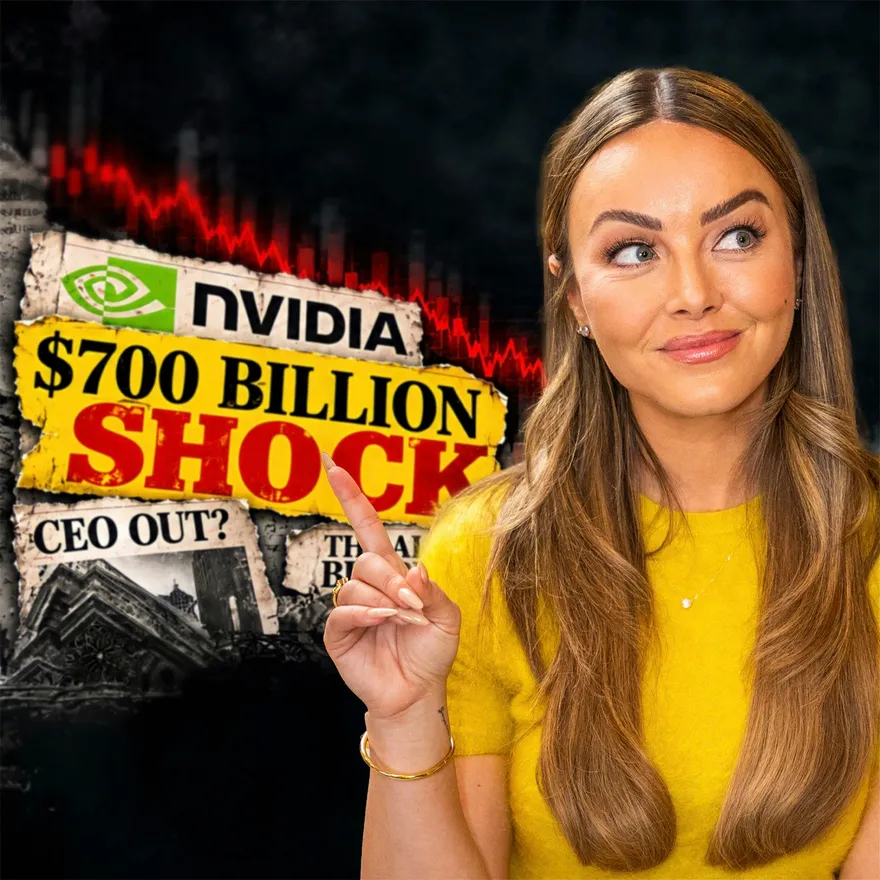
In this episode of Money Rehab with Nicole Lapin, Lapin examines the fallout from Nvidia CEO Jensen Huang's resignation amid scandal and the company's simultaneous record earnings report. Despite strong financial results, Nvidia's stock plummeted 16%, erasing over $700 billion in market value. Lapin explains how this volatility directly impacts ordinary investors holding S&P 500 index funds in their 401(k)s, given Nvidia's 6% weighting in the index.
The episode explores contrasting expert opinions on Nvidia's future from investors Cathie Wood and Michael Burry, demonstrating how identical facts can yield opposite conclusions. Lapin addresses the broader issue of portfolio concentration risk, noting that the ten largest S&P 500 companies now represent about one-third of the index. She provides practical guidance on managing single-stock exposure, rebalancing strategies across different account types, and avoiding panic-driven investment decisions based on headlines.

This is a preview of the Shortform summary of the Nov 18, 2026 episode of the Money Rehab with Nicole Lapin
Sign up for Shortform to access the whole episode summary along with additional materials like counterarguments and context.
1-Page Summary
Nvidia CEO Scandal: Jensen Huang Resigns, Earnings Report
Nvidia's board announced an independent investigation into CEO Jensen Huang, who subsequently admitted to being unfaithful to his wife and resigned from his position days later. The investigation also examined unconfirmed intelligence reports about a woman close to Huang suspected of working for China, though the board found no evidence of compromised company secrets. Huang agreed to answer House committee questions in closed-door meetings and indicated willingness to return as CEO, but the board chairman stated there are no plans to reinstate him.
Despite the leadership crisis, Nvidia reported record financial results for the third fiscal quarter of 2027, with revenue reaching $115.8 billion—more than double the previous year and exceeding Wall Street estimates by over $6 billion. Interim CFO Collette Kress assured investors the company's product roadmap remains on track.
The scandal and resignation caused Nvidia's stock to plummet 16% over six days, erasing more than $700 billion in market value—the steepest single-week loss by any company to date. The downturn built on a 9% drop that occurred days before the scandal broke, driven by investor concerns about AI spending. Despite Nvidia's tumble, the S&P 500 had its best performance since August that week, demonstrating how index funds can weather sharp declines in individual stocks.
Investor Analysis: Cathie Wood & Michael Burry on Nvidia's Future
Cathie Wood and Michael Burry offer contrasting perspectives on Nvidia's future. Wood expresses cautious optimism but notes risks during the leadership transition. She highlights that Collette Kress, while an excellent CFO with thirteen years of experience, lacks the technical expertise of Jensen Huang and takes a notably more conservative approach to AI investments. Wood warns this could affect short-term momentum, though she identifies Renee Haas of Arm Holdings as an ideal future CEO candidate given his Nvidia experience and understanding of the chip architecture convergence.
Burry, famous for predicting the 2008 crisis, took a bearish stance. He accurately predicted Nvidia would post strong earnings but still advised investors to exit, contending that impressive results don't guarantee future outperformance. As Nicole Lapin notes, these contrasting views demonstrate that prominent investors can interpret identical facts in completely different ways, and their calls reflect personal judgments rather than accounting for individual investor circumstances.
Nvidia Crisis's Impact on 401k Index Fund Risk
Nicole Lapin analyzes how Nvidia's volatility exposes 401k investors to significant risk, even those simply holding S&P 500 index funds. Nvidia represents about 6% of the S&P 500, meaning $6,000 of a $100,000 investment is allocated to Nvidia. When Nvidia dropped 16%, that translated into roughly a $1,000 loss for every $100,000 in the index fund.
Lapin observes that the ten largest companies now comprise about one-third of the S&P 500 index, with most betting heavily on AI. This concentration means when one company like Nvidia falters, it affects all 401k holders. More significantly, broader AI spending fears caused even greater portfolio damage than Nvidia's scandal—pushing the entire S&P 500 down over 4% in one day, the worst drop since the previous April. For a $100,000 portfolio, this wiped out more than $4,000 in value, demonstrating that sector-wide concerns currently pose quadruple the risk of individual company scandals.
Regarding reports of Huang's potential divorce, Lapin notes that because most of his Nvidia holdings are in trusts jointly controlled with his spouse, a settlement would simply transfer ownership without requiring shares to be sold. She cites Jeff Bezos's 2019 divorce as evidence that such high-profile divorces need not destabilize stock prices.
Managing Single-Stock Risk and Portfolio Rebalancing in Retirement Accounts
Lapin advises investors to audit their retirement holdings to identify hidden exposure, noting that owning multiple overlapping funds can balloon apparent 6% Nvidia exposure into 20% or more. Financial planners typically recommend capping any single stock at no more than 10% of net worth to prevent one company's bad week from becoming a bad year for your finances.
Rebalancing strategies differ by account type. Inside tax-advantaged accounts like 401ks, moving money between funds is tax-free, making these ideal for rebalancing first. In taxable accounts, selling appreciated positions triggers taxes, so it's often better to redirect new contributions into other areas rather than selling.
Lapin emphasizes avoiding investment decisions based on scandal headlines or short-term drama. If you were comfortable owning a fund before a news event, there's usually no reason to panic sell. Leadership transitions are separate from whether customers will keep generating profits. When adjusting allocations due to excessive concentration, prioritize which account type is most effective for making those changes.
1-Page Summary
Additional Materials
Counterarguments
- While the board found no evidence of compromised company secrets, the mere existence of an investigation into potential security concerns could erode trust among customers, partners, and regulators, potentially impacting Nvidia's reputation and future business opportunities.
- The assertion that leadership transitions do not necessarily affect customer demand or profitability may underestimate the importance of visionary leadership in highly innovative sectors like semiconductors and AI, where CEO influence can be pivotal.
- The comparison to Jeff Bezos's divorce may not fully account for differences in company structure, market context, or investor sentiment, so the impact of a high-profile divorce on stock price could vary.
- The claim that index funds mitigate individual stock volatility is true in the short term, but increasing concentration in a handful of mega-cap stocks could expose index investors to greater systemic risk over time.
- The advice to avoid making investment decisions based on short-term events may not suit all investors, especially those with shorter time horizons or lower risk tolerance, who may need to act more defensively.
- The recommendation to cap single-stock exposure at 10% of net worth is a general guideline and may not be appropriate for all investors, particularly those with higher risk tolerance or specialized knowledge.
- The suggestion that rebalancing is always more tax-efficient in retirement accounts does not consider that some investors may have unique tax situations or access to tax-loss harvesting strategies in taxable accounts.
Actionables
- you can set up a monthly calendar reminder to check your investment account’s top ten holdings and jot down their percentage weights on a sticky note, so you always know if any single stock or sector is creeping above your comfort level
- This helps you spot hidden concentration risk early, especially if you own multiple funds that might overlap. For example, if you see Nvidia or another tech stock showing up in several funds, you’ll notice if your total exposure is higher than you thought.
- a practical way to avoid emotional investing is to write a short “investment calm plan” on your phone, listing three reasons you chose your current funds and a rule for when you’ll review them (like only after quarterly statements), then reread it whenever you see alarming headlines
- This keeps you focused on your long-term reasoning and helps you resist the urge to make snap decisions during market swings or scandals.
- you can use a simple spreadsheet to track which of your accounts are tax-advantaged and which are taxable, then color-code where you’ll make any future changes or new investments to keep rebalancing as tax-efficient as possible
- For example, highlight your 401k in green for rebalancing moves, and your brokerage account in yellow for new contributions only, so you always know where to act first if you need to adjust your portfolio.
Get access to the context and additional materials
Nvidia Ceo Scandal: Jensen Huang Resigns, Earnings Report
Jensen Huang Resigned As Ceo After Board Investigation and Admitting Infidelity
Nvidia’s board announced an independent investigation involving its CEO Jensen Huang. On the same day as the announcement, Huang sent an email to employees admitting to being unfaithful to his wife and stated there was no excuse for his actions. Days later, Huang resigned from his role, ending his tenure as CEO, a position he had held since co-founding the company.
The investigation also looked into unconfirmed reports that a woman close to Huang, who is suspected by U.S. intelligence of working for China, may have influenced the situation. Both China and the company where she previously worked have denied any wrongdoing, and none of the intelligence claims have been independently confirmed. The Nvidia board affirmed that it found no indication that company secrets were compromised.
Huang agreed to answer questions from three House committees in closed-door meetings scheduled for December 1st. Hours before Nvidia’s earnings report, he indicated in a public statement his willingness to return as CEO if the board requested, but the board chairman declared there are no plans to reinstate him.
Nvidia's Record Financial Results Double Revenue Amid Leadership Uncertainty
Despite the leadership turmoil, Nvidia reported stellar financial results. In the third fiscal quarter of 2027, Nvidia's revenue reached a record $115.8 billion, more than doubling what it earned during the same quarter the previous year and surpassing Wall Street estimates by over $6 billion. The company projected revenue of approximately $130 billion for the next quarter, again outpacing analyst expectations and signaling robust ongoing growth.
Interim CFO Collette Kress, currently running Nvidia, assured investors that the company’s product roadmap remains on track, despite the CEO transition.
Nvidia's Crisis Causes Record Stock Market Loss
Following the board’s invest ...
Here’s what you’ll find in our full summary
Nvidia Ceo Scandal: Jensen Huang Resigns, Earnings Report
Additional Materials
Counterarguments
- The investigation into Jensen Huang did not confirm any wrongdoing related to national security or company secrets, so linking the resignation to espionage concerns may overstate the significance of unconfirmed intelligence reports.
- Nvidia’s record financial results suggest that the company’s operational strength and market demand for its products are not necessarily dependent on the CEO’s personal conduct.
- The stock market reaction, while severe, may have been influenced by broader investor concerns about AI spending and market volatility, not solely the leadership scandal.
- The S&P 500’s resilience in the face of Nvidia’s decline highlights the benefits of diversification, but it does ...
Actionables
- you can create a personal crisis response checklist for your own professional life to prepare for unexpected leadership changes or public scrutiny, including steps like identifying trusted advisors, drafting transparent communication, and outlining how to maintain your work commitments during transitions.
- a practical way to strengthen your investment approach is to simulate a mini-portfolio using index funds and individual stocks, tracking their weekly performance to see firsthand how diversification can cushion against sharp drops in a single comp ...
Get access to the context and additional materials
Investor Analysis: Cathie Wood & Michael Burry on Nvidia's Future
Two influential investors, Cathie Wood and Michael Burry, offer sharply contrasting analyses of Nvidia’s future amidst its leadership transition and record-breaking financial performance. Their perspectives reveal not just differing assessments of the company, but also the broader subjectivity of investment strategy.
Cathie Wood Optimistic About Nvidia Amid Leadership Transition Effects
Cathie Wood expresses optimism about Nvidia’s prospects but notes potential risks during a pivotal leadership transition. Collette Kress, the company’s interim CEO and longtime CFO, is respected for her financial expertise but lacks the technology and engineering background that defined Jensen Huang’s tenure. Wood highlights that Kress, while an excellent CFO with thirteen years of experience, does not speak the technical language fluently—a critical skill for managing Nvidia’s engineer-heavy team and maintaining the company’s innovative trajectory. Wood states, “She’s not a tech expert. Most of the people reporting to Jensen...are engineers and have technology expertise she does not have.”
Wood also notes that Kress’s approach is notably more conservative, especially regarding Nvidia’s investments in the AI sector through equity positions and financing. She warns that this cautious stance may influence short-term momentum, saying, “So whatever they just announced, we have to balance against what she says in her first call...it could lose some momentum in here until the new CEO comes in.” Despite her role as interim CEO, Kress is unlikely to determine the company's long-term future.
Looking ahead, Wood identifies Renee Haas, a former Nvidia executive now leading Arm Holdings, as an ideal candidate for Nvidia’s next CEO. She cites his deep understanding of Nvidia’s technology and the anticipated convergence of chip architectures as critical assets. Wood recalls that Nvidia previously attempted to acquire Arm, and Haas’s familiarity with both companies and upcoming technological shifts positions him as a strong fit to guide Nvidia forward.
Michael Burry, Known For Predicting the 2008 Crisis, Advised Exiting Nvidia Despite Strong Earnings
Michael Burry, famous for predicting the 2008 financial crisis, has taken a notably bearish stance on Nvidia despi ...
Here’s what you’ll find in our full summary
Investor Analysis: Cathie Wood & Michael Burry on Nvidia's Future
Additional Materials
Clarifications
- Cathie Wood is the founder and CEO of ARK Invest, known for her focus on disruptive innovation and technology stocks. She gained fame for successfully investing in companies like Tesla and Bitcoin early on. Michael Burry is a hedge fund manager who predicted the 2008 financial crisis and was portrayed in the book and film "The Big Short." Both are influential because their investment decisions and predictions often impact market sentiment.
- Jensen Huang is the co-founder and long-time CEO of Nvidia, credited with transforming the company into a leader in graphics processing and AI technology. His deep technical expertise and visionary leadership drove Nvidia’s innovation and market dominance. Huang’s ability to communicate effectively with engineers helped maintain a strong, innovation-focused company culture. His departure marks a significant leadership change, raising concerns about maintaining Nvidia’s technological edge.
- Nvidia is a leading company in designing advanced graphics processing units (GPUs) and AI chips, which require deep technical knowledge to innovate effectively. A CEO with engineering expertise can better understand complex product development, guide technical teams, and make informed decisions on research and innovation. This technical insight helps maintain Nvidia’s competitive edge in fast-evolving technology markets. Without it, strategic missteps or slower innovation could occur, impacting long-term growth.
- Nvidia’s AI investments involve funding companies or projects developing artificial intelligence technologies, which can drive future growth. "Equity positions" mean Nvidia buys shares in other companies, gaining partial ownership and potential profit if those companies succeed. "Financing" refers to providing loans or capital to support these companies' operations or expansion. These strategies help Nvidia influence and benefit from the AI industry's development beyond its own products.
- Nvidia attempted to acquire Arm Holdings in a high-profile deal announced in 2020, aiming to expand its influence in the semiconductor industry. The acquisition faced significant regulatory scrutiny and opposition from industry players concerned about competition and neutrality. Ultimately, Nvidia abandoned the purchase in early 2022 due to these challenges. Arm remains a key player in chip design, especially for mobile and embedded devices, making its leadership relevant to Nvidia’s strategic direction.
- Renee Haas has extensive experience in the semiconductor industry, having held leadership roles at Nvidia and Arm Holdings. His knowledge of both companies' technologies and markets gives him insight into their strategic directions. Haas’s expertise in chip architecture aligns with Nvidia’s focus on innovation and AI. This background makes him well-suited to lead Nvidia through technological convergence and growth.
- A leadership transition occurs when a company changes its top executives, such as the CEO. This can impact company strategy, culture, and investor c ...
Counterarguments
- While Collette Kress lacks a technical background, many successful CEOs in technology companies have come from non-technical backgrounds and have relied on strong technical teams to drive innovation.
- The assertion that Kress’s conservative approach could slow momentum is speculative; a more cautious investment strategy could also protect Nvidia from overextending during a volatile market period.
- Leadership transitions are common in large corporations, and established companies like Nvidia often have robust processes to ensure continuity and minimize disruption.
- The focus on Renee Haas as an ideal CEO candidate overlooks the possibility that other internal or external candidates may be equally or better suited for Nvidia’s future needs.
- Michael Burry’s bearish stance, while notable, does not account f ...
Get access to the context and additional materials
Nvidia Crisis's Impact on 401k Index Fund Risk
Nicole Lapin analyzes how recent Nvidia stock volatility and broader AI spending concerns expose 401k investors to significant risk, even for those simply holding S&P 500 index funds.
401k Investors Hold Nvidia In S&P 500 Index Funds
Company Takes 6 Cents per Dollar In S&P 500 Fund; $6,000 of $100,000 Goes To Nvidia
Nicole Lapin explains that most Americans with a 401k own an S&P 500 index fund. Nvidia currently represents about 6% of the S&P 500, meaning for every dollar invested, six cents is allocated to Nvidia. If an investor has $100,000 in the fund, about $6,000 of that is effectively owned in Nvidia.
Nvidia's 16% Stock Drop Causes $1,000 Loss On $100,000 S&P 500 Fund, Highlighting Single-Company Volatility's Impact on Retirement Accounts
When Nvidia's stock dropped by 16%, that decline translated into roughly a $1,000 loss for every $100,000 invested in an S&P 500 index fund. Although this sum may not compare to major life expenses, Lapin emphasizes it is real money and illustrates how volatility in just a single stock can directly affect the value of retirement accounts.
Market Value Concentration in ten Largest Companies Poses Systemic Risk as They Form One-third of the S&P 500 Index Funds
S&P 500 Companies' AI Investments Affect Overall Index Fund Performance
Mega-Cap Company Gains Drive Vulnerability in Retirement Accounts
Lapin observes that the ten largest companies now comprise about one-third of the S&P 500 index. Most of these companies are betting heavily on artificial intelligence. The majority of recent gains in retirement accounts have been driven by this small group of mega-cap companies. Therefore, when a company central to the AI boom, like Nvidia, has a weak performance, it negatively affects all 401k holders—even those who have not directly purchased individual company shares.
AI Spending Worries Caused More Portfolio Damage Than Nvidia's Leadership Scandal
AI Expenditure Fears Drop S&P 500 Over 4%, Worst Day Since Last April, $4,000 Loss On $100,000 Portfolio
AI Spending Sustainability Concerns Pose Quadruple the Retirement Account Risk Than Nvidia Scandal, Showing Sector Trends Outweigh Company Drama
Pre-earnings Tuesday Selloff on AI Concerns; Nvidia Exceeds Expectations
Lapin compares the specific loss from Nvidia's stock drop to broader market losses triggered by AI spending fears. The Thursday before the company's leadership scandal, general investor anxiety over AI-related expenses pushed the entire S&P 500 down more than 4% in one day—the worst drop since the previous April. For a $100,000 portfolio, this sudden decline wiped out more than $4,000 in value, showing that sector-wide concerns can have a much greater impact on retirement savings than individual scandals.
On the following Tuesday, renewed worries about AI led to another market sell-off just hours before Nvidia ultimately reported quarterly results that surpassed Wall Street’s expectations. These events demonstrate that the broader trends and fears surrounding AI investment and viability currently inflict greater risk and volatility on retirement accounts than company-specific drama.
Jensen Huang Divor ...
Here’s what you’ll find in our full summary
Nvidia Crisis's Impact on 401k Index Fund Risk
Additional Materials
Clarifications
- An S&P 500 index fund is a type of investment that aims to replicate the performance of the S&P 500 stock market index, which includes 500 of the largest publicly traded U.S. companies. Instead of picking individual stocks, the fund automatically holds shares in all these companies in proportion to their size in the index. This diversification reduces risk compared to owning single stocks, as losses in some companies can be offset by gains in others. Investors buy shares of the fund, which rises or falls in value based on the combined performance of all included companies.
- The S&P 500 index is weighted by market capitalization, meaning companies with larger total stock values have bigger shares in the index. Nvidia's market value has grown significantly due to its strong financial performance and leadership in AI technology. This growth increases its proportion of the total market cap of all 500 companies combined. As a result, Nvidia now accounts for about 6% of the index's total value.
- An index fund holds shares of many companies in proportions matching a market index. The fund’s value changes as the prices of these individual stocks change. A large company with a bigger weight in the index influences the fund’s value more than smaller companies. Therefore, a significant price drop in a heavily weighted stock causes a noticeable decline in the overall fund value.
- Mega-cap companies are firms with extremely large market capitalizations, often valued at hundreds of billions or even trillions of dollars. Their size means they hold significant weight in stock market indexes, influencing overall market performance. Because they represent a large portion of index funds, their stock movements can disproportionately impact investors' portfolios. Their dominant market position often allows them to shape industry trends and investor sentiment.
- Artificial intelligence (AI) spending refers to investments companies make in developing AI technologies, such as software, hardware, research, and talent. These expenditures can be large and affect company profits and future growth prospects. Investors react to AI spending because it signals how well a company might compete in emerging markets or innovate. Changes in expectations about AI investment success or costs can cause stock prices to rise or fall.
- A 4% drop in the S&P 500 means the overall value of the index falls by 4% in a single day. Since many 401k funds track the S&P 500, their value also decreases proportionally. For a $100,000 portfolio, a 4% decline results in a $4,000 loss in value. Such drops reflect widespread investor concern and can signal increased market volatility.
- Company-specific scandals involve negative events or controversies affecting one company’s reputation or operations, impacting its stock price directly. Sector-wide investment concerns arise from broader issues affecting an entire industry or market segment, influencing many companies simultaneously. The former causes isolated stock volatility, while the latter can trigger widespread market declines. Investors face greater risk from sector-wide concerns because they affect multiple holdings in diversified portfolios.
- A trust is a legal arrangement where a trustee holds and manages assets for beneficiaries. Jointly-controlled trusts mean two or more people share control and decision-making over the trust's assets. This structure allows ownership transfer without selling assets, preserving stability. It also helps protect assets from forced liquidation during events like divorce.
- California’s community property system means that most assets and debts acquired during marriage are owned equally by both spouses. Upon divorce, these assets are typically divided 50-50, regardless ...
Counterarguments
- While Nvidia represents a significant portion of the S&P 500, index funds are inherently diversified across 500 companies, which helps mitigate the impact of any single stock’s volatility.
- A 16% drop in Nvidia’s stock, while notable, is partially offset by the performance of other companies in the index, reducing the overall impact on the fund.
- The concentration of mega-cap companies in the S&P 500 has historically contributed to strong returns, benefiting retirement accounts during periods of growth.
- Market declines due to sector-wide concerns, such as AI spending, are a normal part of investing and are typically followed by recoveries over the long term.
- Index funds are designed for long-term investors, and short-term volatility is less relevant for those with long investment horizons.
- The S&P 500 periodically rebalances, which can help reduce concentration risk over time as company weights change.
- The ex ...

Get access to the context and additional materials
Managing Single-Stock Risk and Portfolio Rebalancing in Retirement Accounts
Nicole Lapin advises that investors begin by auditing their retirement account holdings to identify hidden exposure and risks, then consider disciplined strategies for limiting concentration and effectively rebalancing their portfolios.
Investors Should Audit Holdings to Identify Concentration Risk Across Funds
A crucial first step is to find out what you actually own. Log into your 401k, examine your largest fund, and review the top 10 holdings—it only takes a few minutes. Many investors overlook exposure by not recognizing that owning multiple funds can duplicate stock positions. For example, buying an S&P 500 fund, a Nasdaq fund, a tech fund, and a few shares of Nvidia on a trading app means you are buying the same major companies repeatedly. What looks like 6% exposure to Nvidia can balloon into 20% or more of your portfolio just by holding overlapping funds and direct stock.
Limit Single-Stock Positions To 10% of Net Worth to Avoid Major Losses
If you hold direct shares of a company—such as Nvidia—or own a significant amount of employer stock, assess how much of your net worth depends on one name. Financial planners typically recommend capping any single stock at no more than 10% of your net worth. While owning individual stocks is not inherently risky, letting one stock exceed this threshold means a "bad week" for that company can become a "bad year" for your financial picture. Periodically review and ensure you're not too exposed to one company due to employer grants or early investments.
Rebalancing Strategies Differ For Tax-efficient Retirement and Taxable Accounts
Rebalancing approaches depend on account type. Inside tax-advantaged accounts like 401ks and IRAs, moving money between funds is tax-free, making these accounts ideal for rebalancing first. In taxable brokerage accounts, however, selling appreciated positions often triggers a tax bill. In such cases, it may be better to leave high-gain holdings intact and redirect new contributions into other areas, such as international or small-cap funds, ...
Here’s what you’ll find in our full summary
Managing Single-Stock Risk and Portfolio Rebalancing in Retirement Accounts
Additional Materials
Counterarguments
- The 10% single-stock limit is a general guideline and may not suit all investors; some with higher risk tolerance or specialized knowledge may reasonably choose greater concentration.
- Over-diversification can dilute potential returns, especially for investors who have strong conviction or insight into specific companies or sectors.
- Tax considerations in taxable accounts can sometimes be outweighed by risk management needs; in certain cases, realizing gains and paying taxes may be prudent to avoid catastrophic losses.
- Not all leadership or executive controversies are irrelevant to long-term business prospects; some scandals can signal deeper issues that may impact future profitability.
- Periodic rebalancing may incur transaction costs or fees, which can erode returns, particularl ...
Actionables
- you can create a simple spreadsheet that lists every fund and stock you own, then use a free online tool or fund fact sheets to manually note the top ten holdings of each fund, highlighting any repeated companies to spot hidden overlaps and concentration risks
- By visually mapping out overlapping holdings, you’ll quickly see if you’re more exposed to certain companies than you realized, even if you own different funds. For example, if you see Apple or Microsoft appearing in several funds, you can tally up your total exposure to those stocks.
- a practical way to keep your single-stock exposure in check is to set a recurring calendar reminder every six months to review your portfolio and compare the value of each individual stock (including employer stock) to your total net worth, using a calculator or budgeting app to ensure no single stock exceeds your chosen limit
- This routine helps you catch creeping concentration, especially after receiving new stock grants or if a stock’s value surges, so you can plan gradual adjustm ...


Get access to the context and additional materials


Create Summaries for anything on the web
Download the Shortform Chrome extension for your browser