History Is Much Dumber Than You Think - Fin Taylor & Horatio Gould - #1180
In this episode of Modern Wisdom, Fin Taylor and Horatio Gould explore how historical patterns continue to shape modern life in unexpected ways. They examine the evolution of beauty standards from medieval times to today's social media-driven "looksmaxxing" culture, revealing how technology has transformed aesthetic pressures across generations.
The conversation moves through military history and political power, analyzing the leadership approaches of Henry VIII, Napoleon Bonaparte, and Joseph Stalin. Taylor and Gould discuss World War II's lasting impact on global politics, particularly Britain's imperial decline and America's subsequent rise to superpower status. They draw connections between historical conflicts and contemporary crises, arguing that current tensions in Ukraine and the Middle East echo Cold War proxy battles and ancient territorial disputes. The episode presents history not as a series of grand narratives, but as a collection of human decisions with lasting consequences.
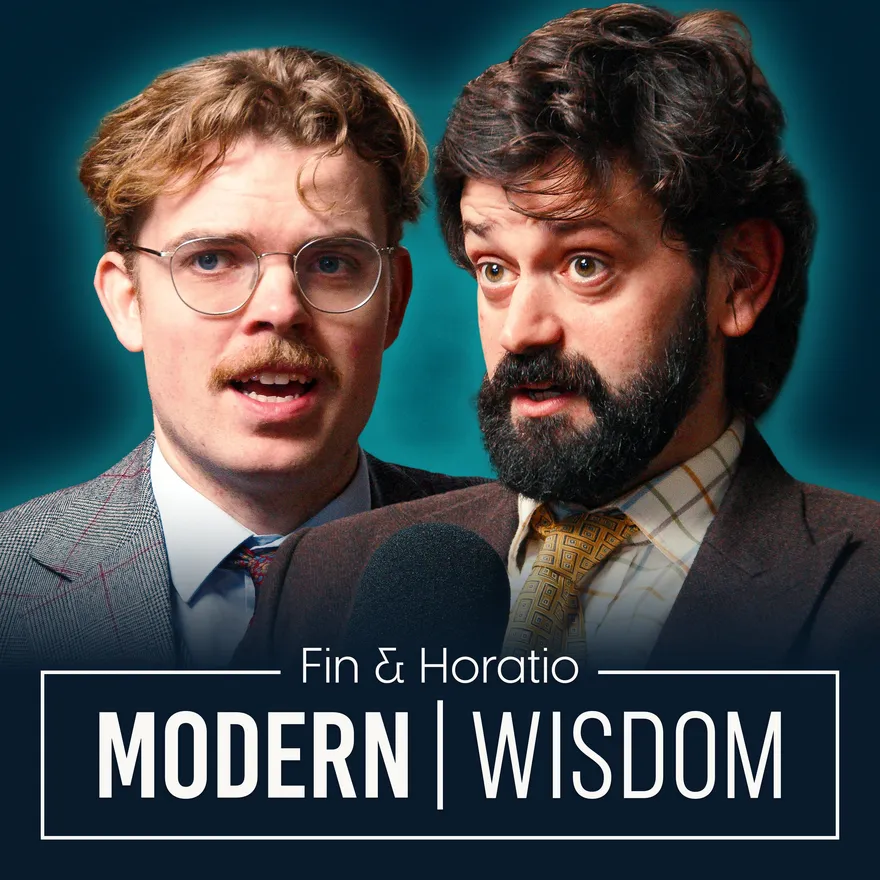

This is a preview of the Shortform summary of the Nov 23, 2026 episode of the Modern Wisdom
Sign up for Shortform to access the whole episode summary along with additional materials like counterarguments and context.
1-Page Summary
Historical Beauty Standards and Their Evolution
Beauty standards have shifted dramatically throughout history, shaped by cultural, economic, and technological factors. Medieval times valued pale skin and plucked hairlines for higher foreheads, while Renaissance and Baroque periods celebrated fuller, softer bodies as seen in period art. Modern Western culture has moved in the opposite direction, prioritizing thinness and muscularity. Some cultures maintain contrasting standards, such as forced feeding practices in Morocco where women consume rich foods to gain weight for beauty competitions.
Technology has intensified modern beauty pressures. Front-facing cameras and video conferencing, particularly during Covid-19, sparked a surge in cosmetic procedures dubbed "Zoom face." Social media algorithms now pressure men toward aesthetic maximization through fitness and skincare, fostering "looksmaxxing" philosophy—rooted in incel movements but focused on the belief that appearance solves all life problems.
Generational divides are stark: older generations view appearance concerns as superficial, while younger content creators feel obligated to maintain camera-ready standards. Parenthood often shifts priorities away from aesthetics as caregiving and mortality awareness reframe what matters most.
Military and Political Leaders' Approaches to Power
The conversation explores power dynamics through three iconic rulers: Henry VIII, Napoleon Bonaparte, and Joseph Stalin, highlighting their distinct approaches to leadership and lasting historical impacts.
Henry VIII, never meant to be king, ascended after his brother Arthur's death. His later years saw severe decline—a festering leg wound, massive appetite, and psychological instability marked by paranoia and erratic behavior. Despite personal flaws, Henry fundamentally reshaped England by breaking from Rome, founding the Church of England, and establishing naval supremacy. His defiance of papal authority cemented an enduring English trait of challenging external constraints.
Napoleon emerged as a tactically brilliant commander, revolutionizing warfare through foraging, mass conscription, and artillery coordination. His tactical mastery allowed him to consistently win through positioning rather than direct combat. However, strategic overconfidence led to his downfall—the disastrous winter invasion of Russia destroyed the Grande Armée. At Waterloo, he met his match in Wellington, who employed defensive positioning and terrain use in a "Floyd Mayweather" strategy of protection and counterattack.
Stalin's ruthless rise involved eliminating rivals and playing opponents against each other. After defeating Hitler, he allegedly developed "gold medal syndrome"—growing bored and directionless without an external enemy. His later years featured cruel acts and bizarre displays of power. Stalin's forced industrialization within 12 years came at staggering human cost, with infrastructure literally built on the bones of those who perished.
World War II History and Nazi Atrocities
The rise of Nazi Germany and the Holocaust represent unparalleled tragedy in both historical drama and moral consequence. Horatio Gould notes that Hitler pursued genocide with industrial efficiency, while Joseph Mengele's brutal experiments and subsequent escape to Argentina symbolize justice evaded. Hitler's megalomania peaked after Pearl Harbor when, driven by self-importance, he declared war on America despite having no direct reason.
The battle of Stalingrad, with one million casualties, exemplifies Eastern Front suffering. Fin Taylor and Gould discuss how Soviet attitudes toward death reflect Orthodox Christian theology where suffering brings enlightenment—a stark contrast to Western military priorities that emphasize minimizing casualties.
Post-war settlements shaped global geopolitics for decades. Stalin secured a buffer zone in Eastern Europe, while countries like Brazil and Argentina declared war on Germany only as defeat became inevitable—largely to claim postwar benefits. Gould and Taylor point out that these late declarations, though memorialized in monuments, involved minimal actual military contribution.
Post-WWII Geopolitics and the British Decline
Britain entered WWII to aid Poland and remained the only nation fighting from start to finish, but this sacrifice left it bankrupt and signaled imperial collapse. Gould explains that Britain's national obsession with WWII stems from having traded an empire for stories and monuments.
The Marshall Plan imposed harsh conditions on Britain, requiring nuclear development as an aid precondition and pushing the nation into an unaffordable arms race. Meanwhile, American soft power—McDonald's, Coca-Cola, and cultural exports—replaced British colonialism. Germany and Japan, freed from military burdens and receiving U.S. investment, rapidly surpassed Britain economically by the 1970s.
The 1956 Suez Crisis definitively marked Britain's decline when U.S. economic pressure forced withdrawal from the canal, signaling a global power shift. The failure at Suez ended Britain's imperial ambitions as America ascended to unrivaled superpower status.
Contemporary Conflicts as Historical Echoes
Taylor and Chris Williamson argue that current tensions in Eastern Ukraine exemplify a new Cold War, with the West supporting Ukraine while Russia receives North Korean troops, Chinese funding, and Iranian drones—directly evoking mid-20th century proxy war patterns.
The Israeli-Palestinian conflict invokes ancient narratives. Gould and Taylor explain that current Israeli leadership follows scripts reminiscent of the Old Testament, with rhetoric mirroring biblical episodes. Taylor references Joshua Cohen's novel to illuminate how Benjamin Netanyahu's ideology stems from his father Ben Zion, who pioneered "Revisionist Zionism"—the belief that reclaiming the promised land requires strength and conflict.
Global instability is reviving old territorial disputes, including renewed Argentine claims over the Falkland Islands. The possibility of nuclear powers confronting each other over this small archipelago highlights how historical grievances and nationalism continue to drive contemporary crises, potentially reducing millennia of history to battles over remote territories.
1-Page Summary
Additional Materials
Counterarguments
- While beauty standards have shifted over time, some core ideals—such as symmetry, clear skin, and youth—have remained relatively consistent across many cultures and eras.
- The depiction of fuller bodies in Renaissance and Baroque art does not necessarily reflect the lived reality or majority preference of the broader population, as art often catered to elite tastes or symbolic meanings.
- The characterization of "looksmaxxing" as rooted in incel movements may oversimplify a broader trend of self-improvement and personal grooming that predates online subcultures.
- Not all older generations dismiss appearance concerns as superficial; many have engaged with beauty standards and cosmetic practices in their own ways.
- The assertion that parenthood universally shifts priorities away from aesthetics may not apply to all individuals or cultures.
- Henry VIII’s break from Rome was influenced by complex political, personal, and economic factors, not solely a trait of challenging external constraints.
- Napoleon’s downfall was due to a combination of factors, including coalition warfare, logistical challenges, and political opposition, not just strategic overconfidence.
- Stalin’s industrialization, while causing immense suffering, also rapidly transformed the Soviet Union into a major world power, which some historians argue was a significant factor in the Allied victory in WWII.
- The claim that Soviet attitudes toward death were shaped primarily by Orthodox Christian theology may overlook the influence of Soviet ideology, propaganda, and the practical realities of total war.
- The Marshall Plan’s conditions for Britain were less harsh than those imposed on defeated Axis powers, and Britain received substantial aid that contributed to postwar recovery.
- The economic rise of Germany and Japan post-WWII was also due to internal reforms, innovation, and social policies, not solely U.S. investment and lack of military burdens.
- The Suez Crisis was influenced by multiple factors, including regional nationalism and international diplomacy, not just U.S. economic pressure.
- The framing of current Eastern Ukraine tensions as a direct "new Cold War" may oversimplify the unique historical, regional, and political dynamics at play.
- The portrayal of Israeli leadership as strictly following Old Testament scripts may not account for the diversity of political thought and secular influences within Israeli society.
- The risk of nuclear confrontation over the Falkland Islands is widely considered low by most analysts, given the diplomatic and military realities of the 21st century.
Actionables
- You can track how your own beauty ideals shift over time by keeping a monthly photo journal and writing a short reflection on what you notice or value about your appearance and why, helping you spot patterns in how cultural, technological, or personal factors influence your self-image.
- A practical way to understand how historical and cultural forces shape your worldview is to pick a current event or trend and write a brief timeline tracing its roots through at least three different eras or societies, noting how each period’s values or conflicts contributed to what you see today.
- You can challenge inherited narratives about power, conflict, or national identity by listing three beliefs you hold about your country or culture, then researching and jotting down at least one alternative perspective or counter-narrative for each, encouraging a more nuanced and flexible mindset.



Get access to the context and additional materials
Historical Beauty Standards and Their Evolution
Beauty standards have shifted drastically throughout history, shaped by cultural, economic, and technological factors. The way societies define attractiveness continues to evolve, with each era featuring its own ideals and pressures.
Beauty Ideals Shift With Cultural and Economic Conditions
Medieval Beauty Standards: Pale Skin and Plucked Hairlines for High Foreheads
In medieval times, beauty was defined by pale skin and baldness, especially for women. A higher hairline, achieved by plucking, was considered attractive—the larger the forehead, the greater the perceived beauty. This “reverse turkey” look can be seen in period art and is referenced in descriptions of beautiful women from that era.
Renaissance and Baroque Periods Celebrated Fuller Figures, as Seen In Artistic Nudes
During the Renaissance and Baroque periods, the ideal female form shifted to embrace fuller, softer, and paler bodies. Art from these times, such as frescoes depicting nude women, celebrates these forms; a cold, chubby, and fluffy look was idealized, as observed in numerous paintings.
Modern Western Culture Prioritizes Thinness, Muscularity, and Aesthetics, With Trends Highlighting Fitness and Curves
Modern standards have moved sharply in the other direction. Today’s Western ideals prioritize thinness and muscularity, alongside aesthetics. Societal trends highlight both fitness and curves, requiring considerable effort to achieve and maintain. The introduction of fitness and body-built physiques marks a stark contrast to the relaxed standards of earlier centuries.
Forced Feeding As a Beauty Ideal in Some Cultures
Some cultural beauty standards stand in sharp opposition to modern Western ideals. In Morocco, for instance, there is a practice in which women are force-fed full-fat milk, corn grits, and other rich foods to gain weight—the goal being to become as plump as possible. Competitions are sometimes held to see who has the “fattest wife,” illustrating how localized rituals can create unique standards of attractiveness.
Tech and Social Factors Intensify Modern Beauty Standards
Front-Facing Cameras and Video Conferencing Increase Self-Scrutiny and Appearance Anxiety
The rise of technology has amplified appearance anxiety. Front-facing cameras and video conferencing, especially during the Covid-19 pandemic, have caused individuals to scrutinize their looks more than ever before. This increased self-awareness has introduced new pressures to maintain a presentable or attractive appearance onscreen.
Surge In Cosmetic Procedures During Covid-19 Termed "Zoom Face"
This trend, dubbed “Zoom face,” refers to a surge in cosmetic procedures as people react to seeing themselves frequently during video calls. The desire to optimize every aspect of facial appearance and skin quality reflects heightened societal concern over how individuals present themselves digitally.
Social Media Algorithms Pressure Men to Pursue Aesthetic Maximization Via Fitness, Skincare, and Cosmetic Interventions
Social media and algorithmic feeds intensify these standards, particularly for men. Men are now pressured to maximize aesthetics through disciplined fitness regimens, elaborate skincare routines, and even cosmetic interventions. Forum cultures and online communities foster the belief that physical appearance is paramount, fueling a subculture dedicated to “looksmaxxing.”
"Looksmaxxing" Philosophy: Appearance Solves Social and Life Problems
The philosophy of “looksmaxxing” has roots in the incel movement but differs in its focus on self-determination. There is a belief that all social and life problems can be resolved by improving one’s appearance—summed up by the phrase “pull yourself up by your cheekbones.” In ...
Here’s what you’ll find in our full summary
Historical Beauty Standards and Their Evolution
Additional Materials
Clarifications
- The term “reverse turkey” look refers to the medieval beauty practice of plucking hairlines to create a high forehead, resembling the bare, rounded shape of a turkey’s neck but inverted. This style symbolized intelligence and nobility, as a large forehead was associated with wisdom. The phrase is a modern descriptive metaphor rather than a historical term from the medieval period. It helps visualize the distinctive hairline shape favored at the time.
- Renaissance and Baroque artistic nudes often depicted fuller, rounded bodies to symbolize fertility, wealth, and health. Frescoes, large wall paintings, were used in churches and palaces to convey religious and mythological themes, emphasizing idealized human forms. These artworks reflected societal values that associated beauty with abundance and vitality. The style contrasted with later ideals by celebrating natural curves and softness rather than slenderness.
- In some rural Moroccan communities, especially among the Berber population, forced feeding (known as "gavage") is a traditional practice to prepare girls for marriage. It is believed that a fuller body symbolizes wealth, fertility, and beauty, increasing a woman's desirability. This custom reflects social and economic values where physical size is linked to status and prosperity. The practice is declining due to health concerns and changing cultural attitudes.
- “Zoom face” refers to the increased demand for cosmetic procedures triggered by frequent video calls during the Covid-19 pandemic. People became more aware of facial imperfections due to constant self-view on screens. This led to a rise in treatments like Botox, fillers, and skin resurfacing to enhance appearance. The trend highlights how digital interactions influence real-world beauty standards.
- "Looksmaxxing" is a subculture focused on improving physical appearance through various means like fitness, grooming, and cosmetic procedures. It originated partly from online communities linked to the incel movement, which consists of men who feel involuntarily celibate and often express frustration over social and romantic rejection. Unlike the broader incel ideology, looksmaxxing emphasizes self-improvement and personal agency rather than blaming others. The philosophy holds that enhancing one's looks can significantly improve social status and life opportunities.
- “Podcast face” refers to the neutral or slightly forced facial expression content creators maintain while speaking on camera or during recordings. It arises because creators want to appear engaged and professional without exaggerated emotions that might distract viewers. This expression is relevant as younger generations increasingly work in digital media, where visual presentation impacts audience perception. Maintaining “podcast face” reflects the pressure to balance authenticity with polished appearance in online content.
- Social media algorithms prioritize content that receives high engagement, often favoring images and videos showcasing idealized appearances. This creates a feedback lo ...
Counterarguments
- While beauty standards have changed over time, some core ideals—such as symmetry, clear skin, and youthfulness—have remained relatively consistent across many cultures and eras.
- The depiction of medieval and Renaissance beauty standards may oversimplify or generalize, as ideals often varied significantly by region, class, and context.
- The focus on Western beauty standards in the modern era overlooks the diversity and coexistence of multiple beauty ideals within and outside Western societies.
- The characterization of Moroccan forced feeding as a widespread cultural practice may not accurately reflect the experiences or values of all Moroccans and risks reinforcing stereotypes.
- The impact of technology on appearance anxiety is significant for some, but many individuals remain unaffected or consciously resist these pressures.
- The “looksmaxxing” philosophy is not universally accepted, and many people prioritize personality, intelligence, or other qu ...
Get access to the context and additional materials
Military and Political Leaders' Approaches to Power
The conversation explores the power dynamics, strategies, and psychological complexities of iconic rulers Henry VIII, Napoleon Bonaparte, and Joseph Stalin, highlighting their approaches to leadership and the effects they had on their nations and history.
Henry VIII Epitomized the Desire-Driven, Unchecked Male Ruler
Henry VIII, the Spare Heir, Became King Unprepared
Henry VIII was never meant to be king. His older brother, Arthur, trained by his father Henry VII to rule, died young, thrusting Henry—the "spare"—onto the throne unexpectedly. This left the English crown in the hands of a man unprepared for kingship, comparable, as discussed, to an unqualified royal suddenly ascending due to unforeseen circumstances.
Later Life Deterioration: Infected Leg, Massive Appetite, Psychological Distress, Erratic Behavior, Paranoia
Henry’s reign began as relatively typical for the period, but his later years were defined by sharp physical, mental, and behavioral decline. After a severe fall from his horse, he sustained a leg injury that never healed, festering despite primitive treatments—stuffed with herbs and leeches, eventually resembling a rotting wound. Immobilized, he required a specially devised wheelchair to move around Hampton Court. Simultaneously, his appetite grew boundless, echoing the excess of a sumo wrestler or a foie gras producer, gorging on large amounts of game, quail, and pheasant. This steady physical decay was matched by psychological instability, leading to erratic, paranoid decisions emblematic of an unrestrained monarch.
Reshaped England By Breaking From Rome, Founding the Church of England, and Laying Foundations for Naval Supremacy and National Identity
Despite his personal flaws, Henry fundamentally reshaped England: his break from Rome established the Church of England and birthed English Euroscepticism. He modernized naval administration, effectively founding the Royal Navy and laying groundwork for later maritime supremacy and a distinct national identity. His influence permeated English society and politics, marking pivotal shifts in governance, religion, and military power.
Reign Saw Rise of Enduring English Trait to Defy Authority With "Fuck Off"
Henry’s defiance of papal authority echoed through generations, cementing a national ethos of challenging external constraints. This "fuck off" spirit, described as an essential English trait, has manifested in everything from military standoffs (repelling the Spanish Armada, defeating Napoleon at Waterloo, rejecting Hitler) to everyday bureaucracy and even cultural attitudes, balancing a veneer of civility over deep-rooted resistance.
Napoleon Bonaparte: A Tactically Brilliant yet Strategically Flawed Commander
Napoleon's Innovations: Foraging, Conscription, Artillery Coordination
Napoleon emerged as one of history's most prolific military leaders, transforming warfare through logistical and tactical innovation. Eschewing traditional, slow-moving supply trains, he instructed his armies to forage, dramatically increasing speed and agility. He pioneered wide-scale conscription, bringing unprecedented numbers and quality to his ranks, and meticulously coordinated artillery, cavalry, and infantry like a tactical game of rock, paper, scissors.
Tactical Mastery: Consistent Victory Through Speed and Positioning Without Direct Engagement
His campaigns, such as at Ulm, showcased his unrivaled ability to force enemy surrenders through outflanking and maneuver rather than direct combat—earning victories in battles whose maps and arrows can be traced with clarity, a prototype for modern "blitzkrieg." He consistently bested other great commanders with sheer battlefield genius, winning high-stakes encounters across Europe and often outmaneuvering numerically superior coalitions.
Overconfidence and Strategic Incompetence: Winter Invasion of Russia Leads To Grande Armée's Destruction
Napoleon’s undoing was strategic overreach. His decision to invade Russia, driven by hubris, culminated in disaster. The Russians responded with scorched-earth tactics, depriving his forces of sustenance. The immense Russian hinterland and logistical impossibilities crippled the Grande Armée, ending in catastrophic losses as they retreated through an inhospitable winter—a classic case of strategic failure overwhelming tactical brilliance.
Wellington, His Military Nemesis, Succeeded Through Defensive Positioning and Use of Terrain, Employing a "Floyd Mayweather" Strategy of Protection and Counter-Attack
Napoleon ultimately met his match at Waterloo, facing the Duke of Wellington, hail ...
Here’s what you’ll find in our full summary
Military and Political Leaders' Approaches to Power
Additional Materials
Counterarguments
- While Henry VIII was not originally prepared for kingship, he received a humanist education and was well-versed in statecraft, languages, and theology, which provided a foundation for his rule.
- Henry VIII’s physical and psychological decline in later life, though severe, was not unique among monarchs of the era, many of whom suffered from similar ailments and stresses due to the medical limitations of the time.
- The characterization of Henry VIII’s later behavior as purely erratic and paranoid may overlook the complex political pressures and factionalism at court that influenced his decisions.
- The break from Rome and establishment of the Church of England were influenced by broader European religious movements and political considerations, not solely Henry’s personal will or defiance.
- The modernization of the English navy and the foundations for maritime supremacy were gradual processes involving contributions from multiple monarchs and administrators, not just Henry VIII.
- The notion of a uniquely English trait of defying authority predates Henry VIII and can be traced to earlier historical events and cultural developments.
- Napoleon’s military innovations built upon existing practices and the work of earlier French Revolutionary generals, rather than being entirely original.
- Napoleon’s victories often involved significant casualties and were not always achieved without direct combat; some battles, such as Borodino, were extremely bloody.
- The failure of the Russian campaign was due to a combination of factors, including weather, logistics, Russian resistance, and the scale of the operation, not solely Napoleon’s overconfidence.
- Wellington’s victory at Waterloo was aided by the timely arrival of Prussian forces under Blücher, not just his defensive tactics. ...
Actionables
- you can strengthen your ability to adapt to unexpected leadership roles by occasionally volunteering for small, unfamiliar responsibilities in group settings, like taking charge of a family outing or organizing a casual meet-up, then reflecting on what skills or knowledge you lacked and how you handled the pressure.
- a practical way to recognize and manage the risks of unchecked power or authority in your own life is to set up a monthly self-check where you ask a trusted friend or family member to give honest feedback about any behaviors that might seem domineering, erratic, or insensitive, and then make a plan to address any patterns they notice.
- you can experiment with building resilience against extern ...
Get access to the context and additional materials
World War II History and Nazi Atrocities
Nazi Germany's Rise and the Holocaust Are Unmatched in Historical Drama and Moral Stakes
The rise of Nazi Germany and the Holocaust represent an unparalleled tragedy in both historical drama and moral consequence. Horatio Gould notes that, from the warped and evil perspective of Hitler, the Holocaust was pursued with industrial efficiency, accomplishing the horrific goal of exterminating European Jewry on a scale never before seen. Joseph Mengele, known as the "Angel of Death," conducted brutal and infamous experiments on camp prisoners. His escape to Argentina after the war, unlike Eichmann—who was eventually captured by the Israelis—remains a dark symbol of justice evaded. Rumors even persist that Mengele was present at the 1978 World Cup final in Argentina as a guest of the military junta.
David Starkey’s credibility and standing were severely damaged by questioning whether the Holocaust constituted genocide, highlighting the enduring moral clarity demanded when studying these events.
Hitler’s own megalomania reached a peak following Pearl Harbor. Fin Taylor points out that, driven by a need for self-importance and to stay at the center of international attention, Hitler declared war on America after the Japanese attack, despite there being no direct reason, cementing his destructive role in world history.
Stalingrad: Deadliest Eastern Front Battle in History
The battle of Stalingrad exemplifies the extraordinary suffering and sacrifices of the Eastern Front, with one million casualties making it the deadliest such conflict in history. Chris Williamson, Fin Taylor, and Horatio Gould discuss how this level of loss is emblematic of Soviet, and more broadly Russian, attitudes toward suffering and death.
Taylor elaborates on the Orthodox Christian theological perspective where suffering is viewed as not only inevitable but meaningful—enlightenment and truth are achieved through suffering, in stark contrast to the Catholic emphasis on confession and resetting or the Protestant stoicism of simply enduring hardship. This willingness to absorb massive losses defines Soviet military practice and is visible even in how the USSR handled disasters like Chernobyl. According to Gould and Taylor, only Union structures and psychologies such as these would throw countless men into addressing the crisis—mirroring the ethos of accepting suffering as a path to meaning.
This Soviet disposition stands in stark contrast to Western military priorities, which emphasize the minimization of casualties and reflect different cultural values regarding death and national purpose.
Post-War Settlement and Reparations Shaped the Century
After the war, settlements and reparations determined the ...
Here’s what you’ll find in our full summary
World War II History and Nazi Atrocities
Additional Materials
Counterarguments
- While the Holocaust is an unparalleled tragedy, other genocides and atrocities (such as the Armenian Genocide, the Rwandan Genocide, or the transatlantic slave trade) have also resulted in immense suffering and loss of life, and some historians argue that comparisons can be instructive rather than diminishing.
- The industrial efficiency of the Holocaust was unprecedented, but mass killings and systematic persecution have occurred in other contexts, sometimes with similar bureaucratic or technological organization (e.g., Stalin's purges, Mao's Great Leap Forward).
- The rumors about Mengele attending the 1978 World Cup are unsubstantiated and widely regarded as conspiracy theories; there is no credible evidence supporting this claim.
- While David Starkey's comments were widely condemned, academic debate about the definitions and classifications of genocide exists within scholarly circles, though such debates must be handled with sensitivity.
- Hitler's declaration of war on the United States was influenced by multiple factors, including the Tripartite Pact and strategic calculations, not solely personal megalomania or a desire for attention.
- The Battle of Stalingrad was the deadliest single battle on the Eastern Front, but the overall Eastern Front campaign, including the Siege of Leningrad and other battles, also contributed to massive casualties.
- The characterization of Russian and Soviet attitudes toward suffering as uniquely embracing or meaningful may oversimplify complex cultural and historical realities; not all Russians or Soviets shared this perspective.
- Orthodox Christian theology is diverse, and not all adherents interpret suffering in the same way; similarly, Catholic and Protestant approaches to suffering are varied and nuanced.
- Soviet willingness to absorb losses was influenced by political, logistical, and strategic factors, not solely cultural or theological attitudes toward suffering.
- Western military priorities have n ...
Actionables
- you can keep a personal decision journal where you record moments when you face moral choices, noting the factors that influenced your decision and reflecting on whether you maintained moral clarity, especially in situations where social pressure or ambiguity is present; over time, this helps you recognize patterns and strengthen your commitment to ethical action.
- a practical way to understand the impact of cultural attitudes toward suffering is to track your own responses to setbacks or discomfort for a week, then compare your reactions to those described in different cultural or religious perspectives by writing a short reflection on how your background shapes your approach to adversity.
- you can ma ...
Get access to the context and additional materials
Post-Wwii Geopolitics and the British Decline
Imperial Collapse of Britain due to two World Wars
Britain enters World War II to aid Poland, distinguishing itself as the only nation consistently present from start to finish, fighting alone for much of the conflict. However, this sacrifice leaves Britain financially bankrupt and signals the end of its empire. The cost of two world wars strips Britain of its imperial prominence, leaving behind only stories and monuments as remnants of its former dominance. Horatio Gould points out that the national obsession with World War II stems from this loss: having traded an empire for tales and memorials of sacrifice.
Marshall Plan Funds Imposed U.S. Nuclear Conditions, Pushing Britain Into an Unaffordable Arms Race and Eroding Its Economy
In the postwar era, the United States cements its dominance over Britain through economic leverage. When negotiating the Marshall Plan—the American initiative to rebuild Europe—Britain, represented by economist John Maynard Keynes, receives a poor financial deal from U.S. negotiators intent on keeping Britain economically dependent. America requires Britain to develop a nuclear arsenal as a precondition for aid, pushing Britain into an arms race it cannot afford and further draining its economy.
American Soft Power Supplants British Colonialism With Cultural Exports Replacing Imperial Control
At the same time, direct colonialism falls out of favor in the 1950s and 1960s, and the U.S. advances its influence through soft power rather than direct imperial control. American cultural exports—McDonald's, Coca-Cola, Oreos, and events like Coachella—become tools for global influence, effectively replacing the British imperial presence in many regions. While the U.S. still engages in covert operations (such as CIA actions in Guatemala and Iran), these interventions supplement, rather than define, its hegemony.
Germany and Japan, Freed From Military Duties and Aided by U.S. Investment, Surpassed Britain's Economy Postwar, Implying That Losing Empire Might Have Helped Recovery
Meanwhile, former adversaries Germany and Japan, freed from the burden of maintaining large militaries and benefiting from substantial U.S. investment, experience rapid economic growth. By the 1970s, both nations have far surpassed Britain economically, suggesting that shedding the responsibilities of empire and focusing on domestic reconstruction accelerates national recovery and prosperity.
Britain's Deliberate Weakening Facilitated America's Rise to Superpower
The United States deliberately keeps Britain economically reliant and militarily subordinate in the postwar era, ensuring there is no challenge to its new global dominance. Despite the alli ...
Here’s what you’ll find in our full summary
Post-Wwii Geopolitics and the British Decline
Additional Materials
Counterarguments
- While Britain entered WWII to aid Poland, it was not the only nation present from start to finish; the Soviet Union, for example, played a crucial and sustained role from 1941 onward, and other Commonwealth nations were also consistently involved.
- The decline of the British Empire was a gradual process influenced by multiple factors beyond the financial cost of the world wars, including rising nationalist movements in colonies, changing international attitudes toward imperialism, and domestic political shifts.
- The assertion that the U.S. imposed nuclear weapons development as a condition for Marshall Plan aid is not supported by historical evidence; while the U.S. encouraged Western European defense cooperation, there was no explicit requirement for Britain to develop nuclear weapons to receive aid.
- Britain’s pursuit of nuclear weapons was motivated by its own strategic considerations and desire to maintain great power status, not solely by American pressure.
- The Marshall Plan provided significant economic benefits to Britain, helping to stabilize its postwar economy, and was not universally regarded as a "poor deal."
- American cultural exports did not entirely replace British influence; British culture, language, and institutions continue to have significant global impact.
- Germany and Japan’s postwar economic growth was also facilitated ...
Actionables
- you can track your own spending and consumption habits to spot where cultural or economic influences from other countries shape your daily life, then experiment with swapping out one imported product or habit each week for a local or alternative option to see how it affects your sense of identity and independence.
- a practical way to reflect on the impact of lost power or status is to write a short personal history focusing on a time when you had to adapt after losing a role, privilege, or resource, then identify what new strengths or perspectives you gained from that transition.
- you can create a simple timeline comp ...

Get access to the context and additional materials
Contemporary Conflicts as Historical Echoes
Current geopolitical crises often mirror historical patterns, drawing clear connections between present-day conflicts and the struggles of previous eras.
Geopolitical Tensions Reflect World War II and Cold War Patterns
Fin Taylor and Chris Williamson argue that today's tensions in Eastern Ukraine exemplify a new Cold War. In this conflict, the West supports Ukraine, while Russia receives assistance from North Korean troops, Chinese funding, and Iranian drones. This setup directly evokes the binary alliances prominent during the Cold War, with global powers lining up behind local actors and fighting proxy wars rather than direct confrontations—an echo of mid-20th century geopolitical strategies emerging in an era that is ostensibly at peace.
Conflict Mirrors Old Testament Scripts, Leaders Referencing Philistines and Deuteronomic Covenants
Horatio Gould and Taylor further explain that the dynamics of the Israeli-Palestinian conflict invoke ancient narratives. They note that current Israeli leadership, particularly the right-wing coalition around Benjamin Netanyahu, follows a script reminiscent of the Old Testament. According to them, the actions and rhetoric mirror episodes from thousands of years ago as described in the Hebrew Bible, with Palestinians being equated to Philistines and the notion of a covenant—like the genocidal agreement between the Israelites and God in Deuteronomy and the Book of Joshua—serving as both historical reference and ideological guide.
Netanyahu's Ideology Stems From His Father, Ben Zion, Pioneering "Revisionist Zionism," Asserting the Promised Land Can Be Reclaimed Only Through Strength
Taylor references Joshua Cohen’s novel "The Netanyahus" to illuminate Benjamin Netanyahu's ideological lineage. Ben Zion Netanyahu, the prime minister's father, was a leading thinker in "Revisionist Zionism"—a movement characterized by the belief that reclaiming the promised land is only possible through strength and conflict, departing from softer currents in earlier Zionist thought. Ben Zion, an observer of European Jewish tragedies from abroad, shaped his son’s worldview through this more aggressive, fatalistic vision of Jewish history and destiny.
Rekindling the Falklands War: A Significant Possibility in a Destabilized Global Order
Global instability is reviving old territorial disputes. One example is the renewed Argentine claim over the Falkland Islands, surfacing as larger geopolitical tensions—including unrest in Gaza—ripple outward. Argentina’s support for Palestinian claims coincides with its opposit ...
Here’s what you’ll find in our full summary
Contemporary Conflicts as Historical Echoes
Additional Materials
Clarifications
- The "new Cold War" refers to renewed geopolitical rivalry resembling the original Cold War's ideological and strategic competition between the US-led West and the Soviet Union. It involves indirect conflicts through proxy wars, alliances, and influence rather than direct military confrontation. Modern parallels include support for opposing sides in regional conflicts, such as Western backing of Ukraine and Russia's alliances with countries like North Korea and China. This reflects a continuation of power struggles without open warfare between major powers.
- North Korea, China, and Iran have strategic interests in supporting Russia to counter Western influence. North Korean troops provide manpower, while China offers financial aid to sustain Russia's military efforts. Iran supplies drones, enhancing Russia's surveillance and attack capabilities. This cooperation reflects a broader alliance challenging Western dominance in global conflicts.
- The Philistines were an ancient people often depicted as enemies of the Israelites in the Old Testament, symbolizing opposition to God's chosen people. The Deuteronomic covenants refer to agreements described in the Book of Deuteronomy, where God promises blessings for obedience and curses for disobedience to His laws. These covenants emphasize loyalty to God and often include commands for conquest and possession of the Promised Land. They have been interpreted as divine justification for Israelite actions in biblical narratives.
- Revisionist Zionism was founded by Ze'ev Jabotinsky in the 1920s as a nationalist movement advocating for a Jewish state on both sides of the Jordan River. It emphasized military strength, self-defense, and a more militant approach compared to mainstream Zionism. The movement opposed British policies limiting Jewish immigration and land purchases in Palestine. Its ideology influenced right-wing Israeli politics, stressing territorial maximalism and skepticism toward compromise.
- Ben Zion Netanyahu was a historian and a prominent advocate of Revisionist Zionism, which emphasized Jewish self-defense and territorial maximalism. He believed that Jewish survival and statehood required strength and assertive action rather than compromise. This ideology deeply influenced his son Benjamin Netanyahu's approach to Israeli security and territorial policies. Benjamin's political stance reflects this legacy, prioritizing military strength and skepticism toward peace negotiations.
- European Jewish tragedies, especially the Holocaust, exposed the vulnerability of Jews in diaspora and the failure of assimilation. This fueled Revisionist Zionism's emphasis on a strong, sovereign Jewish state with secure borders. The movement rejected passive approaches, advocating for military strength and territorial maximalism. It sought to ensure Jewish survival through self-defense and political power.
- The Falkland Islands are a remote South Atlantic archipelago claimed by both Argentina and the United Kingdom. Argentina calls them "Islas Malvinas" and views British control as a colonial occupation. Th ...
Counterarguments
- While historical parallels can be drawn, each contemporary conflict has unique causes, actors, and contexts that distinguish it from past events, making direct comparisons potentially reductive.
- The characterization of the Ukraine conflict as a "new Cold War" may oversimplify the situation, as the ideological, economic, and technological landscapes differ significantly from those of the original Cold War era.
- Not all contemporary proxy wars strictly mirror mid-20th century strategies; modern conflicts often involve non-state actors, cyber warfare, and economic sanctions, which were less prominent or absent in earlier periods.
- The assertion that Israeli leadership universally invokes Old Testament narratives may not account for the diversity of political and religious perspectives within Israel, including secular and moderate voices.
- The influence of Ben Zion Netanyahu on Benjamin Netanyahu's policies is significant but may not be the sole or even primary factor shaping current Israeli policy, which is also influenced by coalition politics, security concerns, and public opinion.
- The renewed Argentine claim over t ...
Get access to the context and additional materials


Create Summaries for anything on the web
Download the Shortform Chrome extension for your browser