

How To Turn Your Pain Into Greatness - Bugzy Malone - #1174
In this episode of Modern Wisdom, Chris Williamson speaks with Bugzy Malone about the challenges of not just achieving success, but sustaining it. They explore why society focuses overwhelmingly on getting to the top while rarely addressing what it takes to stay there, and discuss how external validation can trap people on a treadmill of achievement without genuine fulfillment.
Malone shares his journey from a dysfunctional childhood marked by violence and poverty to becoming a successful artist. He emphasizes the role of accountability in transforming adversity into strength, the importance of vulnerability in personal growth, and the shift from seeking approval to finding purpose in service and legacy. The conversation also covers strategic career diversification, the continuous nature of mastery, and why stepping away from relentless self-promotion can lead to more authentic work and a more meaningful life.
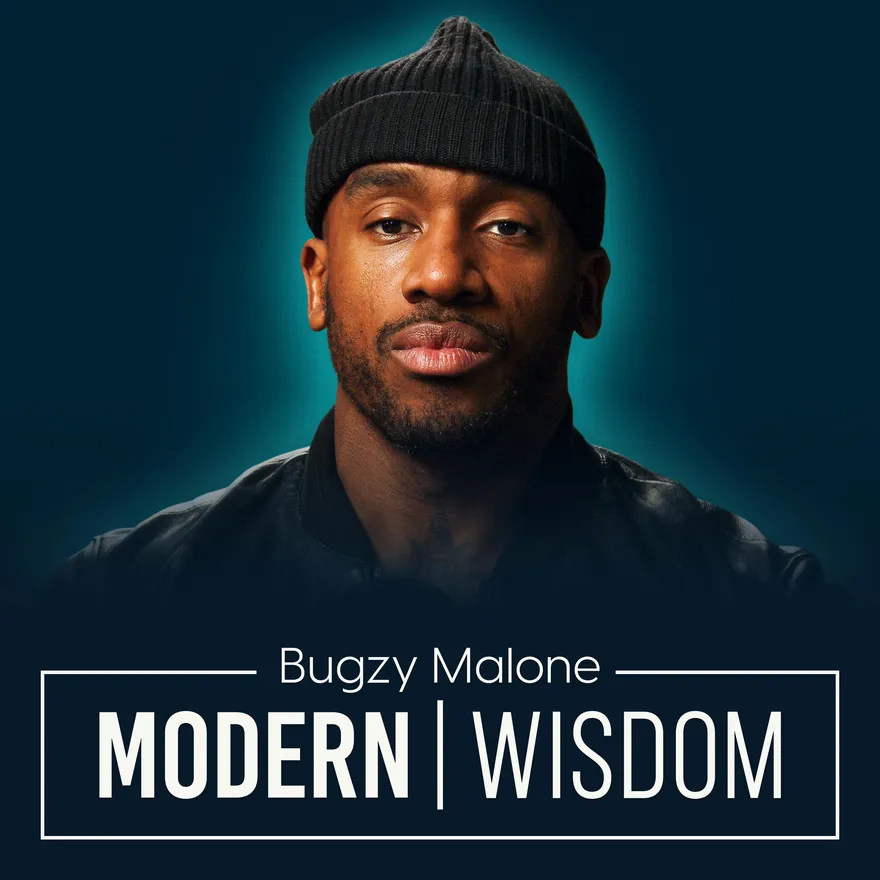

This is a preview of the Shortform summary of the Nov 9, 2026 episode of the Modern Wisdom
Sign up for Shortform to access the whole episode summary along with additional materials like counterarguments and context.
1-Page Summary
Achieving Vs. Sustaining Success: Psychology and Challenges
In this conversation between Chris Williamson and Bugzy Malone, the two explore the disconnect between society's obsession with achieving success versus maintaining it. Williamson notes that people seeking advice on achieving success outnumber those asking about sustaining it by nearly 100,000 to 1. Bugzy observes that society advertises symbols of success—luxury cars, designer clothes—from childhood, programming people to prioritize getting there rather than staying there. He explains that many "shoot up, plateau, and fall off" because the demands and pressures persist after reaching success, requiring continuous discipline and growth that few discuss.
Both explore the unique pain of achieving success only to lose it. Bugzy reflects on personal costs: growing up in poverty, then sacrificing parts of himself to adapt to an affluent life, while watching family members succumb to addiction. This anticipatory grief of slow, foreseen loss brings a heavy emotional toll that cultural celebrations of winning rarely address.
Success Without Contentment Becomes a Treadmill
Bugzy admits to once being "guilty of being a real show-off," purchasing luxury items to prove financial achievement as part of rap culture's expectations. He acknowledges this drive as rooted in insecurity rather than genuine fulfillment. Both discuss how conflating identity with relentless achievement traps people on a treadmill of external validation. Williamson recalls a Navy SEAL whose identity as someone who never gave up led him to stubbornly endure a toxic marriage, illustrating how a strength can become a liability. As Williamson summarizes, "what you are praised for in public, you often pay for in private."
True contentment, Bugzy reasons, comes from self-understanding and enjoying what has been earned without constantly moving the goalposts. Overcoming the insecurity of needing to "win" at all costs is crucial, as much of what people chase is "not real" if it doesn't bring inner peace.
Transitioning From Achievement to Purposeful Service
Once financial freedom is reached, Bugzy explains, emphasis should shift to preserving physical health, mental elasticity, and moral character. Sustainable success is rooted in consistency, discipline, and finding joy in life and service, not merely in external trappings. After the forceful acquisition of success comes "maintaining the kingdom"—stewarding it with wisdom while fostering family and giving children opportunities for stability. True wealth is about health, happiness, and continuing to grow while ensuring priorities remain aligned with personal values.
Transforming Adversity: From Childhood Dysfunction to Strength Through Accountability
Violence and Dysfunction Shape Understanding of Acceptable Behavior
Williamson reflects that childhood exposure to dysfunction unfolds by osmosis, leaving children without context. Bugzy describes how growing up with an abusive, alcoholic father shapes a child's notion of love and acceptable behavior. This lack of context creates internal battles, such as questioning whether letting go of hurtful people makes one "cold." He discusses the confusion and imposter syndrome from realizing his household behaviors differed from societal norms.
Children in dysfunctional environments develop survival adaptations that become incompatible with stable life as they mature. Malone recounts being beaten by his stepfather at age 11—a formative act of violence that left a lasting mark. While the initial impact is fear, grappling with trauma openly, including through creative outlets like music, can lead to liberation and personal growth.
Accountability Transcends Victimhood
Malone emphasizes separating what was beyond his control as a child from decisions he makes as an adult. He rejects victimhood, acknowledging his challenging start but maintaining that growth comes from personal agency and self-education. He encourages learning from successful peers rather than discrediting them, and being honest about one's own efforts.
For Malone, accountability is "ruthless." Facing the truth—that pain happened but one has choices about how to respond—transforms adversity into strength. While bitterness over childhood circumstances is easy, true recovery is about moving forward, responsible for one's own life.
Early Dysfunction Provides Unique Education
Malone asserts that harsh conditions offered a unique education in intuition, pattern recognition, and human nature. Real-world pain—like being punched for disrespect—provides immediate, consequential feedback that shapes behavior quickly. He notes that those closest to "the bottom" are often the most honest, and navigating disorder required becoming attuned to unspoken rules and dangers.
This streetwise perception makes him skeptical of those hiding behind business etiquette or compartmentalizing unethical decisions. Both agree that society prizes decorum, yet the allure of outlaws in popular culture comes from their unapologetic authenticity. Malone's journey reveals that early darkness, when treated with honesty and accountability, can seed deep self-understanding and practical wisdom.
The Internal Journey: Vulnerability, Confronting Fears, Eliminating Crutches
Malone and Williamson delve into personal transformation, stressing the necessity of vulnerability, self-reliance, and shifting from externally-fueled motivation to purpose rooted in love and service.
Fear Loses Power When Faced Through Vulnerability
Bugzy compares vulnerability to facing an intimidating opponent. He recounts being stabbed at 11, which filled him with fear and embarrassment, causing him to withdraw for years. Only after deciding to face his fear by having a fair fight with his attacker did he truly move forward. Malone paints personal growth as a solitary journey through a dark tunnel. Many begin but turn back when faced with isolation and ridicule midway—where familiar support falls away. He cautions that clinging to friendships for validation can become a crutch that interrupts the solitude needed for growth.
Self-Belief Fuels Strength, Not Others' Validation
Malone states that although external support is valuable, self-belief is ultimately a solitary journey. Relying too heavily on others' opinions can create false security, preventing deeper development of self-worth. Williamson discusses Solomon's paradox: people give better advice to others than to themselves. Malone counters that real success involves shedding all crutches, including excessive dependence on friends' opinions. True strength arises during periods of solitude, when there is neither encouragement nor proof.
Motivation Arises From Love and Service
Malone describes the truest motivation as arising from love and a desire to serve others. He recounts finding inspiration as a child from Muhammad Ali, motivating him now to work for the empowerment of young people in similar environments. Letting go of the need for approval allows for more genuine connections. He frames his journey as stepping into dark, uncertain spaces propelled not by opposition, but by the wish to inspire and uplift.
Purpose, Authenticity, and Legacy: Beyond Validation to Genuine Meaning
Creating For Legacy, Not Approval
Bugzy reflects on Vincent van Gogh, noting his work was unsellable during his lifetime. When Van Gogh's letters revealed his mindset and philosophy after his death, they made his paintings invaluable. Malone emphasizes that layers of meaning may not be immediately recognized, but that shouldn't diminish their ultimate value. He relates this to his own career, stating that as he becomes more courageous in articulating his true thoughts, the depth and legacy of his work will become evident in hindsight.
Van Gogh felt that perhaps "God made me a painter for people that haven't yet been born." Malone applies this philosophy to his latest album, intentionally disconnecting from outside feedback to create something authentic and layered.
Masculine Purpose Rooted in Service
Malone articulates a philosophy of masculine purpose rooted in service, usefulness, and protection. He says, "Then you come out as a man that can serve. I think people have forgotten what a man's job is." For Malone, fulfillment comes from assisting the vulnerable and being useful to others. He finds pride not in fame or wealth, but in his ability to help and serve.
This shift influences his decision-making about his career and legacy. Rather than tying his purpose to public recognition, he focuses on how he can serve and bring value to his family and community. Being proud of his work and ensuring it's something his children can take pride in is more important than pursuing additional fame.
Legacy Lies In Consistent, Authentic Actions
Malone expresses that real legacy grows not from self-promotion but from doing good work and living with integrity. He plans to step away from relentless public image management to focus on his roles as husband and father. He believes works created with honesty and conviction hold value for future generations seeking truth. Genuine legacy is built through enduring actions anchored in service and integrity.
Diversification & Mastery: Strategic Career Transition and Growth
Overstaying In Youth-Centric Fields Risks Decline
Bugzy describes rap as "a young man's sport" focused on coming up and transcending dysfunction. Once an artist moves beyond telling their story, remaining too long risks redundancy. He draws parallels to athletes who lack transferable skills or alternate income streams and often face collapse, struggling financially and psychologically.
Malone embodies this philosophy by pursuing new ventures, including acting in Guy Ritchie's "The Gentleman Series 3." He recognizes diversification not just as survival but as a path to ongoing relevance and an "adult job description."
Mastery Is Ongoing Refinement
Both discuss the continuous nature of mastery. Malone recalls the freedom of his early music releases, created before external pressures shaped his work. Williamson describes mastery as an evolving process: the creator must intentionally rid themselves of ego, convention, and external pressures, reconnecting with original inspiration while integrating accumulated experience. Mastery is "ever increasing refinement," an ongoing effort to become better and truer to one's art.
Self-Education Develops Understanding
Bugzy emphasizes that real self-education comes from personal curiosity and necessity, often reaching deeper than institutional learning. He became captivated by subjects like Renaissance art through genuine interest, building stamina and accountability to learn outside his comfort zone. This self-directed exploration gives him sophistication that surpasses formal academic achievement.
Williamson adds that self-education never truly ends—sophistication and understanding are always evolving. Bugzy concludes by stating his satisfaction with what he has achieved and his focus on building a meaningful life. Attaining financial independence, emotional maturity, and moral clarity comes down to a lifetime of learning and growing.
1-Page Summary
Additional Materials
Clarifications
- Solomon's paradox refers to the tendency for people to give wiser advice to others than to themselves. It is named after King Solomon, known for his wisdom in judging others but often struggling with his own personal decisions. Psychological studies show individuals are more objective and rational when considering others' problems. This bias occurs because personal involvement clouds judgment and emotional distance improves clarity.
- Vincent van Gogh's letters, mainly to his brother Theo, reveal his thoughts, struggles, and artistic philosophy. These writings provide deep insight into his creative process and emotional state, enriching the understanding of his paintings. After his death, the letters helped art historians and the public appreciate the context and meaning behind his work. This added narrative significantly increased the cultural and monetary value of his paintings.
- In rap culture, luxury items like expensive cars, jewelry, and designer clothes symbolize success and status. These symbols often represent overcoming hardship and achieving wealth, serving as visible proof of accomplishment. Displaying such items is also tied to identity and respect within the community. This emphasis can create pressure to showcase wealth as a measure of personal worth.
- The phrase "shoot up, plateau, and fall off" describes a common pattern in success where someone rapidly rises to prominence or achievement ("shoot up"), then reaches a level where progress stalls ("plateau"), and eventually declines or loses relevance ("fall off"). This often happens because initial momentum or novelty fades, and sustaining success requires ongoing effort and adaptation. Many people are unprepared for the continuous discipline needed after the initial rise. Without this, they struggle to maintain their status and may experience a downturn.
- The phrase "maintaining the kingdom" metaphorically compares sustaining success to ruling and protecting a kingdom. It implies ongoing effort to preserve achievements, manage resources wisely, and defend against threats. This requires discipline, vigilance, and strategic care, not just initial conquest. The metaphor highlights that success is continuous stewardship, not a one-time event.
- "Streetwise perception" refers to practical knowledge gained from real-life, often harsh experiences, enabling quick judgment of people's true intentions and unspoken social rules. It values authenticity and directness, shaped by survival in unpredictable environments. In contrast, "business etiquette" involves formal, polite behaviors and protocols designed to maintain professionalism and social harmony in corporate settings. The two differ as streetwise perception prioritizes raw honesty and intuition, while business etiquette emphasizes decorum and controlled interactions.
- Guy Ritchie is a British filmmaker known for crime and action movies with stylized storytelling. "The Gentleman Series" refers to a television or film project created or produced by him, likely continuing themes from his 2019 film "The Gentlemen." "Series 3" indicates the third season or installment of this project. Bugzy Malone's involvement suggests his career diversification into acting within this notable production.
- "Masculine purpose" traditionally refers to roles and responsibilities culturally associated with men, such as protection, provision, and leadership. In this text, it emphasizes serving others, being useful, and supporting vulnerable people as core to male identity. It challenges modern views by reconnecting masculinity with responsibility and community contribution. This interpretation values character and service over fame or wealth.
- "External trappings" refer to visible symbols or material possessions that signify success, such as luxury cars, designer clothes, or expensive homes. They are often used to display achievement to others but do not guarantee genuine happiness or fulfillment. Relying on these external signs can create a false sense of accomplishment, masking internal insecurities or dissatisfaction. True success involves internal contentment beyond these outward displays.
- Imposter syndrome is a psychological pattern where individuals doubt their accomplishments and fear being exposed as a fraud. In childhood dysfunction, it arises when children feel they don't belong or are "different" from others due to their environment. This creates internal conflict and self-doubt about their worthiness or identity. It often leads to feelings of inadequacy despite evidence of competence or normalcy.
- "Ruthless accountability" means holding oneself to an uncompromising standard without excuses or self-pity. It involves brutally honest self-reflection and accepting full responsibility for actions and outcomes. Unlike general accountability, it rejects victimhood and demands proactive change regardless of past hardships. This mindset transforms adversity into strength by focusing solely on personal agency and growth.
- The metaphor of personal growth as a "solitary journey through a dark tunnel" illustrates the experience of facing inner challenges alone, without external support. The darkness represents uncertainty, fear, and discomfort encountered during self-reflection and change. The tunnel implies a confined, difficult path that must be navigated to reach a place of clarity or transformation. This metaphor emphasizes that true growth often requires enduring isolation and confronting fears without relying on others.
- Letting go of validation-seeking friendships means distancing from relationships where approval is constantly sought to feel worthy. Such friendships can create dependency on others' opinions, hindering personal growth and self-confidence. True self-belief requires internal validation, not external reassurance. This process often involves embracing solitude to develop authentic strength and independence.
- "Ever increasing refinement" means that mastery is a continuous process of improvement and subtle enhancement. It involves consistently honing skills, deepening understanding, and eliminating errors or unnecessary elements. Mastery is not a fixed state but an ongoing journey toward greater precision and authenticity. This concept highlights that true expertise evolves over time through persistent effort.
- Self-education is driven by personal curiosity and practical needs, allowing learners to explore topics deeply and at their own pace. Institutional learning follows structured curricula, often standardized and guided by formal assessments. Self-education fosters adaptability and intrinsic motivation, while institutional learning provides foundational knowledge and credentials. Both methods can complement each other but differ in flexibility and focus.
- Muhammad Ali was a legendary boxer known for his confidence, resilience, and activism. He inspired many by standing up for his beliefs despite facing significant opposition. His life exemplified courage, self-belief, and using fame to empower others. Bugzy Malone draws on Ali's example to motivate his own commitment to uplift youth in challenging environments.
- Rap is often seen as a young man's sport because its culture values youthful energy, raw emotion, and fresh perspectives. The genre's themes frequently revolve around coming-of-age struggles and street credibility, which can be harder to authentically express with age. Aging artists may face challenges staying relevant as audiences and industry trends shift toward younger performers. This dynamic pressures rappers to diversify their careers to maintain longevity beyond their peak musical years.
- "External pressures" refer to influences outside the creator, such as audience expectations, commercial demands, industry trends, or critics' opinions. These pressures can limit artistic freedom by encouraging work that appeals to popular tastes rather than personal vision. They may cause creators to alter their style or content to gain approval or financial success. Overcoming these pressures allows artists to reconnect with their original inspiration and produce more authentic work.
- Relying heavily on friends' approval can hinder personal growth by creating dependence on external support. This dependence may prevent developing inner confidence and self-reliance. A "crutch" implies something used to compensate for a weakness, which in this case is emotional insecurity. True strength emerges when one can face challenges independently, without needing constant reassurance.
- "Purpose rooted in love and service" means finding motivation through genuine care for others rather than personal gain. It shifts focus from self-centered goals to contributing positively to people's lives. This framework fosters deeper fulfillment by aligning actions with compassion and meaningful impact. It encourages sustained effort driven by connection, not external rewards.
Actionables
- You can create a weekly “maintenance audit” by listing your current successes (big or small) and writing one action for each that will help you sustain or gently improve them, such as scheduling a health check-in if you’ve maintained good fitness, or setting a reminder to reconnect with a friend if you’ve built a strong relationship; this keeps your focus on stewardship rather than chasing new achievements.
- A practical way to shift your motivation from external validation to service is to pick one daily task—like helping a neighbor, mentoring someone, or supporting a family member—and do it anonymously or without mentioning it to anyone, then reflect on how it feels to contribute without recognition.
- You can build self-understanding and contentment by setting aside ten minutes each evening to write down one thing you did well that day, why it mattered to you personally (not to others), and how it aligns with your values, helping you separate your identity from achievement and appreciate your growth.
Get access to the context and additional materials
Achieving Vs. Sustaining Success: Psychology and Challenges
Success Advice Focuses On Achievement Over Preservation Due to Market Demand
Chris Williamson observes that there is a huge disparity between those seeking advice on achieving success and those seeking guidance on how to maintain it, estimating the ratio at nearly 100,000 to 1. Most people’s focus remains on striving towards their goals—financial, status, or recognition—rather than on managing success once acquired. This results in a culture saturated with guidance about ascent but sparsely addressing the realities of plateau or longevity at the top.
Bugzy Malone notes that society, from childhood, advertises symbols of success such as luxury cars, designer clothes, and affluent lifestyles, programming people to prioritize getting there. He points out that challenges, solitude, hardship, and stress are meant to build the resilience necessary not only for attainment but for the ongoing discipline essential to maintain those achievements. However, the societal conversation typically neglects the maintenance phase, leaving individuals unprepared for the difficulties that continue after reaching success. Bugzy observes that many "shoot up, plateau, and fall off" because it is not "advertised" that the demands and pressures persist, requiring continuous self-discipline and growth.
Williamson and Bugzy both explore the unique psychological burden of achieving success only to lose it. Williamson says there is a particular pain in having made it and then falling off—a pain distinct from never having succeeded at all. Bugzy reflects on personal costs: growing up in poverty and dysfunction, then sacrificing parts of his former self to adapt to a new, functional, affluent life. He shares stories of family members undone by addiction as well as the anticipatory grief that comes with seeing the decline of loved ones or relationships. This kind of slow, foreseen loss, Bugzy and Williamson agree, brings a heavy emotional toll and seldom gets discussed amid the cultural celebration of winning.
Success Without Contentment Becomes a Treadmill, Mistaking Accumulation For Fulfillment
Bugzy Malone admits to once being "guilty of being a real show-off," purchasing luxury items to display newfound wealth as part of the rap culture’s expectation of proving financial achievement. He acknowledges this drive as rooted in insecurity and external validation rather than genuine fulfillment. Williamson and Bugzy discuss how conflating personal identity with relentless achievement can trap individuals on a treadmill of external validation—always seeking the next milestone, never finding true satisfaction.
True contentment, Bugzy reasons, comes from self-understanding and being able to enjoy what has been earned without constantly moving the goalposts or craving more. There is a warning against building an identity solely on being "the person who never quits." Williamson recalls the story of a Navy SEAL whose identity as someone who never gave up led him to stubbornly endure a toxic marriage for years, illustrating how a strength can become a liability. Williamson summarizes, "what you are praised for in public, you ofte ...
Here’s what you’ll find in our full summary
Achieving Vs. Sustaining Success: Psychology and Challenges
Additional Materials
Clarifications
- Chris Williamson is a podcaster and interviewer known for exploring topics related to personal development, psychology, and success. Bugzy Malone is a British rapper and public figure who often discusses themes of struggle, resilience, and personal growth in his music and interviews. Their perspectives combine psychological insight with real-life experience in achieving and sustaining success. Their relevance lies in providing both analytical and experiential viewpoints on the challenges of maintaining success.
- Anticipatory grief is the emotional distress experienced before an expected loss, such as the decline or death of a loved one. It involves mourning in advance, which can include sadness, anxiety, and helplessness. This type of grief can complicate coping because it blends hope and sorrow simultaneously. It often requires emotional adjustment even before the actual loss occurs.
- The metaphor "maintaining the kingdom" likens success to a realm one rules over after conquering it. It emphasizes ongoing care, protection, and wise management rather than initial conquest. This suggests that sustaining success requires continuous effort, discipline, and stewardship. The phrase highlights the shift from aggressive achievement to thoughtful preservation.
- The psychological pain of losing success after achieving it often involves grief, identity crisis, and a sense of failure that contrasts sharply with the hope and motivation experienced before success. Those who never achieve success may struggle with feelings of inadequacy but do not face the added burden of having to reconcile loss or decline. Losing success can trigger complex emotions like shame and regret because it challenges one’s self-worth and past efforts. This experience can be more isolating since society tends to celebrate achievement but rarely acknowledges the difficulty of sustaining it.
- In rap culture, luxury items like cars, jewelry, and designer clothes symbolize overcoming hardship and achieving wealth. They serve as visible proof of success and status within the community. Displaying these items is often tied to personal identity and credibility in the music industry. This symbolism reflects both aspiration and validation in a historically marginalized culture.
- The Navy SEAL example illustrates how a trait praised publicly, like perseverance, can cause harm when applied rigidly in private life. It shows that relentless determination may lead someone to endure unhealthy situations, such as a toxic marriage. This highlights the psychological cost of unyielding ambition. The broader argument warns that strengths can become liabilities if not balanced with self-awareness and flexibility.
- Mental elasticity refers to the ability to adapt quickly to changing circumstances and recover from setbacks. It involves flexible thinking, emotional resilience, and openness to new ideas. This adaptability helps individuals navigate ongoing challenges and avoid stagnation after initial success. Maintaining mental elasticity supports long-term growth and sustained achievement.
- The phrase "shoot up, plateau, and fall off" describes a common pattern where someone quickly rises to success, then reaches a stable but unchanging level, and eventually experiences decline or failure. This trajectory highlights the difficulty of sustaining success after initial achievement. It suggests that many people lack the skills or support to maintain the ...
Counterarguments
- While there is a greater volume of advice on achieving success, resources on maintaining success do exist, particularly in fields like business management, mental health, and personal finance, though they may be less visible or marketed differently.
- The focus on achievement over maintenance may reflect the reality that most people are still striving for initial success, making demand for maintenance advice naturally lower.
- Societal promotion of success symbols can also serve as motivation for individuals to improve their circumstances, not solely as shallow programming.
- Some individuals and cultures do emphasize the importance of sustaining success, generational wealth, and legacy, suggesting the narrative is not universally neglected.
- The psychological pain of losing success may not be universally greater than never having succeeded; for some, the hope and experience of achievement can outweigh the pain of loss.
- Not all displays of wealth or ambition are rooted in insecurity; for some, they are expressions of cultural identity, celebration, or personal taste.
- The pursuit of external validation is not inherently negative; recognition and reward can be legitimate motivators and sources of sa ...
Get access to the context and additional materials
Transforming Adversity: From Childhood Dysfunction to Strength Through Accountability & Self-Reflection
Violence, Crime, and Family Dysfunction in Formative Years Can Foster Resilience or a Victim Narrative
Harsh Lessons in Dysfunctional, Crime-Ridden Environments Lead To Confusion About Acceptable Behavior
Chris Williamson reflects on childhood exposure to dysfunction and violence, stating that events unfold by osmosis for children, leaving them with no context or explanation for what’s happening. Bugzy Malone describes how growing up with an alcoholic, abusive father, or witnessing violence between parents shapes a child's notion of love, belonging, and acceptable behavior. This lack of context leads to internal battles, such as questioning if letting go of hurtful people makes one “cold” or unloving. He candidly discusses the confusion and imposter syndrome that comes from realizing that the behaviors in one’s household—whether violence or abandonment—are different from societal norms. The reality of his early environment included periods where aligning with criminal ways seemed practical for survival, normalizing what much of society rejects.
Society's Underbelly: Different Logic and Rules Create Cognitive Dissonance for Its Children
Bugzy Malone points out that children immersed in dysfunctional or criminal environments develop a version of themselves to survive dangers they routinely face—behaviors that, when they mature, become indefensible or incompatible with stable life. Being exposed to hardship produces not only survival adaptations but a deep-seated uncertainty about how to fit into the broader world, leading to a sense of not belonging or being out-of-step with conventional values.
Young Exposure to Violence Can Lead To Fear, Overcoming It Leads To Liberation
Malone recounts an episode at age 11, where he was beaten by his stepfather—a formative act of violence that left a lasting mark. He describes how, after being exposed to violence, you eventually reach a point of taking responsibility for yourself. While the initial impact is fear, grappling with trauma openly and honestly, including through creative outlets like music, can ultimately lead to liberation and personal growth. Malone describes his public healing through music, advocating that young people aspire to accountability and self-improvement rather than perpetuate cycles of violence or blame.
Accountability For Choices Transcends Victimhood
Distinguishing Uncontrollable Circumstances From Personal Choices Enables Shift From Blame to Agency
Malone emphasizes the importance of separating what was beyond his control as a child from the decisions he makes as an adult. He rejects a victimhood mindset, acknowledging his challenging start but maintaining that growth comes from personal agency and self-education. True healing requires recognizing different starting points in life, but also refusing to let them define outcomes.
Discrediting Successful Peers Prevents Learning
He notes how easy it is to resent or discredit those who have succeeded, rather than learning from them. He encourages admiring high-performing, responsible individuals, observing their habits, and being honest about one’s own efforts. Malone’s “be inspired” ethos intends to disrupt cycles of envy or blame—if someone else achieved what you wanted, examine your genuine level of commitment and adjust accordingly.
True Healing Involves Acknowledging Differing Starting Points Without Letting Them Determine Outcomes, Accepting Responsibility to Reclaim Power
For Malone, accountability is “ruthless.” Facing the truth—that pain and setbacks happened, but also that one has choices about how to respond—transforms adversity into the foundation for strength. Detachment from negative influences and acceptance of emotions like sadness or regret are part of reclaiming inner peace and self-direction. Malone connects this with healing, stating that while it is easy to get swept up in bitterness or excuse-making over what happened in childhood, true recovery is about moving forward, responsible for one’s own life.
Early Exposure to Dysfunction: Unintended Education in Human Nature and Reality, Source of Wisdom and Discernment
Hardship and Danger Sharpen Intuition and Pattern Recognition Over Sanitized Environments
Malone asserts that growing up in harsh conditions offered a unique education. While others might feel out of their depth around university graduates or corporate professionals, he learned sharp intuition, pattern recognition, and a keener sense of reality from life on the streets. Real world ...
Here’s what you’ll find in our full summary
Transforming Adversity: From Childhood Dysfunction to Strength Through Accountability & Self-Reflection
Additional Materials
Counterarguments
- Emphasizing personal accountability and agency may unintentionally downplay the significant, long-term psychological and neurological impacts of childhood trauma, which can limit an individual's capacity for self-directed change without external support or intervention.
- The narrative of overcoming adversity through self-reflection and personal responsibility may not be universally applicable; some individuals require sustained therapeutic, social, or economic support to heal and thrive.
- Suggesting that hardship sharpens intuition and discernment more than "sanitized" environments risks romanticizing or justifying exposure to trauma, which is widely recognized as harmful and not a desirable or necessary path to wisdom.
- The idea that detachment from negative influences and acceptance of emotions is sufficient for healing may overlook the complexity of trauma recovery, which often involves professional help and community support.
- Highlighting the value of learning from successful peers could inadvertently ignore systemic barriers (such as racism, poverty, or lack of access to education) that make emulation or upward mobility more difficult for some individuals.
- The assertion that rejecting victimhood is essential for gro ...
Actionables
- You can keep a daily log where you write down moments when you feel out of place or confused by others’ behavior, then add a short note about what you think a healthy or constructive response would look like, helping you reframe old survival patterns into new, adaptive ones.
- A practical way to separate past circumstances from present choices is to create two columns on a page: one for things you couldn’t control as a child, and one for actions you can take now, then pick one action from the second column each week to focus on, reinforcing your sense of agency.
- You can se ...
Get access to the context and additional materials
The Internal Journey: Vulnerability, Confronting Fears, Creating Security, Eliminating Crutches
Bugzy Malone and Chris Williamson delve into the realities of personal transformation, stressing the necessity of vulnerability, the discipline of self-reliance, and the shift from externally-fueled motivation to purpose rooted in love and service.
Fear Loses Power When Faced Through Vulnerability
Bugzy Malone compares vulnerability to facing an intimidating opponent—one that appears fierce but must eventually be confronted directly. He explains that avoiding fear only increases its influence, recounting when he was stabbed at 11. This traumatic experience filled him with fear and embarrassment, causing him to withdraw for years. Only after deciding to face his fear by having a fair fight with his attacker did he truly move forward. He emphasizes that sometimes fear must be confronted immediately, while other challenges can wait, but avoidance only strengthens fear’s grip.
Malone paints personal growth as a solitary journey. He uses the analogy of a dark tunnel separating one’s starting point from the desired destination. Many begin the journey but turn back when faced with the isolation and ridicule midway—a point where familiar support falls away and all that remains is doubt. Malone observes that, for many, it isn’t the height of the goal that forces them to retreat but the loneliness and uncertainty encountered along the way. He cautions that clinging to friendships for validation can become a crutch that interrupts the solitude needed for growth. To reach the other side stronger, one must travel through the darkness, embrace vulnerability, and accept embarrassment or self-doubt. Malone asserts that embracing these experiences leads to seeing oneself honestly, which is essential for self-actualization. He acknowledges that true realization comes not from glamour but from recognizing the lasting value in consistency, perseverance, and vulnerability.
Self-Belief Fuels Strength, Not Others' Validation
Malone states that although external support—such as belief and encouragement from friends or mentors like his boxing coach Brian Hughes—is valuable, self-belief is ultimately a solitary journey. He reflects on the need to develop his own faith in his abilities, realizing that achievements born from others’ faith can mask the absence of internal conviction. Relying too heavily on others’ opinions can create a false sense of security, preventing deeper development of self-worth.
Williamson discusses Solomon’s paradox: people give better advice to others than to themselves, and often believe more in others than they do in themselves. Malone counters that real success involves shedding all crutches, including excessive dependence on friends’ opinions. True strength arises during periods of solitude, when there is neither encouragement nor proof. Malone warns against dismissing others’ successes, as this exposes a lack of belief in oneself. He reiterates that maturing through isolation brings forth authentic personal value, enabling individuals to offer more meaningful contributions to their relationships.
Dependence on External Circumstances Over Internal Direction
Both discuss how external motivation—especially relying on conflict or drama as fuel—signals a lack of genuine purpose or love. Williamson notes that people often manufacture enemies or conflict to stoke their drive when their original motivation fades, resulting in toxic, unsustainable fuel. Malone admits to using such tactics, sometimes provoking negative energy or seeking validation from adversaries or critics. He acknowledges this as a crutch, emphasizing the imp ...
Here’s what you’ll find in our full summary
The Internal Journey: Vulnerability, Confronting Fears, Creating Security, Eliminating Crutches
Additional Materials
Counterarguments
- While vulnerability and solitude can foster growth, some individuals thrive and transform most effectively within supportive communities or through collaborative efforts, suggesting that personal transformation is not always a solitary journey.
- Relying on friendships or external validation is not inherently a "crutch"; for many, social support is a critical factor in resilience, mental health, and sustained motivation.
- The assertion that true strength and self-belief must arise in isolation may overlook cultural and individual differences in how people develop confidence and purpose.
- External motivation, such as encouragement from mentors or positive competition, can be a healthy and sustainable source of drive for some people, rather than always being a sign of lacking genuine purpose.
- The idea that letting go of relationships or personas that compromise integrity is always necessary may not account for the complexity of human relationships, where compromise and negotiation are sometimes essential for growth and ha ...
Actionables
- You can schedule a weekly “solitude challenge” where you intentionally spend a set amount of time alone without digital distractions, journaling only about your fears, doubts, and moments of embarrassment, then review your entries to identify recurring external validation patterns and brainstorm ways to replace them with self-generated encouragement.
- A practical way to shift motivation from external approval to love and service is to create a “purpose ledger”: each day, write down one action you took that was motivated by love or service (no matter how small), and one action you took seeking validation or fueled by conflict, then reflect on how each made you feel and gradually increase the love/servic ...
Get access to the context and additional materials
Purpose, Authenticity, and Legacy: Beyond Validation to Genuine Meaning, Service, and Impact
Creating For Approval Vs. Creating For Legacy: Maintaining Authenticity and Timelessness
Bugzy Malone reflects on the legacy of Vincent van Gogh, noting that his work was unsellable during his lifetime. Van Gogh's brother Theo and Theo’s wife, Joe, were instrumental in bringing Vincent’s letters to public attention after his death. When these letters revealed Van Gogh’s mindset, struggles, and philosophy, it deepened people’s understanding of the complexity behind his paintings—making them invaluable and ensuring they would exist "in the world forever." Malone emphasizes that layers of meaning, intention, and complexity in art or work may not be immediately recognized, but that should not diminish their ultimate value. He relates this to his own career, stating that as he grows and becomes more courageous in articulating his true thoughts from a complex background, the depth and legacy of his work will become evident in hindsight.
Malone also highlights that working from one’s essence, as Van Gogh did, requires faith that an audience may eventually understand the meaning and intention behind the work, even if it is not immediately recognized or appreciated. He notes that Van Gogh himself felt that perhaps “God made me a painter for people that haven't yet been born.” Malone applies this philosophy to his latest album, intentionally disconnecting from outside feedback and validation to create something authentic and layered. He remains committed to putting genuine work into the world, confident that its value will potentially be realized by future generations.
Becoming a Man Means Prioritizing Service, Protection, and Value For Others Over Self-Advancement or External Achievement
Malone articulates a philosophy of masculine purpose rooted in service, usefulness, and protection. He says, “Then you come out as a man that can serve. I think people have forgotten what a man's job is.” For Malone, fulfillment now comes from assisting the vulnerable and being useful to others—contrasting this satisfaction with the fleeting joy of material acquisitions. He finds pride not in fame, wealth, or status, but in his ability to help and serve.
This shift in mindset also influences his decision-making about his career and legacy. Rather than tying his sense of purpose or success to public recognition, he focuses on how he can serve, protect, and bring value to his family and community. As he revisits his faith and grapples with deeper questions about his purpose—“What am I here to do? How am I here to help? How can I serve?”—he emphasizes that being proud of his work and ensuring it’s ...
Here’s what you’ll find in our full summary
Purpose, Authenticity, and Legacy: Beyond Validation to Genuine Meaning, Service, and Impact
Additional Materials
Counterarguments
- While Van Gogh’s posthumous recognition is inspiring, most artists and creators do not achieve such delayed acclaim, and creating without regard for audience or market can result in work that is never appreciated or influential.
- The idea that layers of meaning and complexity guarantee ultimate value may overlook the importance of accessibility and communication in art; some works remain obscure or irrelevant regardless of their depth.
- Prioritizing service and usefulness as the core of masculine purpose may unintentionally reinforce traditional gender roles and exclude other valid forms of fulfillment or identity for men.
- Disconnecting entirely from feedback and validation can risk insularity, reducing opportunities for growth, collaboration, and meaningful engagement with audiences.
- Focusing solely on legacy and future generations may detract from the importance of present impact and the value of immediate relationships and communities.
- The emphasis on authenticity and integrity as the only path to legacy may undervalue the role of skill, ad ...
Actionables
- You can keep a private journal where you regularly write letters to your future self or loved ones, focusing on your intentions, struggles, and the deeper meaning behind your daily actions, so that your authentic mindset and values are preserved for others to discover later. For example, once a week, write about a challenge you faced, why you made certain choices, and what you hope others might learn from your experience in the future.
- A practical way to prioritize service and usefulness is to set a recurring reminder to identify one small, concrete way you can help someone vulnerable in your immediate circle each week, such as offering to run an errand for an elderly neighbor or mentoring a younger colleague, and then reflect on how these actions align ...

Get access to the context and additional materials
Diversification & Mastery: Strategic Career Transition, Self-Improvement, Growth Philosophy
Overstaying In Youth-Centric Fields Risks Decline Without New Skills
Bugzy Malone describes rap as "a young man's sport" focused on coming up and transcending dysfunction. He reflects that once an artist moves beyond telling their story and enjoying initial success, remaining too long in rap risks redundancy or self-parody. He notes that early material displays of money and brashness are acceptable and even expected when young and on the rise, but they become out of place with age if not matched by deeper growth or change.
He draws parallels to other youth-centric professions, warning that athletes, musicians, and performers who lack transferable skills or alternate income streams often face collapse. He observes a pattern in many boxers and footballers: failing to diversify, they find themselves undervalued, struggling financially and psychologically, sometimes succumbing to addictions or regret. He insists that transitioning and diversifying are crucial, urging serious consideration and planning for long-term sustainability.
Malone embodies this philosophy by actively pursuing new ventures. He points to his role in Guy Ritchie’s "The Gentleman Series 3" as an exciting prospect and evidence of diversification. He identifies acting as a world he wants to enter, recognizing his own transferable skills and commitment to redefining his professional life beyond music. Diversification, for Malone, is not just a survival tactic but a path to an "adult job description" and ongoing relevance.
Mastery Is an Ongoing Refinement Requiring Continuous Learning, Humility, and the Willingness to Shed Accumulated Barnacles Over Time
Both Bugzy Malone and Chris Williamson discuss the continuous nature of mastery. Malone recalls the freedom of his early music releases, created before external pressures, fame, and expectations shaped or diluted his raw authenticity. As success brings notoriety and pressure, there’s a temptation to cater to audience demands at the expense of personal truth, resulting in work solid but not fully representative of the true artist.
Williamson draws out that early creative work is rough and unrefined but honest, while later projects, though richer in experience, often risk becoming overwhelmed by expectations and distractions. He describes mastery as an evolving process: the creator must intentionally rid themselves of the "barnacles" of ego, convention, and external pressures, reconnecting with their original inspiration while integrating accumulated experience and skill. Mastery, then, is "ever increasing refinement," an ongoing effort to become better and truer to one's art. Williamson cautions that creators can plateau, temporarily losing touch with what made their work original, but can recover by releasing expectations and reconnecting with the initial creative spark.
Self-Education and Diverse Knowledge Pursuit Develop Understanding to Navigate Complexity and Build Meaningful Work
Bugzy Malone emphasizes that real self-education comes from personal curiosity and necessity, often reaching deeper than institutionally driven learning. He became captivated by subjects like Renaissance art and history through genuine interest, which helped him build the stamina and ac ...
Here’s what you’ll find in our full summary
Diversification & Mastery: Strategic Career Transition, Self-Improvement, Growth Philosophy
Additional Materials
Counterarguments
- Not all individuals in youth-centric fields experience decline or redundancy if they remain; some artists, athletes, or performers successfully adapt their style or message to remain relevant and respected as they age.
- The expectation that early career brashness must be replaced by deeper growth may not apply universally; some audiences continue to appreciate the original style regardless of the artist's age.
- Developing transferable skills or alternate income streams is not always feasible or desirable for everyone; some may prefer to focus on their primary craft and accept the associated risks.
- Diversification can dilute focus and mastery in a primary field, potentially leading to mediocrity in multiple areas rather than excellence in one.
- The notion that diversification is necessary for an "adult job description" may undervalue the legitimacy and maturity of continued specialization in a single field.
- Mastery does not always require shedding ego or convention; for some, embracing tradition or established methods leads to continued success and fulfillment.
- Later creative work can be more authentic and impactful due to increased experience and s ...
Actionables
- You can schedule a monthly “skill swap” with friends or colleagues where each person teaches a simple, practical skill they know (like basic budgeting, meal planning, or using a new app), helping everyone diversify their abilities and stay adaptable as life changes.
- A practical way to reconnect with your original creative spark is to set aside one hour each week for a “no audience” project—create something (write, draw, record, build) that you never plan to share, focusing only on what excites or interests you, not what others expect.
- You can build real-world sophistication by picking a random topic ou ...

Get access to the context and additional materials

 1-Page Summary
- Achieving Vs. Sustaining Success: Psychology and Challenges
- Transforming Adversity: From Childhood Dysfunction to Strength Through Accountability & Self-Reflection
- The Internal Journey: Vulnerability, Confronting Fears, Creating Security, Eliminating Crutches
- Purpose, Authenticity, and Legacy: Beyond Validation to Genuine Meaning, Service, and Impact
- Diversification & Mastery: Strategic Career Transition, Self-Improvement, Growth Philosophy
Create Summaries for anything on the web
Download the Shortform Chrome extension for your browser
