

Why Life Feels So Dull All The Time (and how to fix it) - Robert Greene - #1162
In this episode of Modern Wisdom, Robert Greene examines why contemporary life often feels dull and explores how to reconnect with experiences of awe and transcendence. Greene argues that modern existence has become "flattened out" by technology, algorithmic content, and repetitive routines that dull our natural capacity for wonder. He discusses how the human brain filters reality for survival, why awareness of mortality can intensify life's meaning, and how ego development disconnects us from the cosmic curiosity we had as children.
Greene offers practical approaches to reclaiming richer experiences, including mortality exercises that shift perspective, historical study that provides context and pattern recognition, nature immersion that reawakens dormant senses, and deliberate sensory engagement in everyday life. The conversation also explores the concept of the "daemon"—the authentic inner self beneath social conditioning—and how aligning with this true voice can restore energy and purpose. Greene emphasizes that breaking free from technological overstimulation and cultivating direct, unmediated experiences can help restore depth to modern life.
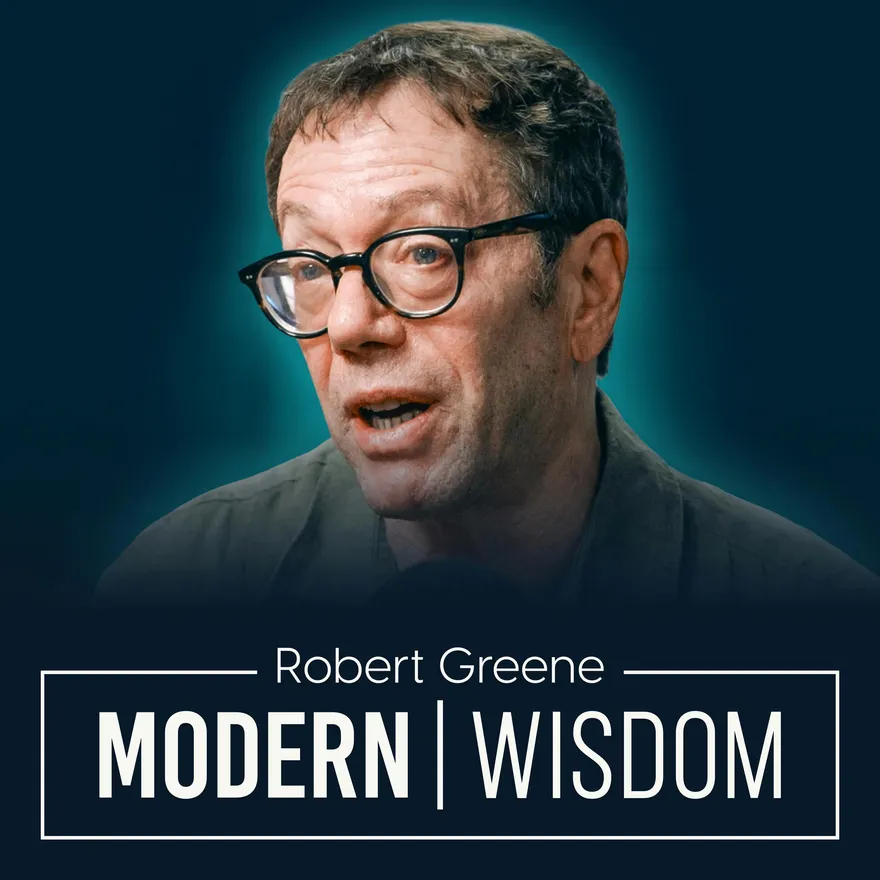

This is a preview of the Shortform summary of the Oct 12, 2026 episode of the Modern Wisdom
Sign up for Shortform to access the whole episode summary along with additional materials like counterarguments and context.
1-Page Summary
The Sublime: Defining Awe, Wonder, Transcendence, and Life's Transformative Impact on Consciousness
Robert Greene explores the sublime as a force that can shock us out of ordinary existence and offer transformative experiences of awe and transcendence. He examines how the mind filters reality, how mortality drives meaning, and how ego shapes or limits consciousness.
Sublime: A Gateway Beyond Perception Limits
Greene argues modern life has become "flattened out," with people dulled by repetitive content and mediated experiences. He explains that the human brain evolved to filter sensory input for survival, prioritizing daily responsibilities over wonder. Using Aldous Huxley's concept of the "small mind" versus "big mind," Greene shows how adult focus on survival shrinks our access to reality's full spectrum.
The sublime occurs when these mental filters dissolve. Greene references a neuroscientist who, during a stroke, felt her sense of self dissolve and experienced unity with her environment. His own near-death experience similarly revealed blissful, unmediated contact with reality. Greene emphasizes that what we accept as "reality" is constructed by our brains and cultures, and the sublime offers a way to transcend these limitations.
Mortality as a Gateway to Deeper Experience
Greene contends that mortality is central to experiencing the sublime. The awareness of death provokes questions about meaning and drives humans to seek purpose beyond survival. He points to 37,000-year-old cave paintings where shamans braved danger to connect with something transcendent—actions that had no survival benefit but satisfied humanity's deep need for cosmic connection.
Greene's own near-death experience altered his consciousness irreversibly, making ordinary life appear fundamentally different. He suggests those who repress these instincts often chase diluted substitutes like entertainment or drugs that fail to satisfy the underlying need for transcendence.
Scale, Insignificance, and Conscious Experience Intensity
Awareness of our tiny existence within cosmic time and space can paradoxically intensify life's richness. Greene notes that while animals are limited to the immediate, humans uniquely grasp the universe's immensity and our own brevity. This realization is initially humbling, but can provoke awe—to be aware of limitless time and space while still experiencing it is itself sublime.
Children instinctively possess this cosmic awareness, their vulnerability making them endlessly curious. But as people mature, ego development centers the self, diminishing curiosity and disconnecting us from that original intensity. Greene argues this egoism traps adults in cycles of self-concern, missing the vastness beyond. He introduces the concept of "ego attrition" from Zen Buddhism—the thinning of ego layers to regain openness and receptivity that makes the world seem new again.
Shock and Unfamiliarity Drive Sublime Transformation
The sublime's core is surprise—an encounter with the unfamiliar and uncontrollable. Greene emphasizes that only shock can truly awaken the mind: "There is no shock, there is no sublime." He cites mountain climbers who confront the unpredictable, describing one climber in Colorado who, facing death, found inexplicable strength to survive in a moment that transformed him forever.
Throughout history, humans have pursued the sublime through ritual. Greene explains that the Eleusinian Mysteries of ancient Greece deliberately simulated death and rebirth for participants, providing initiates with profound experiences of confronting mortality and the unknown that affirmed life's meaning.
The Numbing Effect of Technology: Social Media, Algorithms, and Connectivity Flattening Experience
Robert Greene and Chris Williamson explore how technology diminishes lived experience, flattens emotional response, and dulls natural sensory awareness.
Social Media Algorithms Compress Human Emotional and Sensory Amplitude
Greene describes how algorithmic feeds breed habituation, dulling appreciation for new content. Williamson likens this to life's "amplitude" being compressed, stripping away color and leaving a gray, homogenous existence. Greene notes that algorithmic curation fosters passive consumption and makes people dependent, while lack of historical context makes individuals easier to manipulate—"everything is in the present, everything you see, it's all like what social media is telling you."
Lack of Physical Challenge Dulls Natural Sensory Triggers
Greene contends that modern comforts and climate-controlled spaces diminish instinctive sensory awareness. He observes people in beautiful parks insulated by earphones and phones, refusing to disconnect even when surrounded by potential for sensory richness. Greene insists it's essential to put devices away in nature and allow sensory capacities to reawaken.
Connectivity Impairs Focus, Hindering Present Engagement
Constant digital connectivity disrupts presence and impedes deep engagement. Mental planning and worry—intensified by devices—fragment consciousness into past regrets and future anxieties, preventing people from inhabiting the present. Greene and Williamson argue that mediated representation through screens often replaces direct experience, producing an "observational consciousness" that distances people from authentic emotional connection.
True Inner Voice vs. Social Conditioning and Ego
Robert Greene and Chris Williamson explore the distinction between the authentic inner self—termed the "daemon"—and the layers of cultural conditioning and ego that obscure it.
The Daemon Embodies the True Self Beneath Cultural Conditioning
Greene describes the daemon as an ancient concept across cultures—the "second self" that embodies neurological patterns, temperament, and recurring fascinations that set each person apart. This daemon is not the socially constructed self shaped by parental and societal influences, but rather comprises specific moods and deep attractions that persist regardless of outside pressure.
The daemon communicates through powerful intuition, a visceral sense of right or wrong direction. Nietzsche, for example, felt his daemon pushing him away from conventional academia toward the life of a writer and philosopher.
Social Conditioning Suppresses the Daemon's Voice
Social expectations and the pursuit of public approval create layers that mask the daemon's voice. This gradual dissociation leads to profound discomfort. Greene notes that as people age while ignoring their inner calling, they may experience growing disengagement or find themselves locked in unsatisfying routines, often realizing painfully that decades have passed without true alignment.
Heeding the Daemon Yields Distinct Energy and Creativity
When individuals pursue paths aligned with their daemon, they experience revitalized energy and enthusiasm distinctly different from externally motivated endeavors. Greene recounts how his own work becomes fruitful only when driven by intrinsic excitement. Nietzsche's writing flourished once he honored his daemon, his greatest works exploding into existence after quitting his university post.
Distinguishing the Daemon's Voice Requires Attention to Signal Quality
Greene advises that careful attention is needed to distinguish the daemon's voice from fleeting impulses or fear. The daemon's voice carries a persistent, ancient knowingness, often rooted in early childhood passions. In contrast, culturally driven voices feel newly implanted, shifting according to trends and social acceptance.
Access to the Sublime: Exercises, Perspectives, and Lifestyle Changes to Reconnect With Awe
Robert Greene and Chris Williamson explore how engaging with mortality, history, nature, and direct sensory experience can reacquaint individuals with awe and the sublime.
Mortality Exercises Enhance Understanding of Death
Greene describes an exercise in which you visualize your body dissolving and your mind separating from your body, simulating dying. Afterward, observing the world as if you have already died makes everything appear more vivid and significant. This practice intensifies life's beauty, helping to break the ego's illusion of permanence.
Historical Study Offers Pattern Recognition
Greene argues that awareness of history deepens humanity by revealing recurring patterns. Today's seemingly unprecedented developments mirror prior societal changes. Understanding history also counters algorithmic manipulation—without historical context, people become easy targets. Knowledge of global and personal history puts present circumstances into perspective, reminding us that we live shaped by the dead, their values and inventions still resonating within us.
Nature Immersion Activates Dormant Sensory Capabilities
Williamson recounts experiences in wild environments where unpredictability heightens sensory engagement. Encounters with wildlife confront individuals with the limits of human perception and foster humility and awe. Greene describes how these encounters trigger heightened awareness where every sound is sharper and colors more intense, suggesting this ancestral resonance is deeply formative.
Sensory Engagement in Everyday Life Enhances Attention
Greene advocates for rekindling childlike fascination through sustained attention to ordinary things. Citing Vladimir Nabokov's recollections, he describes how something as simple as observing hummingbirds can reignite wonder. Deliberate sensory practices restore perceptual richness eroded by everyday distraction.
Balancing Tech Use Prevents Overdependence
Greene warns of technology's capacity to deaden perception, especially as algorithmic content hijacks emotional resources. He emphasizes that balance—not total abstinence—is paramount, creating digital breaks while safeguarding experiences that nurture awe, meaning, and genuine connection with the world and oneself.
1-Page Summary
Additional Materials
Clarifications
- Aldous Huxley's "small mind" refers to the ordinary, everyday consciousness focused on survival and routine. The "big mind" is a broader, more expansive state of awareness that transcends ego and habitual thinking. It allows access to deeper reality, creativity, and spiritual insight. Huxley believed practices like meditation could help shift from small to big mind.
- The brain filters sensory input through selective attention, prioritizing stimuli relevant for survival and daily tasks. This filtering occurs in the thalamus and cortex, which suppress or amplify signals to prevent sensory overload. Psychological factors like expectations and past experiences shape perception by influencing which inputs gain conscious awareness. This process helps maintain focus but limits exposure to novel or awe-inspiring stimuli.
- The sublime is a concept in philosophy describing experiences that overwhelm ordinary perception, evoking awe mixed with fear or admiration. It often involves encounters with vastness, power, or beauty beyond human control or comprehension. Psychologically, the sublime can trigger a shift in consciousness, expanding self-awareness and diminishing ego boundaries. Historically, thinkers like Kant and Burke linked the sublime to feelings that transcend everyday emotions, revealing deeper truths about existence.
- The Eleusinian Mysteries were secret religious rites held annually in ancient Greece, honoring the goddess Demeter and her daughter Persephone. Initiates underwent symbolic rituals representing death and rebirth, aiming to achieve spiritual renewal and a hopeful afterlife. These ceremonies were highly secretive, with participants sworn to silence about the details. The Mysteries profoundly influenced Greek spirituality by offering a direct, transformative experience of the divine and mortality.
- Ego attrition in Zen Buddhism refers to the gradual diminishing of the ego's dominance over the mind. It involves practices like meditation that help dissolve the sense of a fixed, separate self. This process leads to greater openness, presence, and a direct experience of reality without self-centered filters. Ultimately, ego attrition fosters a state of non-attachment and inner freedom.
- The concept of the "daemon" originates from ancient Greek philosophy, where it referred to a guiding spirit or inner voice distinct from the conscious self. It represents an innate, authentic core that drives a person's unique passions and purpose, often beyond rational thought or social influence. Unlike the ego, which is shaped by external expectations, the daemon reflects deep, persistent inclinations rooted in one's nature. Recognizing and following the daemon is seen as essential for genuine fulfillment and creativity.
- The daemon's voice is a deep, consistent inner guidance rooted in one's true nature and early passions. Culturally driven impulses are often fleeting, reactive, and shaped by external social pressures or trends. The daemon's voice feels persistent and authentic, while cultural impulses can feel new, unstable, or imposed. Recognizing the daemon requires tuning into long-standing, intrinsic motivations rather than momentary desires.
- Social media algorithms prioritize content that maximizes user engagement by showing repetitive, emotionally similar posts. This repetition reduces exposure to diverse or novel stimuli, dulling emotional responses over time. The constant stream of curated content conditions the brain to expect predictable patterns, limiting sensory variety. As a result, users experience a narrowed emotional range and diminished sensory richness.
- Observational consciousness refers to a detached state where one passively watches experiences without fully engaging emotionally. It creates a mental barrier that limits deep feeling and presence in the moment. Authentic emotional connection involves active participation and genuine feeling, fostering intimacy and meaning. This connection requires vulnerability and immersion, contrasting with the distancing effect of observational consciousness.
- Mortality visualization exercises involve mentally imagining the process of dying to confront and accept the reality of death. This practice reduces fear and denial by making death a familiar concept rather than an abstract threat. It can deepen appreciation for life, prompting greater presence and meaning in daily experiences. Such exercises are rooted in traditions like Stoicism and Tibetan Buddhism, which use death contemplation to foster spiritual growth.
- Historical pattern recognition helps individuals see recurring social, political, and economic trends, making them less likely to be misled by false novelty in information. Algorithms often exploit present-focused content to manipulate emotions and opinions by ignoring broader contexts. Understanding history provides a framework to critically evaluate current events and resist simplistic or sensational narratives. This awareness reduces vulnerability to manipulation by fostering informed skepticism and deeper perspective.
- Near-death experiences (NDEs) often cause profound shifts in self-perception and worldview, leading to increased spirituality and reduced fear of death. They can dissolve the usual boundaries of self, creating feelings of unity with the universe. Psychologically, NDEs may reduce materialistic values and increase appreciation for life and relationships. These changes can persist long-term, fundamentally altering consciousness and priorities.
- Ego development involves forming a strong sense of self and identity, which helps navigate social roles and responsibilities. This process often narrows focus to personal concerns, reducing openness to vast, abstract concepts like cosmic scale. As the ego solidifies, it filters out experiences that challenge its boundaries, diminishing innate curiosity about the universe. Thus, mature ego structures can unintentionally suppress the childlike wonder and expansive awareness of cosmic interconnectedness.
- Shock in the sublime refers to a sudden, intense disruption of normal perception that forces the mind to confront something vast or unknown. This abrupt break from routine mental patterns triggers heightened awareness and emotional intensity. It often involves encountering something overwhelming, unfamiliar, or uncontrollable, which challenges the ego's sense of safety. Such moments can catalyze profound personal transformation by expanding consciousness beyond everyday limits.
- Nature immersion reduces overstimulation from artificial environments, allowing the brain's sensory processing centers to reset and heighten sensitivity. Exposure to varied natural stimuli engages multiple senses simultaneously, enhancing neural connectivity and sensory integration. This multisensory engagement activates the parasympathetic nervous system, promoting relaxation and improved attention. Over time, these effects restore and amplify perceptual acuity diminished by modern, technology-heavy lifestyles.
Counterarguments
- The claim that modern life "dulls" perception and flattens experience may overlook the ways technology and media can also expand access to awe, wonder, and new forms of connection, creativity, and learning.
- The idea that adult focus on survival shrinks consciousness may not account for adults who actively cultivate curiosity, creativity, and openness through lifelong learning, travel, or artistic pursuits.
- The assertion that the sublime requires dissolution of mental filters may ignore that many people find meaning and awe within ordinary, filtered experiences, such as family life, work, or community engagement.
- The emphasis on mortality as a gateway to meaning may not resonate with individuals or cultures that find purpose in life-affirming values, relationships, or secular humanism rather than existential confrontation with death.
- The notion that ancient rituals and art were primarily about transcendence may oversimplify their social, political, or practical functions in early societies.
- The idea that near-death experiences universally transform consciousness may not apply to all individuals, as some report no lasting change or even negative psychological effects.
- The claim that repressing instincts for transcendence leads to unsatisfying substitutes like entertainment or drugs may not acknowledge that many people find genuine fulfillment in art, sports, hobbies, or social activities.
- The view that awareness of cosmic insignificance is inherently awe-inspiring may not be shared by those who find such realizations anxiety-provoking or nihilistic.
- The assertion that ego development necessarily diminishes curiosity and openness may not reflect the experiences of adults who become more open-minded or curious with age.
- The concept of "ego attrition" as universally beneficial may not account for the importance of a stable sense of self for psychological health and functioning.
- The idea that shock and unfamiliarity are essential for the sublime may overlook the value of gradual, contemplative, or familiar experiences in fostering awe and transformation.
- The criticism of technology as inherently numbing may not consider how digital tools can facilitate mindfulness, learning, and meaningful social connection.
- The claim that algorithmic curation always leads to manipulation and passivity may not reflect the experiences of users who actively seek diverse, enriching, or challenging content online.
- The assertion that modern comforts dull sensory awareness may not account for individuals who use technology to enhance or document sensory experiences (e.g., nature photography, sound recording).
- The idea that constant connectivity fragments consciousness may not apply to those who use digital tools to support focus, organization, or mental health.
- The concept of the "daemon" as a true self beneath conditioning may not align with psychological theories that view identity as dynamic, socially constructed, and multifaceted.
- The claim that social conditioning always suppresses the true self may not acknowledge the positive role of culture and community in shaping values, aspirations, and well-being.
- The suggestion that visualizing death is universally beneficial for breaking ego illusions may not be appropriate or helpful for individuals with certain mental health conditions or trauma histories.
- The emphasis on history as a counter to manipulation may not consider that historical narratives themselves can be selective, biased, or manipulated.
- The idea that immersion in nature is necessary for awe and sensory reawakening may not reflect the experiences of those who find awe in urban environments, art, or intellectual pursuits.
- The recommendation to balance technology use may not address structural or socioeconomic barriers that limit individuals' ability to disconnect or access alternative sources of awe and meaning.


Get access to the context and additional materials
The Sublime: Defining Awe, Wonder, Transcendence, and Life's Transformative Impact on Consciousness
Robert Greene explores the profound concept of the sublime as a force that can shock us out of the ordinary, reconnect us to deeper aspects of existence, and offer transformative experiences of awe and transcendence. This journey involves understanding how the mind filters reality, how mortality drives us toward meaning, and how a sense of scale or ego can shape—or limit—our consciousness.
Sublime: A Gateway Beyond Perception Limits
Greene describes modern life as “flattened out,” with people suffering from a lack of meaningful or surprising experiences, dulled by repetitive content and mediated existence. This deadness, he argues, is rooted in how the human brain evolved to filter experience: the mind prioritizes survival, planning, and daily responsibilities by inhibiting the flood of sensory input. As adults, we’re preoccupied with to-do lists and schedules, further narrowing our perception and reducing our capacity for wonder. Aldous Huxley's distinction between the “small mind” and the “big mind” illustrates how, over time, focus on survival shrinks our access to the full spectrum of reality.
Through both personal and scientific examples, Greene demonstrates that the sublime occurs when these mental filters dissolve. He references the testimony of a neuroscientist who, during a stroke, felt the boundaries of self dissolve, experiencing unity with her environment and total silence of internal chatter. Greene relates a similar effect during his own near-death experience: when cognitive filters fell away, the sensation was blissful, almost mystical. These events provide direct, unmediated contact with reality—a “shock” that awakens us to the strangeness and grandeur of existence.
Cultural conditioning further limits perception. What we accept as “reality” is shaped by our era and environment: someone living in 21st-century America does not perceive the world as did an ancient Egyptian, and different species or cultures experience completely different realities. Greene insists we must recognize that what feels real is constructed by both our brains and our civilizations, and the sublime is a gateway to experiencing reality that transcends these limitations.
Mortality as a Gateway to Deeper Experience
Mortality, Greene contends, is central to experiencing the sublime. The background awareness of death haunts our lives and provokes questions about meaning—why work so hard when it all ends in death? In earlier human history, death was a constant and inescapable presence; ancestors confronted mortality directly, which intensified their search for meaning beyond bare survival.
This quest manifested in rituals and art, such as the 37,000-year-old cave paintings discovered in France, where shamans braved darkness, danger, and death to connect with something transcendent. These actions had no survival benefit but represented humanity’s deep need for purpose and connection to the cosmos or the divine.
Greene links his own near-death experience to a shift in perception: encountering death viscerally altered his physiology and consciousness, making ordinary life appear fundamentally and irreversibly different. He explains that those who undergo such experiences often find themselves driven to seek or reconnect with the sublime, while those who repress these instincts may instead chase diluted substitutes—addictive entertainment, action movies, or drugs—that fail to satisfy the underlying need for transcendence.
Scale, Insignificance, and Conscious Experience Intensity
Awareness of scale—our tiny existence within the cosmic sweep of time and space—can, paradoxically, intensify rather than diminish the richness of life. Greene argues animals are limited to the immediate, whereas humans uniquely grasp the immensity of the universe and the brevity of individual existence. This realization is initially humbling or even frightening, highlighting our vulnerability and smallness against billions of years and billions of people.
However, Greene suggests this sense of insignificance can provoke awe and wonder: to be aware of limitless time and space, yet still experience and contemplate it, is itself sublime. Children instinctively possess this cosmic awareness. Their vulnerability and smallness make them endlessly curious; everything seems intensely new, strange, and noteworthy. He reminisces about the imaginative intensity of childhood—seeing the world for the first time, living full of wonder and excitement.
But as people mature, ego development centers the self, diminishing curiosity and disconnecting us from that original intensity. Egoism traps adults in cycles of self-concern and petty grievances, shrinking their sense of connectedness to the universe. Greene notes this contributes to widespread misery and flatness, as people become the centers of their own limited universes, missing the vastness beyond.
He illustrates this with the example of therapy: years of talking about personal problems may drive the focus ever inward, fueling the ego. True transformation, Greene argues, often requires stepping outside the ego, reconnecting with the vastness of reality. He explains the concept of “ego attrition” from Zen Buddhism, the thinning of ego layers to regain openness and receptivity—qualities that make the world seem new and intense again. Failing to accept vulnerability and our proper scale, he warns, deprives us of this intensity.
Shock and Unfa ...
Here’s what you’ll find in our full summary
The Sublime: Defining Awe, Wonder, Transcendence, and Life's Transformative Impact on Consciousness
Additional Materials
Clarifications
- The sublime is a concept in philosophy and psychology describing experiences that overwhelm ordinary perception with vastness, power, or beauty, evoking awe and sometimes fear. It was extensively explored by thinkers like Edmund Burke and Immanuel Kant, who linked it to feelings beyond everyday pleasure, involving a mix of attraction and terror. Psychologically, the sublime challenges the ego and cognitive limits, prompting a sense of connection to something greater than oneself. It often arises in encounters with nature, art, or profound existential moments.
- Aldous Huxley described the "small mind" as the everyday, survival-focused consciousness that filters and limits perception to practical concerns. The "big mind" refers to an expanded state of awareness that transcends ordinary thought, allowing access to deeper, more holistic experiences of reality. This concept highlights the contrast between narrow, ego-driven thinking and a broader, more open consciousness. Huxley believed cultivating the "big mind" could lead to spiritual insight and greater appreciation of existence.
- The brain uses mental filters to prioritize important information by suppressing less relevant sensory data, preventing overload. This process involves the thalamus and prefrontal cortex, which regulate attention and focus. Sensory gating mechanisms reduce the flow of stimuli to conscious awareness, enabling efficient cognitive functioning. Without these filters, the brain would be overwhelmed by constant sensory input, impairing decision-making and survival.
- Near-death experiences (NDEs) often involve sensations like leaving the body, seeing bright lights, or feeling profound peace. These events can disrupt normal brain activity, temporarily altering perception and self-awareness. Many report lasting changes in values, spirituality, and reduced fear of death after an NDE. Scientists study NDEs to understand consciousness beyond typical brain function.
- Cultural conditioning refers to how the beliefs, values, and experiences of a society shape the way individuals interpret the world. It influences what people consider normal, real, or important, often unconsciously guiding perception. Different cultures develop unique languages, symbols, and practices that filter and frame sensory input. This means reality is partly constructed by social context, not just by objective facts.
- The 37,000-year-old cave paintings, such as those in Chauvet Cave, France, are some of the earliest known human artworks. They likely served ritualistic or spiritual purposes, helping early humans connect with forces beyond daily survival. Shamans may have created these images during trance states to access transcendent experiences or communicate with the spirit world. These paintings symbolize humanity’s ancient quest for meaning and connection to the cosmos.
- Ego attrition in Zen Buddhism refers to the gradual diminishing of the ego's dominance over the mind. It involves practices like meditation that help dissolve the sense of a separate, fixed self. This process leads to greater openness, presence, and connection with reality as it is. The goal is to experience life without the distortions of self-centered thoughts and attachments.
- Therapy often involves discussing personal issues, which can increase self-focus and reinforce the ego's dominance. This inward attention may strengthen patterns of self-concern rather than diminish them. True transformation requires moving beyond ego-centered thinking to embrace openness and connectedness. Without this shift, therapy risks deepening ego entrenchment instead of fostering profound change.
- The Eleusinian Mysteries were secret religious rites held annually in ancient Greece, centered on the goddesses Demeter and Persephone. Participants underwent initiation ceremonies symbolizing Persephone’s descent into and return from the underworld, representing death and rebirth. These rituals aimed to grant initiates spiritual insight, hope for life after death, and a deeper connection to nature’s cycles. The Mysteries profoundly influenced Greek spirituality by emphasizing transformation through confronting mortality.
- The myth of Persephone and Demeter tells of Persephone’s abduction to the underworld, causing her mother Demeter’s grief and the earth’s barrenness. Persep ...
Counterarguments
- The claim that modern life is uniquely “flattened out” or lacking in meaningful experiences may overlook the diversity of individual experiences and the ways in which people find meaning and awe in everyday life, technology, or community.
- The idea that rituals like ancient cave paintings had “no survival benefit” is debated; some anthropologists argue that such activities could have social, educational, or evolutionary advantages.
- The assertion that therapy focused on personal problems necessarily fuels egoism may not account for therapeutic approaches that foster empathy, perspective-taking, and connection to others.
- The emphasis on shock or extreme experiences as the primary route to the sublime may undervalue gradual, contemplative, or everyday forms of awe and transcendence, such as those found in art, nature, or relationships.
- The notion that children possess a more “cosmic” awareness than adults is contested; some developmental psychologists argue that children’s sense of wonder is different but not necessarily deeper or more authentic.
- The view that ego development in adulthood is inherently negative may ignore the adaptiv ...

Get access to the context and additional materials
The Numbing Effect of Technology: Social Media, Algorithms, and Connectivity Flattening Experience
Robert Greene and Chris Williamson explore how technology—particularly social media, algorithmic feeds, and modern connectivity—diminishes lived experience, flattens emotional response, and dulls natural sensory awareness. Their reflections probe the cost of constant digital engagement and the necessity of reclaiming attention for direct, meaningful contact with the world.
Social Media Algorithms Compress Human Emotional and Sensory Amplitude
Greene describes a pervasive deadness and flatness in people’s experience, attributing it to social media’s influence. He observes that algorithmic feeds dull appreciation for new content by breeding habituation. For instance, viewing cat videos on Instagram may initially be exciting, but after repeated exposure, the novelty fades—“it's all programs, it's all algorithms, it's all the same.” Williamson likens this to life’s “amplitude” being compressed, stripping away color. Emotional highs and lows become muted, resulting in a gray, homogenous existence lacking deep feeling.
Algorithmic curation fosters passive consumption, limiting personal exploration and interpretation. Greene notes the intoxicating and addictive cycle of being offered new but fundamentally similar content, which encourages viewers to remain passive. “It’s making you passive. It’s making you dependent on algorithms,” Greene states, recognizing that curated imagery and video keep people engaged without challenging them to actively search, experiment, or interpret for themselves. Williamson adds that the mind, like the body, becomes what it repeatedly consumes, reinforcing the point that sensory diet matters for mental vitality.
Digital platforms exploit vulnerabilities, especially when individuals lack historical context and critical distance. With no sense of history, Greene suggests, people become easier to manipulate—“everything is in the present, everything you see, it's all like what social media is telling you, what the algorithms are saying.” The absence of perspective means emotional triggers are taken at face value, allowing powerful entities or influencers to continually stir anger, fascination, or other base emotions. Greene underlines the importance of stepping back, recognizing manipulation, and reclaiming control over one’s reactions.
Lack of Physical Challenge and True Environmental Engagement Dulls Natural Sensory Triggers
Greene contends that the comforts of modern urban environments and climate-controlled spaces diminish instinctive sensory awareness. When removed from challenge or unpredictability—as when one is dropped onto an island and forced to survive—natural senses become sharp; otherwise, these senses dull. “When your senses are dead, you're not connected to your own body,” Greene warns, emphasizing that “immense powers” lie dormant in comfort.
Technology distraction in nature further hinders sensory integration. Greene observes people in beautiful, peaceful park environments, insulated by earphones and absorbed by their phones, refusing to disconnect even when surrounded by potential for sensory richness. Similarly, Williamson recounts how technology such as drone cameras during a safari can detract from the direct experience of nature, creating a barrier between individuals and their environment.
Modern comforts and persistent technological engagement dull the nervous system, limiting quick, heighte ...
Here’s what you’ll find in our full summary
The Numbing Effect of Technology: Social Media, Algorithms, and Connectivity Flattening Experience
Additional Materials
Clarifications
- "Emotional and sensory amplitude" refers to the range and intensity of feelings and sensory experiences a person can perceive. Higher amplitude means experiencing emotions and sensations vividly and deeply, while lower amplitude indicates muted or dulled responses. Technology, especially repetitive digital content, can reduce this amplitude by making experiences feel repetitive and less impactful. This flattening limits the richness and variety of human experience, leading to emotional numbness.
- Social media algorithms analyze user behavior, such as likes, shares, and viewing time, to predict content preferences. They prioritize and display posts that are likely to keep users engaged longer. This personalized feed aims to maximize user interaction and platform time. Algorithms continuously update based on new user data to refine content suggestions.
- Algorithmic curation refers to the use of computer programs to select and organize content based on user data and preferences. These algorithms predict what users will engage with, showing similar types of content repeatedly. This can limit exposure to diverse ideas and encourage passive consumption. Over time, it shapes user behavior by reinforcing habits and reducing active exploration.
- The concept of a "sensory diet" refers to the variety and quality of sensory experiences a person regularly encounters. Just as a nutritional diet affects physical health, a sensory diet influences mental and emotional well-being. Repeated exposure to certain types of sensory input can strengthen related neural pathways, shaping perception and behavior. Therefore, consuming limited or repetitive digital content can narrow mental flexibility and dull emotional responsiveness.
- Historical context provides a broader timeline that helps people understand events beyond immediate emotions or trends. Critical distance allows individuals to step back and analyze information objectively rather than reacting impulsively. Together, they enable recognition of manipulation tactics by revealing patterns and motives behind content. This awareness reduces susceptibility to emotional exploitation and encourages informed responses.
- "Observational consciousness" refers to experiencing life primarily as an outside observer rather than as an active participant. It involves focusing on documenting, analyzing, or sharing moments instead of fully feeling or engaging with them. This mindset creates a psychological distance, reducing emotional depth and sensory immersion. In contrast, direct experience means being fully present and emotionally connected to the moment without mediation or detachment.
- Physical challenges and unpredictability stimulate the nervous system, heightening alertness and sensory acuity. When faced with novel or demanding situations, the brain prioritizes sensory input to navigate risks and opportunities. In contrast, predictable, comfortable environments reduce the need for intense sensory engagement, leading to dulled perception. This process is evolutionary, as heightened senses improve survival in uncertain conditions.
- Modern urban comforts and climate control create stable, predictable environments that reduce the need for the body to adapt or respond to changing conditions. This lack of environmental challenge weakens sensory acuity because the nervous system is not regularly stimulate ...
Counterarguments
- Technology and social media can enhance lived experience by providing access to diverse perspectives, educational resources, and creative inspiration that might not be available otherwise.
- Algorithmic feeds can help users discover new interests and communities, broadening rather than narrowing their experiences.
- Passive consumption is not inherent to technology use; many people use digital platforms actively to create, share, and engage meaningfully with others.
- Digital connectivity can foster genuine relationships and support networks, especially for individuals who are isolated or marginalized in their offline environments.
- The ability to document and share experiences through technology can deepen engagement and reflection, rather than necessarily creating distance.
- Urban comforts and technological conveniences can improve quality of life, health, and safety, which may enable people to pursue more meaningful experiences in other areas.
- Some individuals report that technology helps them b ...
Get access to the context and additional materials
True Inner Voice vs. Social Conditioning and Ego
Robert Greene and Chris Williamson explore the distinction between the authentic, inner self—termed the "daemon"—and the layers of cultural conditioning and ego that often obscure it. Through philosophical, psychological, and personal examples, they frame the daemon as a source of unique identity and creativity, suppressed by societal pressures but crucial for lasting fulfillment.
The Daemon Embodies the True Self Beneath Cultural Conditioning and Ego Development Layers
Greene describes the daemon as an ancient concept—the “second self” noted across cultures such as the Egyptians (their “ka”) and other African traditions (“sun sum”). This daemon is not the social self, which is constructed through parental, educational, and societal influences that shape people to fit prevailing norms. Instead, the daemon comprises the neurological patterns, temperament, and recurring fascinations that set each person apart from others. It embodies specific moods, deep attractions (such as lifelong preferences for certain foods, partners, or stories), and interests that persist regardless of outside pressure or explanation.
Historically, daemons were seen as guiding forces. Socrates and Plato wrote of them, and Carl Jung delved deeply into the phenomenon. These ancient thinkers understood the daemon as a voice or presence leading individuals toward authenticity and purpose, despite societal expectations or conventional career paths. Greene likens the daemon to a guiding animal—a fierce, intuitive sense that signals alignment or misalignment with one’s core.
The daemon communicates through a powerful intuition, a visceral sense of right or wrong direction. For instance, creative people often feel an internal warning or persistent discomfort when pursuing a path that diverges from their core passions. Nietzsche, for example, felt his daemon’s voice pushing him away from a conventional academic and theological trajectory, urging him instead toward the life of a writer and philosopher. This guidance, Greene emphasizes, is distinct from peer- or culture-influenced desires and persists as a deeply personal, rebellious undercurrent.
Social Conditioning Suppresses the Daemon's Voice Through Imposed Identities and External Success Definitions
Social identity categories, expectations for financial stability, and the pursuit of public approval create layers that mask the daemon’s voice. These identities become self-fulfilling prophecies, steering individuals into paths that may be lucrative or respected but don’t fit their deepest interests or authentic selves. The ego—the persona built up to navigate society—thickens over time, further insulating individuals from their true selves beneath accumulated roles and habitual behaviors.
This gradual dissociation from the daemon leads to profound discomfort. Greene notes that as people age, if they continue to ignore their inner calling, they may experience growing disengagement, resort to self-destructive habits, or find themselves locked in unsatisfying routines. Life becomes rigid, animated by external validation rather than internal excitement. As Greene says, one may chase jobs and stability into their forties and fifties only to feel trapped and realize, often painfully, that decades have passed without true alignment.
Heeding the Daemon Yields Distinct Energy and Creativity Than External Motivation
When individuals pursue paths aligned with their daemon, they experience revitalized energy, productivity, and enthusiasm distinctly different from externally motivated endeavors. Projects rooted in genuine fascination bring about sustained engagement and creative breakthroughs. Greene recounts how his own work becomes fruitful only when driven by intrinsic excitement—his books succeed and feel alive when they reflect subjects that have sparked his curiosity since childhood, not when they fulfill external demands.
Historical figures illustrate this transformation through creative redirection. Nietzsche, after quitting his university post and severing ties with former colleagues, found that his writing flouri ...
Here’s what you’ll find in our full summary
True Inner Voice vs. Social Conditioning and Ego
Additional Materials
Clarifications
- The "daemon" is an ancient spiritual concept representing a guiding inner spirit or essence unique to each person. In Egyptian belief, the "ka" is a vital force or life spirit that accompanies an individual throughout life and after death. The African "sun sum" similarly refers to a personal spiritual double or inner self that influences one's character and destiny. These ideas reflect a universal human intuition of an inner presence distinct from social identity or ego.
- Socrates described his daemon as a personal inner voice that warned him against certain actions but never told him what to do. Plato expanded this idea, viewing the daemon as a spiritual guide connecting the individual to higher truths. Carl Jung interpreted the daemon as part of the unconscious mind, representing a unique inner force driving creativity and self-realization. Together, these thinkers saw the daemon as a vital, intuitive presence distinct from social conditioning.
- The "daemon" represents the authentic core self, rooted in innate traits and deep, consistent passions. The "ego" or "social self" is a constructed identity shaped by external influences like culture, upbringing, and societal expectations. While the daemon guides toward genuine fulfillment, the ego manages social roles and seeks approval. The ego often masks or suppresses the daemon to conform to external norms.
- The neurological basis of the daemon refers to how brain structures and neural pathways shape individual temperament and consistent patterns of thought and feeling. These innate brain functions influence personality traits, emotional responses, and persistent interests that form a core part of identity. Temperament is linked to genetic and early developmental factors affecting how people react to the world. Thus, the daemon reflects these deep, biologically rooted aspects of self that remain stable despite external influences.
- The "guiding animal" metaphor likens the daemon to an instinctive, inner companion that helps navigate life’s choices. It represents a deep, nonverbal knowing that signals when actions align or conflict with one’s true nature. This intuitive sense operates beneath conscious thought, often felt as a gut feeling or emotional resonance. It guides toward authenticity by alerting to paths that nurture personal growth and creativity.
- Friedrich Nietzsche was a 19th-century philosopher who abandoned a traditional academic career to pursue independent writing. His "daemon" represented his inner drive toward original thought and creative freedom, conflicting with societal expectations. This inner voice pushed him to explore radical ideas about morality, culture, and individuality. Nietzsche’s life choices reflect following this authentic calling despite personal and social challenges.
- Social conditioning is the process by which individuals learn and internalize the norms, values, and behaviors deemed acceptable by their culture and society. This learning shapes identity and decision-making, often prioritizing conformity and external approval over personal authenticity. Over time, these learned patterns can overshadow innate desires and instincts, like the daemon, by creating habitual responses aligned with social expectations. As a result, the true self becomes hidden beneath layers of acquired behaviors and beliefs.
- The ego is a psychological construct that helps individuals navigate social reality by creating a manageable self-image. It forms through internalizing societal expectations, roles, and norms, shaping how one presents to others. Over time, this persona can become rigid, prioritizing external approval over inner truth. This insulation can block access to deeper feelings and authentic desires, distancing one from the true self.
- Intrinsic motivation arises from internal desires, interests, or values, driving actions because they are inherently satisfying or meaningful. External motivation depends on outside rewards or pressures, such as money, ...
Counterarguments
- The concept of a "daemon" as an inner, authentic self is metaphysical and lacks empirical scientific evidence; psychological research often finds identity to be fluid and socially constructed rather than fixed or innate.
- The distinction between the "true self" and "social self" may be overly simplistic; many psychologists argue that socialization is integral to personality development and that authenticity can emerge through social roles and relationships.
- The idea that social conditioning is inherently suppressive overlooks the positive role of cultural norms in fostering cooperation, empathy, and shared meaning.
- Not all persistent interests or fascinations are necessarily healthy or beneficial; some may be maladaptive or rooted in early trauma rather than authentic selfhood.
- The narrative that ignoring one's "daemon" leads to disengagement or health issues is anecdotal and not universally supported by psychological studies on well-being or life satisfaction.
- The valorization of rebellion or countercultural paths may romanticize risk-taking and undervalue the fulfillment many people find in conventional or community-oriented lives.
- The claim that intuition or "visceral feelings" reliably indicate one's authentic path is challenged by cognitive science, which shows th ...

Get access to the context and additional materials
Access to the Sublime: Exercises, Perspectives, and Lifestyle Changes to Reconnect With Awe (Mortality, Nature, History, Sensory Engagement)
Robert Greene and Chris Williamson explore how engaging with mortality, history, nature, and direct sensory experience can reacquaint individuals with awe and the sublime, while advocating for a balanced relationship with technology.
Mortality Exercises Enhance Understanding of Death, Altering Perception and Removing Trivial Concerns
Greene describes an exercise in which you lie down and visualize your body sinking into the ground, your bones dissolving, and your mind separating from your body, simulating the experience of dying. Afterward, walking outside and observing the world as if you have already died makes everything appear more vivid and significant. This visualization creates an acute awareness of mortality, stripping away trivial concerns and shifting your perception so that daily irritations lose their weight. The practice intensifies the beauty of life, helping to break the ego’s illusion of permanence and fostering a perspective that recognizes the fleeting, precious nature of existence.
Historical Study Offers Scaffolding For Pattern Recognition and Frees Individuals From the Illusion of Unprecedented Circumstances
Greene argues that awareness of history does not necessarily help your career or financial success, but instead deepens your humanity. We are creatures of history: everything from our values, language, and thoughts to our systems and music derive from centuries of accumulated experience. Greene emphasizes that history reveals recurring patterns and cycles; today's seemingly unprecedented developments—like AI or social media—mirror prior societal changes, such as the invention of the printing press. When people believe their era is uniquely different ("this time it's different"), history reminds us that each generation reacts against the last and grapples with similar issues under new guises.
Understanding history also shows that our brains, values, and behaviors are products of millions of years of evolution and historical contingency. Knowledge of how life evolved, from the Cambrian explosion to the dominance of our body plan and the imprints of extinct species, helps dissolve the illusion of isolation from the past. On an everyday level, knowledge of history counters algorithmic manipulation and propaganda. Without historical context, people become easy targets, unable to perceive manipulations or biases. Awareness of global and personal history puts present circumstances into perspective, reminding us that we live in a necropolis—surrounded and shaped by the dead, their values and inventions still resonating within us.
Nature Immersion in Unpredictable Environments Activates Dormant Sensory and Intuitive Capabilities
Williamson recounts experiences in wild environments—such as safaris in Zambia—where the unpredictability heightens sensory engagement. In these settings, time slows and memories become more vivid due to the novelty and intensity of the surroundings. Encounters with wildlife, such as elephants, cheetahs, rhinos, and especially hippos, confront individuals with the limits of human perception and foster humility and awe in the face of powerful animal intelligence.
Greene tells of explorer Arsenyev and his indigenous guide Dersu’s interaction with a Siberian tiger, illustrating a form of intelligence and spirit attuned to the wild—something that modern humans often lack. These encounters, whether with hippos hiding completely beneath water or with a charging elephant, trigger a rush of adrenaline and heightened awareness, sometimes lasting for hours afterward. Both Greene and Williamson describe a post-crisis state where every sound is sharper and colors are more intense, suggesting this ancestral resonance is deeply formative.
Sensory Engagement in Everyday Life Enhances Attention and Wonder
Greene advocates for rekindling childlike fascination thro ...
Here’s what you’ll find in our full summary
Access to the Sublime: Exercises, Perspectives, and Lifestyle Changes to Reconnect With Awe (Mortality, Nature, History, Sensory Engagement)
Additional Materials
Counterarguments
- Visualizing mortality may not be universally beneficial; for some individuals, such exercises could exacerbate anxiety or existential distress rather than foster appreciation for life.
- The claim that mortality exercises break the ego’s illusion of permanence assumes a universal psychological effect, but some people may remain unaffected or even become more self-focused.
- While studying history can deepen humanity, it is not the only path to understanding oneself or society; other disciplines like philosophy, psychology, or the arts can offer similar insights.
- The assertion that history always repeats itself may oversimplify complex social and technological changes that are genuinely unprecedented in scale or impact.
- Emphasizing evolutionary and historical contingency might underplay the role of individual agency and cultural innovation in shaping values and behaviors.
- Historical knowledge can help resist manipulation, but it does not guarantee immunity; people with historical awareness can still fall prey to propaganda or bias.
- The idea that immersion in nature is necessary for activating sensory and intuitive capabilities may overlook the fact that urban or technological environments can also foster creativity and heightened perception.
- Encounters with wildlife are not accessible or appealing to everyone, and awe or humility can be cultivated through other means, such as art, music, or interpersonal relationships.
- Heightened awareness after crises may not always be positive; for some, it can lead to trauma or ...
Actionables
- you can set a daily five-minute timer to quietly observe a single ordinary object or scene, such as a leaf, a puddle, or the pattern of light on a wall, and write down every detail you notice, training your senses to uncover new layers of wonder in the familiar.
- a practical way to deepen your sense of historical continuity is to trace the origins of a common household item (like a spoon or a chair) by researching its evolution and reflecting on how countless past lives and inventions shaped its current form, helping you feel connected to the flow of history.
- you can create a personal “mortality remi ...


Get access to the context and additional materials

 1-Page Summary
- The Sublime: Defining Awe, Wonder, Transcendence, and Life's Transformative Impact on Consciousness
- The Numbing Effect of Technology: Social Media, Algorithms, and Connectivity Flattening Experience
- True Inner Voice vs. Social Conditioning and Ego
- Access to the Sublime: Exercises, Perspectives, and Lifestyle Changes to Reconnect With Awe (Mortality, Nature, History, Sensory Engagement)
Create Summaries for anything on the web
Download the Shortform Chrome extension for your browser
