

Willpower Expert: The Secret To Effortless Discipline - Angela Duckworth - #1158
In this episode of Modern Wisdom, Angela Duckworth and Chris Williamson challenge the conventional wisdom around grit and willpower, exploring when relentless effort becomes counterproductive. Duckworth explains how high achievers can fall into the trap of applying more discipline to situations that actually require environmental changes, not harder work. The conversation reveals how burnout stems from mismatches between people and their circumstances, and why recovery depends on restructuring one's situation rather than summoning more self-control.
The discussion moves beyond individual willpower to examine how mentors, peer groups, physical location, and environmental design shape success far more effectively than raw determination. Duckworth and Williamson cover practical strategies for attracting mentors, leveraging peer accountability, and curating spaces that support goals. They also address why high achievers resist acknowledging external factors in their success and how intentional relocation to communities aligned with one's ambitions can be a high-leverage life change, despite our natural resistance to such moves.
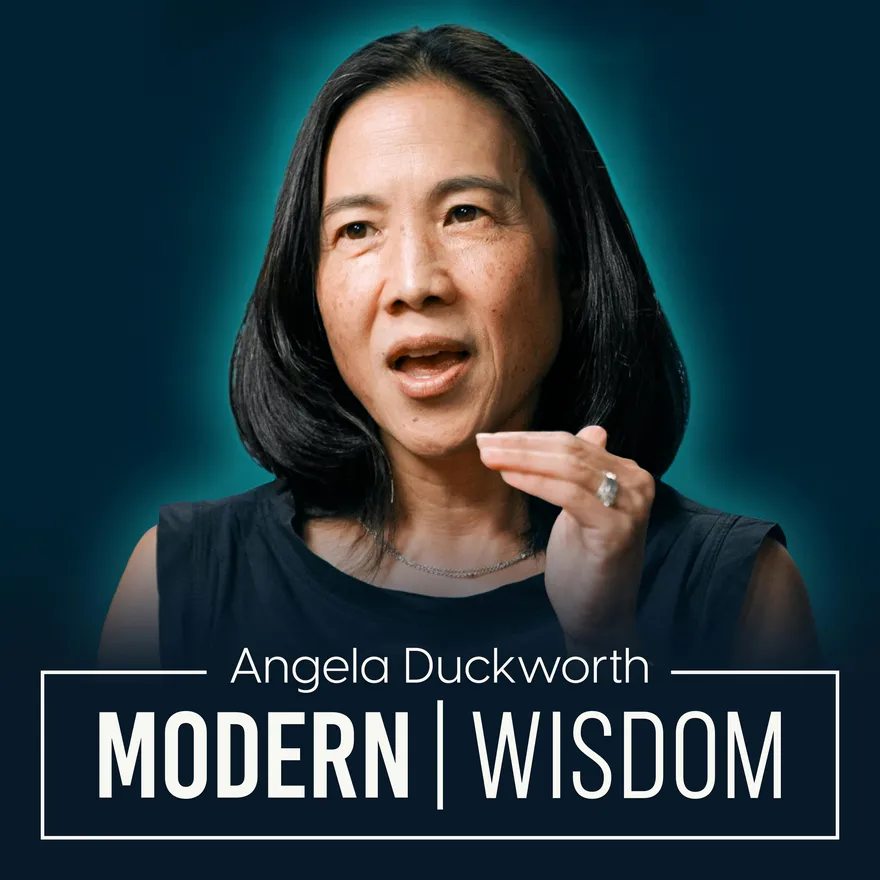

This is a preview of the Shortform summary of the Oct 3, 2026 episode of the Modern Wisdom
Sign up for Shortform to access the whole episode summary along with additional materials like counterarguments and context.
1-Page Summary
Grit's Limits: When Effort Causes Burnout
Angela Duckworth and Chris Williamson discuss how relentlessly applying grit can lead to burnout rather than success, emphasizing that effort's effectiveness depends on context.
Grit Can Become Dangerous When Applied Indiscriminately
Both speakers describe the "try harder" reflex common among high achievers: when progress stalls, they instinctively increase effort. Duckworth explains how setbacks led her to work from dawn until after midnight, only deepening her exhaustion. She acknowledges that while trying harder sometimes works—like pushing through a weightlifting set—it's incomplete advice. The danger arises when high achievers fail to consider that their lack of progress might reflect a misalignment between circumstances and goals, not insufficient effort.
Williamson notes that using willpower against burnout often worsens the situation, depleting the resources needed for recovery. Both point out that constraints like toxic work environments cannot be overcome simply by trying harder—environmental change becomes essential.
Burnout Requires Environmental Intervention, Not More Self-Discipline
Duckworth defines burnout as exhaustion, mental detachment, and helplessness, citing Christina Maslach's research showing it originates from person-environment mismatches like excessive workloads or lack of autonomy. Crucially, burnout is situational, not a character flaw. Recovery requires changing the environment or circumstances rather than summoning more willpower.
Duckworth's breakthrough came only after a colleague offered practical feedback on her book's structure, fundamentally changing her approach. She emphasizes that burnout is temporary and emotional, like joy or fear, and can be resolved by restructuring circumstances, not just through internal fortitude.
Ambitious Individuals Often Become "Advice Hyper-Responders"
Duckworth and Williamson introduce "advice hyper-responders"—ambitious individuals who over-apply self-improvement messages rather than recalibrating. For effort-driven achievers, hearing "work harder" doesn't moderate behavior; it leads them to intensify efforts even when the solution requires stepping back or seeking help. This feedback loop transforms a strength into a liability, making high-performers vulnerable to burnout by perpetually escalating effort instead of changing course. The key lesson is self-awareness: knowing when grit is an asset and when it's time to seek external support.
Role of Environment: How Mentors, Peers, Space Enable Success Over Willpower
Duckworth and Williamson explore how external circumstances play a far greater role in fostering achievement than raw willpower. Success often stems from intentionally shaping one's environment to support consistent effort.
Environmental Design Encourages Desired Behaviors Without Relying On Willpower
Duckworth emphasizes that willpower is the least effective method for changing behavior. Successful individuals create lives where good choices are easier and friction is minimized. Micro-level obstacles, like gym clothes tucked in a drawer, can prevent follow-through. Simply laying out gym clothes the night before greatly increases workout consistency. Champion triathlete Alistair Brownlee bought a house near swimming and running locations, making discipline automatic rather than effortful.
Duckworth notes that even dietary choices depend more on surroundings than willpower. She asserts that "the path to excellence is consistency, and the path to consistency is a situation that sets up consistency." While willpower can suffice for occasional challenges, ongoing demands deplete it. Environmental changes cultivate thoughts and behaviors aligned with goals.
Mentors and Peers Are Underutilized In Influencing Long-Term Achievement
Duckworth identifies mentors and peer groups as powerful but underused levers of sustained achievement. Mentors like her editor Rick Cott offer patience, encouragement, and honest dialogue. Peer support works through mutual accountability and shared challenges. Duckworth's research reveals that giving advice boosts the advisor's own performance: students who offered strategies to others saw improvement in their own grades. The process builds self-reflection and motivation for consistency.
Peer groups enable lasting achievement by providing accountability, collaborative problem-solving, and role modeling. Duckworth recommends joining or creating groups with like-minded peers to reinforce positive habits.
Qualities to Become a "Mentor Magnet"
Duckworth explains that being a "mentor magnet" requires cultivating relationships characterized by gratitude, curiosity, reliability, and active engagement. Cody Coleman exemplifies this, building a network of mentors by consistently expressing appreciation and involving them deeply in his journey. Mentorship deepens through ongoing partnership rather than one-time transactions, progressing from brief guidance to project-based collaboration to lifetime influence.
Location and Community Influence Opportunities and Expectations
Physical location and community profoundly shape access to opportunity. Relocating for career growth enhances collaboration and mentorship opportunities. Despite clear benefits, status quo bias keeps many from moving to seek better opportunities. Michael Phelps's family moved closer to the North Baltimore Aquatic Center, giving him unparalleled access to elite coaching and resources. This proximity proved career-defining, and Phelps's subsequent decision to follow coach Bob Bowman to a new location underscores the powerful influence a single situational change can exert.
Resistance Psychology: Why High-Achievers Cling to Self-Made Narratives
Identity and Self-Determination Resist Acknowledging Situational Advantages
Duckworth and Williamson discuss the deep allure of believing success stems solely from individual agency. Williamson describes this as the "Sigma Lone Ranger Wolf" mentality representing ultimate individual responsibility. Duckworth adds that it feels like a mark of character to conquer challenges without external aids.
Acknowledging external factors generates discomfort because success seems less attributable to personal grit. Williamson explains that admitting environmental influence lowers personal pride. The hero narrative is especially seductive in a meritocratic society that defines people by outcomes, intensifying the desire to attribute achievement to pure self-determination.
Tall Poppy Syndrome Hinders Excellence in Cultures Punishing Aspiration
Williamson brings up "tall poppy syndrome" as a cultural force creating "high friction for excellence" by enforcing norms that standing out attracts ridicule. This social mechanism actively discourages ambition. High-migration communities, less encumbered by strict hierarchies, are more likely to encourage excellence. The conversation highlights how American culture often celebrates success while British culture may approach excellence with suspicion.
The Narrative of Heroic Individuals Distorts Understanding of Achievement
Despite collaborative reality, the dominant narrative focuses on the lone hero. Duckworth shares how her daughter Amanda's math success included substantial help from family and teachers, yet observers call it a story of "grit," overlooking context. She references Roger Federer's Hall of Fame speech highlighting his support network. The real story is interdependence, not isolation.
Williamson observes that society's amplification of the lone-hero story causes many to emulate it, distorting understanding and discouraging collaborative approaches. Duckworth emphasizes, "you cannot be Michael Phelps without Bob Bowman, full stop," noting even enormous accomplishments rely on coaches, family, and enabling environments.
Environmental Design: Cultivating Mentorship, Peer Groups, and Organizing Space For Excellence
Environmental Cues and Curated Spaces Reinforce Identity and Values
Duckworth demonstrates this by curating her environment: writing meaningful quotes and placing them on walls at eye level. A Nelson Mandela quote is the last thing she sees when leaving her office, acting as a persistent visual cue reinforcing her beliefs. She articulates the principle "what you see is all there is," meaning visible elements in your space command attention and subtly influence behaviors.
Duckworth and Williamson discuss concrete strategies: removing phones from workspaces, avoiding keeping junk food at home, and laying out gym clothes the night before. Duckworth encourages considering "what's within three feet of you" and curating surroundings by pushing away objects associated with unwanted habits and moving closer to items supporting aspirations.
Peer Groups Boost Success In Achieving Personal Goals
Duckworth argues that personal transformation flourishes in groups rather than isolation. She cites research showing individuals are more likely to achieve challenging goals when they tackle them within a group context. Group membership fosters accountability, parallel progress, and collective motivation.
An example from Duckworth's research concerns young orthopedic surgeons who developed a fellowship for professional excellence through decades of mutual support. She compares this to mutual aid societies, where enduring peer relationships are vital for success and resilience.
Attracting Mentors: Be Curious, Prepared, Helpful, Grateful
Duckworth describes effective strategies for seeking mentorship, beginning with genuine curiosity rather than immediate requests for formal guidance. Proper preparation—demonstrating you are informed about a potential mentor's background—shows respect and increases reciprocity. She notes the importance of offering to help with ongoing projects, positioning a mentee as a valuable collaborator and turning a one-time interaction into a sustained relationship.
Power of Location and Culture: Moving To a Community Aligned With Your Ambitions
Duckworth and Williamson discuss how intentional relocation can dramatically shape outcomes by exposing individuals to new networks and supportive cultures.
Relocating To Hubs of Expertise: A High-Leverage Life Change Despite Resistance
Duckworth cites economist Steven Levitt's work on status quo bias—our reluctance to make big changes like moving. Levitt's research revealed that changing location is the most resisted action, despite its powerful impact on life trajectory. The Economist identifies relocation to a higher-opportunity area as the most effective way to change one's life because it alters access to mentors, peers, and resources.
Williamson illustrates this with Austin's growth as a podcasting hub. Unlike established cities, Austin's social scene is fluid and unstratified. Most Austinites are recent arrivals—cultural refugees from elsewhere. Those who move often find it terrifying but transformative, unlocking new possibilities.
Communities With Ambitious Influx Enhance Excellence-Seeking
Williamson and Duckworth contrast rigid, stratified communities with the openness found in high-mobility environments like Austin. In stable communities, long-standing hierarchies lead to bullying and tall poppy syndrome. Austin exemplifies a high-mobility hub full of people who constantly welcome new arrivals. This fluidity prevents establishment of social stratification and fosters openness to excellence. They both note that choosing to relocate to communities that applaud ambition allows individuals to escape negative cultural messaging, creating environments where excellence can genuinely flourish.
1-Page Summary
Additional Materials
Clarifications
- Grit is a psychological trait defined as perseverance and passion for long-term goals. It involves maintaining effort and interest despite challenges or setbacks. Psychologist Angela Duckworth popularized grit through research linking it to success beyond talent or intelligence. Grit combines resilience, sustained motivation, and consistent work over time.
- Angela Duckworth is a psychologist known for her research on grit, which she defines as passion and perseverance for long-term goals. She authored the bestselling book "Grit: The Power of Passion and Perseverance." Chris Williamson is a podcaster and interviewer who explores ideas about personal development and success. Both are recognized for discussing how effort and environment influence achievement.
- "Advice hyper-responders" are individuals who react to self-improvement advice by intensifying their efforts excessively. This behavior often stems from a strong desire to succeed and a tendency to take guidance literally without adapting it to their situation. Instead of reflecting or adjusting strategies, they escalate effort, which can worsen stress and burnout. Recognizing this pattern helps prevent overexertion and encourages seeking balanced solutions.
- Christina Maslach is a psychologist who developed the Maslach Burnout Inventory, a key tool for measuring burnout. Burnout is defined as a psychological syndrome involving emotional exhaustion, depersonalization (cynicism), and reduced personal accomplishment. It typically arises from chronic workplace stress that has not been successfully managed. Maslach's work emphasizes that burnout results from a mismatch between a person and their work environment.
- The "Sigma Lone Ranger Wolf" mentality refers to a cultural archetype valuing extreme independence and self-reliance, often rejecting social hierarchies and collaboration. It idealizes individuals who succeed alone, without external help or community support. This mindset can hinder acknowledging the role of environment and relationships in achievement. It contrasts with more collective or interdependent views of success.
- Tall poppy syndrome is a social phenomenon where people who stand out due to success or ambition are resented or criticized. It discourages individuals from excelling to avoid negative attention or social exclusion. This creates pressure to conform and suppress personal achievements. The syndrome can limit innovation and progress within communities.
- Mentors provide guidance, feedback, and emotional support, helping mentees navigate challenges and grow. Peer groups create accountability and shared motivation, making goal pursuit more sustainable. Teaching or advising others reinforces the advisor’s knowledge and commitment, enhancing their own skills and performance. This reciprocal dynamic strengthens both parties and fosters continuous improvement.
- Environmental design involves arranging physical spaces to make desired behaviors easier and unwanted behaviors harder. It leverages human tendencies to respond automatically to visual and physical cues, reducing reliance on conscious willpower. For example, placing healthy snacks within reach encourages better eating habits without active decision-making. This approach conserves mental energy by minimizing daily self-control challenges.
- Status quo bias is a cognitive preference for maintaining current conditions rather than making changes. It causes people to overvalue the benefits of staying put and undervalue potential gains from change. This bias leads to inertia, making relocation feel riskier and less appealing despite clear advantages. Overcoming it requires conscious effort to reassess the true costs and benefits of moving.
- Relocating to hubs of expertise places individuals in environments rich with specialized knowledge, resources, and influential networks. These hubs offer greater access to mentors, peers, and opportunities that accelerate skill development and career advancement. Being physically present in such communities facilitates serendipitous interactions and collaborations that remote connections often miss. This concentrated ecosystem creates a feedback loop of learning and growth that is difficult to replicate elsewhere.
- American culture generally celebrates individual achievement and ambition openly, valuing self-promotion and visible success. British culture often emphasizes modesty and understatement, sometimes viewing overt ambition or standing out as socially inappropriate. This difference can lead to the "tall poppy syndrome" in the UK, where high achievers may face social pushback for being too successful. Consequently, Americans may feel freer to pursue and display success, while Britons might experience more social pressure to conform and downplay accomplishments.
- Steven Levitt is an economist known for applying economic analysis to diverse social issues. His research on relocation highlights how people resist moving despite potential benefits, a phenomenon called status quo bias. This bias causes individuals to prefer familiar environments even when better opportunities exist elsewhere. Levitt's findings suggest overcoming this inertia can significantly improve life outcomes.
- Michael Phelps is a highly successful Olympic swimmer whose achievements were supported by his coach, Bob Bowman. Bowman provided expert training, strategy, and emotional support essential for Phelps's development. Their close working relationship involved relocating to optimize training conditions. This example shows that individual success often depends on external support and environment, not just personal effort.
- The phrase "what you see is all there is" (WYSIATI) originates from psychologist Daniel Kahneman's work on cognitive biases. It means people make decisions based only on the information immediately available, ignoring what they don't see or know. This leads to overconfidence and incomplete judgments because unseen factors are overlooked. In behavior, it explains why visible environmental cues strongly influence actions and beliefs.
- A "mentor magnet" naturally attracts mentors by demonstrating genuine interest and respect for their expertise. This involves consistently showing gratitude, being reliable, and actively engaging in the mentor-mentee relationship. Building trust over time transforms casual advice into deep, ongoing collaboration. Such individuals also offer value back, making mentorship mutually beneficial.
- Mutual aid societies are community-based groups where members voluntarily support each other, often sharing resources, knowledge, and assistance. Historically, they provided social, financial, and emotional help before formal welfare systems existed. Their relevance to peer support lies in fostering trust, accountability, and collective resilience among members. This model illustrates how sustained, reciprocal relationships enhance individual and group success.
- High-migration communities have a high turnover of residents, leading to less entrenched social hierarchies. This fluidity reduces social pressure to conform and diminishes phenomena like tall poppy syndrome. As a result, individuals feel freer to pursue excellence without fear of ridicule. Such environments foster openness, innovation, and support for ambition.
- The "hero narrative" is a common story framing success as the result of an individual's sole effort and talent. It overlooks the crucial roles of support systems, luck, and environmental factors in achievement. This narrative can create unrealistic expectations and discourage collaboration or seeking help. Critiquing it helps reveal the complex, interconnected nature of real-world success.
- Willpower operates like a limited mental resource that diminishes with use, a concept known as ego depletion. When exerting self-control, the brain consumes glucose and neural energy, leading to reduced capacity for subsequent effortful tasks. Recovery involves rest, replenishing energy through nutrition, and engaging in positive emotions or activities that restore cognitive resources. Chronic stress or continuous demands without breaks prevent full recovery, increasing vulnerability to burnout.
Counterarguments
- While environmental factors are important, individual willpower and self-discipline remain critical for overcoming adversity, especially in situations where environmental change is not immediately possible.
- Some research suggests that moderate, well-managed grit can build resilience and coping skills, and that learning to persist through discomfort is itself a valuable trait.
- Not all high achievers experience burnout from increased effort; some thrive under pressure and find meaning in intense work, suggesting that the relationship between grit and burnout is not universal.
- The emphasis on environmental design may underplay the agency and adaptability of individuals who succeed despite suboptimal circumstances.
- In some cultures or socioeconomic contexts, relocating or changing environments is not feasible, making personal grit and resourcefulness the primary tools for advancement.
- Peer groups and mentors can sometimes reinforce negative behaviors or groupthink, so their influence is not universally positive.
- The narrative of interdependence, while accurate in many cases, may not fully account for outlier individuals who achieve remarkable success with minimal external support.
- The critique of meritocracy and individual achievement narratives may overlook the motivational power these stories provide for some people.
- Tall poppy syndrome and cultural resistance to excellence are not universal; in some societies, standing out is actively encouraged and rewarded.
- The focus on environmental cues and curated spaces may not be practical or necessary for everyone, as some individuals maintain high performance in chaotic or unstructured environments.
Get access to the context and additional materials
Grit's Limits: When Effort Causes Burnout
Angela Duckworth and Chris Williamson explore how relentless application of grit can, paradoxically, lead to burnout rather than success, emphasizing that effort’s effectiveness is context-dependent—not an endlessly reliable solution.
Grit Can Become Dangerous When Applied Indiscriminately
Both Duckworth and Williamson describe the “try harder” reflex common among high achievers: when faced with stalled progress, they instinctively ramp up their effort. Duckworth explains how, for much of her life, setbacks led her to double down—waking up earlier, working longer hours, and pushing herself to exhaustion. Williamson calls it an "inverse Parkinson's Law," where effort keeps expanding in hopes of forcing progress.
While Duckworth acknowledges that sometimes trying harder works—such as putting in more oomph during a weightlifting set—she asserts this is incomplete advice. The danger arises when high-achieving individuals fail to consider that their lack of progress might not reflect insufficient effort, but rather a misalignment between their circumstances and their goals. They reflexively look inward, afraid that questioning their environment or asking for help signals weakness, defeat, or even shame and embarrassment.
Duckworth recounts working every day from before dawn until after midnight as she tried to overcome writer’s block, but this only deepened her exhaustion and stress. Refusing self-care or external support, believing more discipline would eventually yield results, she instead found herself "digging the hole deeper." Williamson notes that in these scenarios, using willpower against burnout not only fails to produce recovery but often worsens the situation, depleting the very resources needed for restoration.
Both point out that constraints like toxic work environments or unhealthy living conditions—such as Williamson’s own experience with toxic mold—cannot be overcome simply by trying harder. Environmental change becomes essential when effort itself is depleted and progress is impossible.
Burnout Indicates Exhaustion, Detachment, and Helplessness Requiring Environmental Intervention, Not More Self-Discipline
Duckworth defines burnout as a combination of exhaustion, mental detachment, and a sense of helplessness—nothing you do seems to make a difference. She cites Christina Maslach’s research, which shows burnout originates from mismatches between person and environment: excessive workloads, lack of autonomy, value misalignment, unfairness, or inadequate social connection.
Crucially, Duckworth and Williamson agree that burnout is situational, not a reflection of character or a permanent personal trait. Recovery from burnout requires changing the environment or circumstances causing the stress rather than simply summoning more willpower. Environmental interventions—asking for help, adjusting expectations, altering workload, or redesigning the situation—lead to restoration, not endless self-discipline.
Duckworth reflects on her own mistake of neglecting to ask for help early, noting the belief that burnout could be solved by grit alone was misguided. Her breakthrough came only after a colleague offered practical feedback on her book's structure, fundamentally changing her approach and resolving the underlying problem.
Burnout, Duckworth explains, is temporary and emotional, like joy or fear, and can be resolved by restructuring circumstances, not just internal fortitude. Leaders must therefore ...
Here’s what you’ll find in our full summary
Grit's Limits: When Effort Causes Burnout
Additional Materials
Clarifications
- Grit is a psychological trait defined as perseverance and passion for long-term goals. It involves maintaining effort and interest over years despite failure, adversity, and plateaus in progress. Psychologist Angela Duckworth popularized grit through research linking it to success beyond talent or intelligence. Grit differs from mere effort by emphasizing sustained commitment and resilience over time.
- Inverse Parkinson's Law is a concept derived by reversing Parkinson's Law, which states that "work expands to fill the time available." Instead of work expanding, effort or activity increases disproportionately without corresponding progress. It highlights how people may keep pushing harder even when additional effort no longer yields results. This term is used metaphorically to describe futile overexertion rather than efficient time use.
- Angela Duckworth is a psychologist known for her research on grit, which she defines as passion and perseverance for long-term goals. Chris Williamson is a podcaster and interviewer who explores topics related to psychology, productivity, and personal development. Both are relevant because they analyze how grit influences success and the risks of overapplying effort. Their insights help understand when persistence helps and when it leads to burnout.
- “Advice hyper-responders” are people who react to self-improvement advice by intensifying their efforts instead of adjusting their approach. This behavior often leads to overwork and burnout because they ignore signs that a different strategy or rest is needed. They tend to seek out and follow advice that reinforces their existing mindset, creating a cycle of escalating effort. Recognizing this pattern is crucial to breaking it and adopting healthier, more effective responses.
- Christina Maslach is a psychologist who developed the Maslach Burnout Inventory, a key tool for measuring burnout. Her research identifies burnout as a psychological syndrome involving emotional exhaustion, depersonalization, and reduced personal accomplishment. She emphasizes that burnout results from chronic workplace stress and mismatches between the person and their job environment. Maslach’s work highlights the importance of addressing organizational factors to prevent and recover from burnout.
- Burnout’s exhaustion is a deep physical and emotional fatigue that rest does alone cannot fix. Mental detachment means feeling disconnected from work or activities, losing interest and motivation. Helplessness is the belief that no action can improve the situation, leading to resignation. These components interact, creating a cycle that impairs functioning and well-being.
- Burnout results from external pressures and conditions, not from personal weakness or failure. It reflects a mismatch between a person's needs and their environment, such as excessive demands or lack of support. Viewing burnout as situational shifts focus to changing circumstances rather than blaming the individual. This perspective encourages seeking practical solutions like adjusting workload or improving workplace culture.
- Effort is the physical or mental energy you put into a task, while willpower is the internal self-control that helps you persist despite difficulties. Environmental factors are external conditions—like work culture, social support, or physical surroundings—that influence your ability to succeed. Overcoming challenges often requires balancing these: effort and willpower can drive progress, but without a supportive environment, they may lead to burnout. Changing or improving environmental factors can restore capacity and enable sustained effort and willpower to be effective.
- “Mismatches between person and environment” occur when a person's needs, values, or abilities do not align with their work or living conditions. This misalignment creates stress because the environment fails to support the individual’s well-being or goals. Examples include excessive workload, lack of control, or poor social support. Such mismatches drain energy and motivation, leading to burnout.
- Increasing effort during burnout worsens the situation because it drains limited physical and mental energy reserves without addressing root causes. Burnout involves depleted r ...
Actionables
- You can set a weekly “effort audit” reminder to pause and list every area where you’re pushing harder without seeing results, then write down one environmental or situational factor you could adjust instead of increasing effort (like changing your workspace, renegotiating a deadline, or asking for clarification on expectations).
- A practical way to spot when you need support instead of more grit is to create a “burnout buddy” check-in: pair up with a friend or colleague and agree to message each other once a week with one thing you’re struggling to change through effort alone, and brainstorm together one outside-the-box way to alter the situation or seek help. ...

Get access to the context and additional materials
Role of Environment: How Mentors, Peers, Space, Culture Enable Success Over Willpower
Angela Duckworth and Chris Williamson explore how external circumstances—including mentors, peers, physical space, and culture—play a far greater role in fostering long-term achievement than raw willpower. They illustrate that success often stems from intentionally shaping one’s environment to support consistent effort and minimize obstacles.
Environmental Design Encourages Desired Behaviors Naturally Without Relying On Willpower
Duckworth emphasizes that willpower is the least effective method for changing behavior. Most people believe that controlling their situation is ideal but default to willpower due to a desire to prove inner strength. However, successful individuals create lives where good choices are easier and friction is minimized, lessening the need for constant self-control.
Reducing Friction Improves Activity Consistency
Micro-level obstacles, such as having gym clothes tucked away in a drawer, can prevent follow-through on intentions. Duckworth finds that simply laying out gym clothes the night before greatly increases her chance of working out, especially while traveling or when normal routines are disrupted. Alistair Brownlee, a champion triathlete, arranged his environment for ease, buying a house near swimming and running locations and keeping training essentials visible and ready, making discipline automatic rather than effortful.
Successful People Systematize Their Lives to Minimize Willpower By Designing Their Environments to Facilitate Desired Actions and Hinder Undesired Ones
The keys to consistent excellence lie in environmental cues and systems. Duckworth notes that even dietary choices—such as eating more healthfully by ensuring accessible healthy food—depend more on surroundings than on willpower. The same principle applies to any recurring task: if hard work must be repeated day after day, environmental design becomes essential. She asserts that “the path to excellence is consistency, and the path to consistency is a situation that sets up consistency.”
Approach Avoids Constant Self-Discipline, Unlike Willpower Which Strengthens the Ability to Resist Temptation
While willpower can suffice for occasional challenges, ongoing demands deplete it. Instead, reframing thoughts—identifying as a person who enjoys or values the desired behavior—can reduce reliance on discipline. However, even such mindset shifts often originate from environmental changes: engaging with the right books, podcasts, physical cues, and supportive people cultivates thoughts and behaviors aligned with goals.
Mentors and Peers Are Underutilized In Influencing Long-Term Achievement More Than Ability or Circumstances
Duckworth identifies mentors and peer groups as powerful but underused levers of sustained achievement. She distinguishes between mentors—more advanced or older advisors—and peers at similar life stages, both of whom can shape effort and learning.
Mentorship Offers Guidance From an Experienced Individual, While Peer Relationships Provide Mutual Support and Learning Without Hierarchy
Mentors like Duckworth’s editor Rick Cott offer not just advice but patience, encouragement, and honest dialogue about struggles, aiding mentees through obstacles like creative burnout. Such relationships evolve beyond transactional exchanges as both mentor and mentee engage in problem-solving.
Advising Others Improves the Advisor's Behavior Through Increased Self-Awareness and Consistency Motivation
Peer support works through mutual accountability and shared challenges. Duckworth’s research reveals that giving advice boosts the advisor’s own performance: students who offered strategies to others saw an improvement in their own grades. The process builds self-reflection and motivation to be consistent with one’s own advice, reducing the likelihood of hypocrisy.
Peer Groups With Similar Life Stages and Aspirations Foster Accountability, Shared Problem-Solving, and Mutual Modeling for Sustained Effort Across Years and Decades Beyond Individual Effort
Peer groups enable lasting achievement by providing accountability, collaborative problem-solving, and role modeling. Duckworth emphasizes that Americans are spending more time alone, reducing opportunities for support and learning from others. She recommends joining or creating groups with like-minded peers—such as running clubs or writing circles—to reinforce positive habits. For high-level professionals, building small mastermind groups can serve similar functions.
Qualities to Become a "Mentor Magnet"
Duckworth explains that being a “mentor magnet” requires more than talent—it’s about cultivating relationships characterized by gratitude, curiosity, reliability, and active engagement. Cody Coleman exemplifies this, having built a network of mentors by consistently expressing appreciation and involving them deeply in his journey, including project collaborations and acknowledgment of their contributions.
Attract High-Quality Mentors By Being a Partner
Mentorship deepens through ongoing partnership rather than one-time transactions. Demonstrating honesty, vulnerability, and willingness to contribute transforms a “mentor for a reason” (brief guidance) into a “mentor for a season” (project-based collaboration), and ultimately to a lifetime mentor.
Progressing From "Mentor for a Reason" To "Mentor For a Season" To Lifetime Influence Depends On the Mentee's Consistent Appreciation and Reliability
A mentee’s consistent engagement, reliability ...
Here’s what you’ll find in our full summary
Role of Environment: How Mentors, Peers, Space, Culture Enable Success Over Willpower
Additional Materials
Clarifications
- Angela Duckworth is a psychologist known for her research on grit and perseverance as key factors in success. Chris Williamson is a podcaster and interviewer who explores ideas about personal development and achievement. Their work focuses on how external factors influence long-term success beyond just willpower. They are relevant because they highlight the importance of environment and relationships in fostering consistent effort.
- Willpower refers to the mental strength used to resist short-term temptations in order to meet long-term goals. It is a limited resource that can become depleted with overuse, leading to decision fatigue. Because of this, relying solely on willpower often results in inconsistent behavior change. Environmental design reduces the need for willpower by making good choices easier and more automatic.
- "Reducing friction" means removing small obstacles that make a behavior harder to do. It involves simplifying steps or making resources easily accessible to encourage action. This concept is rooted in behavioral science, where less effort increases the likelihood of habit formation. By minimizing resistance, desired behaviors become more automatic and sustainable.
- Environmental design involves arranging physical and social surroundings to make desired behaviors easier and undesired ones harder. It leverages cues and accessibility to guide actions automatically, reducing the need for conscious effort or willpower. For example, placing healthy snacks within reach encourages better eating habits without active decision-making. This approach taps into human tendencies to respond to immediate environments, shaping habits through context rather than relying solely on motivation.
- Mentors are experienced individuals who provide guidance, wisdom, and support based on their advanced knowledge or age. Peers are people at a similar stage in life or career who offer mutual encouragement, accountability, and shared learning. Mentors help navigate challenges with a broader perspective, while peers foster motivation through collaboration and shared experiences. Both are important because they complement each other by addressing different needs in personal and professional growth.
- The terms describe stages of mentorship depth and duration. A "mentor for a reason" provides brief, specific guidance for a particular issue. A "mentor for a season" collaborates on projects or goals over a limited time. A "lifetime mentor" offers ongoing support and influence throughout a mentee’s career and life.
- Status quo bias is a cognitive tendency to prefer things to stay the same rather than change. It causes people to overvalue current conditions and undervalue potential benefits of new options. This bias makes decisions like relocating difficult, even when moving could improve opportunities. Overcoming it requires conscious effort to weigh long-term gains over short-term comfort.
- Alistair Brownlee is a British triathlete known for winning multiple Olympic gold medals, exemplifying how environment supports elite athletic performance. Michael Phelps is an American swimmer with the most Olympic medals in history, illustrating the impact of relocating for top coaching and facilities. Their examples highlight how strategic environmental design and proximity to resources enable sustained success. These athletes show that success depends on more than willpower—it requires intentional surroundings.
- "Advantage providers" are individuals or resources that offer support, knowledge, or opportunities that accelerate career growth. They include mentors, coaches, influential colleagues, and access to valuable networks. Early career positioning means intentionally placing yourself where these advantage providers are accessible. This strategic proximity increases learning, collaboration, and advancement chances.
- Mastermind groups are small, focused peer groups that meet regularly to support each other's personal and professional growth. Members share challenges, offer advice, and hold each other accountable for goals. The group leverages collective knowledge and diverse perspectives to solve problems and generate new ideas. This collaborative environment fosters motivation, learning, and sustained effort over time.
- Advising others activates metacognition, making the advisor more aware of their own habits and goals. This self-awareness prompts reflection and alignment of behavior with th ...
Counterarguments
- The role of willpower may be understated; research in psychology suggests that self-control and intrinsic motivation can be significant predictors of long-term achievement, especially when environmental supports are lacking.
- Not everyone has equal access to supportive environments, mentors, or the ability to relocate, making environmental design a privilege that may not be universally applicable.
- Some individuals thrive in less-than-ideal environments and achieve success through adaptability, resilience, and personal drive, indicating that willpower and internal factors can sometimes compensate for environmental deficits.
- Overemphasizing environmental factors may risk diminishing personal agency and responsibility, potentially leading to a mindset where individuals feel powerless to change without external support.
- The effectiveness of peer groups and mentors can vary; negative peer influence or poor mentorship can hinder ra ...
Get access to the context and additional materials
Resistance Psychology: Why High-Achievers Cling to Self-Made Narratives
Identity and Self-Determination Resist Acknowledging Situational Advantages
For many high achievers, self-made narratives powerfully shape how they view achievement and worth. Angela Duckworth and Chris Williamson discuss the deep allure of believing success stems solely from individual agency—of wanting to "own my outcomes" and see evidence of pure willpower. Williamson describes this as the wish to be responsible for results, not reliant on anyone, the "Sigma Lone Ranger Wolf" mentality that represents ultimate individual responsibility. Duckworth adds that it feels like a mark of character to conquer challenges without any crutches, such as needing circumstances or external aids.
Discomfort Arises When External Factors Are Seen As Contributing To Success, as It Challenges the Narrative of Personal Merit
Acknowledging external or situational factors as contributing to achievement generates discomfort. Both speakers point out that if external factors—environment, support, luck—are significant, then success seems less attributable to personal grit and effort. To admit the role of the environment feels like admitting insufficiency or dependence. Williamson explains, "If it's going to be like 20 to the situation, then it's less me. It's less you." This perceived reduction of self-sufficiency lowers personal pride, provoking resistance to a more balanced view of success attribution.
Success Involves Both Internal and External Factors, yet Accepting Environmental Influence May Feel Like Admitting Insufficiency or Reliance
Duckworth asks if it weakens the message to say "your situation matters enormously." Williamson notes that, psychologically, people want to own not just their effort but the entirety of an outcome. The hero narrative is especially seductive in a meritocratic society that defines people by their outcomes—"winners" deserving their success, "losers" their failure—further intensifying the desire to attribute achievement to pure self-determination.
Belief in Meritocracy Causes High Achievers to Attribute all Outcomes to Effort, as It Creates Shame In Admitting any Role of Circumstances
As Williamson explains, in a culture of meritocracy, detachment from the value of individual agency is resisted not only out of pride but also fear of losing status and recognition. If success is not yours alone, it may feel like you have less to claim, and even less reason for pride or self-satisfaction.
Tall Poppy Syndrome and Cultural Derogation Hinder Excellence in Cultures Punishing Aspiration
Williamson brings up the concept of "tall poppy syndrome" as a cultural force that creates "high friction for excellence" by enforcing the norm that standing out or aspiring too high attracts ridicule or resentment. This social mechanism actively discourages ambition, hampering the emergence and celebration of talent.
Cultures That Shame Success Drive Away Ambition
In such societies, those who achieve or strive for exceptional results risk being "cut down," which can deter individuals from aspiring to excellence. This contrasts with cultures that celebrate achievement and encourage ambition.
High-Migration Communities Avoid Rigid Hierarchies, Foster Cultural Experimentation and Excellence
High-migration communities, less encumbered by strict social hierarchies or established traditions, are more likely to encourage cultural experimentation and the pursuit of excellence. These environments foster innovation and allow for the emergence of outstanding individuals without the penalty of cultural derogation.
American Celebration vs. British Suspicion: Culture's Role in Pursuit of Excellence
The conversation highlights how American culture often celebrates success and heroes, while British culture, for example, may approach excellence with suspicion or even derision. These cultural differences affect how individuals and groups pursue greatness and define its meaning.
The Narrative of Heroic Individuals Overcoming Obstacles Distorts Understanding of Actual Achievement
Despite the reality of collaborative achievement, the dominant narrative in society and media remains focused on the lone hero who triumphs over adversity solely through individual effort.
Success Stories Often Exclude Mentors, Peers, Facilities, and Advantages, Focusing On Individual Effort
Duckworth and Williamson illustrate how the heroic narrative persists even when real-life stories include substantial support. Duckworth shares how her daughter Amanda's struggle with math only turned into success with instrumental help from her father, supportive routines from ...
Here’s what you’ll find in our full summary
Resistance Psychology: Why High-Achievers Cling to Self-Made Narratives
Additional Materials
Clarifications
- The "Sigma Lone Ranger Wolf" mentality refers to a personality archetype that values extreme independence and self-reliance. It describes individuals who prefer to operate alone, avoiding reliance on others or social hierarchies. This mindset often idealizes personal responsibility and views dependence as weakness. It contrasts with collaborative or community-oriented approaches to success.
- Tall Poppy Syndrome is a social phenomenon where people who stand out due to success or talent are resented, criticized, or cut down by others. It originates from the metaphor of cutting down tall poppies to make all flowers the same height. This behavior enforces conformity and discourages individuals from excelling or showing ambition. It is common in cultures that value equality over individual distinction.
- Meritocracy is a social system where people succeed based on talent, effort, and achievements rather than on class, wealth, or social connections. It promotes the belief that anyone can rise to the top if they work hard enough. Culturally, this can create pressure to view success as entirely earned and failure as personal fault, ignoring systemic advantages or disadvantages. This mindset can lead to shame or denial when acknowledging external help or luck in achieving success.
- High-migration communities bring together diverse cultures, ideas, and experiences, which encourages innovation and new ways of thinking. They often lack entrenched social hierarchies, allowing individuals to challenge norms and pursue unique paths. This openness reduces social pressure to conform, fostering creativity and ambition. As a result, these communities are more likely to support and celebrate excellence and experimentation.
- Roger Federer’s Hall of Fame speech is notable because he publicly acknowledged the many people behind his success, such as coaches and support staff. This contrasts with the common "lone hero" narrative that credits only the individual athlete. His speech highlights the importance of teamwork and external support in achieving excellence. It serves as a real-world example challenging the myth of the self-made individual.
- "Editing out the situation" means ignoring or removing the external factors and support systems that contribute to success when telling a story. This creates a simplified narrative focusing only on the individual's effort and struggle. It often happens because stories with solitary heroes are more dramatic and appealing. As a result, the complex reality of collaboration and environment is overlooked.
- American culture tends to emphasize individual achievement and openly praises success as a sign of hard work and talent. British culture often values humility and may view overt displays of success as boastful or socially inappropriate. This difference stems from historical class structures and social norms that prize modesty and discourage standing out. As a result, Americans are more likely to celebrate heroes, while Britons may respon ...
Actionables
- you can keep a weekly gratitude log that lists not just your own efforts, but also the people, resources, and circumstances that contributed to your progress, helping you recognize the blend of personal and external factors in your achievements
- For example, after a successful week at work, note how a colleague’s advice, a supportive family member, or even a quiet workspace played a role alongside your own determination.
- a practical way to challenge the lone-hero mindset is to set a goal that requires you to intentionally seek out and accept help from others, then reflect on how collaboration or support changed the outcome
- For instance, if you’re working on a personal project, ask for feedback or assistance from someone whose perspective you value, and afterwards, jot down how their input shaped your results.
- you can create a ...

Get access to the context and additional materials
Environmental Design: Cultivating Mentorship, Fostering Peer Groups, and Organizing Space For Excellence
Environmental Cues and Curated Spaces Reinforce Identity and Values to Influence Behavior
Angela Duckworth emphasizes the profound impact of physical surroundings on daily mindset and actions. She demonstrates this by curating her own environment: writing down meaningful quotes and poems, printing them, and placing them on walls and post-it notes at eye level. For instance, a Nelson Mandela quote—“I never lose, I win or I learn”—is the last thing she sees when leaving her office, acting as a persistent visual cue that reinforces her beliefs and mindset, regardless of her emotional state. Duckworth observes that many high achievers, such as Cody Coleman, share this habit and surround themselves with affirmations on mirrors and walls to shape thought patterns.
Duckworth articulates the principle “what you see is all there is,” meaning the visible elements in your physical space command your attention and subtly influence behaviors. She references a "three boxes model" where the situation—your environment—is the foundational element that sets the stage for all subsequent thoughts and actions. She and Chris Williamson agree that everything physically present—books, training clothes, visible affirmations, or digital devices—feeds directly into what occupies one's mind, thus shaping conduct in all domains of life.
Duckworth and Williamson discuss concrete strategies, such as removing distractions like a phone from one's workspace or avoiding keeping temptations (e.g., junk food, sodas) in the home, highlighting how these seemingly minor interventions can produce cascading improvements. Laying out gym clothes the night before, a strategy used by Olympian Alistair Brownlee, is a simple adjustment that enables consistent action by reducing friction and activating one’s intentions. Duckworth encourages careful consideration of “what’s within three feet of you” and to curate surroundings—by pushing away objects associated with unwanted habits and moving closer to items and visuals that support your aspirations. These small design choices in your space, she argues, transform what you do and make pursuing hard goals easier and more natural.
Peer Groups Boost Success In Achieving Personal Goals
Duckworth argues that personal transformation flourishes in groups rather than in isolation, even though the prevailing culture celebrates individualism and "do it yourself" (DIY) approaches. She cites research showing that individuals are more likely to achieve significant, challenging goals—like running a marathon, founding a company, or gaining a new skill—when they tackle these objectives within a group context. Group membership fosters accountability, parallel progress, shared insights, and collective motivation.
An example from Duckworth’s research concerns a group of young orthopedic surgeons who, after meeting at a conference, developed a fellowship aiming for professional excellence and personal fulfillment as husbands and fathers. Through decades of mutual support—dinners at conferences, an ongoing group text, and continued encouragement during personal and professional setbacks—the group catalyzed major transformations in each other’s lives. Duckworth compares this to a mutual aid society or organizations like Alcoholics Anonymous, where enduring peer relationships are vital for success and resilience through adversity.
She highlights that for pri ...
Here’s what you’ll find in our full summary
Environmental Design: Cultivating Mentorship, Fostering Peer Groups, and Organizing Space For Excellence
Additional Materials
Counterarguments
- The impact of environmental cues may be overstated for some individuals, as personal discipline, intrinsic motivation, or psychological factors can outweigh environmental influences.
- Not everyone responds positively to visible affirmations or curated spaces; for some, such cues may feel artificial, distracting, or even induce pressure and anxiety.
- The principle “what you see is all there is” may neglect the influence of internal thought processes, past experiences, and subconscious factors that shape behavior independently of the immediate environment.
- Overemphasis on environmental design could lead to neglecting the development of self-regulation skills that are necessary when one cannot control their surroundings.
- Group-based approaches to goal achievement may not suit introverts or those who prefer solitary work, and peer pressure within groups can sometimes lead to conformity or discourage individual creativity.
- The benefits of peer groups may ...
Actionables
- you can create a rotating “focus shelf” by selecting a small area in your home or workspace to display only one or two objects that represent your current top priority or value, swapping them out weekly to keep your intentions fresh and visible; for example, place a single book, a symbolic item, or a project tool on the shelf to reinforce your chosen focus.
- a practical way to reinforce positive habits is to use a color-coded sticker system on everyday items, marking supportive objects (like water bottles or journals) with green stickers and items linked to distractions (like your TV remote or snack drawer) with red stickers, making it easier to gravitate toward helpful cues and avoid temptations.
- you can set u ...
Get access to the context and additional materials
Power of Location and Culture: Moving To a Community Aligned With Your Ambitions Changes Outcomes
Angela Duckworth and Chris Williamson discuss how intentional relocation can dramatically shape personal and professional outcomes by exposing individuals to new networks and more supportive cultures, overcoming status quo biases that often keep people stagnant.
Relocating To Hubs of Expertise, Networks, and Support: A High-Leverage Life Change Despite Resistance
Duckworth cites economist Steven Levitt’s work on status quo bias—our deep-seated reluctance to make big changes like moving, even when logic suggests otherwise. Levitt’s "flip the coin" experiment had participants make major life decisions, including relocating, based on chance, revealing that changing one's location is the most resisted action, despite its powerful impact on one’s life trajectory. The Economist echoes this, identifying relocation to a higher-opportunity zip code as the most effective way to change one’s life, precisely because it alters access to mentors, peers, and resources.
Williamson illustrates this with Austin's growth as a podcasting hub. He notes that unlike established cities or rigid environments, Austin has become a center for podcasters and creators because its social scene is fluid, unstratified, and open. Newcomers thrive amid this constant influx, forming communities free from entrenched hierarchy. Most Austinites, Williamson and Duckworth observe, are recent arrivals—cultural refugees from elsewhere. Rather than fearing change, those who move often find it terrifying but transformative, unlocking new agency and possibilities that inertia and social norms would otherwise deny them.
Communities With Ambitious Influx and Low Social Ossification Enhance Excellence-Seeking More Effectively Than Established Ones
Williamson and Duckworth contrast the rigid, stratified culture of settled communities with the openness found in high-mobility environments like Austin. In stable local communities, long-standing social hierarchies lead to youth bullying and adult tall poppy syndrome—social phenomena where those who excel or stand out are targeted or isolated. Williamson draws on research by Tracy Viancourt, explaining that bullying in schools is fueled by static social networks and ossified status hierarchies, which are much less common in fluid, migratory communities.
Austin exemplifies a high-mobility hub, full of people who have not lived there long and constantly welcome new arrivals. This fluidity prevents the establishment of deep-seated social stratification and reduces cultural bias, fostering openness to new ideas and excellence. By contrast, cities like Philadelphia or less mobile environments may inhibit belonging and support for newcomers, making it harder for ambitious individuals to find their ...
Here’s what you’ll find in our full summary
Power of Location and Culture: Moving To a Community Aligned With Your Ambitions Changes Outcomes
Additional Materials
Clarifications
- Status quo bias is a cognitive tendency to prefer things to stay the same by avoiding change. It often leads people to stick with familiar choices even when better options exist. This bias is driven by fear of loss, uncertainty, and the effort required to change. It can limit personal growth by keeping individuals trapped in unproductive or unsatisfying situations.
- Steven Levitt's "flip the coin" experiment involved asking people to make major life decisions, like moving, based on a coin toss to reveal their true preferences versus their resistance to change. The experiment showed that many people avoid relocating despite potential benefits, highlighting status quo bias. This bias is a psychological tendency to prefer the current state, even when change could improve outcomes. Levitt used this to demonstrate how overcoming such inertia can lead to better life trajectories.
- Tall poppy syndrome is a social phenomenon where people who achieve notable success or stand out are resented, criticized, or cut down by others. It often stems from envy or a cultural preference for conformity and humility over individual distinction. This syndrome can discourage ambition and innovation by creating social pressure to avoid excelling visibly. It is especially common in tightly-knit or traditional communities with rigid social hierarchies.
- Social ossification refers to the hardening or rigidifying of social structures and relationships within a community. It means that social roles, hierarchies, and networks become fixed and resistant to change. This rigidity limits new ideas, reduces social mobility, and discourages newcomers from integrating or excelling. In such environments, social dynamics are less flexible, often reinforcing exclusion and conformity.
- Austin's rise as a podcasting hub stems from its affordable living costs and strong creative community, attracting diverse talent. The city's lack of entrenched industries allows newcomers to form new networks without rigid social barriers. This openness encourages collaboration and innovation among podcasters and creators. As a result, Austin exemplifies a fluid social scene where fresh ideas and connections thrive.
- High-mobility communities have frequent new arrivals, which prevents rigid social hierarchies from forming. This fluidity encourages openness, innovation, and support for newcomers. Stable, settled communities often have entrenched social networks that resist change and can marginalize those who stand out. These differences affect how easily individuals can pursue ambition and find belonging.
- Social hierarchies create fixed social roles that limit individuals' freedom to stand out. Bullying enforces these roles by punishing those who challenge the status quo. This suppression discourages ambition, as people avoid drawing negative attention. Consequently, environments with rigid hierarchies stifle personal growth and achievement.
- "Cultural refugees" refers to people who move away from their original communities to escape restrictive social norms or negative cultural attitudes. They seek new environments where their values, ambitions, or identities are more accepted and supported. This term highlights relocation as a way to find belonging and freedom from cultural constraints. It emphasizes the social and emotional reasons behind moving, beyond just economic or practical factors.
- "High friction for excellence" refers to social and cultural obstacles that make it difficult for people to achieve or display success openly. These obstacles include criticism, jealousy, or social penalties aimed at those who stand out o ...
Counterarguments
- Relocating to high-opportunity areas can be financially and logistically inaccessible for many people due to housing costs, visa restrictions, family obligations, or job constraints.
- The benefits of relocation may be overstated; research shows that social mobility and economic outcomes are also heavily influenced by factors such as education, discrimination, and systemic inequality, which may not be resolved simply by moving.
- High-mobility hubs can foster feelings of rootlessness, lack of community cohesion, and social isolation, especially for those who struggle to integrate or lack social capital.
- Established communities with deep social networks can provide stability, long-term support, and a sense of belonging that transient environments may lack.
- Tall poppy syndrome is not universally present in all stable or long-standing communities; some established places actively celebrate and support ambition and achievement.
- The narrative may underplay the resilience and adaptability of individuals who remain in their home communities and successfully create supportive networks or drive positive cultural change loca ...
Get access to the context and additional materials

 1-Page Summary
- Grit's Limits: When Effort Causes Burnout
- Role of Environment: How Mentors, Peers, Space, Culture Enable Success Over Willpower
- Resistance Psychology: Why High-Achievers Cling to Self-Made Narratives
- Environmental Design: Cultivating Mentorship, Fostering Peer Groups, and Organizing Space For Excellence
- Power of Location and Culture: Moving To a Community Aligned With Your Ambitions Changes Outcomes
Create Summaries for anything on the web
Download the Shortform Chrome extension for your browser
