

How To Go Hard, Even When You Don’t Want To - Sam Sulek - #1157
In this episode of Modern Wisdom, Chris Williamson and Sam Sulek discuss training philosophy, personal branding, and life priorities. Sulek shares his approach to fitness, emphasizing consistency and intensity over perfection, and argues that building resilient habits matters more than optimizing every variable. The conversation covers the importance of principles-based thinking, the dangers of becoming paralyzed by seeking perfect execution, and how to maintain progress during difficult periods.
Beyond training, Williamson and Sulek explore authenticity in content creation, the value of maintaining boundaries around personal disclosure, and the competitive advantages of prioritizing relationships and family. They also discuss the evolution of bodybuilding culture from the theatrical golden era to today's outcome-focused approach, and examine performance enhancement through a knowledge-based lens rather than arbitrary cultural prohibitions. The episode provides practical perspectives on building sustainable systems for physical training, content creation, and life satisfaction.
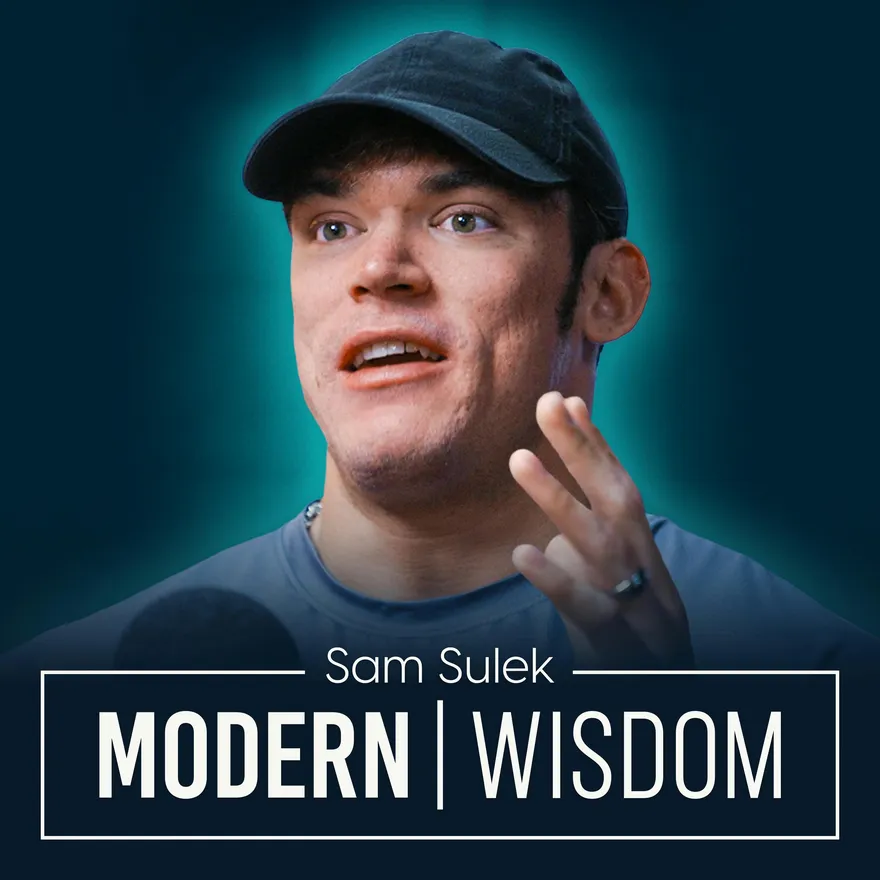

This is a preview of the Shortform summary of the Oct 1, 2026 episode of the Modern Wisdom
Sign up for Shortform to access the whole episode summary along with additional materials like counterarguments and context.
1-Page Summary
Training Philosophy: Consistency Over Perfection
Sam Sulek and Chris Williamson discuss a training mindset that emphasizes consistent effort and fundamental principles over perfection and over-optimization. They argue that lasting progress comes from building resilient habits and embracing intensity.
Intensity Drives Results
Sulek insists that meaningful progress comes not from perfect workouts but from gradually raising personal standards and consistently meeting them. He describes training as "just gradually raising the bar for yourself, meeting it, but now you got to raise it again." For elite athletes, what appears to be extreme intensity becomes routine through adaptation. Sulek aspires to "practice without striving," where maximal effort feels seamless and instinctive—an outcome of making hard work a daily practice rather than a periodic feat.
Building Robust Systems With Redundancy
Williamson compares human behavior to engineering: systems built to run at maximum capacity are fragile and break down with disruptions. Just as bridges need spare capacity, individuals should develop training routines with psychological redundancy to sustain progress even when motivation falters. He references the "Matthew Principle"—good habits compound while bad habits spiral downward. Both emphasize that foundational practices like adequate protein intake, managing calories, and training regularly generate results regardless of perfectly optimized variables.
Rejecting Tutorial-Based Thinking
Sulek critiques the belief that success requires following one perfect sequence of workouts or meals. Many become paralyzed by this "tutorial-based mindset," believing progress only happens with perfect execution. He encourages adaptability and self-reliance, showing that effective workouts are possible regardless of equipment. Williamson distills training progress to repeatable principles: calories in and out, progressive overload, and regular training. Both agree that exercise science built on sedentary subjects means lifters should prioritize intensity over endless fine-tuning.
Building Resilience During Difficult Periods
Sulek and Williamson identify tough periods like winter as opportunities to "differentiate" by working harder when motivation dips. Sulek reframes difficulty as opportunity, suggesting one think from a future perspective: "what would my future self want me to do now?" Even with low motivation, maintaining foundational habits at 70% effort prevents the negative spiral that abandoning routines creates.
Understanding Individual Variation
Williamson and Sulek point out that physiological differences—appetite, exercise enjoyment, recovery rates—lead to distinct needs. Blanket statements may apply generally, but application must be personalized. Sulek warns that blindly following a plan fails when unexpected problems arise. Understanding and applying underlying principles allows for troubleshooting and adaptation, with Williamson noting that "tactics are very fragile and principles are much more robust."
Building Authentic Personal Brands
Authenticity as Foundation
Sulek states that successful creators naturally build audiences by creating content reflecting what they'd do regardless of cameras. His gym content feels seamless because filming doesn't interfere with workouts. Williamson notes that "far fewer people than think it are good enough actors to be able to pretend to be something that they're not." Audiences detect fake authenticity, and there's no shortcut to relatability. Both point to creators like Chris Bumstead, who attract loyal audiences through visible passion and authenticity.
Strategic Boundaries Around Disclosure
Sulek and Williamson highlight the importance of boundaries around personal disclosure. Sulek describes receiving comments suggesting his audience still doesn't know much about his private life, demonstrating his ability to maintain privacy. Williamson emphasizes how publicly sharing private matters can complicate future relationships, as audiences fixate on past storylines. Maintaining clear boundaries allows greater psychological freedom and relieves creators from burdensome public expectations.
Avoiding View Obsession
Sulek cautions against becoming view-obsessed, noting creators often add drama to "spice up" content as algorithmic pressures increase. Both suggest that creators should focus on core activities that genuinely excite them, safeguarding integrity and preventing their value proposition from being undermined by performative stunts.
Life Perspective and Relationships as Competitive Advantages
The discussion centers on how fulfilling relationships and grounded life perspective provide deeper achievement and happiness than material wealth or career milestones.
Family as Ultimate Fulfillment
Sulek observes that successful people increasingly view family as their greatest accomplishment. He suggests Chris Hemsworth would trade any material gain for time with his children, having realized family holds the greatest value. Williamson argues that "a good career and an unhappy marriage will make you miserable, but a bad career and a happy marriage will mean that you probably don't give a fuck." A key difference is that unconditional love from a partner is based on who you are, not what you do.
Commitment as Investment, Not Delayed Gratification
Sulek challenges the common attitude of postponing relationships until career milestones are achieved, asking, "When are you going to be ready, man? Time's kind of ticking." Williamson notes that waiting for perfect circumstances is almost always a mistake when the right partner presents themselves. Both agree that finding compatibility should be enough to start building a life together. Williamson describes a supportive relationship as a "huge performance enhancer," providing emotional security that allows bold risks elsewhere without fear.
Growth Through Time
Williamson cites examples like his friend Kevin, who married at 22 and built life-oriented routines around his relationship, showing how early commitment allows for simple, shared experiences. Sulek likens relationship development to growth in the gym—gradual but meaningful. Building life with someone from a young age means milestones and experiences are woven together, making the bond deeper.
The Evolution and Decline of Bodybuilding Culture
Golden Era's Larger-Than-Life Characters
In the 1990s and early 2000s, bodybuilding was defined by stars like Ronnie Coleman, Kai Greene, and Jay Cutler, whose theatrical charisma elevated the sport's entertainment value to WWE-level spectacle. Williamson and Sulek recall how athletes embodied distinct characters, creating compelling narratives through presentation and persona. Athletes like Tom Platz prioritized joy and camaraderie over competition outcomes. Limited exposure opportunities—occasional DVDs or magazine appearances—meant on-stage experiences were heightened, with considerable anticipation building for these dramatic displays.
Modern Shift Toward Outcome-Focus
Modern bodybuilding has become more performative and outcome-focused, with less emphasis on unique personality. Williamson notes contemporary bodybuilding often feels transactional, prioritizing results over entertainment. Sulek observes today's athletes frequently threaten to quit if they don't place in the top five, highlighting a results-oriented mindset lacking the intrinsic motivation of earlier generations. Social media plays a significant role: bodybuilders now share entire competition preps online, providing unprecedented access but lessening event excitement. The constant content stream saturates the space, reducing the need for larger-than-life performances.
Loss of Documentation's Impact
Previously, limited documentation meant athletes had to convey full personality during few public appearances. The advent of abundant social media paradoxically led to reduced personality expression—athletes no longer need compelling theatrics to make an impact. Despite increased information access, the community feels less connected due to declining personality and relatability. Williamson and Sulek highlight Chris Bumstead as a modern exception who succeeds through authenticity, sharing personal experiences like embracing fatherhood and marriage to foster genuine fan connection.
Performance Enhancement and Principles-Based Decision Making
Williamson and Sulek explore interventions for performance and physique, arguing for principles-based, knowledge-driven decision making instead of arbitrary prohibitions.
The Intervention Spectrum
They highlight how perceptions often depend on delivery methods rather than meaningful distinctions. Williamson notes that forms of delivery—pill, patch, needle, or drink—strongly influence public comfort. Sulek draws parallels between raising [restricted term] through sleep and training versus pharmaceuticals, questioning why society embraces some optimization forms while suspecting others. Williamson suggests that "anchoring" and adoption rates shape status quo: caffeine is universally accepted due to ubiquity, while novel interventions like peptides feel alien.
Peptides as Appropriate Tools
Sulek and Williamson discuss specific peptides—BPC-157 and TB-500 for tissue repair, and GHK for skin health. Sulek notes personal benefit from BPC-157 for an injured rotator cuff. These are characterized as valuable tools when used with awareness. Both caution that the peptide landscape has been clouded by overhyped messaging and reckless teen use on social media. Sulek observes that as pharmaceutical companies move in, regulatory pressure increases—research peptides disappear due to regulatory capture protecting profits, not because of danger.
Knowledge-Based Decisions
Sulek asserts that decision making should be guided by knowledge and individual circumstances, not norms about what's "natural." Williamson points out that many prejudices against interventions stem from unfamiliarity: few view caffeine as "cheating," yet few realize medications like Ozempic are peptides. Both agree that "cheating" is too often defined by unfamiliarity, not intrinsic effects. Sulek underscores that individuals start from different baselines—what works for some may be impossible for others due to genetics. Understanding these differences enables individuals to make informed, context-dependent choices rather than following arbitrary cultural boundaries.
1-Page Summary
Additional Materials
Clarifications
- Psychological redundancy in training means having backup mental strategies to keep going when motivation drops. It involves creating habits and routines that function even during low enthusiasm or stress. This ensures consistent effort without relying solely on willpower or peak motivation. Essentially, it builds mental resilience to sustain progress despite challenges.
- The "Matthew Principle" originates from a biblical verse describing how the rich get richer and the poor get poorer. In habit formation, it means positive behaviors tend to build momentum, making success easier over time. Conversely, negative habits can compound, leading to worsening outcomes. This principle highlights the importance of establishing good routines early to create upward progress.
- The "tutorial-based mindset" refers to relying strictly on step-by-step instructions as if training success depends on following a perfect script. It limits adaptability by making people believe only one exact method works. This mindset can cause paralysis when conditions change or equipment is unavailable. Embracing flexibility and understanding core principles allows effective training despite variations.
- "Practice without striving" refers to performing at maximum effort naturally, without feeling forced or stressed. It arises from consistent training that makes intense effort feel automatic and fluid. This mindset reduces mental resistance and fatigue during workouts. Ultimately, it enables sustainable high performance through ingrained habit rather than occasional bursts of willpower.
- In engineering, "spare capacity" means designing systems with extra strength or resources beyond normal use to handle unexpected stress or failures. Applying this to human behavior suggests building habits and routines that can endure setbacks or low motivation without collapsing. This redundancy prevents breakdowns by allowing flexibility and recovery during tough times. It emphasizes resilience over pushing to absolute limits constantly.
- BPC-157 and TB-500 are peptides known for promoting tissue repair and healing, often used to accelerate recovery from injuries. GHK is a peptide that supports skin health by stimulating collagen production and reducing inflammation. These peptides mimic natural body processes to enhance regeneration and repair. They are typically used in therapeutic or recovery contexts rather than for direct performance enhancement.
- Regulatory capture occurs when regulatory agencies prioritize the interests of the industries they oversee instead of the public. This can lead to rules that protect established pharmaceutical companies from competition. As a result, research peptides may be restricted or removed to maintain market control. This limits availability despite potential benefits or safety.
- Principles are fundamental truths or guidelines that remain valid across different situations, such as "progressive overload" in training. Tactics are specific methods or actions used to apply these principles, like choosing particular exercises or workout schedules. Principles provide a stable foundation, while tactics may change based on context or individual needs. Relying on principles ensures adaptability and long-term success despite varying circumstances.
- "Anchoring" is a cognitive bias where people rely heavily on the first piece of information they receive when making decisions. In public perception, initial exposure to a familiar substance like caffeine sets a mental benchmark for what is considered acceptable performance enhancement. New or unfamiliar interventions are judged against this anchor, often leading to skepticism or rejection. This bias shapes how quickly society accepts or resists different performance aids.
- Chris Bumstead is a prominent professional bodybuilder known for his classic physique and multiple Mr. Olympia Classic Physique titles. He is celebrated for his authenticity and openness about his personal life, which contrasts with the often performative nature of modern bodybuilding. Bumstead's approach has helped him build a loyal fanbase by sharing relatable experiences like fatherhood and marriage. This genuine connection makes him a standout figure in today's bodybuilding culture.
- The bodybuilding "golden era" generally refers to the 1970s and 1980s, marked by iconic figures like Arnold Schwarzenegger and Frank Zane. This period emphasized aesthetics, symmetry, and charismatic personalities alongside muscular development. Competitions were fewer and less commercialized, fostering a close-knit community and a focus on artistry. Media exposure was limited to magazines and documentaries, enhancing the mystique and anticipation around events.
- Social media provides constant, direct access to athletes, reducing the need for dramatic public performances to build fan interest. This continuous exposure can dilute the impact of unique personalities, as audiences become accustomed to seeing athletes in everyday contexts. The pressure to produce frequent content may shift focus from authentic self-expression to maintaining online presence. Consequently, the communal excitement and mystique that once surrounded bodybuilding events have diminished.
- Performance enhancers include substances or methods that improve physical or mental abilities beyond natural limits. They range from legal aids like caffeine and creatine to pharmaceuticals and peptides that affect muscle growth, recovery, or endurance. Some enhance oxygen delivery, energy metabolism, or hormone levels to boost performance. Their use often involves ethical, health, and regulatory considerations.
- "View obsession" refers to creators fixating on maximizing video views or engagement metrics rather than focusing on authentic content. Algorithmic pressures come from social media platforms promoting content that generates high interaction, incentivizing creators to produce sensational or dramatic material. This can lead to performative behavior that prioritizes clicks over genuine value. Such dynamics risk undermining a creator’s integrity and long-term audience trust.
- "Cheating" in performance enhancement refers to using substances or methods that give an unfair advantage beyond natural ability. Cultural norms shape what is considered cheating, often based on tradition, legality, or perceived fairness rather than scientific impact. For example, caffeine is widely accepted despite enhancing performance, while newer or less understood substances face stigma. This inconsistency arises because unfamiliarity breeds suspicion, not necessarily because the method is inherently unethical.
- Foundational habits in training refer to basic, consistent behaviors that support progress, such as managing calorie intake to fuel the body appropriately and consuming enough protein to repair and build muscle. Calories are units of energy from food; balancing calories consumed with calories burned affects body weight and energy levels. Protein provides amino acids essential for muscle recovery and growth after exercise. Maintaining these habits regularly creates a stable base for improvement regardless of other variables.
- The comparison likens relationship commitment to gym growth by emphasizing gradual, consistent effort over time. Just as muscles strengthen through regular training and progressive overload, relationships deepen through ongoing shared experiences and mutual investment. Both require patience, adaptation, and resilience to develop lasting strength. This metaphor highlights that meaningful growth is a process, not an instant achievement.
- Emotional security in relationships provides a stable foundation that reduces stress and anxiety. This stability allows individuals to focus energy and mental resources on goals rather than personal worries. Feeling supported boosts confidence and resilience, enhancing overall performance. It creates a safe space to take risks and recover from setbacks effectively.
- Over-optimization in training refers to excessively fine-tuning every detail of workouts and nutrition to achieve perfect results. It is discouraged because it can lead to paralysis by analysis, where constant tweaking hinders consistent effort. This approach often causes stress, burnout, and neglect of fundamental habits that drive progress. Prioritizing consistency and adaptability yields better long-term outcomes than chasing perfection.
- "Delayed gratification" means postponing immediate desires or rewards to achieve a more valuable goal later. In relationships, it refers to waiting to commit until career or financial goals are met. This mindset assumes personal readiness improves with time and accomplishments. The text challenges this by suggesting waiting can miss meaningful opportunities for connection and growth.
Counterarguments
- While consistency is important, striving for perfection or optimization can sometimes lead to breakthroughs and prevent complacency, especially in competitive or high-performance contexts.
- Gradually raising personal standards may not be feasible for everyone, particularly those with limited time, resources, or physical limitations.
- Extreme intensity, even if adapted to, can increase the risk of injury, burnout, or long-term health issues, suggesting that moderation and recovery are also crucial.
- Psychological redundancy in training systems may not address deeper motivational or psychological barriers that some individuals face, such as mental health challenges.
- Foundational habits are important, but for advanced athletes or those with specific goals, more precise optimization can yield significant benefits.
- Adaptability is valuable, but for beginners or those lacking knowledge, structured programs and clear guidance can prevent confusion and ensure safety.
- Exercise science based on sedentary subjects may still provide useful insights for the general population, and dismissing it entirely could overlook valuable evidence.
- Working harder during difficult periods is not always possible or healthy for everyone; rest and self-compassion can be more appropriate responses in some cases.
- Personalization is important, but some general principles and guidelines are effective for most people and can simplify decision-making.
- Authenticity in personal branding is not always feasible or desirable for everyone; some creators may prefer to maintain a professional persona or separate their private and public lives.
- Strategic boundaries around disclosure can sometimes limit audience connection or transparency, which some viewers value.
- Avoiding view obsession is ideal, but creators who rely on content for income may need to consider algorithmic pressures to sustain their livelihood.
- While relationships and family can provide fulfillment, some individuals find deep satisfaction and meaning in career achievements or personal pursuits.
- Early commitment in relationships is not universally beneficial; waiting for personal or career stability can lead to healthier, more sustainable partnerships for some.
- The golden era of bodybuilding was not without its own issues, such as unhealthy practices, lack of diversity, or exclusionary culture.
- Increased documentation and social media exposure can democratize access, inspire more people, and provide educational value, even if it changes the nature of the sport.
- Public skepticism toward certain performance interventions may be justified due to unknown long-term effects, lack of regulation, or potential for abuse.
- Regulatory oversight of peptides and other substances can protect public health and ensure safety, not just serve corporate interests.
- Knowledge-based, individualized decision making about performance enhancement is ideal, but not everyone has access to reliable information or medical guidance, increasing risks.
- Cultural norms about "naturalness" can reflect legitimate ethical, health, or fairness concerns, especially in competitive sports.
- Genetic differences are important, but emphasizing them too much can discourage effort or create a sense of fatalism in individuals.
Get access to the context and additional materials
Training Philosophy: Consistency Over Perfection, Intensity Over Over-Optimization
Sam Sulek and Chris Williamson emphasize a training mindset that prioritizes steady, sustained effort and fundamental principles over fleeting perfection and excessive concern with optimization. They argue that lasting progress comes from building resilient habits, embracing intensity, and avoiding rigid or tutorial-based approaches, all while recognizing individual variation.
Intensity and Effort Drive Results
Exponential Progress Through Consistent High Effort Over Perfect Technique
Sulek insists that meaningful progress is achieved not through perfect workouts but through gradually raising personal standards and consistently meeting them. He describes a training journey as, “just gradually raising the bar for yourself, meeting it, but now you got to raise it again, because now you’ve met it, and it’s like normal.” He adds, “the more you do that, going harder becomes more normal.” Going to the gym and exerting high effort, regardless of conditions or imperfect environments, drives exponential improvement, especially when compared to waiting for perfect technique or the ideal workout setting. Even in a hotel gym with minimal equipment, Sulek devises effective workouts, showing that intensity matters more than exact methods.
Elite Performers Normalize Extreme Intensity Through Adaptation
Sulek clarifies that for elite athletes, what appears to be extreme training intensity to outsiders becomes routine due to adaptation and accumulated resilience. “He looks like he’s going the hardest. He actually has it the easiest because now he has like adapted himself to doing that. For him, this is a normal day. If you think he’s going crazy hard, it’s because you’re not used to that level.” Over time, extreme effort ceases to be extraordinary—it becomes a baseline expectation.
"Effortless Practice: Maximum Effort With No Resistance"
Sulek aspires to “practice without striving,” a concept in which maximal training effort feels seamless and instinctive. He emphasizes the value of being able to put forth maximal physical and psychological output “just like that, like nothing.” This sense of effortlessness comes from cultivating consistent hard work and intense focus as a daily practice, not a periodic feat.
Building Robust Systems With Redundancy Over Optimization
Over-Optimization Creates Fragility as Systems Collapse With Disruptions; Spare Capacity and Redundancy Ensure Progress in Suboptimal Conditions
Williamson compares human behavior to engineering: systems built to run at maximum capacity are inherently fragile, breaking down with unexpected disruptions. Just as bridges are built with spare capacity, individuals should develop training routines with psychological redundancy, ensuring they can sustain progress even when motivation or conditions falter. If all aspects of life require near maximal willpower to merely function, any external stressor or slip can trigger a total system collapse. Spare capacity—habits, skills, and routines drilled during good times—protects against setbacks during difficult periods.
Matthew Principle: Good Habits Rise, Bad Habits Fall; Momentum and Baseline Excellence Crucial for Trajectory
The “Matthew Principle” states, “to those who have, more will be given; to those who have nothing, more will be taken.” Momentum works in both directions. Good habits build on themselves, compounding progress; bad habits can spiral downward, leading to ever worse outcomes. Maintaining upward momentum and a robust baseline of sound habits ensures that downward periods do not derail long-term growth.
Establishing Foundational Principles Like Nutrition, Movement, and Training Effort Generates Results Regardless of Perfectly Dialed-In Variables
Both Sulek and Williamson stress that baseline nutrition, movement, and training effort—getting enough protein, not eating excess fats, moving daily, and training regularly—are what drive visible results. These are robust against the noise of daily life or suboptimal conditions. For body composition, the core foundations are “calories in, calories out, progressive overload, and regular training.” Sulek cautions against the obsession with perfect meals or designer diets, suggesting that basics like “beef, chicken, dairy, eggs, fish” as S-tier proteins will always beat overcomplicated meal plans.
Rejecting Tutorial-Based Mentality In Favor of Fundamental Principles
One "Correct" Path to a Goal? Obsession Over Perfect Workouts or Nutrition Misses the Principles Driving Results
Sulek critiques the widespread belief that success requires following a singular, supposedly perfect sequence of workouts or meals. Many novices become paralyzed by this “tutorial-based mindset,” believing progress only happens with perfect execution. Sulek encourages adaptability and self-reliance, showing that workouts can be effective regardless of equipment or “optimal” setup. He cautions that “if I do this workout right, and if I do 10 reps, that's perfect,” is less important than effort and consistency.
Core Principles: Progressive Overload, Protein Intake, Training Frequency, and Caloric Balance For Adaptation
Williamson boils down training progress to a few repeatable principles: “calories in, calories out, progressive overload over time, train regularly.” Sulek adds that focusing on foundational habits—hitting protein intake, managing carbs and fats, and not fretting over foodie trends—is more effective than trying to optimize every detail.
Most Exercise Studies Have Sedentary Subjects, So Trainees Should Prioritize Intensity Over Theoretical Optimization
Both agree that much exercise science is built on studies with sedentary novices. For lifters or athletes beyond that stage, maximizing training intensity and effort delivers superior results to endless fine-tuning. Sulek states, “I'd rather train super hard than super smart.”
Developing Resilience and Momentum During Difficult Periods
Winter Arc: Use Challenging Winter Periods As Opportunities For Differentiation By Deciding to Work Harder
Sulek and Williamson identify tough periods, such as winter, as opportunities for those serious about training to “differentiate” themselves. When motivation and distractions dip, those ...
Here’s what you’ll find in our full summary
Training Philosophy: Consistency Over Perfection, Intensity Over Over-Optimization
Additional Materials
Clarifications
- Progressive overload is the gradual increase of stress placed on the body during exercise to stimulate muscle growth and strength gains. It forces the body to adapt by becoming stronger or more efficient. Without increasing demands, progress plateaus because the body no longer needs to improve. This principle ensures continuous improvement over time.
- "Calories in, calories out" refers to the balance between the energy you consume through food and the energy your body uses for daily activities and exercise. If you consume more calories than you burn, your body stores the excess as fat, leading to weight gain. Conversely, if you burn more calories than you consume, your body uses stored fat for energy, resulting in weight loss. This principle is fundamental for managing body composition, regardless of diet specifics.
- The "Matthew Principle" originates from a biblical verse describing how advantage tends to accumulate for those already successful. In habits, it means small positive actions compound, making progress easier over time. Conversely, neglecting habits can lead to a downward spiral, where setbacks multiply. This principle highlights the importance of maintaining momentum to sustain growth and avoid decline.
- Psychological redundancy means having extra mental and emotional resources beyond what is immediately needed, so setbacks don’t cause collapse. Spare capacity refers to maintaining energy, motivation, and habits at levels below maximum effort, allowing recovery and flexibility. Together, they create resilience by preventing burnout and enabling consistent progress despite stress or disruptions. This approach mirrors engineering designs that include safety margins to handle unexpected loads.
- "Effortless practice" refers to a state where intense physical and mental effort becomes automatic through consistent training. This happens as the body and mind adapt, making high effort feel natural rather than forced. It involves deep focus and muscle memory, reducing conscious strain during performance. Over time, what once required great willpower becomes an ingrained habit.
- A tutorial-based mindset relies on following exact step-by-step instructions without deviation. It assumes there is one perfect way to train or eat that guarantees success. Principle-based training focuses on understanding core concepts like progressive overload and nutrition fundamentals, allowing flexibility and adaptation. This approach empowers individuals to adjust methods based on their unique circumstances and challenges.
- Over-optimization in training routines means tailoring every detail to the ideal scenario, leaving no room for flexibility. This makes the routine vulnerable because any unexpected change—like illness, travel, or schedule shifts—can disrupt progress. Without built-in redundancy or spare capacity, small setbacks can cause the entire system to fail. Robust routines allow adaptation, ensuring consistent progress despite challenges.
- Training frequency refers to how often you work out a specific muscle group or perform a particular exercise within a given time frame, usually a week. Higher training frequencies can enhance muscle protein synthesis and skill acquisition, leading to faster progress if recovery is adequate. However, too frequent training without sufficient rest can cause overtraining and hinder gains. Balancing training frequency with intensity and recovery is key to optimizing adaptation and avoiding injury.
- Exercise studies often use sedentary subjects because they are easier to recruit and show clearer initial effects. Results from these studies may not apply to experienced trainees who have already adapted to training. Experienced individuals require different training stimuli and recovery strategies than beginners. Therefore, findings from sedentary populations can mislead advanced trainees about optimal training methods.
- Baseline excellence refers to maintaining a consistent, solid level of performance and habits that serve as a reliable foundation. It prevents drastic declines during challenging times by ensuring minimum standards are met. This steady foundation enables momentum to build, making progress more sustainable over time. Without baseline excellence, setbacks can cause larger regressions and disrupt long-term growth.
- Metabolism affects how quickly your body burns calories, so two people eating the same amount may gain or lose weight differently. Appetite influences how much food you naturally want, impacting your ability to stick to calorie goals. Recovery rates determine how fast your muscles repair and grow, affecting how often and intensely you can train. These differences mean nutrition and training plans must be tailored, not one-size-fits-all.
- Adaptability in training means adjusting workouts based on current conditions, energy levels, and available equipment rather than strictly following a preset plan. Self-reliance involves understanding core training principles so you can modify routines effectively without external guidance. This flexibility prevents stagnation and helps maintain progress despite disruptions or changing circumstances. Rigid plans often fail b ...
Counterarguments
- While consistency and intensity are important, poor technique or form can increase the risk of injury, especially over time, making some degree of technical focus necessary for long-term health.
- Overemphasizing intensity without adequate recovery can lead to overtraining, burnout, or chronic fatigue, particularly for non-elite athletes.
- For some individuals, especially beginners or those with specific goals (e.g., rehabilitation, sports performance), structured programs and technical guidance may be more effective than a purely principle-based or self-reliant approach.
- The dismissal of optimization may overlook the benefits of evidence-based adjustments, such as periodization, individualized nutrition, or recovery strategies, which can enhance results and reduce plateaus.
- Not all individuals respond positively to high-intensity approaches; some may find moderate, sustainable routines more enjoyable and sustainable, supporting long-term adherence.
- The idea that most exercise studies involve only sedentary subjects is not universally accurate; there is a growing body of research on trained populations, and scientific findings can still inform advanced trainees.
- The focus on protein and simple nutrition may underplay the importance of micronutrients, fiber, and dietary variety for overall health and performance.
- Relying on personal adaptation and troubleshooting may be challenging for those lacking foundational knowledge, making expert guidance or structured plans valuable for many.
- The concept of "effort ...

Get access to the context and additional materials
Building Authentic Personal Brands Without Forcing Relatability
Authenticity: The Sustainable Foundation For Audience Building
Sam Sulek states that the most successful creators naturally build audiences by creating content that reflects what they would be doing regardless of the camera’s presence. He explains that his content creation in the gym feels seamless, as filming doesn’t interfere with his daily workouts—it's almost second nature. Sulek simply talks about what interests him, avoids scripts, and maintains a sense of routine, making the content more genuine. This stands in contrast to creators who “put on a show” or attempt to manufacture personas in hopes of gaining followers.
Chris Williamson notes that “far fewer people than think it are good enough actors to be able to pretend to be something that they're not.” He asserts that audiences can usually detect when someone is faking authenticity, and there’s no shortcut or “growth hack” to relatability; you either are relatable by nature or not. Forced attempts at relatability to please algorithms or chase rapid audience growth almost always create a disconnect, while consistency between real life and online content cultivates genuine followings over time.
Both Sulek and Williamson point to successful creators like Chris Bumstead, who attract large loyal audiences through visible passion and authenticity. Bumstead, described as introverted, thoughtful, and focused on simple joys like family and fatherhood, shares openly about his feelings without seeking drama or attention. His authenticity, as well as that of figures like Joe Rogan, comes from a genuine desire to help others—making them more naturally relatable than those who try to force connection for views.
Strategic Boundaries Around Personal Disclosure
Sulek and Williamson highlight the importance of having boundaries around personal disclosure. Sulek describes receiving comments suggesting there's still much his audience does not know about his private life, even after years of daily sharing, which demonstrates his ability to keep personal matters private. He also observes that some creators who reveal much about their lives early on struggle to close those doors later because audience expectation and attachment to storylines make privacy feel impossible.
Williamson emphasizes how publicly sharing private matters can complicate future relationships, as audiences may continue to fixate on past relationships or expect constant updates. He advises creators to be deliberate about what parts of their lives they share, as it's difficult to regain privacy once those boundaries are breached. Williamson appreciates that his own content allows him to choose what to discl ...
Here’s what you’ll find in our full summary
Building Authentic Personal Brands Without Forcing Relatability
Additional Materials
Clarifications
- Relatability means that an audience sees parts of themselves or their experiences reflected in a creator, making the content feel personal and relevant. It builds trust and emotional connection, encouraging viewers to engage and return. Without relatability, content can feel distant or fake, reducing audience loyalty. This connection is crucial for sustainable growth and genuine community building.
- "Manufacturing personas" means creating a fake or exaggerated character to attract attention rather than showing your true self. "Putting on a show" refers to acting in a way that is performative or insincere, often to entertain or gain followers. Both involve pretending rather than being genuine, which can feel forced to audiences. This often leads to a lack of trust and connection with viewers.
- Algorithms are automated systems used by social media platforms to decide which content to show users based on their interests and behavior. They prioritize content that generates high engagement, such as likes, comments, and shares, to keep users active on the platform. This can pressure creators to produce content that fits trending formats or provokes strong reactions to gain visibility. Consequently, creators might feel compelled to alter their authentic style to meet algorithmic preferences and grow their audience faster.
- "Growth hacks" are tactics designed to quickly increase followers but often rely on superficial tricks rather than genuine connection. Authenticity requires consistent, honest engagement that reflects a creator's true self, which cannot be faked or rushed. Audiences sense when content is insincere, leading to distrust and disengagement. Sustainable growth comes from building real relationships, not shortcuts.
- Strategic boundaries around personal disclosure help creators control what private information they share publicly. This control prevents audiences from developing unrealistic expectations or fixating on personal details. Maintaining these boundaries protects creators' mental health and personal relationships. It also allows creators to keep parts of their lives private, preserving a sense of normalcy outside their public persona.
- Audience expectations create pressure because followers often feel entitled to know intimate details after seeing some personal content. This can lead to constant demands for updates, making creators feel obligated to share more than they want. Over time, this erodes privacy and can trap creators in a cycle of disclosure to maintain engagement. The emotional attachment audiences develop intensifies this pressure, as they seek ongoing connection through personal stories.
- Losing privacy through public sharing can lead to increased stress and anxiety as individuals feel constantly observed and judged. It may cause a loss of control over personal narratives, leading to vulnerability and emotional exhaustion. Over time, this exposure can blur boundaries between public and private life, impacting mental well-be ...
Counterarguments
- Some creators have successfully built large, loyal audiences through carefully crafted personas or performance-based content, demonstrating that authenticity is not the only path to audience growth.
- Scripted or highly produced content can still feel genuine and resonate deeply with audiences, especially when it reflects the creator’s vision or storytelling skills.
- The line between authenticity and performance is often blurred; many creators blend aspects of their real selves with performative elements to enhance entertainment value without necessarily being inauthentic.
- Audience preferences are diverse; some viewers are drawn to aspirational, stylized, or fictionalized content rather than strictly authentic or relatable creators.
- Strategic personal disclosure can be a powerful tool for building connection and trust with audiences, and some creators manage ongoing openness without negative consequences.
- The pressure t ...
Get access to the context and additional materials
Life Perspective and Relationships as Competitive Advantages
The discussion centers on the growing recognition that fulfilling relationships and a grounded life perspective can provide a deeper sense of achievement and happiness than material wealth or career milestones. Sam Sulek and Chris Williamson reflect on how prioritizing relationships, committing at the right time, and growing with a partner can yield significant life and psychological advantages.
Recognizing Family As the Ultimate Fulfillment
Both Sulek and Williamson emphasize that successful people increasingly view family and deep relationships as their greatest accomplishment. Sulek observes that moments like Chris Hemsworth surfing with his kids represent the ultimate "flex," far surpassing any material possession or career milestone. He suggests Hemsworth would trade any material gain for time with his children, having realized that family is what holds the greatest value. Similarly, Chris Bumstead (Seebum) is cited as someone who traded everything he worked for to focus on his wife and kids, now embracing “complete dad mode,” celebrating the beauty of fatherhood, and seeking a simple life.
Williamson argues that the quality of one’s relationships outweighs career accomplishments: “A good career and an unhappy marriage will make you miserable, but a bad career and a happy marriage will mean that you probably don't give a fuck.” He notes that those focused solely on career cannot easily understand the profound fulfillment of a deeply connected relationship, describing how such love can make other achievements pale in comparison.
A key difference in relationship fulfillment is highlighted: unconditional love from a partner is based on who you are, rather than what you do. This contrasts with much of the external world, where worth is often measured by achievement.
Commitment as an Investment in Happiness, Not Delayed Gratification
Men Delay Commitment For Career Milestones, Overlooking Finite Opportunity for Deep Partnership
Sulek and Williamson critique the common attitude among young men to postpone serious relationships or family until career milestones are achieved. Sulek frequently hears friends claim they're not ready for commitment because they want to focus on building their businesses or reaching certain financial goals. He challenges this logic, asking, “When are you going to be ready, man? Time’s kind of ticking.” He points out that many envision a happy, family-oriented future yet fail to act now to build toward it, despite knowing it's likely to be the source of their greatest joy.
Williamson reinforces this, noting that the tendency to wait for perfect circumstances before committing is almost always a mistake when the right partner presents themselves. He relates that at his live shows, a common complaint from women is that men “won’t commit,” waiting endlessly for conditions to be perfect before starting a family.
The Question "When Will You Be Ready?" Reveals That Waiting For Perfect Circumstances Delays Readiness, While a Compatible Partner Is Enough to Start Building a Life Together
Both agree that finding compatibility and a sense of long-term possibility with a partner should be enough to start building a life together. Postponing for “readiness” is often just procrastination that risks missing out on a finite window for deep partnership.
Supportive Partner as Performance Enhancer
Williamson describes a supportive relationship as a “huge performance enhancer.” The emotional security of knowing your partner values you for who you are, independent of external outcomes, allows you to take bold risks elsewhere without fear. Even in highly competitive scenarios—like stepping on stage at the Olympia—“whether you win or you lose, you go back to your partner and she still thinks the sun shines out of every part of you.” That unconditional support means, “even if I lose, I win.” The true competitive advantage, he says, is having someone always in your c ...
Here’s what you’ll find in our full summary
Life Perspective and Relationships as Competitive Advantages
Additional Materials
Counterarguments
- The value of relationships versus career or material success is subjective and can vary greatly between individuals; some people may find deep fulfillment in their work, creative pursuits, or personal achievements rather than in family or romantic relationships.
- Not everyone desires or benefits from traditional family structures or long-term romantic partnerships; for some, friendships, community involvement, or solitude provide equal or greater fulfillment.
- Delaying commitment to focus on career or personal growth can be a rational and fulfilling choice for many, especially if early commitment would lead to resentment or missed opportunities for self-discovery.
- The examples of celebrities like Chris Hemsworth and Chris Bumstead may not be universally applicable, as their financial security allows them to prioritize family without the economic pressures faced by most people.
- The notion that early commitment is always beneficial overlooks the potential for personal incompatibility, immaturity, or evolving life goals that can make early relationships unsustainable or unhealthy.
- Unconditional love in relationships is an ideal that ...
Actionables
- you can schedule a recurring, device-free family or partner activity night to create shared memories and deepen bonds without distractions; for example, set aside one evening a week for a simple home-cooked meal, board games, or a walk together, focusing on conversation and presence rather than entertainment or achievement.
- a practical way to foster organic growth in your relationship is to start a shared journal or digital note where you and your partner each add weekly reflections, hopes, or small gratitude notes about your journey together, helping you both track growth and appreciate the evolving partnership.
- you can create a personal “relationship inve ...
Get access to the context and additional materials
The Evolution and Decline of Personality-Driven Bodybuilding Culture
Golden Era of Bodybuilding Characterized by Larger-Than-Life Characters
In the 1990s and early 2000s, bodybuilding was defined by stars like Ronnie Coleman, Jay Cutler, Branch Warren, and Kai Greene, whose theatrical charisma and unique identities elevated the sport’s entertainment value to a level comparable with WWE. Chris Williamson and Sam Sulek recall how this era captivated audiences, with athletes embodying distinct characters: Kai Greene as the artist-philosopher, Phil Heath as the all-American athlete, Jay Cutler as the classic Florida icon, and Branch Warren channeling a nu-metal aesthetic. These bodybuilders not only competed but created compelling narratives through their presentation, training philosophy, and public persona.
Athletes such as Tom Platz prioritized the joy of performing and the camaraderie of the sport over competition outcomes. Sulek notes that Platz never focused on needing to win but on the enjoyment of bodybuilding itself and the energy from the crowd. Bodybuilding shows in this era were true theatrical events, with considerable anticipation and excitement that generated cultural relevance well beyond the core fitness community. The limited opportunities for exposure—such as the occasional DVD or magazine appearance—meant the on-stage experience was heightened; the event itself was a major showcase, and anticipation built for these dramatic, personality-driven displays.
Modern Bodybuilding's Shift Toward Outcome-Focused Personalities, Content Saturation
In contrast, modern bodybuilding culture has become more performative and outcome-focused, with less emphasis on unique personality and theatricality. Chris Williamson notes that contemporary bodybuilding often feels transactional, prioritizing results over the expressive and entertaining aspects that once drew crowds. Sulek observes that today’s athletes frequently say if they don’t place in the top five, they will quit, highlighting a results-oriented mindset that lacks the intrinsic motivation and enjoyment evident in earlier generations.
Social media plays a significant role in this shift. Today, bodybuilders share their entire competition prep, training sessions, and personal routines online. While this provides fans with unprecedented access, it also lessens the excitement of the main events. With every moment documented, there is less buildup and mystique surrounding competitions, diminishing the sport’s broader cultural significance. The constant stream of content saturates the space, reducing the need for larger-than-life performances and the anticipation that once made bodybuilding events must-see spectacles.
Loss of Documentation and Media Constraints
Limited Documentation Mandated Athletes' Full Personality and Charisma
Previously, limited documentation meant athletes had to convey their full personality and charisma during their few public appearances. The scarcity of media meant that every documentary, magazine feature, or DVD was a vital opportunity for bodybuilders to express their individuality and captivate audiences.
Abundant Social Media Paradoxically Reduces Personality Expression
The advent of abundant social media paradoxically led to reduced personality expression. The constant availability of content means athletes no longer need to rely on compelling theatrics to make an impact. Williamson and Sulek note that earlier icons such as Tom Platz and Dorian Yates would share their philosophy and passion without the self-consciousness imposed by constant broad ...
Here’s what you’ll find in our full summary
The Evolution and Decline of Personality-Driven Bodybuilding Culture
Additional Materials
Clarifications
- WWE (World Wrestling Entertainment) is known for its scripted, theatrical performances featuring exaggerated characters and storylines. Comparing bodybuilding to WWE highlights how bodybuilders in the past created dramatic, larger-than-life personas that entertained audiences beyond just athletic competition. This comparison emphasizes the showmanship and narrative elements that made bodybuilding events engaging spectacles. It suggests that bodybuilding once blended sport with performance art, similar to professional wrestling.
- Ronnie Coleman, Jay Cutler, Branch Warren, Kai Greene, Phil Heath, Tom Platz, Dorian Yates, and Chris Bumstead are all professional bodybuilders known for their achievements in major competitions like Mr. Olympia. They are celebrated for their distinctive physiques, competitive success, and unique personalities that influenced bodybuilding culture. Many have also contributed to fitness education and inspired fans worldwide through their training methods and public personas. Their prominence spans different eras, shaping the sport’s evolution and public appeal.
- "Nu-metal" is a music genre blending heavy metal with elements of hip-hop, grunge, and alternative rock, popular in the late 1990s and early 2000s. The "nu-metal aesthetic" refers to a style characterized by aggressive, edgy, and rebellious visuals and attitudes, often including dark clothing, tattoos, and intense energy. Branch Warren's association with this aesthetic means his persona and presentation in bodybuilding reflected this raw, intense, and alternative vibe. This helped him stand out by projecting a tough, unconventional image aligned with nu-metal culture.
- Bodybuilding "characters" are distinct personas athletes create to stand out and connect emotionally with fans. These personas often reflect unique traits, philosophies, or aesthetics that make competitors memorable beyond their physical appearance. They add entertainment value by turning competitions into theatrical performances with storytelling elements. This approach helps build fan loyalty and cultural relevance for the sport.
- Before social media, DVDs and magazines were primary media for fans to access bodybuilding content outside live events. They provided curated, high-quality coverage of competitions, training, and athlete profiles, shaping public perception. These formats created scarcity, making each release a special event that built anticipation and deepened fan engagement. Limited distribution meant athletes had to maximize impact in these appearances to build their personas.
- Intrinsic motivation means doing an activity because it is inherently enjoyable or fulfilling, not for external rewards. An outcome-focused mindset prioritizes achieving specific results, like winning or ranking high, over the process itself. Athletes with intrinsic motivation find satisfaction in training and personal growth regardless of competition outcomes. Those with an outcome focus may feel discouraged or quit if they do not achieve top placements.
- Social media allows fans to see athletes' daily routines and preparations in real time, removing surprises from competitions. This constant exposure reduces the excitement that builds when details are hidden until the event. The lack of suspense diminishes the event's emotional impact and cultural significance. Consequently, competitions feel less like unique spectacles and more like routine updates.
- Content saturation occurs when audiences are exposed to an overwhelming amount of information or media about a subject. This abundance reduces the novelty and excitement of individual events or moments. As a result, audiences may become less engaged or emotionally invested. In bodybuilding, constant online updates diminish the anticipation that once made competitions special.
- Abundant social media creates constant exposure, making every moment visible and reducing the need for dramatic, carefully crafted personas. This overexposure dilutes the impact of unique character traits, as audiences become desensitized to frequent, mundane content. Athletes may feel less pressure to develop distinct, theatrical identities since their entire lives are already accessible. Consequently, personality expression shifts from deliberate performance to routine sharing, weakening memorable individuality.
- The term "X Factor" refers to a unique, often intangible quality that makes an athlete stand out beyond physical ability or skill. It involves genuine personality traits like authenticity, charisma, and emotional openness that resonate deeply with fans. This quality creates a strong personal connection and distinguishes the athlete in a crowded field. In bodybuilding, it means being relatable and real rather than just focused on competition results.
- Theatricality and personality were crucial in past bodybuilding because limited media exposure meant athletes had fewer chances to connect with audiences. This scarcity made live events and rare appearances the primary way to bui ...
Counterarguments
- The increased transparency and accessibility provided by social media allow fans to connect with athletes on a more personal and daily basis, fostering a different but equally meaningful type of engagement compared to the mystique of past eras.
- The focus on outcome and performance in modern bodybuilding may reflect a professionalization of the sport, raising competitive standards and encouraging athletes to push their limits.
- The broader reach of social media has democratized bodybuilding, giving exposure to a wider range of athletes from diverse backgrounds who might not have had opportunities in the limited-media era.
- The decline in theatricality and personality-driven narratives may be a result of shifting audience preferences, with some fans valuing authenticity and transparency over showmanship.
- The nostalgia for the "Golden Era" may overlook issues such as lack of inclusivity, limited access, and the potential for unhealthy hero worship that existed in earlier bodybuilding culture.
- Modern ...

Get access to the context and additional materials
Performance Enhancement, Supplementation, and Principles-Based Decision Making
Chris Williamson and Sam Sulek explore the wide spectrum of interventions for performance, health, and physique, and argue for more principles-based, knowledge-driven decision making instead of relying on arbitrary social norms or blanket prohibitions.
Intervention Spectrum: Natural vs. Pharmaceutical Approaches
They highlight how society’s perceptions of interventions often depend on arbitrary boundaries and delivery methods rather than meaningful, principled distinctions. Williamson notes that forms of delivery—whether pill, patch, needle, or drink—strongly influence public comfort: interventions like GLP medications or anorectics delivered by needle are often perceived as “icky” or unnatural, whereas similar results from a pill or shake may be readily accepted. He speculates that if GLPs were introduced as a pill or shake, people might feel differently about them despite the actual chemical action being the same.
Caffeine, Sleep, and Exercise Vs. Peptides and Glp Medications: Society's Arbitrary Lines on Legitimate Optimization
Sulek draws parallels between raising [restricted term] through sleep, training, or supplements (like Fadogia agrestis, Tongkat Ali, Boron), and using pharmaceuticals such as HCG, [restricted term], or injectable peptides. Both hosts question why society embraces some forms of optimization (e.g., caffeine, sleep, exercise) as legitimate and healthy, while suspecting others (like MK677 or GLP peptides).
Blurred Lines Between Natural Processes and Interventions: Adequate Sleep as a Natural [restricted term] Booster
They underline the spectrum between purely lifestyle-based interventions—such as getting enough sleep, which itself raises [restricted term]—and taking pharmaceuticals. Both Sulek and Williamson argue that these boundaries are often much blurrier than popularly assumed.
Anchoring Bias: Why Caffeine Is Accepted and Peptides Are Suspected Due to Familiarity and Adoption Rates
Williamson suggests that “anchoring” and adoption rates shape the current status quo: caffeine is almost universally accepted because of its ubiquity, while novel interventions like peptides (MK677, GHRP2, GHRP6) feel alien, and thus are quickly perceived as "cheating" or "unfair." As more people use a supplement or medication, he predicts, public perception will shift and it will become normalized and less stigmatized.
Peptides as Tools With Applications When Used Appropriately
Sulek and Williamson discuss specific peptides—BPC-157 and TB-500 for tissue and joint repair, and GHK (a copper peptide) for skin and collagen health. Sulek notes personal benefit from BPC-157 for an injured rotator cuff and GHK for clearer skin and inflammation reduction. These are characterized not as shortcuts but as valuable tools—capable of supporting specific goals when used with awareness and intent.
Peptide Use Cases Obscured by Teen Overuse on Social Media
Both caution that the peptide landscape has been clouded by overhyped messaging and reckless use, with teenagers showcasing peptides compulsively on social media. This TikTok-driven overexposure, Williamson suggests, echoes previous supplement fads (like ashwagandha or terkesterone), reducing real medical advances and options to passing trends.
Pharma Regulatory Capture Discontinues Effective Research Peptides to Protect Profits
Sulek observes that as pharmaceutical companies move in (with examples like Eli Lilly patenting certain peptides), regulatory pressure increases: research peptides often disappear due to regulatory capture, not because of danger but to protect pharmaceutical profits. He notes a flood of discounted research peptides before pending bans, as sellers rush to liquidate stocks.
Knowledge-Based Decision Making Rather Than Blanket Prohibition
Sulek asserts that decision making about supplementation and enhancement should be guided by knowledge, s ...
Here’s what you’ll find in our full summary
Performance Enhancement, Supplementation, and Principles-Based Decision Making
Additional Materials
Clarifications
- GLP medications refer to drugs that mimic or enhance the action of glucagon-like peptide-1, a hormone involved in blood sugar regulation. They stimulate insulin release, suppress appetite, and slow stomach emptying, aiding in weight loss and diabetes management. Common examples include semaglutide and liraglutide. These medications help improve metabolic health by targeting multiple pathways.
- BPC-157 is a synthetic peptide known for promoting tendon and ligament healing. TB-500, a fragment of thymosin beta-4, aids tissue repair and reduces inflammation. GHK is a copper-binding peptide that supports skin regeneration and collagen production. MK677 stimulates growth hormone release, while GHRP2 and GHRP6 are growth hormone-releasing peptides that enhance growth hormone secretion.
- Anorectics are substances that suppress appetite to help reduce food intake. They are often used in weight loss treatments to aid in controlling hunger. These can be pharmaceutical drugs or natural compounds. Their use requires caution due to potential side effects and dependency risks.
- Regulatory capture occurs when regulatory agencies prioritize the interests of the industries they oversee instead of the public. This can lead to rules that favor established companies, limiting competition and innovation. In pharmaceuticals, it may result in stricter regulations that protect big companies' profits by restricting smaller or alternative products. This dynamic can slow the approval or availability of new treatments despite their potential benefits.
- FDA approval signals that a medication has undergone rigorous testing for safety and effectiveness, which builds public trust. It also means the drug meets strict manufacturing and quality standards. This official endorsement often reduces fear and stigma around new treatments. Consequently, FDA approval can shift public perception from suspicion to acceptance.
- Anchoring bias is a cognitive shortcut where people rely heavily on the first piece of information they encounter when making decisions. This initial "anchor" influences how they interpret subsequent information, often causing skewed judgments. In the context of supplements, familiar substances like caffeine set a baseline for acceptance. Newer or less familiar interventions are judged against this anchor, leading to skepticism or rejection.
- Lifestyle-based interventions involve natural behaviors or habits like diet, exercise, and sleep that improve health without introducing external chemicals. Pharmaceutical interventions use drugs or synthetic compounds designed to alter biological processes more directly and often more rapidly. Lifestyle changes typically have broader health benefits and fewer side effects but may require more time and effort. Pharmaceuticals can target specific conditions precisely but may carry risks and require medical supervision.
- Fadogia agrestis and Tongkat Ali are herbal supplements believed to support [restricted term] production and improve male sexual health. Boron is a trace mineral that may enhance hormone levels and reduce inflammation. HCG (human chorionic gonadotropin) is a hormone used medically to stimulate [restricted term] production and fertility. [restricted term] (clomiphene citrate) is a prescription medication that induces the body to increase natural [restricted term] by affecting hormone signaling.
- "Normal human variance" refers to the natural range of differences in physical and mental traits among individuals without intervention. It includes variations in strength, endurance, metabolism, hormone levels, and other health markers. These differences arise from genetics, environment, and lifestyle factors. Understanding this helps distinguish between typical abilities and enhancements beyond natural limits.
- "Cheating" in supplementation refers to using substances to gain an un ...
Counterarguments
- While delivery method may influence public perception, concerns about injectable substances often stem from legitimate safety, sterility, and misuse risks, not just arbitrary discomfort.
- Regulatory oversight of peptides and pharmaceuticals is sometimes motivated by genuine safety concerns, lack of long-term data, or potential for abuse, rather than solely by profit protection.
- The normalization of substances through widespread use does not inherently make them safe or appropriate; historical examples (e.g., tobacco, amphetamines) show that mass adoption can precede recognition of harm.
- The distinction between "natural" and "unnatural" interventions, while sometimes arbitrary, can reflect broader ethical, cultural, or health considerations that are meaningful to individuals and societies.
- The claim that most interventions rarely provide advantages outside normal human variance may understate the significant effects some pharmaceuticals or supplements can have, especially in competitive or clinical contexts.
- Social acceptance of interventions is influenced by more than just familiarity; factors such as legality, accessibility, cost, and potential for coercion or unfair advantage also play roles.
- Indiv ...
Get access to the context and additional materials

 1-Page Summary
- Training Philosophy: Consistency Over Perfection, Intensity Over Over-Optimization
- Building Authentic Personal Brands Without Forcing Relatability
- Life Perspective and Relationships as Competitive Advantages
- The Evolution and Decline of Personality-Driven Bodybuilding Culture
- Performance Enhancement, Supplementation, and Principles-Based Decision Making
Create Summaries for anything on the web
Download the Shortform Chrome extension for your browser
