

Raccoon Wars, NFL Scammers & Past Crimes - Matt McCusker #1149
In this episode of Modern Wisdom, Matt McCusker discusses his decade-long involvement in the drug trade and his eventual transition to legitimate work. He shares how constant stress and violence affected his health, and reflects on the high cost of avoiding conventional employment. The conversation explores how people often dismiss office work while idealizing entrepreneurship, overlooking the hidden difficulties of self-employment.
McCusker and Chris Williamson also examine how fatherhood shifted McCusker's priorities from achievement to family, bringing deeper meaning despite new challenges. They discuss the importance of self-awareness and introspection in a culture focused on productivity, and reflect on how conventional wisdom—often dismissed when young—proves accurate through lived experience. The episode covers the value of discovering timeless truths through personal journey rather than simply accepting them at face value.
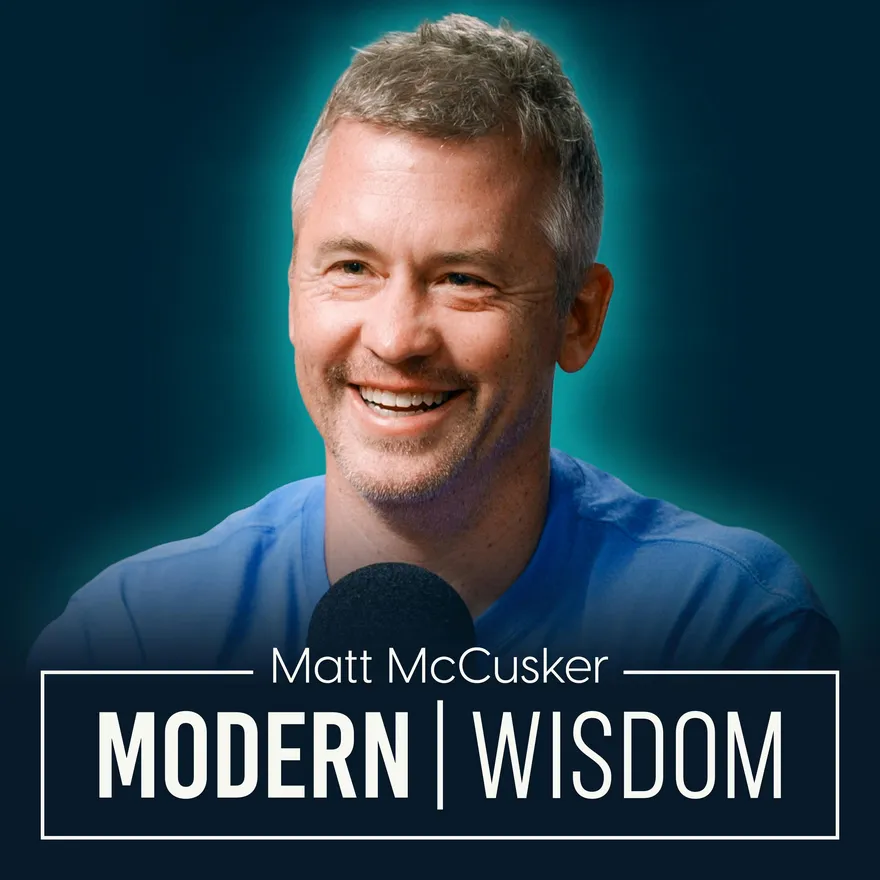

This is a preview of the Shortform summary of the Sep 12, 2026 episode of the Modern Wisdom
Sign up for Shortform to access the whole episode summary along with additional materials like counterarguments and context.
1-Page Summary
Life Transitions: Matt's Shift From Drugs and Violence to Legitimacy
Matt McCusker reflects on over a decade in the drug trade, where constant adrenaline, violence, and danger left lasting effects on his health and nervous system. He describes how his hair went prematurely gray from the relentless stress, and how he progressed from dealing weed to harder drugs like cocaine. As his business expanded, so did the threats—he faced regular robberies, guns drawn on him, and witnessed people getting shot. Despite these near-death experiences, Matt kept returning to the lifestyle, comparing himself to someone trapped in an abusive cycle.
His initial motivation for choosing the drug trade was escaping traditional office work, which "terrified" him enough to take "insane risks." Yet over time, Matt found himself envying office workers and their stability—the lunch camaraderie, fixed hours, and freedom from constant vigilance. He reflects on nearly dying "because I could have just like found something," recognizing the high cost of avoiding conventional work.
Eventually, Matt alternated between dealing and taking legal jobs during slow periods, cycling through making money, getting robbed, and starting over. Among his brief legitimate stints was a disastrous two-day run as a private investigator. Gradually, he recognized that legal income could create a safer, more stable life, marking his transition away from the drug trade.
Career Philosophy: Balancing Security, Autonomy, and Meaning
Chris Williamson and Matt McCusker explore modern career realities, noting how people often disparage nine-to-five jobs while idealizing entrepreneurship. Williamson highlights the genuine benefits of office work: stable pay, set hours, the ability to leave work behind, and freedom from management pressures. McCusker admits he once craved the predictability that routine work could provide.
However, Williamson points out that self-employment brings its own problems—longer hours, constant stress, financial uncertainty, and responsibility that never switches off. They observe how people glorify breaking away from mainstream work while overlooking the hidden difficulties of self-employment and underappreciating secure office life.
Williamson challenges the advice to "find work that feels like play," arguing that even passion-driven work often feels like drudgery. McCusker agrees, describing exhaustion from revising sentences endlessly despite loving writing. Williamson reframes career alignment as choosing your "flavor of shit"—matching inevitable challenges to your willingness to endure them, rather than chasing work without struggle. He notes that abandoning conventional wisdom on work often proves wrong, with McCusker offering his own near-catastrophic experience as proof that rejecting established advice can have dire consequences.
Fatherhood: Shifting From Self-Centeredness to Meaningful Priorities
McCusker describes how fatherhood creates a "dual consciousness"—constantly thinking about your children even while remaining aware of your own needs. This transformation means personal desires are often deferred, with previous ambitions fading and being replaced by contentment with new priorities. He also gained newfound reverence for women after witnessing childbirth, describing his wife as a "battle vet" displaying astonishing fortitude.
Despite challenges like sleep deprivation and constant responsibilities, parents continue because of the deep meaning children provide. McCusker reflects on how small, joyful moments—like seeing an inflatable alien dressed as Princess Peach—make the difficulties worthwhile. He notes that isolation after experiencing the purposeful chaos of family life feels deeply depressing.
Before having children, McCusker was obsessed with achievement and job satisfaction as measures of self-worth. Fatherhood changed this—work became primarily a means to support his family rather than the core of his identity. This reorientation brought relief, replacing the pursuit of accolades with a more stable sense of meaning drawn from his role as a parent.
Self-Awareness and Introspection: Understanding Your Actions and Reflecting, Not Just Grinding
McCusker reflects on achieving the success he once imagined, only to find it brought new, unexpected problems. He recognized himself repeating behaviors he promised to avoid, prompting confusion and disappointment. He observes that American culture prioritizes achievement and productivity but offers little encouragement for developing self-awareness, leaving people to pursue goals without an internal compass.
McCusker advocates dedicating even just 10 minutes daily to introspection—writing out thoughts or checking in on feelings and motivations. Without intentional reflection, it's easy to follow external expectations rather than examining priorities carefully.
Williamson shares a story of advising a former colleague in Bali who had left finance to coach nutrition clients and expressed genuine contentment. Despite her satisfaction, Chris instinctively recommended scaling her business with complex systems, realizing midway that he was imposing achievement scripts that didn't align with her needs. This revelation highlighted how easily people pursue arbitrary success metrics instead of listening to what genuinely brings fulfillment.
Learning Through Experience: Discovering Truth in Conventional Wisdom and Clichés
Williamson reflects on how familiar wisdom like "find meaningful work" and "serve others" becomes powerless due to its ubiquity. People, especially when younger, dismiss these truths as obvious or unsophisticated, believing themselves more advanced than conventional thinking. He describes painfully rediscovering that simple truths were accurate all along, giving the example of ignoring his mother's advice at 13 only to recognize its value much later.
McCusker discusses encountering G.K. Chesterton, who sought to develop an original philosophy but ultimately found he was defining orthodox Christianity—something established centuries before. McCusker relates to this, admitting he believed he was ahead of the curve but was actually "about 1,800 years behind." He describes the humbling process of aging, when youthful rebellion fades and one finds oneself repeating the same advice once dismissed.
Williamson invokes "The Alchemist," noting that returning to the beginning after experience isn't the same as never leaving—the knowledge gained from failed experiments is valuable learning. He distinguishes between two lives lived in the same place: one based on proven knowledge acquired through difficult experience, another grounded in naive optimism. Williamson shares the story of a friend who transitioned from a destructive youth to a devoted father, finding meaning in hard-earned lessons. Both hosts conclude that rediscovering conventional wisdom through experience rather than acceptance is a legitimate and sometimes necessary path to truth.
1-Page Summary
Additional Materials
Counterarguments
- The narrative may over-romanticize the dangers and excitement of the drug trade, potentially downplaying the harm caused to others and the broader community.
- The depiction of office work as universally stable and desirable overlooks the reality that many office jobs are insecure, stressful, or unfulfilling for some people.
- The idea that self-employment is always more stressful or less secure than traditional employment does not account for individuals who thrive in entrepreneurial roles or find greater satisfaction and flexibility outside conventional jobs.
- The assertion that conventional wisdom is always rediscovered as true through experience may ignore cases where societal norms or "wisdom" are outdated, harmful, or in need of challenge and reform.
- The focus on fatherhood as the primary source of meaning and personal transformation may not resonate with individuals who find fulfillment outside of parenthood or who cannot or choose not to have children.
- The suggestion that American culture universally neglects self-awareness and introspection may not reflect the diversity of cultural values and practices across different communities and individuals in the U.S.
- The framing of career alignment as simply choosing a "flavor of shit" could be seen as overly cynical, disregarding the possibility that some people do find genuine joy and alignment in their work.
- The narrative centers on male experiences and perspectives, potentially overlooking the unique challenges and insights of women and non-parents in similar life transitions.
Actionables
- you can create a weekly “challenge swap” with a friend or partner, where each of you writes down a current work or life struggle and then brainstorms together how to make the best of that specific challenge, helping you reframe which difficulties you’re willing to accept and which you want to avoid
- — for example, if you dislike unpredictable hours but can handle repetitive tasks, you might look for roles with set schedules even if they’re less glamorous, and your friend might do the opposite; this helps clarify your personal “flavor of shit” and makes career decisions more intentional.
- a practical way to test your assumptions about different types of work is to spend one lunch break a week shadowing or interviewing someone in a job you’ve previously dismissed, asking them about both the upsides and the daily frustrations
- — for instance, if you’ve always thought office jobs are boring, talk to someone who enjoys theirs and ask what makes it meaningful or tolerable for them; this can help you see overlooked benefits and reconsider your own biases.
- you can set a recurring calendar reminder to spend ten minutes each week writing down one piece of conventional wisdom you’ve ignored or mocked in the past, then list ways it might actually be true in your current life
- — for example, if you’ve dismissed “slow and steady wins the race,” reflect on recent situations where patience or consistency paid off, helping you reconnect with foundational truths through your own experience.

Get access to the context and additional materials
Life Transitions: Matt's Shift From Drugs and Violence to Legitimacy
Matt McCusker reflects on more than a decade spent in the drug trade, the toll it took on his health and mind, and his eventual movement toward legitimate work and financial stability.
Matt Spent Over A Decade In the Drug Trade, Where Adrenaline, Violence, and Danger Took a Toll on His Body and Nervous System
Matt describes spending about twelve years in the drug world, constantly flooded by adrenaline. He attributes early, accelerated graying of his hair partly to genetic predisposition but mostly to the relentless stress and fear that marked his daily life. He comments, “I like went hyper gray really fast. Cause you're adrenalized every fucking day.”
As Matt's Business Grew From Weed To Hard Drugs, He Faced Robbery and Violence
Matt recalls that his dealing began with weed and eventually progressed to selling harder drugs like cocaine, which he never used himself. As his profits increased and his involvement moved into more dangerous substances, the threat level climbed. He observes that “a real criminal element enters” once more money and harder drugs are involved, and things become “scarier and scarier.” He cites the example of someone he knew getting shot in the face during a big deal.
Robberies Mark Matt's Dealing Career
Robberies were a regular part of Matt’s job. He explains, “I would get robbed constantly. And I would just be like, whatever, fuck it.” He vividly describes one incident where a person accused him of theft, cocked a gun, and held him up. The confrontation escalated until Matt's roommate appeared, spooking the armed individual and prompting a chase outside.
Despite these life-threatening events, Matt would rationalize returning to the same situations, likening himself to a “battered wife” who resumes an abusive cycle. The constant readiness for violence, debts, and potential death left lasting marks on his health and outlook.
Stress-Induced Fear Turned Matt's Hair Gray Early, Suggesting Nervous System Damage
The persistent anxiety and adrenaline from the lifestyle left Matt with what he believes is a damaged nervous system and prematurely gray hair, embodying the physical cost of his choices.
Matt's Pursuit Of Escaping a Traditional Office Job Through Illegal Means Was Self-Destructive, Sacrificing Safety and Wellbeing For a Constrained Freedom
Escaping the monotony and perceived imprisonment of a nine-to-five job was one of Matt's initial motivations for choosing the drug trade. The fear of office work was so strong that it pushed him to risk everything rather than sit in a cubicle.
Matt's Fear of Office Work Led Him to Risk Selling Drugs Over a Nine-To-five Job, Viewing It As Imprisonment
He confesses that being in an office “terrified me to such a level where I was taking like insane risks just to get out of that.” He remembers quitting conventional jobs within weeks, convinced he deserved more than desk work.
Matt Envies Office Workers' Lunch Camaraderie, Recognizing Their Stability and Fixed Hours as Freedom From the Constant Vigilance of Criminal Enterprises
With time and experience, Matt became envious of what he once scorned: “I like to see office guys hanging out at like lunchtime, like 10 people at lunch… I’m like, dude, that actually looks nice.” He realized the value of stability, camaraderie, and the lack of constant stress office workers enjoy—free from the ever-present dread of violence or betrayal.
Matt Nearly Died From Gunshot Wounds to Avoid a Cubicle, a High Price For Shunning Conventional Work
Matt reflects on near-death experiences—having guns drawn on him and the real possibility of death—brought upon himself by his refusal to settle for “drinking coffee and sitting in a cubic[le].” He notes, “I almost literally died because I could have just like found something,” emphasi ...
Here’s what you’ll find in our full summary
Life Transitions: Matt's Shift From Drugs and Violence to Legitimacy
Additional Materials
Counterarguments
- While Matt attributes his premature graying and nervous system issues primarily to stress from the drug trade, genetic factors and other lifestyle choices (such as diet, sleep, or substance use) may also have played significant roles.
- The narrative frames office work as inherently imprisoning and undesirable, but many people find fulfillment, purpose, and even excitement in traditional careers.
- Matt’s comparison of his repeated return to dangerous situations with the experience of a “battered wife” could be seen as minimizing or oversimplifying the complexities of domestic abuse.
- The portrayal of drug dealing as a response to the fear of office work overlooks other, safer alternatives for those seeking non-traditional careers or autonomy.
- The text suggests that financial freedom was Matt’s primary motivation, but it does not address the broader social and ethical consequences of drug dealing on others and the community.
- The account focuses on Matt’s personal risks and suffering but does not acknowledge the potentia ...
Actionables
- you can track your daily stress triggers and physical symptoms in a simple notebook to spot patterns between your environment, choices, and well-being, then experiment with small changes like adjusting your routine or workspace to see if your stress levels and physical health improve over a few weeks.
- a practical way to test your feelings about different types of work is to set aside a weekend to try out short-term gigs or volunteer roles in both high-adrenaline and routine environments, then reflect on which aspects you find energizing or draining and why.
- you can create a personal stabilit ...
Get access to the context and additional materials
Career Philosophy: Balancing Security, Autonomy, and Meaning
Chris Williamson and Matt McCusker explore the realities and myths surrounding modern career choices, whether in stable employment or self-driven paths, and what truly makes work feel worthwhile.
Employment Security vs. Autonomy: Balancing Predictability and Fulfillment In Work Choices
Both Williamson and McCusker reflect on the cultural bias against traditional office jobs, noting how people often disparage nine-to-five work in favor of championing entrepreneurship or nontraditional paths. Williamson highlights the benefits of office jobs: stable pay, set hours, the ability to leave work behind after hours, weekends off, camaraderie over lunch, and freedom from management pressures like payroll and staffing concerns. McCusker adds that, at one stage, he actually craved the boredom and predictability that a routine job could provide, contrasting it with the constant worries of running your own thing.
At the same time, Williamson points out that self-employment and entrepreneurship, which are often idealized, bring their own set of problems. While these paths offer autonomy and the allure of “choosing when to work,” the reality is typically longer hours, feeling like you’re working all the time, facing financial uncertainty, bearing responsibility for others, and enduring stress that never really switches off. He asks, “Do you want that—is that really your dream?”
They jointly observe how people tend to glorify breaking away from the mainstream, such as university or corporate work, but often overlook the hidden risks and difficulties that accompany self-employment, while underappreciating the genuine benefits of predictable, secure office life.
Fulfilling Work Comes From Identifying Struggles You're Willing to Endure, Not Chasing Work That Feels Like Play
Williamson challenges the familiar advice to “find work that feels like play.” He argues that even the most fulfilling, passion-driven work often feels like drudgery—laboring over words, endlessly revising, wrestling with creative blocks, or enduring the grinding aspects of any craft. McCusker concurs, describing moments when, despite loving writing, he’s exhausted revising a sentence for the thirtieth time and barely feels alive from sitting so long in a chair.
Williamson frames this as choosing your “flavor of shit.” Some people tolerate the monotony of office routines and lunchroom rituals with ease, while others can handle the nonstop stress and responsibility ...
Here’s what you’ll find in our full summary
Career Philosophy: Balancing Security, Autonomy, and Meaning
Additional Materials
Counterarguments
- The cultural bias against traditional office jobs is not universal; in many societies and communities, stable employment is still highly respected and sought after.
- While office jobs offer stability, they can also involve significant stress, lack of autonomy, office politics, and limited opportunities for creativity or advancement, which are not always acknowledged.
- The predictability and routine of office work can lead to boredom, disengagement, and even mental health challenges for some individuals, making self-employment a healthier or more fulfilling option for them.
- Not all self-employment or entrepreneurial ventures involve constant stress or financial instability; some people successfully create balanced, sustainable businesses with manageable workloads.
- The risks and difficulties of self-employment are real, but so are the risks of layoffs, automation, and corporate restructuring in traditional jobs, which can undermine the sense of security.
- The idea that fulfilling work always involves significant struggle may overlook the experiences of people who genuinely enjoy their work and find it energizing rather than draining.
- Some individuals are able to design careers that align closely with their passions and strengths, minimizing drudgery and maximizing enjoyment, contrary to the notion that all work is inevitably te ...
Actionables
- you can keep a weekly log comparing your emotional and physical well-being on workdays versus weekends to identify which aspects of routine or unpredictability you actually enjoy or dislike, helping you clarify your real tolerance for structure or autonomy.
- a practical way to test your appetite for different work-related challenges is to swap tasks with a friend or family member for a day—take on their routine chores or responsibilities while they take on yours, then reflect on which struggles felt more manageable or draining.
- you can interview old ...
Get access to the context and additional materials
Fatherhood: Shifting From Self-Centeredness to Meaningful Priorities
Becoming a father transforms a man's perspective on life and reorders his priorities, shifting the focus away from self-absorption and toward a purpose rooted in caring for others.
Fatherhood Reshapes Cognition and Emotion, Creating a Lasting Dual Consciousness Focused On Both Self and Child
Matt McCusker describes how, before fatherhood, his thoughts centered mostly on himself. Parenthood, he explains, creates a kind of "dual consciousness"—it's as if another self is installed in your brain, always thinking about your children even as you remain aware of your own needs. This constant attention means that personal desires are often deferred or set aside for parental responsibilities. Over time, this leads to a transformation where previous ambitions or plans simply fade, replaced by a profound sense of contentment with the new priorities that parenthood brings.
Another powerful change involves a deepened reverence for women. McCusker articulates how witnessing pregnancy and childbirth exposed a depth of strength and stoicism in women he hadn't fully appreciated before. Observing his own wife go through childbirth was a revelation, giving him newfound respect and awe for her resilience, describing her as a "battle vet" who, in the throes of labor, displays unyielding fortitude he found astonishing.
Fatherhood: Meaning and Purpose Amidst Pain, Sleep Deprivation, and Responsibility
Life with children comes with its difficulties—pain, sleep deprivation, and a near-constant barrage of responsibilities. McCusker shares candidly about the relentless nature of parenthood, joking about how kids are at the perfect height to injure sensitive areas and how sleep is often elusive. Despite these challenges—being woken up early, being climbed on, and handling endless chores—parents continue on because of the deep meaning their children provide.
He reflects on how fatherhood's true rewards are found in small, joyful moments: like glimpsing an inflatable alien toy dressed up in a Princess Peach costume by his kids, leading to a fit of laughter. These unexpected, silly moments become sources of delight and make the day-to-day challenges worthwhile.
Isolation, by contrast, is painful after experiencing the purposeful mess and vibrancy that children add to life. Returning to a quiet, untouched home after being accustomed to the constant commotion of young kids can feel deeply ...
Here’s what you’ll find in our full summary
Fatherhood: Shifting From Self-Centeredness to Meaningful Priorities
Additional Materials
Counterarguments
- Not all fathers experience a dramatic shift in priorities; some may continue to prioritize personal ambitions or struggle to balance self-interest with parenting responsibilities.
- The concept of "dual consciousness" may not be universal; some parents may feel overwhelmed or conflicted rather than content with divided attention.
- Personal desires and ambitions do not necessarily fade for all fathers; many continue to pursue individual goals alongside parenting.
- Reverence for women’s strength and resilience can be developed through means other than witnessing childbirth, and not all fathers report a significant change in perspective.
- The challenges of fatherhood, such as sleep deprivation and constant responsibility, can lead to negative outcomes like burnout, resentment, or mental health struggles, which are not always offset by moments of joy.
- Some individuals find deep meaning and purpose outside of parenthood, and may not view having children as the primary or most fulfilling source of meaning in life.
- The vibrancy and mess of children may not be universally preferred; some people value quiet, order, and solitude, and do not find isolation depr ...
Actionables
- you can set aside a weekly "priority reset" evening where you list your top three personal wants and your top three family needs, then consciously choose one family need to focus on for the week, helping you practice shifting from self-focus to caring for others in daily decisions.
- a practical way to deepen respect for women's resilience is to keep a private journal where you record moments you witness or hear about women's strength—whether from your partner, friends, or media—and reflect on how these moments influence your appreciation and understanding.
- you c ...
Get access to the context and additional materials
Self-Awareness and Introspection: Understanding Your Actions and Reflecting, Not Just Grinding
Cultural Pressure For Achievement Obscures Self-Awareness
Matt McCusker reflects on his personal journey from dissatisfaction in unfulfilling jobs to achieving the kind of success he once imagined, only to find that those external accomplishments brought new, unexpected problems. He recalls living through familiar struggles, like disliking his boss or worrying about money, and believing happiness would come once those issues were resolved. However, even as his situation improved, he noticed a cycle of continuing dissatisfaction and recognized himself repeating behaviors he once promised to avoid, prompting feelings of disappointment and confusion.
Matt notes that American education and culture prioritize achievement, outcomes, and productivity, but offer little structure or encouragement for developing self-awareness and emotional intelligence. He observes there are no classes or systems that prompt individuals to reflect on their feelings or motivations, emphasizing work and external milestones instead. As a result, an entire generation can be raised to pursue goals without an internal compass, achieving markers of success that ultimately feel unsatisfying or misaligned with their genuine values.
Daily Reflection Transforms Work and Life Relationship
Matt advocates dedicating 10% of one's day—even just 10 minutes—to introspection. He suggests that slowing down, writing out thoughts, or simply checking in on feelings and motivations can make a significant difference. This process helps clarify the day's direction and brings awareness to why certain actions are taken and how one truly feels about them. Matt admits he had never practiced such reflection regularly and sees that most people also neglect this essential internal work.
He insists that without intentional reflection, it's easy to rush from task to task, following external expectations rather than carefully examining priorities. While some may dismiss introspection as optional or superfluous, Matt asserts that this kind of internal work is crucial for making wise decisions, clarifying priorities, and avoiding a life led by unexamined goals and assumptions.
Gap Between What People Want and Need Revealed Through Self-Awareness
Chris Williamson shares a story of advising a former colleague in Bali, a woman who had left finance in London to pursue online nutrition coaching. She expressed contentment, earning what she needed and finding true happiness coac ...
Here’s what you’ll find in our full summary
Self-Awareness and Introspection: Understanding Your Actions and Reflecting, Not Just Grinding
Additional Materials
Counterarguments
- While American culture often emphasizes achievement, there are increasing efforts in schools and workplaces to incorporate social-emotional learning, mindfulness, and mental health awareness, suggesting the landscape is more nuanced than portrayed.
- External achievement and productivity can provide structure, motivation, and a sense of purpose for many people, and not everyone finds introspection or self-awareness to be the primary route to fulfillment.
- Some individuals thrive on external goals and societal markers of success, finding genuine satisfaction in meeting challenges and achieving recognition, rather than experiencing the described cycle of dissatisfaction.
- Regular introspection is not universally beneficial; for some, excessive self-reflection can lead to rumination, anxiety, or indecision, and action-oriented approaches may be more effective for their well-being.
- The idea that most people neglect self-reflection may not account for informal or culturally specific practices of introspection that do not fit the described model but still serve a similar purpose.
- Pursuing business growth or complexity is not inherently negative; for some, scali ...
Actionables
- You can set a weekly “reverse bucket list” session where you list things you’ve stopped doing or let go of because they didn’t align with your values, then reflect on how removing them has affected your satisfaction and priorities. This helps you notice when you’re following external scripts and gives you a chance to intentionally prune habits or goals that don’t serve your genuine needs.
- A practical way to clarify your internal compass is to create a “values audit” by writing down your top five values and, for each, one small action you can take this week that honors each value—then track how you feel after doing them. For example, if you value creativity, you might doodle for five minutes; if you value connection, you might send a thoughtful message to a friend.
- You can use a “satisfaction ...
Get access to the context and additional materials
Learning Through Experience: Discovering Truth in Conventional Wisdom and Clichés
Clichéd Life Truths Often Dismissed Due to Familiarity
Chris Williamson reflects on how familiar wisdom, such as “find meaningful work,” “serve others,” and “reflect on your values,” often becomes powerless because of its ubiquity. He suggests that people, especially when younger, tend to dismiss these pieces of advice as obvious, unsophisticated, or beneath them. This dismissal stems from a belief in being more sophisticated or ahead of conventional thinking, leading to the perception that well-worn paths must be unoriginal rather than wise. He describes the experience of disregarding clichés, only to realize later through one’s own struggles that these simple truths were accurate all along. Williamson gives the example of recalling advice from his mother that was ignored at age 13, only to rediscover its value much later.
He observes that this process happens in many areas of life—career, relationships, parenting, and spirituality. People often painfully rediscover the correctness of conventional wisdom, having previously turned away from it in search of something seemingly more original or suited to their unique path. There is an irony in striving for a life beyond cliché, only to arrive at the same conclusions embedded in common sayings.
Williamson also notes the lure of perfectionism and idealizing alternative experiences, where one dreams of better outcomes and dismisses the ordinary wisdom that sets realistic and grounded expectations. The inevitable disappointment follows from setting standards that reality can never deliver, and the person is forced to grieve the “weird life lost” instead of embracing the hard-won lessons that align with convention.
Matt's Enlightenment: Discovering Clichés Through Chesterton and Rediscovering England
Matt McCusker discusses his encounter with the writer G.K. Chesterton, who, seeking to develop an original philosophy, ultimately found he was simply defining orthodox Christianity—something established centuries before. McCusker relates to this, admitting that while he believed he was just ahead of the curve, he eventually realized he was actually about 1,800 years behind. He describes the humbling process of aging, when youthful sparks and rebellion fade, and one finds oneself repeating the same advice once dismissed: to be careful, to think about others, and to reflect before making decisions. The once-dismissed warnings become recognized for their depth, though they had seemed tedious and irrelevant in youth.
There is no shame in gaining a deeper understanding of conventional wisdom through one’s own experience rather than simply accepting it secondhand. Realizing that one’s hard-earned insights were already present in centuries-old wisdom literature is both humbling and validating; it signifies meaningful learning rather than wasted time.
Alchemist's Idea: Returning To the Start Isn't the Same As Never Leaving; Wasted Time Is Valuable Learning
Williamson invokes the idea from “The Alchemist” that returning to the begi ...
Here’s what you’ll find in our full summary
Learning Through Experience: Discovering Truth in Conventional Wisdom and Clichés
Additional Materials
Counterarguments
- While conventional wisdom can be valuable, it may also perpetuate outdated or culturally biased ideas that are not universally applicable or beneficial.
- Some clichés and common sayings are oversimplifications that ignore the complexity and nuance of real-life situations.
- Not all personal growth requires rediscovering conventional wisdom; some individuals genuinely benefit from unconventional paths or novel insights.
- The process of questioning and rejecting conventional wisdom can foster critical thinking and innovation, rather than simply being a phase of youthful arrogance.
- There are cases where conventional wisdom is simply wrong or harmful, and challenging it leads to societal progress (e.g., attitudes toward mental health, gender roles, or civil r ...
Actionables
- You can keep a weekly log where you write down any advice or sayings you hear, rate how much you agree with them, and then revisit your ratings after a month to see if your experiences have changed your perspective. This helps you notice when your own life starts to validate familiar wisdom you once dismissed.
- A practical way to test the value of conventional wisdom is to pick one common saying each week and intentionally follow it in your daily decisions, then journal the outcomes and your reactions. For example, if you choose "don't put all your eggs in one basket," try diversifying your efforts or resources in a small area of your life and reflect on what happens.
- You can create a personal "wisdom ...

Get access to the context and additional materials

 1-Page Summary
- Life Transitions: Matt's Shift From Drugs and Violence to Legitimacy
- Career Philosophy: Balancing Security, Autonomy, and Meaning
- Fatherhood: Shifting From Self-Centeredness to Meaningful Priorities
- Self-Awareness and Introspection: Understanding Your Actions and Reflecting, Not Just Grinding
- Learning Through Experience: Discovering Truth in Conventional Wisdom and Clichés
Create Summaries for anything on the web
Download the Shortform Chrome extension for your browser
