

Female Psychopath Explains How She Manipulates Men - Kanika Batra - #1142
In this episode of Modern Wisdom, Kanika Batra discusses her clinical diagnosis of factor one psychopathy—characterized by antisocial and narcissistic personality disorders—and explains how her neurological differences manifest in her inability to experience traditional emotions like guilt or empathy. Batra shares details about her history of calculated violence and manipulation, her patterns in romantic relationships, and the strategic methods she's used to harm others.
The conversation also covers Batra's recent spiritual transformation through Orthodox Christianity following a personal loss, her efforts to develop pro-social behaviors, and the tension between her old patterns and new aspirations. Additionally, Batra discusses her views on gender dynamics and manipulation tactics, acknowledging the contradictions in her advocacy for women while teaching strategies she condemns when used by men.
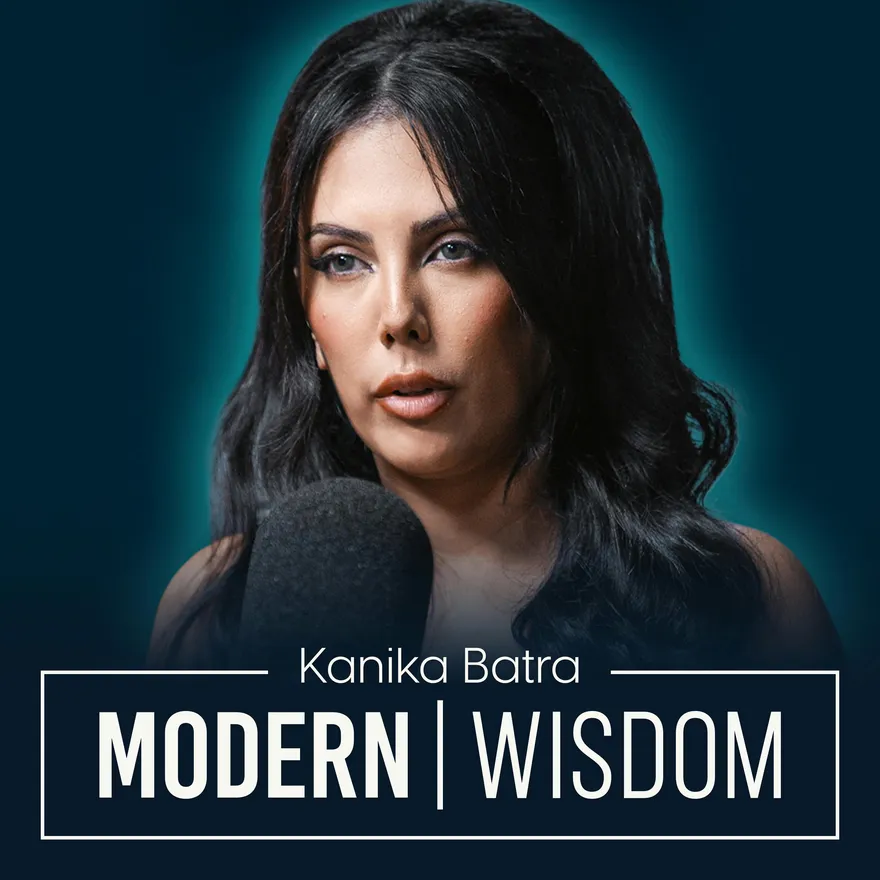

This is a preview of the Shortform summary of the Aug 27, 2026 episode of the Modern Wisdom
Sign up for Shortform to access the whole episode summary along with additional materials like counterarguments and context.
1-Page Summary
Understanding Kanika Batra's Psychopathy Diagnosis
Kanika Batra is clinically diagnosed with both antisocial personality disorder and narcissistic personality disorder, creating what her psychiatrist identifies as a classic factor one psychopathy profile. Unlike many with antisocial personality disorder, she experiences no anxiety or traditional fear response—hallmarks of factor one psychopathy. A brain scan revealed her amygdala remains inactive, meaning she understands emotions intellectually but doesn't experience them, allowing her to mimic appropriate reactions through learned techniques.
Batra distinguishes factor one psychopathy, which she embodies, as cold and calculated, compared to factor two, which involves impulsivity and violence. Her internal emotional landscape is predominantly flat, with fleeting positive emotions lasting around 20 minutes while negative emotions like rage persist much longer. She's incapable of guilt and regards empathy as unnecessary, helping only those she deems "worthy" for transactional value.
Her childhood was marked by violence and favoritism from her father, medical issues requiring constant attention, and early modeling work that reinforced transactional relationships. From age four, she sensed she was different, describing it as living behind glass—able to observe others but never genuinely connecting. Batra believes factor one psychopathy is largely innate, linked to neurological differences, while factor two is environmentally created. Her family history reveals intergenerational patterns of destructive behavior, including con artists and violent crimes.
History of Violence and Manipulation
Batra openly recounts persistent patterns of calculated harm. During her teen years, she engaged in daily violence, deliberately targeting vulnerable body parts despite her small stature. In her early twenties, she escalated to systematic fraud, stealing credit cards from people close to her—often competing with a similarly diagnosed friend—and would comfort victims while concealing her guilt. She ended relationships with calculated cruelty, such as breaking up with partners on their birthdays and laughing at their distress.
Her revenge operations were elaborate and methodical. Against a racist pageant competitor, she gathered evidence, orchestrated disqualification, then manipulated Miss Venezuela into believing sabotage, resulting in widespread online harassment. She also conducted a multi-year campaign to ruin a woman's birthday annually, sending disturbing items, arranging welfare checks, and coordinating unwanted visitors. When asked if she would kill someone without consequences, Batra affirms she would, citing the thrill she derives from others' pain.
Batra admits to cultivating false intimacy to gather information and give deliberately harmful advice. She expresses satisfaction from watching men cry and beg for validation, comparing it to an adrenaline rush. She distinguishes between "justified" revenge—like retaliation against those who wronged her—and thrill-driven harm, though she acknowledges her justifications are based on internal reasoning rather than external morality.
Romantic Patterns and Current Marriage
Batra met her husband during Miss Universe New Zealand, and within three months experienced a happiness she'd never felt in previous relationships. Her husband is steadfast and calm, providing support during medical procedures and helping her feel able to be herself without "masking." She describes this as her first experience of genuine love, defining it as a daily choice grounded in value.
As a serial monogamist, Batra would date several people simultaneously before selecting one partner. She engaged in love bombing naturally, showering partners with attention, but about three months in would view them transactionally as contempt set in. Rather than stating her intentions to end relationships, she would gradually withdraw communication, finding this more effective than direct rejection.
Batra offers women strategic dating advice rooted in emotional distance, recommending they avoid sex until serious commitment, disable notifications, and use "shit tests" to evaluate men's effort. She acknowledges the manipulative nature of this advice but insists women moderate such tactics once in secure relationships. She expresses contempt for men she perceives as weak or self-deprecating, valuing strength and self-respect as non-negotiable traits.
Spiritual Transformation Through Orthodox Christianity
Following Charlie Kirk's death, Batra experienced a profound shift. She mourned Kirk more deeply than any family member, moved by his character and respectful interactions with women. This became the catalyst for her spiritual reawakening. Though raised Christian, she had rejected the faith as a child, but after Kirk's death felt compelled to read the Bible contextually, ultimately embracing Orthodox Christianity. She's drawn to the Orthodox Church because it presents itself as a place of healing offering redemption to those labeled irredeemable.
The discipline of Orthodox faith provides structure Batra feels is necessary for moral development. Guided by her priest, she's learning forgiveness, starting with praying for herself before extending prayer to others. Inspired by Kirk's advice to "do one good thing every day," she regularly showers people with gifts without expecting repayment and is consciously developing pro-social behaviors. She's ceased criminal behavior, motivated by real consequences and a desire to expand her "circle of care" using utilitarian logic.
Despite these efforts, Batra admits to lingering revenge fantasies, highlighting the tension between old patterns and new aspirations. Her priest warned that narcissists may face psychological struggle as Christian humility confronts the fading of beauty and status with age. Batra accepts her limitations, stating "we love in our own way," aspiring to do far more good than harm over time.
Views on Gender Dynamics and Manipulation
Batra asserts men are statistically far more likely to be Machiavellian than women, citing research suggesting one in twenty men possess such traits compared to one in one hundred women. She believes women's emotional connections prevent them from following manipulative tactics to their most harmful conclusion, whereas men more readily cross those lines. She acknowledges a paradox: while advocating for women's protection, every person who has treated her well has been a man, while most harm in her life has come from women. Despite this contradiction, she continues her advocacy.
Batra explicitly opposes men's use of tactics that isolate women or undermine their self-esteem, criticizing the Red Pill sphere for such advice. She recognizes these tactics mirror methods used in domestic violence to control women. Her resistance to patriarchal norms emerged from her traditional Indian household, where she rejected cooking lessons intended solely for her as a girl.
She's candid about the hypocrisy in her positions, acknowledging she teaches women manipulative tactics while condemning men who deploy similar strategies. Batra justifies this by claiming women wield manipulation more restrainedly and that her coaching is intended for regaining power in negative situations, not for use in healthy partnerships. She notes that if Andrew Tate published her dating advice with reversed pronouns, it would closely resemble his own brand of psychological manipulation, demonstrating her self-awareness about the contradictions in her advocacy.
1-Page Summary
Additional Materials
Counterarguments
- The assertion that factor one psychopathy is largely innate and neurologically based, while factor two is environmentally caused, is debated in psychological research; many experts argue that both genetic and environmental factors contribute to all forms of psychopathy.
- The claim that women are less likely than men to be Machiavellian or manipulative is contested; some studies suggest gender differences in manipulation may be more about socialization and expression rather than inherent prevalence.
- The justification for teaching manipulative tactics to women while condemning similar behavior in men can be seen as a double standard, regardless of intent or claimed restraint.
- The idea that empathy is unnecessary and that helping others should be purely transactional is contrary to widely accepted ethical and psychological perspectives, which emphasize the importance of empathy for healthy relationships and societal functioning.
- The belief that Orthodox Christianity or any religious discipline alone can fundamentally change deeply ingrained personality disorders is not supported by clinical evidence; treatment for such disorders typically requires long-term psychological intervention.
- The notion that ending relationships through gradual withdrawal is more effective or less harmful than direct communication is challenged by relationship experts, who generally advocate for honest and clear communication to minimize emotional harm.
- The claim that men are more likely to use manipulative tactics to harmful extremes than women is not universally supported; both genders are capable of harmful manipulation, and individual differences often outweigh gender-based generalizations.
- The perspective that love is purely a daily choice grounded in value may overlook the emotional and psychological complexities involved in human attachment and affection.
Actionables
- you can practice recognizing and labeling your own emotional responses in real time to better understand how your feelings influence your decisions and interactions, helping you spot moments when you might act out of habit or impulse rather than intention; for example, when you feel irritation or envy, pause and mentally name the emotion, then consider what action would align with your values rather than your immediate reaction.
- a practical way to strengthen your boundaries and reduce susceptibility to manipulation is to create a personal checklist of red flags and green flags for relationships, reviewing it before making decisions about trust or intimacy; for instance, list behaviors that signal respect and reliability versus those that indicate control or emotional detachment, and use this list to guide your choices in friendships, dating, or work.
- you can experiment with daily acts of kindness toward people outside your usual circle, such as offering genuine compliments or small favors to acquaintances or strangers, to intentionally expand your sense of empathy and challenge any transactional mindset; for example, help a coworker with a task without expecting anything in return, or write a thank-you note to someone whose efforts often go unnoticed.

Get access to the context and additional materials
Psychopathy Diagnosis: Understanding Factor one, Antisocial Personality Disorder, and Narcissistic Traits in Her Life
Clinical Diagnosis and Neurological Basis for Her Condition
Kanika Batra is clinically diagnosed with both antisocial personality disorder and narcissistic personality disorder, which her psychiatrist explains creates a classic factor one psychopathy profile. She notes that psychopathy often stems from narcissistic traits, describing her own glibness, superficial charm, and pathologically grandiose behavior as evidence. Unlike many with antisocial personality disorder, Kanika has no anxiety and lacks a traditional fear response—hallmarks of factor one psychopathy. Diagnosed at age 21 after 16 months of forensic psychiatric evaluation, she says her narcissism drives her need for validation and status, while antisocial traits give her a calculated, "machine-like" approach to achieving goals.
A neurological underpinning supports her diagnosis: a brain scan revealed that her amygdala—the part of the brain responsible for emotional responses—remains inactive. Kanika explains that she understands emotions intellectually but does not experience them, allowing her to mimic appropriate emotional reactions learned through observation or guidance. She can cry on command at a funeral, using specific language and mirroring techniques taught by her psychiatrist, but feels nothing herself.
Kanika distinguishes factor one psychopathy, which she embodies, as cold, calculated, and revengeful, compared to factor two, which involves impulsivity, aggression, and violence. Factor two individuals often have anxiety and a tendency to act out violently or chaotically; they’re more likely to go to prison. In contrast, Kanika emphasizes her ability to plan methodically for long-term outcomes rather than respond impulsively to provocation.
Emotional and Psychological Structure of Her Inner Experience
Kanika describes her internal emotional landscape as predominantly flat, with occasional spikes. Positive emotions such as joy, pride, or happiness are fleeting, rarely lasting more than 20 minutes, while negative emotions like rage or contempt linger much longer, creating a psychological imbalance. She experiences most feelings very mildly, except negative states, which can persist and overshadow her baseline.
Kanika is incapable of guilt and regards remorse or empathy as unnecessary and unhelpful. She considers guilt a socially conditioned emotion with no practical purpose, noting that she lives in the present and sees no value in revisiting past actions to seek forgiveness. Although she expects empathy from others, she does not reciprocate, explaining she helps only those she deems "worthy," for whom there is transactional value.
The absence of anxiety or fear profoundly impacts how Kanika processes risk, relationships, and consequences, setting her apart from neurotypical individuals. This detachment and persistent sense of being "behind a glass wall" contributes to feelings of loneliness and stagnation; she often perceives herself as emotionally stunted compared to peers.
Early Childhood Development and Formative Experiences
Kanika’s childhood was marked by instability, violence, and strong yet skewed attachments. She witnessed frequent domestic violence, with her father being aggressive toward her mother and brother, but treating Kanika herself with indulgence and favoritism. He would go to great lengths to fulfill her requests, reinforcing her sense of specialness and shaping familial triangulation dynamics that she learned to exploit.
Diagnosed with thalassemia, a rare blood disorder requiring regular transfusions, Kanika was constantly attended to and the focus of adult concern—though not always in ways she desired. This need-driven attention dovetailed with early child modeling, giving her validation based strictly on actions and achievements, and shaping a worldview where relationships became inherently transactional.
Her early behavior was marked by condu ...
Here’s what you’ll find in our full summary
Psychopathy Diagnosis: Understanding Factor one, Antisocial Personality Disorder, and Narcissistic Traits in Her Life
Additional Materials
Counterarguments
- The assertion that psychopathy "often stems from narcissistic traits" is debated; while there is overlap, many experts view narcissism and psychopathy as distinct constructs with different developmental pathways.
- The claim that a single brain scan revealing an "inactive amygdala" is sufficient for diagnosing psychopathy is controversial; neuroimaging findings are not currently used as standalone diagnostic tools in psychiatry.
- The dichotomy between factor one (innate) and factor two (environmental) psychopathy is an oversimplification; research suggests both genetic and environmental factors contribute to both types.
- The idea that lack of guilt or empathy is purely a "social construct" and unnecessary is not universally accepted; many psychologists argue these emotions serve important adaptive and social functions.
- The belief that scholastic achievement can shield individuals from consequences is context-dependent and may not generalize to all educational ...
Actionables
- you can track your own emotional responses in a daily log to notice patterns in how you experience and express emotions, helping you identify if you tend to intellectualize feelings or mimic social cues rather than genuinely feel them; for example, jot down moments when you felt disconnected or observed yourself acting out an emotion for social reasons, then reflect on what triggered those moments.
- a practical way to understand how your upbringing and family dynamics may have shaped your emotional habits is to map out a simple family tree, noting any patterns of behavior, emotional expression, or relationship dynamics you’ve observed across generations; for instance, highlight relatives who were especially indulgent, emotionally distant, or prone to conflict, and consider how these patterns might influence your own approach to relationships and self-worth.
- you can experiment ...

Get access to the context and additional materials
Behavioral Patterns and Harm: Her History of Violence, Manipulation, Fraud, and Sadism
Kanika Batra openly recounts a persistent pattern of violence, calculated manipulation, fraud, and sadistic pleasure in others' suffering, describing both escalating behaviors over time and her personal justifications for harm.
Escalating Violence During Adolescence and Early Adulthood
Teen Years: Daily Violence, Intense Harm
During her high school years, Kanika Batra admits to being highly violent, inflicting daily physical harm such as repeatedly pushing a girl off a tall science lab stool, leaving the victim’s legs badly bruised. She explains she engaged in physical fights, hair-pulling, and would respond with aggression if her intelligence was questioned or if friends succeeded more than her. She chose her targets and tactics deliberately, emphasizing that knowing where to strike (eyes, throat, other vulnerable body parts) made her effective despite her small stature.
Systematic Fraud: Stealing Credit Cards and Competing With a Friend With Antisocial Personality Disorder to Shoplift, Comforting Victims, and Pretending Ignorance
In her early twenties, Batra escalated to systematic fraud, targeting people close to her—including family. She stole credit cards, often in competition with a friend she identifies as also having antisocial personality disorder, to see who could steal the most. She describes hugging and comforting a girl at university after stealing her card and spending her money, relishing the manipulation and deception involved. She took pleasure not only in the financial theft but in pretending to support the victim while concealing her own guilt.
She Ended Relationships By Leaving Partners On Their Birthdays, With one Ex Crying In His Car While She Laughed, Showing Calculated Cruelty for Emotional Damage
Batra discusses ending relationships with calculated cruelty, such as breaking up with partners on their birthdays. She describes an incident where, after breaking up with an ex on his birthday and watching him cry in his car, she laughed at his distress before eventually closing the blinds out of boredom with his display. She also would smear their character to others, displaying a strategic approach to emotional harm.
Calculated Revenge Operations Against Perceived Enemies
Orchestrated Downfall of Pageant Competitor for Racist Comments By Gathering Evidence, Notifying Contestants and Pageant Director For Disqualification, Then Manipulated Miss Venezuela Into Believing Sabotage, Resulting In Country Turning Against Competitor
Batra gives an account of revenge against a fellow pageant contestant who made racist and exclusionary remarks. She carefully deleted anything controversial she herself had said, recorded evidence of the competitor’s conduct, and disseminated it to all relevant parties. As a result, the competitor was disqualified and unable to compete again due to age. Batra then took it further by convincing Miss Venezuela—whose large fan base turned against the competitor on social media—resulting in widespread harassment and the competitor needing legal aid and privacy protection. Batra expresses satisfaction in witnessing the emotional toll, particularly the competitor's slide into depression.
Revenge Campaign From Reddit Group That Harassed a Woman in the Maldives, Ruining Three Birthdays Creatively: Pig's Head Delivery, Police Checks, 6 Am Mariachi Band, and Planning Mormon Missionary Visits
Targeted harassment extended to a woman who led an online group that attacked Batra, sharing personal information and subjecting her to abuse. In response, Batra made it a mission to ruin this person’s birthday every year, sending a pig’s head to her door, calling the police for welfare checks, arranging a mariachi band to arrive at 6 a.m., sending Jehovah’s Witnesses and Mormon missionaries, and even arranging for a pie containing fecal matter to be delivered—referencing a revenge tactic from "The Help."
Willingness to Kill Undetected, Fantasizes Extreme Violence Like Serial Killer Catherine Knight
When asked directly if she would kill someone if she could avoid consequences, Batra affirms she would, citing the thrill and satisfaction she derives from others’ pain. She acknowledges that her restraint is largely pragmatic, based on the risk of losing her freedom due to forensic and legal consequences. These admissions show the potential for greater harm and entitlement to inflict suffering if practical barriers faded.
Sadistic Pleasure in Others' Emotional Suffering
She Admits Telling People She Likes Them and Showing Vulnerability to Gather Information About Their Worlds to Give Bad Advice and Damage Their Lives
Batra describes deliberately cultivating false intimacy by telling people she likes them and displaying vulnerability so they recipr ...
Here’s what you’ll find in our full summary
Behavioral Patterns and Harm: Her History of Violence, Manipulation, Fraud, and Sadism
Additional Materials
Counterarguments
- The text presents only Batra's self-reported accounts and perspectives, which may not be independently verified or corroborated by external sources.
- Descriptions of harm and manipulation are based on Batra's own narrative, which could be influenced by self-presentation, exaggeration, or selective memory.
- The text does not include perspectives from victims or third parties, which could provide additional context or alternative interpretations of the events described.
- The focus on extreme behaviors may not represe ...
Actionables
- you can keep a daily log of your own emotional reactions to others’ behavior to spot any patterns of manipulative or retaliatory impulses, then brainstorm healthier responses for future situations; for example, if you notice you feel satisfaction when someone struggles, write down alternative ways to respond that don’t involve causing harm.
- a practical way to understand the impact of calculated cruelty is to anonymously send yourself or a trusted friend a series of supportive and unsupportive messages over a week, then reflect on how each type affects mood and self-esteem, helping you recognize the real consequences of both positive and negative interactions.
- you can set up a pe ...


Get access to the context and additional materials
Romantic Patterns, Marriage, Advice, Manipulation Tactics, Breakup Behaviors
Current Marriage and Capacity For Attachment
Kanika Batra met her husband during Miss Universe New Zealand under unexpected circumstances, turning an awkward double date into a fast connection. After only a few dates and her return to Australia, she flew him over with her own money, and he ended up moving in with her and her parents, an act she acknowledges was taboo yet accepted because her family saw his genuine character. Within three months, Kanika experienced a new happiness and openness she had never felt in previous relationships, free from the contempt she customarily felt for partners. Her husband is steadfast and calm—a “selfless anchor”—who deeply supports her, notably staying by her side during medical procedures and providing for her in significant ways. She describes this relationship as her first experience of genuine love, defining it as a daily choice grounded in value, not dependency, and she feels able to be herself without “masking.”
Their relationship balances criticism and urgency: her husband can “reign her in” without disrespect, pointing out her blind spots when necessary, and they have navigated serious disagreements, such as her frustration when he didn’t defend her in a confrontation, which led her to challenge the relationship—a reaction tied to her own direct, confrontational style.
Serial Monogamy Dating Pattern and Partner Selection Process
Kanika characterizes herself as a serial monogamist, seeking serious commitment and eschewing casual sex outside of relationships. As a bisexual woman, she would date several people at once, gradually eliminating options until selecting the one partner she wanted. Even in these chosen relationships, she describes having to maintain a “mask,” never feeling able to express her full, authentic self, which she found exhausting.
Kanika admits to engaging in love bombing as a natural impulse: showering her partners with attention and gifts, which ensures their obsession. However, about three months in, she undergoes a perceptual shift: she ceases to idealize and instead views her partners transactionally, weighing pros and cons as her feelings of contempt and detachment set in. When she wants to end a relationship, she withdraws communication and effort rather than stating her intentions plainly, as explicit rejections rarely elicit acceptance from her partners, who try to argue or win her back. She considers this gradual fading away—reducing contact and attention—more effective than making a clean break or issuing direct statements, which are often not accepted as final by her former partners.
Dating Advice For Women and Manipulation Frameworks
Kanika offers women strategic dating advice rooted in emotional distance and psychological boundaries. She advises women not to engage in sex until a relationship is serious, ideally until engagement. To avoid obsessive behaviors, she recommends disabling Instagram and messaging notifications and saving men’s contacts under insulting names to maintain emotional detachment. She cautions against frequent texting, which can create false intimacy before a real connection is established.
Kanika also endorses the use of “shit tests” to evaluate a man’s commitment, encouraging women to ask for minor inconveniences such as running errands or meeting farther away to gauge willingness and effort, as genuine interest is proven ...
Here’s what you’ll find in our full summary
Romantic Patterns, Marriage, Advice, Manipulation Tactics, Breakup Behaviors
Additional Materials
Counterarguments
- The practice of "love bombing" and then shifting to a transactional view of partners can be emotionally harmful and may undermine trust in relationships.
- Gradually fading away to end relationships, rather than communicating directly, can be seen as avoidant and may leave partners confused or hurt.
- Advising women to use manipulative tactics such as "shit tests" or signaling other romantic options may foster distrust and unhealthy dynamics in dating.
- Saving contacts under insulting names and intentionally maintaining emotional distance could prevent genuine connection and empathy from developing.
- Expressing contempt for men perceived as weak or self-deprecating may reinforce harmful stereotypes about masculinity and discourage emotional vulnerability in men.
- Dismissing men who express low self-worth as manipulative overlooks the reality that many people struggle wit ...
Actionables
- you can create a personal relationship audit checklist to regularly assess whether your connections feel supportive, respectful, and aligned with your values, helping you identify when to address issues or step back before resentment builds.
- a practical way to reinforce emotional boundaries is to set a recurring reminder to reflect on your current emotional investment in any romantic interest, noting if you’re maintaining your independence and self-respect or slipping into patterns that make you feel undervalued.
- you can experime ...
Get access to the context and additional materials
Spiritual and Moral Growth: Conversion to Orthodox Christianity, Fostering Pro-social Behaviors, Evolving Ethics
Catalyst for Religious Conversion and Spiritual Awakening
Kanika Batra describes a dramatic shift in her spiritual life following the death of Charlie Kirk. She grieves his passing more deeply than any family member, even recalling a lack of emotion at her grandfather’s death, yet mourning Kirk daily. The hostility and mockery she witnesses online over Kirk’s death strikes her as evidence of the world’s cruelty. She is especially moved by Kirk’s character: his gentle yet strong masculinity, his protection and provision, and his respectful interactions with women. This experience becomes the catalyst for her spiritual reawakening. Although raised in a Christian household, she had rejected Christianity as a child. After Kirk’s death, she feels compelled to read the Bible in a new, more contextual way, ultimately finding profound meaning in Orthodox Christianity. She is drawn to the Orthodox Church specifically because it presents itself as a place of healing—a hospital rather than a courtroom—and offers redemption to those labeled irredeemable.
Learning Discipline and Restriction Through Religious Practice
Embracing Orthodox Christianity, Batra finds solace and transformation in its traditions. She values the Church’s stability, noting its consistent values and practices over 2000 years, echoing the traditional circumstances of her upbringing. The discipline of the Orthodox faith brings her comfort, providing the structure she feels is necessary for moral development. A key element of this practice is forgiveness, guided by her priest’s advice to pray first for herself if she cannot yet bring herself to pray for others. Over time, she learns that harboring less hatred enables her to eventually extend prayer and forgiveness to others. Batra cherishes this element of the faith and strives continually to be more forgiving.
Evolution Toward Pro-social Behavior and Reduced Harm
Inspired by Kirk’s advice to "do one good thing every day for somebody," Batra regularly showers people with gifts and acts of kindness without expecting repayment, demonstrating genuine pleasure in caring for others. She is consciously developing pro-social behaviors, making deliberate efforts to increase the good she does for those around her. In pursuit of reduced harm, she has ceased criminal behavior, motivated in part by the real risks of prison and the consequence ...
Here’s what you’ll find in our full summary
Spiritual and Moral Growth: Conversion to Orthodox Christianity, Fostering Pro-social Behaviors, Evolving Ethics
Additional Materials
Counterarguments
- The depth of Batra’s grief for Charlie Kirk, a public figure, compared to family members, may reflect parasocial attachment rather than a uniquely spiritual awakening.
- Interpreting online hostility as evidence of the world’s cruelty could overlook the complexity of online discourse, where anonymity and performative behavior often amplify negativity beyond what is typical in offline interactions.
- Admiration for Kirk’s specific gendered traits (gentle yet strong masculinity, protection, provision) may reinforce traditional gender roles, which some may view as limiting or outdated.
- The idea that Orthodox Christianity uniquely offers healing and redemption, as opposed to judgment, may not account for similar teachings and practices present in other Christian denominations or faith traditions.
- The emphasis on the Orthodox Church’s unchanging traditions and values could be critiqued as potentially resistant to necessary social progress or adaptation to contemporary ethical challenges.
- The focus on discipline and structure as essential for moral development may not resonate with individuals who find meaning and ethical growth through less structured or non-religious frameworks.
- The utilitarian approach to expanding one’s “circle of ...
Actionables
- You can create a daily “circle of care” map by drawing a series of expanding circles on paper and writing the names of people you interact with, from closest to most distant, then intentionally do one small, positive action for someone in an outer circle each week to broaden your compassion beyond your immediate circle. For example, you might send a supportive message to a distant acquaintance or donate to a cause that benefits strangers.
- A practical way to nurture forgiveness and reduce resentment is to keep a private “release journal” where you write down any grudges or revenge fantasies, then immediately follow each entry with a short note about something positive or neutral about the person or situation, helping you gradually shift your mindset from hosti ...
Get access to the context and additional materials
Gender Dynamics: Her Views on Manipulation, Advocacy Against Male Abuse, and Dating Advice Philosophy
Kanika Batra explores the complexities and contradictions in her views on gender, manipulation, and the philosophy underlying her dating advice. Drawing from both personal experience and broader societal observations, she analyzes patterns in male and female behavior, advocates against abusive male tactics, and reflects on her own self-awareness and the possible hypocrisy in her approach.
Male Versus Female Capacity For Manipulation and Harm
Kanika Batra asserts that men are statistically far more likely to be Machiavellian and manipulative than women, citing research that estimates one in twenty men possess such traits compared to one in one hundred women. She believes this significant gap means men are, on average, more capable of calculated harm. Batra elaborates that women, by nature or socialization, are more emotionally connected and tend to self-limit when employing manipulative strategies, even if they have access to blueprints for such behavior. She claims women's emotional ties prevent them from following manipulative tactics through to their most harmful conclusion, whereas men may be more likely to cross those lines. While acknowledging a few women could become genuinely abusive, Batra insists she is not supplying such individuals with material designed for harm and maintains women generally show restraint.
Despite advocating for greater protection of women and supporting female empowerment, Batra acknowledges a deeply personal paradox. She shares that except for the man who raped her, every person who has treated her well has been a man, while the majority of harm and stress in her life has come from other women. Women have policed her tone, spread rumors, and caused her difficulties, while men, ranging from her father to strangers on the street or in airports, have offered help, kindness, and loyalty. She reflects on this contradiction, noting that even as her advocacy centers on protecting women, her individual experiences have often led her to feel more supported by men. Nonetheless, she continues to advocate on behalf of women, recognizing a tension between the general patterns of gendered harm and her personal life story.
Advocacy Against Male Abuse Despite Female-Centric Worldview
Batra explicitly opposes men’s use of dating tactics that isolate women from support systems, undermine their self-esteem, or foster dependence—criticizing the Red Pill sphere and podcasts like "Fresh and Fit" for such advice. She recognizes that these tactics, including isolation, gaslighting, and triangulation, mirror the methods used in domestic violence to control and subjugate women. Batra's own experience with such manipulation—having used some of the tactics herself—informs her rejection of advice that encourages men to lower women’s self-worth or create power imbalances in relationships.
Her resistance to patriarchal norms also emerges from her cultural context. Growing up in a traditional Indian household, she recounts rejecting her mother’s efforts to have her learn to cook solely because she was a girl, while her brother faced no such expectations. Batra refused, seeing this as an attempt to push her into a subordinate role, further fueling her feminist worldview.
While Batra’s advocacy and advice are centered on supporting women, she expresses frustration with some feminist audiences that expect her to conform to their set views on gender, noting her own discomfort with certain leftist perspectives. She is also wary of men who display overly intense attention early on, labeling this as "love bombing"—a manipulative behavior, even as she admits to having done it herself. W ...
Here’s what you’ll find in our full summary
Gender Dynamics: Her Views on Manipulation, Advocacy Against Male Abuse, and Dating Advice Philosophy
Additional Materials
Counterarguments
- The assertion that men are statistically more likely to be Machiavellian and manipulative than women is debated in psychological research; some studies suggest gender differences in manipulation are context-dependent and not as pronounced as claimed.
- The idea that women are inherently more emotionally connected and self-limiting in manipulation may reinforce gender stereotypes and overlook individual differences and situational factors.
- Personal anecdotes about being treated better by men than women do not necessarily reflect broader societal patterns or justify generalizations about gendered behavior.
- Teaching manipulative tactics to women while condemning men for similar behavior could be seen as a double standard, regardless of intent or perceived restraint.
- The claim that women’s manipulation is less harmful than men’s is difficult to substantiate objectively, as emotional and psychological harm can be significant regardless of gender.
- Criticizing "Red Pill" advice while offering similar power-based strategies ...
Actionables
- you can track your own emotional responses and boundaries in relationships by keeping a daily log of moments when you feel pressured, manipulated, or empowered, then review patterns to identify which interactions support your well-being and which undermine it
- By noting specific situations and your reactions, you’ll start to see if certain people or behaviors consistently make you feel uneasy or strong. For example, if you notice you feel anxious after conversations with someone who showers you with compliments early on, you might recognize early warning signs of love bombing or manipulation.
- a practical way to strengthen your ability to resist manipulative tactics is to rehearse assertive responses to common pressure scenarios in private, such as saying no to unreasonable requests or calmly questioning someone’s motives
- Practicing phrases like “I need time to think about that” or “Can you explain why you’re asking me to do this?” in front of a mirror or with a trusted friend can help you respond confidently in real situations, making it less likely you’ll be caught off guard or coerced.
- you can create a pers ...


Get access to the context and additional materials

 1-Page Summary
- Psychopathy Diagnosis: Understanding Factor one, Antisocial Personality Disorder, and Narcissistic Traits in Her Life
- Behavioral Patterns and Harm: Her History of Violence, Manipulation, Fraud, and Sadism
- Romantic Patterns, Marriage, Advice, Manipulation Tactics, Breakup Behaviors
- Spiritual and Moral Growth: Conversion to Orthodox Christianity, Fostering Pro-social Behaviors, Evolving Ethics
- Gender Dynamics: Her Views on Manipulation, Advocacy Against Male Abuse, and Dating Advice Philosophy
Create Summaries for anything on the web
Download the Shortform Chrome extension for your browser
