

Ex-Gang Member: What Makes A Violent Man Change? - Johnny Chang - #1140
In this episode of Modern Wisdom, Johnny Chang shares his journey from childhood trauma and gang life to violent criminality and eventual spiritual transformation. Chang describes how his father's abuse and the absence of safe familial bonds led him into gang culture at age twelve, where he found the belonging and structure that society failed to provide. He details his experiences in California's youth detention and adult prison systems, where violence became a language of survival and racial solidarity replaced street gang rivalries.
The conversation explores Chang's unexpected spiritual conversion through his relationship with Pastor Kim, who reframed his understanding of sin, grace, and forgiveness. Chang discusses the difficult work of reconciling with his abusive father and forgiving himself, ultimately discovering that true strength lies in vulnerability rather than dominance. His transformation extends to his family, breaking cycles of intergenerational trauma, and now informs his prison ministry work where he helps others find purpose through their own suffering.
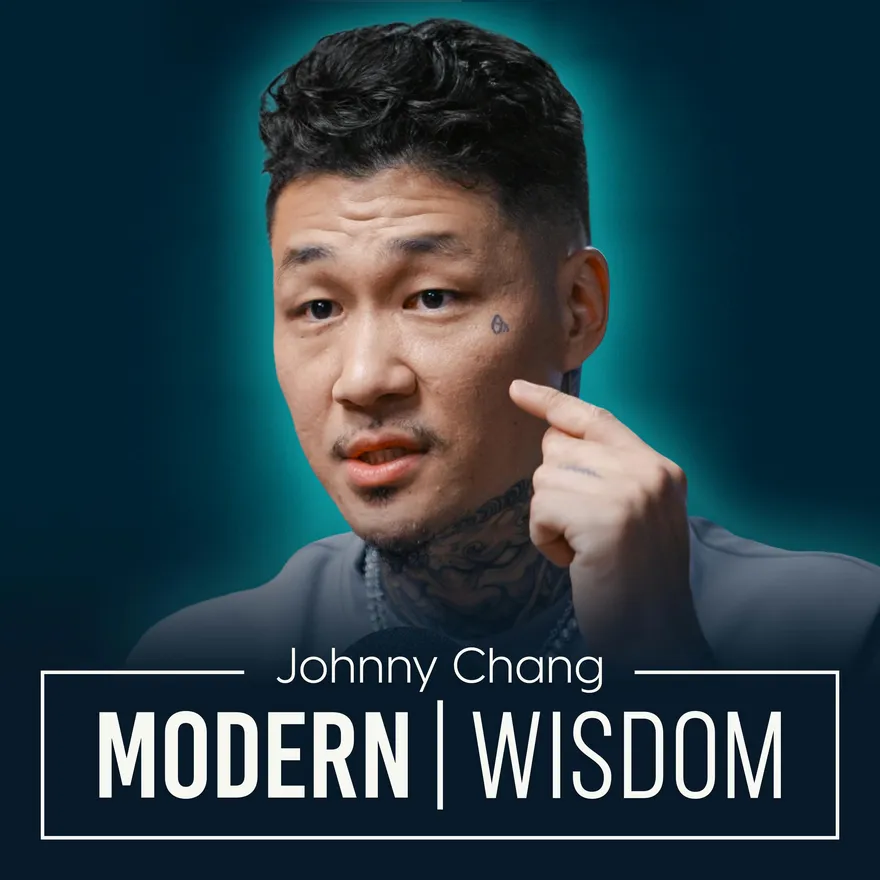

This is a preview of the Shortform summary of the Aug 22, 2026 episode of the Modern Wisdom
Sign up for Shortform to access the whole episode summary along with additional materials like counterarguments and context.
1-Page Summary
Childhood Trauma, Gangs, and Criminality
Johnny's early life is marked by poverty and violence. His father, an immigrant chef with severe alcohol addiction, repeatedly beats Johnny, his brother, and his mother. By age eight, Johnny realizes he cannot depend on his father for protection. This belief is shattered at age ten when four kids attack him on his way home. Rather than offering comfort, his father accuses Johnny of lying and beats him again, with his mother pressured to participate. This moment transforms Johnny's trauma into rage, teaching him that violence is his only means of survival.
As Johnny's behavioral problems mount, local gangs notice the unsupervised twelve-year-old. After an initial intimidation test, they invite him to "kick it" with them. Johnny meets an older gang member who treats him with gentleness and generosity, giving him $100 and telling him he's now family—a message deeply intoxicating to a boy deprived of safe familial bonds. Chris Williamson observes that gangs seem to manufacture belonging better than society does for many young men, and Johnny agrees, explaining how the respect and structure within gang life creates legitimacy and purpose that he never received at home.
Johnny's first assignment—kidnapping and robbing a drug dealer at age twelve—leads to his arrest and a RICO charge. He initially expects a short juvenile sentence, but instead finds himself labeled a "child assassin" in court and pushed into the adult criminal justice system before his teenage years have truly begun.
Prison Life and Institutional Trauma
California Youth Authority: A Gladiator School of Violence and Survival
Johnny arrives at California Youth Authority on his first offense due to the RICO charge. Immediately, he's tested with violence through "lining it up," where fighting one person means taking on their entire group. On his first day, Johnny fights six to eight youths. He quickly learns that passivity leads to exploitation and sexual assault. Over four years, Johnny estimates fighting over forty people. Violence becomes the universal language, bringing a twisted sense of pride and belonging even as it inflicts psychological damage. Adding to the chaos, correctional officers encourage conflict between youths for entertainment and betting—a literal "gladiator school."
Transition to Adult Prison Shifted Gang Politics To Race-Based Solidarity
When Johnny transitions to adult prison at seventeen, he learns that alliances are now dictated by race, not gang affiliations. Street rivalries dissolve in favor of strict racial solidarity—attacking a rival gang member of the same race would be a major violation. Prison hierarchy is rigid: those convicted of crimes against women or children occupy the lowest tier and require protective custody, while gang members and violent criminals command respect. Life in general population follows strict "programming"—regulations, discipline, and never exposing weakness. Economic life revolves around trade, and physical fitness determines status.
Johnny witnesses how morality inside is swift and mutable. He describes seeing respected inmates murdered after being exhausted by fitness challenges, and friendships that mask assassination plots. Prison life breeds a mindset where nobody is trusted and manipulation is constant—"catch a body or be a body," as Johnny puts it. In one moment emblematic of this system, Johnny nearly commits murder to help a friend pay off drug debts, realizing how institutional logic traps people in cycles of violence and moral compromise.
Spiritual Transformation Through Christianity
Korean Pastor Kim's Genuine Mentorship For Johnny
Johnny recalls the warmth of Pastor Kim's hospitality as he's invited into the pastor's home and served homemade black bean noodles. During conversation, Pastor Kim challenges Johnny's understanding of sin, reframing it as an identity issue rather than simply bad actions. Using an analogy to ethnicity—just as Johnny cannot become more or less Chinese by his actions—Pastor Kim explains that sin is something one is born into. This resonates deeply with Johnny, providing clarity on the powerlessness and emptiness he's felt throughout his life.
Pastor Kim recognizes the perfectionism fueling Johnny's depression and offers empathy rather than condemnation, telling him, "What you feel, Johnny, is normal." He then introduces Jesus not as a moral guide, but as a rescuer, using a lifeguard analogy: a drowning person cannot pull themselves to shore. For Johnny, drowning in depression and trauma, this message of grace and unconditional rescue is radically different from religious frameworks emphasizing personal achievement. Hope truly enters his life for the first time.
Pastor Kim Urged Johnny to Reconcile With His Father
When Pastor Kim asks about Johnny's father, Johnny admits the relationship is "horrible." Rather than simply telling him to forgive, Pastor Kim guides him through scripture, explaining that people often do what they hate because of the inherent struggle with sin. He humanizes Johnny's father, suggesting that his own pain and trauma contributed to the broken relationship.
Compelled by this perspective, Johnny meets his father for pho and apologizes for being a "bad son." He expects rejection, but instead his father cries, apologizes, and admits he didn't know how to approach reconciliation. For the first time, Johnny hears both "I love you" and "I'm sorry" from his father. They embrace, and years of pain begin to dissolve, marking the beginning of Johnny's spiritual and relational transformation.
Reconciliation, Forgiveness, and Family Healing
Johnny emphasizes that forgiveness is often misunderstood as something done for the person who wronged us, when in reality it's a gift to oneself. By forgiving his father, Johnny releases himself from the chains of past trauma, coming to see his father as a flawed human shaped by his own tragic experiences. Johnny acknowledges that while forgiving his father was difficult, the hardest act was forgiving himself—facing his own actions and the shame that comes with real self-reckoning.
Despite living with an abusive husband and two sons involved in crime, Johnny's mother continually expressed unshakeable faith that Johnny would one day become a preacher. Her genuine peace and conviction inspired Johnny even when he couldn't understand it. Her actions became a living sermon, demonstrating that faith and peace were tangible, transformative forces.
The transformation in Johnny's father began when he witnessed his son's radical conversion. Johnny's father quit drinking, embraced Christianity, and changed how he treated his wife and sons. Where the household once endured abuse, Johnny now observes genuine affection between his parents. This spiritual healing demonstrates the power to break cycles of intergenerational trauma and violence.
Redefining Strength and Finding Purpose
Johnny once equated strength with violence, dominance, and gang status. Even after making $40,000–$50,000 a month from drug dealing and attaining the penthouse and status he once dreamed of, Johnny feels profound emptiness. He faces depression and sleepless nights that ultimately lead to a suicide attempt, realizing that no amount of money or external success brings fulfillment.
After becoming Christian, Johnny discovers that true strength lies in vulnerability and forgiveness. Forgiving his father—an encounter he ranks as terrifying as returning to prison—requires more courage than any gang conflict. He comes to understand that expressing pain and showing emotion is a form of true, hard-won strength.
Johnny channels his experiences into prison ministry, speaking openly about his emotional struggles. His vulnerability resonates deeply—men approach him afterward, moved to tears, with one confiding that Johnny's testimony kept him from suicide. Johnny witnesses transformation in inmates of all backgrounds, recognizing that his suffering has purpose: it brings hope and catalyzes change in others.
Johnny admits that his greatest struggle is surrendering control. Having always relied on self-will, letting go in favor of God's plan feels perilously close to weakness. He ultimately learns that real peace comes through trusting God's sovereignty. He finds strength in aligning his ambition with God's will: planning and striving, but letting faith determine results. Through this surrender, Johnny achieves the peace and purpose that violence and control could never deliver.
1-Page Summary
Additional Materials
Counterarguments
- While gangs may provide a sense of belonging and structure, they also perpetuate cycles of violence and exploitation, often manipulating vulnerable youth for criminal purposes rather than genuinely supporting them.
- The narrative emphasizes individual transformation through faith, but not all individuals in similar circumstances find healing or purpose through religion; alternative secular approaches such as therapy, education, or community support can also foster recovery and change.
- The depiction of prison as universally violent and corrupt may not reflect the full range of experiences, as some correctional facilities and staff work to provide rehabilitation and safety.
- The focus on forgiveness and reconciliation, while powerful for some, may not be possible or appropriate for all survivors of abuse, and some may find healing through setting boundaries or seeking justice rather than reconciliation.
- The story frames strength as vulnerability and forgiveness, but for some, strength may also be found in advocacy, self-reliance, or building new supportive relationships outside of family or faith contexts.
- The narrative suggests that cycles of trauma and violence can be broken primarily through spiritual transformation, but systemic changes—such as addressing poverty, improving social services, and reforming the justice system—are also critical for preventing similar outcomes for others.
Actionables
- you can create a personal “strength inventory” by listing ways you’ve shown vulnerability, forgiveness, or emotional honesty in your life, then intentionally practice one of these strengths in a new situation this week, such as admitting a mistake to a friend or expressing gratitude to someone you’ve struggled with.
- a practical way to reframe your understanding of forgiveness is to write a letter to yourself describing a past hurt or mistake, then write a second letter from your future self offering compassion and release from shame, focusing on how letting go benefits your own well-being rather than the other person.
- you can experiment with surrendering control by choosing one area of your daily routine—like your commute, a work task, or a family interaction—where you consciously let go of the need to manage the outcome, instead noting your feelings and responses in a journal to track how this shift affects your stress and sense of peace.
Get access to the context and additional materials
Childhood Trauma, Gangs, and Criminality
Growing Up In Poverty With an Absent, Violent Father Left Johnny Seeking Protection and Belonging Elsewhere
Johnny’s early life is shaped by poverty and a tumultuous home environment. His father, an immigrant chef pursuing the American dream, develops a severe alcohol addiction. This addiction leads to a pattern of escalating violence—he breaks Johnny’s mother’s ribs, severely beats Johnny’s brother, and repeatedly beats Johnny himself. By the age of eight, Johnny realizes he cannot depend on his father, who is unpredictable and abusive. To avoid his father’s outbursts, Johnny starts spending more time on the streets.
At ten, Johnny’s belief in his parents' ability to protect him shatters. While walking home from a local market, four kids jump him, taking his backpack and shoes and leaving him battered. Johnny, bloodied and barefoot, returns home, only to be met with suspicion and disbelief by his father. His father cannot understand the context of racial tensions—there was a war going on between Asian and Mexican gangs in the area. Instead of comfort, Johnny receives another beating and an accusation of lying. His mother, pressured to participate in the discipline, joins in. This marks the moment Johnny internalizes the lesson that he cannot trust his parents—his trauma turns into rage, and violence becomes his means of survival. He develops a hardened outlook, fighting not for fun, but as a way to protect himself.
Gang as Substitute Family: Offering Structure, Respect, and Belonging When Institutions Fail
As Johnny’s suspensions and behavioral problems pile up, the streets begin to take notice. At twelve years old, he is stealing, carrying a knife, and constantly in trouble. Gangs in the neighborhood—always on the lookout for tough, unsupervised kids—approach him. Their initial test, or “banging on” him, involves intimidation with guns and probing questions about his affiliations. Johnny, unconnected to any gang, freezes, but is then invited to “kick it”—to hang out with them.
Soon, Johnny is pulled into their world. The gang boys—some as young as fourteen—invite him for food and introduce him to an older, respected “OG,” the uncle of one of the boys. This man, despite his intimidating appearance and criminal history, is soft-spoken, gentle, and generous. He gives Johnny $100 and tells him that, with them, he is family—a message Johnny, deprived of safe familial bonds at home, finds deeply intoxicating. The structure, respect, and sense of belonging he receives is powerful and addictive, something he never got from his biological family.
Chris Williamson observes that gangs seem to manufacture belonging better than society does for many young men. Johnny agrees, pointing out that the respect conferred in gang life spreads like wildfire and creates its own form of legitimacy and esteem. Even when there is no external enemy, internal rivalries ("set tripping") maintain the sense of brotherhood, structure, and identity within the gang, reinforcing the feeling of belonging and purpose.
While Williamson later asks whether the older mentor’ ...
Here’s what you’ll find in our full summary
Childhood Trauma, Gangs, and Criminality
Additional Materials
Counterarguments
- While Johnny’s traumatic upbringing and lack of support are significant, not all children in similar circumstances turn to gangs or criminal behavior; individual choices and resilience can lead to different outcomes.
- The narrative emphasizes the gang as a source of belonging and structure, but it underplays the severe harm and exploitation that gangs inflict on vulnerable youth, including perpetuating cycles of violence and trauma.
- The portrayal of the older gang mentor as both caring and manipulative could be challenged by noting that such figures often primarily exploit children for criminal purposes, with any care being secondary or instrumental.
- The text suggests that societal institutions failed Johnny, but it does not address potential interventions or support systems (such as schools, social services, or community organizations) that may have been available or could ...
Actionables
- you can strengthen your sense of belonging and self-worth by joining or forming a small, positive peer group focused on shared interests or goals, such as a book club, walking group, or online hobby community, to experience healthy structure and camaraderie without negative influences.
- a practical way to build trust and emotional safety is to set up regular check-ins with a trusted friend or family member, where you both share recent challenges and support each other, helping to rebuild trust in relationships and reduce feelings of isolation.
- you can identify and avoid manipu ...

Get access to the context and additional materials
Prison Life and Institutional Trauma
Johnny Chang offers a firsthand look into how the structures of youth authority facilities and adult prisons in California shape behavior, psychology, and moral calculations.
California Youth Authority: A Gladiator School of Violence and Survival
On His First Day, Johnny Fought Multiple People In "Lining It Up," Showing Passive Behavior Led To Exploitation and Sexual Assault
Johnny first hears about the California Youth Authority (YA) as the place for the “worst” juvenile offenders, though he lands there on his first offense due to a RICO charge. On arrival at Southern Reception Center & Clinic (SRCC), he is immediately tested with violence—asked “where are you from?” and attacked regardless of his answer. He’s introduced to “lining it up," where fighting one person means taking on their entire group, or “ronfla.” On his very first day, Johnny fights six to eight youths, some as young as 12 and others up to 16. The fights continue on the following day. Johnny quickly realizes that showing passivity or a refusal to fight leads to exploitation, theft, and even sexual assault by others, as witnessed among less aggressive detainees.
Johnny Fought Forty People, Internalizing Violence as Communication and Respect, Feeling Pride and Belonging Despite Psychological Damage
Over four years, Johnny estimates fighting over forty people. Violence becomes the universal language within this environment—disputes, or even perceived slights, are resolved with fists. Newcomers are similarly initiated. This constant aggression brings not just survival but a twisted sense of pride and belonging. Praise from peers after violent acts reinforces this behavior, even as it inflicts psychological damage—Johnny describes feeling pride at stabbing someone while ignoring the internal voice telling him something was wrong. Over time, this morphs into a deeply ingrained, manipulative mindset, where every interaction is filtered through the lens of exploitation and dominance.
Correctional Officers Incited Youth Violence For Betting In "Gladiator School"
Adding to the chaos, correctional officers themselves encourage conflict, pitting youths against each other for entertainment and betting. The phrase "gladiator school" is literal—COs exploit the violence for their gain, worsening the brutality and hopelessness of the institution.
Transition to Adult Prison Shifted Gang Politics To Race-Based Solidarity
Johnny Resisted Prison Politics By Fighting a Rival Gang Member, but Learned Same-Race Gangs Back Each Other Up, Shifting His Understanding of Loyalty and Brotherhood
When Johnny transitions into adult prison at age 17, a senior inmate explains that alliances are now dictated by race, not prior gang affiliations. Rivalries between street gangs dissolve—solidarity is strictly race-based. Johnny is shocked to learn that attacking a rival gang member of his same race would be a major violation. Prison "politicking" means supporting even former enemies if they are part of your racial group, a sharp departure from the youth authority culture of “all against all.” He is warned to abandon impulsive violence: "You have to calm down. You will die in here." The violence becomes less frequent but far more lethal—any personal disrespect can ignite a full-scale racial riot, with entire groups going to war.
Prison Hierarchy: Crimes Against Women/Children Require Protection; Gang Members and Violent Criminals Command Respect
The adult prison hierarchy is rigid. “General population” (GP) is reserved for those without certain stigmatized charges (“jackets”) like sex crimes, snitching, or defecting from a gang. Those convicted of crimes against women or children are deemed the lowest of the low and are sent to protective custody to avoid violence from other inmates. By contrast, gang members and those involved in violent crimes command respect and occupy the upper ranks of the social order. New arrivals must carry their criminal files for inspection to ensure they’re "clean" enough to remain in mainline GP.
Prison Programming: Fitness, Yard Economy, Concealing Weakness, Violence Volunteering, Brutal Meritocracy
Life in GP, or “mainline,” is governed by strict rules known as "programming," which means following all regulations, showing discipline, and never exposing weakness. Johnny explains that his struggles with anger and manipulative tactics, which were assets in YA, get him punished in adult prison. Economic life revolves around trade—stamps, food, favors—and hustling becomes second na ...
Here’s what you’ll find in our full summary
Prison Life and Institutional Trauma
Additional Materials
Clarifications
- "Lining it up" is a practice in juvenile detention where an individual must fight multiple opponents sequentially, often as a test of toughness or initiation. "Ronfla" refers to a group or gang that supports each other during these fights, meaning one person faces the entire group's combined force. This system enforces a brutal hierarchy and discourages passivity, as refusal to fight invites exploitation. It also fosters a culture of violence as a means of survival and respect.
- A RICO charge involves accusations of participating in organized crime through a pattern of illegal activities. It is a federal law designed to target criminal enterprises rather than isolated crimes. Juveniles charged under RICO are placed in the Youth Authority due to the severity and organized nature of their offenses. This placement reflects the system's view of them as high-risk offenders requiring strict supervision.
- Correctional officers (COs) are responsible for maintaining order but sometimes exploit their authority to manipulate inmates. In some facilities, COs provoke fights to control the population or for personal amusement. They may place bets on inmate violence, turning conflicts into spectacles for profit. This behavior undermines safety and worsens institutional violence.
- "Gladiator school" refers to a prison environment where violence is deliberately encouraged and exploited by authorities for entertainment or control. In this context, correctional officers bet on fights between youths, intensifying conflict. The term draws a parallel to ancient Roman gladiators forced to fight for spectators' amusement. This system perpetuates brutality and trauma among incarcerated youth.
- In adult prisons, racial identity often becomes the primary basis for alliances because it creates larger, more stable groups that can offer protection and influence. This shift helps inmates navigate the complex social hierarchy and reduces conflicts that arise from smaller, fragmented gang loyalties. Race-based solidarity also reflects broader societal divisions and tensions that are amplified within the prison environment. Consequently, loyalty to racial groups often overrides previous gang affiliations to ensure survival and power.
- In prison slang, a "jacket" is a label or stigma attached to an inmate based on their criminal charges or behavior. It often marks someone as untrustworthy or dangerous to others, especially if related to sex crimes, snitching, or betrayal. This label affects how inmates are treated and can lead to isolation or violence. Avoiding a "jacket" is crucial for survival and social standing inside prison.
- General population (GP) is the main living area in adult prisons where most inmates reside together. Inmates in GP must follow strict informal social codes and formal rules to avoid conflict and maintain order. Status within GP depends on factors like criminal history, gang affiliation, and behavior, influencing access to privileges and protection. Those with stigmatized charges are excluded to prevent violence and maintain the social hierarchy.
- In prison, "programming" refers to the informal social code and behavioral expectations inmates must follow to survive and gain respect. It includes strict discipline, avoiding showing weakness, and adhering to unspoken rules about interactions and conduct. Programming helps maintain order within the inmate hierarchy and reduces vulnerability to exploitation. Failure to follow programming often results in punishment or loss of status.
- The "yard economy" refers to the informal system of exchanging goods and services among inmates. Items like food, stamps, and personal favors become currency due to limited access to money. Hustling involves negotiating trades, running small businesses, or providing services to gain status or resources. This underground market helps inmates meet needs and assert influence within the prison social structure.
- Carrying criminal files upon prison entry allows inmates and staff to verify an individual's charges and history. This helps determine their placement within the prison hierarchy and eligibility for general population. It prevents inmates with stigmatized offenses, like sex crimes, from entering vulnerable groups. The files serve as a form of identification and social status marker inside prison.
- In prisons, physical fitness challenges ...
Counterarguments
- While violence and exploitation are described as pervasive in YA and adult prisons, some individuals may find ways to avoid direct involvement in violence through alliances, compliance, or other adaptive strategies.
- Not all correctional officers incite or encourage violence; many work to maintain order and protect inmates, and some facilities have implemented reforms to reduce violence and improve conditions.
- The depiction of universal violence and manipulation may not account for inmates who form genuine, supportive relationships or participate in rehabilitative programs.
- Some inmates successfully resist adopting a manipulative or predatory mindset, instead focusing on personal growth, education, or rehabilitation.
- Institutional reforms, oversight, and advocacy have led to improvements in some correctional settings, challenging the notion that brutality and hopelessness are inevitable or universal.
- The emphasis on race-based alliances in adult prison may not reflect the experiences of all inmates, as some individ ...


Get access to the context and additional materials
Spiritual Transformation Through Christianity
Johnny’s journey of spiritual renewal unfolds through his profound encounters with Korean Pastor Kim, whose genuine mentorship and scriptural wisdom lead to deep healing and transformation. Pastor Kim’s approach to faith, identity, and reconciliation sets the foundation for a new life for Johnny, marked by hope, grace, and restored relationships.
Korean Pastor Kim's Genuine Mentorship For Johnny
Johnny vividly recalls the warmth of Pastor Kim’s hospitality as he is invited into the pastor’s home. Pastor Kim serves homemade black bean noodles and yellow daikon, an act of genuine kindness that evokes strong memories and moves Johnny emotionally. As they eat, Johnny feels a sense of comfort and care that he seldom experienced before.
During their conversation, Pastor Kim challenges Johnny’s understanding of sin. When asked if he is a sinner, Johnny initially responds by defining sin as the act of doing evil against God. Pastor Kim, however, reframes sin as an identity issue, drawing a parallel to ethnicity: just as Johnny did not choose to be born Chinese and cannot become more or less Chinese by eating certain foods, so too is sin something one is born into rather than simply a list of bad actions. This analogy resonates with Johnny, providing clarity on the sense of powerlessness and emptiness he has felt throughout his life.
Pastor Kim recognizes the perfectionism fueling Johnny’s depression, validating the internal struggle Johnny has never had articulated before. The pastor explains that striving for goodness as an imperfect person leads only to disappointment and emptiness. Johnny, so often dehumanized by family and society, finally feels seen and normal. Instead of condemnation, Pastor Kim offers empathy, telling him, “What you feel, Johnny, is normal,” and clarifying that only by facing the real root of his emptiness can Johnny hope to heal.
Pastor's View of Jesus as Savior, Not Moral Guide, Resonated With Johnny's Inability to Save Himself
Pastor Kim then introduces the core tenet of Christianity: faith in Jesus not just as a moral guide, but as a rescuer. Using the lifeguard analogy, Pastor Kim explains that a drowning person cannot pull themselves to shore—only a lifeguard can save them. Similarly, Johnny is drowning in depression, trauma, and loneliness, unable to escape through his own efforts, no matter how hard he tries. The pastor emphasizes that Jesus’s role is to save where one cannot save oneself.
This message stands in stark contrast to Johnny’s experiences with religious frameworks—like the discipline of Islam—that emphasize personal achievement and effort to reach God. Pastor Kim offers a radically different paradigm: grace and unconditional rescue. For Johnny, this is the first time hope truly enters his life. The burden of perfectionism begins to shift from his own shoulders to the care of a higher power, radically altering his perception of worth and the possibility for real change. The explanation, delivered through a translator, is deeply accessible and profoundly affects Johnny, making him feel seen and understood.
Pastor Kim Urged Johnny to Reconcile With His Father By Explaining Forgiveness Through Scripture, Showing That Understanding His Father's Trauma Fosters Healing Over Judgment
Challenging Johnny further, Pastor Kim asks about his relationship with his father. Johnny admits it ...
Here’s what you’ll find in our full summary
Spiritual Transformation Through Christianity
Additional Materials
Counterarguments
- The framing of sin as an inherent identity issue rather than a set of actions is a theological perspective not universally accepted among all Christian denominations or other faith traditions.
- The analogy comparing sin to ethnicity may not resonate with everyone and could be seen as oversimplifying complex moral and spiritual concepts.
- The depiction of other religious frameworks, such as Islam, as primarily emphasizing personal effort may not fully capture the diversity and nuance within those traditions, some of which also emphasize grace and forgiveness.
- The narrative centers on a Christian approach to healing and reconciliation, which may not be the only or most effective path for everyone; other religious, secular, or therapeutic approaches can also lead to personal transformation and restored relationships.
- The suggestion that peace comes from one side conceding in conflict may not always be appropriate or healthy, especially in cases involving ...
Actionables
- you can schedule a weekly check-in with a trusted friend or family member where you both share recent struggles and offer each other empathy without judgment, helping to normalize difficult feelings and foster mutual support; for example, set aside 20 minutes every Sunday to talk openly about challenges and listen actively, focusing on understanding rather than fixing.
- a practical way to reframe your own or others’ mistakes is to write a short letter to yourself or someone else describing a recent failure, then rewrite it from the perspective that the mistake stems from deeper identity struggles or unmet needs, not just bad choices; this helps shift your mindset from blame to compassion and insight.
- you can cre ...
Get access to the context and additional materials
Reconciliation, Forgiveness, and Family Healing
Forgiveness Is a Gift to Oneself
Johnny Chang emphasizes that forgiveness is often misunderstood as something done for the benefit of the person who wronged us. He explains that, in reality, true forgiveness is a gift to oneself, releasing the emotional shackles imposed by holding onto trauma. By forgiving his father, Johnny releases himself from the chains of past betrayal and trauma, refusing to be defined by victimhood or bitterness. He comes to see his father not as a purely evil figure, but as a flawed human shaped by his own tragic experiences and trauma—his father killed a man at 19, had an abusive alcoholic father, and struggled with his own failures.
Johnny acknowledges the complexity of forgiveness, noting that forgiving his father required understanding his father’s limitations and brokenness, but the hardest act of forgiveness was towards himself. Self-forgiveness demanded facing his own actions—times when he knew something was wrong and did it anyway. He describes the deep shame and guilt that come with real self-reckoning, a process often avoided by those who have committed serious wrongs. In admitting his own failings, Johnny learns that while God may offer forgiveness, living with the memory and knowledge of his actions is a difficult, ongoing process.
Johnny's Mother’s Faith and Peace Proved Stronger Than Gang Ties or Crime Success
Despite living with an abusive husband and two sons involved in crime, Johnny’s mother continually expressed an unshakeable faith in God’s goodness and in her son’s future as a preacher. Even as Johnny dismissed her hopefulness as madness—or a sign she needed psychiatric care—he couldn’t deny the genuine peace, conviction, and confidence she radiated. Her belief persisted through every hardship, inspiring Johnny even as he couldn’t understand it.
Witnessing his mother’s peace and steadfastness changed something in Johnny. Her actions, not just her words, became a living sermon for him—a demonstration that faith and peace were tangible, transformative forces. Her unyielding belief that Johnny would one day become "the world’s best gospel preacher" planted a seed that would eventually bear fruit.
Spiri ...
Here’s what you’ll find in our full summary
Reconciliation, Forgiveness, and Family Healing
Additional Materials
Counterarguments
- Forgiveness may not always lead to emotional release or healing for everyone; some individuals may require other forms of support or justice to process trauma.
- Understanding a perpetrator’s traumatic past does not necessarily excuse or mitigate the harm they have caused to others.
- For some, self-forgiveness can be seen as insufficient or inappropriate if it bypasses accountability or restitution to those harmed.
- Divine forgiveness may not be meaningful or relevant to individuals who do not share the same religious beliefs.
- Unwavering faith in the face of abuse could be interpreted by some as denial or avoidance of addressing harmful behavior directly.
- Faith and spiritual transformation are not universally effective or accessible solutions for all families experiencing trauma or dysfunction.
- The narrative may underemphasize the importance of external interventions, such as therapy, social services, ...
Actionables
- you can write a letter to someone you struggle to forgive, focusing on describing their life challenges and possible sources of their behavior, then reflect on how this perspective changes your feelings toward them, even if you never send the letter; this helps shift your mindset from blame to understanding and can ease emotional burdens.
- a practical way to nurture belief in a loved one’s potential is to create a small, visible reminder (like a sticky note or a recurring calendar event) where you regularly write or say one thing you genuinely believe they can achieve, reinforcing your faith in their growth and letting them know you see their strengths.
- you can set aside ...

Get access to the context and additional materials
Redefining Strength and Finding Purpose
Johnny's View of Strength as Violence and Aggression Clashed With Peace and Happiness
Johnny Chang once equates strength and power with violence, dominance, and gang status. Pulling the trigger and engaging in gang activity made him feel noticed and respected; he believed power meant acting aggressively and rising in criminal ranks. Even after prison, when making $40,000–$50,000 a month from drug dealing and attaining the penthouse, women, and all the trappings of the gangster lifestyle he once dreamed of, Johnny still feels profound emptiness. He expects that financial security and status would finally make him happy, but instead he faces depression, sleepless nights haunted by persistent emptiness, and cycles of emotional turmoil that ultimately lead to a suicide attempt. He reflects that no matter the money, achievements, or external success, the sense of fulfillment never arrives. Johnny starts to question the gang culture’s definition of true strength and realizes that all his striving and aggression leave him unfulfilled rather than powerful.
Strength in Vulnerability, Forgiveness, and Honesty Over Violence
Johnny discovers that true strength lies not in dominance but in vulnerability and forgiveness. After becoming Christian, he finds himself forgiving his father—an encounter he ranks as terrifying, on par with the fear of returning to prison. Facing real emotional conversations and letting go of rage require more courage and strength than any gang conflict or physical danger. He comes to understand that the real challenge is to confront feelings honestly, choosing difficult dialogue and rational conversation over the easy, reactive path of violence.
Relearning manhood, Johnny finds that prison culture taught him to hide weakness and default to aggression, but changing this pattern and embracing vulnerability allows him and others to begin to heal. He realizes that faith-based courage—returning to prison to minister to inmates—demands more inner fortitude than physical bravery ever did. The journey to adopt these new values is difficult, confronting deep-rooted pride and the misconception that vulnerability equates to weakness. But through practice, Johnny experiences that expressing pain and showing emotion is a form of true, hard-won strength.
Johnny's Past a Testimony to Save Incarcerated Men From Despair and Suicide
Johnny's Testimony Saved Lives of Incarcerated Men
Johnny channels his experiences into helping others, especially incarcerated men who are battling the same cycles of emptiness and despair. Sharing his story in prison ministry, he speaks openly about his emotional struggles and his search for meaning. His vulnerability resonates deeply—men approach him afterward, moved to tears, admitting they have felt the same emptiness. One confides that Johnny’s testimony kept him from suicide the night before; others share feelings they’ve never expressed. Johnny witnesses transformation in inmates of all backgrounds—Muslims, Buddhists, atheists—and recognizes his suffering has purpose: it brings hope and catalyzes change in others, validating the meaning in his pain and loss.
Johnny continues his ministry, seeing ...
Here’s what you’ll find in our full summary
Redefining Strength and Finding Purpose
Additional Materials
Counterarguments
- While vulnerability and forgiveness can be powerful, some may argue that in certain environments, especially those marked by violence or instability, displaying vulnerability can increase personal risk rather than foster healing.
- The idea that faith-based transformation is the only or primary path to healing and strength may not resonate with individuals who find meaning, purpose, or recovery through secular or non-religious frameworks.
- Not everyone who achieves financial success or material wealth experiences emptiness or depression; for some, these achievements do bring satisfaction and fulfillment.
- The narrative suggests that surrendering control and trusting in a higher power is universally beneficial, but others may find empowerment and peace through self-determination and personal agency.
- The emphasis on Christian faith as a source of strength may not be applicable or appealing to people of ...
Actionables
- You can schedule a weekly “courage check-in” with yourself, where you write down one situation from the past week where you felt tempted to hide your feelings or act tough, and then brainstorm how you could respond with honesty or vulnerability next time. This helps you practice recognizing moments where real strength means openness, not dominance, and gives you a plan for future situations.
- A practical way to reframe your understanding of strength is to keep a “strength journal” where you record moments when you forgive someone, admit a mistake, or ask for help, and reflect on how these actions made you feel compared to times you acted out of pride or aggression. Over time, this builds a personal record that reinforces the value of humility and vulnerability.
- You can create a simple “lettin ...

Get access to the context and additional materials


Create Summaries for anything on the web
Download the Shortform Chrome extension for your browser
