

“My Autism Keeps Upsetting People” - Vittorio Angelone - #1119
In this episode of Modern Wisdom, Chris Williamson speaks with comedian Vittorio Angelone about his autism diagnosis at age 29 and how it explained a lifetime of social friction and unknowing others. Angelone discusses the concept of "masking"—scripting social interactions to appear neurotypical—and draws parallels between this behavior and his work as a stand-up comedian. The conversation explores anxiety around unintentionally upsetting people, the challenge of balancing authenticity with consideration, and navigating public criticism.
Williamson and Angelone also examine cultural attitudes toward masculinity, discussing how Williamson faces criticism from multiple ideological perspectives and why young men often gravitate toward extreme online spaces. They emphasize the importance of creating judgment-free environments where men can express vulnerability and build genuine friendships. The episode touches on topics ranging from the tension between humility and self-promotion to cultural differences between the UK, US, and Ireland, offering perspective on modern social dynamics and the search for authentic connection.
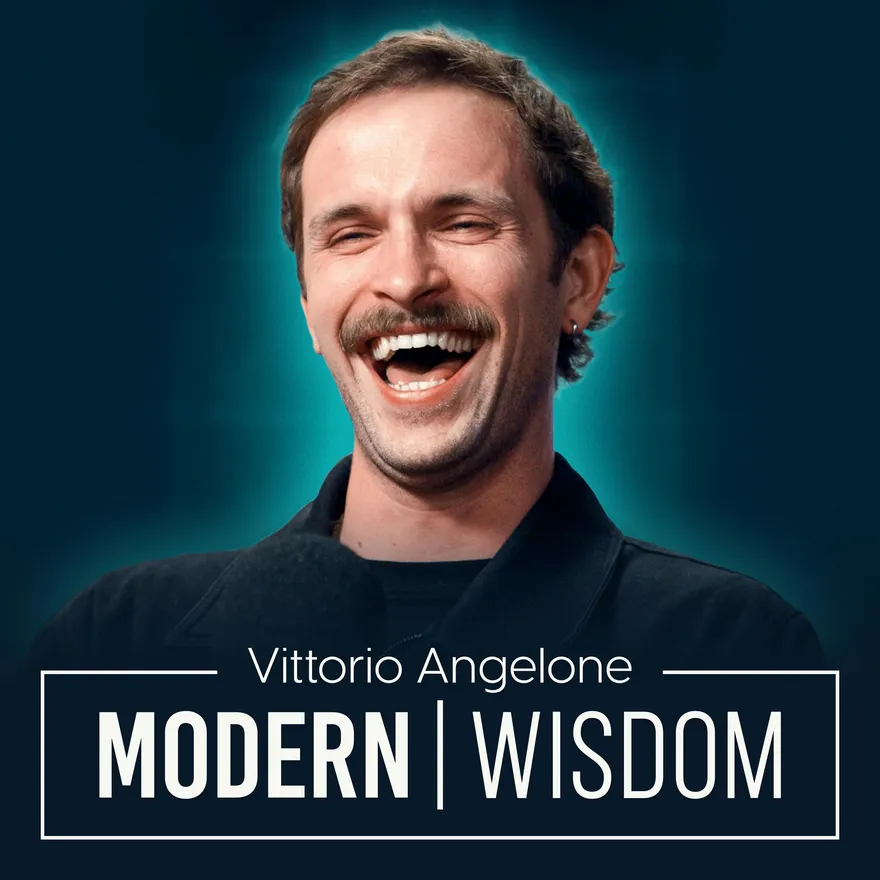

This is a preview of the Shortform summary of the Jul 4, 2026 episode of the Modern Wisdom
Sign up for Shortform to access the whole episode summary along with additional materials like counterarguments and context.
1-Page Summary
Adult Autism Diagnosis, Neurodiversity, and Social Masking
Diagnosed With Autism At 29 After Lifelong Social Issues
Vittorio Angelone describes a life marked by persistent social friction—frequently mistaking interactions and unknowingly upsetting people. He recalls childhood anxiety, panic attacks, and once punching his principal while trying to escape school. His autism diagnosis at age 29 required extensive assessments including forms from his girlfriend and mother. Despite showing only slightly elevated autistic traits, Vittorio scored "incredibly high on masking," meaning he excelled at camouflaging his autistic characteristics. He notes this high-masking pattern mirrors what's typically documented in women with autism, joking that he has "girl autism" due to this social camouflaging.
Connection Between Autism, Performance, and Scripted Interaction
Vittorio draws parallels between his career as a stand-up comedian and autistic masking. On stage, he delivers rehearsed lines as if spontaneous, which mirrors how he scripts social responses to navigate everyday conversations. He calls himself a "touring masker" and explains that for autistic people, many interactions are prefabricated—responses prepared before questions are even asked. However, masking raises questions about authenticity. Vittorio expresses a desire to "unmask politely," remaining considerate while being more authentic, rejecting the notion that diagnosis should excuse rudeness.
Autism vs. Related Conditions: ADHD and Ehlers-Danlos Syndrome
Vittorio was also diagnosed with ADHD, which he describes as "buy one, get one free," though he's skeptical about ADHD being overdiagnosed due to pharmaceutical incentives. He discusses comorbidity between autism and Ehlers-Danlos Syndrome, a connective tissue disorder he experiences through frequent joint dislocations. He explains that autism is now arranged in three levels, with his diagnosis being level one (formerly "Asperger's"), meaning he doesn't need daily assistance, while levels two and three require increasing support.
Anxiety and Self-Monitoring With Autism Diagnosis
Vittorio lives with constant anxiety about unknowingly upsetting people. "I am constantly so worried that I've upset people, but I have no way to tell if that's the case whatsoever," he explains, describing it as "swinging punches with a blindfold on." Chris Williamson relates, sharing recurring anxiety dreams about unknowingly crossing social boundaries. Both agree that concern about being a sociopath is ironically indicative of the opposite. Vittorio struggles to trust his gut due to anxiety and prefers pre-planned responses, which lessen the stress of unpredictable social situations.
Comedy, Branding, and Navigating Ego Versus Humility
Viral Clip Experience and Edinburgh Fringe Mockery
Vittorio recounts how a podcast clip where he said "People keep telling me I'm the fucking guy this year" was circulated out of context in comedian WhatsApp groups during Edinburgh Fringe. The original context showed his stress about living up to hype, but the excerpt became a running joke. He only learned about the mockery a month later, creating a painful gap between what he thought was a career highlight and the realization he was being mocked. This led him to suppress his confidence for nearly two years, though touring helped him rebuild it, finding inspiration in professional bowler Pete Weber's swagger.
Tension Between Cultural Humility and Practical Self-Promotion
Chris Williamson and Vittorio discuss British and Irish cultural norms that discourage overt confidence, calling it "tall poppy syndrome." Chris describes learning as a kid that he'd be more accepted if he hid his ambitions. Both highlight the problem with performative humility taken too far—it can actually restrict ambition. Yet promoting stand-up requires confidence, and Vittorio points out the difficulty of marketing authentically without some bravado.
Owning Ambition Without Becoming Obnoxious or Disconnected
Vittorio describes rebuilding confidence by balancing healthy ego with consideration for others—knowing when confidence is useful and when to practice humility. Chris adds that this balance ensures likeability and sustains friendships even as success increases.
Criticism and Response: The Irish Times Article Controversy
Vittorio describes being reviewed in The Irish Times, where the journalist called his show "unapologetically local" in a way he felt misrepresented its accessibility. He posted on Instagram to clarify, and the post went viral with 40,000 likes, but also led followers to send negative messages to the journalist. The incident raised difficult questions about correcting public misrepresentation versus unintentionally amplifying criticism. After speaking with the journalist, they reached an understanding that both could have communicated better, though without full resolution.
Cultural Commentary on Masculinity, Media, and "Manosphere" Spaces
Accused Of Being a "Gateway Drug" to the Manosphere and Facing Ideological Spit-Roasting From Multiple Sides
Chris Williamson discusses his complicated position online, accused of being both too feminist and too close to the manosphere. He's been called a "gateway drug" to the manosphere, the "little pebble at the top of the avalanche" whose listeners might end up consuming extreme content. Williamson finds himself "spit-roasted" ideologically—right-wing outlets call him a misogynist, while after appearing on Tucker Carlson's podcast, others brand him as "riddled with blue pill thinking" and "infected with feminist lies." Vittorio notes that simply being in good shape or discussing fitness can trigger assumptions about manosphere alignment.
Providing Alternative Voices and Spaces for Young Men
Williamson and Angelone agree that men drift toward extreme influences partly because mainstream culture neglects their questions of identity and community. Angelone points out that if they can reach young men first with their comedy podcast, it keeps them away from misogynistic extremes. They emphasize the value of creating genuine, judgment-free settings where men can be vulnerable and silly, offering camaraderie for listeners who lack established social circles. Interestingly, Angelone notes these spaces also attract female listeners seeking vulnerable, emotional connection.
Distinction Between Real Issues and Performative Edginess
Both express concern about the line between addressing genuine issues and performative edginess. Angelone criticizes comedy that uses slurs simply to shock rather than to create meaningful tension. Williamson reflects on how there's now an incentive to perform vulnerability itself—"speed running relatability" through trauma dumping—which can become as hollow as empty edginess.
Authenticity, Male Vulnerability, and Building Genuine Community Connection
Paradox of Reverse-Engineering Authenticity in Incentivized Vulnerability Age
Chris Williamson discusses the modern dilemma where authenticity has become a valued commodity, leading many to reverse-engineer its appearance without actual sincerity. He describes "speed running relatability," where individuals rush to overshare struggles to project authenticity, which can appear forced. Both strategic and forced vulnerability risk becoming as performative as the edgy posturing they seek to counter.
Counteracting Digital Isolation: Community and Interdependence's Importance
Vittorio shares examples from his North London neighborhood, like an elderly Italian lady who cares for local foxes and occasionally asks him for help with technology, demonstrating genuine community exchange. Williamson argues that being needed and having needs fulfilled by others create meaningful social fabric that digital connection cannot replicate. Angelone contrasts urban isolation with rural communities where interdependence is stronger.
Male Friendship and Intimacy as an Undervalued Good
Angelone points to "Mortimer and Whitehouse: Gone Fishing" as a refreshing example of older men expressing genuine care in their friendship. He advocates for creating spaces where young men can connect and share emotions away from toxic masculinity pressures. Williamson describes his podcast as simply hanging out with friends, offering contrast to content that feels like homework. He references the Basement Yard Podcast's Madison Square Garden show where 90% of the audience was female, demonstrating cultural appetite for seeing genuine male friendship and intimacy.
Travel Experiences and Cultural Differences: UK vs US
Being Spiked In Nashville and the Surreal Aftermath
Vittorio recounts being spiked in Nashville after a show, experiencing severe intoxication with memory gaps despite minimal drinking. Medical staff confirmed drink spiking is common in the area. At urgent care, he received a $200 anti-vomiting injection. Unable to endure airport queues afterward, he requested wheelchair assistance, falsely citing an ankle injury since he believed admitting possible poisoning might prevent boarding. He reflects on how American urgent care clinics located alongside burger joints seemed bizarre, and that polite interactions led staff to underestimate his distress.
Cultural Shock Around Food Quality and Institutional Differences
Vittorio criticizes American processed food, particularly airport sandwiches where neither bread nor turkey tasted real. The conversation shifts to Britain's "meal deal"—£3.50 for a main, side, and drink—which Americans struggle to understand. Both insist Ireland surpasses both countries with fresh deli counters in every Centra or Spar serving proper baguettes and chicken fillet rolls made to order. Vittorio's digestive issues from American food culminated in an extreme incident at the 9-11 memorial, which he includes in his stand-up though audiences struggle to believe it's real.
Regional Differences and Family Conflicts in Ireland
Chris observes that Irish families maintain multi-generational feuds unlike English families, with areas like West Belfast so tightly knit that everyone knows everyone's business. The discussion turns to Italian Christmas traditions, with Vittorio explaining La Befana—an old woman who gives gifts to all children—contrasting her with Santa Claus and highlighting how different cultures use such figures to socialize children and reinforce communal values.
1-Page Summary
Additional Materials
Counterarguments
- While autistic masking is often discussed as more common in women, recent research suggests that high-masking behaviors can be present across all genders, and the gendered framing may reinforce stereotypes.
- The comparison between stand-up comedy and autistic masking may oversimplify the complexity of both experiences; not all comedians or autistic individuals experience or utilize scripting in the same way.
- The desire to "unmask politely" assumes that authenticity and social consideration are always compatible, but in practice, some social environments may not accommodate neurodivergent behaviors, regardless of intent.
- The assertion that ADHD is overdiagnosed due to pharmaceutical incentives is debated; some experts argue that increased diagnosis reflects better awareness and recognition of previously overlooked cases.
- The three-level classification of autism is criticized by some in the autistic community for being reductive and not capturing the nuanced support needs of individuals.
- Anxiety about being a sociopath is not exclusive to empathetic individuals; some people with high anxiety may fixate on unlikely fears regardless of their actual traits.
- The impact of "tall poppy syndrome" on ambition and self-promotion may vary by individual and context; some people thrive within these cultural norms and find them protective against arrogance.
- The idea that providing alternative spaces for men will prevent them from gravitating toward misogynistic extremes may underestimate the complexity of radicalization and the influence of broader social and economic factors.
- The commodification of authenticity and vulnerability is not unique to the current era; public displays of emotion and relatability have long been used for social and commercial gain.
- The portrayal of rural communities as inherently more interdependent and supportive than urban environments overlooks the diversity and potential for strong community bonds in cities.
- The undervaluing of male friendship and intimacy is increasingly being addressed in mainstream media and culture, with more examples emerging beyond those cited.
- The negative comparison of American food culture to European standards may not account for the diversity and quality available in different regions of the US.
- The depiction of Irish families as uniquely feud-prone or tightly knit may rely on stereotypes and not reflect the full range of family dynamics in Ireland or elsewhere.
Actionables
- You can create a personal script bank for tricky social situations to reduce anxiety and feel more prepared, then gradually experiment with improvising responses to build authentic confidence. For example, jot down phrases for introducing yourself, declining invitations, or handling misunderstandings, and practice swapping out one scripted line for a spontaneous one in low-stakes conversations.
- A practical way to foster genuine male friendship and emotional connection is to invite a friend for a regular walk or shared hobby, setting a simple rule to each share one thing you’re struggling with or proud of that week. This helps normalize vulnerability and deepens your bond without feeling forced or performative.
- You can counter digital isolation by introducing a small, recurring neighborly exchange, like swapping baked goods, sharing local news, or offering to water plants when someone’s away. These micro-interactions build interdependence and a sense of community, even in urban settings.



Get access to the context and additional materials
Adult Autism Diagnosis, Neurodiversity, and Social Masking
Diagnosed With Autism At 29 After Lifelong Social Issues
Vittorio Angelone describes a life marked by persistent social friction and misunderstanding, often mistaking seemingly positive interactions as neutral or even good, only to later discover he had made people feel bad. He recalls, "I was just like, what a nice chat. And then the next day they're like, you make me feel like shit every time we talk." This pattern repeats, reinforcing his sense of being "completely oblivious" to social cues—unaware, rather than blissfully so. As a child, Vittorio was anxious, experienced panic attacks, sometimes had to attend lessons in a different room or enter school via a separate door, and once punched his principal in a panic while attempting to escape school.
The path to his autism diagnosis at age 29 required four or five appointments and forms completed by both his girlfriend and his mother, serving as wide-ranging character references. Even after this extensive process, Vittorio's assessment showed only slightly raised autistic traits. However, it also revealed he scored "incredibly high on masking," meaning he excelled at camouflaging his autistic characteristics, which made it harder for professionals to spot symptoms in formal settings. Vittorio observes that his high-masking style mirrors a pattern more often documented in women with autism, where strong social awareness leads to camouflaging or suppressing traits to fit social expectations. He remarks that he feels like he has "girl autism" due to this social camouflaging.
Connection Between Autism, Performance, and Scripted Interaction
Vittorio draws parallels between his career as a stand-up comedian and autistic masking in daily interactions. On stage, he delivers lines he has "said a million times as if it's the first time," which directly resembles how he scripts and rehearses social responses as an autistic person to navigate everyday conversations smoothly. He describes himself as a "touring masker," and notes that for autistic people, many interactions are prefabricated—before a question is asked, a set response is already prepared. This learned script replaces instinct and intuition in social engagement, just as a comedian relies on rehearsed material to appear spontaneous.
Masking offers protective benefits in social situations but muddles questions of self-expression and authenticity. Vittorio raises the dilemma of how to "unmask politely," expressing a wish to remain considerate and not use diagnosis as a license for rudeness. He rejects the notion that post-diagnosis unmasking must mean disregarding others' feelings, stating instead a desire to find ways to unmask without being disrespectful.
Autism vs. Related Conditions: ADHD and Ehlers-Danlos Syndrome
Vittorio also discusses being diagnosed with ADHD alongside autism, describing it humorously as a "buy one, get one free" situation. He expresses skepticism about the ADHD diagnosis, suggesting ADHD is overdiagnosed because of the pharmaceutical incentives tied to medication, whereas the lack of a medication for autism makes its diagnosis feel more reliable and less commercially motivated.
Touching further on physical health, Vittorio mentions a comorbidity between autism and Ehlers-Danlos Syndrome (EDS)—a connective tissue disorder characterized by joint hypermobility. He notes he is hypermobile, experiencing frequent dislocations and "popped out" joints, and speculates about connective tissue abnormalities affecting the brain in both EDS and autism.
On diagnostic categories, Vittorio explains that old terms like Asperger's are no longer used, largely for historical reasons, and that autism is now arranged in three levels. He has autism level one (formerly "Asperger's"), meaning he doesn't need assistance in daily life. Level two describes those needing some external support and level three involves individuals requ ...
Here’s what you’ll find in our full summary
Adult Autism Diagnosis, Neurodiversity, and Social Masking
Additional Materials
Counterarguments
- The reliability of autism diagnoses, regardless of associated medication or commercial interests, is determined by clinical criteria and assessment rigor, not by the presence or absence of pharmaceutical incentives.
- While masking is often documented in women, recent research shows that high-masking behaviors are present across all genders, and the concept of "girl autism" may oversimplify or reinforce gender stereotypes.
- The broadness of the autism spectrum is intentional, reflecting the diversity of autistic experiences; many clinicians and advocates argue that a spectrum approach better captures the range of needs and strengths than narrower categories.
- Prefabricated or rehearsed social responses are not unique to autistic individuals; many neurotypical people also rely on learned scripts in unfamiliar or high-pressure social situations.
- The skepticism about ADHD overdiagnosis due to pharmaceutical incentives is debated; many experts emphasize that increased awareness and better diagnostic tools have led to more accurate i ...
Actionables
- you can create a personal “social cue cheat sheet” by jotting down common social situations that cause confusion, then brainstorming and testing out different ways to respond or ask for clarification in those moments, helping you navigate interactions with less anxiety and more confidence.
- a practical way to reduce unnecessary apologizing is to keep a tally in your phone or notebook each day of when you apologize, then review the list at night and reflect on which apologies were truly needed, gradually training yourself to reserve apologies for situations where they’re genuinely warranted.
- you can experiment with “gentle unmasking” by c ...
Get access to the context and additional materials
Comedy, Branding, and Navigating Ego Versus Humility
Viral Clip Experience and Edinburgh Fringe Mockery
Vittorio Angelone recounts how a podcast clip in which he says, "People keep telling me I'm the fucking guy this year," was screen-recorded and circulated out of context in comedian WhatsApp groups during the Edinburgh Fringe. The original context was him sharing the stress and panic he felt from hype he struggled to live up to; the excerpted version turned into a running joke among peers, with comedians greeting him as "the fucking guy." Vittorio only learned of the mocking a month after enjoying what he thought was a career highlight, creating a painful gap between a period of genuine positive experience and the belated realization that he was being made fun of behind his back. This experience led to a suppression of Vittorio's confidence. For nearly two years, he admits to toning down his usual bravado and self-promotion, wary of again being seen as arrogant. Touring his show, however, helped him rebuild that confidence. Vittorio describes working to reclaim his ambition and swagger, finding inspiration and symbolism in professional bowler Pete Weber—known for his swagger and "heel" persona. Embracing ambition became a gradual process of reconciling his authentic personality with the risk of seeming obnoxious.
Tension Between Cultural Humility and Practical Self-Promotion
Chris Williamson and Vittorio discuss the cultural norms in Britain and Ireland that frown upon overt confidence, calling it "tall poppy syndrome" or "notions." In these cultures, boasting is often discouraged, and people are expected to downplay their success to appear likable. Chris describes learning, as an unpopular and under-socialized kid, that he’d be more accepted if he hid his ambitions and successes. He notes that his public self-deprecation is as much about fear of judgment as genuine modesty. Vittorio agrees, reflecting on how fears around mockery led him to suppress his ambitions. Both highlight the problem with performative humility: if taken too far, it can actually restrict ambition by reinforcing beliefs that one doesn’t deserve to do well. Yet promoting stand-up comedy—or any performance career—requires confidence. Vittorio points out the difficulty of promoting a comedy tour authentically without some level of bravado. Chris notes that since comedians run their own marketing, suppressing confidence may hinder success and prevent them from reaching their goals.
Owning Ambition Without Becoming Obnoxious or Disconnected
Vittorio describes his efforts to rebuild confidence by striking a balance between a healthy ego and consideration for others, maintaining care in his personal branding. He explains the difference between boastful arrogance and genuine ambition—knowing when ego is useful and when to practice humility and gratitude. Confidence, properly balanced, allows one to shine without belittling others or losing touch with the community. Chris Williamson elaborates that this balance helps ensure likeability and sustains friendships and connections, even as personal success increases. For both, authentic ambition isn’t about bragging, but about valuing achievements while still valuing people.
Criticism and Response: The Irish Times Article Controversy
Vittorio describes being reviewed in The Irish Times, where the journ ...
Here’s what you’ll find in our full summary
Comedy, Branding, and Navigating Ego Versus Humility
Additional Materials
Counterarguments
- While Vittorio’s experience of being mocked was personally painful, some might argue that playful ribbing and satire are common within comedy circles and can serve as a form of camaraderie rather than outright malice.
- The emphasis on reclaiming ambition and swagger, inspired by figures like Pete Weber, could be seen as adopting a persona that may not resonate with all audiences or peers, potentially alienating those who value humility more highly.
- The critique of British and Irish cultural norms around humility may overlook the positive social cohesion and egalitarianism these norms foster, which can help prevent toxic individualism or divisiveness.
- The assertion that public self-deprecation restricts ambition may not account for individuals who genuinely value modesty and find fulfillment without overt self-promotion.
- The idea that confidence and bravado are essential for success in performance careers could be challenged by examples of successful comedians and artists who have built their brands on understated or self-effacing personas.
- The distinction between arrogance and ambition is subjective, and what one person sees as healthy confidence, another may perceive as boastfulness, making it difficult to esta ...
Actionables
- you can practice balancing confidence and humility by writing two lists after any personal achievement: one that highlights what you did well and are proud of, and another that notes who helped or inspired you, then use both lists to guide how you talk about your success with others, ensuring you acknowledge your strengths without downplaying contributions from your community.
- a practical way to challenge self-deprecating habits is to set a daily reminder to share one genuine accomplishment or positive trait with a friend or family member, focusing on honest pride rather than minimizing language, which helps rewire your comfort with expressing ambition and confidence.
- you can handle criticism or misrepresentation more constru ...
Get access to the context and additional materials
Cultural Commentary on Masculinity, Media, and "Manosphere" Spaces
Accused Of Being a "Gateway Drug" to the Manosphere and Facing Ideological Spit-Roasting From Multiple Sides
Chris Williamson discusses his complicated position in online cultural spaces, often accused of being both too feminist and too close to the manosphere. Following a viral podcast moment with Steven Bartlett, he is labelled a "gateway drug" to the manosphere, described as the "little pebble at the top of the avalanche"—someone whose listeners might, through him, end up on extreme content from figures like Nick Fuentes or Andrew Tate. Despite not identifying with the manosphere, Williamson recounts how both feminists and manosphere adherents united in criticizing his appearance on the Louis Theroux documentary, with the focus of the online discussion shifting almost entirely to his podcast.
Williamson finds himself ideologically "spit-roasted," attacked by all sides. Right-wing and manosphere-aligned outlets call him a "Lux Maxxer" and a misogynist, while after his appearance on Tucker Carlson’s podcast, he’s branded by others as "riddled with blue pill thinking" and "infected with feminist lies." The polarization around any talk of gender, health, fitness, or masculinity is so high that even quoting C.S. Lewis about homemaking elicits accusations of spreading "feminist lies." According to Williamson, this highlights the impossibility of satisfying ideological absolutists on either end, as he is accused simultaneously of promoting diametrically opposed positions. Vittorio Angelone remarks that while Williamson is not in the manosphere, to some, simply being in good shape or discussing health and fitness are enough to trigger assumptions about manosphere alignment, given the internet’s quickness to pattern match.
Providing Alternative Voices and Spaces for Young Men
Williamson and Angelone agree that one reason men—particularly young men—drift toward extreme influences is because mainstream culture neglects their questions of identity, community, and development. Angelone points out that TV producers often worry his and Mike's comedy podcast attracts audiences with incel or manosphere tendencies, but he argues this is the opposite of a concern: if they can reach those men first, it keeps them away from the misogynistic extremes. Angelone credits shows like Jordan Peterson's for helping young men by offering frameworks that speak directly to their struggles with emotion, self-doubt, and finding a positive place in the world. Williamson echoes this, describing his own journey as one of confusion about emotions, self-understanding, and lifestyle choices—issues to which late-blooming men especially relate.
They underscore the value of creating genuine, judgment-free settings where men can talk openly, act silly, and be vulnerable—serving an audience that sometimes lacks access to such intimate, playful male friendships. Angelone illustrates this with anecdotes about differences in male and female friendships, suggesting that men bond by "talking shit" and having fun, offering a sense of camaraderie for listeners, especially those in new cities or without established social circles. Shows like "Mortimer and Whitehouse: Gone Fishing" serve as a model for warm, supportive male friendships, which Angelone admires and tries to emulate on his own podcast.
Interestingly, Angelone notes that these podcast spaces, though designed as male friendship hangouts, also attract female listeners seeking the sort of vulnerable, abstract fun and emotional connection not always available in their own circles. Williamson sees value ...
Here’s what you’ll find in our full summary
Cultural Commentary on Masculinity, Media, and "Manosphere" Spaces
Additional Materials
Counterarguments
- The claim that mainstream culture neglects young men's needs for identity and community can be challenged by pointing to numerous mainstream initiatives, organizations, and media that address men's mental health, career development, and social belonging.
- The idea that discussing health and fitness online automatically triggers assumptions of manosphere alignment may be overstated; many fitness influencers and communities are widely accepted without such associations.
- The assertion that providing alternative voices and spaces for young men prevents them from turning to misogynistic extremes may overlook the complexity of radicalization, which can be influenced by factors beyond media exposure, such as personal circumstances or offline social networks.
- The notion that male friendship podcasts uniquely provide emotional connection not found in female circles can be questioned, as many women’s podcasts and communities also foster vulnerability, humor, and emotional support.
- The suggestion that genuine, unscripted conversation is inherently more meaningful than "information dumping" is subjective; some audiences may prefer structured, information-ri ...
Actionables
- you can create a private group chat with a few friends where the only rule is to share something real about your week—good, bad, or funny—without anyone offering advice or judgment, just listening and responding with humor or empathy, to foster genuine connection and vulnerability
- (for example, each week, everyone shares a voice note about a small win or struggle, and others reply with supportive or lighthearted comments, helping build trust and camaraderie without pressure to perform or fix)
- a practical way to challenge pattern-matching and assumptions online is to deliberately follow and engage with a diverse mix of creators who discuss masculinity, health, or gender from different perspectives, then keep a simple log of your own snap judgments and reflect on what surprised you or made you uncomfortable
- (for example, after watching a video or reading a post, jot down your first impression and then note if your view changed after hearing more, helping you notice and question your own biases)
- you can set up a weekly “no-perform ...
Get access to the context and additional materials
Authenticity, Male Vulnerability, and Building Genuine Community Connection
Paradox of Reverse-Engineering Authenticity in Incentivized Vulnerability Age
Chris Williamson discusses the modern dilemma in which authenticity, once a natural trait, has become a valued commodity. As people increasingly recognize that audiences resonate with what's perceived as authentic, many attempt to reverse-engineer the appearance of sincerity. Williamson explains that this effort doesn't require actual authenticity or sincerity—just the appearance of it. This trend leads to performing artificial sincerity, where people appear open simply to align themselves with what is trendy or socially profitable.
He continues by describing "speed running relatability," a phenomenon where individuals rush to trauma dump or overshare personal struggles in an attempt to project authenticity and relatability. This performance, intended to create instant connection, can appear forced or even cringe-worthy. The effect, Williamson notes, is that both strategic and forced vulnerability risk becoming as performative and inauthentic as the edgy posturing they often seek to counter. These behaviors especially affect parasocial connections, where audiences may struggle to discern genuine vulnerability from calculated displays intended to foster relatability.
Counteracting Digital Isolation: Community and Interdependence's Importance
Vittorio Angelone shares personal examples from his life in North London, emphasizing the importance of real-life interdependence to combat the isolation of urban and digital living. He tells the story of an elderly Italian lady in his building who routinely cares for local foxes—feeding them, treating their mange, and involving a fox charity when needed. Occasionally, she seeks his help with tasks like sending WhatsApp messages, demonstrating a genuine exchange of need and assistance within the community. This integration, Angelone suggests, embodies the importance of being both needed and needing others.
Williamson echoes this by highlighting the shallowness of a society where everyone is a digital nomad or a solopreneur, relying solely on digital communication and lacking real-world reliance on community. He argues that being needed and having needs fulfilled by others create a meaningful social fabric that digital connection cannot replicate.
Angelone contrasts urban isolation with life in rural agricultural communities, where interdependence is stronger and individuals rely on each other for shared survival and well-being. He notes that although building community can be intimidating—such as just greeting a neighbor—it is an essential, worthwhile pursuit that isn't easily replaceable in modern urban or digital life.
Male Friendship and Intimacy as an Undervalued Good
Angelone points to positive portrayals of male intimacy in media, singling out the program "Mortimer and Whitehouse: Gone Fishing" as a refreshing example of older men expressing genuine care and presence in their friendship. He admires the casual way the hosts express affection ...
Here’s what you’ll find in our full summary
Authenticity, Male Vulnerability, and Building Genuine Community Connection
Additional Materials
Clarifications
- "Reverse-engineering authenticity" means deliberately creating behaviors or expressions that look genuine without actually feeling or being sincere. It is problematic because it turns real emotions into a performance, reducing trust and making true connection harder. This can lead to audiences becoming skeptical and fatigued by insincere displays. Ultimately, it undermines the value of genuine vulnerability and authenticity.
- "Speed running relatability" refers to quickly sharing personal struggles or trauma to appear authentic and connect with others. It is considered negative because this rushed oversharing can feel insincere, forced, or performative rather than genuine. This behavior may trivialize real vulnerability and alienate audiences instead of fostering true connection. It often prioritizes social approval over honest emotional expression.
- Parasocial connections are one-sided relationships where a person feels emotionally connected to a media figure who does not know them. Unlike real relationships, there is no mutual interaction or personal exchange. These connections often form through repeated exposure to a personality via media like TV, podcasts, or social platforms. They can feel meaningful but lack the depth and reciprocity of genuine social bonds.
- Digital nomads work remotely while frequently traveling, often lacking stable local social ties. Solopreneurs run independent businesses alone, limiting daily in-person interactions. Both lifestyles emphasize individualism and digital communication over physical community engagement. This can reduce opportunities for mutual support and deep, face-to-face relationships.
- Toxic masculinity refers to cultural norms that pressure men to suppress emotions, show dominance, and avoid vulnerability. These expectations discourage men from expressing feelings openly, leading to emotional isolation and harmful behaviors. It often promotes aggression, stoicism, and the rejection of traits seen as "feminine." Challenging toxic masculinity encourages healthier, more authentic male emotional expression and relationships.
- "Mortimer and Whitehouse: Gone Fishing" is a British TV show featuring comedians Bob Mortimer and Paul Whitehouse. The show focuses on their friendship as they fish and talk about life, health, and personal experiences. It is notable for its gentle, genuine portrayal of male friendship and emotional openness. This contrasts with typical media depictions of men, which often avoid showing vulnerability or deep connection.
- Chris Williamson’s podcast is informal and conversational, focusing on genuine interactions rather than structured advice. Unlike typical se ...
Counterarguments
- The perception that authenticity is widely commodified may be overstated; many people continue to value and practice genuine sincerity in both personal and public interactions.
- Not all displays of vulnerability or relatability are performative; some individuals may share openly as a means of genuine connection or self-expression, regardless of social trends.
- The concept of "speed running relatability" could be interpreted as a form of adaptive communication, allowing people to quickly establish rapport in fast-paced or transient social environments.
- Parasocial relationships can provide meaningful support and community for individuals who lack access to traditional social networks, even if some displays of vulnerability are calculated.
- Digital communication, while different from in-person interaction, can foster deep and lasting connections, especially for those who are geographically isolated or marginalized.
- Urban environments can also foster strong community bonds, as evidenced by neighborhood organizations, local events, and mutual aid networks.
- The portrayal of male intimacy in media has increased in rece ...
Get access to the context and additional materials
Travel Experiences and Cultural Differences: Uk vs Us
Being Spiked In Nashville and the Surreal Aftermath
Vittorio's Night Out Hints at Drink Spiking, With Vomiting, Memory Gaps, and a $200 Urgent Care Visit
Vittorio Angelone recounts a disorienting experience in Nashville where he suspects his drink was spiked. After performing a show, he enjoyed a few drinks and a game of pool but soon found himself severely intoxicated with memory gaps and confusion—an unusual outcome given how little he drank and ate. He recalls his friend driving him to the hotel, episodes of playing Mongolian throat singing, and then vomiting persistently in his room. Medical staff later confirmed that drink spiking is unfortunately common in Nashville, especially in certain areas. At urgent care, after basic tests and a $200 anti-vomiting injection, he was treated efficiently and was surprised that the cost was relatively low by American standards.
Unable to Fully Disclose His Condition, Vittorio Falsely Claimed an Ankle Injury For Wheelchair Assistance at Nashville Airport, Showing how Disability Systems Can Be Gamed
Feeling physically depleted and unable to endure airport security queues, Vittorio used app-based assistance to request wheelchair support at the airport, falsely citing an ankle injury since he believed admitting to possible poisoning might have prevented him from boarding. He observes that airport staff didn't probe his claim, noting that not all disabilities are visible—a fact that can be leveraged to one’s advantage. He spends part of the experience in tears, calling his mother for support, and gets wheeled through the terminal without interference.
American Healthcare's Hybrid Spaces and Polite Social Norms Can Obscure Medical Situations
Vittorio reflects on the American healthcare system, finding it puzzling that urgent care clinics are located alongside burger joints—a juxtaposition that is unusual in the UK or Ireland. He realizes that polite, understated interactions with clinic staff led them to underestimate his actual distress, and his mother suggests that loudly vomiting in the clinic would have expedited care. The experience leaves him bemused and highlights the ambiguity and hybrid nature of American medical facilities.
Cultural Shock Around Food Quality and Institutional Differences
American Processed Food Inedible to British: Fake Bread, Fake Turkey, No Nutritional Value
Vittorio candidly criticizes American food, particularly processed items sold in airports, lamenting that neither the bread nor turkey in a typical sandwich tasted real or nutritious. He jokes that in America, "it's not food," highlighting a stark difference from what he expects in the UK.
British £3.50 Meal Deal: Americans Struggle to Understand
The conversation shifts to Britain's revered "meal deal": for £3.50, customers get a main, a side, and a drink—usually revolving around proper sandwiches. Chris Williamson marvels at how the concept is a quasi-religion in the UK, with average citizens consuming dozens of meal deals each year. Americans find the idea hard to comprehend, not only because of the low price but also the culturally embedded ritual surrounding sandwich selection and preparation.
Irish Sandwich Culture Surpasses British and American Sandwich Technology
Both hosts insist that neither America nor England can compete with Ireland’s sandwich culture. Irish shops boast fresh deli counters serving proper baguettes and chicken fillet rolls, made to order. Every Centra or Spar in Ireland features this option, elevating Ireland to the top of the "sandwich tree." Additionally, the hosts note that even simple details—like cutting sandwiches corner-to-corner—increase the sense of care and significantly improve taste, a nuance lost in American food culture.
Incident at 9-11 Memorial and America's Digestive Vulnerability
Vittorio's Digestion Faltered On American Food, Resulting In Defecation At the 9-11 Memorial—a Highly Unsuitable Location
The consumption of questionable American food soon contributes to an extreme and deeply embarrassing incident in New York. While visiting the 9-11 memorial with his girlfriend, Vittorio unexpectedly loses control of his bowels. He subsequently includes this story in his stand-up act, but audiences struggle to believe that something so implausible could actually happen.
Incident Featured In His Stand-Up, but Audiences Struggle to Believe It, Showing how Implausible Real Events Can Seem As Jokes
Vittorio uses the incident as comedic mat ...
Here’s what you’ll find in our full summary
Travel Experiences and Cultural Differences: Uk vs Us
Additional Materials
Counterarguments
- While drink spiking is a serious issue, attributing unusual intoxication solely to spiking without toxicology confirmation may overlook other factors such as dehydration, medication interactions, or underlying health conditions.
- The perception that urgent care costs are "relatively low" in the US is subjective; for many Americans, $200 is still a significant expense, and some urgent care visits can cost much more.
- The ability to request wheelchair assistance without verification is intended to protect those with invisible disabilities; focusing on potential abuse may risk stigmatizing legitimate users.
- Not all American processed food lacks nutritional value or tastes "fake"; there are many regions and establishments in the US that prioritize fresh, high-quality ingredients.
- The British meal deal is not universally admired; some UK residents criticize its nutritional quality and environmental impact due to packaging waste.
- American sandwich culture is diverse, with many cities (e.g., New York, Philadelphia, New Orleans) known for high-quality, distinctive sandwiches.
- Digestive issues experien ...
Actionables
- you can discreetly test your drink for tampering when out in unfamiliar venues by carrying single-use drink testing strips or coasters, helping you stay safer in areas where drink spiking is reported; for example, before taking a sip, dip a strip into your drink and check for color changes that indicate common substances used in spiking.
- a practical way to avoid misunderstandings about your distress level in medical settings is to prepare a simple, direct script describing your symptoms and urgency, then practice saying it assertively; for instance, rehearse stating, “I am in severe pain and need immediate help,” so you can communicate clearly even if you’re feeling unwell or overwhelmed.
- you can explore cultural food differences by organizing a personal tast ...
Get access to the context and additional materials

 1-Page Summary
- Adult Autism Diagnosis, Neurodiversity, and Social Masking
- Comedy, Branding, and Navigating Ego Versus Humility
- Cultural Commentary on Masculinity, Media, and "Manosphere" Spaces
- Authenticity, Male Vulnerability, and Building Genuine Community Connection
- Travel Experiences and Cultural Differences: Uk vs Us
Create Summaries for anything on the web
Download the Shortform Chrome extension for your browser
