

33 Brutal Truths To Stop Wasting Your Potential - Alex Hormozi - #1117
In this episode of Modern Wisdom, Alex Hormozi and Chris Williamson examine why many people fail to reach their potential despite having knowledge and resources. Hormozi argues that the main barriers are optionality paralysis, unwillingness to make strategic trade-offs, and mispricing of risk in developed societies. The conversation covers how decisive commitment requires eliminating alternatives, why courage matters more than intelligence or work ethic, and how action depends on tolerating discomfort rather than waiting for perfect information.
The episode also explores behavioral psychology and leadership principles, examining how identity is shaped through reinforcement loops rather than fixed traits, and why environmental design matters more than willpower for sustained change. Hormozi outlines what earns genuine respect in leadership—balancing competence with fair enforcement of clear standards—and provides frameworks for addressing behavior without damaging relationships. Throughout, both emphasize that more potential is wasted through inaction than incompetence.
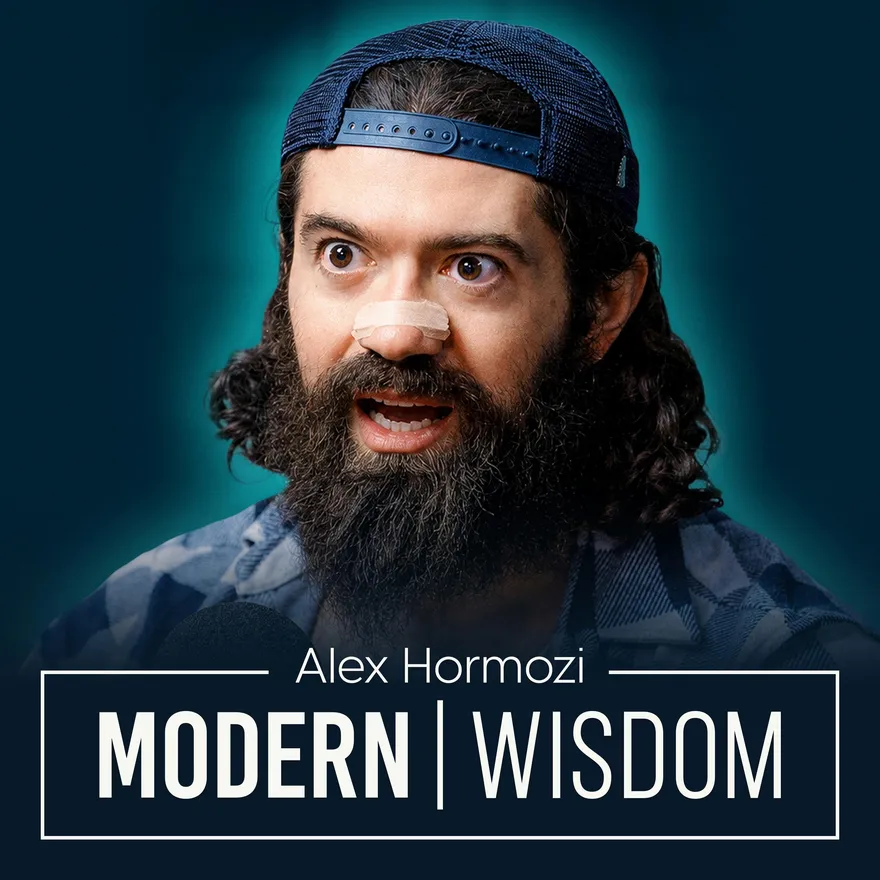

This is a preview of the Shortform summary of the Jun 29, 2026 episode of the Modern Wisdom
Sign up for Shortform to access the whole episode summary along with additional materials like counterarguments and context.
1-Page Summary
Decision-Making, Commitment, and Strategic Trade-Offs
Alex Hormozi and Chris Williamson discuss how decisive commitment and trade-offs drive progress, while optionality and indecision keep people stuck.
Optionality Paralysis Preventing Goal Achievement
Hormozi observes that many people stay stuck because they're unwilling to make key trades, driven by a desire to keep all options open. This optionality paralysis means pursuing multiple paths yields mastery in none—half measures across four domains produce no significant outcomes anywhere. As Williamson summarizes, having more options leads to misery, not happiness.
Hormozi argues that half measures yield null outcomes because spreading effort thinly rarely leads to innovation or depth. Someone focusing one-fifth of their capacity on five ventures will lose to anyone devoting full energy to one objective. Realizing potential, he says, comes from committing to a path and eliminating alternatives. Williamson adds that, counterintuitively, treating reversible decisions as final boosts satisfaction and reduces cognitive load—irreversible choices like having a child eliminate second-guessing.
Understanding Trade-Offs As the Currency for Meaningful Progress
Hormozi stresses that meaningful progress requires conscious sacrifice of something valuable. He defines what you truly want by what you're willing to give up to achieve it. Many remain stuck because they refuse to pinpoint what they'll lose, making no real progress.
Williamson references Mark Manson and James Clear, noting people "envy the lives of those whose sacrifices they can't see." Hormozi adds that people want results but not the process, quoting Jimmy Carr: people "want what you have, but not what you did to get it." Significant accomplishments require trade-offs because resources—time, energy, attention—are finite and mutually exclusive. Hormozi cautions that the cultural "never settle" mantra is misinterpreted as "never make any trade," paralyzing true commitment.
Decisiveness and Information Sufficiency In Reducing Decision Paralysis
Williamson and Hormozi agree that pursuing perfect information is fatal. High-conviction decisions made with about 80% of the data are superior to endless indecision, as waiting for perfect information usually means missed opportunities—by the time you have all facts, the window has closed.
Williamson highlights that indecisiveness, camouflaged as prudence, is debilitating. Even inaction is an action with heavy costs, often greater than decisive errors. Hormozi notes that "money loves speed, wealth loves time, poverty loves indecision," and that practicing indecision makes every future decision harder.
Creating Permission to Commit By Eliminating Escape Routes
Hormozi provides a concrete tool: dramatically change your environment to cut off escape routes, making retreat difficult and reinforcing total commitment. He shares his own transition—driving across the country before notifying anyone—to prevent second-guessing. Creating this "point of no return" forced him forward.
Modifying your environment provides structural support for commitment when willpower is fragile. Hormozi notes that "commitment is the elimination of alternatives," and removing easy escape paths is the most reliable way to follow through. By accepting trade-offs, practicing sufficiency rather than perfect information, and engineering environments that support commitment, individuals can overcome optionality paralysis and achieve meaningful progress.
Action Amid Fear, Uncertainty, and the Knowledge-Action Gap
Chris Williamson and Alex Hormozi explore the gap between knowing what to do and doing it, emphasizing that execution depends on willingness to endure discomfort, accumulate attempts, and bring greater intensity to efforts.
Execution Requires Discomfort Tolerance Beyond Knowledge and Motivation
Williamson observes that many lessons are repeated endlessly, yet people remain stuck because truly mastering them is difficult. Hormozi asserts, "We need to be reminded more than we need to be taught." The true gap is not information but the ability to act despite emotional resistance. Even after reading extensively and feeling the pain of being a "wantrepreneur," Hormozi found it hard to take steps until inaction's pressure grew unbearable.
Both discuss how initial motivation is ephemeral—the real challenge is persisting after novelty fades. Hormozi explains that action's pain happens immediately while benefits are delayed and uncertain, creating a motivational gap where short-term discomfort wins over long-term gain. To overcome this, they stress narrative reframing and identity work: telling oneself the story of being someone who acts and survives hardship becomes self-fulfilling prophecy, providing psychological scaffolding when logic alone fails.
Accumulating Attempts to Desensitize To Failure and Rejection
Hormozi and Williamson emphasize that calm competence grows from repeated exposure, not pep talks. After executing over a hundred presentations, Hormozi found nothing could surprise him—anxiety vanished because he had "done this before." Williamson notes, "If you're nervous, do more." True competence comes from stacking massive repetitions, exposing oneself to every error during practice. Making failure familiar dulls its sting, preparing you for high-stakes moments.
Visible Sacrifice: The Foundation for Sustained Effort
Both argue that storytelling about overcoming adversity is more motivating than abstract rewards. Documenting lowest moments serves as reference points against future self-doubt. Hormozi kept a screenshot of his bank account at $1,000 as a reminder that he survived rock bottom. Such artifacts reinforce the narrative that you are a survivor, that adversity is a chapter, not your whole story.
Conviction also grows through trusted conversations. Hormozi spent six months calling the same friends nightly before quitting his job, rehashing and recalculating. Williamson highlights that real support comes from such dialogue. Sacrifice is often about letting go of others' dreams for you—Hormozi had to let "the boy that I was in my father's eyes" die, accepting that sometimes others' dreams are smaller than your own.
Underestimating the Effort Required For Success
Hormozi and Williamson are blunt: most people expend far too little effort on big goals. In a job search, applying to three places is unlikely to yield results; applying to a hundred substantially raises odds. True success depends on increasing volume and intensity of effort, not simply talent.
Hormozi argues for redundancy and creating multiple pathways—setting up conditions so that even if one method fails, others can deliver. If you want to break a record, plan three or four different routes and pursue the goal with "full measure." Williamson adds that more potential is wasted by inaction than incompetence. By stacking reps, documenting sacrifices, and maximizing redundant efforts, people shift from learned helplessness to self-authored stories of grit and growth.
Assessing Risk and Pricing: Why Courage Trumps Circumstances
Alex Hormozi and Chris Williamson argue that perceived risk is mispriced in developed societies, where real downside is minimal. Fear of imagined consequences and social embarrassment becomes the biggest barrier, meaning courage—rather than intelligence or work ethic—is the trait most needed for success.
Risk Mispricing By Developed Societies Overestimating Consequences
Hormozi explains that in developed countries, the true physical downside of trying and failing is negligible. Starving is almost impossible due to safety nets, and most people have friends who would provide support. He recommends reaching out to friends to confirm this safety net, noting real friends will step up. As a result, survival is rarely threatened by failure.
Williamson suggests a practical exercise: write down exactly what would happen if you failed. Fear thrives on vagueness, but once actual downsides are spelled out, they're usually far more tolerable. Hormozi adds that the "downside is 10 times worse in your mind than in reality," stemming from ancient biological programming now anxiously overreacting to social discomforts.
Hormozi argues that the real cost is not practical failure but temporary embarrassment—the fear of what others might think. However, regret over never trying lasts a lifetime, while shame fades quickly. He suggests shifting your fear: let the fear of lifelong regret overpower the fear of short-term embarrassment.
Courage Is More Crucial Than Intelligence or Work Ethic
Hormozi emphasizes that courage is foundational because it means being willing to incur known, immediate costs—criticism, discomfort, sacrifice—for delayed, uncertain rewards. Whereas intelligence and work ethic pay off predictably when effort yields results, risk-taking demands enduring hardship when payoff will come much later, if at all.
Williamson points out that people often tolerate years of misery to avoid minutes of pain, exemplifying loss aversion where fear of immediate discomfort outweighs long-term benefits. He notes that your potential is determined by how much uncertainty you can handle and for how long. The ability to persist without knowing if or when rewards will come distinguishes extraordinary outcomes from mediocrity.
Fear As Actionable Information, Not a Signal to Retreat
Hormozi describes learning to use fear as a motivator—channeling anxiety about failure into fuel to avoid the worse fate of unfulfilled potential and regret. He advocates running away from the future you're afraid of, not just immediate pain.
The choice to act usually comes from emotional drivers: present discomfort or anticipated regret. Hormozi concludes that taking a leap and surviving failure is transformative—once you realize you endure and adapt, risk becomes less daunting each time. Each experience with risk builds resilience, making future ambitious bets feel less intimidating.
Behavioral Psychology, Identity, and Reinforcement Loops Shape Us
Alex Hormozi and Chris Williamson explore how actions, character, and motivation result from reinforcement loops, environmental design, and fluid use of identity labels rather than inherent traits.
Identity Is a Label For Behaviors Across Conditions, Not a Fixed Trait
Hormozi defines personality as "the aggregate of how you behave in all conditions." Identity is the label we assign to this cluster of behaviors—such as "honest" or "hardworking." These labels are linguistic shortcuts that simplify complex behavior sets, not realities in themselves.
Hormozi stresses that all behaviors are shaped by repeated reinforcement—receiving rewards or removing punishment. To change personality, one must adjust patterns of rewards and punishments. Being around people who reinforce desired traits, rather than those rewarding counterproductive behaviors, helps alter identity over time.
Identity labels ("I am honest," "I am hardworking") act as global reinforcers. When you ascribe such a label, you anchor sub-behaviors to it, guiding future choices. If your chosen identity is violated, you experience guilt, encouraging return to alignment. Hormozi warns that reducing people to labels like "lazy" doesn't explain behaviors or help change them. Instead, breaking down what actions contribute to that label allows addressing specific behaviors.
Hormozi and Williamson point out that popular self-help misleads by promoting that doing hard things in one area (running marathons) will translate to toughness in another (difficult conversations). In reality, "hard" is domain-specific—physical grit doesn't automatically create emotional bravery. Only when one adopts a cross-domain identity label ("I am the kind of person who does hard things") can some crossover occur.
Understanding Description vs. Explanation in Behavior Analysis
Hormozi distinguishes between descriptive labels and true behavioral explanation. Calling someone "dishonest" because they stole is circular—dishonesty is merely a label for actions, not a causal explanation. True analysis traces back to what was previously rewarded or punished.
If problematic behavior arises, shaming is less effective than modifying the reinforcement loop or context. Clearly specifying which behaviors need to change and rewarding improvements shifts outcomes. Both Hormozi and Williamson highlight that "unspoken expectations" breed resentment. If you haven't articulated standards, punishing someone for not meeting them is unfair. By communicating standards and requesting specific changes, you switch from punishment to actionable feedback.
Design Environments For Behaviors Rather Than Rely On Willpower
The biggest determinant of sustained change is not willpower but designing environments that make desired behaviors inevitable. Hormozi states that "creating the conditions that make failure less likely" leads to more success than trying to "willpower" through competing triggers.
Sometimes radical environmental shifts—moving cities, changing hangouts, or distancing from old friends temporarily—reshape identity by altering reinforcement patterns. Even smaller changes, like choosing a new gym or coffee shop, can break old loops and jumpstart new ones.
Hormozi describes motivation as a response to reinforced memories, not future hopes. To maintain focus on hard change, he recommends recording all reasoning and reviewing it when doubts arise—writing a warning letter from your past, motivated self to your future, wavering self. Remembering the full set of painful or rewarding experiences preserves commitment.
Leadership, Respect, and Influence Through Competence
Alex Hormozi and Chris Williamson explore what earns a leader respect, how enforcement and competence interact, and the frameworks necessary to build genuine influence.
Fear Compliance vs. Competence and Fairness Respect
Enforcement alone creates a "compliance floor." When leaders only enforce rules without demonstrating competence or care, employees comply merely to avoid consequences, not out of respect. Such a leader is seen as tyrannical, and compliance evaporates when the leader loses power.
Conversely, a leader demonstrating high competence but never enforcing standards risks becoming an "admired doormat." Everyone likes them and appreciates their capability, but no one respects them because they never draw lines or demand standards.
True respect in leadership comes from balance: demonstrating competence through outcomes, sacrificing for the group, and consistently enforcing clear standards fairly. Hormozi emphasizes that the most important job of a leader is to define and hold the standard, making expectations and consequences obvious.
Framework For Earning Respect: Sacrifice, Outcomes, Word, Enforcement, Restraint, Steadiness
Hormozi outlines "POWERS" for earning respect: Pay the cost (sacrifice), Outcomes (competence), Word (reliability), Enforcement, Restraint, and Steadiness.
Visibility of sacrifice is powerful. When a leader takes on undesirable tasks or bears costs for the group, people know they're willing to suffer for others' benefit. Competence must be demonstrated repeatedly through improved outcomes directly traceable to the leader, not luck or others' work. Williamson notes that recognizing true skill requires some personal skill—to the unskilled, everything looks like luck.
A leader's word creates trust: what's promised is delivered. Failing to do what you say erodes respect. Hormozi values defining expected behaviors clearly so feedback can address specific actions rather than vague labels.
Behavioral Framework: Honored Model For Respect
Respect fundamentally begins by honoring others' preferences and boundaries. Repeatedly crossing someone's stated limits is inherently disrespectful. Praising people behind their backs demonstrates sincerity, showing that regard is genuine, not transactional. Real respect also involves honesty and telling people hard truths, not coddling them, giving them honest feedback so they grow.
Defining and Enforcing Behavioral Standards With Proportional Consequences
Three conditions must be met before enforcing a standard: the person must know the rule, have the ability to meet it, and choose not to adhere to it. Only then is enforcement fair and justified.
Enforcement must be consistent and immediate, with escalating consequences. Inconsistency encourages people to gamble with rules due to variable reinforcement. Hormozi advocates for graduated responses, starting with warnings and escalating to removal if standards are continually broken.
When enforcing standards, feedback must target specific behaviors, not the person's identity. Labeling someone ("you're lazy") breeds resentment and defensiveness, while addressing actions ("you were late to two meetings") fosters behavioral change without damaging relationships. Hormozi stresses this distinction as the "big unlock" for effective leadership: focus on the action, not the person, ensuring accountability while maintaining respect.
1-Page Summary
Additional Materials
Clarifications
- Optionality paralysis occurs when a person tries to pursue many opportunities simultaneously, preventing deep focus on any single one. Mastery requires sustained, concentrated effort over time, which is diluted when attention is split. Keeping all options open creates decision fatigue and reduces motivation to commit fully. This indecision hinders progress because expertise grows from deliberate practice, not scattered attempts.
- Treating reversible decisions as final reduces mental effort by preventing constant re-evaluation and second-guessing. This approach creates a clear commitment, freeing cognitive resources for other tasks. It leverages the brain’s preference for consistency, which lowers anxiety and decision fatigue. Over time, this habit builds confidence in decision-making.
- Trade-offs mean choosing one option at the expense of another because resources like time and energy are limited. They force prioritization, making progress possible by focusing effort rather than spreading it thin. Accepting trade-offs reduces distractions and clarifies goals, enabling deeper commitment. Ignoring trade-offs leads to indecision and diluted results.
- High-conviction decisions rely on sufficient but incomplete information, balancing risk and action. Waiting for perfect information delays decisions until all data is available, which is often impossible and causes missed opportunities. In practice, acting with about 80% of the needed information allows timely progress despite uncertainty. This approach accepts manageable risk to avoid paralysis from overanalyzing.
- The phrase means that quick decisions and actions often generate immediate income ("money loves speed"). Building lasting wealth requires patience and long-term commitment ("wealth loves time"). Indecision leads to missed opportunities and financial stagnation ("poverty loves indecision"). It highlights how decisiveness influences financial outcomes differently at various stages.
- Narrative reframing involves changing the story you tell yourself about your experiences to create a more positive or empowering perspective. Identity work is the process of actively shaping and redefining your sense of self through reflection and intentional behavior changes. Both help align your self-image with desired actions, making it easier to persist through challenges. This psychological approach supports motivation by linking behavior to a coherent, meaningful personal story.
- Reinforcement loops are cycles where behaviors are strengthened or weakened based on consequences. Positive reinforcement adds rewards after a behavior, increasing its likelihood, while negative reinforcement removes unpleasant stimuli to encourage behavior. Over time, repeated reinforcement shapes habits and solidifies identity by linking actions to consistent outcomes. This process makes certain behaviors automatic and aligns self-perception with repeated actions.
- Descriptive labels name behaviors or traits but do not explain why they occur. Behavioral explanations identify the causes, such as past rewards or punishments shaping those behaviors. Labels can oversimplify and obscure underlying factors influencing actions. Understanding causes enables targeted change, while labels alone do not.
- "Unspoken expectations" are assumptions about how others should behave that are never clearly communicated. When these expectations are unmet, people feel disappointed or resentful because the standards were unclear. Articulating standards makes expectations explicit, allowing others to understand and meet them. This clarity reduces misunderstandings and fosters accountability.
- The "POWERS" framework outlines key behaviors leaders must demonstrate to earn genuine respect. "Pay the cost" means leaders show willingness to sacrifice for their team. "Word" emphasizes reliability—leaders must keep promises to build trust. "Restraint" involves controlling impulses, showing steadiness and fairness in decisions.
- Leadership respect grows when a leader not only delivers results (competence) but also shows willingness to endure hardships for the team (sacrifice). Enforcing rules consistently and fairly ensures trust and clarity, preventing resentment or confusion. Fairness means applying standards equally and giving people a chance to meet expectations before consequences. This balance creates genuine respect, as people see the leader as capable, committed, and just.
- Fear is a natural response that signals potential challenges or risks ahead. Instead of triggering avoidance, it can guide careful assessment and preparation for action. Using fear as information means interpreting it to identify what needs attention or adjustment. This mindset transforms fear into motivation to move forward, not a reason to stop.
- Documenting visible sacrifices and lowest moments can serve as powerful motivators by providing tangible reminders of past challenges overcome. These artifacts act as reference points against self-doubt, reinforcing the narrative of resilience and survival. By acknowledging and recording these experiences, individuals can draw strength from their ability to endure hardship and persist through adversity. This practice helps shape a self-fulfilling prophecy of overcoming obstacles and reinforces the belief in one's capacity to face future challenges.
- Domain-specific toughness means resilience or grit applies only within a particular area, like physical endurance or emotional courage, without automatically transferring to other areas. Cross-domain identity labels are broad self-descriptions, such as "I am the kind of person who does hard things," that unify behaviors across different contexts. Adopting a cross-domain identity helps develop toughness that generalizes beyond one specific domain. This identity shift enables consistent behavior change across varied challenges.
- Motivation often stems from past experiences where certain behaviors were rewarded or punished, creating strong neural associations. These reinforced memories shape expectations and drive current actions more reliably than abstract hopes about the future. Future goals are intangible and uncertain, so the brain relies on concrete past outcomes to guide behavior. This explains why recalling past successes or failures can powerfully influence present motivation.
- Compliance driven by fear occurs when people follow rules solely to avoid punishment, lacking genuine commitment or trust. Respect earned through competence and fairness arises when a leader consistently demonstrates skill, delivers results, and enforces rules impartially. This respect motivates voluntary cooperation because people value the leader’s abilities and sense of justice. Unlike fear-based compliance, respect fosters loyalty and sustainable influence.
- Consistent enforcement ensures people clearly understand that rules are serious and non-negotiable, preventing confusion or selective compliance. Escalating consequences create a fair system where repeated violations lead to stronger responses, encouraging behavior change over time. This approach builds trust by showing that standards apply equally to everyone and that leadership follows through on commitments. Without consistency and escalation, rules lose credibility and people may exploit leniency.
- Targeting behaviors in feedback focuses on specific, changeable actions, making improvement clear and achievable. Critiquing personal identity can trigger defensiveness, reducing openness to change. Behavior-based feedback preserves respect and trust, essential for ongoing collaboration. This approach separates the person from their actions, encouraging growth without damaging self-esteem.
Actionables
- you can create a weekly “trade-off tracker” by listing every significant decision you make, noting what you deliberately gave up, and reflecting on whether the sacrifice moved you closer to a meaningful goal, helping you build comfort with commitment and clarify your true priorities.
- a practical way to reduce indecision is to set a 10-minute timer for everyday choices (like what to eat, which task to tackle, or which invitation to accept), make your decision before the timer ends, and then write down one positive outcome from acting quickly, training yourself to value speed and decisiveness over perfection.
- you can reinforce new behaviors by designing a simple reward system for yourself: after each instance where you persist through discomfort or stick to a tough choice, immediately give yourself a small, tangible reward (like a favorite snack or a short break), making the reinforcement loop visible and motivating further action.
Get access to the context and additional materials
Decision-Making, Commitment, and Strategic Trade-Offs
Alex Hormozi and Chris Williamson explore the pivotal role of decisive commitment and trade-offs in personal and professional progress, dissecting the traps of optionality, the necessity of conscious sacrifice, and actionable tools to overcome decision paralysis.
Optionality Paralysis Preventing Goal Achievement
Hormozi observes that many people stay stuck in their careers and lives because they are unwilling to make key trades, driven by the desire to have everything at once and the "fetishization" of keeping options open as status. This mindset leads to optionality paralysis: the pursuit of multiple paths yields mastery in none, as half measures in four domains result in no significant outcome anywhere. As Williamson summarizes, having more options actually leads to greater misery, not happiness.
Hormozi points out that half measures only yield null outcomes—not half-results—because spreading effort thinly over multiple projects rarely leads to true innovation or depth. Someone focusing one-fifth of their capacity on five ventures will lose out to anyone who devotes all energy to one objective. This belief in pursuing multiple masters can even be called arrogant, as it assumes one can surpass competitors who are fully committed to a single pursuit.
Realizing potential, Hormozi says, comes not from maximizing potential but committing to a path and eliminating alternatives. He references a TED Talk about attaining competence in 20 hours: complex tasks become attainable with focused effort, and stringing enough of these efforts together drastically increases one's abilities. However, most people delay even starting, wasting their potential through inaction. In practice, the biggest returns come from compressing the time between desire and beginning the first meaningful step.
Williamson argues that, counterintuitively, treating reversible decisions as if they were final boosts satisfaction and eases cognitive load. People are happier with irreversible choices—like having a child or buying nonreturnable jeans—because the simplification of options reduces second-guessing.
Understanding Trade-Offs As the Currency for Meaningful Progress
Hormozi stresses that meaningful progress always requires not just effort but the conscious sacrifice of something valuable. He defines what you truly want by what you are actually willing to give up to achieve it. Many remain stuck because they refuse to pinpoint what they are willing to lose, thus making no real progress.
Williamson references Mark Manson and James Clear, noting people "envy the lives of those whose sacrifices they can't see," and that craving the result but not the process guarantees disappointment. Hormozi adds, quoting Jimmy Carr, that people "want what you have, but not what you did to get it." The core of the issue: people want things they aren’t willing to pay the actual price for and justify it by devaluing the prize so they don’t feel bad about not making the trade.
Significant accomplishments—business success, committed relationships, or personal transformation—require trade-offs. The system, as Hormozi states, is designed to handle stress and intensity when focused on a few core priorities, but it becomes overwhelmed and ineffective when managing competing interests and complexity. Many cannot admit what they want more and simply oscillate, unwilling to sacrifice one dearly-held aspiration for another more valued one. This unwillingness to make hard choices often results in mediocrity, since resources—time, energy, attention—are finite and mutually exclusive.
Hormozi also cautions against the cultural "never settle" mantra being misinterpreted as "never make any trade," fueling the obsession with optionality and paralyzing true commitment. The true key to progressing is recognizing and embracing necessary trade-offs, even when the cost is undefined and the finish line is uncertain. Choosing a difficult path inherently means losing other options—a loss that often feels sharper than the difficulty of the pursuit itself.
Decisiveness and Information Sufficiency In Reducing Decision Paralysis
Williamson and Hormozi agree that the quest for perfect information is both alluring and fatal. High-conviction decisions made with about 80% of the data are far superior to endless low-conviction indecision, as the desire to wait for perfect information usually results in missed opportunities—by the time you have all the facts, the window has closed.
...
Here’s what you’ll find in our full summary
Decision-Making, Commitment, and Strategic Trade-Offs
Additional Materials
Clarifications
- Optionality paralysis occurs when having too many choices overwhelms decision-making, causing stress and indecision. This overload can lead to regret and dissatisfaction because people fear missing out on better options. Psychologically, more options increase cognitive load and reduce the ability to commit confidently. Studies show that beyond a certain point, additional choices decrease overall happiness and satisfaction.
- "Fetishization" here means an excessive or irrational admiration for something. In this context, it refers to people valuing the act of keeping many options open as a symbol of sophistication or success. This mindset treats having choices as inherently prestigious, regardless of practical benefits. It can lead to indecision and lack of focus because maintaining options becomes more important than making progress.
- Half measures yield null outcomes because meaningful success requires deep focus and sustained effort, which cannot be achieved by dividing attention. Spreading effort thinly prevents mastery, as skills and progress compound through concentrated practice. Partial commitment often leads to incomplete projects or shallow results that fail to create lasting impact. True progress demands prioritizing one goal to fully develop the necessary expertise and momentum.
- The TED Talk referenced is by Josh Kaufman, who argues that you can learn the basics of any new skill in about 20 hours of focused, deliberate practice. He emphasizes breaking down the skill into smaller parts and practicing the most important elements first. This approach counters the myth that mastery requires 10,000 hours, showing that initial competence is achievable quickly. The key is consistent, targeted effort rather than perfection from the start.
- People are happier with irreversible decisions because they reduce cognitive dissonance by eliminating second-guessing. Committing fully to a choice creates psychological closure, which lowers anxiety and regret. This commitment also strengthens confidence and satisfaction by focusing attention on making the best of the chosen path. The brain prefers certainty over ambiguity, so finality eases mental burden.
- The "never settle" mantra encourages striving for the best possible outcomes rather than accepting less than one deserves. Misinterpreting it as "never make any trade" leads to avoiding necessary sacrifices, hoping to keep all options open indefinitely. This misunderstanding causes indecision and stagnation because progress requires choosing and giving up alternatives. True growth comes from balancing ambition with realistic trade-offs, not from endless pursuit without commitment.
- The human brain and body have limited cognitive and emotional resources to manage stress. When attention is divided among many competing priorities, these resources become overwhelmed, leading to fatigue and reduced effectiveness. Focusing on a few key priorities allows for deeper engagement, better decision-making, and more efficient stress regulation. This focused approach helps maintain mental clarity and resilience under pressure.
- Indecisiveness disguised as prudence delays action by creating a false sense of control. This prolongs uncertainty, increasing stress and mental fatigue. It prevents momentum, making it harder to commit later. Over time, it erodes confidence and narrows real opportunities.
- The phrase means that financial success often comes from quick, decisive actions ("money loves speed"). Building lasting wealth requires patience and long-term thinking ("wealth loves time"). Conversely, poverty is linked to hesitation and inability to decide, which stalls progress ("poverty loves indecision"). It highlights how mindset and decision-making speed impact financial outcomes.
- Creating a "point of no return" means deliberately removing easy options to quit or back out, forcing yourself ...
Actionables
- You can create a “sacrifice ledger” by listing every major goal you’re considering, then writing down what you’d have to give up for each, and physically crossing out the alternatives you’re willing to forgo—this makes trade-offs visible and forces a conscious choice rather than drifting between options.
- A practical way to reinforce commitment is to set up a recurring “decision audit” on your calendar, where you review the past week’s actions and highlight any moments you hesitated or kept options open, then immediately choose one path forward for any lingering decisions, even if you feel uncertain.
- You can engineer your ...
Get access to the context and additional materials
Action Amid Fear, Uncertainty, and the Knowledge-Action Gap
Chris Williamson and Alex Hormozi explore the persistent gap between knowing what to do and actually doing it, emphasizing that execution depends not on information but on one's willingness to endure discomfort, accumulate attempts, make visible sacrifices, and bring greater intensity and volume to one's efforts.
Execution Requires Discomfort Tolerance Beyond Knowledge and Motivation
Williamson observes that many important lessons are repeated endlessly, yet people remain stuck because truly mastering them is difficult. He notes that if knowledge were enough, everyone would be acting on what they already know––but most are not. Hormozi asserts, "We need to be reminded more than we need to be taught." The true gap, he says, is not information but the ability to act in spite of emotional resistance and motivational shortfalls. Even after reading extensively in self-help and feeling the pain of being a "wantrepreneur," Hormozi still found it hard to take concrete steps until the pressure of inaction grew unbearable.
Both discuss how initial motivation is ephemeral. The real challenge is persisting after novelty fades and the grind sets in. Hormozi explains that the pain or discomfort of action—like going to the gym—happens immediately, while the benefits are delayed and uncertain. This creates a constant motivational gap where short-term discomfort wins out over long-term gain.
To overcome this, Hormozi and Williamson stress the necessity of narrative reframing and identity work. Because humans operate through stories and meaning, telling oneself the story of being the type of person who acts and survives hardship can become a self-fulfilling prophecy. Narrative identity provides psychological scaffolding that sustains effort when logic and willpower alone fail.
Accumulating Attempts to Desensitize To Failure and Rejection
Hormozi and Williamson emphasize that calm competence grows not from internal pep talks, but from repeated exposure. Practicing something over a hundred times leads to familiarity, which overtakes anxiety and preparation. Hormozi recounts that, after executing over a hundred presentations, nothing in a live performance could surprise him; anxiety vanished because he had “done this before.” Similarly, experienced performers like drummers can handle unexpected failures seamlessly because their exposure makes them unflappable.
Williamson notes, "If you're nervous, do more." True competence—especially in high-stakes scenarios—comes from stacking massive numbers of repetitions, exposing oneself to every kind of error or setback during practice. If you make failure familiar, its sting dulls, and when the moment counts, you are blameless if things outside your control go wrong. This repeated practice not only readies you for external judgment but also sustains you through the mundane and relentless "middle miles" of any undertaking.
Visible Sacrifice: The Foundation for Sustained Effort
Both speakers argue that storytelling about overcoming adversity is more motivating than abstract rewards. Documenting lowest moments serves as a reference point against future self-doubt and proves to yourself that you survived worse. Hormozi describes keeping a screenshot of his bank account when he was down to his last $1,000; this artifact became a reminder that he could survive rock bottom.
The act of record-keeping—whether a screenshot, letter to oneself, or an honest retelling—solidifies the narrative of hardship turned into growth. When the next hurdle arises, these reminders reinforce the story that you are a survivor, that adversity is a chapter, not your whole story.
Conviction also grows through trusted conversations. Hormozi explains that during six months of indecision before quitting his job, he called the same friends nightly, rehashing and recalculating. Williamson highlights that real support and identity-building come from such dia ...
Here’s what you’ll find in our full summary
Action Amid Fear, Uncertainty, and the Knowledge-Action Gap
Additional Materials
Clarifications
- The "knowledge-action gap" refers to the disconnect between knowing what to do and actually doing it. This gap exists because action requires overcoming emotional resistance, fear, and discomfort, not just understanding. Psychological factors like habits, motivation fluctuations, and identity influence whether knowledge translates into behavior. Therefore, knowledge alone is insufficient without the willingness and capacity to act despite challenges.
- Narrative reframing involves changing the story you tell yourself about your experiences to create a more empowering perspective. Identity work is the process of actively shaping and redefining your sense of self to align with your goals and values. Together, they help build resilience by making challenges feel meaningful and reinforcing a self-image of perseverance. This psychological shift supports sustained effort when motivation wanes.
- "Calm competence" refers to the ability to perform well under pressure without anxiety or panic. It develops through repeated practice and exposure to challenging situations, which builds familiarity and reduces fear. This process rewires the brain to respond with confidence rather than stress when facing similar scenarios. Over time, experience creates a steady, composed mindset that supports effective action.
- Visible sacrifice makes challenges tangible, turning abstract struggle into concrete proof of commitment. Documenting hardship creates a psychological anchor that reinforces resilience during future difficulties. It also signals seriousness to oneself and others, increasing accountability. This process transforms fleeting motivation into sustained effort by embedding personal meaning in the journey.
- Learned helplessness is a psychological condition where a person feels powerless to change their situation after repeated failures or negative experiences. It causes passivity and resignation, even when opportunities for change exist. Overcoming it involves building confidence through small successes and persistent effort. This shift enables personal growth by fostering a sense of control and agency.
- Redundant pathways to success mean creating several independent methods to achieve the same goal. This reduces reliance on any single approach, so if one fails, others can still work. It spreads risk and increases overall chances of success. This strategy is common in engineering, business, and problem-solving to ensure reliability.
- Emotional resistance is the internal pushback against discomfort or fear that blocks action despite knowing its benefits. Motivational shortfalls occur when the drive to act weakens, often due to delayed rewards or overwhelming challenges. Both create psychological barriers that make starting or continuing difficult. Overcoming them requires strategies beyond knowledge, like reframing thoughts and building habits.
- I ...
Counterarguments
- The emphasis on sheer volume and intensity of effort may overlook the importance of strategic thinking, rest, and working smarter rather than just harder.
- Not all forms of discomfort or sacrifice are productive; some may lead to burnout, injury, or negative mental health outcomes.
- The narrative of "visible sacrifice" and "letting go of others’ expectations" may not be feasible or desirable for individuals with significant family or community obligations.
- The focus on individual action and identity work may underplay the role of systemic barriers, privilege, or external circumstances that can limit opportunities regardless of effort.
- Repeated exposure and practice may not always lead to competence if feedback is absent or if one is practicing incorrect methods.
- The idea that more potential ...

Get access to the context and additional materials
Assessing Risk and Pricing: Why Courage Trumps Circumstances
Alex Hormozi and Chris Williamson argue that perceived risk is often mispriced in developed societies, where real-world downside is minimal. Instead, fear of imagined consequences and social embarrassment becomes the biggest barrier to ambitious action, meaning courage—rather than intelligence or work ethic—is the trait most needed for success.
Risk Mispricing By Developed Societies Overestimating Consequences
In Developed Countries, the Downside Of Attempting Something Ambitious Is Small Due to Shelter Availability, Food From Low-skill Work, and Survival Not Being Threatened by Failure
Hormozi explains that in developed countries, the true physical downside of trying hard and failing is negligible. Starving to death is almost impossible because of safety nets like free shelter and access to food through low-skill work. Even in the worst case, if all else fails, most people have friends or a social safety net that would let them crash on a couch. He recommends that those contemplating ambitious risks should reach out to friends and confirm this safety net, noting that real friends will step up and provide reassurance. As a result, survival is rarely ever threatened by failure in these societies.
Fear of Failure Thrives On Vague Ideas, With Imagined Consequences Often Five to ten Times Worse Than Realistic Ones; Outlining Actual Outcomes Usually Shows the Downside Is Tolerable
Chris Williamson suggests a practical exercise: write down, in excruciating detail, exactly what would happen if you failed. Rarely is the reality as bad as the imagination makes it seem. Fear thrives on vagueness, but once actual downsides are spelled out, they’re usually far more tolerable. Hormozi adds that the “downside is 10 times worse in your mind than in reality.” This mismatch stems from ancient biological programming for survival in far harsher conditions—a nervous system built to fight deadly threats now anxiously overreacts to social discomforts like group texts and public embarrassment.
The Biggest Cost Is Not Practical Failure but Imagined Public Embarrassment; This Is Temporary, While Regret Of Not Trying Lasts a Lifetime
Hormozi argues that for most people, the real cost of failure is not loss of livelihood or life, but temporary embarrassment, the fear of what others might think if things go wrong. However, regret over never having tried can last a lifetime, while shame or embarrassment fades quickly. Hormozi reflects that the fear of looking back at a life not fully lived and filled with missed opportunities is more terrifying than any practical consequence of failure. He suggests shifting your fear: let the fear of lifelong regret overpower the fear of short-term embarrassment.
Courage Is More Crucial Than Intelligence or Work Ethic
Courage Means Acting With Short-Term Costs and Uncertain Long-Term Rewards, Unlike Other Domains With Guaranteed Payoffs
Hormozi emphasizes that courage is the foundational trait for success because it means being willing to incur known, immediate costs—such as criticism, discomfort, or sacrifice—for delayed, uncertain rewards. Whereas intelligence and work ethic pay off in predictable, incremental returns when direct effort yields results, risk-taking in business or life demands enduring hardship when the payoff, if any, will come much later, if at all.
Choosing Misery Over Discomfort Shows Loss Aversion and Fear Outweigh Desire For Improvement
Chris Williamson points out that people often tolerate years of misery to avoid just a few minutes of pain or discomfort, exemplifying the phenomenon of loss aversion, where the fear of immediate pain outweighs the long-term benefits of trying for more. Ego and fear of rejection or looking foolish hold more people back than actual failure ever does.
Tolerance For Uncertainty Rewards Success
Williamson further notes that your potential is determined by how much uncertainty you can handle and for how long you can tolerate it. The ability to keep taking steps forward without knowing if ...
Here’s what you’ll find in our full summary
Assessing Risk and Pricing: Why Courage Trumps Circumstances
Additional Materials
Clarifications
- Risk mispricing occurs when people assign a higher likelihood or severity to negative outcomes than is justified by reality. In developed societies, strong social safety nets and economic stability reduce actual risks of failure. However, individuals often overestimate these risks due to psychological biases and cultural narratives. This leads to excessive caution and missed opportunities despite low real-world consequences.
- Developed countries have extensive social welfare systems that provide financial aid, healthcare, and housing support to those in need. Labor markets often offer low-skill jobs that can sustain basic living expenses even after failure. Community networks and charitable organizations further reduce the risk of destitution. These combined factors create a safety net that prevents failure from threatening survival.
- Human nervous systems evolved to prioritize survival by detecting and responding strongly to threats, including social exclusion, which historically endangered group members' safety. This heightened sensitivity triggers stress responses even to minor social slights, as being ostracized could mean loss of resources or protection. Neurochemicals like cortisol and adrenaline amplify these reactions, causing exaggerated fear or anxiety. Modern social discomforts activate these ancient survival mechanisms despite posing little real danger.
- Loss aversion is a cognitive bias where people feel the pain of losses more intensely than the pleasure of equivalent gains. This causes individuals to prefer avoiding losses rather than acquiring similar gains, often leading to risk-averse behavior. It influences decision-making by making people overly cautious, even when taking risks could lead to better outcomes. This bias is rooted in evolutionary survival mechanisms that prioritize avoiding harm.
- Courage involves taking actions despite uncertainty and potential failure, focusing on long-term, unpredictable rewards. Intelligence is the ability to solve problems and make decisions, often yielding more predictable outcomes. Work ethic is consistent effort and discipline, which typically produces steady, incremental progress. Unlike intelligence and work ethic, courage requires embracing risk without guaranteed payoff.
- Fear signals potential danger, but it also provides valuable data about what matters to you. Instead of avoiding fear, analyze its source to identify specific risks or challenges. Use this insight to plan concrete steps that address or mitigate those concerns. This transforms fear from a paralyzing force into a guide for proactive action.
- Present pain refers to the immediate discomfort or dissatisfaction motivating someone to change their situation quickly. Future regret is the anticipation of feeling sorrow or disappointment later for not taking action now. These emotional drivers influence decision-making by pushing individuals either to escape current suffering or to avoid long-term ...
Counterarguments
- While developed societies offer safety nets, these are not universally accessible; marginalized groups, immigrants, or those without strong social networks may face significant hardship after failure.
- The psychological impact of failure, such as depression or loss of self-esteem, can be severe and long-lasting, even if material needs are met.
- Public embarrassment or social stigma can have real-world consequences, including damaged reputations, lost job opportunities, or strained relationships.
- Not all failures are easily reversible; some risks (e.g., financial, legal, or reputational) can have lasting negative effects.
- The ability to tolerate uncertainty and take risks is influenced by personality, mental health, and past experiences, making courage less universally accessible than suggested.
- Intelligence and work ethic can be crucial for success in fields where risk-taking is less relevant or where incremental progress is more valued.
- The argument may understate the importance of planning, skill development, and strategic thinking, which can mitigate risk and ...


Get access to the context and additional materials
Behavioral Psychology, Identity, and Reinforcement Loops Shape Us
Alex Hormozi and Chris Williamson explore how our actions, character, and motivation are less a product of inherent traits and more the result of reinforcement loops, environmental design, and the fluid use of identity labels.
Identity Is a Label For Behaviors Across Conditions, Not a Fixed Trait
Hormozi defines personality not as a fixed trait, but as "the aggregate of how you behave in all conditions." Identity, in turn, is the label we assign to this cluster of behaviors, serving as a shorthand—such as "honest" or "hardworking." These labels are not realities in themselves; rather, they are linguistic shortcuts that simplify complex behavior sets into something communicable.
Personality Is Reinforced Behaviors; Change Rewards and Punishments to Reshape It
Hormozi stresses that all our behaviors, and by extension our personality, are shaped by repeated reinforcement—either the receipt of a reward or the removal of punishment. The earliest attempts at new behaviors are often through modeling; we look for examples ("penguins that jumped first") and, if the modeled action yields a reward or removes a threat, we repeat it. Over time, this loop of action and reinforcement grooves patterns we call character.
To change personality, one must adjust the patterns of rewards and punishments in their life. If you want to reshape a trait or habit, changing the contingencies—what behaviors are rewarded versus which are not—is crucial. Hormozi notes, for instance, that being around people who reinforce your desired traits, rather than those who reward counterproductive behaviors, helps alter one's identity and personality over time.
Labels as Global Reinforcers Shape Behavior
Identity labels ("I am honest," "I am hardworking") act as global reinforcers. When you ascribe such a label to yourself, you anchor a set of sub-behaviors to it, guiding future choices in uncertain situations. If your chosen identity is violated—such as acting dishonestly after labeling yourself honest—you experience guilt, a form of internal punishment that encourages return to alignment with the label. Similarly, if you repeat certain actions and then say, "I am the type of person who does this," the label itself becomes a motivator and a reinforcing loop, causing further consistent behavior.
Hormozi warns that reducing a person to a label (e.g., calling someone "lazy") doesn't actually explain their behaviors or help change them. Instead, he suggests breaking down what actions contribute to that label so the individual can address specific behaviors. In relationships or workplaces, clarifying exactly what is meant by broad labels like "kind," "polite," or "love" resolves confusion and guides change.
Problem With Self-Help Advice: Treating Hard Tasks As Universally Applicable, Like Running a Marathon Equating To Handling Difficult Conversations, Unless Adopting a Cross-Domain Identity Label
Hormozi and Williamson point out that popular self-help often misleads by promoting the idea that doing hard things in one area (like running marathons) will directly translate to toughness or skill in another (such as having difficult conversations). In reality, "hard" is domain-specific—physical grit doesn't automatically create emotional bravery. Only when one generalizes a behavior into an identity label ("I am the kind of person who does hard things") can some crossover occur, but even then, domain specificity usually wins unless behaviors are intentionally connected through such a label.
Hormozi notes that, despite reading countless self-help books, only a handful of concepts stuck, and few created lasting change. The problem is not with the difficulty of individual tasks but with assuming that mastering one hard thing equips you automatically to master others, without adopting the cross-domain identity.
Understanding Description vs. Explanation in Behavior Analysis
Hormozi distinguishes between descriptive labels and true behavioral explanation. Calling someone "dishonest" because they stole is circular—dishonesty is merely a label for a collection of actions, not a causal explanation. A more scientifically grounded approach is understanding that behavior results from reinforcement history and environmental context.
Labels Often Describe Behavior Without Explanation
Broad labels reflect observed behavior, not why the behavior occurred. True analysis entails tracing back to what was previously rewarded or punished. For instance, “Johnny stole because he is dishonest” is circular, but “Johnny stole because he was previously rewarded for stealing or saw stealing rewarded in others” offers explanation—and a potential place for intervention.
Behavior Results From Reinforcement History and Context; Modify It By Altering Contingencies, Not Through Shaming
If problematic behavior arises, shaming or external labeling is far less effective than modifying the reinforcement loop or context that produces it. For example, if someone’s work isn’t up to standard, instead of criticizing them for laziness, clearly specifying which behaviors need to change and rewarding improvements shifts the outcome. Similarly, in relationships or teams, making expectations explicit prevents resentment and guides behavior change.
Expectations Are Resentments; if You Haven't Told Someone Your Standard, You're Punishing Them For Not Reading Your Mind
Both Hormozi and Williamson highlight the common pitfall of "unspoken expectations." If you haven’t articulated your standards or preferences, punishing someone for not meeting them is unfair and breeds silent resentment. R ...
Here’s what you’ll find in our full summary
Behavioral Psychology, Identity, and Reinforcement Loops Shape Us
Additional Materials
Clarifications
- Reinforcement loops are cycles where a behavior is followed by a consequence that increases or decreases the likelihood of repeating that behavior. Positive reinforcement adds a reward after the behavior, encouraging it, while negative reinforcement removes an unpleasant stimulus, also encouraging repetition. Over time, these loops strengthen habits by making certain behaviors more automatic in response to specific cues. This process is fundamental in learning and habit formation, as behaviors that consistently lead to favorable outcomes become ingrained.
- Personality refers to the consistent patterns of behavior a person shows in different situations over time. Identity is the simplified label we give ourselves or others to summarize these patterns, like "honest" or "hardworking." While personality is descriptive and based on actual behavior, identity is a cognitive shortcut that influences how we interpret and guide future actions. Identity can change as we adopt new labels, but personality reflects the broader, observed behavior across contexts.
- Global reinforcers are stimuli or concepts that influence a wide range of behaviors across different situations. Identity labels function as global reinforcers by providing a consistent self-concept that motivates behavior to align with that identity. This alignment reduces cognitive dissonance and internal conflict, reinforcing behaviors that fit the label. Over time, the label strengthens behavioral patterns by making certain actions feel more natural or necessary to maintain self-consistency.
- When you adopt an identity label, your brain links it to your self-concept and expectations. Violating this label creates a conflict between your actions and self-image, triggering negative emotions. This emotional discomfort, such as guilt, acts as an internal punishment to motivate realignment with the identity. It helps maintain consistency in behavior by discouraging actions that contradict the label.
- Descriptive labels summarize what behavior is observed but do not reveal why it happens. True behavioral explanations identify the causes, such as past rewards or punishments shaping the behavior. This approach looks at the history and environment influencing actions rather than just naming them. Understanding causes allows targeted interventions to change behavior effectively.
- Contingencies are the specific conditions or rules that link behaviors to their consequences, such as rewards or punishments. They determine when and how a behavior is reinforced or discouraged, shaping future actions. Changing contingencies means altering these links to encourage desired behaviors and reduce undesired ones. This approach is central to operant conditioning, a key concept in behavioral psychology.
- Unspoken expectations cause resentment because people are punished for failing to meet standards they were never told about. This creates confusion and frustration, as individuals cannot change behavior they don’t understand is problematic. Clear communication of expectations allows people to know what behaviors to adjust. Without this, behavior change is hindered by hidden rules and unfair judgments.
- Designing environments means arranging your physical or social surroundings to naturally encourage desired behaviors without needing constant self-control. Willpower is limited and can be depleted, making it unreliable for sustained change. By removing temptations and adding cues or rewards for good habits, behaviors become automatic. This approach leverages external factors to support internal goals, reducing reliance on effortful decision-making.
- Changing physical or social environments removes familiar cues that trigger old behaviors, breaking established reinforcement loops. New settings provide different stimuli and social feedback, encouraging new behaviors to be r ...
Counterarguments
- Some research in personality psychology suggests that certain personality traits (e.g., the Big Five) show substantial stability across the lifespan, even when environments change, indicating that not all aspects of personality are purely situational or malleable.
- The role of genetics in personality development is well-documented; twin and adoption studies consistently find significant heritability for traits like extraversion and conscientiousness, challenging the idea that personality is solely shaped by reinforcement and environment.
- Identity labels can sometimes serve as positive sources of self-understanding and motivation, rather than merely being linguistic shortcuts or reinforcers.
- The focus on reinforcement and environmental design may underplay the importance of conscious reflection, values, and intentional decision-making in shaping behavior and identity.
- Some behaviors and values are maintained even in the absence of external reinforcement, suggesting that intrinsic motivation and internalized principles also play a significant role.
- The claim that willpower is less important than environment is debated; some studies indicate that self-control and willpower can be developed and are predictive of ...


Get access to the context and additional materials
Leadership, Respect, and Influence Through Competence
Alex Hormozi and Chris Williamson explore what truly earns a leader respect, how enforcement and competence interact, and the behavioral frameworks necessary to build and maintain genuine influence.
Fear Compliance vs. Competence and Fairness Respect
Leader's Enforcement Creates Compliance, Not Respect
Enforcement alone forms a "compliance floor." When leaders only enforce rules and standards without demonstrating competence or care, employees comply merely to avoid negative consequences, not out of true respect. Such a leader is seen as tyrannical; everyone “hates that guy” and compliance evaporates the moment the leader loses power to enforce. Hormozi observes that some leaders over-enforce, instilling fear and unpredictable reactions, which leads to compliance but not authentic respect.
Competent Leader Becomes Admired Doormat due to Lack of Enforcing Standards
On the other side, a leader who demonstrates high competence but never enforces standards risks becoming an “admired doormat.” Everyone likes them and appreciates their capability, but no one truly respects them because they never draw lines or demand standards. Hormozi gives real company examples: one leader is competent but over-enforces, while another is competent but under-enforces, and both lose out on genuine respect in different ways.
Respect in Leadership: Demonstrating Competence and Enforcing Standards
True respect in leadership comes from a balance: demonstrating competence through outcomes, sacrificing for the group, and consistently enforcing clear standards fairly. The leader must clearly define what success and failure look like in observable, behavioral terms and enforce these standards. Hormozi emphasizes that the most important job of a leader is to define and hold the standard, making expectations and consequences obvious.
Framework For Earning Respect: Sacrifice, Outcomes, Word, Enforcement, Restraint, Steadiness
Hormozi outlines a framework, “POWERS,” for earning respect: Pay the cost (sacrifice), Outcomes (competence), Word (reliability), Enforcement, Restraint, and Steadiness.
Sacrificing For the Group Shows You Bear Costs For Others, Building Trust to Follow You Through Difficulty or Uncertainty
Visibility of sacrifice is powerful. When a leader takes on an undesirable task or bears a cost for the group, people know they’re willing to suffer for the benefit of others. Hormozi recalls a fraternity story where volunteering to take on an unpleasant task earned group respect. In any new organization, visibly sacrificing for the group—even minor actions like turning up early—builds trust and respect.
Competence Should Be Evident Through Your Own Outcomes, Not Luck or Others' Work; Meritocracy Fosters Respect Over Time
Competence must be demonstrated repeatedly through improved outcomes that are directly traceable to the leader, not luck or the work of others. Williamson notes that recognizing true skill requires some personal skill: to the unskilled, everything looks like luck. Hormozi stresses prioritizing real competence over good intentions and argues it’s sensible to let go of those who repeatedly fail to deliver, regardless of their intentions.
Reliable Words Build Trust Through Fulfilled Promises and Commitments
A leader’s word creates trust: what’s promised is delivered. Failing to do what you say erodes respect. Hormozi values defining expected behaviors clearly so feedback can be given on specific actions rather than vague labels, enabling trust and clarity.
Behavioral Framework: Honored Model For Respect
Respecting Preferences and Boundaries Is Foundational
Respect fundamentally begins by honoring others’ preferences and boundaries. Repeatedly crossing someone’s stated limits is inherently disrespectful, regardless of intention.
Praising Others In Their Absence Builds Genuine Respect
Praising people behind their backs (when they’re not present) demonstrates sincerity and shows tha ...
Here’s what you’ll find in our full summary
Leadership, Respect, and Influence Through Competence
Additional Materials
Clarifications
- The "compliance floor" is the minimum level of obedience a leader gets when people follow rules only to avoid punishment. It lacks emotional or voluntary commitment, meaning people do not genuinely value or believe in the leader’s authority. Genuine respect involves admiration and trust, motivating people to follow willingly and support the leader’s vision. Compliance can disappear quickly if enforcement weakens, while respect endures beyond immediate control.
- An "admired doormat" is a leader who is liked for their skills but lacks authority because they avoid enforcing rules. This leader’s failure to set boundaries leads others to take advantage, undermining their influence. Despite being competent, they lose respect because respect requires both ability and the courage to hold people accountable. This dynamic weakens the leader’s effectiveness and the team’s discipline.
- The “POWERS” framework is a leadership model emphasizing key traits to earn respect. "Pay the cost" means leaders must visibly sacrifice for their team. "Word" highlights the importance of keeping promises to build trust. "Restraint" and "Steadiness" refer to self-control and consistent behavior under pressure.
- Sacrificing for the group signals that a leader prioritizes collective well-being over personal gain, which builds credibility. It demonstrates commitment and aligns the leader’s interests with the team’s, fostering loyalty. This visible sacrifice reduces doubts about the leader’s motives, encouraging others to follow willingly. Practically, it can be small acts like taking on unpopular tasks or working extra hours to support the team.
- Competence demonstrated through outcomes means the leader’s own skills and decisions directly cause success. Luck implies success happened by chance, without the leader’s control or input. Others’ work means the leader benefits from team efforts without contributing meaningfully. True competence is proven when results consistently reflect the leader’s personal ability and effort.
- Meritocracy in leadership means rewarding and advancing people based on their actual performance and results, not on intentions or seniority. This approach ensures that the most capable individuals lead, which improves overall team effectiveness and morale. Letting go of well-intentioned but underperforming individuals prevents the team from being held back by unmet standards. It also signals that results matter, encouraging accountability and continuous improvement.
- Reliable words mean a leader consistently follows through on commitments, showing integrity. This consistency builds confidence that the leader is dependable in both good and bad situations. Broken promises create doubt and weaken the leader’s credibility and influence. Trust grows when people believe a leader’s words match their actions.
- Honoring preferences and boundaries means recognizing and accepting individual differences in comfort levels, communication styles, and personal limits. It requires actively listening and adapting your behavior to avoid causing discomfort or disrespect. This practice builds psychological safety, encouraging openness and trust. Ignoring boundaries can lead to conflict, resentment, and loss of respect.
- Praising others in their absence builds trust by showing genuine appreciation without expecting immediate reward or recognition. It signals sincerity, as the praise is not influenced by social pressure or desire for favor. This practice strengthens relationships and encourages positive behavior consistently. It also enhances the praised person's reputation among peers, fostering a respectful environment.
- Telling difficult truths respects others by valuing their growth and autonomy over temporary comfort. It shows you believe they can handle and benefit from honest feedback. Coddling, in contrast, avoids ...
Counterarguments
- The emphasis on enforcement and standards may undervalue the importance of empathy, emotional intelligence, and individualized approaches in leadership, which can also foster respect and high performance.
- The framework assumes that all team members respond similarly to enforcement and competence, but cultural, generational, or individual differences may require more nuanced leadership styles.
- Prioritizing meritocracy and letting go of those who fail to deliver may overlook the value of coaching, development, and second chances, which can build loyalty and long-term capability.
- The focus on observable, behavioral outcomes may neglect the significance of intangible contributions such as creativity, morale-boosting, or informal mentorship.
- Consistent and immediate consequences for breaking standards may not always be practical or fair in complex, real-world situations where context matters.
- The idea that respect is primarily earned through sacrifice and enforcement may not ...

Get access to the context and additional materials

 1-Page Summary
- Decision-Making, Commitment, and Strategic Trade-Offs
- Action Amid Fear, Uncertainty, and the Knowledge-Action Gap
- Assessing Risk and Pricing: Why Courage Trumps Circumstances
- Behavioral Psychology, Identity, and Reinforcement Loops Shape Us
- Leadership, Respect, and Influence Through Competence
Create Summaries for anything on the web
Download the Shortform Chrome extension for your browser
