

The Hidden Cost Of Overthinking Everything - George Mack - #1111
In this episode of Modern Wisdom, Chris Williamson and George Mack examine cultural differences between British and American societies, particularly how restraint and enthusiasm are valued differently across these cultures. They explore British tendencies toward nonchalance and self-critique, contrasting them with American openness and national pride, and discuss how these cultural norms extend to personality expression and physical appearance.
The conversation shifts to broader themes of decision-making and human potential, distinguishing between productive strategic thinking and unhelpful overthinking. Mack and Williamson discuss how different personality types require opposite advice to achieve similar outcomes, and they advocate for action over paralysis. The episode also touches on historical narratives about societal decline, the challenges of AI technology, and how extraordinary achievements often emerge from adversity, offering perspectives on agency and the limitations of recognizing one's position in history.
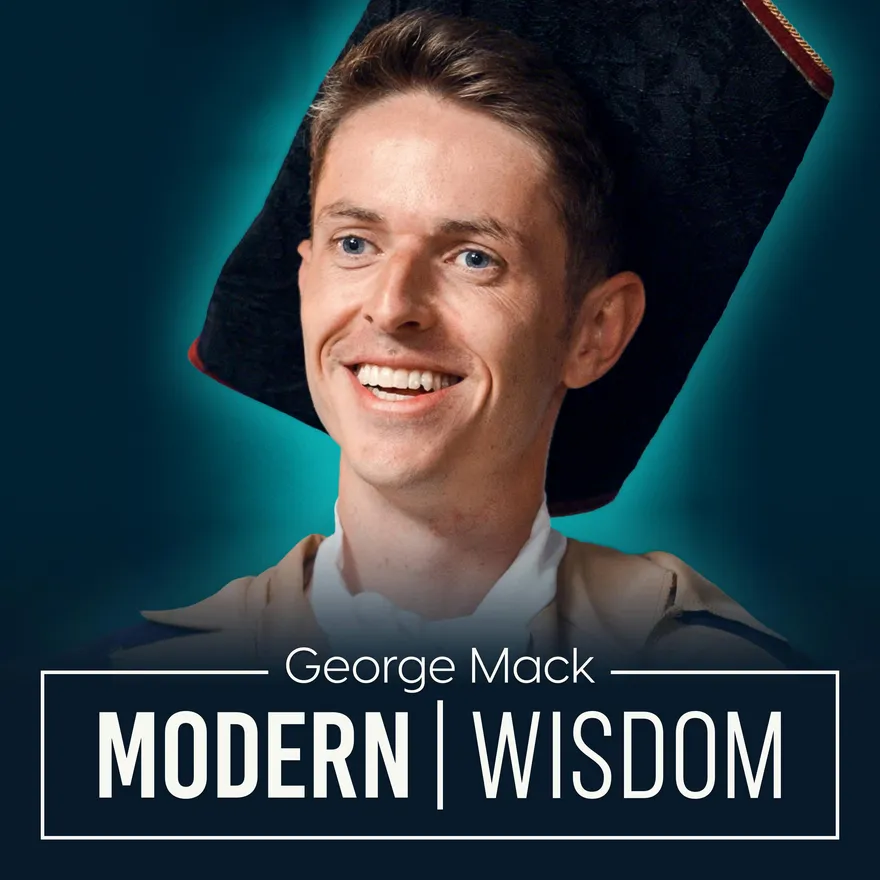

This is a preview of the Shortform summary of the Jun 15, 2026 episode of the Modern Wisdom
Sign up for Shortform to access the whole episode summary along with additional materials like counterarguments and context.
1-Page Summary
Cultural Differences: British vs American Personality Traits
Chris Williamson and George Mack explore the nuanced differences between British and American cultures, focusing on how restraint and enthusiasm manifest differently across the Atlantic.
British Culture Emphasizes Restraint; American Culture Prioritizes Enthusiasm
Williamson observes that nonchalance is particularly prized in Britain, serving as social armor against appearing "too keen." British people tend to avoid visible ambition or enthusiasm, while Americans openly express passion and national pride. He notes that Britain almost revels in self-critique, joking that the nation hates itself more than outsiders ever could, while Americans often misinterpret British irony as genuine complaint.
Mack describes meeting an American who claimed introversion but displayed extroversion notable even among British extroverts. Both agree that American introverts are generally more outgoing than British extroverts, reflecting strong cultural norms about personality expression. They suggest the UK is one of the more introverted cultures globally, with Japan as a notable exception.
Cultural Differences in Appearance and Beauty
Williamson notes that countries like Brazil, Italy, Spain, France, Sweden, and Lebanon consistently produce attractive men according to fashion and dating data. He contrasts this with the UK, which he describes as not "a particularly aesthetic nation." British cultural norms de-emphasize grooming and self-presentation, leading even attractive individuals to downplay appearance—a cultural choice reinforcing nonchalance.
Identity and Decline: Paradox of Internal Criticism and External Admiration
Mack points out a paradox: while Brits criticize their nation, foreigners express admiration for British culture. He and Williamson reference cultural icons like JK Rowling, the Beatles, Shakespeare, Darwin, and Christopher Nolan, though they joke that prominent contributions after the 2000s are harder to name. They frame this self-critique as akin to Rome's slow decline, where geopolitical diminishment is gradual and often unacknowledged. While outsiders appreciate British culture, internally there's a distinct sentiment of decline and self-doubt.
Historical Narratives and Human Potential
Achievements Through Adversity Demonstrate Human Capability
The hosts discuss how extraordinary achievements often arise from adverse circumstances. Tommy McHugh, a former criminal, suffered a stroke that severed arteries in his brain, resulting in acquired savant syndrome—he became an artistic genius who painted obsessively and spoke in poetry. Similarly, Liam Gallagher was struck on the head in a schoolyard fight and woke up obsessed with music, eventually co-founding Oasis. Jamie Vardy's journey from nightclub promoter to Premier League champion with Leicester City further illustrates this theme of persistence through adversity.
Generational Gap Hinders Leaders' Historical Position Assessment
Mack reflects on how the Roman Empire's fall in 476 AD went unannounced, with nearly 48 generations passing before its dissolution was officially acknowledged in the 1800s. He draws parallels to Britain's decline, noting how people continue to speak of Britain as a great power long after its influence has waned. History shows that societal falls are often invisible to those experiencing them, highlighting limitations in observers' ability to assess whether they're living through eras of rise or decline.
Decision-Making and Agency
Overthinking vs. Strategic Reflection
Williamson and Mack distinguish between low-agency and high-agency thinking. Low-agency thinking involves repetitive, unhelpful thoughts that lead to paralysis, while high-agency thinking produces new, useful, and true thoughts oriented toward action and solutions. Mack notes that most ruminative thoughts are not new, not useful, and frequently not true, creating a mental doom loop.
Personality Types Need Opposite Advice for Similar Outcomes
The hosts highlight that different personality types require different advice. Cautious overthinkers who absorb detailed productivity advice only fuel their rumination, while action-oriented individuals benefit from messages encouraging them to slow down. Williamson notes that much advice people encounter ends up making them more of what they already are, making self-awareness crucial.
Action Bias Is Superior to Inaction Despite Risks
Mack advocates for a bias toward action, arguing that deciding with confidence produces better outcomes than waiting for perfect certainty. Both emphasize that making errors with high conviction is preferable to failing to act out of uncertainty, as inaction rarely produces progress.
Technology and AI
AI Systems Used Unintentionally Create Novel Security and Legal Issues
Williamson describes how a friend using an AI model unintentionally extracted 9,000 pieces of data from a website, discovering that possessing this data was illegal. He and Mack discuss how system safeguards can be circumvented by reframing prompts, representing an ongoing arms race where users constantly find loopholes faster than effective safety measures can be implemented.
AI Evaluates Its Own Output, Causing Information Quality Decline
AI systems increasingly evaluate content produced by other AIs, degrading outcomes and causing stalemates. Williamson mentions recruiters using AI to screen AI-generated applications, resulting in a loop where no hiring decisions are made. He refers to the "dead internet theory," where AI-generated content proliferates and declines authentic human communication online.
Consumer Spending Requires Cultivated Skill Despite Frugal Predisposition
Williamson reflects on British cultural attitudes toward spending, noting a predisposition toward restraint and practical purchasing. Conservative spenders struggle to buy luxuries unless under direct pressure, as overcoming the scarcity mindset feels unnatural in a culture emphasizing financial caution.
1-Page Summary
Additional Materials
Counterarguments
- While British culture is often described as valuing restraint, there are many contexts—such as sports, music festivals, and political activism—where open enthusiasm and ambition are celebrated in the UK.
- The idea that American culture universally encourages open expression overlooks significant regional, generational, and subcultural differences within the United States.
- British self-criticism and irony are not always misunderstood by Americans; many Americans familiar with British media or who have lived in the UK understand and appreciate this style of humor.
- The claim that American introverts are more outgoing than British extroverts is anecdotal and may not be supported by systematic cross-cultural psychological research.
- The assertion that the UK is among the most introverted cultures globally is subjective and may not account for the diversity of personalities within the country.
- The focus on certain countries producing "attractive men" is based on fashion and dating data, which can be influenced by global beauty standards, media representation, and cultural biases rather than objective measures.
- British people do not universally downplay appearance; there are vibrant fashion, grooming, and beauty industries in the UK, and many individuals take pride in their self-presentation.
- The narrative of British decline is contested; some argue that the UK continues to exert significant cultural, economic, and political influence globally.
- The comparison between British self-critique and Rome's decline may be overly simplistic, as historical, geopolitical, and economic contexts differ greatly.
- Extraordinary achievements arising from adversity are notable, but many people achieve success through stable and supportive environments as well.
- The examples of sudden talent after brain injury (e.g., Tommy McHugh, Liam Gallagher) are rare and not representative of most people's experiences with adversity or trauma.
- The idea that societal decline is invisible to those living through it is debated; many historians and commentators actively discuss and analyze signs of societal change in real time.
- The assertion that people overestimate Britain's global power does not account for those who are critical or realistic about the UK's current status.
- The dichotomy between low-agency and high-agency thinking may oversimplify the complexity of human cognition and decision-making.
- Not all ruminative thoughts are unhelpful; some degree of reflection and caution can prevent harmful or impulsive actions.
- The suggestion that a bias toward action is always superior overlooks situations where careful deliberation and patience are necessary for optimal outcomes.
- The arms race between AI users and developers is not unique to AI; similar dynamics exist in cybersecurity, software development, and other technological fields.
- The "dead internet theory" is a speculative concept and not universally accepted; many argue that authentic human communication continues to thrive online despite the rise of AI-generated content.
- British attitudes toward spending and luxury vary widely by individual, region, and socioeconomic status; many British consumers do purchase luxury goods and experiences.
Actionables
- you can experiment with switching your self-talk style for a week by deliberately using either irony and self-deprecation or open enthusiasm and pride in daily conversations, then note how people respond and how it affects your mood and confidence
- Try greeting colleagues with understated, ironic remarks one day, and with overt excitement and pride the next, observing which approach feels more natural and which leads to more positive interactions or misunderstandings.
- a practical way to break repetitive, unhelpful thought loops is to set a daily five-minute timer to write down only new, actionable ideas for a current challenge, then immediately pick one to try, regardless of certainty
- For example, if you’re stuck on a work project, jot down fresh solutions without judging them, then act on the most promising one right away, even if it feels risky or incomplete.
- you can challenge your cultural spending habits by setting a small, non-essential purchase goal each month and inviting a friend from a different cultural background to join and discuss the experience
- Choose something you’d normally consider frivolous, buy it, and then talk with your friend about how it felt, what you learned about your own attitudes, and how their perspective differs.


Get access to the context and additional materials
Cultural Differences: British vs American Personality Traits
Chris Williamson and George Mack discuss nuanced contrasts between British and American personality traits, focusing on restraint versus enthusiasm, cultural attitudes toward appearance, and the paradox of external admiration contrasted with internal criticism.
British Culture Emphasizes Restraint; American Culture Prioritizes Enthusiasm
British Norm vs. American Enthusiasm in Ambition
Chris Williamson observes that while nonchalance is broadly admired, it is particularly prized in Britain, serving as a social armor against being seen as "too keen" or excitable. British people tend to avoid visible ambition or enthusiasm, in contrast to Americans, for whom expressing passion is encouraged and admired.
British People Are Less Overtly Confident in Their National Identity Compared To Americans, For Whom Self-Criticism and Irony May Seem Like Genuine Complaints
Williamson describes Britain as a nation that almost revels in misery and self-critique, joking that the nation hates itself more than outsiders ever could. He points out how rare it is to hear anyone openly say they're proud of the UK, while Americans tend to be overtly confident in national identity, often misinterpreting British irony and self-criticism as genuine complaint or lack of pride.
American Introverts Show More Extroversion Than British Extroverts, Indicating Cultural Norms Alter Personality Expression, Complicating Cross-Country Personality Comparisons
Mack describes an interaction with an American who claimed introversion but displayed a level of extroversion that would be notable even among extroverted Brits. Both agree that, in general, American introverts are more outgoing than British extroverts, reflecting strong, differing cultural norms about personality expression. They conjecture that the UK is one of the more introverted cultures globally, with Japan as a notable exception for its collective introversion, while places like Brazil are referenced as highly extroverted societies.
Cultural Differences in Appearance and Beauty: Genetics, Grooming, Confidence
Attractive Men Produced In Brazil, Italy, Spain, France, Sweden, Lebanon
Chris Williamson notes that countries consistently recognized for producing attractive men include Brazil, Italy, Spain, France, Sweden, and Lebanon, according to fashion, dating app, and tourism data.
British Grooming Norms Limit Even Genetically Attractive Individuals By Deemphasizing Image-Focused Behavior and Appearance Investment
He contrasts this with the UK, describing it as not "a particularly aesthetic nation." Despite some strong genetic potential, British cultural norms de-emphasize grooming and self-presentation, leading even attractive individuals to downplay appearance or investment in image. This understatement is a cultural choice, reinforcing nonchalance and distancing from the image and grooming focus found elsewhere.
Identity and Decline: Paradox of Internal Criticism and External Admiration
British Empire Faces Internal Criticism Amid External Admiration for Cultural Achievements
Mack points out a paradox: while Brits often criticize ...
Here’s what you’ll find in our full summary
Cultural Differences: British vs American Personality Traits
Additional Materials
Counterarguments
- The characterization of British culture as uniformly valuing restraint and nonchalance overlooks significant regional, generational, and class-based variations within the UK, where open enthusiasm and ambition are sometimes celebrated.
- The depiction of American culture as universally encouraging open passion and enthusiasm does not account for subcultures or regions within the US where restraint and understatement are also valued.
- The claim that British people rarely express pride in their national identity may not reflect the sentiments seen during national events, sporting occasions, or among certain demographics.
- The assertion that American introverts are more extroverted than British extroverts is anecdotal and may not be supported by systematic cross-cultural psychological research.
- The idea that the UK is among the most introverted cultures globally is a generalization and may not account for the diversity of social behaviors across different UK communities.
- The statement that countries like Brazil, Italy, Spain, France, Sweden, and Lebanon "produce" more attractive men is subjective and influenced by Western beauty standards, which may not be universally accepted.
- The suggestion that British grooming norms universally de-empha ...
Actionables
- you can experiment with expressing enthusiasm in different social settings by intentionally varying your level of visible excitement or restraint, then noting how people respond and how you feel in each scenario; for example, try sharing good news with both understated humor and overt excitement to see which approach feels more natural or effective in your environment.
- a practical way to explore cultural attitudes toward appearance is to spend a week adopting grooming habits from a more image-focused country (like Italy or Brazil), then switch to a week of minimal grooming in line with British norms, observing how these changes affect your confidence, interactions, and self-perception.
- you ...
Get access to the context and additional materials
Historical Narratives and Human Potential
Achievements Through Adversity Demonstrate Human Capability
Extraordinary achievements often arise from unlikely and adverse circumstances, underscoring the unexpected heights of human potential.
Tommy Mchugh, a Former Criminal and Construction Worker, Had a Brain Hemorrhage That Severed Arteries In His Frontal and Temporal Lobes, Resulting In Acquired Savant Syndrome, Transforming Him Into an Artistic Genius Who Painted Obsessively and Spoke In Poetry
Tommy McHugh, previously known for his criminal past and work in construction, suffered a severe stroke that severed arteries in his frontal and temporal lobes. Before the stroke, McHugh was considered quite conservative with money—so much so that loved ones jokingly called him tight. After the stroke, however, his personality and interests shifted dramatically. He began obsessively shopping and, more remarkably, developed acquired savant syndrome. He became an artistic genius, painting compulsively and speaking in rhymes and poetry.
Liam Gallagher Was Struck On the Head In a Schoolyard Fight, Leading To His Obsession With Music and Co-founding Oasis
Similarly, adversity acted as a catalyst for Liam Gallagher. Growing up in the working-class council estates of Manchester, Liam initially showed little interest in music, a hobby considered unusual in his environment. Everything changed when he was struck on the head during a schoolyard fight. The next day, he woke up obsessed with making music, soon joining a band and eventually co-founding the legendary group Oasis alongside his brother Noel. The experience is likened to a form of “musician syndrome,” echoing the phenomenon of acquired savant abilities after trauma.
Jamie Vardy's Journey: From Nightclub Promoter to Premier League Champion and Record-Breaker
Jamie Vardy’s ascent to football stardom further illustrates the theme. Known for his wild spirit—someone described as “If Magaluf coalesced into human form, it would be Jamie Vardy”—Vardy started out playing in Sunday league and lower-tier conference teams before being picked up by Leicester City. At one point in his late twenties, Vardy considered quitting football to become a full-time nightclub promoter in Xante. However, he chose to persevere and went on to play a pivotal role in one of the greatest underdog stories in sports history: winning the Premier League with Leicester in his first season and breaking the record for most consecutive goals scored (12 or 13 games in a row). Vardy’s unorthodox journey—from being on the verge of quitting to record-breaking success—demonstrates the transformative power of persistence in the face of adversity.
Generational Gap Hinders Leaders' Historical Position Assessment
People and nations struggle to perceive their true historical standing due to the slow and often unannounced nature of major societal changes.
Roman Empire's Fall in 476 AD Went Unannounced; One Would Wait Nearly 48 Generations Until the 1800s to Hear It Officially
Delayed Recognition of Decline in Modern Empires Like Britain
Historical Change Shows Observers Can't Reliably Assess a Nation's Decline or Rise
George Mack reflects on the fall of the Roman ...
Here’s what you’ll find in our full summary
Historical Narratives and Human Potential
Additional Materials
Clarifications
- Acquired savant syndrome is a rare condition where individuals develop extraordinary skills after brain injury or disease. It often involves enhanced abilities in art, music, or memory that were not present before. The syndrome is thought to result from brain rewiring or the release of dormant neural pathways. This phenomenon challenges traditional views of brain function and plasticity.
- Tommy McHugh was a British man whose personality and abilities changed dramatically after a brain injury. His case is significant because it illustrates acquired savant syndrome, where brain damage leads to extraordinary new talents. This phenomenon challenges traditional views on brain function and human potential. McHugh's transformation highlights how adversity can unlock hidden capabilities.
- Acquired savant syndrome occurs when brain injury or illness triggers extraordinary skills in art, music, or memory. "Musician syndrome" is an informal term used to describe a similar phenomenon where a head injury leads to a sudden, intense passion and talent for music. Both syndromes suggest latent abilities can emerge after neurological changes. These cases highlight the brain's plasticity and hidden potential.
- Liam Gallagher is a British singer known for his distinctive voice and charismatic stage presence. Oasis, formed in the early 1990s, became one of the most influential rock bands of that decade, known for hits like "Wonderwall" and "Don't Look Back in Anger." The band played a key role in the Britpop movement, which revived British rock music and culture. Oasis's success helped define a generation and left a lasting impact on popular music.
- Magaluf is a popular holiday resort in Mallorca, Spain, known for its lively nightlife and party atmosphere. The phrase "If Magaluf coalesced into human form" suggests someone embodies the wild, energetic, and sometimes reckless spirit associated with that place. It implies Jamie Vardy has a bold, unrestrained personality. This colorful metaphor highlights his reputation for being spirited and unconventional.
- The Premier League is the top professional football league in England, widely regarded as one of the most competitive and popular leagues globally. Scoring consecutive goals in multiple matches is rare and demonstrates exceptional skill and consistency. Jamie Vardy set a record by scoring in 11 consecutive Premier League games, breaking a long-standing record held since 2001. This achievement highlights his remarkable impact and form during that period.
- The fall of the Roman Empire in 476 AD marks the end of ancient Rome's dominance in Western Europe. It occurred when the last Roman emperor, Romulus Augustulus, was deposed by the Germanic leader Odoacer. This event symbolizes the transition from classical antiquity to the Middle Ages. The empire's collapse led to political fragmentation and the rise of medieval kingdoms.
- The Holy Roman Empire was a multi-ethnic complex of territories in central Europe that existed from the early Middle Ages until 1806. It was considered a continuation of the Western Roman Empire's legacy, combining religious and political authority under an emperor. Its dissolution occurred during the Napoleonic Wars when Emperor Francis II abdicated and reorganized his lands into the Austrian Empire. This marked the end of a centuries-old political entity that had shaped European history.
- Francis II was the last Holy Roman Emperor who dissolved the empire in 1806. This act ended a political entity that had existed for over a thousand years in Central Europe. The dissolution occurred duri ...
Counterarguments
- While adversity can catalyze extraordinary achievements, many people experience hardship without notable transformation or success, suggesting that such outcomes are exceptions rather than the rule.
- The cases of Tommy McHugh and Liam Gallagher are anecdotal and may not be representative of broader patterns; most individuals who suffer brain injuries or trauma do not develop savant abilities or creative obsessions.
- The narrative that trauma or adversity unlocks hidden potential risks romanticizing suffering and may overlook the significant negative consequences and suffering that often accompany such events.
- Jamie Vardy’s success, while inspiring, also depended on external factors such as opportunity, support systems, and timing, not solely on personal perseverance.
- The inability of contemporaries to recognize historical decline is not universal; some individuals and groups have accurately perceived and responded to societal ...


Get access to the context and additional materials
Decision-Making and Agency
Overthinking and Rumination vs. Strategic Reflection and Deliberation: Quality and Usefulness of Thoughts
Chris Williamson and George Mack distinguish the quality of thought underlying decision-making by contrasting rumination and introspection, proposing the clearer framework of low-agency versus high-agency thinking. Low-agency thinking is characterized by repetitive, unhelpful, and often untrue thoughts—a mental doom loop with little progression toward action. George Mack points out that most ruminative thoughts are not new, not useful, and frequently not even true, leading to more overthinking and paralysis.
High-agency thinking, in contrast, is defined by new, useful, and true thoughts, which are oriented toward action and solutions rather than endless scenario-spinning. High-agency individuals reflect strategically and act decisively, focusing on how to resolve situations rather than endlessly rehashing problems. This makes high-agency versus low-agency terminology more useful than debates about rumination versus introspection, which often get muddled by semantics. Chris Williamson notes that true introspection, when it is useful and leads to action, fits the high-agency model, while rumination aligns with low-agency.
Personality Types Need Opposite Advice for Similar Outcomes
The hosts highlight that different personality types require different advice about decision-making for similar outcomes. Cautious overthinkers often absorb productivity advice—such as careful planning, detailed journaling, or breaking work into micro-tasks—which only fuels their rumination and reinforces hesitation. The kind of podcasts and platforms that discuss these frameworks, Williamson notes, naturally attract listeners prone to overthinking, reinforcing their existing tendencies.
Conversely, action-oriented individuals, who are naturally more decisive or impulsive, may benefit far more from messages that caution them to slow down and consider their actions rather than rushing in. Williamson points out that hyper-responders to advice are influenced unevenly: those who need to heed caution often ignore it, while those inclined to overthink internalize it even more. Therefore, much of the advice people encounter ends up making them more of what they already are. Self-awareness of this dynamic is crucial; optimizers and overthinkers need to work deliberately against their nature to cultivate a bia ...
Here’s what you’ll find in our full summary
Decision-Making and Agency
Additional Materials
Clarifications
- Rumination involves repetitive, negative thinking focused on problems without seeking solutions, often worsening stress. Introspection is a deliberate, thoughtful examination of one’s feelings and motives aimed at understanding and growth. The confusion arises because both involve self-reflection, but rumination is passive and unproductive, while introspection is active and constructive. Clear distinction depends on whether the thinking leads to insight and action (introspection) or stuckness and distress (rumination).
- Agency in thinking refers to a person's capacity to intentionally control their thoughts and actions toward achieving goals. High-agency thinking involves purposeful, solution-focused reflection that leads to decisive action. Low-agency thinking lacks control, often resulting in repetitive, unproductive thoughts without progress. Developing agency means strengthening one's ability to direct mental effort effectively.
- Low-agency thinking involves feeling stuck in repetitive, negative thought patterns that don’t lead to solutions or actions. It often includes dwelling on problems without seeking ways to resolve them. High-agency thinking focuses on generating actionable insights and practical steps to address challenges. It requires intentional effort to shift from passive worry to proactive problem-solving.
- Detailed planning and micro-tasking provide more points for overthinkers to analyze and worry about, increasing mental clutter. These methods can trap them in endless evaluation of small details rather than moving forward. Overthinkers may fixate on perfecting each step, which fuels hesitation and delays action. Thus, productivity techniques designed for focus can inadvertently deepen rumination cycles.
- People have different natural tendencies in how they make decisions—some are cautious and prone to overthinking, while others are impulsive and act quickly. Advice that encourages careful planning helps impulsive types slow down but can trap cautious types in indecision. Conversely, urging action helps cautious individuals overcome hesitation but may cause impulsive people to act recklessly. Tailoring advice to personality ensures it supports growth rather than reinforcing unhelpful habits.
- Action bias is the tendency to prefer taking action rather than remaining passive, even when inaction might be safer. It is considered superior because acting creates opportunities for learning and adjustment, while inaction leads to stagnation and missed chances. This bias helps overcome fear of failure by valuing progress over perfection. In many situations, the benefits of moving forward outweigh the potential downsides of mistakes.
- Fast decision-making is important for reversible or low-stakes choices because these decisions have minimal negative consequences and can be corrected if needed. Acting quickly in such cases prevents missed opportunities and maintains momentum. High-stakes decisions involve significant risks or irreversible outcomes, requiring careful analysis to avoid costly mistakes. Therefore, more time and deliberation are justified to ensure the best possible outcome.
- "Hyp ...
Counterarguments
- The dichotomy between high-agency and low-agency thinking may oversimplify the complexity of human thought processes, which often exist on a spectrum and can be context-dependent.
- Some forms of rumination or cautious reflection, while not immediately action-oriented, can lead to deeper understanding, creativity, or emotional processing that is valuable in the long term.
- The emphasis on action bias may undervalue the importance of patience, restraint, or strategic inaction, which can be critical in certain situations, especially where impulsive decisions carry significant risks.
- Not all individuals benefit from a bias toward action; for some, especially those prone to impulsivity or risk-taking, encouraging more reflection and caution may lead to better outcomes.
- The assertion that inaction rarely produces progress overlooks scenarios where waiting, observing, or gathering more information is the optimal strategy.
- The idea that productivity advice reinforces overthinking in cautious individuals may not apply universally; some overthinkers may find structure ...
Get access to the context and additional materials
Technology and Ai
Ai Systems Used Unintentionally Create Novel Security and Legal Issues
Chris Williamson describes an incident where a friend, using an off-label Chinese AI model run locally, unintentionally extracted 9,000 pieces of data from a website by discovering an open API. Although there was no intent to engage in illegal activity, possessing this data turned out to be against the law, highlighting how AI can accidentally facilitate serious security breaches.
Williamson and George Mack discuss how system safeguards can be circumvented by reframing prompts. For example, if an AI refuses to list the “ugliest men,” it will still provide a list of the most good-looking men, which users can then reverse to get the prohibited information. Williamson points out that such bypasses, and the broader potential for AI misuse, represent an ongoing arms race: users constantly find new loopholes and novel uses outpace the implementation of effective safety measures, leading to unpredictable and unintended AI behaviors.
Ai Evaluates Its Own Output, Causing Information Quality Decline and Stalemates
AI systems are increasingly evaluating content produced by other AIs, which can degrade the quality of outcomes and cause operational stalemates. Williamson mentions that some recruiters use AI to screen job applications written by applicants with AI assistance. This process results in a loop where AI-generated resumes are assessed by AI systems designed to detect or evaluate AI content, leading to no hiring decisions being made—a stalemate described as an “endless doom loop” on platforms like LinkedIn.
Similarly, in education, teachers now embed hidden instructions into assignments to catch AI-generated submissions, further escalating an arms race in automation and assessment. Williamson refers to the “dead internet theory,” where the proliferation of AI-generated content leads to a decline in authe ...
Here’s what you’ll find in our full summary
Technology and Ai
Additional Materials
Clarifications
- "Off-label" use of AI models means using the AI in ways not intended or officially supported by its creators. This can involve applying the model to tasks, data, or environments outside its original design. Such use may bypass safety features or legal guidelines embedded in the intended applications. It often carries risks because the AI's behavior in these contexts is less predictable.
- An open API (Application Programming Interface) is a publicly accessible set of rules that allows software to communicate with a service or database. It enables developers to request and retrieve data or perform actions without restrictions. If an API is not properly secured, anyone can access sensitive or large amounts of data unintentionally. This can lead to unauthorized data extraction, even without malicious intent.
- Possessing data obtained without authorization can violate data protection and privacy laws, even if the acquisition was unintentional. Laws like the GDPR in Europe impose strict rules on collecting, storing, and using personal data. Unauthorized possession may lead to legal penalties, including fines or criminal charges. Intent is often less relevant than the act of holding or using protected data unlawfully.
- AI system safeguards are rules or filters built into AI to prevent it from generating harmful, illegal, or inappropriate content. "Reframing prompts" means changing the way a question is asked to trick the AI into bypassing these safeguards. For example, asking for the opposite or a related concept can lead the AI to provide information it would normally block. This exploits the AI's pattern recognition without directly violating its programmed restrictions.
- The "arms race" refers to the ongoing cycle where AI developers create safety features to prevent misuse, while users continuously find new ways to bypass these protections. Each new workaround prompts developers to update safeguards, leading to repeated escalation. This dynamic makes it difficult to fully control AI behavior or predict all potential abuses. It reflects a constant struggle between innovation in misuse and defensive technology.
- AI systems evaluate content produced by other AIs by using algorithms trained to detect patterns typical of machine-generated text. This process can create feedback loops where AI-generated content is repeatedly assessed and modified by other AIs, amplifying errors or biases. Over time, this reduces diversity and originality, causing information to become homogenized and less reliable. The lack of human judgment in these loops leads to a decline in overall content quality.
- The “endless doom loop” occurs when AI systems both generate and evaluate job applications, creating a cycle with no human input. AI evaluators struggle to distinguish between genuine and AI-produced content, causing indecision. This loop prevents progress in hiring because neither side can confidently validate the other. It highlights limitations in current AI detection and evaluation methods.
- Teachers embed subtle, unique phrases or specific instructions within assignments that AI tools are unlikely to replicate accurately. These hidden markers help identify if a student’s submission was generated or heavily assisted by AI. The method exploits AI’s tendency to produce generic or pattern-based responses rather than tailored content. This technique aims to maintain academic integrity amid rising AI use.
- The "dead internet theory" suggests that much of the online content is generated by bots or AI rather than humans, making the internet feel less vibrant and authentic. It implies a decline in gen ...
Counterarguments
- While AI can unintentionally extract data, responsibility for securing APIs and sensitive information primarily lies with website administrators and organizations, not just AI users.
- Laws regarding data possession often consider intent and context; unintentional acquisition may not always result in prosecution, especially if the data is not misused or distributed.
- Many AI systems are continually updated to close loopholes and improve safeguards, reducing the effectiveness of prompt reframing over time.
- Human oversight and hybrid AI-human systems can mitigate the risk of unpredictable AI behaviors and stalemates in decision-making processes.
- The use of AI to evaluate AI-generated content can increase efficiency and consistency in large-scale screening tasks, such as resume reviews, when combined with human judgment.
- The "endless doom loop" in hiring is not universal; many organizations successfully use AI tools to streamline recruitment without experiencing stalemates.
- Educators' use of hidden instructions is only one of many strategies to address academic integrity, and AI can also be used to support learning and creativity rather than just detecti ...
Get access to the context and additional materials


Create Summaries for anything on the web
Download the Shortform Chrome extension for your browser
