

Harvard Professor: Why Nothing Feels Real Anymore - Arthur Brooks - #1109
In this episode of Modern Wisdom, Chris Williamson and Harvard professor Arthur Brooks examine why modern life increasingly feels hollow and unfulfilling. Brooks argues that algorithm-driven technology and optimization culture have created a simulation of real life that prioritizes metrics and achievement over genuine meaning, engaging the wrong parts of our brain and leaving us depressed despite constant stimulation.
Brooks and Williamson explore the components of authentic meaning—coherence, purpose, and significance—and why technology cannot replicate the neurobiological benefits of in-person connection, beauty, and even suffering. They discuss how ambitious people become trapped in cycles of achievement-seeking that substitute specialness for genuine happiness, and offer practical strategies for rebuilding a meaningful life: breaking free from technology addiction, embracing boredom, cultivating real relationships, and balancing our culture's over-reliance on analytical problem-solving with an appreciation for life's irreducible mysteries.
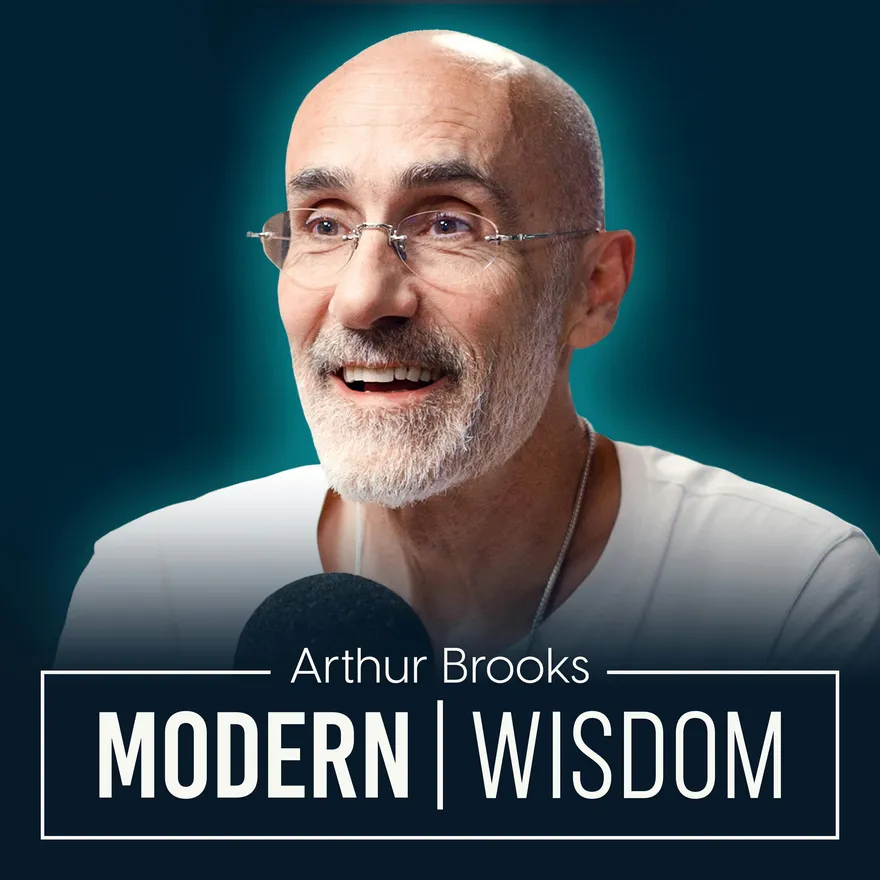

This is a preview of the Shortform summary of the Jun 11, 2026 episode of the Modern Wisdom
Sign up for Shortform to access the whole episode summary along with additional materials like counterarguments and context.
1-Page Summary
The Meaning Crisis: How Technology and Algorithms Create Empty Simulations
Chris Williamson and Arthur Brooks explore how modern digital culture produces a simulation of real life that leaves people feeling unfulfilled and depressed. Brooks compares contemporary life to "The Matrix," where algorithm-driven platforms harvest attention while keeping users hooked on [restricted term] hits that strip life of genuine meaning. He argues these screen experiences engage the wrong hemisphere of the brain, creating constant low-level stimulation without depth.
Williamson introduces "grind slop" to describe the relentless optimization culture that promotes achievement at all costs, creating widespread fatigue and emotional blunting. Drawing on neuroscientist Ian McGilchrist's work, Brooks explains the crisis stems from left-brain dominance—focusing on "how" rather than "why." Technology induces a left-brain simulation centered on metrics and analysis while neglecting the right brain's capacity for mystery, love, and meaning. Counterfeit sources like gaming achievements, online status, and pornography offer fleeting satisfaction but deepen loneliness over time.
Brooks notes that since 2008, clinical depression has tripled and anxiety has doubled, with the major predictor being a lack of meaning rather than economic hardship. As Americans check their phones 205 times daily, they've migrated their lives into platforms that suppress right-hemisphere activation and meaning-making.
The Nature of Meaning: Coherence, Purpose, and Significance
Brooks and Williamson explore meaning's multifaceted nature, emphasizing that real meaning arises through in-person connections, beauty, and even suffering—realms untouched by technology or optimization.
Three Elements of Meaning
Coherence provides a narrative explaining life's events through religion, science, or other frameworks that offer psychological agency. Purpose requires directional goals for progress, not distractions—though true purpose is perpetual and cannot be "finished." Significance lies in being loved unconditionally and mattering to others, not in fame or being special—a distinction modern achievement culture confuses and corrupts.
In-Person Connections Are Neurobiologically Distinct From Virtual Interactions
Brooks notes that romantic love is a right-brain mystery not algorithmically solvable, making dating apps less effective. The human brain evolved for in-person bonding—face-to-face interaction releases [restricted term] and creates secure attachment in ways technology cannot replicate. Even brief in-person meetings create bonds that virtual interactions can't match.
Transcendence and the Loss of Beauty
Brooks distinguishes between the "me-self," absorbed in self-reference, and the "I-self," oriented outward in awe and service. Social media traps users in narcissistic feedback loops, hindering transcendence. Paths to transcendence include religion, meditation, nature, art, and service—all of which dissolve self-focus and restore meaning.
Beauty, a right-brain experience, has largely vanished from modern technocratic life. Brooks argues that objective beauty has disappeared from music, design, and daily existence. Direct nature exposure produces neurobiological responses that digital images cannot replicate, while moral beauty—selfless kindness—is rare due to achievement-focused culture devaluing altruism.
Suffering Is Essential for Growth
Meaning is also found in suffering, which is indispensable for being fully alive. Modern society tries to eliminate suffering through optimization and technology, but Brooks argues this attempt removes the richness from life. Meaning arises from wrestling with struggle and loss, not from comfort. He describes the "arrival fallacy"—realizing that achieved goals don't bring lasting satisfaction—which undermines achievement culture's core motivation.
The Striver's Trap: Achievement Over Meaning
Brooks and Williamson explore how ambitious people prioritize achievement and status while sacrificing genuine meaning and connection.
Conditional Love Creates Lifelong Strivers
Brooks describes how children whose parents reward achievement but withhold affection learn that love is transactional and must be earned. As adults, these individuals constantly strive for approval, choosing demanding people and remaining unsatisfied due to core unworthiness. Those with significant talent risk this pathology spreading from family to the internet, fueling an insatiable need for adoration.
Busyness as Avoidance
Highly ambitious people often use work and distractions to avoid anxiety and unresolved trauma. Success and achievement provide temporary [restricted term] hits and distress relief, creating an avoidant yet productive loop. Brooks notes that strivers self-medicate with addictions correlated to busyness.
Confusing Specialness With Happiness
Strivers believe being special—having more money, fame, or followers—brings worthiness and love, despite repeated disproof. Success offers little happiness without unconditional childhood love. Many would trade success for authentic love and belonging, but achievement culture makes this difficult.
Strengths That Hinder Relationships
Psychological armor for success—hypervigilance, emotional control, perfectionism—hinders emotional presence with partners. Strivers often select partners whose love must also be earned, reinforcing the cycle. Brooks concludes that recognizing one's greatest weakness as the shadow of their strength allows emotional maturity but requires challenging psychological work.
Practical Strategies: Rebuilding Life With Meaning
Brooks and Williamson discuss concrete ways to regain meaning by reshaping habits around technology, relationships, and suffering.
Break the Technology Doom Loop
Brooks describes the "tech doom loop," where phone use to avoid boredom lowers tolerance for being unoccupied and makes life feel less meaningful. He recommends protocols: never look at your phone during meals, in bedrooms, or for the first and last hour of your day. He also suggests an annual 96-hour technology fast, noting that while the first day brings discomfort, by the fourth day many experience relief and bliss.
Embrace Boredom and Leisure
Brooks encourages people to "get bored," arguing that boredom activates the brain's default mode network, enabling mind-wandering and meaning-making. Drawing on philosopher Joseph Pieper, he defines leisure as unpaid, value-creating activities like building relationships and reflection. Brooks advises treating leisure seriously: schedule it and protect it from digital distractions.
Cultivate Real Relationships
Brooks stresses that genuine relationships gain significance through imperfection and vulnerability. He prescribes pre-sleep eye-contact meditation for couples: lying together and looking into each other's eyes for five minutes to reactivate [restricted term]. Building in-person community requires accepting social friction and the risk of rejection.
Find Your Calling
Brooks says a calling is something you can't stop thinking about, that creates value for others, and that you'd pursue even without recognition. He introduces the "spiral career" concept: every 7-12 years, some people need to completely rebuild their work life. He warns against the sunk cost fallacy and argues that staying in an unfulfilling career leads only to growing meaninglessness.
Embrace Suffering and Cultivate Transcendence
Brooks teaches students to declare, "my suffering is sacred," and to lean into pain as a path to being fully alive. Starting each day with gratitude for both blessings and challenges reduces suffering and elevates meaning. He recommends actively seeking transcendence through beauty, service, prayer, and meditation to activate right-hemisphere consciousness and access meaning.
Right Brain vs. Left Brain: Modern Culture's Left-Brain Bias
Brooks explores McGilchrist's theory on how modern technocratic culture has skewed too far toward left-brain thinking.
Two Hemispheres With Different Functions
The right hemisphere handles complexity, mystery, meaning, and the wholeness of life, while the left specializes in analysis, mechanics, and understanding parts. Brooks emphasizes that true fulfillment requires both hemispheres working in tandem, with the right hemisphere holding primary authority. Left-brain problems, like how a car works, are solvable. Right-brain issues, like sustaining a marriage or finding meaning, are irreducible mysteries best pondered rather than solved.
Technocratic Culture's Over-Reliance on Left-Brain Solutions
Brooks criticizes a culture that assumes every issue is solvable with apps, supplements, or technology. This mindset treats deep, right-hemisphere issues—poverty, depression, loneliness—as if they could be resolved using left-hemisphere interventions. He notes that despite tripling the number of therapists, depression rates have also tripled, showing that left-brain strategies are counterproductive when applied to right-brain concerns.
Brooks warns that scientism—the belief that everything is a solvable problem—represents a wrong turn. Instead, he argues, we must recognize that complicated problems and complex mysteries exist together. We should solve what can be solved but live with and appreciate the mysteries that give life its richness. Only through this balance can we access deeper sources of meaning and happiness.
1-Page Summary
Additional Materials
Clarifications
- The left and right hemispheres of the brain specialize in different cognitive functions due to lateralization. The left brain is typically associated with logical reasoning, language, and analytical thinking, while the right brain is linked to creativity, intuition, and holistic perception. Dominance means one hemisphere's style of processing tends to guide a person's thinking and behavior more strongly. This concept is a simplification; both hemispheres constantly communicate and collaborate through the corpus callosum.
- "Grind slop" refers to the exhausting, monotonous tasks that accumulate in a culture obsessed with constant productivity and efficiency. It describes the mental and emotional fatigue caused by relentless pressure to optimize every moment for achievement. This culture values output over well-being, leading to burnout and emotional numbness. The term highlights how optimization can degrade life into meaningless, repetitive effort.
- Ian McGilchrist is a psychiatrist and writer known for his book The Master and His Emissary. He argues that the brain's two hemispheres have fundamentally different ways of perceiving the world: the right hemisphere sees the whole and context, while the left focuses on details and abstraction. McGilchrist suggests modern culture overvalues left-brain thinking, neglecting the right hemisphere's role in meaning and connection. His work emphasizes balancing both hemispheres for a fuller, richer experience of life.
- The "arrival fallacy" is the mistaken belief that reaching a goal will bring lasting happiness. In achievement culture, people assume success equals fulfillment, but satisfaction often fades quickly. This leads to a cycle of constant striving without true contentment. Recognizing this fallacy helps shift focus from external achievements to deeper meaning.
- The "tech doom loop" describes a cycle where frequent phone use trains the brain to expect constant stimulation, making quiet or unoccupied moments feel uncomfortable. This reduces the brain's ability to tolerate boredom, which is essential for creativity and self-reflection. As a result, people compulsively check their phones to avoid boredom, deepening dependence on technology. Breaking this loop requires intentional periods without phone use to rebuild tolerance for stillness.
- The brain's default mode network (DMN) is a group of interconnected brain regions active during rest and introspection. It supports self-reflection, autobiographical memory, and imagining the future, which are essential for constructing personal meaning. When the DMN is engaged, the brain integrates experiences into a coherent sense of self and purpose. Disruptions to the DMN, such as constant digital distraction, can impair this meaning-making process.
- The "spiral career" concept refers to the idea that people often need to reinvent or significantly change their career path every 7-12 years to maintain fulfillment and growth. This timeline aligns with natural cycles of learning, mastery, and eventual stagnation in a role. Changing careers periodically helps avoid burnout and meaninglessness by introducing new challenges and opportunities. It encourages flexibility and responsiveness to evolving personal values and interests.
- The "me-self" refers to the self as an object of self-reflection, focused on personal identity, traits, and how one is perceived by others. The "I-self" is the subjective experiencer, the active agent aware of itself and capable of self-transcendence beyond self-centered concerns. This distinction originates from philosopher and psychologist William James. The "I-self" enables presence, creativity, and connection with something greater than oneself.
- Scientism is the belief that science can explain and solve all problems, including moral, existential, and spiritual questions. It dismisses subjective experiences and mysteries that cannot be measured or tested scientifically. This approach overlooks the complexity of human life and reduces rich, meaningful experiences to mere data. Consequently, scientism limits understanding by ignoring aspects of reality that require interpretation, reflection, and acceptance rather than empirical solutions.
- [restricted term] is a hormone and neurotransmitter that promotes social bonding and trust. It is released during physical touch, eye contact, and positive social interactions, strengthening emotional connections. [restricted term] reduces stress and anxiety, enhancing feelings of safety and attachment. Its effects support the formation and maintenance of close relationships by fostering empathy and cooperation.
- Complicated problems have clear components and solutions that can be figured out through analysis and expertise, like fixing a machine. Complex mysteries involve interconnected, unpredictable elements that cannot be fully solved or controlled, such as sustaining a meaningful relationship. Complicated problems are addressed with step-by-step methods, while complex mysteries require acceptance, reflection, and ongoing engagement. Understanding this distinction helps balance practical action with embracing life's uncertainties.
- Pre-sleep eye-contact meditation involves partners looking into each other's eyes quietly before sleeping to foster emotional connection. This practice stimulates [restricted term] release, a hormone that promotes bonding and trust. It helps reduce stress and enhances feelings of safety and intimacy. Regular practice can deepen relationship satisfaction and improve communication.
- Conditional love occurs when affection and approval are given only if certain behaviors or achievements are met. This teaches children to equate love with performance, fostering insecurity and a constant need to prove worth. As adults, they often seek validation through success or approval, leading to chronic striving and dissatisfaction. This pattern can create emotional barriers, making authentic connection and self-acceptance difficult.
- Psychological armor refers to behaviors developed to protect oneself from emotional pain or vulnerability. Hypervigilance is an excessive state of alertness, constantly scanning for threats or criticism. Emotional control involves suppressing or managing feelings to avoid appearing weak or overwhelmed. Perfectionism is setting unrealistically high standards to prevent failure or rejection, often causing stress and dissatisfaction.
- Transcendence refers to experiences that go beyond ordinary self-centered awareness, connecting individuals to something larger than themselves. It often involves feelings of awe, unity, or deep purpose that dissolve ego boundaries. These experiences activate the brain's right hemisphere, fostering meaning and emotional richness. Transcendence counters the isolating effects of technology by promoting connection, humility, and spiritual growth.
- Objective beauty refers to qualities in art, nature, or design that evoke a universal sense of harmony and aesthetic pleasure, independent of personal opinion. Moral beauty involves acts of selfless kindness and ethical goodness that inspire admiration and emotional uplift. Their decline reflects a cultural shift away from appreciating enduring, intrinsic values toward superficial or utilitarian experiences. This erosion diminishes opportunities for profound emotional and spiritual connection, contributing to a sense of emptiness.
- Algorithm-driven platforms use data to predict and deliver content that triggers [restricted term] release, a brain chemical linked to pleasure and reward. These [restricted term] hits create a feedback loop, encouraging repeated engagement and prolonged use. Over time, this can lead to dependency on digital stimuli for satisfaction, reducing motivation for deeper, meaningful experiences. The constant pursuit of [restricted term] rewards can diminish attention span and emotional fulfillment.
- Since 2008, societal shifts like economic instability, social media rise, and technological changes have intensified feelings of disconnection and purposelessness. These factors contribute to a "meaning crisis," where people struggle to find lasting significance in life. Research links this crisis to increased rates of clinical depression and anxiety, as lack of meaning undermines mental health. Traditional support systems and coping mechanisms have weakened, exacerbating these trends.
- Romantic love involves complex emotions, unconscious cues, and deep interpersonal bonding that algorithms cannot fully capture. Dating apps rely on data and patterns, which oversimplify human attraction and fail to replicate in-person chemistry. The brain's right hemisphere processes subtle social signals and emotional nuances essential for love, which technology cannot simulate. Therefore, algorithmic matching lacks the depth needed for genuine romantic connection.
- Joseph Pieper, a 20th-century philosopher, defined leisure as a state of being where one is fully present and receptive, not merely idle time. Value-creating activities in leisure are those that enrich the soul, such as contemplation, appreciation of beauty, and meaningful relationships. These activities are intrinsically rewarding and foster personal growth and fulfillment beyond productivity or utility. Leisure, in this sense, is essential for a well-rounded, meaningful life.
Counterarguments
- The correlation between increased technology use and rising depression/anxiety rates does not necessarily imply causation; other social, economic, and cultural factors may contribute significantly to these trends.
- Many people report finding genuine meaning, community, and support through online platforms, virtual relationships, and digital creative pursuits, challenging the idea that technology cannot facilitate real connection or meaning.
- The left-brain/right-brain dichotomy is an oversimplification; contemporary neuroscience shows that both hemispheres are involved in most cognitive tasks, and the strict division of functions is not supported by current evidence.
- Achievement and optimization culture can provide individuals with purpose, motivation, and satisfaction, especially for those who thrive on goal-setting and personal growth.
- The assertion that beauty has "vanished" from modern life is subjective; many find beauty in contemporary art, music, design, and digital creations.
- Not all forms of suffering are inherently meaningful or necessary for growth; some suffering can be destructive or traumatic without leading to positive transformation.
- The idea that in-person interactions are always superior to virtual ones overlooks the accessibility and inclusivity that digital communication provides, especially for those with disabilities or social anxiety.
- The claim that increased numbers of therapists have not reduced depression rates does not account for increased awareness, diagnosis, and willingness to seek help, which may inflate reported rates.
- Some individuals find fulfillment and meaning in careers or activities that are not their "calling," and stability or routine can be valuable sources of satisfaction.
- The critique of "scientism" may undervalue the significant improvements in well-being and mental health achieved through scientific and technological advances.
Get access to the context and additional materials
Meaning Crisis: Technology, Algorithms, and Culture Create Stimulating yet Empty Simulations
Chris Williamson and Arthur Brooks explore how modern technological culture, powered by Silicon Valley algorithms and screen-based living, produces a simulation that mimics real life but leaves many feeling unfulfilled and even profoundly depressed. This “meaning crisis” emerges from the way technology hijacks our brains, reroutes meaning-making into empty achievement, and leaves us longing for genuine connection.
Digital Simulation Undermines Meaning-Making
Brooks draws a parallel between contemporary digital culture and the world depicted in "The Matrix," describing how humans today are enmeshed in artificial, algorithm-driven environments designed to harvest attention, money, and energy. He argues these platforms, engineered from Silicon Valley, manufacture a pleasant enough simulation to keep users docile and hooked. This matrix extends from waking moments—checking a phone upon rising, eating processed food while scrolling, working remotely through Zoom boxes, and living inside the digital hustle and grind.
Brooks contends that these screen experiences, which structure so much of life now, actually feel inauthentic because they engage the wrong hemisphere of the brain. The simulation is designed to never leave us bored, yet paradoxically fills life with a grinding sense of boredom and emptiness. The constant barrage of [restricted term] hits from scrolling, gaming, and achievement tracking produces relentless low-level stimulation, but strips these activities of depth and meaning.
Williamson introduces the term "grind slop" as a label for the relentless, feeling-averse culture of optimization and progress at all costs—the algorithmic push to keep achieving, accumulating, and “getting points on the board” as quickly as possible. He observes a widespread fatigue, labeling this hyper-rational, outcome-obsessed mode as a source of modern weariness and emotional blunting.
Left-Brain Dominance Limits Right-Hemisphere's Depth
Drawing on the work of Oxford neuroscientist Ian McGilchrist, Brooks explains that the crisis of meaning stems from a fundamental imbalance in how the brain is engaged by digital culture. The right hemisphere seeks “why”—mystery, purpose, and meaning—while the left hemisphere focuses on “how”—execution and quantification. Technology and productivity culture induce a "left-brain simulation," engineering our lives around measurable metrics, analysis, and linear engineering, while neglecting the right brain’s mysteries of love, meaning, and connection.
Brooks and Williamson agree that this fundamentally misapplies technology: love, purpose, and fulfillment are right-brain challenges that cannot be resolved with left-brain solutions like apps, hacks, or algorithmic feedback. Counterfeit sources of meaning—achievement points in games, online status accumulation, pornography, virtual friendships—offer fleeting imitation of connection or purpose but deepen loneliness and dissatisfaction over time. Brooks notes, for example, that pornography gives men a temporary sense of less loneliness while actually making them lonelier in the long run; it is a two-dimensional simulacrum that cannot satisfy the deep craving for human connection. Similarly, online friendships and achievement-based gaming feel real in the moment but dissolve quickly, “like writing your life in disappearing ink.”
Williamson notes a growing cohort that treats virtual substitutes as “good enough,” from AI companions to companies offering artificial versions of ex-partners, seeking digital comfort without risking the challenges of real-world con ...
Here’s what you’ll find in our full summary
Meaning Crisis: Technology, Algorithms, and Culture Create Stimulating yet Empty Simulations
Additional Materials
Clarifications
- The brain's left hemisphere primarily handles logical reasoning, language, and analytical thinking, focusing on details and sequential processing. The right hemisphere is more involved in holistic thinking, creativity, intuition, and recognizing patterns, contributing to emotional and contextual understanding. Meaning-making often requires right-hemisphere functions like empathy, imagination, and grasping abstract concepts beyond concrete facts. This division is a simplification, as both hemispheres work together, but certain cognitive styles tend to dominate in each side.
- Ian McGilchrist is a psychiatrist and writer known for his book The Master and His Emissary. He argues that the brain's two hemispheres have fundamentally different ways of perceiving the world: the left is detail-focused and analytical, while the right is holistic and context-aware. McGilchrist suggests modern culture overemphasizes left-brain thinking, neglecting the right brain’s role in meaning and connection. His work highlights how this imbalance affects society and individual well-being.
- "Grind slop" refers to the monotonous, emotionally draining routine of constant productivity and achievement demanded by digital culture. It highlights how people are pushed to optimize every moment for progress, often sacrificing joy and meaning. This term critiques the culture of relentless efficiency that reduces life to mechanical tasks and metrics. It captures the exhaustion and emotional numbness resulting from this unending pressure.
- "The Matrix" is a science fiction film where humans live in a simulated reality controlled by machines. The analogy suggests that digital culture creates a similar artificial environment that feels real but is designed to manipulate and control attention. This simulation distracts people from authentic experiences and deeper meaning. It implies that much of modern life is a constructed illusion rather than genuine reality.
- The default-mode network (DMN) is a brain system active during restful wakefulness, involved in self-reflection, daydreaming, and imagining the future. It supports right-brain functions like introspection, meaning-making, and emotional processing. Disruption or underactivation of the DMN is linked to mental health issues such as depression and anxiety. Engaging the DMN helps foster a sense of purpose and connection by allowing the mind to wander and integrate experiences.
- Algorithms hijack the brain by exploiting its reward system, triggering [restricted term] release through unpredictable, variable rewards like notifications or likes. This creates compulsive behavior, as the brain craves repeated stimulation. They prioritize short-term engagement over deep reflection, diverting attention from meaningful, sustained thought. Consequently, this rewires neural pathways to favor quick, surface-level gratification instead of profound meaning-making.
- [restricted term] is a brain chemical that rewards us with pleasure when we experience something enjoyable. Digital activities like scrolling or gaming trigger frequent, small [restricted term] releases, creating a cycle of seeking constant stimulation. Over time, this overstimulation dulls the brain’s reward system, making ordinary experiences feel less satisfying. This leads to a paradoxical sense of boredom and emptiness despite continuous engagement.
- The left brain is associated with logical thinking, analysis, and step-by-step problem solving, focusing on measurable and concrete tasks. The right brain handles creativity, intuition, emotional depth, and understanding abstract concepts like meaning and purpose. Technology, especially algorithms and productivity tools, emphasizes quantifiable outputs and efficiency, aligning with left-brain functions. This focus neglects the right brain’s role in fostering deep human connection and existential fulfillment.
- The metaphor "writing your life in disappearing ink" suggests that online friendships and gaming create experiences that feel real temporarily but lack lasting substance. These connections often fade quickly or fail to provide deep, enduring emotional bonds. Unlike in-person relationships, they do not leave a permanent, meaningful impact on one’s life story. This highlights the transient and fragile nature of digital interactions.
- Pornography can create a temporary feeling of connection by stimulating pleasure centers in the brain, mimicking intimacy. However, it lacks genuine emotional interaction and mutual vulnerability found in real relationships. Over time, reliance on pornography can reduce motivation to seek authentic social bonds, deepening isolation. This cycle can worsen feelings of loneliness despite momentary relief.
- Since 2008, studies have documented a significant rise in depression and anxiety, especially among young people. Researchers link this trend more to increased screen time and social media use than to economic downturns. Technology's impact ...
Counterarguments
- While technology and digital culture can contribute to feelings of emptiness for some, many people report that online platforms and digital tools have enabled them to form meaningful relationships, access support communities, and find purpose in ways that were previously unavailable.
- The assertion that left-brain dominance is inherently negative or that digital culture exclusively suppresses right-brain functions is debated in neuroscience; brain functions are highly integrated, and both hemispheres are involved in most cognitive tasks.
- The increase in depression and anxiety since 2008 correlates with many societal changes, including economic instability, social fragmentation, and increased awareness and diagnosis of mental health issues, making it difficult to attribute these trends solely to technology or digital culture.
- Some research suggests that moderate and intentional use of technology can enhance well-being, productivity, and social connection, especially for individuals who are geographically isolated or have limited mobility.
- The idea that virtual friendships and online communities are inherently less meaningful than in-person relationships is contested; for many, ...
Get access to the context and additional materials
The Nature of Meaning: Coherence, Purpose, Significance, and Unengineerable Right-Hemisphere Experiences
Arthur Brooks and Chris Williamson explore the multifaceted nature of meaning, focusing on coherence, purpose, and significance, discussing how real meaning is forged through in-person connections, encounters with beauty, and even suffering—realms untouched by technology, optimization, or virtual simulacra.
Three Elements of Meaning
Coherence Demands a Narrative Explaining Events Through Religious Belief, Scientific Understanding, or Another Framework Providing Psychological Agency and Control
Meaning begins with coherence: having an answer to “Why are things happening the way they are in my life?” Brooks, drawing on Michael Stieger’s work, explains that coherence can come from religious belief, science, or even conspiracy theories—each offering a sense that life isn’t random and that the individual can exert agency. Without a pattern or narrative, life feels meaningless, and one is left powerless, unable to act meaningfully.
Purpose Requires Directional Goals For Progress, Not Distractions
Purpose is the answer to “Why am I doing what I’m doing?” Purpose is not the same as meaning but forms its backbone by requiring clear, directional goals. Without goals, people drift without progress, akin to a cruise ship circling pointlessly. Research shows that even small, arbitrary goals can bring happiness by making progress tangible, though more meaningful, open-ended goals—such as being a better parent or citizen—bring deeper satisfaction. True purpose is perpetual; it cannot be “finished.”
Significance Lies In Being Loved Unconditionally and Mattering To Others, Not In Being Special or Famous—a Distinction Modern Achievement Culture Confuses and Corrupts
Significance, the final pillar, answers “Why does my life matter?” Brooks argues that true significance lies not in fame or being special, but in mattering to others—being loved unconditionally by family, friends, God, or even a pet. Modern culture distorts significance, confusing it with celebrity or achievement, when real meaning comes from knowing we are valued by those around us.
Romantic Love, True Friendship, and Real Community Activate Right-Hemisphere Neural Pathways and [restricted term] In Ways No Simulation Can Replicate
Romantic Love Is a Right-Brain Mystery Not Algorithmically Solvable, Making Dating Apps Less Effective by Over-Optimizing Matching
Brooks notes that experiences like romantic love are right-brain mysteries, inherently unengineerable by algorithms. Dating apps are a left-brain attempt at a right-brain problem. Their marginal improvements come not from optimizing further, but from adding more human, messy, unpredictable elements to matching—like involving friends or in-person group gatherings. The essence of falling in love remains elusive, as evidenced by its centrality in art and music and its description as a metaphysical experience in philosophy and religion.
In-person Bonds Offer Unique Neurobiological Experiences, Unlike Virtual Friendships
True friendship is similarly rooted in in-person experiences, which activate neurobiological pathways that virtual encounters cannot. Brooks observes that even brief, face-to-face meetings put others into a special “real” category, a stratum that deeper text or virtual-only interactions can’t reach.
Brain Evolved For In-person Bonding: Face-To-face Interaction Essential for [restricted term] Release and Secure Attachment—Technology Can't Alter This Wiring
The human brain evolved for in-person relationships. Looking into someone’s eyes, sharing a meal, and being physically present releases [restricted term] and other bonding chemicals, forging connections that screens simply cannot replicate. Even having a phone on the table suppresses these effects. Screen-based interactions, no matter how frequent, are neurobiologically and psychologically distinct from the richly meaningful bonding we are wired to crave.
Transcendence: Shifting From "Me-self" to "I-Self" Is Obstructed by Modern Media
Transcendence: Moving Beyond Self to Experience Awe, Serve Others, Embrace Beauty, or Connect With the Metaphysical
Brooks distinguishes between the “me-self,” which is absorbed in self-reference and performance, and the “I-self,” oriented outward in awe, service, self-forgetful love, or encounters with beauty. Transcendent experiences dissolve the confines of the ego, bringing the deepest sense of fulfillment and meaning.
Social Media Traps Users in Self-Image Through Feedback Loops, Hindering Transcendence
Modern media environments—especially social media—trap users in narcissistic cycles of self-presentation, likes, and constant self-observation. They act as virtual mirrors, removing the possibility of losing oneself in authentic, outward engagement. Even in video calls, attention is often fixated on one’s own image, hampering genuine connection and self-transcendence.
Paths to Transcendence: Religion, Meditation, Nature, Art, and Service
Paths to transcendence include religious or contemplative practices, immersion in nature or art, and acts of service—any of which dissolve the persistent self-focus and restore meaning in the brain. Volunteering or prayer, regardless of belief, are recommended ways to induce transcendent states that root meaning.
Beauty, a Right-Brain Source of Meaning, Has Vanished From Modern Technocratic Life
Absence of Beauty in Modern Culture due to Technocratic Mindset
Beauty is fundamentally a right-brain experience, and as modern life becomes more technocratic and left-brained, Brooks argues that objective beauty has vanished from music, design, and daily existence. A technocratic mindset, focused on problem-solving and simulation, never prioritizes or produces real beauty.
Screensavers and Digital Nature Cause Different Neurobiological Responses Than Direct Nature Exposure, Which Enhances Meaning and Well-Being
Experiencing real nature produces neurobio ...
Here’s what you’ll find in our full summary
The Nature of Meaning: Coherence, Purpose, Significance, and Unengineerable Right-Hemisphere Experiences
Additional Materials
Clarifications
- The brain's left hemisphere primarily handles logical thinking, language, and analytical tasks, focusing on details and sequential processing. The right hemisphere specializes in holistic, intuitive, and creative functions, such as recognizing patterns, emotions, and spatial awareness. Right-brain activity is linked to experiences of beauty, empathy, and deep social bonding. This division is a simplification, as both hemispheres constantly interact and share functions.
- The dorsal anterior cingulate cortex (dACC) is a brain region involved in processing both physical pain and social pain, such as rejection or exclusion. It helps detect threats to social bonds, motivating behaviors that maintain group inclusion. The dACC's activation signals distress, prompting individuals to avoid social isolation. This dual role links physical and emotional pain to survival and social connection.
- The "arrival fallacy" is the mistaken belief that reaching a major goal will bring lasting happiness. In reality, satisfaction from achievements is often temporary, leading to a cycle of continuous striving. This can cause people to feel unfulfilled despite success. Understanding this helps explain why ongoing purpose, not just accomplishments, sustains meaning.
- The "me-self" refers to the ego-centered identity focused on self-image, personal achievements, and social validation. The "I-self" is the deeper, observing aspect of consciousness that experiences connection beyond the ego, such as awe or selfless love. Transcendence involves shifting attention from the "me-self" to the "I-self," allowing one to move beyond self-preoccupation. This shift fosters a sense of unity with others, nature, or the divine, leading to profound meaning.
- [restricted term] is a hormone that promotes feelings of trust, attachment, and social bonding by activating specific brain regions during close physical interactions. Physical touch, eye contact, and shared presence stimulate [restricted term] release, strengthening emotional connections. Screen-based interactions lack these sensory cues, reducing [restricted term] production and weakening the neurobiological basis for bonding. Additionally, screens can distract attention and create psychological distance, further inhibiting [restricted term]-driven attachment.
- Neurobiological pathways refer to networks of neurons and brain regions that process specific types of experiences and emotions. In-person interactions stimulate these pathways more fully by engaging multiple senses and triggering the release of bonding chemicals like [restricted term]. Virtual interactions lack physical presence and sensory richness, resulting in weaker activation of these pathways. This difference affects emotional connection, trust, and feelings of closeness.
- A technocratic mindset prioritizes efficiency, control, and problem-solving through technical expertise and data. It values measurable outcomes over subjective experiences like beauty. This focus often sidelines emotional, aesthetic, and spiritual dimensions that are essential for experiencing true beauty. Consequently, beauty diminishes in environments dominated by technocratic thinking.
- Moral beauty refers to the admiration we feel for acts of genuine kindness, selflessness, and ethical integrity. It is rare in achievement-focused cultures because these cultures prioritize measurable success, competition, and personal gain over altruistic behavior. Such environments often reward visible accomplishments rather than quiet, selfless acts. This devaluation reduces opportunities for moral beauty to be recognized and cultivated.
- Romantic love is called a "right-brain mystery" because it involves emotions, intuition, and holistic experiences that the right hemisphere of the brain primarily processes. It resists logical analysis or algorithmic prediction, unlike left-brain functions such as reasoning and categorization. The term "metaphysical experience" refers to love transcending physical and rational explanation, touching on spiritual or existential dimensions. This makes romantic love deeply subjective and uniquely human, beyond scientific or technological replication.
- Suffering, loss, grief, and heartbreak trigger deep emotional processing that fosters resilience and self-awareness. These experiences challenge existing beliefs and prompt personal growth by forcing individuals to confront life's fragility and impermanence. Spiritually, they can lead to greater empathy, compassion, and a sense of connection beyond oneself. Psychologically, enduring pain helps build meaning by integrating difficult emotions into a coherent life narrative.
- Psychological agency refers to the feeling that one can influence events and make meaningful choices in life. Control is the belief that outcomes are predictable and manageable through one’s actions. Together, they provide a sense of stability and reduce anxiety by making life feel understandable and navi ...
Counterarguments
- While in-person interactions have unique neurobiological effects, research shows that meaningful relationships and emotional support can also be developed and maintained through digital communication, especially for those with limited access to in-person contact.
- The assertion that beauty has "vanished" from modern technocratic culture is subjective; many people find beauty in contemporary art, design, technology, and digital experiences.
- Some individuals derive a strong sense of significance and meaning from achievement, creative output, or public recognition, not solely from unconditional love or close relationships.
- The claim that suffering is necessary for meaning and growth is contested; some psychological research suggests that meaning can also be found through positive experiences, creativity, and flourishing without significant adversity.
- The idea that dating apps cannot facilitate genuine romantic connections is challenged by studies and anecdotal evidence showing many successful, meaningful relationships that began online.
- The distinction between "right-brain" and "left-brain" experiences is an oversimplification; neuroscience indicates that most complex experiences involve integrated activity across both hemispheres.
- The negative portrayal of therapy, supplements, and technology as attempts to "eliminate suffering" overlooks their role in helping individuals manage mental health and improve quality of life, which can ...


Get access to the context and additional materials
The Striver's Trap: How High Achievers Seek Validation, Status, and Achievement Over Meaning
Arthur Brooks and Chris Williamson explore the underlying psychology that drives ambitious people to prioritize achievement, status, and validation, while often sacrificing genuine meaning, contentment, and connection.
Strivers Are Created When Parental Love Is Conditioned On Achievement, Teaching Children That Love Must Be Earned
Children Raised by Parents Who Reward Achievement but Withhold Affection Learn Love Is Transactional and Must Be Re-earned Through Success
Arthur Brooks describes a common pattern among high achievers: from an early age, they discover that parental attention and affection only follow visible successes. Whether it’s acing a test, excelling at sports, or being entrepreneurial, the underlying message from parents—often immigrants or those from modest means—is that love and pride must be earned. This deeply ingrained lesson wires into the developing brain, teaching that love is always conditional and must be repeatedly won through achievement.
Lifelong Pattern From Developmental Wound: Seeking Approval, Choosing Demanding People, Remaining Unsatisfied Due to Core Unworthiness
As adults, these individuals constantly strive to earn love and approval, echoing childhood lessons. A man might chase higher earnings to gain his spouse’s affection, while a woman might seek to maintain youthfulness to feel valued by her partner. They tend to choose spouses or friends who also demand love be earned, surrounding themselves with sycophants and people who set conditional terms for acceptance. This search for earned affection stems from a core sense of unworthiness and leaves them perpetually unsatisfied.
Talented Strivers Risk Pathology Spreading From Family To Internet, Fueling Insatiable Need For Adoration
Brooks notes that those with significant talent are especially susceptible, as their pursuit of approval escalates from family, then to community, and eventually to a global audience online. The internet amplifies this pathology, inviting the adoration of strangers as a potent, addictive [restricted term] hit. This insatiable need for validation drives an endless cycle of striving.
Ambitious People Risk Meaninglessness by Using Busyness, Achievement, and Success to Avoid Stillness and Its Emotional Chaos
Ambitious Individuals Use Work and Distractions to Avoid Anxiety and Unresolved Trauma
Brooks observes that highly ambitious people often don’t know how to live with themselves. Busyness, striving, and relentless achievement serve as distractions and anesthetics against uncomfortable internal realities. He tells of a successful friend who was always traveling for work, not because the job demanded it, but because the stillness at home was unbearable.
Success and Achievement Are Addictive Due to [restricted term] Hits and Temporary Distress Relief, Creating an Avoidant yet Productive Loop
Ambition and outward success offer temporary relief from inner distress—down moments prompt strivers to seek quick distractions like work, screens, alcohol, or drugs to avoid their own thoughts. The cycle is productive but driven by avoidance rather than fulfillment. Each achievement provides a fleeting [restricted term] rush, motivating yet another pursuit.
Strivers Self-Medicate Addictions Correlated With Busyness
Evidence even indicates that people busier than average, such as investment bankers or podcasters, have a higher risk of abusing drugs, alcohol, pornography, or screens, self-medicating in the shadow of their own restlessness. Success and productivity are used as cover for a deeper existential discomfort.
Confusing "Specialness" (Status, Fame) and "Happiness" (Contentment, Connection) Leads Strivers to Swap Meaning For Unsatisfying External Validation
Strivers Believe Being Special—More Money, Fame, Followers, Achievements—Brings Worthiness and Love, Despite Disproof
Brooks identifies a widespread confusion between specialness and happiness. Strivers believe that greater status—be it wealth, fame, or recognition—will finally prove their worth and deliver love. Yet, time and again, even peak achievement doesn’t bring the fulfillment or connection they seek. The adoration of strangers becomes the ultimate [restricted term] hit, but it never truly satisfies the emotional hunger rooted in childhood wounds.
Success Offers Little Happiness Without Unconditional Childhood Love
Brooks tells the story of a finance icon who believed that wealth would finally earn him his wife’s love, only to find nothing changed. Fame and extraordinary achievement may bring public acclaim, but many people who leave the limelight for ordinary life report greater happiness and contentment with authentic relationships. The achievement culture pushes people to forgo what might genuinely make them happy for the illusion that being special will fulfill t ...
Here’s what you’ll find in our full summary
The Striver's Trap: How High Achievers Seek Validation, Status, and Achievement Over Meaning
Additional Materials
Counterarguments
- Not all high achievers are motivated by conditional love or parental approval; some are driven by intrinsic curiosity, passion, or a desire to contribute to society.
- Many parents who emphasize achievement also provide unconditional love and support, and their children do not necessarily develop the described psychological patterns.
- Achievement and ambition can coexist with genuine happiness, contentment, and healthy relationships; striving for excellence does not inherently preclude meaning or connection.
- The link between busyness, high achievement, and addiction is correlational, not necessarily causal; many high achievers maintain balanced, healthy lifestyles.
- Some individuals find deep meaning and fulfillment in their work and achievements, experiencing them as expressions of purpose rather than as avoidance or compensation for emotional wounds.
- The internet and social media can be used for positive connection, learning, and community-building, not solely as sources of addictive validation.
- Psychological traits like perfectionism and emotiona ...
Actionables
- you can set up a weekly “unconditional check-in” with a trusted friend or family member where you both share something you’re proud of that isn’t tied to achievement, like a moment of kindness or self-acceptance, to practice giving and receiving affection without performance attached
- This helps retrain your sense of worthiness and connection, making space for love that isn’t earned by success.
- a practical way to disrupt the cycle of seeking validation is to schedule a daily “no input” time—ten minutes with no phone, work, or distractions—where you simply notice and write down any feelings or thoughts that arise, especially discomfort or anxiety, without trying to fix or avoid them
- This builds tolerance for emotional stillness and helps you recognize patterns of avoidance or approval-seeking.
- you can create a “strength-shadow” journal where, each week, you li ...
Get access to the context and additional materials
Practical Strategies: Rebuilding Life By Managing Technology, Cultivating Boredom, Prioritizing Relationships, and Embracing Suffering
Arthur Brooks and Chris Williamson discuss concrete ways to regain meaning and satisfaction by reshaping habits around technology, boredom, relationships, and suffering, and by making room for transcendence.
Reclaim Meaning: Break the Doom Loop With Technology Protocols and Device Boundaries
Arthur Brooks describes the pervasive "tech doom loop," comparing constant phone use to addiction cycles like alcoholism. People turn to their phones to avoid boredom, which lowers their tolerance for being unoccupied and makes life feel less meaningful. This triggers increased phone usage, further reinforcing the downward spiral and deteriorating well-being.
Brooks argues that breaking free from this pattern requires intentional protocols and boundaries: never look at your phone during meals, in bedrooms, or for the first and last hour of your day. He recommends storing your phone on a different floor overnight, never eating with your device, and instituting regular phone-free zones in schools and public spaces, especially classrooms and cafeterias. In addition, he suggests an annual 96-hour technology fast—four days without phones or digital engagement. Brooks notes that while the first day is filled with internal discomfort, by the fourth day, many experience relief and “bliss,” demonstrating that a phone is not truly essential.
These strategies are feasible through deliberate rules and habits, such as following behavioral science and establishing basic protocols for when and where you engage with devices. Brooks emphasizes that the biggest barrier is not logistics but an internal resistance to what he calls "Mother Nature's tyranny"—a fear of boredom and discomfort, not a need for more efficient phone use.
Embracing Leisure and Boredom to Activate Meaning-Making
Brooks encourages people to “get bored” and become comfortable with it, arguing that boredom naturally activates the brain’s default mode network, which enables mind-wandering, self-reflection, and meaning-making. In a hyper-stimulated culture, meaningful engagement with life is undermined and replaced by shallow, screen-based distractions.
Drawing on philosopher Joseph Pieper, Brooks defines leisure as unpaid, value-creating activities such as building relationships, learning for its own sake, reflection, and contemplation. Leisure is not passive idleness but purposeful and often deeply rewarding activity that has no external achievement attached. Pieper and Aristotle both distinguish between “atelic” (without end-goal or profit) and “telic” (goal- or utility-oriented) activities. For example, Brooks describes his brother’s enduring love for playing classical music as atelic—done purely for enjoyment, with no intention to monetize or perfect it.
Brooks and Williamson advise treating leisure with seriousness: schedule it, protect it from intrusion by digital distractions, and resist the urge to turn every hobby into a competitive or measurable achievement.
Focus On Cultivating Relationships Through Contact, Vulnerability, and Acceptance
Brooks stresses that genuine, meaningful relationships are essential. Intimate connections, marriage, and deep friendship gain significance through imperfection, ongoing conflict, and vulnerability. One exercise he prescribes for couples is pre-sleep eye-contact meditation: lying together and looking into each other’s eyes for five minutes to reactivate [restricted term] and secure attachment—a benefit unavailable through mediated or digital contact.
Building in-person community and engaging in philosophical, unstructured conversations are crucial for meaning-making. Brooks warns that reliance on online friendships dulls real social skills and intensifies the risk of loneliness. Shifting from online to in-person friendships requires accepting social friction, the risk of rejection, and the vulnerability of being truly known.
Brooks adds that people often become more comfortable performing in front of a crowd than experiencing actual closeness with someone one-on-one. He reminds that what one struggles with or is ashamed of in private often provides the strength and insight needed for public life.
Finding a Calling Requires Honest Self-Assessment About What Engages You, Creates Value, and Fulfills You Without Focusing On Profit
Brooks refutes the popular beliefs that a calling must be either your greatest passion or a mission to save the world. Instead, he says a calling is something you naturally can’t stop thinking about, that genuinely creates value for others, and that you’d instinctively pursue even without recognition or pay. Callings frequently are not the most fun or easy; they require honest reflection and the willingness to move beyond superficial rewards.
He gives the example of a homebuilder who left a prestigious academic path to pursue the work that made him feel alive, despite family expectations. Brooks himself walked away from a successful, decades-long music career when he realized it wasn’t his calling, choosing instead to restart his career in a field that engaged him.
For high performers, Brooks introduces the “spiral career” concept: every 7-12 years, some people need to completely rebuild their work life, applying lessons from each phase to new ventures. He insists that career (and relationship) agility is critical. The hardest step is ...
Here’s what you’ll find in our full summary
Practical Strategies: Rebuilding Life By Managing Technology, Cultivating Boredom, Prioritizing Relationships, and Embracing Suffering
Additional Materials
Clarifications
- The "tech doom loop" refers to a repetitive cycle where people use technology, especially smartphones, to escape boredom, which then reduces their ability to tolerate being unoccupied. This cycle mirrors addiction patterns like alcoholism, where temporary relief leads to increased dependence and worsening well-being. Both involve cravings, withdrawal symptoms, and escalating use despite negative consequences. Breaking the loop requires conscious effort to resist urges and establish healthy boundaries.
- The brain’s default mode network (DMN) is a group of interconnected brain regions active when the mind is at rest and not focused on the outside world. It supports self-referential thinking, such as reflecting on past experiences, imagining the future, and considering others' perspectives. Activation of the DMN facilitates creativity, problem-solving, and the construction of personal meaning. Disrupting this network with constant external stimulation can reduce opportunities for deep reflection and insight.
- “Atelic” activities are those done for their own sake, without aiming for a specific end or external reward. “Telic” activities have a clear goal or purpose, often focused on achieving a result or utility. This distinction originates from Aristotle’s philosophy, emphasizing the value of engaging in actions for intrinsic enjoyment versus instrumental outcomes. Understanding this helps clarify why leisure, as atelic, is meaningful beyond productivity.
- [restricted term] is a hormone linked to bonding, trust, and emotional connection. Eye contact stimulates [restricted term] release by activating social and emotional brain circuits. Pre-sleep eye-contact meditation enhances feelings of safety and attachment between partners. This practice strengthens intimacy by deepening nonverbal communication and emotional synchronization.
- The “spiral career” concept suggests that people periodically reassess and reinvent their professional lives rather than following a linear path. This cycle, typically every 7-12 years, aligns with natural phases of growth, learning, and changing priorities. It reflects adapting to new skills, interests, or life circumstances to find renewed purpose. This approach contrasts with staying in one career track indefinitely despite dissatisfaction.
- The sunk cost fallacy is a cognitive bias where people continue investing time, money, or effort into something because of what they have already spent, rather than current or future benefits. It leads to irrational decision-making by valuing past losses over present realities. Recognizing this fallacy helps individuals avoid staying in unfulfilling situations simply to justify previous investments. Letting go of sunk costs allows for better choices based on current circumstances.
- “Mother Nature’s tyranny” refers to the natural human tendency to avoid unpleasant feelings like boredom and discomfort. Evolutionarily, these feelings signal a need to change behavior for survival, making us instinctively resist them. This resistance can trap us in constant stimulation, preventing growth and reflection. Overcoming this “tyranny” means accepting discomfort to develop patience and deeper meaning.
- The brain’s right hemisphere is associated with holistic, intuitive, and spatial processing, which supports experiences beyond logical analysis. It helps integrate sensory information to create a sense of unity and connection, often linked to feelings of awe or transcendence. This hemisphere is more engaged during activities like meditation, art appreciation, and spiritual experiences. Its activation contrasts with the left hemisphere’s focus on language, detail, and analytical thinking.
- The “I-self” refers to the authentic, observing part of the self that experiences connection, creativity, and transcendence. The “me-self” is the constructed identity focused on how one appears to others, often driven by social validation and external approval. Social media amplifies the “me-self” by encouraging curated self-presentation and comparison, fostering narcissistic tendencies. Cultivating the “I-self” involves shifting attention inward to genuine experience rather than outward to social approval.
- Religious and spiritual practices often engage the brain's right hem ...
Counterarguments
- The comparison of phone use to addiction cycles like alcoholism may be overstated; for many, phone use is habitual but not compulsive or destructive.
- Strict device boundaries (e.g., no phones during meals or in bedrooms) may not be practical or necessary for everyone, especially those who rely on phones for work, caregiving, or emergencies.
- The claim that phones are not essential may not account for people whose social, professional, or familial connections depend on digital communication, especially in geographically dispersed or marginalized communities.
- The idea that boredom is universally beneficial overlooks that some individuals (e.g., those with certain mental health conditions) may experience boredom as distressing or counterproductive.
- The assertion that online friendships dull social skills and increase loneliness is contested by research showing that digital connections can enhance well-being and provide meaningful support, especially for those with limited offline opportunities.
- The emphasis on in-person relationships may not be feasible for people with disabilities, chronic illness, or those living in remote areas.
- The notion that leisure should be protected from digital distractions may not reflect the reality that many people find genuine enjoyment and connection through online hobbies and communities.
- The idea that suffering is ne ...
Get access to the context and additional materials
Right Brain vs. Left Brain: Ian Mcgilchrist's Theory on Modern Culture's Left-Brain Bias
Arthur Brooks explores Ian Mcgilchrist's theory on the critical differences and balance between the brain's hemispheres and how modern technocratic culture has skewed too far toward left-brain thinking, particularly in its approach to complex human problems.
Two Brain Hemispheres: Right Handles "why" and "Meaning," Left Handles "how" and "Implementation."
Brooks describes the right hemisphere as responsible for handling complexity, mystery, context, relationships, meaning, metaphysics, and the wholeness of life. The left hemisphere, by contrast, specializes in analysis, mechanics, abstraction, utility, and the understanding of parts. He notes: the right is where "the mystery and meaning of life" reside, while the left manages execution—the "how to" and "what" of tasks.
Brooks emphasizes that true fulfillment requires both hemispheres working in tandem. The left brain enables us to perform and execute, but without the right brain's "why," such actions become hollow. For example, he can competently perform his duties as a writer and speaker due to his left hemisphere, but his motivations—doing good, supporting loved ones, glorifying God—originate in the right hemisphere. The things people genuinely care about are almost always metaphysical rather than physical.
He cautions against the misconception that people are either "right-brained" (creative) or "left-brained" (analytical), a myth prevalent in his youth. He describes his personal journey from being considered right-brained as a musician and artist to left-brained as a scientist, demonstrating that, per Mcgilchrist’s research, both hemispheres are essential. The theory that both hemispheres must balance—but with the right hemisphere holding primary authority—is therefore crucial. Without the right brain’s sense of meaning, the practical skills of the left are aimless; without the left brain’s skills, the right’s insights go unrealized.
He further illustrates this with examples: Left-brain problems, like how a car works, are solvable. Right-brain issues, like sustaining a marriage or finding meaning, are irreducible mysteries best pondered rather than "solved." Attempts to approach unsolvable mysteries as if they are merely complicated problems leave people unfulfilled and disoriented.
Technocratic Culture Over-Relies on Left-Brain Thinking for Complex Right-Brain Issues Through Engineering, Apps, and Quantification
Brooks criticizes a culture dominated by engineering and scientism, which assumes every issue is a complicated problem solvable with the right intervention—apps, supplements, social programs, or technology. He observes this is particularly evident in the era of hyper-technological development, where society believes in eventual "singularity," digital immortality, and the power to upload consciousness.
This mindset treats deep, human, right-hemisphere issues—poverty, depression, loneliness, meaninglessness—as if they could be resolved using left-hemisphere interventions. Brooks points to social programs aimed at eradicating poverty, the proliferation of therapy to relieve depression, and UBI experiments as examples. While these may address some symptoms (like caloric deficiency or lack of education), they fail to confer true independence or fulfillment. Overreliance on giving money or services "without requiring anything in return," he explains, strips people of "earned success," which is vital for meaning and happiness. The approach ends up exacerbating the underlying issues.
Brooks and Williamson also discuss the promise of technology and science to fix all human problems. Williamson notes that it's the first era where technology claims it co ...
Here’s what you’ll find in our full summary
Right Brain vs. Left Brain: Ian Mcgilchrist's Theory on Modern Culture's Left-Brain Bias
Additional Materials
Clarifications
- The brain's hemispheres are connected by the corpus callosum, allowing communication between them. The left hemisphere typically processes language, logic, and sequential tasks, while the right hemisphere excels in spatial awareness, intuition, and holistic thinking. Each hemisphere processes information differently but works together for full cognitive function. This division is not absolute; both hemispheres contribute to most tasks.
- Scientism is the belief that science is the only valid way to understand reality and solve problems. It dismisses other forms of knowledge like philosophy, spirituality, or art as irrelevant or inferior. This mindset can lead to ignoring important human experiences that cannot be measured or fixed by scientific methods. Consequently, it narrows our understanding of life’s deeper meanings and mysteries.
- Aporia in ancient Greek philosophy refers to a state of puzzlement or impasse where no clear answer is available. It often arises during philosophical inquiry when contradictions or uncertainties challenge existing beliefs. This state encourages deeper reflection rather than immediate resolution. Philosophers like Socrates used aporia to stimulate critical thinking and self-examination.
- Koans are paradoxical questions or statements used in Zen Buddhism to provoke deep thought and break conventional logical patterns. They are designed to transcend rational thinking and trigger sudden insight or enlightenment. Practitioners meditate on koans to experience a direct, non-conceptual understanding of reality. This process helps reveal the limits of intellectual reasoning and opens the mind to mystery.
- Apophatic theology, also called "negative theology," emphasizes what cannot be said about God rather than what can. It teaches that God's essence is beyond human understanding and language, so we describe God by negation (e.g., God is not finite, not changeable). This approach highlights the mystery and transcendence of the divine. It contrasts with cataphatic theology, which uses positive descriptions of God.
- The Taoist paradox arises from Taoism, an ancient Chinese philosophy emphasizing harmony with the Tao, the fundamental, ineffable principle underlying the universe. It highlights contradictions and opposites, such as strength in weakness or action through inaction, to reveal deeper truths beyond logical reasoning. These paradoxes encourage embracing mystery and the limits of human understanding rather than seeking definitive answers. Taoist thought values living in balance with natural flow rather than controlling or resolving all complexities.
- Technocratic culture refers to a society where decision-making is dominated by technical experts and specialists rather than elected representatives or traditional authorities. It prioritizes efficiency, data, and scientific methods to solve problems. This culture often values measurable outcomes and technological solutions above human values or ethical considerations. It can lead to overlooking emotional, social, and moral complexities in favor of technical fixes.
- "Earned success" refers to ach ...
Counterarguments
- The strict division of brain functions into "right" and "left" hemispheres is an oversimplification; modern neuroscience shows that most cognitive tasks involve both hemispheres working together, and the idea of a dominant "right" or "left" brain is largely a myth.
- Many social and psychological problems, such as depression or poverty, have benefited from scientific and technological interventions, even if not fully "solved"; dismissing these advances may overlook real progress and improvements in quality of life.
- The claim that increased therapy has not reduced depression rates is contested; rising diagnosis rates may reflect greater awareness and reduced stigma, not necessarily a failure of therapeutic approaches.
- The assertion that "earned success" is universally necessary for meaning and happiness may not account for cultural differences or individual variation in sources of fulfillment.
- The critique of "scientism" may conflate the misuse of scientific methods with science itself; many scientists and technologists recognize the lim ...

Get access to the context and additional materials

 1-Page Summary
- Meaning Crisis: Technology, Algorithms, and Culture Create Stimulating yet Empty Simulations
- The Nature of Meaning: Coherence, Purpose, Significance, and Unengineerable Right-Hemisphere Experiences
- The Striver's Trap: How High Achievers Seek Validation, Status, and Achievement Over Meaning
- Practical Strategies: Rebuilding Life By Managing Technology, Cultivating Boredom, Prioritizing Relationships, and Embracing Suffering
- Right Brain vs. Left Brain: Ian Mcgilchrist's Theory on Modern Culture's Left-Brain Bias
Create Summaries for anything on the web
Download the Shortform Chrome extension for your browser
