#505 — The Greatest Grift
In this episode of Making Sense with Sam Harris, journalist Jonathan Swan discusses Donald Trump's unstructured approach to the presidency, his pattern of constructing realities that contradict evidence, and the cult-like dynamics within his inner circle. Swan draws on 11 years of reporting to explain how Trump's personality and decision-making differ from previous presidents, and how his political resilience operates despite numerous scandals.
The conversation covers Trump's survival of repeated controversies at the cost of broader political support, the visible self-enrichment of the Trump family during economic hardship, and how corruption emerged as a significant voter concern. Swan also reflects on the challenges of inside access journalism across Trump's two terms, noting how internal unity in the second term made reporting more difficult than the faction-driven first term.
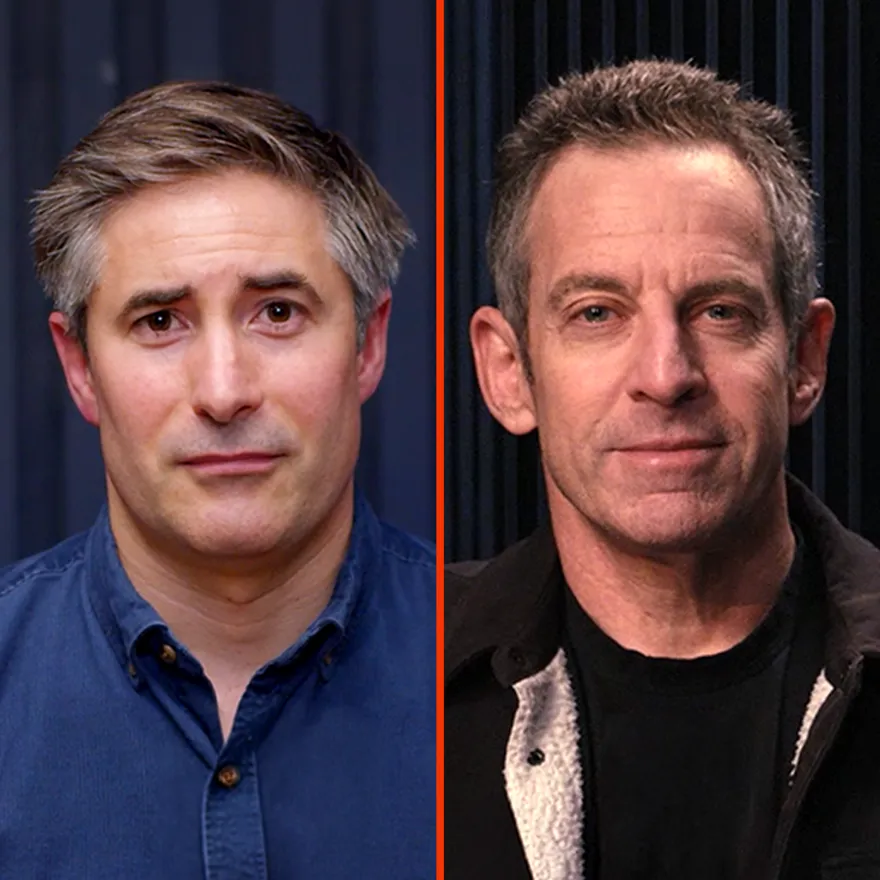

This is a preview of the Shortform summary of the Nov 25, 2026 episode of the Making Sense with Sam Harris
Sign up for Shortform to access the whole episode summary along with additional materials like counterarguments and context.
1-Page Summary
Trump's Personality and Decision-Making Process
Jonathan Swan describes Donald Trump's daily routine as dramatically unstructured compared to previous presidents. Trump wakes early for phone calls and television before arriving at the Oval Office around 10:30 a.m., while his afternoon meetings blur together without clear boundaries. This contrasts sharply with George W. Bush and Barack Obama, who operated with schedules planned in 10- or 15-minute increments.
Swan explains that Trump frequently constructs his own reality that contradicts evidence, insisting on its validity despite facts. The 2020 election aftermath exemplifies this: Trump insisted without evidence that the election was stolen, dominating conversations with aides who felt his repeated claims bordered on what they described as "almost a species of mental disorder."
Rather than following complex long-term strategy, Swan notes that Trump's behavior is largely reactive and improvisational. Using the example of how Trump would handle a scandal, Swan describes his typical playbook: deny everything, double down, and accuse the media of lying. Trump often approaches each day responding to whatever comes his way rather than following a predetermined agenda.
Trump's Political Resilience Despite Scandals
Swan recalls Jared Kushner's analogy comparing Trump to a tie-dye shirt where spills go unnoticed, versus Mike Pence as a crisp white shirt where any stain is catastrophic. This captures how Trump's public persona absorbs repeated scandals without fatal political damage. Sam Harris notes that behavior which would have caused "reputational suicide" for Barack Obama or other presidents barely registers as scandalous for Trump.
However, Swan emphasizes that Trump's survival comes at a cost. He's "very, very unpopular" on a historic level, with support among independent voters having "completely collapsed." During recent midterms, every segment of the MAGA coalition showed defections, including men, young people, non-college educated whites, and Hispanics. Trump's political viability now relies on a narrower but intensely loyal core.
The Cult-Like Dynamics of Trump's Inner Circle
Swan and Harris describe an environment where joining Trump's staff requires extreme displays of loyalty at the cost of personal integrity. Harris notes that cabinet meetings resemble authoritarian spectacles where accomplished officials publicly feign belief in Trump's false statements. Swan explains that staff face a choice: interrupt Trump and risk their standing, or let his reality persist.
Beyond loyalty, Swan observes that Trump's closest advisers sometimes view him with quasi-supernatural perceptions, especially after surviving January 6, multiple indictments, conviction, and an assassination attempt where a bullet missed him by an inch. Some staff see Trump as a man of destiny through whom "God's will" might be operating. Swan highlights that unlike first-term officials who would challenge Trump, second-term advisers are more prone to defer, wondering whether Trump's instincts are "almost magic."
Corruption and Self-Enrichment as Political Issues
Swan explains that during recent elections, voters facing inflation and high gas prices began noticing the ostentatious displays of wealth by Trump and his family, including lavish parties at Mar-a-Lago. This visible enrichment stood in stark contrast to ordinary Americans' financial struggles. Voters in states like Kansas and Iowa felt Trump's tariffs hurt farmers and rural economies while the Trump family's wealth increased "by orders of magnitude."
Swan states that this period marked corruption rising as a major political concern. The intersection of personal economic hardship and visible Trump family self-enrichment broke through existing political messaging, becoming an undeniable issue that resonated across party lines.
Journalism and Inside Access
Swan describes how 11 consecutive years covering Trump enabled deep penetration into Trump's world that brief reporting cannot match. He and Maggie Haberman built trust-based relationships over years, working seven days a week to develop an extensive source network. Harris remarks that their sustained effort produced an extraordinary record and book.
However, Swan notes that reporting during Trump's first term was easier due to internal warfare and factional conflicts that led to abundant leaks. The second term saw more unity and discipline, making inside reporting significantly harder and requiring greater journalistic skill. Swan emphasizes that information sources are complex, with varied motivations, and access is often gained when sources inadvertently reveal the extraordinary by treating it as routine.
1-Page Summary
Additional Materials
Counterarguments
- While Trump's daily routine is described as unstructured, some supporters argue that his flexible approach allowed him to respond quickly to emerging issues and crises, rather than being constrained by a rigid schedule.
- The claim that Trump constructs his own reality is contested by those who believe he is expressing genuine skepticism about the political and media establishment, reflecting the views of many of his supporters.
- Trump's improvisational style is seen by some as a strength, enabling adaptability and resilience in a rapidly changing political environment.
- The idea that Trump's scandals would have been fatal for other presidents overlooks the fact that political resilience can be influenced by broader cultural and partisan dynamics, not just individual behavior.
- While Trump's core base is described as narrower, it remains one of the most energized and mobilized in modern American politics, which has proven effective in primary and general elections.
- The assertion that joining Trump's staff requires sacrificing personal integrity is disputed by former officials who claim they served out of genuine belief in his policies and leadership.
- Some advisers and supporters view Trump's survival through crises as a testament to his political skill and determination, rather than attributing it to quasi-supernatural perceptions.
- The focus on Trump family wealth and corruption is countered by arguments that similar scrutiny has not always been applied to other political families, and that Trump's business background was well-known to voters.
- The negative impact of tariffs on farmers is debated, with some arguing that the long-term goal was to secure better trade deals for American agriculture, and that some sectors benefited from subsequent agreements.
- The effectiveness of Swan's reporting is acknowledged, but some critics argue that access journalism can lead to bias or overreliance on insider perspectives, potentially missing broader public sentiment.
Actionables
- You can experiment with setting flexible boundaries in your daily schedule to see how unstructured time affects your productivity and stress levels; for example, try leaving a few hours each day unscheduled and notice whether you become more reactive or creative, then adjust based on what you learn about your own habits.
- A practical way to test the impact of loyalty versus personal integrity in group settings is to observe your reactions when a friend or colleague makes a claim you know is false; try responding with silent support, open disagreement, or neutral curiosity, and reflect on how each approach affects your relationships and self-perception.
- You can track your reactions to public figures’ scandals by keeping a simple journal of your initial feelings and whether repeated exposure changes your opinion over time; this helps you notice if you become desensitized or more critical, and lets you decide how you want to respond to similar situations in your own circles.

Get access to the context and additional materials
Trump's Personality and Decision-Making Process
Trump's Unstructured Routine Contrasts With Previous Presidents
Trump's Unsupervised Mornings: Early Wake-Up, Phone Calls, Tv, in Office by 10:30 Am
Jonathan Swan describes Donald Trump's mornings as essentially unstructured. Trump wakes up quite early, spends time taking numerous phone calls, and watches television. During these hours, he is unsupervised in his residence before coming down to the Oval Office around 10:30 a.m., depending on the day.
His Schedule Blurs Meetings, Creating an Impression of Unlimited Availability
In the afternoon, Trump's meetings often lack clear boundaries. The meetings blend into one another, with people coming and going, creating the impression of a continuous, rolling meeting rather than a set schedule. Foreign leaders and other visitors sometimes come away with the impression that Trump has unlimited time, as he frequently shifts topics to personal interests such as renovations, architectural models, or various species of animals, instead of strictly business or policy.
Bush and Obama's 10-15 Minute Incremental Scheduling Styles
By contrast, previous presidents like George W. Bush and Barack Obama operated with highly structured days. Their schedules were meticulously planned in 10- or 15-minute increments, a system confirmed by senior officials from both administrations. Trump’s approach represents a dramatic departure from these disciplined routines.
Trump Shapes Reality With Non-linear Thinking
Trump's Mindset Creates a Reality That Contradicts Facts, Insisting On Its Validity Despite Evidence
Swan states that much of what Trump says is not true and frequently crosses into fantasy. Trump constructs and maintains his own reality, persisting in his version even if it contradicts evidence. Throughout his political career, he tries to force actual events to match his narrative.
2020 Election Approach Shows Alternate Reality Narrative Gained Political Power, Aiming to Return Him To White House Despite Lack of Evidence
The aftermath of the 2020 election is a clear example. Trump insisted, without evidence, that the election was stolen from him. Close aides recounted that in early 2021, this subject dominated his conversations, with Trump convinced he could be returned to the presidency that summer. Some aides even felt that his constant repetition of these claims bordered on a mental disorder.
Aides Suggested His Repeated False Election Claims Might Indicate a Mental Disorder
Aides found Trump's repeated insistence on a stolen election and return to power so persistent that they described it as "almost a species of mental disorder," highlighting the extremes of his reality-bending beh ...
Here’s what you’ll find in our full summary
Trump's Personality and Decision-Making Process
Additional Materials
Counterarguments
- An unstructured routine does not necessarily equate to inefficiency; some leaders thrive in less rigid environments and can be highly productive through flexibility and adaptability.
- Blurring meeting boundaries and allowing for open-ended discussions can foster creativity, encourage input from a wider range of voices, and lead to unexpected solutions.
- Shifting topics to personal interests during meetings may help build rapport with visitors and create a more relaxed, personable atmosphere, which can be advantageous in diplomacy or negotiations.
- Previous presidents’ highly structured schedules may have limited spontaneity or the ability to quickly pivot to emerging issues.
- Constructing and maintaining a personal narrative is a common political strategy used by many leaders to inspire followers and shape public perception, even if it sometimes diverges from strict factual accuracy.
- Responding to immediate news cycles and improvising can be seen as a form of agility, allowing a leader to address rapidly changing circumstances more effectively than a rigid, pre-set agenda.
- Some supporters argue that Trump’s approach resonates with a significant portion of the ...
Actionables
- you can experiment with a boundary-free afternoon by blocking off a few hours where you let meetings, conversations, or tasks flow into each other without strict time limits, noticing how this affects your creativity, relationships, and sense of availability.
- a practical way to observe your own reality-construction is to keep a daily log where you write down your version of events and then compare it to outside sources or feedback, helping you spot where your perceptions diverge from others and decide if you want to adjust.
- you can try a ...

Get access to the context and additional materials
Trump's Political Resilience Despite Scandals
Donald Trump's political career is marked by a resilience to scandal that is unusual among public figures. Despite a series of actions and controversies that would typically derail others, Trump maintains a substantial and loyal base that insulates him from the reputational consequences faced by most politicians.
Trump Survives Scandals That Would Ruin Other Public Figures
Jonathan Swan recalls a telling analogy from Jared Kushner, who compared Trump to a tie-dye shirt: spill some wine on it, and no one notices or cares. He contrasted this with Mike Pence, likened to a crisp white shirt, where any stain is immediately catastrophic. This analogy shows how Trump’s public persona can absorb repeated scandals without sustaining fatal political damage.
Trump himself has acknowledged this phenomenon, famously claiming, "I could shoot someone on Fifth Avenue and my people would still be with me." This captures the unwavering loyalty of his core supporters.
Sam Harris highlights the disparity in public reaction by referencing Barack Obama. He notes that minor missteps would have caused "reputational suicide" for Obama or any other president. Harris gives the example of Trump’s floated idea of selling a $100,000 per month subscription service for access to market-moving tweets—behavior so audacious it barely registered as a scandal in Trump’s political ecosystem, yet would have generated enormous backlash if attempted by another public figure.
Swan asserts that the frequency and volume of Trump-related scandals over the years have created an environment where such incidents lose their potency. What traditionally would have been disqualifying for other politicians repeatedly fails to significantly damage Trump.
Trump's Unpopularity Clashes With His Base's Loyalty, Showing His Survival Relies On a Narrower but Intensely Loyal Coalition
However, Trump's survival in the politi ...
Here’s what you’ll find in our full summary
Trump's Political Resilience Despite Scandals
Additional Materials
Clarifications
- Donald Trump has faced numerous scandals, including allegations of sexual misconduct, investigations into his business practices, and controversies over his handling of classified information. His impeachment trials, one related to abuse of power and obstruction of Congress, and another for incitement of insurrection, are notable political controversies. Additionally, his administration's policies and rhetoric often sparked public and media backlash. These incidents contributed to a highly polarized public perception.
- The "tie-dye shirt" analogy means Trump’s public image is already so colorful and chaotic that new scandals don’t stand out or cause much harm. The "crisp white shirt" represents a politician with a clean, untarnished reputation, where any mistake is highly visible and damaging. This contrast highlights how Trump’s supporters overlook or accept controversies that would ruin others. It explains why Trump can survive scandals that would end other careers.
- The quote comes from a 2016 campaign rally where Trump claimed his supporters' loyalty was so strong that even if he committed a serious crime, like shooting someone on Fifth Avenue in New York City, they would still support him. This statement was meant to illustrate the depth of his base's unwavering allegiance. It highlights how his political support often remains intact despite controversies or misconduct. The phrase has since become a symbol of his unique political resilience.
- Jonathan Swan is a prominent political journalist known for his in-depth reporting on U.S. politics. Jared Kushner is a senior advisor and son-in-law to Donald Trump, influential in Trump's administration and political strategy. Sam Harris is a neuroscientist, philosopher, and author who often comments on politics and society. Their opinions matter because they offer insights from journalism, insider political experience, and intellectual analysis.
- Barack Obama was widely seen as a politician with a carefully cultivated image of integrity and decorum. Minor missteps or controversies could damage this image because his political brand relied heavily on public trust and a reputation for ethical behavior. Unlike Trump, Obama did not have a base that tolerated or overlooked scandals, making any negative incident more harmful. This contrast highlights how different political personas affect the impact of scandals.
- The "$100,000 per month subscription service for access to market-moving tweets" refers to a proposal where Donald Trump would charge a high fee for exclusive early access to his tweets that could influence financial markets. Such tweets can cause rapid changes in stock prices or investor behavior. Charging for this access raises ethical and legal concerns about insider trading and market manipulation. It is controversial because it blurs the line between public communication and private financial advantage.
- The "MAGA coalition" refers to the group of voters who strongly support Donald Trump's "Make America Great Again" agenda. It includes various demographic segments such as men, young people, non-college educated whites, and Hispanics who align with Trump's policies and rhetoric. This coalition is significant because it forms the core base that sustains Trump's political influence despite broader unpopularity. Changes in these demographic groups' support can greatly impact Tru ...
Counterarguments
- While Trump’s base is loyal, his resilience to scandal is not unique in global politics; other leaders have also maintained support despite controversies.
- The analogy of the tie-dye shirt may oversimplify the complex reasons for Trump’s continued support, which include policy positions, media dynamics, and broader political polarization.
- Some scandals have had tangible consequences for Trump, such as electoral losses in the 2018 midterms and 2020 presidential election, suggesting that his resilience has limits.
- The claim that Trump’s support among all demographic groups is eroding may not fully account for fluctuations in polling or the possibility of support rebounding in different political contexts.
- The assertion that Trump’s support among independents has "completely collapsed" may be overstated, as p ...

Get access to the context and additional materials
The Cult-Like Dynamics of Trump's Inner Circle
Jonathan Swan and Sam Harris discuss the inner workings of Donald Trump’s circle of advisers and staff, describing an environment defined by loyalty, self-abasement, religious overtones, and intensifying cult-like behaviors influenced by external events.
Trump's Environment Runs On Cult-Like Loyalty Systems Where Self-Abasement Is the Price of Staff Admission
Swan and Harris observe that joining Trump’s staff requires more than mere support; it demands an ongoing display of extreme loyalty, often at the cost of personal integrity. Harris describes cabinet meetings as resembling authoritarian spectacles, where each official is expected to offer an increasingly exaggerated demonstration of loyalty. These meetings can reach the surreal, with accomplished figures publicly pretending to believe Trump’s false statements—such as asserting Ukraine started the war with Russia, simply because Trump declared it.
Staff are routinely pressured to suppress contradictions and accept Trump’s claims, no matter their veracity. Swan explains that anyone working for Trump is confronted with a choice: interrupt him and risk their standing or let his reality persist, occasionally attempting to steer him subtly but ultimately adapting to his worldview. Those who refuse to participate in this self-abasement rarely last long in his orbit. Harris notes that many Trump aides, with significant prior achievements, adopt abject postures, publicly feigning belief in implausible assertions, demonstrating they have been selected precisely for their capacity to abase themselves and accept the unbelievable.
Trump's Inner Circle Saw Him With Quasi-Supernatural and Religious Perceptions During the Interregnum Between Terms
Beyond raw loyalty, Swan notes that Trump’s closest advisers sometimes ascribe an almost supernatural quality to his resilience, especially during the tumultuous period between presidential terms. After surviving events such as January 6, multiple indictments, his conviction, and even an assassination attempt—as one bullet missed him by an inch—some staff view Trump as a man of destiny, through whom “God’s will” might be operating.
The pressures of investigation and legal threats—subpoenas, federal agents arriving at staff homes—create a bunker mentality that further cements allegiance. Many staff feel bonded to Trump not just out of duty but through a shared sense of beleaguerment and fate. ...
Here’s what you’ll find in our full summary
The Cult-Like Dynamics of Trump's Inner Circle
Additional Materials
Counterarguments
- Loyalty and deference to a leader are common in many political administrations, not unique to Trump; similar dynamics have been observed in other presidencies and high-level organizations.
- Public displays of support and unity in cabinet meetings are a longstanding tradition in U.S. politics and can serve to project stability and confidence to the public.
- Staff adaptation to a leader’s worldview is a typical feature of hierarchical organizations, where alignment with leadership is often necessary for effective policy implementation.
- The perception of a leader as resilient or destined is not exclusive to Trump; historical figures across the political spectrum have inspired similar sentiments among their followers.
- Legal pressures and external threats can foster group cohesion and loyalty in any organization, not just in Trump’s circle.
- The shift from ...
Actionables
- you can keep a daily log of situations where you feel pressured to agree with someone in authority, then privately note your true thoughts and compare how often you suppress your own perspective to maintain harmony or position
- By tracking these moments, you’ll become more aware of when you’re sacrificing your integrity for group acceptance or perceived loyalty, and you can spot patterns in your behavior over time.
- a practical way to test your boundaries is to set a personal rule to gently question at least one implausible claim or directive from a leader or peer each week, then observe the reactions and your own comfort level
- This helps you practice balancing loyalty with honesty, and you’ll learn how to navigate disagreement without risking relationships or roles unnecessarily.
- you can create a private “belief re ...
Get access to the context and additional materials
Corruption and Self-Enrichment as Political Issues
Trump's Wealth and Family Gains Resonated With Voters in Economic Hardship خلال Recent Elections
Jonathan Swan explains that during recent elections, many voters experienced direct economic hardship, facing inflation, high gas and diesel prices, and declining purchasing power. As a result, these voters, who may have previously dismissed concerns about corruption or self-enrichment, began to notice the ostentatious displays of wealth by Trump and his family. Examples include lavish parties at Mar-a-Lago and internationally connected perks such as flights from Qatar. Swan notes that this visible enrichment stood in stark contrast to the financial struggles ordinary Americans faced, making it impossible to ignore.
Polling: Trump's Tariffs Hurt Agriculture and Workers, Boost Family Wealth, Highlight Corruption
Voters in traditionally Republican states like Kansas and Iowa felt the negative impact of Trump's tariffs, which specifically hurt farmers and rural economies. At the same time, conflict-driven spikes in diesel prices added more economic strain. Swan points out that while these communities were struggling, the Trump family's wealth visibly increased "by orders of magnitude." This disparity was reflected in polling data, where corruption emerged as a top-tier issue for voters.
Wealth Accumulation of Trump Family via Government Service Highlights Self-Dealing Concerns
Trump family enrichment during government service highlighted patterns of self-dealing, with visible signs that their wealth soared during Trump’s presidency. The contrast between the suffering of ordinary Americans and the conspicuous accumulation of wealth by Trump and his family fueled growing concerns about corruption.
Corruption Rose As a Major P ...
Here’s what you’ll find in our full summary
Corruption and Self-Enrichment as Political Issues
Additional Materials
Counterarguments
- While some voters were concerned about the Trump family's visible wealth, others viewed Trump's prior business success and wealth as evidence of his ability to manage the economy, rather than as a sign of corruption.
- Accusations of self-enrichment and corruption have been common against many politicians from both major parties, and some voters may see such claims as politically motivated rather than uniquely significant in Trump's case.
- The impact of tariffs and economic policies is complex, and some supporters argue that tariffs were intended to protect American industries and jobs, even if there were short-term negative effects for certain sectors.
- Polling data on corruption as a top-tier issue can vary by region and demographic, and not all voters prioritized corruption over other issues such as immigration, crime, or cultural concer ...
Actionables
- you can track and compare the visible wealth displays of public officials with local economic indicators to spot patterns of disparity and self-enrichment
- Keep a simple log of news stories or social media posts showing politicians’ luxury purchases, events, or perks, and note any changes in your community’s cost of living, job losses, or business closures. Over time, look for connections between these trends to better understand how visible enrichment might relate to local economic hardship.
- a practical way to make corruption a visible, everyday issue is to create a personal “corruption impact diary”
- Each week, jot down any news or rumors about government officials’ financial gains alongside your own experiences with rising prices, job insecurity, or reduced services. This helps you connect national stories of self-enrichment to your daily life and keeps the issue top of mind when discussing politics with others.
- you can use public campaign finance a ...
Get access to the context and additional materials
Journalism and Inside Access
Swan and Haberman Gained Exceptional Access to Trump's Inner Circle Through Persistent Coverage and Deep Source Networks
Jonathan Swan describes the value of spending 11 consecutive years covering Donald Trump, emphasizing that such longevity enables a deep penetration into Trump’s world that brief, surface-level reporting cannot match. Swan notes that while many journalists “parachute” into Trump’s orbit for a short time and then leave, he and Maggie Haberman built trust-based relationships over years of daily coverage. Working seven days a week, Swan and his colleagues consistently developed sources, eventually building an extensive network for inside-the-room reporting. Swan points out that the widespread impact of their book arose from scarcity: few journalistic works have offered such intimate reporting. This, he argues, demonstrates that sustained effort yields unique journalistic value. Sam Harris remarks that Swan and Haberman have given even more time and effort than most to produce an extraordinary record and book, highlighting the exceptional insight sustained coverage provides.
Internal Factional Warfare Led To More Leaks in Trump's First Term; Second Term Required Harder Work for Inside Reporting
According to Swan, reporting during Trump’s first term was easier due to internal warfare and factional conflicts. Officials frequently leaked information to settle scores, which made scoops abundant and easy to collect—Swan likens it to just walking around with a “slop bucket” to catch the constant flow of information. In contrast, the second term saw more unity and discipline within Trump’s inner circle. This internal cohesion made inside reporting significantly harder and required greater diligence and skill to obtain valuable information. Swan notes that what was once re ...
Here’s what you’ll find in our full summary
Journalism and Inside Access
Additional Materials
Clarifications
- Jonathan Swan is an Australian-American journalist known for his in-depth political reporting, especially on the Trump administration. Maggie Haberman is a Pulitzer Prize-winning journalist for The New York Times, recognized for her extensive coverage of Donald Trump. Both are respected for their ability to secure exclusive information and provide detailed, insider perspectives on U.S. politics. Their work has significantly shaped public understanding of Trump's presidency.
- "Inside-the-room reporting" refers to journalism based on information gathered directly from private meetings or discussions where key decisions are made. It provides firsthand insights into the thoughts, strategies, and dynamics of influential people, rather than relying on secondhand accounts. This type of reporting is valuable because it reveals the true context and motivations behind public actions and statements. It often uncovers details that would otherwise remain hidden from the public eye.
- Donald Trump served as the 45th President of the United States from 2017 to 2021, which is his first term. Internal factional warfare refers to conflicts and power struggles among different groups or individuals within his administration. These disputes often led to leaks as officials tried to undermine rivals or influence decisions. Trump’s second term, which would have started in 2021 if re-elected, did not occur, but the text refers hypothetically to a more unified inner circle in that period.
- Internal factional warfare creates rivalries where officials use leaks as weapons to undermine opponents. These leaks serve as strategic tools to gain advantage or retaliate within the power struggle. The resulting flow of information is frequent and less controlled, making it easier for reporters to obtain scoops. In contrast, a unified group restricts leaks to maintain a cohesive front.
- Sources leak information for various reasons, including personal gain, ideological beliefs, or to influence public opinion. Leaks can serve as a way to expose wrongdoing, settle internal disputes, or shift power dynamics within an organization. Journalists rely on these leaks to uncover hidden or sensitive information that would otherwise remain secret. Understanding the source's motivation helps reporters assess the reliability and context of the leaked information.
- "Abnormal events becoming normalized" means that unusual or extreme actions and behaviors are seen as ordinary by those inside Trump's circle. Over time, repeated exposure to these events makes them seem less shocking or noteworthy to insiders. This shift in perception can cause insiders to underestimate the significance or impact of what is happening. For outsiders, these same events appear extraordinary and alarming.
- Sam Harris is a well-known author, philosopher, and podcast host who often comments on politics and society. His mention here serves as an external validation of Swan and Haberman’s journalistic efforts. Harris highlights the exceptional dedication required for their in-depth reporting on Trump. He is not directly involved in the reporting but provides a respected perspective o ...
Counterarguments
- Long-term access journalism can risk compromising objectivity, as reporters may become too close to their sources and less willing to challenge them.
- Deep relationships with insiders can sometimes lead to selective reporting, where journalists may withhold damaging information to maintain access.
- The scarcity of intimate reporting may reflect editorial choices or institutional barriers, not just a lack of effort or persistence by other journalists.
- Reliance on leaks, especially during periods of internal conflict, can result in reporting that is shaped by the agendas of warring factions rather than objective truth.
- Exceptional access does not guarantee accuracy or completeness; insiders may still manipulate journalists or provide self-serving accounts.
- The normalization of abnormal events by insiders can also affect journalist ...


Get access to the context and additional materials


Create Summaries for anything on the web
Download the Shortform Chrome extension for your browser