

#500 — The Playing Animal
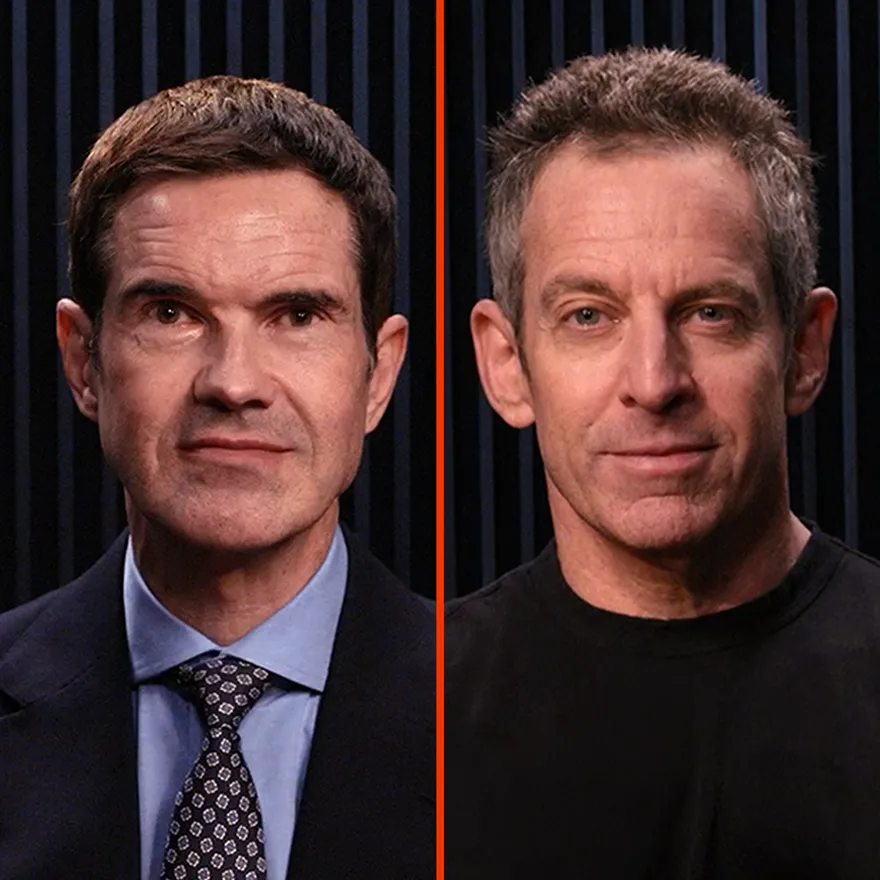
In this episode of Making Sense with Sam Harris, comedian Jimmy Carr and Sam Harris explore comedy's role in culture, covering everything from its educational value to its function as a social ritual that creates connection and tests cultural boundaries. Carr argues that comedy teaches practical skills everyone can benefit from and that it will become more valuable as AI advances, precisely because it depends on human presence and reciprocal emotion that machines cannot replicate.
The conversation extends beyond comedy to examine AI's implications for humanity, existential threats from technologies like gain-of-function research and nuclear weapons, and cultural issues including mental health pathologization and social media's fragmenting effects. Carr and Harris also discuss the ethics and mechanics of stand-up comedy, particularly crowd work, exploring how comedians navigate the delicate balance between mockery and genuine harm within comedy's unique ethical framework.

This is a preview of the Shortform summary of the Oct 30, 2026 episode of the Making Sense with Sam Harris
Sign up for Shortform to access the whole episode summary along with additional materials like counterarguments and context.
1-Page Summary
Comedy: Craft, Connection, and Cultural Boundaries
In a conversation between Jimmy Carr and Sam Harris, the two explore comedy's deeper purpose and cultural role beyond simple entertainment.
Broadening Comedy Education
Carr observes that modern culture has shifted from participatory arts to passive spectatorship, arguing that comedy should be taught in schools alongside music. He explains that comedy teaches valuable skills—writing, organizing thoughts, public speaking, and confidence—that benefit everyone regardless of whether they pursue it professionally. Harris notes that "amateur" means "one who loves," emphasizing that direct participation transforms appreciation into richer emotional engagement.
Purpose of Comedy: Connection and Social Boundaries
Carr identifies comedy's ultimate purpose as human connection, not just laughter. Stand-up creates collective feeling and bonds people together, with audience feedback shaping performances in real time. Harris highlights that people laugh significantly more in groups than alone, making comedy a communal ritual. Carr credits comedians like Lenny Bruce and George Carlin for revealing vulnerabilities that make audiences feel more human.
Comedy also expands the "Overton window" of acceptable discourse by normalizing taboo subjects through laughter. Carr describes jokes as "pleasure bribes" that reward the brain for considering uncomfortable ideas. He references Daniel Kahneman's work, explaining that comedy moves the brain from fast pattern recognition to deeper, more effortful thought, offering [restricted term] rewards through laughter.
AI's Advance Underscores Comedy's Human Essence
Carr argues that AI cannot truly understand humor because it lacks the capacity for live, reciprocal human connection. As AI advances, he predicts society will increasingly prize authentically human experiences—precisely those aspects that machines cannot replicate. Comedy, rooted in shared presence and mutual emotion, will become even more valuable in an AI-dominated world.
Artificial Intelligence: Capabilities, Risks, and Implications For Humanity
The conversation shifts to AI's unprecedented capabilities and the complex questions it raises about humanity's future.
AI Differs From Past Innovations
Unlike the Manhattan Project, where scientists considered halting work due to catastrophic risks, AI researchers advance rapidly despite uncertain worst-case scenarios. Progress moves so quickly that public comprehension and caution lag far behind, creating unique dangers unlike any previous technological leap.
AI as Humanity's Godlike Creation
Carr observes that humans have created AI in their own image, with traits reminiscent of divinity—omnipotent, omniscient, and residing "in the cloud." He draws parallels to religious ritual, noting how people offer their attention to devices seeking validation, creating what philosopher Byung-Chul Han calls a "digital Amen."
The Fourth Humiliation to Human Self-Conception
Carr identifies AI as the fourth major blow to human exceptionalism, following Copernicus (displacing humanity from the cosmic center), Darwin (showing continuity with animals), and Freud (revealing the limits of rational thought). AI now proves humans are not the smartest thinkers in the room.
AI's Paradox and Future Impact
While AI easily masters complex abstract tasks like chess, simple embodied tasks like walking remain computationally challenging. Carr notes that chess, four thousand years old, yields to AI, but walking, rooted in forty million years of evolution, remains elusive. He warns that AI's trajectory raises fundamental questions about labor, meaning, and purpose, requiring society to reorganize around psychological and spiritual well-being rather than necessity-driven toil.
Existential Threats
Harris and Carr discuss mounting existential risks made more dangerous by technological change and cultural amnesia.
Civilization-Ending Risks From Research Without Safeguards
Both note that despite living with nuclear annihilation capacity for over 80 years, society has essentially forgotten the threat. Carr highlights "broken arrows"—lost nuclear weapons—with the U.S. missing around six warheads and the former Soviet Union an unknown number. They criticize gain-of-function research, with Carr likening it to "looking for a gas leak with a lit match." Harris argues that modern genome sequencing and rapid vaccine development eliminate any justification for engineering dangerous pathogens, yet labs continue storing eradicated diseases like polio with poor oversight.
Rapid Change Compresses Crisis Response
The modern news cycle makes major events vanish within 48 hours, hindering social processing and learning. Harris recalls how the Las Vegas mass shooting faded rapidly, illustrating how little room exists for reflection or accountability. This acceleration undermines historical perspective and weakens governance structures needed to respond to crises.
Pandemics: Predictable Yet Poorly Managed
Harris insists pandemics were mathematically inevitable—like repeatedly rolling a die and eventually seeing every outcome—yet preventive infrastructure remained inadequate. The combination of natural pandemic risk and human-engineered threats from gain-of-function research creates a worst-case scenario of increased disease probability with reduced response time.
Cultural Pathology: Mental Health, Social Media, News Cycles
Reframing Mental Health as Individual Problems
Carr criticizes how society has pathologized normal emotions, coding worry and sadness as anxiety and depression. This over-medicalization frames mental health as personal failure rather than addressing structural societal problems. He notes that everyone now claims ADHD, which Harris adds is amplified by platforms like TikTok, trivializing genuine conditions and reducing access to resources for those who truly need them.
Social Media's Fragmentation
Despite promises of greater connectivity, social media has created psychological isolation by fragmenting shared media experiences into personalized ecosystems. This shift from collective consciousness to isolated experience has eroded belonging and interconnectedness, making people less socially porous.
Destabilizing Effects of Rapid Change
The acceleration of events compresses their significance into shorter timeframes, causing them to disappear before people can process their meaning. This undermines people's ability to perceive patterns and find stable meanings, leaving them psychologically destabilized.
Comedy Ethics & Mechanics
Crowd Work as High-Wire Ethical Act
Harris observes that Carr's crowd work is a risky comedic mode requiring careful ethical negotiation. Carr describes it as "friendship at scale," where mockery resembles intimacy between friends rather than contempt. He likens his role to "a Loki, like a trickster god" presiding over a space where unsayable things are given permission. This ritualized humiliation is a consensual game requiring constant social awareness to avoid genuine harm.
Equal Opportunity Offense
Carr maintains comedy's legitimacy by being an "equal opportunity offender." If jokes disproportionately target one group, audiences might interpret comedy as advancing an ideological agenda. He notes that offense-free comedy is impossible: "If you take away anything that could be offensive to anyone, you are left with juggling and someone would complain that the balls are the wrong color."
Dual Skill Sets in Performance
Harris highlights stand-up's dual nature: rehearsed routines refined for precise effect, and improvisational crowd work demanding acute social reading. Carr's scripted material is "worked out to the word," while crowd interaction introduces spontaneity and non-reproducible moments, keeping each show dynamic and unique.
Intention and Context Define Ethics
Carr and Harris agree comedy operates under distinct ethical standards. Carr explains his aim isn't kindness but large-scale laughter: "I wasn't trying to be kind. I was trying to get massive laughs for a minute for two hours." Audience members consent to comedy's unique ethics when entering, engaging with aggressive humor as a collective social game where ordinary constraints are lifted in service of mutual understanding and communal connection.
1-Page Summary
Additional Materials
Counterarguments
- While teaching comedy in schools could offer benefits, curriculum time is limited and other subjects may be prioritized for broader educational value or practicality.
- Not everyone finds participation in comedy enriching; some may experience anxiety or discomfort, making it less universally beneficial than suggested.
- The assertion that comedy's ultimate purpose is human connection may overlook other valid purposes, such as social critique, catharsis, or personal expression.
- Group laughter can sometimes reinforce exclusionary or harmful norms, rather than always fostering positive communal bonds.
- The claim that AI cannot understand humor may be challenged by recent advances in AI-generated comedy and humor recognition, which, while imperfect, demonstrate some level of machine engagement with humor.
- The idea that society will increasingly value human experiences as AI advances is speculative; some trends suggest people may also embrace AI-mediated entertainment.
- While AI research does pose risks, it has also led to significant benefits in fields like medicine, logistics, and accessibility, which are not addressed in the text.
- The analogy between AI and religious ritual may not resonate with all, as many people use technology pragmatically without attributing spiritual significance.
- The framing of AI as a "blow to human exceptionalism" may not be universally accepted; some view AI as a tool that enhances human capability rather than diminishes it.
- The focus on existential risks from nuclear weapons and gain-of-function research may understate the effectiveness of existing safeguards and international agreements.
- The critique of over-medicalization of mental health may risk minimizing the experiences of those with clinically significant conditions who benefit from diagnosis and treatment.
- The claim that social media only fragments and isolates may overlook its role in fostering new forms of community and support for marginalized groups.
- The assertion that offense-free comedy is impossible may not account for successful comedians and comedic traditions that avoid controversial or offensive material.
- The idea that comedians must be "equal opportunity offenders" to maintain legitimacy is debated; some argue that comedy can be ethical and impactful without targeting vulnerable groups.
Actionables
- You can transform passive entertainment into participatory connection by inviting friends or family to co-create short comedic skits or jokes based on everyday experiences, then perform them for each other in casual settings like dinner or video calls, focusing on shared laughter and vulnerability rather than perfection.
- A practical way to deepen communal bonds and emotional engagement is to set up a recurring "laughter log" with a small group, where each person briefly shares something that made them laugh or feel connected during the week, highlighting how humor and shared stories foster belonging and help process challenging topics.
- You can counteract the isolating effects of fragmented media by organizing a weekly "comedy watch-and-reflect" night with others, where everyone watches the same stand-up set or comedic scene together (in person or virtually), then discusses not just what was funny, but how the humor addressed taboos, built connection, or shifted perspectives on current events.
Get access to the context and additional materials
Comedy: Craft, Connection, and Cultural Boundaries
Broaden Comedy Education to Boost Participation and Connection
Jimmy Carr observes a cultural error stemming from the shift from participatory arts in small communities to a modern focus on professionalized entertainment. He laments the idea that people have become spectators rather than participants. Carr points out that the opposite of a spectator is not “professional,” but “participant” or even “amateur”—with “amateur” derived from the root meaning “one who loves.” Sam Harris echoes this, noting that amateurs are those who actually love the thing, not those seeking to monetize it.
Carr argues that comedy, like music, should be taught in schools to build valuable skills unrelated to becoming a professional standup. He explains that comedy teaches people to write and order their thoughts, communicate, and gain confidence in public speaking—skills that are universally useful. Most people, he says, never get to hear their own authentic voice, and performing even a short comedy set allows people to experience joy and self-expression, much like learning a musical instrument enhances appreciation for live performances.
Carr likens the enjoyment of performing comedy to the deeper appreciation a musician feels when witnessing talented performers. Direct participation transforms one's appreciation into a much richer emotional engagement, making spectating a more informed and resonant experience.
Purpose of Comedy: Beyond Laughter to Human Connection & Social Boundaries
Carr reflects on the core aim of comedy—not just laughter but connection. Stand-up, he explains, is a ritual of collective feeling, and the real job of a comedian is to connect people. While laughter is the proximate reason for comedy, the ultimate reason is forging bonds among people, whether in large audiences or intimate settings. Audiences offer instant feedback, shaping the act live and forcing comedians to write or abandon material based on genuine reactions.
Sam Harris highlights the special value comedians bring by creating shared experiences that bind people together through laughter. The experience is collective: research shows people laugh significantly more often in groups than alone, which is why family viewing events—such as Christmas television specials—hold such communal significance. Carr recalls life before modern technology: families and communities would gather and connect through storytelling and shared entertainment, a practice mirrored today mainly in comedy shows.
Carr also credits comedians like Lenny Bruce, George Carlin, and Richard Pryor for revealing vulnerabilities and personal truths. Their work makes audiences feel more human—often articulating the “neglected thoughts” of the audience, turning overlooked observations into moments of collective recognition and catharsis.
Comedy Expands Discourse By Exploring Forbidden Topics
Comedy doesn't just reflect the social order—it helps reshape it. Carr discusses the “Overton window,” the spectrum of acceptable social or political discourse, explaining that comedy can expand this window by normalizing sensitive or taboo subjects through laughter. He notes that after a joke lands, people often feel more open to discussing previously forbidden topics in their private lives.
Jokes, Carr says, function as “pleasure bribes”—offering the brain a reward for considering ideas it might otherwise avoid. Comedy pushes boundaries and marks th ...
Here’s what you’ll find in our full summary
Comedy: Craft, Connection, and Cultural Boundaries
Additional Materials
Counterarguments
- While participatory arts have declined in some areas, many communities still maintain vibrant amateur and participatory traditions in music, theater, and storytelling.
- The distinction between amateur and professional is not always clear-cut; many people participate in arts both for love and for supplemental income or recognition.
- Adding comedy to school curricula may not be universally beneficial, as not all students are comfortable with public performance or humor, and resources are limited.
- The analogy between learning comedy and learning a musical instrument may not hold for everyone, as comedic performance often requires a different set of social and emotional skills.
- Some individuals may find deep appreciation for comedy as spectators without ever performing themselves, suggesting that participation is not necessary for meaningful engagement.
- The primary purpose of comedy for some audiences may simply be entertainment or escapism, rather than connection or collective feeling.
- Not all comedians or comedic performances foster connection; some may be divisive or alienating, depending on content and audience.
- Laughter and social bonding can occur in many contexts outside of comedy, such as sports, music, or shared rituals.
- Modern technology has also enabled new forms of communal entertainment and connection, such as online communities and virtual events, which can foster social bonds.
- The idea that comedians uniquely reveal personal truths or vulnerabilities may overlook similar roles played by writers, poets, or other artists.
- Comedy can sometimes reinfor ...
Actionables
- You can invite a few friends or family members to a regular “comedy circle” at home, where everyone takes turns sharing funny stories from their week or making up lighthearted jokes, focusing on participation and connection rather than performance quality; this builds communal bonds and lets everyone experience the joy of being an amateur.
- A practical way to deepen your appreciation for live comedy and human connection is to attend local open-mic nights as a group and, after the show, discuss which jokes made you feel most connected to the performer or audience, exploring together why certain moments felt more authentic or emotionally resonant.
- You ca ...
Get access to the context and additional materials
Artificial Intelligence: Capabilities, Risks, and Implications For Humanity
Artificial intelligence (AI) brings capabilities and risks unlike any prior technological leap, raising complex questions about safety, human identity, and society’s future.
Ai Differs From Past Innovations as Developers Advance Without Clear Risk Thresholds, Despite Uncertain Catastrophic Outcomes
Unlike projects of the past, such as the Manhattan Project, where scientists considered halting work due to the possibility of catastrophic atmospheric ignition, AI researchers are advancing without claiming a low probability of catastrophic outcomes. Developers proceed rapidly, even as the worst-case scenarios remain deeply uncertain. With nuclear technology, society eventually forgot the dangers or at least allowed the risk to fade in memory, but in the case of AI, progress moves so quickly that public comprehension and caution lag far behind the technology’s advance.
Ai Embodies Humanity's Urge to Create Gods In Its Image, With Large Language Models Showing Divine Traits
Reflecting on the nature of AI, Jimmy Carr observes that humanity may not have been made in God's image, but the desire for a godlike being persists. Now, humans have created AI in their own image, with traits reminiscent of divinity. Large language models (LLMs) are described as omnipotent and omniscient, capable of miraculous feats, and their power resides "in the cloud." Carr draws religious analogies, likening this to the biblical Tower of Babel and suggesting history is cyclical, as humanity repeats its urge to connect with the transcendent.
Digital engagement with AI mimics religious ritual. Carr points out that people spend hours each day offering their attention to their devices, seeking feedback and validation—a "digital Amen," as termed by philosopher Byung-Chul Han. Likes and notifications perform a function similar to religious affirmation, making modern technology an object of quasi-religious devotion.
Ai, the Fourth Blow to Human Self-Conception After Copernicus, Darwin, and Freud
Carr identifies AI as the fourth major humiliation to human self-conception, following Copernicus, Darwin, and Freud: Copernicus displaced humanity from the center of the universe, Darwin showed humans’ continuity with animals, and Freud revealed that rational thought does not control human behavior. Now, AI is set to prove that humans are not the smartest thinkers in the room. This succession of humiliations strips away human exceptionalism, forcing a new reckoning with our nature and role in the cosmos.
Ai Paradox: Complex Tasks Easy, Simple Tasks Hard
AI’s abilities reveal a fundamental paradox. While complex tasks such as playing chess, a game with thousands of years of history, are now easily mastered by AI, simple tasks that involve embodied experience—like walking or folding a shirt—remain co ...
Here’s what you’ll find in our full summary
Artificial Intelligence: Capabilities, Risks, and Implications For Humanity
Additional Materials
Clarifications
- During the Manhattan Project, scientists feared that detonating an atomic bomb might ignite the Earth's atmosphere, causing a global catastrophe. This concern arose because nuclear reactions release immense energy, and some theorized it could trigger uncontrolled fusion in atmospheric nitrogen. Extensive calculations later showed this scenario was extremely unlikely, allowing the project to continue. This historical example illustrates how early scientific caution addressed potential existential risks.
- The Tower of Babel is a biblical story where humanity's unified language was confused by God to stop their attempt to build a tower reaching heaven. This story symbolizes human ambition to reach or challenge the divine. The analogy suggests AI represents a modern attempt to create godlike power or knowledge, risking unintended consequences. Like Babel, AI development may lead to confusion, division, or loss of control over human creations.
- Large language models (LLMs) are advanced AI systems trained on vast amounts of text to generate human-like language. They predict and produce words based on patterns learned from data, enabling tasks like writing, translation, and conversation. Their "omnipotence" and "omniscience" metaphors highlight their broad knowledge and versatile abilities, though they do not possess true understanding or consciousness. LLMs operate by statistical inference, not by reasoning or awareness.
- Copernicus showed that Earth is not the center of the universe, challenging humanity's special place in the cosmos. Darwin revealed that humans evolved from other species, undermining the idea of human uniqueness. Freud demonstrated that much of human behavior is driven by unconscious forces, not rational thought. Each discovery reduced humanity's perceived exceptionalism and forced a reevaluation of our identity.
- The left brain is traditionally associated with logical, analytical, and language-based thinking, handling tasks like math and reasoning. The right brain is linked to creativity, spatial awareness, and physical coordination, managing tasks involving movement and sensory experience. Embodied tasks require physical interaction with the environment, relying on sensory and motor skills. AI excels at left-brain tasks because they involve clear rules and data, while right-brain tasks are harder due to their reliance on complex, real-world physical experience.
- Digital engagement mimics religious rituals by creating habitual, repetitive actions that provide emotional comfort and a sense of belonging. Likes and notifications act as social rewards, reinforcing behavior similarly to how religious affirmations strengthen faith and community ties. This feedback loop triggers [restricted term] release, fostering attachment and dependence on digital interaction. Philosopher Byung-Chul Han calls this phenomenon a "digital Amen," highlighting its role in modern social validation.
- "Necessity-driven toil" refers to work done primarily out of economic or survival necessity rather than personal choice or fulfillment. Historically, most human labor was essential for meeting basic needs like food, shelter, and safety. This necessity shaped cultural norms, social roles, and individual identities around work and productivity. As AI reduces the need for such labo ...
Counterarguments
- While AI introduces new risks, many of its capabilities build incrementally on prior technologies, and some experts argue that the risks are not categorically unprecedented but rather extensions of longstanding technological challenges.
- Unlike the Manhattan Project, AI development is highly decentralized and open, allowing for broader oversight and input from diverse stakeholders, which can mitigate some risks.
- Public understanding of AI is increasing rapidly, with widespread media coverage, educational initiatives, and policy discussions narrowing the gap between technological progress and societal comprehension.
- The analogy between AI and divinity may be seen as metaphorical rather than literal; many users and developers do not attribute godlike qualities to AI and instead view it as a tool with clear limitations.
- The religious or ritualistic framing of digital engagement may not resonate with all users, as many interact with technology pragmatically without ascribing spiritual significance to their behavior.
- AI's challenge to human exceptionalism is debated; some argue that AI complements rather than replaces human intelligence, and that human creativity, empathy, and moral reasoning remain distinct.
- The comparison of future mandatory work to slaver ...

Get access to the context and additional materials
Existential Threats (Nuclear Weapons, Gain-Of-function Research, Pandemics)
Sam Harris and Jimmy Carr discuss how the world faces mounting existential risks, made even more dangerous by rapid technological change and cultural amnesia. They explore how civilization-ending dangers arise from scientific progress unchecked by responsible governance, the dangers posed by lapses in memory and attention, and the predictable threat of pandemics made worse by both natural processes and human intervention.
Civilization-Ending Risks Arise From Scientific Research Without Adequate Safeguards or Accountability
Missing U.S. and Former Soviet Nuclear Warheads Pose Persistent "Broken Arrow" Threat Civilization Ignores Instead Of Addressing
Harris notes that since the Manhattan Project, humanity has lived with the capacity for self-annihilation for over 80 years. He points out that although this threat is omnipresent, most people have essentially forgotten about it in their daily lives. Carr adds that "broken arrows"—military terminology for lost nuclear weapons—are a particular worry, with the U.S. missing around six nuclear warheads and an unknown number unaccounted for from the former Soviet Union, after submarine disasters and other mishaps. Both agree that society collectively chooses to ignore these unresolved and uncontained nuclear threats.
Gain-Of-function Research Raises Pandemic Risks but Is Justified to Understand Viruses, Undermining the Head Start From Rapid Vaccine Development and Genome Sequencing
Carr criticizes gain-of-function research—efforts to engineer or enhance viruses to study their properties—likening it to "looking for a gas leak with a lit match." Harris explains the scientific rationale: virologists wanted to proactively identify the most dangerous pathogens, similar to putting up wanted posters for criminals, to potentially be better prepared. However, Harris argues that this justification no longer holds. Today's scientific advances allow genome sequencing in less than 24 hours and vaccine development over a weekend, eliminating the supposed advantage of handling and enhancing live, potentially pandemic-capable viruses. He warns that the continued manipulation and storage of these organisms, especially once they escape containment, could lead to disaster.
Retention of Eradicated Diseases Like Polio in Labs, Justified by Vague Scientific Necessity, Suggests Poor Oversight
Carr points out the troubling fact that, even after eradicating diseases like polio, laboratories choose to keep viable samples. He questions the wisdom and oversight behind such decisions, suggesting weak governance and unclear accountability, leaving the world at risk for accidental or intentional release.
Rapid Tech and Cultural Shifts Compress Crisis Response Timelines
News Cycles Shrink, Making Major Events Vanish Within 48 Hours, Hindering Social Processing and Learning
Carr and Harris highlight how the modern news cycle is so short that catastrophic or major events—such as the largest mass shooting in U.S. history in Las Vegas or the Clinton-Lewinsky scandal—barely remain in the public consciousness for more than 48 hours. Harris recalls how the Las Vegas mass shooting faded rapidly, noting he cannot recall the shooter’s name, illustrating how little room there is for reflection, societal learning, or accountability.
Rapid Change Creates Conditions Where Inflection Points Arise Without Historical Perspective or Time for Cultural Responses and Governance S ...
Here’s what you’ll find in our full summary
Existential Threats (Nuclear Weapons, Gain-Of-function Research, Pandemics)
Additional Materials
Clarifications
- "Broken arrow" is a U.S. military term for an accident involving nuclear weapons that does not create a risk of nuclear war. It includes incidents like the accidental loss, theft, or detonation of a nuclear weapon. These events are classified to manage and mitigate the risks without escalating military conflict. The term highlights the danger of unsecured or lost nuclear arms outside of active combat situations.
- Gain-of-function research involves altering organisms, often viruses, to enhance their abilities, such as transmissibility or virulence, to better understand potential threats. It is controversial because it risks creating pathogens that could accidentally escape labs or be misused, potentially causing pandemics. Critics argue the dangers outweigh the benefits, while proponents claim it helps prepare defenses against future outbreaks. The debate centers on balancing scientific knowledge gains with biosecurity and ethical concerns.
- Gain-of-function research involves modifying viruses to understand how they might evolve to become more dangerous. The "wanted posters" analogy means scientists try to identify potential threats before they emerge, like creating profiles of dangerous criminals. This helps in developing vaccines and treatments proactively. However, it carries risks if enhanced viruses escape containment.
- Genome sequencing determines the exact order of nucleotides in a virus's genetic material, revealing its structure and mutations quickly. Rapid vaccine development uses this genetic information to design vaccines that target specific viral components, speeding up production. These technologies allow scientists to understand and respond to viruses without creating enhanced or modified versions through gain-of-function research. Thus, they reduce the need to manipulate live viruses to predict or prepare for potential threats.
- After a disease is eradicated in the wild, samples of the virus are often kept in high-security labs for research and vaccine development. This retention helps scientists study the virus to prevent future outbreaks or bioterrorism threats. However, storing these pathogens carries risks of accidental release or misuse, which could cause new infections. Strict safety protocols and oversight are essential to minimize these dangers.
- The shrinking news cycle means major events get less public attention over time, reducing collective memory. This limits society’s ability to reflect, debate, and learn from crises. Without sustained focus, policymakers struggle to develop effective responses or reforms. Consequently, governance becomes reactive rather than proactive, weakening long-term solutions.
- An inflection point is a moment when significant change accelerates or shifts direction in technology or culture. It marks a critical threshold where old systems or norms become inadequate, requiring new responses. These points often lead to rapid, unpredictable developments that challenge existing governance and social structures. Understanding them helps societies prepare for and adapt to transformative events.
- The analogy means that just as rolling a die many times will eventually produce every number, repeated exposure to risk mak ...
Counterarguments
- While the threat of nuclear weapons is real, the lack of daily public attention does not necessarily equate to a lack of ongoing governmental oversight, international treaties, or technical safeguards.
- The number of "broken arrow" incidents is extremely small relative to the total number of nuclear weapons produced, and there is no public evidence that any lost warheads have ever been recovered or used by malicious actors.
- Gain-of-function research has contributed to scientific understanding of viral mechanisms, vaccine development, and preparedness for emerging infectious diseases, as recognized by many in the scientific community.
- The justification for gain-of-function research is debated; some experts argue that direct study of pathogens remains necessary to anticipate viral evolution and develop countermeasures.
- Advances in genome sequencing and vaccine technology are significant, but may not fully replace the need for laboratory-based research on live pathogens, especially for understanding transmission, mutation, and immune response.
- The retention of eradicated pathogens like polio in secure laboratories is supported by the World Health Organization and other health authorities as a precaution in case of re-emergence or bioterrorism.
- Short news cycles may reflect increased information flow and public access to diverse sources, rather than a simple loss of societal ...

Get access to the context and additional materials
Cultural Pathology: Mental Health, Social Media, News Cycles
Mental Health and Psychological Distress Reframed As Individual Issues Instead of Societal Structural Problems
Jimmy Carr criticizes how society has pathologized normal human emotions, stating that feelings once regarded as common—such as worry and sadness—are now quickly diagnosed as anxiety and depression. He argues this trend leads to an over-medicalization of typical experiences and frames mental health as a personal failure. Carr contends that this privatization shifts the burden of mental well-being from societal structures to individuals, failing to address larger, collective issues with how society is arranged to support emotional well-being.
Carr points out that by coding anxiety and depression as purely personal problems, society neglects its responsibility to create supportive environments, and instead blames individuals for their distress. He questions whether society is structured in ways that are conducive to positive mental health.
Both Carr and Sam Harris note the proliferation of ADHD, autism, and Tourette's diagnoses in popular culture, especially among youth. Carr highlights how everyone now seems to claim ADHD, which is detrimental to those who genuinely live with the condition, as it reduces access to necessary resources and trivializes serious illnesses. Harris adds that platforms like TikTok have contributed to trends where many claim conditions like Tourette's without medical basis, further diluting the attention given to genuine cases.
Social Media Fragmented Common Media Experiences, Creating Psychological Isolation Despite Promises of Connection
The shift from shared media experiences to fragmented, personalized online ecosystems has transformed how individuals form social connections. Social media platforms promised greater connectivity but have instead contributed to psychological isolation. Where previously people would engage in collective experiences with a shared sense of meaning and community, now attention is individualized.
This evolution from coll ...
Here’s what you’ll find in our full summary
Cultural Pathology: Mental Health, Social Media, News Cycles
Additional Materials
Clarifications
- "Pathologizing" means treating normal emotions as if they are medical problems or diseases. It involves labeling everyday feelings like sadness or worry as mental disorders. This can lead to unnecessary medical treatment and stigma. The concept critiques how society may overuse psychiatric diagnoses for typical human experiences.
- Over-medicalization refers to treating normal human emotions or behaviors as medical problems requiring diagnosis and treatment. It can lead to unnecessary use of medication or therapy for experiences that may be natural responses to life situations. This trend risks ignoring social or environmental factors that contribute to distress. It may also stigmatize individuals by labeling common feelings as disorders.
- Mental health as a "personal failure" means individuals are blamed for their struggles, implying they lack strength or willpower. Viewing mental health as a societal issue recognizes that social conditions—like poverty, discrimination, and lack of support—contribute significantly to psychological distress. This perspective calls for systemic changes to improve environments rather than only treating individuals. It shifts responsibility from individuals alone to collective social structures.
- "Privatization" of mental well-being means treating mental health issues as problems that only individuals must solve on their own. It ignores the role of social, economic, and environmental factors that affect mental health. This approach reduces public responsibility and support for mental health services. It places blame on individuals rather than addressing systemic causes.
- Structural support systems refer to the social, economic, and institutional frameworks that help maintain individuals' mental well-being. These include access to healthcare, stable employment, education, community networks, and social safety nets. When these systems function well, they reduce stressors that contribute to mental health issues. Weak or absent support systems increase vulnerability to psychological distress by leaving individuals without necessary resources or stability.
- The rise in ADHD, autism, and Tourette's diagnoses is partly due to increased awareness and better diagnostic criteria. Media and social platforms have popularized these conditions, sometimes leading to self-diagnosis without professional evaluation. Greater social acceptance has encouraged more people to seek diagnoses and support. However, this can blur the distinction between clinical cases and normal behavioral variations.
- TikTok's algorithm promotes short, engaging videos that often feature personal stories about medical conditions. This can lead to viral trends where users mimic symptoms without medical diagnosis, spreading misinformation. The platform's format encourages oversimplification of complex disorders, making it easier for users to identify with or claim these conditions. As a result, genuine cases may be overshadowed, complicating public understanding and resource allocation.
- Shared media experiences refer to situations where large groups of people consume the same content simultaneously, such as watching a popular TV show or news broadcast together. Fragmented, personalized online ecosystems occur when algorithms tailor content individually, so people see different information based on their preferences and behavior. This personalization reduces common cultural touchpoints and shared conversations. As a result, social cohesion and collective understanding can weaken.
- Collective consciousness refers to the shared beliefs, ideas, and moral attitudes that operate as a unifying force within a society. It creates a sense of belonging an ...
Counterarguments
- Increased awareness and diagnosis of mental health conditions can lead to better access to treatment and support for those who genuinely need it.
- The recognition of anxiety and depression as medical conditions has helped reduce stigma and encouraged people to seek help rather than suffer in silence.
- Some emotional experiences previously dismissed as "normal" may have been under-recognized sources of suffering that benefit from clinical attention.
- The rise in diagnoses of ADHD, autism, and Tourette's may reflect improved understanding and identification of neurodiversity, rather than mere overdiagnosis or trivialization.
- Social media platforms have enabled marginalized groups and individuals with rare conditions to find community and support that was previously inaccessible.
- Personalized online experiences can allow individuals to connect with niche communities and interests, fosterin ...


Get access to the context and additional materials
Comedy Ethics & Mechanics: Crowd Work & Audience Interaction
Crowd Work Is a High-Wire Ethical Act, Balancing Trust and Barbed Humor Through Implicit Negotiation of Acceptable Aggression and Shared Humor
Sam Harris observes that Jimmy Carr’s approach invites hecklers and relies heavily on crowd work, which is a different and risky comedic mode compared to a prepared set. Carr recounts how, for years, heckling was met with standard putdowns—fun but formulaic. Today, crowd work has evolved for Carr into a nuanced, high-wire act where the success hinges on how the interaction is framed. He describes his role as “friendship at scale,” emphasizing that mockery in this improvisational social ritual resembles intimacy between friends, not contempt. The audience recognizes they are in a safe, playful space where laughter and a sense of belonging override malice, even as the jokes are barbed. Carr says, “You can be really funny with someone and a bit scathing... but that's kind of what friends do. And there's an intimacy to that.”
This ritualized humiliation, according to Carr, is a consensual game—“like a Loki, like a trickster god” presiding over a room where unsayable things are given space and everyone is permitted to laugh at them. Comedians must balance authentic, sometimes harsh humor with constant social awareness to avoid genuine harm or crossing invisible boundaries that rupture the implicit trust with the audience.
Comedy's Permission Structure Requires Comedians to Offend Equally Across Groups to Avoid Perceived Ideological Agendas
Carr asserts that to maintain the legitimacy and broad appeal of his comedy, he must be an “equal opportunity offender.” If his jokes disproportionately targeted one demographic or topic, audiences might interpret his comedy as advancing a personal or ideological agenda, shifting from humor to propaganda or personal contempt. The principle is that consistent aggression signals to audiences that no group is being unfairly singled out, and all targets are legitimate in the shared space of comedy.
He notes that if one attempts to make comedy offense-free, it becomes impossible: “If you take away anything that could be offensive to anyone, you are left with juggling and someone would complain that the balls are the wrong color.” The equal-offense approach protects comedy’s permission structure—a tacit rule that jokes, even when aggressive, are jokes rather than statements of real-world hostility.
Distinction Between Rehearsed Material and Crowd Work Reflects Dual Skill Sets That Engage Audiences and Create Novel Moments
Sam Harris highlights the dual nature of stand-up comedy: a well-rehearsed routine refined for precise comedic effect, and live crowd work that demands improvisation and acute social reading. Carr’s routine might be “worked out to the word,” but crowd work brings unpredictability and novelty. The scripted set is the backbone, ensuring timing and maximum comedic impact, while crowd interaction introduces spontaneity and unique, non-reproducible moments. This blend o ...
Here’s what you’ll find in our full summary
Comedy Ethics & Mechanics: Crowd Work & Audience Interaction
Additional Materials
Clarifications
- Crowd work is when a comedian interacts spontaneously with audience members, creating humor from real-time exchanges. Unlike a prepared set, which is scripted and rehearsed, crowd work relies on improvisation and quick thinking. It requires reading the room and adapting to unpredictable responses. This makes each performance unique and dynamic.
- A "high-wire act" is a metaphor from circus performance where a person walks on a tightrope, requiring great balance and skill. In comedy, it means performing with a delicate balance between humor and potential offense. The comedian must carefully navigate audience reactions to avoid failure or harm. It emphasizes risk and precision in live interaction.
- "Implicit negotiation of acceptable aggression" means the comedian and audience silently agree on how far jokes can push boundaries without causing real harm. This understanding develops from social cues, past experiences, and the comedian's tone. It allows comedians to use sharp humor while maintaining audience trust and comfort. If the comedian crosses this unspoken line, the audience may react negatively, breaking the connection.
- Loki is a figure from Norse mythology known as a trickster god who disrupts norms through cleverness and mischief. In comedy, referencing Loki highlights the role of the comedian as a boundary-pusher who challenges social rules playfully. This comparison emphasizes that comedians create a space where taboo or "unsayable" topics can be explored humorously without real harm. The trickster archetype embodies the balance of chaos and order, much like crowd work in comedy.
- "Ritualized humiliation" in comedy refers to a structured, socially accepted form of teasing where the comedian playfully mocks audience members. This interaction is consensual because the audience understands and agrees to the comedic context, allowing for sharp humor without real harm. It functions as a social game by creating a shared experience where both comedian and audience participate in a temporary, playful power dynamic. This dynamic strengthens group bonding through laughter and mutual recognition of the joke's boundaries.
- The concept of an "equal opportunity offender" means a comedian targets multiple groups rather than singling out one, preventing perceptions of bias. This approach helps maintain audience trust by showing no group is unfairly attacked. It also preserves comedy as a space for shared humor rather than political or personal attacks. Without this balance, jokes risk being seen as promoting harmful stereotypes or agendas.
- The "permission structure" in comedy is an unspoken social contract allowing comedians to explore sensitive or taboo topics without being taken as genuinely hostile. It relies on the audience's understanding that jokes are meant to provoke laughter, not to express real-world prejudice or harm. This structure requires comedians to balance offense evenly to avoid appearing biased or agenda-driven. It creates a safe space where aggressive humor is tolerated as part of the comedic performance.
- Comedy operates within a unique social contract where the goal is to provoke laughter, not kindness or agreement. Unlike everyday interaction, it permits exaggerated, provocative statements that are understood as performance, not personal attacks. Audience members implicitly consent to this by choosing to attend, accepting the temporary suspension of normal social rules. This creates a safe space for exploring taboo or sensitive topics through humor without real-world consequences.
- A "category error" occurs when something is judged by criteria that do not apply to its nature. In comedy, judging jokes by kindness standards mistakes the purpose of comedy, which is to provoke laughter, not to be kind. This error confuses the intent and context of humor with everyday social expectations. Thus, expecting kindness in comedy misplaces the criteria for evaluation.
- The comparison means that, ...
Counterarguments
- The claim that audiences always implicitly consent to barbed humor or ritualized humiliation may overlook individuals who feel pressured to conform or who experience discomfort but do not feel empowered to object.
- The idea that “offending equally” across groups preserves legitimacy does not account for the fact that some groups may be more vulnerable or historically marginalized, making “equal offense” potentially unequal in impact.
- Framing mockery as “friendship at scale” may not resonate with all audience members, especially those who do not share the comedian’s sense of intimacy or who are unfamiliar with the social norms of comedy clubs.
- The assertion that offense-free comedy is impossible may ignore the existence of successful comedians and comedic traditions that minimize or avoid offense while still generating laughter.
- The analogy between come ...
Get access to the context and additional materials

 1-Page Summary
- Comedy: Craft, Connection, and Cultural Boundaries
- Artificial Intelligence: Capabilities, Risks, and Implications For Humanity
- Existential Threats (Nuclear Weapons, Gain-Of-function Research, Pandemics)
- Cultural Pathology: Mental Health, Social Media, News Cycles
- Comedy Ethics & Mechanics: Crowd Work & Audience Interaction
Create Summaries for anything on the web
Download the Shortform Chrome extension for your browser
