

#497 — The Confidence Man
In this episode of Making Sense with Sam Harris, documentary filmmaker Alex Gibney discusses his film examining Elon Musk's career and character. Gibney describes the challenges of creating the documentary, particularly Musk's refusal to participate and the reluctance of those close to him to speak on record. Harris and Gibney explore a central question: whether Musk's recent behavior represents a fundamental change in character or simply an amplification of traits that were always present.
The conversation covers Musk's genuine accomplishments in revolutionizing the electric vehicle and space industries while also examining documented instances of self-mythologizing and misleading claims—from his disputed founder status at Tesla to exaggerated predictions about autonomous driving capabilities. Harris and Gibney grapple with the tension between entrepreneurial optimism and deliberate fraud, comparing Musk's pattern of overpromising to other Silicon Valley figures and considering where the line between visionary confidence and deception actually lies.
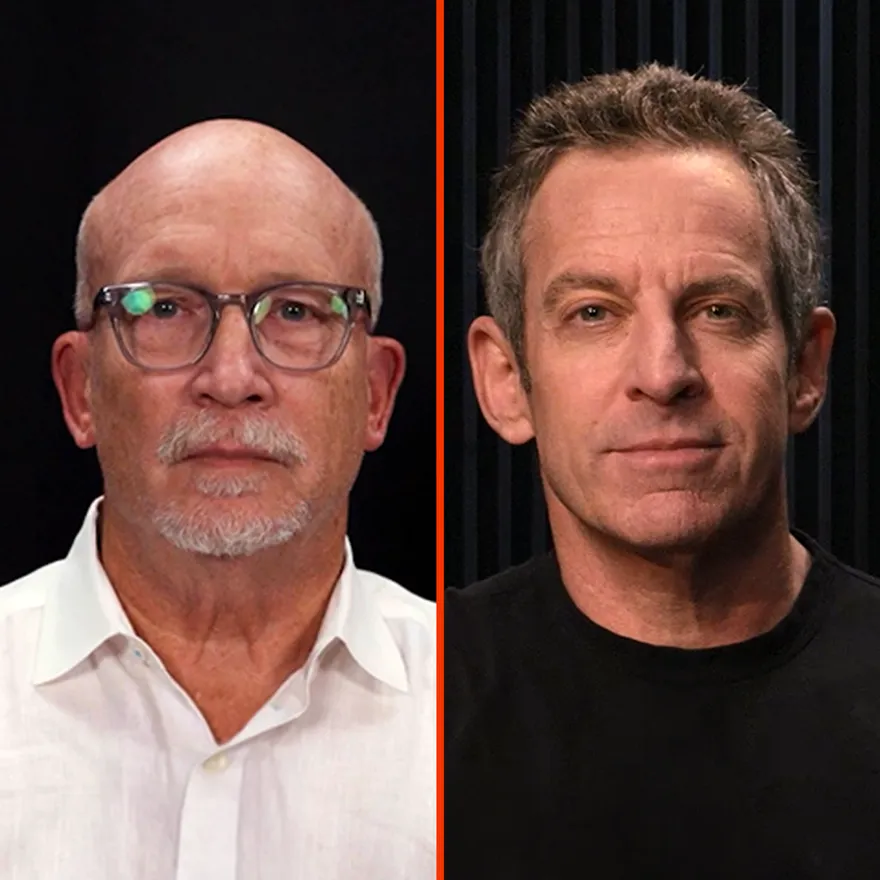

This is a preview of the Shortform summary of the Oct 9, 2026 episode of the Making Sense with Sam Harris
Sign up for Shortform to access the whole episode summary along with additional materials like counterarguments and context.
1-Page Summary
Making the Documentary: Format, Challenges, and Limited Access to Elon Musk
Alex Gibney's documentary on Elon Musk faced significant challenges, particularly due to Musk's refusal to participate and widespread reluctance from those close to him to speak on record.
Theatrical Release Over Series Format
Gibney explains that releasing the documentary as a theatrical film rather than a series was driven by a desire for deeper audience immersion, despite Sam Harris noting the difficulty of condensing such a vast topic. Production extended beyond its initial spring 2024 completion when HBO encouraged Gibney to capture Musk's political involvement following Trump's assassination attempt, resulting in a two-hour version for fall 2024 festivals.
Musk's Hostility and Alternative Techniques
Despite producer Jesse Dieter's sincere interview requests—having worked with Musk on two previous documentaries—Musk dismissed the project as a "hit piece" and publicly called Gibney a "douche" on Twitter. Drawing on experience with uncooperative subjects like Elizabeth Holmes, Gibney relied on investigative techniques and secondary accounts. Many people close to Musk, regardless of their personal stance, refused on-camera interviews fearing lawsuits or career damage. Gibney found that even Silicon Valley leaders maintained a code of silence, with Reid Hoffman being a rare exception. Even Musk's friends who might have supported him saw participating as a betrayal.
Elon Musk: Change or Reveal Of Negative Traits?
Did Musk Evolve or Were His Traits Always Present?
Gibney recounts a recurring debate: did Musk radically change, or did his personality simply become exaggerated? Initially drawn to Musk as an intellectually compelling maverick, Gibney began noticing troubling signs even before the Twitter acquisition, such as the "Pedo Guy" incident. He describes seeing Musk as a fame-seeking, narcissistic bully, though uncertain whether these traits were new or merely intensified.
Harris provides another perspective. During their private friendship, Harris didn't observe Musk as a bully or narcissist. At the time of his interview for the film, Harris believed Twitter's algorithms and Musk's expanding fame had "deranged" him into someone "unrecognizable." However, upon watching Gibney's assembled footage from that same period, Harris concedes that evidence of Musk's negative traits had been publicly visible even when he hadn't personally witnessed them.
Twitter Acquisition as Turning Point
Both participants identify Musk's Twitter acquisition and right-wing alignment as a key turning point. The scale of his wealth and direct engagement with social algorithms appears to have amplified aspects of his personality that were previously constrained or only partially visible.
Elon's Genuine Accomplishments in Transforming Industries
Despite Musk's self-mythologizing and dishonesty, Harris and Gibney acknowledge his remarkable entrepreneurial achievements through recruiting exceptional engineers, crafting compelling missions, and demonstrating extraordinary fundraising ability.
Recruiting Talent and Revolutionary Products
Musk's ability to galvanize talented individuals around ambitious projects proved foundational. Harris notes that Tesla transformed electric vehicles from novelty to aspirational products, with the Model S sedan outperforming luxury sports cars and capturing consumer imagination. SpaceX achieved overwhelming dominance, putting more satellites into orbit than the rest of humanity combined.
Market Impact Despite Recent Shifts
Gibney credits Musk's determination and personal investment as crucial to both companies becoming market leaders despite industry skepticism. While several companies have recently surpassed Tesla—partly due to Musk taking his "eye off the ball"—his impact in accelerating electric vehicle development globally remains transformative. Gibney stresses that while Musk was rarely first with innovations, his impact in moving industries forward "in a massively successful way" is undeniable.
Elon's Frauds: False Founder Status, Battery Swap Con, Autonomy Exaggeration
False Co-Founder Claims
Gibney clarifies that Musk didn't found Tesla—the true founders are Martin Eberhard and Mark Tarpening, who invented the essential battery architecture and business model. Musk joined as an investor after this technology was developed, but grew uncomfortable not receiving credit as a founder. He forced Eberhard out and settled a legal dispute on condition that Eberhard would agree in documentation that Musk was a founder. This contractual falsification marks the start of Musk's self-mythologizing strategy, constructing a narrative to justify Tesla's high stock valuations based on future promises rather than current fundamentals.
Battery Swap Demonstration
Musk's battery-swap demo was primarily a tactic to qualify for California subsidies, Gibney explains. Despite claims that swap stations would roll out across California, almost no actual swaps occurred. The system was impractical—Tesla batteries weigh over a thousand pounds and aren't designed for regular swapping. Industry insiders recognized this as "reward hacking" to access subsidies with little intention to deploy the technology at scale.
Autonomy Predictions
Musk repeatedly claimed Tesla would deliver full autonomy within set timeframes, such as by the end of 2017. Harris notes that while entrepreneurial optimism often involves ambitious timelines, Musk's confident predictions routinely went unmet. Though Musk has since admitted persistent over-optimism, the repeated failures raise questions about whether his actions constitute deliberate fraud or hopeful misjudgment.
The Tension Between Optimism and Fraud
Visionary Confidence vs. Deliberate Fraud
Harris contrasts Musk with Elizabeth Holmes, noting that Holmes operated a fictional enterprise with a largely nonfunctional device. In contrast, Musk has delivered tangible, industry-altering products despite documented instances of fraudulence and overstatement. Gibney notes that unlike Holmes, Musk's industrial impact is real and world-changing, making fraud claims not fit neatly.
Pattern of Confident But Delayed Predictions
Harris observes that Musk repeatedly makes confident predictions for capabilities far from achievable on the announced timeline, though not technologically impossible long-term. This raises persistent tension: are these failed predictions genuine miscalibration or conscious deceit? Musk often admits his timelines were overly optimistic only in retrospect, suggesting he believed in his goals' attainability. Harris and Gibney reveal a persistent gray area in modern entrepreneurial culture—Musk delivers unlike Holmes, but his entrepreneurship is entwined with a culture of overpromising, leaving the distinction between believing too much in your vision and actively misleading others as the unresolved core of his story.
1-Page Summary
Additional Materials
Counterarguments
- While Musk refused to participate in the documentary, it is not uncommon for high-profile figures to decline involvement in critical projects, and this does not necessarily indicate guilt or wrongdoing.
- The decision to release the documentary as a theatrical film rather than a series may have limited the depth and nuance possible in exploring Musk's complex story.
- The inclusion of Musk's political involvement following Trump's assassination attempt could be seen as tangential to his business achievements and may risk conflating unrelated issues.
- Musk's public dismissal of the documentary as a "hit piece" could be interpreted as a response to perceived bias, especially given Gibney's reputation for critical documentaries.
- Relying heavily on secondary accounts and investigative techniques, rather than direct interviews, may introduce bias or incomplete perspectives.
- The reluctance of Musk's associates to participate on record could be attributed to standard corporate confidentiality practices, not solely fear of lawsuits or retaliation.
- The debate over whether Musk's negative traits were always present or became exaggerated is inherently subjective and may not account for the complexity of personality development under intense public scrutiny.
- Gibney's shift from admiration to criticism of Musk could reflect the filmmaker's evolving perspective rather than objective changes in Musk's behavior.
- Harris's change in perception after viewing documentary footage may be influenced by selective editing or narrative framing.
- The characterization of Musk's Twitter acquisition as a "turning point" may overlook other factors influencing his public persona and business decisions.
- Musk's self-mythologizing is not unique among entrepreneurs; many business leaders craft narratives to inspire investors and employees.
- While Musk was not the original founder of Tesla, his contributions as an investor and leader were instrumental in scaling the company.
- Legal settlements regarding founder status are not uncommon in startups and do not necessarily equate to fraud.
- The battery-swap demonstration, while ultimately impractical, did showcase technical possibilities and was not illegal.
- Overly optimistic timelines are common in technology development and do not always constitute deliberate deception.
- Musk's pattern of ambitious predictions is shared by many innovators and can be seen as a motivational tool rather than evidence of fraud.
- Comparing Musk to Elizabeth Holmes may be misleading, as the scale and reality of their respective achievements differ significantly.
- The distinction between visionary optimism and overpromising is a common challenge in entrepreneurial culture and not unique to Musk.
- Musk's impact on electric vehicles and space exploration is widely acknowledged, even by critics, and his leadership has driven significant industry advancements.
Actionables
- you can practice evaluating the credibility of public figures by creating a personal fact-checking log for any bold claims or promises you encounter in news, social media, or advertising, noting the original claim, your research process, and what you discover about its accuracy or exaggeration; this helps you spot patterns of overstatement or myth-making in everyday life.
- a practical way to understand the impact of narrative control is to write two short bios about yourself: one that highlights only your achievements and ambitions, and another that includes your setbacks, mistakes, or times you changed direction; compare how each version shapes your self-image and how others might perceive you, helping you recognize the power and limits of self-mythologizing.
- you can experiment with setting ambitious personal goals and tracking your predictions about when you’ll achieve them, then honestly reviewing the outcomes and your optimism; this helps you notice if you tend to overpromise to yourself or others, and lets you adjust your approach to goal-setting and communication.


Get access to the context and additional materials
Making the Documentary: Format, Challenges, and Limited Access to Elon Musk
The creation of Alex Gibney’s documentary on Elon Musk faced unique challenges in both format and access, especially due to Musk’s refusal to participate and the reluctance of those close to him to speak on record.
Gibney Opted For Theatrical Release Over a Series, Enabling Deep Immersion but Requiring Tough Editorial Choices
Alex Gibney explains that the decision to release the documentary as a theatrical film rather than a multi-part series was driven by a desire to immerse the audience more deeply. Gibney states this was always the original plan, even though the story could have supported a longer format. Sam Harris notes the difficulty of condensing such a vast topic into a feature-length film, and Gibney acknowledges the editorial challenges this presented.
Production Extended After Trump's Assassination Attempt Prompted Hbo to Capture Elon's Political Involvement
Production on the documentary was nearly complete by spring 2024, with a two-hour version ready for fall festival release. However, following the attempted assassination of former President Trump and Elon Musk’s public alignment with Trump, HBO encouraged Gibney to continue production to include these significant political updates. This led to the inclusion of Elon’s increased political involvement in the final film.
Two-hour Version For Fall 2024 Festivals to Include Updates on Elon's Behavior and Politics
The final two-hour version, intended for fall 2024 festivals, reflects not just Musk’s evolving business narrative but also newly captured developments regarding his behavior and political engagements, tying Musk’s story more directly to current events.
Musk Refused to Participate In the Documentary, Dismissing It As a "Hit Piece" and Attacking Gibney Personally On Social Media
Despite Gibney’s strong interest in interviewing Elon Musk, Musk refused all requests, publicly dismissing the documentary before its completion as a "hit piece." Producer Jesse Dieter, who had collaborated with Musk on two previous documentaries, sent several sincere invitations to engage. Rather than responding privately, Musk tweeted dismissively, calling Gibney a "douche." This was not Musk’s first public disparagement—he had already preemptively attacked the film’s intentions on social media.
Producer Jesse Dieter's Interview Request Was Dismissed By Calling Gibney a "Douche."
Jesse Dieter’s attempts to secure an interview were met with open hostility. Using Twitter as his platform, Musk insulted Gibney instead of engaging or providing his perspective for the film.
Gibney Used Alternative Documentary Techniques Due to Lack of Access
Having faced similar obstacles with uncooperative subjects in past documentaries—such as with Elizabeth Holmes or the Enron executives—Gibney relied on investigative techniques and secondary accounts to portray Musk’s story. He describes this method as “going through the journey and seeing how it turned out” in the absence of direct participation from the central figure.
Subjects Close to Elon Feared Retaliation, Refused On-camera Interviews
Another major challenge was sourcing interviews from people close to Musk. Many ...
Here’s what you’ll find in our full summary
Making the Documentary: Format, Challenges, and Limited Access to Elon Musk
Additional Materials
Counterarguments
- Choosing a theatrical film format over a series may have limited the depth and nuance possible in exploring Musk’s complex story, potentially oversimplifying certain aspects.
- Condensing the story into a feature-length film could result in the omission of important context or perspectives, which might affect the documentary’s comprehensiveness.
- Extending production to include recent political events could risk shifting the documentary’s focus away from Musk’s broader career and achievements, potentially making it more topical than timeless.
- Relying on investigative techniques and secondary accounts due to lack of direct access may introduce bias or incomplete portrayals, as firsthand perspectives from Musk and his close associates are absent.
- The reluctance of individuals to participate on camera, while possibly due to fear of retaliation, could also reflect a desire for privacy or a belief that media portrayals are often sensationalized or unfair.
- The ...
Actionables
- you can practice telling a complex story in a short format by summarizing a well-known public figure’s life in two minutes for a friend, focusing on clarity and emotional impact rather than exhaustive detail; this helps you develop skills in distilling information and engaging listeners deeply in a limited timeframe.
- a practical way to navigate situations where someone refuses to participate or respond is to gather insights from indirect sources, such as public statements, social media posts, or third-party accounts, and piece together a balanced understanding without direct input; this builds your investigative and critical thinking abilities when direct communication isn’t possible.
- you can ...
Get access to the context and additional materials
Elon Musk: Change or Reveal Of Negative Traits?
Central Question: Did Elon Evolve Into an Extreme Version of Himself, or Were His Negative Traits Always Present but Became More Visible?
Alex Gibney recounts a recurring debate throughout the making of his documentary: did Elon Musk radically change, or did his personality simply become exaggerated over time? Initially, Gibney saw Musk as an intriguing, intellectually compelling maverick—someone reshaping major industries. As a Tesla customer equipped with a Powerwall and solar panels, Gibney was drawn to Musk's inventive persona. However, as time passed, Gibney began to notice a shift. Musk started "going off the rails" even before acquiring Twitter, with incidents like calling a cave rescuer "Pedo Guy" hinting at nascent aggressiveness and impulsivity.
Gibney describes also seeing Musk as a fame-seeking, narcissistic bully. He notes persistent uncertainty over whether this bullying and grandiosity were new behaviors or merely intensifications of long-standing traits.
Sam Harris, meanwhile, provides another perspective. Harris describes his own relationship with Musk as largely private, not having followed Musk’s public persona or media coverage closely. During their friendship, Harris did not observe Musk as a bully, narcissist, or monster in pursuit of fame and power. Harris confesses that, at the time of his interview with Gibney for the film, he believed Musk’s engagement with Twitter, its algorithms, and his expanding fame and wealth had deranged Musk, transforming him into someone "unrecognizable." Upon watching Gibney’s assembled footage, contemporaneous with their friendship, Harris concedes that evidence of Musk’s negative traits had been publicly visible even when he did not personally witness them. The film’s documentation revealed to Harris sides of Musk he had not seen directly.
Turning Point Coincided With Elon's Twitter Acquisition and Right-Wing Alignment
The documentary participan ...
Here’s what you’ll find in our full summary
Elon Musk: Change or Reveal Of Negative Traits?
Additional Materials
Counterarguments
- Many successful entrepreneurs display traits such as assertiveness and risk-taking, which can be perceived as aggressiveness or impulsivity, but are often necessary for innovation and leadership in high-stakes industries.
- Public figures often have their actions and statements scrutinized more intensely as their fame grows, which can make previously unnoticed behaviors seem more prominent rather than newly developed.
- The "Pedo Guy" incident, while widely criticized, was a single event and may not be representative of Musk's overall character or behavior pattern.
- Descriptions of Musk as a "bully" or "narcissist" are subjective and may not be universally agreed upon, especially by those who have interacted with him privately or professionally.
- The perception of Musk's political alignment as "right-wing" is debated, as his public statements and actions have spanned a range of political positions over ti ...
Actionables
- you can track your own online interactions for a week to notice if increased engagement or attention changes how you express yourself, then reflect on whether certain platforms or audiences bring out different sides of your personality
- Keep a simple journal or note on your phone, jotting down moments when you feel more impulsive, aggressive, or performative online. At the end of the week, review your notes to see if certain situations or platforms seem to amplify traits you don’t usually notice in yourself.
- a practical way to check for hidden or intensifying traits is to ask a trusted friend or family member to privately share if they’ve noticed changes in your behavior, especially when you gain more responsibility, attention, or influence
- Invite someone who knows you well to give honest feedback about how you act in group chats, at work, or on social media, especially after a promotion or when you’re in the spotlight. Use their observations to spot patterns you might miss on your own.
- you can set up a monthly reminder to review your recent pub ...
Get access to the context and additional materials
Elon's Genuine Accomplishments in Transforming Industries
Sam Harris and Alex Gibney acknowledge that despite Elon Musk’s self-mythologizing and dishonesty, his entrepreneurial achievements in shaping key industries are remarkable. Through his talent for recruiting exceptional engineers, crafting compelling missions, exhibiting determination, and demonstrating an ability to raise substantial capital, Musk has transformed electric vehicles and commercial space access.
Elon's Talent For Recruiting Top Engineers and Crafting Compelling Mission Statements Attracted Talent to Tesla and Spacex
Both Harris and Gibney emphasize Musk’s success in drawing extraordinary people—especially engineers and executives—to Tesla and SpaceX. At both companies, Musk created a sense of mission that attracted top-tier talent. Notably, Gwynne Shotwell now runs SpaceX and is considered critical to its success. Gibney mentions that interviews with early team members reveal Musk’s ability to galvanize talented individuals around ambitious projects, ensuring the foundational strength of both companies.
Tesla Revolutionized Electric Vehicles Into Desirable Products Outperforming Luxury Sports Cars
Harris observes that Musk transformed the electric car industry from an afterthought into a market of highly desirable products. Musk and Tesla elevated electric vehicles far beyond mere novelty, converting them into aspirational items that became some of the most coveted cars available.
Model S Sedan: A High-Performance, Mainstream Electric Vehicle Capturing Consumer Imagination
Harris specifically highlights the Tesla Model S: a four-door sedan that outperformed luxury sports cars such as Lamborghinis and Ferraris on the racetrack. This achievement not only captured public imagination but redefined consumer expectations for electric vehicles, making them practical, high-performing, and mainstream.
Spacex Outpaces all Others in Satellite Launches
On the SpaceX front, Harris notes the company’s overwhelming achievement in satellite deployment, putting more satellites into orbit than the rest of humanity combined. This accomplishment underscores SpaceX’s outpacing of national and private competitors, demonstrating Musk’s ability to execute at immense scale.
Elon's Business Acumen: Determination, Personal Investment, and Exceptional Fundraising Ability
Gibney credits Musk’s extraordinary determination and personal financial commitment as crucial to his ventures’ success. Musk invested his own money and also proved himself to be an exceptional fundraiser, amassing the capital needed for Tesla and SpaceX’s ambitions. Gibney acknowledges that while Musk’s fundraising sometimes involved questionable claims, his raw ability to raise money and propel projects forward remains unmatched. Musk's determination turned both companies into robust, in ...
Here’s what you’ll find in our full summary
Elon's Genuine Accomplishments in Transforming Industries
Additional Materials
Clarifications
- Sam Harris is a well-known philosopher, neuroscientist, and author who often discusses ethics, technology, and society. Alex Gibney is an acclaimed documentary filmmaker recognized for exploring complex social and political issues. Their opinions matter because they are respected public intellectuals with expertise in analyzing influential figures and cultural trends. Their assessments provide informed, critical perspectives on Elon Musk’s impact.
- "Self-mythologizing" means Elon Musk often creates and promotes an exaggerated or idealized image of himself and his achievements. This can involve telling stories that enhance his reputation beyond the facts. "Dishonesty" refers to instances where Musk has been accused of misleading statements or exaggerations. Together, these traits affect how people perceive his character and the truthfulness of his claims.
- Gwynne Shotwell is the President and Chief Operating Officer of SpaceX. She manages day-to-day operations and oversees customer and strategic relations. Shotwell played a key role in securing contracts and guiding the company’s growth. Her leadership is widely credited with helping SpaceX achieve its commercial and technical milestones.
- An "aspirational" product is one that people desire not just for its function but for the status or lifestyle it represents. It often symbolizes success, innovation, or prestige, making consumers want to own it to reflect those qualities. For electric vehicles, being aspirational means they are seen as trendy, high-tech, and desirable beyond just being eco-friendly. This shifts them from niche or practical items to symbols of modern luxury and achievement.
- Luxury sports cars like Lamborghinis and Ferraris are benchmarks for high performance, speed, and prestige in the automotive world. Outperforming them means the Tesla Model S matches or exceeds these elite standards, challenging traditional notions of electric vehicles as slow or impractical. This achievement helped change public perception, proving electric cars can be both fast and desirable. It also pressured other automakers to innovate and improve their electric vehicle offerings.
- Satellite launches are critical for global communications, navigation, weather monitoring, and scientific research. Traditionally, launching satellites was expensive and controlled by governments or a few large companies. SpaceX drastically reduced launch costs with reusable rockets, enabling more frequent and affordable satellite deployments. This shift has accelerated the growth of satellite networks, impacting many industries worldwide.
- "Second-mover ideas" refer to innovations or concepts that were initially developed by others but not fully realized or commercialized. Elon Musk's role is often to take these existing ideas and improve, scale, or popularize them effectively. Unlike original innovators who create new technologies from scratch, Musk excels at refining and executing ideas to achieve widespread success. This approach can accelerate industry adoption and market dominance.
- At Tesla's inception, skepticism arose because e ...
Counterarguments
- Many of Tesla and SpaceX’s technological breakthroughs were achieved by teams of engineers and executives whose contributions are often overshadowed by Musk’s public persona.
- Tesla benefited from significant government subsidies and incentives, which played a crucial role in its early survival and growth.
- Some of Musk’s fundraising and promotional tactics have been criticized as misleading or overly optimistic, leading to regulatory scrutiny and lawsuits.
- The electric vehicle market was already developing before Tesla’s rise, with companies like Nissan and GM introducing electric cars prior to Tesla’s mainstream success.
- The Model S’s performance achievements, while notable, were not the sole reason for the mainstreaming of electric vehicles; factors such as environmental concerns and regulatory changes also played significant roles.
- SpaceX’s dominance in satellite launches is partly due to the rise of the Starlink project, which involves launching thousands of small satellites, inflating launch numbers compared to traditional missions.
- Tesla’s market dominance has been challenged by established automakers and new entrants, especially in China and Europe, where competito ...
Get access to the context and additional materials
Elon's Frauds: False Founder Status, Battery Swap Con, Autonomy Exaggeration
Elon Falsely Claimed Co-founder Status at Tesla, Though He Was an Investor Who Joined After the Technology Was Developed
Alex Gibney clarifies that Elon Musk did not found Tesla; the true founders are Martin Eberhard and Mark Tarpening. They invented the essential lithium-ion battery pack architecture, which gave Teslas high acceleration, and developed the original high-end market business model—launching with expensive, exciting cars to attract attention and later driving costs down as sales volume increased. Musk joined Tesla as an investor after this technology and business model were established and initially split his time between Tesla and SpaceX.
As Tesla found success, Musk grew uncomfortable with not receiving as much credit as Eberhard and Tarpening. Ultimately, Musk forced Eberhard out of the company. In the ensuing legal dispute, Musk settled with Eberhard on the condition that Eberhard would agree, in documentation, that Musk was a founder of Tesla, despite this being untrue. This contractual falsification is described as a foundational lie and marks the start of Musk's strategy of self-mythologizing as an inventor rather than an investor. By insisting in legal and public documents that he was a founder, Musk constructed a narrative positioning himself as a visionary and technical genius, which became central to justifying Tesla's high stock valuations based less on current business fundamentals and more on future technological promises.
Elon Staged a Battery-Swap Demo to Exploit California Subsidies, Not to Develop a Viable Service
Musk presented battery swapping as a groundbreaking Tesla innovation intended to resolve range anxiety by providing faster “refueling” than a gasoline vehicle. The public demonstration featured a BMW fueling up at a gas station in parallel to a Tesla having its battery swapped, purportedly in less time.
However, Alex Gibney explains that this demonstration was primarily a tactic to qualify for large California subsidies, which required a demonstration of high-efficiency electric vehicle refueling technology. Despite Musk’s claims that battery swap stations would roll out across California, almost no actual battery swaps took place. In practice, the battery swap system was impractical; Tesla batteries are exceptionally heavy—over a thousand pounds—sealed at the factory, and not designed for regular swapping. Industry observers and insiders quickly recognized that the project was never meant to be a genuine consumer offering. Instead, the demonstration was a means of "reward hacking" to access state subsidies, with little ...
Here’s what you’ll find in our full summary
Elon's Frauds: False Founder Status, Battery Swap Con, Autonomy Exaggeration
Additional Materials
Clarifications
- Martin Eberhard was Tesla's first CEO and led the initial design and engineering of the Tesla Roadster. Mark Tarpening was Tesla's early engineer who co-developed the battery pack and power electronics. Together, they created the core technology that enabled Tesla's electric vehicles to have high performance and range. Their work laid the foundation for Tesla's business model and product strategy before Elon Musk joined.
- Lithium-ion battery pack architecture refers to the design and arrangement of multiple lithium-ion cells into a complete battery system for electric vehicles. It determines how cells are connected, cooled, and managed to optimize energy density, safety, and performance. This architecture is crucial because it affects the vehicle's range, acceleration, and charging speed. Innovations in this design enabled Tesla to create powerful, efficient electric cars that outperform many competitors.
- A high-end market business model targets wealthy customers first, allowing a company to build brand prestige and generate higher profit margins. Launching with expensive cars helps cover initial development costs and funds future, more affordable models. This approach also creates demand and excitement around the brand, attracting attention and investment. Over time, economies of scale reduce costs, enabling broader market penetration.
- The legal dispute arose after Elon Musk pushed Martin Eberhard out of Tesla's leadership. Eberhard sued Tesla and Musk for defamation and breach of contract, claiming Musk misrepresented his role. The case was settled out of court with confidentiality agreements, including Eberhard acknowledging Musk as a founder. This settlement helped Musk solidify his public image despite the contested founder status.
- To "force someone out" of a company means to pressure or maneuver them to leave their position, often against their wishes. This can involve reducing their authority, creating a hostile work environment, or using board influence to remove them. It is a strategic move to gain control or change leadership. Such actions are usually done through legal, financial, or political means within the company.
- California subsidies for electric vehicle technology often require demonstrable advancements in efficiency or infrastructure, such as faster charging or refueling methods. These incentives aim to accelerate adoption by reducing costs and encouraging innovation. To qualify, companies must show working prototypes or pilot programs that meet specific performance criteria. The subsidies can include grants, tax credits, or rebates tied to measurable technological achievements.
- Battery swapping involves quickly removing a depleted battery from an electric vehicle and replacing it with a fully charged one to minimize downtime. This requires batteries to be modular, easily accessible, and designed for frequent handling. Tesla’s batteries are integrated into the vehicle’s structure, sealed, and heavy, making removal and replacement complex and time-consuming. Consequently, Tesla’s design prioritizes battery longevity and safety over quick swapping.
- "Reward hacking" refers to exploiting a system's rules or incentives to gain benefits without fulfilling the intended purpose. In subsidies, it means performing minimal or superficial actions that qualify for financial rewards without delivering real value or progress. This tactic manipulates the criteria to receive funding while avoiding genuine effort or innovation. It often undermines the goals of the subsidy program by prioritizing rewards over actual outcomes.
- Achieving full vehicle autonomy requires solving complex problems in perception, decision-making, and control under diverse and unpredictable real-world conditions ...
Counterarguments
- The definition of "founder" can be broad and is sometimes applied to early key contributors or investors who play a pivotal role in shaping a company's direction, as recognized in the legal settlement between Musk and Eberhard.
- Elon Musk led Tesla's first major funding round and became chairman of the board, providing critical resources and leadership that enabled Tesla's survival and growth during its early, precarious years.
- The narrative that Musk "forced out" Eberhard is contested; Eberhard's departure was also attributed to management disagreements and performance issues, as reported by some early Tesla employees and board members.
- The legal agreement recognizing Musk as a co-founder was mutually signed and is reflected in Tesla's official history and public filings.
- Battery swap technology was explored by other companies (e.g., Better Place) and considered a legitimate potential solution to EV charging limitations at the time; Tesla's demonstration was not unique in the industry context.
- Tesla did build and operate at least one battery swap station, and some customers did use the service, indicating the project was not entirely fictitious.
- Regulatory frameworks often require demonstration projects to q ...
Get access to the context and additional materials
The Tension Between Optimism and Fraud
Visionary Confidence vs. Deliberate Fraud: A Documentary and Harris's Analysis
Sam Harris discusses the complex boundaries between visionary entrepreneurial optimism and outright fraud through the lens of Alex Gibney's documentary on Elon Musk and previous work on Elizabeth Holmes. Harris contrasts Elon Musk’s approach with Holmes’s, noting that Holmes operated a fictional enterprise. Her company’s device, the Edison, was largely nonfunctional, and her enterprise amounted to an elaborate fraud: there was no working product, only false demonstrations and empty promises.
In contrast, Musk has transformed multiple industries. Harris acknowledges Musk’s self-mythologizing and history of deception, but underlines that his companies—the likes of Tesla and SpaceX—have delivered tangible, industry-altering products and feats. Musk built electric vehicles that reshaped the market, making electric cars highly desirable and competitive with the world’s fastest performance cars. With SpaceX, he led a revolution in commercial spaceflight, putting more satellites into orbit than any other organization. For this reason, despite documented instances of fraudulence, dishonesty, and overstatement in Musk’s public persona and predictions, claims of fraud do not fit neatly. As Alex Gibney notes, Musk is not like Holmes, who had almost nothing of substance behind her promises. Musk’s industrial impact is real and world-changing.
Elon's Pattern: Confident Predictions Initially Impossible but Achievable Years Later
The boundary between “fake it until you make it” optimism and actionable fraud becomes especially blurry with Elon Musk’s pattern of projecting confident timelines for projects that are far from achievable at the time of the announcement. Harris observes that Musk repeatedly makes confident predictions—such as stating that Tesla will achieve full self-driving autonomy by the end of a certain year, often multiple years in succession. In practice, these capabilities have yet to be realized on the promised timescale, but they are not technologically impossible in the long term.
This raises a persistent tension: are Musk’s failed predictions a result of genuine, though miscalibrated, optimism or a form of conscious deceit? Musk of ...
Here’s what you’ll find in our full summary
The Tension Between Optimism and Fraud
Additional Materials
Counterarguments
- The tangible successes of Musk’s companies do not necessarily excuse or justify repeated instances of overpromising and public misrepresentation, especially when such statements can mislead investors, customers, and the public.
- The distinction between optimism and fraud is not solely determined by eventual success; legal and ethical standards often focus on intent and the impact of misleading statements at the time they are made, regardless of later achievements.
- The argument that Musk’s predictions are “not technologically impossible in the long term” does not address the potential harm caused by setting unrealistic expectations and timelines, which can distort markets and disadvantage competitors who make more conservative claims.
- Comparing Musk to Holmes may obscure the fact that both engaged in forms of deception, even if the scale and outcomes differed; minimizing Musk’s misrepresentations because of his successes could set a problematic precedent for other entrepreneurs.
- The focus on Musk’s eventual delivery of products may overlook the negative consequences for those who made decisions—such as investments or career moves—based on promises that w ...
Actionables
- you can keep a personal optimism tracker to record your ambitious predictions about your own projects, then revisit them monthly to note which ones became reality, which were delayed, and which were unrealistic, helping you calibrate your future confidence and promises.
- a practical way to avoid crossing the line from optimism to deception is to write down your next big goal, then list what evidence or progress you can show today versus what you hope to achieve, so you can clearly communicate what’s real and what’s still aspirational when sharing with others.
- you can set up a ...
Get access to the context and additional materials

 1-Page Summary
- Making the Documentary: Format, Challenges, and Limited Access to Elon Musk
- Elon Musk: Change or Reveal Of Negative Traits?
- Elon's Genuine Accomplishments in Transforming Industries
- Elon's Frauds: False Founder Status, Battery Swap Con, Autonomy Exaggeration
- The Tension Between Optimism and Fraud
Create Summaries for anything on the web
Download the Shortform Chrome extension for your browser
