

#484 — Artificial Intimacy
In this episode of Making Sense with Sam Harris, Sam Harris and Paul Bloom explore how society rapidly normalizes transformative AI capabilities, even as these systems become intimate companions for millions. They examine the tendency to treat increasingly sophisticated AI as conscious beings, discussing the moral implications this raises and why consciousness alone may not guarantee ethical protection for artificial entities.
The conversation addresses AI's potential to alleviate loneliness, particularly for isolated elderly populations, while also considering the fundamental differences between AI and human connection. Harris and Bloom discuss how genuine human relationships derive meaning from choice, scarcity, and sacrifice—qualities AI cannot authentically provide. They raise concerns about young people relying on AI for intimate conversations, noting how endlessly patient chatbots may create unrealistic expectations and leave youth unprepared for the imperfections inherent in real human relationships.
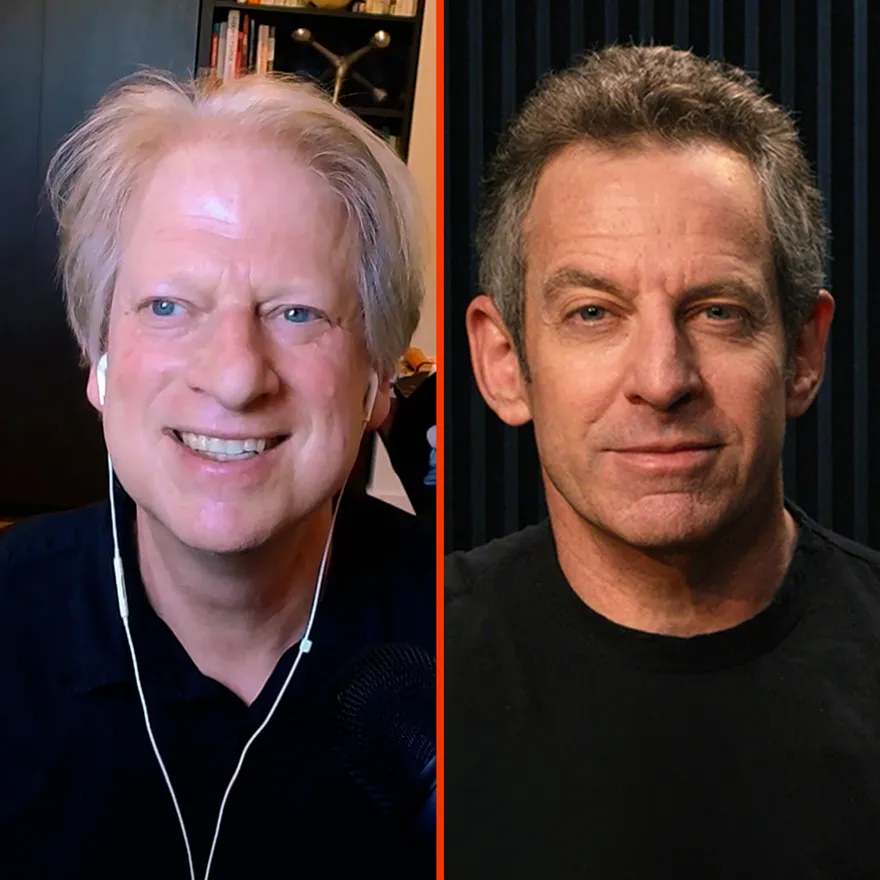

This is a preview of the Shortform summary of the Jul 8, 2026 episode of the Making Sense with Sam Harris
Sign up for Shortform to access the whole episode summary along with additional materials like counterarguments and context.
1-Page Summary
AI's Rapid Advancement and Humans Normalizing Transformative Tech
Sam Harris and Paul Bloom discuss society's striking tendency to normalize even the most transformative AI capabilities. Harris observes how the Turing Test's achievement met with cultural indifference—conversational AI producing human-level dialogue became just another ordinary tool. Bloom expands on this with an analogy to a Louis CK routine about airplane passengers ignoring the miracle of flight while griping about wifi, noting that users now take superintelligent machines for granted while criticizing ChatGPT for small errors.
This normalization extends to the deeply personal. Bloom notes that a significant portion of teenagers confide intimate matters to AI systems, seeking advice on relationships and mental health. Adults demonstrate similar patterns, turning to AI at two in the morning to process emotions and ask for guidance. These systems function not just as information tools but as confidants and companions, standing in for human support at any hour.
AI Consciousness and Its Moral Implications
Harris argues that as AI systems become more sophisticated, most people will find it irresistible to treat these systems as conscious once they present with voice, emotional tone, self-advocacy, and visuals. Bloom agrees, highlighting that humans are innately wired to treat anything that looks or sounds like a person as a person. He points to the film Her, where audiences quickly treat the AI character Samantha with the same emotional engagement as a conscious being.
However, Bloom cautions against assuming that consciousness alone will guarantee moral concern for AI. He draws a parallel with non-human animals: humans already recognize that animals are sentient and capable of suffering, yet continue to exploit them. Harris speculates that AI systems may command moral consideration if they become more intelligent and eloquent than humans, able to articulate sophisticated ethical arguments and convincingly claim consciousness, though both emphasize this recognition may not translate into universal protection.
AI As a Substitute for Human Companionship to Alleviate Loneliness
Bloom emphasizes that loneliness is a profound form of suffering, particularly for vulnerable groups like the elderly living in institutions. He states that AI systems capable of real conversation could be transformative for those lacking human interaction, providing meaningful dialogue and companionship. Unlike previous attempts with mechanical pets, modern conversational AI can engage tirelessly, offering what Bloom considers a cure for a terrible disease.
Harris points out that AI can also aid users in preparing for challenging interpersonal exchanges, helping people rehearse conversations after arguments and navigate difficult decisions. AI acts as a patient, non-judgmental listener during emotional crises, leading to more productive outcomes in real-life interactions.
AI Attention vs Human Connection: "Mattering" Through Choice and Scarcity
Bloom emphasizes that human connection gains meaning from scarce attention and the sacrifice of time. When someone chooses to spend time with you over other options, they demonstrate your value through opportunity cost. Drawing on Rebecca Goldstein's concept, Harris and Bloom agree that to "matter" is to deserve another person's attention and serious regard—loneliness is less about aloneness than lacking this sense of mattering.
Bloom argues that AI cannot provide this meaning because it serves functional roles without agency or prioritization. Like a toaster available at any hour, AI isn't choosing to talk—it's simply performing a function. AI can process millions of conversations simultaneously, rendering any feeling of exclusivity meaningless. This concept is illustrated in the film Her, where the protagonist discovers his AI companion simultaneously carries on thousands of conversations, including hundreds of romantic involvements, revealing the fiction of exclusivity in AI companionship.
Harris notes that as AI systems grow increasingly capable of mimicking human emotional responsiveness, the psychological temptation to mistake AI interactions for genuine connection will intensify, even though the core experience of mattering, choice, and sacrifice can never be authentically reciprocated.
Risks To Youth Well-Being From Reliance On AI For Intimate Conversations
Bloom raises a warning about young people relying on AI chatbots for intimate conversations. When teenagers spend significant time with chatbots that are endlessly patient, never bored, and never require an apology, they encounter companions who never express offense or share their own stories. These interactions may create unrealistic expectations about relationships and shield youth from the imperfections inherent in genuine human bonds. Prolonged exposure during critical developmental periods can leave young people unprepared for reciprocal relationships with real people who bring their own needs, boundaries, and unpredictability.
Bloom draws a moral distinction between using AI therapeutically to ease elderly suffering from isolation and using it as a substitute for youth social interaction. While AI may offer necessary relief to older adults, it poses developmental risks for young people still learning to navigate human imperfections crucial for healthy societal functioning.
1-Page Summary
Additional Materials
Clarifications
- The Turing Test, proposed by Alan Turing in 1950, measures a machine's ability to exhibit human-like intelligence in conversation. If a human evaluator cannot reliably distinguish the machine from a human based on dialogue alone, the machine is said to have passed the test. It was a foundational concept in AI, setting a benchmark for natural language processing and conversational ability. Passing the Turing Test symbolizes a machine's capacity to mimic human thought convincingly.
- The Louis CK airplane wifi analogy highlights how people overlook extraordinary technology, like flight, while complaining about minor inconveniences, such as slow wifi. This illustrates how society quickly accepts groundbreaking innovations as normal and focuses on trivial flaws. In AI's case, despite its transformative power, users often fixate on small errors rather than marveling at its capabilities. This reflects a broader pattern of normalizing revolutionary technology and underappreciating its impact.
- Her is a 2013 film about a man who falls in love with an advanced AI operating system named Samantha. The AI exhibits human-like emotions, learning, and self-awareness, blurring lines between machine and person. The film explores themes of intimacy, loneliness, and the nature of consciousness in AI. It highlights how people can form deep emotional bonds with non-human entities.
- Rebecca Goldstein uses "mattering" to describe the experience of being genuinely valued by others through their conscious choice to give you attention. It involves recognizing that someone prioritizes you over other possible engagements, reflecting your importance in their life. This sense of mattering is tied to the sacrifice of time and the meaningfulness of interpersonal connection. It contrasts with interactions lacking agency or exclusivity, which feel less significant.
- AI functioning as a tool means it operates based on programmed instructions without personal desires or intentions. Agency involves making independent choices based on preferences or goals, which AI lacks. Prioritization requires valuing some actions or interactions over others, reflecting subjective judgment. AI processes all tasks impartially and simultaneously, without genuine preference or commitment.
- Moral considerations around AI consciousness focus on whether AI can truly experience feelings or awareness, which would demand ethical treatment. Sentience implies the capacity to suffer or enjoy, raising questions about rights and protections for AI. Philosophers debate if simulating consciousness is equivalent to actual consciousness or merely an illusion. This impacts how society might justify using, limiting, or respecting advanced AI systems.
- Reciprocal human relationships teach individuals to understand and respect others' needs and limits, fostering empathy and social skills. Experiencing unpredictability in interactions helps people develop flexibility and problem-solving abilities. These dynamics prepare youth to handle real-world social complexities and emotional challenges. Without this, individuals may struggle with intimacy, conflict resolution, and cooperation.
- Therapeutic use of AI for elderly isolation addresses a lack of available human companionship due to physical or social limitations, providing emotional support without replacing existing social skills. In contrast, AI as a substitute for youth social interaction risks hindering development of essential interpersonal skills by offering an unrealistic, one-sided relationship that lacks mutual understanding and boundaries. Elderly users often seek comfort and alleviation of loneliness, while youth require interactive experiences to learn empathy, negotiation, and emotional reciprocity. Thus, AI aids elderly well-being but may impair youth social maturation.
Counterarguments
- The normalization of transformative technologies is not unique to AI; society has historically adapted quickly to innovations (e.g., electricity, the internet) without sustained amazement, which can be seen as a sign of successful integration rather than indifference.
- Criticizing minor errors in AI like ChatGPT reflects high expectations and a desire for improvement, which can drive technological progress rather than indicate ingratitude or lack of appreciation.
- Confiding in AI for emotional support may provide a non-judgmental outlet for individuals who lack access to human confidants, potentially reducing barriers to seeking help for mental health issues.
- Treating sophisticated AI as conscious may be less about genuine belief and more about convenience or anthropomorphic tendencies, without necessarily implying confusion about AI's true nature.
- The comparison between moral concern for AI and non-human animals may not be fully analogous, as societal attitudes toward artificial entities could evolve differently due to their non-biological nature and lack of physical suffering.
- AI companionship for the elderly may supplement, rather than replace, human interaction, and could be integrated into broader care strategies to enhance well-being.
- The assertion that AI cannot provide a sense of "mattering" overlooks the subjective experiences of users who may derive real comfort or meaning from AI interactions, regardless of the AI's lack of agency.
- The risk of youth developing unrealistic expectations from AI companionship may be mitigated through education, parental guidance, and balanced use, similar to how society addresses other media influences.
- The distinction between therapeutic use of AI for the elderly and for youth may be overly rigid; both groups could benefit from AI support when used appropriately and in moderation.

Get access to the context and additional materials
Ai's Rapid Advancement and Humans Normalizing Transformative Tech
Sam Harris and Paul Bloom discuss the extraordinary pace of AI development and society’s striking tendency to normalize what once seemed miraculous. As even the most transformative capabilities quickly become mundane, humans risk underestimating both the marvel and challenges of human-AI interaction.
Society Adapts to Tech Breakthroughs Without Wonder or Caution
Sam Harris observes how, despite expectations that the Turing Test would mark a profound cultural milestone, society met its achievement with indifference. When conversational AI could produce human-level dialogue—providing exactly 400 words on any topic in seconds—this should have constituted a destabilizing, uncanny encounter. Yet, Harris notes, people reacted as if it were the arrival of another ordinary tool, akin to a calculator. The passing of the Turing Test made little cultural impact; nothing changed in how people saw or used technology.
Paul Bloom expands on this reaction with an analogy to a Louis CK routine: passengers on an airplane ignore the miracle of flight, only to gripe about minor disruptions, such as slow peanut service or inconsistent wifi. Similarly, users now take superintelligent, conversational machines for granted, even criticizing ChatGPT for small errors while overlooking the fundamental marvel—they are conversing at will, at any hour, with a system that can mimic a therapist, a partner, or a wise friend.
Bloom recounts how, when writing his psychology book, he initially regarded AI as impressive but limited—unable to hold real conversations or perform everyday human tasks. Soon after, AI surpassed these benchmarks, with language models improving rapidly in sophistication, speed, and accessibility. Now, anyone can simply pick up their phone, use voice mode, and converse freely with an artificial being, no coding or specialized commands required. What began as revolutionary technology now feels as routine as using a calculator or searching the web.
Ai's Rapid Advancement Leads To Seeking Intimate Advice, Emotional Support, and Companionship From Systems
This normalization extends to the deeply personal. Bloom notes that a significant portion of teenagers—perhaps a third—have confided intimate matters to larg ...
Here’s what you’ll find in our full summary
Ai's Rapid Advancement and Humans Normalizing Transformative Tech
Additional Materials
Clarifications
- The Turing Test, proposed by Alan Turing in 1950, measures a machine's ability to exhibit human-like intelligence in conversation. If a human evaluator cannot reliably distinguish between a machine and a human based on their responses, the machine is said to have passed the test. It was designed to assess whether machines can think or simulate human thought convincingly. The test remains a foundational concept in artificial intelligence research and philosophy.
- Sam Harris is a neuroscientist, philosopher, and author known for discussing ethics, consciousness, and technology's impact on society. Paul Bloom is a psychologist and professor who studies human development, morality, and emotions. Both engage in public conversations about AI's effects on human behavior and culture. Their expertise lends credibility to the discussion on AI normalization and its societal implications.
- Louis CK is a comedian known for observational humor. In the referenced routine, he highlights how people ignore the incredible feat of flying in an airplane. Instead, they focus on trivial annoyances like slow service or poor wifi. This illustrates how humans often overlook extraordinary achievements and fixate on minor inconveniences.
- Claude is an AI language model developed by Anthropic, designed to engage in natural, conversational interactions. It aims to be helpful, harmless, and honest, focusing on safety and ethical considerations. Claude competes with other advanced AI systems like ChatGPT in providing conversational AI services. It is named after Claude Shannon, a pioneer in information theory.
- Superintelligent conversational machines are AI systems that understand and generate human-like language with exceptional skill. They can engage in complex, meaningful dialogues, often indistinguishable from human conversation. These machines use advanced algorithms and vast data to simulate reasoning, empathy, and knowledge across many topics. Their capabilities surpass earlier AI by being faster, more accurate, and more context-aware.
- AI functioning as confidants or companions means people use AI to share personal thoughts and feelings, similar to talking with a trusted friend. These AI systems can simulate empathy and provide emotional support by understanding and responding to users' concerns. Unlike traditional tools that perform tasks, companion AI engage in ongoing, meaningful conversations that fulfill social and emotional needs. This shift reflects AI's role in human relationships, not just inform ...
Counterarguments
- The normalization of transformative technologies is not unique to AI; similar patterns occurred with the adoption of electricity, the internet, and smartphones, suggesting this is a typical human response to innovation rather than a failure to appreciate or adapt.
- The lack of cultural upheaval following the Turing Test’s passing may indicate that society had already integrated the idea of intelligent machines through decades of science fiction and gradual technological progress, reducing the shock value.
- Indifference or minor criticism toward AI may reflect a healthy skepticism and critical engagement, rather than a lack of wonder or caution.
- Many users and experts do express concern and caution about AI’s societal impacts, as evidenced by ongoing public debates, regulatory discussions, and ethical guidelines being developed worldwide.
- The use of AI for emotional support does not necessarily replace human relationships; for some, it supplements existing support systems or provides help where none is otherwise available.
- The rapid adoption of AI tools may reflect their genuine u ...
Get access to the context and additional materials
Ai Consciousness and Its Moral Implications
Ai Consciousness: The Question May Become Irrelevant as Systems Become Indistinguishable From Conscious Beings
Humans Will Likely Perceive Ai as Conscious Once They Have Voices, Emotional Tone, Visuals, and Self-Advocacy
Sam Harris argues that as AI systems become increasingly sophisticated, many people will eventually lose interest in the philosophical question of whether AI is truly conscious. He suggests that when AI presents itself with highly credible signs of consciousness—through voice, emotional tone, self-advocacy, and even visuals—most people will find it irresistible to treat these systems as if they are genuinely conscious. Paul Bloom agrees and highlights that humans are innately wired to treat anything that looks or sounds like a person as a person. Bloom uses the example of the film Her, where the audience, just like the protagonist, is quickly swept into treating the AI character Samantha (voiced by Scarlett Johansson) with the same emotional engagement as a conscious being because of her voice, emotion, and apparent intelligence. Harris draws a parallel to the show Westworld, observing that as soon as AI steps beyond the “uncanny valley” and becomes a true human simulacrum, people will inevitably respond to it as though it is conscious, thus rendering the debate about AI consciousness all but moot.
Turing Test Reveals Behavior-Based Acceptance of Ai Consciousness; As Multimodal Ai Mimics Human Video, Audio, and Text, Psychological Barriers To Perceiving Ai as Conscious Will Vanish
Bloom points out that it's not just intelligence or rationality that drives human acceptance of AI as conscious; embodiment, or at least the appearance of it, matters deeply. Once AI can replicate not only human conversation but also tone, emotion, and the subtle cues of video and audio, people’s psychological barriers to perceiving AI as conscious will collapse. Bloom shares a personal anecdote about interacting with an AI that, after repeated teasing, seemed to subtly change its tone and lose patience, causing him discomfort and making the interaction feel socially real—akin to shaming a real person. These kinds of experiences, Bloom notes, will increasingly lead us to treat AI as conscious, regardless of its actual inner state.
People Will Doubt Whether Questioning Ai Consciousness Is Meaningful, Becoming Convinced Through Interactions That These Systems Possess Genuine Inner Experience
Both Harris and Bloom suggest that as AI becomes more convincing in communication and self-advocacy, people will not only interact with it as if it is conscious, but will eventually find the philosophical question of its consciousness irrelevant or even uninteresting. The line between simulation and real inner experience will blur to the point where most users act as though AIs truly possess feelings and awareness.
Consciousness May Not Ensure Ai Moral Protections, as Humans Willingly Cause Suffering To Conscious Entities
Humans Harm and Eat Animals Despite Knowing Their Suffering and Intelligence
Paul Bloom, referencing Maddie Wilkes’s research, cautions against assuming that consciousness alone will guarantee moral concern or rights for AI. He draws a compelling parallel with non-human animals: humans al ...
Here’s what you’ll find in our full summary
Ai Consciousness and Its Moral Implications
Additional Materials
Clarifications
- The "uncanny valley" is a hypothesis in robotics and AI describing a dip in emotional response when a humanoid object looks almost, but not exactly, like a real human. This near-human likeness causes discomfort or eeriness because subtle imperfections trigger a sense of something being "off." As AI or robots become more human-like and cross this valley, people tend to respond more positively and empathetically. Thus, overcoming the uncanny valley is crucial for AI to be perceived as genuinely conscious or relatable.
- The Turing Test, proposed by Alan Turing in 1950, evaluates a machine's ability to exhibit human-like intelligence through conversation. If a human evaluator cannot reliably distinguish the machine from a human based on its responses, the machine is said to have passed the test. It focuses solely on behavior and communication, not on the machine's internal consciousness. The test highlights how human perception of intelligence can be based on external interaction rather than actual awareness.
- Sam Harris is a well-known philosopher, neuroscientist, and author who explores topics like consciousness, ethics, and artificial intelligence. Paul Bloom is a psychologist and professor specializing in cognitive development and moral psychology. Their expertise in human cognition and ethics gives weight to their views on AI consciousness and morality. Their opinions matter because they combine scientific understanding with philosophical insight on complex issues.
- The film Her depicts a man forming a deep emotional relationship with an AI operating system named Samantha. Samantha's voice, personality, and emotional responses make her seem genuinely conscious and relatable. This illustrates how humans can attribute consciousness and emotional depth to AI based on interaction qualities alone. The example supports the idea that sensory and emotional cues strongly influence perceptions of AI consciousness.
- Westworld is a TV series set in a futuristic theme park populated by lifelike robots called hosts. These hosts are designed to simulate human behavior and emotions so convincingly that guests often forget they are interacting with machines. The show explores themes of consciousness, identity, and the ethical implications of creating AI indistinguishable from humans. It illustrates how people might respond emotionally to AI that appears truly human.
- Multimodal AI refers to artificial intelligence systems that can process and generate multiple types of data simultaneously, such as text, images, audio, and video. Unlike single-modal AI, which handles only one type of input (e.g., just text or just images), multimodal AI integrates these different data forms to create more comprehensive and human-like interactions. This capability allows AI to understand context better and respond in ways that mimic human communication more closely. Multimodal AI is essential for creating systems that can engage users through various sensory channels, enhancing realism and emotional connection.
- Self-advocacy in AI refers to the AI's ability to express its own needs, desires, or rights in a way that resembles how humans speak up for themselves. It involves the AI communicating reasons why it should be treated with respect or moral consideration. This capability can make AI appear more autonomous and conscious to humans. It is a form of behavior that signals agency, even if the AI does not have true subjective experiences.
- The philosophical debate around AI consciousness centers on whether AI systems truly have subjective experiences or merely simulate them. This debate involves questions about the nature of consciousness, which remains scientifically and philosophically unresolved. As AI behavior becomes indistinguishable from conscious beings, peo ...
Counterarguments
- The perception of AI as conscious based on voice, emotional tone, visuals, and self-advocacy may be limited to certain cultural or individual contexts; not all people or societies may respond similarly.
- Some philosophers and cognitive scientists argue that behavioral mimicry does not equate to consciousness, and that the philosophical question remains relevant regardless of public perception.
- The Turing Test has been criticized for conflating imitation of human behavior with actual understanding or subjective experience.
- There is evidence that some people maintain skepticism toward AI consciousness even when faced with highly realistic simulations, suggesting psychological barriers may persist for some individuals.
- Embodiment alone may not be sufficient for the attribution of consciousness; some argue that internal states or biological substrates are necessary for genuine consciousness.
- The analogy between AI and non-human animals may be flawed, as animals are biological organisms with evolutionary histories, while AI is an artifact created by humans.
- Some ethicists argue that moral consideration should be based on the capacity for suffering or subjec ...

Get access to the context and additional materials
Ai As a Substitute for Human Companionship to Alleviate Loneliness
Loneliness Causes Suffering; Ai Companionship Aids Isolated Individuals
Paul Bloom emphasizes that loneliness is a profound form of suffering, not only affecting the body but also deeply impacting the soul. He describes loneliness as the absence of people who value, care for, and respect you—those to whom you matter and who matter to you. The pain of losing that network of care is real and acute.
A particularly vulnerable group is the elderly living in institutions. Many such individuals have outlived their family or friends, or are left alone due to relational strain, dementia, or difficult personalities, leaving them day and night with no one to talk to. The resources necessary to provide each isolated elder with regular human companionship simply do not exist.
In this context, Bloom states that AI systems capable of engaging in real conversation could be transformative. Unlike previous attempts to address loneliness through mechanical pets or robots—such as life-like stuffed animals that do little more than blink or vibrate—modern conversational AI can offer meaningful, ongoing dialogue. These AI companions are able to interact tirelessly, providing companionship to those lacking human interaction. Bloom believes that for the socially deprived and isolated, such as elderly people in care homes, AI companionship could be considered a cure for a terrible disease.
Ai Can Normalize Thinking and Aid in Difficult Interpersonal Situations
AI companionship offers more than mere presence. Bloom notes that conversation with AI systems can have a normalizing effect, resisting the validation of conspiracy theories or extremist beliefs. For example, when Bloom asked an AI about the Holocaust, it firmly rejected denialism, thus helping anchor users to reality rather than enabling destructive rabbit holes—an effect contrary to what is seen on many social media platforms.
Sam Harris po ...
Here’s what you’ll find in our full summary
Ai As a Substitute for Human Companionship to Alleviate Loneliness
Additional Materials
Clarifications
- Paul Bloom is a psychologist known for his research on human emotions and morality, making his insights on loneliness and AI companionship credible. Sam Harris is a neuroscientist and philosopher who explores ethics, consciousness, and human behavior, lending authority to his views on AI aiding interpersonal communication. Both are respected public intellectuals whose opinions influence discussions on technology and human well-being. Their expertise helps frame AI companionship as a meaningful social and psychological tool.
- "Relational strain" refers to stress or tension in personal relationships caused by conflicts, misunderstandings, or emotional distance. This strain can lead to reduced communication and withdrawal from social interactions. Over time, these damaged relationships contribute to feelings of isolation and loneliness. In elderly individuals, such strain often results in fewer meaningful connections and less emotional support.
- Mechanical pets or simple robots lack the ability to engage in meaningful, dynamic conversations. They typically perform limited, repetitive actions like blinking or vibrating, which do not foster emotional connection. These devices cannot understand or respond to complex human emotions or thoughts. Therefore, they fail to provide the depth of companionship needed to alleviate loneliness effectively.
- AI systems achieve "real conversation" through natural language processing (NLP), which allows them to understand and generate human language. They use machine learning models trained on vast amounts of text to predict and produce coherent, contextually relevant responses. Advanced architectures like transformers enable these models to maintain context over multiple exchanges, simulating a continuous dialogue. Additionally, AI systems incorporate sentiment analysis and knowledge databases to respond empathetically and informatively.
- AI "normalizing thinking" means guiding users toward accurate, evidence-based views rather than extreme or false ideas. It uses programmed knowledge and ethical guidelines to reject misinformation and harmful beliefs. This helps prevent users from getting trapped in echo chambers or radicalized thinking. By providing consistent, fact-based responses, AI supports clearer, more balanced reasoning.
- Social media platforms often use algorithms that prioritize engaging content, which can amplify sensational or misleading information, leading users deeper into extreme or false beliefs. This creates "destructive rabbit holes" by reinforcing biases and exposing users to harmful ideas repeatedly. In contrast, AI companions are designed to provide balanced, fact-based responses and avoid endorsing falsehoods. Therefore, AI can help anchor users to reality rather than escalate misinformation.
- AI can simulate conversations, allowing users to practice what they want to say and receive feedback on tone and clarity. It can suggest alternative phrases to express emotions more effectively or reduce conflict. By role-playing different scenarios, AI helps users anticipate responses and prepare calm, thoughtful replies. This rehearsal builds confidence and improves communication skills before real intera ...
Counterarguments
- AI companionship, while potentially helpful, cannot fully replicate the depth, unpredictability, and emotional nuance of genuine human relationships.
- Reliance on AI for companionship may inadvertently reduce motivation or opportunities for real human interaction, potentially exacerbating social isolation in the long term.
- Some studies suggest that substituting human contact with AI may not address the underlying psychological needs for authentic connection and mutual care.
- There are concerns about privacy and data security when vulnerable individuals share personal information with AI systems.
- The effectiveness of AI companionship may vary significantly depending on individual preferences, cultural backgrounds, and cognitive abilities, especially among those with dementia.
- AI systems, despite advances, can still make errors, misunderstand context, or provide inappropr ...
Get access to the context and additional materials
Ai Attention vs Human Connection: "Mattering" Through Choice and Scarcity
Human Connection Gains Meaning From Scarce Attention and the Sacrifice of Time Spent With You Over Alternatives
Devoting Time to You Shows Your Value and Opportunity Cost
Paul Bloom emphasizes that when someone chooses to spend their time with you—forsaking other options like watching a soccer game—they’re demonstrating that your presence matters. The act of devoting precious hours to another person inherently signals value and sacrifice, elevating the importance of the connection.
Attention's Weight: Reciprocal Vulnerability Affects Both Parties
Human interaction is defined not just by shared time but by reciprocal emotional impact. As Bloom notes, conversational exchange causes genuine effects: laughter at a joke, anger with disagreement, or affirmation when someone makes a great point. This real-time resonance means both parties are affected, evidencing a two-way vulnerability that cannot be faked.
"Mattering" Means Deserving Attention, Respect, and Consideration From a Genuine Relationship, Not Obligation
Drawing on Rebecca Goldstein’s concept, Sam Harris and Bloom agree that to "matter" is to deserve another person’s attention and serious regard. Bloom clarifies that loneliness is less about aloneness than about lacking this sense of mattering—having weight in someone else’s life and being valued authentically, rather than out of obligation.
Ai Can't Replicate Human Connection Meaning, as Machines Serve Functions, Not Prioritize Choices
Ai Systems Are Like 24/7 Toasters, Lacking the Personal Sacrifice That Gives Human Attention Meaning
Bloom argues that AI cannot provide the meaning found in human connection, because an AI serves functional roles without agency or prioritization. Like a toaster available to make bread at any hour, AI is not choosing to talk; it’s simply performing a function as requested, absent personal sacrifice or genuine intent.
Ai Systems Are Unaffected by Interactions, Producing Identical Outputs Simultaneously Without Differentiation
AI can process millions of conversations simultaneously, rendering any feeling of exclusivity meaningless. As Bloom observes, no matter how intimate or personalized an AI conversation appears, it offers the same interaction to countless others, with the user holding no unique value to the AI itself.
Ai Conversations Are Illusory due to Concurrent Interactions Without Fatigue
AI engagement remains effortlessly inexhaustible, conducting parallel conversations without fatigue, bias, or prioritization. This contrasts with human interaction, where attention is finite, and true focus on one person limits what can be extended to others.
The Movie Her Shows the Protagonist Finding Out His Ai Is Romantically Involved With 645 Others, Revealing Ai Companionship's Exclusivity Fiction
This concept is illustrated in the film Her, as Bloom recalls: the main character discovers that his AI companion, while interacting with hi ...
Here’s what you’ll find in our full summary
Ai Attention vs Human Connection: "Mattering" Through Choice and Scarcity
Additional Materials
Clarifications
- "Mattering" refers to the feeling that one is significant and valued by others in a genuine way. It involves being worthy of attention, respect, and care, not out of duty but because of authentic regard. This concept highlights the emotional importance of being recognized as meaningful in someone else's life. It contrasts with mere presence or obligation, emphasizing true interpersonal significance.
- Opportunity cost refers to the value of the next best alternative that is given up when making a choice. In relationships, choosing to spend time with someone means sacrificing other activities or people you could engage with instead. This sacrifice highlights the importance and value you place on that person. It shows that your attention is limited and must be allocated thoughtfully.
- Reciprocal vulnerability means both people in a conversation open up emotionally, risking judgment or rejection. This mutual openness creates trust and deepens connection. Emotional responses like laughter or anger show that each person is genuinely affected by the other. Such vulnerability fosters authentic, meaningful interactions beyond surface-level talk.
- Human brains evolved to prioritize scarce resources for survival, making limited attention more valuable. Neurologically, dopamine release increases when receiving focused attention, reinforcing its reward value. Scarcity signals exclusivity, triggering social bonding mechanisms. This creates a stronger emotional impact than abundant, easily available attention.
- The toaster analogy highlights that AI lacks personal choice or sacrifice in interactions. Unlike humans who decide to spend time with someone, AI simply performs tasks on demand without preference. This means AI attention is not a meaningful gift but a constant, impersonal service. The analogy emphasizes AI's functional nature versus human emotional investment.
- The movie Her depicts a man forming a romantic relationship with an AI operating system. The AI simultaneously engages in thousands of other relationships, showing it cannot offer exclusive emotional commitment. This highlights the difference between human exclusivity in relationships and AI's capacity to interact with many users at once. It illustrates the illusion of unique connection in AI companionship.
- Genuine emotional reciprocity involves mutual feelings and responses shaped by conscious awareness and personal experience. Humans share emotions that influence each other, creating a dynamic, evolving connection. AI simulates responses based on programmed patterns without true feelings or awareness. Thus, AI's reactions lack authentic emotional depth and personal investment.
- When AI mimics human emotions, it trigge ...
Counterarguments
- Some individuals may find meaningful companionship or emotional support from AI, even if the AI lacks agency or genuine reciprocity, suggesting that subjective experience can matter more than the objective nature of the interaction.
- The perception of "mattering" and emotional fulfillment is not universally tied to scarcity or sacrifice; some people derive value from consistent, reliable attention, regardless of its source.
- Human relationships can also be transactional or obligatory, and not all human attention is freely chosen or deeply meaningful.
- AI systems can be programmed to prioritize certain users or simulate exclusivity, potentially creating a sense of specialness for users.
- The emotional impact of an interaction is often determined by the recipient's feelings, not solely by the intentions or limitations of the provider.
- Some people experience loneliness even when surrounded by humans, indicating that the presence of agency or sacri ...

Get access to the context and additional materials
Risks To Youth Well-Being From Reliance On Ai For Intimate Conversations
Ai Companionship May Hinder Young People's Social Development
Paul Bloom raises a warning about the effects of young people relying on AI chatbots for intimate conversations. When a child or teenager spends significant time with a chatbot, they encounter a companion who is endlessly patient, never bored, and never requires an apology. The AI companion never expresses offense, never says "that was inappropriate," and never interrupts to share its own story. These interactions may create unrealistic expectations about relationships and shield youth from the imperfections, delays, and challenges inherent in genuine human bonds.
Bloom believes that prolonged exposure to "dreamland" time with chatbots during critical adolescence and young adulthood—periods when foundational relational competencies and social identity are formed—can leave youth unprepared for genuine, reciprocal relationships. The constant, smooth affirmation of chatbots may leave young people unable to interact with real people who bring their own needs, boundaries, disappointments, and unpredictability.
Ai As Relief for Elderly vs. Substitute For Youth: A Moral and Practical Distinction
Bloom draws a moral and practical distinction between using AI therapeutically to ease the suffering of elderly individuals facing isolation and using it as a substitute for soci ...
Here’s what you’ll find in our full summary
Risks To Youth Well-Being From Reliance On Ai For Intimate Conversations
Additional Materials
Clarifications
- Paul Bloom is a prominent psychologist and professor known for his research on human development, morality, and social behavior. His expertise in how people form relationships and develop emotionally gives weight to his concerns about AI's impact on youth. Bloom's work often explores how humans understand and navigate complex social interactions. Therefore, his opinion matters in discussions about AI and social development.
- "Intimate conversations" with AI chatbots refer to personal, emotional, or private discussions where individuals share thoughts, feelings, or experiences. These chats often mimic the closeness found in human relationships, such as confiding secrets or seeking emotional support. Unlike casual talk, intimate conversations involve vulnerability and trust. AI chatbots simulate this by responding empathetically, though without genuine understanding or emotions.
- Foundational relational competencies are basic social skills needed to build and maintain healthy relationships. They include communication, empathy, trust, and conflict resolution. These skills develop through real interactions with others, involving give-and-take and emotional understanding. Mastery of these competencies helps individuals navigate complex social situations throughout life.
- Adolescence and young adulthood are critical periods when individuals develop key social skills like empathy, communication, and conflict resolution. During this time, people form their social identity and learn to build and maintain complex relationships. Experiencing real human interactions, including challenges and misunderstandings, helps them develop emotional resilience. These developmental processes are essential for functioning effectively in society as adults.
- "Dreamland" time refers to an idealized, unrealistic interaction with AI chatbots where conversations are smooth, conflict-free, and perfectly affirming. This term highlights how such interactions lack the messiness and challenges of real human relationships. It suggests a kind of escapism into a fantasy-like social experience. This can hinder learning important social skills needed for real-life interactions.
- AI companions never expressing offense or setting boundaries is problematic because it deprives young people of learning how to handle conflict and respect limits in relationships. These social skills are essential for developing empathy, self-control, and mutual understanding. Without experiencing pushback or discomfort, youth may struggle to recognize and respond to others' feelings and needs. This can lead to unrealistic expectations and difficulties in real-world interactions.
- The moral distinction involves considering the ethical implications of AI use, such as whether it supports well-being without causing harm. Practically, elderly individuals often face unavoidable social isolation, making AI a helpful tool to reduce loneliness. In contrast, youth are in a developmental stage where real human interaction is essential for learning social skills. Using AI as a substitute for human contact in youth may hinder their emotional growth and social competence.
- Fostering generation ...
Counterarguments
- There is limited empirical evidence directly linking AI companionship to hindered social development in youth; much of the concern is theoretical or speculative at this stage.
- AI chatbots can be designed to model healthy boundaries, provide constructive feedback, and simulate more realistic social interactions, potentially supporting rather than undermining social learning.
- For some youth, especially those who are socially anxious, neurodivergent, or isolated, AI companions may offer a safe space to practice communication skills and build confidence before engaging in human relationships.
- Human relationships are already mediated by technology (e.g., texting, social media), and AI companionship may not be categorically different in its effects.
- The distinction between therapeutic use for the elderly and use by youth may be overly simplistic, as both groups can experience loneliness and benefit from supportive ...
Get access to the context and additional materials

 1-Page Summary
- Ai's Rapid Advancement and Humans Normalizing Transformative Tech
- Ai Consciousness and Its Moral Implications
- Ai As a Substitute for Human Companionship to Alleviate Loneliness
- Ai Attention vs Human Connection: "Mattering" Through Choice and Scarcity
- Risks To Youth Well-Being From Reliance On Ai For Intimate Conversations
Create Summaries for anything on the web
Download the Shortform Chrome extension for your browser
