

243. "She inherited $171K…but it’s already gone."
In this episode of I Will Teach You To Be Rich, a couple earning high incomes struggles with significant financial challenges. Despite their combined earnings, they maintain $244,774 in debt, have depleted a $171,000 inheritance, and save almost nothing. Their story reveals how childhood experiences shape their current money behaviors: one partner obsessively monitors accounts while the other completely avoids financial responsibility.
The episode examines how the couple's spending habits conflict with their long-term goals of financial security and retirement in Costa Rica. It explores their approach to charitable giving, their difficulty following a spending plan, and their tendency to overspend on non-essential items. The discussion shows how their fixed costs consume most of their monthly income, leaving them vulnerable to income fluctuations.
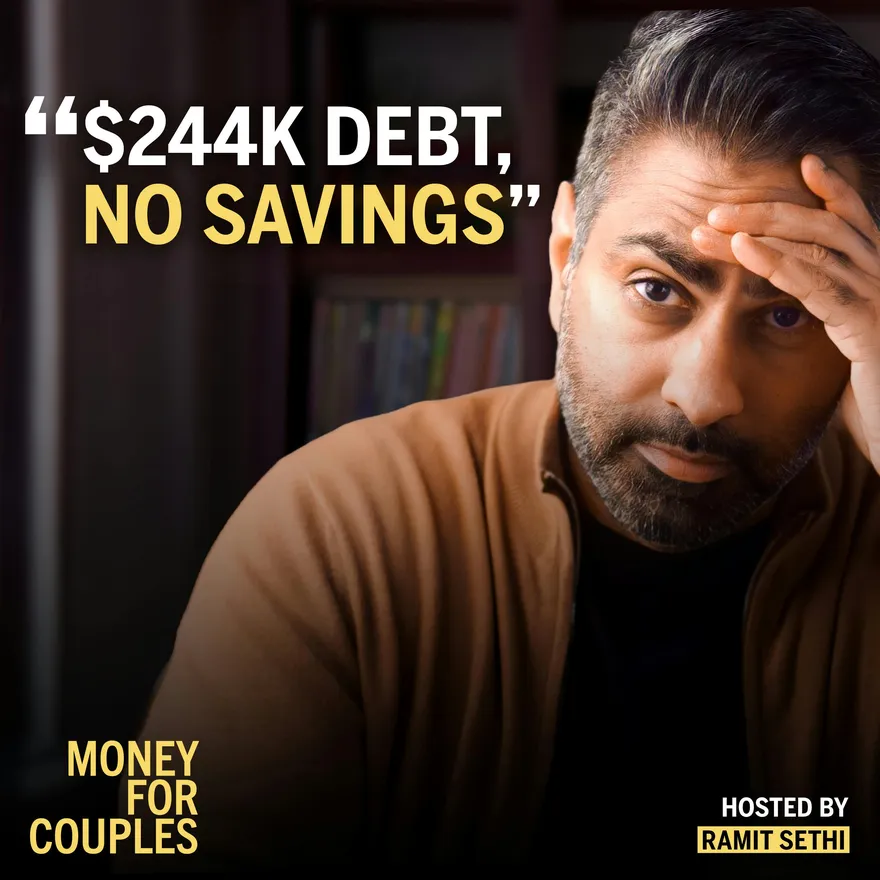

This is a preview of the Shortform summary of the Jan 13, 2026 episode of the I Will Teach You To Be Rich
Sign up for Shortform to access the whole episode summary along with additional materials like counterarguments and context.
1-Page Summary
Mike and Noelle's Dysfunctional Relationship With Money
Mike and Noelle exhibit contrasting but equally problematic approaches to money management. Mike obsessively checks his bank accounts up to 20 times daily, seeking comfort and control, while micromanaging Noelle's spending. Meanwhile, Noelle completely avoids financial responsibility, having never paid a bill herself and relying entirely on Mike to manage their finances.
Their Significant Debt and Lack of Savings
Despite being high earners, the couple carries $244,774 in debt, including $200,000 in student loans and various other debts. Their fixed costs consume 87% of their monthly income, leaving little room for savings. When they received a $171,000 inheritance, they spent it on luxuries rather than investments. Currently, they have zero savings and only $28,202 in investments, leaving them vulnerable to disruptions in Mike's variable commission-based income.
Impact of Upbringing on Financial Behaviors
Their current financial behaviors are deeply rooted in their childhoods. Noelle, who grew up in poverty, overcompensates by splurging on expensive clothing and avoiding financial responsibility due to her mother's financial stress. Mike's middle-class, indulgent childhood contributed to his impulsive spending habits and inability to delay gratification.
Struggle to Align Spending With Desired "Rich Life"
While Mike and Noelle dream of financial security and retiring in Costa Rica, their spending habits don't align with these goals. They acknowledge spending almost double their Conscious Spending Plan, with Noelle refusing to check grocery prices and Mike compulsively buying Pokemon cards.
The Role of Charity/Tithing in Their Financial Decisions
Despite their substantial debt, Noelle maintains $6,000 annual charitable giving as part of her faith and addiction recovery. Ramit suggests gradually reducing tithing to become debt-free, starting with modest amounts that can increase as their financial situation improves.
1-Page Summary
Additional Materials
Clarifications
- A Conscious Spending Plan is a budgeting approach that prioritizes spending on what truly matters to an individual while minimizing waste. It involves intentional decisions about money to align spending with personal values and goals. This plan helps create financial awareness and control by tracking expenses and setting limits. The goal is to maximize satisfaction and financial health rather than just cutting costs.
- Tithing is a traditional practice, often rooted in religious faith, where individuals give a fixed percentage (commonly 10%) of their income to charity or their place of worship. It symbolizes gratitude and support for the community or religious institution. For many, tithing is a spiritual commitment that can influence financial priorities. Reducing tithing temporarily can help improve financial stability without abandoning the practice entirely.
- Ramit refers to Ramit Sethi, a personal finance expert and author known for his book "I Will Teach You to Be Rich." He provides practical advice on managing money, reducing debt, and building wealth. His guidance is respected for being actionable and psychologically insightful. The text cites his advice to suggest a gradual approach to adjusting charitable giving while improving finances.
- Variable commission-based income means earnings fluctuate based on sales or performance, causing irregular monthly income. This unpredictability makes budgeting and planning difficult, increasing financial stress. Without a stable base salary, unexpected expenses can quickly lead to debt. Building an emergency fund is crucial to buffer against income swings.
- Mike's compulsive bank checking is a form of anxiety-driven behavior, providing a false sense of control over uncertainty. It often stems from fear of financial instability or past experiences of loss. Noelle's avoidance is a coping mechanism to escape stress and feelings of inadequacy linked to her upbringing. Both behaviors are rooted in emotional responses rather than rational financial management.
- In many addiction recovery programs, charitable giving is encouraged as a way to foster humility and community connection. It helps individuals shift focus from themselves to others, supporting emotional healing. Giving can also reinforce discipline and positive habits during recovery. This practice often aligns with faith-based recovery principles.
- Spending an inheritance on luxuries means using the money for non-essential, often depreciating items rather than assets that grow in value. Investments, like stocks or real estate, can generate income or appreciate over time, building long-term wealth. Choosing luxuries reduces financial security and limits future financial growth. This can worsen vulnerability to income disruptions and delay debt repayment.
- Fixed costs are regular, unavoidable expenses like rent, utilities, and loan payments. When these costs consume 87% of income, it leaves very little money for other needs or savings. This high percentage limits financial flexibility and increases vulnerability to income changes. It also makes it difficult to pay down debt or build an emergency fund.
- Collecting Pokemon cards can be an impulsive hobby that leads to frequent, unplanned spending. Such purchases often provide short-term gratification but do not contribute to long-term financial goals. This behavior reflects difficulty delaying gratification and controlling impulses. In Mike's case, it exemplifies a pattern of spending that undermines their financial stability.
Get access to the context and additional materials
Mike and Noelle's Dysfunctional Relationship With Money
Mike and Noelle's marital dynamics reveal a complex and troubled relationship with money that impacts both their individual well-being and the health of their marriage. Their behaviors reflect deeply ingrained financial anxieties and avoidance strategies.
Mike's Money-Checking Reflects His Financial Anxiety and Insecurity
Mike’s financial behavior showcases a deep-rooted insecurity that affects his daily life.
Mike Checks His Bank Accounts Up to 20 Times Daily For Comfort and Control
Mike confesses to obsessively checking his bank, bank card account, and 401k up to 20 times a day, despite the accounts not being high, in a search for comfort and control. He likens this compulsive behavior to an addiction, similar to how a baby finds relief with a bottle. This habit indicates a struggle for a sense of security and an attempt to alleviate his constant financial anxiety.
Mike's Money Focus Strains Marriage, Noelle Feels Micromanaged
Noelle bears the weight of Mike's financial stresses and the repercussions of his anxieties. In the past, she felt the need to ask for permission for every financial action, which made her feel inferior and micromanaged. Mike’s unilateral spending on items like a $200 Pokemon card, while not consulting Noelle because of an unspoken understanding that he is the primary earner, exacerbates these tensions in their marriage. When Noelle feels blamed for the couple's financial worries, Mike can become reflective, recognizing that it's a shared issue, not just hers. Despite this, the ongoing pattern of blame and oversight continues to strain their relationship.
Noelle Avoids Financial Responsibility, Relying On Mike
Noelle’s handling, or rather lack of handling, her financial responsibilities further complicates the couple's relationship with money.
Noelle Admits To Avoiding Bills and Financial Responsibilities
Noelle acknowledges her aversion to managing finances, admit ...
Here’s what you’ll find in our full summary
Mike and Noelle's Dysfunctional Relationship With Money
Additional Materials
Actionables
- You can set a weekly "finance date" with your partner to discuss money matters in a structured, blame-free environment. Schedule a specific time each week where you and your partner sit down to review finances together. This can include going over expenditures, discussing upcoming bills, and making joint decisions on any significant purchases. This regular check-in can help both partners feel involved and informed, reducing the need for constant account monitoring and fostering a sense of shared financial responsibility.
- Create a "financial independence jar" where each partner contributes ideas for increasing their financial literacy and independence. Write down topics like budgeting, investing, or understanding retirement accounts on slips of paper and place them in the jar. Each week, draw a topic and spend some time individually researching it or taking an online course. Then, share your findings with each other. This can empower both partners to feel more competent and reduce dependency on one person for financial manage ...
Get access to the context and additional materials
Their Significant Debt and Lack of Savings/Investments
Mike and Noelle are a high-income couple grappling with a substantial debt burden with little to no savings or investments to their name.
High-Income Couple Mike and Noelle Hold $244,000 Debt
The couple is facing a mammoth debt of $244,774 that includes around $200,000 in student loans, $23,000 in credit card debt, and a personal loan of $19,000 from Mike's mother. Ramit Sethi zeroes in on their current debt situation, highlighting the sheer amount they owe.
Fixed Costs Consume 87% of Monthly Pay, Leaving Little For Savings or Investments
Mike and Noelle's fixed costs, such as car payments, debt payments, and other living expenses, account for 87% of their monthly income. This extremely high rate leaves them stressed and with hardly any room for savings or investment. Sethi notes that Mike's income, entirely commission-based, leads to fluctuations ranging from $4,500 to $27,000 monthly, creating an unstable financial foundation.
Couple Wasted $171,000 Inheritance on Luxuries, Failing to Build Financial Foundation
Upon receiving a $171,000 inheritance, Noelle and Mike made choices they now regret, spending the windfall on extravagant items and luxuries such as home furnishings, clothes, a Mexico trip, a hair transplant, and nostalgic Pokemon cards. The inheritance was intended to serve as a financial cushion, but the couple admits that more than half of it should have gone towards investments rather than being rapidly depleted.
Mike and Noelle's Lack of Savings Puts Them In a Precarious Position
Zero in Savings, $28,202 in Investments
The couple faces a precarious financial situation, wit ...
Here’s what you’ll find in our full summary
Their Significant Debt and Lack of Savings/Investments
Additional Materials
Actionables
- You can create a visual debt tracker to maintain motivation and clarity on your financial journey. Draw a large thermometer on a poster board and fill it in as you pay off chunks of your debt. This visual representation can make the process feel more tangible and rewarding as you see your progress.
- Establish a "variable income savings account" if you have an inconsistent income. On months where you earn more, deposit the excess into this account. Use funds from this account to supplement your income in leaner months, ensuring you can cover your fixed costs without resorting to credit.
- Try a "luxury freeze ...
Get access to the context and additional materials
Impact of Upbringing on Financial Behaviors
The financial behaviors of individuals are often deeply influenced by their upbringing. Two cases, Noelle and Mike, highlight the different ways that one's early life can mold financial habits and perceptions in adulthood.
Noelle's Desire to Escape Poverty and Avoid Deprivation
Noelle Overcompensates By Splurging On Expensive Abercrombie Clothing
Ramit connects Noelle's upbringing in poverty to her current buying behavior, highlighting that people from poorer backgrounds might overcompensate later in life by purchasing things they couldn't previously afford. Noelle finds comfort in affording brand names she couldn't as a child, such as Abercrombie, which reaffirms her sense of having 'made it.'
Mother's Financial Stress Led Noelle to Avoid Responsibility
Noelle grew up surrounded by her mother's financial stress, which has influenced how she views and handles money as an adult. She perceives money as frightening and avoids taking financial responsibility, instead letting others manage her finances.
Mike's Indulgent Childhood Contributed To His Impulsive Spending Habits
Mike's Parents' Wealth Influences His Adult Indulgence in Expensive Hobbies
Mike's middle-class, indulgent childhood, filled with gifts and expensive activities, has affected his adult financial behavior. He expresses that ...
Here’s what you’ll find in our full summary
Impact of Upbringing on Financial Behaviors
Additional Materials
Counterarguments
- While upbringing can influence financial behaviors, it is not the sole determinant; individuals have the capacity to learn and adopt new financial habits regardless of their past.
- Some people from poorer backgrounds may become frugal and financially responsible as a reaction to their upbringing, rather than overcompensating with purchases.
- Noelle's desire for brand-name clothing could also be influenced by societal pressures and marketing, not just her upbringing.
- Avoidance of financial responsibility might not only stem from witnessing a parent's financial stress but could also be due to a lack of financial education or personal experiences unrelated to upbringing.
- Mike's impulsive spending habits could be influenced by factors other than his indulgent childhood, such as peer pressure, mental health issues, or a lack of understanding of financial consequences.
- The ability to delay gratification is a skill that can be learned and improved upon in adulthood, suggesting that past upbringing does not permanently fix one's financial behaviors.
- Mike's debt and fin ...
Actionables
- You can create a financial autobiography to uncover the roots of your spending habits by writing down your earliest money-related memories and reflecting on how they may influence your current behaviors. For example, if you remember feeling left out because you couldn't afford certain toys, observe if that feeling drives you to buy similar items now.
- Develop a "delayed gratification" practice by setting a mandatory waiting period before making any non-essential purchases. Start with a 48-hour rule where you wait two days before buying anything you want but don't need. This can help break the cycle of impulsive spending and allow you to assess whether the desire to purchase is genuine or driven by past experiences.
- Engage in a monthly "financial feelings" session where you sit down to journal about your emotions towards money, noting any ...
Get access to the context and additional materials
Struggle to Align Spending With Desired "Rich Life"
Mike and Noelle share a vision of financial security, good parenting, and a peaceful retirement in Costa Rica. However, their daily spending habits reveal a significant misalignment with these goals, complicating their journey toward their "rich life."
Mike and Noelle's Goals: Financial Security, Parenting, Retiring In Costa Rica
The couple wishes to create a stable financial environment, provide their children with educational opportunities, and retire to a house they own in Costa Rica they can also rent out. Mike and Noelle both aspire to give their children the best and to enjoy retirement in a setting that they cherish, yet they face challenges when it comes to prioritizing these long-term objectives over immediate gratification.
Spending Habits Misaligned With Vision
Noelle confesses to guilt over spending $60,000 on a wedding, which they both agree does not reflect their true selves. She articulates her hope of being more thoughtful with future expenditures while still enjoying nice things by making conscientious choices rather than impulsive purchases. Ramit Sethi, the finance expert, calls attention to their outlays on furniture, cosmetic surgery, clothes, and collectibles like Pokemon cards as activities that do not coalesce with their envisioned future in Costa Rica.
Mike and Noelle Struggle to Sacrifice For Financial Stability
Noelle Hesitates to Stop Spending On Glade Plugins, Luxury Groceries, and More
Noelle, despite recognizing that she could alter her shopping behaviors, struggles to reduce her grocery bills and her somewhat fervent spending on Glade plugins. She even admits to never looking at prices during grocery shopping, instead prioritizing her desire to get exactly what she wants ea ...
Here’s what you’ll find in our full summary
Struggle to Align Spending With Desired "Rich Life"
Additional Materials
Actionables
- You can visualize your financial future by creating a vision board with images of your goals like a home in your dream location or your children's graduation. This tangible representation serves as a daily reminder of what you're working towards, helping you to resist impulsive purchases that don't align with your long-term objectives. For example, place the vision board in a spot where you'll see it before online shopping or heading to the store.
- Implement a 30-day waiting period for non-essential purchases to curb impulse buying. Write down the item you want, along with the date, and if after 30 days you still feel it's necessary, consider purchasing it. This strategy gives you time to reflect on whether the item supports your goals or is just a fleeting desire. For instance, if you're tempted to buy a new piece of furniture, add it to your waiting list and revisit the decision a month later.
- ...
Get access to the context and additional materials
The Role of Charity/Tithing in Their Financial Decisions
Noelle and her husband face the challenge of balancing significant charitable giving with a large amount of debt. Tithing is a central component of Noelle's financial life and presents a spiritual quandary when she considers adjusting her contributions in the face of financial adversity.
Tithing Is Non-negotiable in Noelle's Financial Plan
For Noelle, tithing is deeply interwoven with her faith, recovery from addiction, and her overall approach to finances.
Noelle Views Tithing As Trusting God and Aiding Her Addiction Recovery
Noelle explains that tithing represents an act of trust in God, which has been integral to her sobriety and addiction recovery process. She uses tithing as a way to relinquish control, since her past struggles with addiction have led to a distrust of her own financial management. This sentiment is echoed by Mike, who admits he also doesn't trust her with money. Their complex history with finances and addiction sets the backdrop for the difficulty of adjusting tithing habits.
Noelle Finds It Difficult to Reduce Tithing, Fearing It Shows Greed and Lack of Faith
Caller #1, Noelle, indicates that even the thought of reducing her tithing by 5% is profoundly difficult. She implies that reducing her contributions could show greed or a lack of faith, which underscores the tension between her financial predicament and her spiritual commitments. Despite the $244,000 debt that she and Mike are in, Noelle currently donates $6,000 a year to charity, illustrating her dedication to maintaining her tithing commitments.
Balance Charitable Giving With Finances
Adjusting to a new financial strategy that encompasses both getting out of de ...
Here’s what you’ll find in our full summary
The Role of Charity/Tithing in Their Financial Decisions
Additional Materials
Counterarguments
- Tithing, while important, should not compromise financial stability; prioritizing debt repayment could be seen as a responsible stewardship of one's resources.
- There may be alternative ways to fulfill religious obligations, such as volunteering time or services instead of financial tithing, especially when in debt.
- The belief that reducing tithing indicates greed or lack of faith could be challenged by the notion that God understands and supports responsible financial management.
- The fear of being seen as greedy for reducing tithing could be counterbalanced by the idea that true generosity is not measured solely by the amount given, but by the spirit and intention behind the giving.
- The amount of debt ($244,000) relative to the annual charitable giving ($6,000) suggests that a more aggressive debt repayment plan might be financially prudent and could lead to greater charitable contributions in the future.
- While Noelle's husband, Mike, distrusts her with money, it could be argued that building financial trust is an important aspect of recovery and marital health, which might involve more shared financial decision-making rather tha ...
Actionables
- You can create a "charity account" where a small percentage of your income is automatically transferred each month, allowing you to give consistently without compromising your debt repayment plan. By setting up a separate savings account specifically for charitable giving, you ensure that your intention to donate doesn't get lost in daily expenses. For example, if you receive a paycheck, set up an automatic transfer of 1% to this account, and as your financial situation improves, you can increase the percentage incrementally.
- Develop a "debt repayment first" rule by prioritizing your highest-interest debt each month before making charitable contributions. This strategy helps you reduce the amount of interest you pay over time, freeing up more funds for charity in the long run. For instance, if you have a credit card debt with a 20% interest rate, focus on paying that off before contributing to charity, ensuring that more of your money goes towards the cause rather than to interest payments.
- Engage in non-monetary char ...

Get access to the context and additional materials


Create Summaries for anything on the web
Download the Shortform Chrome extension for your browser
