

240. “We book $10K vacations, then panic about money”
In this episode of I Will Teach You To Be Rich, a couple discusses their contrasting approaches to money and retirement planning. With a combined net worth of $828,000 and an upcoming income reduction from $191,000 to $100,000 in retirement, they face decisions about their financial future. While one partner takes a cautious approach to spending and values financial independence, the other believes in enjoying money rather than extensive saving.
The episode explores how the couple manages their separate finances, splits their expenses, and plans for retirement. Their discussions with host Ramit Sethi cover topics including their dissatisfaction with their current financial advisor, their dreams of traveling to destinations like the Faroe Islands and attending jazz festivals, and their different views on retirement timing. The couple's story illustrates how personal background and experiences shape financial mindsets and relationship dynamics.
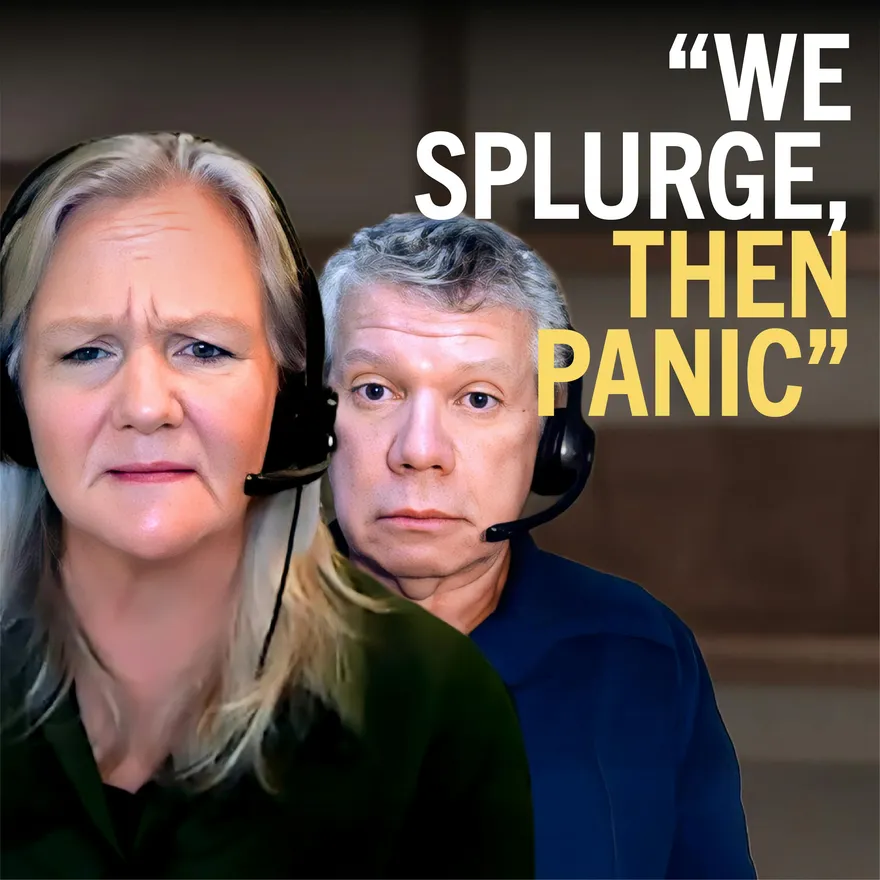

This is a preview of the Shortform summary of the Dec 23, 2025 episode of the I Will Teach You To Be Rich
Sign up for Shortform to access the whole episode summary along with additional materials like counterarguments and context.
1-Page Summary
Cheryl and Michael's Personal Financial History and Mindsets
Cheryl and Michael bring distinct financial perspectives shaped by their upbringings. Cheryl, coming from a modest background where money was often tight, developed a cautious approach to spending and a strong desire for financial independence. She views money as a tool for fulfillment and has never combined finances, even in marriage. Michael, influenced by his father's post-WWII "grasshopper" philosophy, believes in enjoying money rather than saving extensively, though he maintains some of his mother's financial caution. Their contrasting approaches—Cheryl as a "late blooming ant" and Michael as a "grasshopper"—create an interesting dynamic in their relationship.
Analysis of Their Current Financial Standing and Spending
The couple's net worth stands at $828,000, comprising $455,000 in assets, $517,000 in investments, $42,756 in savings, and $186,000 in debt. Ramit Sethi suggests they need more precise financial planning, especially considering their upcoming transition from a $191,000 annual income to $100,000 in retirement. Their fixed costs are relatively modest at 37% of income, though Michael, despite earning only 25% of their household income, covers a disproportionate 64% of his income in fixed costs.
Planning For Their Ideal "Rich Life" In Retirement
Cheryl and Michael envision an active retirement filled with travel and pursuing their passions. Cheryl, influenced by her experience with cancer, dreams of visiting destinations like the Faroe Islands and Machu Picchu. Michael hopes to attend jazz festivals worldwide. However, they differ in their approach to timing: Cheryl, currently around 70, is eager to retire soon, while Michael expresses more caution about their long-term financial security.
Financial Advising and Joint vs. Separate Money Management
The couple expresses dissatisfaction with their current financial advisor's generic approach. Ramit Sethi recommends they consider switching to a fee-based fiduciary advisor for more personalized guidance. While Sethi suggests combining their finances for better oversight, Cheryl and Michael maintain separate accounts, splitting bills and managing their earnings individually. This arrangement, while different from Sethi's recommendation, appears to work well for their relationship dynamic.
1-Page Summary
Additional Materials
Clarifications
- The "grasshopper" philosophy refers to the fable of the grasshopper and the ant, where the grasshopper enjoys life without saving for the future. It implies prioritizing present enjoyment over long-term financial security. This approach can lead to financial risk if savings are insufficient later. Michael's father likely encouraged spending on experiences rather than strict saving.
- The "ant and grasshopper" fable is a classic story illustrating two approaches to work and money. The ant works hard and saves during the summer to prepare for winter, symbolizing prudence and planning. The grasshopper enjoys the present without saving, representing a carefree, spendthrift attitude. Cheryl as a "late blooming ant" means she is cautious and focused on long-term security, while Michael as a "grasshopper" enjoys spending and living in the moment.
- Combining finances in marriage can simplify budgeting, tax filing, and long-term financial planning by providing a clear overall picture. It often fosters transparency and shared responsibility for expenses and goals. Keeping finances separate allows for individual control and may reduce conflict over spending habits. However, it can complicate joint financial decisions and obscure the couple’s total financial health.
- A fee-based fiduciary advisor is legally required to act in the client's best interest, minimizing conflicts of interest. They typically charge a transparent fee, such as a percentage of assets managed, rather than earning commissions from product sales. Other advisors may earn commissions, which can create incentives to recommend certain financial products. Choosing a fiduciary advisor often leads to more personalized and unbiased financial advice.
- Michael paying 64% of his income in fixed costs is notable because it leaves him with very little disposable income for savings or discretionary spending. Since he earns only 25% of the household income, his high fixed expenses create financial strain and reduce his financial flexibility. This imbalance can cause stress and limit his ability to contribute to joint financial goals. Ideally, fixed costs should be proportionate to income to maintain financial stability.
- When transitioning from a higher income to a lower retirement income, careful planning ensures expenses align with reduced cash flow. Without precise budgeting, retirees risk depleting savings too quickly or facing financial shortfalls. Planning also accounts for inflation, healthcare costs, and lifestyle changes that affect spending. This helps maintain financial security and desired quality of life throughout retirement.
- Fixed costs are regular, recurring expenses that do not change much month to month, such as rent, mortgage, insurance, and loan payments. They are important in budgeting because they represent the minimum amount of money that must be spent regardless of income fluctuations. Understanding fixed costs helps individuals plan how much flexible spending money remains after covering essentials. Comparing fixed costs to income shows how much financial flexibility or strain a person or household may have.
- Net worth is the total value of what a person owns (assets) minus what they owe (debt). Assets include everything valuable, such as property or investments, which can grow wealth over time. Savings are liquid assets, easily accessible for emergencies or short-term needs. Managing debt is crucial because high debt reduces net worth and can limit financial flexibility.
- A serious illness like cancer often prompts people to reassess life priorities and focus on meaningful experiences. Facing mortality can increase the desire to fulfill long-held travel dreams. This shift often leads to prioritizing time and experiences over accumulating wealth. Cheryl’s cancer likely motivated her to pursue travel destinations she values deeply.
Counterarguments
- Cheryl's cautious approach to spending, while prudent, might limit the couple's ability to enjoy their wealth in the present, potentially leading to regrets about missed experiences.
- Maintaining separate finances in marriage, as Cheryl and Michael do, can be beneficial for independence but may also lead to inefficiencies or a lack of unity in financial goals and retirement planning.
- Michael's "grasshopper" philosophy could put the couple at risk of financial instability, especially in the face of unexpected expenses or economic downturns.
- The couple's net worth and asset distribution suggest a solid financial foundation, but their debt level could be a concern, especially as they transition to a lower income in retirement.
- While their fixed costs are a modest percentage of their income, Michael's higher proportion of income going to fixed costs could indicate an imbalance that might strain the relationship or his personal finances.
- Their retirement plans, though aspirational, may not be fully realistic or sustainable given their financial situation, especially if they haven't accounted for potential increases in healthcare costs or other unforeseen expenses.
- The desire to retire soon, particularly from Cheryl, might be at odds with the need for more comprehensive financial planning to ensure long-term security.
- Dissatisfaction with their current financial advisor could be due to a mismatch in communication styles or expectations, and not necessarily the quality of the advice given.
- While Ramit Sethi's recommendation to switch to a fee-based fiduciary advisor is sound, it's important to note that even fiduciary advisors can have different levels of expertise and approaches, so finding the right match is crucial.
- The recommendation to combine finances for better oversight is a common financial strategy, but it may not be the best approach for every couple, especially if they have established a system that works well for their unique circumstances.
Get access to the context and additional materials
Cheryl and Michael's Personal Financial History and Mindsets
Cheryl and Michael share their personal financial histories and mindsets, offering insights into how their past experiences shape their current relationships with money.
Cheryl's Background Shaped Her Views on Money, Independence
Cheryl's Modest Upbringing Fostered Financial Independence and Spending Caution
Cheryl sees money as a tool to achieve fulfillment and do things she wants and connects making money with the ability to fulfill oneself. Her modest upbringing, with a family in which money was always a problem, fostered a sense of financial independence and caution in spending. Her father's inconsistent income due to strikes and the volatility of the airline industry after his military service led him to take on additional jobs. Cheryl's parents' strategy of buying and selling houses to move up the financial ladder and her mother's frugal shopping behavior, except for an affection for Baskin-Robbins ice cream, influenced Cheryl's grocery shopping behavior and her feelings about spending money on herself.
As she grew up, Cheryl developed an active and purpose-driven approach toward finances. She believed in her utility of money for personal satisfaction and began to feel deserving of spending on herself, particularly after her son finished college and more funds become available, enabling her to enjoy her earnings and activities like traveling to the Chelsea Flower Show in London.
Cheryl's resilience is evident in her life's transitions from living extravagantly to forging a late-blooming career on Wall Street, dealing with personal loss, raising a child alone, and maintaining her financial independence. She has never combined her finances, even in marriage, as she believes in maintaining her independence, influenced by watching her mother's dependency on her father's income.
Family History Shaped Michael's "Grasshopper" Approach to Money
Michael's Parents, Shaped by the Great Depression and WWII, Prioritize Enjoying Money Now Over Saving
Michael's father, who grew up during the Great Depression and served in WWII, believed money was meant for enjoyment rather than saving. This "grasshopper" approach suggests a belief in the unpredictable and short nature of life, accompanied by simple tastes in food and a philosophy of reusing and repairing rather than discarding.
After WWII, Michael's parents started ...
Here’s what you’ll find in our full summary
Cheryl and Michael's Personal Financial History and Mindsets
Additional Materials
Actionables
- You can create a "fulfillment fund" by setting aside a small percentage of your income each month to spend on activities or items that bring you personal joy. For example, if you love art, allocate funds to visit a new exhibit each month, or if you're a foodie, try a new restaurant that excites you. This practice helps you connect spending with personal fulfillment without compromising overall financial goals.
- Develop a "financial independence tracker" using a simple spreadsheet or budgeting app to monitor your progress towards financial autonomy. Include categories for savings, investments, and income streams that are solely yours. This tool can help you visualize your journey and make adjustments as needed, ensuring you maintain a sense of control over your finances.
- Engage in a monthly "harmony dinne ...
Get access to the context and additional materials
Analysis of Their Current Financial Standing and Spending
Cheryl and Michael are evaluating their financial situation to determine if it supports their desired retirement lifestyle. Their combined net worth and spending habits are crucial to this analysis.
Cheryl and Michael's Net Worth: $828,000
Cheryl and Michael's net worth totals $828,000, with $455,000 in assets, $517,000 in investments, savings of $42,756, and $186,000 in debt. Despite these figures, they are unsure whether this will be enough for the kind of retirement they envision. Cheryl fluctuates between feeling that it's not enough and feeling proud of their net worth, influenced by suggestions that they need at least $1.5 million for retirement—a figure she doubts they will achieve. Michael believes their current net worth will sustain them for eight to ten years based on savings and social security alone. However, Ramit Sethi emphasizes the importance of precise financial planning to prevent financial strain in their later years. Given their current sizable income and investments, Sethi recommends considering an additional year of work, as retirement will bring a significant drop in income from $191,000 to $100,000. He also suggests adjusting their retirement planning to possibly include modest cuts in guilt-free spending and increasing investments for the next three years.
Unsure if This Supports Desired Retirement Lifestyle
They are currently not certain if their assets will fund the retirement lifestyle they desire. Cheryl expresses this doubt and acknowledges that they have not been intentional about planning future expenditures, like travel. Sethi challenges this mindset, highlighting the necessity of planning rather than approximating the adequacy of their funds.
Spending Modest; Fixed Costs 37% of Income
The couple has a combined gross monthly income of $15,949, equaling $191,388 annually, with fixed costs accounting for 37% of their income—lower than Sethi's recommended 50-60%. Their fixed costs are considered modest relative to their take-home income of $13,000 a month, indicating effective financial management in some aspects.
Michael Covers a High Percentage of Fixed Costs Despite Lower Income
Analysis of the couple's indivi ...
Here’s what you’ll find in our full summary
Analysis of Their Current Financial Standing and Spending
Additional Materials
Counterarguments
- The suggestion that they need at least $1.5 million for retirement is a general benchmark and may not apply to everyone's situation; Cheryl and Michael's retirement needs could be lower depending on their specific lifestyle choices and expenses.
- Michael's belief that their current net worth will sustain them for eight to ten years may be overly optimistic without considering inflation, unexpected health costs, or other unforeseen expenses that could arise during retirement.
- While Ramit Sethi's advice for precise financial planning is sound, it's also important to recognize that some level of flexibility in retirement planning can be beneficial, as it is difficult to predict all future needs and costs.
- The recommendation to work an additional year assumes that employment is guaranteed and does not consider potential health issues, job market changes, or personal preferences that might make this option unfeasible or undesirable for Cheryl and Michael.
- The suggestion to cut guilt-free spending and increase investments might not account for the couple's current quality of life and personal values, which could prioritize enjoying the present over additional financial security in the future.
- The concern about expensive trips impacting retirement savings may not consider the value Cheryl and Michael place on travel and experiences, which could be an essential part of their overall happiness and well-being.
- The criticism of Cheryl's lack of intentional planning for travel expenses assumes that this is a significant financial issue without knowing the full context of their discretionary spending and how it fits into their overall financial plan ...
Actionables
- You can create a "Retirement Vision Board" to visualize your desired retirement lifestyle, including travel aspirations, hobbies, and living arrangements. Start by gathering images and phrases that represent your retirement goals and arrange them on a board or digital platform. This visual representation can help you identify priorities and inspire a more intentional approach to saving and spending.
- Develop a "Future Expense Forecasting Tool" using a simple spreadsheet to estimate and plan for upcoming expenditures. Input anticipated costs for travel, healthcare, housing, and leisure activities, adjusting for inflation and changing circumstances. Regularly update this tool to reflect changes in your financial situation or retirement goals, ensuring you stay on track with your long-term financial planning.
- Engage in a "Spending and Saving Challenge" where you al ...
Get access to the context and additional materials
Planning For Their Ideal "Rich Life" In Retirement
Cheryl and Michael share their differing perspectives on retirement as they explore their dream of an active, travel-focused life while grappling with the financial considerations that come with it.
Cheryl and Michael Envision an Active, Travel-Focused Retirement
Caller #1, Cheryl, has a strong desire to experience life to the fullest, influenced by overcoming cancer and seeing friends pass away. She draws inspiration from her parents, who prioritized travel, and envisions trips to destinations such as the Faroe Islands, Norwegian Fjords, and Machu Picchu. Cheryl reflects her father’s legacy—an airline pilot—where her mother’s thrifty habits enabled them to make trips to places like the Galapagos.
Pursue Passions Like Music Festivals and Gardening
Michael, Caller #2, also yearns for enriching experiences, with a focus on travel and music. A jazz enthusiast, Michael dreams of attending festivals worldwide, including in Montreal, Umbria, and France. Additionally, he shares Cheryl's interest in Airbnbs equipped with decent kitchens, allowing them to indulge in cooking even while on vacation. Furthermore, the couple embraces the idea of mixing joint activities with individual interests, such as Cheryl's passion for gardening, highlighted by her wish to revisit the Chelsea Flower Show.
Debating Retirement Vs. Continuing to Build Savings
Cheryl Dreams Of Retiring Soon, While Michael Is Cautious About Finances
While Cheryl, freshly inspired by a life-threatening illness, expresses an eagerness to retire soon and fully engage in life's experiences, Michael harbors concerns about their long-term financial security. The couple's discussions center around the timing of their trips; Cheryl advocates for embracing the present, whereas Michael worries about the financial implications.
Cheryl, still actively working alongside her side hustle, is contemplating retirement at around 70 years of age but is torn due to the comfort her current income provides. Though their financial advi ...
Here’s what you’ll find in our full summary
Planning For Their Ideal "Rich Life" In Retirement
Additional Materials
Clarifications
- The Faroe Islands are a remote North Atlantic archipelago known for dramatic landscapes and unique culture. The Norwegian Fjords are deep, glacially carved valleys famous for stunning natural beauty and outdoor activities. Machu Picchu is an ancient Incan city in Peru, renowned for its archaeological significance and breathtaking mountain setting. The Galapagos Islands are a volcanic archipelago in the Pacific Ocean, famous for unique wildlife and Charles Darwin’s evolutionary studies.
- The Chelsea Flower Show is a prestigious annual event held in London, showcasing innovative garden designs and horticultural excellence. It is organized by the Royal Horticultural Society and attracts gardening enthusiasts, designers, and celebrities worldwide. The show is a symbol of gardening culture and creativity, often setting trends in garden design. Attending it is considered a special experience for those passionate about gardening and nature.
- A "side hustle" is a part-time job or small business someone does in addition to their main job to earn extra income. In retirement planning, it can provide additional financial security and flexibility by supplementing savings and pensions. It may also allow a gradual transition into retirement rather than stopping work abruptly. This extra income can help fund travel or other retirement activities without depleting savings too quickly.
- Retiring later, such as around age 70, often increases Social Security benefits due to delayed claiming, resulting in higher monthly payments. It also allows more time to save and invest, growing retirement funds and reducing the risk of outliving savings. However, retiring later means fewer years to enjoy retirement activities and potential ongoing work-related stress. Balancing these factors is key to deciding the optimal retirement age.
- A financial advisor helps individuals plan their finances to meet long-term goals like retirement. They analyze income, expenses, savings, and investments to recommend when and how to retire safely. Advisors also consider risks such as healthcare costs and inflation to ensure financial security. Their guidance balances enjoying retirement now with preserving funds for the future.
- Healthcare costs in retirement can be unpredictable and often increase with age. Copays are out-of-pocket fees paid when receiving medical services, adding to regular expenses. These costs can quickly deplete retirement savings if not planned for adequately. Therefore, retirees must budget for ongoing and unexpected medical expenses to maintain financial security.
- Balancing joint activities with individual interests in retirement means couples spend time together doing shared hobbies while also pursuing personal passions separately. This approach helps maintain personal identity and prevents feelings of loss or boredom. It encourages mutual support and respect for each other's preferences. Ultimately, it fosters a ...
Get access to the context and additional materials
Financial Advising and Joint vs. Separate Money Management
Cheryl and Michael are hitting a crossroads regarding their financial management, including the value of their current financial advisor, the fees involved, and their personal approach towards handling joint or separate finances.
Cheryl and Michael Discontent With Generic Financial Advice
Review Fees and Consider Switching To Fee-based Fiduciary Advisor
Cheryl and Michael are contemplating a transition in their financial advisory services due to discontent with the generic advice provided by their current financial planner. Cheryl and Michael describe their current financial advisor as taking an automated approach, which they feel lacks personalization and relevance to their specific goals of planning their 'rich life'. Their dissatisfaction is evident, as they find the advisor's pie-chart-filled explanations insufficient and question the value of the advice given the fees they pay.
They are aware that they can determine the mechanical aspects of their finances without assistance, thanks to accessible tools and reports. Michael and Cheryl have engaged a financial planner recently, but despite this, the conversations did not reflect the granularity expected from a financial planner.
Ramit Sethi, a personal finance expert, voices concerns about financial advisors providing subpar service while charging high fees. He strongly suggests that Cheryl and Michael, especially in the context of Ameriprise’s services and products like annuities, evaluate their investments and the associated fees. Ramit recommends seeking a second opinion from a fee-based fiduciary advisor who is compensated for their time rather than through commission on products sold. The implication here is that a shift to a fiduciary advisor could prevent thousands of dollars from unnecessarily leaving their pockets.
Cheryl and Michael's awareness of their financial situation seems to be recent, and despite advice from a planner, they have not yet pinpointed their retirement plan.
Couple Uses Separate Accounts For Money Management
Ramit Suggests Joint Finances; Couple Content With Current Method
Having their finances intertwined but separate, Cheryl and Michael conduct their financial discussions possibly not more than once a month. The couple keeps their finances mostly separate, splitting the payment of bills and handling their earnings individually. Michael considers himself to be responsible for the fixed household expenses while Cheryl has freedom over her earnings. In their relationship, Cheryl and Michael operate "like two tabs on the same spreadsheet," indicating they have some joint understanding while managing their funds separately.
While their arrangements seem equitable, Ramit Sethi argues for the merits of combined finances to have a comprehens ...
Here’s what you’ll find in our full summary
Financial Advising and Joint vs. Separate Money Management
Additional Materials
Counterarguments
- While Ramit Sethi suggests that a fee-based fiduciary advisor may save Cheryl and Michael money, it's possible that their current advisor's fees are competitive and the services provided are in line with industry standards.
- The dissatisfaction with generic advice might be due to a lack of communication between Cheryl, Michael, and their advisor, rather than the advisor's lack of personalization.
- Managing finances independently with accessible tools and reports may overlook complex financial planning strategies that a professional advisor could offer.
- The couple's recent engagement with a financial planner without seeing the expected granularity could be a result of not having enough meetings to delve deeper into their financial situation.
- The argument for joint finances providing a comprehensive view is valid, but separate finances can also be managed effectively if both parties are transparent and communicate regularly.
- Cheryl's preference for financial alignment without merging accounts is a personal choice that can be respected, and it doesn't necessarily mean they will be less informed about their overall financial situation.
- The use of a Conscious Spending Plan (CSP) indicates that Cheryl and Michael are making efforts to m ...
Actionables
- You can create a personalized financial evaluation checklist to assess the quality of advice you're receiving, focusing on how well it aligns with your unique goals and situation. Start by listing your financial objectives, the level of detail you expect in advice, and the specific areas where you need guidance. Use this checklist when meeting with your advisor to ensure their service meets your expectations and to identify areas where you might need a more tailored approach.
- Develop a financial partnership agreement with your significant other to outline how you'll manage money together while respecting each other's independence. This agreement could detail how you'll share expenses, save for joint goals, and maintain individual accounts. It should be a living document that you both revisit and adjust as your financial situation and goals evolve.
- Experiment with a hybrid financial management system that combines joint oversight with in ...
Get access to the context and additional materials


Create Summaries for anything on the web
Download the Shortform Chrome extension for your browser
