

70. The Spiritual Isolation Phase
In this episode of Aware & Aggravated, Leo Skepi shares insights from his spiritual awakening and recent period of isolation. He explores the nature of consciousness and the true self, describing how awareness exists separately from thoughts, emotions, and physical form. Leo discusses how external systems and ideologies can trap consciousness in false beliefs, and explains his realization about the limited nature of free will—that true freedom lies in choosing where to direct one's attention.
Leo also describes the shift from seeking external validation through social media metrics and success to finding peace through internal validation. He covers the transformative effects of this inner realignment on his daily life, including changes to his creative process, eating habits, and productivity. Throughout the episode, Leo emphasizes the power of presence and authentic creation that flows from inner alignment rather than forced effort or external pressure.


This is a preview of the Shortform summary of the Aug 2, 2026 episode of the Aware & Aggravated
Sign up for Shortform to access the whole episode summary along with additional materials like counterarguments and context.
1-Page Summary
Spiritual Awakening and the Nature of Consciousness
Leo Skepi shares insights from his spiritual awakening, exploring how consciousness reveals truths that dissolve suffering and false beliefs. His journey moved from seeking external answers to recognizing the eternal awareness that is the true self.
True Self Exists As Pure Awareness, Separate From Ego and Form
The core insight is that the true self is not the body, thoughts, or emotions, but rather the witness—the pure awareness perceiving these experiences. As Leo describes, "to be able to experience something, your attention has to be on it… So if I can perceive Leo, I'm not Leo. I am... the one witnessing it." Anything that can be observed is not the observer. The sense of separation causing suffering is an illusion projected by ego, not by eternal consciousness itself. God self-actualizes by focusing down into points of awareness, with every person representing one such point.
External Systems and Ideologies Trap Consciousness in False Beliefs Causing Suffering
Rigid spiritual ideologies and literal interpretations of religious texts create traps for consciousness. Leo explains how "Adopting certain mindsets from the Bible locked me in my own version of hell in this life." Trying to find fixed ways to understand life through external systems proved futile, as there is no truth to be found in the external world. This continual disappointment led to a crisis of trust in external sources of truth, ultimately causing Leo to turn inward, seeking the unchanging source of truth within.
Recognizing Lack Of Free Will Liberates Consciousness From Control
A critical realization on Leo's spiritual path is the lack of true free will. He explains that "The only free will we have in this life is where we place our attention and our focus." Real freedom comes not from controlling outcomes but from choosing where to direct awareness. Recognizing that awareness itself cannot cease to exist alleviates anxiety about survival and dissolves the ego's constant drive for self-preservation, freeing consciousness from stress and allowing for a more peaceful experience of being.
Shifting From External Validation to Internal Validation
Liberation From Metrics, Success, and Approval Reveals Hollow Validation
Leo describes how his self-worth was once built entirely on external validation—social media views, follower counts, comments, and income. When an extended period of isolation limited access to these sources, he noticed his well-being remained unaffected. With attention finally focused inward, nothing external could dictate his worth.
Fear Of Wasting Prime Years Dissolves When Recognizing External Success as Temporary
Previously, Leo feared "wasting" his prime years whenever he took breaks from external pursuits. While many would label his spike in online numbers and financial success as his "prime," Leo now sees that period as hollow. Since turning inward, he reports a level of internal peace and authentic creativity that feels truer than any surge in external achievement. He recognizes that what matters is his present well-being and the genuine things he creates.
Internal Validation Fosters Contentment Without External Proof
Leo no longer needs external proof of a positive life; his inner sense of peace is all the evidence he needs. Journaling supports his self-awareness, and the compulsion to shape others' perceptions has faded, replaced by trust in simply being himself.
The Power of Attention and Presence
The power of attention and presence lies in recognizing how internal states project onto external experiences and how mindful witnessing dissolves suffering.
Internal Projection Shapes Reality Experience
Leo explains that external circumstances are projections of internal states, showing that nothing truly comes from the outside but is a mirror of inner awareness. By consciously placing attention where it is wanted, the world is revealed as a holographic reflection of one's inner condition.
Observing Thoughts and Emotions Prevents Suffering
During isolation, Leo observes that ego-driven thoughts and survival impulses flash through the mind like projections. He notes that these impulses are not commands but patterns that can be witnessed and allowed to pass. Practicing this witnessing reduces the compulsive need to act on every thought, stripping these patterns of their power.
Sitting With Discomfort Reveals Most Suffering Comes From Projected Futures
Leo experiences that resistance is mental rather than experiential. Sitting with discomfort reveals that most suffering comes from projections of what might happen rather than the present moment. By remaining present with uncomfortable thoughts while taking action, he finds that imagined suffering rarely matches reality.
Authentic Creation From Essence
Leo explores the difference between genuine, inspired creation and rushed, audience-driven output, emphasizing that true artistry comes from a flow state.
Creation Emerges From a Flow State, With the Creator as a Conduit
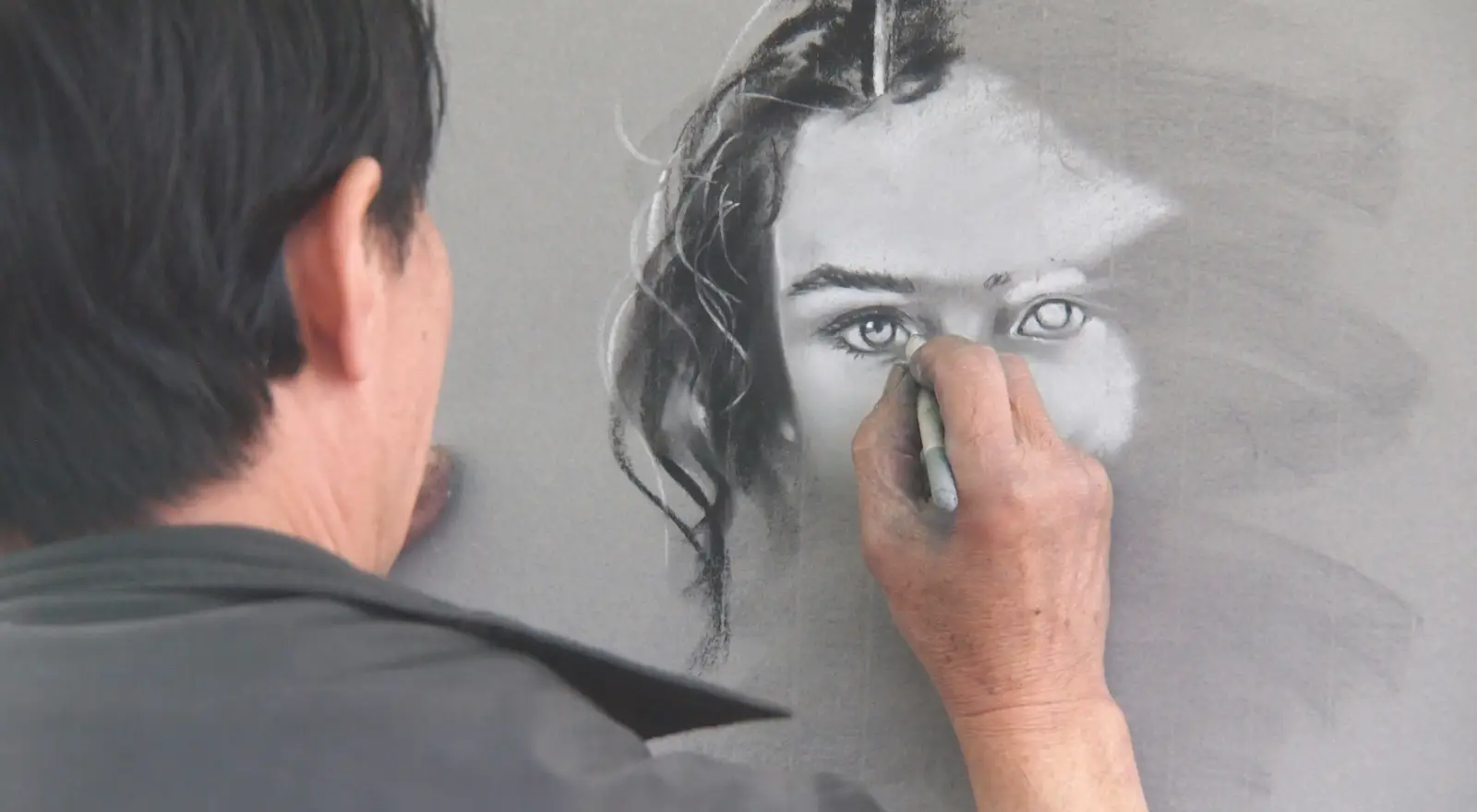
Leo describes his recent return to drawing and designing, noting a surge in creative output since letting go of external approval. In the flow state, a creator's perception of self fades away, and something greater moves through the artist. He contrasts this effortless creation with hurried, audience-driven work that lacks substance and authenticity.
Journaling With Honesty Uncovers One's Genuine Voice
For Leo, journaling becomes a space for total honesty and self-exploration. He journals for several hours daily, not to record events but to gain clarity. Through this honest exercise, journaling becomes a training ground for authentic creation, allowing his creativity to skyrocket as he expresses himself with truth and without reservation.
Art Moves People When Creators Focus On Absorption, Not Manipulation
Leo argues that the most moving art arises when creators immerse themselves in the work, forgetting time and self-consciousness. By contrast, work that prioritizes timelines and productivity metrics is drained of feeling. True value is found in authenticity, which audiences are drawn to over commercial success.
Natural Life Transformation Through Inner Realignment
Leo describes a profound and effortless transformation in major areas of his life, attributing it to inner realignment rather than willpower.
Effortless Major Shifts in Behavior and Lifestyle Through Inner Alignment
Leo shares that he has been sober for the past month, not through setting intentions or tracking, but simply by losing all desire for substances. Even in social settings where others are drinking, he is content to remain fully present. This effortless sobriety indicates a genuine inner shift, showing that lasting change naturally follows a fundamental shift in values rather than being forced through effort.
Eating Habits and Health Improve When the Body Isn't Used to Suppress Emotions
Leo reveals that his eating habits have changed organically. He has lost weight, no longer feels bloated, and reports no desire for processed foods—without any diet plans or restriction. This transformation flows from recognizing and releasing old patterns of seeking comfort through food. He also finds going to the gym every day requires no effort, arising from genuine desire to nurture himself.
Productivity and Accomplishment Improve By Focusing On Presence and Aligned Action
Leo observes that he has never been happier or more productive, yet nothing feels like an effort. Reflecting on his day, he notes accomplishing everything from packing orders to designing pieces to journaling—all achieved without planning or striving. He is often surprised to discover he has accomplished everything simply by being fully present in each moment.
Urgency's Absence and Trust in Timing Allow Authentic Endeavors to Unfold
Leo applies this relaxed, trusting approach to creative projects as well. He is excited to release new products but feels no urgency to launch them, waiting instead for genuine inspiration and right timing. This absence of urgency extends to social media, where he now shares content only when genuinely moved, trusting that waiting for inspiration leads to more authentic connections.
1-Page Summary
Additional Materials
Counterarguments
- The claim that the "true self" is pure awareness, separate from body, thoughts, and emotions, is a metaphysical assertion not universally accepted; many philosophical and scientific perspectives view consciousness as inseparable from physical processes and personal identity.
- The idea that suffering is solely an illusion created by the ego may overlook the reality of physical, psychological, and social suffering that cannot always be alleviated by shifts in awareness or perspective.
- The assertion that God self-actualizes through individual points of awareness is a theological position not shared by all religious or secular worldviews.
- The critique of external systems and religious ideologies as inherently trapping or harmful does not account for the positive roles these systems can play in providing meaning, community, and ethical guidance for many people.
- The notion that there is no truth to be found in the external world contradicts empirical approaches that rely on observation, evidence, and shared reality to establish knowledge.
- The claim that free will is limited only to the placement of attention is debated; some philosophical and neuroscientific perspectives argue for broader or different conceptions of agency and choice.
- The idea that awareness cannot cease to exist is not empirically verifiable and is contested by materialist and scientific perspectives on consciousness and death.
- Dismissing external validation as entirely hollow may ignore the importance of social feedback, recognition, and interpersonal relationships in healthy psychological development.
- The belief that internal states wholly project onto external experiences may underestimate the influence of objective external circumstances on well-being and life outcomes.
- The suggestion that major life changes can occur effortlessly through inner realignment may not reflect the experiences of individuals who require structured support, therapy, or sustained effort to change behaviors.
- The view that authenticity and internal validation are always preferable to external validation may not account for the value of balancing both internal and external sources of feedback.
- The claim that productivity and accomplishment improve without planning or striving may not be applicable or effective for everyone, especially in contexts requiring coordination, deadlines, or external accountability.
- The idea that art is most valuable when created without concern for audience or commercial success overlooks the legitimacy of art made for practical, collaborative, or commercial purposes.
Actionables
- You can set a daily five-minute timer to simply notice where your attention naturally drifts, then gently redirect it to something neutral (like your breath or a sound), helping you experience the freedom of choosing your focus rather than controlling outcomes. For example, if you catch yourself worrying about work, shift your attention to the sensation of your feet on the floor or the hum of a nearby appliance, noticing how this changes your sense of presence.
- A practical way to dissolve the urge for external validation is to create a private “internal wins” log, where you jot down moments when you felt genuine satisfaction or peace, regardless of whether anyone else noticed or approved. For instance, record when you felt calm after a tough conversation or enjoyed a meal without distraction, reinforcing self-worth from within.
- You can experiment with a “mirror check-in” each morning by looking at your reflection and silently observing any thoughts or emotions that arise, treating them as passing weather rather than facts about yourself. This helps you witness your inner state without judgment and notice how your internal awareness colors your perception of the day ahead.
Get access to the context and additional materials
Spiritual Awakening and the Nature of Consciousness
A spiritual awakening reveals profound truths about the nature of consciousness and the false beliefs that create suffering. The journey moves from seeking answers in external ideologies to recognizing the eternal, unchanging awareness that is the true self.
True Self Exists As Pure Awareness, Separate From Ego and Form
The core insight is that the true self is not the body, thoughts, or emotions. Instead, the real self is the witness—the pure awareness perceiving these experiences. As described, “to be able to experience something, your attention has to be on it… So if I can perceive Leo, I’m not Leo. I am... the one witnessing it.” This recognition leads to a distinction: anything that can be observed is not the observer. The awareness observing life is not identical with what is being lived or perceived.
The sense of separation that causes suffering is an illusion projected by the ego, not by the eternal consciousness itself. Jesus is seen as having revealed this illusion of separation. There is ultimately one source of consciousness—God or any name one gives to it. God self-actualizes by focusing down into points of awareness, with every person representing one such point. Just as an object must stand before a mirror to see its reflection, awareness needs manifestation to reflect itself. Yet the essence, the awareness, is never truly separate.
External Systems and Ideologies Trap Consciousness in False Beliefs Causing Suffering
Rigid spiritual ideologies and literal interpretations of religious texts, like the Bible, create traps for consciousness. The effort to meet external standards or live up to prescribed rules leads to a sense of obligation and even suffering: “Adopting certain mindsets from the Bible locked me in my own version of hell in this life. It’s like the spiritual perspectives locked me in a certain hell… I felt obligated to perform while I was reading the Bible.”
Trying to find a fixed way to understand life, whether through the Bible or other ideologies, proved futile. Every external system or belief attempted as a lens failed to yield the truth. There is no truth to be found in the external world, as “in anything you can perceive, you are not that.” These are simply reflections of the inner truth already present. The continual disappointment and confusion brought by outside systems ultimately led to a crisis of trust in external sources of truth.
When Frameworks Failed, Leo Turned Inward For the Source of Truth
This frustration with the external world led to an inward turn. With every external ideology proving unreliable, attention shifted inward, seeking the unchanging source of truth within: “My attention being on the external world started to become so intoler ...
Here’s what you’ll find in our full summary
Spiritual Awakening and the Nature of Consciousness
Additional Materials
Clarifications
- Pure awareness refers to the fundamental aspect of consciousness that simply observes without judgment or attachment. It is the silent, unchanging presence behind all experiences, distinct from the physical body and mental activities. Unlike thoughts or emotions, pure awareness does not arise or pass away; it remains constant. This concept is central in many spiritual traditions as the true essence of the self beyond transient phenomena.
- The "true self" as the witness means it is the part of you that notices thoughts, feelings, and sensations without being them. It is like a silent observer that remains constant while experiences change. This concept is central in many spiritual traditions, emphasizing awareness beyond the ego or personality. Recognizing this helps separate identity from transient mental and physical states.
- The ego is the part of the mind that identifies with personal identity, thoughts, and emotions. It creates a sense of "I" separate from others and the world. This sense of separation leads to feelings of isolation and suffering. Spiritual teachings often view the ego as a false self that obscures the true, unified nature of consciousness.
- The idea of a single source of consciousness suggests all individual awarenesses arise from one universal essence. This concept appears in many spiritual traditions, such as Advaita Vedanta's Brahman or the Christian idea of God as the ultimate reality. It implies that individual selves are expressions or reflections of this one fundamental consciousness. This view contrasts with seeing consciousness as fragmented or separate in each person.
- The idea of God or consciousness "self-actualizing" means that the universal awareness expresses itself through individual points of experience. Each person or conscious being is a unique focal point where this infinite awareness becomes localized. This process allows the infinite to know itself through finite forms. It is like a single light shining through many different lenses, creating diverse reflections of the same source.
- The metaphor means awareness requires forms or experiences to recognize and understand itself. Just as a mirror needs an object to show a reflection, awareness needs a manifested world to observe. Without manifestation, awareness has no content to perceive or know itself through. This highlights the interdependence of consciousness and its expressions.
- Rigid spiritual ideologies and literal religious interpretations cause suffering because they impose fixed rules and expectations that may conflict with personal experience. This creates internal pressure to conform, leading to feelings of failure or guilt when one cannot meet these standards. Such rigidity limits open exploration and understanding, trapping individuals in narrow perspectives. Ultimately, this restricts authentic spiritual growth and fosters a sense of separation and struggle.
- External systems and beliefs are created by human minds and reflect limited perspectives shaped by culture, history, and personal bias. They offer frameworks to interpret experience but cannot capture the full, direct reality of consciousness itself. Ultimate truth, in this view, is beyond concepts and cannot be fully expressed through any fixed ideology or text. True understanding arises from direct inner experience, not from external doctrines.
- Turning attention inward means focusing on your own awareness and experience rather than external events or beliefs. It involves observing your thoughts and feelings without attachment, revealing a stable sense of self beyond changing mental states. This practice helps uncover a deeper, constant presence that is the true source of understanding. It contrasts with seeking truth outside oneself, which is always subject to change and interpretation.
- The idea that free will is limited to choosing where to place attention comes fro ...
Counterarguments
- The claim that the "true self" is pure awareness, separate from body, thoughts, and emotions, is a metaphysical assertion not universally accepted; many philosophical and scientific perspectives view consciousness as inseparable from physical processes in the brain.
- The idea that suffering is caused solely by false beliefs or egoic illusions may overlook the impact of material conditions, trauma, and mental health issues, which can cause suffering independently of belief systems.
- The assertion that all external systems and ideologies are traps that fail to provide truth can be challenged; for many, religious or philosophical frameworks offer genuine comfort, ethical guidance, and meaning.
- The concept of a single, universal source of consciousness (God or otherwise) is not empirically verifiable and is disputed by atheistic, materialist, and non-dual traditions that do not posit a personal or universal consciousness.
- The notion that free will is limited only to the placement of attention is debated; some philosophical traditions argue for broader or different conceptions of free will, while others reject it entirely.
- The claim that awareness cannot cease to exist is ...


Get access to the context and additional materials
Shifting From External Validation to Internal Validation
Liberation From Metrics, Success, and Approval Reveals Hollow Validation
Leo describes how his sense of self-worth was once built almost entirely on external validation. He constantly sought proof of his value and existence through social media views, follower counts, positive comments, and income. Activities such as being out with people, monitoring earnings, and checking engagement became persistent sources of reassurance. This endless cycle of checking metrics led to sustained anxiety, as Leo admits his ego was always looking for evidence that he was doing “okay.”
When an extended period of isolation limited his access to these external sources, Leo noticed that his well-being remained unaffected by the absence of such metrics. He was still fulfilling merchandise orders and going about his routine, but with minimal effort and greater presence. The urge to check for reassurance persisted at first, but with no numbers to consult, Leo began questioning who within him was seeking that validation and what reassurance even needed to be found. The answer, he discovered, was a deep internal peace that spoke for itself. With attention finally focused inward, nothing external could command Leo’s focus or dictate his worth.
Fear Of Wasting Prime Years Dissolves When Recognizing External Success as a Temporary Spike, Not a Measure Of Living One's Best
Previously, Leo had a recurring fear that he was “wasting” his prime years whenever he took breaks or pulled back from external pursuits. At his most publicly visible—young, attractive, and amassing high engagement—he admits he felt internally lost and deteriorated. While many would label his spike in online numbers, financial success, and buzz as his “prime,” Leo now sees that period as hollow. The external was only a fleeting spike, not a meaningful measure of life’s richness.
Since turning inward, Leo reports a level of internal peace, clarity, and authentic creativity that feels truer and more fulfilling than any surge in numbers or external achievement. He recognizes that what actually matters is his feeling of well-being in the present and the genuine things he is creating. There is no real “prim ...
Here’s what you’ll find in our full summary
Shifting From External Validation to Internal Validation
Additional Materials
Clarifications
- External validation is when a person’s sense of worth depends on approval or recognition from others. Internal validation comes from self-acceptance and confidence without needing outside approval. Relying on internal validation leads to greater emotional stability and authentic self-expression. It helps individuals feel complete regardless of external circumstances.
- Social media metrics provide immediate, quantifiable feedback that people often interpret as approval or popularity. This feedback can trigger dopamine release, creating a reward loop that ties self-esteem to external validation. Over time, individuals may equate their value with these numbers, making their self-worth dependent on others' reactions. This reliance can lead to anxiety and insecurity when metrics fluctuate or decline.
- Constantly seeking reassurance from external sources can create dependency on others' approval for self-worth. This often leads to anxiety and stress, as one's mood fluctuates with external feedback. It can diminish self-trust and hinder authentic self-expression. Over time, this cycle may cause emotional exhaustion and reduce overall well-being.
- Extended isolation removes access to usual external feedback and distractions, forcing a person to turn inward. It creates a space where habitual reliance on outside validation is disrupted. This solitude allows deeper self-reflection and discovery of internal sources of peace. Over time, it can shift one’s focus from external approval to internal well-being.
- In this context, "ego" refers to the part of the self that seeks recognition and approval from others to feel worthy. It drives the desire for external validation to confirm one's identity and value. The ego often creates anxiety by depending on outside feedback for self-esteem. True internal validation arises when the ego's need for external proof diminishes.
- External success often comes in bursts tied to specific achievements or recognition, which naturally rise and fall over time. These moments can create a misleading sense of lasting value or fulfillment. True life value is more about ongoing personal growth, meaning, and well-being than fleeting external markers. Relying solely on temporary success can obscure deeper, more stable sources of happiness.
- The "prime" period in life is often seen as a peak time of youth, success, or productivity. Society tends to emphasize this phase as the most valuable or meaningful part of life. However, this idea can be limiting because it ignores ongoing growth and fulfillment beyond that phase. Viewing life as a continuous present moment challenges the notion that only certain years hold true worth.
- Journaling helps by providing a private space to explore thoughts and feelings without judgment. Writing regularly encourages reflection, revealing patterns and deeper emotions. This process clarifies personal values and motivations, fostering honesty with oneself. Over time, it strengthens the ability to recognize and express one’s true self.
- Fear of missing out (FOMO) is a psychological phenomenon where individuals feel anxiety that others are having rewarding experiences without them. It often arises from social media exposure, where curated highlights of others' lives create a sense of exclusion. FOMO can lead to compulsive checking of updates and a persistent dissatisfaction with one's ...
Counterarguments
- Internal validation, while valuable, may not be sufficient for everyone; some individuals thrive on a balance of both internal and external validation.
- External metrics and validation can provide useful feedback, motivation, and opportunities for growth, especially in professional or creative fields.
- Dismissing external achievements as "hollow" may overlook the genuine satisfaction and positive impact that external success can bring to oneself and others.
- The idea that only the present moment exists and that "prime years" are an illusion may not resonate with those who value long-term planning, ambition, or legacy.
- For some, external validation is an important part of social connection and community belonging, which can contribute positively to well-being.
- The pursuit of external goals and milestones can foster discipline, resilience, and a sense of accomplishment that inter ...
Get access to the context and additional materials
The Power of Attention and Presence
The power of attention and presence lies in recognizing how internal states project onto external experiences and how mindful witnessing dissolves suffering and resistance.
Internal Projection Shapes Reality Experience
The external world and its events do not originate from outside; rather, they reflect what is within. External circumstances are projections of internal states, showing that nothing truly comes from the outside but is a mirror of inner awareness. By consciously placing attention where it is wanted, and withdrawing it from chaos and distractions, the world is revealed as a kind of holographic reflection of one’s inner condition. This realization frees one from the fear of missing out, as peace replaces the urge for incessant consumption and activity. Leo faces the ongoing choice: feed distraction or cultivate inner peace.
Observing Thoughts and Emotions Prevents Suffering
During periods of isolation, Leo observes that ego-driven thoughts and survival impulses—such as the urge to act, check social media, or seek validation—flash through the mind like projections. He notes that these impulses are not commands but patterns that can be witnessed and allowed to pass by. For example, the urge to check for likes or engagement is seen as just another fleeting thought rather than a necessity. Practicing this form of witnessing reduces the compulsive need to act on every thought or urge, stripping these patterns of their power when not identified with them.
Sitting With Discomfort Reveals Most Suffering Comes From Projected Futures, Not Present Reality
Leo experiences that resistance, whether to unwanted tasks like going to the gym or to uncomfortable thoughts, is mental rather than experiential. Sitting with and embracing the ...
Here’s what you’ll find in our full summary
The Power of Attention and Presence
Additional Materials
Clarifications
- "Internal states projecting onto external experiences" means that our feelings, thoughts, and beliefs influence how we perceive and interpret the world around us. For example, if you feel anxious, you might see neutral events as threatening. This idea comes from psychological and philosophical views that reality is partly shaped by our mind's filters. It highlights that changing inner attitudes can alter how we experience external situations.
- The phrase "holographic reflection" suggests that the external world mirrors your inner thoughts, feelings, and beliefs, much like a hologram contains a complete image in every part. This concept comes from the idea that perception is shaped by mental and emotional states, so reality appears differently depending on one's inner condition. It emphasizes that changing your inner mindset can alter how you experience and interpret the world around you. This metaphor highlights the interconnectedness between mind and environment rather than implying a literal hologram.
- Mindful witnessing is the practice of observing thoughts and emotions without judgment or attachment. It creates a mental space where one can see impulses and feelings as temporary events rather than truths. This detachment reduces identification with suffering, weakening its hold. Over time, this awareness lessens resistance and emotional pain.
- Ego-driven thoughts arise from the sense of self and often seek validation, control, or identity reinforcement. Survival impulses are instinctual reactions aimed at protecting life and ensuring safety. While ego thoughts are linked to personal desires and social conditioning, survival impulses are primal and automatic responses to perceived threats. Both can trigger habitual behaviors but originate from different layers of the mind.
- Observing thoughts and emotions without acting on them is a mindfulness practice called "witnessing." It involves noticing mental events as passing phenomena without judgment or attachment. This creates a space between impulse and action, allowing conscious choice rather than automatic reaction. Over time, it weakens habitual patterns by reducing identification with them.
- Resistance being "mental rather than experiential" means that the discomfort or opposition we feel often arises from our thoughts and expectations, not from the actual present moment. It is the mind creating stories or fears about what might happen, rather than what is truly happening. This mental resistance can be observed and questioned, revealing it as separate from direct experience. Recognizing this helps reduce unnecessary suffering by focusing on reality instead of imagined scenarios.
- Sitting with discomfort means fully experiencing unpleasant feelings without trying to escape or change them. This practice helps reveal that much suffering arises from mental stories or fears about the future, not from the present moment itself. By observing discomfort calmly, one sees that the actual experience is often less distressing tha ...
Counterarguments
- The claim that external circumstances do not originate independently from outside but only reflect inner awareness is not supported by empirical evidence; many external events occur regardless of an individual's internal state.
- Psychological research suggests that while perception is influenced by internal states, objective reality exists independently and can impact individuals regardless of their mindset.
- The idea that suffering is primarily caused by projections about the future may overlook the reality of present, tangible hardships such as illness, loss, or trauma, which can cause suffering independent of mental projections.
- Not all urges or impulses are merely fleeting thoughts; some may signal legitimate needs or important information about one’s well-being or environment.
- The emphasis on individual attention and presence may underplay the role of social, economic, and environmental factors in shaping experience a ...

Get access to the context and additional materials
Authentic Creation From Essence
Leo Skepi explores the difference between genuine, inspired creation and the rushed, audience-driven output that dominates much of today’s artistic landscape. He emphasizes that true artistry comes from a flow state—a place of absorption, detachment from external demands, and profound honesty.
Creation Emerges From a Flow State, With the Creator as a Conduit Expressing Something Beyond Audience-Driven Production
Leo describes his recent return to drawing and designing on his iPad, noting a surge in creative output since letting go of the need for external approval or productivity schedules. He details how, in the flow state, a creator’s perception of self fades away. Instead, something greater seems to move through the artist, expressing itself unfiltered. In this state, time vanishes, bodily sensations disappear, and all that remains is the process of creation. There is no distraction or need for breaks—just total absorption.
He contrasts this effortless, inspired creation with the hurried, audience-driven work prevalent today. Art and writing shaped to meet deadlines or cater to projected reader expectations, he argues, lose their substance and authenticity. Such work lacks the vital energy and resonance that come from creating in a state of genuine flow, producing output that feels hollow and uninspired.
Journaling With Honesty, Unread by Others, Uncovers one's Genuine Voice
For Leo, journaling becomes a space for total honesty and self-exploration, free from the fear of judgment or expectation that work will be read by anyone else. He journals for several hours a day, not to record daily events but to gain clarity and understanding. His journal is a sanctuary, the only place where he can be wholly truthful. In this private practice, Leo is able to meet himself fully, exploring thoughts without any pretense.
Through this honest exercise, journaling becomes a training ground for authentic creation and communication. As Leo lets the words flow honestly and unfiltered, he discovers what it truly means to create from his essence. The clarity and emotional resonance that arise from this authenticity have allowed his creativity to skyrocket, as he expresses himself with truth and without reservation.
Art and Literature Move People When Creators Focus On Absorption, Not Manipulation or Productivity Metrics
Leo argues that the most moving art and literature arise when creators immerse themselves in the work, for ...
Here’s what you’ll find in our full summary
Authentic Creation From Essence
Additional Materials
Counterarguments
- Many celebrated works of art and literature have been created under deadlines or with audience expectations in mind, yet still possess depth, authenticity, and emotional resonance (e.g., serialized novels by Charles Dickens, commissioned paintings by Renaissance artists).
- Audience feedback and external validation can help creators refine their work, making it more accessible and impactful without necessarily sacrificing authenticity.
- The idea that flow state is the only or superior path to authentic creation may overlook the value of discipline, revision, and craftsmanship, which often require conscious effort and self-awareness.
- Some creators find inspiration and honesty precisely through engagement with their audience or through collaborative processes, rather than in isolation.
- Commercial success and popularity do not inherently negate authenticity; many widely popular works are also deeply personal and moving to both creators and audiences.
- Journaling, while valuable for self-exploration, is not the only or universally best method for fostering authenticity or creativity; other practices (e.g., collaboration, research, structured exercises) can be equally effective.
- The dichotomy between "authentic" and "audience- ...
Actionables
- you can set a timer for 20 minutes, turn off all notifications, and create something (write, draw, play music, etc.) with the intention of not stopping or editing until the timer ends, focusing only on the process and not the outcome—this helps you experience absorption and detachment from external pressures.
- a practical way to foster honesty and self-exploration is to write a daily “letter to yourself” that you never intend to share or reread, allowing you to express thoughts and feelings without any filter or concern for how they might be received.
- you can schedule a weekly “n ...
Get access to the context and additional materials
Natural Life Transformation Through Inner Realignment
Leo Skepi describes a profound and effortless transformation in major areas of his life, attributing it to inner realignment rather than willpower or forced discipline.
Effortless Major Shifts in Behavior and Lifestyle Through Inner Alignment
After a Month, Leo Is Sober From all Substances Without Intention or Tracking
Leo shares that he has been sober for the past month, not through setting intentions, tracking days, or employing strict willpower, but simply by losing all desire for drugs and alcohol. He notes that months earlier, he was drinking, using drugs at parties, and relying on weed to sleep and to experience altered states, but now he feels no urge or compulsion whatsoever. Even in social settings where others are drinking and partying, he is content to remain fully present, without wishing for an escape or altered state of consciousness. Leo values the peace and clarity this brings him, finding deep satisfaction in being fully engaged in every moment.
Value of Sobriety Over Compulsion For Substances and Weed
For Leo, sobriety now feels natural and comes with no resistance. The absence of any urge to alter his mind indicates a genuine inner shift, replacing the need to use substances with an authentic preference for clarity and presence. This effortless sobriety stands in stark contrast to his past reliance on discipline, tracking, or restricting himself, showing that lasting change naturally follows a fundamental shift in values, rather than being forced through effort.
Eating Habits and Health Improve When the Body Isn't Used to Suppress Emotions or Seek Validation
Leo reveals that his eating habits have changed organically. He has lost weight, no longer feels bloated, and reports no desire for processed foods—without any diet plans, goals, or restriction. Binge eating has ceased entirely. The change feels effortless, with Leo experiencing a natural aversion to processed foods and an intuitive relationship with eating. This transformation flows from recognizing and releasing old patterns of seeking comfort or validation through food.
Leo also finds going to the gym every day requires no effort or guilt. Self-care feels natural, arising from a genuine desire to nurture himself rather than from ego-driven productivity or external motivation. He regards the state of effortless self-discipline as a sign of true alignment with his needs and values.
Productivity and Accomplishment Improve By Focusing On Presence and Aligned Action
Leo's Productivity Flows Naturally From His Being
Leo observes that he has never been happier or more productive, yet nothing he does feels like an effort. Reflecting on his day, he notes that he has packed and fulfilled orders, gone to the gym, designed new pieces, journaled, cleaned the house, and finished the dishes—all achieved without planning or striving. He is often surprised to discover he has accomplished everything simply by being fully present and respons ...
Here’s what you’ll find in our full summary
Natural Life Transformation Through Inner Realignment
Additional Materials
Counterarguments
- While Leo’s experience of effortless transformation is valid for him, many people find that lasting behavioral change often requires ongoing effort, structured support, and sometimes professional help, especially with substance use or disordered eating.
- The idea that inner realignment alone can resolve compulsive behaviors may not account for the complex psychological, social, and physiological factors involved in addiction and habit change.
- For some individuals, relying solely on inspiration or waiting for “natural alignment” could lead to procrastination or neglect of important responsibilities, especially in professional or creative contexts.
- The absence of planning or discipline may not be practical or effective for everyone, as many people benefit from goal-setting, routines, and external accountability.
- Suggesting that willpower and discipline are unnecessary might inadvertently minimize the struggles of those who do not experience effortless change and cou ...
Actionables
- you can create a daily five-minute check-in where you ask yourself what feels genuinely appealing or nourishing right now, then choose one small action based on that answer, helping you notice and follow authentic preferences rather than default habits or external pressures (for example, choosing a walk, a glass of water, or a quiet moment instead of reaching for snacks or distractions).
- a practical way to foster effortless change is to keep a “values in action” journal, where you jot down moments when your actions felt easy and satisfying, then reflect on what underlying value was present (such as peace, clarity, or connection), helping you recognize and reinforce your true motivations.
- you can experime ...
Get access to the context and additional materials


Create Summaries for anything on the web
Download the Shortform Chrome extension for your browser
