

Freedom vs. Safety: Axon CEO Rick Smith on the Future of Policing
In this episode of the All-In podcast, Axon CEO Rick Smith discusses his company's evolution from Taser manufacturer to comprehensive public safety technology platform. Smith shares the origin story of Axon, including early struggles to gain acceptance, a crisis involving short sellers and lawsuits, and the strategic pivot to software and cloud-based solutions that transformed the business model.
The conversation explores body cameras' role in police accountability, particularly how Ferguson became the turning point for nationwide adoption. Smith also addresses Axon's expansion into broader surveillance technologies, including drones and license plate readers, and the civil liberties concerns these tools raise. The episode examines ethical safeguards, oversight mechanisms, and Smith's vision for autonomous systems in future policing—including the potential role of robots—while grappling with the tension between enhanced public safety capabilities and the risks of concentrated government surveillance power.
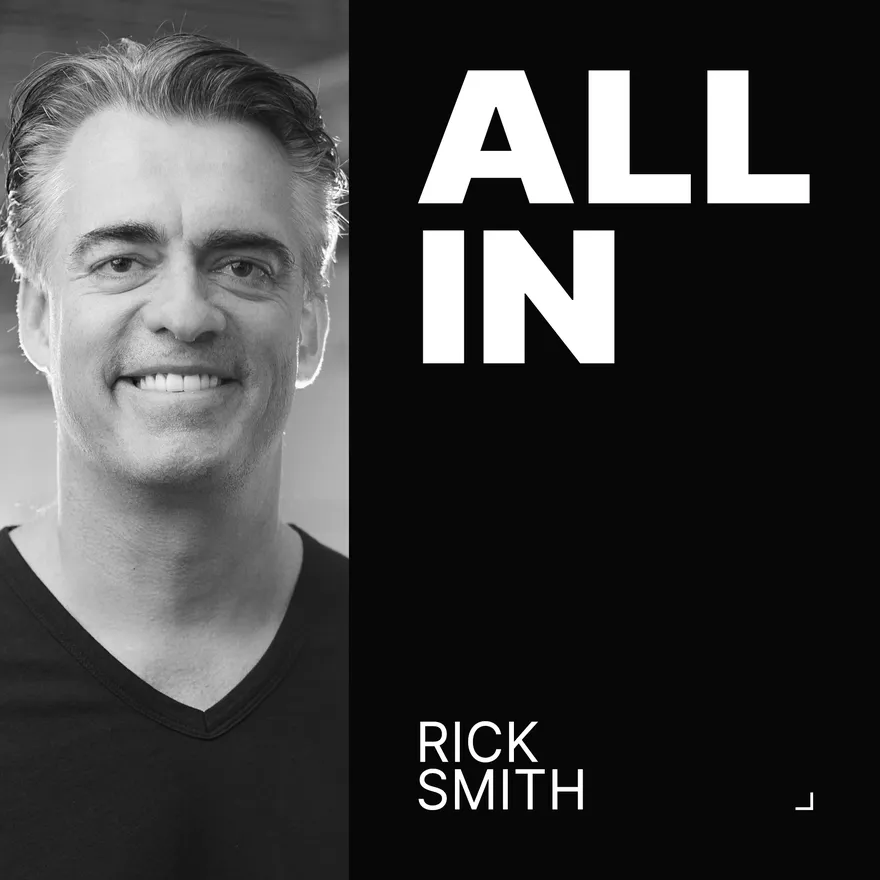

This is a preview of the Shortform summary of the Nov 10, 2026 episode of the All-In with Chamath, Jason, Sacks & Friedberg
Sign up for Shortform to access the whole episode summary along with additional materials like counterarguments and context.
1-Page Summary
Axon: From Taser to Public Safety Platform
Company Origins and Early Challenges
Rick Smith founded Axon after realizing during his graduate studies in Europe that U.S. gun violence demanded less-lethal alternatives. Inspired by Star Trek's phaser concept, Smith discovered the original Taser, invented by a NASA scientist in the 1970s, and partnered with the inventor to build new devices in his garage.
Smith initially targeted consumers but found that without police endorsement, the public remained skeptical. The company pivoted to law enforcement, demonstrating the product's effectiveness through hands-on demos where officers were challenged to resist the Taser for $100. This grassroots approach worked, and within a year, the company achieved positive cash flow. Despite Smith's connections, venture capitalists rejected the business as non-digital during the late 1990s. Facing collapse, Smith's father and another investor each risked $500,000 for a final attempt. By 1999, the company was profitable and went public in 2001 at a $12 million valuation, with founders retaining full ownership.
Crisis and Resilience
In 2004-2005, Axon faced a major crisis when short sellers orchestrated an attack aided by an internal mole, triggering an SEC investigation and hundreds of lawsuits. The company's stock plummeted from $33 to $7. Smith refused his insurer's push to settle early, instead threatening legal action against the insurer itself and defending vigorously against baseless claims. This aggressive strategy ultimately left Axon with zero pending lawsuits, strengthening its legal and ethical standing.
Transformation to Software Platform
Around 2007-2009, Smith brought in Hadi Paltrow as part-time CTO to guide the company's shift from hardware to software. Paltrow steered the company through a near-catastrophic data center outage by advocating a decisive switch to cloud services with AWS and Azure. He also pushed for rebranding from "Taser" to "Axon" to reflect the company's broader vision as a comprehensive public safety technology platform.
Body Cameras and Police Accountability
Development and Initial Resistance
Smith's journey toward body camera technology began during a trial where he realized officers needed objective video evidence to accurately convey their perspective during critical moments. However, when first launched, police officers resisted body cameras for nearly seven years, viewing them as "Big Brother" surveillance. Smith notes that a police union leader observed a dramatic shift: after 90 days of use, officers refused to patrol without cameras because they protected against false accusations, particularly claims of sexual assault or excessive force.
Ferguson as Turning Point
Smith points to the 2014 Michael Brown shooting in Ferguson as the pivotal event that transformed body cameras into essential police equipment nationwide. Without video evidence, conflicting narratives about the incident were impossible to verify. After Ferguson, both civil rights advocates and police unions agreed on the need for body cameras, accelerating nationwide deployment.
The sudden surge in demand made cloud technology essential, as most departments lacked resources for robust video server infrastructure. Smith notes that Axon now manages over a million officers uploading two hours of footage daily—more video content than YouTube, though for fewer viewers.
Impact on Police Accountability Debates
Smith asserts that body cameras have yielded two significant outcomes: they prevent false allegations against officers and have revealed that the vast majority of police officers act appropriately. He counters criticism from civil liberties groups who claim body cameras are "broken" for not uncovering expected misconduct, suggesting instead that the lack of incriminating footage reflects the reality of appropriate police conduct.
Surveillance Technology Expansion
New Capabilities and Civil Liberties Concerns
Axon has expanded beyond body cameras into broader surveillance technologies, partnering with Skydio to become the top investor in the leading U.S. autonomous drone firm. These drones can launch from stations citywide and reach incident scenes within seconds, sometimes before 911 operators complete call intake. The company has also developed license plate reader technology, enabling comprehensive monitoring of citizen movement.
Smith acknowledges these tools raise important questions, as Americans now encounter surveillance everywhere—in homes, businesses, smartphones, and public spaces. State surveillance is expanding beyond traditional evidence gathering into continuous monitoring and predictive policing, fueling civil liberties discourse.
Opposition and Community Tensions
Resistance to surveillance technologies is growing. After a Ring camera Super Bowl advertisement, backlash centered on the "creepiness" of constant observation. Several city councils have rejected Flock camera installations, citing surveillance state fears. Cases of misuse, like officers conducting unauthorized license plate searches on acquaintances, expose how easily surveillance technology may be misapplied.
Smith observes that the debate reveals competing values: wealthier neighborhoods tend to resist surveillance over theoretical overreach concerns, while high-crime communities often welcome these tools for security. He emphasizes that balancing public safety with civil liberties requires thoughtful design, regulation, and data governance, with federal guidelines ensuring technologies both fight crime and include stringent safeguards against abuse.
Ethical Safeguards and Oversight
AI Ethics Board and Redesign
Smith explains that the company established an AI ethics board with civil liberties advocates and police critics to address privacy concerns. In June 2022, controversy erupted when the board rejected a Taser-equipped surveillance drone proposal for school shootings, and some members resigned when the company pursued it anyway. Responding to criticism, the company rebranded the group as the Equity and Ethics Advisory Council, increasing representation from communities most affected by over-policing.
Design-First Accountability
Smith details strong security controls built into license plate readers and applauds legislative measures like Senator Hawley's bill, which proposes criminal penalties for unlawful police access and multi-official authorization requirements. Any officer attempting personal searches, like tracking an ex-partner, would need another officer to also risk their career, deterring abuse. Smith emphasizes that new robotic systems can enforce real-time multi-key and administrator approval, with civilian oversight built into their operation.
Smith concedes no system is entirely abuse-proof but believes design choices can significantly reduce misuse opportunities, aspiring to build "the least abusable technology in policing."
Autonomous Systems in Future Policing
Vision for Drones and Robots
Smith predicts millions of drones will soon be deployed across the United States, reaching police scenes ahead of officers to assess situations and prevent escalation. David Friedberg highlights that five companies will launch humanoid-like robots for commercial sale within 12 to 18 months at $10,000 to $30,000. Smith agrees humanoid robots will become part of policing in 10–15 years, though drone adoption will be faster.
Crucially, Smith emphasizes a "bright line": any decision involving force remains with humans. Even non-lethal tools like the TASER drone require human oversight and multi-key, real-time authorization from an administrator.
Institutional Decision-Making and Safety
Smith explains that current practices, especially home entries, produce extreme stress for officers, heightening mistake risk. In the envisioned future, a team would operate robots rather than a single officer under fight-or-flight conditions. Mistakes involving robots would result in non-lethal outcomes like tasers rather than firearms, with every action recorded. This institutional decision-making aims to produce fewer mistakes and abuses, converting force from an individual, lethal act to a coordinated, non-lethal action.
Balancing Power and Safety
Despite the promise of safer policing, Friedberg voices concern over concentrated technological power in government hands. Smith acknowledges the risk but argues that police falling too far behind societal technology levels poses other dangers. He calls for evolving laws, regulation, oversight, and democratic controls to ensure government accountability.
Smith argues that completely defunding or abolishing police brings catastrophic consequences, citing the 1968 Montreal police strike's "Night of Terror" and recent cases where decriminalizing shoplifting led to business closures and economic decline in San Francisco. He concludes that while democracies can recover from policy experiments like defunding police, such recoveries come at the cost of unnecessary suffering, urging careful adoption of controls as policing technology evolves.
1-Page Summary
Additional Materials
Counterarguments
- The claim that body cameras have revealed most police conduct is appropriate is contested; numerous studies and civil rights organizations argue that body cameras often fail to capture critical moments due to officer control over activation, camera placement, or technical limitations, potentially undermining their effectiveness as accountability tools.
- The assertion that surveillance technologies are more welcomed in high-crime communities is challenged by research and advocacy from groups within those communities who express concerns about over-policing, racial profiling, and the disproportionate impact of surveillance on marginalized populations.
- The effectiveness of technological safeguards, such as multi-key authorization and civilian oversight, in preventing misuse of surveillance tools is questioned by privacy advocates who point to persistent incidents of unauthorized access and abuse even in systems with such controls.
- The narrative that police body cameras and surveillance technologies primarily protect officers from false accusations may downplay ongoing concerns about police misconduct that is not always captured on video or is subject to interpretation, editing, or loss.
- The expansion of predictive policing and surveillance technologies has been criticized for perpetuating systemic biases, as algorithms can reinforce existing patterns of discrimination present in historical policing data.
- The argument that defunding or abolishing police leads to catastrophic consequences is debated; some experts and activists advocate for reallocating police funding to social services, mental health, and community programs, citing evidence that such investments can reduce crime and improve public safety without traditional policing.
- The involvement of private companies like Axon in public safety raises concerns about profit motives influencing the deployment and design of surveillance and policing technologies, potentially prioritizing market expansion over civil liberties or community needs.
- The resignation of members from Axon's ethics board following disagreements over controversial projects suggests that internal oversight mechanisms may lack sufficient independence or authority to meaningfully influence company decisions.
Actionables
- you can review your local police department’s public technology policies and submit a short, specific suggestion for how they could improve transparency or oversight, such as requesting regular public reports on surveillance tool usage or proposing a civilian review panel for technology deployment decisions; this helps ensure community voices shape the balance between safety and civil liberties.
- a practical way to understand and influence surveillance in your area is to map out visible cameras, drones, and license plate readers in your neighborhood, then share your findings with neighbors and local officials to start a conversation about where surveillance is appropriate and where it might be excessive.
- you can write to your city council or local representatives asking them to support laws that require multi-person authorization and independent oversight before police can access surveillance data, referencing the importance of checks and balances to prevent misuse and protect privacy.


Get access to the context and additional materials
Axon: Founding, Challenges, and Evolution From Taser to Public Safety Platform
Company's Origin: Reducing Gun Violence With Less-Lethal Alternatives
Rick Smith’s journey to founding Axon begins during his graduate school years in Europe, where concern from European students about U.S. gun violence sparks a realization. Aware of several personal acquaintances lost to shootings, Smith grows convinced that reliance on old bullet technology is outdated and detrimental. He imagines a future using non-lethal means to stop threats, inspired by Star Trek’s phaser, where conflict does not have to result in death.
Smith discovers the original Taser, invented in the 1970s by a NASA scientist living in Tucson, Arizona. After reaching out via patent filings, Smith and the 73-year-old inventor partner up, forming a startup in his garage. They begin building new Tasers using parts from Ace Hardware, aiming for a design that would receive federal approval as a non-firearm, thereby avoiding legal obstacles and opening the door to broad civilian use.
Company Pivoted From Consumer Market Struggles to Law Enforcement Sales, Sparking Explosive Growth
Early Market Efforts Faltered Without Police Adoption, Highlighting the Need for Institutional Credibility Before Consumer Buy-in
Smith’s original vision targets the consumer market—he hopes people like his own mother will choose a Taser over a gun for self-defense. However, the product faces an uphill battle: without police endorsement, consumers remain skeptical. The logic from potential customers is clear—if police aren’t using it, why should they? Moreover, earlier generation Tasers lack sufficient stopping power, earning a poor reputation, as seen in incidents like Rodney King’s.
To address this, Smith and his team tune the device’s nerve stimulation for real incapacitation. Marketing budgets are scarce, so their approach relies on hands-on demonstrations. A former Marine drives across the country in a Winnebago, offering police officers $100 if they can resist the Taser during a demo. The effectiveness wins over the initially skeptical officers, and proven value converts to purchase orders. Within a year, the company is cash-flow positive.
Secured Funding via Friends and Family After VC Rejection, Smith's Father Risked $1M For Survival
Despite Smith’s connections through his serial entrepreneur father, venture capitalists dismiss the business as unconventional and non-digital in the late 1990s. Facing two failed product launches and nearing collapse, Smith’s father and another investor each commit $500,000—risking their financial security on one final attempt. Surviving solely on this last $1 million, the team redesigns, tools, and launches the police Taser. These shoestring efforts pay off, culminating in their first taste of profitability and, soon after, a pivotal IPO.
After Achieving Profitability In 1999, the Company Went Public In 2001 At a $12 Million Valuation, Allowing Founders to Maintain Ownership and Reap Substantial Returns
By the end of 1999, the company is profitable, which aligns serendipitously with the burst of the dot-com bubble. Not being an internet company becomes an advantage, and the company goes public at a $12 million valuation in 2001. Because they eschewed institutional backers, the founders and early supporters retain full ownership, and the public offering relieves Smith of concerns about his family’s financial future. This success yields significant returns for original stakeholders.
Company's 2004-2005 Crisis: SEC Probes, Legal Battles, Strengthened Foundation
Rapid early growth gives way to major challenges in 2004-2005. A short-selling attack is orchestrated against Axon (then Taser), aided by a personal assistant who acts as a mole leaking internal documents. Allegations surface about the company misrepresenting product safety, triggering a sharp stock drop from $33 to $7 and an SEC investigation. The company faces hundreds of lawsuits—not only from shareholders and short sellers but also from individuals tased during police incidents, attracted by negative press coverage.
Frivolous Lawsuits: Aggressive Litigation and Insurance Negotiation
Axon’s insurance provider pushes to settle lawsuits early on—an approach Smith fiercely opposes, fearing it would open the litigation floodgates. Instead, Axon threatens legal action against its own insurer and proposes alternative settlements that prevent conceding liability to plainti ...
Here’s what you’ll find in our full summary
Axon: Founding, Challenges, and Evolution From Taser to Public Safety Platform
Additional Materials
Counterarguments
- While Axon aimed to reduce gun violence with non-lethal alternatives, Tasers have been associated with incidents of misuse and have, in rare cases, contributed to fatalities or serious injuries, raising questions about their safety and effectiveness as a true alternative to firearms.
- The strategy of targeting law enforcement before consumers may have entrenched the use of Tasers in policing, contributing to concerns about excessive force and the militarization of police rather than reducing overall violence.
- Axon’s aggressive litigation stance, while effective in deterring frivolous lawsuits, could be seen as discouraging legitimate claims and limiting accountability for potential product misuse or harm.
- The rebranding from “Taser” to “Axon” and the pivot to a broader public safety platform may be viewed as a way to distance the company from controversies associated with its flagship product rather than addressing underlying issues.
- The transition to cloud services (AWS and Azure) for data ...
Actionables
- you can identify a product or service in your daily life that frustrates you or seems outdated, then brainstorm a way to improve it by combining inspiration from science fiction or futuristic concepts with practical safety or usability enhancements; for example, imagine how a kitchen appliance could be made safer or more intuitive by borrowing ideas from movies or shows you enjoy.
- a practical way to build trust in a new idea or product among skeptical friends or colleagues is to organize informal, hands-on demonstrations where you let others safely try or observe the product in action, then gather their feedback and address concerns directly, just as you would if you were introducing a new gadget or tool at home ...


Get access to the context and additional materials
Body Cameras in Police Accountability and Use-of-force Reduction
Body cameras have become a central tool in debates about police accountability and use-of-force reduction, evolving rapidly in response to public demands and technological advances, as detailed by Rick Smith.
Body Camera Tech Emerged From Smith's Realization
Smith's journey toward developing body camera technology began during a trial in Northern California, where he was co-defending police officers involved in a custody death of a man with a two-decade [restricted term] addiction. At trial, the family presented emotional images and stories of the man, humanizing him deeply. In contrast, the officers recounted the harrowing, violent behavior they witnessed that night in professional, neutral language. Smith realized the imbalance: the officer’s experience, fraught with fear and threat, did not resonate with the jury, while the family’s emotional narrative did. Smith concluded that for fairness, officers needed objective, visual evidence—video—to accurately convey their perspective and actions in critical moments, rather than relying on constrained and unemotional official language.
Police Reject Body Cameras As "Big Brother" Surveillance Threat
Despite this insight, Smith recounts that when body cameras were first launched, police officers overwhelmingly resisted them for nearly seven years. Officers viewed the cameras as a “Big Brother” surveillance threat, feeling supervisors would nitpick their performance and that the technology endangered their authority and independence. Smith attributes much of this reluctance to fear of change and suspicion of new oversight tools.
However, Smith shares that a police union leader observed how perspectives shifted: initially, no officer wanted to wear a body camera, but after 90 days of experience, they refused to patrol without one. The reason was clear—body cameras protected officers from false accusations. Smith recounts a Phoenix ride-along in which an officer, who was initially skeptical of body cameras, recounted how a suspect threatened to accuse him of rape unless he let her go. The officer informed her that everything was recorded, and her demeanor changed immediately. The evidence protected his career from a potentially devastating false allegation, a scenario that had become familiar to many officers.
Ferguson Shooting of Michael Brown in 2014 Turned Body Cameras Into Essential Police Equipment Nationwide
Smith points to the Michael Brown shooting in Ferguson, Missouri, in 2014 as the pivotal event that transformed body cameras from a niche technology to an essential police tool nationwide. The case drew intense scrutiny and conflicting narratives: Brown’s family asserted he was surrendering (“hands up, don’t shoot”), suggesting cold-blooded murder, while Officer Wilson claimed a life-and-death struggle over his weapon. Without video evidence, the truth was impossible to verify. The high-profile nature of such incidents exposed the gap in police records and amplified calls for visual documentation.
After Ferguson, both civil rights advocates and police unions agreed on the need for body cameras, albeit for different reasons—families wanted accountability, and police wanted protection from misleading or false allegations. The momentum for nationwide deployment accelerated rapidly.
Cloud Bet Key To Scaling Nationwide Police Body Camera Deployment
Scaling to meet this new, urgent demand presented a technical challenge. In 2010, police departments trusted on-premise servers, believing them safer because they were physically present. Smith saw this was a misconception: even local servers could be compromised by hackers. He recognized that cloud technology, if implemented with strong technical controls, could be far mo ...
Here’s what you’ll find in our full summary
Body Cameras in Police Accountability and Use-of-force Reduction
Additional Materials
Counterarguments
- While body cameras can provide objective evidence, they do not always capture the full context of an incident due to limitations such as camera angle, audio quality, or moments when cameras are turned off or malfunction.
- Studies and reports have shown that the presence of body cameras does not consistently lead to significant reductions in use-of-force incidents or complaints against police, suggesting their impact on accountability may be limited or context-dependent.
- Body camera footage is often controlled by police departments, raising concerns about selective release, editing, or delayed disclosure, which can undermine transparency and public trust.
- Privacy concerns remain for both civilians and officers, as body cameras may record sensitive situations, bystanders, or victims without their consent.
- The assertion that a lack of incriminating footage proves most officers act appropriately may be flawed, as not all misconduct is captured on camera, and some incidents may go unreported or unrecorded.
- Civil liberties groups have argued that body cameras alone are insufficient for accountability without accompan ...
Actionables
- You can use personal video documentation in high-stakes or potentially contentious situations (like landlord-tenant move-outs, workplace disputes, or neighborhood disagreements) to create an objective record that protects all parties from false claims and clarifies what actually happened; for example, record a walk-through when moving out of an apartment or document the condition of shared property before and after use.
- A practical way to build trust and transparency in group activities is to suggest and agree on shared video or audio recording during meetings or collaborative projects, so everyone has access to an objective record if disagreements or misunderstandings arise; for instance, record a group study session or a volunteer planning meeting and share the file with all participants.
- You can advocate for secure, cloud-based ...


Get access to the context and additional materials
Surveillance Tech: License Plates, Drones, Ai, Balancing Safety & Privacy
The Company Has Expanded Into Surveillance Tech Like License Plate Readers, Drones, and Predictive Policing Tools, Raising Civil Liberties Questions
Axon, led by Rick Smith, has moved beyond body-worn cameras into broader surveillance technologies that heighten civil liberties debates. The company partners with Skydio, becoming the top investor in the leading U.S. autonomous drone firm. Skydio’s technology enables drones stationed across a city, such as at fire stations, to launch and reach incident scenes within seconds—sometimes even before a 911 operator completes the call intake. These drones assist police in rapidly assessing situations and, in some cases, have even prompted individuals to surrender upon spotting the aerial surveillance.
Axon has also developed license plate reader technology, providing law enforcement the ability to comprehensively monitor citizen movement by scanning and indexing license plates at scale. Smith claims Axon is cautious with security controls on these tools to mitigate some of the misuse seen elsewhere, but acknowledges that the proliferation of cameras and AI-driven sensors—whether body cameras, fixed cameras, or drones—raises important questions. Today, Americans encounter surveillance cameras everywhere: security networks in homes and businesses, multiple cameras on smartphones, and a growing array in public spaces.
State surveillance is expanding beyond traditional evidence gathering. Continuous monitoring and predictive policing promise more proactive public safety, but also introduce risks, such as persistent location tracking and algorithmic profiling, all fueling civil liberties discourse.
Surveillance Tech Opposition due to Government Overreach and Power Concentration Concerns
Resistance to new surveillance technologies is growing in public debates and policymaking arenas. After a Ring camera Super Bowl advertisement, backlash centered on the “creepiness” of blanket neighborhood monitoring and the discomfort of constant observation. Despite this, Ring remains popular because of its utility in protecting homes and sharing footage with police after crimes.
Similar pushback surrounds Flock camera installations; several city councils have rejected proposed deployments, citing fears of a surveillance state and excessive empowerment of government agencies. Such concerns are deepened by stories of misuse, like police or city employees using these cameras for personal tracking or unauthorized searches, including incidents where officers have conducted license plate searches on acquaintances without proper cause. These cases expose how easily surveillance tech may be misapplied without strict safeguards.
Drones, too, are controversial. The public often questions how police might secretly use drones, worried about abuses beyond intended incident response. Smith stresses that most agencies have policies to dispatch drones only to specific events rather than for routine patrolling and recommends transparency—such as publishing drone deployment purposes—to reassure communities.
Debate on Surveillance Tech Highlights Tension Between Competing Values and Tradeoffs
The debate over surveillance technology reveals a landscape shaped by competing values and hard tradeoffs. Smith observes that wealthier neighborhoods, where crime is less visible, are most likely to resist surveillance, framing their concerns about overreach as theoretical. In contrast, residents from ...
Here’s what you’ll find in our full summary
Surveillance Tech: License Plates, Drones, Ai, Balancing Safety & Privacy
Additional Materials
Counterarguments
- Surveillance technologies, even with security controls, have a documented history of misuse and mission creep, suggesting that technical safeguards alone may not be sufficient to prevent abuse.
- The effectiveness of surveillance tools like license plate readers and predictive policing in actually reducing crime rates is debated, with some studies showing limited or inconclusive impact.
- Predictive policing algorithms can perpetuate or amplify existing biases in law enforcement, leading to disproportionate targeting of marginalized communities.
- The presence of pervasive surveillance may have a chilling effect on free speech, assembly, and other constitutionally protected activities, even if intended for public safety.
- Transparency and oversight mechanisms are often difficult to enforce in practice, and public trust can be eroded if agencies are not fully forthcoming about surveillance practices.
- The argument that high-crime communities support increased surveillance may overlook concerns within those communities about over-policing, racial profiling, and long-term social consequences.
- Federal guidelines and oversight, ...
Actionables
- you can map out all visible surveillance devices in your daily routes and note which are public, private, or unknown, helping you understand your personal exposure and prompting you to adjust your routines or advocate for transparency where needed
- By keeping a simple log of cameras, drones, and license plate readers you spot on your commute, in your neighborhood, or at work, you’ll get a clearer sense of how much you’re monitored. If you notice new devices or unclear signage, you can ask property managers or local officials about their purpose and data policies, or choose alternate routes if you’re uncomfortable.
- a practical way to balance your own safety and privacy is to set personal boundaries for sharing location or video data with apps, neighbors, or community groups, and communicate these preferences with family or roommates
- Decide when and with whom you’re comfortable sharing footage from home cameras or location data from your phone. For example, you might turn off location sharing except during emergencies, or set up camera notifications so you’re aware of every access. Discuss these choices with others in your household to ensure everyone’s privacy expectations are respected.
- you ...
Get access to the context and additional materials
Preventing Government Overreach: Ethical Safeguards, Oversight, and Responsible Tech Design
Company Forms Ai Ethics Board With Civil Liberties Advocates and Police Critics to Address Privacy Concerns
Rick Smith explains that the company established an AI ethics board with members from civil liberties groups and critics of policing, rather than pro-police voices, to address privacy and overreach concerns. This board offered feedback on product design, particularly in sensitive areas such as license plate reading technologies. In June 2022, controversy erupted when the board rejected a proposal for a Taser-equipped surveillance drone intended to address school shootings, citing ethical and privacy concerns. Following the company's decision to pursue the project despite the board's vote, some members resigned in protest. Smith reflects that while many board members privately agreed the drone was a better solution than current law enforcement responses, public and professional risks made continued involvement untenable for them.
Responding to the episode and criticism over lack of diversity, the company rebranded its advisory group as the Equity and Ethics Advisory Council, increasing Black and Brown representation and focusing on voices from communities most affected by over-policing. Smith acknowledges that involving people with critical perspectives early in the design process fosters ethical scrutiny, enabling safeguards to be built into products before launch, rather than having to defend them afterward.
Company Implements Safeguards to Prevent Abuse of Surveillance Technologies
Smith details the careful design of license plate reader technologies, highlighting strong security controls to preempt problems seen with similar products. He applauds legislative measures like Senator Hawley’s bill, which aims to balance using technology to combat crime with preventing routine surveillance of ordinary Americans. The bill proposes criminal and civil penalties for unlawful police access, mandates that searches require valid case codes, and introduces a multi-official authorization requirement. For example, any officer trying to search for personal reasons, like an ex-partner, will need another officer to also risk their career, deterring abuse.
Robotic law enforcement systems must also meet real-time multi-key and administrator approval standards, with civilian oversight built into their operation to ensure transparency and accountability.
Multi-Key Authorization and Oversight: A New Approach to Police Accountability
Smith criticizes the lack of oversight and real-time control in curr ...
Here’s what you’ll find in our full summary
Preventing Government Overreach: Ethical Safeguards, Oversight, and Responsible Tech Design
Additional Materials
Counterarguments
- Excluding pro-police voices from the AI ethics board may have limited the diversity of perspectives, potentially resulting in less balanced or comprehensive ethical evaluations.
- Proceeding with the Taser-equipped drone project despite the ethics board’s rejection raises questions about the actual influence and authority of such advisory groups.
- The resignation of board members after the company ignored their recommendations suggests that the ethics board may serve more as a public relations tool than a genuine check on company decisions.
- Increasing representation of Black and Brown voices is positive, but if the company continues to override the council’s recommendations, the impact of this diversity may be limited.
- Building safeguards into technology is important, but technical controls alone may not address broader societal concerns about surveillance, such as chilling effects on civil liberties or the normalization of constant monitoring.
- Legislative measures and technical safeguards can reduce misuse, but determined actors may still find ways to circumvent controls, especially if oversight mechanisms are not robustly enforced.
- Embedding ethical constraints in technology is valuable, but it should not replace or diminish the nee ...
Actionables
- you can review the privacy settings and data-sharing permissions on your home security devices and apps, then create a simple checklist to regularly verify that only the minimum necessary data is accessible to others, ensuring your personal technology aligns with strong privacy and security standards
- (for example, set a monthly reminder to check which devices have access to your camera feeds, disable unnecessary sharing features, and document any changes you make for future reference)
- a practical way to encourage ethical technology use in your community is to draft a short, clear letter template that neighbors can use to request transparency from local law enforcement or city officials about surveillance technologies in your area
- (for example, include questions about what safeguards are in place, who authorizes access, and how civilian oversight is ensured, making it easy for anyone to send these requests without needing technical expertise)
- you can create a personal decision guide for e ...
Get access to the context and additional materials
Autonomous Systems in Policing: Safety vs. Liberty Debate
The discussion on the future of policing centers around the integration of autonomous drones and robots, weighing their potential to enhance public safety against concerns about surveillance and individual liberties.
Policing Future: Autonomous Drones, Robots Assist; Humans Keep Key Decision Roles
Rick Smith predicts millions of drones will soon be deployed across the United States, reaching police scenes ahead of officers to assess situations and potentially prevent escalation before armed officers enter areas with suspects who might resist or pose threats. The vision is to use drones and robots to gain situational understanding and make better decisions aimed at maximizing safety for all.
David Friedberg highlights that five companies are set to launch humanoid-like robots for US commercial sale within 12 to 18 months, priced between $10,000 and $30,000. Smith concurs that humanoid robots will become a part of policing in 10–15 years, but drone adoption will be faster due to their simpler and less expensive technology.
Smith outlines Axon's substantial investment in Skydio, securing exclusive rights for Skydio drone integration while keeping Skydio independent to maintain startup agility and capital flexibility. He asserts that drones and robots arriving first at scenes—before officers—will soon be one of the most significant elements shaping future policing.
Crucially, Smith emphasizes a “bright line”: any decision involving force remains with humans. Even with the development of non-lethal tools like the TASER drone, robotic systems designed by Axon require human oversight and multi-key, real-time authorization. For example, deploying a non-lethal device from a robot or drone mandates approval from an administrator, establishing institutional guardrails against unilateral or abusive decisions.
Autonomous Police Systems Shift Force Decisions From Stressed Individual Officers to Coordinated Team Efforts in Real Time
Smith explains that current police practices—especially home entries—often produce extreme stress for officers, heightening the risk of mistakes and accidental shootings. In the envisioned future, a team, rather than a single officer under fight-or-flight conditions, would operate drones or robots. Mistakes involving robots would result in non-lethal outcomes, such as use of tasers or pepper spray, rather than firearms. Every action would be recorded, thanks to mandatory camera integration.
Institutional decision-making, facilitated by technology and multi-key authorization, aims to produce fewer mistakes and abuses. Smith underscores that robotic systems allow for safer, less lethal police responses—converting force from an individual, lethal act to a coordinated, institutional, non-lethal action. This marks a fundamental change in policing with the potential to reduce both misuse and harm.
Society’s Dilemma: Balancing Police Surveillance Power With Public Safety
Despite the promise of non-lethal, coordinated force, widespread deployment of autonomous systems in policing raises difficult questions about government power and surveillance. Friedberg voices concern over concentrated technological power in government hands, and the corresponding threat to individual liberties if oversight fails. Smith acknowledges the risk: while technology can be misused, a police force falling too far behind societal technol ...
Here’s what you’ll find in our full summary
Autonomous Systems in Policing: Safety vs. Liberty Debate
Additional Materials
Clarifications
- Axon is a leading company specializing in law enforcement technology, known for developing body cameras and non-lethal weapons like the TASER. Skydio is a drone manufacturer recognized for advanced autonomous flight capabilities. Axon's investment in Skydio allows integration of cutting-edge drones into police operations while keeping Skydio independent to innovate rapidly. This partnership aims to enhance police situational awareness and safety through advanced, reliable drone technology.
- "Multi-key, real-time authorization" means that multiple authorized individuals must simultaneously approve an action before it happens. This process uses secure digital systems to verify each person's consent instantly. It prevents any single person from unilaterally deploying force through autonomous systems. This approach adds a layer of accountability and reduces the risk of misuse.
- TASER drones are unmanned aerial devices equipped with non-lethal electroshock weapons designed to incapacitate a person temporarily. They allow police to deploy force from a distance, reducing risk to officers and suspects. These drones can target individuals quickly in dangerous situations without immediate human presence. Their use requires strict human authorization to prevent misuse.
- "Institutional guardrails" are formal rules and procedures designed to prevent misuse or abuse of power within organizations. In policing, they ensure that critical decisions, especially involving force, require multiple approvals and oversight rather than unilateral action. These guardrails create accountability by distributing responsibility across a team or institution, reducing errors and bias. They also help maintain public trust by enforcing transparency and adherence to legal and ethical standards.
- Current home entry police practices are high-risk due to officers facing intense stress and split-second decisions, increasing chances of errors. Officers may misinterpret threats, leading to accidental shootings or excessive force. Limited situational awareness inside homes can cause misunderstandings and escalate conflicts. These challenges contribute to dangerous outcomes for both officers and residents.
- Autonomous systems enable multiple officers to collaborate remotely, sharing real-time data and perspectives. This collective input reduces pressure on any single officer to make split-second force decisions alone. Technology enforces multi-key authorization, requiring consensus before deploying force. This approach lowers errors and promotes accountability by distributing responsibility across a team.
- Lethal force in policing refers to actions that can cause death, such as using firearms. Non-lethal force aims to incapacitate or control suspects without causing fatal injuries, using tools like tasers or pepper spray. Ethically, lethal force is justified only when there is an imminent threat to life, while non-lethal force seeks to minimize harm and preserve life. The use of non-lethal methods requires careful oversight to prevent misuse and ensure proportionality.
- The 1968 Montreal police strike occurred when officers walked off the job to demand better wages and working conditions. During the strike, law enforcement absence led to widespread looting, arson, and chaos, severely disrupting public order. This event is called the "Night of Terror" due to the violence and fear experienced by residents. It highlighted the critical role of police in maintaining societal stability during crises.
- In recent years, San Francisco implemented policies reducing prosecution for low-level offenses like shoplifting to address criminal justice reform goals. This led some retailers to perceive increased theft risk, prompting store closures or relocations. The resulting economic decline affected jobs and local business viability. These outcomes illustrate challenges in balancing reform with public safety and economic stability.
- Universal basic income (UBI) is a government program that provides all citizens with a regular, unconditional sum of money regardless of employment status. It aims to reduce poverty and economic insecurity, enabling people to meet basic needs without relying solely on jobs. UBI could transform society by reducing inequality and changing work incentives, potentially lowering crime rates and socia ...
Counterarguments
- The deployment of autonomous drones and robots in policing may lead to increased surveillance and potential violations of privacy, even if force decisions remain under human control.
- The presence of drones and robots could escalate tensions in certain communities, particularly those with histories of over-policing or strained police-community relations.
- The effectiveness of non-lethal tools like tasers and pepper spray is not absolute; misuse or overuse can still result in serious injury or death.
- Institutional oversight and multi-key authorization may reduce, but not eliminate, the risk of abuse or error, especially if systemic biases are present in the decision-making process.
- Mandatory camera integration does not guarantee accountability if footage is not made accessible to independent oversight bodies or the public.
- The cost of deploying advanced robotics and drone systems may divert resources from other community-based crime prevention or social services that address root causes of crime.
- The argument that defunding or abolishing police leads to catastrophic consequences may oversimplify complex social and economic factors involved in public safety and community ...
Get access to the context and additional materials

 1-Page Summary
- Axon: Founding, Challenges, and Evolution From Taser to Public Safety Platform
- Body Cameras in Police Accountability and Use-of-force Reduction
- Surveillance Tech: License Plates, Drones, Ai, Balancing Safety & Privacy
- Preventing Government Overreach: Ethical Safeguards, Oversight, and Responsible Tech Design
- Autonomous Systems in Policing: Safety vs. Liberty Debate
Create Summaries for anything on the web
Download the Shortform Chrome extension for your browser
