

Jake Paul & The Chainsmokers: Turning Fame into Funds, Jake Enters Politics? & Venture Bubble Signs
In this episode of All-In with Chamath, Jason, Sacks & Friedberg, Jake Paul and The Chainsmokers' Alex Pall and Drew Taggart discuss leveraging attention and fame to build successful ventures across multiple industries. Paul explains his approach to the "attention economy," detailing how he's expanded from content creation into boxing promotion and venture investing. The conversation explores how Paul and the Chainsmokers have monetized their audiences while diversifying into business domains beyond their original expertise.
The episode examines the challenges celebrity investors face when seeking institutional capital and the importance of distinguishing genuine business growth from hype-driven valuations. Paul and the Chainsmokers emphasize that success in venture capital requires sustained hard work and pattern recognition built through hands-on experience, not just access to deals. The discussion covers investment strategies, structural inefficiencies in sports and entertainment industries, and the importance of authenticity over trend-chasing when building both audiences and businesses.
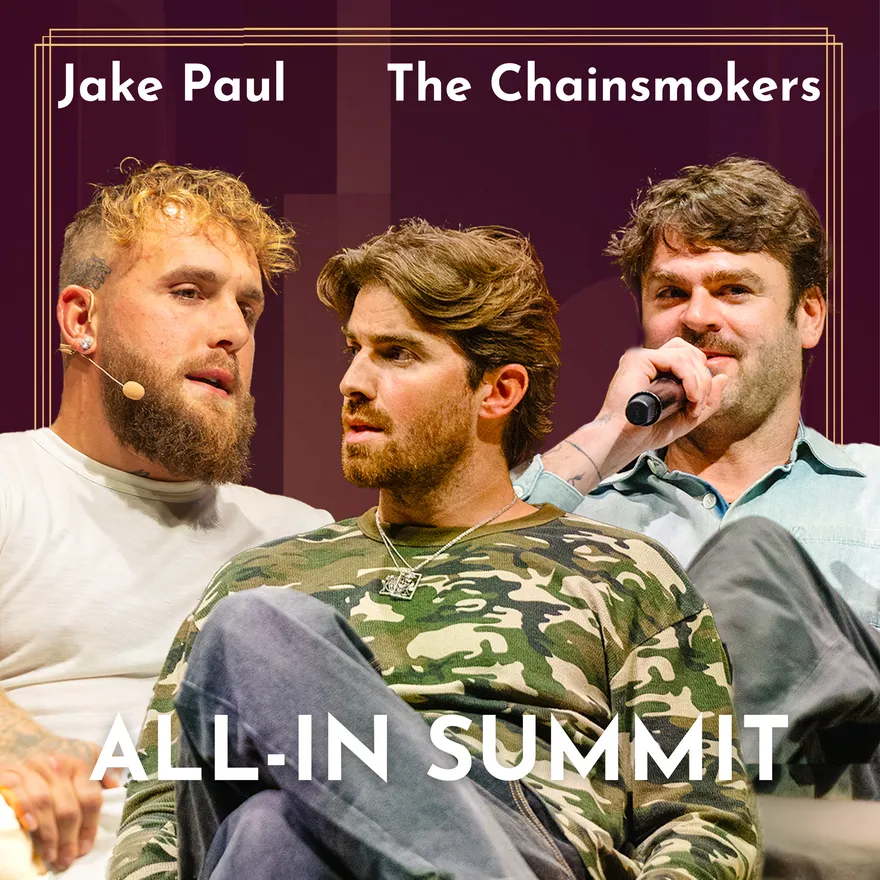

This is a preview of the Shortform summary of the Sep 30, 2026 episode of the All-In with Chamath, Jason, Sacks & Friedberg
Sign up for Shortform to access the whole episode summary along with additional materials like counterarguments and context.
1-Page Summary
Building and Monetizing Attention
Attention Is the Currency in Modern Entertainment and Business
Jake Paul asserts that we've entered an "attention economy," where capturing and leveraging attention drives both audience building and business success. He points to Elon Musk's strategy on Twitter—where new users are prompted to follow Musk and his companies—as a prime example of funneling attention directly into ventures. As Chamath Palihapitiya observes, this ability to command attention helps businesses cut through noise and gain crucial awareness. Paul adds that his marketing expertise allows him to amplify these efforts behind the scenes, and this attention-based model enables creators to launch multiple businesses with diverse revenue streams.
However, Paul cautions that true success goes to those who are genuinely entertaining and fill a specific niche through authenticity and passion—not just trend-chasing. He recalls creating content from a young age simply because he loved it, crediting this genuine approach as key to building a loyal audience. When Palihapitiya raises concerns about platform dependency, Paul recounts how he and top Vine creators demanded payment, and when Vine declined, they moved their audiences elsewhere, causing Vine to collapse. This demonstrates the superiority of audience loyalty over platform reliance.
Paul warns that the pursuit of attention can lead to what he calls the "Youtuber disease," where creators chase clickbait and sensationalism merely for views and revenue. He expresses concern that unless platforms address this issue, creators will migrate to alternatives, damaging the entire ecosystem. Paul concludes that while attention can be powerfully monetized, creators must focus on authenticity and quality rather than solely chasing views.
Career Evolution and Diversification
Transitioning From One Expertise To Multiple Business Domains Requires Vision and Calculated Risk
Jake Paul's professional trajectory illustrates how to evolve from a single domain expert to a multi-industry entrepreneur. He began angel investing at 18 after visiting Silicon Valley and being inspired by innovators at Google, Twitter, and Uber. His transition into boxing leveraged his 100 million followers to broadcast his progression publicly, rather than building a record in obscurity as traditional boxers do. This approach allowed him to grow his own brand while building up other fighters.
Paul consistently turns attention into enterprise, having initially constructed Team 10, a content house and social media talent management startup that helped dozens of influencers amass millions of followers. He replicated this model in combat sports under his Most Valuable Promotions (MVP) banner, now with 400 boxing and MMA fighters. By treating audience-building as a portable asset, Paul sustains influence across diverse ventures.
Building a Scalable Model By Investing In Talent, Replicating Across Industries
Applying the Team 10 playbook to boxing and MMA, Paul recruits fighters and builds their profiles using MVP and a merger with Professional Fighters League (PFL). He targets weaknesses in existing leagues—like the UFC, which pays fighters just 15% of revenue versus 50% in most sports. This under-compensation creates an opening for Paul to attract top talent with better pay and sponsorships, disrupting the status quo in sports promotion.
Paul describes his business as a "flywheel" where each component—boxing, investments, content creation—boosts the others. When he fights, audience attention surges, lifting the profile of his businesses. His foundation reinforces this by opening 40 gyms for kids to box for free, initiatives that both build loyalty and reinforce his broader legacy.
The Chainsmokers' Alex Pall observes similar inefficiencies in the music industry, where artists can now bypass labels and reach fans directly. However, new artists face a tough decision: sign away creative freedom for early money, or go direct. Pall suggests that the next breakthrough will come from artists and founders who deeply understand these pain points, demonstrating that spotting structural inefficiencies and supporting talent can unlock new opportunities across sectors.
Venture Capital Investing Strategies
Successful Investing Needs Pattern Recognition Built Through Hands-On Experience
Alex Pall and Drew Taggart highlight that their venture capital approach began with relationship building and deep engagement with entrepreneurial dynamics. Pall notes that much was learned by meeting leading entrepreneurs like Brian Chesky and Drew Houston, observing their relentless pursuit of big goals. When investing at Series A, they position themselves as "sixth men"—key supporters providing value-add through connections and brand-building, rather than dominating deals.
Pall emphasizes that concentrating capital in winners is a skill developed through experience and requires courage. Chamath Palihapitiya cites Founders Fund, where partners must identify and back the single best company with significant capital, forcing judgment and clarity. The most successful VCs back visionary founders with long-term potential, even if these aren't "market-obvious" choices at the time.
Bias and Experience Blind Investors To Transformative Opportunities
Palihapitiya admits his Facebook experience hindered his appreciation for Robinhood's potential, resulting in a billion-dollar missed investment. Pall draws a parallel, explaining why they avoid music-related startups: proximity introduces pessimism and clouds objectivity. Both negative and positive track records in a particular space can cause investors to lose perspective.
Recent venture practices such as multi-tranche deals often show higher valuations despite no underlying performance improvements. Pall points out that late-stage investors may pay double or triple purely for access, creating speculative bubbles. Jason Calacanis underscores that successful venture capitalists must distinguish real business progress from price inflation driven by excess capital. He urges investors to pause and ask, "What if this works?" as a mental exercise to uncover possibility and exit bias, noting that founder quality and execution predict venture success beyond hype or market trends.
Fame as a Double-Edged Sword
Celebrity Influence and Investment Expertise: Access vs. Expertise
Jake Paul and the Chainsmokers acknowledge that fame grants access to investment opportunities not typically available to traditional investors. Jason Calacanis notes that founders are eager to connect with celebrities, and Pall mentions leveraging his name on LinkedIn to forge connections. However, Paul bristles at the "celebrity investor" label, insisting on being measured by the same standards as top venture firms like Sequoia, specifically citing DPI and IRR. Drew Taggart adds that true venture success requires sustained, hard work beyond initial excitement.
Institutional Capital May Avoid Famous Investors Due to Fears Of Attracting Attention From Failures
Securing institutional capital presents unique hurdles for celebrities. Pall recounts how institutional principals have explained that if the fund failed, his fame would draw attention to any loss, and they would be held accountable for that association. Pall's response is to focus on results: "I'll be back next fund with numbers that will make you regret this decision."
Achieving Career Success in Multiple Domains Is Rare and Demands Equal Dedication
Both the Chainsmokers and Jake Paul note that outsiders underestimate the hard work venture investing requires. Pall points out that celebrity enthusiasm typically wears off after a few months, leaving only the demanding work most are unwilling to sustain. Taggart references data showing the top 5% of investors generate 90% of returns, underscoring that access alone isn't enough. Palihapitiya contends that consistent DPI ultimately "cuts through all the noise," as investors have "an extremely short memory for everything other than returns."
The Primacy of Execution and Authenticity
Success Hinges on Hard Work, Not Fame or Capital
Alex Pall describes embracing the underdog role and finding fulfillment in dedication and hard work. He critiques celebrities who flock to ventures for initial excitement but lose interest once glamour fades and unglamorous work begins. In contrast, Pall and Taggart personally handle every call and deal, illustrating the importance of direct involvement.
Recognizing the Difference Between Genuine Business Growth and Artificial Hype
Pall addresses the influx of capital in ventures, noting that some companies get marked up based on who's involved rather than sustainable business models. He's wary of projects that attract investment based on hype rather than genuine value rooted in diligent work.
Authenticity Involves Acknowledging Unknowns While Valuing Effort and Honesty
The Chainsmokers approach both music and investing by acknowledging gaps in their expertise and focusing on building authentic relationships with founders. They provide tangible help in areas like go-to-market strategy, and their willingness to do unglamorous work establishes credibility. Founders recognize when investors are genuinely supportive versus those seeking prestige or quick returns. Both Pall and Taggart emphasize that after initial excitement fades, consistent effort is what matters, working tirelessly across all facets of their ventures. Palihapitiya sums it up, noting that true success is the result of being an "overnight 15 year success," underscoring that longstanding commitment outlasts fleeting trends and shallow hype.
1-Page Summary
Additional Materials
Clarifications
- The "attention economy" treats human attention as a scarce resource that businesses compete to capture and monetize. In this model, success depends on engaging audiences deeply and consistently, as attention translates into influence and revenue. Digital platforms and creators use data and algorithms to optimize content that holds user focus longer. This economy shifts value from traditional goods to the ability to attract and sustain audience engagement.
- Jake Paul is a social media influencer and entertainer who gained fame on platforms like Vine and YouTube. He expanded his career into boxing and entrepreneurship, leveraging his large online following to build businesses. His relevance lies in exemplifying how attention can be monetized across multiple industries. Paul’s experience illustrates the shift toward an attention-driven economy and diversified career paths.
- Elon Musk’s Twitter strategy leverages his high-profile status to quickly grow his influence on the platform. Prompting new users to follow him ensures immediate attention and engagement, boosting visibility for his ventures. This tactic creates a direct communication channel to a large, active audience. It exemplifies how controlling attention can drive business and personal brand growth.
- Chamath Palihapitiya is a well-known venture capitalist and entrepreneur. He was an early executive at Facebook, helping scale its growth. Palihapitiya is recognized for his investment acumen and outspoken views on technology and markets. He founded Social Capital, a venture firm focused on transformative companies.
- Vine was a short-form video platform launched in 2013, popular for its 6-second looping videos. Despite its initial success, Vine struggled to monetize and compete with platforms like Instagram and Snapchat. In 2016, Twitter, Vine's parent company, announced its shutdown, leading creators to migrate to other platforms. This migration highlighted that creators' audiences follow them, not the platform, emphasizing audience loyalty over platform dependence.
- "Youtuber disease" refers to a tendency among content creators to prioritize sensationalism and clickbait over genuine, quality content to maximize views and revenue. This behavior can degrade content authenticity and audience trust. It often leads to a cycle where creators feel pressured to produce increasingly extreme or shallow material. Platforms risk losing both creators and viewers if this trend persists unchecked.
- Team 10 is a collaborative group of social media influencers and content creators. It operates as a content house where members live and work together to produce videos and grow their audiences. The startup aspect involves managing these creators' brands, sponsorships, and business opportunities. This model helps amplify individual reach through shared resources and coordinated marketing.
- Most Valuable Promotions (MVP) is Jake Paul's sports promotion company focused on boxing and MMA, aiming to offer better pay and support to fighters than traditional leagues. The Professional Fighters League (PFL) is a major MMA organization known for its season-based format and fighter contracts. The merger combines MVP's talent management and promotional expertise with PFL's established league structure to create a stronger competitive platform. This partnership seeks to disrupt existing sports promotion models by improving fighter compensation and exposure.
- In the UFC, fighters typically receive about 15% of the total revenue generated by events, which is low compared to many other professional sports where athletes often get around 50%. This disparity means UFC fighters earn a smaller share despite the sport's high popularity and revenue. Other sports leagues, like the NFL or NBA, have collective bargaining agreements ensuring players receive a larger portion of league income. The lower pay percentage in UFC has been criticized for limiting fighters' earnings and bargaining power.
- A business "flywheel" is a self-reinforcing cycle where each part of the business drives momentum for the others, creating continuous growth. As one component succeeds, it generates more resources, attention, or customers that boost other parts, amplifying overall performance. This concept is inspired by a heavy wheel that gains speed and power as it spins, requiring initial effort but becoming easier to maintain. Companies use flywheels to build sustainable competitive advantages by linking activities that feed into each other.
- The Chainsmokers are an American electronic music duo known for their hit songs and significant influence in the music industry. They have firsthand experience with the challenges artists face in balancing creative freedom and commercial success. Their perspective highlights how new artists must navigate industry structures that often pressure them to trade control for early financial gain. This insight connects to broader discussions about inefficiencies and opportunities in music business models.
- In venture capital, "sixth men" investors act as key supporters who add value beyond just funding. They provide strategic advice, industry connections, and help with brand-building to accelerate a startup's growth. Unlike lead investors, they do not control the deal but play a crucial role in the company's success. This role requires deep engagement and hands-on involvement with the entrepreneur and business.
- DPI (Distributions to Paid-In) measures how much cash a venture fund has returned to investors compared to the amount they invested. IRR (Internal Rate of Return) calculates the annualized growth rate of the invested capital, reflecting the fund’s profitability over time. Both metrics help assess a venture fund’s financial performance and efficiency in generating returns. Investors use them to compare funds and make informed decisions.
- Multi-tranche deals involve investing in a startup through multiple funding rounds, often with increasing valuations. This can create pressure to justify higher prices without corresponding business growth. Speculative bubbles occur when investment inflows inflate company valuations beyond their actual worth. Such bubbles risk sudden crashes when market sentiment shifts or performance fails to meet expectations.
- Brian Chesky is the co-founder and CEO of Airbnb, a company that revolutionized the hospitality industry by enabling people to rent out their homes. Drew Houston is the co-founder and CEO of Dropbox, a leading cloud storage and file-sharing service. Both are iconic entrepreneurs known for building highly successful tech startups that transformed their industries. Their success stories serve as key examples for venture capitalists seeking visionary founders with scalable business models.
- Institutional investors prioritize risk management and reputation, so they worry that a celebrity's public profile could amplify scrutiny if investments fail. This heightened visibility may lead to increased pressure from stakeholders and negative media attention. Additionally, institutions may doubt a celebrity's investment expertise, fearing decisions driven by fame rather than sound analysis. Consequently, they may hesitate to partner with celebrities despite potential access benefits.
- In venture capital and investing, returns are highly concentrated, meaning a small fraction of investors achieve most of the profits. This reflects the "power law" distribution, where a few big wins drive overall success. It implies that consistent skill, judgment, and effort are crucial, as most investors do not generate significant returns. Therefore, access alone does not guarantee success; execution and decision-making matter most.
- The phrase "overnight 15 year success" means that what appears as sudden success is actually the result of many years of hard work and persistence. It highlights that achievements often take a long time to build, despite seeming immediate to outsiders. This expression counters the myth of instant fame or fortune. It emphasizes the value of sustained effort over time.
- Genuine business growth is driven by real increases in revenue, customer base, and sustainable operations. Artificial hype inflates a company's perceived value without corresponding improvements in fundamentals. Inflated valuations often result from excessive investor enthusiasm or speculative capital chasing trends. This disconnect can lead to market corrections when expectations fail to match actual performance.
- A go-to-market strategy outlines how a startup delivers its product to customers and gains market traction. It defines target audiences, marketing channels, sales tactics, and pricing models to maximize adoption. Effective execution ensures efficient resource use and competitive advantage. Without it, even great products may fail to reach or resonate with customers.
Counterarguments
- The "attention economy" framework may overstate the universality of attention as the primary driver of success, as many businesses and industries still rely on expertise, product quality, or operational excellence rather than audience attention.
- Not all creators or entrepreneurs have the resources or pre-existing fame to leverage attention into multiple revenue streams, making this model less accessible or replicable for most people.
- Audience loyalty can be fickle and may not always transfer seamlessly between platforms or ventures, especially if the creator's content or business pivots significantly.
- The focus on authenticity and passion as prerequisites for success may overlook the role of strategic planning, market research, and adaptability in building sustainable businesses.
- While sensationalism and clickbait are criticized, these tactics often remain effective for growth and monetization, suggesting that market incentives may not align with calls for higher quality or authenticity.
- The narrative that creators caused Vine’s collapse by leaving may oversimplify the platform’s broader business and strategic failures.
- Transitioning from one domain to another (e.g., influencer to boxer) is not feasible for most people and may depend heavily on unique circumstances, timing, and existing fame.
- The "flywheel" model of mutually reinforcing business components may not be applicable or scalable for smaller creators or entrepreneurs without significant initial resources.
- Offering higher compensation to athletes or talent may not be sustainable for new entrants if revenue generation does not keep pace with increased costs.
- Pattern recognition in venture investing can reinforce existing biases and lead to missed opportunities for unconventional founders or ideas.
- Celebrity access to investment opportunities can perpetuate inequality in venture capital, making it harder for non-celebrities to compete for deals or attention.
- Institutional skepticism toward celebrity investors may be justified, as celebrity involvement can sometimes attract hype-driven investments rather than sound business fundamentals.
- The assertion that hard work and authenticity are always rewarded may not account for systemic barriers, luck, or market dynamics that affect outcomes regardless of effort or intent.
- The idea that only a small percentage of investors generate most returns may discourage new entrants and reinforce concentration of capital among established players.
- Emphasizing long-term commitment and effort may underplay the role of timing, market cycles, and external factors in determining business or investment success.

Get access to the context and additional materials
Building and Monetizing Attention
Attention Is the Currency in Modern Entertainment and Business
Jake Paul asserts that the world has shifted toward valuing attention as one of its most critical currencies. He points out that “we’re in the attention economy,” where attention can be leveraged not only to build audiences but to drive business success and financial gain. Paul references Elon Musk’s approach on Twitter—where new accounts are prompted to follow Musk and his companies—as a smart way to funnel attention directly into ventures.
Paul notes that the differentiator for investors and entrepreneurs now includes the size and engagement of their following. As Chamath Palihapitiya observes, this ability to command attention allows creators and public figures to help businesses cut through noise and gain crucial awareness. Paul adds that his experience and skill set in marketing and branding, including his work with OpenAI Sora, means he can amplify these efforts behind the scenes.
Attention-Based Shift Enables Creators to Build Diverse Revenue Streams and Ventures
Paul emphasizes that monetizing attention is the new imperative, with creators using their followings to launch and grow multiple businesses. This attention-based model allows for diverse revenue streams, and Paul believes that companies across sectors now recognize how valuable attention is to their cap tables and market strategies.
Success in the Attention Economy Requires Passion and Niche Over Trend-Chasing
Jake Paul observes that many people are trying to become influencers by chasing virality, assembling teams, and building businesses because being an influencer is now seen as desirable. However, he believes true success consistently goes to those who are genuinely entertaining and fill a specific niche. Those who succeed do so because of authenticity and passion—not just because they can ride trends.
Paul recalls making content from a young age simply because he loved creating and sharing stories. For him, the gratification came from making people laugh, inspiring them, and encouraging fans to chase their dreams and work hard. He credits this genuine approach, coupled with offering small daily reminders and positivity, as key to building a large, loyal audience over time.
Challenge Of Staying Relevant Amid Platform Changes
Palihapitiya raises the question of what happens when the platform that a creator has invested so much time in vanishes. Using Vine as an example, Paul describes how he and the top 20 Vine creators demanded to be paid for their content. When Vine, owned by Twitter, declined to pay each creator a million dollars per year, they all ceased posting and moved their audiences to Facebook, YouTube, and Snapchat. Within months, Vine collapsed. Paul says this demonstrates the superiority of audience loyalty over reliance on any single platform and underscores the importance of building an independent personal brand for long-term resilience.
Paul insists he wasn’t “riding a wave”—he considered himself the wave, highlighting ...
Here’s what you’ll find in our full summary
Building and Monetizing Attention
Additional Materials
Clarifications
- The attention economy is a framework where human attention is treated as a scarce resource that businesses compete for. In this model, capturing and holding attention is valuable because it can be converted into revenue through advertising, sales, or influence. Digital platforms and creators monetize attention by engaging audiences, which drives traffic and consumer behavior. This shifts traditional economic value from physical goods to the ability to attract and maintain audience focus.
- Jake Paul is a well-known internet personality, boxer, and entrepreneur who gained fame through social media platforms like YouTube and Vine. Chamath Palihapitiya is a venture capitalist and entrepreneur known for investing in technology companies and advocating for the attention economy concept. Both are relevant because they have firsthand experience with building audiences and leveraging attention for business success. Their insights highlight how personal branding and audience engagement drive modern entertainment and commerce.
- Elon Musk’s Twitter strategy involves directing new users to follow his personal account and his companies, increasing their visibility. This tactic leverages Twitter’s onboarding process to build a large, engaged audience quickly. By growing followers, Musk can promote his ventures directly to a receptive base without extra advertising. This creates a feedback loop where attention on social media translates into business opportunities and influence.
- A "cap table" (short for capitalization table) is a document that shows the ownership stakes in a company. It lists shareholders, types of shares, and the percentage of ownership each holds. Cap tables help companies understand who owns what and how much control or value each stakeholder has. Investors use them to assess the company's structure and potential returns.
- Vine was a short-form video platform launched in 2013, allowing users to create and share six-second looping videos. It quickly became popular, especially among young creators, shaping early internet culture and launching many influencer careers. Twitter acquired Vine but shut it down in 2017 due to competition and monetization challenges. Its collapse highlighted the risks creators face when relying on a single platform for their audience and income.
- "Youtuber disease" refers to a trend where creators prioritize sensational, clickbait, or low-quality content to gain views quickly. This behavior often sacrifices authenticity and meaningful engagement for short-term attention and revenue. It is driven by platform algorithms that reward high view counts regardless of content value. The term highlights a broader problem of content degradation fueled by the pursuit of fame and m ...
Counterarguments
- While attention is valuable, equating it directly with currency can oversimplify the complexities of business success, which also depend on product quality, operational excellence, and customer trust.
- Not all businesses or sectors benefit equally from attention-driven strategies; some industries, such as B2B or highly technical fields, may prioritize expertise and relationships over mass attention.
- The focus on audience size and engagement can incentivize superficial metrics rather than meaningful impact or long-term value creation.
- Relying heavily on personal branding and attention can make businesses vulnerable to reputational risks and public controversies involving creators.
- Monetizing attention does not guarantee sustainable or ethical business models; some attention-driven ventures may be short-lived or exploitative.
- The narrative that authenticity and niche focus are always rewarded overlooks cases where trend-chasing and virality do lead to significant, albeit sometimes temporary, success.
- Building a loyal audience is not always possible for all creators, regardless of authenticity or effort, due to algorithmic biases and platform dynamics.
- The migrati ...

Get access to the context and additional materials
Career Evolution and Diversification
Jake Paul’s professional trajectory and philosophy offer a blueprint for evolving from a single domain expert to a multi-industry entrepreneur. By leveraging audience, vision, and a scalable business model, Paul and others illustrate how calculated risk and a keen understanding of industry pain points can spark transformative ventures.
Transitioning From one Expertise To Multiple Business Domains Requires Vision and Calculated Risk
Jake Paul’s Journey Highlights Leveraging Influence to Build Enterprises In Boxing, Sports Promotion, and Venture Capital
Jake Paul began his journey with a deep interest in startups and technology, visiting Silicon Valley and being inspired by innovators at Google, Twitter, and Uber before his YouTube fame. He started angel investing at 18, learning from early mistakes and eventually formalizing a fund with his partner Jeff Wu. Paul’s transition into boxing was driven by a clear vision—rather than building a record in obscurity as traditional boxers do, he leveraged his audience of 100 million followers to broadcast his progression. This approach allowed him to simultaneously grow his own brand and build up other fighters.
Recognizing Audience-Building and Attention Management Across Industries
Paul consistently turns attention into enterprise. He initially constructed Team 10, a content house and social media talent management startup that helped dozens of influencers amass millions of followers. This model of finding, nurturing, and spotlighting talent became a playbook he replicated in combat sports under his Most Valuable Promotions (MVP) banner, now with 400 boxing and MMA fighters. By treating audience-building as a portable asset, Paul sustains influence in diverse ventures from sports to venture capital.
Building a Scalable Model By Investing In Talent, Replicating Across Industries
Jake Paul's First Venture Was Team 10, a Content House Managing Social Media Talent
Paul’s first entrepreneurial venture, Team 10, functioned as a social media label for influencers. He identified and signed promising talent, helped them grow their own followings, and fostered a revolutionary “content house” environment that propelled over 20 individuals to millions of followers. This scalable approach—spotting talent, providing platforms, and sharing in the upside—laid the foundation for his future ventures.
Boxing and MMA Model: Recruit Fighters, Improve Economics, Build Profiles Via MVP and PFL
Applying the Team 10 playbook to boxing and MMA, Paul recruits fighters and builds their profiles using MVP and a merger with Professional Fighters League (PFL). He targets the weaknesses of existing leagues, like the UFC, which pays fighters just 15% of revenue versus 50% in most sports. This under-compensation fuels fighter dissatisfaction and migration, creating an opening for Paul to attract top talent and improve fighter economics and visibility. Fighters under his banner gain sponsorships, control over their branding, and better pay—disrupting the status quo in sports promotion.
Sustaining Passion in Core Business Fuels a Sustainable Flywheel Effect
Jake Paul's Business Philosophy: A Flywheel Where Boxing Boosts Investments, While Investments and Content Creation Grow His Brand and Provide Fight Platforms
Paul describes his business as a “flywheel” where each component—boxing, investments, content creation—boosts the others. When he fights, audience attention surges, lifting the profile of his businesses. Investments made through his fund enhance his credentials as an entrepreneur, while content creation perpetuates his public reach, which feeds back into his ventures. This integrated system sustains growth and keeps opportunities constantly cycling through his ecosystem.
Philanthropic Efforts, Like Free Boxing Gyms, Reinforce His Brand and Create Positive Impact
Paul’s foundation enhances his brand and impact by opening 40 gyms for kids to box for free, sponsoring their participation in boxing events and tournaments. He takes particular pride in revolutionizing women’s boxing, providing underserved ...
Here’s what you’ll find in our full summary
Career Evolution and Diversification
Additional Materials
Counterarguments
- Jake Paul's success in multiple industries is heavily reliant on his pre-existing fame and massive social media following, which is not a replicable model for most entrepreneurs.
- Leveraging audience attention as a business asset can sometimes prioritize spectacle or controversy over substance or long-term value creation.
- The Team 10 model and similar influencer collectives have faced criticism for fostering toxic environments and unstable business relationships.
- Jake Paul's approach to boxing and sports promotion has been criticized by some in the boxing community for prioritizing entertainment and celebrity over athletic merit and tradition.
- While Jake Paul highlights UFC's low fighter pay, his own promotions are relatively new and have not yet demonstrated long-term sustainability or proven that they can consistently offer better conditions at scale.
- Philanthropic efforts, while positive, can also serve as brand-building tools rather than being purely altruistic.
- The focus on audience-building and personal branding may overshadow the importance of developing deep expertise or technical skill in each new industry ...
Actionables
- you can identify a personal skill or interest and brainstorm three unrelated industries where your existing audience or network could add value, then outline a simple plan to test your influence in each (for example, if you have a hobby blog, consider how your readers might support a local business, a charity, or a new product launch by sharing or participating in small ways).
- a practical way to spot industry pain points is to keep a weekly journal where you jot down frustrations or inefficiencies you notice as a customer or participant in any activity, then pick one and sketch out how you might offer a better experience or solution, even if it’s just a small improvement.
- yo ...
Get access to the context and additional materials
Venture Capital Investing Strategies
Successful Investing Needs Pattern Recognition Built Through Hands-On Experience With Founders and Market Dynamics
Alex Pall and Drew Taggart highlight that their approach to venture capital began with their work ethic, relationship building, and deep engagement with entrepreneurial dynamics. Although their experience started from leveraging technology and platforms built through their music careers, they describe how hands-on work—balancing relationships with founders and understanding the evolution of business from direct involvement—formed the principles underpinning their investing strategy. Pall notes that much was learned by meeting leading entrepreneurs, like Brian Chesky and Drew Houston, and observing their relentless pursuit and big goals. The duo institutionalized their access and focus, becoming valued partners to startups in cybersecurity, AI, and infrastructure by taking investing seriously and relying on first-hand collaborations, not just passive capital allocation.
When investing at the Series A stage, Pall and Taggart do not take lead positions; instead, they see themselves as the "sixth men"—key supporters rather than stars—providing value-add through connections, brand-building, and market support, but not acting as central players. This approach is about enhancing diversification and supporting founders as collaborative partners, not dominating deals or taking the spotlight from established lead VCs.
Knowing When to Concentrate In Winners and When to Exit Requires Experience and Courage
Alex Pall emphasizes that spreading capital too thin is a common error for less experienced investors. Concentrating in winners—putting focused capital into the most promising portfolio companies—is a skill developed through experience and requires the courage to follow through on conviction, despite fear or uncertainty. Chamath Palihapitiya cites the example of Founders Fund, where partners must identify and back the single best company with a significant portion of capital, forcing judgment and clarity. Pall reflects that the signals indicating which investments deserved more capital were often visible in hindsight; developing the ability to recognize and act on those signals is the mark of an effective manager.
The most successful VCs, including the Chainsmokers and their peers, argue for backing visionary founders and businesses with long-term potential, even if these aren’t "market-obvious" choices at the time. Companies like Airbnb and Uber, once seen as outsider bets, are cited as examples where willingness to bet on a bigger vision reaped outsized rewards.
Bias and Experience Blind Investors To Transformative Opportunities
Chamath Palihapitiya admits personal experience at Facebook hindered his appreciation for Robinhood’s potential, resulting in a billion-dollar mistake—a missed investment despite supporting evidence and a strong sign-up list. His priors and ego clouded his judgment against Robinhood’s growth, illustrating how even top venture investors are subject to their biases.
Alex Pall draws a parallel, explaining why they avoid music-related startups: proximity to the sector introduces pessimism and clouds objectivity. Both negative and positive track records in a particular space can cause experienced investors to lose perspective, reinforcing the need for self-awareness and objective assessment outside one's comfort zone.
Secondary Market Dynamics and Multi-Tranche Investments Can Create Valuation Bubbles With Ma ...
Here’s what you’ll find in our full summary
Venture Capital Investing Strategies
Additional Materials
Clarifications
- The "Series A stage" is an early round of venture capital financing for startups that have a proven concept and some initial traction. It typically follows seed funding and aims to scale the business, develop products, and grow the customer base. Investors at this stage assess the startup’s potential for significant growth and market fit. Series A rounds usually involve larger capital amounts than seed rounds and set the foundation for future funding.
- A lead investor in a funding round typically sets the terms, negotiates the deal, and often takes a board seat, guiding the startup's strategic direction. They commit the largest portion of capital and attract other investors to join the round. A "sixth man" investor plays a supportive role, contributing smaller amounts and adding value through connections or expertise without controlling influence. This role helps diversify risk and strengthens the startup's network without overshadowing the lead investor.
- Pattern recognition in venture capital means identifying recurring signals or traits in startups and founders that predict success. It involves noticing consistent behaviors, market responses, or business models that have led to positive outcomes in past investments. This skill develops through repeated exposure to diverse companies and outcomes, allowing investors to make informed judgments quickly. It helps VCs differentiate promising ventures from less viable ones before obvious market validation.
- Institutionalizing access and focus means creating formal, repeatable processes to consistently connect with top entrepreneurs and key market sectors. It ensures investors maintain privileged entry to promising startups rather than relying on chance encounters. This approach builds a reliable pipeline of high-quality deal flow and deep sector expertise. It transforms informal relationships into structured, strategic advantages.
- Multi-tranche investments involve funding a company in multiple rounds or installments rather than a single lump sum. Each tranche often comes with a higher valuation based on anticipated progress or milestones. This can artificially inflate the company's worth without actual performance improvements. Investors may pay more in later tranches simply to maintain or gain access, contributing to valuation bubbles.
- The secondary market in venture capital allows investors to buy and sell existing shares of private companies before an IPO or acquisition. This market provides liquidity to early investors or employees who want to cash out some equity. Prices in the secondary market can be higher than initial valuations due to demand, not necessarily reflecting company performance. This can create valuation bubbles where share prices rise without corresponding business growth.
- Spreading capital too thin means investing small amounts in many companies, which limits the potential impact of any single success. It reduces the ability to support and influence portfolio companies effectively. Concentrated investments allow for deeper involvement and higher returns if the chosen companies succeed. This approach requires confidence and careful selection to avoid excessive risk.
- Visionary founders identify unmet needs or create new markets with innovative ideas that challenge the status quo. They possess a clear, ambitious long-term vision and the ability to inspire others to pursue it. Their foresight enables them to navigate uncertainty and pivot effectively as markets evolve. This combination drives transformative growth beyond current trends or obvious opportunities.
- Bias and prior experience shape how investors interpret new information, often causing them to favor familiar patterns and dismiss novel ideas. This mental shortcut can lead to overlooking disruptive innovations that don't fit past experiences. Emotional attachment or ego tied to previous successes may also cloud objective judgment. Overcoming these biases requires conscious effort to evaluate opportunities on their own merits, not past assumptions.
- Ego can cause investors to overvalue their own judgment and dismiss opportunities that challenge their beliefs. Sector proximity means investing in areas where one has personal experience or connections, which can create bias by overemphasizing familiar risks or undervaluing novel potential. Both factors limit objective analysis and can lead to missed or poor investment decisions. Awareness and deliberate detachment help mitigate these cognitive biases.
- "Price inflation driven by excess capital and herd mentality" means that too much money is chasing the same investments, pushing valuations high ...
Counterarguments
- Pattern recognition based on past experience can lead to overfitting and missing novel opportunities that do not fit established patterns.
- Deep engagement with founders and markets may introduce personal biases, making it harder to maintain objectivity in investment decisions.
- Acting as a "sixth man" and not taking lead positions may limit influence over company direction and reduce potential returns compared to lead investors.
- Diversification can dilute returns if not balanced carefully, and supporting too many companies may reduce the ability to provide meaningful value to each.
- Concentrating capital in a few winners increases risk and can lead to significant losses if judgment is incorrect.
- Signals indicating which investments deserve more capital are often ambiguous in real time, making it difficult to act decisively without the benefit of hindsight.
- Avoiding sectors due to personal proximity may result in missed opportunities where unique insights could provide a competitive advantage.
- Multi-tranche investments and s ...
Get access to the context and additional materials
Fame as a Double-Edged Sword
Celebrity status in venture investing brings both unique opportunities and significant challenges. While notoriety can open doors and attract founders, it can also provoke skepticism among institutional investors and place outsized reputational risk on celebrity-led funds. Sustained success in venture capital demands more than fame—it requires a results-driven mindset and significant expertise.
Celebrity Influence and Investment Expertise: Access vs. Expertise
Jake Paul and Chainsmokers members Alex Pall and Drew Taggart acknowledge that fame can grant access to investment opportunities not typically available to traditional investors. Jason Calacanis notes that celebrities are respected in their fields, making founders eager to connect, sometimes simply because they have listened to their music or attended their shows. Alex Pall specifically mentions using LinkedIn to leverage his name and forge connections with hard-to-reach people.
However, both Jake Paul and the Chainsmokers stress that this advantage is often short-lived. Paul bristles at the "celebrity investor" label, pointing out that no one calls a lawyer who invests a "lawyer investor." He insists on being measured by the same standards as top venture firms like Sequoia, specifically citing DPI (Distributed to Paid-In capital) and IRR (Internal Rate of Return). Drew Taggart adds that true venture success requires “grinding really hard,” and Pall emphasizes the need to put in sustained work beyond the initial excitement or perceived gloss of celebrity involvement.
Institutional Capital May Avoid Famous Investors Due to Fears Of Attracting Attention From Failures
Securing institutional capital presents its own set of hurdles for celebrities. Alex Pall recounts how principals at institutions have turned down the Chainsmokers’ fund, explaining that if the fund failed, his fame would draw attention to any loss, and institutional investors would be the first held accountable for that association. Institutional investors often blame fund losses not on normal venture risk but on the bias and spotlight that fame brings. As a result, celebrities often need to significantly outperform their non-celebrity peers to overcome the added skepticism and reputational risk.
Pall’s response to rejection is to focus on results: “I’ll be back next fund with numbers that will make you regret this decision, and we’ll try this again.” Ultimately, institutional capital is wary of the hype, preferring to wait for demonstrated, repeated performance before reallocating traditional skepticism.
Achieving Career Success in Multiple Domains Is Rare and Demands Equal Dedication
The Chainsmokers and Jake Paul both say that outsiders underestimate the degree of hard work venture investing requires, which many celebrities are unwilling to sustain. Pall points out t ...
Here’s what you’ll find in our full summary
Fame as a Double-Edged Sword
Additional Materials
Clarifications
- Venture capital is funding provided to early-stage, high-potential startups in exchange for equity ownership. Venture investors take significant risks hoping the startups grow rapidly and generate large returns. They typically provide not just money but also strategic guidance and connections. Returns come when startups succeed, get acquired, or go public.
- DPI (Distributed to Paid-In capital) measures how much money investors have received back compared to what they invested, showing realized returns. IRR (Internal Rate of Return) calculates the annualized growth rate of an investment, accounting for the timing of cash flows. Both metrics are key for evaluating venture fund performance and comparing returns across investments. They help investors assess profitability beyond just headline amounts.
- Institutional investors are organizations like pension funds, insurance companies, and endowments that invest large sums of money. They differ from individual or celebrity investors by managing pooled capital on behalf of others, often with strict risk and return criteria. Their involvement can provide significant funding and credibility to venture funds. However, they are more risk-averse and scrutinize investments closely due to fiduciary responsibilities.
- Reputational risk in investment funds refers to the potential loss of trust and credibility that can occur if the fund performs poorly or is involved in controversy. This risk can deter investors, damage future fundraising efforts, and reduce deal flow. For celebrity-led funds, reputational risk is heightened because public attention amplifies any failures. Managing this risk requires consistent performance and careful public relations.
- Celebrity status in business and investing can provide initial visibility and networking advantages by attracting attention and opening doors. However, it does not guarantee expertise or successful outcomes, which require deep knowledge and sustained effort. Celebrities often face heightened scrutiny and skepticism from professional investors wary of hype overshadowing performance. Ultimately, lasting influence depends on delivering consistent, measurable results beyond fame.
- In venture capital, returns are highly concentrated among a small group of top-performing investors. The "top 5%" refers to this elite group whose investments yield disproportionately high profits. This means most investors earn modest or negative returns, while a few generate the majority of gains. It highlights the importance of skill, strategy, and persistence to achieve exceptional success.
- Institutional capital refers to large sums of money invested by entities like pension funds, endowments, and insurance companies into investment funds. These institutions conduct rigorous due diligence to assess fund managers' track records, strategies, and risk management before committing capital. They prioritize minimizing risk and ensuring consistent returns, often avoiding investments that could attract negative attention or reputational harm. Securing institutional capital requires demonstrating proven performance, strong governance, and alignment with the institution’s inv ...
Counterarguments
- While celebrity status can provide access to exclusive deals, it may also distort deal flow by attracting founders more interested in publicity than in building sustainable businesses, potentially lowering the quality of opportunities.
- The skepticism from institutional investors toward celebrity-led funds is not always rooted in bias; it can be based on observed patterns of underperformance or lack of relevant experience among celebrity investors.
- Fame can sometimes overshadow the need for expertise, leading to situations where celebrities are given opportunities or media attention disproportionate to their actual investing skill or track record.
- The assertion that celebrities must significantly outperform non-celebrity peers to gain credibility may overlook the fact that some celebrity-led funds have received substantial media coverage and capital despite limited results, suggesting that fame can sometimes compensate for lack of performance.
- The focus on DPI and IRR as the sole measures of success may ignore other important aspects of venture investing, such as value-add to portfolio companies, ethical considerations, or long-term ecosystem impact.
- The narrative that most celebrity investors quit after the initial excitement may not account for those who remain involved in venture capital in less public or advisory roles, contributing in ways not captured by headline returns.
- The claim that consistent financial returns alo ...

Get access to the context and additional materials
The Primacy of Execution and Authenticity
Execution, authenticity, and perseverance define sustained business success more than fame or capital. The Chainsmokers—Alex Pall and Drew Taggart—share how genuine effort and grounded values differentiate those who truly build something lasting from those merely chasing hype.
Success Hinges on Hard Work, Not Fame or Capital
Jake Paul, Chainsmokers: Authenticity and Work Ethic Key to Sustainable Business
Alex Pall describes embracing the underdog role, finding fulfillment in the hard work and dedication needed to achieve success. He notes that what sets them apart is their consistent commitment to "showing up" and not taking opportunities for granted. For Pall, performing across the world and seeing the meaning their music brings to fans is an experience rooted in genuine effort.
Celebrities Enter Venture Capital but Abandon It As "Shininess" Fades With Unglamorous Work
Pall critiques celebrities who flock to new ventures for the initial excitement but lose interest once the glamour fades and the real, unglamorous work begins. The Chainsmokers emphasize that success demands sustained effort beyond the early, flashy period. Drew Taggart observes that many celebrity-driven ventures falter because their interest wanes, and their engagement is fleeting—often limited to initial meetings, with teams showing up in their stead. In contrast, Pall and Taggart personally handle every call and deal, illustrating the importance of direct involvement and relentless work.
Recognizing the Difference Between Genuine Business Growth and Artificial Hype Demands Looking Beyond Surface Narratives
Jake Paul Warns Of "Youtuber Disease": False Success From Claims and Clickbait Over Genuine Value
While Jake Paul's commentary isn’t explicitly quoted, the conversation echoes his warnings about superficial digital metrics. Pall and Taggart note that genuine value comes only through foundational effort, not clever narratives or surface excitement.
Venture Valuations Driven by Hype Over Revenue
Pall addresses the influx of capital in ventures, noting that the environment allows some companies to get marked up based on who’s involved, regardless of genuine long-term vision. He is wary of projects that attract investment based on hype, rather than sustainable business models rooted in diligent work and clear purpose.
Authenticity Involves Acknowledging Unknowns While Valuing Effort, Relationships, and Honesty
Chainsmokers Target Expertise Gaps, Offer Go-to-market Aid, Nurture Founder Ties, and Grasp Modern Business Dynamics
The Chainsmokers approach both music and investing by acknowledging gaps in their expertise and focusing on building authentic relationships with founders. They provide tangible help in areas like go-to-market strategy, reflecting an understanding of ...
Here’s what you’ll find in our full summary
The Primacy of Execution and Authenticity
Additional Materials
Clarifications
- The Chainsmokers are an American DJ and production duo known for their electronic pop music hits. Beyond music, they have expanded into business ventures, including investing in startups and supporting emerging entrepreneurs. Their involvement in investing reflects a broader trend of artists leveraging their fame and resources to influence industries outside entertainment. This crossover highlights their commitment to authentic, hands-on work in both creative and business fields.
- Jake Paul is a social media influencer and entrepreneur known for leveraging his online fame to launch various business ventures. He has invested in startups and promoted brands, often using his large audience for marketing. His approach has drawn criticism for prioritizing hype and clickbait over sustainable business practices. This context explains why the text references his warnings about superficial success metrics.
- "Youtuber Disease" refers to the tendency of creators to prioritize flashy content and viral moments over meaningful, sustained value. It involves chasing clicks and superficial metrics rather than building genuine skills or long-term engagement. This mindset can lead to burnout and a lack of authentic growth. The term critiques the focus on short-term popularity instead of foundational effort.
- Venture capital is funding provided to startups and early-stage companies with high growth potential in exchange for equity. Celebrities often invest in startups to diversify income and gain influence but may lack deep involvement or expertise. Their engagement can be superficial, focusing on initial excitement rather than ongoing operational support. This can lead to ventures failing when sustained effort and strategic input are needed.
- A go-to-market strategy is a plan that outlines how a company will sell its product or service to customers. It includes identifying the target market, choosing sales channels, and defining marketing tactics. The goal is to efficiently reach customers and achieve competitive advantage. This strategy helps align teams and resources for a successful product launch.
- Chamath Palihapitiya is a well-known venture capitalist and entrepreneur. He gained prominence as an early Facebook executive and later founded Social Capital, a venture capital firm. His opinion matters because he has extensive experience in investing and building successful companies. He is respected for insights on long-term success and business fundamentals.
- The "underdog role" refers to being perceived as less likely to succeed due to fewer resources or recognition. Embracing this role can motivate individuals to work harder and prove doubters wrong. It fosters resilience and a strong work ethic, essential for long-term success. In music or business, it often leads to authentic growth and deeper connection with audiences or customers.
- Founders are the individuals who start and build a company, creating its product or service and shaping its vision. Investors provide capital to the company in exchange for ownership stakes, aiming to support growth and earn returns. Founders focus on daily operations and long-term strategy, while investors often offer guidance, resources, and financial backing. The relationship is collaborative but distinct, with founders driving execution and investors enabling expansion.
- "Venture valuations driven by hype" means that a startup or company is valued highly mainly because of excitement, buzz, or the reputation of its backers, rathe ...
Counterarguments
- While execution, authenticity, and perseverance are important, access to capital and fame can provide significant advantages in business, such as opening doors, attracting talent, and accelerating growth.
- Some celebrity-driven ventures have succeeded due to leveraging fame and networks, suggesting that fame and capital can be effective drivers of business success when combined with strategic execution.
- Not all successful founders are directly involved in every aspect of their business; effective delegation and building strong teams are also key components of sustainable growth.
- The narrative may understate the role of timing, market conditions, and luck in business success, which can sometimes outweigh hard work and authenticity.
- There are cases where businesses built on hype or surface narratives have achieved lasting success, particularly in industries driven by trends and consumer perception.
- Acknowledging knowledge gaps and building relationship ...
Get access to the context and additional materials


Create Summaries for anything on the web
Download the Shortform Chrome extension for your browser
