

Jared Isaacman: A New Era for NASA and American Space Exploration
In this episode of All-In with Chamath, Jason, Sacks & Friedberg, Jared Isaacman discusses his leadership of NASA and the agency's strategic restructuring to refocus its mission on national objectives. Isaacman outlines how NASA shifted away from costly inefficiencies and partnership bureaucracy toward breakthrough technologies like nuclear propulsion and ambitious exploration goals. He addresses the intensifying space competition with China, particularly regarding lunar landing sites at the South Pole, and explains why failure to return to the Moon would signal American weakness on the global stage.
The conversation covers NASA's Artemis program to establish a permanent lunar base, the development of nuclear-powered spacecraft for Mars and deep space missions, and the agency's role in sustaining commercial space opportunities. Isaacman emphasizes that NASA's advantage lies in combining mission-driven government objectives with private sector innovation, while focusing on technologies beyond commercial scope to retain top talent and maintain American leadership in space exploration.

This is a preview of the Shortform summary of the Sep 18, 2026 episode of the All-In with Chamath, Jason, Sacks & Friedberg
Sign up for Shortform to access the whole episode summary along with additional materials like counterarguments and context.
1-Page Summary
NASA's Strategic Refocus and Leadership Changes Under Isaacman
Under Jared Isaacman's leadership, NASA has undergone significant restructuring to refocus the agency's mission and revitalize its culture after years of costly inefficiency.
NASA's Misaligned Priorities Before Isaacman's Leadership
Previously, NASA's resources were spread thin trying to please congressional districts and international partners. Programs like Orion couldn't match Apollo-era achievements, while the Mars Sample Return program ballooned to exceed the cost of an aircraft carrier before cancellation. Isaacman criticized the practice of collecting "25 different flags to partner on the next mission" as adding bureaucracy rather than value. Additionally, NASA lost core competencies through outsourcing, causing routine tasks to take years instead of months and driving up costs dramatically.
Isaacman's Restructuring Prioritizes National Objectives Over Partnerships
Isaacman states he's not at NASA to act as a venture capitalist but to execute the President's national space policy. NASA now declines to fund mature technologies, instead focusing on breakthrough capabilities like nuclear-propelled spacecraft that lack a private business case. The agency reorganized into three central mission directorates: human space exploration, nuclear research technology, and science missions. Isaacman emphasizes "extreme ownership" and accountability, asserting that NASA must honor its pioneers by achieving new milestones rather than living on past accomplishments.
NASA's Workforce Revitalized by Mission Focus
The renewed focus on ambitious projects like nuclear-powered spacecraft is retaining NASA's talent and inspiring the next generation. The administration also established the Commission for the United States Space Academy—a "Starfleet Academy"—to prepare future astronauts, scientists, engineers, and operators who will build the moon base and command missions to Mars.
Space Race Competition With China
China Aims for the Moon by 2030
China is advancing rapidly with clear ambitions to put astronauts on the moon by 2030, targeting the Shackleton crater at the lunar south pole with limited strategic landing sites. Isaacman notes that China and Russia plan to build a nuclear-powered moon base in this region, demonstrating national will and technical capability. Unlike the Soviet Union in the first space race, China shows consistent progress with the resources and capacity for lunar and Mars ambitions. Although China lacks SpaceX's reusable rocket technology, their hypergol-powered rockets successfully deliver quality payloads to orbit.
American Failure Would Signal Weakness in National Leadership
Isaacman warns that if the United States fails to return humans to the moon before China, the impact on American prestige and technological leadership will be profound. Decades of promises and over $100 billion invested would be undermined, with global consequences as nations decide which superpower to partner with for technology standards and security. He emphasizes that American children will either inherit a nation still capable of extraordinary feats or memories of past greatness.
SpaceX and Commercial Space Key to Competing
Isaacman emphasizes that without SpaceX, the United States would be seriously challenged in maintaining leadership in space. He concludes that the unique U.S. advantage is NASA's mission-driven approach combined with the agility and innovation of the private sector, providing a strategic edge China has yet to match.
Artemis Program: Lunar Base at South Pole
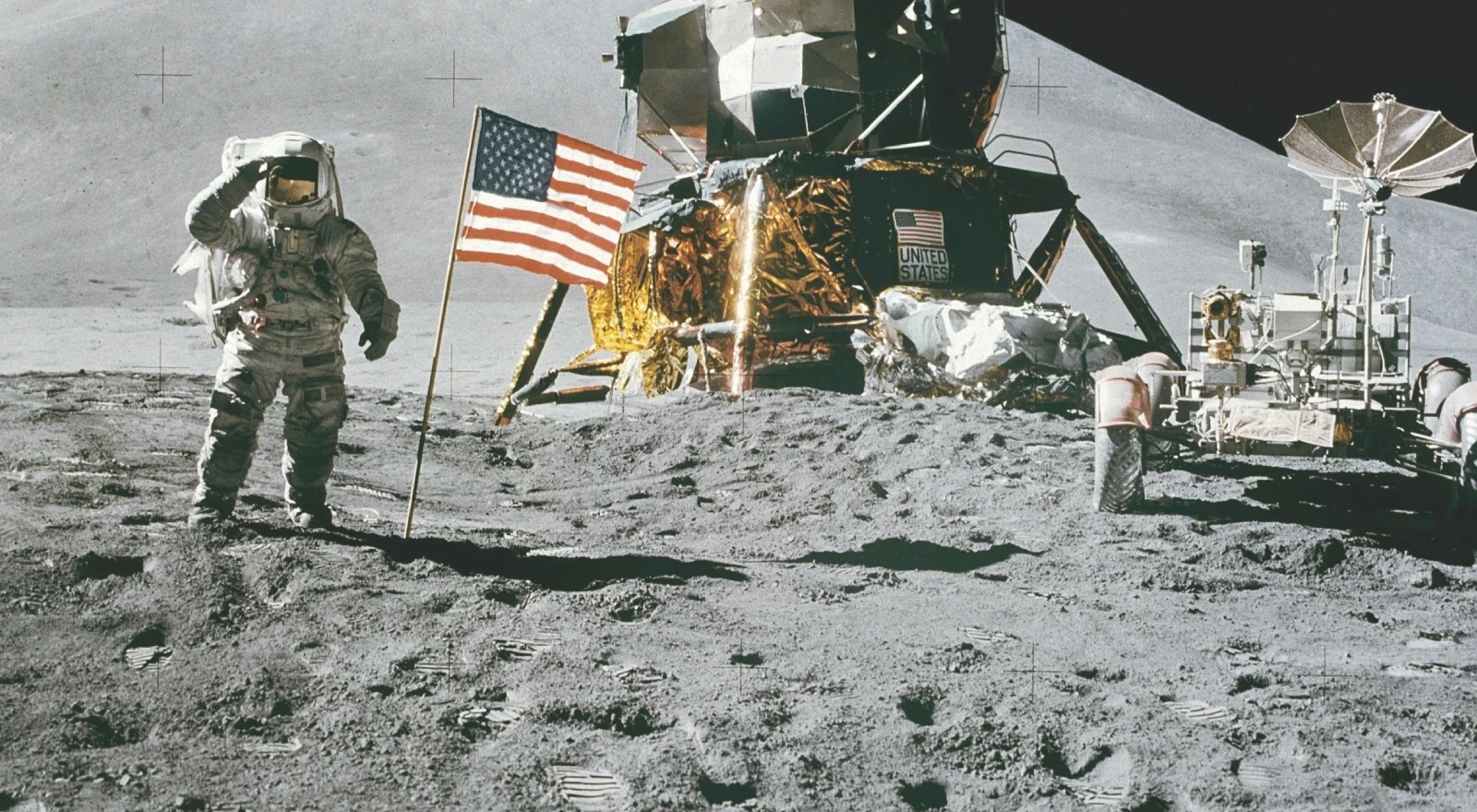
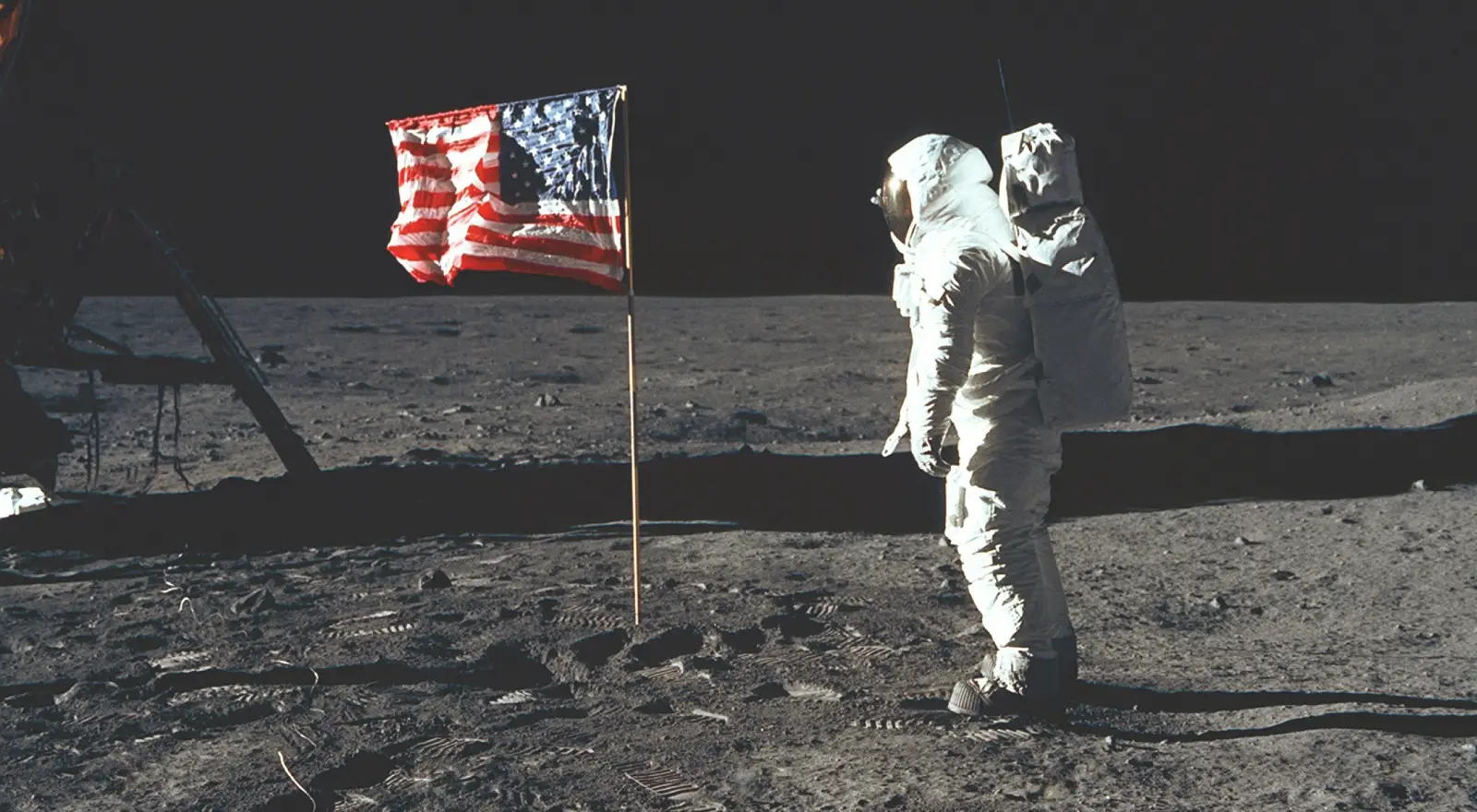
The Artemis program marks a new era of American lunar exploration. Artemis II sent four astronauts farther into space than ever before, earning them the Congressional Space Medal of Honor. Artemis III began rapid assembly and will roll out for critical tanking tests before year's end. In summer 2027, Artemis III will launch and rendezvous with lander test vehicles from Blue Origin and SpaceX, showcasing three of the world's most powerful rockets. By 2028, Artemis IV will return American astronauts to the lunar surface with the intention of staying.
Shackleton Crater: Key to Humanity's First Outpost
NASA's campaign centers on Shackleton Crater at the lunar South Pole, where shaded regions contain water ice essential for sustained operations, while surrounding cliffs provide nearly continuous sunlight for power. Prime landing spots at the South Pole are extremely limited, and securing them early is critical as China and Russia intensify their competition for these strategic locations.
NASA to Establish Monthly Moon Base for Mars Tech Testing
NASA is establishing humanity's first outpost on another world, conducting near-monthly missions to master technologies essential for Mars exploration. Key domains include surface mobility, water extraction, local manufacturing, habitat construction, robotics, power generation, and communications. The lunar outpost, just three days from Earth, allows rigorous testing under realistic conditions. NASA will showcase this campaign with live HD streams from the moon base.
Promise Mission Scouts Resources Before Major Landings
Ahead of crewed landings, the Promise mission will scout lunar South Pole resources using a plutonium-238-powered rover built from spare Mars mission hardware. Its nuclear power enables indefinite operation in permanently shadowed regions where solar hardware can't survive, efficiently leveraging prior NASA investments.
Nuclear Propulsion as the Next Leap Capability
Nuclear propulsion represents a transformative leap for deep space exploration, enabling NASA to pursue missions beyond commercial scope while retaining top talent through breakthrough technologies.
Nuclear Fission Propulsion Extends American Reach
Isaacman emphasizes that nuclear power and propulsion will ensure America's leadership remains unrivaled. In 2028, NASA plans to launch SR1 Freedom, utilizing a 100-kilowatt fission reactor—marking the beginning of "nuclear NASA." SR1 Freedom will transit Mars and release Skyfall, a payload with three helicopters equipped with ground-penetrating radar to scout for subsurface ice and identify landing sites. This inaugurates a series of missions (SR2, SR3, SR4) that will push developments in reactor materials, power conversion, and propulsion systems.
Nuclear Propulsion Powers Missions Beyond Solar Range
Nuclear propulsion is crucial for missions operating beyond solar energy's effective range. Nuclear reactors deliver continuous power converted into electricity for electric thrusters, using inert propellants like krypton and xenon. These ion thrusters achieve extremely high efficiency by accelerating ionized particles through electromagnetic forces, producing exhaust velocities far exceeding chemical propulsion. The low but continuous thrust is ideal for long-duration deep space missions, enabling reusable nuclear-powered vehicles to transit between Earth and Mars.
Workforce Retention Through Breakthrough Technologies
NASA's viability as an employer depends on focusing on groundbreaking technologies. If NASA restricts itself to projects already pursued by commercial companies using outdated hardware, it risks losing talent to those companies. Isaacman notes that NASA accepts only about 1% of intern applications, reflecting high demand for visionary work on missions like the "grand fleet of nuclear powered spacecraft" that have no immediate business case.
Mars Exploration and Deep Space Missions
Mars as Ultimate Destination, Moon as Testing Ground
Mars remains the pinnacle of exploration goals, but Isaacman explains that while chemical propulsion vehicles like Starship can send astronauts to Mars, the real challenge is ensuring their return. Producing propellant on Mars requires complex infrastructure that's difficult to test on Earth under our atmosphere and gravity. Therefore, the Moon serves as an essential proving ground where NASA can refine robotic manufacturing, solar array maintenance, and in-situ resource utilization. Establishing a lunar base enables extraction of water ice and manufacturing of resources, developing the operational skills and confidence needed for Mars.
Nuclear Missions to Explore Outer Solar System
NASA's Dragonfly mission, launching in 2028, is a nuclear-powered octocopter headed to Saturn's moon Titan to explore its organic-rich chemistry and potential for life. Europa Clipper will arrive at Jupiter's moon Europa in 2030 to investigate its subsurface ocean. Isaacman notes that missions to moons like Enceladus and Europa could answer whether life exists beyond Earth—potentially one of the greatest discoveries in human history.
Affordable Deep Space Missions Through Commercial Partnerships
The Nancy Grace Roman Space Telescope, launched on a Falcon Heavy, carries a nearly 300-megapixel instrument that will survey the cosmos to explore dark energy and dark matter, revealing tens of thousands of habitable exoplanets. Other missions like NeoSurveyor will hunt for Earth-threatening asteroids while next-generation telescopes search for habitable planets around other stars.
NASA Sustains Orbital and Lunar Economy Through Consistent Demand
Isaacman stresses that NASA's role is not to favor individual companies or subsidize profitable industries but to sustain demand by acting as a reliable customer. Upcoming lander and rover missions offer industry opportunities for lunar resource extraction. By consistently purchasing services, NASA enables commercial opportunities in orbital data centers, space stations, on-orbit manufacturing, and asteroid mining.
Aeronautics R&D: Key to Innovation
NASA's aeronautics portfolio continues producing groundbreaking innovations, including legacy contributions like fly-by-wire flight control, thrust vectoring, and autonomous collision avoidance systems. NASA is rebuilding its X-plane experimental aircraft fleet, including the X-59 researching quiet supersonic flight. The agency is shifting from incremental engine efficiency improvements to revolutionary aerospace technologies, enabling faster, higher flying experimental aircraft for both military and civilian uses.
1-Page Summary
Additional Materials
Counterarguments
- The claim that international partnerships add only bureaucracy and not value overlooks the significant scientific, diplomatic, and financial benefits that global collaboration has historically brought to NASA missions, such as the International Space Station and Mars exploration.
- Focusing primarily on national objectives and reducing international cooperation could isolate the U.S. in space endeavors and diminish opportunities for shared costs, risk, and expertise.
- The assertion that outsourcing led to loss of core competencies and inefficiency is contested; outsourcing has also enabled NASA to leverage private sector innovation, reduce costs in some areas, and focus internal resources on high-priority research.
- Prioritizing only breakthrough technologies and declining to fund mature technologies may neglect incremental improvements that are essential for mission safety, reliability, and cost-effectiveness.
- The emphasis on "extreme ownership" and accountability, while positive in theory, can create a high-pressure environment that may discourage risk-taking or lead to burnout among NASA staff.
- The narrative that NASA was inefficient solely due to congressional and international pressures does not account for the complexity of large-scale government projects, which often face political, technical, and budgetary constraints beyond leadership control.
- The focus on nuclear propulsion and deep space missions may divert resources from Earth science, climate monitoring, and other research areas that have immediate societal benefits.
- The framing of the U.S.-China space race as a zero-sum competition may overlook opportunities for peaceful cooperation and mutual benefit in space exploration.
- The claim that SpaceX is indispensable to U.S. space leadership discounts the contributions of other commercial providers and NASA's own technical expertise.
- The Artemis program's ambitious timelines and goals have faced delays and budget overruns, raising questions about the feasibility of rapid assembly and sustained lunar presence.
- The assertion that NASA's new direction is solely responsible for workforce retention does not consider broader factors such as compensation, job security, and the appeal of private sector opportunities.
- The idea that NASA should not subsidize profitable industries may conflict with the reality that early-stage government investment has often been necessary to catalyze new commercial markets in space.
- The shift from incremental to revolutionary aerospace technologies carries significant technical and financial risks, and past "revolutionary" projects have sometimes failed to deliver on their promises.
Actionables
- you can streamline your own projects or routines by identifying unnecessary steps or partnerships that add complexity without clear value, then focus your time and resources on the few activities that directly support your main goal—like simplifying a home renovation by cutting out extra features or vendors that slow progress and inflate costs.
- a practical way to foster accountability and ownership in group activities is to set clear, ambitious milestones for shared projects (like a family trip, club event, or team goal), assign specific responsibilities to each person, and regularly check in on progress, celebrating new achievements rather than relying on past successes.
- you can inspire curiosity and future-focused thinking in children or peers by creating simple challenges or discussions about solving big problems with breakthrough ideas—such as brainstorming how to live on the moon or inventing ways to use new energy sources at home—encouraging them to imagine and design solutions beyond what currently exists.
Get access to the context and additional materials
Nasa's Strategic Refocus and Leadership Changes Under Isaacman
Under Jared Isaacman's leadership, NASA has undergone significant changes to refocus the agency’s mission, restructure its organization, and revitalize its culture after years of costly inefficiency and diluted direction.
Nasa's Misaligned Priorities and Resource Misallocation Hindered Mission Efficiency Before Isaacman's Leadership
Nasa's Challenges: Balancing Stakeholders Led To Costly, Unfocused Programs
Previously, NASA's resources were spread thin in an effort to please many stakeholders. Much of this dilution came from external imposition, with NASA catering to congressional districts and international partners, while some issues were self-inflicted. Programs like Orion became emblematic of efforts that couldn’t achieve the technical feats of past eras; for example, the agency couldn’t inject Orion into low lunar orbit as Apollo had decades ago.
Previous Administration's Approach to Partnerships Hindered Missions; Mars Sample Return Program Cost Exceeded an Aircraft Carrier Before Cancellation
NASA developed programs that became too big to fail but too expensive to succeed, hoping that their size and scope would outlast changing administrations. One prominent case was the Mars Sample Return program, which, instead of costing a few billion dollars for a historic goal, ballooned in cost as more international partners joined—eventually surpassing the cost of an aircraft carrier before it was cancelled. Isaacman criticized the collection of “25 different flags to partner on the next mission” as adding bureaucracy and cost, rather than value.
Outsourcing and Loss of Competencies Prolonged Progress and Escalated Costs At Nasa
Over the years, NASA lost core competencies as large segments of its workforce were outsourced and rented to private contractors. Instead of maintaining skills in-house, this shift meant what should have taken months to complete took years, also increasing costs dramatically. Routine upgrades, like squeezing a mere 3% more fuel efficiency from 40-year-old engine designs, were funded by NASA at the insistence of contractors, rather than focusing on radical, breakthrough designs that had defined NASA’s past.
Isaacman's Restructuring Prioritizes National Objectives and American Capabilities Over Partnerships and Commercial Favoritism
Under Isaacman’s direction, NASA commits to no longer attempting to “make everyone happy” by spreading resources thinly across congressional districts or favoring every commercial partner. Isaacman states that he is not at NASA to act as a venture capitalist or invent new markets for private companies, but to execute on the President’s national space policy—focusing on objectives that matter to American leadership in space.
Nasa Declines to Fund Mature Tech, Focuses On Breakthrough Capabilities Lacking a Private Business Case
NASA rejects the practice of subsidizing established technologies or incrementally improving commercial products. Isaacman insists private industry should underwrite improvements with a clear business case, while NASA should focus on breakthrough technologies that commercial entities won’t pursue—such as nuclear-propelled spacecraft, or a nuclear-powered octocopter for Saturn’s moon Titan. NASA instead leverages private industry for operational services where it is one of many customers, particularly in launch, communications, and Earth observation, freeing up internal resources for true innovation.
Agency Reorganizes Mission Directorates Into Three Pillars: Human Space Exploration, Nuclear Research Technology, and Science Missions
Organizationally, NASA now operates with three central mission directorates: human space exploration (including ISS, lunar missions, and building a moon base), research technology (with a focus on nuclear-powered endeavors), and science missions. Currently, science receives roughly a third of NASA’s budget. This structure enables more direct allocation of resources towards national ambitions, instead of diffuse, unfocused initiatives.
Isaacman's Focus: Extreme Ownership and Competence Against Lobbying and Nasa's Status Quo
Isaacman emphasizes “extreme ownership” ...
Here’s what you’ll find in our full summary
Nasa's Strategic Refocus and Leadership Changes Under Isaacman
Additional Materials
Counterarguments
- Focusing primarily on national objectives and American capabilities may risk undermining valuable international partnerships that have historically contributed to NASA’s scientific and technological achievements.
- The criticism of international collaboration as a source of inefficiency overlooks successful joint missions (e.g., the International Space Station, Hubble Space Telescope) that would not have been possible without global cooperation.
- Outsourcing to private contractors has enabled NASA to leverage commercial innovation and reduce costs in some areas, as seen with the Commercial Crew and Cargo programs.
- Incremental improvements to existing technologies can provide important risk reduction and reliability gains, which are critical for human spaceflight and planetary missions.
- Large, ambitious programs often face cost overruns and delays due to the inherent complexity and unpredictability of cutting-edge space exploration, not solely because of mismanagement or stakeholder appeasement.
- The establishment of a federal Space Academy may duplicate existing educational and training p ...
Actionables
- you can streamline your personal projects by picking one ambitious goal and focusing your resources on it, rather than spreading your time and energy across many unrelated tasks; for example, instead of juggling multiple hobbies or side projects, choose one that excites you most and dedicate your efforts to making significant progress, tracking your results to avoid diluted outcomes.
- a practical way to encourage breakthrough thinking in your daily life is to set aside time each week to brainstorm solutions to a big challenge you care about, deliberately ignoring conventional approaches and incremental tweaks; for instance, if you want to improve your commute, imagine entirely new modes of transportation or routines, even if they seem far-fetched, and write down your most radical ideas.
- you can foster accountability an ...
Get access to the context and additional materials
Space Race Competition With China and Geopolitical Stakes
China, a Formidable Competitor in Space Race, Aims For Moon By 2030
China is advancing rapidly in the modern space race, with clear ambitions to put its astronauts on the moon by 2030. Jared Isaacman points out that China’s current robotic missions target the Shackleton crater at the lunar south pole, an area with limited and strategic landing sites—essentially “good parking spots”—that China intends to occupy. China and Russia have announced plans to build a nuclear-powered moon base near this region, using a two-launch architecture that demonstrates national will and technical capability, putting them much closer to achieving what the Soviets could not in the original space race. These ambitions also extend to Mars, positioning China for a major symbolic leap comparable to Neil Armstrong's first steps.
China, Russia Aim For Nuclear Lunar South Pole Base by 2030
China and Russia’s collaboration involves aiming for a fission-powered base at the lunar south pole so they can interact with water ice and advance operational knowledge critical to future interplanetary missions. Their plan to set up such a base by 2030 signals their readiness to claim this strategically valuable extraterrestrial territory.
Unlike the Soviet Union in the First Space Race, China Shows Consistent Progress With Resources and Capacity for Lunar and Mars Ambitions
Isaacman notes that China will likely accomplish what the Soviets never could because of their consistent progress, resources, and a structured two-launch approach that enables real lunar surface missions, with the national will to carry them out.
China Matches Titan II Results With Hypergol Rockets, Still Lacks Spacex's Reusable Tech
Isaacman acknowledges that China remains a formidable rival in space. Although China lacks the reusable rocket capabilities pioneered by SpaceX, their hypergol-powered rockets—resembling America’s Titan II of decades ago—successfully and reliably deliver high-quality payloads to orbit. This is a stark contrast to the coal-fired locomotive era China emerged from, highlighting the country’s rapid technological evolution, mirrored by their development of 25,000 miles of high-speed rail and now, imminent moon missions.
American Failure to Reach the Moon Before China Signals Weakness In National Capability and Technological Leadership
Isaacman warns that if the United States fails to return humans to the moon before China, the impact on American national character, prestige, and technological leadership will be profound. Decades of promises and over $100 billion invested would be undermined, with global shockwaves affecting allies, adversaries, and every nation considering whose technological standards, security guarantees, and vision of the future to adopt.
Nations Will Decide On Technology Standards and Security Based On Who Returns Humans To the Moon
He stresses that countries around the world will pay close attention to who achieves the next lunar landing, using that event as a litmus test for determining technology partnerships, standards, and security allegiances.
Nations Choosing Future Technology Partners and Security Will Notice Which Superpower Excels in Space and Science
Isaacman underscores that both allies and adversaries are watching the co ...
Here’s what you’ll find in our full summary
Space Race Competition With China and Geopolitical Stakes
Additional Materials
Counterarguments
- The symbolic value of being "first" to return to the moon may be overstated; scientific and technological progress can be achieved regardless of which nation lands first.
- Many nations, including U.S. allies, base technology and security partnerships on a wide range of factors beyond space achievements, such as economic ties, shared values, and defense commitments.
- The U.S. has already demonstrated lunar landing capability and continues to lead in many areas of space science and technology, so a later return to the moon does not necessarily signal a loss of technological leadership.
- China’s space program, while advancing rapidly, still relies on technologies and approaches that the U.S. and other nations have already developed and surpassed, such as expendable launch vehicles.
- The U.S. government and NASA have multiple commercial partners beyond SpaceX, such as Blue Origin and Boeing, contributing to a diverse and resilient space sector.
- The psychological impact on American children of not being "first" to return to the moon is speculative and may ...
Actionables
- you can track and compare public announcements from different space agencies and companies on upcoming lunar missions using a simple spreadsheet, helping you spot trends in technological progress and international competition as they unfold
- Keep a running list of mission goals, launch dates, and technological milestones from agencies like CNSA, NASA, and Roscosmos. Update it monthly to see which countries or companies are advancing fastest, and note any shifts in partnerships or strategies.
- a practical way to understand how global alliances shift with technological leadership is to map out which countries publicly support or partner with different space programs, using news articles and official statements
- Create a world map or list and mark which nations are aligning with the U.S., China, or others for space-related projects. Update your map as new partnerships or agreements are announced, and reflect on how these shifts might influence future technology standards and security arrangements.
- you can simulate decision-making as a global leader by ...

Get access to the context and additional materials
Artemis Program: Lunar Base at South Pole
Artemis Program: Accelerated Campaign to Return Americans To the Moon, Starting With Artemis II and Moving To Sustained Lunar Operations
The Artemis program marks a new era of American lunar exploration and a rapid push toward permanent presence on the Moon. Artemis II represented only the beginning, with four astronauts riding atop 8.8 million pounds of thrust, achieving near-Earth escape velocities, journeying farther into space than any humans before by circling the Moon and returning safely. These astronauts were recently honored with the Congressional Space Medal of Honor for this bold opening act.
Even as Artemis II concluded, Artemis III began rapid assembly—quicker than most observers believed possible—demonstrating NASA’s revived urgency and drive in response to global competition. Before year’s end, Artemis III will roll out to Launch Complex 39B for critical tanking tests, signaling to NASA’s workforce and international rivals alike that the agency is dedicated to achieving its goals safely, responsibly, and swiftly.
In the summer of 2027, Artemis III is set to launch on the Space Launch System (SLS) into low-Earth orbit, where it will rendezvous with lander test vehicles from both Blue Origin and SpaceX. This event will showcase the capabilities and interoperability of three of the world's most powerful rockets and spacecraft, laying the groundwork for future multi-launch lunar campaigns. Lessons learned will inform follow-up uncrewed test landings and pave the way for Artemis IV in 2028, when American astronauts will return to the lunar surface with the intention of staying.
Shackleton Crater at the Moon's South Pole: Key to Humanity's First Outpost Due to Unique Environment and Resources
NASA’s campaign centers on the lunar South Pole, particularly Shackleton Crater, recognized for its unique scientific and practical value. The crater’s shaded regions present an environment even harsher than Mars, but they are crucial because they contain water ice—an essential resource for sustained operations. The cliffs around these craters also provide nearly continuous sunlight, which is invaluable for solar power generation.
Surface area on the Moon is vast, but prime landing spots at the South Pole—where water ice is present—are extremely limited, likened to a handful of "parking spots." Securing these spots early is critical, as potential international competition, particularly from China and Russia, intensifies. Recent near-attempts by rivals to land in strategic craters underline the urgency. Occupying these limited landing sites first ensures access to vital resources and territorial control for future outposts.
Nasa to Establish Monthly Moon Base For Mars Tech Testing, Using Historical Expertise
NASA is actively establishing humanity’s first outpost on another world at the lunar South Pole, leveraging its historical playbook but operating with greater urgency and methodical progress. The approach involves near-monthly missions conducting survival science to master technologies and practices essential for deep space living and Mars exploration.
Key technological domains include autonomous and crewed surface mobility, improvement of the lunar environment, in-situ resource utilization such as water extraction and local manufacturing, station and habitat construction, robotics deployment, power generation, logistics, ...
Here’s what you’ll find in our full summary
Artemis Program: Lunar Base at South Pole
Additional Materials
Counterarguments
- The Artemis program’s focus on rapid assembly and accelerated timelines may increase the risk of technical errors or safety oversights, as seen in past spaceflight programs where schedule pressure led to problems.
- The high cost of the Artemis program and the Space Launch System (SLS) has been criticized as inefficient compared to commercial alternatives, with some experts arguing that NASA could achieve similar goals at lower cost by relying more heavily on private sector launch providers.
- The emphasis on securing limited landing sites at the lunar South Pole for “territorial control” raises concerns about the militarization or nationalization of the Moon, potentially conflicting with the Outer Space Treaty’s principles of peaceful and cooperative exploration.
- The scientific value of Shackleton Crater and the South Pole is significant, but some scientists argue that other lunar regions also offer important research opportunities and should not be neglected in favor of a single location.
- The promise of in-situ resource utilization, such as extracting water ice, remains largely unproven on the Moon, and there is uncertainty about the quantity, accessibility, and purity of these resources.
- The use of plutonium-238 in the Promise rover, while effective for power, raises concerns about the saf ...
Actionables
- you can simulate resource management and territorial planning by creating a simple board game or map activity at home, using household items to represent limited landing sites, water ice, and solar power zones, then challenge yourself or friends to secure and allocate these resources efficiently while anticipating competition.
- a practical way to understand the importance of interoperability and collaboration is to set up a mini project using different brands or types of tools or devices you already own (like mixing kitchen gadgets, tech devices, or hobby supplies) and document how you solve problems when making them work together toward a shared goal.
- you can practic ...
Get access to the context and additional materials
Nuclear Propulsion as the Next Leap Capability
Nuclear propulsion represents a transformative leap for deep space exploration, enabling NASA to extend its reach far into the solar system, pursue missions beyond the scope of commercial business, and retain the highest caliber workforce through pursuit of breakthrough technologies.
Nuclear Fission Propulsion: Extending American Solar System Reach, Distinguishing NASA From Industry
Jared Isaacman emphasizes that America's next giant leap in space capabilities is through nuclear power and propulsion. According to Isaacman, this technology will ensure that America’s leadership in space exploration remains unrivaled.
NASA's 2028 SR1 Freedom Mission to Launch 100-Kilowatt Fission Reactor Spacecraft, Marking Start of Nuclear-Powered NASA
In 2028, NASA plans to launch the SR1 Freedom mission, a pivotal endeavor that will utilize a 100-kilowatt fission reactor aboard its spacecraft. This milestone marks the end of decades of abandoned or failed nuclear efforts and begins a new era of “nuclear NASA,” repurposing NASA’s workforce and infrastructure toward unprecedented, non-commercial, high-risk missions.
SR1 Freedom to Mars: Skyfall Deploys Helicopters for Ice Scouting and Landing Site ID
SR1 Freedom will transit Mars and release Skyfall, a payload carrying three Ingenuity-class helicopters equipped with ground-penetrating radar. These helicopters are designed to scout for subsurface ice and identify future landing sites, a capability first proven by the Ingenuity flights on Mars. This mission highlights the advantage of nuclear-powered travel, as the 100-kilowatt reactor enables the complex delivery of Skyfall to the Martian system.
Nuclear Missions SR2, SR3, SR4 With Industry Partners Will Push Boundaries of High-Temperature Materials, Efficient Power Conversion, Reduced Radiator Mass, and High-Performance Propulsion
SR1 Freedom inaugurates a series of nuclear spacecraft: SR2, SR3, and SR4. These future missions, often executed in partnership with industry, will push developments in high-temperature reactor materials, efficient closed-Brayton-cycle power conversion, minimized radiator mass, and advanced high-performance propulsion systems. Scaling reactor output to 250 kilowatts or even megawatt-class levels will allow continuous innovation beyond the current capabilities of any company or nation.
Nuclear Propulsion Powers NASA Missions Without Viable Business Cases Far From the Sun
Nuclear propulsion is crucial for missions that operate beyond solar energy’s effective range.
Limitations of Chemical Propulsion in Deep Space Missions
Chemical propulsion and solar-powered spacecraft are constrained as missions venture farther from the sun; solar effectiveness diminishes to negligible levels near Jupiter and beyond, making chemical and solar options impractical.
Nuclear Reactor Powers Closed-Brayton-Cycle Units for 12, 14, 25 kW+ Electric Thrusters
Nuclear reactors deliver continuous thermal energy, converted via closed-Brayton-cycle units into electricity. This electricity powers robust electric thrusters (e.g., 12, 14, 25 kilowatts and up), enabling sustained propulsion and power availability deep in space.
Nuclear Spacecraft Negate Need For In-situ Mars Propellant, Using Inert Fuels Like Krypton/Xenon
Nuclear-powered spacecraft eliminate the need for in-situ propellant production on Mars, using easily stored, inert propellants such as krypton and xenon, and only refueling upon return to Earth. This streamlines mission logistics and avoids complex surface infrastructure on Mars.
Nuclear Electric Propulsion Enables Efficient Deep Space Exploration
Nuclear electric propulsion drives spacecraft efficiently over interplanetary distances.
Ion Thrusters Ionize Propellant Gases, Accelerating Particles to Achieve High Specific Impulse and Efficiency
Spacecraft use ion thrusters powered by electricity from reactors. These systems ionize gases like xenon or krypton, accelerating the particles through electromagnetic forces to produce exhaust velocities far exceeding chemical propulsion. The result is extremely high efficiency and specific impulse, with minimal propellant mass required.
Efficient High-Velocity, Low-Thrust Electric Propulsion Ideal for Long Deep Space Missions
The low but continuous thrust of electric propulsi ...
Here’s what you’ll find in our full summary
Nuclear Propulsion as the Next Leap Capability
Additional Materials
Counterarguments
- Nuclear propulsion development and deployment face significant regulatory, safety, and public perception challenges, especially regarding the launch and operation of nuclear reactors in space.
- The high cost and complexity of nuclear propulsion projects may divert resources from other promising propulsion technologies or scientific missions.
- Advances in solar electric propulsion, battery technology, and chemical propulsion continue to improve, potentially narrowing the gap between nuclear and non-nuclear options for some missions.
- International treaties and agreements, such as the Outer Space Treaty, impose restrictions and require careful coordination for the use of nuclear power in space, potentially complicating mission planning.
- The environmental and security risks associated with potential launch failures involving nuclear material remain a concern.
- Some critics argue that NASA’s focus on nuclear propulsion could overshadow or deprioritize other innovative research areas, such as advanced robotics, artificial intelligence, or alternative energy sources.
- The assertion that only nuclear propulsion can enable deep space missions may overlook the potential of hybrid or staged propulsion systems combining multiple tec ...
Actionables
- you can track and compare the progress of nuclear propulsion technologies by creating a simple timeline or spreadsheet that lists upcoming missions, their goals, and the types of propulsion and power systems used, helping you visualize how advancements are pushing the boundaries of space exploration beyond commercial capabilities.
- a practical way to understand the impact of nuclear-powered spacecraft is to use online mapping tools to simulate and compare travel times and routes for missions to Mars or beyond using different propulsion methods, highlighting how nuclear propulsion changes mission feasibility and scope.
- you can explore the importance ...
Get access to the context and additional materials
Mars Exploration and Deep Space Missions
Mars Is the Ultimate Exploration Destination, With the Lunar Base as the Essential Testing Ground for Necessary Technology and Procedures
Mars remains the pinnacle of human exploration goals, but making it there and back presents formidable challenges. According to Jared Isaacman, while chemical propulsion vehicles like Starship will make it feasible to send astronauts to Mars, the real difficulty lies in ensuring a return journey. Producing propellant on Mars is necessary to come home, but this requires complex infrastructure: an "army of robots," vast solar panels to supply energy, and continuous management of Martian dust storms that could hamper operations. Developing and testing these systems on Earth is challenging under our atmosphere and gravity. Therefore, the Moon serves as an essential proving ground.
Testing Mars Exploration Technologies on the Moon
The lunar environment offers a reduced-gravity, atmosphere-less setting to test the technologies vital for Mars exploration. Operating on the Moon allows NASA and its partners to refine robotic manufacturing, maintenance of infrastructure like solar arrays, and strategies for in-situ resource utilization.
Lunar Base: Developing Skills and Confidence For Mars By Operating, Extracting Water Ice, and Manufacturing Resources
Establishing a lunar base enables the extraction of water ice and manufacturing of resources directly from the lunar regolith, providing invaluable experience for similar tasks on Mars. These activities develop the operational skills, confidence, and technological capabilities needed for self-sufficient exploration.
Mars Exploration Challenge: Return Journey Propellant Solutions
The greatest challenge for Mars missions is producing the fuel needed for a safe return to Earth. Isaacman emphasizes the tremendous difficulty in establishing the production of propellant on Mars under its extreme conditions, highlighting why perfecting these processes on the Moon is a critical step before venturing further.
Nuclear Missions to Explore Outer Solar System Moons With Potential Subsurface Oceans and Life
Dragonfly: Titan Mission Launching In 2028
NASA’s upcoming Dragonfly mission exemplifies nuclear-powered exploration. Launching in 2028, Dragonfly is a rotorcraft lander—an octocopter—headed to Saturn’s largest moon, Titan. It is powered by a two-kilowatt Multi-Mission Radioisotope Thermoelectric Generator (MMRTG) but delivers only about 100 watts of usable electricity, barely more than an old light bulb. Despite this, Dragonfly will journey across Titan’s surface, exploring its organic-rich chemistry and potential for life, showcasing a mission type that commercial industry alone would not undertake.
Europa Clipper to Reach Jupiter's Moon In 2030
NASA's Europa Clipper will arrive at Jupiter's icy moon Europa in 2030. Its mission is to investigate Europa's subsurface ocean and complex surface chemistry. The search for life is at the heart of this mission—Europa, rich in water, could offer insights about habitability and possible life beyond Earth.
Missions to Enceladus and Europa Could Answer Whether Life Exists Beyond Earth
Exploration missions to moons such as Enceladus and Europa target worlds with extensive subterranean oceans beneath icy crusts. As Isaacman notes, these sites could hold some of the greatest discoveries in human history—whether life exists elsewhere in our solar system. These missions move us closer to answering the fundamental question: "Are we alone?"
Affordable Deep Space Missions Unlock Secrets Using Commercial Industry
Nancy Grace Roman Space Telescope to Survey Universe With 300-megapixel Instrument and Jpl Coronagraph
NASA leverages commercial partnerships to unlock affordable deep-space missions. The Nancy Grace Roman Space Telescope, launched on a Falcon Heavy, carries a nearly 300-megapixel wide-field instrument and a JPL-built coronagraph. This advanced observatory will capture more of the universe at one time than any previous scientific instrument in space.
Surveys Will Explore Dark Energy, Dark Matter, and Reveal Thousands of Habitable Planets With Images too Large and Detailed for Earth-Based Screens
With its vast field of view and powerful instruments, Roman will survey the cosmos to unravel the mysteries of dark energy and dark matter. It will deliver images in such size and detail that there is no screen on Earth large enough to display them fully. The mission aims to reveal tens of thousands of previously unseen worlds and habitable exoplanets hidden behind distant stars.
Next-Gen Telescopes Seek Habitable Planets; Neosurveyor to Spot Earth-Threatening Asteroids and Comets
Other missions, such as NeoSurveyor, will hunt for asteroids and comets that might threaten Earth, while next-generation telescopes focus on discovering habitable Earth-like planets around other stars. These combined efforts ensure the safety of our planet and deepen our knowledge of the universe.
Nasa Can Sustain an Orbital and Lunar Economy By Ensuring Consistent Demand for Commercial Services Instead of Creating New Markets
NASA recognizes that a sustainable future in space cannot rely solely on taxpayer funding. Instead, it aims to support existing orbital and lunar markets, focusing on launch, observation, and communication services.
Nasa Will Avoid Favoring Companies or Subsidizing Profitable Private Sector A ...
Here’s what you’ll find in our full summary
Mars Exploration and Deep Space Missions
Additional Materials
Counterarguments
- The necessity of a lunar base as a prerequisite for Mars missions is debated; some experts argue that direct Mars missions are feasible without extensive lunar operations, potentially saving time and resources.
- Testing technologies on the Moon may not fully replicate the unique challenges of Mars, such as its thin atmosphere, longer communication delays, and different regolith composition.
- The complexity and cost of establishing large-scale infrastructure on the Moon could divert resources from direct Mars exploration or other scientific priorities.
- Chemical propulsion, while currently practical, may not be the most efficient or sustainable long-term solution for interplanetary travel; alternative propulsion technologies (e.g., nuclear thermal or electric) are being researched.
- The focus on in-situ resource utilization (ISRU) for propellant production is still largely unproven at scale, and some critics question whether it will be reliable enough for crewed missions in the near future.
- Nuclear-powered missions like Dragonfly face public and regulatory scrutiny due to concerns about launching radioactive materials, which can delay or complicate mission approval.
- The high cost and technical complexity of deep-space missions may limit the frequency and diversity of such missions, potentially slowing scientific progress.
- Relying on commercial partnerships for deep-space missions could introduce risks related to market fluctuations, company stability, and prioritization of profit over scientific goals.
- The claim that NASA will avoid favoring specific com ...
Actionables
- you can simulate the challenge of resource management for off-world missions by setting up a home experiment where you track and minimize your use of water, energy, and food for a week, noting how you adapt to unexpected shortages or equipment failures to build problem-solving skills relevant to space exploration logistics.
- a practical way to understand the importance of infrastructure maintenance in harsh environments is to create a simple maintenance log for your household appliances or garden tools, scheduling regular checks and minor repairs, and reflecting on how proactive upkeep prevents bigger issues—mirroring the need for reliability in remote operations.
- y ...


Get access to the context and additional materials


Create Summaries for anything on the web
Download the Shortform Chrome extension for your browser
