

Josh Shapiro on Trump, Iran War Chaos, Israel's Failure, the Economy, and 2028 Race
In this episode of All-In with Chamath, Jason, Sacks & Friedberg, Pennsylvania Governor Josh Shapiro discusses his state's governance record, Democratic strategy, and critiques of the Trump administration. Shapiro outlines Pennsylvania's transformation through permitting reform, job creation, and public safety investments, while addressing lessons from the 2024 presidential election and advocating for a "big tent" Democratic approach focused on competent governance over rigid ideology.
The conversation covers Shapiro's criticism of Trump administration policies, including tariff impacts, pardons, and military actions in Iran. Shapiro also addresses the Israel-Palestine conflict, emphasizing the distinction between antisemitism and legitimate policy criticism, and outlines his economic strategy centered on workforce development beyond traditional college degrees, housing affordability, and balanced taxation. Throughout, Shapiro presents his governing philosophy as focused on tangible results and bipartisan cooperation.
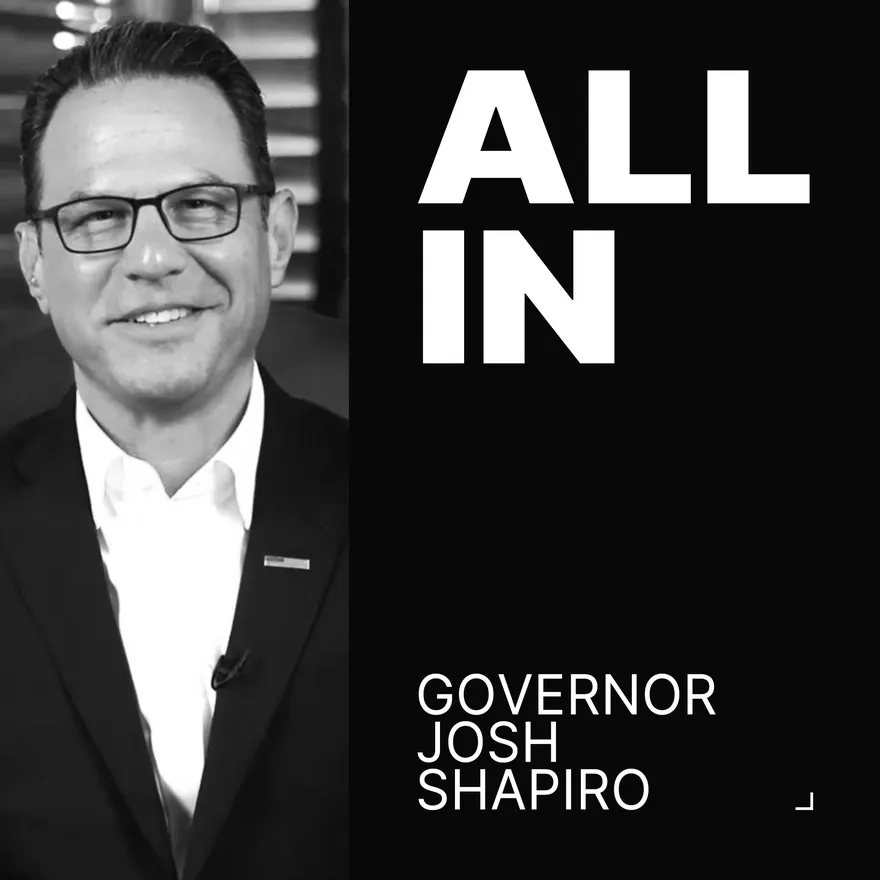

This is a preview of the Shortform summary of the Apr 8, 2026 episode of the All-In with Chamath, Jason, Sacks & Friedberg
Sign up for Shortform to access the whole episode summary along with additional materials like counterarguments and context.
1-Page Summary
Pennsylvania's Pro-growth Governance Record and Policy Achievements
Governor Josh Shapiro discusses Pennsylvania's transformation into a model of pro-growth governance through permitting reform, job creation, fraud prosecution, and public safety investments.
Shapiro has transformed Pennsylvania's permitting system from one of the slowest in the nation to a top-five model, introducing a money-back guarantee for delayed permits. Out of 40 million permits issued, only five resulted in refunds. Previously, barber licenses took 20 days; now they're granted the same day, translating directly into thousands of dollars more in monthly revenue for business owners. The state maintains strict health, safety, and environmental safeguards while accelerating processes.
Pennsylvania's job growth ranks among the top three states, with unemployment below the national average for over 32 months. Shapiro attributes this to seven rounds of tax cuts supporting small businesses, families, and seniors, making Pennsylvania highly tax-competitive and attractive to life sciences entrepreneurs.
On fraud, Pennsylvania leads nationally in prosecuting Medicaid fraud and aggressively pursued PPP loan misuse during Covid. Shapiro's background as attorney general informs this zero-tolerance approach to theft from programs serving vulnerable populations.
Public safety investments have yielded a 12% reduction in violent crime and a 42% decrease in gun-related deaths. Pennsylvania hired 2,000 new police officers and invested in community-based violence prevention. Educational investments have raised test scores and reduced truancy, placing Pennsylvania tenth nationally in public education quality.
Democratic Strategy, 2024 Election, Winning Coalition
Mistakes and Lessons From the 2024 Presidential Election
Shapiro openly criticizes President Biden's decision to seek re-election, stating in his book and directly to Biden that pursuing a second term was "probably not in the best interest of the party or the country." With Biden dropping out just over 100 days before the election, there was limited opportunity for a comprehensive primary process.
Despite the presidential loss, Shapiro points to Democratic victories in 2025 off-year elections—flipping New Jersey and Virginia gubernatorial seats and winning three Pennsylvania Supreme Court seats—as evidence against narratives of irreversible Democratic decline.
Building Broader Coalition Through Inclusive Platform
Shapiro insists Democrats must embrace a "big tent" strategy, welcoming internal debate rather than imposing rigid purity tests. He argues moderates who deliver real results are the party's strongest path forward, focusing on core priorities: investing in public education, ensuring safe communities, promoting a pro-growth economy, and championing freedom.
He advocates building bridges with independents and business leaders through competent governance, describing his bipartisan approach as seeking agreement on three or four priorities out of ten with Republican lawmakers, rather than dwelling on disagreements.
Governing Philosophy Over Campaign Messaging
For Shapiro, winning elections matters only insofar as it enables effective governance. He contends that open debates within the party, while appearing messy, ultimately strengthen Democrats and prepare them for responsible leadership. Shapiro emphasizes presenting a vision of competent, calm governance as a contrast to what he describes as Trump's chaos, measuring success through tangible improvements to people's lives.
Criticism of Trump Administration Policies
Shapiro extensively criticizes the Trump administration across several policy areas, highlighting economic, ethical, and constitutional concerns.
Tariff Impacts on Everyday Americans and Agricultural Communities
Shapiro argues Trump's tariffs have led to significant price hikes in Pennsylvania: coffee up 30%, beef 19%, orange juice 9%, and fertilizers 36%. He contends these increases hurt families and farmers, stemming from what he calls Trump's reckless economic approach and breaking campaign promises to reduce inflation.
Corruption, Self-Dealing, and Abuse of Pardons
Shapiro criticizes the Trump administration for nepotism and self-dealing, noting family members appeared to enrich themselves. He observes that those with personal access to Trump at private venues could lobby for pardons, sometimes for undeserving individuals. Jason Calacanis adds that even cryptocurrency figures like CZ received pardons without Trump knowing who they were. Shapiro contrasts this with his own transparent, merit-based pardon process, suggesting Trump's approach lacked the honor the Founders intended.
Undefined Military Objectives in Iran Conflict
Shapiro describes Trump's military actions against Iran as chaotic and lacking clear objectives. Trump never explained to Congress, the public, or military leaders why the U.S. was engaging in conflict, with contradictory statements from officials citing reasons from destroyed nuclear capabilities to regime change. Shapiro references 13 service members who died in an undefined mission, asserting that a commander-in-chief unable to articulate a mission's purpose cannot instruct the military or bring personnel home safely.
Congressional Abdication of Constitutional Responsibility
Shapiro contends congressional leaders, particularly Speaker Johnson, have weakened the legislative branch by acting as rubber stamps for Trump's agenda. Many members prioritized personal loyalty to Trump over constitutional duties, undermining the founders' separation of powers system and allowing corruption to flourish without accountability.
Israel-Palestine Conflict, U.S. Intervention, and Antisemitism in America
Distinction Between Anti-Semitism and Middle East Policy Criticism
Shapiro strongly insists on separating conversations about antisemitism from criticism of Middle East policy. He emphasizes that antisemitism exists on both the political left and right, and leaders in every party must condemn it without qualification. There should be no nuance or hesitation when calling out hatred directed at any group.
Shapiro warns against conflating Jewish identity with Israeli state policy, particularly invoking the antisemitic trope of "dual loyalty." He clarifies that legitimate criticism of Israeli government actions is fundamentally different from suggesting American Jews are responsible for Israeli government actions.
Complexity of Israel Support and Palestinian Rights
Shapiro has been openly critical of Prime Minister Netanyahu, stating that Netanyahu has led Israel down a dangerous path and fractured bipartisan American support. Despite this criticism, Shapiro expresses a deep connection to Israel and advocates for a two-state solution—Israel and a Palestinian state coexisting peacefully—though he insists Hamas, which he characterizes as a terrorist organization, cannot lead a Palestinian state.
Shapiro and Calacanis discuss how some blur opposition to Netanyahu with antisemitism. Shapiro believes educators and leaders must address this conflation, emphasizing the necessity for distinguishing peaceful protest and policy disagreement from bigotry.
America's Independent National Interest in Military Decisions
Shapiro underscores that America's national interest—peace and stability in the Middle East—must guide U.S. foreign policy, not the interests of any other nation. The United States should never be led by foreign leaders' interests, emphasizing American independence in military affairs. Calacanis contrasts earlier containment strategies toward Iran with Trump's later military intervention, which disappointed voters who supported Trump to avoid overseas wars.
Economic Opportunity and Addressing Inequality
Shapiro outlines an economic strategy focused on workforce opportunities, housing affordability, working-class support, and balanced taxation.
Workforce Development Beyond Traditional Four-Year Degrees
On his first day in office, Shapiro eliminated the college degree requirement for state jobs except where advanced degrees are mandatory. Now 60% of new state hires don't need a college degree. Pennsylvania has tripled funding for vocational-technical and career education and dramatically increased apprenticeship programs. With 62% of Pennsylvania's adult population lacking a college degree, these investments ensure opportunity for the majority, with clear six-figure career pathways in trades like welding or HVAC.
Housing Affordability and Construction Reform
Shapiro has proposed a $1 billion fund for building new and repairing existing housing. With half of Pennsylvania homes built before 1950, targeted renovations help people stay in their homes. He's introduced regulatory reforms to cut red tape and accelerate construction timelines, making homeownership more attainable for young people.
Working-Class Tax Credits and Income Support
Pennsylvania passed its first working Pennsylvanians tax credit, modeled after the federal Earned Income Tax Credit. Nearly one million Pennsylvanians will receive over $800 back, providing meaningful financial relief to modest-income workers.
Balancing Wealth Disparity Without Punitive Measures
Shapiro has rejected wealth taxes and seizing assets from unrealized capital gains, policies that have driven entrepreneurs out of high-tax states. Instead, he advocates for a balanced tax system: low income taxes to spur growth while ensuring wealthier residents pay their share. He argues that smart tax policies and investments in the working class, not punitive wealth confiscation, are the best solution for narrowing income gaps while maintaining a fair playing field for all residents.
1-Page Summary
Additional Materials
Counterarguments
- While Pennsylvania's permitting reforms have sped up processes, some critics argue that rapid approvals may risk overlooking important environmental or community concerns, even if safeguards are claimed to be maintained.
- Pennsylvania's job growth, though strong, may also be influenced by national economic trends and federal stimulus measures, making it difficult to attribute gains solely to state-level tax cuts or policies.
- Aggressive prosecution of fraud can sometimes result in overzealous enforcement or unintended consequences for individuals or small businesses caught up in complex regulatory systems.
- The reduction in violent crime and gun-related deaths may also reflect broader national trends or demographic shifts, not just state policy changes.
- Improvements in educational outcomes could be partially due to factors outside state investments, such as changing student populations or federal education initiatives.
- Criticizing Biden's re-election decision may overlook the complexities of party unity and the challenges of mounting a successful campaign with limited time for a new candidate to build national recognition.
- Democratic victories in off-year elections do not necessarily predict long-term trends, as voter turnout and issues can differ significantly from presidential election years.
- A "big tent" strategy can sometimes dilute party messaging or make it harder to achieve consensus on key issues, potentially frustrating core supporters.
- Bipartisan cooperation, while valuable, may result in compromises that leave important policy goals only partially addressed or watered down.
- Emphasizing governance over campaign messaging may risk underestimating the importance of clear, compelling narratives in motivating voters.
- The impact of Trump's tariffs is debated; some argue they were intended to protect American industries and jobs, and that price increases were offset by other economic benefits or were influenced by global supply chain issues.
- Accusations of nepotism and self-dealing in the Trump administration are serious, but some supporters argue that these claims are politically motivated or that similar issues have occurred in other administrations.
- Military actions in Iran, while criticized for lack of clarity, were defended by some as necessary responses to security threats, and the complexity of military decision-making often limits public disclosure.
- Congressional deference to the executive branch is a longstanding issue and not unique to the Trump era; similar criticisms have been made about previous Congresses under different presidents.
- While antisemitism should be condemned, some argue that accusations of antisemitism are sometimes used to silence legitimate criticism of Israeli government policies.
- Eliminating college degree requirements for state jobs may devalue higher education or overlook the benefits of a college-educated workforce in certain roles.
- Housing affordability initiatives may not be sufficient to address systemic issues such as zoning laws, land use restrictions, or broader market forces driving up costs.
- Tax credits for working Pennsylvanians, while helpful, may not fully address deeper issues of wage stagnation or the rising cost of living.
- Rejecting wealth taxes and taxes on unrealized capital gains may limit the state's ability to address wealth inequality or fund needed public investments.
- Relying on "smart tax policies" and working-class investments alone may not be enough to significantly narrow income inequality without broader structural reforms.
Actionables
- you can track and share your experiences with local government services by timing permit or application processes, then publicly posting your results and suggestions for improvement to encourage transparency and efficiency in your community. For example, if you apply for a building permit or business license, note how long it takes, document any delays, and share your findings with neighbors or on local forums, highlighting both successes and bottlenecks.
- a practical way to support fair and effective public safety and education is to regularly attend or watch local government meetings online, then provide concise feedback to your representatives about which investments or policies you believe are working and which need adjustment, using specific data or personal observations. For instance, if you notice improved safety in your neighborhood or changes in school performance, mention these in your communications to help guide future decisions.
- you can foster open, respectful political discussions in your social circles by inviting friends or family with differing views to share their priorities for your community, then collaboratively identify two or three shared goals and brainstorm simple actions you can take together, such as supporting a local initiative or volunteering for a nonpartisan cause. This helps build bridges and demonstrates the value of focusing on common ground over partisan purity.
Get access to the context and additional materials
Pennsylvania's Pro-growth Governance Record and Policy Achievements
Pennsylvania, under Governor Josh Shapiro, demonstrates a strong record of pro-growth governance marked by streamlined permitting, robust job creation, aggressive fraud prosecution, and significant public safety investments.
Streamlined Permitting Process as Economic Foundation
Governor Shapiro has transformed Pennsylvania’s permitting system from one of the slowest in the nation to a top-five model in speed, making the state a national benchmark. A key innovation is the introduction of a money-back guarantee for all permits—if the state cannot deliver a permit on time, applicants receive a refund. Out of 40 million permits issued during Shapiro’s tenure, only five have resulted in refunds, underscoring the dramatic increase in efficiency.
These reforms extend to various permits and licenses, such as for becoming a barber. Previously, it took 20 days for barbers to get licensed; now, permits are granted the same day. This rapid processing translates directly into revenue for business owners—a barber, for instance, can earn thousands of dollars more each month thanks to the expedited process.
The administration’s approach combines speed with responsibility. While accelerating the pathway for permits, the state continues to enforce strict safeguards for health, safety, and the environment. Shapiro’s team achieves these gains both through executive orders and through collaboration with the legislature, demonstrating that business growth and regulatory responsibility are not mutually exclusive.
Robust Job Creation and Competitive Tax Environment
Under Governor Shapiro, Pennsylvania’s job growth ranks among the top three states, with the unemployment rate consistently below the national average for over 32 months. This strong job market results from purposeful pro-growth policies, including seven rounds of tax cuts. These tax reductions support small businesses, families needing childcare, seniors, and working Pennsylvanians, making Pennsylvania one of the nation’s most tax-competitive states.
This conducive environment draws entrepreneurs and innovative firms, especially in the life sciences sector. By supporting small companies through the critical early stages—when many would otherwise falter—Pennsylvania creates a fertile ground for innovation and sustained business success. Startups and small businesses, after receiving support, are expected to contribute their fair share back to the commonwealth, ensuring a cycle of investment and return.
Aggressive Fraud Prosecution and Financial Accountability
Pennsylvania is a national leader in prosecuting Medicaid fraud, reflecting a zero-tolerance stance on theft from healthcare programs serving vulnerable populations. The reimbursement system requires providers to submit proof of their work before receiving ...
Here’s what you’ll find in our full summary
Pennsylvania's Pro-growth Governance Record and Policy Achievements
Additional Materials
Counterarguments
- While the permitting process has reportedly improved in speed, some critics argue that rapid permitting can risk insufficient scrutiny, potentially overlooking environmental or safety concerns despite stated safeguards.
- The claim of only five refunds out of 40 million permits may not account for applicants who chose not to pursue refunds or who faced other administrative barriers.
- Accelerated licensing for professions like barbers may benefit business owners, but some professional associations have raised concerns about whether expedited processes compromise the thoroughness of background or qualification checks.
- Despite job growth, Pennsylvania’s overall population growth has lagged behind other states, which can impact long-term economic sustainability.
- Tax cuts, while beneficial to some, may reduce state revenue available for public services, potentially impacting infrastructure, education, or social programs.
- Some policy analysts note that Pennsylvania’s tax competitiveness rankings vary depending on the metrics used, and the state still has relatively high local taxes in some areas.
- While support for startups is highlighted, access to these programs may not be evenly distributed across all regions or demographic groups within the state.
- Aggressive prosecution of Medicaid fraud is positive, but there have been concerns nationally that overly stringent fraud detection can sometimes delay or deny legitimate claims, ...
Actionables
- you can track and compare the processing times and refund policies for permits or licenses in your own state, then share your findings with local business groups or online forums to encourage similar improvements where you live; for example, create a simple spreadsheet to log your experience and invite others to contribute their data, highlighting delays or successes.
- a practical way to support public safety and education improvements is to regularly check your local government’s budget proposals and send concise feedback to your representatives about prioritizing funding for police hiring, violence prevention, and school resources; you might use a template email or online comment form to make your voice heard without needing policy expertise.
- you can help foster a fair business environment by ...
Get access to the context and additional materials
Democratic Strategy, 2024 Election, Winning Coalition
Mistakes and Lessons From the 2024 Presidential Election
Governor Josh Shapiro reflects on the 2024 presidential election and the Democratic Party’s approach. He openly criticizes President Joe Biden’s decision to seek re-election, stating in his recent book and in direct conversation with Biden that pursuing a second term was "probably not in the best interest of the party or the country." Shapiro notes that once Biden chose to drop out with just over 100 days before the election, there were limited opportunities for a comprehensive Democratic primary process that could have fostered greater voter engagement and party renewal.
Despite the Democratic loss in the presidential race, Shapiro points out that Democrats achieved significant victories in off-year elections in 2025: they flipped the gubernatorial seats in New Jersey and Virginia and won three Pennsylvania state Supreme Court seats. He emphasizes this as evidence of the natural political pendulum, with power oscillating between parties, and argues against narratives suggesting an irreversible decline for Democrats.
Building Broader Coalition Through Inclusive Platform
Shapiro insists the Democratic Party must embrace a "big tent" strategy, welcoming internal debate and disagreement as strengths rather than weaknesses. He argues against the party's inclination toward rigid purity tests and exclusion over marginal issues, suggesting that such a stance limits its appeal and effectiveness. Moderates who deliver real results for their constituents are, in his view, the strongest path forward for the party.
Shapiro outlines his policy priorities: investing in public education, ensuring safe communities with reduced crime, promoting a pro-growth economy that generates jobs and opportunities—especially in rural and neglected areas—and championing freedom. By uniting members on these familiar Democratic priorities, the party can retain ideological diversity without sacrificing its broader mission.
He advocates for building bridges with independents and business leaders through demonstrations of competent governance. In contrast to a focus on ideological conformity, Shapiro highlights the importance of finding common ground, describing his own bipartisan approach in Pennsylvania as seeking agreement on three or four priorities out of ten with Republican lawmakers, rather than dwelling on points of disagreement. Thi ...
Here’s what you’ll find in our full summary
Democratic Strategy, 2024 Election, Winning Coalition
Additional Materials
Counterarguments
- Some critics argue that a "big tent" approach can dilute the party's core values, making it harder to present a clear and compelling message to voters.
- Avoiding "purity tests" may risk alienating the party's progressive base, who feel that certain issues—such as climate action or reproductive rights—are fundamental rather than marginal.
- Emphasizing moderation and bipartisanship may not be effective in an era of heightened polarization, where compromise is often viewed with suspicion by both sides.
- The assertion that moderates are the strongest path forward is contested by those who point to the success of more progressive candidates in certain districts and states.
- Some analysts suggest that focusing on bipartisan cooperation can lead to watered-down policies that fail to address urgent problems, disappointing both the base and swing voters.
- The idea that open debate always strengthens the party is challenged by those who believe public intra-party conflict can confuse voters and undermine electoral prospects.
- The claim that Democratic victories in 2025 off-year elections indicate a healthy political pendulum may ove ...
Actionables
- you can invite a friend or family member with different political views to join you in a casual, recurring “policy swap” conversation where each person shares one local issue they care about and brainstorms together on practical solutions, focusing on listening and finding common ground rather than debating who’s right
- (for example, you might discuss how to improve public safety or education in your area, and together come up with a simple action like writing to a local official or attending a town hall, regardless of party lines)
- a practical way to support tangible improvements in your community is to pick one local public service (like a library, park, or food pantry) and track a specific need or challenge it faces, then take a small action to help address it, such as donating supplies, volunteering for a shift, or sharing its needs with your network
- (for instance, if your local park needs cleanup, you could spend an hour picking up trash or invite a neighbor to join you, demonstrating hands-on commitment to communit ...
Get access to the context and additional materials
Criticism of Trump Administration Policies
Josh Shapiro extensively criticizes the Trump administration across several policy areas, highlighting serious economic, ethical, and constitutional concerns.
Tariff Impacts on Everyday Americans and Agricultural Communities
Shapiro argues that Donald Trump's decision to impose tariffs has led to significant price hikes for everyday Americans and agricultural communities. He points out that, in Pennsylvania alone, coffee prices have increased by 30%, beef by 19%, orange juice by 9%, and fertilizers essential for farmers by 36%. According to Shapiro, these price increases hurt both families and farmers, stemming directly from what he describes as Trump's reckless and chaotic economic approach. He contends that these tariffs are inconsistent with Trump’s 2024 campaign promises to reduce inflation and lower prices, breaking fundamental economic promises to voters.
Corruption, Self-Dealing, and Abuse of Pardons
Shapiro criticizes the Trump administration for self-dealing and nepotism, noting that family members and associates of the president appeared to enrich themselves during his tenure. He observes that those with personal access to the president, often at private venues like his swim club, could lobby for pardons, sometimes for individuals who did not deserve them. Shapiro expresses concern that Trump’s pardon power was used as an ongoing tool to benefit allies and individuals with social or financial connections, rather than being applied with fairness or merit. Jason Calacanis adds that even figures from the cryptocurrency world, such as CZ, received pardons without Trump seemingly knowing who they were, illustrating the arbitrary nature of clemency decisions. In strong contrast, Shapiro describes his own process for approving pardons as serious, transparent, and guided by a strong sense of responsibility, suggesting Trump’s approach lacked the honor and morality the Founders intended.
Undefined Military Objectives in Iran Conflict
On foreign policy, Shapiro describes Trump’s military actions against Iran as chaotic and lacking clear objectives. He underscores that Trump never explained to Congress, the public, or military leaders why the U.S. was engaging in conflict, resulting in strategic incoherence and confusion. Public statements from administration officials often contradicted each other, citing reasons ranging from destroyed nuclear capabilities to regime change, without a consistent or credible rationale. Shapiro indicates ...
Here’s what you’ll find in our full summary
Criticism of Trump Administration Policies
Additional Materials
Counterarguments
- Tariffs are a common tool used by multiple administrations, both Democratic and Republican, to protect domestic industries or respond to unfair trade practices; their use is not unique to the Trump administration.
- Some economists and policymakers argue that tariffs can help protect American jobs and industries from foreign competition, particularly in sectors like steel and manufacturing.
- Price increases in commodities such as coffee, beef, and orange juice can be influenced by multiple factors, including global supply chain disruptions, weather events, and market fluctuations, not solely by tariffs.
- The use of presidential pardon power has been controversial under several administrations, and presidents from both parties have issued pardons to political allies or controversial figures. ...
Actionables
- you can track the prices of your most-purchased groceries and household items over several months, then share a simple chart with friends or family to highlight how policy changes can affect everyday costs and encourage informed conversations about economic decisions
- By keeping a running list of prices for things like coffee, beef, or fertilizer-based products, you’ll see firsthand how external factors impact your budget. Sharing your findings in a group chat or at family gatherings can spark practical discussions about how policies influence daily life and help others become more aware of these connections.
- a practical way to encourage transparency and fairness in your community is to ask local leaders or organizations to publicly explain their decision-making processes, especially when it comes to distributing resources, grants, or recognition
- For example, if your town awards community grants or honors, request that the criteria and process be posted online or in newsletters. This helps ensure decisions are made openly and based on merit, not personal connection ...
Get access to the context and additional materials
Israel-Palestine Conflict, U.S. Intervention, and Antisemitism in America
Distinction Between Anti-Semitism and Middle East Policy Criticism
Josh Shapiro strongly insists on maintaining a clear separation between the conversations about antisemitism and criticism of Middle East policy. He emphasizes that antisemitism is a societal problem found on both the political left and right, and he holds leaders in every party accountable for condemning it without qualification. Shapiro appreciates when people—including Ted Cruz on the right and himself on the left—call out antisemitism within their own circles, stressing the need for universal condemnation. He states that there should be no nuance or hesitation when it comes to calling out hatred or bigotry directed at Jews, Muslims, Christians, or any group, as such hatred threatens the safety and cohesion of all society.
Shapiro also warns against conflating Jewish identity with Israeli state policy, particularly invoking the antisemitic trope of "dual loyalty." He clarifies that legitimate criticism of Israeli government actions, such as positions on Prime Minister Netanyahu’s leadership, is fundamentally different from suggesting that American Jews are responsible for or aligned with every action of the Israeli government. According to Shapiro, blurring this line is dangerous and crosses into antisemitism by mixing state policy criticism with religious or ethnic identity, a confusion he strives to challenge daily as governor.
Complexity of Israel Support and Palestinian Rights
Shapiro has been openly critical of Prime Minister Netanyahu, stating that Netanyahu has led Israel down a dangerous and isolated path and fractured the bipartisan American support that Israel previously enjoyed. Shapiro maintains that he has been consistent in voicing these concerns even before October 7th. Despite his criticism, Shapiro expresses a deep connection to Israel, having spent time there and holding affection for the country.
He advocates for America’s interest in pursuing peace and stability in the Middle East, specifically promoting the vision of two states—Israel and a future Palestinian state—coexisting peacefully. However, he is clear that for such a solution to be viable, the Palestinian state cannot be led by Hamas, which he characterizes as a terrorist organization. For lasting peace, he asserts, appropriate structures must be established to ensure Hamas does not govern a potential Palestinian state.
Shapiro and his interviewer, Jason Calacanis, discuss how some protesters and segments of the public blur opposition to Netanyahu and Israeli policies with antisemitism. Shapiro believes educators and leaders must address this conflation, warning that equating criticism of Israeli governmental actions with Judaism itself fosters misunderstanding and fuels harmful stereotypes. He emphasizes the necessity for nuance in Middle East policy discussions and th ...
Here’s what you’ll find in our full summary
Israel-Palestine Conflict, U.S. Intervention, and Antisemitism in America
Additional Materials
Clarifications
- The "dual loyalty" trope is an antisemitic accusation that Jewish people are more loyal to Israel or Jewish interests than to their own countries. Historically, it has been used to question the patriotism of Jews, especially during times of political tension or conflict. This stereotype fueled discrimination and violence against Jewish communities by portraying them as outsiders or traitors. It ignores the reality that Jewish individuals, like all citizens, have diverse and complex identities and loyalties.
- Josh Shapiro is the Governor of Pennsylvania, a prominent U.S. political figure. He is known for his moderate Democratic stance and active engagement in issues of social justice and public policy. His role in the Israel-Palestine discussion reflects his influence in shaping public opinion and policy on international and domestic matters. Shapiro's position as governor gives him a platform to address antisemitism and U.S. foreign policy.
- Benjamin Netanyahu is a long-serving Israeli prime minister known for his right-wing, security-focused policies. His leadership has emphasized strong military responses to threats and skepticism toward Palestinian statehood under current leadership. Netanyahu's tenure has been marked by political polarization within Israel and strained relations with some international allies. Critics argue his approach has hindered peace efforts and increased regional tensions.
- The Israel-Palestine conflict is a long-standing territorial and political dispute over land in the Middle East, primarily between Jewish Israelis and Palestinian Arabs. It began in the early 20th century with competing nationalist movements and was intensified by the creation of the state of Israel in 1948, leading to wars and displacement. Key issues include borders, the status of Jerusalem, Palestinian statehood, and the rights of refugees. The conflict has regional and global implications, influencing international diplomacy and security.
- Hamas is a Palestinian Islamist political and militant group founded in 1987 during the First Intifada. It governs the Gaza Strip and opposes the existence of Israel, using both political means and armed resistance. Many countries, including the U.S. and the EU, designate Hamas as a terrorist organization due to its attacks targeting civilians. Its charter originally called for Israel's destruction, though its stance has evolved somewhat over time.
- The two-state solution envisions Israel and Palestine as two independent, sovereign nations living side by side in peace. Key challenges include disagreements over borders, the status of Jerusalem, security concerns, and the rights of refugees. Political divisions, especially the control of Gaza by Hamas and the West Bank by the Palestinian Authority, complicate unified Palestinian governance. International efforts have repeatedly stalled due to mutual distrust and conflicting demands.
- Bipartisan American support for Israel historically meant both major U.S. political parties broadly agreed on backing Israel's security and diplomatic interests. This consensus was rooted in shared democratic values, strategic alliances, and strong cultural ties. Over recent years, divisions have emerged due to differing views on Israeli government policies, especially under Netanyahu, and concerns about human rights and peace efforts. These shifts have led to more partisan debates, reducing the previously unified American political support for Israel.
- October 7th refers to a significant escalation or event in the Israel-Palestine conflict that intensified international attention and debate. It likely marks a major attack, military action, or political development involving Israel and Palestinian groups. This date is used to highlight that Shapiro’s criticism of Netanyahu predates this event, showing his consistent stance. Understanding this helps clarify the timeline and context of Shapiro’s views.
- U.S. foreign policy in the Middle East aims to promote regional stability, secure energy resources, and counter terrorism. The U.S. often supports allies like Israel and Gulf states while balancing relations with countries like Iran. Military aid, diplomatic efforts, and economic sanctions are tools used to influence outcomes. These policies impact global security and U.S. national interests.
- The U.S. has a long history of military interventions in the Middle East, often aimed at securing oil resources, combating terrorism, and supporting allies. Key interventions include the Gulf War (1990-1991), the Iraq War (2003-2011), and ongoing operations against groups like ISIS. Under President Trump, the U.S. increased military actions, such as the assassination of Iranian General Qassem Soleimani in 2020, escalating tensions with Iran. These interventions hav ...
Counterarguments
- While separating antisemitism from criticism of Israeli policy is important, in practice, the distinction can be difficult to maintain, as some rhetoric and actions may unintentionally blur the lines, making it challenging for individuals and institutions to consistently apply this separation.
- The assertion that a Palestinian state cannot be governed by Hamas may be criticized as dismissive of the political realities and popular support Hamas holds in Gaza, potentially undermining Palestinian self-determination.
- The focus on Hamas as the sole obstacle to peace may overlook other significant factors, such as Israeli settlement expansion, military occupation, and the broader blockade of Gaza, which are also widely cited as impediments to a two-state solution.
- Emphasizing American national interest as the primary guide for U.S. foreign policy could be critiqued for potentially neglecting humanitarian concerns or international law, especially in situations where U.S. interests may conflict with the rights or well-being of people in the region.
- The call for universal ...
Get access to the context and additional materials
Economic Opportunity and Addressing Inequality
Pennsylvania Governor Josh Shapiro outlines a broad economic strategy focused on expanding workforce opportunities, addressing housing affordability, supporting working-class families, and balancing the tax system to promote growth and fairness.
Workforce Development Beyond Traditional Four-Year Degrees
On his first day in office, Governor Shapiro signed an executive order doing away with the college degree requirement for state government jobs, except where advanced degrees are mandatory (such as for doctors and lawyers). With roughly 80,000 state employees, this means that now 60% of new hires in state government do not need a college degree. Shapiro's policy move recognizes that success should not be narrowly defined by possession of a degree, and values skills developed through the military, trades, and private sector.
To further bolster workforce development, Pennsylvania has tripled its funding for vocational-technical (VOTEC) and career and technical education (CTE), as well as dramatically increasing apprenticeship program support in high schools and for adults. With 62% of Pennsylvania’s adult population lacking a college degree, these investments ensure economic opportunity for the majority. Governor Shapiro highlights clear six-figure career pathways for those learning trades such as welding or HVAC, emphasizing that opportunities in complex sectors—like life sciences construction—are now accessible outside the traditional college route.
For decades, politicians in both parties have fostered an elitist atmosphere, equating success only with college degrees and establishing arbitrary entry barriers. Shapiro's reforms now mean that skills and experiences from the military, trades, and private sector are given proper value, creating new on-ramps to prosperity for Pennsylvanians.
Housing Affordability and Construction Reform
Addressing another pillar of economic opportunity, Shapiro has proposed a $1 billion fund dedicated to building new and repairing existing housing. With half of Pennsylvania homes built prior to 1950, targeted renovations—such as installing new boilers, roofs, or windows—help keep people in their homes and avoid the need for expensive new builds. The plan invests in both expanding the supply of affordable housing and maintaining existing homes for current residents.
To make these goals possible, Shapiro has introduced a regulatory reform plan to cut red tape and accelerate housing construction timelines. By reducing bureaucratic barriers, this approach enables the market to respond to demand and makes homeownership more attainable for young people, directly addressing pricing and persistent construction delays. These efforts are aimed at restoring the accessibility of the American dream for new generations, who often believe homeownership is now unattainable due to rising costs and stagnant supply.
Working-Class Tax Credits and Income Support
Pennsylvania has taken further steps to support working families by passing its first-ever working Pennsylvanians tax credit—modeled after the federal Earned Income Tax Credit. Nearly one million Pennsy ...
Here’s what you’ll find in our full summary
Economic Opportunity and Addressing Inequality
Additional Materials
Counterarguments
- Eliminating college degree requirements for most state jobs may devalue higher education and could potentially lower standards for certain positions where a degree, while not strictly necessary, may indicate important critical thinking or communication skills.
- Increased funding for vocational and technical education is positive, but it may not address the needs of those who aspire to careers that still require a college degree, potentially diverting resources from traditional higher education.
- While highlighting six-figure salaries in trades is encouraging, such high earnings are not guaranteed for all workers in these fields, and job security or benefits may vary.
- Regulatory reforms to accelerate housing construction could risk reducing oversight, potentially leading to lower building standards or negative environmental impacts.
- The $1 billion housing fund may be insufficient to address the scale of Pennsylvania’s housing affordability crisis, given the age and number of homes needing repair.
- Targeted tax credits, while helpful, may not be enough to offset broader systemic issues like wage stagnation, rising healthcare costs, or inflation.
- Rejecting wealth taxes and tax ...
Actionables
- you can create a personal skills inventory to identify and highlight your non-degree skills and experiences when applying for jobs, making it easier to showcase your value to employers who are open to diverse backgrounds; for example, list out technical abilities, volunteer work, military service, or hands-on projects, and practice describing these in interviews or on your resume.
- a practical way to support affordable housing in your community is to join or start a neighborhood tool-sharing group, which helps residents maintain and repair older homes at lower costs; for instance, coordinate with neighbors to share ladders, power tools, or expertise for small renovations, making it easier for everyone to keep their homes safe and energy-efficient.
- you can maximize your financial relief from tax credits by ...
Get access to the context and additional materials

 1-Page Summary
- Pennsylvania's Pro-growth Governance Record and Policy Achievements
- Democratic Strategy, 2024 Election, Winning Coalition
- Criticism of Trump Administration Policies
- Israel-Palestine Conflict, U.S. Intervention, and Antisemitism in America
- Economic Opportunity and Addressing Inequality
Create Summaries for anything on the web
Download the Shortform Chrome extension for your browser
