

Exiled Iranian Prince Reza Pahlavi: Transition Plan and the Fight for Iran's Freedom
In this episode of All-In, David Sacks, Jason Calacanis, and their co-hosts discuss Iran's potential transition to democracy with Prince Reza Pahlavi. The conversation examines the current Iranian regime's actions and their impact on the country's development, while exploring how Iran could benefit from democratic reform.
Prince Pahlavi shares his framework for Iran's democratic transition, including a detailed timeline for stabilization, constitutional reform, and elections. The discussion also covers the international support for Iran's democratic movement and the potential economic implications of a democratized Iran, from regional development to global market opportunities.


This is a preview of the Shortform summary of the Mar 7, 2026 episode of the All-In with Chamath, Jason, Sacks & Friedberg
Sign up for Shortform to access the whole episode summary along with additional materials like counterarguments and context.
1-Page Summary
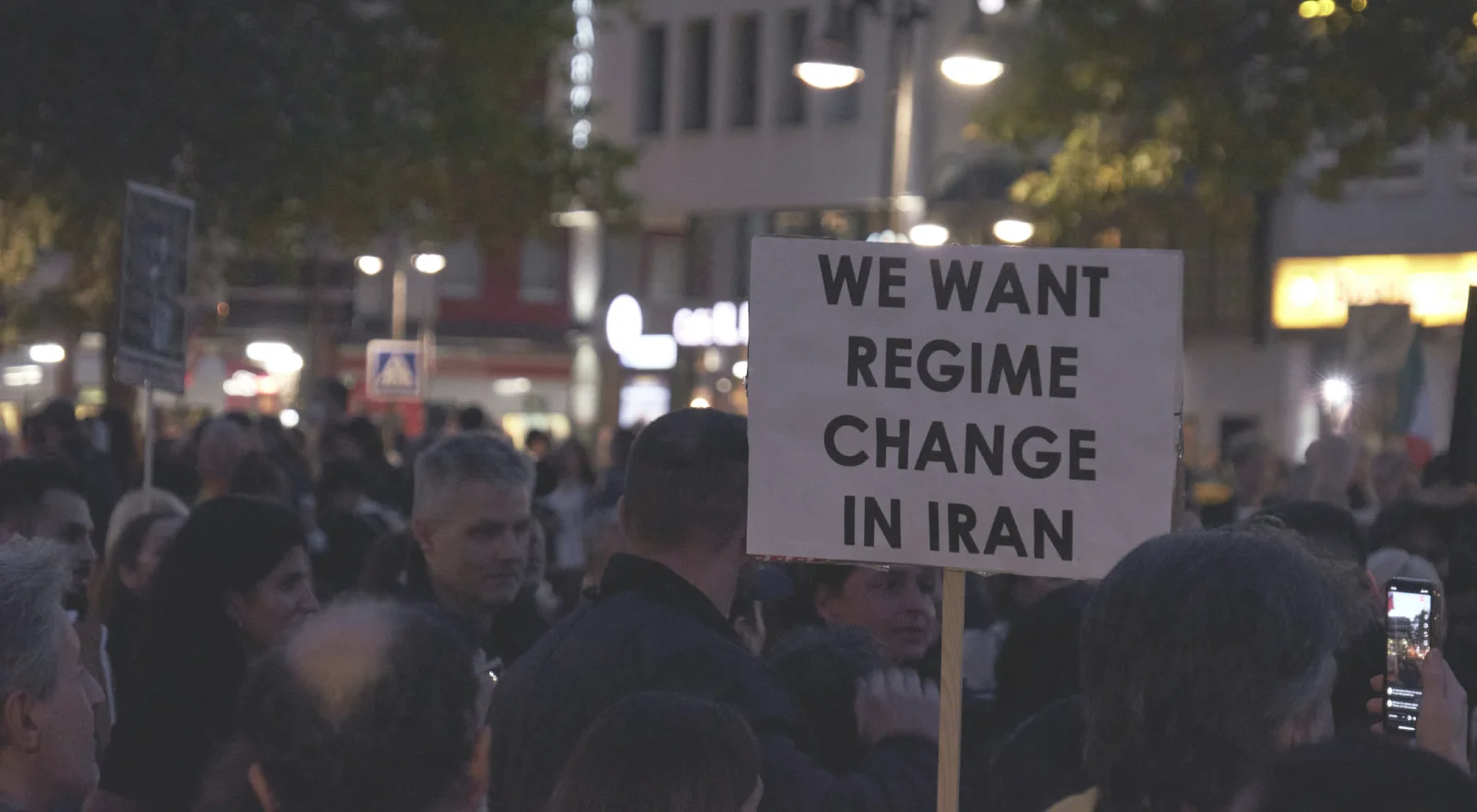
Iran's Political Situation and Need For Regime Change
David Sacks presents a compelling case for regime change in Iran, highlighting the current leadership's oppressive actions and Iran's potential under democratic rule. He describes the regime's violent suppression of dissent, including a devastating massacre of 43,000 citizens within 48 hours during protests. According to Sacks, the corrupt, mafia-like regime has stunted Iran's development, preventing it from achieving a status comparable to South Korea in the region.
Prince Reza Pahlavi's Vision for Democratic Transition
Prince Reza Pahlavi outlines a detailed framework for transitioning Iran to democracy. As discussed with Jason Calacanis and David Sacks, Pahlavi positions himself as a neutral arbiter who can unite various Iranian factions toward democratic reform. His plan includes a structured 100-day stabilization period, followed by a four-month pathway to a referendum, and a six-month phase for drafting a new constitution. Pahlavi emphasizes that Iranians would ultimately choose between a republic or monarchy through democratic elections.
The International Context and Support for the Transition
Kaya Henderson notes significant international support for Iran's democratic movement, including backing from former President Trump and other global leaders. Jason Calacanis and David Sacks discuss the potential regional and global benefits of a democratic Iran, with Sacks suggesting that Iran's strategic location and resources could significantly boost the global economy. Calacanis predicts substantial economic benefits, including potential trillion-dollar investments in both Iran's reconstruction and the U.S. market within the first decade of rebuilding.
1-Page Summary
Additional Materials
Counterarguments
- The assertion that Iran's regime violently suppresses dissent and massacred 43,000 citizens may be challenged by requesting verifiable evidence to substantiate such a specific and severe claim.
- The comparison of Iran's development to South Korea's may be criticized for oversimplifying the unique historical, cultural, and geopolitical factors that have shaped each nation's trajectory.
- The potential of Iran under democratic rule is speculative and may be countered by pointing out that democratization is a complex process with no guaranteed outcomes.
- Prince Reza Pahlavi's role as a neutral arbiter could be questioned given his royal lineage and potential vested interests in the outcome of Iran's political future.
- The feasibility of Prince Reza Pahlavi's proposed transition framework might be criticized for potentially underestimating the challenges of political and social reform in a deeply divided society.
- The idea that Iranians should choose between a republic or monarchy through democratic elections could be met with skepticism regarding whether such a choice would be truly free from external influence or internal coercion.
- The claim of significant international support for Iran's democratic movement might be countered by noting that international politics are complex, and support from certain leaders does not necessarily reflect a global consensus.
- The argument that a democratic Iran would bring regional and global benefits could be challenged by considering the unpredictable nature of political transitions and the potential for unintended consequences.
- The suggestion that Iran's strategic location and resources could significantly boost the global economy might be met with caution regarding the oversimplification of economic integration and the challenges of resource management.
- The prediction of trillion-dollar economic benefits from Iran's reconstruction and integration with the U.S. market could be criticized for being overly optimistic and not accounting for the many variables that could affect economic outcomes.
Actionables
- You can educate yourself on Iran's history and current events to better understand the context of these discussions by reading books, watching documentaries, and following reputable news sources that cover the region. This knowledge will help you form your own informed opinions and contribute to discussions on the topic with a well-rounded perspective.
- Support Iranian artists, filmmakers, and writers who often address social issues and provide insights into the culture and challenges faced by the people. Purchasing their work or promoting it on social media can help amplify their voices and provide a more nuanced understanding of the country beyond political discourse.
- Engage in conversations with members of the Iranian diaspora to gain personal perspectives on the issues discussed in the podcast. This can be done through community forums, cultural events, or social media groups, allowing you to hear firsthand accounts and deepen your empathy and understanding of the situation.

Get access to the context and additional materials
Iran's Political Situation and Need For Regime Change
David Sacks articulates a forceful condemnation of the Iranian leadership, calling for change given the regime’s oppressive actions and the potential for Iran under more democratic governance.
Iranian Regime's Oppression of Citizens
Regime Massacres Thousands to Repress Dissent
Sacks characterizes the current leaders in Iran as invaders that will eventually be expelled. The Iranian regime has perpetrated severe acts of violence against its people in order to quash dissent, resulting in the massacre of tens of thousands of unarmed citizens. Sacks mentions a specific event where the Iranian regime violently suppressed protesters, killing over 43,000 innocent Iranians using ammunition notably larger than the size of a Coca-Cola can. He describes that the regime annihilated 43,000 individuals in a mere 48 hours as a response to what he characterizes as a liberation attempt, an action that the president noted could be the summary of about four weeks of oppressive work.
Furthermore, Sacks refers to Iran's Supreme Leader, Khamenei, as “an absolutely evil man” who was eliminated right away during this crackdown. He cites a plan that suggests even military members, who did not participate in the carnage, could be offered early retirement, separating them from the acts of state terrorism against the Iranian populace. Sacks depicts the Iranian regime as an absolute disaster and mayhem, stating that the majority of Iranians are in protest against it.
Need For Stable Democratic Transition in Iran
Corrupt Regime Holding Country Hostage, Stunting Development
Sacks argues vigorously that the regime's corrupt, mafia-like governance has held th ...
Here’s what you’ll find in our full summary
Iran's Political Situation and Need For Regime Change
Additional Materials
Actionables
- You can raise awareness by creating digital art that highlights the situation in Iran and sharing it on social media platforms. Use your artistic skills to design impactful images or short animations that encapsulate the themes of freedom and resistance. Share these with hashtags related to the Iranian struggle to engage a broader audience and foster global solidarity.
- Start a book club focused on Iranian authors and stories to deepen understanding and empathy for the Iranian people. Choose works that explore the culture, history, and current issues facing Iran. By discussing these books with friends and community members, you can spread knowledge and appreciation for the Iranian perspective, which can lead to a more informed dialogue about the country's situation.
- Support Iranian businesses and products that ...

Get access to the context and additional materials
Prince Reza Pahlavi's Vision for Democratic Transition
Prince Reza Pahlavi has rendered a comprehensive framework to actualize a shift towards a democratic Iran, emphasizing his crucial role in shepherding this political metamorphosis and underscoring the high-stakes nature of the country's future.
Pahlavi as Neutral Arbiter & Democratic Bridge
Pahlavi positions himself as the catalyst for bringing together a fractured Iranian society, comprising various political and social factions, toward a common goal of democracy.
Pahlavi Aims to Unite Iranians For Democracy and Allow Choice of Government System
The host, Jason Calacanis, along with David Sacks discuss with Prince Reza Pahlavi his aspirations to return to Iran to assist in the democratic transition. Pahlavi emphasizes his commitment to uniting Iranians from all walks of life to establish a secular democracy. As a neutral arbiter, he does not advocate for any particular form of government but aims to serve as a bridge to facilitate a choice, through elections, between a republic or a monarchy.
Pahlavi's Plan for a Structured, Transparent Transition Process
Pahlavi has conceived a meticulously delineated plan for a transition, insisting on a structured, transparent progression that is sensitive to the voices and votes of the Iranian populace.
Pahlavi's 100-day Plan: Stabilize and Unite Diverse Groups
Reza Pahlavi discusses the pressing need for the country to brace itself for business and opportunity in a post-regime scenario. The Iran Prosperity Project's early phases focus particularly on the first 100 days to stabilize and unite various societal elements. This phase sets the stage for a transition that nurtures business growth and capitalizes on alliances within the military and security forces benign to the transformation.
Transition: Referendum, Assembly, and Elections for New Democracy
Pahlavi explicates a distinctly phased progression to democracy. This involves a transition starting with a four-month pathway to a referendum followed by a six-month phase for the assembly of representatives to draft a new constitution. Subsequently, a 14-month phase concludes with a public vote to ratify the constitution. The comprehensive plan presented in the Iran Prosperity Project expands on these steps, intending to create a foundation for a democratic Iran respectful of the territorial integrity and driven by the empathy for the Iranian people's traumas.
David Sacks underscores Prince Reza Pahlavi's significance, mentioning that Iranians are vociferously appealing for his leadership in this transformative period. M ...
Here’s what you’ll find in our full summary
Prince Reza Pahlavi's Vision for Democratic Transition
Additional Materials
Counterarguments
- The idea of Prince Reza Pahlavi as a neutral arbiter might be contested by those who view his royal lineage as inherently biased towards a monarchy, potentially influencing the transition process.
- Some may argue that Pahlavi's role in the transition could be seen as an attempt to regain power or influence, rather than a genuine effort to democratize Iran.
- Critics might question the feasibility of uniting diverse and often conflicting political and social factions within Iran, especially given the deep-seated historical and ideological divisions.
- There could be skepticism about the military and security forces' willingness to support a democratic transition, particularly if it threatens their power or interests.
- The proposed 100-day plan to stabilize and unite various societal elements may be seen as overly ambitious or lacking in detail on how to address complex issues such as economic instability or entrenched corruption.
- The phased progression to democracy, including referendums and elections, might be criticized for potentially not allowing enough time for a thorough and inclusive public discourse on the future of the country's governance.
- Some Iranians might distrust the Iran Prosperity Project if they perceive it as being too closely associated with foreign interests or as not adequately representing the diverse views within Iran.
- The assumption that the military would be open to a peaceful transition and that personnel would be amenable to early retirement or continued service might ...
Actionables
- You can foster understanding of democratic processes by starting a book club focused on political transitions and democracy. Choose books that explore different countries' paths to democracy, and use the discussions to deepen your knowledge of how diverse groups can come together to shape a nation's political future. For example, read "The Third Wave" by Samuel P. Huntington to understand democratization in the late 20th century, and then discuss how those principles might apply to current events.
- Engage in online forums or social media groups that discuss global political changes to broaden your perspective. Participate in conversations about Iran's political landscape, for instance, by joining a Facebook group dedicated to Iranian politics. Share insights, ask questions, and learn from others who have a vested interest in democratic transitions. ...

Get access to the context and additional materials
The International Context and Support for the Transition
The conversation surrounding the potential democratic transition in Iran reveals a widespread anticipation and support both within and outside of the country, with significant implications for international relations and the economy.
International Support for Iranian Democratic Aspirations
Trump, Leaders Support Iranians' Democratic Right to Choose Leaders
Kaya Henderson speaks to the international context of support for Iran's democratic movement. She cites Reza Pahlavi's interactions with global leaders, including former President Trump, indicating that there is a form of international agreement that the Iranian people should have the democratic right to choose their leaders. Jason Calacanis references statements by Trump indicating a hard stance against the current Iranian regime, suggesting an openness to change within the government of Iran. David Sacks expresses gratitude toward Trump and implies support for the movement toward a free Iran. He acknowledges Trump and other leaders like Prime Minister Netanyahu for being catalysts for this potential change, indicating their support for the democratic aspirations of the Iranian people.
Impacts of a Free, Democratic Iran
Democratic Iran Could Stabilize the Region and Benefit Iranians and International Partners
Calacanis and Sacks discuss the vast potential impact and benefits of a democratic Iran on both the region and the global economy. Calacanis imagines Iran's possibility of joining Israel as a beacon of democracy in the Middle East, indicating that such changes could vastly improve regional stability. Pahlavi shares a vision of partnership beneficial for Iranians and international allies, contrasting this positive outlook with the lose-lose situation under the current regime. His communication with U.S. legislators and the Trump administration through Steve Whitcoff seems to reflect a shared understanding of Iran's potential role in regional stability and world rebuilding.
Sacks is hopeful that the Middle East could see an unprecedented wave of innovation and investment, bolstered by Iran's rich human capital and oil and gas ...
Here’s what you’ll find in our full summary
The International Context and Support for the Transition
Additional Materials
Counterarguments
- While international leaders may express support for democratic movements, their motivations could be driven by geopolitical interests rather than a genuine concern for democracy.
- The support of controversial figures like former President Trump might not be universally seen as positive, and could polarize or undermine the legitimacy of the democratic movement within Iran and among other international actors.
- The assumption that a democratic Iran would automatically stabilize the Middle East may be overly simplistic, as the region's issues are complex and multifaceted, with deep historical and socio-political roots.
- The idea that democracy will lead to innovation and investment might not account for the challenges of transitioning from an authoritarian regime to a stable democracy, which can be a long and turbulent process.
- The potential economic benefits of a democratic transition in Iran are speculative and may not account for the various economic challenges and uncertainties that could arise during such a transition.
- The success of the Iranian diaspora in America may not necessarily be indicative of the potential success within Iran, as different environments, opportunities, and challenges exist.
- The notion that Iran's strategic location and resources will automatically lead to a boost in the global economy may not consider the complexities of international trade, market dynamics, and the potential for internal conflict during a period of political change.
- The impact of ...
Actionables
- You can educate yourself on Iran's culture and history to better understand the context of its potential democratic transition. Start by reading books, watching documentaries, and following reputable news sources focused on Iran. This knowledge will help you appreciate the significance of a democratic Iran and its potential impact on global affairs.
- Support Iranian artisans and businesses by purchasing their products online. This small act contributes to the economic empowerment of Iranians, aligning with the idea that a democratic Iran could lead to increased global economic contributions. Look for online marketplaces that sell goods from Iranian artists and small businesses, ensuring your money goes directly to the people.
- Engage in conversations with your com ...

Get access to the context and additional materials


Create Summaries for anything on the web
Download the Shortform Chrome extension for your browser
