

Scott Bessent: Fixing the Fed, Tariffs for National Security, Solving Affordability in 2026
In this episode of All-In, Scott Bessent examines current economic policies and their effects on the U.S. economy. He discusses the expected fiscal contraction and changes in the federal budget deficit, while explaining how tariffs have transformed from a controversial measure into a key fiscal tool for managing trade relationships, particularly with countries like China and Vietnam.
The discussion covers the Federal Reserve's expanding role beyond traditional interest rate management and its impact on economic inequality through policies like quantitative easing. Bessent also outlines the administration's future economic plans, including tax cuts and regulatory changes aimed at increasing capital expenditure, as well as a new initiative called "Trump Accounts" designed to boost financial literacy and economic participation among Americans.
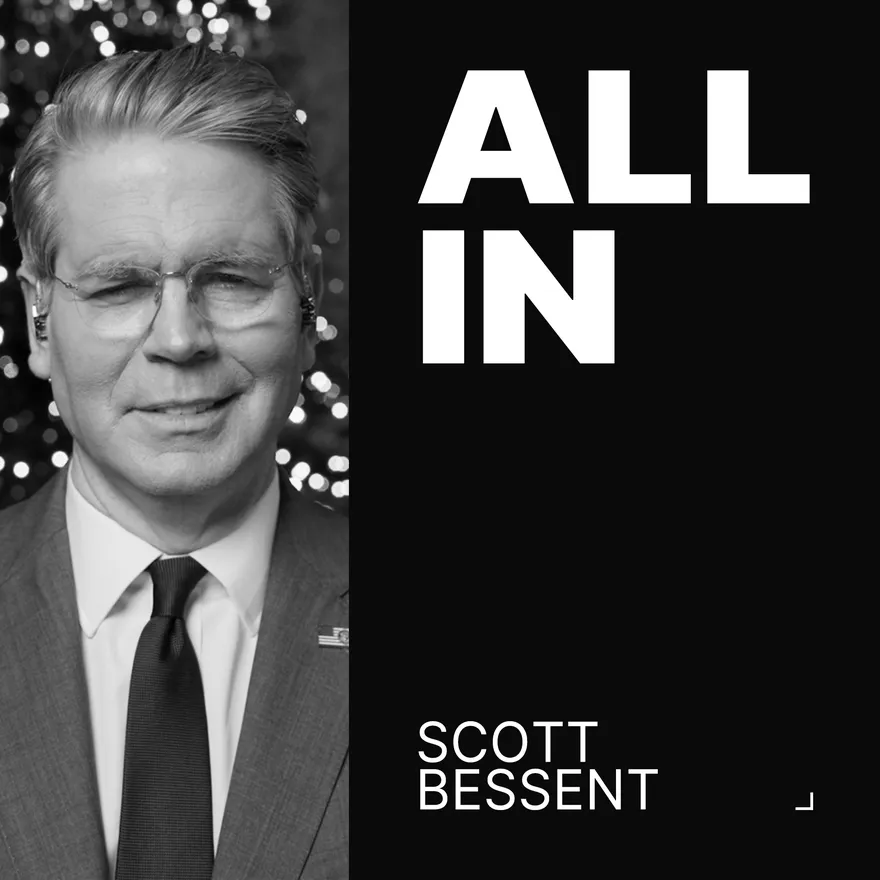

This is a preview of the Shortform summary of the Dec 22, 2025 episode of the All-In with Chamath, Jason, Sacks & Friedberg
Sign up for Shortform to access the whole episode summary along with additional materials like counterarguments and context.
1-Page Summary
Fiscal Policy and the Federal Budget Deficit
Scott Bessent forecasts a significant fiscal contraction of $200 to $300 billion for the calendar year, representing approximately 0.7 to 1% of GDP. The U.S. budget deficit is expected to decrease from $2 trillion to $1.78 trillion in FY 2025, with the Trump administration aiming to reduce it further below $1 trillion by the term's end. Bessent notes that tariffs have evolved from being viewed as a 'doomsday machine' to becoming a key fiscal tool for generating revenue and rebalancing trade relationships.
Monetary Policy and the Federal Reserve
According to Bessent's essay in The International Economy, the Federal Reserve's role has expanded significantly beyond setting interest rates to managing a substantial balance sheet and regulatory functions. He argues that Fed policies, particularly quantitative easing, have inadvertently favored the wealthy over the middle class by boosting asset prices. Bessent notes that candidates for Fed leadership are now advocating for a return to more traditional monetary policy roles to address these inequality concerns.
Trade Policy and Tariffs
Bessent explains that traditional free trade theories don't account for unfair practices like industry subsidies in countries such as China and Vietnam. The administration has implemented high tariffs, sometimes reaching 145% on Chinese goods, to encourage trade negotiations and reshape manufacturing patterns. Chamath Palihapitiya supports this approach, stating that tariffs have had a positive impact on trade negotiations. Contrary to common belief, Bessent cites a San Francisco Fed study indicating that tariffs are actually disinflationary.
Economic Outlook and Administration's Future Plans
Looking ahead, Bessent discusses the administration's plans for tax cuts and regulatory changes aimed at driving capital expenditure and job creation. He points to Boeing's Dreamliner plant expansion in Charleston as evidence of a growing capital expenditure boom. Additionally, Bessent introduces the "Trump Accounts" initiative, which would provide $1,000 to newborns for stock investment, supported by a $6.25 billion commitment from Susan and Michael Dell to enhance financial literacy and economic participation.
1-Page Summary
Additional Materials
Counterarguments
- Fiscal contraction may lead to reduced government spending, which could slow economic growth and potentially increase unemployment.
- Decreasing the budget deficit too rapidly could have negative short-term impacts on the economy, particularly if it leads to cuts in essential services or public investment.
- The use of tariffs as a fiscal tool can lead to trade wars, which may harm domestic industries and consumers through higher prices and retaliatory measures by other countries.
- While tariffs may be disinflationary in some contexts, they can also lead to higher consumer prices for imported goods and inputs for domestic production, potentially causing inflation in other sectors.
- The expansion of the Federal Reserve's role beyond interest rates to managing a large balance sheet and regulatory functions may lead to concerns about the central bank's independence and the potential for overreach into fiscal policy.
- Quantitative easing and other monetary policies that boost asset prices may contribute to wealth inequality, but they are also tools used to stimulate economic activity during downturns.
- Advocating for a return to traditional monetary policy roles may not fully address the complexities of the modern economy and the need for a flexible approach to monetary policy.
- While high tariffs can be used as leverage in trade negotiations, they can also disrupt supply chains and increase costs for domestic producers and consumers.
- Tax cuts and regulatory changes aimed at stimulating capital expenditure and job creation may lead to increased deficits if not offset by corresponding increases in revenue or decreases in other spending.
- The "Trump Accounts" initiative, while aimed at enhancing financial literacy and economic participation, may not address underlying issues of income inequality and access to financial education and resources for all socioeconomic groups.
Actionables
- You can diversify your investment portfolio by including assets that may benefit from fiscal policies, such as government bonds or stocks in sectors likely to receive tax cuts. Since fiscal contractions and budget deficit reductions can influence market conditions, investing in assets that are traditionally seen as safer during times of fiscal tightening could be a wise move. For example, if you anticipate that certain industries will benefit from proposed tax cuts, consider investing in mutual funds that focus on those sectors.
- Consider starting a small side business to take advantage of potential regulatory changes aimed at stimulating job creation and capital expenditure. With the government planning to cut taxes and change regulations, this could be an opportune time to launch a business that could benefit from a more favorable economic environment. For instance, if you have a hobby or skill, such as woodworking or coding, you might turn it into a small online business, potentially reaping the benefits of lower taxes and less red tape.
- Educate yourself on the impact of tariffs and trade policies on consumer prices and adjust your spending habits accordingly. Understanding that tariffs can have disinflationary effects, you might want to research which products are subject to high tariffs and consider substituting them with similar goods that are not affected. This could mean buying locally produced items or from countries with lower tariff rates, thereby potentially saving money and supporting businesses that aren't as impacted by trade tensions.
Get access to the context and additional materials
Fiscal Policy and the Federal Budget Deficit
Under the current administration, efforts to navigate fiscal policy focus on reducing the federal budget deficit, employing tariffs as a key fiscal tool, and aiming for economic stability.
Administration Projects 0.7-1% Gdp Fiscal Contraction
Scott Bessent forecasts a fiscal contraction of $200 to $300 billion for the calendar year, equating to roughly 0.7 to 1% of GDP.
Budget Deficit Drops From $2T to $1.78T In Fy 2025; Trump Administration Targets Reduction Below $1T by Term's End
The U.S. fiscal year budget deficit was initially projected to be around $2.0 trillion but was shaved down to approximately $1.78 trillion. Bessent outlines an ambitious goal set by the Trump administration to reduce the fiscal deficit further below $1 trillion by the term's end. This target, referred to as a level with a "three" in front, aims at stabilizing the deficit-to-GDP ratio, creating a more balanced fiscal environment that allows for the paying down of national debt.
Tariffs Are a Key Fiscal Policy Tool, Providing Revenue and Trade Balance
Bessent also addresses the evolving perception of tariffs in economic policy, suggesting a shift from seeing them as a 'doomsday machine' to potentially a means of reaching 'the promised land' in terms of fiscal balances.
Tariff Revenue: A Temporary Measure to ...
Here’s what you’ll find in our full summary
Fiscal Policy and the Federal Budget Deficit
Additional Materials
Counterarguments
- Tariffs can lead to trade wars, which might harm the economy by increasing costs for consumers and businesses, and retaliatory measures can affect exports.
- Reducing the federal budget deficit too quickly could potentially slow economic growth if it leads to decreased government spending in key areas.
- The goal of reducing the deficit below $1 trillion may be overly ambitious and could require cuts to programs that are important for the welfare of citizens or the health of the economy.
- Fiscal contraction might not be the best approach during periods of economic downturn, as it could exacerbate the situation by reducing overall demand.
- The use of tariffs as a tool to encourage reshoring of manufacturing may not be effective if the cost differentials are too large or if supply chain complexities are not addressed.
- Tariffs as a revenue source can be unpredictable and may not provide a stable funding mechanism for long-term fiscal planning.
- The perception shift regarding tariffs might not be widely accepted among economists, as many still view tariffs as ...
Actionables
- You can analyze your personal spending to identify areas where you can reduce expenses, mirroring the government's approach to deficit reduction. Start by reviewing your monthly bank statements and categorize your spending. Look for non-essential items where you can cut back, such as subscription services or dining out, and set a goal to reduce your overall expenses by a certain percentage each month.
- Consider buying locally-made products to support domestic businesses, akin to the administration's goal of reshoring manufacturing. Research local manufacturers and artisans for items you commonly purchase, such as clothing, furniture, or food. By shifting your spending to local goods, you contribute to the local economy and reduce reliance on imported products.
- Educate yourself on the impact of tariffs and trade policies on the prices of go ...
Get access to the context and additional materials
Monetary Policy and the Federal Reserve
Federal Reserve's Expansive Role and Economic Inequality
Fed's Policies Boost Asset Prices, Benefiting Wealthy Over Middle Class
Scott Bessent elaborates on the Federal Reserve's evolution from merely setting interest rates to managing a substantial balance sheet and regulatory functions. In an essay entitled "The Fed's New Gain of Function Monetary Policy," published in The International Economy, Bessent argues that the Federal Reserve, notably after the financial crisis, adopted policies that have exacerbated economic inequality. The Fed initiated large-scale asset purchases, known as quantitative easing (QE), to inject liquidity into the economy, which inadvertently favored the wealthy—those who already owned assets—and left the middle class behind.
Bessent labels the Fed the "engine of inequality" as its policies pushed up asset prices. He points out that the extension of QE well past the crisis has further widened the gap between the wealthy and the middle class. During the COVID crisis, the Fed's asset purchases expanded to include government and corporate bonds, which, while stabilizing the market, also reduced bond yields and led to an increase in asset prices during a period of low-interest rates. Bessent highlights the pandemic housing affordability issue, exacerbated by the disparity in asset prices, where individuals who obtained 3% mortgages benefited significantly, in contrast to those unable to take advantage of the low-interest rates.
Fed Leadership Candidates Pledge to Reduce Centr ...
Here’s what you’ll find in our full summary
Monetary Policy and the Federal Reserve
Additional Materials
Clarifications
- The Federal Reserve is the central bank of the United States. It controls the money supply and interest rates to promote economic stability and growth. It also supervises and regulates banks to ensure the safety of the financial system. Additionally, the Fed provides financial services like managing the country's payment systems.
- Quantitative easing (QE) is a monetary policy where a central bank buys long-term securities to increase money supply and lower interest rates. This encourages borrowing and spending to stimulate the economy during downturns. QE also raises asset prices by increasing demand for bonds and other financial assets. It differs from traditional rate cuts by directly expanding the central bank’s balance sheet.
- The Federal Reserve's "balance sheet" is a financial statement showing its assets and liabilities. Assets include government bonds and loans the Fed has purchased, while liabilities include currency in circulation and bank reserves. When the Fed buys assets, it increases the size of its balance sheet, injecting money into the economy. Changes in the balance sheet reflect the Fed's monetary policy actions beyond just setting interest rates.
- Asset prices refer to the market value of investments like stocks, bonds, and real estate. When these prices rise, the owners of these assets see their wealth increase. Wealthier individuals typically own more assets, so they gain more from price increases. In contrast, middle-class people often have fewer assets, so they benefit less from rising asset prices.
- Bond yields represent the return investors earn from holding bonds, usually expressed as an annual percentage. When bond prices rise, yields fall because the fixed interest payments become a smaller percentage of the higher price paid. Interest rates set by central banks influence bond yields; lower rates generally lead to lower yields and higher bond prices. This inverse relationship means that as yields decrease, the value of existing bonds increases, affecting overall asset prices.
- The "dot plot" is a chart released by the Federal Reserve showing individual policymakers' projections for future interest rates. Each dot represents a member's forecast for where rates will be at the end of upcoming years. It helps markets and the public anticipate the Fed's monetary policy direction. The dot plot increases transparency but can also create market volatility if expectations shift.
- The Federal Reserve System includes 12 regional Federal Reserve Banks, each serving a specific geographic district in the U.S. These banks implement monetary policy locally, supervise and regulate banks, and provide financial services like distributing currency. Each regional bank has a president and board of directors who provide regional economic insights to the Federal Reserve Board in Washington, D.C. This structure helps the Fed balance national policy with regional economic conditions.
- Low mortgage rates during the pandemic made borrowing cheaper, lowering monthly payments for new homebuyers. Those with ...
Counterarguments
- The Federal Reserve's QE policies were a response to unprecedented economic challenges, and while they may have increased asset prices, they also likely prevented deeper recessions and higher unemployment.
- Asset price increases benefit a broader range of the population than just the wealthy, including pension funds and retirement accounts held by the middle class.
- The low-interest rates that came with QE policies made borrowing more affordable for consumers and businesses, potentially stimulating economic growth and job creation.
- The Fed's purchase of government and corporate bonds during the COVID crisis helped to prevent a financial meltdown, which could have had severe consequences for all economic classes.
- The housing affordability issue is complex and cannot be solely attributed to the Fed's policies; other factors such as supply constraints and zoning laws also play significant roles.
- Reducing the Federal Reserve's role in the economy could lead to less flexibility in responding ...
Related Shortform Content


Get access to the context and additional materials
Trade Policy and Tariffs
Scott Bessent introduces a nuanced discussion on trade, emphasizing that free trade might not equate to fair trade, and how tariffs play a role in reshaping trade policies for better deals and ensuring national security.
Tariffs Central to Trade Policy for Better Deals and Security
Admin: Traditional Free Trade Overlooks Unfair Practices, Key Industry Protection For Security
Bessent addresses the inadequacy of traditional theories like Ricardian equivalence in the face of countries that subsidize certain industries, citing China and Vietnam as examples. Distortions due to these subsidies create an unfair trading environment. Additionally, the COVID-19 pandemic exposed the vulnerabilities of extended supply chains, revealing that supply chain efficiency does not always reflect security or resilience.
Bessent notes strategic industries, such as pharmaceuticals, semiconductors, steel, and shipbuilding, require production within the US or adjacent regions of North America to reduce reliance on foreign suppliers for critical components. The strategic need to bring back manufacturing of high-precision semiconductors from Taiwan to the US exemplifies the importance of economic security.
Tariffs Seen Skeptically; Administration Says They Encourage Trade Talks and Aren't Key Inflation Driver
To encourage trade negotiations, the administration raised tariffs significantly, sometimes as high as 145% on Chinese goods. The aim is to balance trade, reshore manufacturing, and transition the U.S. economy into equilibrium with its trading partners. This approach intends to gradually reduce tariff income while bolstering U.S. tax receipts through domestic manufacturing and employment. Bessent argues that focusing on the content of trade and domestic manufacturing will generate GDP growth and result in better trade deals.
Furthermore, there is a concern that if the Supreme Court rules against the administration regarding tariffs, it could impact national s ...
Here’s what you’ll find in our full summary
Trade Policy and Tariffs
Additional Materials
Clarifications
- Ricardian equivalence is an economic theory suggesting that how a government finances its spending—through taxes or debt—does not affect overall demand because people anticipate future taxes to repay debt. It assumes consumers are rational and plan their spending accordingly, saving more if the government borrows now. This theory implies government borrowing won't stimulate the economy since people offset it by saving. Bessent argues this theory fails when countries subsidize industries, creating unfair trade conditions.
- Subsidies lower production costs for domestic industries, allowing them to sell goods cheaper than foreign competitors. This can lead to unfair advantages, distorting market prices and trade flows. Other countries may struggle to compete, causing imbalances and potential trade disputes. Such distortions undermine the principle of free and fair trade based on comparative advantage.
- The COVID-19 pandemic caused sudden factory shutdowns and transportation delays worldwide. This disrupted the flow of raw materials and finished goods, leading to shortages and production halts. Just-in-time inventory systems, which minimize stockpiles, proved fragile under these shocks. The crisis revealed overdependence on distant suppliers and lack of supply chain diversification.
- Reshoring is the process of bringing manufacturing and production activities back to a company's original country from overseas. It aims to reduce dependence on foreign suppliers and improve supply chain security. Reshoring can create domestic jobs and strengthen local economies. It often responds to risks like geopolitical tensions or disruptions seen during events like the COVID-19 pandemic.
- Certain industries like semiconductors, steel, and shipbuilding are strategic because they are essential for national security and economic stability. Semiconductors are critical for electronics and military technology. Steel is fundamental for infrastructure, manufacturing, and defense equipment. Shipbuilding supports naval power and global trade capabilities.
- Taiwan is a global leader in producing advanced semiconductors due to its specialized technology and skilled workforce. These chips are essential for electronics, automotive, and military applications, making their supply critical. Relying heavily on Taiwan creates risks from geopolitical tensions or disruptions. Manufacturing semiconductors in the US enhances supply chain security and reduces dependence on foreign sources.
- The rationale for raising tariffs up to 145% on Chinese goods is to pressure China into fairer trade practices by making their exports more expensive and less competitive in the U.S. market. This aims to reduce the trade deficit and encourage companies to reshore manufacturing to the U.S. or nearby regions. High tariffs also serve as leverage in trade negotiations to secure better terms and protect strategic industries. Additionally, they help address issues like subsidies and intellectual property theft that distort trade.
- Tariffs increase the cost of imported goods, pressuring trading partners to negotiate better terms to avoid these extra costs. By imposing tariffs, a country can push for fairer trade practices and reduce trade imbalances. This leverage encourages partners to lower their own trade barriers or address unfair subsidies. Ultimately, tariffs aim to create a more balanced and reciprocal trading relationship.
- Tariffs increase the cost of imported goods, making domestically produced items more competitive. This can encourage companies to manufacture more within the country, boosting domestic industrial activity. Increased manufacturing leads to higher employment and income, which contributes to overall economic growth measured by GDP. Over time, stronger domestic production can improve trade balances and economic stability.
- The Supreme Court ruling could limit the President's authority to impose tariffs without Congressional approval. This would reduce the administration's flexibility to respond quickly to unfair trade practices or national security threats. It might weaken the use of tariffs as a negotiation tool in trade deals. Ultimately, it could constrain the government's ability to protect ...
Counterarguments
- Traditional free trade theories, including Ricardian equivalence, have been successful in many contexts and can lead to overall economic growth and consumer benefits through comparative advantage and specialization.
- Subsidies are sometimes used by governments to support nascent industries or to achieve social goals, and not all subsidies necessarily lead to unfair trade practices.
- While the COVID-19 pandemic did expose supply chain vulnerabilities, global supply chains have also created efficiencies and cost savings for consumers and businesses.
- Domestic production of strategic industries may not always be feasible or cost-effective, and nearshoring or diversifying supply chains could be more practical solutions.
- Reshoring high-precision semiconductor manufacturing may not address the underlying need for a global network of suppliers and collaboration in technology and innovation.
- High tariffs can lead to trade wars, which may harm domestic industries and consumers through higher prices and retaliatory measures by other countries.
- Tariffs can be a blunt instrument that may not always lead to the desired outcomes in trade negotiations and could disrupt international relations.
- The assertion that tariffs are disinflationary is contested; some economists argue that tariffs can contribute to inflation ...
Get access to the context and additional materials
Economic Outlook and Administration's Future Plans
The current administration expresses optimism regarding the economic outlook for 2026, with ambitions to stimulate investment, employment, and real wage growth through various initiatives.
Administration Optimistic on 2026 Economic Outlook, Aims to Boost Investment, Employment, Real Wage Growth
Tax Cuts and Pro-business Measures Expected to Drive Capital Expenditure Boom and Job Creation
Scott Bessent, without giving specific details, touches upon the expectation of tax cuts from January 1 and discusses moves from the administration aimed at loosening financial regulations. Bessent believes these regulatory changes, alongside a powerful tax bill that includes immediate expensing for American businesses and a temporary window for factory expenses, will drive capital expenditure and job creation. Bessent cites a visible [restricted term] boom, exemplified by Boeing's expansion of their Dreamliner plant in his hometown of Charleston, South Carolina, as evidence that the administration's policies are starting to bear fruit.
Despite acknowledging the uncertainty inherent in economic forecasting, Bessent agrees with Vice President Vance that 2026 will be an excellent year for the American people, pointing out the positive trend of inflation beginning to decrease and the increase in real incomes by about 1.8% since President Trump took office. This increase in real incomes is connected to the benefits felt on Main Street.
"Trump Accounts" Initiative: $1,000 for Every Newborn to Invest In Stocks, Promoting Financial Literacy and Economic Participation
In addition to the pro-business measures, Bessent introduces the "Trump Accounts" initiative, a novel program aiming to grant $1,000 to each newborn t ...
Here’s what you’ll find in our full summary
Economic Outlook and Administration's Future Plans
Additional Materials
Clarifications
- Scott Bessent is a well-known investor and financial expert with experience in managing large investment funds. He often provides analysis on economic trends and policy impacts. His insights carry weight because of his expertise in finance and investment. This makes his commentary relevant to discussions on economic outlook and government policies.
- The proposed tax cuts likely include reductions in corporate tax rates and incentives for immediate expensing of capital investments, allowing businesses to deduct costs faster. These measures aim to lower the tax burden on companies to encourage increased spending on equipment and facilities. Temporary windows for factory expenses provide additional short-term tax relief to stimulate manufacturing growth. Such tax policies are designed to boost economic activity by making investment more financially attractive.
- Immediate expensing allows businesses to deduct the full cost of certain capital investments from their taxable income in the year the expense is incurred, rather than spreading the deduction over several years. This accelerates tax benefits, improving cash flow and encouraging companies to invest more quickly. It contrasts with depreciation, where costs are deducted gradually over an asset's useful life. Immediate expensing is often used as a policy tool to stimulate economic growth by incentivizing capital spending.
- A "temporary window for factory expenses" refers to a limited time period during which businesses can immediately deduct the full cost of certain factory-related investments from their taxable income. This accelerates tax benefits, encouraging companies to invest quickly in manufacturing facilities and equipment. The goal is to boost capital spending and stimulate economic growth in the manufacturing sector. After this window closes, such expenses may need to be depreciated over several years instead.
- Boeing's Dreamliner plant expansion signals increased business investment and confidence in future demand. Such expansions typically create jobs and stimulate local economies. It reflects broader trends of capital expenditure growth, which can drive economic growth. This makes it a tangible example supporting the administration's optimistic economic outlook.
- A "capital expenditure ([restricted term]) boom" refers to a significant increase in spending by businesses on physical assets like buildings, machinery, and equipment. This investment typically signals confidence in future growth and can lead to more jobs and higher productivity. It often stimulates economic activity by increasing demand for materials and labor. A sustained [restricted term] boom can boost long-term economic expansion.
- Real income refers to wages adjusted for inflation, showing the true purchasing power of earnings. Since President Trump took office in 2017, some data indicated modest real wage growth due to economic expansion and low unemployment. However, this growth varied across different income groups and regions. Inflation trends and policy changes also influenced these real income changes during his tenure.
- "Trump Accounts" are named after former President Donald Trump, reflecting his administration's branding of the initiative. They are government-backed investment accounts created to encourage early stock market participation by providing newborns with initial capital. The program aims to foster long-term wealth accumulation and financial inclusion from birth. This naming also signals political ownership and continuity of Trump's economic policies.
- Each newborn would receive an account opened in their name, funded with $1,000 to buy stocks or stock funds. The money would be managed until the child reaches adulthood, allowing the investment to grow over time. Parents or guardians might have limited control or access to the account before the child is of age. This system encourages early financial inclusion and long-term wealth accumulation.
- The equity ownership gap refers to the unequal distribution of stock ownership among different ...
Counterarguments
- Tax cuts may lead to a decrease in government revenue, which could affect public services and investments.
- Loosening financial regulations might increase the risk of financial instability or crises if not managed carefully.
- The benefits of tax cuts and deregulation might disproportionately favor wealthier individuals and larger corporations, potentially exacerbating income inequality.
- The success of the "Trump Accounts" initiative in promoting financial literacy and narrowing the wealth gap is uncertain and depends on the long-term performance of the stock market.
- The increase in real incomes since President Trump took office may not be evenly distributed across different demographics and regions.
- The effectiveness of financial literacy education in schools is contingent on the quality and accessibility of the programs implemented.
- The commitment from philanthropic actors, while substantial, may not be sufficient to address the systemic issues contributing to economic disparities.
- The optimism for the 2026 economic ...
Get access to the context and additional materials


Create Summaries for anything on the web
Download the Shortform Chrome extension for your browser
