In her 2025 memoir, Elizabeth Gilbert confesses that her relationship with Rayya Elias led her to understand she was a sex and love addict. She candidly shares her observations on the nature of this addiction and what recovery looks like for her.
In her book, Gilbert defines sex and love addiction, reveals what it’s really about, describes its dangerous cycle, and explains how she eventually broke free. Keep reading to learn about Elizabeth Gilbert’s sex and love addiction and recovery—and discover how her experience might help others who also struggle.
Table of Contents
Elizabeth Gilbert’s Sex and Love Addiction
In her memoir All the Way to the River, Gilbert details her relationship with musician Rayya Elias—a relationship characterized by both deep attachment and harrowing addiction. Gilbert explains how, after Elias’s death from cancer in 2018, she came to understand herself as a sex and love addict.
After Elias’s death, Gilbert began to feel the need to pursue a new romantic partner. She went on what she describes as a binge, in which she hurt herself and others because (as usual) she was using sex and love as a crutch.
(Shortform note: It’s not uncommon for people who are grieving to use sex and romance to cope, even if they’re not sex and love addicts. But, when romantic or sexual behavior is compulsive—as Gilbert’s binge was—it can lead to stress, heartbreak, and increased sexual risk-taking.)
Gilbert eventually found help through a 12-step program and achieved over five years of sobriety.
What Is Sex and Love Addiction?
Gilbert defines sex and love addiction as a pattern of using sex and romantic connection as a form of emotional medication—an attempt to soothe deep psychological wounds by seeking relief, safety, and wholeness from another person.
(Shortform note: Sex addiction and love addiction aren’t official diagnoses—they’re not listed in the Diagnostic and Statistical Manual of Mental Disorders, and experts disagree about whether addiction is the best framework for understanding these behaviors. Still, many therapists and support groups find the addiction model useful because it helps explain why some people continue destructive patterns despite serious consequences. Others consider it a simple lack of self-control.)
Gilbert writes that an addiction to sex and love is distinguished from healthy intimacy by its intensity, urgency, and destructiveness. Everyone enjoys love and intimacy. But, for addicts, these experiences feel chemically inebriating—far more intense, to the point of being all-consuming. This makes unhealthy dynamics especially hard to relinquish.
(Shortform note: Some even distinguish between a pattern that’s addictive and a pattern that’s simply unhealthy. In her memoir The Dry Season, Melissa Febos suggests that the difference lies in how you approach sex and love. Addicts do so compulsively; they find it hard to stop themselves. Everyone else does so intentionally, though they still make missteps and sometimes have trouble disentangling themselves from unhealthy dynamics.)
The Addiction Is a Cycle
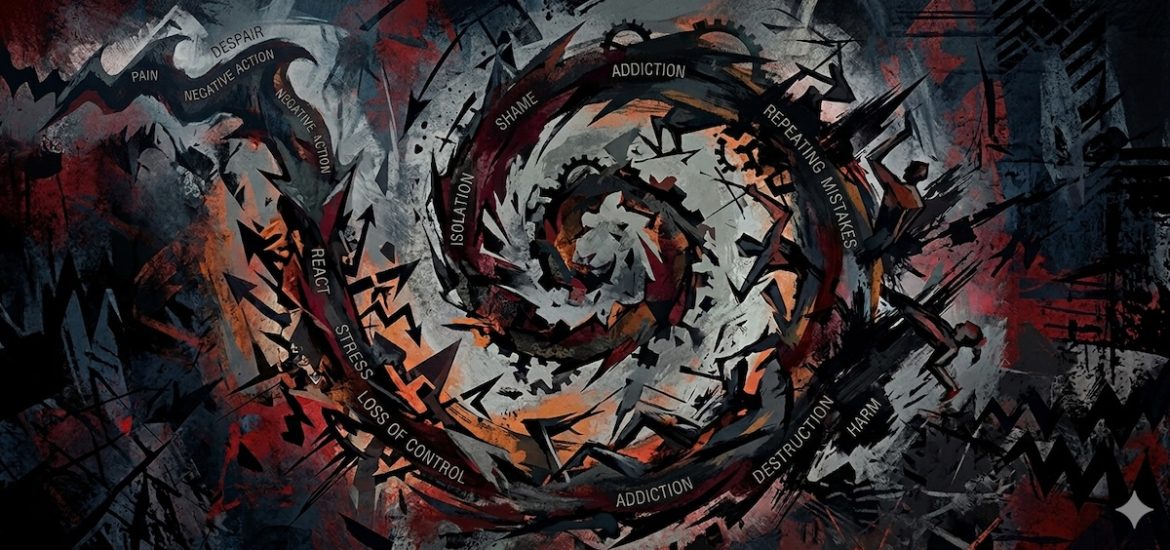
According to Gilbert, sex and love addiction is cyclical:
- An unhealthy dynamic begins with a fantasy that a sexual or romantic partner can save you from your pain.
- You become emotionally fixated on the person, organizing your thoughts, time, and sense of worth around them.
- The relationship escalates rapidly, fueled by intensity rather than mutual stability or trust. You ignore or rationalize warning signs, boundaries, and incompatibilities.
- You might abandon yourself, violate boundaries, or manipulate others to keep the relationship going—even as it becomes clear that it isn’t healthy for you.
- Inevitably, the relationship collapses. This triggers shame, despair, or emotional withdrawal. Your negative emotions might be so intense that they result in suicidal or violent thoughts.
- To escape that pain, you return to fantasy, and the cycle begins again. You feel unable to stop chasing sexual relief despite its devastating consequences.
Because it’s cyclical, sex and love addiction is classified as a process-based addiction rather than a substance-based one, such as alcoholism. But Gilbert notes that it often coexists with, and can exacerbate or be exacerbated by, substance abuse.
(Shortform note: Neuroscientists believe sex and love addiction works in much the same way as substance addictions. It entails over-activation in similar areas of the brain—the parts responsible for processing rewards and regulating emotions. And, as Gilbert suggests, engaging in addictive sexual and intimate behavior produces an intense neurochemical high driven by dopamine, just as substance use does.)
| How to Know Whether You’re a Sex and Love Addict Many people struggle with an unhealthy relationship to sex and romance, but it’s less common that this rises to the level of an addiction. Statistics suggest that only about 8% of the population has a sex addiction, while about 3% are love addicts. If you’re not sure whether you’re addicted, Sex and Love Addicts Anonymous (SLAA) provides some resources that can help you make that determination. First, they explain that sex and love addicts share 12 characteristics. Second, you can use SLAA’s self-diagnosis questionnaire to gauge your risk level. These resources suggest that you might be a sex and love addict if you: • Feel the need to always be in a relationship (as though you’re incomplete without a partner) • Feel unable to leave unhealthy relationships because you’re afraid of being alone • Pursue more than one connection at a time • Use sexual, emotional, or romantic intimacy to solve problems or to get your way • Become obsessed with partners to the point that it negatively impacts your life • Avoid true intimacy, which requires vulnerability and commitment • Have sex or form relationships when you don’t really want to • Hide your sexual or romantic life from others • Believe that sex is the most important thing you have to offer • Feel as if the right relationship would prove your worth once and for all |
How Does Someone Get Addicted to Love and Sex?
For Gilbert, the addiction isn’t primarily about sex; it’s about what the Sex and Love Addicts Anonymous (SLAA) community calls “LAVA”: love, approval, validation, and acceptance. Before recovery, her addict brain clung to the belief that someone else could finally heal her and make her feel secure.
Gilbert suggests that sex and love addiction are rooted in unmet attachment needs, often stemming from childhood. Although she deliberately avoids detailing her own childhood trauma—out of compassion for people who hurt her after they, too, were wounded—she argues that early emotional insecurity can rewire the brain to seek regulation through external sources. Because love is a fundamental survival need, she believes it sits at the root of many other addictions: When it’s unavailable, inconsistent, or conditional at a young age, the nervous system learns to chase it at any cost.
| What Experts Say About the Cause of Sex and Love Addiction Psychoanalyst Donald W. Winnicott’s concept of “the false self” could help explain why unmet attachment needs sometimes lead to sex and love addiction. Winnicott argues that everyone has a true self (their authentic personality and desires) and a false self that adapts to meet others’ expectations. Children might overidentify with their false self when their caregivers are rejecting, inconsistent, or emotionally unavailable. In these cases, children learn to suppress their real needs and instead become the person they think will earn love and safety. As adults, this can translate into compulsive relationship-seeking or sexual behavior: Rather than expressing their true selves, they rely on external validation and intimacy to feel real, valued, or secure. Addiction and recovery expert John Bradshaw contends that toxic shame is the root cause of all addictions and compulsions. In his book Healing the Shame that Binds You, he argues that addiction is a form of detachment and a way of altering your feelings; when you’re engaged in your addiction, you’re able to distract yourself from your shame and the pain it causes you. |
Gilbert’s Recovery From Addiction
At the end of her binge, Gilbert realized that she couldn’t continue living this way because it was too destructive. And, because she had been introduced to 12-step programs during Elias’s relapse, she went there for help. She started going to SLAA meetings, kickstarting her journey toward recovery.
(Shortform note: Sex and Love Addicts Anonymous is a spiritual, Twelve-Step recovery fellowship based on the Alcoholics Anonymous model. If you’re interested in a Christian program, look into Celebrate Recovery. Although it’s not designed for any specific addiction, it bills itself as “a safe place for people to find freedom from the issues controlling their lives.”)
By the time her memoir was published, Gilbert had achieved over five years of sobriety. For her, sobriety requires celibacy. With time, sex and love addicts can learn to have healthy relationships, but Gilbert believes that she should continue to avoid sex and romance until God tells her it’s OK to pursue that again.
Gilbert says that, through the process of getting and staying sober, she learned to embrace spiritual surrender—the practice of giving up control to God and accepting reality as it is without trying to manipulate it. Spiritual surrender allowed her to live more effortlessly in tune with God’s plan for her and to focus on what was truly in her control: her own actions, her emotional health, and her commitment to recovery.
(Shortform note: Some psychologists say that spiritual surrender is a kind of radical acceptance, a concept Buddhist psychologist Tara Brach explores in her book of the same name. To practice radical acceptance, Brach says you must fully acknowledge reality as it is—without resisting, denying, or trying to control it—while also viewing your experience with compassion rather than judgment. For a sex and love addict, this might look like acknowledging painful feelings instead of using intimacy to push them away. Brach writes that radical acceptance helps you stop struggling against yourself, which creates more inner space for you to respond thoughtfully and with greater emotional balance to your circumstances.)
Wrapping Up
To better understand Elizabeth Gilbert’s sex and love addiction in the context of her life story, check out her memoir All the Way to the River and Shortform’s comprehensive guide to it, which includes even more analysis and connection to other ideas like you find in this article.
Exercise: Reflect on Your Relationship Patterns
For Gilbert, sex and love addiction is a pattern of using intimacy to avoid, numb, or try to solve life’s problems. This pattern leads addicts to behave in ways that hurt themselves and others. In this exercise, consider whether you might have any relationship patterns that deserve a closer look.
- How do you respond when you feel lonely, rejected, or insecure? Do you turn to people for validation or try to address your own needs? How effective are your strategies?
- What patterns do you notice in your past relationships that seem to repeat? For example, maybe you over-give and contribute to situations where you feel taken for granted.
- Have you ever stayed in (or returned to) a relationship that was unhealthy? Why?
- How do you tell the difference between being truly loved and just being wanted or needed?
- How do attention, desire, or approval influence the choices you make?
- To what degree do your romantic relationships entail mutual respect?
FAQ
What is sex and love addiction? Sex and love addiction is a pattern of using romantic connection and sexual intimacy as emotional medication—a way of seeking relief, safety, and wholeness from another person rather than from within. It’s distinguished from healthy intimacy by its intensity, urgency, and destructiveness.
Is sex and love addiction a clinical diagnosis? No. Sex and love addiction doesn’t appear in the DSM, and experts disagree on whether “addiction” is the right framework. However, many therapists and support groups find the model useful because it helps explain why people repeat destructive patterns despite serious consequences.
What causes sex and love addiction? Gilbert argues it’s rooted in unmet attachment needs from childhood. When love is unavailable, inconsistent, or conditional early in life, the nervous system learns to chase it compulsively. Experts such as John Bradshaw also point to toxic shame as a core driver of addictive behavior.
How common is sex and love addiction? Research suggests roughly 8% of the population struggles with sex addiction, while around 3% are love addicts.
How did Elizabeth Gilbert recover from sex and love addiction? Gilbert found recovery through Sex and Love Addicts Anonymous (SLAA), a 12-step fellowship. For her, sobriety includes celibacy and the practice of spiritual surrender—accepting reality without trying to control or manipulate it.
Where can I get help for sex and love addiction? Sex and Love Addicts Anonymous (SLAA) offers meetings, self-assessment resources, and a 12-characteristics checklist to help people evaluate their relationship with sex and romance. Those seeking a faith-based option can also explore Celebrate Recovery.
