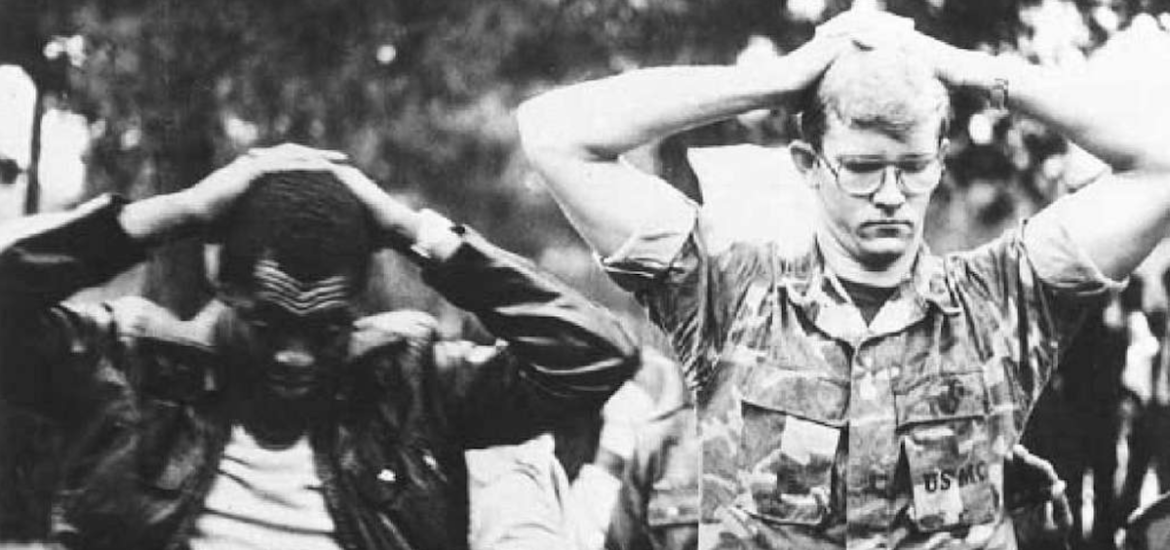
On November 4, 1979, Iranian students stormed the US embassy in Tehran and took dozens of Americans hostage—launching a 444-day standoff that would change US foreign policy forever. Born from the chaos of the Iranian Revolution and the fall of the Shah, the Iran hostage crisis was one of the most dramatic diplomatic confrontations of the 20th century.
I draw from several sources to break down exactly what happened, why it happened, and why it still matters.
Table of Contents
The Iran Hostage Crisis
It scarred an American president’s legacy and set the stage for US-Iranian relations to this day. So, what was the Iran hostage crisis exactly, and how did it create such a lasting impact? To create a full picture of this unforgettable chapter in world history, I gathered details from the following two sources and a few others:
- King of Kings, a biography of Mohammad Reza Shah Pahlavi (“the Shah”) by reporter and author Scott Anderson
- His Very Best, a biography of former US president Jimmy Carter by journalist and author Jonathan Alter
I also discuss whether there was a secret deal involving the Ronald Reagan campaign and explain how memories of the hostage crisis could have derailed the killing of Osama bin Laden over 30 years later.
The Background to the Crisis
Jonathan Alter explains that, while Carter was achieving success in negotiating peace between Israel and Egypt, the political situation in Iran was deteriorating faster than anyone in the US realized. In 1978, the Shah’s health began failing, and Khomeini’s supporters launched violent protests demanding his removal. When the Shah asked the US for aid to prop up his regime, Carter refused. He believed that, without a dictator, Iran would return to democratic rule—an assumption Alter suggests was mistaken. Suffering from cancer, the Shah went into exile in January 1979 while Khomeini amassed power.
(Shortform note: Carter’s hope that Iran would become a democracy once the Shah stepped down could be considered an example of what General H. R. McMaster calls “strategic narcissism” in his book Battlegrounds. This is a faulty assumption, shared by many policymakers, that nations inevitably become capitalist democracies as the result of a natural progression over time—but history has shown this isn’t always the case.)
In the first year of Khomeini’s reign, the Iran-US relationship was fragile but not quite destroyed. Anderson writes that the Carter administration held onto the optimistic hope that moderates would eventually take the reins, allowing the US to recreate its strategic partnership. As a result, the US didn’t withdraw its embassy staff from the increasingly hostile nation.
What About the Shah?
But one major sticking point remained: What would become of the exiled Shah? Khomeini and his supporters called for Pahlavi to be returned to Iran to face justice, and, according to Anderson, they distrusted the US with the exiled leader, fearing it would attempt another coup to restore him to power—similar to the way it had helped restore him to power in 1953.
Carter had no intention of handing a US ally over to his enemies, but he was also reluctant to grant the Shah entry into the US, fearing it would destroy America’s fragile relationship with Khomeini’s Iran. Alter notes that Carter repeatedly denied the Shah entry so as not to stoke anti-US sentiment and to protect American citizens still in Iran.
However, the Shah’s health was failing, and Anderson asserts that several US foreign policy officials pressured Carter to allow him in for medical treatment only available in the US. Alter adds that Carter was ultimately moved by his humanitarian values, and he granted the Shah temporary medical asylum in October 1979.
The decision proved fateful. Many argue that Carter made it without adequate preparation: He knew it would upset the new Iranian regime, but failed to take adequate steps to protect Americans in the region. The Iranian response was stronger than anyone expected, and it led directly to the hostage crisis.
The Taking of the Hostages
Both Anderson and Alter point to the arrival of Shah Pahlavi in the United States in October 1979 as the spark that ignited the crisis. Anderson notes that it infuriated Khomeini’s new regime, prompting public denunciations of the US. Alter adds that Islamist groups within Iran saw the Shah’s presence as part of a scheme to restore him to power.
Acting on these suspicions, and with Khomeini’s direct approval, Iranian students stormed the US embassy in Tehran on November 4, 1979, taking around 66 Americans hostage (the initial count varied in early reporting). Within weeks, several hostages were released, leaving 52 who remained captive. Anderson explains that the goal of the hostage takers was to find evidence of America’s intentions to restore Pahlavi to power, while Alter notes the occupation was originally meant to be brief.
What followed was anything but brief. Anderson describes a long and bitter stalemate as neither side gave in. Within Iran, Alter explains, Khomeini leveraged his control of the crisis to consolidate power, establishing himself as the head of a constitutional theocracy and refusing to allow hostage negotiations unless the Shah was returned to stand trial for alleged crimes against the Iranian people. Once it became clear that Carter wasn’t going to retaliate militarily, Alter notes, Khomeini understood he could hold the hostages indefinitely.
The American Response
The Carter Administration responded on multiple fronts: economic, military, and legal.
On the economic side, Anderson and Alter both describe how Carter froze Iranian financial assets and bank accounts and placed sanctions on Iranian oil.
According to Alter, a rescue of the hostages had always been a long shot, since Tehran was so far from US military forces and Carter feared that any attack could result in hostage deaths and drag the country into another war. Still, the US attempted a military rescue with Operation Eagle Claw on April 24–25, 1980. The botched mission resulted in two crashed helicopters and the deaths of eight US servicemen.
The rescue operation failed for two primary reasons. First, the US lacked a unified Special Operations force. This required separate branches of the military to coordinate on a hastily assembled plan, which led to miscommunications and oversights. Second, US intelligence failed to account for local environmental conditions. The helicopters flew directly into a dust storm that clogged mechanical parts and reduced visibility, resulting in equipment failures and a deadly crash.
Diplomatically, the US filed a claim against Iran in the International Court of Justice, arguing that Iran had violated international law under the Vienna Convention, which grants diplomats immunity from the laws of their host countries. The court ruled in America’s favor on May 24, 1980. It held that, even though Iran hadn’t planned the embassy attack, it assumed responsibility by supporting the taking of hostages afterward. The court demanded the immediate release of all hostages. Iran, however, refused to participate in the proceedings or adhere to the ruling, contending that the court lacked jurisdiction and should have dismissed the case.
The End of the Crisis
According to Anderson in King of Kings, Carter eventually moved the Shah to Egypt in an attempt to placate Khomeini, where Pahlavi finally succumbed to his illness and died on July 27, 1980. Even this, however, did nothing to resolve the hostage crisis, as the Iranians were still calling for the Shah’s wealth to be returned.
Alter, in His Very Best, suggests that two other developments ultimately caused Khomeini to relent. The first was Iraq’s invasion of Iran on September 22, 1980, under Saddam Hussein, which suddenly left Iran in urgent need of the funds frozen in US bank accounts. The second was a fear that Carter’s electoral opponent, Ronald Reagan, would be less hesitant to use military force than Carter had been.
Throughout this period, Alter writes that Carter devoted nearly all his focus to resolving the hostage situation—negotiating through intermediaries rather than campaigning hard for reelection. This divided attention (combined with the state of the economy and the ongoing crisis) allowed Reagan to win a landslide victory.
Nevertheless, Carter’s work wasn’t finished. In the final days of his presidency, he at last brokered a deal for the hostages’ freedom through an agreement called the Algiers Accords, brokered in Algeria on January 19, 1981. Under its terms, Iran agreed to release all hostages and the US agreed to drop criminal proceedings in international courts, unfreeze Iranian assets, return much of the Shah’s wealth (though not all, for legal and technical reasons), and refrain from interfering in Iran’s politics or military affairs. The two sides also agreed to the creation of an international tribunal to settle claims by individual Americans and Iranians, such as the return of assets lost by US businesses during the revolution.
The Release of the Hostages
Khomeini, however, delayed the hostages’ release until Reagan had taken the oath of office on January 20, 1981. President Reagan announced the end of the crisis while Carter and Mondale flew to Germany to greet the freed captives in person. The 52 hostages were released after 444 days in captivity.
(Shortform note: In early 2023, new accusations came to light about the circumstances surrounding the release. Retired legislator Ben Barnes told the New York Times that in 1980, he accompanied former Texas governor John Connally on a trip to the Middle East, during which Barnes alleges that Connally sabotaged Carter’s negotiations by telling Arab leaders the hostages shouldn’t be released until after the presidential election. Barnes claims Connally sent a message to Iran that Reagan would offer more favorable terms than Carter would. The Reagan campaign has long denied any such deal, and the historical record remains disputed.)
Whatever the full story behind the timing, negotiation theorists Roger Fisher and William Ury cite the resolution of the crisis in their book Getting to Yes to argue that negotiation doesn’t mean giving in. In the end, they explain, the interests of both sides were served: Iran released the hostages and paid its debts, and upon payment, the US returned the funds it had seized.
The Legacy of the Iran Hostage Crisis
The legacy of the Iran hostage crisis cut deep on multiple fronts. Anderson offers a sobering coda: The standoff left behind a state of mutual distrust and hostility between the two nations that would endure for generations. At home, Alter writes, the crisis had a paradoxical effect: It brought the American people together while simultaneously painting Carter as an ineffective leader—even though Carter had kept the US out of war throughout all four years of his term, a feat unmatched by any following president.
Beyond its impact on Carter’s presidency, the crisis reshaped the attitudes of an entire generation of Americans. It marked, Alter asserts, the American public’s first real introduction to radical Islam—and dramatic images of Muslim revolutionaries chanting “Death to America” solidified a perception in the American mind equating Islam with terrorism and violence. This proved to be a lasting shift: Analysis of the public response to the 2015 Iran Nuclear Deal suggests that Americans who reached adulthood before or during the hostage crisis were unsupportive of any favorable dealings with Iran even four decades later, while younger generations who weren’t closely aware of the crisis were more open to a peaceful resolution.
| A Risk to Remember In his memoir A Promised Land, former US president Barack Obama recalls deliberating whether to raid a compound in Abbottabad, Pakistan, where Osama bin Laden was believed to be hiding in the spring of 2011. His administration was divided. Secretary of Defense Robert Gates opposed taking action, expressed concerns about the certainty of bin Laden actually being there and the possibility of US forces clashing with the Pakistani military. Vice President Joe Biden echoed these concerns and reminded the president that a failed raid could be politically disastrous for the administration. He cited the example of Carter’s failed attempt to rescue the American hostages 31 years earlier. Biden warned Obama that he risked a similar fate if he approved a failed raid, which might spell the end of his presidency. Obama, however, also weighed the cost of doing nothing—losing their best lead on bin Laden in years. Treating it like any presidential decision, he assessed the risks on both sides and chose to act. On May 1, 2011, a Navy SEAL team raided the compound and killed Osama bin Laden. |
FAQ
When did the Iran hostage crisis begin?
Iranian students (with Khomeini’s approval) stormed the American embassy in Tehran on November 4, 1979.
How many hostages were taken?
Approximately 66 Americans were taken hostage in Iran; the initial count varied in early reporting. Within weeks, several were released, leaving 52 who remained in captivity.
How long were the hostages held?
The hostages were held in Iran for 444 days.
What caused the Iran hostage crisis?
The crisis was rooted in the 1979 Iranian Revolution. When the Shah’s health failed, and Khomeini’s supporters forced him into exile, Carter admitted the Shah to the US for medical treatment in October 1979. This enraged Khomeini’s new regime, which feared the US was plotting to restore the Shah to power—as it had done in 1953.
What was Operation Eagle Claw?
Operation Eagle Claw (April 24–25, 1980) was a failed US military operation aimed at rescuing the American hostages in Iran. Two helicopters crashed, and eight US servicemen were killed.
How did the US respond to the Iran hostage crisis economically and diplomatically?
The Carter administration pursued several tracks simultaneously. Economically, Carter froze Iranian financial assets and imposed sanctions on Iranian oil. Legally, the US filed a claim in the International Court of Justice, which ruled in America’s favor in May 1980, although Iran refused to comply. Diplomatically, Carter negotiated through intermediaries, ultimately brokering the Algiers Accords.
How did the Iran hostage crisis end?
Two developments pushed Iran toward a deal. Iraq’s invasion of Iran in September 1980 created an urgent need for the frozen Iranian funds, and the Iranian regime feared that Ronald Reagan would be more militarily aggressive than Carter. Carter brokered the Algiers Accords on January 19, 1981. Under the deal, Iran released all hostages and the US unfroze Iranian assets, dropped international legal proceedings, returned much of the Shah’s wealth, and pledged non-interference in Iranian affairs. Khomeini delayed the actual release until Reagan was inaugurated on January 20, 1981.
Was there a secret deal to delay the hostages’ release?
This remains disputed. In 2023, retired legislator Ben Barnes alleged that former Texas governor John Connally traveled to the Middle East in 1980 and urged Arab leaders not to support the hostages’ release until after the election, promising Iran more favorable terms under Reagan. The Reagan camp has long denied such a deal, and Barnes is the sole named source. The historical record remains disputed.
How did the hostage crisis affect Jimmy Carter’s presidency?
The 444-day crisis dominated Carter’s final year in office and is often cited as the defining event of his presidency. Devoted almost entirely to resolving the standoff rather than campaigning, Carter allowed Reagan to win a landslide victory.
What’s the long-term legacy of the Iran hostage crisis?
The crisis left a deep and lasting imprint. It created a state of mutual distrust between the US and Iran that has endured for decades. It was also many Americans’ first real introduction to radical Islam—and dramatic images of revolutionaries chanting “Death to America” shaped a lasting association in the American public mind between Islam and terrorism. Research on the 2015 Iran Nuclear Deal found that Americans who came of age during the crisis remained far more skeptical of any favorable dealings with Iran than younger generations.
Have there been other international hostage crises?
While the Iran hostage crisis was unusual in its extended duration and the way it dominated global attention, it wasn’t by any means the last such situation.
- During the Lebanese Civil War from 1975 to 1990, over 100 foreign nationals were kidnapped and held hostage, either for ransom or political concessions, especially after Israel’s invasion of southern Lebanon in 1982.
- In 1986, President Reagan was accused of trading weapons to Iran in exchange for American captives in Lebanon. Though Reagan denied involvement in any “arms for hostages” deal, the scandal tainted the remainder of his presidency, though not to the extent that the Iranian hostage crisis damaged Carter’s.
