
Anne Applebaum portrait

Anne Applebaum's Top Book Recommendations

Want to know what books Anne Applebaum recommends? We've researched interviews, social media posts, podcasts, and articles to build a comprehensive list of Anne Applebaum's favorite book recommendations of all time. At Shortform, we know books. Our book guides are the best in the world. Learn why.

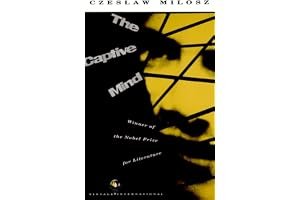
The Captive Mind book cover1

The Captive Mind

Czesław Miłosz

4.4
Written in Paris in the early 1950s, this book created instant controversy in its analysis of modern society that had allowed itself to be hypnotized by socio-political doctrines, and to accept totalitarian terror on the strength of a hypothetical future.
2

A World Apart

Gustaw Herling, Andrzej Ciolkosz, Bertrand Russell

4.4
A searing, personal literary account of life in a Soviet prison camp

In 1940, Gustaw Herling was arrested after he joined an underground Polish army that fell into Russian hands. He was sent to a northern Russian labor camp, where he spent the two most terrible years of his life. In A World Apart, he tells of the people he was imprisoned with, the hardships they endured, and the indomitable spirit
3

Memoir of Hungary, 1944-1948

Sandor Marai

4.3
4

The Snows of Yesteryear

Gregor Von Rezzori, H. F. Broch de Rothermann, John Banville

4.2
Gregor von Rezzori was born in Czernowitz, a one-time provincial capital of the Austro-Hungarian Empire that was later to be absorbed successively into Romania, the USSR, and the Ukraine—a town that was everywhere and nowhere, with a population of astonishing diversity. Growing up after World War I and the collapse of the empire, Rezzori lived in a twilit world suspended between the formalities of
5

Speak, Memory

Vladimir Nabokov, Brian Boyd

4.3
From one of the twentieth century's great writers comes one of the finest autobiographies of our time. Speak, Memory is Vladimir Nabokov's moving account of a loving, civilized family, of adolescent awakenings, flight from Bolshevik terror, education in England, and émigré life in Paris and Berlin. The Nabokovs were eccentric, liberal aristocrats who lived a life immersed in politics and literatur