We've ranked the best public administration books using expert recommendations, sales data, and millions of reader ratings. At Shortform, we know books. Our book guides are the best in the world. Learn why.
For more than two thousand years, The Art of War has stood as a cornerstone of Chinese culture-a lucid epigrammatic text that reveals as much about human psychology, politics, and economics as it does about battlefield strategy. The influence of Sun-tzu's text has grown tremendously in the West in recent years, with military leaders, politicians, and corporate executives alike finding valuable insight in these ancient words. In his crisp, accessible new translation, scholar John Minford brings this seminal work to life for modern readers.
Minford opens with a lively, learned introduction in which he explores the life and times of Sun-tzu, looks at The Art of War in the context of the turbulent Warring States period, and discusses how best to read and understand the work today. There follows Minford's translation of the core text itself in two different formats-first, the unadorned thirteen chapters of the original work and then the same text reprinted with extensive running commentary by classical Chinese scholars as well as Minford himself. The result is an opportunity for Western readers to experience Sun-tzu's work in all its intensity as it applies to many aspects of our lives.
Which books should be read by every single intelligent person on planet? … The Art of War (Sun Tsu) to learn that the act of killing fellow humans can be raised to an art. If you read all of the above works you will glean profound insight into most of what has driven the history of the western world. [source]
Cover unavailable
2
Words on Fire: The Power of Incendiary Language and How to Confront It
Helio Fred Garcia
4.5
This book is about the power of communication to do great harm and how civic leaders and engaged citizens can hold other leaders accountable to prevent it. Author Helio Fred Garcia focuses on the language President Trump uses that conditions an audience to accept, condone, and commit violence against a targeted group, rival, or critic.
Including a history of such rhetoric, this book identifies a playbook consisting of 12 forms of communication that typically precede genocides and other acts of mass violence. The Rwandan Hutu used 10, the Nazis used all 12, and Trump uses all 12 too. Such language triggers lone wolves to commit violence.
Since 9/11, the use of rhetoric that provokes violence has been known as "stochastic terrorism", a phrase that can e confusing and make discussion difficult, Garcia suggests a more accessible name: lone-wolf whistle violence, on the model of "dog whistle" politics. He draws on the most recent scholarship on lone wolves, their mindset, and what it takes to activate them to commit violence, demonstrating how Trump's increasingly dangerous rhetoric throughout his campaign and first term has motivated such individuals. He also describes the changes i the nation's political culture and media that led to Trump's nomination and presidency but also profiles leaders who dialed back their rhetoric when it was shown to put people's lives in danger.
'WORDS ON FIRE' close with a call to action: we all - civic leaders, engaged citizens, journalists, and public officials - must recognize this phenomenon so that we can take steps to hold our leaders accountable in the future.
Sara R. (Rose) Rinfret, Denise L. Scheberle, et al.
4.5
Public Policy: A Concise Introduction, by Sara R. Rinfret, Denise Scheberle, and Michelle C. Pautz, is a student-friendly primer that quickly connects readers to the inner workings of public policy. The text condenses early chapters on theory and the policy-making process, allowing students to take up key policy challenges--such as immigration, education, and health care--much earlier in the semester. Structured chapter layouts of substantive policy areas allow instructors to supplement with their own examples seamlessly. The book's emphasis on policy choices asks students to look beyond simple pros and cons to examine the multifaceted dimensions of decision making and the complexities inherent in real-world problem solving. Not every student starts out engaged in public policy, so place your students--both majors and non-majors alike--in the driver's seat by fostering their analytical skills early, and spend the rest of the semester discussing policy issues, examining data, and debating current policy examples that matter most to them.
…
Cover unavailable
4
Hardball
Chris Matthew
4.5
Perfect body. Perfect swing. Perfect swagger. They call Dash Wallace the Diamond King. He’s the hottest commodity in baseball and in the bedroom. When he runs the bases, every woman’s eyes are glued to his stunning body and a smile that puts the night lights to shame. I’m no queen. I’m a regular girl with a regular job. I just watch him on TV and from the bleachers, season after season. Girls like me grab a guy like that one in a million times. My number just came up, and he is as spectacular in bed as he is on the field. But there’s not a woman in the world who can distract Dash Wallace from the game. Not for a moment. Not even me. Until the night I do. And everything changes. ----- Hardball is a SMOKING HOT, SEXY romance with a touch of angst and a ton of heart from CD Reiss. It's a fun, witty, full-length standalone.
…
Cover unavailable
5
Essential History for Public Administration
Richard C. Box
4.4
Cover unavailable
6
Essentials of Public Service
Mary E. Guy and Todd L. Ely
4.4
Cover unavailable
7
Leadership Is Language: The Hidden Power of What You Say—and What You Don’t
The acclaimed author of Turn the Ship Around! teaches leaders a better way to communicate and bring out the best in their people.
In Turn the Ship Around!, former U.S. Navy Captain David Marquet explained the empowering leadership strategy he developed with great success while commanding the nuclear submarine USS Santa Fe. That book generated passionate word-of-mouth, was named one of USA Today's 12 best business books of all time, and made Marquet a globally recognized leadership expert. His "Intent-Based Leadership" system has helped countless teams take responsibility and solve problems -- without waiting to be told what to do.
His new book expands on those ideas, with a fresh approach to workplace communication. Few leaders realize how easy it is to say things that inhibit creative solutions and escalate stress. In both high-pressure situations and routine scenarios, in every meeting and email, the wrong words will disempower and demoralize our colleagues. On the other hand, small changes in our language can lead to dramatic improvements in how our teams perform.
For instance, Marquet reveals why...
* Asking "Are you sure?" leads to less information and worse decisions than asking "How sure are you?"
* Using a few key phrases during stressful, unfamiliar situations can help everyone keep cool heads.
* Sometimes the most valuable thing a leader can say is... nothing.
…
Cover unavailable
8
Say the Wrong Thing: Stories and Strategies for Racial Justice and Authentic Community (Volume 1)
Dr. Amanda Kemp
4.4
Cover unavailable
9
IT'S A FREAKIN' MESS: How to Thrive in Divisive Times
Richard GILLETT
4.4
Cover unavailable
10
Classics of Public Administration
Jay M. Shafritz and Albert C. Hyde
4.4
With this newly expanded eighth edition of CLASSICS OF PUBLIC ADMINISTRATION, authors Jay M. Shafritz and Albert C. Hyde introduce students to the principles of public administration via the most significant scholarly writings on the topic. Straightforward and informative, this text begins its discussion with Confucius in ancient China and continues to today's political scientists. This edition includes 17 new readings and addresses the key fields of public administration: bureaucracy, organization theory, human resources management, the budgetary process, public policy, implementation, evaluation, intergovernmental relations, and public service ethics.
…
Cover unavailable
11
Handbook of Public Administration
James L. Perry and Robert K. Christensen
4.4
The fundamentals of public administration, from the world's leading practitionersHandbook of Public Administration is the classic, comprehensive guide to the field, featuring original writings from the world's foremost public administration thought leaders and practitioners. Intended to help both public administration students and practitioners navigate administrative challenges, overcome obstacles, and improve effectiveness, this guide provides a complete overview of the entire field. The information is organized into seven parts representing key domains of knowledge and practice that are essential for effective public administration. These reflect changes in the state of modern public administration, the factors that influence policies and programs, the mechanics of how government works, and the tools that help administrators get things done. Readers will find insightful discussions on the challenges of contemporary governance and the ethics of public administration, as well as practical guidance on the everyday operations that bring effective policies and programs to life.
Students and experienced practitioners alike will appreciate the well-rounded approach to issues public administrators face every day. The book is complete enough to act as a text, but organized logically for quick reference for specific problems or situations. Readers will:
Understand the challenges posed by the changing context of public administration Explore how relationships and decisions influence public policies and programs Learn the critical skills and tools public administrators must master to be effective Explore the ethics and liabilities of public administration, and what it means to take part The role of public administration is evolving, and the changing nature of the field will impact the way policies and programs are designed and implemented. This book fully explores current and upcoming changes domestically and internationally against the backdrop of public administration fundamentals. For the student or professional seeking a deeper understanding of the public administrator's role, Handbook of Public Administration is a clear, comprehensive resource.
…
Cover unavailable
12
101 Careers in Healthcare Management
Leonard Friedman PhDMPHFACHE and Anthony R. Kovner PhD
4.4
101 Careers in Healthcare Management, Second Edition continues to be the only comprehensive guide to careers in health administration, ranging from entry-level management positions to the most senior executive opportunities. The second edition has been updated throughout and includes three new chapters that will assist students and healthcare managers alike. Additional content includes a quick historical overview of the field including its growth and transformation, essential traits that will prepare a professional for career change and advancement, and a call for new leadership competencies which every job candidate should adopt and master in a rapidly adapting industry. The book includes more than 40 new interviews spanning those in entry-level positions to CEOs that reflect a greater diversity of careers and demographics in an evolving job market.
Based on the most current data from the U.S. Department of Labor and professional societies in healthcare management, this guide describes careers in acute and long-term care, physician practices, international and government organizations, commercial insurance, consulting firms, executive search firms, pharmaceuticals and biotechnology, medical devices, public health organizations, information technology and informatics, and regulatory agencies. In each setting, experts explain job responsibilities, educational requirements, opportunities, and traditional and nontraditional career pathways.
Authored by two senior and highly respected leaders in health administration education and written in clear, jargon-free text, the second edition, like its predecessor, is easy-to-navigate and now offers even more insider advice for students of healthcare management, career-changers, and those working in the field who are considering career advancement.
NEW TO THIS EDITION:
New chapters on A Brief History of Healthcare Management, Preparation and Professionalism, and Leadership Competencies for an Uncertain Future Over 40 new interviews with healthcare managers who have changed careers or have advanced in their professional tracks
…
Cover unavailable
13
Facing the Bureaucracy: Living and Dying in a Public Agency
Gerald Garvey
4.4
Gerald Garvey provides a fascinating look inside the federal bureaucracy and offers insights into the forces, personalities, and politicking that make changing governmental institutions so difficult.
Cover unavailable
14
Masters of the Word: How Media Shaped History from the Alphabet to the Internet
William J. Bernstein
4.3
William J. Bernstein’s A Splendid Exchange: How Trade Shaped the World, an Economist and Financial Times Best Book of the Year, placed him firmly among the top flight of historians like Jared Diamond and Bill Bryson, capable of distilling major trends and reams of information into insightful, globe-spanning popular narrative.
Bernstein explains how new communication technologies and in particular our access to them, impacted human society. Writing was born thousands of years ago in Mesopotamia. Spreading to Sumer, and then Egypt, this revolutionary tool allowed rulers to extend their control far and wide, giving rise to the world’s first empires. When Phoenician traders took their alphabet to Greece, literacy’s first boom led to the birth of drama and democracy. In Rome, it helped spell the downfall of the Republic. Later, medieval scriptoria and vernacular bibles gave rise to religious dissent, and with the combination of cheaper paper and Gutenberg’s printing press, the fuse of Reformation was lit.
The Industrial Revolution brought the telegraph and the steam driven printing press, allowing information to move faster than ever before and to reach an even larger audience. But along with radio and television, these new technologies were more easily exploited by the powerful, as seen in Germany, the Soviet Union, even Rwanda, where radio incited genocide. With the rise of carbon duplicates (Russian samizdat), photocopying (the Pentagon Papers), the internet, social media and cell phones (the recent Arab Spring) more people have access to communications, making the world more connected than ever before.
In Masters of the Word, Bernstein masterfully guides the reader through the vast history of communications, illustrating each step with colorful stories and anecdotes. This is a captivating, enlightening book, one that will change the way you look at technology, history, and power.
…
Cover unavailable
15
Radical Transformational Leadership: Strategic Action for Change Agents
Monica Sharma
4.3
Monica Sharma describes how we can source our inner capacities and wisdom to manifest change that embodies universal values such as dignity, compassion, fairness, and courage. Drawing on more than twenty years of work for the United Nations and elsewhere, she presents a radical new approach to transformational leadership, one that creates systems of change where everyone can engage--not just analysts and policy-makers. Demonstrating that we all can be architects of a new humanity, Monica demystifies policy-making, planning, and implementation so that everyone can play an informed and strategic part in eradicating the world's most intractable problems. Using real-life examples from around the world, she shows how our innate characteristics of universal compassion, equity impulse, and human capability can create new patterns that effectively address major challenges such as gross inequality, unbridled hate, conflicts based on social identity, and the never-enough mindset of greed. Written in a straightforward, accessible style, Radical Transformational Leadership outlines a path-breaking paradigm shift that is already generating equitable and sustainable results across the globe.
…
Cover unavailable
16
The Political Spectrum: The Tumultuous Liberation of Wireless Technology, from Herbert Hoover to the Smartphone
Thomas Winslow Hazlett
4.3
From the former chief economist of the FCC, a remarkable history of the U.S. government’s regulation of the airwaves
Popular legend has it that before the Federal Radio Commission was established in 1927, the radio spectrum was in chaos, with broadcasting stations blasting powerful signals to drown out rivals. In this fascinating and entertaining history, Thomas Winslow Hazlett, a distinguished scholar in law and economics, debunks the idea that the U.S. government stepped in to impose necessary order. Instead, regulators blocked competition at the behest of incumbent interests and, for nearly a century, have suppressed innovation while quashing out-of-the-mainstream viewpoints.
Hazlett details how spectrum officials produced a “vast wasteland” that they publicly criticized but privately protected. The story twists and turns, as farsighted visionaries—and the march of science—rise to challenge the old regime. Over decades, reforms to liberate the radio spectrum have generated explosive progress, ushering in the “smartphone revolution,” ubiquitous social media, and the amazing wireless world now emerging. Still, the author argues, the battle is not even half won.
…
Cover unavailable
17
The Oxford Handbook of Governance
David Levi-Faur
4.3
Cover unavailable
18
The First 90 Days in Government: Critical Success Strategies for New Public Managers at All Levels
Peter H. Daly
4.3
More than 250,000 public sector managers in the United States take on new positions each year and many more aspire to leadership. Each will confront special challenges--from higher public profiles to a greater number of stakeholders to volatile political environments--that will make their transitions even more challenging than in the business world. Now Michael D. Watkins, author of the best-selling book The First 90 Days, applies his proven leadership transition framework to the public sector. Watkins and co-author Peter H. Daly address the crucial differences between the private and public sectors that go to the heart of how success and failure are defined, measured, and rewarded or penalized. This concise, practical book provides a roadmap to help new government leaders at all levels accelerate their transitions by overcoming nine transition challenges, ranging from clarifying expectations to defining goals to building a team to managing personal stress. The authors also offer detailed strategies for avoiding major "transition traps." Zeroing in on the challenges facing new government leaders, Getting Up to Speed in Government is an indispensable guide for anyone seeking to lead and succeed in the public sector.
…
Cover unavailable
19
The Politics of Presidential Appointments: Political Control and Bureaucratic Performance
David E. Lewis
4.3
In the wake of Hurricane Katrina, many questioned whether the large number of political appointees in the Federal Emergency Management Agency contributed to the agency's poor handling of the catastrophe, ultimately costing hundreds of lives and causing immeasurable pain and suffering. The Politics of Presidential Appointments examines in depth how and why presidents use political appointees and how their choices impact government performance--for better or worse.
One way presidents can influence the permanent bureaucracy is by filling key posts with people who are sympathetic to their policy goals. But if the president's appointees lack competence and an agency fails in its mission--as with Katrina--the president is accused of employing his friends and allies to the detriment of the public. Through case studies and cutting-edge analysis, David Lewis takes a fascinating look at presidential appointments dating back to the 1960s to learn which jobs went to appointees, which agencies were more likely to have appointees, how the use of appointees varied by administration, and how it affected agency performance. He argues that presidents politicize even when it hurts performance--and often with support from Congress--because they need agencies to be responsive to presidential direction. He shows how agency missions and personnel--and whether they line up with the president's vision--determine which agencies presidents target with appointees, and he sheds new light on the important role patronage plays in appointment decisions.
…
Cover unavailable
20
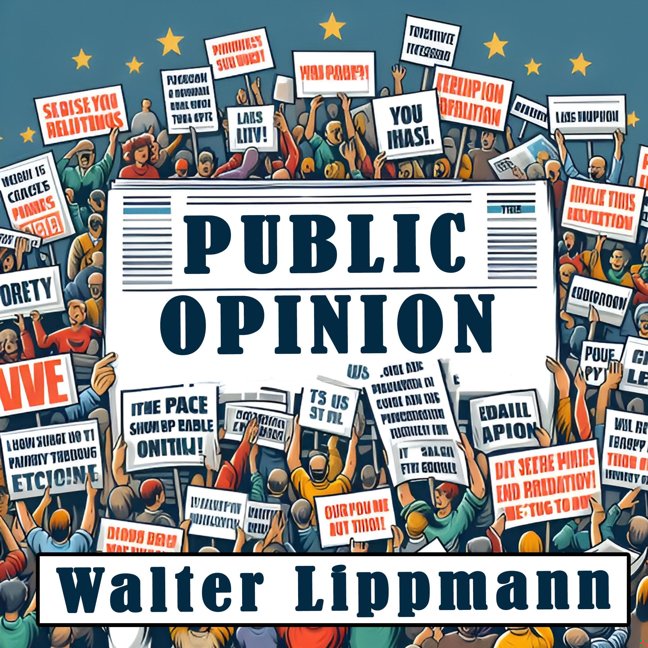
Public Opinion
Walter Lippmann
4.3
In what is widely considered the most influential book ever written by Walter Lippmann, the late journalist and social critic provides a fundamental treatise on the nature of human information and communication. As Michael Curtis indicates in his introduction to this edition. Public Opinion qualifies as a classic by virtue of its systematic brilliance and literary grace. The work is divided into eight parts, covering such varied issues as stereotypes, image making, and organized intelligence. The study begins with an analysis of "the world outside and the pictures in our heads, " a leitmotif that starts with issues of censorship and privacy, speed, words, and clarity, and ends with a careful survey of the modern newspaper. The work is a showcase for Lippmann's vast erudition. He easily integrated the historical, psychological, and philosophical literature of his day, and in every instance showed how relevant intellectual formations were to the ordinary operations of everyday life. Public Opinion is of enduring significance for communications scholars, historians, sociologists, and political scientists.
…
Recommended by David Greenberg and Lorraine Adams.
David Greenberg
When Lippmann wrote this book he had become disillusioned with aspects of democratic theory that assumed citizens could be fully rational and knowledgeable in making up their minds about public issues. [source]
Lorraine Adams
It was written in 1922 and is an insider’s view of how news is made. That is, news is a made thing. News is not facts. [source]
Cover unavailable
21
Creating the National Park Service: The Missing Years
Horace M. Albright, Marian Albright Schenck, Robert M. Utley
4.3
Two men played a crucial role in the creation and early history of the National Park Service: Stephen T. Mather, a public relations genius of sweeping vision, and Horace M. Albright, an able lawyer and administrator who helped transform that vision into reality.
In Creating the National Park Service, Albright and his daughter, Marian Albright Schenck, reveal the previously untold story of the critical "missing years" in the history of the service. During this period, 1917 and 1918, Mather’s problems with manic depression were kept hidden from public view, and Albright, his able and devoted assistant, served as acting director and assumed Mather’s responsibilities.
Albright played a decisive part in the passage of the National Park Service Organic Act of 1916; the formulation of principles and policies for management of the parks; the defense of the parks against exploitation by ranchers, lumber companies, and mining interests during World War I; and other issues crucial to the future of the fledgling park system.
…
Cover unavailable
22
The Social Media Upheaval (Encounter Intelligence)
Glenn Harlan Reynolds
4.3
Cover unavailable
23
The Internet in Everything: Freedom and Security in a World with No Off Switch
Laura DeNardis
4.3
A compelling argument that the Internet of things threatens human rights and security and that suggests policy prescriptions to protect our future
The Internet has leapt from human-facing display screens into the material objects all around us. In this so-called Internet of Things—connecting everything from cars to cardiac monitors to home appliances—there is no longer a meaningful distinction between physical and virtual worlds. Everything is connected. The social and economic benefits are tremendous, but there is a downside: an outage in cyberspace can result not only in a loss of communication but also potentially a loss of life. Control of this infrastructure has become a proxy for political power, since countries can easily reach across borders to disrupt real-world systems. Laura DeNardis argues that this diffusion of the Internet into the physical world radically escalates governance concerns around privacy, discrimination, human safety, democracy, and national security, and she offers new cyber-policy solutions. In her discussion, she makes visible the sinews of power already embedded in our technology and explores how hidden technical governance arrangements will become the constitution of our future.
…
Recommended by Shane Harris.
Shane Harris
Great event and discussion. Laura is brilliant. Buy her book! https://t.co/RcZoFbdY87 [source]
Cover unavailable
24
Public Administration: An Introduction
Marc Holzer and Richard W. Schwester
4.3
Marc Holzer and Richard W. Schwester have written a fresh and highly engaging textbook for the introductory course in Public Administration.
Their coverage is both comprehensive and cutting-edge, including not only all the basic topics (OT, budgeting, HRM), but also reflecting new realities in public administration: innovations in e-government, the importance of new technology, changes in intergovernmental relations, especially the emphasis on inter-local and shared regional resources, and public performance and accountability initiatives.
Public Administration has been crafted with student appeal in mind. Each of the book's chapters is generously illustrated with cartoons, quotes, and artwork--all reinforcing the book's theme that the field of public administration is rooted in the cultural and political world. Each chapter is also supported with a listing of key terms, exercises, and additional resources.
The textbook is supported by one of the most comprehensive and easy-to-use instructors' manuals of any introductory text on the market today. It contains full lesson plans with activities to accommodate a broad range of teaching and learning styles for each chapter, PowerPoint decks for each chapter (with visuals and links embedded), 8 new long-term project / student presentation ideas, an updated 'Quotes and Notables' section with biographical information and media links for each chatper, updated test questions with answer keys, and updated terms and definitions for each chapter.
…
Cover unavailable
25
Novick & Morrow's Public Health Administration: Principles for Population-Based Management
Leiyu Shi and James A. Johnson
4.3
Cover unavailable
26
Public Administration: Concepts and Cases
Richard Stillman
4.3
PUBLIC ADMINISTRATION: CONCEPTS AND CASES offers a unique and highly regarded framework in which conceptual readings are paired with contemporary case studies that reflect real-world examples of administrative work, as well as new thinking and developments in the field. Case studies and examples cover topics such as the Columbia space shuttle disaster, the shootings at Columbine High School, and the war in Iraq--making it easy to engage students in the readings.
…
Cover unavailable
27
Sesame Street and the Reform of Children's Television
Robert W. Morrow
4.3
By the late 1960s more than a few critics of American culture groused about the condition of television programming and, in particular, the quality and content of television shows for children. In the eyes of the reform-minded, commercial television crassly exploited young viewers; its violence and tastelessness served no higher purpose than the bottom line.
The Children's Television Workshop (CTW)—and its fresh approach to writing and producing programs for kids—emerged from this growing concern. Sesame Street—CTW's flagship, hour-long show—aimed to demonstrate how television could help all preschoolers, including low-income urban children, prepare for first grade. In this engaging study Robert W. Morrow explores the origins and inner workings of CTW, how the workshop in New York scripted and designed Sesame Street, and how the show became both a model for network television as well as a thorn in its side.
Through extensive archival research and a systematic study of sample programs from Sesame Street's first ten seasons, Morrow tells the story of Sesame Street's creation; the ideas, techniques, organization, and funding behind it; its place in public discourse; and its ultimate and unfortunate failure as an agent of commercial television reform.
…
Cover unavailable
28
Introduction to Public Health
Mary-Jane Schneider
4.3
Introduction To Public Health, Fifth Edition Offers A Thorough, Accessible Overview Of The Expanding Field Of Public Health For Students New To Its Concepts And Actors. Written In Engaging, Nontechnical Language, This Best-Selling Text Explains In Clear Terms The Multi-Disciplinary Strategies And Methods Used For Measuring, Assessing, And Promoting Public Health. Packed With Illustrative Real-World Examples, This Updated Edition Provides Students With Informative Discussions Of The Current Technical Issues And Practical Obstacles Facing Public Health Practitioners And Policymakers Alike. In Her Unique Style, Author Mary Jane Schneider Goes Beyond The Science Of Public Health With A Hard Look At The Politics That Put These Topics In The Headlines. Readers Will Come Away With A Broad-Reaching, Practical Framework For Understanding The Multifaceted Forces And Organizations Of Today’S Public Health Enterprise. Key Features: -Up-To-Date Coverage Of The Newest Developments In Infectious Disease, Injury Control, Environmental Health Controversies, The Reform Of The American Healthcare System, And More -Vivid Presentation Of Public Health Principles Through Current Stories In The News, Such As Ebola In The United States, E-Cigarettes, Eating Disorders, The California Measles Outbreak, And Traumatic Brain Injury In The NFL -Extensive Discussion Of Current Topics Including Population Growth And Climate Change As Contributors To Drought, Wars, And Migrations In The Middle East; And The Implementation Of The Affordable Care Act In The United States
…
Cover unavailable
29
Public Administration: Traditions of Inquiry and Philosophies of Knowledge
Norma M. Riccucci
4.3
This book will examine the intellectual origins and identity of the discipline of public administration, its diverse research traditions, and how public administration research is conducted today. The question of whether public administration is an art or science, driven by values or facts will never be definitively answered because of the lack of consensus among scholars within the field. This divide has produced heated debates, but Norma Riccucci embraces this diversity of research methods rather than seeking to suggest that there is one right way. The intended purpose of this book is to engage reasonable-minded public administrationists in a dialogue on the importance of heterogeneity in epistemic traditions, and in general to deepen the field's understanding and acceptance of its epistemological scope. This book will provide an important overview of the discipline for graduate students and scholars.
…
Cover unavailable
30
Public Personnel Management: Current Concerns, Future Challenges
Norma M. Riccucci
4.3
Public Personnel Management has served as an essential, concise reader for public personnel and human resource management courses in the fields of public administration, political science, and public policy over the last 25 years. Since the first edition published in 1991, the book has offered professors and students alike an in-depth look at cutting-edge developments beyond standard textbook coverage, to provide a broad understanding of the key management and policy issues facing public and nonprofit HRM today. Original chapters are written expressly for the text by leading public administration scholars, each focusing on specific and often controversial concerns for public personnel management, such as pensions, gender and sexuality, healthcare, unions, and a multi-generational workforce.
Now in an extensively revised sixth edition, Public Personnel Management presents new, original chapters to examine developments of interest to researchers and practitioners alike, including: remote working, cybersecurity, public service motivation, the abandonment of traditional civil service at the state and local levels, the Affordable Care Act and its implications for practice, pension systems and labor relations, affirmative action, social equity, legislation surrounding LGBT rights, and - as the field of public personnel management becomes more internationalized - a chapter addressing public personnel management across Europe. This careful and thoughtful overhaul will ensure that Public Personnel Management remains a field-defining book for the next 25 years.
…
Cover unavailable
31
The Utopia of Rules: On Technology, Stupidity, and the Secret Joys of Bureaucracy
David Graeber
4.3
Where does the desire for endless rules, regulations, and bureaucracy come from? How did we come to spend so much of our time filling out forms?
To answer these questions, anthropologist David Graeber—one of the most prominent and provocative thinkers working today—takes a journey through ancient and modern history to trace the peculiar and fascinating evolution of bureaucracy over the ages.
He starts in the ancient world, looking at how early civilizations were organized and what traces early bureaucratic systems have left in the ethnographic literature. He then jets forward to the nineteenth century, where systems we can easily recognize as modern bureaucracies come into being. In some areas of life—like with the modern postal systems of Germany and France—these bureaucracies have brought tremendous efficiencies to modern life. But Graeber argues that there is a much darker side to modern bureaucracy that is rarely ever discussed. Indeed, in our own “utopia of rules,” freedom and technological innovation are often the casualties of systems that we only faintly understand.
Provocative and timely, the book is a powerful look and history of bureaucracy over the ages and its power in shaping the world of ideas.
…
Cover unavailable
32
Administrative Leadership in the Public Sector
Montgomery Van van Wart
4.3
Administrative Leadership in the Public Sector is an ideal resource for any Public Administration course involving leadership and public management.
Each of the book's nine main sections begins with introductory text by the volume's editors, Monty Van Wart and Lisa Dicke, followed by relevant readings. The volume includes some of the most important readings on public leadership published in the last eight decades. More than just an anthology, Administrative Leadership in the Public Sector provides a unique and useful framework for understanding the vast subject of leadership.
…
Cover unavailable
33
Computational Propaganda: Political Parties, Politicians, and Political Manipulation on Social Media (Oxford Studies in Digital Politics)
Samuel C. Woolley
4.3
Cover unavailable
34
Collaborative Governance: Private Roles for Public Goals in Turbulent Times
John D. Donahue
4.3
All too often government lacks the skill, the will, and the wallet to meet its missions. Schools fall short of the mark while roads and bridges fall into disrepair. Health care costs too much and delivers too little. Budgets bleed red ink as the cost of services citizens want outstrips the taxes they are willing to pay. Collaborative Governance is the first book to offer solutions by demonstrating how government at every level can engage the private sector to overcome seemingly insurmountable problems and achieve public goals more effectively.
John Donahue and Richard Zeckhauser show how the public sector can harness private expertise to bolster productivity, capture information, and augment resources. The authors explain how private engagement in public missions--rightly structured and skillfully managed--is not so much an alternative to government as the way smart government ought to operate. The key is to carefully and strategically grant discretion to private entities, whether for-profit or nonprofit, in ways that simultaneously motivate and empower them to create public value. Drawing on a host of real-world examples-including charter schools, job training, and the resurrection of New York's Central Park--they show how, when, and why collaboration works, and also under what circumstances it doesn't.
Collaborative Governance reveals how the collaborative approach can be used to tap the resourcefulness and entrepreneurship of the private sector, and improvise fresh, flexible solutions to today's most pressing public challenges.
…
Cover unavailable
35
Essentials of Epidemiology in Public Health
Ann Aschengrau and George R. Seage
4.3
Essentials of Epidemiology in Public Health, Fourth Edition combines theory and practice in presenting traditional and new epidemiologic concepts. Broad in scope, the text opens with five chapters covering the basic epidemiologic concepts and data sources. A major emphasis is placed on study design, with separate chapters devoted to each of the three main analytic designs: experimental, cohort, and case-control studies. Full chapters on bias, confounding, and random error, including the role of statistics in epidemiology, ensure that students are well-equipped with the necessary information to interpret the results of epidemiologic studies. Up-to-date examples from the epidemiologic literature on diseases of public health importance are provided throughout the book. Key Features: - New examples and the latest public health statistics throughout - Coverage of the Ebola outbreak including an in-depth investigation of what happened - New examples that illustrate epidemiological principles including a greater emphasis on social factors that influence health, such as racism - Straightforward descriptions of the latest epidemiologic methods including mediation analysis, agent-based modelling, and the use of directed acyclic graphs (DAGs) to assess confounding. - An expanded glossary and key terms highlighted throughout the text
…
Cover unavailable
36
Fiber: The Coming Tech Revolution—and Why America Might Miss It
Susan Crawford
4.3
The world of 5G, the next generation of telecommunication technology, will be as different from what came before as the world after the advent of electricity. The massive amounts of data we’ll be able to stream through fiber-optic connections will enable a degree of virtual presence that will radically transform health care, education, urban administration and services, agriculture, retail sales, and offices. Yet all of those transformations will pale in comparison to the innovations that we can’t even imagine today.
In a fascinating account combining legal expertise with compelling on-the-ground reporting, Susan Crawford reveals how the giant corporations that control cable and internet access in the United States use their tremendous lobbying power to tilt the playing field against competition, holding back the infrastructure improvements necessary for the country to move forward. And she shows how a few cities and towns are fighting monopoly power to bring the next technological revolution to their communities.
…
Cover unavailable
37
Introducing Public Administration
JayM. Shafritz, E. W. Russell, et al.
4.3
Now in an extensively revised 9th edition, Introducing Public Administration provides students with the conceptual foundation they need, while introducing them to important trends in the discipline. Known for its lively and witty writing style, this beloved textbook examines the most important issues in the field of public administration through the use of examples from various disciplines and modern culture. This unique approach captivates students and encourages them to think critically about the nature of public administration today. Refreshed and revised throughout, the 9th edition contains a number of imporant updates:
An examination of the effect of the Barack Obama administration on the discipline, especially economic and financial management and budgetary policy, allowing students to apply the theories and concepts in the text to recent US government practice.
An exploration of the 2008 economic meltdown and its consequences for the regulation of financial markets, cut-back management, and social equity, providing students with a critical look at the recent changes in the global economy.
All-new images, international examples, keynotes, and case studies have been incorporated to reflect the diversity of public servants throughout history. Case studies correspond to those in optional companion book Cases in Public Policy and Administration to offer clear discussion points and seamless learning with the two books side by side.
New sections on careers in public service, whistleblowing and public employee dissent, networks and collaboration across organizations, social innovation, managerialism and productivity improvement, Big Data and cloud computing, collaboration and civic engagement, and evidence-based policy and management. Complete with a companion website containing instructor slides for each chapter, a chapter-by-chapter instructor's manual and sample syllabus, student learning objectives and self-test questions, Introducing Public Administration is the ideal introduction to the discipline for first year masters students, as well as for the growing number of undergraduate public administration courses and programs.
…
Cover unavailable
38
Unmasking Administrative Evil
Guy Adams
4.3
The modern age with its emphasis on technical rationality has enabled a new and dangerous form of evil--administrative evil. Unmasking Administrative Evil discusses the overlooked relationship between evil and public affairs, as well as other fields and professions in public life. The authors argue that the tendency toward administrative evil, as manifested in acts of dehumanization and genocide, is deeply woven into the identity of public affairs. The common characteristic of administrative evil is that ordinary people within their normal professional and administrative roles can engage in acts of evil without being aware that they are doing anything wrong. Under conditions of moral inversion, people may even view their evil activity as good. In the face of what is now a clear and present danger in the United States, this book seeks to lay the groundwork for a more ethical and democratic public life; one that recognizes its potential for evil, and thereby creates greater possibilities for avoiding the hidden pathways that lead to state-sponsored dehumanization and destruction. What's new in the Fourth Edition of Unmasking Administrative Evil
UAE is updated and revised with new scholarship on administrative ethics, evil, and contemporary politics. The authors include new cases on the dangers of market-based governance, contracting out, and deregulation. There is an enhanced focus on the potential for administrative evil in the private sector. The authors have written a new Afterword on administrative approaches to the aftermath of evil, with the potential for expiation, healing, and reparations.
…
Cover unavailable
39
The Politics Presidents Make: Leadership from John Adams to Bill Clinton, Revised Edition
Stephen Skowronek
4.2
Stephen Skowronek's wholly innovative study demonstrates that presidents are persistent agents of change, continually disrupting and transforming the political landscape. In an afterword to this new edition, the author examines "third way" leadership as it has been practiced by Bill Clinton and others. These leaders are neither great repudiators nor orthodox innovators. They challenge received political categories, mix seemingly antithetical doctrines, and often take their opponents' issues as their own.
…
Cover unavailable
40
Politics in Hard Times: Comparative Responses to International Economic Crises
Peter Gourevitch
4.2
Cover unavailable
41
Reinventing Government: How the Entrepreneurial Spirit is Transforming the Public Sector (Plume)
David Osborne, Ted Gaebler
4.2
A revolution is stirring in America. People are angry at governments that spend more but deliver less, frustrated with bureaucracies that give them no control, and tired of politicians who raise taxes and cut services but fail to solve the problems we face.Reinventing Government is both a call to arms in the revolt against bureaucratic malaise and a guide to those who want to build something better. It shows that there is a third way: that the options are not simply liberal or conservative, but that our systems of governance can be fundamentally reframed; that a caring government can still function as efficiently and productively as the best-run businesses.Authors Osborne and Gaebler describe school districts that have used choice, empowerment, and competition to quadruple their studentsin part beneath the bright lights of Capitol Hill, but more often in the states and cities and school districts of America, where the real work of government goes on.From Phoenix to St. Paul, Washington, D.C. to Washington state, entrepreneurial public managers have discarded budget systems that encourage managers to waste money, scrapped civil service systems developed for the nineteenth century, and jettisoned bureaucracies built for the 1930s. They have replaced these industrial-age systems with more decentralized, more entrepreneurial, more responsive organizations designed for the rapidly changing, information-rich world of the 1990s.Osborne and Gaebler isolate and describe ten principles around which entrepreneurial public organizations are built. They:1) steer more than they row2) empower communities rather than simply deliver services3) encourage competition rather than monopoly4) are driven by their missions, not their rules5) fund outcomes rather than inputs6) meet the needs of the customer, not the bureaucracy7) concentrate on earning, not just spending8) invest in prevention rather than cure9) decentralize authority10) solve problems by leveraging the marketplace, rather than simple creating public programs.Reinventing Government is not a partisan book. It focuses not on what government should do, but on how government should work. As such, it has been embraced by both liberals and conservatives, Democrats and Republicans.
…
Cover unavailable
42
Public Administration: Understanding Management, Politics, and Law in the Public Sector
David Rosenbloom, Robert Kravchuk, et al.
4.2
The eighth edition of "Public Administration: Understanding Management, Politics, and Law in the Public Sector" grounds students in the fundamentals of public administration while embracing its complexity. It describes, explains, and analyses public administration through the lenses of three well-established perspectives: management, politics, and law. This edition retains its strong U.S. focus while broadening the discussion and themes in recognition of its adoption in about twenty countries abroad and to enhance its global utility as a “world text.”
…
Cover unavailable
43
The Hidden-Hand Presidency: Eisenhower as Leader
Fred I. Greenstein
4.2
Drawing on extensive interviews and archival research, Fred Greenstein reveals that there was great political activity beneath the placid surface of the Eisenhower White House. In a new foreword to this edition, he discusses developments in the study of the Eisenhower presidency in the dozen years since publication of the first edition and examines the continuing significance of Eisenhower's legacy for the larger understanding of presidential leadership in modern America.
The Hidden-Hand which I read around the same time is equally a masterclass in leadership. It will give you not just a new appreciation of Eisenhower, but teach you how real leaders get things done: it’s not through talking, it’s not through looking tough, it’s through organization, delegation and through behind the scenes influence. [source]
Cover unavailable
44
Mastering Public Administration: From Max Weber to Dwight Waldo
Brian R. Fry and Jos C. N. Raadschelders
4.2
A comprehensive summary of the work and contributions of the leading theorists in public administration. Fry's original essays focus on the pioneers in the field whose work largely shaped the current contours of the field. They include Max Weber, Frederick Taylor, Luther Gulick, Mary Parker Follett, Elton Mayo, Chester Barnard, Herbert Simon, and Dwight Waldo.
Cover unavailable
45
Citizen Governance: Leading American Communities Into the 21st Century
Richard C. Box
4.2
Drawing on fundamental ideas about the relationship of citizens to the public sphere, Richard C Box presents a model of `citizen governance'. Recognizing the challenges in the community governance setting, he advocates rethinking the structure of local government and the roles of citizens, elected officials and public professionals in the twenty-first century. His model shifts a large part of the responsibility for local public policy from the professional and the elected official to the citizen. Citizens take part directly in creating and implementing policy, elected officials coordinate the policy process, and public professionnals facilitate citizen discourse, offering the knowledge of public practice needed for successful `citizen gover
…
Cover unavailable
46
Managing the Public Sector
Grover Starling
4.2
Combining the most current public management thinking and research with examples of how public executives and organizations apply these ideas, MANAGING THE PUBLIC SECTOR is a comprehensive introduction to the field. The Eighth Edition continues to engage the student's intellect by providing more than just the basic foundation of management. The text places the application of management in the context of the public sector and tries to capture some of the excitement and challenge of the field.
…
Cover unavailable
47
The American Presidency: An Intellectual History
Forrest McDonald
4.2
Jefferson Lecturer and Pulitzer Prize finalist Forrest McDonald is widely recognized as one of our most respected and challenging historians of the Constitution. He has been called brilliant, provocative, controversial, passionate, pugnacious, and crafty in intellectual combat. Whatever the label, he remains unsurpassed as a commentator on the American founding.
Novus Ordo Seclorum, his best-known work, was hailed as "magisterial," "a tour-de-force," "the American history book of the decade," "the best single book on the origins of the U.S. Constitution," and was featured on Bill Moyers's highly praised PBS series In Search of the Constitution. McDonald now applies his considerable talents to a study of another venerable institution-the American presidency.
Writing at the height of his powers as an intellectual historian, McDonald explores how and why the presidency has evolved into such a complex and powerful institution, unlike any other in the world. Scores of republics have come into existence during the last two centuries and many have adopted constitutions similar to our own. But, as McDonald persuasively shows, the American presidency is unique-no other nation has a leadership position that combines the seemingly incongruous roles of ceremonial head of state and chief executive magistrate.
Lacking an acceptable role model, McDonald explains, the founding fathers constructed their idea of the presidency from sources as diverse as the Bible, Machiavelli, John Locke, the Ancient Greeks and Romans, the laws of England, and the early colonial and state government experiences. So many influences, he suggests, guaranteed a substantial degree of persistent ambiguity and contradiction in the office.
McDonald chronicles the presidency's creation, implementation, and evolution and explains why it's still working today despite its many perceived afflictions. Along the way, he provides trenchant commentary upon the Constitutional Convention, ratification debates, presidencies of Washington and Jefferson, presidential administration and leadership, presidential-congressional conflicts, the president as chief architect of foreign policy, and the president as myth and symbol. He also analyzes the enormous gap between what we've come to expect of presidents and what they can reasonably hope to accomplish.
Ambitious, comprehensive, and engaging, this is the best single-volume study of an institution that has become troubled and somewhat troublesome yet, in McDonald's words, "has been responsible for less harm and more good than perhaps any other secular institution in history." It will make a fine and necessary companion for understanding the presidency as it moves into its third century.
…
Cover unavailable
48
Small Talk: How to Talk to People, Improve Your Charisma, Social Skills, Conversation Starters & Lessen Social Anxiety
Aston Sanderson
4.2
Cover unavailable
49
Complete Idiot's Guide to American Government
Mary Shaffrey
4.2
Cover unavailable
50
The Art of Making Magazines: On Being an Editor and Other Views from the Industry
Victor Navasky and Evan Cornog
4.2
In this entertaining anthology, editors, writers, art directors, and publishers from such magazines as Vanity Fair, The New Yorker, The New Republic, Elle, and Harper's draw on their varied, colorful experiences to explore a range of issues concerning their profession. Combining anecdotes with expert analysis, these leading industry insiders speak on writing and editing articles, developing great talent, effectively incorporating art and design, and the critical relationship between advertising dollars and content. They emphasize the importance of fact checking and copyediting; share insight into managing the interests (and potential conflicts) of various departments; explain how to parlay an entry-level position into a masthead title; and weigh the increasing influence of business interests on editorial decisions. In addition to providing a rare, behind-the-scenes look at the making of successful and influential magazines, these contributors address the future of magazines in a digital environment and the ongoing importance of magazine journalism. Full of intimate reflections and surprising revelations, The Art of Making Magazines is both a how-to and a how-to-be guide for editors, journalists, students, and anyone hoping for a rare peek between the lines of their favorite magazines. The chapters are based on talks delivered as part of the George Delacorte Lecture Series at the Columbia School of Journalism.
Essays include: "Talking About Writing for Magazines (Which One Shouldn't Do)" by John Gregory Dunne; "Magazine Editing Then and Now" by Ruth Reichl; "How to Become the Editor in Chief of Your Favorite Women's Magazine" by Roberta Myers; "Editing a Thought-Leader Magazine" by Michael Kelly; "Fact-Checking at The New Yorker" by Peter Canby; "A Magazine Needs Copyeditors Because...." by Barbara Walraff; "How to Talk to the Art Director" by Chris Dixon; "Three Weddings and a Funeral" by Tina Brown; "The Simpler the Idea, the Better" by Peter W. Kaplan; "The Publisher's Role: Crusading Defender of the First Amendment or Advertising Salesman?" by John R. MacArthur; "Editing Books Versus Editing Magazines" by Robert Gottlieb; and "The Reader Is King" by Felix Dennis
…
Cover unavailable
51
The Public Policy Theory Primer
Kevin B. Smith
4.2
Public policy has developed into a broad and interdisciplinary area of study. Research in the field tends to reflect this wide-ranging nature, with scholarly activity focusing on policy process, policy design, program evaluation, specific policy issues, and research classified simply as “policy studies.” Yet, for those teaching and studying in the field, this disjointedness can be confusing and cumbersome.
This text provides a reasoned and structured framework for the field of public policy. Authors Kevin B. Smith and Christopher W. Larimer not only discuss several major theories but also offer a consistent and coherent framework for uniting the field. This organized and comprehensive approach addresses core questions and concepts, major theoretical frameworks, primary methodological approaches, and key controversies and debates. The Public Policy Theory Primer is an indispensable text for the systematic study of public policy.
…
Cover unavailable
52
The Politics of Crisis: An Insider’s Prescription to Prevent Public Policy Disasters
Eric Kowalczyk
4.2
Across the country minority communities feel under attack by police officers. The Politics of Crisis explores how to change public policy decisions to reform the role of law enforcement. Centered around the harrowing events of the Freddie Gray riots that gripped Baltimore in 2015, The Politics of Crisis is a powerful examination of how everything can go wrong when police no longer serve their communities.
Eric Kowalczyk, Director of Media Relations for the Baltimore Police Department during the riots, provides a first-hand account of what it's like to be on the front lines of responding to the pressures of a community, the media, and the politics of a city in crisis. Blending humor, research, and deeply personal experiences, The Politics of Crisis offers a prescription to prevent disaster from striking again.
…
Cover unavailable
53
Who Governs?: Democracy And Power In An American City
Robert A. Dahl
4.2
In this now-classic work, one of the most celebrated political scientists of the twentieth century offers a powerful interpretation of the location of political power in American urban communities. For this new edition, Robert A. Dahl has written a new Preface in which he reflects on Who Governs? morethan four decades after its publication. And in a new Foreword, Douglas W. Rae offers an assessment of Dahl’s achievement in this, Dahl’s greatest and most influential book.
“Dahl is never dogmatic, and never imagines that the world stands still to accommodate either the democratic ideal or his own pluralistic theory of city politics. . . .Who Governs? is Dahl’s liveliest and most remarkable book.”—Douglas W. Rae, from the Foreword
From reviews of the first edition: “A book that no one interested in politics can afford to ignore.”—Lewis A. Coser, Commentary
“Anyone seriously concerned with current systematic political theory or with urban politics should read Who Governs?”—Hugh Douglas Price, Political Science Quarterly
“A sophisticated and undogmatic treatise on democratic politics.”—Heinz Eulau, American Political Science Review
“Dahl has illuminated a central question in political science, the problem of how men can govern themselves in complex societies. . . . Who Governs? will become a classic.”—from the citation of the Woodrow Wilson Foundation Award
…
Cover unavailable
54
Strategic Communication: Origins, Concepts, and Current Debates (Praeger Security International)
Christopher Paul
4.2
"Strategic Communication: Origins, Concepts, and Current Debates" is a groundbreaking study, the first book explicitly focused on strategic communication as it is currently used and discussed in the U.S. government. Written specifically for those who are new to strategic communication, this incisive book clarifies the definitional debate, explores the history of the term and its practice, and embraces a broad, practical definition.
But that is only the beginning. Moving to the realities of the issue, author Christopher Paul reviews dozens of government reports on strategic communication and public diplomacy released since 2000, examining specific proposals related to improving strategic communication in the U.S. government and explaining the disagreements. Most important, he offers consensus and clarity for the way ahead, discussing how disparate elements of the government can be coordinated to master--and win--the "war of ideas" through fully integrated and synchronized communications and actions.
…
Cover unavailable
55
The Crisis of American Foreign Policy: Wilsonianism in the Twenty-First Century
Christopher Hill
4.2
Was George W. Bush the true heir of Woodrow Wilson, the architect of liberal internationalism? Was the Iraq War a result of liberal ideas about America's right to promote democracy abroad? In this timely book, four distinguished scholars of American foreign policy discuss the relationship between the ideals of Woodrow Wilson and those of George W. Bush. The Crisis of American Foreign Policy exposes the challenges resulting from Bush's foreign policy and ponders America's place in the international arena.
Led by John Ikenberry, one of today's foremost foreign policy thinkers, this provocative collection examines the traditions of liberal internationalism that have dominated American foreign policy since the end of World War II. Tony Smith argues that Bush and the neoconservatives followed Wilson in their commitment to promoting democracy abroad. Thomas Knock and Anne-Marie Slaughter disagree and contend that Wilson focused on the building of a collaborative and rule-centered world order, an idea the Bush administration actively resisted. The authors ask if the United States is still capable of leading a cooperative effort to handle the pressing issues of the new century, or if the country will have to go it alone, pursuing policies without regard to the interests of other governments.
Addressing current events in the context of historical policies, this book considers America's position on the global stage and what future directions might be possible for the nation in the post-Bush era.
…
Cover unavailable
56
Public Integrity
J. Patrick Dobel
4.2
In this groundbreaking book, J. Patrick Dobel describes and analyzes the elements that constitute integrity in public office. Drawing on case studies, memoirs, interviews, and fiction (e.g., John Le Carré), Dobel addresses such issues as when to resign and when to stay in office. He examines the temptations of power, the relation between private and public life, and the role of honor and prudence in making personal decisions. He applies not only moral theory but also the insights of history, organizational theory, and psychology. Unlike most political ethics books, Public Integrity puts personal responsibility at the center of public morality, examining not just the responsibilities of office but also the role of personal moral commitments and promises. This timely book reminds us of the importance of public integrity as well as the demands and challenges that often threaten that integrity, especially in a liberal democracy such as the United States.
…
Cover unavailable
57
Essentials of Public Health
Bernard J. Turnock
4.2
New edition coming in February 2020. As one of the foundational texts in the Essential Public Health series, Essentials of Public Health is an excellent introduction to the field of public health. Written for senior-level undergraduates or graduate students in public health, health science, nursing, and other health professions, Essentials of Public Health gives special focus to public health careers and the workings of public health agencies. Combining the best elements of Dr. Turnock's other books: Public Health: What It Is and How It Works and Public Health: Career Choices That Make a Difference, Essentials of Public Health, Third Edition, uses clear, reader-friendly language and helpful learning tools such as chapter exercises and discussion questions, making it an ideal text to prepare your students for the profession of public health. New to the Third Edition: Comprehensive new coverage of topics such as: the implementation of the Affordable Care Act, strategic planning, accreditation of public health organizations and credentialing of public health workers Extensive information on state and local public health practice derived from national surveys conducted since 2012 Two separate chapters on Community Public Health Practice and Emergency Preparedness (formerly covered in one single chapter) New conceptual frameworks for the public health system, overall health system, and public health workforce An examination of an additional 16 different public health occupations--a total of 39 covered in all More than 60 new or revised charts and tables and a series of "outside-the-book thinking" exercises appears in each chapter. This book: Defines and describes the public health system Provides concepts and tools for measuring health in populations Characterizes the relationship of the public health system with medical care and other elements of the overall health system Identifies government's unique contributions through federal, state, and local public health agencies Offers basic information on the size and composition of the public health workforce Addresses careers and jobs in public health administration, epidemiology, public health nursing, health education, and more.
…
Cover unavailable
58
The BBC: Myth of a Public Service
Tom Mills
4.2
Cover unavailable
59
Public Administration Evolving: From Foundations to the Future
Mary E. Guy
4.2
Public Administration Evolving: From Foundations to the Future demonstrates how the theory and practice of public administration has evolved since the early decades of the twentieth century. Each chapter approaches the field from a unique perspective and describes the seminal events that have been influential in shaping its evolution.
This book presents major trends in theory and practice in the field, provides an overview of its intellectual development, and demonstrates how it has professionalized. The range from modernism to metamodernism is reflected from the perspective of accomplished scholars in the field, each of whom captures the history, environment, and development of a particular dimension of public administration. Taken together, the chapters leave us with an understanding of where we are today and a grounding for forecasting the future.
…
Cover unavailable
60
The Homevoter Hypothesis: How Home Values Influence Local Government Taxation, School Finance, and Land-Use Policies
William A. Fischel
4.2
Just as investors want the companies they hold equity in to do well, homeowners have a financial interest in the success of their communities. If neighborhood schools are good, if property taxes and crime rates are low, then the value of the homeowner's principal asset--his home--will rise. Thus, as William Fischel shows, homeowners become watchful citizens of local government, not merely to improve their quality of life, but also to counteract the risk to their largest asset, a risk that cannot be diversified. Meanwhile, their vigilance promotes a municipal governance that provides services more efficiently than do the state or national government.
Fischel has coined the portmanteau word "homevoter" to crystallize the connection between homeownership and political involvement. The link neatly explains several vexing puzzles, such as why displacement of local taxation by state funds reduces school quality and why local governments are more likely to be efficient providers of environmental amenities. The Homevoter Hypothesis thereby makes a strong case for decentralization of the fiscal and regulatory functions of government.
…
Cover unavailable
61
The Collaborative Leadership Fieldbook
David D. Chrislip
4.2
When the landmark book Collaborative Leadership was first published in 1994, it described the premise, principles, and leadership characteristics of successful collaboration. The book outlined an innovative way of building partnerships to solve the civic problems too big for anyone to solve alone as well as a new type of leadership that brings together diverse stakeholders to solve a community's problems. While that book provides a much-needed framework for working together, The Collaborative Leadership Fieldbook offers nonprofit practitioners, community leaders, and public officials a practical, hands-on resource. It presents the tools needed for applying the lessons learned, powerful approaches that get results, and guidance for solving complex community problems. In clear and concise terms, the Fieldbook • Presents a wide range of tools and concepts that can be readily applied • Provides a comprehensive guide to collaboration from conception to implementation • Describes how to establish effective civic leadership development programs to support collaborative efforts • Contains stories and examples that clearly illustrate the book's concepts and tools • Helps readers find-quickly and easily-what they need for their specific situations
…
Cover unavailable
62
Managing Human Behavior in Public and Nonprofit Organizations
Robert B. Denhardt, Janet V. Denhardt, et al.
4.2
The only text in management and organizational behavior to focus on public organizations, nonprofit organizations, and school systems, Managing Human Behavior in Public and Nonprofit Organizations fosters competency in critical management and leadership skills including communication, motivation, teamwork, group dynamics, and decision-making. Cases, self-assessment exercises, simulations, and evaluative instruments provide students the opportunity to experience the applied side of theories and to learn both cognitively and experientially. The Third Edition covers recent developments in the field including the emergence of "positive organizational behavior."
…
Cover unavailable
63
Public Health: What It Is and How It Works
Bernard J. Turnock
4.2
Using a straightforward systems approach, Public Health: What It Is and How It Works explores the inner workings of the complex, modern U.S. public health system--what it is, what it does, how it works, and why it is important. The book covers the origins and development of the modern public health system; the relationship of public health to the overall health system; how the system is organized at the federal, state, and local levels; its core functions and how well these are currently being addressed; evidence-based practice and an approach to program planning and evaluation for public health interventions; public health activities such as epidemiological investigation, biomedical research, environmental assessment, policy development, and more.
…
Cover unavailable
64
Creating Public Value: Strategic Management in Government
Mark H. Moore
4.2
A seminal figure in the field of public management, Mark Moore presents his summation of fifteen years of research, observation, and teaching about what public sector executives should do to improve the performance of public enterprises. Useful for both practicing public executives and those who teach them, this book explicates some of the richest of several hundred cases used at Harvard's Kennedy School of Government and illuminates their broader lessons for government managers. Moore addresses four questions that have long bedeviled public administration: What should citizens and their representatives expect and demand from public executives? What sources can public managers consult to learn what is valuable for them to produce? How should public managers cope with inconsistent and fickle political mandates? How can public managers find room to innovate?
Moore's answers respond to the well-understood difficulties of managing public enterprises in modern society by recommending specific, concrete changes in the practices of individual public managers: how they envision what is valuable to produce, how they engage their political overseers, and how they deliver services and fulfill obligations to clients. Following Moore's cases, we witness dilemmas faced by a cross section of public managers--William Ruckelshaus and the Environmental Protection Agency, Jerome Miller and the Department of Youth Services, Miles Mahoney and the Park Plaza Redevelopment Project, David Sencer and the swine flu scare, Lee Brown and the Houston Police Department, Harry Spence and the Boston Housing Authority. Their work, together with Moore's analysis, reveals how public managers can achieve their true goal of producing public value.
…
Cover unavailable
65
Comparative Approaches to Program Planning
Ellen F. Netting
4.2
"As a practitioner in the field for over thirty years, I have been exposed to endless 'planning' sessions that are prescriptive to the point of being oppressive. Thistext 'gives permission' to the practitioner to allow for emergence, uncertainty, and ambiguity in the planning process. Comparative Approaches to Program Planning provides a guide for the manager, administrator, executive director, strategic planner, and CEO to embrace multiple planning strategies and the understanding of each. This is extremely worthwhile in a dynamic environment and an ever- changing landscape and worldview." --Paul D. McWhinney, ACSW, Director of Social Services City of Richmond, Richmond, Virginia
"This is the book I've been waiting for. It provides not only a linear approach to program design, but gives language to the tacit knowledge many planners have of the circular nature of their work. Both linear and circular thinking are important to planning processes and now we have a resource for teaching." --Jon E. Singletary, PhD, MSW, MDiv, Baylor University, School of Social Work
The first text on program planning to guide readers in selecting program planning approaches appropriate to setting, culture, and context
Valuable for students and practitioners in the social work, public administration, nonprofit management, and community psychology fields, Comparative Approaches to Program Planning provides practical and creative ways to effectively conduct program planning within human service organizations.
Written by leaders in the social work education community, this innovative book explores program planning as a multi-layered and complex process. It examines both a traditional linear problem-solving model as well as an alternative emergent approach to program planning, helping professionals to successfully develop and enact effective and culturally competent planning in organizations and communities.
…
Cover unavailable
66
Administrative Law for Public Managers
David H Rosenbloom
4.2
Administrative Law for Public Managers a comprehensive guide to the essentials that public managers need to know about administrative law—why we have administrative law, the constitutional constraints on public administration, and administrative law’s frameworks for rulemaking, adjudication, enforcement, transparency, and judicial and legislative review. Rosenbloom views administrative law from the perspectives of administrative practice, emphasizing how various administrative law provisions promote their underlying goal of improving the fit between public administration and U.S. democratic-constitutionalism. The second edition has been thoroughly revised to include more on state administrative law, as well as an expanded discussion of procedural due process. It has also been updated to include the major statutes, court cases, executive orders and other major executive initiatives since 2003. The addition of discussion questions makes this an even more valuable resource for public administration classrooms and students.
Organized around federal administrative law, Administrative Law for Public Managers explains the fundamentals of administrative law clearly and accurately, in non-technical terms, and with sufficient depth to provide readers with a sophisticated, lasting understanding of the subject matter.
…
Cover unavailable
67
The Digital Difference: Media Technology and the Theory of Communication Effects
W. Russell Neuman
4.2
The Digital Difference examines how the transition from the industrial-era media of one-way publishing and broadcasting to the two-way digital era of online search and social media has affected the dynamics of public life.
In the digital age, fundamental beliefs about privacy and identity are subject to change, as is the formal legal basis of freedom of expression. Will it be possible to maintain a vibrant and open marketplace of ideas? In W. Russell Neuman's analysis, the marketplace metaphor does not signal that money buys influence, but rather just the opposite--that the digital commons must be open to all ideas so that the most powerful ideas win public attention on their merits rather than on the taken-for-granted authority of their authorship.
Technologies by their nature do not cause freedom nor do they limit it. Technologies are embedded in a complex set of cultural expectations and institutions as well as regulatory and legal principles. Fear of the "communication effects" of "bad ideas" is the enemy of free speech. Neuman traces the digital difference from the era of propaganda studies and concerns about Big Brother to issues of information overload and the core policy debate about Internet network neutrality.
…
Cover unavailable
68
The Public Administration Theory Primer
H. George Frederickson
4.2
The Public Administration Theory Primer explores how the science and art of public administration is definable, describable, replicable, and cumulative. The authors survey a broad range of theories and analytical approaches—from public institutional theory to theories of governance—and consider which are the most promising, influential, and important for the field. This book paints a full picture of how these theories contribute to, and explain, what we know about public administration today.
The third edition is fully revised and updated to reflect the latest developments and research in the field including more coverage of governments and governance, feminist theory, emotional labor theory, and grounded research methodology. Expanded chapter conclusions, additional real-world application examples throughout, and a brand-new online supplement with sample comprehensive exam questions and summary tables make this an even more valuable resource for all public administration students.
…
Cover unavailable
69
Public Administration: An Action Orientation, (with Coursereader 0-30: Public Administration Printed Access Card)
Robert B. Denhardt
4.2
Book annotation not available for this title.
Cover unavailable
70
Statistics for Health Care Management and Administration: Working with Excel
John F. Kros and David A. Rosenthal
4.2
The must-have statistics guide for students of health servicesStatistics for Health Care Management and Administration is a unique and invaluable resource for students of health care administration and public health. The book introduces students to statistics within the context of health care, focusing on the major data and analysis techniques used in the field. All hands-on instruction makes use of Excel, the most common spreadsheet software that is ubiquitous in the workplace. This new third edition has been completely retooled, with new content on proportions, ANOVA, linear regression, chi-squares, and more, Step-by-step instructions in the latest version of Excel and numerous annotated screen shots make examples easy to follow and understand.
Familiarity with statistical methods is essential for health services professionals and researchers, who must understand how to acquire, handle, and analyze data. This book not only helps students develop the necessary data analysis skills, but it also boosts familiarity with important software that employers will be looking for.
Learn the basics of statistics in the context of Excel Understand how to acquire data and display it for analysis Master various tests including probability, regression, and more Turn test results into usable information with proper analysis Statistics for Health Care Management and Administration gets students off to a great start by introducing statistics in the workplace context from the very beginning.
…
Cover unavailable
71
Understanding Law for Public Administration
Charles Szypszak
4.1
A Comprehensive Overview And Resource For Public Administration Students And Practitioners. This Book Is A Combination Of An Introduction To Basic Legal Principles, Analysis Of Excerpts From Instructive Cases, And Practical Advice. It Is An Original Approach To Learning About Law For Those Who Work For The Public Good, The Culmination Of More Than Twenty-Five Years Of Research, Study, Counseling, Law Reform Work, And Reflection On What The Law Is And Should Be And How This Can Be Explained To Any Reasonably Thoughtful Person. The Book Combines Substantive Coverage Of Law Subjects Likely To Be Encountered In Public Administration, Analysis Of Illustrative Cases, And Practical Advice. It Distills And Simplifies Complex Topics And Combines Legal Theory With Practical Realities. The Book Describes The General Nature Of The Laws, Cases, And Legal Principles That Public Administrators Are Most Likely To Encounter. It Begins By Considering The Sources Of Rules That Govern Our Behavior, The Evolution Of Formal Law, And Formal Sources Of Law In The United States Legal System. The Next Several Chapters Discuss Constitutional Law Principles, Providing An Overview Of Important Issues And Analyzing Important Illustrative Cases. The Next Several Chapters Follow A Similar Approach To The Main Law Subjects Likely To Be Encountered In Public Administration. The Remaining Chapters Cover Practical Matters, Including Public Ethics, How To Deal With Lawyers, And How To Do Legal Research.
…
Cover unavailable
72
How to Run a Country: An Ancient Guide for Modern Leaders
Marcus Tullius Cicero
4.1
Marcus Cicero, Rome's greatest statesman and orator, was elected to the Roman Republic's highest office at a time when his beloved country was threatened by power-hungry politicians, dire economic troubles, foreign turmoil, and political parties that refused to work together. Sound familiar? Cicero's letters, speeches, and other writings are filled with timeless wisdom and practical insight about how to solve these and other problems of leadership and politics. How to Run a Country collects the best of these writings to provide an entertaining, common sense guide for modern leaders and citizens. This brief book, a sequel to How to Win an Election, gathers Cicero's most perceptive thoughts on topics such as leadership, corruption, the balance of power, taxes, war, immigration, and the importance of compromise. These writings have influenced great leaders--including America's Founding Fathers--for two thousand years, and they are just as instructive today as when they were first written.
Organized by topic and featuring lively new translations, the book also includes an introduction, headnotes, a glossary, suggestions for further reading, and an appendix containing the original Latin texts. The result is an enlightening introduction to some of the most enduring political wisdom of all time.
…
Cover unavailable
73
Public Administration in America
Michael E. Milakovich
4.1
PUBLIC ADMINISTRATION IN AMERICA tackles the current and emerging trends, ethics, and challenges in public administration with the most comprehensive scholarship available. The Eleventh Edition gives you a behind the scenes look at day-to-day operations while examining the policies implemented and the procedures undertaken across the various levels of American government. The most current applications of public administration are discussed and analyzed, with up to date coverage of recent education initiatives such as Race to the Top, the ongoing health care debates, Homeland Security challenges and threats, and much more. To encourage student engagement, the Eleventh Edition introduces two new features, "Point/Counterpoint" and "What Would You Decide?," where students are invited to play an active role in debating and discussing some of the most up-to-date topics. Presented in a comprehensive and easy-to-understand format, PUBLIC ADMINISTRATION IN AMERICA builds student knowledge of core concepts while showing them the path to an exciting and fulfilling career in politics and public administration--where they can make a difference!
…
Cover unavailable
74
Public Administration and Society: Critical Issues in American Governance
Richard C Box
4.1
Cover unavailable
75
The State of Public Administration: Issues, Challenges and Opportunities
Donald C. Menzel and Jay D White
4.1
The trends and practices of public administration are ever changing and it is essential that they be appraised from time to time. Designed as a capstone survey of the field, The State of Public Administration focuses on leading edge issues, challenges, and opportunities that confront PA study and practice in the 21st Century.
Cover unavailable
76
Public Administration Ethics for the 21st Century
J. Michael Martinez
4.1
Public Administration Ethics for the 21st Century lays the ethical foundations for a uniform professional code of ethics for public administrators, civil servants, and non-profit administrators in the US. Martinez synthesizes five disparate schools of ethical thought as to how public administrators can come to know the good and behave in ways that advance the values of citizenship, equity, and public interest within their respective organizations. Using case studies, he teaches American administrators how to combine the approaches of all five schools to evaluate and resolve complex ethical dilemmas within the constraints of the U.S. democratic values set.
Martinez enunciates the common ethical principles that guide public administrators in their practice within the specific ethical parameters and organizational cultures of a myriad entities at the federal, state, and local levels of government in the United States, as well as in non-profit organizations. Along the way, Martinez addresses a number of crucial issues, including personal gain, conflict of interest, transparency, democratic impartiality, hiring, hierarchical discipline, media relations, partisan pressure, appointments by elected officials, and whistle-blowing. The striking, high-profile case studies--Nathan Bedford Forrest, Adolph Eichmann, Lieutenant William Calley, and Mary Ann Wright--illustrate ethical dilemmas where, for better or worse, the individual was at odds with the organization.
…
Cover unavailable
77
Practical Ethics in Public Administration
Dean Gueras and Charles Garofalo
4.1
Discover how sound ethical theories can be applied to everyday situations and decisions in public administration Ethical questions arise every day in the normal course of your work, such as whether to fire an employee. . .how to allocate departmental funds. . .how to rate an employee on a yearly evaluation. You intend to take the best course of action, but how can you determine what that is?
Practical Ethics in Public Administration helps clarify difficult or problematic ethical situations. It will help you improve your skills so you'll be better prepared to handle ethical issues, decide them with greater self-assurance, perform your duties in a more ethically justifiable manner, and be able to explain your actions more reasonably.
The authors have drawn together numerous examples, guidelines, and hypothetical cases to help you work through these problems with the best information and understanding possible. In addition, the book addresses other personal and professional issues in public administration such as stress, new public management, and creating public value.
Key Features
Application of a unified ethical theory to practical cases in public administration Use of hypothetical examples for practice in applying the theory Balance of theory and practice Analysis of the essentially ethical nature of public service
…
Cover unavailable
78
Public Administration: A Very Short Introduction
Stella Z. Theodoulou and Ravi K. Roy
4.1
Public administration ensures the development and delivery of the essential public services required for sustaining modern civilization. Covering areas from public safety and social welfare to transportation and education, the services provided through the public sector are inextricably part of our daily lives. However, mandatory budgetary cuts in recent years have caused public administrators to radically re-think how they govern in the modern age.
In this Very Short Introduction, Stella Theodoulou and Ravi Roy offer practical insight into the major challenges confronting the public sector in the globalized era. Tackling some of the most hotly debated issues of our time, including the privatization of public services and government surveillance, they take the reader on a global journey through history to examine the origins, development, and continued evolution of public administration.
ABOUT THE SERIES: The Very Short Introductions series from Oxford University Press contains hundreds of titles in almost every subject area. These pocket-sized books are the perfect way to get ahead in a new subject quickly. Our expert authors combine facts, analysis, perspective, new ideas, and enthusiasm to make interesting and challenging topics highly readable.
…
Cover unavailable
79
Contract Administration in the Public Sector Second Edition
Elisabeth Wright Ph.D. CPCM and William D. Davison- the CPPO
4.1
Cover unavailable
80
The Case for Bureaucracy: A Public Administration Polemic
Charles T. Goodsell
4.1
Cover unavailable
81
The Public Administration Casebook
Robert A. Cropf
4.1
The Public Administration Casebook is a practice-based collection that speaks to the lived experience of students and prepares them to become more effective practioners of public and non-profit sectors by providing case studies arranged around major themes in public administration.
Key Features:
The 14 case studies are organized by main themes of public administration including political context of public administration, bureaucracy and organizational structure, organizational culture, leadership, human relations administration, budgeting, ethics, and decision making.
Since they reflect actual experience, each case contains one or two secondary themes illustrating how the fundamental concepts and issues that students learn about function in concert in the real world.
Students worked with the text authors to create, develop, and write each of these case studies so that the material better reflects current workplace realities and therefore results in a more meaningful learning experience for everyone.
The focus on students provides a teaching case methodology that serves as an easily adaptable model for other instructors.
…
Cover unavailable
82
Intergovernmental Management for the 21st Century
Timothy J. Conlan
4.1
America's complex system of multi-layered government faces new challenges as a result of rapidly changing economic, technological, and demographic trends. An aging population, economic globalization, and homeland security concerns are among the powerful factors testing the system's capacity and flexibility. Major policy challenges and responses are now overwhelmingly intergovernmental in nature, and as a result, the fortunes of all levels of government are more intertwined and interdependent than ever before. This volume, cosponsored by the National Academy of Public Administration (NAPA), defines an agenda for improving the performance of America's intergovernmental system. The early chapters present the current state of practice in intergovernmental relations, including discussion of trends toward centralization, devolution, and other power-sharing arrangements. The fiscal underpinnings of the system are analyzed, along with the long-term implications of current trends in financing at all levels. The authors identify the principal tools used to define intergovernmental management–grants, mandates, preemptions—in discussing emerging models and best practices in the design and management of those tools. In tergovernmental Management for the 21st Century applies these crosscutting themes to critical policy areas where intergovernmental management and cooperation are essential, such as homeland security, education, welfare, health care, and the environment. It concludes with an authoritative assessment of the system's capacity to govern, oversee, and improve. Contributors include Jocelyn Johnston (American University), Shelley Metzenbaum (University of Maryland), Richard Nathan (SUNY at Albany), Barry Rabe (University of Michigan), Beryl Radin (American University), Alice Rivlin (Brookings Institution), Ray Sheppach (National Governors Association), Frank Shafroth (George Mason University), Troy Smith (BYU–Hawaii), Carl Stenberg (University of North Carolina), Carol Weissert (Florida State University), Charles Wise (Indiana University), and Kenneth Wong (Brown University).
…
Cover unavailable
83
Public Library Administration
Wayne Disher
4.1
Most careers require the wisdom that only comes from experience to avoid making critical errors; public library administration positions are no exception. The best way to avoid the pitfalls of public library administration without experiencing them firsthand is to take direction from someone experienced in the field.
Crash Course in Public Library Administration introduces librarians in rural or small urban areas to public administration as it applies to libraries. Regardless of whether the reader is currently a director or senior administrator, or wishing to be in such a role later, this information will help prepare them for a successful career in public library administration. The 15 chapters in this text provide basic overviews of key subjects like policies, budgeting, general planning, and facility management.
…
Cover unavailable
84
Fifth Branch: Science Advisers as Policymakers (Revised)
Sheila Jasanoff
4.1
How can decisionmakers charged with protecting the environment and the public's health and safety steer clear of false and misleading scientific research? Is it possible to give scientists a stronger voice in regulatory processes without yielding too much control over policy, and how can this be harmonized with democratic values? These are just some of the many controversial and timely questions that Sheila Jasanoff asks in this study of the way science advisers shape federal policy.
In their expanding role as advisers, scientists have emerged as a formidable fifth branch of government. But even though the growing dependence of regulatory agencies on scientific and technical information has granted scientists a greater influence on public policy, opinions differ as to how those contributions should be balanced against other policy concerns. More important, who should define what counts as good science when all scientific claims incorporate social factors and are subject to negotiation?
Jasanoff begins by describing some significant failures--such as nitrites, Love Canal, and alar--in administrative and judicial decisionmaking that fed the demand for more peer review of regulatory science. In analyzing the nature of scientific claims and methods used in policy decisions, she draws comparisons with the promises and limitations of peer review in scientific organizations operating outside the regulatory context. The discussion of advisory mechanisms draws on the author's close scrutiny of two highly visible federal agencies--the Environmental Protection Agency and the Food and Drug Administration. Here we see the experts in action as they deliberate on critical issues such as clean air, pesticide regulation, and the safety of pharmaceuticals and food additives.
Jasanoff deftly merges legal and institutional analysis with social studies of science and presents a strong case for procedural reforms. In so doing, she articulates a social-construction model that is intended to buttress the effectiveness of the fifth branch.
…
Cover unavailable
85
Public Administration: Partnerships in Public Service, Fifth Edition