We've ranked the best plant books using expert recommendations, sales data, and millions of reader ratings. At Shortform, we know books. Our book guides are the best in the world. Learn why.
Cover unavailable
1
Braiding Sweetgrass: Indigenous Wisdom, Scientific Knowledge, and the Teachings of Plants
As a botanist, Robin Wall Kimmerer has been trained to ask questions of nature with the tools of science. As a member of the Citizen Potawatomi Nation, she embraces the notion that plants and animals are our oldest teachers. In Braiding Sweetgrass, Kimmerer brings these lenses of knowledge together to show that the awakening of a wider ecological consciousness requires the acknowledgment and celebration of our reciprocal relationship with the rest of the living world. For only when we can hear the languages of other beings are we capable of understanding the generosity of the earth, and learning to give our own gifts in return.
…
Recommended by Oliver Sacks Fdn. and Sarah Taber.
Oliver Sacks Fdn.
As a writer, Oliver Sacks found gardens essential to the creative process. Check out our year-end newsletter, devoted to some beautiful books by botanist-writers that would make great gifts for all your plant-loving friends. https://t.co/2U8iEv4L1x https://t.co/IK1cgIMJhE [source]
Sarah Taber
Yeah that's because most of those books are actually just sanctimonious classists pretending they're trying to fix problems. That's why they're depressing If you want a book that's actually about moving forward, "Braiding Sweetgrass" is FANTASTIC. https://t.co/Drr1tmwhSs [source]
Cover unavailable
2
The Hidden Life of Trees: What They Feel, How They Communicate – Discoveries from a Secret World
In The Hidden Life of Trees, Peter Wohlleben shares his deep love of woods and forests and explains the amazing processes of life, death, and regeneration he has observed in the woodland and the amazing scientific processes behind the wonders of which we are blissfully unaware. Much like human families, tree parents live together with their children, communicate with them, and support them as they grow, sharing nutrients with those who are sick or struggling and creating an ecosystem that mitigates the impact of extremes of heat and cold for the whole group. As a result of such interactions, trees in a family or community are protected and can live to be very old. In contrast, solitary trees, like street kids, have a tough time of it and in most cases die much earlier than those in a group.
Drawing on groundbreaking new discoveries, Wohlleben presents the science behind the secret and previously unknown life of trees and their communication abilities; he describes how these discoveries have informed his own practices in the forest around him. As he says, a happy forest is a healthy forest, and he believes that eco-friendly practices not only are economically sustainable but also benefit the health of our planet and the mental and physical health of all who live on Earth.
The Botany of Desire: A Plant's-Eye View of the World
Michael Pollan
4.7
Every schoolchild learns about the mutually beneficial dance of honeybees and flowers: The bee collects nectar and pollen to make honey and, in the process, spreads the flowers’ genes far and wide. InThe Botany of Desire, Michael Pollan ingeniously demonstrates how people and domesticated plants have formed a similarly reciprocal relationship. He masterfully links four fundamental human desires—sweetness, beauty, intoxication, and control—with the plants that satisfy them: the apple, the tulip, marijuana, and the potato. In telling the stories of four familiar species, Pollan illustrates how the plants have evolved to satisfy humankind’s most basic yearnings. And just as we’ve benefited from these plants, we have also done well by them. So who is really domesticating whom?
…
Recommended by David George Haskell and Kenneth Cox.
David George Haskell
Through the stories of four familiar plant species–apples, tulips, marijuana, and potatoes–he demolishes the erroneous impression that we’re in charge. [source]
Kenneth Cox
You can’t fail to be fascinated by this exposition of the motivations of plants to cuddle up to humans. One of several excellent Michael Pollan books, it’s a fun read. [source]
Cover unavailable
4
The New Plant Parent: Develop Your Green Thumb and Care for Your House-Plant Family
Darryl Cheng
4.5
Cover unavailable
5
Gathering Moss: A Natural and Cultural History of Mosses
Robin Wall Kimmerer
4.5
Living at the limits of our ordinary perception, mosses are a common but largely unnoticed element of the natural world. Gathering Moss is a beautifully written mix of science and personal reflection that invites readers to explore and learn from the elegantly simple lives of mosses.Robin Wall Kimmerer's book is not an identification guide, nor is it a scientific treatise. Rather, it is a series of linked personal essays that will lead general readers and scientists alike to an understanding of how mosses live and how their lives are intertwined with the lives of countless other beings, from salmon and hummingbirds to redwoods and rednecks. Kimmerer clearly and artfully explains the biology of mosses, while at the same time reflecting on what these fascinating organisms have to teach us.
Drawing on her diverse experiences as a scientist, mother, teacher, and writer of Native American heritage, Kimmerer explains the stories of mosses in scientific terms as well as in the framework of indigenous ways of knowing. In her book, the natural history and cultural relationships of mosses become a powerful metaphor for ways of living in the world.
Gathering Moss will appeal to a wide range of readers, from bryologists to those interested in natural history and the environment, Native Americans, and contemporary nature and science writing.
…
Recommended by Caspar Henderson.
Caspar Henderson
She writes vividly about what it’s like to walk across moss in bare feet and to notice it for the first time and to notice the incredible world within moss and the creatures that live within it. [source]
Cover unavailable
6
Wicked Plants: The Weed That Killed Lincoln's Mother and Other Botanical Atrocities
Amy Stewart and Briony Morrow-Cribbs
4.5
Recommended by Asher Wolf.
Asher Wolf
So @Zemmiph0bia loaned me an amazing book https://t.co/vwJmtd8qBA [source]
Cover unavailable
7
What a Plant Knows: A Field Guide to the Senses: Revised Edition
Daniel Chamovitz
4.5
Plants can hear—and taste things, too!
Thoroughly updated from root to leaf, this revised edition of the groundbreaking What a Plant Knows includes new revelations for lovers of all that is vegetal and verdant. The renowned biologist Daniel Chamovitz builds on the original edition to present an intriguing look at how plants themselves experience the world—from the colors they see to the schedules they keep, and now, what they do in fact hear and how they are able to taste. A rare inside look at what life is really like for the grass we walk on, the flowers we sniff, and the trees we climb, What a Plant Knows offers a greater understanding of their place in nature.
…
Cover unavailable
8
The Secret Life of Plants: A Fascinating Account of the Physical, Emotional and Spiritual Relations Between Plants and Man
Peter Tompkins, Christopher Bird
4.4
Exploring the world of plants and its relation to mankind as revealed by the latest discoveries of scientists, The Secret Life of Plants includes remarkable information about plants as lie detectors and plants as ecological sentinels; it describes their ability to adapt to human wishes, their response to music, their curative powers, and their ability to communicate with man. Authors Peter Tompkins and Christopher Bird suggest that the most far-reaching revolution of the 20th century — one that could save or destroy the planet — may come from the bottom of your garden.
"Almost incredible ... bristles with plenty of hard facts and astounding scientific and practical lore." —S. K. Oberbeck, Newsweek
“This fascinating book roams ... over that marvelous no man's land of mystical glimmerings into the nature of science and life itself." —Henry Mitchell, Washington Post Book World
“If I can't ‘get inside a plant’ or ‘feel emanations’ from a plant and don't know anyone else who can. that doesn't detract one whit from the possibility that some people can and do. . . . According to The Secret Life of Plants, plants and men do inter-relate, with plants exhibiting empathetic and spiritual relationships and showing reactions interpreted as demonstrating physical-force connections with men. As my students say, ‘hey, wow!’" —Richard M. Klein, Professor of Botany, University of Vermont (in Smithsonian)
…
Recommended by Bill Liao.
Bill Liao
The human world occurs in language so best get good at it! [source]
Cover unavailable
9
The Tiny Seed
Eric Carle
4.4
A classic picture book by Eric Carle - The Tiny Seed.
When the tiny seed is blown away from its parent plant, it travels a very long way - over seas, deserts and mountains. The tiny seed survives the hazards of the journey and finally falls onto fertile earth. It grows and grows, becoming the tallest, biggest flower for miles around. Then one day the wind blows and thousands of the flower's seeds begin their own journeys.
Eric Carle is an internationally bestselling and award-winning author and illustrator of books for very young children. Eric lives in Massachusetts with his wife, Barbara. The Carles opened The Eric Carle Museum of Picture Book Art in Massachusetts in 2002.
Don't miss all the other Very Hungry Caterpillar and Eric Carle books:
The Very Hungry Caterpillar; Eric Carle's Very Special Baby Book; Polar Bear, Polar Bear, What do You Hear?; The Very busy Spider; The Very Quiet Cricket; The Artist Who Painted a Blue Horse; 1, 2, 3 to the Zoo; Baby Bear, Baby Bear, What do you See?; The Very Hungry Caterpillar Pop-Up Book; Polar Bear, Polar Bear, What Do You Hear?; The Very Hungry Caterpillar's Buggy Book; Brown Bear, Brown Bear, What Do You See?; The Bad-Tempered Ladbybird; The Very Hungry Caterpillar: Little Learning Library; The Very Hungry Caterpillar: Touch and Feel Playbook; My Very First Book of Words; The Very Hungry Caterpillar Book and Toy; Little Cloud; Today is Monday; My Very First Book of Shapes; The Very Hungry Caterpillar's Sound Book; The Very Hungry Caterpillar; From Head to Toe; The Very Hungry Caterpillar Big Board Book; Draw Me a Star; Mister Seahorse; Do You want to be My Friend?; The Tiny Seed
…
Recommended by Tim Hopgood.
Tim Hopgood
A seed is one of the biggest wonders of the natural world, this book shows how a single seed can make it against all the odds. [source]
Cover unavailable
10
Botany in a Day: The Patterns Method of Plant Identification
Thomas J. Elpel
4.4
Book by Thomas J. Elpel
Cover unavailable
11
The Omnivore's Dilemma: A Natural History of Four Meals
What should we have for dinner? For omnivore's like ourselves, this simple question has always posed a dilemma: When you can eat just about anything nature (or the supermarket) has to offer, deciding what you should eat will inevitably stir anxiety, especially when some of the foods on offer might shorten your life. Today, buffeted by one food fad after another, America is suffering from what can only be described as a national eating disorder. The omnivore's dilemma has returned with a vengeance, as the cornucopia of the modern American supermarket and fast-food outlet confronts us with a bewildering and treacherous food landscape. What's at stake in our eating choices is not only our own and our children's health, but the health of the environment that sustains life on earth.
The Omnivore's Dilemma is a groundbreaking book in which one of America's most fascinating, original, and elegant writers turns his own omnivorous mind to the seemingly straightforward question of what we should have for dinner. The question has confronted us since man discovered fire, but, according to Michael Pollan, the bestselling author of The Botany of Desire, how we answer it today, ath the dawn of the twenty-first century, may well determine our very survival as a species. Should we eat a fast-food hamburger? Something organic> Or perhaps something we hunt, gather or grow ourselves?
To find out, Pollan follows each of the food chains that sustain us--industrial food, organic or alternative food, and food we forage ourselves--from the source to a final meal, and in the process develops a definitive account of the American way of eating. His absorbing narrative takes us from Iowa cornfields to food laboratories, from feedlots and fast-food restaurants to organic farms and hunting grounds, always emphasizing our dynamic coevolutionary relationship with the handful of plant and animal species we depend on. Each time Pollan sits down to a meal, he deploys his unique blend of personal and investigative journalism to trace the origins of everything consumed, revealing what we unwittingly ingest and explaining how our taste for particular foods and flavors reflects our evolutionary inheritance.
The surprising answers Pollan offers to the simple question posed by this book have profound political, economic, psychological, and even mortal implications for all of us. Ultimately, this is a book as much about visionary solutions as it is about problems, and Pollan contends that, when it comes to food, doing the right thing often turns out to be the tastiest thing an eater can do. Beautifully written and thrillingly argued, The Omnivore's Dilemma promises to change the way we think about the politics and pleasure of eating. For anyone who reads it, dinner will never again look, or taste, quite the same. --jacket
…
Recommended by Barry Estabrook, Gabriel Coarna, Paul Rozin, and 1 others.
Barry Estabrook
Michael Pollan looks at food production through four meals. One is a fast-food meal, the other is an industrial-scale organic meal, then there is a small-scale organic meal and finally he actually goes out and either grows or kills, in the case of the meat, the entire meal himself. That is the narrative. [source]
Gabriel Coarna
Michael Pollan's "The Omnivore's Dilemma" --more precisely, the first 3rd of it-- was what first made me realize how badly the Earth, as an ecosystem, is out of balance. [source]
Paul Rozin
Michael Pollan is an excellent journalist who specializes in the food domain.He proposes relying more on whole foods and less on processed foods, like Oreo Cookies. He argues that unprocessed foods are more nutritious, more wholistic and better for the environment. [source]
Cover unavailable
12
The Giving Tree
Shel Silverstein
4.4
"Once there was a tree...and she loved a little boy."
So begins a story of unforgettable perception, beautifully written and illustrated by the gifted and versatile Shel Silverstein.
Every day the boy would come to the tree to eat her apples, swing from her branches, or slide down her trunk...and the tree was happy. But as the boy grew older he began to want more from the tree, and the tree gave and gave and gave.
This is a tender story, touched with sadness, aglow with consolation. Shel Silverstein has created a moving parable for readers of all ages that offers an affecting interpretation of the gift of giving and a serene acceptance of another's capacity to love in return.
…
Recommended by Kaci Lambe Kai, Neal Layton, and Todd Gordon.
Kaci Lambe Kai
I cry every time I read The Giving Tree by Shel Silverstein. That story breaks my heart. I recently read it to my nephew (then five at the time) and I cried the whole time. [source]
Neal Layton
It’s a book full of questions, about a boy and a tree, but whether there are any answers there or not is another thing. [source]
Todd Gordon
I got to spend lunch with this wonderful group of 5 yr olds reading The Giving Tree by Shell Silverstein. Great book and good lesson about the value of friendship! (note, I have permission to post this). https://t.co/HahANdNYpq [source]
Cover unavailable
13
How to Change Your Mind: What the New Science of Psychedelics Teaches Us About Consciousness, Dying, Addiction, Depression, and Transcendence
Could psychedelic drugs change our worldview? One of America's most admired writers takes us on a mind-altering journey to the frontiers of human consciousness
When LSD was first discovered in the 1940s, it seemed to researchers, scientists and doctors as if the world might be on the cusp of psychological revolution. It promised to shed light on the deep mysteries of consciousness, as well as offer relief to addicts and the mentally ill. But in the 1960s, with the vicious backlash against the counter-culture, all further research was banned. In recent years, however, work has quietly begun again on the amazing potential of LSD, psilocybin and DMT. Could these drugs in fact improve the lives of many people? Diving deep into this extraordinary world and putting himself forward as a guinea-pig, Michael Pollan has written a remarkable history of psychedelics and a compelling portrait of the new generation of scientists fascinated by the implications of these drugs. How to Change Your Mind is a report from what could very well be the future of human consciousness.
Michael Pollan masterfully guides us through the highs, lows, and highs again of psychedelic drugs. How to Change Your mind chronicles how it’s been a longer and stranger trip than most any of us knew. [source]
Changed my mind, or at least some of the ideas held in my mind. [source]
Andrew Weil
Michael Pollan assembles a great deal of information here on the history, science, and effects of psychedelics. I found his frank recounting of his recent experiences with LSD, psilocybin, and toad venom most revealing. They appear to have softened his materialistic views and opened him to the possibilities of higher consciousness. He did, indeed, change his mind. [source]
Cover unavailable
14
Lab Girl
Hope Jahren
4.4
Acclaimed scientist Hope Jahren has built three laboratories in which she’s studied trees, flowers, seeds, and soil. Her first book is a revelatory treatise on plant life—but it is also so much more. Lab Girl is a book about work, love, and the mountains that can be moved when those two things come together. It is told through Jahren’s stories: about her childhood in rural Minnesota with an uncompromising mother and a father who encouraged hours of play in his classroom’s labs; about how she found a sanctuary in science, and learned to perform lab work done “with both the heart and the hands”; and about the inevitable disappointments, but also the triumphs and exhilarating discoveries, of scientific work.
Yet at the core of this book is the story of a relationship Jahren forged with a brilliant, wounded man named Bill, who becomes her lab partner and best friend. Their sometimes rogue adventures in science take them from the Midwest across the United States and back again, over the Atlantic to the ever-light skies of the North Pole and to tropical Hawaii, where she and her lab currently make their home.
…
Recommended by Gail Kelly.
Cover unavailable
15
The Drunken Botanist: The Plants That Create the World's Great Drinks
Amy Stewart
4.4
Every great drink starts with a plant. Sake began with a grain of rice. Scotch emerged from barley. Gin was born from a conifer shrub when a Dutch physician added oil of juniper to a clear spirit, believing that juniper berries would cure kidney disorders. "The Drunken Botanist" uncovers the enlightening botanical history and the fascinating science and chemistry of over 150 plants, flowers, trees, and fruits (and even one fungus).
Some of the most extraordinary and obscure plants have been fermented and distilled, and they each represent a unique cultural contribution to our global drinking traditions and our history. Molasses was an essential ingredient in American independence: when the British forced the colonies to buy British (not French) molasses for their New World rum-making, the settlers outrage kindled the American Revolution. Rye, which turns up in countless spirits, is vulnerable to ergot, which contains a precursor to LSD, and some historians have speculated that the Salem witch trials occurred because girls poisoned by ergot had seizures that made townspeople think they d been bewitched. Then there's the tale of the thirty-year court battle that took place over the trademarking of Angostura bitters, which may or may not actually contain bark from the Angostura tree.
With a delightful two-color vintage-style interior, over fifty drink recipes, growing tips for gardeners, and advice that carries Stewart's trademark wit, this is the perfect gift for gardeners and cocktail aficionados alike.
…
Cover unavailable
16
A Field Guide to Medicinal Plants and Herbs
Steven Foster and James A. Duke
4.3
Of Eastern and Central North America (Peterson Field Guides (R))
The second edition of this volume shows how to identify more than 500 kinds of healing plants. More than 300 color photos illustrate the plants, their flowers, leaves, and fruits. The descriptive text includes information on where the plants are found as well as their known medicinal uses. An index to medical topics is helpful for quickly locating information on specific ailments from asthma and headaches to colds and stomach aches. Symbols next to plant descriptions provide quick visual caution for plants that are poisonous or cause allergic reactions. Organized by plant color for fast identification, this guide is a tool for understanding the traditional medicinal uses of the plants around us.
…
Cover unavailable
17
The Overstory
Richard Powers
4.3
The Overstory is a sweeping, impassioned work of activism and resistance that is also a stunning evocation of - and paean to - the natural world. From the roots to the crown and back to the seeds, Richard Powers’s twelfth novel unfolds in concentric rings of interlocking fables that range from antebellum New York to the late twentieth-century Timber Wars of the Pacific Northwest and beyond. There is a world alongside ours—vast, slow, interconnected, resourceful, magnificently inventive, and almost invisible to us. This is the story of a handful of people who learn how to see that world and who are drawn up into its unfolding catastrophe.
Feels at the beginning like a series of short stories, each of which has some important thing about a tree or a kind of tree in it, but also holds some human character. You’d be a very strange person if you came away from this book not caring about what’s happening to the trees. [source]
Martha Kearney
@omrgriffiths @BBCPM @RobGMacfarlane Great idea. Loved that book. [source]
Sarah Dry
I had the experience of having the revelation that the author clearly hoped a reader would have, which is that what appears to be a book about distinct individuals—almost a book of short stories— turns out to be something more complex, in which all the characters are linked through time and space. [source]
Cover unavailable
18
Bringing Nature Home: How Native Plants Sustain Wildlife in Our Gardens
Douglas W. Tallamy
4.3
As development and subsequent habitat destruction accelerate, there are increasing pressures on wildlife populations. But there is an important and simple step toward reversing this alarming trend: Everyone with access to a patch of earth can make a significant contribution toward sustaining biodiversity.
There is an unbreakable link between native plant species and native wildlife—native insects cannot, or will not, eat alien plants. When native plants disappear, the insects disappear, impoverishing the food source for birds and other animals. In many parts of the world, habitat destruction has been so extensive that local wildlife is in crisis and may be headed toward extinction.
Bringing Nature Home has sparked a national conversation about the link between healthy local ecosystems and human well-being, and the new paperback edition—with an expanded resource section and updated photos—will help broaden the movement. By acting on Douglas Tallamy's practical recommendations, everyone can make a difference.
…
Cover unavailable
19
Entangled Life: How Fungi Make Our Worlds, Change Our Minds & Shape Our Futures
A mind-bending journey into the hidden world of fungi that will change your understanding of life on earth
"A dazzling, vibrant, vision-changing book . . . I ended it wonderstruck at the fungal world--the secrets of which modern science is only now beginning to fathom."--Robert Macfarlane, author of Underland
When we think of fungi, we likely think of mushrooms. But mushrooms are only fruiting bodies, analogous to apples on a tree. Most fungi live out of sight, yet make up a massively diverse kingdom of organisms that supports and sustains nearly all living systems. Fungi provide a key to understanding the planet on which we live, and the ways we think, feel, and behave.
In Entangled Life, the brilliant young biologist Merlin Sheldrake shows us the world from a fungal point of view, providing an exhilarating change of perspective. Sheldrake's vivid exploration takes us from yeast to psychedelics, to the fungi that range for miles underground and are the largest organisms on the planet, to those that link plants together in complex networks known as the "Wood Wide Web," to those that infiltrate and manipulate insect bodies with devastating precision.
Fungi throw our concepts of individuality and even intelligence into question. They are metabolic masters, earth makers, and key players in most of life's processes. They can change our minds, heal our bodies, and even help us remediate environmental disaster. By examining fungi on their own terms, Sheldrake reveals how these extraordinary organisms--and our relationships with them--are changing our understanding of how life works.
Praise for Entangled Life
"Fungi are everywhere, and Merlin Sheldrake is an ideal guide to their mysteries. He’s passionate, deeply knowledgeable, and a wonderful writer.”—Elizabeth Kolbert, author of The Sixth Extinction
“I was completely unprepared for Sheldrake’s book. It rolled me over like a tsunami, leaving the landscape rearranged but all the more beautiful.”—Nicholas Humphrey, Emeritus Professor of Psychology at the London School of Economics and author of A History of the Mind and Soul Dust
“Sheldrake’s charm and curiosity make for a book that is delightful to read but also grand and dizzying in how thoroughly it recalibrates our understanding of the natural world and the often overlooked organisms within it.”—Ed Yong, author of I Contain Multitudes
Sheldrake uses fungi to demonstrate the entangledness of everything in the natural world. For him, no questions are out of bounds. There are no canonical principles which cannot and should not be interrogated. And he approaches it with an effervescent, child-like enthusiasm. [source]
Cover unavailable
20
A Seed Is Sleepy
Dianna Hutts Aston, Sylvia Long
4.3
Award-winning artist Sylvia Long and author Dianna Hutts Aston have teamed up again to create this gorgeous and informative introduction to seeds. Poetic in voice and elegant in design, the book introduces children to a fascinating array of seed and plant facts, making it a guide that is equally at home being read on a parent's lap as in a classroom reading circle.
Cover unavailable
21
The Carrot Seed
Ruth Krauss, Crockett Johnson
4.2
From beloved children's book creators Ruth Krauss and Crockett Johnson comes the perennial favorite The Carrot Seed, now in a board book that's perfect for little hands.
When a little boy plants a carrot seed, everyone tells him it won't grow. But when you are very young, there are some things that you just know, and the little boy knows that one day a carrot will come up. So he waters his seed, and pulls the weeds, and he waits...
This beautifully simple classic teaches the patience and technique of planting a seed and helping it grow. First published in 1945 and never out-of-print, the timeless combination of Ruth Krauss's simple text and Crockett Johnson's eloquent illustrations creates a triumphant and deeply satisfying story for readers of all ages.
The sturdy board book pages make this edition of the beloved story perfect for babies and toddlers.
…
Cover unavailable
22
A Field Guide to Edible Wild Plants: Eastern and Central North America
Lee Allen Peterson
4.2
More than 370 edible wild plants, plus 37 poisonous look-a-likes, are described here, with 400 drawings and 78 color photographs showing precisely how to recognize each species. Also included are habitat descriptions, lists of plants by season, and preparation instructions for 22 different food uses.
Cover unavailable
23
The Forest Unseen: A Year’s Watch in Nature
David George Haskell
4.2
A biologist reveals the secret world hidden in a single square meter of forest.
In this wholly original book, biologist David Haskell uses a one-square-meter patch of old-growth Tennessee forest as a window onto the entire natural world. Visiting it almost daily for one year to trace nature’s path through the seasons, he brings the forest and its inhabitants to vivid life.
Each of this book’s short chapters begins with a simple observation: a salamander scuttling across the leaf litter; the first blossom of spring wildflowers. From these, Haskell spins a brilliant web of biology and ecology, explaining the science that binds together the tiniest microbes and the largest mammals and describing the ecosystems that have cycled for thousands—sometimes millions—of years. Each visit to the forest presents a nature story in miniature as Haskell elegantly teases out the intricate relationships that order the creatures and plants that call it home.
Written with remarkable grace and empathy, The Forest Unseen is a grand tour of nature in all its profundity. Haskell is a perfect guide into the world that exists beneath our feet and beyond our backyards.
…
Cover unavailable
24
Planting a Rainbow
Lois Ehlert
4.2
This educational and enjoyable book helps children understand how to plant bulbs, seeds, and seedlings, and nurture their growth. Lois Ehlert's bold collage illustrations include six pages of staggered width, presenting all the flowers of each color of the rainbow.
Cover unavailable
25
Plants of the Pacific Northwest Coast: Washington, Oregon, British Columbia and Alaska
Jim Pojar, Andy MacKinnon
4.2
This best-selling field guide features 794 species of trees, shrubs, wildflowers, aquatics, grasses, ferns, mosses and lichens found along the coast from Oregon to Alaska. Color photographs and line drawings help you identify and learn about the fascinating plants of the Pacific Northwest coast. Engaging notes on each species describe aboriginal and other local uses of plants for food, medicine and implements, along with the unique characteristics of each plant and name origins.
…
Cover unavailable
26
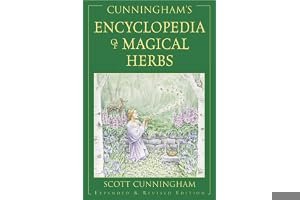
Cunningham's Encyclopedia of Magical Herbs (Llewellyn's Sourcebook Series)
Scott Cunningham
4.2
Do you work magic with herbs? Do you use them in spells, for talismans or simply use their innate powers? If you don't have Cunningham's Encyclopedia of Magical Herbs, you need to get it right away. This book has become a classic in its field. Paul Beyerl, a respected author on herbs calls it "…an essential reference book by students of herbalism and magick alike … Scott's personable charm touches every page… I highly recommend this book." And Jeanne Rose, famous author of books on herbs and developer of an herbal course says "I love books like this … It is accessible, easy to read, and with its encompassing index (all too often neglected), simple to use as well." Over 200,000 people already have this book and use it frequently.
In this edition of the book (it's expanded and revised on the 15th anniversary of original publication) you will find the magical properties and folklore of over 400 herbs! You'll also find lists of herbs based on their magical powers, their genders, their planetary rulers, and more. Perhaps the most important list is the folk name cross-reference. With that information, when a recipe calls for "bramble, " you'll know it needs blackberry. Or if the magic calls for "enebro," you'll know you that is juniper.
The main part of this book is the listings of the herbs. Each one includes names, associations, and magical attributions. Violets can be used for protection, luck, love, and more. Primrose is for protection and love. Garlic is for protection, healing, exorcism, lust, and prevention of theft.
This book is considered a classic. It is probably consulted more than any other book on this subject. If you want to learn the secrets of magical herbs, this book is a must!
…
Cover unavailable
27
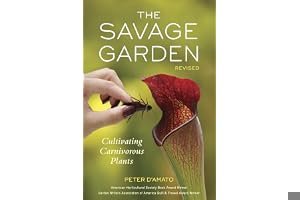
The Savage Garden: Cultivating Carnivorous Plants
Peter D'Amato
4.2
Just about everyone's familiar with the Venus flytrap...but did you know that there are pitcher plants that can-and do!-digest an entire rat? Or that there are several hundred species of carnivorous plants on our planet? Full-color photographs of the plants at work and play, plus everything you need to know to successfully grow your own Little Shop of Horrors.Awards1999 American Horticultural Society Book Award Winner ReviewsHow to get kids interested in gardening? The San Francisco Chronicle recommends The Savage Garden, "because there's nothing children like better than catching insects and feeding them to their houseplants."
…
Cover unavailable
28
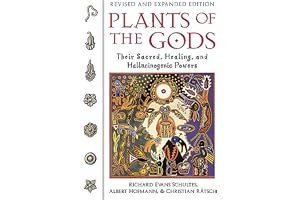
Plants of the Gods: Their Sacred, Healing, and Hallucinogenic Powers
Richard Evans Schultes, Albert Hofmann, Christian Rätsch
4.2
World-renowned anthropologist and ethnopharmacologist Christian Ratsch provides the latest scientific updates to this classic work on psychoactive flora by two eminent researchers.
• Numerous new and rare color photographs complement the completely revised and updated text.
• Explores the uses of hallucinogenic plants in shamanic rituals throughout the world.
• Cross-referenced by plant, illness, preparation, season of collection, and chemical constituents.
Three scientific titans join forces to completely revise the classic text on the ritual uses of psychoactive plants. They provide a fascinating testimony of these "plants of the gods," tracing their uses throughout the world and their significance in shaping culture and history. In the traditions of every culture, plants have been highly valued for their nourishing, healing, and transformative properties. The most powerful of those plants, which are known to transport the human mind into other dimensions of consciousness, have always been regarded as sacred. The authors detail the uses of hallucinogens in sacred shamanic rites while providing lucid explanations of the biochemistry of these plants and the cultural prayers, songs, and dances associated with them. The text is lavishly illustrated with 400 rare photographs of plants, people, ceremonies, and art related to the ritual use of the world's sacred psychoactive flora.
…
Cover unavailable
29
The Curious Garden
Peter Brown
4.2
One boy's quest for a greener world... one garden at a time.
While out exploring one day, a little boy named Liam discovers a struggling garden and decides to take care of it. As time passes, the garden spreads throughout the dark, gray city, transforming it into a lush, green world.
This is an enchanting tale with environmental themes and breathtaking illustrations that become more vibrant as the garden blooms. Red-headed Liam can also be spotted on every page, adding a clever seek-and-find element to this captivating picture book.
…
Cover unavailable
30
The Triumph of Seeds: How Grains, Nuts, Kernels, Pulses, and Pips Conquered the Plant Kingdom and Shaped Human History
Thor Hanson
4.2
As seen on PBS's American Spring LIVE, the award-winning author of Buzz and Feathers presents a natural and human history of seeds, the marvels of the plant kingdom "The genius of Hanson's fascinating, inspiring, and entertaining book stems from the fact that it is not about how all kinds of things grow from seeds; it is about the seeds themselves." --Mark Kurlansky, New York Times Book Review We live in a world of seeds. From our morning toast to the cotton in our clothes, they are quite literally the stuff and staff of life: supporting diets, economies, and civilizations around the globe. Just as the search for nutmeg and pepper drove the Age of Discovery, coffee beans fueled the Enlightenment and cottonseed sparked the Industrial Revolution. Seeds are fundamental objects of beauty, evolutionary wonders, and simple fascinations. Yet, despite their importance, seeds are often seen as commonplace, their extraordinary natural and human histories overlooked. Thanks to this stunning new book, they can be overlooked no more. This is a book of knowledge, adventure, and wonder, spun by an award-winning writer with both the charm of a fireside story-teller and the hard-won expertise of a field biologist. A fascinating scientific adventure, it is essential reading for anyone who loves to see a plant grow.
…
Cover unavailable
31
National Audubon Society Field Guide to North American Trees: Eastern Region
National Audubon Society
4.2
Tree peepers everywhere will enjoy these two guides which explore the incredible environment of our country's forests-including seasonal features, habitat, range, and lore. Nearly 700 species of trees are detailed in photographs of leaf shape, bark, flowers, fruit, and fall leaves -- all can be quickly accessed making this the ideal field guide for any time of year.
Note: the Eastern Edition generally covers states east of the Rocky Mountains, while the Western Edition covers the Rocky Mountain range and all the states to the west of it.
…
Cover unavailable
32
The Private Life of Plants: A Natural History of Plant Behaviour
David Attenborough
4.2
Based on the immensely popular six-part BBC program that aired in the United States during the fall of 1995, this book offers what writer/filmmaker David Attenborough is best known for delivering: an intimate view of the natural world wherein a multitude of miniature dramas unfold. In the program and book, both titled The Private Life of Plants, Attenborough treks through rainforests, mountain ranges, deserts, beaches, and home gardens to show us things we might never have suspected about the vegetation that surrounds us. With their extraordinary sensibility, plants compete endlessly for survival and interact with animals and insects: they can see, count, communicate, adjust position, strike, and capture. Attenborough makes the plant world a vivid place for readers, who in this book can enjoy the tour at their own pace, taking in the lively descriptions and nearly 300 full-color photos showing plants in close detail.
The author reveals to us the aspects of plants' lives that seem hidden from view, such as fighting, avoiding or exploiting predators or neighbors, and struggling to find food, increase their territories, reproduce themselves, and establish their place in the sun. Among the most amazing examples, the acacia can communicate with other acacias and repel enemies that might eat their leaves, the orchid can impersonate female wasps to attract males and ensure the spreading of its pollen, the Venus's flytrap can take other organisms captive and consume them. Covering this remarkable range of information with enthusiasm and clarity, Attenborough helps us to look anew at the vegetation on which all life depends and which has an intriguing life of its own. He has created a book sure to please the plant lover and any other reader interested in exploring the natural world.
…
Cover unavailable
33
Seeing Trees: Discover the Extraordinary Secrets of Everyday Trees
Nancy R. Hugo, Robert Llewellyn
4.2
Have you ever looked at a tree? That may sound like a silly question, but there is so much more to notice about a tree than first meets the eye. Seeing Trees celebrates seldom seen but easily observable tree traits and invites you to watch trees with the same care and sensitivity that birdwatchers watch birds. Many people, for example, are surprised to learn that oaks and maples have flowers, much less flowers that are astonishingly beautiful when viewed up close.
Focusing on widely grown trees, this captivating book describes the rewards of careful and regular tree viewing, outlines strategies for improving your observations, and describes some of the most visually interesting tree structures, including leaves, flowers, buds, leaf scars, twigs, and bark. In-depth profiles of ten familiar species—including such beloved trees as white oak, southern magnolia, white pine, and tulip poplar—show you how to recognize and understand many of their most compelling (but usually overlooked) physical features.
…
Cover unavailable
34
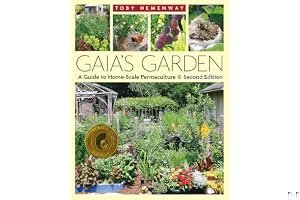
Gaia's Garden: A Guide to Home-scale Permaculture
Toby Hemenway, John Todd
4.2
Permaculture is a verbal marriage of "permanent" and "agriculture." Australian Bill Mollison pioneered its development. Key features include:
- use of compatible perennials; - non-invasive planting techniques; - emphasis on biodiversity; - specifically adaptable to local climate, landscape, and soil conditions; - highly productive output of edibles.
Now, picture your backyard as one incredibly lush garden, filled with edible flowers, bursting with fruit and berries, and carpeted with scented herbs and tangy salad greens. The visual impact is of Monet's palette, a wash of color, texture, and hue. But this is no still life. The flowers nurture endangered pollinators. Bright-featured songbirds feed on abundant berries and gather twigs for their nests.
The plants themselves are grouped in natural communities, where each species plays a role in building soil, deterring pests, storing nutrients, and luring beneficial insects. And finally, you—good ol' homo sapiens—are an integral part of the scene. Your garden tools are resting against a nearby tree, and have a slight patina of rust, because this garden requires so little maintenance. You recline into a hammock to admire your work. You have created a garden paradise.
This is no dream, but rather an ecological garden, which takes the principles of permaculture and applies them on a home-scale. There is nothing technical, intrusive, secretive, or expensive about this form of gardening. All that is required is some botanical knowledge (which is in this book) and a mindset that defines a backyard paradise as something other than a carpet of grass fed by MiracleGro.
…
Cover unavailable
35
The Orchid Thief: A True Story of Beauty and Obsession
Susan Orlean
4.2
The Orchid Thief is Susan Orlean’s tale of an amazing obsession. Determined to clone an endangered flower—the rare ghost orchid Polyrrhiza lindenii—a deeply eccentric and oddly attractive man named John Laroche leads Orlean on an unforgettable tour of America’s strange flower-selling subculture, through Florida’s swamps and beyond, along with the Seminoles who help him and the forces of justice who fight him. In the end, Orlean—and the reader—will have more respect for underdog determination and a powerful new definition of passion.
In this new edition, coming fifteen years after its initial publication and twenty years after she first met the “orchid thief,” Orlean revisits this unforgettable world, and the route by which it was brought to the screen in the film Adaptation, in a new retrospective essay.
…
Recommended by Catherine Manegold.
Catherine Manegold
Yes, this is such a fun book, all about obsession, history and botany. To a limited extent it also engages with the author’s internal experience as she acknowledges the envy she feels for people graced with this level of attachment to the world. To do this, she looks back in history – tracing the earliest orchid hunters to their roots, if you will – and then drifts among contemporary collectors who are certainly an odd and often fanatical bunch. In terms of content, this book falls almost perfectly between the first and second. It has a ton of factual material and is hugely instructive, like Ship of Gold, but also manages to focus deeply on less tangible aspects of human experience, as Griffin does. [source]
Cover unavailable
36
Tap the Magic Tree
Christie Matheson
4.2
The acclaimed interactive picture book about the changing seasons. “Like Hervé Tullet’s Press Here, Matheson’s Tap the Magic Tree proves you don’t need apps for interactivity,” praised the New York Times.
Every book needs you to turn the pages. But not every book needs you to tap it, shake it, jiggle it, or even blow it a kiss. Innovative and timeless, Tap the Magic Tree asks you to help one lonely tree change with the seasons. Now that’s interactive—and magical!
It begins with a bare brown tree. But tap that tree, turn the page, and one bright green leaf has sprouted! Tap again—one, two, three, four—and four more leaves have grown on the next page. Pat, clap, wiggle, jiggle, and see blossoms bloom, apples grow, and the leaves swirl away with the autumn breeze. The collage-and-watercolor art evokes the bright simplicity of Lois Ehlert and Eric Carle and the interactive concept will delight fans of Pat the Bunny. Combining a playful spirit and a sense of wonder about nature, Christie Matheson has created a new modern classic that is a winner in every season—and every story time!
And don't miss the follow-up, Touch the Brightest Star!
…
Cover unavailable
37
Botany for Gardeners
Brian Capon
4.2
“An outstanding and enjoyable introduction to botany, whether the reader is a gardener, or just a garden visitor.” —Bloomsbury Review
What happens inside a seed after it is planted? How are plants structured? How do plants reproduce? The answers to these and other questions about complex plant processes can be found in the bestselling Botany for Gardeners. Written in accessible language, this must-have guide allows gardeners and horticulturists to understand plants from the plant's point of view. Now in its third edition, Botany for Gardeners has now been expanded and updated, and includes an appendix on plant taxonomy, a comprehensive index, and dozens of new photos and illustrations.
…
Cover unavailable
38
From Seed to Plant
Gail Gibbons
4.2
Flowers, trees, fruits--plants are all around us, but where do they come from?
With simple language and bright illustrations, non-fiction master Gail Gibbons introduces young readers to the processes of pollination, seed formation, and germination. Important vocabulary is reinforced with accessible explanation and colorful, clear diagrams showing the parts of plants, the wide variety of seeds, and how they grow.
The book includes instructions for a seed-growing project, and a page of interesting facts about plants, seeds, and flowers. A nonfiction classic, and a perfect companion for early science lessons and curious young gardeners.
According to The Washington Post, Gail Gibbons "has taught more preschoolers and early readers about the world than any other children's writer-illustrator." Ms. Gibbons is the author of more than 100 books for young readers, including the bestselling titles From Seed to Plant and Monarch Butterfly. Her many honors include the Washington Post/Childrens Book Guild Nonfiction Award and the NSTA Outstanding Science Trade Book Award.
From Seed to Plant was included in the Common Core State Standards Appendix B.
…
Cover unavailable
39
Rosemary Gladstar's Medicinal Herbs: A Beginner's Guide
Rosemary Gladstar
4.1
Widely recognized as the godmother of modern herbalism, Rosemary Gladstar is renowned worldwide for her inspired teaching and trustworthy knowledge of healing herbs. With Medicinal Herbs: A Beginner's Guide, Gladstar offers a fresh introduction for a new generation of gardeners and natural health and self-sufficiency enthusiasts.
Thirty-three of the most common and versatile healing plants are profiled in depth to get the budding herbalist off on the right foot. Readers will learn how to grow, harvest, prepare, and use each herb. Step-by-step instructions explain how to prepare herbal teas, salves, syrups, tinctures, oils, and liniments to stock the home medicine chest.
Simple recipes explore each plant's healing qualities - aloe lotion for poison ivy, dandelion-burdock tincture for sluggish digestion, and lavender-lemon balm tea for stress relief. Gladstar shows how easy it is to make safe, all-natural, low-cost healing remedies for common ailments.
…
Cover unavailable
40
Pharmako/Poeia: Plant Powers, Poisons, and Herbcraft
Dale Pendell, Gary Snyder
4.1
In Pharmako/Poeia, Dale Pendell offers a mesmerizing guide to psychoactive plants, from their pharmacological roots to the literary offshoots. "This is a book," writes Gary Snyder, "about danger: dangerous knowledge, even more dangerous ignorance." Against the greater danger, ignorance, Pendell strikes a formidable blow, as he proves himself a wise and witty guide to our plant teachers, their powers and their poisons.
"Pharmako/Poeia is an epic poem on plant humours, an abstruse alchemic treatise, an experiential narrative jigsaw puzzle, a hip and learned wild-nature reference text, a comic paen to cosmic consciousness, an ecological handbook, a dried-herb pastiche, a counterculture encyclopedia of ancient fact and lore." -Allen Ginsberg poet
"Dale Pendell reactivates the ancient connection between the bardic poet and the shaman." -Terence McKenna author of True Hallucinations
…
Cover unavailable
41
The Secret Teachings of Plants: The Intelligence of the Heart in the Direct Perception of Nature
Stephen Harrod Buhner
4.1
Reveals the use of direct perception in understanding Nature, medicinal plants, and the healing of human disease
• Explores the techniques used by indigenous and Western peoples to learn directly from the plants themselves, including those of Henry David Thoreau, Goethe, and Masanobu Fukuoka, author of The One Straw Revolution
• Contains leading-edge information on the heart as an organ of perception
All ancient and indigenous peoples insisted their knowledge of plant medicines came from the plants themselves and not through trial-and-error experimentation. Less well known is that many Western peoples made this same assertion. There are, in fact, two modes of cognition available to all human beings--the brain-based linear and the heart-based holistic. The heart-centered mode of perception can be exceptionally accurate and detailed in its information gathering capacities if, as indigenous and ancient peoples asserted, the heart’s ability as an organ of perception is developed. Author Stephen Harrod Buhner explores this second mode of perception in great detail through the work of numerous remarkable people, from Luther Burbank, who cultivated the majority of food plants we now take for granted, to the great German poet and scientist Goethe and his studies of the metamorphosis of plants. Buhner explores the commonalities among these individuals in their approach to learning from the plant world and outlines the specific steps involved. Readers will gain the tools necessary to gather information directly from the heart of Nature, to directly learn the medicinal uses of plants, to engage in diagnosis of disease, and to understand the soul-making process that such deep connection with the world engenders.
…
Cover unavailable
42
The Forager's Harvest: A Guide to Identifying, Harvesting, and Preparing Edible Wild Plants
Samuel Thayer
4.1
A guide to 32 of the best and most common edible wild plants in North America, with detailed information on how to identify them, where they are found, how and when they are harvested, which parts are used, how they are prepared, as well as their culinary use, ecology, conservation, and cultural history.
Cover unavailable
43
All New Square Foot Gardening
Mel Bartholomew
4.1
Do you know what the best feature is in All New Square Foot Gardening? Sure, there are ten new features in this all-new, updated book. Sure, it's even simpler than it was before. Of course, you don't have to worry about fertilizer or poor soil ever again because you'll be growing above the ground. However, the best feature is that anyone, anywhere can enjoy a square foot garden - children, adults with limited mobility, and even complete novices can achieve spectacular results.
But, let's get back to the ten improvements. You're going to love them:
1. New Location - Move your garden closer to your house by eliminating single-row gardening. Square foot gardens need just 20% of the space of a traditional garden.
2. New Direction - Locate your garden on top of existing soil. Forget about pH soil tests, double-digging (who enjoys that?), or those never-ending soil improvements.
3. New Soil - The new "Mel's Mix" is the perfect growing mix. We give you the recipe, and best of all, you can even buy the different types of compost needed.
4. New Depth - You only need to prepare a SFG box to a depth of 6 inches! It's true - the majority of plants develop just fine when grown at this depth.
5. No Fertilizer - The all new SFG does not need any fertilizer - ever! If you start with the perfect soil mix, then you don't need to add fertilizer.
6. New Boxes - The new method uses bottomless boxes placed above ground. We show you how to build your own (with step-by-step photos).
7. New Aisles - The ideal gardening aisle width is about three to four feet. That makes it even easier to kneel, work, and harvest.
8. New Grids - Prominent and permanent grids added to your SFG box help you visualize your planting squares and properly space them for maximum harvest.
9. New Seed-Saving Idea - The old-fashioned way advocates planting many seeds and then thinning the extras (that means pulling them up). The new method means planting a pinch - literally two or three seeds - per planting hole.
10. Tabletop Gardens - The new boxes are so much smaller and lighter (only 6 inches of soil, remember?), you can add a plywood bottom to make them portable.
Of course, that's not all. We've also included simple, easy-to-follow instructions using lots of photos and illustrations. You're going to love it!
…
Cover unavailable
44
Miss Rumphius
Barbara Cooney
4.1
A beloved classic—written by a beloved Caldecott winner—is lovelier than ever!
Barbara Cooney's story of Alice Rumphius, who longed to travel the world, live in a house by the sea, and do something to make the world more beautiful, has a timeless quality that resonates with each new generation. The countless lupines that bloom along the coast of Maine are the legacy of the real Miss Rumphius, the Lupine Lady, who scattered lupine seeds everywhere she went. Miss Rumphius received the American Book Award in the year of publication.
To celebrate the thirtieth anniversary of two-time Caldecott winner Barbara Cooney's best-loved book, the illustrations have been reoriginated, going back to the original art to ensure state-of-the-art reproduction of Cooney's exquisite artwork. The art for Miss Rumphius has a permanent home in the Bowdoin College Museum of Art.
…
Recommended by Richard Reynolds.
Richard Reynolds
Yes, I’d love to say that I read this as a child and it’s stayed with me every since, but that would be a lie. I was told about it by an American who had read my website. He actually went to the trouble to send it to me through the post. Although it’s not very big in the UK it’s very well known in the States. The book is the life story of a little girl who grows up and travels around the world. And everywhere she goes she sows lupins. As an old lady she is lying in her bed and she looks outside and sees that the countryside is covered in beautiful lupins. I encourage parents to read it to their young children to inspire them to get out there and take an active role in caring for and creating their local environment. I grew up with a trail of biscuits leading to a wicked witch’s cottage in Hansel and Gretel. In some ways this is the positive version of that. [source]
Cover unavailable
45
The Magic School Bus Plants Seeds: A Book About How Living Things Grow
Joanna Cole, Bruce Degen, John Speirs
4.1
Ms. Frizzle's class is growing a beautiful garden. But, Phoebe's plot is empty. Her flowers are back at her old school! So, the class climbs aboard the Magic School Bus. And, of course, the kids don't only go back to Phoebe's school, but they go inside one of Phoebe's flowers! Follow the kids' adventure and learn how living things grow.
Cover unavailable
46
Botanicum (Welcome to the Museum)
Author
4.1
The 2016 offering from Big Picture Press's Welcome to the Museum series, Botanicum is a stunningly curated guide to plant life. With artwork from Katie Scott of Animalium fame, Botanicum gives readers the experience of a fascinating exhibition from the pages of a beautiful book. From perennials to bulbs to tropical exotica, Botanicum is a wonderful feast of botanical knowledge complete with superb cross sections of how plants work.
…
Cover unavailable
47
Growing Vegetable Soup
Lois Ehlert
4.1
"Dad says we are going to grow vegetable soup." So begins Lois Ehlert’s bright, bold picture book about vegetable gardening for the very young. The necessary tools are pictured and labeled, as are the seeds (green bean, pea, corn, zucchini squash, and carrot). Then the real gardening happens . . . planting, weeding, harvesting, washing, chopping, and cooking! In the end? "It was the best soup ever." Ehlert’s simple, colorful cut-paper-style illustrations are child-friendly, as is the big black type. A recipe for vegetable soup tops it all off!
…
Cover unavailable
48
The Road Not Taken and Other Poems
Robert Frost
4.1
"Two roads diverged in a wood, and I-- I took the one less traveled by, And that has made all the difference."
These deceptively simple lines from the title poem of this collection suggest Robert Frost at his most representative: the language is simple, clear and colloquial, yet dense with meaning and wider significance. Drawing upon everyday incidents, common situations and rural imagery, Frost fashioned poetry of great lyrical beauty and potent symbolism.
Originally published in 1916 under the title Mountain Interval.
…
Cover unavailable
49
The Tree Lady: The True Story of How One Tree-Loving Woman Changed a City Forever
H. Joseph Hopkins, Jill McElmurry
4.1
Unearth the true story of green-thumbed pioneer and activist Kate Sessions, who helped San Diego grow from a dry desert town into a lush, leafy city known for its gorgeous parks and gardens.
Katherine Olivia Sessions never thought she’d live in a place without trees. After all, Kate grew up among the towering pines and redwoods of Northern California. But after becoming the first woman to graduate from the University of California with a degree in science, she took a job as a teacher far south in the dry desert town of San Diego. Where there were almost no trees.
Kate decided that San Diego needed trees more than anything else. So this trailblazing young woman singlehandedly started a massive movement that transformed the town into the green, garden-filled oasis it is today. Now, more than 100 years after Kate first arrived in San Diego, her gorgeous gardens and parks can be found all over the city.
Part fascinating biography, part inspirational story, this moving picture book about following your dreams, using your talents, and staying strong in the face of adversity is sure to resonate with readers young and old.
…
Cover unavailable
50
Rosemary Gladstar's Herbal Recipes for Vibrant Health: 175 Teas, Tonics, Oils, Salves, Tinctures, and Other Natural Remedies for the Entire Family
Rosemary Gladstar
4.1
Promote vibrant health and radiant beauty, soothe everyday ailments, and ease persistent stress with these simple, natural cures for everything from dry skin and infant colic to cold symptoms and insomnia. Renowned herbalist Rosemary Gladstar provides 175 proven therapies and herbal remedies that are easy to prepare and safe enough for children. Offering a potent and effective alternative to commercial pharmaceuticals, Gladstar will inspire you to nurture yourself and those you love with nature’s healing herbs.
…
Cover unavailable
51
How Not to Kill Your Houseplant: Survival Tips for the Horticulturally Challenged
Veronica Peerless
4.1
Can't keep a houseplant alive, no matter how hard you try and how good your intentions are? This is the book for you. You need this book. Give plants a chance.
Help your plant live with survival tips and learn the simple ways not to kill your plants.With over 50 different types of popular houseplants, How Not to Kill Your Houseplant summarizes what type of care your plants do (or don't) need. Be on the lookout for warning signs of a sick plant, from brown spots to crispy leaves, and make sure you take the proper action to rescue your plant.
Learn the basics of horticulture, from watering your plant to what kind of soil it should be placed in to how much light it needs every day to if a certain type of plant will thrive in your living space. Find out how to keep a cactus alive, where to hang air plants, and how to repot succulents.
Full of helpful tips, pictures, and informational panels, How Not to Kill Your Houseplant will turn your home into a beautiful greenhouse of healthy, happy plants.
…
Cover unavailable
52
Newcomb’s Wildflower Guide
Lawrence Newcomb
4.1
An ingenious key system for quick, positive field identification of wildflowers, flowering shrubs and vines in Northeastern and North-central North America. Amateur and expert alike can quickly and accurately identify almost any wildflower using Lawrence Newcomb's system, which is based on natural structural features that are easily visible even to the untrained eye. Every time you see an unknown plant, ask yourself the same five questions (related to the type of plant and the structure of its petals and leaves), and you will be directed to the page on which the plant can be found. Beautiful illustrations make confirmation easy.
…
Cover unavailable
53
Plants Can't Sit Still
Rebecca E. Hirsch, Mia Posada
4.1
Have you ever seen a plant move on its own? Plants might not walk, but they definitely don't sit still! Discover the many ways plants (and their seeds) move in this fascinating picture book.
Cover unavailable
54
Seed to Seed: Seed Saving and Growing Techniques for Vegetable Gardeners
Suzanne Ashworth, David Cavagnaro, Kent Whealy
4.1
Seed to Seed is a complete seed-saving guide that describes specific techniques for saving the seeds of 160 different vegetables. This book contains detailed information about each vegetable, including its botanical classification, flower structure and means of pollination, required population size, isolation distance, techniques for caging or hand-pollination, and also the proper methods for harvesting, drying, cleaning, and storing the seeds.
Seed to Seed is widely acknowledged as the best guide available for home gardeners to learn effective ways to produce and store seeds on a small scale. The author has grown seed crops of every vegetable featured in the book, and has thoroughly researched and tested all of the techniques she recommends for the home garden.
This newly updated and greatly expanded Second Edition includes additional information about how to start each vegetable from seed, which has turned the book into a complete growing guide. Local knowledge about seed starting techniques for each vegetable has been shared by expert gardeners from seven regions of the United States-Northeast, Mid-Atlantic, Southeast/Gulf Coast, Midwest, Southwest, Central West Coast, and Northwest.
…
Cover unavailable
55
The Lost Language of Plants: The Ecological Importance of Plant Medicine to Life on Earth
Stephen Harrod Buhner
4.1
This could be the most important book you will read this year. Around the office at Chelsea Green it is referred to as the "pharmaceutical Silent Spring." Well-known author, teacher, lecturer, and herbalist Stephen Harrod Buhner has produced a book that is certain to generate controversy. It consists of three parts:
1. A critique of technological medicine, and especially the dangers to the environment posed by pharmaceuticals and other synthetic substances that people use in connection with health care and personal body care.
2. A new look at Gaia Theory, including an explanation that plants are the original chemistries of Gaia and those phytochemistries are the fundamental communications network for the Earth's ecosystems.
3. Extensive documentation of how plants communicate their healing qualities to humans and other animals. Western culture has obliterated most people's capacity to perceive these messages, but this book also contains valuable information on how we can restore our faculties of perception.
The book will affect readers on rational and emotional planes. It is grounded in both a New Age spiritual sensibility and hard science. While some of the author's claims may strike traditional thinkers as outlandish, Buhner presents his arguments with such authority and documentation that the scientific underpinnings, however unconventional, are completely credible.
The overall impact is a powerful, eye-opening expos' of the threat that our allopathic Western medical system, in combination with our unquestioning faith in science and technology, poses to the primary life-support systems of the planet. At a time when we are preoccupied with the terrorist attacks and the possibility of biological warfare, perhaps it is time to listen to the planet. This book is essential reading for anyone concerned about the state of the environment, the state of health care, and our cultural sanity.
A penetrating, page-turning tour of a post-human Earth
In The World Without Us, Alan Weisman offers an utterly original approach to questions of humanity's impact on the planet: he asks us to envision our Earth, without us. In this far-reaching narrative, Weisman explains how our massive infrastructure would collapse and finally vanish without human presence; which everyday items may become immortalized as fossils; how copper pipes and wiring would be crushed into mere seams of reddish rock; why some of our earliest buildings might be the last architecture left; and how plastic, bronze sculpture, radio waves, and some man-made molecules may be our most lasting gifts to the universe.
The World Without Us reveals how, just days after humans disappear, floods in New York's subways would start eroding the city's foundations, and how, as the world's cities crumble, asphalt jungles would give way to real ones. It describes the distinct ways that organic and chemically treated farms would revert to wild, how billions more birds would flourish, and how cockroaches in unheated cities would perish without us. Drawing on the expertise of engineers, atmospheric scientists, art conservators, zoologists, oil refiners, marine biologists, astrophysicists, religious leaders from rabbis to the Dalai Lama, and paleontologists—who describe a prehuman world inhabited by megafauna like giant sloths that stood taller than mammoths—Weisman illustrates what the planet might be like today, if not for us.
From places already devoid of humans (a last fragment of primeval European forest; the Korean DMZ; Chernobyl), Weisman reveals Earth's tremendous capacity for self-healing. As he shows which human devastations are indelible, and which examples of our highest art and culture would endure longest, Weisman's narrative ultimately drives toward a radical but persuasive solution that needn't depend on our demise. It is narrative nonfiction at its finest, and in posing an irresistible concept with both gravity and a highly readable touch, it looks deeply at our effects on the planet in a way that no other book has.
Today is World Book Day, a wonderful opportunity to address this #ChallengeRichard sent in by Mike Gonzalez of New Jersey: Make a list of your top 65 books to read in a lifetime. [source]
Cover unavailable
57
Practical House Plant Book: Choose the best, display creatively, nurture and care, 175 plant profiles
Zia Allaway and Fran Bailey
4.1
Twelve inspiring projects, plus 200 in-depth plant profiles with detailed useful information and care instructions to help you cultivate and care for your houseplants.
Learn how to choose which plants to use where, care for your houseplants to keep them healthy, and use plants to best effect in your home, with trusted advice, creative inspiration, strong visual aesthetic, and practical step-by-step detail. Two hundred plant profiles provide information and care instructions for a wide variety of plants, including ferns, orchids, and succulents, while a dozen step-by-step photographic projects offer exciting ideas for using plants to decorate your home or greenhouse--from eye-catching terrariums to a living succulent wall to a floating kokedama "string garden." With information on plant care, propagation, pests and diseases, pruning, and problem-solving, The Practical Houseplant Book is the essential guide for indoor gardeners.
…
Cover unavailable
58
Wild at Home: How to style and care for beautiful plants
Hilton Carter
4.1
Make your home a healthier and more beautiful place to be with Hilton Carter’s inspirational ideas.
"Hilton Carter's love for plants is infectious... His lush and exuberant displays are inspiring reminders that plants can be so much more than neat little containers on a window sill." Grace Bonney, Founder and Editor-in-Chief, Design*Sponge
Take a tour through Hilton’s own apartment and other lush spaces, filled with a huge array of thriving plants, and learn all you need to know to create your own urban jungle. As the owner of over 200 plants, Hilton feels strongly about the role of plants in one’s home—not just for the beauty they add, but for health benefits as well: ‘having plants in your home not only adds life, but changes the airflow throughout. It’s also a key design element when styling your place. For me, it wasn’t about just having greenery, but having the right variety of greenery. I like to see the different textures of foliage all grouped together. You take a fiddle leaf fig and sandwich it between a birds of paradise and a monstera and…. yes!’ You will be armed with the know-how you need to care for your plants, where to place them, how to propagate, how to find the right pot, and much more, and most importantly, how to arrange them so that they look their best. Combine sizes and leaf shapes to stunning effect, grow your own succulents from leaf cuttings, create your own air plant display, and more.
…
Cover unavailable
59
Red Leaf, Yellow Leaf
Lois Ehlert
4.1
Lois Ehlert uses watercolor collage and pieces of actual seeds, fabric, wire, and roots in this innovative and rich introduction to the life of a tree. A special glossary explains how roots absorb nutrients, what photosynthesis is, how sap circulates, and other facts about trees. “Children will beg to share this book over and over.”--American Bookseller
Cover unavailable
60
Modern Herbal Dispensatory: A Medicine-Making Guide
Thomas Easley and Steven Horne
4.1
This comprehensive, full-color guide provides detailed, easy-to-follow instructions for making and using approximately 250 herbal medicines at home, including practical tips and numerous effective formulas developed and tested by the authors, both expert herbalists with years of experience. Readers who appreciate the health-giving properties of herbal medicines but are discouraged by the high price of commercial products can now make their own preparations for a fraction of the cost. The authors tell you everything you need to know about harvesting, preparing, and administering herbs in many different forms, including fresh, bulk dried herbs, capsules, extracts in water, alcohol, glycerin, vinegar and oil, and even preparations like essential oils and flower essences. The book also covers topical applications of herbs as salves, lotions, poultices, tooth powders, ear drops, and more, and includes an extensive chapter on herbal hydrotherapy. "The Modern Herbal Dispensary "explains why different preparations of the same herb will obtain better results, demonstrating how capsules, teas, tinctures, or glycerites of the same plant will not have exactly the same effect on the body. Leading herbalists Thomas Easley and Steven Horne have tested and proven the herbal formulas they offer, along with suggestions for treating more than one hundred illnesses. They lay out the principles of herbal formulation and also provide instructions on how to prepare single herbs, a procedure that has been largely ignored in other references. More comprehensive than any other guide, thoroughly researched, beautifully illustrated, and presented with ease of use in mind, this book will take its place as the premier reference for those who want to produce all the herbal remedies they need, and to save money in the process. Table of Contents Introduction--Results: The Name of the Game Chapter One--Preparations and Applications: Understanding the Many Ways of Preparing and Using Herbs Chapter Two--Fresh Herbs: Growing, Harvesting, and Using Fresh Plants Chapter Three--Dried Herbs: Using Bulk Herbs, Capsules, and Tablets Chapter Four--Extracting Herbs: Equipment, Raw Materials, and Potency Chapter Five--Liquid Preparations: Basic Extraction Techniques for Water, Alcohol, Glycerin, and Oil Chapter Six--Topical Preparations: Making Liniments, Lotions, Butters, Balms, and Salves Chapter Seven--Herbal Hydrotherapy: Healing with Enemas, Douches, Baths, and Soaks Chapter Eight--Advanced Techniques: Percolation Extracts, Dried Extracts, and Chinese Methods Chapter Nine--Aromatherapy and Homeopathy: Essential Oils, Homeopathic Preparations, and Flower Essences Chapter Ten--Formulas and Dosages: Creating Formulas and Determining How Much to Take Resources, Part One--Sample Formulas Resources, Part Two--Single Herbs Appendix One: Herbal Constituents and Solvents Appendix Two: Sources for Materials"
…
Cover unavailable
61
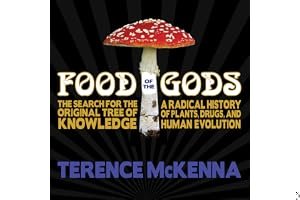
Food of the Gods: The Search for the Original Tree of Knowledge
Terence McKenna
4.1
s/t: A Radical History of Plants, Drugs & Human Evolution For the first time in paperback, the critically acclaimed counterculture manifesto by the wildly popular McKenna. "Deserves to be a modern classic on mind-altering drugs & hallucinogens."--The Washington Post. Photos & illustrations.
Cover unavailable
62
Western Garden Book: More than 8,000 Plants - The Right Plants for Your Climate - Tips from Western Garden Experts
Editors of Sunset Books and Kathleen Norris Brenzel
4.1
Gardeners throughout the region will be welcoming a thoroughly updated and fresh-looking 8th edition of the "bible of Western gardening." With a new, easy-to-read design, more plant photography, larger illustrations, and more than 8,000 plant listings--500 of them new--it's THE essential book for gardeners in the Western states. What plants to grow, how to nurture them, and where they do the very best--it's all here. You'll also find updated information on the Western climate zones, 30 Plant Selection Guides, plus a Practical Guide to Gardening with basic advice on plant care and essential gardening techniques. New plant lists reflect current trends, such as Mediterranean gardening and easy-care plants for beginners. For more than 70 years, Sunset has been the source for no-nonsense gardening advice, easy-to-follow diagrams, and encyclopedic knowledge of plant varieties. In this edition, we introduce an exciting new feature: gardening tips from well-known plant experts throughout the West. The Western Garden Book has never been better! Features:
8th Edition of this perennial bestseller
More than 8,000 plant listings, 500 new, keyed to climate zones
30 Plant Selection Guides to find the perfect plant for every situation
Special contributions from 40 eminent Western garden experts
Introduction by Sunset garden editor Kathleen N. Brenzel, with a photographic tour of gardens that are truly the `Best of the West' gardens
…
Cover unavailable
63
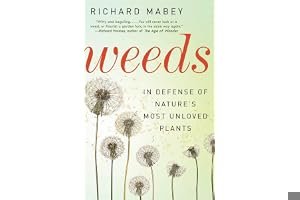
Weeds: How Vagabond Plants Gatecrashed Civilisation and Changed the Way We Think About Nature
Richard Mabe
4.1
The true story—and true glories—of the plants we love to hate
From dandelions to crabgrass, stinging nettles to poison ivy, weeds are familiar, pervasive, widely despised, and seemingly invincible. How did they come to be the villains of the natural world? And why can the same plant be considered beautiful in some places but be deemed a menace in others?
In Weeds, renowned nature writer Richard Mabey embarks on an engaging journey with the verve and historical breadth of Michael Pollan. Weaving together the insights of botanists, gardeners, artists, and writers with his own travels and lifelong fascination, Mabey shows how these "botanical thugs" can destroy ecosystems but also can restore war zones and derelict cities; he reveals how weeds have been portrayed, from the "thorns and thistles" of Genesis to Shakespeare, Walden, and Invasion of the Body Snatchers; and he explains how kudzu overtook the American South, how poppies sprang up in First World War battlefields, and how "American weed" replaced the forests of Vietnam ravaged by Agent Orange.
Hailed as "a profound and sympathetic meditation on weeds in relation to human beings" (Sunday Times), Weeds shows how useful these unloved plants can be, from serving as the first crops and medicines, to bur-dock inspiring the invention of Velcro, to cow parsley becoming the latest fashionable wedding adornment. Mabey argues that we have caused plants to become weeds through our reckless treatment of the earth, and he delivers a provocative defense of the plants we love to hate.
…
Cover unavailable
64
The Emerald Planet: How Plants Changed Earth's History
David Beerling
4.1
Global warming is contentious and difficult to measure, even among the majority of scientists who agree that it is taking place. Will temperatures rise by 2C or 8C over the next hundred years? Will sea levels rise by 2 or 30 feet? The only way that we can accurately answer questions like these is by looking into the distant past, for a comparison with the world long before the rise of mankind. We may currently believe that atmospheric shifts, like global warming, result from our impact on the planet, but the earth's atmosphere has been dramatically shifting since its creation. Drawing on evidence from fossil plants and animals, computer models of the atmosphere, and experimental studies, David Beerling reveals the crucial role that plants have played in determining atmospheric change--and hence the conditions on the planet we know today-- something that has often been overlooked amidst the preoccuputations with dinosaur bones and animal fossils. "Beerling uses evidence from the plant fossil record (mutant spores, tree stumps from the Artic and Antarctic, growth rings) to reconstruct past climates and to help explain mass extinctions. Too often this evidence has been disregarded, but Beerling gives it its due, and then some."--BioScience
…
Recommended by Andrew Scott and Jonathan Silvertown.
Beerling clearly shows that plants shaped the world in which we live and played a more important role on the evolution of our planet that is often acknowledged. [source]
Jonathan Silvertown
The Emerald Planet is a serious talking to about why plants must not be ignored. [source]
Cover unavailable
65
Second Nature: A Gardener's Education
Michael Pollan
4.1
This is an account of one man's experience in his garden. The book invites an exploration of unexamined feelings about nature and the place of society in the landscape, and what gardening has to teach about the troubled borders between nature and culture.
Cover unavailable
66
Animal, Vegetable, Miracle: A Year of Food Life
Barbara Kingsolver
4.1
Author Barbara Kingsolver and her family abandoned the industrial-food pipeline to live a rural life—vowing that, for one year, they'd only buy food raised in their own neighborhood, grow it themselves, or learn to live without it. Part memoir, part journalistic investigation, Animal, Vegetable, Miracle is an enthralling narrative that will open your eyes in a hundred new ways to an old truth: You are what you eat.
…
Cover unavailable
67
Mycelium Running: How Mushrooms Can Help Save the World
Paul Stamets
4.1
Mycelium Running is a manual for the mycological rescue of the planet. That’s right: growing more mushrooms may be the best thing we can do to save the environment, and in this groundbreaking text from mushroom expert Paul Stamets, you’ll find out how.
The basic science goes like this: Microscopic cells called “mycelium”--the fruit of which are mushrooms--recycle carbon, nitrogen, and other essential elements as they break down plant and animal debris in the creation of rich new soil. What Stamets has discovered is that we can capitalize on mycelium’s digestive power and target it to decompose toxic wastes and pollutants (mycoremediation), catch and reduce silt from streambeds and pathogens from agricultural watersheds (mycofiltration), control insect populations (mycopesticides), and generally enhance the health of our forests and gardens (mycoforestry and myco-gardening).
In this comprehensive guide, you’ll find chapters detailing each of these four exciting branches of what Stamets has coined “mycorestoration,” as well as chapters on the medicinal and nutritional properties of mushrooms, inoculation methods, log and stump culture, and species selection for various environmental purposes. Heavily referenced and beautifully illustrated, this book is destined to be a classic reference for bemushroomed generations to come.
…
Cover unavailable
68
The Wild Trees: A Story of Passion and Daring
Richard Preston
4.1
From the #1 bestselling author of The Hot Zone comes an amazing account of scientific and spiritual passion for the tallest trees in the world, the startling biosystem of Rthe canopy, S and those who are committed to the preservation of this astonishing and largely unknown world.
Cover unavailable
69
The Cabaret of Plants: Forty Thousand Years of Plant Life and the Human Imagination
Richard Mabey
4.1
The Cabaret of Plants is a masterful, globe-trotting exploration of the relationship between humans and the kingdom of plants by the renowned naturalist Richard Mabey.
A rich, sweeping, and wonderfully readable work of botanical history, The Cabaret of Plants explores dozens of plant species that for millennia have challenged our imaginations, awoken our wonder, and upturned our ideas about history, science, beauty, and belief. Going back to the beginnings of human history, Mabey shows how flowers, trees, and plants have been central to human experience not just as sources of food and medicine but as objects of worship, actors in creation myths, and symbols of war and peace, life and death.
Writing in a celebrated style that the Economist calls “delightful and casually learned,” Mabey takes readers from the Himalayas to Madagascar to the Amazon to our own backyards. He ranges through the work of writers, artists, and scientists such as da Vinci, Keats, Darwin, and van Gogh and across nearly 40,000 years of human history: Ice Age images of plant life in ancient cave art and the earliest representations of the Garden of Eden; Newton’s apple and gravity, Priestley’s sprig of mint and photosynthesis, and Wordsworth’s daffodils; the history of cultivated plants such as maize, ginseng, and cotton; and the ways the sturdy oak became the symbol of British nationhood and the giant sequoia came to epitomize the spirit of America.
Complemented by dozens of full-color illustrations, The Cabaret of Plants is the magnum opus of a great naturalist and an extraordinary exploration of the deeply interwined history of humans and the natural world.
…
Cover unavailable
70
Edible Wild Plants: A North American Field Guide to Over 200 Natural Foods
Thomas Elias
4.1
“Beautiful color photographs . . . temptingly arranged.”—The Library Letter
Planning an outdoor adventure? Make sure to consult this information-packed and photo-filled North American field guide—arranged by season and region—before you go!
Already a huge success in previous editions, this must-have field guide now features a fresh new cover, as well as nearly 400 color photos and detailed information on more than 200 species of edible plants all across North America.
With all the plants conveniently organized by season, enthusiasts will find it very simple to locate and identify their desired ingredients. Each entry includes images, plus facts on the plant’s habitat, physical properties, harvesting, preparation, and poisonous look-alikes. The introduction contains tempting recipes and there’s a quick-reference seasonal key for each plant.
…
Cover unavailable
71
The Herbal Medicine-Maker's Handbook: A Home Manual
James Green
4.1
THE HERBAL MEDICINE-MAKER'¬?S HANDBOOK is an entertaining compilation of natural home remedies written by one of the great herbalists, James Green, author of the best-selling THE MALE HERBAL. Writing in a delightfully personal and down-home style, Green emphasizes the point that herbal medicine-making is fundamental to every culture on the planet and is accessible to everyone. So, first head into the garden and learn to harvest your own herbs, and then head into your kitchen and whip up a batch of raspberry cough syrup, or perhaps a soothing elixir to erase the daily stresses of modern life.
…
Cover unavailable
72
The Language of Flowers
Vanessa Diffenbaugh
4.1
A mesmerizing, moving, and elegantly written debut novel, The Language of Flowers beautifully weaves past and present, creating a vivid portrait of an unforgettable woman whose gift for flowers helps her change the lives of others even as she struggles to overcome her own troubled past.
The Victorian language of flowers was used to convey romantic expressions: honeysuckle for devotion, asters for patience, and red roses for love. But for Victoria Jones, it's been more useful in communicating grief, mistrust, and solitude. After a childhood spent in the foster-care system, she is unable to get close to anybody, and her only connection to the world is through flowers and their meanings.
Now eighteen and emancipated from the system, Victoria has nowhere to go and sleeps in a public park, where she plants a small garden of her own. Soon a local florist discovers her talents, and Victoria realizes she has a gift for helping others through the flowers she chooses for them. But a mysterious vendor at the flower market has her questioning what's been missing in her life, and when she's forced to confront a painful secret from her past, she must decide whether it's worth risking everything for a second chance at happiness.
…
Cover unavailable
73
The Invention of Nature: Alexander von Humboldt's New World
Andrea Wulf
4.1
The acclaimed author of Founding Gardeners reveals the forgotten life of Alexander von Humboldt, the visionary German naturalist whose ideas changed the way we see the natural world—and in the process created modern environmentalism.
Alexander von Humboldt (1769 – 1859) was an intrepid explorer and the most famous scientist of his age. In North America, his name still graces four counties, thirteen towns, a river, parks, bays, lakes, and mountains. His restless life was packed with adventure and discovery, whether he was climbing the highest volcanoes in the world or racing through anthrax-infected Siberia or translating his research into bestselling publications that changed science and thinking. Among Humboldt’s most revolutionary ideas was a radical vision of nature, that it is a complex and interconnected global force that does not exist for the use of humankind alone.
Now Andrea Wulf brings the man and his achievements back into focus: his daring expeditions and investigation of wild environments around the world and his discoveries of similarities between climate and vegetation zones on different continents. She also discusses his prediction of human-induced climate change, his remarkable ability to fashion poetic narrative out of scientific observation, and his relationships with iconic figures such as Simón Bolívar and Thomas Jefferson. Wulf examines how Humboldt’s writings inspired other naturalists and poets such as Darwin, Wordsworth, and Goethe, and she makes the compelling case that it was Humboldt’s influence that led John Muir to his ideas of natural preservation and that shaped Thoreau’s Walden.
With this brilliantly researched and compellingly written book, Andrea Wulf shows the myriad fundamental ways in which Humboldt created our understanding of the natural world, and she champions a renewed interest in this vital and lost player in environmental history and science.
…
Cover unavailable
74
The One-Straw Revolution
Masanobu Fukuoka
4.1
Fukuoka demonstrates how the way we look at farming influences the way we look at health, the school, nature, nutrition, spiritual health and life itself. He joins the healing of the land to the process of purifying the human spirit and proposes a way of life and a way of farming in which such healing can take place.
Cover unavailable
75
The Tree: A Natural History of What Trees Are, How They Live & Why They Matter
Colin Tudge
4.0
Cover unavailable
76
Planting in a Post-Wild World: Designing Plant Communities for Resilient Landscapes
Thomas Rainer
4.0
“As practical as it is poetic. . . . an optimistic call to action.” —Chicago Tribune
Over time, with industrialization and urban sprawl, we have driven nature out of our neighborhoods and cities. But we can invite it back by designing landscapes that look and function more like they do in the wild: robust, diverse, and visually harmonious. Planting in a Post-Wild World by Thomas Rainer and Claudia West is an inspiring call to action dedicated to the idea of a new nature—a hybrid of both the wild and the cultivated—that can flourish in our cities and suburbs. This is both a post-wild manifesto and practical guide that describes how to incorporate and layer plants into plant communities to create an environment that is reflective of natural systems and thrives within our built world.
…
Cover unavailable
77
Tops & Bottoms
Janet Stevens
4.0
Hare solves his family’s problems by tricking rich and lazy Bear in this funny, energetic version of an old slave story. With roots in American slave tales, Tops & Bottoms celebrates the trickster tradition of using one’s wits to overcome hardship. “As usual, Stevens’ animal characters, bold and colorful, are delightful. . . . It’s all wonderful fun, and the book opens, fittingly, from top to bottom instead of from side to side, making it perfect for story-time sharing.”--Booklist This title has been selected as a Common Core Text Exemplar (Grades 2-3, Stories)
…
Cover unavailable
78
Fifty Plants That Changed the Course of History
Bill Laws
4.0
The fascinating stories of the plants that changed civilizations.
Fifty Plants that Changed the Course of History is a beautifully presented guide to the plants that have had the greatest impact on human civilization. Entries feature a description of the plant, its botanical name, its native range and its primary functions -- edible, medicinal, commercial or practical. Concise text is highlighted by elegant botanical drawings, paintings and photographs as well as insightful quotes.
Many of the plants are well known, such as rice, tea, cotton, rubber, wheat, sugarcane, tobacco, wine grapes and corn. However, there are also many whose stories are less known. These history-changing plants include:
Agave, used to make sisal, poison arrows, bullets, tequila and surgical thread Pineapple, which influenced the construction of greenhouses and conservatories Hemp, used for hangman's rope, sustainable plastics, the Declaration of Independence and Levi's jeans Coconut, used for coir fiber, soap, margarine, cream, sterile IV drips and coagulants Eucalyptus, used in mouthwash, diuretics, vitamins, honey, underwear and fire-resistant uniforms Sweet pea, which Gregor Mendel used in his research on genetic heredity White mulberry, used to make silk English oak, used for fire-resistant structures, dyes, leather tanning, charcoal, casks and ships White willow, used in the manufacture of aspirin, cricket bats, hot-air balloon baskets and coffins This attractive reference provides an innovative perspective on both botanical and human history.
…
Cover unavailable
79
The Brother Gardeners: Botany, Empire and the Birth of an Obsession
Andrea Wulf
4.0
One January morning in 1734, cloth merchant Peter Collinson hurried down to the docks at London’s Custom House to collect cargo just arrived from John Bartram, his new contact in the American colonies. But it was not reels of wool or bales of cotton that awaited him, but plants and seeds…
Over the next forty years, Bartram would send hundreds of American species to England, where Collinson was one of a handful of men who would foster a national obsession and change the gardens of Britain forever, introducing lustrous evergreens, fiery autumn foliage and colourful shrubs. They were men of wealth and taste but also of knowledge and experience like Philip Miller, author of the bestselling Gardeners Dictionary, and theSwede Carl Linnaeus, whose standardised botanical nomenclature popularised botany as a genteel pastime for the middle-classes; and the botanist-adventurer Joseph Banks and his colleague Daniel Solander who both explored the strange flora of Tahiti and Australia on the greatest voyage of discovery of modern times, Captain Cook’s Endeavour.
Thisis the story of these men – friends, rivals, enemies, united by a passion for plants – whose correspondence, collaborations and squabbles make for a riveting human tale which is set against the backdrop of the emerging empire, the uncharted world beyond and London as the capital of science. From the scent of the exotic blooms in Tahiti and Botany Bay to the gardens at Chelsea and Kew, and from the sounds and colours of the streets of the City to the staggering vistas of the Appalachian mountains, The Brother Gardenerstells the story of how Britain became a nation of gardeners.
…
Cover unavailable
80
Du Iz Tak?
Carson Ellis
4.0
The creator of Home turns a droll eye to the natural world, with gorgeous art and a playful invented language.
Du iz tak? What is that? As a tiny shoot unfurls, two damselflies peer at it in wonder. When the plant grows taller and sprouts leaves, some young beetles arrive to gander, and soon—with the help of a pill bug named Icky—they wrangle a ladder and build a tree fort. But this is the wild world, after all, and something horrible is waiting to swoop down—booby voobeck!—only to be carried off in turn. Su! With exquisitely detailed illustrations and tragicomic flair, Carson Ellis invites readers to imagine the dramatic possibilities to be found in even the humblest backyard. Su!
…
Recommended by Jon Burgerman.
Jon Burgerman
Aside from the utterly charming artwork and attention to detail throughout, I love the playfulness with the invented language. [source]
Cover unavailable
81
One River
Wade Davis
4.0
The story of two generations of scientific explorers in South America—Richard Evans Schultes and his protégé Wade Davis—an epic tale of adventure and a compelling work of natural history.
In 1941, Professor Richard Evan Schultes took a leave from Harvard and disappeared into the Amazon, where he spent the next twelve years mapping uncharted rivers and living among dozens of Indian tribes. In the 1970s, he sent two prize students, Tim Plowman and Wade Davis, to follow in his footsteps and unveil the botanical secrets of coca, the notorious source of cocaine, a sacred plant known to the Inca as the Divine Leaf of Immortality.
A stunning account of adventure and discovery, betrayal and destruction, One River is a story of two generations of explorers drawn together by the transcendent knowledge of Indian peoples, the visionary realms of the shaman, and the extraordinary plants that sustain all life in a forest that once stood immense and inviolable.
…
Cover unavailable
82
The House Plant Expert (The Expert Series)
D.G. Hessayon
4.0
The House Plant Expert is one of the books in the Expert series written by the world's best-selling gardening author.
Quite simply, the best-selling gardening book in the world. Over a million copies have been sold in the U.S., and nearly 14 million worldwide. According to one reviewer - "after the Bible, the best-selling reference book of all time."
In a basketful of countries it has taught people to choose and care for their indoor plants. Its style of dealing with each plant with drawings, photographs and no-nonsense text has become a legend in the publishing world. If you have house plants (and who doesn't?) you need this book.
…
Cover unavailable
83
Succulents Simplified: Growing, Designing, and Crafting with 100 Easy-Care Varieties
Debra Lee Baldwin
4.0
“Demystifies these popular low-water beauties.” —Country Gardens Magazine
Whether you’re a novice or veteran, have an acre to fill or a just few pots, or live in Calexico or Canada, Succulents Simplified is a dazzling primer for success with succulents! Debra Lee Baldwin, the Queen of Succulents, profiles the 100 top plant picks and includes basic information on how to grow and care for succulents no matter where you live. Step-by-step projects, including a cake-stand centerpiece, special-occasion bouquets, a vertical garden, and a succulent topiary sphere, will inspire you to express your individual style.
…
Cover unavailable
84
Sophie's Squash
Pat Zietlow Miller, Anne Wilsdorf
4.0
On a trip to the farmers' market with her parents, Sophie chooses a squash, but instead of letting her mom cook it, she names it Bernice. From then on, Sophie brings Bernice everywhere, despite her parents' gentle warnings that Bernice will begin to rot. As winter nears, Sophie does start to notice changes.... What's a girl to do when the squash she loves is in trouble?
Cover unavailable
85
The Encyclopedia of Psychoactive Plants: Ethnopharmacology and Its Applications
Christian Ratsch, Albert Hofmann (Foreward)
4.0
The most comprehensive guide to the botany, history, distribution, and cultivation of all known psychoactive plants
• Examines 414 psychoactive plants and related substances
• Explores how using psychoactive plants in a culturally sanctioned context can produce important insights into the nature of reality
• Contains 797 color photographs and 645 black-and-white illustrations
In the traditions of every culture, plants have been highly valued for their nourishing, healing, and transformative properties. The most powerful plants--those known to transport the human mind into other dimensions of consciousness--have traditionally been regarded as sacred. In The Encyclopedia of Psychoactive Plants Christian Rätsch details the botany, history, distribution, cultivation, and preparation and dosage of more than 400 psychoactive plants. He discusses their ritual and medicinal usage, cultural artifacts made from these plants, and works of art that either represent or have been inspired by them. The author begins with 168 of the most well-known psychoactives--such as cannabis, datura, and papaver--then presents 133 lesser known substances as well as additional plants known as “legal highs,” plants known only from mythological contexts and literature, and plant products that include substances such as ayahuasca, incense, and soma. The text is lavishly illustrated with 797 color photographs--many of which are from the author’s extensive fieldwork around the world--showing the people, ceremonies, and art related to the ritual use of the world’s sacred psychoactives.
…
Cover unavailable
86
Miss Maple's Seeds
Eliza Wheeler
4.0
Fans of Miss Rumphius will adore this gorgeous picture book which introduces the kind, nature-loving Miss Maple, who celebrates the miracle in each seed.
Miss Maple gathers lost seeds that haven’t yet found a place to sprout. She takes them on field trips to explore places to grow. In her cozy maple tree house, she nurtures them; keeping them safe and warm until it's time for them to find roots of their own, and grow into the magnificent plants they’re destined to become.
Eliza Wheeler’s luminous paintings feature gorgeous landscapes, lush foliage and charming details. Her tender story celebrates the potential found in each seed—since even the grandest tree and most brilliant flower had to grow from the smallest of seeds.
Celebrate every season with Miss Maple, from Earth Day to graduations to harvest festivals.
…
Cover unavailable
87
Trees, Leaves, Flowers and Seeds: A Visual Encyclopedia of the Plant Kingdom
DK
4.0
A unique guide to the extraordinary world of plants, from the smallest seeds to the tallest trees.
We couldn't live without plants. We need them for food, shelter, and even the air we breathe, yet we know surprisingly little about them. Why do thistles bristle with spines? How do some plants trap and eat insects? Did you know there are trees that are 5,000 years old? Trees, Leaves, Flowers & Seedsexplores the mysterious world of plants to find the answers to these and many more questions.
Each type of plant--such as a flowering plant, tree, grass, or cactus--is examined close up, with an example shown from all angles and even in cross section, to highlight the key parts. Then picture-packed galleries show the wonderful variety of plants on different themes, perhaps the habitat they grow in, a flower family, or the plants that supply us with our staple foods. But the book also takes a fun look at some truly weird and wonderful plants, including trees with fruits like a giant's fingers, orchids that look like monkey faces, seeds that spin like helicopters, and trees that drip poison.
So open this beautiful book and find out more about amazing Trees, Leaves, Flowers & Seeds.
…
Cover unavailable
88
A Leaf Can Be...
Laura Purdie Salas, Violeta Dabija
4.0
A leaf can be a . . . Shade spiller Mouth filler Tree topper Rain stopper
Find out about the many roles leaves play in this poetic exploration of leaves throughout the year.
Cover unavailable
89
Flower Garden
Eve Bunting, Kathryn Hewitt
4.0
“An urban African-American girl and her father buy plants, potting soil, and a window box at the supermarket, ride the bus to their apartment, and put together a colorful gift for the child’s mother. Rhyming verse carries the brief story, while wonderful, warm, full-color illustrations present scenes from novel angles, and depict a loving family with a sense of intimacy, sincerity, and joy.”—School Library Journal
…
Cover unavailable
90
The Songs of Trees: Stories from Nature's Great Connectors
David George Haskell
4.0
The author of the Pulitzer Prize finalist The Forest Unseen visits with nature s most magnificent networkers trees David Haskell s award-winning The Forest Unseen won acclaim for eloquent writing and deep engagement with the natural world. Now, Haskell brings his powers of observation to the biological networks that surround all species, including humans. Haskell repeatedly visits a dozen trees around the world, exploring the trees connections with webs of fungi, bacterial communities, cooperative and destructive animals, and other plants. An Amazonian ceibo tree reveals the rich ecological turmoil of the tropical forest, along with threats from expanding oil fields. Thousands of miles away, the roots of a balsam fir in Canada survive in poor soil only with the help of fungal partners. These links are nearly two billion years old: the fir s roots cling to rocks containing fossils of the first networked cells. By unearthing charcoal left by Ice Age humans and petrified redwoods in the Rocky Mountains, Haskell shows how the Earth s climate has emerged from exchanges among trees, soil communities, and the atmosphere. Now humans have transformed these networks, powering our societies with wood, tending some forests, but destroying others. Haskell also attends to trees in places where humans seem to have subdued nature a pear tree on a Manhattan sidewalk, an olive tree in Jerusalem, a Japanese bonsai demonstrating that wildness permeates every location. Every living being is not only sustained by biological connections, but is made from these relationships. Haskell shows that this networked view of life enriches our understanding of biology, human nature, and ethics. When we listen to trees, nature s great connectors, we learn how to inhabit the relationships that give life its source, substance, and beauty."
…
Cover unavailable
91
Seeds of Hope: Wisdom and Wonder from the World of Plants
Jane Goodall
4.0
Renowned naturalist and bestselling author Jane Goodall examines the critical role that trees and plants play in our world.
In her wise and elegant new book, Jane Goodall blends her experience in nature with her enthusiasm for botany to give readers a deeper understanding of the world around us.
Long before her work with chimpanzees, Goodall's passion for the natural world sprouted in the backyard of her childhood home in England, where she climbed her beech tree and made elderberry wine with her grandmother. The garden her family began then, she continues to enjoy today.
SEEDS OF HOPE takes us from England to Goodall's home-away-from-home in Africa, deep inside the Gombe forest, where she and the chimpanzees are enchanted by the fig and plum trees they encounter. She introduces us to botanists around the world, as well as places where hope for plants can be found, such as The Millennium Seed Bank, where one billion seeds are preserved. She shows us the secret world of plants with all their mysteries and potential for healing our bodies as well as Planet Earth.
Looking at the world as an adventurer, scientist, and devotee of sustainable foods and gardening-and setting forth simple goals we can all take to protect the plants around us-Jane Goodall delivers an enlightening story of the wonders we can find in our own backyards.
…
Cover unavailable
92
Floriography: An Illustrated Guide to the Victorian Language of Flowers (Volume 1) (Hidden Languages)
Jessica Roux
4.0
Cover unavailable
93
Essential Succulents: The Beginner's Guide
Ken Shelf
4.0
Cover unavailable
94
National Audubon Society Field Guide to North American Birds: Eastern Region
National Audubon Society
4.0
Introduced in 1977 and completely revised in 1994, these bestselling photographic field guides have become the birding bibles of more than four million enthusiasts. Virtually every bird found in North America is brought to life in a full-color photograph and with textual information on the bird's voice, nesting habits, habitat, range, and interesting behaviors. Accompanying range maps; overhead flight silhouettes; sections on bird-watching, accidental species, and endangered birds make these the most comprehensive field guides to birds available. Note: the Eastern Edition generally covers states east of the Rocky Mountains, while the Western Edition covers the Rocky Mountain range and all the states to the west of it.
…
Cover unavailable
95
The Day of the Triffids
John Wyndham
4.0
In 1951 John Wyndham published his novel The Day of the Triffids to moderate acclaim. Fifty-two years later, this horrifying story is a science fiction classic, touted by The Times (London) as having “all the reality of a vividly realized nightmare.”
Bill Masen, bandages over his wounded eyes, misses the most spectacular meteorite shower England has ever seen. Removing his bandages the next morning, he finds masses of sightless people wandering the city. He soon meets Josella, another lucky person who has retained her sight, and together they leave the city, aware that the safe, familiar world they knew a mere twenty-four hours before is gone forever.
But to survive in this post-apocalyptic world, one must survive the Triffids, strange plants that years before began appearing all over the world. The Triffids can grow to over seven feet tall, pull their roots from the ground to walk, and kill a man with one quick lash of their poisonous stingers. With society in shambles, they are now poised to prey on humankind. Wyndham chillingly anticipates bio-warfare and mass destruction, fifty years before their realization, in this prescient account of Cold War paranoia.
…
Cover unavailable
96
A Natural History of North American Trees
Donald Culross Peattie, Verlyn Klinkenborg
4.0
Donald Culross Peattie's two books about American trees were first published in the 1950s. In this beautiful new one-volume edition, modern readers are introduced to one of the best nature writers of the last century. More than one hundred of the original illustrations by Paul Landacre highlight the eloquent and entertaining accounts of American trees. As we read Peattie's descriptions, we catch glimpses of our country's history and past daily life that no textbook could ever illuminate so vividly.
Here you'll learn about everything from how a species was discovered to the part it played in our country’s history. Pioneers often stabled an animal in the hollow heart of an old sycamore, and the whole family might live there until they could build a log cabin. The tuliptree, the tallest native hardwood, is easier to work than most softwood trees; Daniel Boone carved a sixty-foot canoe from one tree to carry his family from Kentucky into Spanish territory. In the days before the Revolution, the British and the colonists waged an undeclared war over New England's white pines, which made the best tall masts for fighting ships.
It's fascinating to learn about the commercial uses of various woods -- for paper, fine furniture, fence posts, matchsticks, house framing, airplane wings, and dozens of other preplastic uses. But we cannot read this book without the occasional lump in our throats. The American elm was still alive when Peattie wrote, but as we read his account today we can see what caused its demise. Audubon's portrait of a pair of loving passenger pigeons in an American beech is considered by many to be his greatest painting. It certainly touched the poet in Donald Culross Peattie as he depicted the extinction of the passenger pigeon when the beech forest was destroyed.
A Natural History of North American Trees gives us a picture of life in America from its earliest days to the middle of the last century. The information is always interesting, though often heartbreaking. While Peattie looks for the better side of man's nature, he reports sorrowfully on the greed and waste that have doomed so much of America's virgin forest.
…
Cover unavailable
97
The Green Witch: Your Complete Guide to the Natural Magic of Herbs, Flowers, Essential Oils, and More
Arin Murphy-Hiscock
4.0
Discover the power of natural magic and healing through herbs, flowers, and essential oils in this new guide to green witchcraft.
At her core, the green witch is a naturalist, an herbalist, a wise woman, and a healer. She embraces the power of nature; she draws energy from the Earth and the Universe; she relies on natural objects like stones and gems to commune with the land she lives off of; she uses plants, flowers, oils, and herbs for healing; she calls on nature for guidance; and she respects every living being no matter how small.
In The Green Witch, you will learn the way of the green witch, from how to use herbs, plants, and flowers to make potions and oils for everyday healing as well as how crystals, gems, stones, and even twigs can help you find balance within. You’ll discover how to find harmony in Earth’s great elements and connect your soul to every living creature. This guide also contains directions for herbal blends and potions, ritual suggestions, recipes for sacred foods, and information on how to listen to and commune with nature. Embrace the world of the green witch and discover what the power of nature has in store for you.
…
Cover unavailable
98
Plants That Never Ever Bloom
Ruth Heller
4.0
The natural world is illuminated with the same flair and fun Ruth Heller brings to language. "In Plants that Never Ever Bloom," rich, colorful illustrations and informative, rhyming verse unlock a world where mushrooms glow at night and seaweed grows to be gigantic— without a flower in sight! "A feast for the eyes." — "San Francisco Examiner"
Cover unavailable
99
Plant the Tiny Seed
Christie Matheson
4.0
How do you make a garden grow? In this companion to Tap the Magic Tree and Touch the Brightest Star, you will see how tiny seeds bloom into beautiful flowers.
Follows the seed through its entire life cycle, as it grows into a zinnia in a garden full of buzzing bees, curious hummingbirds, and colorful butterflies. Children engage with the book as they wiggle their fingers to water the seeds, clap to make the sun shine after rain, and shoo away a hungry snail.
And for curious young nature lovers, a page of facts about seeds, flowers, and the insects and animals featured in the book is included at the end.


 1
1
 Recommended by Oliver Sacks Fdn. and Sarah Taber.