1100 Best Jungian Books of All Time
We've ranked the best jungian books using expert recommendations, sales data, and millions of reader ratings. At Shortform, we know books. Our book guides are the best in the world. Learn why.
1
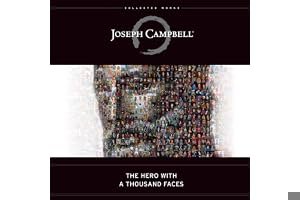
2The Hero With a Thousand Faces
The first popular work to combine the spiritual and psychological insights of modern psychoanalysis with the archetypes of world mythology, the book creates a roadmap for navigating the frustrating path of contemporary life. Examining heroic myths in the light of modern psychology, it considers not only the patterns and stages of mythology but also its relevance to our lives today--and to the life of any person seeking a fully realized existence.
Myth, according to Campbell, is the projection of a culture's dreams onto a large screen; Campbell's book, like Star Wars, the film it helped inspire, is an exploration of the big-picture moments from the stage that is our world. It is a must-have resource for both experienced students of mythology and the explorer just beginning to approach myth as a source of knowledge.
Founder/Bridgewater Associates
The book I’d give every graduating senior in college or high school would be … Joseph Campbell’s 'Hero of a Thousand Faces'. It's little bit dense but it’s so rich, so it’s a good one. [source]
Joseph Campbell was the first person to really open my eyes to the compassionate side of life, or of thought... Campbell was the guy who really kind of put it all together for me, and not in a way I could put my finger on... It made you just glad to be alive, realizing how vast this world is, and how similar and how different we are. [source]
Was mind blowing, it really helped me put into perspective, that there are cycles and rhythms, and I now call them initiations, when you are faced with fear we are never too sure of our potential unless we know how to fail, what did we learn from it and what are we going to do differently the next time. There is a lesson in everything we experience, as long as we slow down enough to reflect. The other thing in the hero's journey is that even when you say 'yes' to a project, it really doesn't mean that you are going to succeed at it, but if you go into a project with an open mind and embrace that you are here to learn, the journey itself is rewarding, not always the outcome and when we really look at our failures, they weren't real failures after all, but a stepping stone onto something greater. [source]
312 Rules for Life: An Antidote to Chaos
Humorous, surprising, and informative, Dr. Peterson tells us why skateboarding boys and girls must be left alone, what terrible fate awaits those who criticize too easily, and why you should always pet a cat when you meet one on the street.
What does the nervous system of the lowly lobster have to tell us about standing up straight (with our shoulders back) and about success in life? Why did ancient Egyptians worship the capacity to pay careful attention as the highest of gods? What dreadful paths do people tread when they become resentful, arrogant, and vengeful? Dr. Peterson journeys broadly, discussing discipline, freedom, adventure, and responsibility, distilling the world's wisdom into 12 practical and profound rules for life. 12 Rules for Life shatters the modern commonplaces of science, faith, and human nature while transforming and ennobling the mind and spirit of its listeners.
Co-Founder/Andreessen Horowitz
A bracing disassembly and reconstruction of a theory of individual progress in the modern world. Fascinating compare and contrast with The Courage To Be Disliked. [source]
Founder/StockPickr
Just look at the table of contents: Rule 1: Stand up straight with your shoulders back Rule 2: Treat yourself like someone you are responsible for helping Rule 3: Make friends with people who want the best for you Rule 4: Compare yourself to who you were yesterday, not to who someone else is today Rule 5: Do not let your children do anything that makes you dislike them Rule 6: Set your house in perfect order before you criticise the world Rule 7: Pursue what is meaningful (not what is expedient) Rule 8: Tell the truth – or, at least, don’t lie Rule 9: Assume the person you are listening to might know something you don’t Rule 10: Be precise in your speech Rule 11: Do not bother children when they are skateboarding Rule 12: Pet a cat when you encounter one on the street Read this book. [source]
@stewheckenberg @jordanbpeterson Thanks mate. I almost wish the book was published under a different author so more people would give it a chance. It’s really one of the best “how to fix your life” books around. [source]
4Man and His Symbols
The Red Book: Liber Novus
While Jung considered The Red Book to be his most important work, only a handful of people have ever seen it. Now, in a complete facsimile and translation, it is available to scholars and the general public. It is an astonishing example of calligraphy and art on a par with The Book of Kells and the illuminated manuscripts of William Blake. This publication of The Red Book is a watershed that will cast new light on the making of modern psychology.
212 color illustrations.
6Women Who Run With the Wolves: Myths and Stories of the Wild Woman Archetype
Dr. Estes has created a new lexicon for describing the female psyche. Fertile and life-giving, it is a psychology of women in the truest sense, a knowing of the soul.
I’m reading more books at the same time. Guilty. Some of them are Tools of Titans - Tim Ferriss, My Berlin Child – Anne Wiazemsky, Women who Run with the Wolves - Clarissa Pinkola Estés. Tim is full of lessons to learn, remember & implement, I’ll see what the rest of the books will unfold. [source]
7Modern Man in Search of a Soul
Considered by many to be one of the most important books in the field of psychology, Modern Man in Search of a Soul is a comprehensive introduction to the thought of Carl Gustav Jung. In this book, Jung examines some of the most contested and crucial areas in the field of analytical psychology, including dream analysis, the primitive unconscious, and the relationship between psychology and religion. Additionally, Jung looks at the differences between his theories and those of Sigmund Freud, providing a valuable basis for anyone interested in the fundamentals of psychoanalysis.
8The Power of Myth
CEO & Co-Founder/AngelList
I’m rereading The Power of Myth by Joseph Campbell. Sometimes I think it’s better to just to reread the greats than it is to read something that’s not as great. [source]
The Power of Myth by Joseph Campbell has got to be at least one of my all-time favorites. I reference it constantly. If you’re not familiar the book is just a conversation between the journalist Bill Moyers and Joseph Campbell, who worked in comparative mythology and religious studies. It so beautifully brings every human experience together from the beginning of time. The world is basically explained through archetypes of people and the stories we tell. I highly recommend it and re-read parts regularly. [source]
Joseph Campbell was the first person to really open my eyes to the compassionate side of life, or of thought... Campbell was the guy who really kind of put it all together for me, and not in a way I could put my finger on... It made you just glad to be alive, realizing how vast this world is, and how similar and how different we are. [source]
9Inner Work: Using Dreams and Active Imagination for Personal Growth
10King, Warrior, Magician, Lover: Rediscovering the Archetypes of the Mature Masculine
Additionally, there have been a few books that have been instrumental in helping me figure out my role, purpose, and mission in life. Such books include Iron John: A Book About Men by Robert Bly; King, Warrior, Magician, Lover: Rediscovering the Archetypes of the Mature Masculine by Doug Gillette and Robert L. Moore; and Way Of The Superior Man by David Deida. [source]
11The Middle Passage: From Misery to Meaning in Midlife (Studies in Jungian Psychology by Jungian Analysts, 59)
The Middle Passage presents us with an opportunity to reexamine our lives and to ask: "Who am I apart from my history and the roles I have played?" It is an occasion for redefining and reorienting the personality, a necessary rite of passage between the extended adolescence of the first adulthood and our inevitable appointment with old age and mortality.
The Middle Passage addresses the following issues:
How did we acquire our original sense of self? What are the changes that herald the Middle Passage? How does one revision the sense of self? What is the relationship between Jung's concept of individuation and our commitment to others? What attitudes and behavior support individuation and help us move from misery to meaning?
This book shows how we may travel the Middle Passage consciously, thereby rendering our lives more meaningful and the second half of life immeasurably richer.
--back cover
12We: Understanding the Psychology of Romantic Love
A very short, easily read book about the traps that people get themselves into in romantic relationships. [source]
13The Archetypes and the Collective Unconscious (Collected Works 9i)
14Ego and Archetype: Individuation and the Religious Function of the Psyche
Edward F. Edinger, M.D., a founding member of the C.G. Jung Foundation for Analytical Psychology in New York, is the author of many books on Jungian psychology, including The Eternal Drama and Anatomy of the Psyche: Alchemical Symbolism in Psychotherapy.
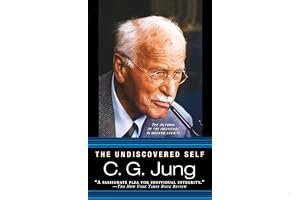
15The Undiscovered Self
16Goddesses in Everywoman
Psychoanalyst Jean Bolen's career soared in the early 1980s when Goddesses in Everywoman was published. Thousands of women readers became fascinated with identifying their own inner goddesses and using these archetypes to guide themselves to greater self–esteem, creativity, and happiness.
Bolen's radical idea was that just as women used to be unconscious of the powerful effects that cultural stereotypes had on them, they were also unconscious of powerful archetypal forces within them that influence what they do and how they feel, and which account for major differences among them. Bolen believes that an understanding of these inner patterns and their interrelationships offers reassuring, true–to–life alternatives that take women far beyond such restrictive dichotomies as masculine/feminine, mother/lover, careerist/housewife. And she demonstrates in this book how understanding them can provide the key to self–knowledge and wholeness.
Dr. Bolen introduced these patterns in the guise of seven archetypal goddesses, or personality types, with whom all women could identify, from the autonomous Artemis and the cool Athena to the nurturing Demeter and the creative Aphrodite, and explains how to decide which to cultivate and which to overcome, and how to tap the power of these enduring archetypes to become a better "heroine" in one's own life story.
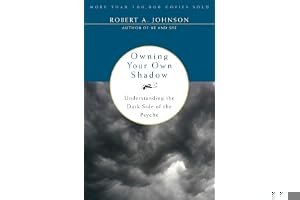
17Owning Your Own Shadow: Understanding the Dark Side of the Psyche
Johnson asserts that until we have undertaken the task of accepting and honoring the shadow within us, we cannot be balanced or whole, for what is hidden never goes away, but merely—and often painfully—turns up in unexpected places.
Psychological Types
It’s a survey of many different systems of belief—Eastern and Western, theological and aesthetic—from the beginning of recorded human history, to see how they can all be placed into the schema that Jung has set up. [source]
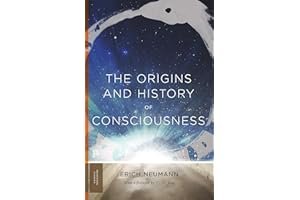
19The Origins and History of Consciousness
Featuring a foreword by Jung, this Princeton Classics edition introduces a new generation of readers to this eloquent and enduring work.
20Boundaries of the Soul: The Practice of Jung's Psychology
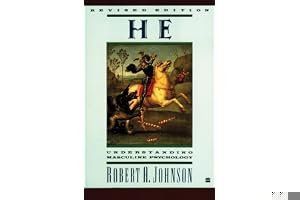
21He: Understanding Masculine Psychology
Robert A. Johnson's classic work exploring the differences between man and woman, female and male—newly reissued.
What does it really mean to be a man? What are some of the landmarks along the road to mature masculinity? And what of the feminine components of a man's personality?
Women do not really know as much about men as they think they do. They have developed, over the centuries, considerable expertise in the technique of adapting to men, but that is not the same as truly understanding them. Women often labor under the delusion that life is really pretty easy for men, at least when compared to their own lot, and they have no idea what a complicated struggle is really involved in the transition from male childhood to real manhood.
As timely today as when it was first published, He provides a fascinating look into male identity and how female dynamics influence men.
22Jung's Map of the Soul: An Introduction
Probably the best one-volume English language summary of Jung's thought. . . Stein develops the cartographical metaphor of the title by beginning with the "surface" (ego) of the psyche and exploring successively more complex areas, including complexes, libido thoery, shadow, "anima/us," the self, individuation, and synchronicity. The map soon resembles the multidisciplinary chart of a solar system more than it does a flat map. In each subject area, Stein draws heavily on papers that Jung wrote late in his life, but he sets these in the context of Jung's earlier developing thought. This method allows the author to demonstrate the interconnectedness and coherence of Jung's mature work. -- Choice, 10/15/98
Stein could just as aptly have named his introductory guide "Jung's Art of the Soul," for the course the founder of analytical psychology charted also has the intuitive sweep of an artist on an inner journey integrated within a systematic framework of techniques. Though acknowledging Jung's creative, intuitive approach to fathoming the mysteries of the individual and collective human psyche, the author presents a solid case for the basic coherency and empirical underpinnings of the great psychoanalyst's theory-counter to those who viewed him as more of a mystic or philosopher who espoused: "As within, so without." Territory consciously omitted from this psychic map concern his analytic practice and interpretation of culture, history, and religion. Organized like a graduate thesis, all the major concepts that evolved over Jung's lengthy career are lucidly summarized with some contextual details: ego-consciousness, complexes, libido theory, archetypes, persona/shadow, anima/animus, the self, individuation, and synchronicity. While this presentation is eminently more accessible than most Jungian texts-and Stein does preface it with personal remarks about his long-time attraction to Jung-those who seek a sense of Jung's own voice and personal development in his quest for answers to many of life's enigmas will have their appetites whet to explore further. -- From Independent Publisher
23She: Understanding Feminine Psychology
Many writers and scholars have long considered that the ancient myth of Amor and Psyche is really the story of a woman's task of becoming whole, complete, and individuated. Here, examining this ancient story in depth and lightening up the details, Johnson has produced an arresting and perceptive exploration of what it means to become a woman. You will not read these pages without understanding the important women in your life and a good deal more about yourself as a woman.
24Psychology and Alchemy (Collected Works 12)
A study of the analogies between alchemy, Christian dogma, and psychological symbolism. Revised translation, with new bibliography and index.
25Synchronicity: An Acausal Connecting Principle
Meeting the Shadow: The Hidden Power of the Dark Side of Human Nature (New Consciousness Reader)
Shadow and Evil in Fairy Tales
- How different aspects of the "shadow"--all the affects and attitudes that are unconscious to the ego personality--are personified in the giants and monsters, ghosts, and demons, evil kings and wicked witches of fairy tales
- How problems of the shadow manifest differently in men and women
- What fairy tales say about the kinds of behavior and attitudes that invite evil
- How Jung's technique of Active imagination can be used to overcome overwhelming negative emotions
- How ghost stories and superstitions reflect the psychology of grieving
- What fairy tales advise us about whether to struggle against evil or turn the other cheek
Dr. von Franz concludes that ever rule of behavior that we can learn from the unconscious through fairy tales and dreams is usually a paradox: sometimes there must be a physical struggle against evil and sometimes a contest of wits, sometimes a display of strength or magic and sometimes a retreat. Above all, she shows the importance of relying on the central, authentic core of our being--the innermost Self, which is beyond the struggle between the opposites of good and evil.
28Under Saturn's Shadow: The Wounding and Healing of Men (Studies in Jungian Psychology By Jungian Analysts, 63)
29Alchemy: An Introduction to the Symbolism and the Psychology (Studies in Jungian Psychology by Jungian Analysts, 5)
30The Essential Jung: Selected Writings
31Eden Project: In Search of the Magical Other (Studies in Jungian Psychology By Jungian Analysts, 79)
32Aion (Collected Works 9ii)
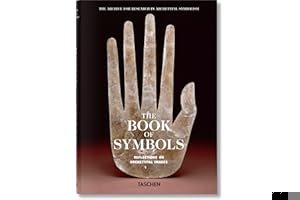
33The Book of Symbols: Reflections on Archetypal Images
The Book of Symbols combines original and incisive essays about particular symbols with representative images from all parts of the world and all eras of history. The highly readable texts and almost 800 beautiful full-color images come together in a unique way to convey hidden dimensions of meaning. Each of the c. 350 essays examines a given symbol's psychic background, and how it evokes psychic processes and dynamics. Etymological roots, the play of opposites, paradox and shadow, the ways in which diverse cultures have engaged a symbolic image—all these factors are taken into consideration.
Authored by writers from the fields of psychology, religion, art, literature and comparative myth, the essays flow into each other in ways that mirror the psyche's unexpected convergences. There are no pat definitions of the kind
that tend to collapse a symbol; a still vital symbol remains partially unknown, compels our attention and unfolds in new meanings and manifestations over time. Rather than merely categorize, The Book of Symbols illuminates how to move from the visual experience of a symbolic image in art, religion, life, or dreams, to directly experiencing its personal and psychological resonance.
The Book of Symbols sets new standards for thoughtful exploration of symbols and their meanings, and will appeal to a wide range of readers: artists, designers, dreamers and dream interpreters, psychotherapists, self-helpers, gamers, comic book readers, religious and spiritual searchers, writers, students, and anyone curious about the power of archetypal images.
34The Interpretation of Fairy Tales
Perhaps the foremost authority on the psychological interpretation of fairy tales is Marie-Louise von Franz. In this book—originally published as An Introduction to the Interpretation of Fairy Tales —she describes the steps involved in analyzing and illustrates them with a variety of European tales, from "Beauty and the Beast" to "The Robber Bridegroom."
Dr. von Franz begins with a history of the study of fairy tales and the various theories of interpretation. By way of illustration she presents a detailed examination of a simple Grimm's tale, "The Three Feathers," followed by a comprehensive discussion of motifs related to Jung's concept of the shadow, the anima, and the animus. This revised edition has been corrected and updated by the author.
35Gods in Everyman
In this challenging and enlightening companion volume to the bestselling Goddesses in Everywoman, Jean Shinoda Bolen turns her attention to the powerful inner patterns, or archetypes, that shape men's personalities, careers, and personal relationships. Viewing these archetypes as the inner counterparts of the outer world of cultural stereotypes, she demonstrates how men and women can gain an invaluable sense of wholeness and integration when what they do is consistent with who they are. Dr. Bolen introduces these patterns in the guise of eight archetypal gods, or personality types, with whom the reader will identify. From the authoritarian power-seeking gods (Zeus, Poseidon) to the gods of creativity (Apollo, Hephaestus) to the sensual Dionysus, Dr. Bolen shows men how to identify their ruling gods, how to decide which to cultivate and which to overcome, and how to tap the power of these enduring archetypes in order to enrich and strengthen their lives. She also stresses the importance of understanding which gods you are attracted to and which are compatible with your expectations, uncovers the origins of the often-difficult father-son relationship, and explores society's deep conflict between nurturing behavior and the need to foster masculinity.
In Gods in Everyman Dr. Bolen presents us with a compassionate and lucid male psychology that will help all men and women to better understand themselves and their relationships with their fathers, their sons, their brothers, and their lovers.
36Anatomy of the Psyche: Alchemical Symbolism in Psychotherapy (Reality of the Psyche)
37A Little Book on the Human Shadow
38Mysterium Coniunctionis (Collected Works 14)
39Iron John: A Book about Men
In this timeless and deeply learned classic, poet and translator Robert Bly offers nothing less than a new vision of what it means to be a man.
Bly's vision is based on his ongoing work with men, as well as on reflections on his own life. He addresses the devastating effects of remote fathers and mourns the disappearance of male initiation rites in our culture. Finding rich meaning in ancient stories and legends, Bly uses the Grimm fairy tale "Iron John"-in which a mentor or "Wild Man" guides a young man through eight stages of male growth-to remind us of ways of knowing long forgotten, images of deep and vigorous masculinity centered in feeling and protective of the young.
At once down-to-earth and elevated, combining the grandeur of myth with the practical and often painful lessons of our own histories, Iron John is an astonishing work that will continue to guide and inspire men-and women-for years to come.
Additionally, there have been a few books that have been instrumental in helping me figure out my role, purpose, and mission in life. Such books include Iron John: A Book About Men by Robert Bly; King, Warrior, Magician, Lover: Rediscovering the Archetypes of the Mature Masculine by Doug Gillette and Robert L. Moore; and Way Of The Superior Man by David Deida. [source]
The Dark Side of the Light Chasers
We are born with the ability to express this entire spectrum of characteristics. But, Ford points out, our families and our society, send us strong messages about which ones are "good" and "bad". So when certain impulses arise, we deny them instead of confronting them, giving them a healthy voice, then letting them go.
It is to these feelings that Ford turns our attention, these parts of our selves that don't fit the personae we have created for the rest of the world. She shows us the effects of living in the dark, of keeping all our supposedly unsavory impulses under wraps. We find ourselves disproportionately frustrated and angry at the selfishness of friends, the laziness of colleagues, the arrogance of siblings. When we are unable to reconcile similar impulses in ourselves, Ford explains, we waste our own energy judging others instead of empathizing. Bost most important, we deny ourselves the power and freedom of living authentically.
Through the stories and exercises in The Dark Side of the Light Chasers, Debbie Ford shows us not only how to recognize our hidden emotions, but also how to find the gifts they offer us. The very impulses we most fear may be the key to what is lacking in our lives.
41The Sacred Prostitute: Eternal Aspect of the Feminine (Studies in Jungian Psychology by Jungian Analysts, 32)
This exhilarating book, solidly based on the psychology of C.G. Jung, powerfully illustrates how our vitality and capacity for joy depend on restoring the soul of the sacred prostitute to its rightful place in our conscious understanding.
42The Fisher King and the Handless Maiden: Understanding the Wounded Feeling Function in Masculine and Feminine Psychology
43Swamplands of the Soul: New Life in Dismal Places (Studies in Jungian Psychology by Jungian Analysts, 73)
Perhaps not, says this author. The Jungian perspective, by encompassing both the meadow and the bog, asserts that the goal of life is not happiness but meaning. And meaning, though it may not be all sunlight and blossoms, is real.
Swamplands of the Soul explores the quicksands where we have all floundered. It lights a beacon by showing what they mean in terms of our individual journey and the engendering of soul. For it is precisely where we encounter the gravitas of life that we also uncover its purpose, its dignity and its deepest meaning.
Trauma and the Soul: A Psycho-Spiritual Approach to Human Development and Its Interruption
With these "two worlds" in focus, Kalsched explores a variety of themes as he builds, chapter by chapter, an integrated psycho-spiritual approach to trauma and its treatment including:
images of the lost soul-child in dreams and how this "child" represents an essential core of aliveness that is both protected and persecuted by the psyche's defenses;
Dante's guided descent into the Inferno of Hell as a paradigm for the psychotherapy process and its inevitable struggle with self-destructive energies;
childhood innocence and its central role in a person's spiritual life seen through the story of St. Exup�ry's The Little Prince;
how clinical attention to implicit processes in the relational field, as well as discoveries in body-based affective neuroscience are making trauma treatment more effective;
the life of C.G. Jung as it portrays his early trauma, his soul's retreat into an inner sanctuary, and his gradual recovery of wholeness through the integration of his divided self.
This is a book that restores the mystery to psychoanalytic work. It tells stories of ordinary patients and ordinary psychotherapists who, through working together, glimpse the reality of the human soul and the depth of the spirit, and are changed by the experience. Trauma and the Soul will be of particular interest to practicing psychotherapists, psychoanalysts, analytical psychologists, and expressive arts therapists, including those with a "spiritual" orientation.
Donald Kalsched is a Jungian analyst in private practice in Albuquerque, New Mexico, and a training analyst with the Inter-Regional Society of Jungian Analysts. He is the author of numerous articles in analytical psychology, and lectures widely on the subject of early trauma and its treatment. His books include The Inner World of Trauma (1996).
45Hauntings: Dispelling the Ghosts Who Run Our Lives
Are we here just to propagate the species anew?
Do any of us really believe that we are here to make money and then die?
Does life matter, in the end, and if so, how, and in what fashion?
What guiding intelligence weaves the threads of our individual biographies?
What hauntings of the invisible world invigorate, animate, and direct the multiple narratives of daily life?
In Hauntings, James Hollis considers how we are all governed by the presence of invisible forms spirits, ghosts, ancestral and parental influences, inner voices, dreams, impulses, untold stories, complexes, synchronicities, and mysteries which move through us, and through history. He offers a way to understand them psychologically, examining the persistence of the past in influencing our present, conscious lives and noting that engagement with mystery is what life asks of each of us. From such engagements, a deeper, more thoughtful, more considered life may come.
46Jung: A Very Short Introduction
About the Series: Combining authority with wit, accessibility, and style, Very Short Introductions offer an introduction to some of life's most interesting topics. Written by experts for the newcomer, they demonstrate the finest contemporary thinking about the central problems and issues in hundreds of key topics, from philosophy to Freud, quantum theory to Islam.
The Inner World of Trauma: Archetypal Defences of the Personal Spirit
Drawing on detailed clinical material, the author gives special attention to the problems of addiction and psychosomatic disorder, as well as the broad topic of dissociation and its treatment. By focusing on the archaic and primitive defenses of the self he connects Jungian theory and practice with contemporary object relations theory and dissociation theory. At the same time, he shows how a Jungian understanding of the universal images of myth and folklore can illuminate treatment of the traumatised patient.
Trauma is about the rupture of those developmental transitions that make life worth living. Donald Kalsched sees this as a spiritual problem as well as a psychological one and in The Inner World of Trauma he provides a compelling insight into how an inner self-care system tries to save the personal spirit.
48Ecstasy: Understanding the Psychology of Joy
Robert A. Johnson has taken tens of thousands of readers on spiritual and psychological journeys towards inner transformation. In 'Ecstasy', he reconnects with the powerful and life-changing ecstatic element that lies dormant – but long-repressed – within us.
Ecstasy was once considered a divine gift, Johnson tells us, one that could lift mortals out of ordinary reality and into higher world. But because Western culture has systematically repressed this ecstatic human impulse, we are unable to truly experience its transformative power.
Johnson penetrates the surface of modern life to reveal the ancient dynamics of our humanity, pointing out practical means for achieving a healthy expression of our true inner selves. Through dreams, rituals, and celebrations, he shows us how to return to these original life-giving principles and restore inner harmony.
Robert A. Johnson is the best-selling author of 'He, She, We, Inner Work, ' and 'Femininity Lost and Regained. '
49The Psychology of Kundalini Yoga: Notes of the Seminar Given in 1932
Jung's seminar on Kundalini yoga, presented to the Psychological Club in Zurich in 1932, has been widely regarded as a milestone in the psychological understanding of Eastern thought and of the symbolic transformations of inner experience. Kundalini yoga presented Jung with a model for the developmental phases of higher consciousness, and he interpreted its symbols in terms of the process of individuation. With sensitivity toward a new generation's interest in alternative religions and psychological exploration, Sonu Shamdasani has brought together the lectures and discussions from this seminar. In this volume, he re-creates for today's reader the fascination with which many intellectuals of prewar Europe regarded Eastern spirituality as they discovered more and more of its resources, from yoga to tantric texts. Reconstructing this seminar through new documentation, Shamdasani explains, in his introduction, why Jung thought that the comprehension of Eastern thought was essential if Western psychology was to develop. He goes on to orient today's audience toward an appreciation of some of the questions that stirred the minds of Jung and his seminar group: What is the relation between Eastern schools of liberation and Western psychotherapy? What connection is there between esoteric religious traditions and spontaneous individual experience? What light do the symbols of Kundalini yoga shed on conditions diagnosed as psychotic? Not only were these questions important to analysts in the 1930s but, as Shamdasani stresses, they continue to have psychological relevance for readers on the threshold of the twenty-first century. This volume also offers newly translated material from Jung's German language seminars, a seminar by the indologist Wilhelm Hauer presented in conjunction with that of Jung, illustrations of the cakras, and Sir John Woodroffe's classic translation of the tantric text, the Sat-cakra Nirupana.
?
50Myths to Live By
51The Soul's Code: In Search of Character and Calling
In this new look at age-old themes, Hillman provides a radical, frequently amusing, and highly accessible path to realization through an extensive array of examples. He urges his readers to discover the "blueprints" particular to their own individual lives, certain that there is more to life than can be explained by genetics or environment. As he says, "We need a fresh way of looking at the importance of our lives."
What The Soul's Code offers is an inspirational, positive approach to life, a way of seeing, and a way of recovering what has been lost of our intrinsic selves.
52The Problem of the Puer Aeternus (Studies in Jungian Psychology by Jungian Analysts, 87)
It is impossible to overstate the influence on both men and women of this classic study, originally a series of lectures at the Zurich Jung Institute. It is Jungian psychology in its most down-to-earth voice, telling it like it is so accurately and with such a depth of understanding that it is still much in demand even though it has been out of print for many years. This new edition features a Bibliography and an extensive Index.
53Natural Spirituality: A Handbook for Jungian Inner Work in Spiritual Community - Revised Edition
54Pathways to Bliss: Mythology and Personal Transformation
In Pathways to Bliss, Campbell examines this personal, psychological side of myth. Like his classic best-selling books Myths to Live By and The Power of Myth,Pathways to Bliss draws from Campbell's popular lectures and dialogues, which highlight his remarkable storytelling and ability to apply the larger themes of world mythology to personal growth and the quest for transformation. Here he anchors mythology's symbolic wisdom to the individual, applying the most poetic mythical metaphors to the challenges of our daily lives.
Campbell dwells on life's important questions. Combining cross-cultural stories with the teachings of modern psychology, he examines the ways in which our myths shape and enrich our lives and shows how myth can help each of us truly identify and follow our bliss.
55Transformation: Understanding the Three Levels of Masculine Consciousness
In Johnson's view, we all reach the stages depicted by Don Quixote, Hamlet, and Faust at various times of our lives. The three represent levels of consciousness within us, each vying for dominance. Don Quixote portrays the innocent child, while Hamlet stands for our self-conscious need to act and feel in control though we have no real connection to our inner selves. Faust embodies the master of the true self, who has gained awareness by working through the stages.
56Projection and Re-collection in Jungian Psychology: Reflections of the Soul
57The Structure and Dynamics of the Psyche (Collected Works, Vol 8)
The Structure & Dynamics of the Psyche is one of the better volumes of the Princeton/Bollingen Collected Works.
1st comes "On Psychic Energy", the most difficult essay in the volume. Generally, it discusses the "canalization of libido". Jung redefines "libido" by moving away from its purely sexual connotation. For him, libido is simply a generic form of psychic energy which can be redirected into both sexual & non-sexual activities, such as religious rituals, dances, incantations & chants. Only when the intrinsic need for ritual is supressed does the libido tend to direct its energies into sexual perversion. Altho the concept is interesting, the writing style of this essay is rather opaque.
Next comes an essay called "The Transcendent Function", which basically deals with the healing breakthru which is the goal of the patient in psychotherapy.
Next is an essay dealing with "Complex Theory". This essay deals with word-association tests in which the experimenter observes the subjects reactions & hesitations when given a word that evokes embarrassing or painful memories.
Next are three short but profound & informative essays.
Then comes the centerpiece, a potent & spectacular classic of 20th century psychology entitled "On the Nature of the Psyche". This, along with "Answer to Job", is one of Jung's best essays. It deals with a wide range of topics, including the limitations & paradoxes associated with epistemology, & the dualistic & paradoxical interrelationship between the subjective/inner psyche & the objective/outer world. This essay has much to say about the limitations of our subjectivity, & the degree to which we depend on other people & the outside world to attain consciousness. Jung does an excellent job in demarcating the thin line which divides the outer world & the sum of our subjective perceptions. This essay is a mind warping trip into a sea of paradoxical mysteries of the psyche.
After a short essay dealing with spirits, come a series of three: "Spirit & Life", "Basic Postulates of Analytical Psychology" & "Analytical Psychology & Weltanschauung". These deal with the delicate issue of fate & determinism vs free will, & the idea of achieving an objective attitude, a Weltanschauung. Jung warns against attempting to unite everyone under one objective attitude or "ism". This can only lead to repression, nationalistic, racist, patriotic bias & war. According to him, when one nation unites under an "ism" or worldview which is erronously believed to be objective & appropriate for everyone, we'll end up with a repression of indivdual, diverse opinions at best, & at worst, will have a worldwide tragedy resulting from the quest to force this attitude on other people. According to Jung, democracy also counts as one of those "ism's" that we shouldn't try to force on others.
Next we have three more short essays which are very good, especially "The Soul & Death".
Finally, we have "Syncronicity", a fascinating essay dealing with paranormal psychic phenomena such as ESP.
Overall, The Structure & Dynamics of the Psyche is a true magnum opus of psychology, recommended to anyone willing to take on a challenge for the pursuit of self-knowledge.--Ross James Browne (edited)
58Archetypal Dimensions of the Psyche
59Psychology of the Unconscious
In Psychology of the Unconscious, Jung seeks a symbolic meaning and purpose behind a given set of symptoms, placing them within the larger context of the psyche. The 1912 text examines the fantasies of a patient whose poetic and vivid mental images helped Jung redefine libido as psychic energy, arising from the unconscious and manifesting itself consciously in symbolic form. Jung's commentary on his patient's fantasies offers a complex study of symbolic psychiatry and foreshadows his development of the theory of collective unconscious and its constituents, the archetypes.
The author's role in the development of analytical psychology, a therapeutic process that promotes creativity and psychological development, makes this landmark in psychoanalytic methodology required reading for students and others interested in the practice and process of psychology.
60Jung on Active Imagination
This method is based on the natural healing function of the imagination, and its many expressions. Chodorow clearly presents the texts, and sets them in the proper context. She also interweaves her discussion of Jung's writings and ideas with contributions from Jungian authors and artists.
61Answer to Job
The Portable Jung
63Psychotherapy
• Projection
• Transference
• Dream interpretation
• Self-realization
• Group psychology
• Personality types
• Active imagination
• The therapeutic use of hallucinogenic drugs
• The choice of psychotherapy as a profession
• The role of religious experience in psychological healing
64Dreams: Extracts from Collected Works, Vols 4, 8, 12, 16
New to this edition is a foreword by Sonu Shamdasani, Philemon Professor of Jung History at University College London.
65On Divination & Synchronicity: The Psychology of Meaningful Chance (Studies in Jungian Psychology by Jungian Analysts, 3)
The Gnostic Jung and the Seven Sermons to the Dead
67The Scapegoat Complex: Toward a Mythology of Shadow and Guilt (Studies in Jungian Psychology by Jungian Analysts, 23)
68Care of the Soul: A Guide for Cultivating Depth and Sacredness in Everyday Life
Readers are presented with a revolutionary approach to thinking about daily life—everyday activities, events, problems and creative opportunities—and a therapeutic lifestyle is proposed that focuses on looking more deeply into emotional problems and learning how to sense sacredness in even ordinary things.
Basing his writing on the ancient model of "care of the soul"—which provided a religious context for viewing the everyday events of life—Moore brings "care of the soul" into the 21st century. Promising to deepen and broaden the reader's perspective on his or her own life experiences, Moore draws on his own life as a therapist practicing "care of the soul," as well as his studies of the world's religions and his work in music and art, to create this inspirational guide that examines the connections between spirituality and the problems of individuals and society.
69The Practice of Psychotherapy (Collected Works, Vol 16)
Essays on aspects of analytical therapy, specifically the transference, abreaction & dream analysis. Contains the posthumous essay, "The Realities of Practical Psychotherapy".
Editorial Note to the 2nd Edition
Translator's Note
Foreword to the Swiss Edition, '58
List of Illustrations
Principles of Practical Psychotherapy
What Is Psychotherapy?
Some Aspects of Modern Psychotherapy
The Aims of Psychotherapy
Problems of Modern Psychotherapy
Psychotherapy & a Philosophy of Life
Medicine & Psychotherapy
Psychology Today
Fundamental Questions of Psychotherapy
The Therapeutic Value of Abreaction
The Practical Use of Dream Analysis
The Psychology of the Transference
The Realities of Practical Psychotherapy
Bibliography
Index
70Dancing in the Flames: The Dark Goddess in the Transformation of Consciousness
71Jung and Tarot: An Archetypal Journey
72Balancing Heaven and Earth: A Memoir of Visions, Dreams, and Realizations
Balancing Heaven and Earth reveals, for the first time, Johnson's own fascinating and mystical life-from his near-death experience at the age of eleven to the lifelong soul journey that has informed his writing and taught him how to live a spiritual life in the endlessly challenging modern world. Full of compelling, humorous, and surprising stories of encounters with an assortment of "sages, saints, and sinners," it lays bare Johnson's own inner world and its dazzeling landscape of powerful dreams, mystical visions, and synchronistic events.
Beginnning with a vivid retelling of the childhood accident that claimed the lower part of his right leg, Johnson describes the life-defining moment when he was transported by a mystical vision to a realm that exists just beyond ordinary consciousness-a realm he calls the "Golden World." With this experience, described as "both my curse and my blessing," Johnson is launched on a spiritual quest that leads him in search of Eastern wisdom, to encounters with such wise men as J. Krishnamurti and D.T. Suzuki, and finally to Carl Jung, who shows him his destiny revealed in a dream. Johnson's experiences lead him to a unique understanding and acceptance of the slender connecting threads at work in all our lives, guiding us and shaping who we are-"call it fate, destiny, or the hand of God."
As much a personal guide as a memoir, Balancing Heaven and Earth teaches us to follow , as Johnson has, the subtle influences of dreams, visions, and even our deepest sufferings in order to live attuned to our spiritual selves. A pure delight for Johnson's many fans and a splendid example of his trademark blend of illustrative myth and psychological insight, this is a work of incomparable beauty and inspiration showcasing the wisdom of a lifetime.
73Finding Meaning in the Second Half of Life: How to Finally, Really Grow Up
74Awakening the Heroes Within: Twelve Archetypes to Help Us Find Ourselves and Transform Our World
A program for activating and applying Pearson's twelve archetypes to aid inner development and the quest for wholeness
"The heroic quest is about saying 'yes' to yourself and in so doing, becoming more fully alive and more effective in the world.... The quest is replete with dangers and pitfalls, but it offers great rewards: the capacity to be successful in the world, knowledge of the mysteries of the human soul, and the opportunity to find and express your unique gifts in the world."
In this bold and original work, Carol S. Pearson shows that the heroic quest isn't just for certain people under special circumstances. Exploring the many heroic paths available to each of us, at every point in our lives, her innovative program enables us to live heroically by activating and applying twelve archetypes in our lives.
This companion to the bestselling The Hero Within outlines twelve archetypal patterns that can aid inner development and the quest for wholeness.
These archetypes are inner guides that can help us prepare for the journey, by learning how to become successful members of society; embark upon the quest, by becoming initiated into the mysteries of the human soul; and return to transform our lives as a result of claiming our uniqueness and personal power.
Writing for individuals seeking to realize their full potential and professionals engaged in empowering others, Pearson shows how journeys differ by the age, gender, and cultural background of the seeker, and how archetypes help awaken the capacities of our psyches. A unique diagnostic test, the Heroic Myth Index, and exercises are included to help us understand and awaken our inner guides.
AuthorBiography: Carol S. Pearson, Ph.D., is the author of many bestselling and respected works on archetypes, including Awakening the Heroes Within. She is president of CASA: The Center for Archetypal Studies and Applications and is the senior editor of The Inner Edge: A Resource for Enlightened Business Practice.

75Invisible Partners
76Archetypal Patterns in Fairy Tales
77Theatre of the Imagination, Volume Two
Contained within Theatre of the Imagination are the great universal themes—tales of loss and resurrection; of love and sacrifice; of the courage to survive—yet it is as if Dr. Estés is speaking only to you. With words that weave in and out of the interior and exterior worlds, she creates an amazing fabric of the purest wisdom—fought for, won, and preserved to teach all generations—that which is most worth knowing.
You will hear more than 40 original poems, archetypal insights, and dozens of strengthening stories from Dr. Estés' own family's oral traditions. Dr. Estés teaches that each story holds a key to a deeper self-knowing: "Stories cut fine wide doors in previous blank walls, openings that lead to the dreamland, that lead to love and learning that lead us back to our own real lives."
Presented in her one-of-a-kind lyrical style, Theatre of the Imagination seats you in the front row at these performances of a lifetime. More than five hours of signature stories, plus earthy and wise advice, archetypal insights, poetry, and much more.
Six Healing Stories Include:
Las Tres Osas Viejas (The Three Old Ones)
• The Fisherman's Wife
• Skeleton Woman
• The Crescent Moon Bear
• Sealskin/Soulskin
• Wolfen
Learn More About:
The cycles of life and death
• How the language of symbols translates into everyday life
• Community and healing the homesickness within the soul
• How to stop your destructive inner critic
• Reclaiming the bodies we were born with
• Facing the cycles of change in a relationship
• Agelessness and the aerial view of the elder
• How to awaken the 1,000 eyes of your intuition
• Transformation through the four vital steps to forgiveness
• The power of the Divine Child
• Finding courage and the sacred center of the psyche
• When others try to silence you: how to claim your strength
78The Dream and the Underworld
79Alchemical Active Imagination
80The Feminine in Fairy Tales
81Four Archetypes: Mother, Rebirth, Spirit, Trickster
This paperback edition of Jung's classic work includes a new foreword by Sonu Shamdasani, Philemon Professor of Jung History at University College London.

82The Handbook of Jungian Psychology
This Handbook is unique in presenting a clear, comprehensive and systematic exposition of the central tenets of Jung's work which has something to offer to both specialists and those seeking an introduction to the subject. Internationally recognised experts in Jungian Psychology cover the central themes in three sections: Theory, Psychotherapy & Applications. Each chapter begins with an introduction locating the topic in the context of Jung's work as a whole, before moving on to an investigation of contemporary developments and concluding by demonstrating how Jung's theories continue to evolve and develop through their practical therapeutic applications.
The Handbook of Jungian Psychology is the definitive source of authoritative information on Jungian psychology for Jungian analysts, psychotherapists, counsellors and related professionals. It will be an invaluable aid to those involved in Jungian academic studies and related disciplines.
83Theatre of the Imagination, Volume One
84Civilization in Transition (Collected Works, Vol 10)
85Alchemical Studies (Collected Works 13)
86Living Between Worlds: Finding Personal Resilience in Changing Times
How did we get to this crossroads in history? And will we make it through—individually and as a species? “We all assumed that learning, rationality, and good intentions would prove enough to bring us to the promised land,” says James Hollis. “But they haven’t and won’t. Yet what we also do not recognize sufficiently is that this human animal is equipped for survival. In time, as we have seen of life’s other insolubles, we grow large enough to contain what threatened to destroy us.”
Dr. Hollis’s readers know him as a penetrating thinker who brings profound insight and sophistication to the inner journey. In Living Between Worlds, he broadens his lens to encompass the relationship between our inner struggles and the rapidly shifting realities of modern human existence. You will learn to invoke the tools of depth psychology, classical literature, philosophy, dream work, and myth, to gain access to the resources that supported our ancestors through their darkest hours. Through these paths of inner exploration, you will access your “locus of knowing”—an inner wellspring of deep resilience beyond the ego, always available to guide you back to the imperatives of your soul.
Though many of the challenges of our times are unique, the path through for us personally and collectively will always rely on our measureless capacity for creativity, wisdom, and connection to a reality larger than ourselves. Here you will find no easy answers or pat reassurances. Yet within the pages of Living Between Worlds, you will encounter causes for hope. “We can find what supports us when nothing supports us,” Hollis teaches. “By bearing the unbearable, we go through the desert to arrive at a nurturing oasis we did not know was there.”
87Descent to the Goddess: A Way of Initiation for Women (Studies in Jungian Psychology by Jungian Analysts, 6)
88The Spirit in Man, Art and Literature (Collected Works 15)
In the nine essays that comprise this volume, written between 1922 & '41, Jung's attention was directed mainly to the qualities of personality that enable the creative spirit to introduce radical innovations into realms as diverse as medicine, Oriental studies, the visual arts & literature.
Editorial Note
Paracelsus
Paracelsus the physician
Sigmund Freud in his historical setting
In memory of Sigmund Freud
Richard Wilhelm: In memoriam
On the relation of analytical psychology to poetry
Psychology & literature
"Ulysses": a monologue
Picasso
Bibliography
Index
89Inner Gold: Understanding Psychological Projection
90The Pregnant Virgin: A Process of Psychological Transformation (Studies in Jungian Psychology By Jungian Analysts, 21)
91The Cat: A Tale of Feminine Redemption (Studies in Jungian Psychology by Jungian Analysts, 83)
One by one Dr. von Franz unravels the symbolic threads in this story, from enchantment to beating, the ringing of bells, golden apples, somersaults, witches, etc., and, throughout, the great themes of redemption and the union of opposites, always relating them to both individual and collective psychology.
This is Marie-Louise von Franz at her very best, theoretically lucid, sharply insightful and grounded in lived experience.
92Freud and Psychoanalysis (Collected Works, Vol 4)
This volume gives the substance of Jung's published writings on Freud & psychoanalysis between 1906 & '16. Two later papers are added for reasons which will become apparent. The scientific papers in this volume, while falling short of a complete account of Freud & psychoanalysis, nevertheless give essential elements in Jung's changing views on this subject.
Please Understand Me II: Temperament, Character, Intelligence
Now: Please Understand Me II
For the past twenty years Keirsey has continued to investigate personality differences -- to refine his theory of the four temperaments and to define the facets of character that distinguish one from another. His findings form the basis of Please Understand Me II, an updated and greatly expanded edition of the book, far more comprehensive and coherent than the original, and yet with much of the same easy accessibility. One major addition is Keirsey's view of how the temperaments differ in the intelligent roles they are most likely to develop. Each of us, he says, has four kinds of intelligence -- tactical, logistical, diplomatic, strategic -- though one of the four interests us far more than the others, and thus gets far more practice than the rest. Like four suits in a hand of cards, we each have a long suit and a short suit in what interests us and what we do well, and fortunate indeed are those whose work matches their skills. As in the original book, Please Understand Me II begins with The Keirsey Temperament Sorter, the most used personality inventory in the world. But also included is The Keirsey Four-Types Sorter, a new short questionnaire that identifies one's basic temperament and then ranks one's second, third, and fourth choices. Share this new sorter with friends and family, and get set for a lively and fascinating discussion of personal styles.
94Jung Lexicon: A Primer of Terms & Concepts (Studies in Jungian Psychology by Jungian Analysts, 47)
Belonging: Remembering Ourselves Home
The world has never been more connected, yet people are lonelier than ever. Whether we feel unworthy, alienated, or anxious about our place in the world the absence of belonging is the great silent wound of our times.
Most people think of belonging as a mythical place, and they spend a lifetime searching for it in vain. But what if belonging isn't a place at all? What if it's a skill that has been lost or forgotten?
With her signature depth and eloquence, Toko-pa maps a path to Belonging from the inside out. Drawing on myth, stories and dreams, she takes us into the origins of our estrangement, reframing exile as a necessary initiation into authenticity. Then she shares the competencies of belonging: a set of ancestral practices to heal our wounds and restore true belonging to our lives and to the world.
96Ravaged Bridegroom: Masculinity in Women (Studies in Jungian Psychology By Jungian Analysts, 41)
97Two Essays on Analytical Psychology (Collected Works 7)
Bibliography & index.
This volume has become known as perhaps the best introduction to Jung's work. In these famous essays. "The Relations between the Ego & the Unconscious" & "On the Psychology of the Unconscious," he presented the essential core of his system. Historically, they mark the end of Jung's intimate association with Freud & sum up his attempt to integrate the psychological schools of Freud & Adler into a comprehensive framework. The earliest versions of the Two Essays, "New Paths in Psychology" (1912) & "The Structure of the Unconscious" (1916), discovered among his posthumous papers, are published in an appendix, to show the development of his thought in later versions. As an aid to study, the index has been comprehensively expanded.
98Encounters with the Soul: Active Imagination As Developed by C.G. Jung
99The Mysterium Lectures: A Journey Through C.G. Jung's Mysterium Coniunctionis (Studies in Jungian Psychology by Jungian Analysts, 66)
100Holistic Tarot: An Integrative Approach to Using Tarot for Personal Growth
In Holistic Tarot, author Benebell Wen provides a complete guide to using the tarot to foster personal development. Wen gives a comprehensive overview of the history of the tarot and a wide array of theories on its use (including its relationship to Jungian archetypal psychology and traditional Chinese divination practices) before digging deeply into one of the best-known tarot systems, the Rider-Waite-Smith. Beginners will find a complete guide to working with the tarot, including choosing and caring for a deck, how best to learn and remember the attributes of the major and minor arcana, the interpretation of cards and spreads, the role of meditation in a tarot practice, and how to use the tarot for improving relationships, professional development, and personal resilience. More advanced practitioners will appreciate nuanced theoretical discussions of the tarot as well as practical advice about reading others' tarot cards and setting up a practice. Containing over 500 illustrations and detailed information on each card as well as numerous spreads, Holistic Tarot is a complete compendium of tarot study that every practitioner should have in his or her library.
“A modern alchemical achievement.”—Barbara Moore, author of Tarot Spreads
“Will become one of the jewels in the crown of tarot literature.” —Anthony Louis, MD, author of Tarot Beyond the Basics
“A tarot classic.”—Sasha Graham, author of Tarot Diva
“A magnificent, intelligent, comprehensive overview and innerview of the Rider Waite Smith system of tarot! This is the only guide you need to have. Bravo!” —James Wanless, PhD, author of Voyager Tarot
“A huge accomplishment … likely to become the essential guidebook for serious students of the tarot.”— Joan Bunning, author of Learning the Tarot
“No tarot enthusiast should be without this book!”—Chic and Tabatha Cicero, authors of The Golden Dawn Magical Tarot
“Arguably the most comprehensive guide to tarot on the market today. It's also innovative: it deftly combines Eastern mysticism with Western metaphysics. It's an impressive tome that presents a wholly modern, rational approach to tarot practice while preserving notable elements of tradition."—Corrine Kenner, author of Tarot and Astrology