We've ranked the best jewish books using expert recommendations, sales data, and millions of reader ratings. At Shortform, we know books. Our book guides are the best in the world. Learn why.
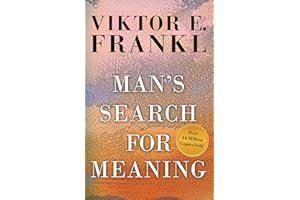
Man's Search for Meaning has riveted generations of readers with its descriptions of life in Nazi death camps and its lessons for spiritual survival. Between 1942 and 1945 psychiatrist Viktor Frankl labored in four different camps, including Auschwitz, while his parents, brother, and pregnant wife perished. Based on his own experience and the stories of his many patients, Frankl argues that we cannot avoid suffering but we can choose how to cope with it, find meaning in it, and move forward with renewed purpose. Frankl's theory—known as logotherapy, from the Greek word logos ("meaning")—holds that our primary drive in life is not pleasure, as Freud maintained, but the discovery and pursuit of what we personally find meaningful. In the decades since its first publication in 1959, Man's Search for Meaning has become a classic, with more than twelve million copies in print around the world. A 1991 Library of Congress survey that asked readers to name a "book that made a difference in your life" found Man's Search for Meaning among the ten most influential books in America. At once a memoir, a meditation, a treatise, and a history, it continues to inspire us all to find significance in the very act of living. (back cover)
…
Recommended by Tony Robbins, Dustin Moskovitz, Ev Williams, and 60 others.
Another book that I’ve read dozens of times. It taught me that if you change the meaning, you change everything. Meaning equals emotion, and emotion equals life. [source]
Dustin Moskovitz
Co-founder/Facebook and Asana
Dustin Moskovitz recommended this book on Twitter. [source]
I read it while spending ten days in the ICU of Bellevue hospital trying to reattach my finger from a ring avulsion accident in my kitchen. It talks about the meaning of life, and I believe you come out a better person from reading it. [source]
Cover unavailable
2
Night
Elie Wiesel
4.8
Night is Elie Wiesel's masterpiece, a candid, horrific, and deeply poignant autobiographical account of his survival as a teenager in the Nazi death camps. This new translation by Marion Wiesel, Elie's wife and frequent translator, presents this seminal memoir in the language and spirit truest to the author's original intent. And in a substantive new preface, Elie reflects on the enduring importance of Night and his lifelong, passionate dedication to ensuring that the world never forgets man's capacity for inhumanity to man.
Night offers much more than a litany of the daily terrors, everyday perversions, and rampant sadism at Auschwitz and Buchenwald; it also el
…
Recommended by Johanna Reiss and Steven Katz.
Johanna Reiss
Elie Wiesel wrote..that he was considering running into the barbed wire once, but he didn’t because his father needed him. [source]
Steven Katz
Probably the best known memoir that has been written about the experience of the death camps. [source]
Cover unavailable
3
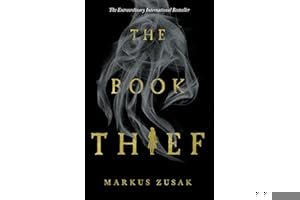
The Book Thief
Markus Zusak
4.6
It is 1939. Nazi Germany. The country is holding its breath. Death has never been busier, and will be busier still.
By her brother's graveside, Liesel's life is changed when she picks up a single object, partially hidden in the snow. It is The Gravedigger's Handbook, left behind there by accident, and it is her first act of book thievery. So begins a love affair with books and words, as Liesel, with the help of her accordian-playing foster father, learns to read. Soon she is stealing books from Nazi book-burnings, the mayor's wife's library, wherever there are books to be found.
But these are dangerous times. When Liesel's foster family hides a Jew in their basement, Liesel's world is both opened up, and closed down.
In superbly crafted writing that burns with intensity, award-winning author Markus Zusak has given us one of the most enduring stories of our time.
The novel follows the lives of the title characters, a Czech artist named Joe Kavalier and a Brooklyn-born writer named Sam Clay—both Jewish—before, during, and after World War II. Kavalier and Clay become major figures in the nascent comics industry during its "Golden Age."
Recommended by Ev Williams, Anne Thériault, Natasha Lyonne, and 1 others.
Anne Thériault
@luzbianca417 Phew! I loved that book so much and then the ending I was just like .... what??? No one is making decisions with this child’s best interests in mind! [source]
Sprawling, well researched, historical story. A true pleasure to read. [source]
Cover unavailable
5
The Chosen (Reuven Malther #1)
Chaim Potok
4.5
It is the now-classic story of two fathers and two sons and the pressures on all of them to pursue the religion they share in the way that is best suited to each. And as the boys grow into young men, they discover in the other a lost spiritual brother, and a link to an unexplored world that neither had ever considered before. In effect, they exchange places, and find the peace that neither will ever retreat from again. . . .
…
Cover unavailable
6
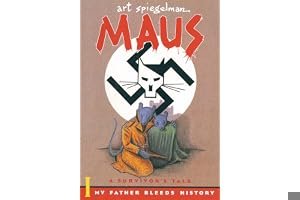
Maus I: A Survivor's Tale: My Father Bleeds History (Maus, #1)
Art Spiegelman
4.5
A story of a Jewish survivor of Hitler's Europe and his son, a cartoonist who tries to come to terms with his father's story and history itself.
Combined for the first time here are Maus I: A Survivor's Tale and Maus II - the complete story of Vladek Spiegelman and his wife, living and surviving in Hitler's Europe. By addressing the horror of the Holocaust through cartoons, the author captures the everyday reality of fear and is able to explore the guilt, relief and extraordinary sensation of survival - and how the children of survivors are in their own way affected by the trials of their parents. A contemporary classic of immeasurable significance.
…
Recommended by Susan Bordo.
Susan Bordo
It’s about the Holocaust. It’s also a comic book, in which the various characters are depicted as animals – the Jews as mice, the Nazis as cats. [source]
Cover unavailable
8
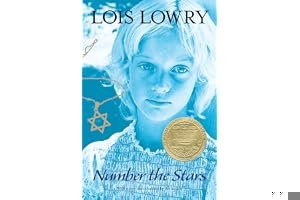
Number the Stars
Lois Lowry
4.4
Ten-year-old Annemarie Johansen and her best friend Ellen Rosen often think of life before the war. It's now 1943 and their life in Copenhagen is filled with school, food shortages, and the Nazi soldiers marching through town. When the Jews of Denmark are "relocated," Ellen moves in with the Johansens and pretends to be one of the family. Soon Annemarie is asked to go on a dangerous mission to save Ellen's life.
…
Cover unavailable
9
My Name Is Asher Lev
Chaim Potok
4.4
Asher Lev is a Ladover Hasid who keeps kosher, prays three times a day and believes in the Ribbono Shel Olom, the Master of the Universe. Asher Lev is an artist who is compulsively driven to render the world he sees and feels even when it leads him to blasphemy. In this stirring and often visionary novel, Chaim Potok traces Asher’s passage between these two identities, the one consecrated to God, the other subject only to the imagination.
Asher Lev grows up in a cloistered Hasidic community in postwar Brooklyn, a world suffused by ritual and revolving around a charismatic Rebbe. But in time his gift threatens to estrange him from that world and the parents he adores. As it follows his struggle, My Name Is Asher Lev becomes a luminous portrait of the artist, by turns heartbreaking and exultant, a modern classic.
…
Cover unavailable
10
The Red Tent
Anita Diamant
4.4
Her name is Dinah. In the Bible, her life is only hinted at in a brief and violent detour within the more familiar chapters of the Book of Genesis that are about her father, Jacob, and his dozen sons. Told in Dinah's voice, this novel reveals the traditions and turmoils of ancient womanhood--the world of the red tent. It begins with the story of her mothers--Leah, Rachel, Zilpah, and Bilhah--the four wives of Jacob. They love Dinah and give her gifts that sustain her through a hard-working youth, a calling to midwifery, and a new home in a foreign land. Dinah's story reaches out from a remarkable period of early history and creates an intimate connection with the past. Deeply affecting, The Red Tent combines rich storytelling with a valuable achievement in modern fiction: a new view of biblical women's society.
…
Cover unavailable
11
People of the Book
Geraldine Brooks
4.4
From the Pulitzer Prize–winning author of March, the journey of a rare illuminated manuscript through centuries of exile and war
In 1996, Hanna Heath, an Australian rare-book expert, is offered the job of a lifetime: analysis and conservation of the famed Sarajevo Haggadah, which has been rescued from Serb shelling during the Bosnian war. Priceless and beautiful, the book is one of the earliest Jewish volumes ever to be illuminated with images. When Hanna, a caustic loner with a passion for her work, discovers a series of tiny artifacts in its ancient binding—an insect wing fragment, wine stains, salt crystals, a white hair—she begins to unlock the book’s mysteries. The reader is ushered into an exquisitely detailed and atmospheric past, tracing the book’s journey from its salvation back to its creation.
In Bosnia during World War II, a Muslim risks his life to protect it from the Nazis. In the hedonistic salons of fin-de-siècle Vienna, the book becomes a pawn in the struggle against the city’s rising anti-Semitism. In inquisition-era Venice, a Catholic priest saves it from burning. In Barcelona in 1492, the scribe who wrote the text sees his family destroyed by the agonies of enforced exile. And in Seville in 1480, the reason for the Haggadah’s extraordinary illuminations is finally disclosed. Hanna’s investigation unexpectedly plunges her into the intrigues of fine art forgers and ultra-nationalist fanatics. Her experiences will test her belief in herself and the man she has come to love.
Inspired by a true story, People of the Book is at once a novel of sweeping historical grandeur and intimate emotional intensity, an ambitious, electrifying work by an acclaimed and beloved author.
…
Cover unavailable
12
The Yiddish Policemen's Union
Michael Chabon
4.4
For sixty years, Jewish refugees and their descendants have prospered in the Federal District of Sitka, a "temporary" safe haven created in the wake of revelations of the Holocaust and the shocking 1948 collapse of the fledgling state of Israel. Proud, grateful, and longing to be American, the Jews of the Sitka District have created their own little world in the Alaskan panhandle, a vibrant, gritty, soulful, and complex frontier city that moves to the music of Yiddish. For sixty years they have been left alone, neglected and half-forgotten in a backwater of history. Now the District is set to revert to Alaskan control, and their dream is coming to an end: once again the tides of history threaten to sweep them up and carry them off into the unknown.
But homicide detective Meyer Landsman of the District Police has enough problems without worrying about the upcoming Reversion. His life is a shambles, his marriage a wreck, his career a disaster. He and his half-Tlingit partner, Berko Shemets, can't catch a break in any of their outstanding cases. Landsman's new supervisor is the love of his life—and also his worst nightmare. And in the cheap hotel where he has washed up, someone has just committed a murder—right under Landsman's nose. Out of habit, obligation, and a mysterious sense that it somehow offers him a shot at redeeming himself, Landsman begins to investigate the killing of his neighbor, a former chess prodigy. But when word comes down from on high that the case is to be dropped immediately, Landsman soon finds himself contending with all the powerful forces of faith, obsession, hopefulness, evil, and salvation that are his heritage—and with the unfinished business of his marriage to Bina Gelbfish, the one person who understands his darkest fears.
At once a gripping whodunit, a love story, an homage to 1940s noir, and an exploration of the mysteries of exile and redemption, The Yiddish Policemen's Union is a novel only Michael Chabon could have written. (front flap)
…
Cover unavailable
13
Exodus
Leon Uris
4.3
Exodus is an international publishing phenomenon--the towering novel of the twentieth century's most dramatic geopolitical event. Leon Uris magnificently portrays the birth of a new nation in the midst of enemies--the beginning of an earthshaking struggle for power. Here is the tale that swept the world with its fury: the story of an American nurse, an Israeli freedom fighter caught up in a glorious, heartbreaking, triumphant era.
Exodus is a book that had a profound impact on how many Americans thought about Israel. [source]
Cover unavailable
14
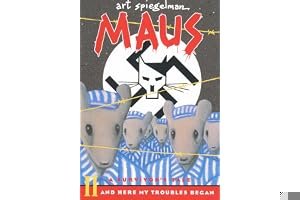
Maus II: A Survivor's Tale: And Here My Troubles Began (Maus, #2)
Art Spiegelman
4.3
Acclaimed as a quiet triumph and a brutally moving work of art, the first volume of Art Spieglman's Maus introduced readers to Vladek Spiegleman, a Jewish survivor of Hitler's Europe, and his son, a cartoonist trying to come to terms with his father, his father's terrifying story, and History itself. Its form, the cartoon (the Nazis are cats, the Jews mice), succeeds perfectly in shocking us out of any lingering sense of familiararity with the events described, approaching, as it does, the unspeakable through the diminutive.
This second volume, subtitled And Here My Troubles Began, moves us from the barracks of Auschwitz to the bungalows of the Catskills. Genuinely tragic and comic by turns, it attains a complexity of theme and a precision of thought new to comics and rare in any medium. Maus ties together two powerful stories: Vladek's harrowing tale of survival against all odds, delineating the paradox of daily life in the death camps, and the author's account of his tortured relationship with his aging father. At every level this is the ultimate survivor's tale - and that too of the children who somehow survive even the survivors.
In April 1942, Lale Sokolov, a Slovakian Jew, is forcibly transported to the concentration camps at Auschwitz-Birkenau. When his captors discover that he speaks several languages, he is put to work as a Tätowierer (the German word for tattooist), tasked with permanently marking his fellow prisoners.
Imprisoned for over two and a half years, Lale witnesses horrific atrocities and barbarism—but also incredible acts of bravery and compassion. Risking his own life, he uses his privileged position to exchange jewels and money from murdered Jews for food to keep his fellow prisoners alive.
One day in July 1942, Lale, prisoner 32407, comforts a trembling young woman waiting in line to have the number 34902 tattooed onto her arm. Her name is Gita, and in that first encounter, Lale vows to somehow survive the camp and marry her.
A vivid, harrowing, and ultimately hopeful re-creation of Lale Sokolov's experiences as the man who tattooed the arms of thousands of prisoners with what would become one of the most potent symbols of the Holocaust, The Tattooist of Auschwitz is also a testament to the endurance of love and humanity under the darkest possible conditions.
…
Cover unavailable
16
The Plot Against America
Philip Roth
4.3
In an astonishing feat of narrative invention, our most ambitious novelist imagines an alternate version of American history. In 1940 Charles A. Lindbergh, heroic aviator and rabid isolationist, is elected President. Shortly thereafter, he negotiates a cordial "understanding" with Adolf Hitler, while the new government embarks on a program of folksy anti-Semitism.
For one boy growing up in Newark, Lindbergh's election is the first in a series of ruptures that threatens to destroy his small, safe corner of America - and with it, his mother, his father, and his older brother. (back cover)
…
Recommended by Daniel Pink, Nate Bowling (Is Thankful For A/c), Sam Bourne, and 1 others.
Nate Bowling (Is Thankful For A/c)
@Sifill_LDF @soledadobrien The first and best Philip Roth book I read was called "The Plot Against America." It's wild as hell to watch it unfold IRL. https://t.co/ZWLkHjs5a2 https://t.co/shcD2kJ3Zi [source]
Sam Bourne
Roth’s what if? in this book is imagining that Roosevelt is no longer president, and Charles Lindbergh, an isolationist and anti-war politician, is president instead. So the idea is, What if America had stayed out of the war and was morally on the wrong side? [source]
Steven Amsterdam
The best way to tell stories of horrific times is not through the central players amassing power, but through the lives of the people off to the side, simply trying to survive. [source]
Cover unavailable
17
Sarah's Key
Tatiana de Rosnay
4.3
Paris, July 1942: Ten-year-old Sarah is brutally arrested with her family in the Vel' d'Hiv' roundup, the most notorious act of French collaboration with the Nazis. but before the police come to take them, Sarah locks her younger brother, Michel, in their favorite hiding place, a cupboard in the family's apartment. She keeps the key, thinking that she will be back within a few hours.
Paris, May 2002: On Vel' d'Hiv's sixtieth anniversary, Julia Jarmond, an American journalist, is asked by her Paris-based American magazine to write an article about this black day in France's past. Julia has lived in Paris for nearly twenty-five years, married a Frenchman, and she is shocked both by her ignorance about the event and the silence that still surrounds it. In the course of her investigation, she stumbles onto a trail of long-hidden family secrets that connects her to Sarah. Julia finds herself compelled to retrace the girl's ordeal, from the terrible days spent shut in at the Vel' d'Hiv' to the camps and beyond. As she probes into Sarah's past, she begins to question her own place in France and to reevaluate her marriage and her life.
Writing about the fate of her country with a pitiless clarity, Tatiana de Rosnay offers us a brilliantly subtle, compelling portrait of France under occupation and reveals the taboos and denial surrounding this painful episode in French history. (front flap)
…
Cover unavailable
18
Eichmann in Jerusalem: A Report on the Banality of Evil
Originally appearing as a series of articles in The New Yorker, Hannah Arendt’s authoritative and stunning report on the trial of Nazi leader Adolf Eichmann sparked a flurry of debate upon its publication. This revised edition includes material that came to light after the trial, as well as Arendt’s postscript directly addressing the controversy that arose over her account. A major journalistic triumph by an intellectual of singular influence, Eichmann in Jerusalem is as shocking as it is informative—an unflinching look at one of the most unsettling and unsettled issues of the twentieth century that remains hotly debated to this day.
…
Recommended by Dr. Phil Zimbardo, Daniel Pick, David Bell, and 1 others.
Dr. Phil Zimbardo
Talks about Eichmann as illustrating the banality of evil. [source]
Daniel Pick
The trial focused public attention on the individual high bureaucrat who had such personal responsibility in the Final Solution. There was, in a way, this enigma of what went on in Eichmann’s mind. [source]
David Bell
Political philosopher Arendt sees the work of the Nazis as the inevitable result of colonialism and industrialisation. [source]
Cover unavailable
19
Everything Is Illuminated
Jonathan Safran Foer
4.3
The simplest thing would be to describe Everything is Illuminated, Jonathan Safran Foer's accomplished debut, as a novel about the Holocaust. It is, but that really fails to do justice to the sheer ambition of this book. The main story is a grimly familiar one. A young Jewish-American--who just happens to be called Jonathan Safran Foer--travels to the Ukraine in the hope of finding the woman who saved his grandfather from the Nazis. He is aided in his search by Alex Perchov, a naïve Ukrainian translator, Alex's grandfather (also called Alex) and a flatulent mongrel bitch, named Sammy Davis JR JR. On their journey through Eastern Europe's obliterated landscape they unearth facts about the Nazi atrocities and the extent of Ukrainian complicity that have implications for Perchov as well as Safran Foer. This narrative is not, however, recounted from (the character) Jonathan Safran Foer's perspective. It is relayed through a series of letters that Alex sends to Foer. These are written in the kind of broken Russo-English normally reserved for Bond villains and Latka from the US television series Taxi. (Sentences such as "It is mammoth honour for me write for a writer, especially when he is American writer, like Ernest Hemingway"; "It is bad and popular habit for people in Ukraine to take things without asking" are the norm.) Interspersed between these letters are fragments of a novel by "Safran Foer"--a wonderfully imagined, almost magical realist, account of life in the Shetl before the Nazis destroyed it. These are in turn commented on by Alex creating an additional metafictional angle to the tale.
If all this sounds a little daunting don't be put off; Safran Foer is an extremely funny as well as intelligent writer. Admittedly he has an annoying habit of capitalising great chunks of text, but minor typographical nuances are easy to ignore in a book that combines some of the best Jewish folk yarns since Isaac Bashevis Singer with a quite heartbreaking meditation on love, friendship and loss. --Travis Elborough
…
Recommended by Leo Babauta.
Cover unavailable
20
The Golem and the Jinni (The Golem and the Jinni, #1)
Helene Wecker
4.3
Chava is a golem, a creature made of clay, brought to life by a disgraced rabbi who dabbles in dark Kabbalistic magic, created to be the wife of a man who dies at sea on the voyage from Poland. Chava is unmoored and adrift as the ship arrives in New York harbor in 1899.
Ahmad is a jinni, a being of fire born in the ancient Syrian desert, trapped in an old copper flask, and released in New York City, though still not entirely free.
Ahmad and Chava become unlikely friends and soul mates with a mystical connection. Marvelous and compulsively readable, Helene Wecker's debut novel The Golem and the Jinni weaves strands of Yiddish and Middle Eastern literature, historical fiction and magical fable, into a wondrously inventive and unforgettable tale.
…
Cover unavailable
21
Unorthodox: The Scandalous Rejection of My Hasidic Roots
Deborah Feldman
4.3
The instant New York Times bestselling memoir of a young Jewish woman’s escape from a religious sect, in the tradition of Ayaan Hirsi Ali’s Infidel and Carolyn Jessop’s Escape, featuring a new epilogue by the author.
As a member of the strictly religious Satmar sect of Hasidic Judaism, Deborah Feldman grew up under a code of relentlessly enforced customs governing everything from what she could wear and to whom she could speak to what she was allowed to read. It was stolen moments spent with the empowered literary characters of Jane Austen and Louisa May Alcott that helped her to imagine an alternative way of life. Trapped as a teenager in a sexually and emotionally dysfunctional marriage to a man she barely knew, the tension between Deborah’s desires and her responsibilities as a good Satmar girl grew more explosive until she gave birth at nineteen and realized that, for the sake of herself and her son, she had to escape.
…
Cover unavailable
22
The Boy in the Striped Pajamas
John Boyne
4.3
If you start to read this book, you will go on a journey with a nine-year-old boy named Bruno. (Though this isn't a book for nine-year-olds.) And sooner or later you will arrive with Bruno at a fence.
Fences like this exist all over the world. We hop you never have to encounter one.
Cover unavailable
23
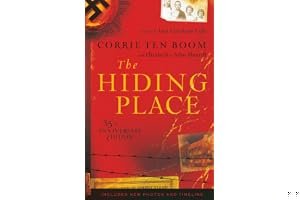
The Hiding Place: The Triumphant True Story of Corrie Ten Boom
At one time Corrie ten Boom would have laughed at the idea that there would ever be a story to tell. For the first fifty years of her life nothing at all out of the ordinary had ever happened to her. She was an old-maid watchmaker living contentedly with her spinster sister and their elderly father in the tiny Dutch house over their shop. Their uneventful days, as regulated as their own watches, revolved around their abiding love for one another. However, with the Nazi invasion and occupation of Holland, a story did ensue.
Corrie ten Boom and her family became leaders in the Dutch Underground, hiding Jewish people in their home in a specially built room and aiding their escape from the Nazis. For their help, all but Corrie found death in a concentration camp. The Hiding Place is their story.
…
Recommended by Alison Alvarez.
Alison Alvarez
What I really took with me from the book were the descriptions of how she dealt with the stress of solitary confinement and eventually the Ravensbruck concentration camp. I adapted some of her techniques for keeping her mind occupied to deal with my own problems with anxiety and worry. Also, it’s a book with a surprising amount of joy in it for subject matter that is so dark. [source]
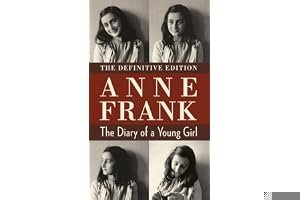
In Everyman’s Library for the first time—one of the most moving and eloquent accounts of the Holocaust, read by tens of millions of people around the world since its publication in 1947. The Diary of a Young Girl is the record of two years in the life of a remarkable Jewish girl whose triumphant humanity in the face of unfathomable deprivation and fear has made the book one of the most enduring documents of our time.
The Everyman’s hardcover edition reprints the Definitive Edition authorized by the Frank estate, plus a new introduction, a bibliography, and a chronology of Anne Frank’s life and times.
…
Recommended by Alice Little, Catalina Penciu, and Tim Fargo.
Alice Little
I remember being a fourth grader and trying to check out this book and being told it was grossly inappropriate and going so far as to have my parents take it to the school board and petition for me to be allowed to read this book. [source]
Catalina Penciu
I'm a huge fan of personal stories and biographies like this one. [source]
Tim Fargo
@Quixoticnance Good point, Nancy. The museum is a powerful experience, esp. when you've read her book. [source]
Cover unavailable
25
The Promise
Chaim Potok
4.3
“A superb mirror of a place, a time, and a group of people who capture our immediate interest and hold it tightly.” —The Philadelphia Inquirer
Young Reuven Malter is unsure of himself and his place in life. An unconventional scholar, he struggles for recognition from his teachers. With his old friend Danny Saunders—who himself had abandoned the legacy as the chosen heir to his father's rabbinical dynasty for the uncertain life of a healer—Reuvan battles to save a sensitive boy imprisoned by his genius and rage. Painfully, triumphantly, Reuven's understanding of himself, though the boy change, as he starts to approach the peace he has long sought…
…
Cover unavailable
26
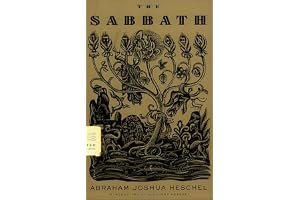
The Sabbath: Its Meaning for Modern Man
Abraham Heschel
4.2
Elegant, passionate, and filled with the love of God's creation, Abraham Joshua Heschel's The Sabbath has been hailed as a classic of Jewish spirituality ever since its original publication-and has been read by thousands of people seeking meaning in modern life. In this brief yet profound meditation on the meaning of the Seventh Day, Heschel introduced the idea of an "architecture of holiness" that appears not in space but in time. Judaism, he argues, is a religion of time: it finds meaning not in space and the material things that fill it but in time and the eternity that imbues it, so that "the Sabbaths are our great cathedrals."
…
Cover unavailable
27
The History of Love
Nicole Krauss
4.2
An alternative cover edition for this ISBN can be found here
Fourteen-year-old Alma Singer is trying to find a cure for her mother's loneliness. Believing she might discover it in an old book her mother is lovingly translating, she sets out in search of its author. Across New York an old man called Leo Gursky is trying to survive a little bit longer. He spends his days dreaming of the lost love who, sixty years ago in Poland, inspired him to write a book. And although he doesn't know it yet, that book also survived: crossing oceans and generations, and changing lives...
…
Cover unavailable
28
The Weight of Ink
Rachel Kadish
4.2
An intellectual and emotional jigsaw puzzle of a novel for readers of A. S. Byatt’s Possession and Geraldine Brooks’s People of the Book.
Set in London of the 1660s and of the early twenty-first century, The Weight of Ink is the interwoven tale of two women of remarkable intellect: Ester Velasquez, an emigrant from Amsterdam who is permitted to scribe for a blind rabbi, just before the plague hits the city; and Helen Watt, an ailing historian with a love of Jewish history.
As the novel opens, Helen has been summoned by a former student to view a cache of seventeenth-century Jewish documents newly discovered in his home during a renovation. Enlisting the help of Aaron Levy, an American graduate student as impatient as he is charming, and in a race with another fast-moving team of historians, Helen embarks on one last project: to determine the identity of the documents’ scribe, the elusive “Aleph.”
Electrifying and ambitious, sweeping in scope and intimate in tone, The Weight of Ink is a sophisticated work of historical fiction about women separated by centuries, and the choices and sacrifices they must make in order reconcile the life of the heart and mind.
…
Cover unavailable
29
All-of-a-Kind Family (All-of-a-Kind-Family, #1)
Sydney Taylor
4.2
It's the turn of the century in New York's Lower East Side and a sense of adventure and excitement abounds for five young sisters - Ella, Henny, Sarah, Charlotte and Gertie. Follow along as they search for hidden buttons while dusting Mama's front parlor, or explore the basement warehouse of Papa's peddler's shop on rainy days. The five girls enjoy doing everything together, especially when it involves holidays and surprises. But no one could have prepared them for the biggest surprise of all!
…
Cover unavailable
30
Portnoy's Complaint
Philip Roth
4.2
The famous confession of Alexander Portnoy, who is thrust through life by his unappeasable sexuality, yet held back at the same time by the iron grip of his unforgettable childhood. Hilariously funny, boldly intimate, startlingly candid, Portnoy’s Complaint was an immediate bestseller upon its publication in 1969, and is perhaps Roth’s best-known book.
Portnoy's Complaint n. [after Alexander Portnoy (1933-)] A disorder in which strongly-felt ethical and altruistic impulses are perpetually warring with extreme sexual longings, often of a perverse nature. Spielvogel says: 'Acts of exhibitionism, voyeurism, fetishism, auto-eroticism and oral coitus are plentiful; as a consequence of the patient's "morality," however, neither fantasy nor act issues in genuine sexual gratification, but rather in overriding feelings of shame and the dread of retribution, particularly in the form of castration.' (Spielvogel, O. 'The Puzzled Penis', Internationale Zeitschrift fur Psychoanalyse, Vol. XXIV, p. 909.) it is believed by Spielvogel that many of the symptoms can be traced to the bonds obtaining in the mother-child relationship.
…
Recommended by Kushanava Choudhury.
Kushanava Choudhury
The paradigmatic novel of New Jersey for me is Portnoy’s Complaint. [source]
Cover unavailable
31
The Dovekeepers
Alice Hoffman
4.2
Over five years in the writing, The Dovekeepers is Alice Hoffman's most ambitious and mesmerizing novel, a tour de force of imagination and research, set in ancient Israel.
In 70 C.E., nine hundred Jews held out for months against armies of Romans on Masada, a mountain in the Judean desert. According to the ancient historian Josephus, two women and five children survived. Based on this tragic and iconic event, Hoffman's novel is a spellbinding tale of four extraordinarily bold, resourceful, and sensuous women, each of whom has come to Masada by a different path. Yael's mother died in childbirth, and her father, an expert assassin, never forgave her for that death. Revka, a village baker's wife, watched the horrifically brutal murder of her daughter by Roman soldiers; she brings to Masada her young grandsons, rendered mute by what they have witnessed. Aziza is a warrior's daughter, raised as a boy, a fearless rider and an expert marksman who finds passion with a fellow soldier. Shirah, born in Alexandria, is wise in the ways of ancient magic and medicine, a woman with uncanny insight and power.
The lives of these four complex and fiercely independent women intersect in the desperate days of the siege. All are dovekeepers, and all are also keeping secrets - about who they are, where they come from, who fathered them, and whom they love.
…
Cover unavailable
32
The Devil's Arithmetic
Jane Yolen
4.2
Hannah thinks tonight Passover Seder will be the same as always. But this year she will be mysteriously transported into the past. Only she knows the horrors that await.
Cover unavailable
33
Choosing a Jewish Life: A Handbook for People Converting to Judaism and for Their Family and Friends
Anita Diamant
4.2
Married to a convert herself, Anita Diamant provides advice and information that can transform the act of conversion into an extraordinary journey of self-discovery and spiritual growth.
Here you will learn how to choose a rabbi, a synagogue, a denomination, a Hebrew name; how to handle the difficulty of putting aside Christmas; what happens at the mikvah (ritual bath) or at a hatafat dam brit (circumcision ritual for those already circumcised); how to find your footing in a new spiritual family that is not always well prepared to receive you; and how not to lose your bonds to your family of origin. Diamant anticipates all the questions, doubts, and concerns, and provides a comprehensive explanation of the rules and rituals of conversion.
…
Cover unavailable
34
A Tale of Love and Darkness
Amos Oz
4.2
Tragic, comic, and utterly honest, A Tale of Love and Darkness is at once a family saga and a magical self-portrait of a writer who witnessed the birth of a nation and lived through its turbulent history.
It is the story of a boy growing up in the war-torn Jerusalem of the forties and fifties, in a small apartment crowded with books in twelve languages and relatives speaking nearly as many. The story of an adolescent whose life has been changed forever by his mother's suicide when he was twelve years old. The story of a man who leaves the constraints of his family and its community of dreamers, scholars, and failed businessmen to join a kibbutz, change his name, marry, have children. The story of a writer who becomes an active participant in the political life of his nation. (back cover)
…
Recommended by Michael Goldfarb.
Cover unavailable
35
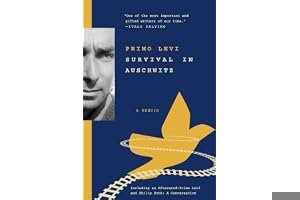
Survival in Auschwitz
Primo Levi
4.2
The true and harrowing account of Primo Levi’s experience at the German concentration camp of Auschwitz and his miraculous survival; hailed by The Times Literary Supplement as a “true work of art, this edition includes an exclusive conversation between the author and Philip Roth.
In 1943, Primo Levi, a twenty-five-year-old chemist and “Italian citizen of Jewish race,” was arrested by Italian fascists and deported from his native Turin to Auschwitz. Survival in Auschwitz is Levi’s classic account of his ten months in the German death camp, a harrowing story of systematic cruelty and miraculous endurance. Remarkable for its simplicity, restraint, compassion, and even wit, Survival in Auschwitz remains a lasting testament to the indestructibility of the human spirit.
…
Cover unavailable
36
Schindler's List
Thomas Keneally
4.2
In the shadow of Auschwitz, a flamboyant German industrialist grew into a living legend to the Jews of Cracow. He was a womaniser, a heavy drinker and a bon viveur, but to them he became a saviour. This is the extraordinary story of Oskar Schindler, who risked his life to protect Jews in Nazi-occupied Poland and who was transformed by the war into a man with a mission, a compassionate angel of mercy.
…
Cover unavailable
37
The Invisible Bridge
Julie Orringer, Arthur Morey
4.2
A grand love story and an epic tale of three brothers whose lives are torn apart by war.
Paris, 1937. Andras Lévi, a Hungarian Jewish architecture student, arrives from Budapest with a scholarship, a single suitcase, and a mysterious letter he has promised to deliver to C. Morgenstern on the rue de Sévigné. As he becomes involved with the letter’s recipient, his elder brother takes up medical studies in Modena, their younger brother leaves school for the stage—and Europe’s unfolding tragedy sends each of their lives into terrifying uncertainty.
From the Hungarian village of Konyár to the grand opera houses of Budapest and Paris, from the lonely chill of Andras’s garret to the enduring passion he discovers on the rue de Sévigné, from the despair of a Carpathian winter to an unimaginable life in forced labor camps and beyond, The Invisible Bridge tells the unforgettable story of brothers bound by history and love, of a marriage tested by disaster, of a Jewish family’s struggle against annihilation, and of the dangerous power of art in a time of war.
Length: 27 hrs and 51 mins
…
Cover unavailable
38
Jewish Literacy: The Most Important Things to Know about the Jewish Religion, Its People, and Its History
Joseph Telushkin
4.2
All the answers are here. "Jewish Literacy, " written by an esteemed rabbi, is a compendium of 346 short chapters on the essential trends, concepts, and personalities of Jewish history, religion, and culture.
Cover unavailable
39
The Color of Water: A Black Man's Tribute to His White Mother
James McBride
4.2
With a new Introduction to this touching homage to his mother, the author paints a portrait of growing up in a black neighborhood as the child of an interracial marriage. Although raised an Orthodox Jew in the South, McBride's mother abandoned her heritage, moved to Harlem, and married a black man.
Recommended by Colleen McCreary.
Colleen McCreary
It captures the emotions and new understandings of race told through one family's history. [source]
Cover unavailable
40
The Choice: Embrace the Possible
Edith Eger
4.1
A New York Times Bestseller
“I’ll be forever changed by Dr. Eger’s story…The Choice is a reminder of what courage looks like in the worst of times and that we all have the ability to pay attention to what we’ve lost, or to pay attention to what we still have.”—Oprah
“Dr. Eger’s life reveals our capacity to transcend even the greatest of horrors and to use that suffering for the benefit of others. She has found true freedom and forgiveness and shows us how we can as well.” —Desmond Tutu, Nobel Peace Prize Laureate
“Dr. Edith Eva Eger is my kind of hero. She survived unspeakable horrors and brutality; but rather than let her painful past destroy her, she chose to transform it into a powerful gift—one she uses to help others heal.” —Jeannette Walls, New York Times bestselling author of The Glass Castle
Winner of the National Jewish Book Award and Christopher Award
At the age of sixteen, Edith Eger was sent to Auschwitz. Hours after her parents were killed, Nazi officer Dr. Josef Mengele, forced Edie to dance for his amusement and her survival. Edie was pulled from a pile of corpses when the American troops liberated the camps in 1945.
Edie spent decades struggling with flashbacks and survivor’s guilt, determined to stay silent and hide from the past. Thirty-five years after the war ended, she returned to Auschwitz and was finally able to fully heal and forgive the one person she’d been unable to forgive—herself.
Edie weaves her remarkable personal journey with the moving stories of those she has helped heal. She explores how we can be imprisoned in our own minds and shows us how to find the key to freedom. The Choice is a life-changing book that will provide hope and comfort to generations of readers.
…
Cover unavailable
41
The Boston Girl
Anita Diamant
4.1
From the New York Times bestselling author of The Red Tent and Day After Night, comes an unforgettable coming-of-age novel about family ties and values, friendship and feminism told through the eyes of a young Jewish woman growing up in Boston in the early twentieth century.
Addie Baum is The Boston Girl, born in 1900 to immigrant parents who were unprepared for and suspicious of America and its effect on their three daughters. Growing up in the North End, then a teeming multicultural neighborhood, Addie's intelligence and curiosity take her to a world her parents can't imagine - a world of short skirts, movies, celebrity culture and new opportunities for women. Addie wants to finish high school and dreams of going to college. She wants a career and to find true love.
Eighty-five-year-old Addie tells the story of her life to her twenty-two-year-old granddaughter, who has asked her "How did you get to be the woman you are today?" She begins in 1915, the year she found her voice and made friends who would help shape the course of her life. From the one-room tenement apartment she shared with her parents and two sisters, to the library group for girls she joins at a neighborhood settlement house, to her first, disastrous love affair, Addie recalls her adventures with compassion for the naïve girl she was and a wicked sense of humor.
Written with the same attention to historical detail and emotional resonance that made Anita Diamant's previous novels bestsellers, The Boston Girl is a moving portrait of one woman’s complicated life in twentieth-century America, and a fascinating look at a generation of women finding their places in a changing world.
…
Cover unavailable
42
If This Is a Man • The Truce
Primo Levi, Stuart Woolf, Paul Bailey
4.1
'With the moral stamina and intellectual poise of a twentieth-century Titan, this slightly built, dutiful, unassuming chemist set out systematically to remember the German hell on earth, steadfastly to think it through, and then to render it comprehensible in lucid, unpretentious prose. He was profoundly in touch with the minutest workings of the most endearing human events and with the most contemptible. What has survived in Levi's writing isn't just his memory of the unbearable, but also, in The Periodic Table and The Wrench, his delight in what made the world exquisite to him. He was himself a magically endearing man, the most delicately forceful enchanter I've ever known' - Philip Roth.
…
Recommended by Aleksandar Hemon, Andrew Cayley, David Blaine, and 3 others.
Levi regains reason, by treating his experience in Auschwitz as something that is subject to rational analysis. [source]
Andrew Cayley
Primo Levi was an Italian Jew and he was arrested as a member of the anti-fascist resistance towards the end of the war, after Germany had occupied Italy. He was deported to Auschwitz. He survived and then he wrote a book about his experiences there. This really is a book that everybody should be made to read because he very sensitively describes what people become in a concentration camp. [source]
Living a Jewish Life, Updated and Revised Edition: Jewish Traditions, Customs, and Values for Today's Families
Anita Diamant and Howard Cooper
4.1
Living a Jewish Life describes Judaism as not just a contemplative or abstract system of thought but as a blueprint for living fully and honorably. This new edition builds on the classic guide, which has been a favorite among Jewish educators and students for years. Enriched with additional resources, including online resources, this updated guide also references recent changes in the modern Jewish community, and has served as a resource and guide for non–Jews as well as Jews.
Addressing the choices posed by the modern world, Living a Jewish Life explains the traditions and beliefs of Judaism in the context of real life. It explores the spectrum of liberal Jewish thought, from Conservative to Reconstructionist to Reform, as well as unaffiliated, new age, and secular. Celebrating the diversity of Jewish beliefs, this guide provides information in ways that readers can choose how to incorporate Judaism into their lives.
Readers will learn how to choose the right synagogue, and discover the meaning and significance of lighting Sabbath candles. "Shabbat," "Torah," "kosher," "mitzvah" and other key words are all defined in all of their complex and potent meanings.
On the most basic level, this book explains the essential Jewish vocabulary, but more importantly, LIVING A JEWISH LIFE is a sensitive and comprehensive introduction that reveals the timeless nature of Jewish tradition, rich with history and relevant in the modern world.
…
Cover unavailable
44
God in Search of Man: A Philosophy of Judaism
Abraham Joshua Heschel
4.1
Abraham Joshua Heschel was one of the most revered religious leaders of the 20th century, and God in Search of Man and its companion volume, Man Is Not Alone, two of his most important books, are classics of modern Jewish theology. God in Search of Man combines scholarship with lucidity, reverence, and compassion as Dr. Heschel discusses not man's search for God but God's for man--the notion of a Chosen People, an idea which, he writes, "signifies not a quality inherent in the people but a relationship between the people and God." It is an extraordinary description of the nature of Biblical thought, and how that thought becomes faith.
…
Cover unavailable
45
The Jewish Book of Why
Alfred J. Kolatch
4.1
Why do Jews eat gefilte fish?
Why is a glass broken at the end of a Jewish wedding ceremony?
Why must the chapter of curses in the Torah be read quickly in a low voice?
Why are shrimp and lobster not kosher?
Why do Jews fast on Yom Kippur?
Why are some Matzot square while others are round?
If you've ever asked or been asked any of these questions, The Jewish Book of Why has all the answers. In this complete, concise, fascinating, and thoroughly informative guide to Jewish life and tradition, Rabbi Alfred J. Kolatch clearly explains both the significance and the origin of nearly every symbol, custom, and practice known to Jewish culture-from Afikomon to Yarmulkes, and from Passover to Purim. Kolatch also dispels many of the prevalent misconceptions and misunderstandings that surround Jewish observance and provides a full and unfettered look at the biblical, historical, and sometimes superstitious reasons and rituals that helped develop Jewish law and custom and make Judaism not just a religion, but a way of life. L'chaim!
…
Cover unavailable
46
The Source
James A. Michener, Steve Berry
4.1
In the grand storytelling style that is his signature, James Michener sweeps us back through time to the very beginnings of the Jewish faith, thousands of years ago. Through the predecessors of four modern men and women, we experience the entire colorful history of the Jews, including the life of the early Hebrews and their persecutions, the impact of Christianity, the Crusades, and the Spanish Inquisition, all the way to the founding of present-day Israel and the Middle-East conflict. "A sweeping chronology filled with excitement." THE PHILADELPHIA INQUIRER
Basically a bunch of short stories. But a bunch of them are really, really compelling and interesting. … It's a long read but it's an easy read. [source]
Cover unavailable
47
Spinning Silver
Naomi Novik
4.1
Miryem is the daughter and granddaughter of moneylenders, but her father's inability to collect his debts has left his family on the edge of poverty--until Miryem takes matters into her own hands. Hardening her heart, the young woman sets out to claim what is owed and soon gains a reputation for being able to turn silver into gold.
When an ill-advised boast draws the attention of the king of the Staryk--grim fey creatures who seem more ice than flesh--Miryem's fate, and that of two kingdoms, will be forever altered. Set an impossible challenge by the nameless king, Miryem unwittingly spins a web that draws in a peasant girl, Wanda, and the unhappy daughter of a local lord who plots to wed his child to the dashing young tsar.
But Tsar Mirnatius is not what he seems. And the secret he hides threatens to consume the lands of humans and Staryk alike. Torn between deadly choices, Miryem and her two unlikely allies embark on a desperate quest that will take them to the limits of sacrifice, power, and love.
Channeling the vibrant heart of myth and fairy tale, Spinning Silver weaves a multilayered, magical tapestry that readers will want to return to again and again.
…
Cover unavailable
48
How Mirka Got Her Sword
Barry Deutsch
4.1
Spunky, strong-willed eleven-year-old Mirka Herschberg isn’t interested in knitting lessons from her stepmother, or how-to-find-a-husband advice from her sister, or you-better-not warnings from her brother. There’s only one thing she does want: to fight dragons!
Granted, no dragons have been breathing fire around Hereville, the Orthodox Jewish community where Mirka lives, but that doesn’t stop the plucky girl from honing her skills. She fearlessly stands up to local bullies. She battles a very large, very menacing pig. And she boldly accepts a challenge from a mysterious witch, a challenge that could bring Mirka her heart’s desire: a dragon-slaying sword! All she has to do is find—and outwit—the giant troll who’s got it!
A delightful mix of fantasy, adventure, cultural traditions, and preteen commotion, Hereville will captivate middle-school readers with its exciting visuals and entertaining new heroine.
…
Cover unavailable
49
As a Driven Leaf
Steinberg, Milton
4.1
The age of the Talmud is brought to life in a breathtaking saga. This masterpiece of modern fiction tells the gripping tale of renegade talmudic sage Elisha ben Abuyah's struggle to reconcile his faith with the allure of Hellenistic culture. Set in Roman Palestine, As a Driven Leaf draws readers into the dramatic era of Rabbinic Judaism. Watch the great Talmudic sages at work in the Sanhedrin, eavesdrop on their arguments about theology and Torah, and agonize with them as they contemplate rebellion against an oppressive Roman rule. But Steinberg's classic novel also transcends its historical setting with its depiction of a timeless, perennial feature of the Jewish experience: the inevitable conflict between the call of tradition and the glamour of the surrounding culture. In his illuminating foreword, specially commissioned for this edition, Chaim Potok stresses the contemporary relevance of As a Driven Leaf: This novel of ideas and passions... retains its ability to enter the heart of pious and seeking Jew alike. Synagogues everywhere are adopting As a Driven Leaf for group study.
…
Cover unavailable
50
The Gift of Asher Lev
Chaim Potok
4.1
"Rivals anything Chaim Potok has ever produced. It is a book written with passion about passion. You're not likely to read anything better this year." THE DETROIT NEWS Twenty years have passed for Asher Lev. He is a world-renowned artist living in France, still uncertain of his artistic direction. When his beloved uncle dies suddenly, Asher and his family rush back to Brooklyn--and into a world that Asher thought he had left behind forever....
From the Paperback edition.
…
Cover unavailable
51
All Who Go Do Not Return
Shulem Deen
4.1
2015 National Jewish Book Award Winner
A moving and revealing exploration of Hasidic life, and one man's struggles with faith, family, and community
Shulem Deen was raised to believe that questions are dangerous. As a member of the Skverers, one of the most insular Hasidic sects in the US, he knows little about the outside world—only that it is to be shunned. His marriage at eighteen is arranged and several children soon follow. Deen's first transgression—turning on the radio—is small, but his curiosity leads him to the library, and later the Internet. Soon he begins a feverish inquiry into the tenets of his religious beliefs, until, several years later, his faith unravels entirely. Now a heretic, he fears being discovered and ostracized from the only world he knows. His relationship with his family at stake, he is forced into a life of deception, and begins a long struggle to hold on to those he loves most: his five children. In All Who Go Do Not Return, Deen bravely traces his harrowing loss of faith, while offering an illuminating look at a highly secretive world.
…
Cover unavailable
52
My Promised Land: The Triumph and Tragedy of Israel
Ari Shavit
4.1
A groundbreaking, ambitious, and authoritative examination of Israel by one of the most influential columnists writing about the Middle East today
My Promised Land tells the story of Israel as it has never been told before. Facing unprecedented internal and external pressures, Israel today is at a moment of existential crisis. Through revealing stories of significant events and of ordinary individuals—pioneers, immigrants, entrepreneurs, scientists, army generals, peaceniks, settlers, and Palestinians—Israeli journalist Ari Shavit illuminates many of the pivotal moments of the Zionist century that led Israel to where it is today. We meet the youth group leader who recognized the potential of Masada as a powerful symbol for Zionism; the young farmer who bought an orange grove from his Arab neighbor in the 1920s, and with the Jaffa orange helped to create a booming economy in Palestine; the engineer who was instrumental in developing Israel’s nuclear program; the religious Zionists who started the settler movement. Over an illustrious career that has spanned almost thirty years, Shavit has had rare access to people from across the Israeli political, economic, and social spectrum, and in this ambitious work he tells a riveting story that is both deeply human and of profound historical dimension.
As it examines the complexities and contradictions of the Israeli condition, My Promised Land asks difficult but important questions: Why did Israel come to be? How did it come to be? And can Israel survive? Culminating with an analysis of the issues and threats that Israel is currently facing, both internal and external, My Promised Land uses the defining events of the past to shed new light on the present. The result is a landmark portrait of a small, vibrant country living on the edge, whose identity and presence play a crucial role in today’s global political landscape.
…
Cover unavailable
53
The Dark Forest
Cixin Liu, Joel Martinsen
4.1
With the scope of Dune and the rousing action of Independence Day this near-future trilogy is the first chance for English-speaking readers to experience this multple-award-winning phenemonenon from Cixin Liu Chinas most beloved science fiction author In DarkForest Earth is reeling from the revelation of a coming alien invasionin just four centuries time The aliens human collaborators may have been defeated but the presence of the sophons the subatomic particles that allow Trisolaris instant access to all human information means that Earths defense plans are totally exposed to the enemy Only the human mind remains a secret This is the motivation for the Wallfacer Project a daring plan that grants four men enormous resources to design secret strategies hidden through deceit and misdirection fromEarth and Trisolaris alike Three of the Wallfacers are influential statesmen and scientists but the fourth is a total unknown Luo Ji an unambitious Chinese astronomer and sociologist is baffled by his new status All he knows is that hes the one Wallfacer that Trisolaris wants dead
…
Recommended by Adam Savage, Ben Brode, and The Centre for the Study of Existential Risk.
I felt like I was getting a Chinese version of Chinese culture. And that frame felt unique. [source]
Ben Brode
@noahmp @devonzuegel I thought book 2 and of the series that starts with “the three body problem” fulfilled this condition and was awesome [source]
The Centre for the Study of Existential Risk
It makes the point that humanity is fairly weak, and that if we’re ever faced by a really big threat, we most likely won’t survive it. [source]
Cover unavailable
54
The World to Come
Dara Horn
4.1
A million-dollar Chagall is stolen from a museum during a singles' cocktail hour. The unlikely thief, former child prodigy Benjamin Ziskind, is convinced that the painting once hung in his parents' living room. This work of art opens a door through which we discover his family's startling history--from an orphanage in Soviet Russia where Chagall taught to suburban New Jersey and the jungles of Vietnam.
…
Cover unavailable
55
The Pianist: The Extraordinary Story of One Man's Survival in Warsaw, 1939–45
Władysław Szpilman
4.1
The last live broadcast on Polish Radio, on September 23, 1939, was Chopin's Nocturne in C# Minor, played by a young pianist named Wladyslaw Szpilman, until his playing was interrupted by German shelling. It was the same piece and the same pianist, when broadcasting was resumed six years later. The Pianist is Szpilman's account of the years inbetween, of the death and cruelty inflicted on the Jews of Warsaw and on Warsaw itself, related with a dispassionate restraint borne of shock. Szpilman, now 88, has not looked at his description since he wrote it in 1946 (the same time as Primo Levi's If This Is A Man?; it is too personally painful. The rest of us have no such excuse.
Szpilman's family were deported to Treblinka, where they were exterminated; he survived only because a music-loving policeman recognised him. This was only the first in a series of fatefully lucky escapes that littered his life as he hid among the rubble and corpses of the Warsaw Ghetto, growing thinner and hungrier, yet condemned to live. Ironically it was a German officer, Wilm Hosenfeld, who saved Szpilman's life by bringing food and an eiderdown to the derelict ruin where he discovered him. Hosenfeld died seven years later in a Stalingrad labour camp, but portions of his diary, reprinted here, tell of his outraged incomprehension of the madness and evil he witnessed, thereby establishing an effective counterpoint to ground the nightmarish vision of the pianist in a desperate reality. Szpilman originally published his account in Poland in 1946, but it was almost immediately withdrawn by Stalin's Polish minions as it unashamedly described collaborations by Lithuanians, Ukrainians, Poles and Jews with the Nazis. In 1997 it was published in Germany after Szpilman's son found it on his father's bookcase. This admirably robust translation by Anthea Bell is the first in the English language. There were 3,500,000 Jews in Poland before the Nazi occupation; after it there were 240,000. Wladyslaw Szpilman's extraordinary account of his own miraculous survival offers a voice across the years for the faceless millions who lost their lives. --David Vincent
…
Cover unavailable
56
We Were the Lucky Ones
Georgia Hunter
4.1
NEW YORK TIMES BESTSELLER
Inspired by the incredible true story of one Jewish family separated at the start of World War II, determined to survive—and to reunite—We Were the Lucky Ones is a tribute to the triumph of hope and love against all odds
“Love in the face of global adversity? It couldn't be more timely.” —Glamour
It is the spring of 1939 and three generations of the Kurc family are doing their best to live normal lives, even as the shadow of war grows closer. The talk around the family Seder table is of new babies and budding romance, not of the increasing hardships threatening Jews in their hometown of Radom, Poland. But soon the horrors overtaking Europe will become inescapable and the Kurcs will be flung to the far corners of the world, each desperately trying to navigate his or her own path to safety.
As one sibling is forced into exile, another attempts to flee the continent, while others struggle to escape certain death, either by working grueling hours on empty stomachs in the factories of the ghetto or by hiding as gentiles in plain sight. Driven by an unwavering will to survive and by the fear that they may never see one another again, the Kurcs must rely on hope, ingenuity, and inner strength to persevere.
An extraordinary, propulsive novel, We Were the Lucky Ones demonstrates how in the face of the twentieth century’s darkest moment, the human spirit can endure and even thrive.
…
Cover unavailable
57
This is Where I Leave You
Jonathan Tropper
4.1
A riotously funny, emotionally raw novel about love, marriage, divorce, family, and the ties that bind—whether we like it or not.
The death of Judd Foxman’s father marks the first time that the entire Foxman family—including Judd’s mother, brothers, and sister—have been together in years. Conspicuously absent: Judd’s wife, Jen, whose fourteen-month affair with Judd’s radio-shock-jock boss has recently become painfully public.
Simultaneously mourning the death of his father and the demise of his marriage, Judd joins the rest of the Foxmans as they reluctantly submit to their patriarch’s dying request: to spend the seven days following the funeral together. In the same house. Like a family.
As the week quickly spins out of control, longstanding grudges resurface, secrets are revealed, and old passions reawakened. For Judd, it’s a weeklong attempt to make sense of the mess his life has become while trying in vain not to get sucked into the regressive battles of his madly dysfunctional family. All of which would be hard enough without the bomb Jen dropped the day Judd’s father died: She’s pregnant.
This Is Where I Leave You is Jonathan Tropper's most accomplished work to date, a riotously funny, emotionally raw novel about love, marriage, divorce, family, and the ties that bind—whether we like it or not.
…
Cover unavailable
58
Hershel and the Hanukkah Goblins
Eric A. Kimmel, Trina Schart Hyman
4.1
A traveler rids a village synagogue of goblins. A Caldecott Honor Book.
Cover unavailable
59
Bloodlands: Europe Between Hitler and Stalin
Timothy Snyder
4.1
Americans call the Second World War “The Good War.” But before it even began, America’s wartime ally Josef Stalin had killed millions of his own citizens—and kept killing them during and after the war. Before Hitler was finally defeated, he had murdered six million Jews and nearly as many other Europeans. At war’s end, both the German and the Soviet killing sites fell behind the iron curtain, leaving the history of mass killing in darkness. Bloodlands is a new kind of European history, presenting the mass murders committed by the Nazi and Stalinist regimes as two aspects of a single history, in the time and place where they occurred: between Germany and Russia, when Hitler and Stalin both held power. Assiduously researched, deeply humane, and utterly definitive, Bloodlands will be required reading for anyone seeking to understand the central tragedy of modern history.
From Booklist
If there is an explanation for the political killing perpetrated in eastern Europe in the 1930s and 1940s, historian Snyder roots it in agriculture. Stalin wanted to collectivize farmers; Hitler wanted to eliminate them so Germans could colonize the land. The dictators wielded frightening power to advance such fantasies toward reality, and the despots toted up about 14 million corpses between them, so stupefying a figure that Snyder sets himself three goals here: to break down the number into the various actions of murder that comprise it, from liquidation of the kulaks to the final solution; to restore humanity to the victims via surviving testimony to their fates; and to deny Hitler and Stalin any historical justification for their policies, which at the time had legions of supporters and have some even today. Such scope may render Snyder’s project too imposing to casual readers, but it would engage those exposed to the period’s chronology and major interpretive issues, such as the extent to which the Nazi and Soviet systems may be compared. Solid and judicious scholarship for large WWII collections.
This book is about…the Stalinist repression of the areas known as the borderlands, which Snyder has termed the bloodlands. Snyder is looking at the deliberate mass murder of civilians in a particular zone of Europe between about 1930, at the start of the second Ukraine famine, and 1945. [source]
Edward Lucas
Bloodlands: Europe Between Hitler and Stalin offers the best account of the most important and terrible years of the last century, when Joseph Stalin and Adolf Hitler jointly consigned the territories and people between their two empires to the meat-grinder. [source]
Cover unavailable
60
Davita's Harp
Chaim Potok
4.1
For Davita Chandal, growing up in the New York of the 1930s and '40s is an experience of joy and sadness. Her loving parents, both fervent radicals, fill her with the fiercely bright hope of a new and better world. But as the deprivations of war and depression take a ruthless toll, Davita unexpectedly turns to the Jewish faith that her mother had long ago abandoned, finding there both a solace for her questioning inner pain and a test of her budding spirit of independence.
From the Paperback edition.
…
Cover unavailable
61
My Father's Paradise: A Son's Search for His Family's Past
Ariel Sabar
4.1
Recommended by Peter W. Galbraith.
Peter W. Galbraith
This is a book by Ariel Sabar, whose family came from Iraqi Kurdistan. The Jewish population of Iraq with very large in 1940; a quarter of Baghdad’s population was Jewish. But the partition of Palestine sparked increased repression of Jews in the region and led to a mass exodus of Jews from Iraq, including the author’s father. In the Arab parts of Iraq, Jews were fired from their jobs, had their property confiscated and were brutalized. But, in the Kurdish regions, there were no pogroms. On the contrary, the Kurds grieved the exodus of their Jewish neighbors. Within the region different religious communities–not just Muslims, but also Yazidis, Christians and Jews–are considered a constitutive part of Kurdistan. The Kurds have a long tradition of multicultural, multi-religious tolerance. [source]
Cover unavailable
62
Jesus and the Jewish Roots of the Eucharist: Unlocking the Secrets of the Last Supper
Brant Pitre
4.1
In recent years, Christians everywhere are rediscovering the Jewish roots of their faith. Every year at Easter time, many believers now celebrate Passover meals (known as Seders) seeking to understand exactly what happened at Jesus’ final Passover, the night before he was crucified.
Jesus and the Jewish Roots of the Eucharist shines fresh light on the Last Supper by looking at it through Jewish eyes. Using his in-depth knowledge of the Bible and ancient Judaism, Dr. Brant Pitre answers questions such as: What was the Passover like at the time of Jesus? What were the Jewish hopes for the Messiah? What was Jesus’ purpose in instituting the Eucharist during the feast of Passover? And, most important of all, what did Jesus mean when he said, “This is my body… This is my blood”?
To answer these questions, Pitre explores ancient Jewish beliefs about the Passover of the Messiah, the miraculous Manna from heaven, and the mysterious Bread of the Presence. As he shows, these three keys—the Passover, the Manna, and the Bread of the Presence—have the power to unlock the original meaning of the Eucharistic words of Jesus. Along the way, Pitre also explains how Jesus united the Last Supper to his death on Good Friday and his Resurrection on Easter Sunday.
Inspiring and informative, Jesus and the Jewish Roots of the Eucharist is a groundbreaking work that is sure to illuminate one of the greatest mysteries of the Christian faith: the mystery of Jesus’ presence in “the breaking of the bread.”
From the Hardcover edition.
…
Cover unavailable
63
The Rabbi's Cat
Joann Sfar
4.1
The preeminent work by one of France’s most celebrated young comic artists, The Rabbi’s Cat tells the wholly unique story of a rabbi, his daughter, and their talking cat — a philosopher brimming with scathing humor and surprising tenderness.
In Algeria in the 1930s, a cat belonging to a widowed rabbi and his beautiful daughter, Zlabya, eats the family parrot and gains the ability to speak. To his master’s consternation, the cat immediately begins to tell lies (the first being that he didn’t eat the parrot). The rabbi vows to educate him in the ways of the Torah, while the cat insists on studying the kabbalah and having a Bar Mitzvah. They consult the rabbi’s rabbi, who maintains that a cat can’t be Jewish — but the cat, as always, knows better.
Zlabya falls in love with a dashing young rabbi from Paris, and soon master and cat, having overcome their shared self-pity and jealousy, are accompanying the newlyweds to France to meet Zlabya’s cosmopolitan in-laws. Full of drama and adventure, their trip invites countless opportunities for the rabbi and his cat to grapple with all the important — and trivial — details of life.
Rich with the colors, textures, and flavors of Algeria’s Jewish community, The Rabbi’s Cat brings a lost world vibrantly to life — a time and place where Jews and Arabs coexisted — and peoples it with endearing and thoroughly human characters, and one truly unforgettable cat.
…
Cover unavailable
64
American Pastoral (The American Trilogy, #1)
Philip Roth
4.1
As the American century draws to an uneasy close, Philip Roth gives us a novel of unqualified greatness that is an elegy for all our century's promises of prosperity, civic order, and domestic bliss. Roth's protagonist is Swede Levov, a legendary athlete at his Newark high school, who grows up in the booming postwar years to marry a former Miss New Jersey, inherit his father's glove factory, and move into a stone house in the idyllic hamlet of Old Rimrock. And then one day in 1968, Swede's beautiful American luck deserts him.
For Swede's adored daughter, Merry, has grown from a loving, quick-witted girl into a sullen, fanatical teenager—a teenager capable of an outlandishly savage act of political terrorism. And overnight Swede is wrenched out of the longer-for American pastoral and into the indigenous American berserk. Compulsively readable, propelled by sorrow, rage, and a deep compassion for its characters, this is Roth's masterpiece.
…
Recommended by Lawrence Kaplan.
Lawrence Kaplan
It’s a beautifully written book and I would suggest it for anyone interested in why American foreign policy matters. [source]
Cover unavailable
65
The Nazi Officer's Wife: How One Jewish Woman Survived the Holocaust
Edith Hahn Beer
4.0
Edith Hahn was an outspoken young woman in Vienna when the Gestapo forced her into a ghetto and then into a slave labor camp. When she returned home months later, she knew she would become a hunted woman and went underground. With the help of a Christian friend, she emerged in Munich as Grete Denner. There she met Werner Vetter, a Nazi Party member who fell in love with her. Despite Edith's protests and even her eventual confession that she was Jewish, he married her and kept her identity a secret.
In wrenching detail, Edith recalls a life of constant, almost paralyzing fear. She tells how German officials casually questioned the lineage of her parents; how during childbirth she refused all painkillers, afraid that in an altered state of mind she might reveal something of her past; and how, after her husband was captured by the Soviets, she was bombed out of her house and had to hide while drunken Russian soldiers raped women on the street.
Despite the risk it posed to her life, Edith created a remarkable record of survival. She saved every document, as well as photographs she took inside labor camps. Now part of the permanent collection at the Holocaust Memorial Museum in Washington, D.C., these hundreds of documents, several of which are included in this volume, form the fabric of a gripping new chapter in the history of the Holocaust—complex, troubling, and ultimately triumphant.
…
Cover unavailable
66
The Will to Power
Edmund de Waa
4.0
Nietzsche's notebooks, kept by him during his most productive years, offer a fascinating glimpse into the workshop and mind of a great thinker, and compare favorably with the notebooks of Gide and Kafka, Camus and Wittgenstein. The Will to Power, compiled from the notebooks, is one of the most famous books of the past hundred years, but few have studied it. Here, at last, is the first critical edition in any language.
Down through the Nazi period The Will to Power was often mistakenly considered to be Nietzsche's crowning systematic labor; since World War II it has frequently been denigrated, just as fallaciously, as being not worth reading. In fact, it represents a stunning selection from Nietzsche's notebooks, in a topical arrangement that enables the reader to find what Nietzsche wrote on nihilism, art, morality, religion, the theory of knowledge, and whatever else interested him. But no previous edition—even in the original German—shows which notes Nietzsche utilized subsequently in his works, and which sections are not paralleled in the finished books. Nor has any previous edition furnished a commentary or index.
Walter Kauffman, in collaboration with R.J. Hollingdale, brings to this volume his unsurpassed skills as a Nietzsche translator and scholar. Professor Kauffman has included the approximate date of each note. His running footnote commentary offers the information needed to follow Nietzsche's train of thought, and indicates, among other things, which notes were eventually superseded by later formulations, and where all German editions, including the very latest, depart from the manuscripts. The comprehensive index serves to guide the reader to the extraordinary riches of this book.
…
Cover unavailable
67
Joheved (Rashi’s Daughters #1)
Maggie Anton
4.0
Rashi, one of the greatest Jewish scholars who ever lived, had no sons, only three daughters. Much has been written about Rashi and his grandsons, the Tosafot, but almost nothing of his daughters. Legend has it that they were learned in a time when women were forbidden to study the sacred texts. Rashi's Daughters tells the story of these forgotten women.
Cover unavailable
68
This Is Real and You Are Completely Unprepared: The Days of Awe as a Journey of Transformation
Alan Lew
4.0
There are times in life when we are caught utterly unprepared: a death in the family, the end of a relationship, a health crisis. These are the times when the solid ground we thought we stood on disappears beneath our feet, leaving us reeling and heartbroken, as we stumble back to our faith.
The Days of Awe encompass the weeks preceding Rosh Hashanah up to Yom Kippur, a period in which Jews take part in a series of rituals and prayers that reenact the journey of the soul through the world from birth to death. This is a period of contemplation and repentance, comparable to Lent and Ramadan. Yet, for Rabbi Alan Lew, the real purpose of this annual passage is for us to experience brokenheartedness and open our heart to God.
In This is Real and You Are Completely Unprepared, Lew has marked out a journey of seven distinct stages, one that draws on these rituals to awaken our soul and wholly transform us. Weaving together Torah readings, Buddhist parables, Jewish fables and stories from his own life, Lew lays bare the meanings of this ancient Jewish passage. He reveals the path from terror to acceptance, confusion to clarity, doubt to belief, and from complacency to awe.
In the tradition of When Bad Things Happen to Good People, This Is Real And You Are Completely Unprepared enables believers of all faiths to reconnect to their faith with a passion and intimacy that will resonate throughout the year.
…
Cover unavailable
69
The Marriage of Opposites
Alice Hoffman
4.0
From the New York Times bestselling author of The Dovekeepers and The Museum of Extraordinary Things: a forbidden love story set on the tropical island of St. Thomas about the extraordinary woman who gave birth to painter Camille Pissarro; the Father of Impressionism.
Growing up on idyllic St. Thomas in the early 1800s, Rachel dreams of life in faraway Paris. Rachel's mother, a pillar of their small refugee community of Jews who escaped the Inquisition, has never forgiven her daughter for being a difficult girl who refuses to live by the rules. Growing up, Rachel's salvation is their maid Adelle's belief in her strengths, and her deep, life-long friendship with Jestine, Adelle's daughter. But Rachel's life is not her own. She is married off to a widower with three children to save her father's business. When her husband dies suddenly and his handsome, much younger nephew, Fréderick, arrives from France to settle the estate, Rachel seizes her own life story, beginning a defiant, passionate love affair that sparks a scandal that affects all of her family, including her favorite son, who will become one of the greatest artists of France.
Building on the triumphs of The Dovekeepers and The Museum of Extraordinary Things, set in a world of almost unimaginable beauty, The Marriage of Opposites showcases the beloved, bestselling Alice Hoffman at the height of her considerable powers. Once forgotten to history, the marriage of Rachel and Fréderick is a story that is as unforgettable as it is remarkable.
…
Cover unavailable
70
The Periodic Table
Primo Levi
4.0
The Periodic Table by Primo Levi is an impassioned response to the Holocaust: Consisting of 21 short stories, each possessing the name of a chemical element, the collection tells of the author's experiences as a Jewish-Italian chemist before, during, and after Auschwitz in luminous, clear, and unfailingly beautiful prose. It has been named the best science book ever by the Royal Institution of Great Britain, and is considered to be Levi's crowning achievement.
…
Recommended by Tim Radford and William Fiennes.
Tim Radford
It’s a life story by a chemist seen through the prism of an elemental substance. Some of it doesn’t work very well and some of it works very well. There’s a lovely chapter on iron that refers to the arrival of the Fascist era. There’s a much more personal account involving mine tailings and the extraction of precious metals from mine tailing, which he was employed at. That gives him a chance to contemplate the nature of matter itself and why the stuff that’s in the ground is the same as the stuff that actually composes our bodies. And why things that happen in chemistry can be subtly different if you alter the element that’s involved in the process. All of it is illuminating. You read it and you understand the world around you much better for having read even a sentence of Levi. [source]
William Fiennes
They’re a mixture of short stories and autobiographical essays, or essays in autobiography. Levi uses the elements from the periodic table as a way of organising memory. He uses 21 elements, each as a doorway or wormhole into a particular area of his experience, into a particular memory – but leaving out his time in Auschwitz, because he’d already written about that. You get his early interest in chemistry, his early experiments, the friends he studied with, the atmosphere of the laboratories and the characters of the professors who taught him. It’s about his interest in matter, the stuff the world is made of, as counterposed to spirit. He wrote another great book, The Wrench, which is a series of soliloquies from a mechanic called Faussone. Levi is the scribe as Faussone describes all these things he’s built – bridges, oil derricks – and the excitement of putting things together. In The Periodic Table, you also get that fascination with the stuff the world’s made of and we’re made of – the wonder of it. [source]
Cover unavailable
71
Those Who Save Us
Jenna Blum
4.0
For fifty years, Anna Schlemmer has refused to talk about her life in Germany during World War II. Her daughter, Trudy, was only three when she and her mother were liberated by an American soldier and went to live with him in Minnesota. Trudy's sole evidence of the past is an old photograph: a family portrait showing Anna, Trudy, and a Nazi officer, the Obersturmfuhrer of Buchenwald.
Driven by the guilt of her heritage, Trudy, now a professor of German history, begins investigating the past and finally unearths the dramatic and heartbreaking truth of her mother's life.
Combining a passionate, doomed love story, a vivid evocation of life during the war, and a poignant mother/daughter drama, Those Who Save Us is a profound exploration of what we endure to survive and the legacy of shame.
…
Cover unavailable
72
Mila 18
Leon Uris
4.0
It was a time of crisis, a time of tragedy�and a time of transcendent courage and determination. Leon Uris's novel is set in the midst of the ghetto uprising that defied Nazi tyranny, as the Jews of Warsaw boldly met Wehrmacht tanks with homemade weapons and bare fists. Here, painted on a canvas as broad as its subject matter, is the compelling story of one of the most heroic struggles of modern times.
"Not only authentic as history....It is convincing as fiction.... the story of a sacrifice that had real meaning and will forever be remembered....A fine and important novel."�The New York Times
Of all the characters in modern Jewish fiction, the most beloved is Tevye, the compassionate, irrepressible, Bible-quoting dairyman from Anatevka, who has been immortalized in the writings of Sholem Aleichem and in acclaimed and award-winning theatrical and film adaptations.
And no Yiddish writer was more beloved than Tevye’s creator, Sholem Rabinovich (1859–1916), the “Jewish Mark Twain,” who wrote under the pen name of Sholem Aleichem. Beautifully translated by Hillel Halkin, here is Sholem Aleichem’s heartwarming and poignant account of Tevye and his daughters, together with the “Railroad Stories,” twenty-one tales that examine human nature and modernity as they are perceived by men and women riding the trains from shtetl to shtetl.
…
Recommended by Ruth Wisse.
Ruth Wisse
He’s probably my favourite Yiddish writer, and I think his impact on Jewish culture and the Jewish way of life is incalculable. [source]
Cover unavailable
74
Cuando a la gente buena le pasan cosas malas
Harold Kushner
4.0
Cuando su hijo fue diagnosticado a los tres años de edad con una enfermedad degenerativa que acortaría su vida en la adolescencia, Harold Kushner se enfrentó a una de las preguntas más angustiantes en la vida: ¿Por qué, Dios? Años más tarde, el rabino Kushner escribió esta contemplación sencilla y elegante de las dudas y temores que surgen cuando una tragedia nos golpea la puerta. Kushner comparte su sabiduría como rabino, como padre, como lector y como ser humano. Con múltiples imitaciones que no han logrado superar este original, Cuando a la gente buena le pasan cosas malas es un clásico que nos ofrece pensamientos claros y consolación en períodos de dolor y tristeza.
…
Cover unavailable
75
Goodbye, Columbus and Five Short Stories
Philip Roth
4.0
Neil Klugman and pretty, spirited Brenda Patimkin - he of poor Newark, she of suburban Short Hills - meet one summer and dive into an affair that is as much about social class and suspicion as it is about love. The novella, the first book published by Phillip Roth, explores issues of both class and Jewish assimilation into American culture. It won the National Book Award in 1960.
Regarded throughout the English-speaking world as the standard English translation of the Holy Scriptures, the JPS TANAKH has been acclaimed by scholars, rabbis, lay leaders, Jews, and Christians alike. The JPS TANAKH is an entirely original translation of the Holy Scriptures into contemporary English, based on the Masoretic (the traditional Hebrew) text. It is the culmination of three decades of collaboration by academic scholars and rabbis, representing the three largest branches of organized Judaism in the United States. Not since the third century b.c.e., when 72 elders of the tribes of Israel created the Greek translation of Scriptures known as the Septuagint has such a broad-based committee of Jewish scholars produced a major Bible translation.
In executing this monumental task, the translators made use of the entire range of biblical interpretation, ancient and modern, Jewish and non-Jewish. They drew upon the latest findings in linguistics and archaeology, as well as the work of early rabbinic and medieval commentators, grammarians, and philologians. The resulting text is a triumph of literary style and biblical scholarship, unsurpassed in accuracy and clarity.
Ebook versions of this title may be purchased from most ebook vendors.
…
Cover unavailable
77
Disobedience
Naomi Alderman
4.0
A small, close-knit Orthodox Jewish community in London is the setting for a revealing look at religion and sexuality in Alderman's frank yet heartfelt debut novel, Disobedience. The story begins with the death of the community's esteemed rabbi, which sets in motion plans for a memorial service and the search for a replacement. The rabbi's nephew and likely successor, Dovid, calls his cousin Ronit in New York to tell her that her father has died. Ronit, who left the community long ago to build a life for herself as a career woman, returns home when she hears the news, and her reappearance exposes tears in the fabric of the community.
Steeped in Jewish philosophy and teachings, Disobedience is a perceptive and thoughtful exploration of the laws and practices that have governed Judaism for centuries, and continue to hold sway today. Throughout the novel, Alderman retells stories from the Torah -- Judaism's fundamental source -- and the interplay between these tales and the struggles of the novel's unique characters wields enormous power and wisdom, and will surely move readers to tears.
…
Cover unavailable
78
Outwitting History: The Amazing Adventures of a Man Who Rescued a Million Yiddish Books
“A marvelous yarn, loaded with near-calamitous adventures and characters as memorable as Singer creations.” —The New York Post
“What began as a quixotic journey was also a picaresque romp, a detective story, a profound history lesson, and a poignant evocation of a bygone world.” —The Boston Globe
“Every now and again a book with near-universal appeal comes along: Outwitting History is just such a book.” —The Sunday Oregonian
As a twenty-three-year-old graduate student, Aaron Lansky set out to save the world’s abandoned Yiddish books before it was too late. Today, more than a million books later, he has accomplished what has been called “the greatest cultural rescue effort in Jewish history.” In Outwitting History, Lansky shares his adventures as well as the poignant and often laugh-out-loud stories he heard as he traveled the country collecting books. Introducing us to a dazzling array of writers, he shows us how an almost-lost culture is the bridge between the old world and the future—and how the written word can unite everyone who believes in the power of great literature.
A Library Journal Best Book A Massachusetts Book Award Winner in Nonfiction An ALA Notable Book
…
Cover unavailable
79
The Fixer
Bernard Malamud, Jonathan Safran Foer
4.0
A classic that won Malamud both the Pulitzer Prize and the National Book Award.
The Fixer (1966) is Bernard Malamud's best-known and most acclaimed novel—one that makes manifest his roots in Russian fiction, especially that of Isaac Babel.
Set in Kiev in 1911 during a period of heightened anti-Semitism, the novel tells the story of Yakov Bok, a Jewish handyman blamed for the brutal murder of a young Russian boy. Bok leaves his village to try his luck in Kiev, and after denying his Jewish identity, finds himself working for a member of the anti-Semitic Black Hundreds Society. When the boy is found nearly drained of blood in a cave, the Black Hundreds accuse the Jews of ritual murder. Arrested and imprisoned, Bok refuses to confess to a crime that he did not commit.
…
Cover unavailable
80
Ordinary Men: Reserve Police Battalion 101 and the Final Solution in Poland
Christopher R. Browning
4.0
Christopher R. Browning’s shocking account of how a unit of average middle-aged Germans became the cold-blooded murderers of tens of thousands of Jews—now with a new afterword and additional photographs.
Ordinary Men is the true story of Reserve Police Battalion 101 of the German Order Police, which was responsible for mass shootings as well as round-ups of Jewish people for deportation to Nazi death camps in Poland in 1942. Browning argues that most of the men of RPB 101 were not fanatical Nazis but, rather, ordinary middle-aged, working-class men who committed these atrocities out of a mixture of motives, including the group dynamics of conformity, deference to authority, role adaptation, and the altering of moral norms to justify their actions. Very quickly three groups emerged within the battalion: a core of eager killers, a plurality who carried out their duties reliably but without initiative, and a small minority who evaded participation in the acts of killing without diminishing the murderous efficiency of the battalion whatsoever.
While this book discusses a specific Reserve Unit during WWII, the general argument Browning makes is that most people succumb to the pressures of a group setting and commit actions they would never do of their own volition.
Ordinary Men is a powerful, chilling, and important work with themes and arguments that continue to resonate today.
“A remarkable—and singularly chilling—glimpse of human behavior...This meticulously researched book...represents a major contribution to the literature of the Holocaust."—Newsweek
…
Recommended by Hester Vaizey, Lawrence Kaplan, Norman Naimark, and 1 others.
Hester Vaizey
One of my students cited this book as the reason that he carried on doing history. [source]
Lawrence Kaplan
The takeaway from reading this horror-filled book is that depredations on the scale of those that Browning describes can be perpetrated anywhere and by anyone. [source]
Norman Naimark
The essential lesson of Ordinary Men is that genocide is not the exclusive preserve of fanatics, racist thugs and homicidal maniacs. It is part of the human condition, especially of humans living in society. [source]
Cover unavailable
81
The Big Book of Jewish Humor
William Novak, Moshe Waldoks
4.0
Two rival businessmen meet in the Warsaw train station. "Where are you going?" says the first man.
"To Minsk," says the second.
"To Minsk, eh? What a nerve you have! I know you're telling me you're going to Minsk because you want me to think that you're really going to Pinsk. But it so happens that I know you really are going to Minsk. So why are you lying to me?"
Four men are walking in the desert.
The German says, "I'm tired and thirsty. I must have a beer."
The Italian says, "I'm tired and thirsty. I must have wine."
The Mexican says, "I'm tired and thirsty.
I must have tequila."
The Jew says, "I'm tired and thirsty. I must have diabetes."
…
Recommended by B.J. Novak and Ruth Wisse.
B.J. Novak
My dad also is the co-editor of this book that is very good. [source]
Ruth Wisse
Quality counts in anthologizing and in humour as much as in anything else and Waldoks and Novak are really professionals in this field. [source]
Cover unavailable
82
Essential Judaism: A Complete Guide to Beliefs, Customs and Rituals
George Robinson
4.0
What happens at a synagogue service? What are the rules for keeping kosher? How do I light the Hanukah candles? What is in the Hebrew Bible? What do the Jewish holidays signify? What should I be teaching my children about being Jewish? A landmark reference, here is an indispensable one-volume guide to the religious traditions, everyday practices, philosophical beliefs, and historical foundations of Judaism -- everything you need to know about being Jewish. In Essential Judaism, George Robinson has created the accessible compendium that he sought when he rediscovered his Jewish roots as an adult. Robinson illuminates the Jewish life cycle at every stage, and lays out many fascinating aspects of Judaism -- the Kabbalah, Jewish mysticism, the evolution of Hasidism, and much more -- while keeping a firm focus on the different paths to living a good Jewish life in today's world.
…
Cover unavailable
83
To Be A Jew: A Guide To Jewish Observance In Contemporary Life
Hayim Halevy Donin
4.0
The classic guide to the ageless heritage of Judaism
Embraced over many decades by hundreds of thousands of readers, To Be a Jew offers a clear and comprehensive introduction to traditional Jewish laws and customs as they apply to daily life in the contemporary world. In simple and powerful language, Rabbi Hayim Halevy Donin presents the fundamentals of Judaism, including the laws and observances for the Sabbath, the dietary laws, family life, prayer at home and in the synagogue, the major and minor holidays, and the guiding principles and observances of life, such as birth, naming, circumcision, adoption and conversion, Bar-mitzvah, marriage, divorce, death, and mourning.
Ideal for reference, reflection, and inspiration, To Be a Jew will by greatly valued by anyone who feels that knowing, understanding, and observing the laws and traditions of Judaism in daily life is the essence of what it means to be a Jew.
…
Cover unavailable
84
The Jewish Study Bible
Adele Berlin, Marc Zvi Brettler, Michael Fishbane
4.0
The Jewish Study Bible is a one-volume resource tailored especially for the needs of students of the Hebrew Bible. Nearly forty scholars worldwide contributed to the translation and interpretation of the Jewish Study Bible, representing the best of Jewish biblical scholarship available today. A committee of highly-respected biblical scholars and rabbis from the Orthodox, Conservative, and Reform Judaism movements produced this modern translation. No knowledge of Hebrew is required for one to make use of this unique volume. The Jewish Study Bible uses The Jewish Publication Society TANAKH Translation. Since its publication, the Jewish Study Bible has become one of the most popular volumes in Oxford's celebrated line of bibles. The quality of scholarship, easy-to-navigate format, and vibrant supplementary features bring the ancient text to life. * Informative essays that address a wide variety of topics relating to Judaism's use and interpretation of the Bible through the ages. * In-text tables, maps, and charts. * Tables of weights and measures. * Verse and chapter differences. * Table of Scriptural Readings. * Glossary of technical terms. * An index to all the study materials. * Full color New Oxford Bible Maps, with index.
…
Recommended by Timothy Beal.
Timothy Beal
Do you know about the TANAKH translation? [source]
Cover unavailable
85
The Year of Living Biblically: One Man's Humble Quest to Follow the Bible as Literally as Possible
A. J. Jacobs
4.0
From the bestselling author of "The Know-It-All" comes a fascinating and timely exploration of religion and the Bible.Raised in a secular family but increasingly interested in the relevance of faith in our modern world, A.J. Jacobs decides to dive in headfirst and attempt to obey the Bible as literally as possible for one full year. He vows to follow the Ten Commandments. To be fruitful and multiply. To love his neighbor. But also to obey the hundreds of less publicized rules: to avoid wearing clothes made of mixed fibers; to play a ten-string harp; to stone adulterers.
The resulting spiritual journey is at once funny and profound, reverent and irreverent, personal and universal and will make you see history's most influential book with new eyes.
Jacobs's quest transforms his life even more radically than the year spent reading the entire "Encyclopedia Britannica" for "The Know-It-All." His beard grows so unruly that he is regularly mistaken for a member of ZZ Top. He immerses himself in prayer, tends sheep in the Israeli desert, battles idolatry, and tells the absolute truth in all situations - much to his wife's chagrin.
Throughout the book, Jacobs also embeds himself in a cross-section of communities that take the Bible literally. He tours a Kentucky-based creationist museum and sings hymns with Pennsylvania Amish. He dances with Hasidic Jews in Brooklyn and does Scripture study with Jehovah's Witnesses. He discovers ancient biblical wisdom of startling relevance. And he wrestles with seemingly archaic rules that baffle the twenty-first-century brain.Jacobs's extraordinary undertaking yields unexpected epiphanies and challenges. A book that will charm readers both secular and religious, "The Year of Living Biblically" is part Cliff Notes to the Bible, part memoir, and part look into worlds unimaginable. Thou shalt not be able to put it down.
…
Cover unavailable
86
Bee Season
Myla Goldberg
4.0
Eliza Naumann, a seemingly unremarkable nine-year-old, expects never to fit into her gifted family: her autodidact father, Saul, absorbed in his study of Jewish mysticism; her brother, Aaron, the vessel of his father's spiritual ambitions; and her brilliant but distant lawyer-mom, Miriam. But when Eliza sweeps her school and district spelling bees in quick succession, Saul takes it as a sign that she is destined for greatness. In this altered reality, Saul inducts her into his hallowed study and lavishes upon her the attention previously reserved for Aaron, who in his displacement embarks upon a lone quest for spiritual fulfillment. When Miriam's secret life triggers a familial explosion, it is Eliza who must order the chaos.
Myla Goldberg's keen eye for detail brings Eliza's journey to three-dimensional life. As she rises from classroom obscurity to the blinding lights and outsized expectations of the National Bee, Eliza's small pains and large joys are finely wrought and deeply felt.
Not merely a coming-of-age story, Goldberg's first novel delicately examines the unraveling fabric of one family. The outcome of this tale is as startling and unconventional as her prose, which wields its metaphors sharply and rings with maturity. The work of a lyrical and gifted storyteller, Bee Season marks the arrival of an extraordinarily talented new writer.
…
Cover unavailable
87
To Life: A Celebration of Jewish Being and Thinking
Harold S. Kushner
4.0
Filled with wisdom and gentle humor, here is the essential book on Judaism's traditions and practices from the bestselling author of When Bad Things Happen to Good People. Both practical and spiritual, Kushner makes Jewish tradition relevant to a new generation as he explores its many facets.
Cover unavailable
88
What We Talk About When We Talk About Anne Frank
Nathan Englander
4.0
These eight new stories from the celebrated novelist and short-story writer Nathan Englander display a gifted young author grappling with the great questions of modern life, with a command of language and the imagination that place Englander at the very forefront of contemporary American fiction.
The title story, inspired by Raymond Carver’s masterpiece, is a provocative portrait of two marriages in which the Holocaust is played out as a devastating parlor game. In the outlandishly dark “Camp Sundown” vigilante justice is undertaken by a group of geriatric campers in a bucolic summer enclave. “Free Fruit for Young Widows” is a small, sharp study in evil, lovingly told by a father to a son. “Sister Hills” chronicles the history of Israel’s settlements from the eve of the Yom Kippur War through the present, a political fable constructed around the tale of two mothers who strike a terrible bargain to save a child. Marking a return to two of Englander’s classic themes, “Peep Show” and “How We Avenged the Blums” wrestle with sexual longing and ingenuity in the face of adversity and peril. And “Everything I Know About My Family on My Mother’s Side” is suffused with an intimacy and tenderness that break new ground for a writer who seems constantly to be expanding the parameters of what he can achieve in the short form.
Beautiful and courageous, funny and achingly sad, Englander’s work is a revelation.
…
Cover unavailable
89
Herzog
Saul Bellow, Philip Roth
4.0
This is the story of Moses Herzog, a great sufferer, joker, mourner, and charmer. Although his life steadily disintegrates around him - he has failed as a writer and teacher, as a father, and has lost the affection of his wife to his best friend - Herzog sees himself as a survivor, both of his private disasters and those of the age. He writes unsent letters to friends and enemies, colleagues and famous people, revealing his wry perception of the world around him, and the innermost secrets of his heart.
…
Recommended by Ruth Wisse.
Ruth Wisse
What Bellow does — magically almost — is to make the schlemiel into a liberal humanist. [source]
Cover unavailable
90
All But My Life: A Memoir
Gerda Weissmann Klein
4.0
All But My Life is the unforgettable story of Gerda Weissmann Klein's six-year ordeal as a victim of Nazi cruelty. From her comfortable home in Bielitz (present-day Bielsko) in Poland to her miraculous survival and her liberation by American troops—including the man who was to become her husband—in Volary, Czechoslovakia, in 1945, Gerda takes the reader on a terrifying journey.
Gerda's serene and idyllic childhood is shattered when Nazis march into Poland on September 3, 1939. Although the Weissmanns were permitted to live for a while in the basement of their home, they were eventually separated and sent to German labor camps. Over the next few years Gerda experienced the slow, inexorable stripping away of "all but her life." By the end of the war she had lost her parents, brother, home, possessions, and community; even the dear friends she made in the labor camps, with whom she had shared so many hardships, were dead.
Despite her horrifying experiences, Klein conveys great strength of spirit and faith in humanity. In the darkness of the camps, Gerda and her young friends manage to create a community of friendship and love. Although stripped of the essence of life, they were able to survive the barbarity of their captors. Gerda's beautifully written story gives an invaluable message to everyone. It introduces them to last century's terrible history of devastation and prejudice, yet offers them hope that the effects of hatred can be overcome.
…
Cover unavailable
91
King Leopold's Ghost
Adam Hochschil
4.0
In the 1880s, as the European powers were carving up Africa, King Leopold II of Belgium seized for himself the vast and mostly unexplored territory surrounding the Congo River. Carrying out a genocidal plundering of the Congo, he looted its rubber, brutalized its people, and ultimately slashed its population by ten million--all the while shrewdly cultivating his reputation as a great humanitarian. Heroic efforts to expose these crimes eventually led to the first great human rights movement of the twentieth century, in which everyone from Mark Twain to the Archbishop of Canterbury participated. King Leopold's Ghost is the haunting account of a megalomaniac of monstrous proportions, a man as cunning, charming, and cruel as any of the great Shakespearean villains. It is also the deeply moving portrait of those who fought Leopold: a brave handful of missionaries, travelers, and young idealists who went to Africa for work or adventure and unexpectedly found themselves witnesses to a holocaust. Adam Hochschild brings this largely untold story alive with the wit and skill of a Barbara Tuchman. Like her, he knows that history often provides a far richer cast of characters than any novelist could invent. Chief among them is Edmund Morel, a young British shipping agent who went on to lead the international crusade against Leopold. Another hero of this tale, the Irish patriot Roger Casement, ended his life on a London gallows. Two courageous black Americans, George Washington Williams and William Sheppard, risked much to bring evidence of the Congo atrocities to the outside world. Sailing into the middle of the story was a young Congo River steamboat officer named Joseph Conrad. And looming above them all, the duplicitous billionaire King Leopold II. With great power and compassion, King Leopold's Ghost will brand the tragedy of the Congo--too long forgotten--onto the conscience of the West
Large parts of the Belgian establishment loathe this book. It tells, as its sub-title says, ‘a story of greed, terror and heroism’. It lays bare the absolute fiction that King Leopold’s fief in the Congo was based on some philanthropic urge – a line that Leopold managed to peddle with extraordinary success at the time. I don’t know if what Leopold did would be called ‘genocide’ today or not. But millions died under his rule, often in horrific circumstances, invisible to the rest of the world. Modern communications didn’t exist. [source]
This is an incredibly powerful, horrifying, and utterly brilliant study of Belgian colonialism of the Congo and the brutality and genocide that followed in its wake. [source]
Cover unavailable
92
Undeniable: Full Color Evidence of Black Israelites In The Bible
Dante Fortson
4.0
Cover unavailable
93
Dawn
Elie Wiesel
4.0
Elisha is a young Jewish man, a Holocaust survivor, and an Israeli freedom fighter in British-controlled Palestine; John Dawson is the captured English officer he will murder at dawn in retribution for the British execution of a fellow freedom fighter. The night-long wait for morning and death provides Dawn, Elie Wiesel's ever more timely novel, with its harrowingly taut, hour-by-hour narrative. Caught between the manifold horrors of the past and the troubling dilemmas of the present, Elisha wrestles with guilt, ghosts, and ultimately God as he waits for the appointed hour and his act of assassination. Dawn is an eloquent meditation on the compromises, justifications, and sacrifices that human beings make when they murder other human beings.
…
Cover unavailable
94
A Train Near Magdeburg: A Teacher's Journey into the Holocaust, and the Reuniting of the Survivors and Liberators, 70 years on
Matthew Rozell
4.0
The incredible TRUE STORY behind an iconic photograph, taken at the liberation of a death train deep in the heart of Nazi Germany, brought to life by the history teacher who reunited hundreds of Holocaust survivors and their children with the actual American soldiers who saved them. -From the author of 'The Things Our Fathers Saw' World War II narrative history trilogy- ~THE HOLOCAUST was a watershed event in history. In this book, Matthew Rozell reconstructs a lost chapter--the liberation of a 'death train' deep in the heart of Nazi Germany in the closing days of the World War II. Drawing on never-before published eye-witness accounts, survivor testimony and memoirs, and wartime reports and letters, Rozell brings to life the incredible true stories behind the iconic 1945 liberation photographs taken by the soldiers who were there. He weaves together a chronology of the Holocaust as it unfolds across Europe, and goes back to literally retrace the steps of the survivors and the American soldiers who freed them. Rozell's work results in joyful reunions on three continents, seven decades later. He offers his unique perspective on the lessons of the Holocaust for future generations, and the impact that one person, a teacher, can make.
-Featuring testimony from 15 American liberators and over 30 Holocaust survivors -10 custom maps -73 photographs and illustrations, many never before published. 502 pages-extensive notes and bibliographical references
Included: BOOK ONE-THE HOLOCAUST BOOK TWO-THE AMERICANS BOOK THREE-LIBERATION BOOK FOUR-REUNION
From the book: - 'I survived because of many miracles. But for me to actually meet, shake hands, hug, and cry together with my liberators--the 'angels of life' who literally gave me back my life--was just beyond imagination.'-Leslie Meisels, Holocaust Survivor
- 'Battle-hardened veterans learn to contain their emotions, but it was difficult then, and I cry now to think about it. What stamina and regenerative spirit those brave people showed!'-George C. Gross, Liberator
- 'Never in our training were we taught to be humanitarians. We were taught to be soldiers.'-Frank Towers, Liberator
- 'I cannot believe, today, that the world almost ignored those people and what was happening. How could we have all stood by and have let that happen? They do not owe us anything. We owe them, for what we allowed to happen to them.'-Carrol Walsh, Liberator
- '[People say it] cannot happen here in this country; yes, it can happen here. I was 21 years old. I was there to see it happen.'-Luca Furnari, US Army
- '[After I got home] I cried a lot. My parents couldn't understand why I couldn't sleep at times.'-Walter 'Babe' Gantz, US Army medic
- 'I grew up and spent all my years being angry. This means I don't have to be angry anymore.'-Paul Arato, Holocaust Survivor
- 'For the first time after going through sheer hell, I felt that there was such a thing as simple love coming from good people--young men who had left their families far behind, who wrapped us in warmth and love and cared for our well-being.'-Sara Atzmon, Holocaust Survivor
- 'It's not for my sake, it's for the sake of humanity, that they will remember.'-Steve Barry, Holocaust Survivor
…
Cover unavailable
95
Bread Givers
Anzia Yezierska, Alice Kessler-Harris
4.0
This masterwork of American immigrant literature is set in the 1920s on the Lower East Side of Manhattan and tells the story of Sara Smolinsky, the youngest daughter of an Orthodox rabbi, who rebels against her father's rigid conception of Jewish womanhood. Sarah's struggle towards independence and self-fulfillment resonates with a passion all can share. Beautifully redesigned page for page with the previous editions, Bread Givers is an essential historical work with enduring relevance.
…
Cover unavailable
96
The Happiest Man on Earth: The Beautiful Life of an Auschwitz Survivor
Eddie Jaku
4.0
Cover unavailable
97
Story of the Jews
Simon Schama
4.0
It is a story like no other: an epic of endurance against destruction, of creativity in oppression, joy amidst grief, the affirmation of life against the steepest of odds. It spans the millennia and the continents - from India to Andalusia and from the bazaars of Cairo to the streets of Oxford. It takes you to unimagined places: to a Jewish kingdom in the mountains of southern Arabia; a Syrian synagogue glowing with radiant wall paintings; the palm groves of the Jewish dead in the Roman catacombs. And its voices ring loud and clear, from the severities and ecstasies of the Bible writers to the love poems of wine bibbers in a garden in Muslim Spain.
And a great story unfolds. Not - as often imagined - of a culture apart, but of a Jewish world immersed in and imprinted by the peoples among whom they have dwelled, from the Egyptians to the Greeks, from the Arabs to the Christians. Which makes the story of the Jews everyone's story, too.
…
Cover unavailable
98
Suite Française
Irène Némirovsky, Sandra Smith
4.0
The first two stories of a masterwork once thought lost, written by a pre-WWII bestselling author who was deported to Auschwitz and died before her work could be completed.
By the early l940s, when Ukrainian-born Irène Némirovsky began working on what would become Suite Française—the first two parts of a planned five-part novel—she was already a highly successful writer living in Paris. But she was also a Jew, and in 1942 she was arrested and deported to Auschwitz: a month later she was dead at the age of thirty-nine. Two years earlier, living in a small village in central France—where she, her husband, and their two small daughters had fled in a vain attempt to elude the Nazis—she'd begun her novel, a luminous portrayal of a human drama in which she herself would become a victim. When she was arrested, she had completed two parts of the epic, the handwritten manuscripts of which were hidden in a suitcase that her daughters would take with them into hiding and eventually into freedom. Sixty-four years later, at long last, we can read Némirovsky's literary masterpiece
The first part, "A Storm in June," opens in the chaos of the massive 1940 exodus from Paris on the eve of the Nazi invasion during which several families and individuals are thrown together under circumstances beyond their control. They share nothing but the harsh demands of survival—some trying to maintain lives of privilege, others struggling simply to preserve their lives—but soon, all together, they will be forced to face the awful exigencies of physical and emotional displacement, and the annihilation of the world they know. In the second part, "Dolce," we enter the increasingly complex life of a German-occupied provincial village. Coexisting uneasily with the soldiers billeted among them, the villagers—from aristocrats to shopkeepers to peasants—cope as best they can. Some choose resistance, others collaboration, and as their community is transformed by these acts, the lives of these these men and women reveal nothing less than the very essence of humanity.
Suite Française is a singularly piercing evocation—at once subtle and severe, deeply compassionate, and fiercely ironic—of life and death in occupied France, and a brilliant, profoundly moving work of art.
…
Cover unavailable
99
I and Thou
Martin Buber, Walter Kaufmann
4.0
An alternate cover for this isbn can be found here.
Martin Buber's I and Thou has long been acclaimed as a classic. Many prominent writers have acknowledged its influence on their work; students of intellectual history consider it a landmark; and the generation born after World War II considers Buber one of its prophets. Buber's main proposition is that we may address existence in two ways: (1) that of the "I" toward an "It," toward an object that is separate in itself, which we either use or experience; (2) that of the "I" toward "Thou," in which we move into existence in a relationship without bounds. One of the major themes of the book is that human life finds its meaningfulness in relationships. All of our relationships, Buber contends, bring us ultimately into relationship with God, who is the Eternal Thou.
The need for a new English translation had been felt for many years. The old version was marred by many inaccuracies and misunderstandings, and its recurrent use of the archaic "thou" was seriously misleading. Professor Walter Kaufmann, a distinguished writer and philosopher in his own right who was close to Buber, retranslated the work at the request of Buber's family. He added a wealth of informative footnotes to clarify obscurities and bring the reader closer to the original and wrote an extensive prologue that opened up new perspectives on the book and on Buber's thought. This volume provided a new basis for all subsequent discussions of Buber.
…
Cover unavailable
100
A History of the Jews
Paul Johnson
4.0
This historical magnum opus covers 4,000 years of the extraordinary history of the Jews as a people, a culture, and a nation, showing the impact of Jewish character and imagination upon the world.