We've ranked the best ebola books using expert recommendations, sales data, and millions of reader ratings. At Shortform, we know books. Our book guides are the best in the world. Learn why.
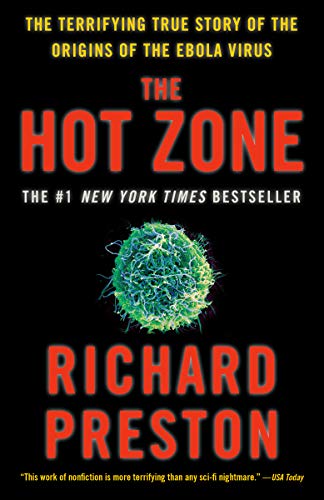
A highly infectious, deadly virus from the central African rain forest suddenly appears in the suburbs of Washington, D.C. There is no cure. In a few days 90 percent of its victims are dead. A secret military SWAT team of soldiers and scientists is mobilized to stop the outbreak of this exotic "hot" virus. The Hot Zone tells this dramatic story, giving a hair-raising account of the appearance of rare and lethal viruses and their "crashes" into the human race. Shocking, frightening, and impossible to ignore, The Hot Zone proves that truth really is scarier than fiction.
…
Recommended by Jon Najarian and Pierre Haski.
Jon Najarian
I believe both the corona virus and ebola have a bat connection. Scary, but great book on ebola: Hot Zone by Richard Preston https://t.co/jGEjbrB7pZ [source]
Pierre Haski
@ChuBailiang The hot zone, it made my days during SARS in Beijing, a great book! https://t.co/8E8AYgIhp7 [source]
Cover unavailable
2
Ebola: The Natural and Human History of a Deadly Virus
David Quammen
4.7
In 1976 a deadly virus emerged from the Congo forest. As swiftly as it came, it disappeared, leaving no trace. Over the four decades since, Ebola has emerged sporadically, each time to devastating effect. It can kill up to 90 percent of its victims. In between these outbreaks, it is untraceable, hiding deep in the jungle. The search is on to find Ebola’s elusive host animal. And until we find it, Ebola will continue to strike. Acclaimed science writer and explorer David Quammen first came near the virus while he was traveling in the jungles of Gabon, accompanied by local men whose village had been devastated by a recent outbreak. Here he tells the story of Ebola—its past, present, and its unknowable future.
Extracted from Spillover by David Quammen, updated and with additional material.
…
Cover unavailable
3
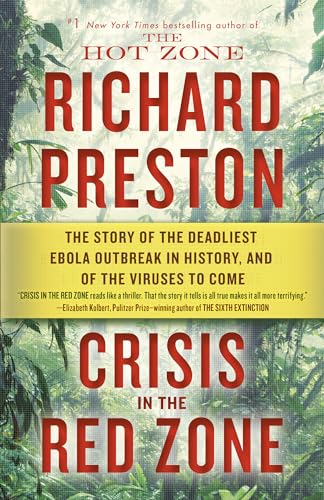
Crisis in the Red Zone: The Story of the Deadliest Ebola Outbreak in History, and of the Outbreaks to Come
Richard Preston
4.6
The 2013-2014 Ebola epidemic was the deadliest ever--but the outbreaks continue. Now comes a gripping account of the doctors and scientists fighting to protect us, an urgent wake-up call about the future of emerging viruses--from the #1 bestselling author of The Hot Zone, soon to be a National Geographic original miniseries.
This time, Ebola started with a two-year-old child who likely had contact with a wild creature and whose entire family quickly fell ill and died. The ensuing global drama activated health professionals in North America, Europe, and Africa in a desperate race against time to contain the viral wildfire. By the end--as the virus mutated into its deadliest form, and spread farther and faster than ever before--30,000 people would be infected, and the dead would be spread across eight countries on three continents.
In this taut and suspenseful medical drama, Richard Preston deeply chronicles the outbreak, in which we saw for the first time the specter of Ebola jumping continents, crossing the Atlantic, and infecting people in America. Rich in characters and conflict--physical, emotional, and ethical--Crisis in the Red Zone is an immersion in one of the great public health calamities of our time.
Preston writes of doctors and nurses in the field putting their own lives on the line, of government bureaucrats and NGO administrators moving, often fitfully, to try to contain the outbreak, and of pharmaceutical companies racing to develop drugs to combat the virus. He also explores the charged ethical dilemma over who should and did receive the rare doses of an experimental treatment when they became available at the peak of the disaster.
Crisis in the Red Zone makes clear that the outbreak of 2013-2014 is a harbinger of further, more severe outbreaks, and of emerging viruses heretofore unimagined--in any country, on any continent. In our ever more interconnected world, with roads and towns cut deep into the jungles of equatorial Africa, viruses both familiar and undiscovered are being unleashed into more densely populated areas than ever before.
The more we discover about the virosphere, the more we realize its deadly potential. Crisis in the Red Zone is an exquisitely timely book, a stark warning of viral outbreaks to come.
Crisis in the Red Zone reads like a thriller. That the story it tells is all true makes it all more terrifying, and there’s no one who could tell it better than Richard Preston. [source]
Richard Preston’s red zone—beset by ethical, medical, and epidemiological quandaries—shows us at our worst and at our best. This is a story about people, not pathogens, but, even as Preston focuses on one group of clinicians, nurses, and scientists at an underresourced hospital in West Africa, he makes devastatingly clear the worldwide fragility of our public-health systems. Global inequities have epidemiological consequences. This chronicle is haunting, yet not without hope. In spare, gripping prose, he illuminates how our interlinked age can make for enormous vulnerability—but also resilience. [source]
Cover unavailable
4
Ebola K (The Ebola K Trilogy, #1)
Bobby Adair, Adam Verner, et al
4.6
Ebola, Terrorism, and Hope
In 1989 the Ebola virus mutated to into an airborne strain that infected humans for the first time on American soil in Reston, Virginia. Through belated containment efforts and luck, nobody died.
Now, in the remote East African village of Kapchorwa, the Ebola virus has mutated into another airborne strain without losing any of its deadly potency.
In this thriller, terrorists stumble across this new, fully lethal strain and while the world fearfully watches the growing epidemic in West Africa as Sierra Leone goes into country-wide lockdown, only a few Americans are aware of Ebola K and the danger it poses—to be the deadliest pandemic in the history of mankind.
Can they do anything to protect themselves from this killer disease? Can they stop the terrorists?
…
Cover unavailable
5
Ebola K: Book 2 (The Ebola K Trilogy, #2)
Bobby Adair
4.6
Ebola, Terrorism, and Hope
The Ebola virus in Kapchorwa has mutated into an airborne strain. Terrorists have infected themselves with this new strain and are making their escape from Uganda, bent on spreading the deadly disease to western countries. The CIA is fighting to stop them while the Department of Homeland Security prepares a country for the coming pestilence.
Austin Cooper, left for dead by the terrorists, now finds himself in a country falling apart under the strain of a pestilence that is ravaging its population. But his father, back in Denver believes Austin is dead and must make his fatal choices for dealing with a coming Ebola pandemic while grieving for his lost son.
The Ebola K Trilogy of Terrorism Thrillers Book 1 in the Ebola K Trilogy of Terrorism Thrillers – on sale now Book 2 in the Ebola K Trilogy of Terrorism Thrillers – due out on January 25, 2015 Book 3 in the Ebola K Trilogy of Terrorism Thrillers – due out in spring of 2015
…
Cover unavailable
6
Ebola
Dr. William Close and Joel Breman
4.6
When a mysterious virus first exploded in Zaire in 1976, American physician William T. Close worked desperately to contain the outbreak. Haunted by this wrenching crisis, Dr. Close felt compelled to honor the memory of the courageous people he knew and lost. This is their story: a terrifying, completely authentic novel that begins with an invisible killer.
It strikes without warning—a lethal disease with no name . . . and no cure.
At a Catholic mission in Yambuku, a remote village sixty miles south of the Ebola River, local teacher Mabalo Lokela visits the clinic with a raging fever. Sister Lucie, a Flemish nun and nurse, gives him a shot of an antimalarial drug, wipes off the syringe, and awaits her next patient. Within days, Mabalo is dead. Soon, others are falling ill. Less than three weeks later, the virus claims Sister Lucie’s life as well. Panic erupts, but as the villagers attempt to flee, all roads leading out of Yambuku are closed off, the dying forced back. And as the single radio connecting the mission to the outside world brings only bad news, the valiant nuns and medical personnel left behind have no choice but to pray, and wonder: Will they survive long enough for help to arrive?
…
Cover unavailable
7
Level 4: Virus Hunters of the CDC
Joseph B McCormick
4.6
Cover unavailable
8
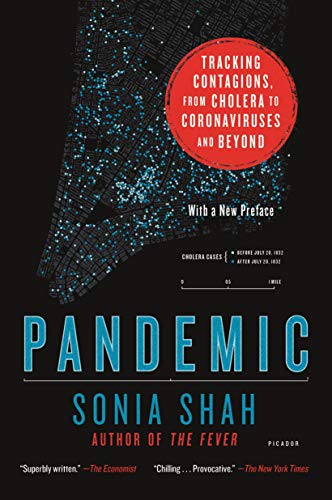
Pandemic: Tracking Contagions, from Cholera to Ebola and Beyond
Sonia Shah
4.5
Scientists agree that a pathogen is likely to cause a global pandemic in the near future. But which one? And how?
Over the past fifty years, more than three hundred infectious diseases have either newly emerged or reemerged, appearing in territories where they’ve never been seen before. Ninety percent of epidemiologists expect that one of them will cause a deadly pandemic sometime in the next two generations. It could be Ebola, avian flu, a drug-resistant superbug, or something completely new. While we can’t know which pathogen will cause the next pandemic, by unraveling the story of how pathogens have caused pandemics in the past, we can make predictions about the future. In Pandemic: Tracking Contagions, fromCholera to Ebola and Beyond, the prizewinning journalist Sonia Shah—whose book on malaria, The Fever, was called a “tour-de-force history” (The New York Times) and “revelatory” (The NewRepublic)—interweaves history, original reportage, and personal narrative to explore the origins of contagions, drawing parallels between cholera, one of history’s most deadly and disruptive pandemic-causing pathogens, and the new diseases that stalk humankind today.
To reveal how a new pandemic might develop, Sonia Shah tracks each stage of cholera’s dramatic journey, from its emergence in the South Asian hinterlands as a harmless microbe to its rapid dispersal across the nineteenth-century world, all the way to its latest beachhead in Haiti. Along the way she reports on the pathogens now following in cholera’s footsteps, from the MRSA bacterium that besieges her own family to the never-before-seen killers coming out of China’s wet markets, the surgical wards of New Delhi, and the suburban backyards of the East Coast.
By delving into the convoluted science, strange politics, and checkered history of one of the world’s deadliest diseases, Pandemic reveals what the next global contagion might look like— and what we can do to prevent it.
…
Cover unavailable
9
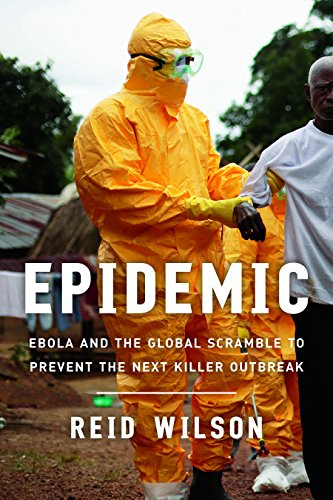
Epidemic: Ebola and the Global Scramble to Prevent the Next Killer Outbreak
Reid Wilson
4.5
A global health catastrophe narrowly averted. A world unprepared for another outbreak.
In December 2013, a young boy in a tiny West African village contracted the deadly Ebola virus. The virus spread to his relatives, then to neighboring communities, then across international borders. The world's first urban Ebola outbreak quickly overwhelmed the global health system and threatened to kill millions.
As we are currently seeing, in an increasingly interconnected world in which everyone is one or two flights away from New York or London or Beijing, a localized epidemic has become a pandemic. Ebola's spread through West Africa to Nigeria, the United Kingdom and the United States sounded global alarms that the next killer outbreak is right around the corner--and that the world is woefully unprepared to combat a new deadly disease.
From the poorest villages of rural West Africa to the Oval Office itself, this book tells the story of a deadly virus that spun wildly out of control--and reveals the truth about how close the world came to a catastrophic global pandemic. It is a story that serves as a cautionary tale for the COVID-19 epidemic currently spreading throughout the world.
…
Cover unavailable
10
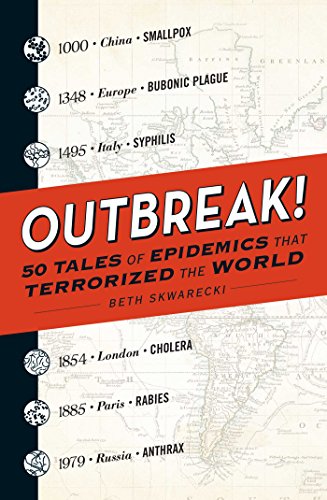
Outbreak!: 50 Tales of Epidemics that Terrorized the World
Beth Skwarecki
4.5
From ancient scourges to modern-day pandemics!
Throughout history--even recent history--highly contagious, deadly, and truly horrible epidemics have swept through cities, countrysides, and even entire countries. Outbreak! catalogs fifty of those incidents in gruesome detail, including: The Sweating Sickness that killed 15,000, including Henry VIII's older brother Syphilis, the "French Disease," which spread throughout Europe in the late fifteenth century The romantic disease: tuberculosis, featured in La Boheme, La Traviata, and Les Miserables
The worldwide outbreak of influenza in 1918, which killed 3 percent of the population The mysterious appearance of HIV in the 1980s The devastating spread of Ebola in West Africa in 2014 From ancient outbreaks of smallpox and plague to modern epidemics such as SARS and Ebola, the stories capture the mystery and devastation brought on by these diseases. It's a sickeningly fun read that confirms the true definition of going viral.
…
Cover unavailable
11
Curing the Incurable: Vitamin C, Infectious Diseases, and Toxins
Thomas E. Levy
4.5
Several years ago the author, cardiologist Thomas E. Levy, MD, JD was asked to assist Hal Huggins, DDS, with a number of Dr. Huggins' dental patients. Each of the patients was quite ill and obviously suffering with one or more very serious medical conditions. Prior to sedating each patient Dr. Huggins asked Dr. Levy to administer a specific protocol of vitamin C.
Dr. Levy had never performed or even heard of such a practice, but was greatly impressed as each patient left the dental office markedly improved -- many were asymptomatic. As a result, his interest in vitamin C was greatly aroused and he began a search through all the medical literature for any studies concerning this vitamin therapy and the miraculous results he had witnessed time and time again.
He quickly found the medical journals were filled with thousands of studies and articles about vitamin C. Many of them reported similarly dramatic results with a myriad of diseases and other difficult medical conditions. Dr. Levy knew that this was information that all his colleagues needed. Consequently, he was compelled to spend the next four years researching and writing Curing the Incurable. Because this book was written especially for his medical colleagues, Dr. Levy has taken great care to research, document, and report the vital truths about vitamin C -- he cites over 1,200 scientific references.
Curing the Incurable provides the information you need to most effectively use vitamin C to:
Prevent, cure, reverse and/or greatly improve a massive list of health conditions. Cut your mortality risk (from all causes) by as much as 50%. Boost your immune system and energy levels to optimum levels. Optimize blood and intracellular levels of vitamin C. Dramatically increase bio-availability (up to 800% or more) without increasing your dose size. Avoid gastric discomfort, the diarrhea, and increased urination that prove most of your large doses of vitamin C are headed for the sewer. And much, much more.
…
Cover unavailable
12
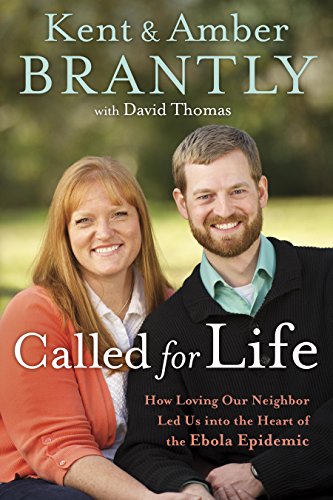
Called for Life: How Loving Our Neighbor Led Us into the Heart of the Ebola Epidemic
Kent Brantly, Amber Brantly, et al.
4.5
“Kent, bud. We got your test result. And I’m really sorry to tell you that it is positive for Ebola.”
Dr. Kent and Amber Brantly moved with their children to war-torn Liberia in the fall of 2013 to provide medical care for people in great need—to help replace hopelessness with hope. When, less than a year later, Kent contracted the deadly Ebola virus, hope became what he and Amber needed too.
When Kent received the diagnosis, he was already alone and in quarantine in the Brantly home in Liberia. Amber and the children had left just days earlier on a trip to the United States. Kent’s personal battle against the horrific Ebola began, and as thousands of people worldwide prayed for his life, a miraculous series of events unfolded.
Called for Life tells the riveting inside story of Kent and Amber’s call to serve their neighbors, as well as Kent’s fight for life with Ebola and Amber’s’ struggle to support him from half-a-world away. Most significantly, Called for Life reminds us of the risk, the honor, and the joy to be known when God and others are served without reservation.
From the Hardcover edition.
…
Cover unavailable
13
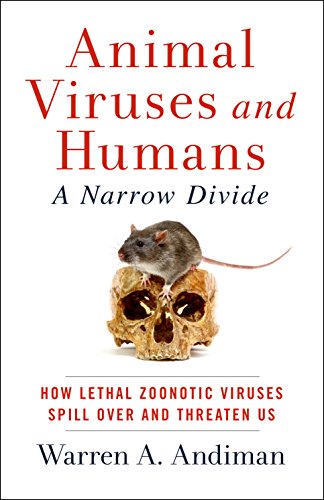
Animal Viruses and Humans, a Narrow Divide: How Lethal Zoonotic Viruses Spill Over and Threaten Us
Warren A. Andiman
4.5
Dr. Warren Andiman introduces the mysterious world of viruses: what they look like, how they invade so efficiently, and how they take over cells' complex machinery to wreak potentially fatal havoc. In particular, he discusses the circumstances that bring humans into intimate contact with other species and how viruses exploit that contact.
Warren Andiman, MD is Professor Emeritus of Pediatrics at Yale Medical School. He founded the AIDS Care Program at Yale-New Haven Hospital and is the Medical Director of the Pediatric AIDS Care Program at Yale-New Haven Children's Hospital.
…
Cover unavailable
14
The Doctor and the Diplomat: Courage and Chaos on the Ebola Frontline
Sinead Walsh and Oliver Johnson
4.5
Cover unavailable
15
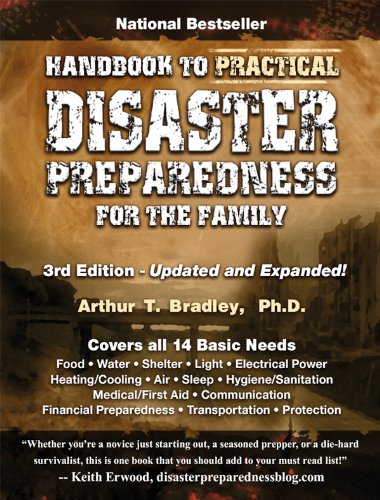
Handbook to Practical Disaster Preparedness for the Family
Dr. Arthur T Bradley
4.5
Originally published: Disaster preparedness handbook. New York: Skyhorse Pub., c2011.
Cover unavailable
16
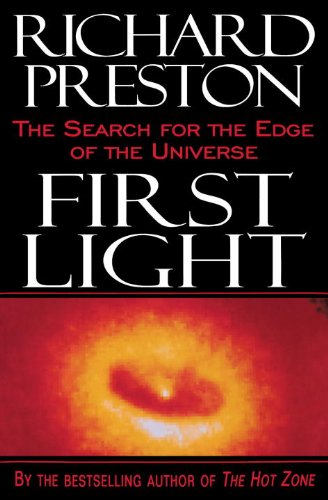
First Light
Richard Preston
4.5
Seven years before Richard Preston wrote about horrifying viruses in The Hot Zone, he turned his attention to the cosmos. In First Light, he demonstrates his gift for creating an exciting and absorbing narrative around a complex scientific subject--in this case the efforts by astronomers at the Palomar Observatory in the San Gabriel Mountains of California to peer to the farthest edges of space through the Hale Telescope, attempting to solve the riddle of the creation of the universe. Richard Preston's name became a household word with The Hot Zone, which sold nearly 800,000 copies in hardcover, was on The New York Times's bestseller list for 42 weeks, and was the subject of countless magazine and newspaper articles. Preston has become a sought-after commentator on popular science subjects. For this hardcover reprint of what has been called "the best popular account of astronomy in action," (Kirkus Reviews) he has revised the text and written a new introduction.
…
Cover unavailable
17
Beating Back the Devil: On the Front Lines with the Disease Detectives of the Epidemic Intelligence Service
Maryn McKenna
4.5
The universal human instinct is to run from an outbreak of disease like Ebola. These doctors run toward it. Their job is to stop epidemics from happening.
They are the disease detective corps of the US Centers for Disease Control and Prevention (CDC), the federal agency that tracks and tries to prevent disease outbreaks and bioterrorist attacks around the world. They are formally called the Epidemic Intelligence Service (EIS)—a group founded more than fifty years ago out of fear that the Korean War might bring the use of biological weapons—and, like intelligence operatives in the traditional sense, they perform their work largely in anonymity. They are not household names, but over the years they were first to confront the outbreaks that became known as hantavirus, Ebola, and AIDS. Every day they work to protect us by hunting down the deadly threats that we forget until they dominate our headlines, West Nile virus, anthrax, and SARS among others.
In this riveting narrative, Maryn McKenna—the only journalist ever given full access to the EIS in its fifty-three-year history—follows the first class of disease detectives to come to the CDC after September 11, the first to confront not just naturally occurring outbreaks but the man-made threat of bioterrorism. They are talented researchers—many with young families—who trade two years of low pay and extremely long hours for the chance to be part of the group that are on the frontlines, in the yellow suits and masks, that has helped eradicate smallpox, push back polio, and solve the first major outbreaks of Legionnaires’ disease, toxic shock syndrome, and E. coli O157 and works to battle every new disease before it becomes an epidemic.
Urgent, exhilarating, and compelling, Beating Back the Devil takes you inside the world of these medical detectives who are trying to stop the next epidemic—before the epidemics stop us.
…
Recommended by Russell Poldrack.
Russell Poldrack
I should also take this chance to plug @marynmck book Beating Back The Devil which highlight amazing work by @CDCgov [source]
Cover unavailable
18
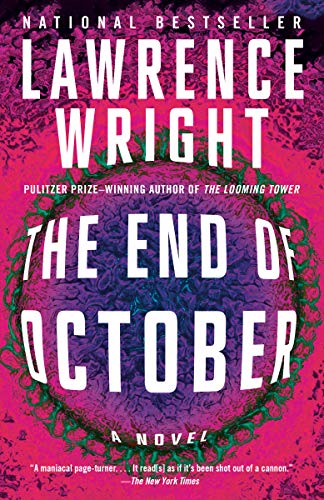
The End of October
Lawrence Wright
4.5
In this propulsive medical thriller--from the Pulitzer Prize winner and best-selling author--Dr. Henry Parsons, an unlikely but appealing hero, races to find the origins and cure of a mysterious new killer virus as it brings the world to its knees.
At an internment camp in Indonesia, within one week, forty-seven people are pronounced dead with acute hemorrhagic fever. When the microbiologist and epidemiologist Henry Parsons travels there on behalf of the World Health Organization to investigate, what he finds will soon have staggering repercussions across the globe: an infected man is on his way to join the millions of worshippers in the annual Hajj to Mecca. Now, Henry joins forces with a Saudi doctor and prince in an attempt to quarantine the entire host of pilgrims in the holy city . . . Matilda Nachinsky, deputy director of U. S. Homeland Security, scrambles to mount a response to what may be an act of biowarfare . . . already-fraying global relations begin to snap, one by one, in the face of a pandemic . . . Henry's wife Jill and their children face diminishing odds of survival in Atlanta . . . and the disease slashes across the United States, dismantling institutions--scientific, religious, governmental--and decimating the population. As packed with suspense as it is with the riveting history of viral diseases, Lawrence Wright has given us a full-tilt, electrifying, one-of-a-kind thriller.
…
Cover unavailable
19
Everything You Need To Know About Colloidal Silver
Max Crarer
4.5
Give Your Body a Fighting Chance With Colloidal Silver Don't put up with colds, flu and other infections Use the cheap natural antibiotic Colloidal Silver. This New Zealand Book by Max Crarer will show you how... Learn about: The side effects and turning blue like a smurf is not one of them! The recommended dosage for you and your children The proper way to make it and what to use "My wife has suffered the pains of hell for 15 years with Lupus. What sort of people have we training doctors that an old retired farmer like you can give her something that turns her into a new woman? She has thrown away her drugs and only takes Colloidal Silver now, and no side effects. Thanks a million." That's a typical letter received by Author Max Crarer, aged 78 who was well known to Radio Pacific listeners in New Zealand, by a reader of his book about the multi-purpose natural antibiotic and healer Colloidal Silver. This little book answers all your questions about this low cost, germ-killing antibiotic. Colloidal Silver is the most powerful natural antibiotic and germ killer ever discovered and also the cheapest. It kills all harmful bacteria, fungi and viruses yet does not harm useful body bacteria. Over 650 problems can be successfully dealt with by use of Colloidal Silver. See pages 38-41 for a list of just some of these healings documented in Medical Journals
…
Cover unavailable
20
No Time to Lose: A Life in Pursuit of Deadly Viruses
Peter Piot
4.5
When Peter Piot was in medical school, a professor warned, “There’s no future in infectious diseases. They’ve all been solved.” Fortunately, Piot ignored him, and the result has been an exceptional, adventure-filled career. In the 1970s, as a young man, Piot was sent to Central Africa as part of a team tasked with identifying a grisly new virus. Crossing into the quarantine zone on the most dangerous missions, he studied local customs to determine how this disease—the Ebola virus—was spreading. Later, Piot found himself in the field again when another mysterious epidemic broke out: AIDS. He traveled throughout Africa, leading the first international AIDS initiatives there. Then, as founder and director of UNAIDS, he negotiated policies with leaders from Fidel Castro to Thabo Mbeki and helped turn the tide of the epidemic. Candid and engrossing, No Time to Lose captures the urgency and excitement of being on the front lines in the fight against today’s deadliest diseases.
…
Cover unavailable
21
Countdown to the Apocalypse: Why ISIS and Ebola Are Only the Beginning
Robert Jeffress
4.5
ISIS. Ebola. Social disorder. Religious persecution. Rampant immorality. Are these the harbingers of the biblical apocalypse, of the end of the world? If they are, what do they mean and when can we expect this to happen? In this eye-opening book, prophecy insider Robert Jeffress offers a reasoned look at these "signs" and what Jesus Christ himself meant when he talked about a future so horrendous that no human lives would be spared "unless those days were shortened" (Matthew 24.22). Did He have our time in mind? All over the world people are aware that something unprecedented in human history is about to happen. COUNTDOWN TO THE APOCALYPSE presents vital information that everyone, both inside and outside the church, needs to know to be prepared.
…
Cover unavailable
22
Epidemics and Society: From the Black Death to the Present
Frank M. Snowden
4.5
A “brilliant and sobering” (Paul Kennedy, Wall Street Journal) look at the history and human costs of pandemic outbreaks
The World Economic Forum #1 book to read for context on the coronavirus outbreak
This sweeping exploration of the impact of epidemic diseases looks at how mass infectious outbreaks have shaped society, from the Black Death to today, and in a new preface addresses the global threat of COVID-19. In a clear and accessible style, Frank M. Snowden reveals the ways that diseases have not only influenced medical science and public health, but also transformed the arts, religion, intellectual history, and warfare.
A multidisciplinary and comparative investigation of the medical and social history of the major epidemics, this volume touches on themes such as the evolution of medical therapy, plague literature, poverty, the environment, and mass hysteria. In addition to providing historical perspective on diseases such as smallpox, cholera, and tuberculosis, Snowden examines the fallout from recent epidemics such as HIV/AIDS, SARS, and Ebola and the question of the world’s preparedness for the next generation of diseases.
…
Cover unavailable
23
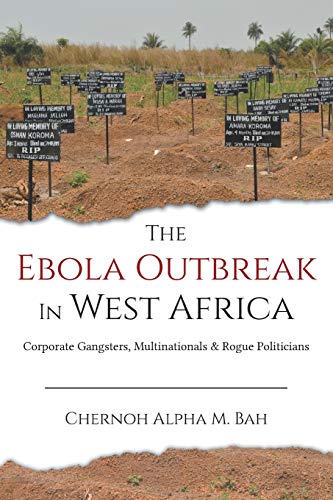
The Ebola Outbreak in West Africa: Corporate Gangsters, Multinationals, and Rogue Politicians
ChernohAlpha M. Bah
4.5
In The Ebola Outbreak in West Africa, the award-wining Sierra Leonean journalist, political activist and human rights advocate Chernoh Alpha M. Bah presents an in-depth investigation that challenges the official narrative surrounding the origin and widespread transmission of the 2014 West African Ebola epidemic - one of the most catastrophic human tragedies in the twenty first century.
Bah demonstrates with hard evidence that the western narrative, which rashly pinned the origin of the epidemic on a two-year-old boy in a small Guinean village and implicated the backwardness of Africans as the cause for the widespread nature of the outbreak, was neither corroborated nor challenged by Western journalists and the Western academic establishment. He explores why, at the initial stages of the outbreak when thousands of men, women and children were dying, Western media had already settled upon a narrative that blamed and criminalized the victims for the epidemic's explosion.
In this groundbreaking text, Bah establishes the West African outbreak as the continuation of a colonial legacy of multinational corporate exploitation, political corruption, and western dehumanization of the African. Glaringly absent from the official narrative, he argues, is how the billions of dollars of foreign corporate investments existing in West Africa's natural resource exploitation and the strategic international military and governmental intelligence interests in the region (including billion-dollar animal-testing and deadly-pathogen laboratory projects) served as the foundations for the outbreak. It is only from within this global context that the conditions of the outbreak and its widespread devastation can be properly understood.
Bah's Ebola Outbreak in West Africa illustrates and illuminates the Ebola crises in new and terrifying ways. It is the first indigenous account that presents a holistic and independent investigation into one of the worst human tragedies in recent history.
…
Cover unavailable
24
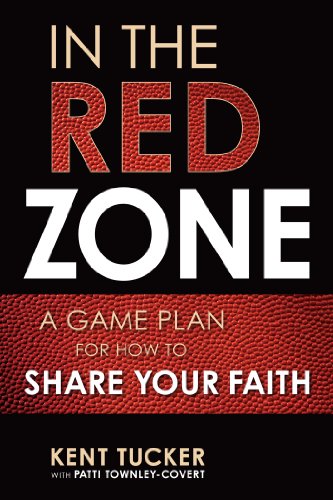
In the Red Zone: A Game Plan for How to Share Your Faith
Kent Tucker and Patti Townley-Covert
4.5
The last twenty yards before the goal—in football that’s the Red Zone, the place where the team with the ball is so close to the goal that they have a good chance to score. During a spiritual journey, being in the Red Zone means God has already drawn an individual down life’s field to a place where he’s ready to enter into a personal relationship with Jesus. Using dramatic stories (his own and others), Kent Tucker shows Christians how to identify someone who wants to hear about Jesus. Then, Tucker equips believers with what to say to help him enter into a personal relationship with Jesus and follow up afterward. "Biblical Coaching Sessions," throughout the book, show how Red Zone Evangelism (RZE) is an age-old game plan first used by Jesus, then Paul and others. Quotes from legendary coaches and players (Joe Gibbs, John Wooden, Tim Tebow, and others) keep the book dynamic and make the concepts easy to understand. Insights from spiritual leaders (Rebecca Pippert, Lee Strobel, Bill Hybels and more) heighten the action for these RZE strategies. Step-by-step In the Red Zone generates a sense of urgency and builds the confidence of readers to share their faith in an effective way that will produce eternal rewards. Discussion questions at the end of each chapter, by creative outreach strategist Garry Poole, make this book a powerful resource for pastors and small group leaders, as well as for personal reflection.
…
Cover unavailable
25
Deadly Outbreaks: How Medical Detectives Save Lives Threatened by Killer Pandemics, Exotic Viruses, and Drug-Resistant Parasites
Alexandra M. Levitt and Donald R. Hopkins M.D.
4.5
CONTAINS IMPORTANT INFORMATION ABOUT THE CORONAVIRUS!
“Portrays epidemiologists as disease detectives who tirelessly hunt for clues and excel at deductive reasoning. Even Sherlock Holmes would be proud of this astute group of professionals.”—Booklist
This updated edition features a brand new section detailing important facts about the coronavirus and tips for keeping yourself and your family safe.
Despite advances in health care, infectious microbes continue to be a formidable adversary to scientists and doctors. Vaccines and antibiotics, the mainstays of modern medicine, have not been able to conquer infectious microbes because of their amazing ability to adapt, evolve, and spread to new places. Terrorism aside, one of the greatest dangers from infectious disease we face today is from a massive outbreak of drug-resistant microbes.
Deadly Outbreaks recounts the scientific adventures of a special group of intrepid individuals who investigate these outbreaks around the world and figure out how to stop them. Part homicide detective, part physician, these medical investigators must view the problem from every angle, exhausting every possible source of contamination. Any data gathered in the field must be stripped of human sorrows and carefully analyzed into hard statistics.
Author Alexandra Levitt, PhD, is an expert on emerging diseases and other public health threats. Here she shares insider accounts she’s collected that go behind the alarming headlines we’ve seen in the media: mysterious food poisonings, unexplained deaths at a children’s hospital, a strange neurologic disease afflicting slaughterhouse workers, flocks of birds dropping dead out of the sky, and drug-resistant malaria running rampant in a refugee camp. Meet the resourceful investigators—doctors, veterinarians, and research scientists—and discover the truth behind these cases and more.
…
Cover unavailable
26
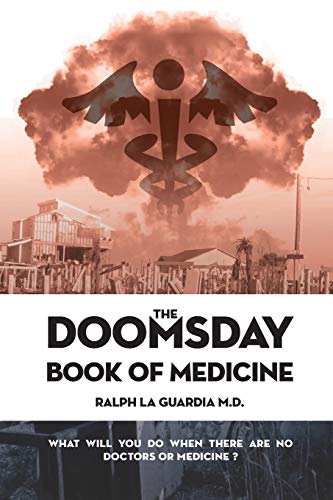
The Doomsday Book of Medicine
Ralph La Guardia M.D.
4.5
What are you and your family going to do after a collapse of society when there are no doctors and medications available, and the pharmacies and hospitals have been looted? You can prepare for every disaster scenario, but if you are not able to treat medical emergencies and injuries that arise, how long will you last? This book will teach you everything you need to know to keep you and your loved ones healthy. Dr. La Guardia has spent over thirty years researching ways to treat any and all medical conditions with non prescription, over the counter and everyday products, many of which will amaze you. This book is jam packed with useful information in an easy to read format, chock full of illustrations and overflowing with information that could very well save your life.
…
Cover unavailable
27
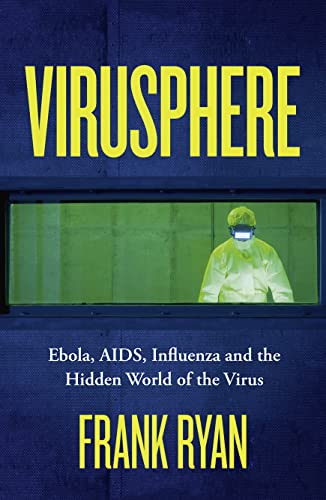
Virusphere: From common colds to Ebola epidemics – why we need the viruses that plague us
Frank Ryan
4.5
A fascinating and long overdue examination of viruses – from what they are and what they do, to the vital role they have played in human history.
What are viruses? Do they rely on genes, like all other forms of life? Do they follow the same patterns of evolution as plants and animals? Frank Ryan answers these questions and many more in a sweeping tour of illnesses caused by viruses. For example, the common cold, measles, chicken pox, herpes and mumps, rubella, as well as less familiar examples, such as rabies, ‘breakbone’ fever, haemorrhagic fevers like Ebola, and virus-induced cancers. Along the way, readers will learn about the behaviours and ultimate goals of viruses, gaining a deeper understanding of their importance in relation to the origins and the evolution of life, as well as they ways viruses have changed us at the most intimate level, to help make us quintessentially human.
…
Cover unavailable
28
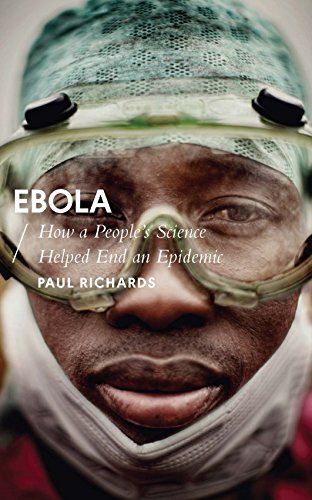
Ebola: How a People's Science Helped End an Epidemic
Paul Richards
4.5
In 2013, the largest Ebola outbreak in history swept across West Africa, claiming thousands of lives in Liberia, Sierra Leone, and Guinea and sending the international community into panic. By 2014, experts were grimly predicting that millions would be infected within months, and a huge international control effort was mounted to contain the virus. Yet paradoxically, at this point the disease was already going into decline in Africa itself. Why did outside observers get it so wrong?
Paul Richards draws on his extensive firsthand experience in Sierra Leone to argue that the international community’s alarmed response failed to take account of local expertise and common sense. Crucially, Richards shows that the humanitarian response to the disease was most effective in those areas where it supported community initiatives already in place, such as giving local people agency in terms of disposing of bodies. In turn, the international response dangerously hampered recovery when it ignored or disregarded local knowledge.
One of the first books to provide an in-depth analysis of the recent pandemic, Ebola offers a clear-eyed account of how and why the disease spread, and why the predictions of international commentators were so misguided. By learning from these mistakes and successes, we can better understand how to harness the power of local communities during future humanitarian health crises.
…
Cover unavailable
29
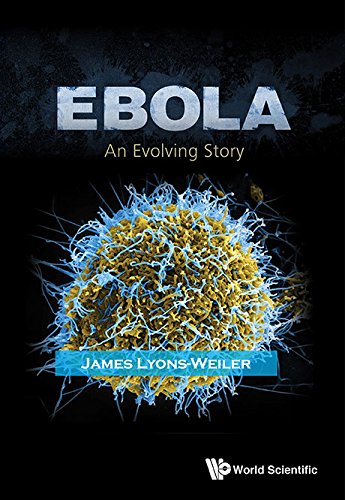
Ebola: An Evolving Story
James Lyons-Weiler
4.4
The book is a narrative of the unfolding of the Ebola virus disease outbreak from a scientific view point. The author provides an analysis of the scientific basis of public health policies that have influenced the public's, and the medical community's, abilities to understand the virus and the disease. This is done in the context of providing insights into the biology of the virus, and exploring open questions, including its likely modes of transmission. The author has included citations from the scientific literature and the press, as well as quotes from expert interviews. The book will help sort out the fact from fiction, given the confusion that arose after the virus arrived in the US. The author used his objective research skills and knowledge of evolutionary genetics and molecular biology to find out what was known, and what questions remained unanswered, and even what questions remained unasked.
Written in an accessible style, it is intended for the educated general public, scientists, policy makers, health care workers, and politicians. It delves into the problems of trying to derive a logic-based understanding of a highly lethal emerging disease in 2014, when research funding cuts have gutted research institutions, and when public health institutions really were woefully unprepared. It is a highly distinct narrative analysis that is sure to stimulate new research and thinking in public policy. It will inform thousands of people of the nature of the virus, how it works, in terms they are likely to be able to understand. It will allow others to rapidly catch up with the story of Ebola.
Contents: *Origins of the Epidemic *How Well Do We Understand the 2014 Ebolavirus? *Ways in Which Ebola 2014 May Differ from Past Outbreaks: Evolution of Viral Phenotypes *Biological Knowledge and Ebola Policy *"How Cruel is That?" *With Blinded Eyes *Are We Asking the Right Questions and Solving *All the Right Problem(s)? *Evolution is Real, or, Deadly Consequences of *Dogma *Promising Treatments *Policy Analysis *A Rational Analysis of Irrational Decisions, or *Don't Fear the Reaper
Readership: General public, scientists, policy makers, health care workers, and politicians.
…
Cover unavailable
30
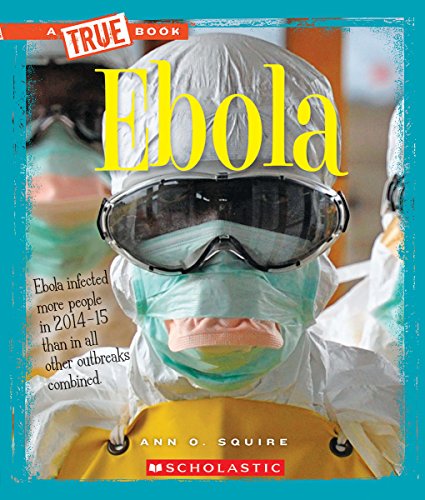
Ebola (A True Book: Health)
Ann O. Squire
4.4
In 2014, an outbreak of the deadly Ebola virus in West Africa made headlines around the world. Because the disease spreads easily and has no known cure, many people were terrified that it would spread throughout the world. Readers will learn how the outbreak began and how Ebola spreads from person to person. They will also explore earlier Ebola outbreaks and find out what scientists and doctors are doing to fight against the illness today.


 1
1
 Recommended by Jon Najarian and Pierre Haski.