We've ranked the best aztec books using expert recommendations, sales data, and millions of reader ratings. At Shortform, we know books. Our book guides are the best in the world. Learn why.
Cover unavailable
1
Aztec (Aztec, #1)
Gary Jennings
5.0
Aztec is the extraordinary story of the last and greatest native civilization of North America. Told in the words of one of the most robust and memorable characters in modern fiction, Mixtli-Dark Cloud, Aztec reveals the very depths of Aztec civilization from the peak and feather-banner splendor of the Aztec Capital of Tenochtitlan to the arrival of Hernán Cortes and his conquistadores, and their destruction of the Aztec empire. The story of Mixtli is the story of the Aztecs themselves---a compelling, epic tale of heroic dignity and a colossal civilization's rise and fall.
…
Cover unavailable
2
Conquistador: Hernan Cortes, King Montezuma, and the Last Stand of the Aztecs
Buddy Levy
5.0
Cover unavailable
3
1491: New Revelations of the Americas Before Columbus
Charles C. Mann
4.9
In this groundbreaking work of science, history, and archaeology, Charles C. Mann radically alters our understanding of the Americas before the arrival of Columbus in 1492.
Contrary to what so many Americans learn in school, the pre-Columbian Indians were not sparsely settled in a pristine wilderness; rather, there were huge numbers of Indians who actively molded and influenced the land around them. The astonishing Aztec capital of Tenochtitlan had running water and immaculately clean streets, and was larger than any contemporary European city. Mexican cultures created corn in a specialized breeding process that it has been called man’s first feat of genetic engineering. Indeed, Indians were not living lightly on the land but were landscaping and manipulating their world in ways that we are only now beginning to understand. Challenging and surprising, this a transformative new look at a rich and fascinating world we only thought we knew.
…
Recommended by Adam Conover, Colin Calloway, and Scott Keyes.
@TheBaltimoreSon @CharlesCMann Sure it! A total revolution in my understanding of history, all in one book. Amazing stuff. [source]
Colin Calloway
The book provides a huge hemispheric overview. [source]
Scott Keyes
It’s one of those books that takes everything you thought you knew about the history of European colonialists and indigenous groups in the Americas and turns it on its head. Just a fascinating deep-dive into early American history that questions a lot of dogma we were taught in school. [source]
Cover unavailable
4
The Broken Spears: The Aztec Account of the Conquest of Mexico
Miguel Leon-Portilla, Lysander Kemp, et al.
4.8
Until 1959, when this book was published for the first time, the only organized testimony about the Conquest was the victorious chronicle of the Spaniards themselves. Miguel León-Portilla had the incomparable success of organizing texts translated from Nahuatl by Ángel María Garibay Kintana to give us the The Aztec Account of the Conquest of Mexico: Indigenous people of Tenochtitlán, Tlatelolco, Texcoco, Chalco and Tlaxcala were formed about the struggle against the conquerors and the final ruin of the Aztec world.
An account of the omens that announced the disaster, a description of Cortes' progress, a chronicle of the heroic battle of the ancient Mexicans in defense of their culture and of their own lives, a civilization that was lost forever, a great epic poem of the origins of Mexican nationality, The Aztec Account of the Conquest of Mexico is already a classic book and an indispensable reading work.
…
Cover unavailable
5
An Illustrated Dictionary of the Gods and Symbols of Ancient Mexico and the Maya
Mary Ellen Miller
4.8
The myths and beliefs of the great Precolumbian civilizations of Mesoamerica have baffled and fascinated outsiders ever since the Spanish Conquest. Yet, until now, no single-volume introduction has existed to act as a guide to this labyrinthine symbolic world. In The Gods and Symbols of Ancient Mexico and the Maya nearly 300 entries, from accession to yoke, describe the main gods and symbols of the Olmecs, Zapotecs, Maya, Teotihuacanos, Mixtecs, Toltecs, and Aztecs. Topics range from jaguar and jester gods to reptile eye and rubber, from creation accounts and sacred places to ritual practices such as bloodletting, confession, dance, and pilgrimage. Two introductory essays provide succinct accounts of Mesoamerican history and religion, while a substantial bibliographical survey directs the reader to original sources and recent discussions. Dictionary entries are illustrated with photographs and specially commissioned line drawings. This authoritative work serves as a standard reference for students, scholars, and travelers.
…
Cover unavailable
6
The Conquest Of Mexico
Hugh Thomas
4.7
Hugh Thomas' account of the collapse of Montezuma's great Aztec empire under the onslaughts of Cortes' conquistadors is one of the great historical works of our times. A thrilling and sweeping narrative, it also bristles with moral and political issues. After setting out from Spain - against explicit instructions - in 1519, some 500 conquistadors destroyed their ships and fought their way towards the capital of the greatest empire of the New World. When they finally reached Tenochtitlan, the huge city on lake Texcoco, they were given a courtly welcome by Montezuma, who believed them to be gods. Their later abduction of the emperor, their withdrawl and the final destruction of the city make the Conquest one of the most enthralling and tragic episodes in world history.
…
Recommended by Hugh Thomson.
Hugh Thomson
This came out just at the time that I was making a film in Mexico and following the Spanish conquistador Hernando Cortes’s route from Veracruz to Mexico City (as it is now – then it was Tenochtitlán, the Aztec capital). Cortes reached Tenochtitlán in 1519. I used this book as my bible for retracing his route. Thomas makes clear what an achievement it was, first to dismantle his boats when he arrived and then to advance into this huge and powerful empire, knowing that the Aztecs practised human sacrifice. I mean, whatever you think of the Spaniards and the Conquest, they were undeniably brave. Thomas is good at using Aztec sources, chronicles and stories to show how it seemed from their side. [source]
Cover unavailable
7
The Codex Borgia: A Full-Color Restoration of the Ancient Mexican Manuscript
Gisele Díaz
4.7
First publication of remarkable repainting of outstanding Mexican codex — priceless original is in Vatican Library — thought to have originated in the Cholula area, ca. AD 1400. 76 large full-color plates show an astounding array of gods, kings, warriors, mythical creatures, and abstract designs. A work of rare power and beauty. Introduction.
Cover unavailable
8
Mexico: From the Olmecs to the Aztecs
Michael D. Coe
4.6
Mexico arrives in its eighth edition with a new look and the most recent discoveries. This is the story of the pre-Spanish people of Mexico, who, with their neighbors the Maya, formed some of the most complex societies north of the Andes. Revised and expanded, the book is updated with the latest developments and findings in the field and current terminology.
The new edition includes expanded coverage of Oaxaca, particularly Monte Alba´n, one of the earliest cities in Mesoamerica and the center of the Zapotec civilization. Recent research on the Olmecs and the legacy of the Maya offer a wider and more cohesive narrative of Mexico’s history. And a fully revised epilogue discusses the survival of indigenous populations in Mexico from the arrival of the Spanish through to the present day.
Mexico has long been recognized as the most readable and authoritative introduction to the region’s ancient civilizations. Featuring up-to-date research and, for the first time, full-color illustrations throughout, this book brings to life the vibrant ancient art and architecture of Mesoamerica.
…
Cover unavailable
9
When God Made You
Matthew Paul Turner
4.5
YOU, you... God thinks about you. God was thinking of you long before your debut.
From early on, children are looking to discover their place in the world and longing to understand how their personalities, traits, and talents fit in. The assurance that they are deeply loved and a unique creation in our big universe is certain to help them spread their wings and fly.
Through playful, charming rhyme and vivid, fantastical illustrations, When God Made You inspires young readers to learn about their own special gifts and how they fit into God's divine plan as they grow, explore, and begin to create for themselves.
'Cause when God made YOU, somehow God knew That the world needed someone exactly like you!
…
Cover unavailable
10
Daily Life of the Aztecs on the Eve of the Spanish Conquest
Jacques Soustelle
4.5
The subject of this book is the life of the Mexicans—the Mexica, as they said themselves—at the beginning of the sixteenth century. At that time, in the early 1500s, nobody, from the arid steppes of the north to the burning jungles of the isthmus, from the coast of the Gulf of Mexico to the shore of the Pacific, could have believed that this enormous empire, its culture, its art, its gods, were to go down a few years later in a historic cataclysm.
The period with which this book is concerned is distinguished from all others by the wealth of its written documentation. The Mexicans were interested in themselves and in their history; they were tireless speech-makers and great loves of verse, thus an immense quantity of books and legal documents came into being. Drawing on this rich recorded history, Soustelle creates a memorable portrait of Aztec society.
…
Cover unavailable
11
Fingerprints of the Gods: The Evidence of Earth's Lost Civilization
Graham Hancock
4.5
Could the story of mankind be far older than we have previously believed? Using tools as varied as archaeo-astronomy, geology, and computer analysis of ancient myths, Graham Hancock presents a compelling case to suggest that it is. In Fingerprints of the Gods, Hancock embarks on a worldwide quest to put together all the pieces of the vast and fascinating jigsaw of mankind’s hidden past. In ancient monuments as far apart as Egypt’s Great Sphinx, the strange Andean ruins of Tihuanaco, and Mexico’s awe-inspiring Temples of the Sun and Moon, he reveals not only the clear fingerprints of an as-yet-unidentified civilization of remote antiquity, but also startling evidence of its vast sophistication, technological advancement, and evolved scientific knowledge. A record-breaking number one bestseller in Britain, Fingerprints of the Gods contains the makings of an intellectual revolution, a dramatic and irreversible change in the way that we understand our past—and so our future. And Fingerprints of the Gods tells us something more. As we recover the truth about prehistory, and discover the real meaning of ancient myths and monuments, it becomes apparent that a warning has been handed down to us, a warning of terrible cataclysm that afflicts the Earth in great cycles at irregular intervals of time—a cataclysm that may be about to recur.
…
Cover unavailable
12
A Perfect Red
Amy Butler Greenfield
4.5
A Perfect Red recounts the colorful history of cochineal, a legendary red dye that was once one of the world's most precious commodities. Treasured by the ancient Mexicans, cochineal was sold in the great Aztec marketplaces, where it attracted the attention of the Spanish conquistadors in 1519. Shipped to Europe, the dye created a sensation, producing the brightest, strongest red the world had ever seen. Soon Spain's cochineal monopoly was worth a fortune. Desperate to find their own sources of the elusive dye, the English, French, Dutch, and other Europeans tried to crack the enigma of cochineal. Did it come from a worm, a berry, a seed? Could it be stolen from Mexico and transplanted to their own colonies? Pirates, explorers, alchemists, scientists, and spies—all joined the chase for cochineal, a chase that lasted more than three centuries. A Perfect Red tells their stories—true-life tales of mystery, empire, and adventure, in pursuit of the most desirable color on earth.
…
Recommended by Gwen Pearson.
Gwen Pearson
Also, there is a fantastic book about the Elizabethan Cloak and Dagger dramas, and genocide, associated with carmine: https://t.co/df5qBhHvRZ [source]
Cover unavailable
13
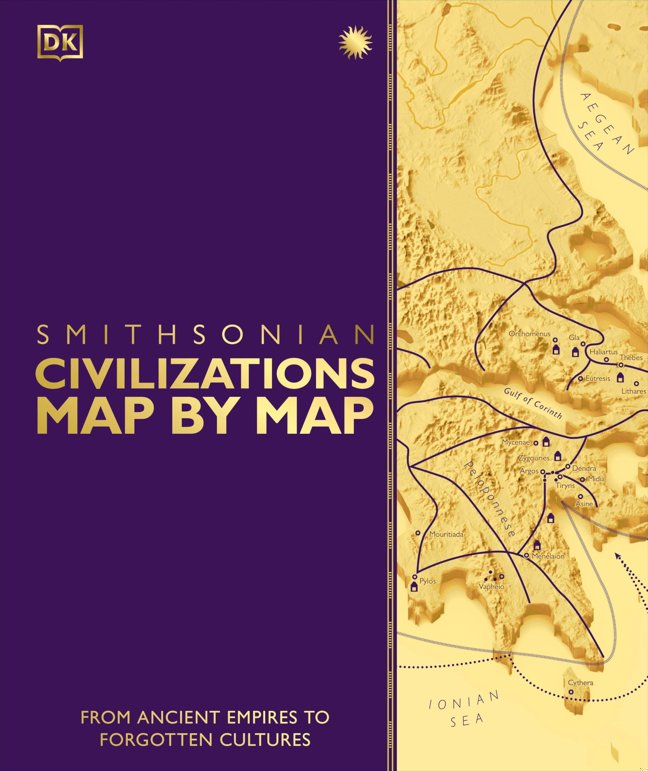
Civilizations Map by Map: From Ancient Empires to Forgotten Cultures (DK History Map by Map)
DK
4.5
Witness the rise and fall of ancient empires and forgotten cultures—and their epic stories—with this unique map-led history.From Mesopotamia’s thriving trade hubs to the spectacular cities of the Inca, such as Machu Picchu, Civilizations Map By Map charts the rise and fall of more than 90 pioneering early societies. A combination of specially commissioned storytelling maps and contemporary examples offer a window into the pivotal events, key innovations, cultural cornerstones, and enduring legacies of these ancient worlds.Travel through 6,000 years of history—from the first recorded war between Elam and Sumer, through Alexander the Great’s conquests across three continents, to the rapid expansion of the Aztec Empire. Discover the birth of writing, the calendar, coinage, and urban planning, along with the spread of early scientific knowledge, and religious, philosophical, and political ideas. Marvel at colossal Olmec stone heads, the exquisite gold artifacts of ancient Korea’s Silla Kingdom, the rock-hewn churches of the Zagwe dynasty, and many more artistic and architectural triumphs.Written and authenticated by a panel of expert historians, Civilizations Map By Map uncovers the incredible stories of our shared past, one map at a time.
…
Cover unavailable
14
History of North America Map by Map (DK History Map by Map)
DK
4.5
Cover unavailable
15
The End of Everything: How Wars Descend into Annihilation
Victor Davis Hanson
4.5
Cover unavailable
16
Woman Who Glows in the Dark: A Curandera Reveals Traditional Aztec Secrets of Physical and Spiritual Health
Elena Avila
4.5
"An autobiographical account of how a psychiatric nurse specialist became a folk medicine healer; this also explains the origins and practice of one of the oldest forms of medicine in the New World."--Kirkus.
Cover unavailable
17
The Conquest of New Spain
Bernal Diaz Del Castillo
4.5
Vivid and absorbing, this is a first-person account of one of the most startling military episodes in history: the overthrow of Montezuma’s Aztec empire by the ruthless Hernan Cortes and his band of adventurers. Bernal Díaz del Castillo, himself a soldier under Cortes, presents a fascinatingly detailed description of the Spanish landing in Mexico in 1520, their amazement at the city, the exploitation of the natives for gold and other treasures, the expulsion and flight of the Spaniards, their regrouping and eventual capture of the Aztec capital. The Conquest of New Spain has a compelling immediacy that brings the past to life and offers a unique eyewitness view of the conquest of one of the greatest civilizations in the New World.
J. M. Cohen’s clear, fluent translation is supplemented by an introduction that illuminates the life and memories of Bernal Díaz and explores changing views of the conquest, and there are also maps of the conquered territory.
…
Cover unavailable
18
Aztec Mythology: Captivating Aztec Myths of Gods, Goddesses, and Legendary Creatures
Matt Clayton
4.5
Cover unavailable
19
Aztec Blood
Gary Jennings
4.4
The third volume in Gary Jennings' historical epic that began with the Aztec and Aztec Autumn. Now comes the thrilling Aztec Blood.
The Aztec people have been conquered and a bloody revolt of the Indians put down. The former Aztec Empire is now a colony called New Spain in which the Indians are enslaved to great estates that are actually feudal domains. The Spanish lords rule as kings, treating Indian men as work animals and Indian women as their personal property. In this colourful and exciting era of swords and cloaks, upheaval and revolution, a young beggar boy, in whose blood runs that of both Spanish and Aztec royalty, must claim his birthright.
From the torrid streets of the City of the Dead along the Veracruz Coast to the ageless glory of Seville in Old Spain, Cristo the Bastard connives, fights, and loves as he seeks the truthwithout knowing that he will be the founder of a proud new people. As we follow the loves and adventures of Cristo and experience the colorful splendor and barbarism of the era, a vanished culture is brought to life in all its magnificence.
…
Cover unavailable
20
Fifth Sun: A New History of the Aztecs
Camilla Townsend
4.4
In November 1519, Hernando Cortés walked along a causeway leading to the capital of the Aztec kingdom and came face to face with Moctezuma. That story—and the story of what happened afterwards—has been told many times, but always following the narrative offered by the Spaniards. After all, we have been taught, it was the Europeans who held the pens. But the Native Americans were intrigued by the Roman alphabet and, unbeknownst to the newcomers, they used it to write detailed histories in their own language of Nahuatl. Until recently, these sources remained obscure, only partially translated, and rarely consulted by scholars.
For the first time, in Fifth Sun, the history of the Aztecs is offered in all its complexity based solely on the texts written by the indigenous people themselves. Camilla Townsend presents an accessible and humanized depiction of these native Mexicans, rather than seeing them as the exotic, bloody figures of European stereotypes. The conquest, in this work, is neither an apocalyptic moment, nor an origin story launching Mexicans into existence. The Mexica people had a history of their own long before the Europeans arrived and did not simply capitulate to Spanish culture and colonization. Instead, they realigned their political allegiances, accommodated new obligations, adopted new technologies, and endured.
This engaging revisionist history of the Aztecs, told through their own words, explores the experience of a once-powerful people facing the trauma of conquest and finding ways to survive, offering an empathetic interpretation for experts and non-specialists alike.
…
Cover unavailable
21
Aztec History: A Captivating Guide to the Aztec Empire, Mythology, and Civilization
Captivating History
4.4
Did you know that the Aztecs sacrificed 500 to 700 people every year in order to satisfy Gods?
For many years, the Aztecs have captured our imaginations. Stories from the original European invaders combined with unique, awe-inspiring ruins and legends that speak of palaces of gold create an image of Aztec society defined by grandeur, wealth, and splendor.
But who exactly were the Aztecs? Where did they come from? How did they rise to control such a wide expanse of land? And if they were so powerful, how was it possible for them to fall from power and dominance just three years after contact was first made with the Spaniards?
These are just some of the questions that this new captivating history book aims to answer.
In Aztec History: A Captivating Guide to the Aztec Empire, Mythology, and Civilization you will discover topics such as:
Where Did the Aztecs Live? The Truth About Who the Aztecs Really Were Remarkable Insights into Government, City-States, and Expansion The Arrival of the Spanish and the Decline of the Empire A Day in the Life of an Aztec Citizen The Sovereign, the Dignitaries, and the Nobles Agriculture and Diet Religion Shocking Discoveries of Human Sacrifice And much, much more! Get the book now to learn more about the Aztecs!
…
Cover unavailable
22
Aztec Thought and Culture: A Study of the Ancient Nahuatl Mind
Miguel León-Portilla
4.4
Cover unavailable
23
Jungle of Stone: The Extraordinary Journey of John L. Stephens and Frederick Catherwood, and the Discovery of the Lost Civilization of the Maya
William Carlsen
4.4
New York Times Bestseller (Expeditions)
“Thrilling. … A captivating history of two men who dramatically changed their contemporaries’ view of the past.” — Kirkus (starred review)
"[An] adventure tale that make[s] Indiana Jones seem tame.” — Library Journal
In 1839, rumors of extraordinary yet baffling stone ruins buried within the unmapped jungles of Central America reached two of the world’s most intrepid travelers. Seized by the reports, American diplomat John Lloyd Stephens and British artist Frederick Catherwood—both already celebrated for their adventures in Egypt, the Holy Land, Greece, and Rome—sailed together out of New York Harbor on an expedition into the forbidding rainforests of present-day Honduras, Guatemala, and Mexico. What they found would upend the West’s understanding of human history.
In the tradition of Lost City of Z and In the Kingdom of Ice, former San Francisco Chronicle journalist and Pulitzer Prize finalist William Carlsen reveals the remarkable story of the discovery of the ancient Maya. Enduring disease, war, and the torments of nature and terrain, Stephens and Catherwood meticulously uncovered and documented the remains of an astonishing civilization that had flourished in the Americas at the same time as classic Greece and Rome—and had been its rival in art, architecture, and power. Their masterful book about the experience, written by Stephens and illustrated by Catherwood, became a sensation, hailed by Edgar Allan Poe as “perhaps the most interesting book of travel ever published” and recognized today as the birth of American archaeology. Most important, Stephens and Catherwood were the first to grasp the significance of the Maya remains, understanding that their antiquity and sophistication overturned the West’s assumptions about the development of civilization.
By the time of the flowering of classical Greece (400 b.c.), the Maya were already constructing pyramids and temples around central plazas. Within a few hundred years the structures took on a monumental scale that required millions of man-hours of labor, and technical and organizational expertise. Over the next millennium, dozens of city-states evolved, each governed by powerful lords, some with populations larger than any city in Europe at the time, and connected by road-like causeways of crushed stone. The Maya developed a cohesive, unified cosmology, an array of common gods, a creation story, and a shared artistic and architectural vision. They created stucco and stone monuments and bas reliefs, sculpting figures and hieroglyphs with refined artistic skill. At their peak, an estimated ten million people occupied the Maya’s heartland on the Yucatan Peninsula, a region where only half a million now live. And yet by the time the Spanish reached the “New World,” the Maya had all but disappeared; they would remain a mystery for the next three hundred years.
Today, the tables are turned: the Maya are justly famous, if sometimes misunderstood, while Stephens and Catherwood have been nearly forgotten. Based on Carlsen’s rigorous research and his own 1,500-mile journey throughout the Yucatan and Central America, Jungle of Stone is equally a thrilling adventure narrative and a revelatory work of history that corrects our understanding of Stephens, Catherwood, and the Maya themselves.
…
Cover unavailable
24
Popol Vuh
Dennis Tedlock
4.4
Popol Vuh, the Quiché Mayan book of creation, is not only the most important text in the native languages of the Americas, it is also an extraordinary document of the human imagination. It begins with the deeds of Mayan gods in the darkness of a primeval sea and ends with the radiant splendor of the Mayan lords who founded the Quiché kingdom in the Guatemalan highlands. Originally written in Mayan hieroglyphs, it was transcribed into the Roman alphabet in the sixteenth century. This new edition of Dennis Tedlock's unabridged, widely praised translation includes new notes and commentary, newly translated passages, newly deciphered hieroglyphs, and over forty new illustrations.
…
Cover unavailable
25
Lost Empire (Fargo Adventure, #2)
Clive Cussler, Grant Blackwood
4.3
Sam and Remi Fargo, heroes of Spartan Gold, return in this extraordinary new adventure from the number-one New York Times- bestselling author.
With Spartan Gold, a daring thriller that Publishers Weekly proclaimed "solidly in the Cussler tradition, [and] sure to please new fans and old," Clive Cussler introduced husband-and-wife treasure-hunting team Sam and Remi Fargo. In their electrifying new adventure, the Fargos make a startling discovery that others would kill to keep hidden...
While scuba diving in Tanzania, Sam and Remi Fargo come upon a relic belonging to a long-lost Confederate ship. An anomaly about the relic sets them off chasing a mystery-but unknown to them, a much more powerful force is engaged in the same chase. Mexico's ruling party, the ultranationalist Mexica Tenochca, is intent on finding that artifact as well, because it contains a secret that could destroy the party utterly.
Through Tanzania and Zanzibar, into the rainforests of Madagascar, and across the Indian Ocean to Indonesia and the legendary site of the 1883 Krakatoa explosion, the Fargos and their ruthless opponents pursue the hunt-but only one can win. And the penalty for failure is death.
Filled with the dazzling suspense and breathtaking action that are Cussler's trademarks, Lost Empire is a stunning new novel from the grand master of adventure.
…
Cover unavailable
26
Aztecs: An Interpretation (Canto Classics)
Inga Clendinnen
4.3
In 1521, the city of Tenochtitlan, magnificent centre of the Aztec empire, fell to the Spaniards and their Indian allies. Inga Clendinnen's account of the Aztecs recreates the culture of that city in its last unthreatened years. It provides a vividly dramatic analysis of Aztec ceremony as performance art, binding the key experiences and concerns of social existence in the late imperial city to the mannered violence of their ritual killings.
…
Cover unavailable
27
Cleansing Rites of Curanderismo: Limpias Espirituales of Ancient Mesoamerican Shamans
Erika Buenaflor M.A.J.D.
4.3
A tutorial on the ancient practice of limpias to heal the mind, body, and soul
• Offers step-by-step instructions for the practice of limpias, shamanic cleansing rituals to heal, purify, and revitalize people as well as physical spaces
• Examines different types of limpia ceremonies, such as fire rites for transformation, water rites for cleansing and influencing, and sweeping rites for divination
• Explores the sacred stories behind limpia rituals and traces these curanderismo practices to their indigenous roots
Exploring the essential tools and practices of Mesoamerican shamans and curanderos, specifically the ancient Yukatek Maya and Mexica (Aztec), Erika Buenaflor, M.A., J.D., provides a step-by-step guide for conducting the most common practice within curanderismo: limpias. These practical and incredibly effective shamanic cleanses heal, purify, and revitalize people and spaces with herbs, flowers, eggs, feathers, fire, and water. They are also powerful tools for self-empowerment, spiritual growth, soul retrieval, rebirth, and gracefully opening up pathways for new beginnings.
Drawing on her 20 years’ experience as a curandera and her graduate studies focused on Mesoamerican shamanism, the author traces modern curanderismo practices to their indigenous roots. She explores the sacred stories behind limpia rituals and examines different types of limpia ceremonies in depth, such as fire rites for transformation, water rites for cleansing and influencing, and sweeping rites for divination. She outlines how limpias work holistically to enable one to let go and cleanse the body, mind, and spirit of limiting beliefs, traumas, and broken stories; heal acute and chronic illnesses such as depression, insomnia, and anxiety; and revitalize and activate sacred spaces by renewing their essence and clearing negative energies. She explains the healing properties of the plants used in limpia rites and how to perform the medicinal chants used by the curanderos. In addition, the author details how the practice of platicas, heart-straightening talks, supports limpia rites by encouraging one to vocalize their needs as they eject traumas and unwanted energies from the body, setting the stage for self-awareness and healing.
Sharing the story of her own complete healing from a catastrophic injury with limpias as well as inspirational testimonies from others who have experienced limpias, the author provides a personal and thoroughly practical guide to the ancient shamanic method of limpias to promote healing and personal transformation in our times.
…
Cover unavailable
28
Aztec Autumn (Aztec, #2)
Gary Jennings
4.3
Gary Jennings's Aztec Autumn recreates a forgotten chapter of history in all its splendor and unforgettable passion.
The magnificent Aztec empire has fallen beneath the brutal heal of the Spaniards. But one proud Aztec, Tenamaxtli, refuses to bow to his despised conquerors. He dreams of restoring the lost glory of the Aztec empire, and recruits an army of rebels to mount an insurrection against the seemingly invincible power of mighty Spain.
Tenamaxtli's courageous quest takes us through high adventure, passionate women, unlikely allies, bright hope, bitter tragedy, and the essence of 16th century Mexico. This incredible rebellion has been little remembered, perhaps because it shed no glory on the men who would write the history book, but on its outcome depended the future of all North America.
…
Cover unavailable
29
Antiguas Civilizaciones: Una Fascinante Gu�a Sobre La Historia de Los Mayas, Aztecas y El Imperio Inca (Libro En Espa�ol/Ancient Civilizations Spanish Book Version)
Captivating History
4.3
Explore la cautivadora historia y mitolog�a de tres civilizaciones antiguas
Tres manuscritos en un libro
Maya Civilization: A Captivating Guide to Maya History and Maya Mythology Aztec: A Captivating Guide to Aztec History and the Triple Alliance of Tenochtitlan, Tetzcoco, and Tlacopan Incas: A Captivating Guide to the History of the Inca Empire and Civilization Algunos de los temas y preguntas cubiertos en la primera parte de este libro incluyen:
L�nea de tiempo maya Glosario de los t�rminos mayas m�s importantes Los or�genes de las civilizaciones mesoamericanas El periodo Arcaico: 7000 - 2000 a.C. Los olmecas: 1200 - 300 a.C. El periodo Precl�sico y la espl�ndida zapoteca Periodo Precl�sico Temprano: 2000 a 1000 a.C. Cuello y la arquitectura maya primitiva Periodo Precl�sico Medio: 1000 a 300 a.C. Los zapotecas: 600 a.C. a 800 d.C. Periodo Precl�sico Tard�o: 300 a.C. a 250 d.C. El periodo Cl�sico, el calendario del fin del mundo y el misterio de la Reina Roja Cl�sico Temprano - 250 a 600 d.C. C�mo med�an el tiempo los mayas Cl�sico Tard�o - 600 Cl�sico Tard�o - 600 a 900 d.C. El misterio de la Reina Roja Cl�sico Terminal - 900 a 1000 d.C. Comida, rituales e historias espantosas C�mo hacer un chocolate maya caliente en casa �C�mo cultivaban sus alimentos los mayas? El dios del ma�z Los est�ndares de belleza mayas El sagrado juego de la pelota El declive de la civilizaci�n maya y el sacrificio humano Poscl�sico Temprano - 1000 a 1250 d.C. Dentro de Chich�n Itz� - caracter�sticas de las ciudades mayas El observatorio maya (El Caracol) El sacrificio humano y sus m�todos La pir�mide Kukulk�n Periodo Poscl�sico Tard�o y la conquista espa�ola �Y mucho m� Algunos de los temas y preguntas cubiertos en la segunda parte de este libro incluyen:
Los Or�genes de los Aztecas: Una Tribu Destinada a la Grandeza La Llegada No Deseada al Valle de M�xico El Ascenso de Tenochtitl�n y la Triple Alianza Los Reyes Aztecas M�s Grandes y su Herencia El Esplendor de Tenochtitl�n Algunos de los temas y preguntas cubiertos en la tercera parte de este libro incluyen:
C�mo Registraban su Historia los Incas El Mito Inca de la Creaci�n La Fundaci�n de la Gran Ciudad de Cuzco La Primer Dinast�a de Gobernantes Incas y sus Mayores Obras El surgimiento del Imperio Inca: �Un Evento Cosmol�gico? Orden Social en la Sociedad Inca El Orden Religioso e Ideolog�a Inca Recorrido por los Sitios Incas m�s Importantes esde Pachacuti hasta la Llegada de los Espa�oles La Conquista Espa�ola Las Repercusiones y el Legado Inca �Y mucho m�s que no querr�s perderte!
…
Cover unavailable
30
Feathered Serpent, Dark Heart of Sky: Myths of Mexico
David Bowles
4.3
The stories in Feathered Serpent, Dark Heart of Sky trace the history of the world from its beginnings in the dreams of the dual god Ometeotl, to the arrival of the Spanish conquistadors in Mexico and the fall of the great city Tenochtitlan. In the course of that history we learn about the Creator Twins, Feathered Serpent, and Dark Heart of Sky, and how they built the world on a leviathan’s back; of the shape-shifting nahualli; and the aluxes—elfish beings known to help out the occasional wanderer. And finally, we read Aztec tales about the arrival of the blonde strangers from across the sea, the strangers who seek to upend the rule of Motecuhzoma and destroy the very stories we are reading.
David Bowles stitches together the fragmented mythology of pre-Colombian Mexico into an exciting, unified narrative in the tradition of William Buck’s Ramayana, Robert Fagles’ Iliad, and Neil Gaiman’s Norse Myths. Readers of Norse and Greek mythologies will delight in this rich retelling of stories less explored.
…
Cover unavailable
31
An Aztec Herbal: The Classic Codex of 1552
William Gates
4.3
"I love that this book is the real deal. A truly unique and informative read." — Texas Kitchen and Garden and More Originally written in the Aztec language, Nahuatl, in 1552, this classic codex was the first herbal and medical text compiled in the New World. The author of this extraordinarily rare and valuable document was Martín de la Cruz, an Aztec physician, whose work was subsequently translated into Latin by an Aztec nobleman, Juan Badiano. The book was translated into English in 1939 by William Gates. In these pages are centuries-old Aztec remedies for boils, hair loss, cataracts, insomnia, sore throats, hiccups, gout, lesions, wounds, joint diseases, tumors, and scores of other ailments. Over 180 black-and-white figures of the plants augment the text, along with 38 full color illustrations made specially for the Gates edition. Additional supplements include an introduction to the Mexican botanical system, an analytical index of the plants, and a new Introduction by anthropologist Bruce Byland of the City University of New York. Remarkable for its scope, detail, careful observation, and accurate description, An Aztec Herbal stands as a magnificent example of the impressive medical knowledge of indigenous peoples. This handsome and inexpensive edition of a long-unavailable work promises to engender a new appreciation of the skill and inventiveness of Aztec medical practices in particular and of Native American science in general.
…
Cover unavailable
32
Warlords of Ancient Mexico: How the Mayans and Aztecs Ruled for More Than a Thousand Years
Peter G. Tsouras
4.3
Learn the unbelievable true history of the great warrior tribes of Mexico.
More than thirteen centuries of incredible spellbinding history are detailed in this intriguing study of the rulers and warriors of Mexico. Dozens of these charismatic leaders of nations and armies are brought to life by the deep research and entertaining storytelling of Peter Tsouras.
Tsouras introduces the reader to the colossal personalities of the period: Smoking Frog, the Mexican Machiavelli, the Poet Warlord, the Lion of Anahuac, and others . . . all of them warlords who shaped one of the most significant regions in world history, men who influenced the civilization of half a continent.
The warlords of Mexico, for all their fascinating lives and momentous acts, have been largely ignored by writers and historians, but here that disappointing record is put right by a range of detailed biographies that entertain as they inform. Students of the area, historians working in American history, and long-term visitors and tourists to the region will gain a much clearer understanding of the background history of these territories and the men who formed and reformed them.
Lavishly illustrated with dozens of photographs and color paintings, Warlords of Ancient Mexico is essential reading for anyone interested in this tumultuous, endlessly captivating period of Central American history.
Skyhorse Publishing, as well as our Arcade imprint, are proud to publish a broad range of books for readers interested in history--books about World War II, the Third Reich, Hitler and his henchmen, the JFK assassination, conspiracies, the American Civil War, the American Revolution, gladiators, Vikings, ancient Rome, medieval times, the old West, and much more. While not every title we publish becomes a New York Times bestseller or a national bestseller, we are committed to books on subjects that are sometimes overlooked and to authors whose work might not otherwise find a home.
…
Cover unavailable
33
Ancient Civilizations: Aztecs, Maya, Incas!: With 25 Social Studies Projects for Kids
Anita Yasuda and Tom Casteel
4.3
A full-color, compelling book for ages 7 to 10 offers a deep dive into the three sophisticated ancient civilizations of Mesoamerica--the Aztecs, Maya, and Incas-- through hands-on STEAM projects, essential questions, and loads of fascinating facts!
Why were there more than 3,000 steps built at Machu Picchu? Why did the Aztecs roam Mexico for nearly 200 years before finding a place to settle? How did the Maya study the movements of the stars and the planets? Ancient Civilizations: Aztecs, Maya, Incas! With 25 Social Studies Projects for Kids takes kids ages 7 to 10 on a guided tour to experience the history, culture, economics, and daily life of the Aztecs, Maya, and Incas.
- Travel through humid rainforests, coastal zones, and rocky peaks to spot majestic ruins rising above the jungle, such as the Maya city of Tikal with its steep pyramids, the ruins of Machu Pichu, where the stones were cut so precisely that not even a knife can fit between them, and the Aztec temple Templo Mayor, where people once climbed the steps up the temple to be sacrificed to the Aztec gods.
- The daily lives from thousands of years ago are brought to life through fun illustrations, fascinating facts, essential questions, and hands-on STEAM projects such as constructing model bridges and pyramids, planting floating gardens, and translating hieroglyphics.
- Kids explore the knowledge that has filtered through the centuries from past civilizations and are encouraged to think critically and creatively to recognize the foundations on which people build modern societies.
About the Explore Ancient Civilizations set and Nomad Press
Ancient Civilizations: Aztecs, Maya, Incas! is part of a set of four Explore Ancient Civilization books that bring to life the vibrant cultures of the distant past. The other titles in this series are Ancient Civilizations: Egyptians!, Ancient Civilizations: Romans!, Ancient Civilizations: Greeks!.
Nomad Press books in the Explore Your World series integrate content with participation, encouraging readers to engage in student-directed learning. Combining content with inquiry-based projects stimulates learning and makes it active and alive. Nomad's unique approach simultaneously grounds kids in factual knowledge while allowing them the space to be curious, creative, and critical thinkers.
All books are leveled for Guided Reading level and Lexile and align with Common Core State Standards and National Curriculum Standards for Social Studies. All titles are available in paperback, hardcover, and ebook formats.
…
Cover unavailable
34
Myths, Gods, and Rituals of Aztec Mythology: Before the First Sun (Aztec Gods, Creation Mythology)
Matthew Torres
4.3
Meet the Gods of Sun and SacrificeStep into the dazzling world of ancient Mesoamerica with this engaging and accessible guide to Aztec mythology.#1 New Release in Aztec HistoryExplore the legends, gods, and cosmic cycles that defined one of the most powerful civilizations in the Americas. Far from a dry academic text, Myths, Gods, and Rituals of Aztec Mythology brings these ancient stories to life with vivid detail and cultural insight. Readers are introduced to the core beliefs of the Aztec people, including their view of the cosmos, the importance of rituals, and their reverence for nature’s forces. Through simple yet powerful storytelling, Matthew Torres offers a beginner-friendly entry point into one of history’s most fascinating mythologies.Perfect for curious minds and first-time learners, this book breaks down complex Aztec myths with clarity and captivating storytelling. From the epic creation story of the Five Suns to the mythic journeys through the underworld, Torres makes it easy to understand how the Aztecs explained life, death, and the universe. You'll meet gods like Quetzalcoatl, Tezcatlipoca, and Huitzilopochtli, and explore their symbolic meanings and roles in Aztec society. With a strong sense of narrative and attention to historical context, this book connects the dots between myth, daily life, and cultural legacy.Inside, you’ll find:An easy-to-follow overview of major Aztec gods like Quetzalcoatl and Huitzilopochtli, plus underworld spirits, elemental deities, and cosmic forces.Cultural context that brings myths to life, including the sacred Aztec calendar, rituals, and worldview of cyclical time.Myths and beliefs reimagined for modern readers, from the epic Five Suns creation story to the spiritual meanings behind sacrifice and daily life.If you liked Native American Stories for Kids, Fifth Sun, or The Other Ancient Civilisations, you’ll love Myths, Gods, and Rituals of Aztec Mythology.
…
Cover unavailable
35
Mesoamerican Mythology: A Captivating Guide to Maya Mythology, Aztec Mythology, Inca Mythology, and Central American Myths
Matt Clayton
4.3
If you're looking for a captivating collection of Inca Myths, then keep reading...
This book includes four captivating manuscripts:
Maya Mythology: Captivating Maya Myths of Gods, Goddesses and Legendary Creatures Aztec Mythology: Captivating Aztec Myths of Gods, Goddesses, and Legendary Creatures Inca Mythology: Captivating Inca Myths of Gods, Goddesses, and Legendary Creatures Central American Mythology: Captivating Myths of Gods, Goddesses, and Legendary Creatures of Ancient Mexico and Central America
In the first part of this book, you'll find the following Maya myths and topics covered
Two Creation Myths The Downfall of Seven Macaw The Boyhood Deeds of Hunahpu and Xbalanque Ballgames in Xibalba The Deaths and Resurrections of Hunahpu and Xbalanque The Man Who Became a Buzzard How the Sun and Moon Became Man and Wife Rabbit Gets His Drink And many more! In the second part of this book, you'll find the following Aztec myths and topics covered
The Legend of the Suns The Deeds of Mixcoatl The Origin of Maize and the Creation of Pulque The Fall of Xochiquetzal The Fate of Souls Huitzilopochtli and the Founding of Tenochtitlan Huemac Plays the Ball Game And many more! In the third part of this book, you'll find the following Inca myths and topics covered
Stories of the Gods Inca Political Myths Five Andean Folktales and an Inca Play And much, much more! In the fourth part of this book, you'll find the following Central American myths and topics covered
Olocupinele Creates the World (Dule/Cuna, Panama) Watakame' and the Great Flood (Wix�ritari/Huichol, Mexico) Yomomuli and the Talking Tree (Yoeme/Yaqui, Mexico) How the Sea Was Made (Cab�car, Costa Rica) Mother Scorpion's Country (Miskito, Nicaragua) The Childhood of the Sun and the Moon (qne-a tnya-e/Chatino, Mexico) The Invisible Hunters (Miskito, Nicaragua) The King of the Peccaries (Bribri, Costa Rica) How Opossum Stole Fire (Mazatec, Mexico) Uncle Rabbit and Uncle Tiger (Nicaragua) And much, much more! So if you want to learn more about these four mythologies, click "buy now"!
…
Cover unavailable
36
Aztec Calendar Handbook
Randall C. Jimenez and Richard B. Graeber
4.3
Cover unavailable
37
Historia de México: Una guía fascinante de la historia de México y la Revolución Mexicana (Spanish Edition)
Captivating History
4.3
Cover unavailable
38
The Mythology Book: Big Ideas Simply Explained
DK
4.3
Cover unavailable
39
Gods of Jade and Shadow
Silvia Moreno-Garcia
4.3
The Mayan God of Death sends a young woman on a harrowing, life-changing journey in this dark fairy tale inspired by Mexican folklore, for readers of The Song of Achilles and Uprooted.
Here we shall begin to tell a story: a tale of a throne lost, of monsters and magic. A tale of gods and of the shadow realm. But this, our story, it begins in our world, in the land of mortals.
It begins with a woman. For this story, it is her story. It begins with her.
The Jazz Age is in full swing, but Casiopea Tun is too busy cleaning the floors of her wealthy grandfather's house to listen to any fast tunes. Nevertheless, she dreams of a life far from her dusty, small town in southern Mexico. A life she can call her own.
Yet this new life seems as distant as the stars, until the day she finds a curious wooden box in her grandfather's room. She opens it--and accidentally frees the spirit of the Mayan God of Death, who requests her help in recovering his throne from his treacherous brother. Failure will mean Casiopea's demise, but success could make her dreams come true.
In the company of the strangely alluring god and armed with her wits, Casiopea begins an adventure that will take her on a cross-country odyssey, from the jungles of Yucatán to the bright lights of Mexico City--and deep into the darkness of the Mayan underworld.
Mixing the excitement of the Roaring Twenties with Prehispanic mythology, Gods of Jade and Shadow is a vivid, wildly imaginative historical fantasy.
…
Cover unavailable
40
Enchiladas: Aztec to Tex-Mex
Cappy Lawton
4.3
Enchiladas: Aztec to Tex-Mex is an in-depth exploration of one of Mexico’s most historic and popular foods. Illustrated with sumptuous photography, the book showcases more than sixty traditional and contemporary recipes for enchiladas, as well as recipes for the salsas, salads, and sides that accompany them.
The enchilada is more than an everyday Mexican food. It is the history of a people--rolled, folded, and flat--that embodies thousands of years of Mexican life. The evolving ingredients in enchiladas from pre-Columbian to modern times reveal the internal and external forces that have shaped the cuisine and culture of a nation. In this definitive cookbook, you’ll explore every aspect of this iconic food, as well as gain insights into many popular Mexican ingredients, including herbs, spices, cheeses, and chiles. You’ll learn the basic techniques for making many staples of the Mexican cocina, such as homemade tortillas, queso fresco, crema Mexicana, and chorizo. With Enchiladas: Aztec to Tex-Mex, you can prepare enchiladas in the traditional Mexican way--with loving hands.
With this book, you'll learn to Make corn tortillas from scratch, including colorful flavor-infused versions Fire roast fresh chiles and prepare dried chiles for enchilada sauces and moles Dry roast tomatoes, onions, garlic, and chiles using a traditional comal (griddle) Make your own homemade queso fresco, crema Mexicana, and chorizo Prepare tender pot beans and savory refried beans Cook perfect Mexican rice--six ways Prepare chicken, pork, beef, seafood, and vegetables for fillings
Enchiladas: Aztec to Tex-Mex is also packed with information about many other key ingredients of Mexican cuisine, including avocados, tomatoes, tomatillos, and nopales (cactus). A section on Mexican cheeses describes their flavors, textures, melting properties, and possible substitutes. Fresh and dried chiles used in enchilada cookery are presented, along with a description of their flavor profiles, heat levels, and specific uses. Experience the history of Mexico through its most delicious ambassador, the enchilada!
…
Cover unavailable
41
Timelines of World History (DK Timelines)
DK
4.3
Cover unavailable
42
History of Mexico: A Captivating Guide to Mexican History, Starting from the Rise of Tenochtitlan through Maximilian's Empire to the Mexican Revolution and the Zapatista Indigenous Uprising
Captivating History
4.3
Before the modern country was born in 1821, the territory that today comprises 32 states and few small islands was inhabited by ancient dynasties and kingdoms of warriors, astronomers, priests, temples for human sacrifice, and, surprisingly, some of the largest cities in the world. It is estimated that the sacred city of Chichen Itza, in the Yucatan Peninsula, was larger than Paris at its height of splendor.
This fascinating journey through Mexico’s history, from its amazing pre-Hispanic past to the end of the 20th century, will reveal more surprises than the reader can imagine. In the words of the self-proclaimed Mexican singer Chavela Vargas, “Mexico has magic. I looked for that magic, and I found it there.”
In History of Mexico: A Captivating Guide to Mexican History, Starting from the Rise of Tenochtitlan through Maximilian's Empire to the Mexican Revolution and the Zapatista Indigenous Uprising, you will discover topics such as The Era of Empires The Spanish-Aztec War and New Spain The Birth of a Nation “From the Halls of Montezuma…” The Big Division “The Most Beautiful Empire in the World” In the Times of Don Porfirio The Mexican Revolution The Cristeros The Second World War and the Mexican Miracle End of Century Pangs And much, much more!
…
Cover unavailable
43
The Broken Spears: The Aztec Account of the Conquest of Mexico
Miguel León-Portilla
4.3
For hundreds of years, the history of the conquest of Mexico and the defeat of the Aztecs has been told in the words of the Spanish victors. Miguel León-Portilla has long been at the forefront of expanding that history to include the voices of indigenous peoples. In this new and updated edition of his classic The Broken Spears, León-Portilla has included accounts from native Aztec descendants across the centuries. These texts bear witness to the extraordinary vitality of an oral tradition that preserves the viewpoints of the vanquished instead of the victors. León-Portilla's new Postscript reflects upon the critical importance of these unexpected historical accounts.
…
Cover unavailable
44
Historia Maya: Una guía fascinante de la civilización, cultura y mitología mayas, y del impacto de los pueblos mayas en la historia de Mesoamérica
Captivating History
4.3
Cover unavailable
45
Servant of the Underworld (Obsidian and Blood, #1)
Aliette de Bodar
4.3
Year One-Knife, Tenochtitlan the capital of the Aztecs. The end of the world is kept at bay only by the magic of human sacrifice. A Priestess disappears from an empty room drenched in blood. Acatl, High Priest, must find her, or break the boundaries between the worlds of the living and the dead.
Cover unavailable
46
Mexico: A 500-Year History
Paul Gillingham
4.3
From acclaimed and prizewinning historian Paul Gillingham, the rich and fascinating history of one of the world’s most diverse, politically groundbreaking, and influential of countriesFrom its outset, “Mexico was more profoundly, globally hybrid than anywhere else in the prior history of the world,” writes Paul Gillingham at the beginning of this masterful work of scholarship and narration. Over the ensuing five centuries, Mexicans have prefigured and shaped the course of human lives across the globe. Mexico begins in 1511 with the dramatic shipwreck of two Spanish sailors near the Yucatán Peninsula. Ten years later Hernán Cortés led an army of European adventurers and indigenous rebels to seize the legendary island city of Tenochtitlán, the largest in the Americas and the center of Montezuma’s empire. The capture of the future Mexico City was, more than an extraordinary military event, the collision of two long-separated worlds, radically different in everything from biota to urban planning. Spaniards discovered tomatoes, chocolate, and a city larger and more sophisticated than anything they had ever seen. Mexicans discovered horses, wheels, and new lethal germs, sparking a cataclysmic century of disease that wiped out much of the preexisting population and led to a unique recombination of European and indigenous cultures. Mexico’s independence from the Spanish Empire in 1821 led to a calamitous mid-century war with the United States and then one of the first great social revolutions that brought peace for Mexicans throughout many of the global horrors of the twentieth century, before the country itself slipped into the violence of the cartels and a refugee crisis in the 2000s. Through it all, Mexico set new standards for inclusivity, for progressive social policies, for artistic expression, for adroitly balancing dictatorship and democracy. While racial divides endured, so too did indigenous peoples, who enjoyed rights unthinkable for native peoples in the United States. Mexico was among the first countries to abolish slavery in 1829, and since then Mexicans have elected North America’s first Black president, Vicente Guerrero; the region’s only indigenous president, Benito Juárez; and its only woman president, Claudia Sheinbaum. As elegantly written as it is powerful in scope, rich in character and anecdote, Mexico uses the latest research to dazzling effect, showing how often America’s southern neighbor has been a dynamic and vital shaper of world affairs.
…
Cover unavailable
47
Florentine Codex: Books 4 and 5: Book 4 and 5: The Soothsayers, the Omens
Bernardino de Sahagun, Charles E. Dibble, et al.
4.3
Two of the world’s leading scholars of the Aztec language and culture have translated Sahagún’s monumental and encyclopedic study of native life in Mexico at the time of the Spanish Conquest. This immense undertaking is the first complete translation into any language of Sahagún’s Nahuatl text, and represents one of the most distinguished contributions in the fields of anthropology, ethnography, and linguistics.
Written between 1540 and 1585, the Florentine Codex (so named because the manuscript has been part of the Laurentian Library’s collections since at least 1791) is the most authoritative statement we have of the Aztecs’ lifeways and traditions—a rich and intimate yet panoramic view of a doomed people.
The Florentine Codex is divided by subject area into twelve books and includes over 2,000 illustrations drawn by Nahua artists in the sixteenth century.
Book Four delves into the Aztec’s complex astrological beliefs. The date of birth was so significant that it ultimately determined one’s personality and future; for example, almost all born on the second day sign—called One Ocelot—became slaves.
Book Five explains the meaning of the many evil omens Aztecs believed in, which usually took the form of animals and insects. It describes the consequences of each omen and the remedies, if any, that will reverse these effects.
Nahuatl, also known as Aztec or Mexican, is the most widely spoken indigenous language of North America. Spoken by the Aztecs centuries ago, 1.5 million people in Mexico and Central America continue to speak it today. This bilingual dictionary reflects usage largely based on classical norms of the Nahuatl literary tradition, but also includes more contemporary vocabulary. Entries contain the part of speech and the preterit stems. An extensive grammar section and a guide to Nahuatl pronunciation complete this work, which is sure to be of interest to scholars, students, and travelers alike.
…
Cover unavailable
49
History of the Indies of New Spain
Fray Diego Duran
4.3
Fray Diego Duran’s History of the Indians of New Spain, newly translated by Doris Heyden, is a vivid evocation of the Aztec world before the Spanish conquest. A sixteenth-century Dominican friar, Duran was born in Spain but raised in Mexico. His firsthand experience of Mexican culture and fluency in the Nahuatl language made him one of the most sympathetic and knowledgeable of the missionary-ethnographers.
Based on a Nahuatl chronicle now lost and on interviews with living Aztec informants, Duran’s History describes the intrigues and court life of the elite: their sumptuous clothing and jewelry, their elaborate ranks and privileges, the luxury of their gardens and homes. It also tells of the common people, who were forbidden to wear feathers, jade, or cotton or to enter the palace. Duran chronicles daily life in times in times of war and in times of flood and drought, when people sold their children for a handful of corn. Constant warfare yielded tribute of gold, jade, feathers, exoctic foods, and, most important, captives who died on the sacrificial stone, their hearts offered to the sun.
Duran traces the history of the Aztecs from their mythic origins to the destruction of the empire, when bearded strangers came from the east in "houses floating on the water." This definitive unabridged translation is accompanied by Heyden’s introduction and annotations, which provide background on recent studies of colonial Mexico and explanations of many details of the History.
…
Cover unavailable
50
Handbook to Life in the Aztec World
Manuel Aguilar-Moreno
4.2
Since its violent dissolution in 1521, the Aztec Empire of Mexico has continually intrigued us. Recent discoveries resulting from the excavation of the Templo Mayor in the heart of Mexico City have taught us even more about this fascinating culture. The increasing recognition that the achievements of Mesoamerican civilizations were among the most sophisticated of the ancient world has led to a demand for introductions to the basic methods and theories of scholars working throughout the region. Handbook to Life in the Aztec World gathers the results from recent archaeological discoveries and scholarly research into a single accessible volume. Organized thematically, the handbook covers all aspects of life in the Aztec world: Mesoamerican civilizations and Aztec archeology; evolution of Aztec civilization; geography of the Aztec world; society and government; religion, cosmology, and mythology; funerary beliefs and customs; Aztec art; Aztec architecture; Nahuatl literature; the calendar, astronomy, and mathematics; economy, industry, and trade; daily life; the Aztec after conquest and today. Each chapter includes an extensive bibliography, and more than 165 original line drawings, photographs, and maps complement the text. Handbook to Life in the Aztec World provides all the essential information required by anyone interested in Aztec history or culture.
…
Cover unavailable
51
Florentine Codex: Book 12: Book 12: The Conquest of Mexico
Bernardino de Sahagun, Arthur J. O. Anderson, et al.
4.2
Two of the world’s leading scholars of the Aztec language and culture have translated Sahagún’s monumental and encyclopedic study of native life in Mexico at the time of the Spanish Conquest. This immense undertaking is the first complete translation into any language of Sahagún’s Nahuatl text, and represents one of the most distinguished contributions in the fields of anthropology, ethnography, and linguistics.
Written between 1540 and 1585, the Florentine Codex (so named because the manuscript has been part of the Laurentian Library’s collections since at least 1791) is the most authoritative statement we have of the Aztecs’ lifeways and traditions—a rich and intimate yet panoramic view of a doomed people.
The Florentine Codex is divided by subject area into twelve books and includes over 2,000 illustrations drawn by Nahua artists in the sixteenth century.
Book Twelve contains a meticulous retelling of the Spanish conquest of Mexico, from the days leading up to the first arrival of Cortes to the eventual submission of the Tlatilulcans, the Tenochtitlans, and their rulers to the Spaniards.
…
Cover unavailable
52
Adult Coloring Book: Coloring Book For Adults Featuring 30 Beautiful Mayan And Aztec Cultural Art
Morgana Skye
4.2
Both Aztec and Mayan art offer a visual feast of fascinating pieces that draw the person viewing them into their story. It's all in the details, whether ornate or simplistic. Through looking at these pieces and admiring them, people are able to get a sense of how each piece of art tells its own unique and alluring story, whether it's dark and tragic or celebratory in nature. This type of exciting emotional connection is the inspiration behind this coloring book and through our own abilities to tell and learn stories, as adults we have the opportunity to link an amazing and interesting past-that of the Aztec and Mayan cultures-with our busy and chaotic lives in the present. Many adults today are looking for a connection to something grounded, which usually comes from the elements of the world around us. This is where people can draw inspiration from, just as the Mayan and Aztec civilizations did so long ago. And they flourished for over 650 years as a result. Artisans and members of the community alike drew strength, hope, and understanding from everything around them. When they looked up to the skies they saw infinity. If their eyes went to the ground, they saw the fertile soil that lent to their livelihoods, and even when they looked straight ahead they saw others who inspired and motivated them. Adults can be their own artist for inspiration through coloring and there is no lovelier way to experience that then through the beautiful and alluring art of coloring Mayan and Aztec inspired art designs. By allowing your adult mind to have the amazing and wonderful experience of coloring from the heart of the child that still exists in a person, they can gain so much. May your experiences with color inspire you, clear the mind, and help take you on a journey into the place in your heart and soul where contentment can be found and tranquility achieved. All humans have this inner creativity that can be unleashed when they open up their eyes and hearts to the world of coloring. Submerse yourself into these pages and enjoy. SCROLL UP AND CLICK BUY TO ORDER YOURS TODAY!
…
Cover unavailable
53
The Aztec Treasure House
Evan Connell
4.2
This text features essays on the advances made in anthropology, archaeology, astronomy and linguistics, stories of the Anasazi, the old ones of the southwestern desert and tales of the great explorers, eccentrics, dreamers, scientists, cranks and geniuses.
Cover unavailable
54
Mesoamerican History: A Captivating Guide to Four Ancient Civilizations that Existed in Mexico – The Olmec, Zapotec, Maya and Aztec Civilization
Captivating History
4.2
Cover unavailable
55
Malintzin's Choices: An Indian Woman in the Conquest of Mexico (Diálogos)
Camilla Townsend
4.2
Cover unavailable
56
Mockeries and Metamorphoses of an Aztec God: Tezcatlipoca, "Lord of the Smoking Mirror"
Guilhem Olivier
4.2
Guilhem Olivier's Mockeries and Metamorphoses of an Aztec God is a masterful study of Tezcatlipoca, one of the greatest but least understood deities in the Mesoamerican pantheon.
An enigmatic and melodramatic figure, the Lord of the Smoking Mirror was both drunken seducer and mutilated transgressor and although he severely punished those who violated pre-Columbian moral codes, he also received mortal confessions. A patron deity to kings and warriors as well as a protector of slaves, Tezcatlipoca often clashed in epic confrontations with his "enemy brother" Quetzalcoatl, the famed Feathered Serpent. Yet these powers of Mesoamerican mythology collaborated to create the world, and their common attributes hint at a dual character.
In a sophisticated, systematic tour through the sources and problems related to Tezcatlipoca's protean powers and shifting meanings, Olivier guides readers through the symbolic names of this great god, from his representation on skins and stones to his relationship to ritual knives and other deities.
Drawing upon iconographic material, chronicles written in Spanish and in Nahuatl, and the rich contributions of ethnography, Mockeries and Metamorphoses of an Aztec God - like the mirror of Tezcatlipoca in which the fates of mortals were reflected - reveals an important but obscured portion of the cosmology of pre-Columbian Mexico.
…
Cover unavailable
57
Two Serpents Rise (Craft Sequence, #2)
Max Gladstone
4.2
The new novel set in the addictive and compelling fantasy world of Three Parts Dead
Shadow demons plague the city reservoir, and Red King Consolidated has sent in Caleb Altemoc — casual gambler and professional risk manager — to cleanse the water for the sixteen million people of Dresediel Lex. At the scene of the crime, Caleb finds an alluring and clever cliff runner, crazy Mal, who easily outpaces him.
But Caleb has more than the demon infestation, Mal, or job security to worry about when he discovers that his father — the last priest of the old gods and leader of the True Quechal terrorists — has broken into his home and is wanted in connection to the attacks on the water supply.
From the beginning, Caleb and Mal are bound by lust, Craft, and chance, as both play a dangerous game where gods and people are pawns. They sleep on water, they dance in fire... and all the while the Twin Serpents slumbering beneath the earth are stirring, and they are hungry.
…
Cover unavailable
58
Florentine Codex: Book 10: Book 10: The People
Bernardino de Sahagun
4.2
Two of the world’s leading scholars of the Aztec language and culture have translated Sahagún’s monumental and encyclopedic study of native life in Mexico at the time of the Spanish Conquest. This immense undertaking is the first complete translation into any language of Sahagún’s Nahuatl text, and represents one of the most distinguished contributions in the fields of anthropology, ethnography, and linguistics.
Written between 1540 and 1585, the Florentine Codex (so named because the manuscript has been part of the Laurentian Library’s collections since at least 1791) is the most authoritative statement we have of the Aztecs’ lifeways and traditions—a rich and intimate yet panoramic view of a doomed people.
The Florentine Codex is divided by subject area into twelve books and includes over 2,000 illustrations drawn by Nahua artists in the sixteenth century.
Book Ten gives a broad overview of the different occupations, classes, and characteristics of Aztecs during this time period. Arguably the most fascinating part of this book is the detailed documentation of human anatomy and commonly used cures for physical ailments.
…
Cover unavailable
59
Érase una vez México, Tomo 1: De las Cavernas al Virreinato
Sandra Molina, Alejandro Rosas
4.2
Cover unavailable
60
Learn Nahuatl: Language of the Aztecs and Modern Nahuas
Yan Garcia
4.2
Learn Nahuatl, the language used by the Mexica (Aztec) civilization and still preserved by over a million people in Mexico. This guide is not written for the expert linguist, but rather for the beginner. Included are hundreds of examples and dozens of practice sets. An emphasis is placed on the Huasteca variety of Chicontepec, Veracruz.
Cover unavailable
61
Aztec & Maya: The Complete Illustrated History
Charles Phillips
4.2
Aztec & Maya: The Complete Illustrated History details the greatest civilizations of ancient Central America with 1000 photographs, paintings, and maps.
Uncovers the rise and fall of the many different empires of Mexico and Central America – their political and military campaigns, their legends and myths, and their art, architecture and social history.
Ground plans and detailed photographs explore over 20 magnificent and vitally important World Heritage sites, including Teotihuacán, Tenochtitlán, Chichén Itzá, Palenque, Tikal and Monte Albán.
Surveys the region’s mythology, including tales of creation, earth and sky; legends of the gods, goddesses and heroes; and stories of fertility, harvest and the afterlife.
…
Cover unavailable
62
The Chaco Meridian: One Thousand Years of Political and Religious Power in the Ancient Southwest
Stephen H. Lekson
4.2
In this return to his lively, provocative reconceptualization of the meaning of Chaco Canyon and its monumental 11th-century structures, Stephen H. Lekson expands--over time and distance--our understanding of the political and economic integration of the American Southwest. Lekson's argument that Chaco did not stand alone, but rather was the first of three capitals in a vast networked region incorporating most of the Pueblo world has gained credence over the past 15 years. Here, he marshals new evidence and new interpretations to further the case for ritual astronomical alignment of monumental structures and cities, great ceremonial roads, and the shift of the regional capital first from Chaco Canyon to the Aztec Ruins site and then to Paquim�, all located on the same longitudinal meridian. Along the line from Aztec to Paquim�, Lekson synthesizes 1000 years of Southwestern prehistory--explaining phenomena as diverse as the Great North Road, macaw feathers, Pueblo mythology, the recycling of iconic symbols over time, founder burials, and the rise of kachina ceremonies--to yield a fascinating argument that will interest anyone concerned with the prehistory and history of the American Southwest.
…
Cover unavailable
63
The Aztecs: A Very Short Introduction
David Carrasco
4.2
This Very Short Introduction employs the disciplines of history, religious studies, and anthropology as it illuminates the complexities of Aztec life. Readers meet a people highly skilled in sculpture, astronomy, city planning, poetry, and philosophy, who were also profoundly committed to cosmic regeneration through the thrust of the ceremonial knife and through warfare. David Carrasco looks beyond Spanish accounts that have colored much of the Western narrative to let Aztec voices speak about their origin stories, the cosmic significance of their capital city, their methods of child rearing, and the contributions women made to daily life and the empire. Carrasco discusses the arrival of the Spaniards, contrasts Aztec mythical traditions about the origins of their city with actual urban life in Mesoamerica, and outlines the rise of the Aztec empire. He also explores Aztec religion, which provided both justification for and alternatives to warfare, sacrifice, and imperialism, and he sheds light on Aztec poetry, philosophy, painting, and especially monumental sculpture and architecture. He concludes by looking at how the Aztecs have been portrayed in Western thought, art, film, and literature as well as in Latino culture and arts.
…
Cover unavailable
64
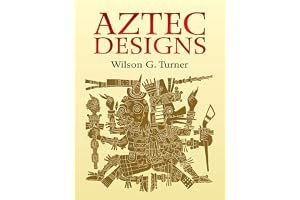
Aztec Designs
Wilson G. Turner
4.2
Rich in mythology and art, the Aztec civilization dominated central Mexico during the fourteenth, fifteenth, and sixteenth centuries. This handsome volume contains 42 pages of authentic Aztec designs derived from ceramics, statues, altars, shields, books, and other priceless artifacts. Gods, rulers, warriors, slaves, animals, and activities both secular and sacred are brilliantly rendered by Wilson G. Turner, a skilled artist/archaeologist and a specialist in pre-Columbian archaeology. Brief captions identify each image. Artists, designers, and illustrators will find in Aztec Designs a wealth of ideas and inspiration for a myriad of projects. Colorists will enjoy adding their own conceptions of color to these ancient motifs.
…
Cover unavailable
65
Conquistadors and Aztecs: A History of the Fall of Tenochtitlan
Stefan Rinke, Christopher Reid, Luis Moreno, and Recorded Books
4.2
Cover unavailable
66
Aztec Rage (Aztec, #4)
Gary Jennings, Robert Gleason, Junius Podrug
4.2
The fascinating history of Mexico that began in the #1 New York Times bestselling novel Aztec continues . . . .
Don Juan de Zavala was the most skilled fighter in all of New Spain—as gifted with weapons and horses as he was with women. These pleasures were all he desired. But the magnificent Aztec empire, its grand cities and riches lay broken under the Spanish boot . . . Now valiant men and fearless women rise and battle their brutal overlords. As a warrior-priest leads an Aztec revolt, across the ocean in Spain courageous people battle Napoleon's invading armies. No one, including Juan de Zavala could stay neutral. Especially if a shocking secret from Zavala's lurid past is exposed—a secret so lethal to the Spanish Crown it threatens their very existence. Zavala will be swept from glittering Mexico City to snake-and-croc infested jungles, to lost Mayan civilizations to the torture chambers of the Inquisition, to beautiful Barcelona and the bloody carnage of Napoleon's war in Spain, to the bloodiest and most spectacular of New Spain's (colonial Mexico) revolutions. Everybody wants Don Juan de Zavala . . and many people want him dead: Isabella . . . Instinctively wicked, sinfully seductive. Father Hidalgo . . . Can a man of God take up the sword and lead a people by the hundreds of thousands into a bloody revolution he cannot control? Raquel . . . Attractive, sensuous, erudite, she challenges Juan with her mind—and her body. Marina . . . A gorgeous pure-blood Aztec, she knows too well the oppressor's rape and pillage of her people.
…
Cover unavailable
67
When Montezuma Met Cortés: The True Story of the Meeting that Changed History
Matthew Restall
4.2
A dramatic rethinking of the encounter between Montezuma and Hernando Cortés that completely overturns what we know about the Spanish conquest of the Americas
On November 8, 1519, the Spanish conquistador Hernando Cortés first met Montezuma, the Aztec emperor, at the entrance to the capital city of Tenochtitlan. This introduction—the prelude to the Spanish seizure of Mexico City and to European colonization of the mainland of the Americas—has long been the symbol of Cortés’s bold and brilliant military genius. Montezuma, on the other hand, is remembered as a coward who gave away a vast empire and touched off a wave of colonial invasions across the hemisphere.
But is this really what happened? In a departure from traditional tellings, When Montezuma Met Cortés uses “the Meeting”—as Restall dubs their first encounter—as the entry point into a comprehensive reevaluation of both Cortés and Montezuma. Drawing on rare primary sources and overlooked accounts by conquistadors and Aztecs alike, Restall explores Cortés’s and Montezuma’s posthumous reputations, their achievements and failures, and the worlds in which they lived—leading, step by step, to a dramatic inversion of the old story. As Restall takes us through this sweeping, revisionist account of a pivotal moment in modern civilization, he calls into question our view of the history of the Americas, and, indeed, of history itself.
…
Cover unavailable
68
Teotihuacan: City of Water, City of Fire
Matthew Robb
4.2
Founded in the first century BCE near a set of natural springs in an otherwise dry northeastern corner of the Valley of Mexico, the ancient metropolis of Teotihuacan was on a symbolic level a city of elements. With a multiethnic population of perhaps one hundred thousand, at its peak in 400 CE, it was the cultural, political, economic, and religious center of ancient Mesoamerica. A devastating fire in the city center led to a rapid decline after the middle of the sixth century, but Teotihuacan was never completely abandoned or forgotten; the Aztecs revered the city and its monuments, giving many of them the names we still use today.
Teotihuacan: City of Water, City of Fire examines new discoveries from the three main pyramids at the site—the Sun Pyramid, the Moon Pyramid, and, at the center of the Ciudadela complex, the Feathered Serpent Pyramid—which have fundamentally changed our understanding of the city’s history. With illustrations of the major objects from Mexico City’s Museo Nacional de Antropología and from the museums and storage facilities of the Zona de Monumentos Arqueológicos de Teotihuacan, along with selected works from US and European collections, the catalogue examines these cultural artifacts to understand the roles that offerings of objects and programs of monumental sculpture and murals throughout the city played in the lives of Teotihuacan’s citizens.
Published in association with the Fine Arts Museums of San Francisco.
Exhibition dates: de Young, San Francisco, September 30, 2017–February 11, 2018 Los Angeles County Museum of Art (LACMA), March 25–September 3, 2018 Phoenix Art Museum: October 6, 2018–January 27, 2019
…
Cover unavailable
69
The Aztec Empire (A True Book: Ancient Civilizations)
Sunita Apte
4.2
Explore the Aztec empire, includingTenochtitlâan, daily life, and ruins. A True Book: Ancient Civilizations series allows readers to experience what makes each ancient civilization distinctive and exceptional as well look at its influence on the some of the practices of the modern world. This series includes an age appropriate (grades 3-5) introduction to curriculum-relevant subjects and a robust resource section that encourages independent study.
…
Cover unavailable
70
Aztec, Inca, and Maya
Elizabeth Baquedano, Barry Clarke
4.2
Cover unavailable
71
Malinche
Laura Esquivel
4.1
This is an extraordinary retelling of the passionate and tragic love between the conquistador Cortez and the Indian woman Malinalli, his interpreter during his conquest of the Aztecs. Malinalli's Indian tribe has been conquered by the warrior Aztecs. When her father is killed in battle, she is raised by her wisewoman grandmother who imparts to her the knowledge that their founding forefather god, Quetzalcoatl, had abandoned them after being made drunk by a trickster god and committing incest with his sister. But he was determined to return with the rising sun and save her tribe from their present captivity. When Malinalli meets Cortez she, like many, suspects that he is the returning Quetzalcoatl, and assumes her task is to welcome him and help him destroy the Aztec empire and free her people. The two fall passionately in love, but Malinalli gradually comes to realize that Cortez's thirst for conquest is all too human, and that for gold and power, he is willing to destroy anyone, even his own men, even their own love.
…
Cover unavailable
72
Moctezuma's Children: Aztec Royalty Under Spanish Rule, 1520-1700
Donald E. Chipman
4.1
Though the Aztec Empire fell to Spain in 1521, three principal heirs of the last emperor, Moctezuma II, survived the conquest and were later acknowledged by the Spanish victors as reyes naturales (natural kings or monarchs) who possessed certain inalienable rights as Indian royalty. For their part, the descendants of Moctezuma II used Spanish law and customs to maintain and enhance their status throughout the colonial period, achieving titles of knighthood and nobility in Mexico and Spain. So respected were they that a Moctezuma descendant by marriage became Viceroy of New Spain (colonial Mexico's highest governmental office) in 1696.
This authoritative history follows the fortunes of the principal heirs of Moctezuma II across nearly two centuries. Drawing on extensive research in both Mexican and Spanish archives, Donald E. Chipman shows how daughters Isabel and Mariana and son Pedro and their offspring used lawsuits, strategic marriages, and political maneuvers and alliances to gain pensions, rights of entailment, admission to military orders, and titles of nobility from the Spanish government. Chipman also discusses how the Moctezuma family history illuminates several larger issues in colonial Latin American history, including women's status and opportunities and trans-Atlantic relations between Spain and its New World colonies.
…
Cover unavailable
73
A War of Witches: A Journey into the Underworld of the Contemporary Aztecs
Timothy J. Knab
4.1
Cover unavailable
74
Harbinger of the Storm (Obsidian and Blood, #2)
Aliette de Bodard, Spring London
4.1
Death, magic and intrigue in this hotly-anticipated follow-up to Servant of the Underworld. A sumptuously-detailed Aztec world, which will appeal to fans of magical fantasy, historical drama, political intrigue and murder mysteries.
THE AZTEC EMPIRE TEETERS ON THE BRINK OF EXTINCTION. As the political infighting starts within the imperial court, Acatl, High Priest for the Dead, makes a macabre discovery in the palace: a high-ranking nobleman has been torn to pieces by an invocation - and it looks like the summoner belongs to the court itself...
File Under: Fantasy [ Aztec Mystery | An Inside Job | Ancient Magics | The Gods Walk! ]
…
Cover unavailable
75
Ancient Civilizations: A Captivating Guide to Mayan History, the Aztecs, and Inca Empire
Captivating History
4.1
Cover unavailable
76
Symbols, Signs and Signets
Ernst Lehner
4.1
Reproducing in historical sequence 1355 signs, seals, and symbols from the simplest drawings of heavenly bodies, through the intricate heraldic devices of the Middle Ages, to modern cattle brands and hobo sign language, this book will be of immense value to the commercial artist and designer. The development of man as an artist and designer is here recorded pictorially by one of the world's foremost experts in the field of graphic art, Ernst Lehner. This book is divided into 13 sections, each with a separate brief introduction: Symbolic Gods and Deities (Egyptian, Babylonian, Greek, Germanic, Incan, Aztec, Hindu, Buddhist, Taoist, etc.); Astronomy and Astrology; Alchemy, Magic, and Mystic (Nordic runes, magic circles, etc.); Church and Religion; Heraldry (coats of arms, badges, etc.); Monsters and Imaginary Figures; Japanese Crests; Marks and Signets (engravers, goldsmiths, armorers, stonemasons, etc.); Watermarks (fourteenth–eighteenth centuries); Printer's Marks (fifteenth–seventeenth centuries); Cattle Brands; and Hobo Signs. All the signs, symbols, and signets are pictured in black and white on strikingly laid out pages, with full explanatory notes for both lay readers and specialists. Anyone interested in means of communication other than language will find this book fascinating and authoritative. The student and teacher in the graphic arts will find it a practical visual guide through the transformation of simple marks and signs into the complicated emblems of our time.
…
Cover unavailable
77
Aztec: A Captivating Guide to Aztec History and the Triple Alliance of Tenochtitlan, Tetzcoco, and Tlacopan
Captivating History
4.1
Cover unavailable
78
Antiguas Civilizaciones: Una Fascinante Guía sobre la Historia de los Mayas, Aztecas y el Imperio Inca (Libro en Español/Ancient Civilizations Spanish Book Version)
Captivating History
4.1
Cover unavailable
79
Historia de México: Una guía fascinante sobre la historia de México, desde sus antiguas civilizaciones, la conquista española y la guerra de ... el presente (Mesoamérica) (Spanish Edition)
Billy Wellman
4.1
Cover unavailable
80
Imperial Spain, 1469 - 1716
J. H. Elliott
4.1
The story of Spain's rise to greatness from its humble beginnings as one of the poorest and most marginal of European countries is a remarkable and dramatic one. With the marriage of Ferdinand & Isabella, the final expulsion of the Moslems and the discovery of America, Spain took on a seemingly unstoppable dynamism that made it into the world's first global power. This amazing success however created many powerful enemies and Elliott's famous book charts the dramatic fall of Habsburg Spain with the same elan as it charts the rise.
…
Cover unavailable
81
Master of the House of Darts (Obsidian and Blood, #3)
Aliette de Bodard
4.1
The year is Three Rabbit, and the storm is coming...
The coronation war for the new Emperor has just ended in a failure, the armies retreating with a mere forty prisoners of war - not near enough sacrifices to ensure the favor of the gods.
When one of those prisoners of war dies of a magical illness, ACATL, High Priest for the Dead, is summoned to investigate.
File Under: Fantasy [ Magical Murder | Aztec Mystery | Human Sacrifice | The Gods Walk ]
e-book ISBN: 9780857661616
…
Cover unavailable
82
Down and Delirious in Mexico City: The Aztec Metropolis in the Twenty-First Century
Daniel Hernandez
4.1
MEXICO CITY, with some 20 million inhabitants, is the largest city in the Western Hemisphere. Enormous growth, raging crime, and tumultuous politics have also made it one of the most feared and misunderstood. Yet in the past decade, the city has become a hot spot for international business, fashion, and art, and a magnet for thrill-seeking expats from around the world.
In 2002, Daniel Hernandez traveled to Mexico City, searching for his cultural roots. He encountered a city both chaotic and intoxicating, both underdeveloped and hypermodern. In 2007, after quitting a job, he moved back. With vivid, intimate storytelling, Hernandez visits slums populated by ex-punks; glittering, drug-fueled fashion parties; and pseudo-native rituals catering to new-age Mexicans. He takes readers into the world of youth subcultures, in a city where punk and emo stand for a whole way of life—and sometimes lead to rumbles on the streets.
Surrounded by volcanoes, earthquake-prone, and shrouded in smog, the city that Hernandez lovingly chronicles is a place of astounding manifestations of danger, desire, humor, and beauty, a surreal landscape of “cosmic violence.” For those who care about one of the most electrifying cities on the planet, “Down & Delirious in Mexico City is essential reading” (David Lida, author of First Stop in the New World).
…
Cover unavailable
83
Aztec, Mixtec And Zapotec Armies
John Pohl, Angus McBride
4.1
Around AD 1450 a new Mexican nation emerged called the Aztec Empire of the Triple Alliance. They succeeded in making themselves the most powerful and feared civilisation in the Americas. The Mixtec and Zapotec peoples were contemporaries of the Aztec nations, and both formed alliances and fought many wars against them. With Angus McBride's usual quality artwork on eight full page colour plates, plus plenty of other illustrations from various sources, this work by John Pohl investigates the history, uniforms and weaponry of Aztec, Mixtec and Zapotec armies.
…
Cover unavailable
84
Huitzilopochtli: The History of the Aztec God of War and Human Sacrifice
Charles River Editors
4.1
Cover unavailable
85
A Coloring Book of Incas, Aztecs and Mayas
Bellerophon Books
4.1
The Pre-Columbian civilizations had some masterlyartists -- this coloring book contains their finest artwork. There are ballplayers, dancers, calendars, counting devices and apantheon of gods to be colored.
Book Details: Format: Paperback Publication Date: 1/1/1985 Pages: 48 Reading Level: Age 9 and Up
Cover unavailable
86
The Lost History of Ancient America: How Our Continent was Shaped by Conquerors, Influencers, and Other Visitors from Across the Ocean
Frank Joseph
4.1
The Lost History of Ancient America presents new evidence of transoceanic visitors to America, hundreds, even thousands, of years before Christopher Columbus was born. Its 20 eminent contributors are experts in a variety of fields, from botany, biology, and prehistoric engineering to underwater archaeology, archaeo-astronomy, and Bronze Age warfare. In ancient times, the sea was not an impassable barrier separating our ancestors from the outside world, but a highway taking them to every corner of it. Never before and nowhere else has so much evidence proving the impact made on America by overseas visitors been assembled. You will learn about: A chain of stonewalls across southern Illinois that has stood for the last two millennia.
A profusion of plants flourishing throughout the United States and Canada that originated more than 20 centuries ago.
Underwater ruins recently found off the coast of Oregon.
Bronze Age oil wells in Pennsylvania.
And much, much more. The Lost History of Ancient America ends the debate between cultural diffusionists who have always known that our ancient ancestors did not consider the sea an impassable barrier and cultural isolationists, who have been equally certain that humans lacked the know-how and courage for global navigation until a little more than 500 years ago."
…
Cover unavailable
87
History of Food
Maguelonne Toussaint-Samat
4.1
This wide-ranging and comprehensive reference history covers in one volume the history of foodstuffs, the story of cuisine and the social history of eating. From the origins of mankind, and the transition from a vegetable to an increasingly carnivorous diet, the story unfolds of the interrelationship between people and diet, between particular foods and social mores, between dietary custom and cuisine.
A strong theme of natural history runs through the book. Bees and honey are examined and discussed, as are pulses, soya, fungi, cereals and the sources of vegetable oils. Game and meat of all kinds from poultry to horsemeat are described, as are all kinds of sea foods. Domestic animals, vegetable and fruit farming, fish farming and other human initiatives are compared with the economic markets they serve, and the dietary effects they have. Foods of pleasure, from confectionery to wine, from coffee to caviar are also covered.
This vast survey concludes with an investigation of scientific issues, including methods of food preservation, dietetics and the importance of vitamins. A selection of significant illustrations is included in the text, and there is a comprehensive bibliography and index. The French edition of this book won the History Prize of the Societe des Gens de Lettres de France.
…
Cover unavailable
88
Feathered Serpent: A Novel of the Mexican Conquest
Colin Falconer
4.1
The triumphant, controversial life of the Aztec woman Malinali is one of the great and enduring legends of Mexico. A high-born Mexica heiress, she was sold into slavery as a child, and it was as a slave of the Maya that she met the Spanish conquistador Hernán Cortés. To her, and many of the Mexica, Cortés, with his ?owing beard and pale skin, was Feathered Serpent, the god whose return to earth foretold the end of Montezuma’s fabled empire. The daughter of a prophet, Malinali knew her fate lay with Feathered Serpent and his invaders. To this day she is reviled as a traitor by Mexico’s native people, but is also honored as a heroine and symbolic mother of a mixed-race nation. This is her story—and the story of the Spanish conquest of Mexico, which for better or worse changed the Americas forever. In Feathered Serpent, Colin Falconer brings the Aztec empire to life in blazing color and gives voice to the incomparable Malinali, who transcended her role as Cortés’s translator and consort to become a fiery agent of history against all odds.
From the Hardcover edition.
…
Cover unavailable
89
The Aztecs
Richard F. Townsend
4.1
Second Edition, Fully Updated and Expanded
A portrait of a fascinating, complex civilization. Beginning with the story of the Spanish conquest, the text then charts the rise of the Aztecs from humble nomads to empire builders. Within 100 years they established the largest empire in Mesoamerican history and, at Tenochtitlan, built a vast city in a lake, a Venice of the New World.
This revised edition has been updated, assimilating information from archaeological excavations and ethnohistoric studies, and widening the picture of Aztec culture beyond their cities. Additional material on topics ranging from local crafts, trade, agriculture and food to architecture, society and women's roles depicts the richness of life in villages and regional centres. Illustrations of archaeological sites, pictorial manuscripts and monuments enhance the narrative.
…
Cover unavailable
90
The Aztec Book of Destiny
Rick Holmer
4.1
The Aztec Book of Destiny summarizes traditional Mesoamerican beliefs about the spiritual nature of time and its influence on one's personality and fate. The ancient Aztec, Toltec and Maya believed that the day of birth, as defined in their sacred calendar, affects destiny; and this philosophy has guided their daily lives for more than 3000 years. This book condenses the scattered and disparate literature about these beliefs into a fun and informative narrative; but it goes far beyond what academics and popular authors have published to date. The author presents a unique perspective shaped by the wisdom of a traditional calendar-keeper he met in Mexico in 1973. The book's message is that the calendar is not simply an ancient and forgotten curiosity - it is as relevant today as in ancient times. The majority of the book projects the timeless Mesoamerican philosophy into contemporary Western society encouraging introspection and self-awareness.
…
Cover unavailable
91
Topiltzin Quetzalcoatl: The Once and Future Lord of the Toltecs
H. B. Nicholson
4.1
Topiltzin Quetzalcoatl: The Once and Future Lord of the Toltecs is the most comprehensive survey and discussion of primary documentary sources and relevant archaeological evidence available about the most enigmatic figure of ancient Mesoamerica. Probably no indigenous New World personage has aroused more interest or more controversy than this Lord of Tollan, capital of the Toltec Empire, who was merged with the prominent Feathered Serpent god, Quetzalcoatl. Speculation began soon after the Spanish Conquest brought Europeans in contact with this ambiguous figure, and scholarly inquiry has continued unabated to the present. The extant literature on this famous man/god is enormous and steadily growing.Professor Nicholson sorts through this wealth of material, classifying, summarizing, and analyzing all known primary accounts of the career of Topiltzin Quetzalcoatl, in the Spanish, Nahuatl, and Mayan languages, which Spanish missionaries and Spanish-educated natives recorded after the Conquest. In a new introduction, he updates the original source material presently available to scholars interested in this figure. After careful consideration of the evidence, he concludes that, in spite of the obvious myth surrounding this renowned Toltec priest-ruler, at least some of Topiltzin Quetzalcoatl's recorded life and deeds are drawn from historical fact. Nicholson also contends that the tradition of his expected return probably played a role in the peaceable reception of Cortés by Moctezuma II in Mexico's Tenochtitlan in the fall of 1519.
Including new illustrations and an index, Topiltzin Quetzalcoatl: The Once and Future Lord of the Toltecs constitutes a major contribution to Mesoamerican ethnohistory and archaeology.
…
Cover unavailable
92
How Do We Look: The Body, the Divine, and the Question of Civilization
Mary Beard
4.0
Conceived as a gorgeously illustrated accompaniment to “How Do We Look” and “The Eye of Faith,” the famed Civilisations shows on PBS, renowned classicist Mary Beard has created this elegant volume on how we have looked at art. Focusing in Part I on the Olmec heads of early Mesoamerica, the colossal statues of the pharaoh Amenhotep III, and the nudes of classical Greece, Beard explores the power, hierarchy, and gender politics of the art of the ancient world, and explains how it came to define the so-called civilized world. In Part II, Beard chronicles some of the most breathtaking religious imagery ever made—whether at Angkor Wat, Ravenna, Venice, or in the art of Jewish and Islamic calligraphers— to show how all religions, ancient and modern, have faced irreconcilable problems in trying to picture the divine. With this classic volume, Beard redefines the Western-and male-centric legacies of Ernst Gombrich and Kenneth Clark.
…
Cover unavailable
93
Demon of the Air (Aztec Murder Mystery, #1)
Simon Levack
4.0
Mexico-Tenochtitlan, in the year Twelve-House: the vast, teeming city of the Aztecs at the height of its glory. sacrificial victim up the steps of the Great Pyramid to celebrate the Festival of the Raising of Banners. at the ritual slaughter of the so-called Flowery Death. Yaotl's only worry is how to explain it to his master. questions about the sorcerers who have vanished from his impregnable prison, Yaotl realises he needs answers soon. threaten the future of everything he knows.
…
Cover unavailable
94
Great Moments in Chocolate History: With 20 Classic Recipes From Around the World
Howard-Yana Shapiro Ph.D.
4.0
Cover unavailable
95
Night of Sorrows
Frances Sherwood
4.0
Sold as a love slave to Hernando Cortes in the early sixteenth century, Aztec princess Malintz in accompanies him on a journey to Tenocht itlan, while Cortes and his compadres engage in a battle that marks the end of the Aztec empire.
Cover unavailable
96
Maya Civilization: A Captivating Guide to Maya History and Maya Mythology (Mayan Civilization, Aztecs and Incas Book 1)
Captivating History
4.0
Cover unavailable
97
Aztec and Maya Myths
Karl Taube
4.0
The myths of the Aztec and Maya derive from a shared Mesoamerican cultural tradition. This is very much a living tradition, and many of the motifs and gods mentioned in early sources are still evoked in the lore of contemporary Mexico and Guatemala.
Professor Taube discusses the different sources for Aztec and Maya myths. The Aztec empire began less than 200 years before the Spanish conquest, and our knowledge of their mythology derives primarily from native colonial documents and manuscripts commissioned by the Spanish. The Maya mythology is far older, and our knowledge of it comes mainly from native manuscripts of the Classic period, over 600 years before the Spanish conquest.
Drawing on these sources as well as nineteenth- and twentieth-century excavations and research, including the interpretation of the codices and the decipherment of Maya hieroglyphic writing, the author discusses, among other things, the Popol Vuh myths of the Maya, the flood myth of Northern Yucatan, and the Aztec creation myths.
…
Cover unavailable
98
Los Aztecas: Historia, Cultura, Mitolog�a, Leyendas y Profec�as
Gil M Verales
4.0
He aqu� una obra original y fascinante a cerca de una de las civilizaciones mas interesantes y reconocida del mundo antiguo: Los Aztecas. Este libro contiene m�s de 100 im�genes de mapas, manuscritos, c�dices, pinturas y esculturas. Incluye tambi�n fotograf�as de museos y zonas arqueol�gicas, que ofrecen una visi�n singular de esta civilizaci�n tan rica y tan compleja. Descubre sus or�genes; c�mo se form� su imperio; c�mo estaba organizada su sociedad, su educaci�n, su ej�rcito y su vida familiar y cotidiana. Conoce el tipo de sacrificios que hac�an; cuales eran las reglas del ulama o juego de pelota, y c�mo funcionaba su calendario. Explora el sagrado universo de su mitolog�a y leyendas, as� como las incre�bles y descriptivas profec�as que muy pocos conocen, y que al analizarlas detenidamente se acercan muy misteriosamente a eventos y sucesos modernos. �Verdad o coincidencia? tu decides.
…
Cover unavailable
99
Ancient Maya Culture (Spotlight on the Maya, Aztec, and Inca Civilizations)
Christine Honders
4.0
For hundreds of years, archaeologists have unearthed clues about the amazing culture of the ancient Maya. This book brings the culture of this ancient civilization to life. Readers will learn about the ancient Maya economy, technology, rituals and traditions, family systems, politics, and daily life. Primary sources such as artifacts and ruins allow readers to connect with the past on a deep level. Amazing artwork and photographs allow readers to visualize the backdrop of ancient Maya culture as it exists today and as its imagined to have existed hundreds of years ago at its peak. Readers are in for a thrilling adventure with this firsthand look into the wonders of Maya culture.
…
Cover unavailable
100
In the Shadow of the Moon: The Science, Magic, and Mystery of Solar Eclipses
Anthony Aveni
4.0
In anticipation of solar eclipses visible in 2017 and 2024, an exploration of the scientific and cultural significance of this mesmerizing cosmic display
Since the first humans looked up and saw the sun swallowed by darkness, our species has been captivated by solar eclipses. Astronomer and anthropologist Anthony Aveni explains the history and culture surrounding solar eclipses, from prehistoric Stonehenge to Babylonian creation myths, to a confirmation of Einstein’s theory of general relativity, to a spectacle that left New Yorkers in the moon’s shadow, to future eclipses that will capture human imaginations.
In one accessible and engaging read, Aveni explains the science behind the phenomenon, tracks eclipses across the ancient world, and examines the roles of solar eclipses in modern times to reveal the profound effects these cosmic events have had on human history. Colored by his own experiences—Aveni has witnessed eight total solar eclipses in his lifetime—his account of astronomy’s most storied phenomenon will enthrall anyone who has looked up at the sky with wonder.