

What to Read After Deep Work
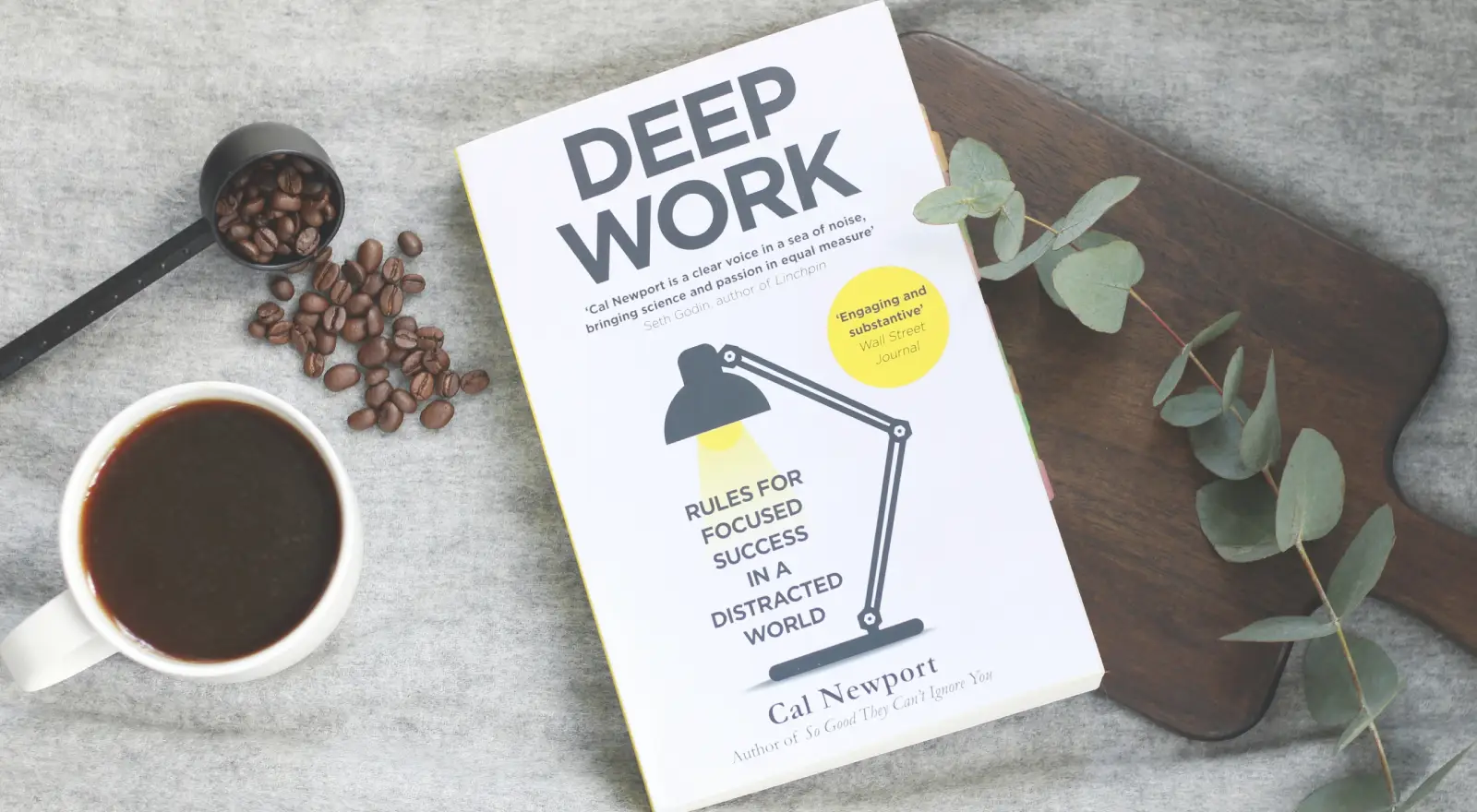
If you’ve just finished reading Deep Work by Cal Newport, you’re probably on a quest to improve your productivity. These 13 books will expand your understanding of what boosts your productivity and give you practical tools to support your growth.

This is a preview of the Shortform article What to Read After Deep Work
This is a preview of the Shortform article, sign up to access the whole article.
Introduction: Books to Unlock Your Next Productivity Level
Deep Work likely inspired you to craft a better schedule, reduce distractions in your workspace, and make headway on your most meaningful goals. To continue your progress, check out these 13 books chosen by Shortform writers.
More Books by Cal Newport
Let’s start with more of the author’s advice for success. These other books by Newport will help you optimize your work, from choosing what to do for a living to deciding what to do this week.
So Good They Can’t Ignore You: What makes people love their work? Newport argues that the path to loving your work is to become so highly skilled that you can choose where and how to work. Then, you can cash in your skills for work that offers great benefits, such as autonomy or the opportunity to make a difference in the world.
Slow Productivity: The way we think about and measure productivity is all wrong, according to Newport. In Slow Productivity, he argues for a new definition of productivity—one that prioritizes outcomes and deep focus over frenetic busyness. Slow productivity is for anyone with ambitious goals who doesn’t want to compromise their time or mental health.
(Shortform tip: If you have to pick one book to read right now, consider your current career stage. If you’re starting out in your career or making a change, So Good They Can’t Ignore You can set you in the right direction. If you’re trying to make steady progress in your chosen path, Slow Productivity might be the right book for this moment.)
Books That Inspired Deep Work
Newport references several books as sources of insight for Deep Work. Here are two that’ll be particularly useful for anyone trying to elevate their performance.
The 4 Disciplines of Execution by Chris McChesney, Sean Covey, and Jim Huling: Strategy (making the perfect plan) is much easier and better-studied than execution (actually carrying out your plan). The authors address this gap with a framework for achieving important goals through the four practices of focus, leverage, engagement, and accountability.
Peak by Anders Ericsson: This book shatters the illusion that expertise comes from genius or “natural” talent. While it may seem as though figures like Beethoven or Roger Federer relied solely on an innate talent, the secret to their success was rigorous practice and a willingness to gradually improve through a series of baby steps. Ericsson outlines this process.
(Shortform tip: If you’re trying to elevate your performance, you’ll benefit from reading both of these books. However, if you’re leading a team, you might want to prioritize The 4 Disciplines of Execution, which explores how you can nurture the four practices in a team or organization.)
Books That Offer a Different Perspective
The art and science of productivity are constantly evolving, so Newport might not have the final word. The following two books offer different takes on two of his key ideas: that deep work is the most essential skill for the 21st century and that willpower is finite.
21 Lessons for the 21st Century by Yuval Noah Harari: Newport argues that your ability to do deep work will determine how much you thrive in the information economy. In 21 Lessons for the 21st Century, Harari explores additional skills that are crucial for navigating the information economy, such as communication, collaboration, coping with change, and critical thinking.
Indistractable by Nir Eyal: According to Newport, you have a finite amount of willpower each day—which is a problem because you use willpower to overcome distractions and get back on task. However, Eyal says that thinking of willpower as finite gives you an excuse to give up on demanding tasks. Instead, he offers strategies for managing your willpower as an emotion.
(Shortform tip: When you find information that seems to contradict a prior insight, consider whether it adds a new layer rather than debunks what you previously learned. For example, the research on willpower is still evolving, so it’s possible that we do have a finite amount each day. However, Eyal’s perspective can still help you be vigilant of your attitude toward willpower so you don’t give up the power you do have too easily. In addition, his strategies can help you protect the willpower you have, finite or not.)
Books With Insightful Takes on Time Management
While Deep Work makes a case for organizing your schedule to support your work, you still have to deal with all the other aspects of life that make demands on your time. One of these books explores how to make time for everything you want to do—and the other book questions whether it’s even possible to do so.
Four Thousand Weeks by Oliver Burkeman: Burkeman argues that the idea that you can wield perfect control over your time is a delusion. Instead, accept that you’ll never get as much done as you’d like, then work within the parameters of a finite life. His suggestions may relieve you of the guilt of not getting everything done and help you lead a more fulfilled life.
168 Hours by Laura Vanderkam: How can you fit a meaningful job, time with loved ones, and leisure into your schedule? Many of us (including Burkeman) would say that it’s impossible. But Vanderkam argues that you can have a full life by managing your time intentionally. She teaches you how to fit in all your favorite activities without overscheduling yourself.
(Shortform tip: Whether you decide that you can get everything done or not, make sure to leave time to do nothing at all. Although doing nothing might sound weird or lazy, experts say it helps your brain and body function at their best, reduces anxiety and depression, combats stress, and even helps your body fight off illness. To get started, pick a specific time each day and commit to doing nothing for at least 10 minutes. Consider lying on the floor, which helps you be still. Don’t try to brainstorm or accomplish anything—just be.)
Books to Cultivate Concentration
Have you tried implementing the strategies Newport outlines but struggled to focus on your deep work? These two books by experts on the human brain might help you crack the concentration code.
Your Brain at Work by David Rock: There are many tips and tricks for how to optimize your productivity, but how do you know what will work for you? Rock argues that the secret to productivity is knowing how your brain uses energy. If you understand the neuroscience behind that process, you can more effectively schedule your day and find your focus.
The Distracted Mind by Adam Gazzaley and Larry Rosen: This neuroscientist and psychologist duo argues that technology has made us significantly more prone to distractions and interruptions, harming our productivity and ability to fulfill our goals. They recommend solutions such as improving your cognitive control and modifying your environment.
(Shortform tip: If you find yourself struggling to focus as you read these books about how to focus, try “listening with a pencil.” Draw simple line patterns or geometric shapes as you listen to the audiobook version. Doodling can provide just enough stimulation to keep your brain from completely checking out, so you can pay closer attention to what the author is explaining. You might also get the same benefits from crocheting, for example, or any task that gives your hands something to do while you’re listening.)
Books to Optimize Your Deep Work
Now that you’ve organized your schedule and found a quiet place to do your deep work, you might be wondering how else to optimize your productivity. These books offer strategies you might not have considered.
Joy at Work by Marie Kondo and Scott Sonenshein: You may know Kondo as the creator of a system for tidying your home. But what about your workplace? Kondo and Sonenshein make the case for workplace tidying: eliminating the digital and physical clutter that makes it harder to enjoy your work. Tidy up to rediscover your values, aspirations, and preferred working style.
Professional Troublemaker by Luvvie Ajayi: This book provides a how-to guide for becoming a “troublemaker”: a person who isn't afraid to speak up and take action to create positive change. While not technically about productivity, Ajayi’s advice can help you define your priorities, delegate effectively, and maintain your boundaries—all of which will support your productivity.
Building a Second Brain by Tiago Forte: In today’s age of technology, we’re constantly surrounded by more information than our brains can process and recall. Forte presents a straightforward method of recording, organizing, and utilizing valuable information. This method allows you to recall important knowledge, connect ideas, and complete any goal or project.
(Shortform tip: All the books on this list make clear that your most important tool is your brain—even if you decide to build a second one. How can you keep it sharp? Get some sleep, preferably on your side. Research suggests that sleeping on your side is the most effective position for clearing out brain waste that accumulates during the day. To maximize this effect, lie on your side with slightly bent knees, use a supportive pillow for your head, and place another small pillow between your legs to keep your spine straight.)