

Stress Break: Use Your Phone for Mindful Photography
The Bauhaus called it “photographitis”—the joyful obsession with capturing light and moment. Learn how your smartphone can become a gateway to mindfulness and a tool for slowing down.
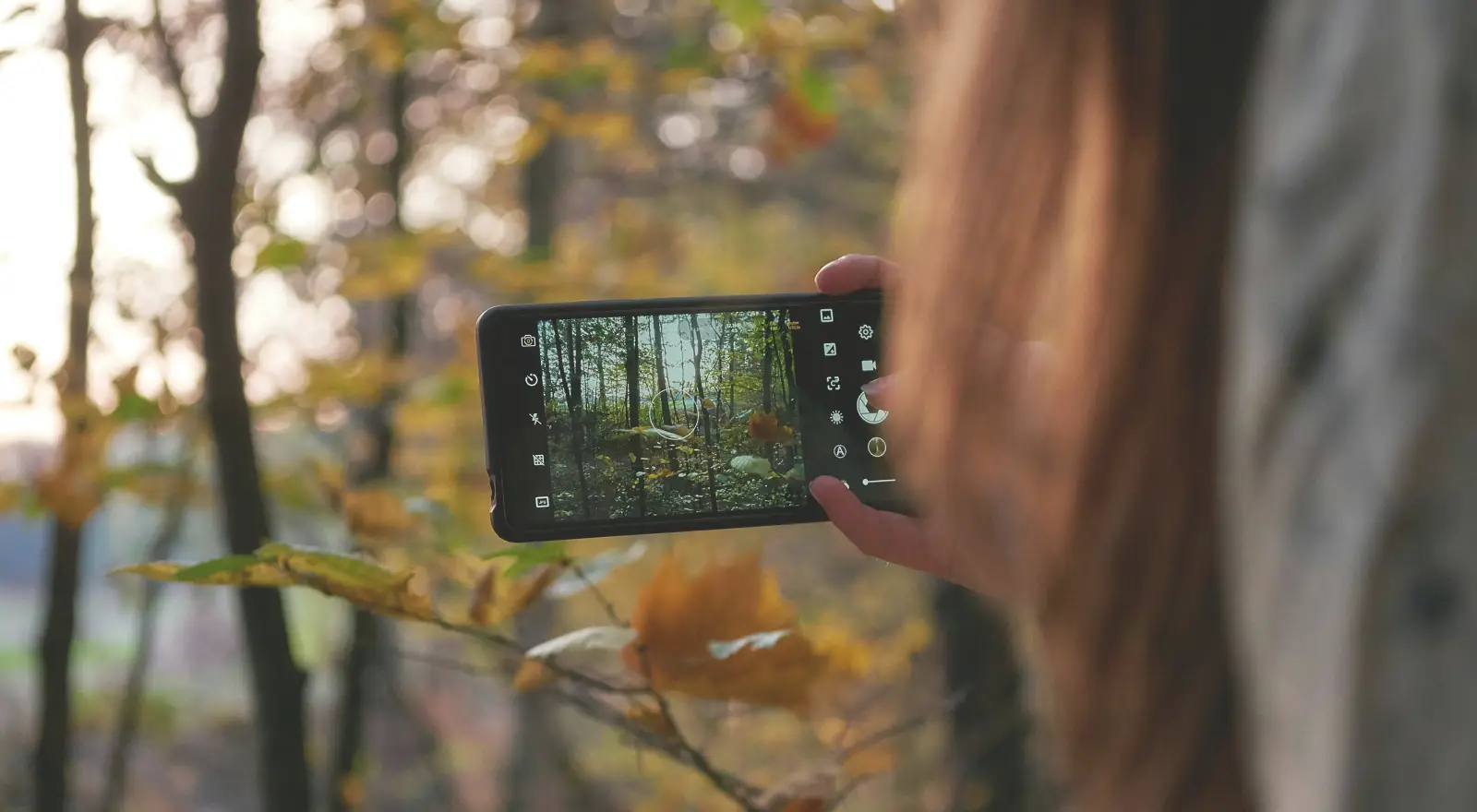

This is a preview of the Shortform article Stress Break: Use Your Phone for Mindful Photography
This is a preview of the Shortform article, sign up to access the whole article.
Introduction: Create Art—and Mindfulness—With the Camera in Your Pocket
In the 1920s, something remarkable happened at the Bauhaus school in Germany. Students and teachers alike became infected with what they playfully called “photographitis.” The newly released Leica 1(A) camera had made photography portable and accessible, and suddenly everyone was experimenting with it. Bathrooms became darkrooms, everyday life became art, and the simple act of seeing transformed into a new way to engage with the world.
Nearly a century later, we’re experiencing our own epidemic of photographitis, with every smartphone equipped with powerful cameras. Yet somehow, in our endless stream of quick snapshots, many of us have lost track of something essential those early photographers understood: the power of truly seeing. Your smartphone camera isn’t just a tool for capturing memories or content for social media. It’s a gateway to mindfulness. When you approach photography with intention, you discover that the act of framing a shot is itself a form of meditation—a way of saying, “This moment matters.” The question isn’t whether you have the right camera to approach photography this way: It’s whether you’re ready to see with fresh eyes.
How to Approach Photography as a Mindfulness Practice
Experts say that photography is about relationships to light, to the moment, to the world around us. Learning to pay attention to these relationships can help you move from your brain’s naturally self-absorbed mode to one of genuine connection with your surroundings. You can approach photography as a physical manifestation of mindfulness. To take a meaningful photograph, you have to pause, focus your attention, and consciously observe what’s around you. These are the same fundamental steps of any mindfulness practice. The camera simply gives you a concrete way to engage with them. But here’s where most of us go wrong: We’ve been conditioned to photograph frantically, as if more shots equal better results.
This approach not only clutters our phones with forgettable images, but prevents us from developing our ability to see. But if we force ourselves to be more selective, we often become more present and more aware. Limitation sharpens intention: Consider setting a gentle boundary for yourself, perhaps three meaningful shots per day rather than 30 scattered ones. This shift transforms your relationship with the camera. You’ll find yourself asking better questions: What story am I trying to tell? What drew my eye to this particular scene? How does this moment make me feel? Along the way, you’ll start to see that the world is offering you photographs constantly—you just need to be present enough to receive them.
Composition as Contemplation
Learning to see photographically is like developing a new language, one where light becomes vocabulary, shadow becomes punctuation, and composition becomes the grammar that gives meaning to your visual sentences. The cameras in your phone already speak this language fluently; you just need to learn how to have a conversation.
Some photographers recommend starting with a single fundamental shift: Learn to treat every photograph like a selfie. When we take selfies, we instinctively move the camera around, searching for the most flattering angle and understanding that a few inches up or down can completely transform how we look. This same principle applies to every subject you photograph. Try photographing a child from below their eye line, looking up at their world, or crouch down to photograph your pet from their perspective. Your phone’s biggest advantage over traditional cameras is its size and weight. It can slip into spaces and angles that would be impossible with larger equipment.
Next, once you’re comfortable moving your camera around, activate the grid lines in your camera settings. This simple tool will introduce you to the rule of thirds—a principle that suggests placing your subject along the intersection points of nine equally divided sections, rather than dead center. You can think of this less as a rigid rule, and more as a guide that helps you create visually interesting compositions. The grid also helps you notice leading lines—paths, architectural elements, shorelines, or even the direction of someone’s gaze that can guide a viewer’s eye through your photograph. Look for ways to use these natural lines to create depth and draw attention to what matters most in your image.
As you develop your eye, pay attention to your relationship with light throughout the day. Photographers often like to take pictures during “golden hour,” taking advantage of the soft, warm light that occurs in the first few hours after sunrise and the last few hours before sunset. But rather than waiting for perfect conditions, you can practice seeing how different types of light affect the mood and story of your photographs. Overcast skies create even, gentle lighting that’s perfect for portraits. Strong midday sun creates dramatic shadows that can add mystery or geometry to your images.
Learning the Technical Details
When you become accustomed to experimenting, you’ll start noticing that photography is fundamentally about making choices about what to include, what to leave out, where to stand, when to press the shutter—and what settings to use. It’s eye-opening to realize that your smartphone contains more photographic power than most professional photographers had access to just a few decades ago. But to unlock that potential, you need to move beyond the camera’s automatic settings.
Many experts agree the most transformative technical shift you can make is learning to shoot in RAW format. Think of JPEG images as a postcard of a painting: They’re pretty, but with most of the original information compressed away. RAW files, by contrast, are like having the original painting, complete with all the subtle gradations and details that give you room to breathe life into your images during editing. On newer iPhones, you can enable Apple ProRAW in your camera settings. Android users can often find RAW options in their camera’s advanced settings, or use an app to capture RAW files. RAW files will be larger. But this abundance of data is what gives you the flexibility to adjust colors and recover details from shadows.
Once you’re capturing RAW files, embrace the editing process as part of your creative practice. Apps like Adobe Lightroom Mobile offer professional-grade editing tools right on your phone, allowing you to adjust everything from exposure and contrast to the subtle color relationships that give photographs their emotional impact. Experts recommend approaching editing as a continuation of the mindful seeing you began when you pressed the shutter: an opportunity to clarify your vision and bring out what drew you to the scene in the first place.
Understanding your phone’s various camera modes can expand your creative possibilities without overwhelming you with technical complexity. Portrait mode uses computational photography to create background blur that mimics expensive professional lenses, helping your subjects stand out from their surroundings. Macro mode lets you explore the intricate details of everyday objects, revealing worlds of texture and pattern that exist just beyond normal vision). Night mode opens up entirely new creative possibilities, allowing you to capture scenes in low light that would have been impossible just a few years ago.
But perhaps the most important technical aspect to embrace is also the simplest: Your phone camera is designed to help you succeed. Rather than fighting automatic features like focus peaking, exposure compensation, and automatic HDR—which are all working behind the scenes to give you the best possible starting point—learn to work with them. Tap on your screen to set focus and exposure, then fine-tune by sliding your finger up or down to adjust brightness. Resist the urge to zoom digitally by pinching your screen. Instead, “zoom with your feet”—move closer to your subject to maintain image quality. This physical movement often reveals better compositions and more intimate perspectives than distant cropping could achieve.
The goal isn’t to master every technical aspect of your camera, but to understand enough about its capabilities that technology becomes an extension of your creative vision rather than a barrier to it. When the technical elements become second nature, you’re free to focus on the joy of seeing, the pleasure of creating, and the satisfaction of capturing moments that might otherwise slip away unnoticed.