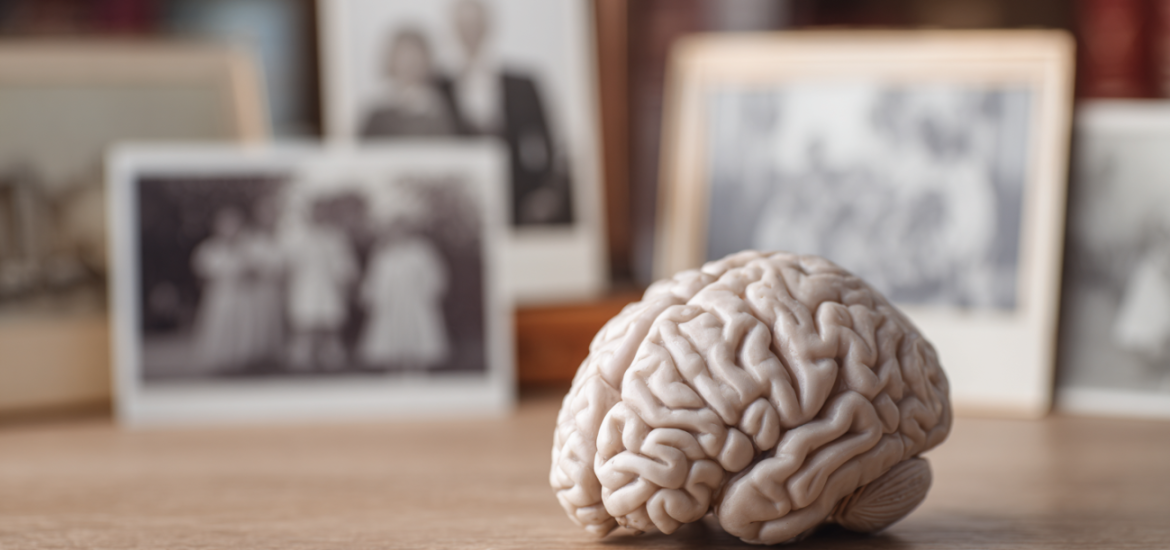
Ever wonder why you can instantly recall your childhood phone number but struggle to remember where you put your keys five minutes ago? The answer lies in how your brain physically creates and stores memories through intricate networks of neural connections that strengthen with use and fade without it.
Drawing from research in books like Uncommon Sense Teaching by Oakley, Rogowsky, and Sejnowski, Remember by Lisa Genova, and Moonwalking with Einstein by Joshua Foer, we’ll break down how memories are formed in the brain, the steps it goes through, and some examples of how memory works.
Table of Contents
How the Brain Creates Memories
Learning about any new subject begins with memorizing fundamental facts or skills. In Uncommon Sense Teaching, Oakley, Rogowsky, and Sejnowski start by explaining how memory works.
Memories Come From Neural Connections
Oakley, Rogowsky, and Sejnowski say that memories are the result of physical connections within the brain—which is to say, neurons linking to one another. These links enable neurons to activate in sync, allowing you to recall the information you need. Neural connections strengthen the more you use them and weaken if you neglect them, which is why it’s easy to remember a skill you use frequently, but difficult or impossible to recall a piece of trivia you heard only once long ago. This also implies that practice and repetition really do help you remember what you’ve learned, because they strengthen neural connections.
(Shortform note: This phenomenon of strengthening specific parts of the brain by using them more often (in other words, by practicing) is known as neuroplasticity. In Behave, neurologist Robert Sapolsky explains that the brain works like a muscle: The parts of it that get used most grow bigger and stronger. However, neuroplasticity also works in reverse—the parts of the brain that don’t get used as much can become weaker; this is why we tend to lose knowledge and skills that we don’t use for a long time.)
Another implication of neuroplasticity is that you can create stronger memories—in other words, you can learn more effectively—by deliberately linking new information to things you already know, creating a network of connections. For the brain, it’s easier to build upon existing connections than it is to create new ones from scratch. To illustrate this idea, imagine an electrician adding a new outlet to an existing electrical circuit, as opposed to assembling an entirely new circuit.
(Shortform note: In A Mind for Numbers, Oakley offers another reason why building these connections between topics is helpful: Rather than accessing one memory at a time, your brain can access “chunks” of related information all at once. Recalling large chunks of information is faster and more efficient than trying to remember individual facts and then stringing them together one by one. To illustrate this idea, think about how a computer loads an entire program rather than displaying individual lines of code—in essence, that’s what your brain does with this information chunks.)
The Four Steps of Memory Creation
Although there are different types of memories, each kind is created in the same way. In Remember by Lisa Genova, she explains how memories are formed through four basic steps in the brain: encoding, consolidation, storage, and retrieval.
Step 1: Encoding
During encoding, your brain turns sensory input into a format that it can store. This format consists of electrical signals created by the activation or “firing” of neurons. The rate at which neurons fire in specific patterns represents pieces of information, and the brain uses this code to process and store that information.
Step 2: Consolidation
During consolidation, your brain—specifically, your hippocampus, located in the middle of the brain—links this new information to existing neural patterns, or information you already know. (Shortform note: An essential part of the consolidation process is replay, when the brain reactivates the neural patterns of the memory being consolidated—essentially, playing back the memory. This largely occurs during periods of rest (either when you’re asleep or when you’re awake but not doing anything mentally strenuous). This means that short breaks during encoding can enhance memory formation (as opposed to taking in a deluge of new information without pausing to let it consolidate).)
Step 3: Storage
During storage, explains Genova, your brain changes structurally and chemically to keep these patterns in place. These changes can include the creation of new pathways between neurons and brain areas or even the formation of new neurons (neurogenesis).
(Shortform note: The brain’s ability to change physically in response to stimuli is known as neuroplasticity. This includes the processes of synaptic plasticity (the creation of new pathways) and neurogenesis that Genova describes. However, recent research suggests that a third aspect of neuroplasticity may play a major role in the storage of memories: myelination. This is a process by which neuronal connections are coated in myelin, a substance made of fat and protein that insulates the connections and makes them more efficient, similar to insulating electrical wires.)
Step 4: Retrieval
Finally, during retrieval, you access the stored information as memory, writes Genova.
Genova explains that memories are not stored in a single location in the brain, but rather distributed throughout the neural networks that were active during the original experience of creating that memory. When you remember something, you’re not accessing a perfect recording but rather reconstructing the experience by reactivating these neural patterns. This explains why memory is both powerful and imperfect—it’s a dynamic process of reconstruction rather than a simple playback mechanism. Next, we’ll explore the factors that come into play that lead us to remember or forget.
(Shortform note: Retrieval can be further broken down into four types: recall (remembering a piece of information without any cues, or reminders), recognition (recognizing information you know once you see it again), recollection (piecing together a memory through logic and clues), and relearning (when you’ve already learned something but forgotten it—learning it a second time is easier).)
What Do We Remember?
Genova explains that we don’t encode and store all the information we perceive. We immediately forget—or don’t even notice—many things. In order to turn something into a memory, we have to pay attention to it. This means we’ll only remember things that catch our attention or that we consciously choose to pay attention to. This is why we usually ignore or forget things we’ve done that are automatic behaviors, like making coffee every morning or driving home from work. This is also why you’ll have more trouble remembering something if your attention to it is divided, so multitasking will make you less likely to form strong and accurate memories.
According to Genova, we’re also more likely to encode and remember things that elicit an emotional reaction. Emotion is what makes things meaningful to us, and it acts as a signal to the brain to encode what’s happening and store that information in our long-term memory. This is why we remember things that are linked to strong emotions better than those that feel neutral. What we remember can also depend on the context in which we formed the memory. Genova explains that we’re better able to retrieve information when we’re in the same context in which we initially learned it. This can include physical location—it’s easier to remember something when you’re in the same place you were when you formed the memory. We also remember information better when our internal state matches the conditions present during initial learning. This includes both emotional states and physiological states. For example, we’re more likely to remember positive experiences when we’re in a good mood.
Sometimes, though, we simply can’t remember something we mean to, or our memory is actually incorrect.
Examples of How Memories Work

In Moonwalking With Einstein, Joshua Foer writes that when it comes to memory, the brain has three particular strengths. The first is remembering visual and spatial information. When the human memory evolved, the most important things to remember were what vegetation was edible and the routes between food and home. We didn’t need to remember things like shopping lists of historical trivia because they didn’t help us stay alive. As a result, by nature, the human brain is good at remembering images and places (like those of food and home).
Example #1: The two-alternative picture recognition exam. In this test, a subject is shown several images, each for less than half a second. Then, after waiting half an hour to allow some forgetting, the subject is again shown each image, paired with another image that the subject hasn’t seen before. Almost everyone can remember which images they’ve seen. Even if the alternate images are very similar (for example, both are bells but with different-sized handles), the brain is good at recognizing the one it’s seen before.
Example #2: The Baker/baker paradox. In this test, a researcher shows two different subjects the same person. The researcher tells one subject that the person is a baker and the other that the person’s surname is Baker. Two days later, the researcher asks both subjects for the word associated with the person. The subject who was told to remember “baker” is more likely to remember her word than the subject who was given the name “Baker.” This is because the profession of a baker has more associations with other information in the network of our brains. We know that bakers wear tall hats, make cookies, smell like dough, and so on. Even if you can’t remember the word “baker” specifically, you might get the impression of something baker-associated, like bread, when you look at the person. The surname Baker, however, has no existing associations except the image of the person.
Example #3: Synesthetes (people whose brains process information using more than one sense) tend to have good memories because their brains automatically attach an image or feeling to abstract concepts. For example, S, a subject in a study by neuropsychologist A.R. Luria, saw words as colors and numbers as people. Whenever S encountered the number 7, he saw a mustached man in his mind.
Secondly, the brain is also good at remembering things that have some sort of structure, such as rhythm, rhyme, alliteration, and music. For example, you’re more likely to remember a crusty crab making a grab than a crustacean reaching out.
Thirdly, the brain is also good at remembering things it finds interesting, such as humor and sex.
Can We Improve Our Memories?
If our brains are naturally good at remembering certain things and naturally bad at remembering others, is there anything we can do to improve our memories? Is memory like vision or height—you’re stuck with what you’ve got—or more like a skill you can improve? For a long time, scientists thought our memory abilities were fixed, but in a study that took place from 1981-1983, K. Anders Ericsson and Bill Chase found that people can train and improve their memories. This is an important part of the question “how does our memory work?” because it implies that memory works in a way that can be improved.
Ericsson and Chase tested the memory of SF. SF took digit span tests, which measure a person’s ability to hold numbers in their working memory, for 250 hours over two years. In the test, someone reads out a new number every second and the test subject must remember the sequence.
Initially, SF, like most people, could remember only about seven digits. He remembered them by chanting them over and over to himself, which is called a phonological loop. But how does our memory work in order to be able to remember more? With practice. Then, however, he came up with a new method. SF was a runner, so he started thinking of the random digits as running times. For example, 4, 1, 1, 9 became 4 minutes and 11.9 seconds, the time it might take him to run a mile. Using this method, by the end of the testing, SF could remember over 70 digits.
Dive Deeper Into Memory
If this article sparked your interest, you can dive even deeper into the inner workings of how memory works with the full guides of the books mentioned above:
