Do you enjoy a good nonfiction book now and then? On the surface, a book summary might seem like a way to get the gist of a book while leaving out much of its context, reasoning, and ideas. But what if a summary could retain the context and connections that are often lost when a book is condensed?
That’s where Shortform book guides come in. Shortform is a learning platform that uses book guides to help you understand, explore, and apply ideas from nonfiction books. Rather than simply condensing a book, Shortform can help you engage with its ideas in ways that add to the reading experience. Keep reading to learn how Shortform book guides work with a break down of their content, examples, and tips to get the most out of every guide.
Table of Contents
Key Takeaways
Inside a Shortform book guide:
- Main ideas—A clear overview of a book’s primary concepts and arguments
- Analysis and context—Explanations, connections, and alternative perspectives that can make ideas easier to understand from all angles
- Examples—Concrete illustrations of abstract or unfamiliar concepts
- Exercises—Opportunities to reflect on or apply the book’s ideas
What Is a Shortform Book Guide?
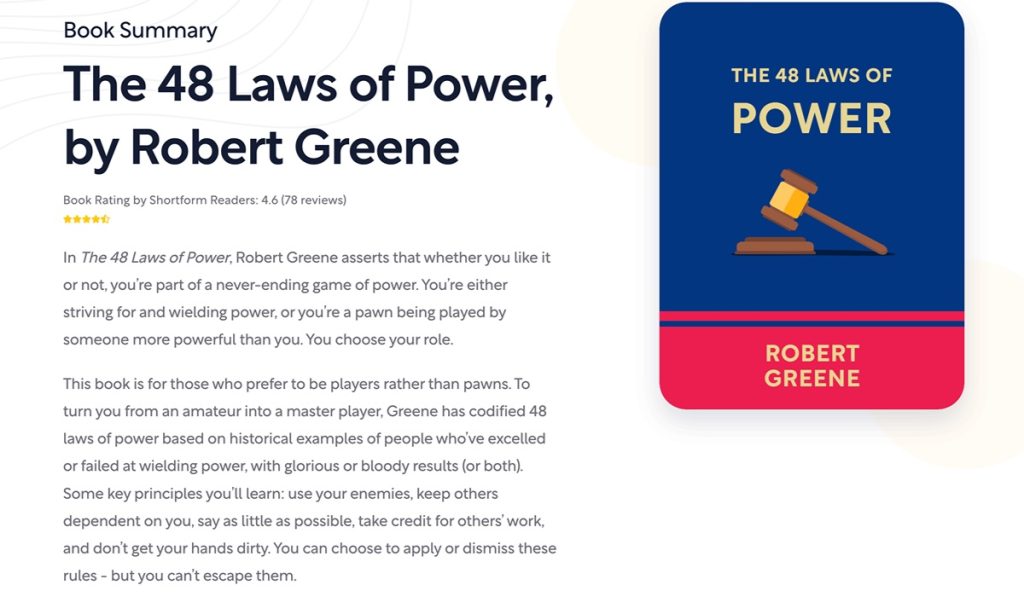
A Shortform book guide is more than a condensed version of a nonfiction book. It combines a book’s core material with additional explanation and perspective to give you another way to explore the author’s ideas.
Shortform calls these resources “book guides” rather than simply summaries because the goal goes beyond telling you what a book says. A guide can help you examine the author’s reasoning, make sense of unfamiliar concepts, and consider how the ideas relate to other perspectives.
In other words, a Shortform book guide works by giving you a structured way to engage with a book’s ideas—not just a shorter version of the book.
What Does a Shortform Book Guide Include?
Shortform book guides combine a book’s central ideas with analysis, context, examples, and, where available, exercises. Each element serves a different purpose, helping you not only see what a book is about but also make sense of its ideas and consider them from different angles.
The Book’s Key Ideas
Shortform guides identify the concepts that form the foundation of a book’s argument and organize them so you can see how those ideas fit together.
For example, the guide to The Art of Spending Money organizes Morgan Housel’s ideas around themes such as why people continually feel they need more money, how money becomes a measure of status, and what true wealth looks like. Seeing these ideas together makes it easier to follow the larger argument rather than encountering each point in isolation.
Analysis and Commentary
Shortform guides also add analysis and commentary that give you another way to examine an author’s ideas. This may include connections to other thinkers, explanations of related concepts, or alternate perspectives.
In The Art of Spending Money, for instance, Shortform connects Housel’s ideas about money, status, and happiness with ideas from thinkers such as Sahil Bloom and Arthur C. Brooks. These connections give you additional perspectives through which to consider the author’s arguments.
Examples and Context
Additional examples can make abstract ideas easier to recognize and understand. Shortform may use situations beyond those in the original book to show how a concept works in practice.
For example, when explaining Housel’s idea of using money as a “yardstick,” the guide illustrates it through everyday spending and status signals, such as buying an expensive car for the respect or attention it might attract. A concrete situation like this can make an abstract concept easier to recognize in everyday life.
Exercises
Some Shortform guides also include exercises that encourage you to reflect on or apply the ideas you’re learning.
The Art of Spending Money guide, for example, asks you to consider a recent purchase and what need you were trying to fulfill, such as comfort, convenience, or security. Exercises like this give you an opportunity to connect an author’s ideas to your own experiences rather than simply reading about them.
Together, these elements make a Shortform book guide more than a condensed version of a book. They give you a structured way to follow its ideas, examine them from different perspectives, and consider how they relate to your own life.

How Shortform Makes a Book Easier to Understand
Shortform’s approach isn’t simply about summarizing a book. Its guides organize the material so that the most important ideas, their relationships, and the reasoning behind them are easier to follow.
Shortform Focuses on the Ideas That Matter Most
Nonfiction books often contain supporting details, anecdotes, and examples alongside their central arguments. A Shortform guide identifies the concepts that form the foundation of a book and brings them together in a way that makes the larger argument easier to see.
For example, Thinking, Fast and Slow covers a wide range of ideas about how people think and make decisions. Shortform organizes the book around several major themes, beginning with author Daniel Kahneman’s two systems of thought before moving into cognitive biases and heuristics, overconfidence, decision-making, and happiness. This gives readers a framework for understanding how the individual concepts fit into the book as a whole.
Shortform Preserves Context
A takeaway can mean something different when separated from the reasoning behind it. Shortform provides the context needed to understand an author’s ideas rather than presenting them as isolated statements.
In its guide to Thinking, Fast and Slow, for instance, Shortform explains System 1 and System 2 before exploring the biases and errors associated with the way we think. This progression helps establish why those biases occur and how they connect to Kahneman’s broader argument about human decision-making.
Shortform Connects Ideas to Other Perspectives
A book’s concepts can also become easier to understand when you see how they relate to others’ ideas and research. Shortform guides connect an author’s arguments with related ideas or offer alternate perspectives to give you a broader view of the subject.
The Thinking, Fast and Slow guide does this by connecting Kahneman’s ideas about cognitive biases with work from other authors, including Malcolm Gladwell and Barbara Oakley. These comparisons give readers additional ways to consider the concepts rather than treating the original author’s perspective as the only way to approach them.
The result is a guide that helps you follow, examine, and remember a book’s ideas.

How Shortform Book Summaries Compare With Other Types of Summaries
You can understand the real difference between Shortform and its competitors by comparing its book guides with their book summaries.
| Type | Primary purpose | What you get |
|---|---|---|
| Quick takeaway | Get the main point quickly | A brief overview of a book’s core ideas |
| Shortform book guide | Understand and engage with a nonfiction book | A concise overview with analysis, context, examples, and, in some guides, exercises |
Want to compare Shortform with other well-known options? Explore our guide to the best book summary apps.
7 Ways to Use a Shortform Book Guide
A Shortform book guide isn’t meant to replace the original book. Instead, it can be a useful companion before, during, and after you read.
1. Use It to Decide What to Pay Attention to While Reading
Before opening a book, skim its Shortform guide to get a sense of the author’s major arguments and concepts. Then, as you read the original, you’ll have a better idea of what to look for and how different ideas fit together.
2. Use It When You Get Stuck
If a chapter or concept isn’t clicking, turn to the guide as a troubleshooting tool. A different explanation, example, or perspective may help you work through an idea that’s difficult to grasp in the original.
3. Use It to Prepare for a Discussion
Reading for a book club, class, or conversation with a friend? A Shortform guide can help you refresh your memory and find ideas worth discussing. Exercises and questions can also give you conversation starters to explore with others.
4. Use It to Revisit a Book Later
Months after finishing a book, you may remember that it changed how you think without remembering exactly why. Instead of rereading the entire book, return to its Shortform guide to refresh the central ideas and reconnect them to what you originally learned.
5. Use It to Learn About a Topic in Depth
You don’t have to limit yourself to one book when you want to learn about a subject. Shortform can help you explore a topic across multiple books, allowing you to compare different ideas, approaches, and perspectives. For example, if you’re interested in body language, you can search Shortform for that topic and find guides to multiple books that explore nonverbal communication.
6. Use It as a Second Perspective
A Shortform guide can also give you another way to examine an author’s argument. Its analysis and commentary may introduce related ideas or perspectives that you can consider alongside what you’ve read in the original.
7. Use It to Turn Reading Into Action
After reading a book about a practical topic, return to the guide to think through how its ideas apply to your own life. Exercises and actionables can help you move from understanding an idea to considering what you might do with it.
Used this way, a Shortform book guide can extend the value of reading without taking the place of the original book.
Conclusion
Whether you’re exploring a book before reading it, using a Shortform guide alongside the original, or returning to its ideas later, Shortform can give you a clearer way to understand and engage with nonfiction.
FAQ
What is a Shortform book guide?
A Shortform book guide is a concise summary and analysis of a nonfiction book. Shortform guides include context, commentary, examples, exercises, and actionables to help you understand and engage with the book’s ideas.
How long are Shortform book summaries?
Shortform book guides vary in length, but the guides average about 31 minutes to read or listen to. Some are shorter or longer depending on the book and the material covered.
Can I use a Shortform book guide alongside the original book?
Yes. A Shortform guide can serve as a companion to the original book, helping you preview its ideas, clarify difficult concepts, review what you’ve read, and reinforce what you’ve learned at a faster pace.
What is the difference between a Shortform book guide and a regular summary?
A regular summary generally condenses what a book says. A Shortform guide combines summarization with analysis and context, helping you understand not only the author’s conclusions but also the ideas and reasoning behind them.
