Organizational silos are one of the most common—and costly—barriers to business success. When departments stop communicating, employees lose sight of the bigger picture, projects stall, and companies become their own worst enemies. The good news is that silos aren’t inevitable; they can be systematically dismantled with the right strategies.
I lay out four solid strategies for breaking down organizational silos, drawing on the work of three leading business thinkers: management consultant Patrick Lencioni (Silos, Politics and Turf Wars), Harvard leadership professor Amy C. Edmondson (Teaming), and business strategist Stephen Denning (The Age of Agile). Keep reading to learn how to build a more connected, collaborative workplace.
Table of Contents
How to Break Down Silos
In his book Silos, Politics and Turf Wars, management consultant Patrick Lencioni explains that organizational silos form when employees lack context around the overall goal of the business and their role in it. For many businesses, employees aren’t the only ones who lack this information; management teams often aren’t on the same page when it comes to the business’s goals, priorities, and how they intend to reach them. In his book, Lencioni shows how you can eliminate organizational siloing by implementing a unified plan. I supplement his advice with strategies from leadership professor Amy C. Edmondson and business guru Stephen Denning. I also include an exercise at the end to help you apply these strategies.
➡ Check out my article on what organizational silos are, how they form, and why they’re problematic.
Strategy #1: Align Around a Unified Plan
By creating one plan that accounts for the entire business, Lencioni asserts that you make sure your whole management team is on the same page. Having one plan also helps your employees see your business’s big-picture goal, which can motivate them to put aside their differences and collaborate. This will also stop your employees from receiving mixed messages and make interdepartmental communication easier.
In addition to addressing silos, unified plans such as those Lencioni describes can also improve efficiency by cutting down on bureaucracy. Business experts explain that, when employees lack a clear idea of what they’re supposed to be doing, they tend to spend a lot more time and effort seeking approval or clarification. This adds extra steps to what could otherwise be simple tasks, and it can also become a source of frustration that contributes to employee fatigue and burnout.
Lencioni provides an outline for a clear, unified plan designed to eliminate siloing. His template has four sections:
- Your company’s thematic goal
- Goals that support this objective
- Goals related to the baseline function of the company
- Ways you can measure progress on your goals
Section #1: Thematic Goal
The first section of Lencioni’s unified plan is a thematic goal: a single short-term, qualitative goal shared by everyone. This ensures everyone is on the same page and provides a baseline they can always use to help make smaller decisions. Lencioni explains that your thematic goal is the most important thing your company needs to address in the present—a pressing goal that’ll motivate everyone. It should also be simple, allowing everyone to contribute regardless of their department or skills.
The thematic goal should also be short-term—lasting a year at most, and usually a quarter. This makes the objective more specific and less abstract, so it’s clearer to everyone how they can pursue it. Lastly, Lencioni recommends making your thematic goal qualitative as opposed to something you can measure numerically. He explains that numerical objectives often struggle to account for indirect participation—something you’ll want to encourage to make sure everyone contributes.
Let’s consider an example. Gym owner Michael decides to make his thematic goal “Improve the customer experience through increased efficiency,” directly addressing the most pressing issue the business faces. He doesn’t create a numerical goal related to customer satisfaction because doing so would make employees who don’t interact with customers feel like the goal didn’t apply to them. He sets a duration of three months for the goal, lining up with the quarter.
Section #2: Defining Objectives
The second part of Lencioni’s plan is to create a list of defining objectives—the steps your business will take to pursue your thematic goal. This helps everyone understand what pursuing your thematic goal means in practice. Defining objectives is still qualitative, but they’re more specific.
Let’s return to our example. Michael’s defining objectives for improving the customer experience through efficiency include creating a formal system for employees to report broken exercise machines, a discount campaign to encourage customers to work out during off-hours to reduce crowds, and a mandate for managers to set aside specific equipment for personal training sessions. These all help ensure that, when customers go to the business’s gyms, they’ll be able to use the equipment they want right away—increasing customer satisfaction through efficiency.
Lencioni notes that defining objectives will be more department-specific (you’re often listing how each department will contribute), but he suggests that every member of your leadership team should still take responsibility for every goal. This prevents siloing by providing each department with useful outsider perspectives.
To help departments coordinate on defining objectives as the scope of your unified plan increases, experts recommend creating shared documents on platforms such as Lucid, Notion, or Confluence. These can list defining objectives, and you can give your employees access to edit them with the work they’ve done so far. Not only does this help everyone stay up-to-date on progress, it also encourages employees to share information. For example, suppose the marketing department is working on writing a blog for the company website to increase traffic. By using a shared document, the IT department can keep tabs on marketing’s progress, and they’ll know when they should have blog functionality ready for the site. (I discuss communication infrastructure more below.)
Section #3: Baseline Goals
The third part of Lencioni’s plan to break down silos in the workplace is to list your business’s baseline goals—in other words, goals related to keeping your business running normally. This part of the plan isn’t time-specific; it’s a broad overview of how your business runs and how you want it to keep running. Baseline goals often include increasing revenue, reducing expenses, gaining market share, and so on. For example, one of Michael’s goals might be to get permits for a new location, since opening another gym would expand his chain’s market presence.
Lencioni notes that standard operations may overlap somewhat with your thematic goal, but the two should remain separate. Core elements of running the business won’t inspire or motivate your employees to the same degree, nor will they provide a goal specific to a period of time.
Section #4: Measurements
Once you’ve established the first three sections of your plan, you can turn to how you’re going to quantitatively measure progress toward your goals with things such as deadlines, quotas, or expected growth numbers. Lencioni emphasizes that this part should come last, since numbers alone won’t motivate your employees or efficiently explain what your business is trying to accomplish. You also shouldn’t feel pressured to assign numbers to every activity, since this can sometimes be arbitrary and pointless.
For example, Michael tracks customer satisfaction through online reviews and the number of complaints his gym locations receive. He also keeps track of the average time customers spend filling out gym membership forms, hoping to reduce that number through increased efficiency.
Strategy #2: Build the Right Teams
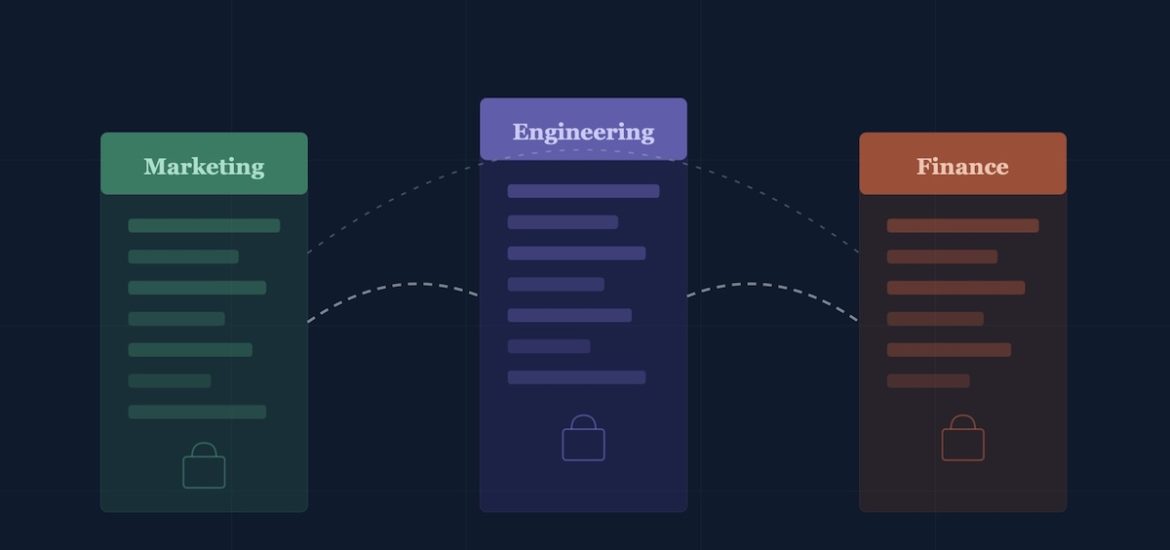
Once you have a shared plan, you need the right people working together. Amy C. Edmondson (Professor of Leadership at Harvard Business School) explains in her book Teaming that traditional teams have clear, fixed boundaries: marketing stays in marketing, engineering stays in engineering, and executives rarely mix with frontline staff. These organizational silos can be broken down by teaming, which deliberately crosses departmental, disciplinary, and hierarchical divides to bring together the right people for each challenge.
What makes teaming different from just putting specialists in a room together is how knowledge flows. Rather than information getting stuck in departmental silos or individual minds, teaming creates pathways for expertise to flow freely to where it’s needed most. To make this happen, Edmondson contends that team members need to form groups based on who has the right knowledge for the problem rather than who’s in their department, make decisions that genuinely incorporate different perspectives, coordinate with people who think differently than they do, stay aware of how their work connects to others’, and develop a common language that bridges different specialty areas.
To successfully break down silos in your own teams, Edmondson recommends you do the following:
- Keep everyone focused on shared goals that matter more than departmental territories.
- Actively invite input from all team members, regardless of their title or status.
- Use technology tools that make sharing information easy across locations and departments.
- Help everyone understand the unique value that each person’s expertise brings to the table.
Strategy #3: Create Communication Infrastructure
Business guru Stephen Denning writes in The Age of Agile that small teams that work independently must still coordinate their actions to work together toward the company’s larger goals. He recommends that companies allow their staff to collaborate across teams in an interlinked network that shares information and resources directly through regular communication. This not only gives team members faster and easier access to resources and information to complete their tasks, but also gives them a broader perspective of how their actions fit with those of other teams into broader company goals.
Denning argues that companies must break down silos between teams to facilitate a high level of coordination. When teams are cut off from each other, they end up with blind spots and outdated information, which leads them to work incompatibly or even at cross-purposes. To prevent siloing, Denning recommends two strategies:
- Widely share information to keep everyone informed on company matters such as overall strategy, the activity of other teams, and new developments that might impact the company.
- Bring staff together into common spaces and periodically exchange staff between teams. This allows staff members to informally share information that may be relevant to their roles.
Experts also contend that you can tear down organizational silos by creating central repositories of information that can be broadly accessed or contributed to. These could include tips and tricks, contact lists, internal reports, customer research, or anything else that might be useful to more than one team. Repositories allow for frictionless exchange of information because they can be accessed at any time without having to set up a meeting.
Your organization also could identify company experts on certain topics and encourage others to refer to them as needed. This would allow members of other teams to benefit from their subject expertise and encourage cross-team communication.
Strategy #4: Make Your Meetings Count
Lencioni recommends regular, focused, and purposeful meetings. Regular meetings will ensure everyone stays on the same page with the unified plan, especially when a thematic goal ends and you need to create a new one. However, you don’t want these meetings to become bloated slogs that make everyone tune out.
Lencioni recommends focusing your meetings around specific, ongoing issues. Instead of having everyone report extensively on what they’ve been up to, give everyone a brief moment to discuss their main priorities and challenges. Then, ask everyone present to rank how each thematic goal is going; Lencioni ranks them from best to worst using green, yellow, and red. Once you have a general idea of the rankings, focus the rest of the meeting on the goals that departments are struggling with. This way, you won’t waste time covering areas that are already doing well. Finally, make sure everyone stays engaged in understanding the problems and brainstorming solutions as you discuss how to improve these problem areas. (Find Lencioni’s roadmap for consistently productive meetings in our guide to his book Death by Meeting.)
For example, Michael’s meetings show that the new reporting system for broken machines and the off-hours discount campaign are both going well, but personal trainers still have to compete with each other for equipment. He spends most of the meeting on understanding and brainstorming solutions to this problem, asking his various department heads for ideas on how to address it.
Some experts recommend holding retrospective meetings after projects have been completed. During these meetings, all stakeholders share information on how the project went and what could be improved next time.
Microsoft: A Real World Example of Silo Smashing
To see what these strategies look like in action, consider how Satya Nadella approached one of his first major challenges when he became CEO of Microsoft in 2014. At the time, the company was in decline. One of the barriers to innovation that Nadella wanted to address was the bureaucracy and isolation between departments that had built up over the years. In his book Hit Refresh, he asserts that such segregation only holds a company back; the key to moving forward is collaboration and being open to other people’s ideas instead of remaining in your own bubble.
To break down departmental silos and generate fresh ideas, Nadella’s executive team introduced an annual week-long hackathon, where teams across different groups—engineering, research, marketing, and so on—work together to solve problems creatively. For example, in the first year of the hackathon, one team found ways to improve learning outcomes for kids with dyslexia; this project ended up being built into some of Microsoft’s key products.
Wrapping Up
Breaking down organizational silos isn’t a one-time fix—it’s an ongoing commitment to alignment, collaboration, and open communication. Lencioni, Edmondson, and Denning approach the problem from different angles, but their advice points in the same direction: Silos crumble when everyone understands the shared goal, the right people are working together, and information flows freely across the organization. Microsoft’s transformation under Satya Nadella shows what becomes possible when those conditions are met. The exercise below will help you start creating them in your own organization.
To learn more, check out these books and Shortform’s guides to them:
- Silos, Politics and Turf Wars (Patrick Lencioni)
- Teaming (Amy C. Edmondson)
- The Age of Agile (Stephen Denning)
Exercise: Build Your Silo-Breaking Plan
Work through the following steps, either individually or with your leadership team.
Step 1: Diagnose Your Silos—Before building a plan, identify where silos exist in your organization. Ask yourself:
- Where does communication break down most often?
- Which departments rarely interact?
- Where do projects stall because of unclear ownership or conflicting priorities?
Write down two or three specific examples.
Step 2: Draft your unified plan (Lencioni). Using your diagnosis as a starting point, draft the four sections of Lencioni’s unified plan:
- Write a single thematic goal for the next quarter. Make it qualitative, pressing, and simple enough that every employee can contribute to it regardless of their role.
- List three to five defining objectives that describe how different departments will pursue that objective together.
- Identify your two or three most important baseline goals—the core operational priorities that need to stay on track regardless of your thematic goal.
- Decide how you’ll measure progress on each goal. Assign at least one concrete metric or deadline to each defining objective.
Step 3: Assemble a cross-functional team (Edmondson). Identify one current project or challenge in your organization that would benefit from cross-functional collaboration. Then ask: Who has the knowledge this problem actually requires, regardless of department or seniority? Assemble a small team based on that question rather than org-chart logic. Before the team begins working, have each member briefly explain what unique expertise they bring and what they hope to learn from the others.
Step 4: Audit your communication infrastructure (Denning). Review how information currently flows in your organization and identify gaps:
- Do you have a central repository where teams can access shared knowledge?
- Are there opportunities to bring staff from different teams into common spaces, formally or informally?
- Is there a mechanism for rotating staff between teams periodically?
For each gap you identify, write down one concrete step you could take to address it.
Step 5: Redesign your meetings (Lencioni). Review your current meeting schedule, and ask whether your meetings are structured to surface and solve problems or simply to report on activity. Plan your next leadership meeting using Lencioni’s approach: Give each attendee a brief moment to share their top priorities and challenges, ask everyone to rate progress on your thematic goal using a green/yellow/red system, and then spend the majority of the meeting focused on whatever is rated yellow or red.
Reflect—After completing the exercise, ask yourself: What’s the single most important change I could make in the next 30 days to start breaking down silos in my organization? Write it down, and share it with at least one colleague to set up accountability.
