 1
1The Glass Bead Game
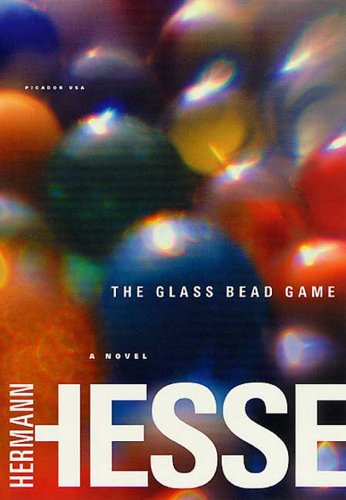
Set in the 23rd century, 'The Glass Bead Game' is the story of Joseph Knecht, who has been raised in Castalia, the remote place his society has provided for the intellectual elite to grow and flourish. Since his childhood, Knecht has been consumed with mastering the Glass Bead Game, which requires a synthesis of aesthetics and scientific arts, such as mathematics, music, logic, and philosophy, which he achieves in adulthood, becoming a Magister Ludi (Master of the Game).

There’s the ideas of mathematics, of philosophy, of music all brought together in this game, the glass bead game. [source]

Founder/Marginal Revolution University
This is about the beauty of organised structures and how we play them in game-like fashion and how much they entrance us. [source]

The Glass Bead Game by Hermann Hesse played a pivotal role in helping me decide to become a teacher and in further pursuits afterwards. There are various interpretations of the text and many conclusions I could personally draw from, but the general theme entails following the life of a man in an institution of academic-like monks who study various subjects for the sake of knowledge itself - nothing done for money, “progress”, or technological advancement. In an age where academics is constantly pressured to lead students towards a job, I found that to be refreshing for me, especially as I had been living in Spain post-college trying to find some purpose beyond teaching English. Learning to learn is beautiful and meaningful by itself, and in terms of how that relates to Ridj-it, this attitude has helped me to engage with the company in finding it to be rewarding for what it is, not because it serves some other external purpose. Investors don’t want to hear that, nor does anyone else relying on your existence, but thinking as such helps defend against dwelling on future scenarios and thoughts that inherently have no reality because, quite honestly, they don’t exist. The consequence of this commitment to the “now” is focus on the task at hand and the inevitable quality that follows. I’m not sure if I could have personally gotten to that point if I hadn’t committed myself to education via Hesse’s book. [source]