 1
1Nature's Metropolis: Chicago and the Great West
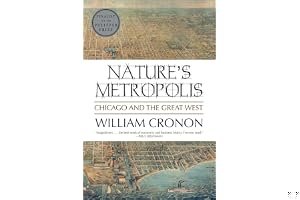
In this groundbreaking work, William Cronon gives us an environmental perspective on the history of nineteenth-century America. By exploring the ecological and economic changes that made Chicago America's most dynamic city and the Great West its hinterland, Mr. Cronon opens a new window onto our national past. This is the story of city and country becoming ever more tightly bound in a system so powerful that it reshaped the American landscape and transformed American culture. The world that emerged is our own.
Winner of the Chicago Tribune Heartland Prize
Winner of the Chicago Tribune Heartland Prize
 Recommended by Edward Glaeser.
Nature’s Metropolis tells the story of Chicago’s relationship with the great American hinterland. It certainly shaped my understanding of the role that cities played in the 19th century. William Cronon tells this story through a series of commodities, from the timber of the early forest that came down through Lake Michigan, to the corn of Iowa that produced the pigs that were slaughtered in Chicago and then shipped back east. He tells the story of the triumph of Chicago over the earlier porkopolis Cincinnati, which was due to the fact that Chicago enabled America to access the wealth of the Iowa farmland, which was significantly more productive than the old hinterland of the Ohio River Valley. [source]