1Bettany Hughes' Top Book Recommendations
Want to know what books Bettany Hughes recommends? We've researched interviews, social media posts, podcasts, and articles to build a comprehensive list of Bettany Hughes' favorite book recommendations of all time. At Shortform, we know books. Our book guides are the best in the world. Learn why.
1Ancient Goddesses
The nurturing Earth Goddess, the Great Mother worshipped at the dawn of civilization—historical fact or consoling fiction?
While Goddess mythologies proliferate and the public devours books by artists, psychotherapists, and enthusiastic amateurs, it is remarkable that those in the field of prehistory have remained largely silent. Did Goddess worship really exist? What actually remains from the earliest cultures, and what can it tell us? What can we learn about the early stages of human religion from the study of prehistoric carvings, pictures, pottery, figurines, and temples?
In Ancient Goddesses, historians and archaeologists write accessibly about this intriguing and controversial topic for the first time. Considering a number of significant early civilizations—Predynastic and Early Dynastic Egypt; “Old Europe;” Early North West Europe; “Celtic” civilization; the Prehistoric Aegean; Malta; the Ancient Near East; Old Testament Israel; Çatalhöyük; and Archaic Greece—these experts review the most recent evidence so that readers can make up their own minds.
Contributors include Ruth Tringham and Margaret Conkey, University of California, Berkeley; Lynn Meskell, New College, Oxford; Fekri Hassan, University College, London; Karel van der Toorn, University of Amsterdam; Joan Westenholz, Bible Lands Museum, Jerusalem; Elizabeth Shee Twohig, University College, Cork; Caroline Malone, New Hall, Cambridge; Mary Voyatzis, University of Arizona; and Miranda Green, University of Wales College.
This is a collection of chapters published by the British Museum Press. It was published in 1998, which was just at the time when I was starting to really consolidate all my research in this field. It was one of those moments when I was walking through the British Museum and I saw this book and thought, how fantastic, someone is thinking along the same lines as me. [source]
3Portrait of a Priestess: Women and Ritual in Ancient Greece
Connelly builds this history through a pioneering examination of archaeological evidence in the broader context of literary sources, inscriptions, sculpture, and vase painting. Ranging from southern Italy to Asia Minor, and from the late Bronze Age to the fifth century A.D., she brings the priestesses to life--their social origins, how they progressed through many sacred roles on the path to priesthood, and even how they dressed. She sheds light on the rituals they performed, the political power they wielded, their systems of patronage and compensation, and how they were honored, including in death. Connelly shows that understanding the complexity of priestesses' lives requires us to look past the simple lines we draw today between public and private, sacred and secular.
The remarkable picture that emerges reveals that women in religious office were not as secluded and marginalized as we have thought--that religious office was one arena in ancient Greece where women enjoyed privileges and authority comparable to that of men. Connelly concludes by examining women's roles in early Christianity, taking on the larger issue of the exclusion of women from the Christian priesthood. This paperback edition includes additional maps and a glossary for student use.
This is a lovely book which is beautifully produced and very detailed. It puts the priestesses in the classical world in their prehistoric context and then it looks ahead to Christianity. One of the sections which really appeals to me is the discussion about the priestesses who were the keepers of keys of the temples in ancient Athens. These keys were huge great things. You see them carved on the headstones of women when they are buried. They are probably slightly magnified to make an impressive picture but nonetheless they were big things. They were almost like the starter handles to crank up cars. [source]
4Byzantium: The Surprising Life of a Medieval Empire
Byzantium. The name evokes grandeur and exoticism--gold, cunning, and complexity. In this unique book, Judith Herrin unveils the riches of a quite different civilization. Avoiding a standard chronological account of the Byzantine Empire's millennium--long history, she identifies the fundamental questions about Byzantium--what it was, and what special significance it holds for us today.
Bringing the latest scholarship to a general audience in accessible prose, Herrin focuses each short chapter around a representative theme, event, monument, or historical figure, and examines it within the full sweep of Byzantine history--from the foundation of Constantinople, the magnificent capital city built by Constantine the Great, to its capture by the Ottoman Turks.
She argues that Byzantium's crucial role as the eastern defender of Christendom against Muslim expansion during the early Middle Ages made Europe--and the modern Western world--possible. Herrin captivates us with her discussions of all facets of Byzantine culture and society. She walks us through the complex ceremonies of the imperial court. She describes the transcendent beauty and power of the church of Hagia Sophia, as well as chariot races, monastic spirituality, diplomacy, and literature. She reveals the fascinating worlds of military usurpers and ascetics, eunuchs and courtesans, and artisans who fashioned the silks, icons, ivories, and mosaics so readily associated with Byzantine art.
An innovative history written by one of our foremost scholars, Byzantium reveals this great civilization's rise to military and cultural supremacy, its spectacular destruction by the Fourth Crusade, and its revival and final conquest in 1453.

Byzantium is one of the first ever monotheistic empires. It is incredibly influential. It always appears as a footnote in Western history but at the time it was in control of vast parts of the Mediterranean, the Middle East and at times North Africa. So this was a Greek Orthodox Christian Empire. It is interesting to see what you do in a monotheistic civilisation. It is the first time it has really happened to any full-blooded degree. The Romans became Christians very late in their development and the Byzantine Empire was set up in the fourth century as the new Christian capital of the new Roman world. [source]
5The Hidden History of Women's Ordination: Female Clergy in the Medieval West
In the early centuries of Christianity, ordination was the process and the ceremony by which one moved to any new ministry (ordo) in the community. By this definition, women were in fact ordained into several ministries. A radical change in the definition of ordination during the eleventh and twelfth centuries not only removed women from the ordained ministry, but also attempted to eradicate any memory of women's ordination in the past. The debate that accompanied this change has left its mark in the literature of the time. However, the triumph of a new definition of ordination as the bestowal of power, particularly the power to confect the Eucharist, so thoroughly dominated western thought and practice by the thirteenth century that the earlier concept of ordination was almost completely erased. The ordination of women, either in the present or in the past, became unthinkable.
References to the ordination of women exist in papal, episcopal and theological documents of the time, and the rites for these ordinations have survived. Yet, many scholars still hold that women, particularly in the western church, were never "really" ordained. A survey of the literature reveals that most scholars use a definition of ordination that would have been unknown in the early middle ages. Thus, the modern determination that women were never ordained, Macy argues, is a premise based on false terms.
Not a work of advocacy, this important book applies indispensable historical background for the ongoing debate about women's ordination.
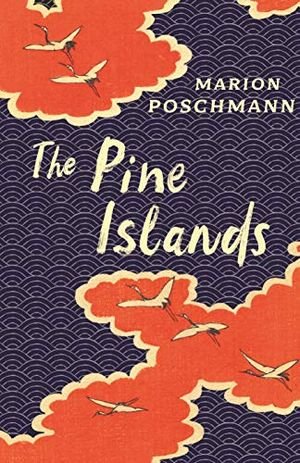
6The Pine Islands
It’s super quirky. A comic confrontation with mortality. It’s about a journeyman academic who thinks that his wife has been unfaithful to him, and so takes himself off to Tokyo to find himself. There he meets somebody who’s trying to commit suicide, and together they travel to try to find the best location for this suicide. [source]
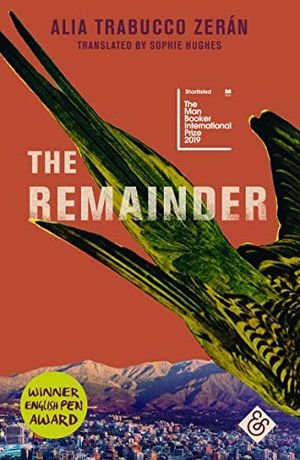
7The Remainder
A story from Chile, mainly Santiago. It’s highly original, very political, with a totally wonderful use of words. The words are perfectly turned. It’s one of those books where the skill of the wordsmithery tumbles you into new stories, into shared experiences. Again, a very, very lyrical translation as well. [source]
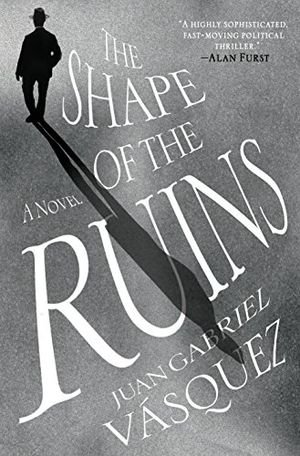
8The Shape of the Ruins
Hugely ambitious: 500-odd pages, but my goodness, it rattled along. it’s one of those books that really pounds your mind with every sentence. There’s beautiful rhythmic prose and it really unpacks how we unpack evidence about the story of the world. [source]