Want to know what books Ayelet Gundar-Goshen recommends? We've researched interviews, social media posts, podcasts, and articles to build a comprehensive list of Ayelet Gundar-Goshen's favorite book recommendations of all time. At Shortform, we know books. Our book guides are the best in the world. Learn why.
Cover unavailable
1
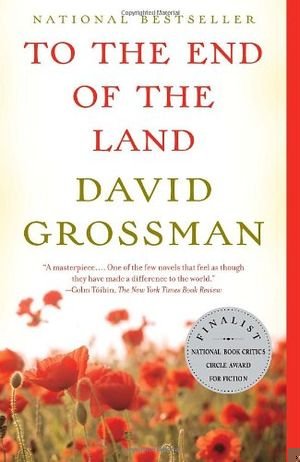
To the End of the Land
David Grossman
4.2
ONE OF THE BEST BOOKS OF THE YEAR: The Christian Science Monitor, The Economist, The New Republic, The New Yorker, The Washington Post, and The Pittsburgh Post Gazette
A NEW YORK TIMES NOTABLE BOOK
Just before his release from service in the Israeli army, Ora’s son Ofer is sent back to the front for a major offensive. In a fit of preemptive grief and magical thinking, so that no bad news can reach her, Ora sets out on an epic hike in the Galilee. She is joined by an unlikely companion—Avram, a former friend and lover with a troubled past—and as they sleep out in the hills, Ora begins to conjure her son. Ofer’s story, as told by Ora, becomes a surprising balm both for her and for Avram—and a mother’s powerful meditation on war and family.

As a devoted reader, the president has been linked to a lengthy list of novels and poetry collections over the years — he admits he enjoys a thriller. [source]
Cover unavailable
2
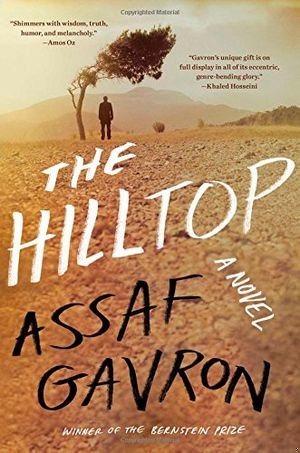
The Hilltop
Assaf Gavron
3.8
Hailed as “The Great Israeli Novel” (Time Out Tel Aviv) and winner of the prestigious Bernstein Prize, The Hilltop is a monumental and daring work about life in a West Bank settlement from one of Israel’s most acclaimed young novelists.
On a rocky, beautiful hilltop stands Ma’aleh Hermesh C, a fledgling community flying under the radar. According to the government it doesn’t exist; according to the military it must be defended. On this contested land, Othniel Assis—under the wary gaze of the neighboring Palestinian village—plants asparagus, arugula, and cherry tomatoes, and he installs goats—and his ever-expanding family. As Othniel cheerfully manipulates government agencies, more settlers arrive, and, amid a hodge-podge of shipping containers and mobile homes, the outpost takes root.
One of the settlement’s steadfast residents is Gabi Kupper, a one-time free spirit and kibbutz-dweller, who undergoes a religious awakening. The delicate routines of Gabi’s new life are thrown into turmoil with the sudden arrival of Roni, his prodigal brother, who, years after venturing to America in search of fortune, arrives at Gabi’s door, penniless. To the settlement’s dismay, Roni soon hatches a plan to sell the “artisanal” olive oil from the Palestinian village to Tel Aviv yuppies. When a curious Washington Post correspondent stumbles into their midst, Ma’aleh Hermesh C becomes the focus of an international diplomatic scandal and faces its greatest test yet.
By turns serious and satirical, The Hilltop brilliantly skewers the complex, often absurd reality of life in Israel, the West Bank settlers, and the nation's relationship to the United States, and makes a startling parallel between today’s settlements and the kibbutz movement of Gabi and Roni’s youth. Rich with humor and insight, Assaf Gavron’s novel is the first fiction to grapple with one of the most charged geo-political issues of our time, and he has written a masterpiece.
The most important Israeli writer today; a Palestinian citizen of Israel. [source]
Cover unavailable
4
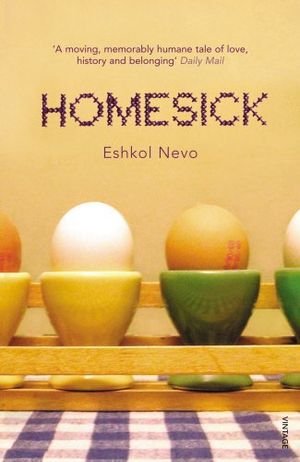
Homesick
Eshkol Nevo
3.7
It is 1995 and Noa and Amir have decided to move in together. Noa is studying photography in Jerusalem and Amir is a psychology student in Tel Aviv, so they choose a tiny flat in a village in the hills, between the two cities. Their flat is separated from that of their landlords, Sima and Moshe Zakian, by a thin wall, but on each side we find a different home - and a different world.
Homesick is a beautiful, clever and moving story about history, love, family and the true meaning of home.
Can you be homesick in your own living room? Can you miss the person you love, when you’re lying next to him in bed? [source]
Cover unavailable
5
All the Rivers
Dorit Rabinyan, Jessica Cohen
3.9
A controversial, award-winning story about the passionate but untenable affair between an Israeli woman and a Palestinian man, from one of Israel’s most acclaimed novelists
When Liat meets Hilmi on a blustery autumn afternoon in Greenwich Village, she finds herself unwillingly drawn to him. Charismatic and handsome, Hilmi is a talented young artist from Palestine. Liat, an aspiring translation student, plans to return to Israel the following summer. Despite knowing that their love can be only temporary, that it can exist only away from their conflicted homeland, Liat lets herself be enraptured by Hilmi: by his lively imagination, by his beautiful hands and wise eyes, by his sweetness and devotion.
Together they explore the city, sharing laughs and fantasies and pangs of homesickness. But the unfettered joy they awaken in each other cannot overcome the guilt Liat feels for hiding him from her family in Israel and her Jewish friends in New York. As her departure date looms and her love for Hilmi deepens, Liat must decide whether she is willing to risk alienating her family, her community, and her sense of self for the love of one man.
Banned from classrooms by Israel’s Ministry of Education, Dorit Rabinyan’s remarkable novel contains multitudes. A bold portrayal of the strains—and delights—of a forbidden relationship, All the Rivers (published in Israel as Borderline) is a love story and a war story, a New York story and a Middle East story, an unflinching foray into the forces that bind us and divide us. “The land is the same land,” Hilmi reminds Liat. “In the end all the rivers flow into the same sea.”