Want to know what books Andy McNab recommends? We've researched interviews, social media posts, podcasts, and articles to build a comprehensive list of Andy McNab's favorite book recommendations of all time. At Shortform, we know books. Our book guides are the best in the world. Learn why.
This is James’s personal story of going to West Africa as a journalist covering the war in Liberia. He hired a protector and fixer to look after him and the fixer turned out to have been involved with Simon Mann and Equatorial Guinea so James just became immersed in the story behind the coup. It’s a fantastic view of the whole thing – and of the midnight phone-calls with people telling him what they knew. [source]
Cover unavailable
2
Crusades
Terry Jones, Marcello Walton, Alan Ereira, David Wallace
4.0
Crusades presents an in-depth and strikingly illustrated look at the overly zealous European quest to reconquer the Holy Land and the conflict that developed between Christians and Muslims that continues to this day.
I watched that Terry Jones documentary about the crusades ages ago and it was quite funny. You’ve got old Pope Urban in the 11th century who got up and said: ‘We’ve got to go do it.’ And the spread of Christianity – it was all about business, power. And all of a sudden the crusaders were getting absolution. There was a crusade in the south of France and the Pope said: ‘Just kill them all. God will sort it out in Heaven.’ And you’ve got the Knights Templar who invented the first cheques and who were there when the Magna Carta was signed saying: ‘We are the king-makers.’ They thought they were stopping the spread of the evil Islam… [source]
Cover unavailable
3
A Million Bullets: The real story of the British Army in Afghanistan
James Fergusson
4.2
In April 2006 a small British peace-keeping force was sent to Helmand province in southern Afghanistan. Within weeks they were cut off and besieged by some of the world's toughest fighters: the infamous Taliban, who were determined to send the foreigners home again. Defence Secretary John Reid had hoped that Operation Herrick 4 could be accomplished without a shot being fired; instead, the Army was drawn into the fiercest fighting it had seen for fifty years. Millions of bullets and thousands of lives have been expended since then in an under-publicized but bitter conflict whose end is still not in sight. Some people consider it the fourth Anglo-Afghan War since Victorian times. How on earth did this happen? And what is it like for the troops on the front line of the 'War on Terror'?
James Fergusson takes us to the dark heart of the battle zone. Here, in their own words and for the first time, are the young veterans of Herrick 4. Here, unmasked, are the civilian and military officials responsible for planning and executing the operation. Here, too, are the Taliban themselves, to whom Fergusson gained unique and extraordinary access. Controversial, fascinating and occasionally downright terrifying, A Million Bullets analyses the sorry slide into war in Helmand and asks this most troubling question: could Britain perhaps have avoided the violence altogether?
Fergusson was a journalist in Afghanistan with Herrick 4 – the campaign has gone on so long we’re now on about Herrick 14. Fergusson had done all the big interviews with the Defence Secretary and got all that standard block information on the war, but then he started to talk to the soldiers, asking them, ‘What do you think? Why do you think you’re here?’ John Reid was saying the operation in Afghanistan could be achieved without a single shot being fired and yet the soldiers were in the middle of this big fight. How did that happen? [source]
Cover unavailable
4
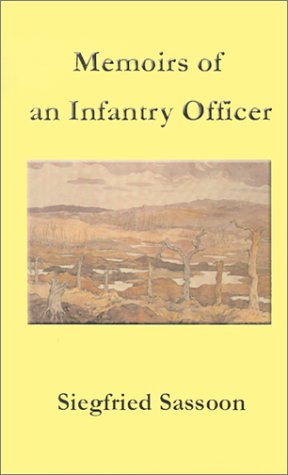
Memoirs of an Infantry Officer
Siegfried Sassoon
4.5
An irreverent look at British military leaders during WW1, written by the Hawthornden-Prize winning author.
This is a stunning novel. I love the English gentleman element of it. You’ve got this well-educated man who really doesn’t mind killing Germans but what he doesn’t understand is the reason why he’s killing them. As the war continued he began to realise that it was for political reasons – the military industrial complex. There was too much power play – the Allies couldn’t stop because they need the Germans completely on their knees so everyone got the divvy-up of land and power. [source]


 Recommended by Andy McNab.