We've ranked the best tolkien books using expert recommendations, sales data, and millions of reader ratings. At Shortform, we know books. Our book guides are the best in the world. Learn why.
Cover unavailable
1
The Hobbit
J. R. R. Tolkien
5.0
Bilbo Baggins is a hobbit who enjoys a comfortable, unambitious life, rarely traveling any farther than his pantry or cellar. But his contentment is disturbed when the wizard Gandalf and a company of dwarves arrive on his doorstep one day to whisk him away on an adventure. They have launched a plot to raid the treasure hoard guarded by Smaug the Magnificent, a large and very dangerous dragon. Bilbo reluctantly joins their quest, unaware that on his journey to the Lonely Mountain he will encounter both a magic ring and a frightening creature known as Gollum. (back cover)
Today is World Book Day, a wonderful opportunity to address this #ChallengeRichard sent in by Mike Gonzalez of New Jersey: Make a list of your top 65 books to read in a lifetime. [source]
First up, The Hobbit, or There and Back Again, by JRR Tolkien. But you knew I was going to say that. This one book, which was published in 1937, defined so many variables for the fantasy tradition that are still in place today. Tolkien’s extraordinary achievement was to recover the epic landscapes of Anglo-Saxon myth, bring them back to life, and then to take us through them on foot, so we could see the details up close, at human scale. The Hobbit is both mythic and relatable at the same time – The New Yorker writer Adam Gopnik recently called it “an arranged marriage between the Elder Edda and The Wind in the Willows”, and I think that’s entirely fair. Though I would give more credit to the bass register of Tolkien’s imagination, its abyssal depths. Mole never delved as deep as the Mines of Moria. [source]
Cover unavailable
2
The Lord of the Rings (The Lord of the Rings, #1-3)
J.R.R. Tolkien
5.0
One Ring to rule them all, One Ring to find them, One Ring to bring them all and in the darkness bind them
In ancient times the Rings of Power were crafted by the Elven-smiths, and Sauron, the Dark Lord, forged the One Ring, filling it with his own power so that he could rule all others. But the One Ring was taken from him, and though he sought it throughout Middle-earth, it remained lost to him. After many ages it fell by chance into the hands of the hobbit Bilbo Baggins.
From Sauron's fastness in the Dark Tower of Mordor, his power spread far and wide. Sauron gathered all the Great Rings to him, but always he searched for the One Ring that would complete his dominion.
When Bilbo reached his eleventy-first birthday he disappeared, bequeathing to his young cousin Frodo the Ruling Ring and a perilous quest: to journey across Middle-earth, deep into the shadow of the Dark Lord, and destroy the Ring by casting it into the Cracks of Doom.
The Lord of the Rings tells of the great quest undertaken by Frodo and the Fellowship of the Ring: Gandalf the Wizard; the hobbits Merry, Pippin, and Sam; Gimli the Dwarf; Legolas the Elf; Boromir of Gondor; and a tall, mysterious stranger called Strider.
This new edition includes the fiftieth-anniversary fully corrected text setting and, for the first time, an extensive new index.
J.R.R. Tolkien (1892-1973), beloved throughout the world as the creator of The Hobbit, The Lord of the Rings, and The Silmarillion, was a professor of Anglo-Saxon at Oxford, a fellow of Pembroke College, and a fellow of Merton College until his retirement in 1959. His chief interest was the linguistic aspects of the early English written tradition, but while he studied classic works of the past, he was creating a set of his own.
As a boy in Pretoria, Musk was un dersized and picked upon, a smart-aleck known as Muskrat. In his loneliness, he read a lot of fantasy and science fiction. “The heroes of the books I read, ‘The Lord of the Rings’ and the ‘Foundation’ series, always felt a duty to save the world,” he told me. [source]
His alternative world and mythological system is totally coherent–it’s a fantastic gift that he has given us. [source]
Cover unavailable
3
The Two Towers (The Lord of the Rings, #2)
J. R. R. Tolkien
4.8
The Fellowship was scattered. Some were bracing hopelessly for war against the ancient evil of Sauron. Some were contending with the treachery of the wizard Saruman. Only Frodo and Sam were left to take the accursed Ring of Power to be destroyed in Mordor–the dark Kingdom where Sauron was supreme. Their guide was Gollum, deceitful and lust-filled, slave to the corruption of the Ring. Thus continues the magnificent, bestselling tale of adventure begun in The Fellowship of the Ring, which reaches its soul-stirring climax in The Return of the King.
…
Cover unavailable
4
The Return of the King (The Lord of the Rings, #3)
J. R. R. Tolkien, Rob Inglis, et al
4.8
Alternate cover edition here.
The Companions of the Ring have become involved in separate adventures as the quest continues. Aragorn, revealed as the hidden heir of the ancient Kings of the West, joined with the Riders of Rohan against the forces of Isengard, and took part in the desperate victory of the Hornburg. Merry and Pippin, captured by Orcs, escaped into Fangorn Forest and there encountered the Ents. Gandalf returned, miraculously, and defeated the evil wizard, Saruman. Meanwhile, Sam and Frodo progressed towards Mordor to destroy the Ring, accompanied by SmEagol--Gollum, still obsessed by his 'precious'. After a battle with the giant spider, Shelob, Sam left his master for dead; but Frodo is still alive--in the hands of the Orcs. And all the time the armies of the Dark Lord are massing. J.R.R. Tolkien's great work of imaginative fiction has been labeled both a heroic romance and a classic fantasy fiction. By turns comic and homely, epic and diabolic, the narrative moves through countless changes of scene and character in an imaginary world which is totally convincing in its detail.
…
Cover unavailable
5
The Lord of the Rings
J.R.R. Tolkien, Dramatization, Ian Holm
4.7
A full-cast dramatization approx. 4 hours 4 cassettes J.R.R. Tolkien's The Fellowship of the Ring Order the audiobook today before the feature film release this holiday season. J. R. R. Tolkien's groundbreaking epic of good versus evil, extraordinary heroes, wondrous creatures and dark armies of terror will be presented in a trilogy of feature films. "The Fellowship of the Ring" - December 19, 2001 "The Two Towers" - Holiday 2002"The Return of the King" - Holiday 2003 This first book in the classic trilogy will be available for the first time as a stand alone audio program. The full cast BBC dramatization complete with music and sound effects features Ian Holm, who stars as Bilbo Baggins in the motion picture.
…
Cover unavailable
6
The Silmarillion
J.R.R. Tolkien, Christopher Tolkien
4.7
A number-one New York Times bestseller when it was originally published, THE SILMARILLION is the core of J.R.R. Tolkien's imaginative writing, a work whose origins stretch back to a time long before THE HOBBIT. Tolkien considered THE SILMARILLION his most important work, and, though it was published last and posthumously, this great collection of tales and legends clearly sets the stage for all his other writing. The story of the creation of the world and of the the First Age, this is the ancient drama to which the characters in THE LORD OF THE RINGS look back and in whose events some of them, such as Elrond and Galadriel, took part. The three Silmarils were jewels created by Feanor, most gifted of the Elves. Within them was imprisoned the Light of the Two Trees of Valinor before the Trees themselves were destroyed by Morgoth, the first Dark Lord. Thereafter, the unsullied Light of Valinor lived on only in the Silmarils, but they were seized by Morgoth and set in his crown, which was guarded in the impenetrable fortress of Angband in the north of Middle-earth. THE SILMARILLION is the history of the rebellion of Feanor and his kindred against the gods, their exile from Valinor and return to Middle-earth, and their war, hopeless despite all their heroism, against the great Enemy. This second edition features a letter written by J.R.R. Tolkien describing his intentions for the book, which serves as a brilliant exposition of his conception of the earlier Ages of Middle-earth.
…
Recommended by Lucas Morales.
Lucas Morales
My favorite books are Tolkien’s the Lord of the Rings, the Hobbit, and the Silmarillion. In fact these book hold a special place in my memory. In highschool I was so into Tolkien that I delved into linguistics on my own time. I was obsessed with Quenya (Tolkien’s elvish language). I combined that obsession with my mediocre skills as a programmer, and made a sort of dictionary/translator program. This was actually my first venturing into entrepreneurship, because in my naivety I thought I might be able to sell my software to fellow enthusiasts (the first movie was just coming out at the time). [source]
Cover unavailable
7
Unfinished Tales of Númenor and Middle-Earth
J.R.R. Tolkien
4.6
Classic hardback edition of this fascinating collection of stories, featuring Tolkien’s own painting of the dragon Glaurung on the cover, which continues the tales of The Hobbit, The Lord of the Rings and The Silmarillion and contains an alternative version of The Children of Hurin.
Unfinished Tales is a collection of narratives ranging in time from the Elder Days of Middle-earth to the end of the War of the Ring, and provides those who have read The Lord of the Rings with a whole collection of background and new stories from the twentieth century’s most acclaimed popular author.
The book concentrates on the realm of Middle-earth and comprises such elements as Gandalf’s lively account of how it was that he came to send the Dwarves to the celebrated party at Bag-End, the emergence of the sea-god Ulmo before the eyes of Tuor on the coast of Beleriand, and an exact description of the military organization of the Riders of Rohan.
Unfinished Tales also contains the only story about the long ages of Numenor before its downfall, and all that is known about such matters as the Five Wizards, the Palantiri and the legend of Amroth. The tales were collated and edited by JRR Tolkien’s son and literary heir, Christopher Tolkien, who provides a short commentary on each story, helping the reader to fill in the gaps and put each story into the context of the rest of his father’s writings.
…
Cover unavailable
8
The Children of Húrin
J.R.R. Tolkien, Christopher Tolkien, Alan Lee
4.5
This tale of Middle-earth's First Age, which appeared in incomplete forms in the posthumously published The Silmarillion and Unfinished Tales , also edited by Tolkien's son, Christopher, only hinted at the depth and power of the tragic story of Túrin and Niënor, the children of Húrin, the lord of Dor-lómin, who achieved renown for having confronted Morgoth, who was the master of Sauron, the manifestation of evil in the Lord of the Rings.
Six thousand years before the One Ring is destroyed, Middle-earth lies under the shadow of the Dark Lord Morgoth. The greatest warriors among elves and men have perished, and all is in darkness and despair. But a deadly new leader rises, Túrin, son of Húrin, and with his grim band of outlaws begins to turn the tide in the war for Middle-earth -- awaiting the day he confronts his destiny and the deadly curse laid upon him.
…
Cover unavailable
9
Tales from the Perilous Realm
J.R.R. Tolkien
4.5
The definitive collection of J.R.R. Tolkien’s five acclaimed modern classic ‘fairie’ tales in the vein of The Hobbit.
Enchanted by a sand-sorcerer, the toy dog Roverandom explores a world filled with strange and fabulous creatures; the fat and unheroic Farmer Giles of Ham is called upon to do battle with the dragon Chrysophylax; Hobbits, princesses, dwarves and trolls partake in the adventures of Tom Bombadil; Smith of Wootton Major journeys to the land of Faery via the magical ingredients of a giant cake; and Niggle the painter sets out to paint the perfect tree.
…
Cover unavailable
10
Letters from Father Christmas
J R R Tolkien
4.5
Every December an envelope bearing a stamp from the North Pole would arrive for J.R.R. Tolkien's children. Inside would be a letter in strange spidery handwriting and a beautiful colour drawing. They were from Father Christmas, telling wonderful tales of life at the North Pole.
From the first note to Tolkien's eldest son in 1920 to the final poignant letter to his daughter in 1943, this book collects all the remarkable letters and pictures in one enchanting edition.
…
Recommended by Igreth the Elf.
Igreth the Elf
Every December an envelope bearing a stamp from the North Pole would arrive for J R R Tolkien’s children. The letters were from Father Christmas. [source]
Cover unavailable
11
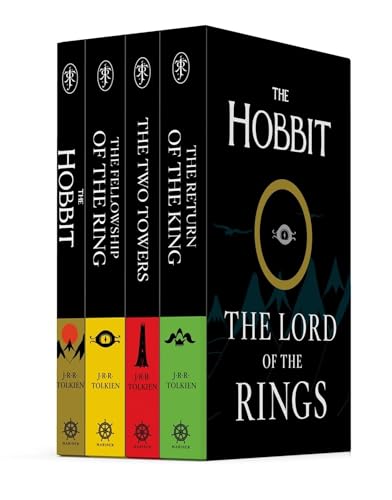
J.R.R. Tolkien 4-Book Boxed Set: The Hobbit and The Lord of the Rings
J.R.R. Tolkien
4.5
This four-volume, boxed set contains J.R.R. Tolkien's epic masterworks The Hobbit and the three volumes of The Lord of the Rings (The Fellowship of the Ring, The Two Towers, and The Return of the King).
In The Hobbit, Bilbo Baggins is whisked away from his comfortable, unambitious life in Hobbiton by the wizard Gandalf and a company of dwarves. He finds himself caught up in a plot to raid the treasure hoard of Smaug the Magnificent, a large and very dangerous dragon.
The Lord of the Rings tells of the great quest undertaken by Frodo Baggins and the Fellowship of the Ring: Gandalf the wizard; the hobbits Merry, Pippin, and Sam; Gimli the dwarf; Legolas the elf; Boromir of Gondor; and a tall, mysterious stranger called Strider. J.R.R. Tolkien's three volume masterpiece is at once a classic myth and a modern fairy tale—a story of high and heroic adventure set in the unforgettable landscape of Middle-earth
…
Cover unavailable
12
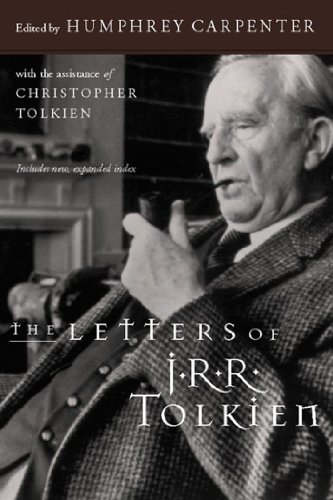
The Letters of J.R.R. Tolkien
J. R. R. Tolkien, Christopher Tolkien, et al.
4.4
This collection will entertain all who appreciate the art of masterful letter writing. The Letters of J.R.R Tolkien sheds much light on Tolkien's creative genius and grand design for the creation of a whole new world: Middle-earth. Featuring a radically expanded index, this volume provides a valuable research tool for all fans wishing to trace the evolution of THE HOBBIT and THE LORD OF THE RINGS.
Cover unavailable
13
The Book of Lost Tales, Part Two (The History of Middle-earth, #2)
J.R.R. Tolkien and Christopher Tolkien
4.4
This second part of The Book of Lost Tales includes the tale of Beren and Lúthien, Túrin and the Dragon, and the only full narratives of the Necklace of the Dwarves and the Fall of Gondolin. Each tale is followed by a commentary in the form of a short essay, together with the texts of associated poems, and contains extensive information on names and vocabulary in the earliest Elvish languages.
Cover unavailable
14
The Book of Lost Tales, Part One (The History of Middle-earth, #1)
J.R.R. Tolkien and Christopher Tolkien
4.4
The Book of Lost Tales stands at the beginning of the entire conception of Middle-earth and Valinor, for the Tales were the first form of the myths and legends that came to be called The Simarillion. Embedded in English legend and English association, they are set in the narritive frame of a great westward voyage over the Ocean by a mariner named Eriol (or Ælfwine) to Tol Eressëa, the Lonely Isle, where Elves dwelt; from them he learned their true history, the Lost Tales of Elfinesse. In the Tales are found the earlies accounts and original ideas of Gods and Elves, Dwarves, Balrogs and Orcs; of the Silmarils and the Two Trees of Valinor; of Nargothrond and Gondolin; of the geography and cosmology of the invented world.
…
Cover unavailable
15
The Legend of Sigurd & Gudrún
J.R.R. Tolkien, Christopher Tolkien
4.4
Many years ago, J.R.R. Tolkien composed his own version, now published for the first time, of the great legend of Northern antiquity, in two closely related poems to which he gave the titles The New Lay of the Völsungs and The New Lay of Gudrún.
In the "Lay of the Völsungs" is told the ancestry of the great hero Sigurd, the slayer of Fáfnir most celebrated of dragons, whose treasure he took for his own; of his awakening of the Valkyrie Brynhild, who slept surrounded by a wall of fire, and of their betrothal; and of his coming to the court of the great princes who were named the Niflungs (or Nibelungs), with whom he entered into blood-brotherhood. In that court there sprang great love but also great hate, brought about by the power of the enchantress of the Niflungs, skilled in the arts of magic, of shape-changing and potions of forgetfulness.
In scenes of dramatic intensity, of confusion of identity, thwarted passion, jealousy, and bitter strife, the tragedy of Sigurd and Brynhild, of Gunnar the Niflung and Gudrún his sister, mounts to its end in the murder of Sigurd at the hands of his blood-brothers, the suicide of Brynhild, and the despair of Gudrún. In the "Lay of Gudrún" her fate after the death of Sigurd is told, her marriage against her will to the mighty Atli, ruler of the Huns (the Attila of history), his murder of her brothers the Niflung lords, and her hideous revenge.
Deriving his version primarily from his close study of the ancient poetry of Norway and Iceland known as the Poetic Edda (and where no old poetry exists, from the later prose work Völsunga Saga), J.R.R. Tolkien employed a verse-form of short stanzas whose lines embody in English the exacting alliterative rhythms and the concentrated energy of the poems of the Edda.
…
Recommended by Rory McTurk.
Rory McTurk
Tolkien is mainly known for The Hobbit, The Lord of the Rings, and so on, but he was a Professor of Anglo-Saxon at Oxford and wrote a fair number of scholarly works and articles. The Legend of Sigurd and Gudrún is a creative work, consisting of two long poems written in Modern English but mainly in epic metre. Now, the main manuscript in which the eddic poems are preserved is called the Codex Regius, and the unfortunate thing is that some eight leaves of this manuscript are missing, and they come in the middle of the story of Sigurd and Brynhild. This book of Tolkien’s was edited by his son, Christopher, who has edited the poems together with his father’s lecture notes, and there is an interesting difference between the lecture notes and one of the poems. [source]
Cover unavailable
16
Beren and Lúthien
J.R.R. Tolkien, Christopher Tolkien, et al.
4.4
New York Times Bestseller
“A good introduction to LOTR fans nervous about taking on The Silmarillion, and also gives longtime fans a fascinating look at the Tolkiens’ myth-making process.”—EntertainmentWeekly.com
“A beautiful book.”—San Antonio Express-News
“With eloquence and diligence and care, the son reconstructs and retraces the father’s journey, pursuing the tale through draft after draft as Tolkien pursued his vision of Middle-earth.”—NPR.org
The epic tale of Beren and Lúthien became an essential element in the evolution of The Silmarillion, the myths and legends of J.R.R. Tolkien’s First Age of the World. Always key to the story is the fate that shadowed their love: Beren was a mortal man, Lúthien an immortal Elf. Her father, a great Elvish lord, imposed on Beren an impossible task before he might wed Lúthien: to rob the greatest of all evil beings, Melkor, of a Silmaril. Painstakingly restored from Tolkien’s manuscripts and presented for the first time as a continuous and standalone story, Beren and Lúthien reunites fans of The Hobbit and The Lord of the Rings with Elves and Men, along with the rich landscape and creatures unique to Tolkien’s Middle-earth. Christopher Tolkien tells the story in his father’s own words by giving its original form as well as prose and verse passages from later texts that illustrate the narrative as it changed.
…
Cover unavailable
17
The War of the Ring: The History of The Lord of the Rings, Part Three (The History of Middle-Earth, # 8)
J.R.R. Tolkien and Christopher Tolkien
4.3
In The War of the Ring Christopher Tolkien takes up the story of the writing of The Lord of the Rings with the Battle of Helm's Deep and the drowning of Isengard by the Ents. This is followed by an account of how Frodo, Sam and Gollum were finally brought to the Pass of Kirith Ungol, at which point J.R.R. Tolkien wrote at the time: 'I have got the hero into such a fix that not even an author will be able to extricate him without labour and difficulty'. Then comes the war in Gondor, and the book ends with the parley between Gandalf and the ambassador of the Dark Lord before the Black Gate of Mordor. In describing his intentions for The Return of the King J.R.R. Tolkien said that 'It will probably work out very differently from this plan when it really gets written, as the thing seems to write itself once it gets going'; and in The War of the Ring totally unforeseen developmenst that would become central to the narrative are seen at the moment of their emergence: the palantir bursting into fragments on the stairs of Orthanc, its nature as unknown to the author as to those who saw it fall, or the entry of Faramir into the story ('I am sure I did not invent him, though I like him, but there he came walking into the woods of Ithilien').
The book is illustrated with plans and drawings of the changing conceptions of Orthanc, Dunharrow, Minas Tirith and the tunnels of Shelob's Lair.
…
Cover unavailable
18
Roverandom
J.R.R. Tolkien
4.3
A classic children's story by the author of The Hobbit
Rover should never have bitten the wizard's trousers. His punishment was to be transformed into a toy, and now he is forced to track down the magician so he can be returned to normal. His adventures will take him to the moon and under the sea, introducing him to many fabulous - and dangerous - creatures.
Inspired by the loss of his own child's favourite toy, this charming tale was written by J.R.R. Tolkien long before The Hobbit, yet remained unpublished for more than 70 years. This new paperback edition includes a full introduction and detailed notes about the story.
This is an old-fashioned story, yet it still speaks freshly today... would leap to life when read aloud to a child. - INDEPENDENT
Lord of the Rings buffs will enjoy picking out bits of Nordic mythology and will relish Tolkien's fabulous sense of landscape - THE TIMES
Cover illustration by J.R.R. Tolkien
…
Cover unavailable
19
Tree and Leaf: Includes Mythopoeia and The Homecoming of Beorhtnoth
J.R.R. Tolkien
4.3
This volume is a provocative and entertaining collection of works which reveals the diversity of J.R.R. Tolkien's imagination and the breadth of his talent as a creator of fantastic fiction.
Cover unavailable
20
Morgoth's Ring (The History of Middle-earth, #10)
J.R.R. Tolkien and Christopher Tolkien
4.3
In Morgoth's Ring, the tenth volume of The History of Middle-earth and the first of two companion volumes, Christopher Tolkien describes and documents the legends of the Elder Days, as they were evolved and transformed by his father in the years before he completed The Lord of the Rings. The text of the Annals of Aman, the "Blessed Land" in the far West, is given in full. And in writings never before published, we can see the nature of the problems that J.R.R. Tolkien explored in his later years as new and radical ideas, portending upheaval in the heart of the mythology. At this time Tokien sought to redefine the old legends, and wrote of the nature and destiny of Elves, the idea of Elvish rebirth, the origins of the Orcs, and the Fall of Men. His meditation of mortality and immortality as represented in the lives of Men and Elves led to another major writing at this time, the "Debate of Finrod and Andreth," which is reproduced here in full. "Above all," Christopher Tolkien writes in his foreward, "the power and significance of Melkor-Morgoth...was enlarged to become the ground and source of the corruption of Arda." This book indeed is all about Morgoth. Incomparably greater than the power of Sauron, concentrated in the One Ring, Morgoth's power (Tolkien wrote) was dispersed into the very matter of Arda: "The whole of Middle-earth was Morgoth's Ring."
…
Cover unavailable
21
The Return of the Shadow: The History of The Lord of the Rings, Part One (The History of Middle-Earth, #6)
J. R. R. Tolkien and Christopher Tolkien
4.3
In this sixth volume of The History of Middle-earth the story reaches The Lord of the Rings. In The Return of the Shadow (an abandoned title for the first volume) Christopher Tolkien describes, with full citation of the earliest notes, outline plans, and narrative drafts, the intricate evolution of The Fellowship of the Ring and the gradual emergence of the conceptions that transformed what J.R.R. Tolkien for long believed would be a far shorter book, 'a sequel to The Hobbit'. The enlargement of Bilbo's 'magic ring' into the supremely potent and dangerous Ruling Ring of the Dark Lord is traced and the precise moment is seen when, in an astonishing and unforeseen leap in the earliest narrative, a Black Rider first rode into the Shire, his significance still unknown. The character of the hobbit called Trotter (afterwards Strider or Aragorn) is developed while his indentity remains an absolute puzzle, and the suspicion only very slowly becomes certainty that he must after all be a Man. The hobbits, Frodo's companions, undergo intricate permutations of name and personality, and other major figures appear in strange modes: a sinister Treebeard, in league with the Enemy, a ferocious and malevolent Farmer Maggot.
The story in this book ends at the point where J.R.R. Tolkien halted in the story for a long time, as the Company of the Ring, still lacking Legolas and Gimli, stood before the tomb of Balin in the Mines of Moria. The Return of the Shadow is illustrated with reproductions of the first maps and notable pages from the earliest manuscripts.
…
Cover unavailable
22
The Peoples of Middle-earth (The History of Middle-Earth, #12)
J.R.R. Tolkien
4.3
When J.R.R. Tolkien laid aside The Silmarillion in 1937 the extension of the originall 'mythology' into later Ages of the world had scarcely begun. It was in the Appendices to The Lord of the Rings that there emerged a comprehensive historical structure and chronology of the Second and Third Ages, embracing all the diverse strands that came together in the War of the Ring. The difficulty that he found in providing these Appendices, leading to the delay in the publication of The Return of the King, is well known, but in The Peoples of Middle-earth Christopher Tolkien shows that early forms of these works already existed years before, in essays and records differing greatly from the published forms. He traces the evolution of the Calendars, the Hobbit genealogies, the Westron language or Common Speach (from which many words and names are recorded that were afterwards lost), and the chronological structure of the later Ages.
Other writings by J.R.R. Tolkien are included in this final volume of The History of MIddle-earth, chiefly deriving from his last years, when new insights and new constructions still freely arose as he pondered the history that he had created. This book concludes with two soon-abandoned stories, both unique in the setting of time and place: The New Shadow in Gondor of the Fourth Age, and the tale of Tal-elmar, in which the coming of the dreaded Númenórean ships is seen through the eyes of men of Middle-earth in the Dark Years.
…
Cover unavailable
23
The Lays of Beleriand (The History of Middle-Earth, #3)
J. R. R. Tolkien, Christopher Tolkien
4.3
This is the third volume of the History of Middle-earth, which comprises here-tofore unpublished manuscripts that were written over a period of many years before Tolkien's Simlarillion was published. Volumes 1 and 2 were the Book of Lost Tales, Part One and The Book of Lost Tales, Part Two. Together, these volumes encompass an extraordinarily extensive body of material ornamenting and buttressing what must be the most fully realized world ever to spring from a single author's imagination. "I write alliterative verse with pleasure," wrote J.R.R. Tolkien in 1955, "though I have published little beyond the fragments in The Lord of the Rings, except The Homecoming of Beorhtnoth." The first of the poems in The Lays of Beleriand is the previously unpublished Lay of the Children of Hurin, his early but most sustained work in the ancient English meter, intended to narrate on a grand scale the tragedy of Turin Turambar. It was account of the killing by Turin of his friend Beleg, as well as a unique description of the great redoubt of Nargothrond. The Lay of the Children of Hurin was supplanted by the Lay of Leithian, "Release from Bondage", in which another major legend of the Elder Days received poetic form, in this case in rhyme. The chief source of the short prose tale of Beren and Luthien is The Silmarillion. This, too, was not completed, but the whole Quest of the Silmaril is told, and the poem breaks off only after the encounter with Morgoth in his subterranean fortress. Many years later, when The Lord of the rings was finished, J.R.R. Tolkien returned to the Lay of Leithian and started on a new version, which is also given in this book. Accompanying the poems are commentaries on the evolution of the history of the Elder Days, which was much developed during the years of the composition of the two Lays. Also included is the notable criticism in detail of the Lay of Lethian by C.S. Lewis, Tolkien's friend and colleague, who read the poem in 1929. By assuming that this poem is actually a fragment from a past lost in history, Lewis underlined the remarkable power of its author's imaginative talents and academic competence.
…
Cover unavailable
24
The Fall of Arthur
J.R.R. Tolkien
4.3
The Fall of Arthur recounts in verse the last campaign of King Arthur, who, even as he stands at the threshold of Mirkwood, is summoned back to Britain by news of the treachery of Mordred. Already weakened in spirit by Guinevere’s infidelity with the now-exiled Lancelot, Arthur must rouse his knights to battle one last time against Mordred’s rebels and foreign mercenaries. Powerful, passionate, and filled with vivid imagery, this unfinished poem reveals Tolkien’s gift for storytelling at its brilliant best.
Christopher Tolkien, editor, contributes three illuminating essays that explore the literary world of King Arthur, reveal the deeper meaning of the verses and the painstaking work his father applied to bring the poem to a finished form, and investigate the intriguing links between The Fall of Arthur and Tolkien’s Middle-earth.
…
Cover unavailable
25
Beowulf: A Translation and Commentary, together with Sellic Spell
Christopher Tolkien
4.3
The translation of Beowulf by J.R.R. Tolkien was an early work, very distinctive in its mode, completed in 1926: he returned to it later to make hasty corrections, but seems never to have considered its publication. This edition is twofold, for there exists an illuminating commentary on the text of the poem by the translator himself, in the written form of a series of lectures given at Oxford in the 1930s; and from these lectures a substantial selection has been made, to form also a commentary on the translation in this book.
From his creative attention to detail in these lectures there arises a sense of the immediacy and clarity of his vision. It is as if he entered into the imagined past: standing beside Beowulf and his men shaking out their mail-shirts as they beached their ship on the coast of Denmark, listening to the rising anger of Beowulf at the taunting of Unferth, or looking up in amazement at Grendel’s terrible hand set under the roof of Heorot.
But the commentary in this book includes also much from those lectures in which, while always anchored in the text, he expressed his wider perceptions. He looks closely at the dragon that would slay Beowulf "snuffling in baffled rage and injured greed when he discovers the theft of the cup"; but he rebuts the notion that this is "a mere treasure story", "just another dragon tale". He turns to the lines that tell of the burying of the golden things long ago, and observes that it is "the feeling for the treasure itself, this sad history" that raises it to another level. "The whole thing is sombre, tragic, sinister, curiously real. The ‘treasure’ is not just some lucky wealth that will enable the finder to have a good time, or marry the princess. It is laden with history, leading back into the dark heathen ages beyond the memory of song, but not beyond the reach of imagination."
Sellic spell, a "marvellous tale", is a story written by Tolkien suggesting what might have been the form and style of an Old English folk-tale of Beowulf, in which there was no association with the "historical legends" of the Northern kingdoms.
…
Cover unavailable
26
The Shaping of Middle-Earth (The History of Middle-Earth, #4)
J. R. R Tolkien, Christopher Tolkien
4.3
The fourth volume that contains the early myths and legends which led to the writing of Tolkien's epic tale of war, The Silmarillion.
Cover unavailable
27
Sauron Defeated
J.R.R. Tolkien and Christopher Tolkien
4.3
In the first section of Sauron Defeated Christopher Tolkien completes his fascinating study of The Lord of the Rings. Beginning with Sam's rescue of Frodo from the Tower of Cirith Ungol, and giving a very different account of the Scouring of the Shire, this section ends with versions of the hitherto unpublished Epilogue, in which, years after the departure of Bilbo and Frodo from the Grey Havens, Sam attempts to answer his children's questions.
The second section is an edition of The Notion Club Papers, now published for the first time. These mysterious papers, discovered in the early years of the twenty-first century, report the discussions of an Oxford club in the years 1986-7, in which, after a number of topics, the centre of interest turns to the legends of Atlantis, the strange communications received by other members of the club from the past, and the violent irruption of the legend into the North-west of Europe.
Closely associated with the Papers is the new version of the Drowning of Anadûnê, which constitutes the third part of the book. At this time the language of the Men of the West, Adûnaic, was first devised, and the book concludes with an account of its structure provided by Arundel Lowdham, a member of the Notion Club, who learned it in his dreams.
…
Cover unavailable
28
The Hobbit
Charles Dixon, J. R. R. Tolkien, et al.
4.3
AN ILLUSTRATED EDITION OF THE FANTASY CLASSIC WITH SIX NEW PAGES OF ILLUSTRATIONS! First published in the United States more than seventy-five years ago, J.R.R. Tolkien’s The Hobbit is one of the best-loved books of all time. Now a blockbuster film by Peter Jackson, Academy Award–winning director of the Lord of the Rings trilogy, The Hobbit was also adapted into a fully painted graphic novel, a classic in its own right, presented here in a new expanded edition.
When Thorin Oakenshield and his band of dwarves embark upon a dangerous quest to reclaim stolen treasure from the evil dragon Smaug, Gandalf the wizard suggests an unlikely accomplice: Bilbo Baggins, a quiet and contented hobbit. Along the way, the company faces trolls, goblins, giant spiders, and worse. But in the end it is Bilbo alone who must face the most dreaded dragon in all Middle-earth—and a destiny that waits in the dark caverns beneath the Misty Mountains, where a twisted creature known as Gollum jealously guards a precious magic ring.
…
Cover unavailable
29
J.R.R. Tolkien: A Biography
Humphrey Carpenter and J.R.R. Tolkien
4.3
The authorized biography of the creator of Middle-earth. In the decades since his death in September 1973, millions have read THE HOBBIT, THE LORD OF THE RINGS, and THE SILMARILLION and become fascinated about the very private man behind the books. Born in South Africa in January 1892, John Ronald Reuel Tolkien was orphaned in childhood and brought up in near-poverty. He served in the first World War, surviving the Battle of the Somme, where he lost many of the closest friends he'd ever had. After the war he returned to the academic life, achieving high repute as a scholar and university teacher, eventually becoming Merton Professor of English at Oxford where he was a close friend of C.S. Lewis and the other writers known as The Inklings.
Then suddenly his life changed dramatically. One day while grading essay papers he found himself writing 'In a hole in the ground there lived a hobbit' -- and worldwide renown awaited him.
Humphrey Carpenter was given unrestricted access to all Tolkien's papers, and interviewed his friends and family. From these sources he follows the long and painful process of creation that produced THE LORD OF THE RINGS and THE SILMARILLION and offers a wealth of information about the life and work of the twentieth century's most cherished author.
…
Cover unavailable
30
The Fall of Gondolin (Middle-Earth Universe)
J.R.R. Tolkien, Christopher Tolkien, Alan Lee
4.3
In the Tale of The Fall of Gondolin are two of the greatest powers in the world. There is Morgoth of the uttermost evil, unseen in this story but ruling over a vast military power from his fortress of Angband. Deeply opposed to Morgoth is Ulmo, second in might only to Manwë, chief of the Valar: he is called the Lord of Waters, of all seas, lakes, and rivers under the sky. But he works in secret in Middle-earth to support the Noldor, the kindred of the Elves among whom were numbered Húrin and Túrin Turambar.
Central to this enmity of the gods is the city of Gondolin, beautiful but undiscoverable. It was built and peopled by Noldorin Elves who, when they dwelt in Valinor, the land of the gods, rebelled against their rule and fled to Middle-earth. Turgon King of Gondolin is hated and feared above all his enemies by Morgoth, who seeks in vain to discover the marvellously hidden city, while the gods in Valinor in heated debate largely refuse to intervene in support of Ulmo’s desires and designs.
Into this world comes Tuor, cousin of Túrin, the instrument of Ulmo’s designs. Guided unseen by him Tuor sets out from the land of his birth on the fearful journey to Gondolin, and in one of the most arresting moments in the history of Middle-earth the sea-god himself appears to him, rising out of the ocean in the midst of a storm. In Gondolin he becomes great; he is wedded to Idril, Turgon’s daughter, and their son is Eärendel, whose birth and profound importance in days to come is foreseen by Ulmo.
At last comes the terrible ending. Morgoth learns through an act of supreme treachery all that he needs to mount a devastating attack on the city, with Balrogs and dragons and numberless Orcs. After a minutely observed account of the fall of Gondolin, the tale ends with the escape of Túrin and Idril, with the child Eärendel, looking back from a cleft in the mountains as they flee southward, at the blazing wreckage of their city. They were journeying into a new story, the Tale of Eärendel, which Tolkien never wrote, but which is sketched out in this book from other sources.
Following his presentation of Beren and Lúthien Christopher Tolkien has used the same ‘history in sequence’ mode in the writing of this edition of The Fall of Gondolin. In the words of J.R.R. Tolkien, it was ‘the first real story of this imaginary world’ and, together with Beren and Lúthien and The Children of Húrin, he regarded it as one of the three ‘Great Tales’ of the Elder Days.
…
Cover unavailable
31
The Lost Road and Other Writings (The History of Middle-Earth, #5)
J.R.R. Tolkien, Christopher Tolkien
4.3
Once again, editor Christopher Tolkien satisfies the hunger of his father's fans for more of the magical storytelling that has made The Hobbit and The Lord of the Rings trilogy the most successful fantasy novels of all time.
Cover unavailable
32
The Treason of Isengard: The History of The Lord of the Rings, Part Two (The History of Middle-Earth, #7)
J. R. R. Tolkien, Christopher Tolkien
4.3
The Treason of Isengard is the seventh volume in Christopher Tolkien's History of Middle-earth and the second in his account of the evolution of The Lord of the Rings. This book follows the long halt in the darkness of the Mines of Moria (which ended The Return of the Shadow) and traces the tale into new lands south and east of the Misty Mountains. Tolkien introduces us to Lothlorien, land of the elves, where we meet the Ents, the Riders of Rohan, and Saruman the White in the fortress of Isengard. In brief outlines and penciled drafts dashed down on scraps of paper are the first entry of Galadriel; the earliest ides of the history of Gondor; and the original meeting of Aragorn with Eowyn, its significance destined to be wholly transformed. Conceptions of what lay ahead dissolve as the story takes its own paths, as in the account of the capture of Frodo and his rescue by Sam Gamgee from Minas Morgul, written long before J.R.R. Tolkien actually reached that point in the writing of The Lord of the Rings. A chief feature of the book is a full account of the original Map, with drawings of successive phases, which was long the basis and accompaniment of the emerging geography of Middle-earth. An appendix describes the Runic alphabets of the time, with illustrations of the forms and an analysis of the Runes used in the Book of Mazarbul found beside Balin's tomb in Moria.
…
Cover unavailable
33
J.R.R. Tolkien: Artist and Illustrator
Wayne G. Hammond, Christina Scull, J.R.R. Tolkien
4.3
J.R.R. Tolkien (1892-1973) renowned author of THE HOBBIT, THE LORD OF THE RINGS and THE SILMARILLION, was an artist in pictures as well as in words. Though he often remarked that he had no talent for drawing, his art has charmed his readers and has been exhibited to large and appreciative audiences the world over. In fact, his talent was far more than he admitted, and his sense of design was natural and keen. J.R.R. TOLKIEN: ARTIST & ILLUSTRATOR explores Tolkien's art at length, from his childhood paintings and drawings to his final sketches. At its heart are his illustrations for his books, especially his tales of Middle-earth. Also examined are the pictures Tolkien made for his children, his expressive calligraphy, his love of decoration, and his contributions to the typography and design of his books. With 200 reproductions, many in full colour, this lavishly-produced book offers a perfect opportunity for anyone wishing to discover a largely unexplored aspect of J.R.R. Tolkien's character.
…
Cover unavailable
34
The Adventures of Tom Bombadil and Other Verses from the Red Book
J. R. R. Tolkien, Roger Garland
4.3
This adventure book tells of Tom's encounters with the River-woman's beautiful daughter, Old Man Willow, the Badger-folk, the ghostly Barrowwight, a lovely princess, trolls, dwarves, and legendary beasts. A delightful volume of 16 songs, rhymes and poems from the acclaimed The Hobbit. Illustrated.
Cover unavailable
35
The War of the Jewels (The History of Middle-Earth, #11)
J. R. R. Tolkien, Christopher Tolkien
4.3
In volumes ten and eleven of The History of Middle-earth, Christopher Tolkien recounts from the original texts the evolution of his father's work on The Silmarillion, the legendary history of the Elder Days or First Age, from the completion of the Lord of the Rings in 1949 until J.R.R. Tolkien's death. In volume ten, Morgoth's Ring, the narrative was taken only as far as the natural dividing point in the work, when Morgoth destroyed the Trees of Light and fled from Valinor bearing the stolen Silmarils. In The War of the Jewels, the story returns to Middle-earth and the ruinous conflict of the High Elves and the Men who were their allies with the power of the Dark Lord. With the publication in this book of all of J.R.R. Tolkien's later narrative writing concerned with the last centuries of the First Age, the long history of The Silmarillion, from its beginnings in The Book of Lost Tales, is completed; the enigmatic state of the work at his death can now be understood. A chief element in The War of the Jewels is a major story of Middle-earth, now published for the first time - a continuation of the great "saga" of Turin Turambar and his sister Nienor, the children of Hurin the Steadfast. This is the tale of the disaster that overtook the forest people of Brethil when Hurin came among them after his release from long years of captivity in Angband, the fortress of Morgoth. The uncompleted text of the Grey Annals, the primary record of the War of the Jewels, is given in full; the geography of Beleriand is studied in detail, with redrawings of the final state of the map; and a long essay on the names and relations of all the peoples of Middle-earth shows more clearly than any writing yet published the close connection between the language and history in Tolkien's world. The text also provides new information, including some knowledge of the divine powers, the Valar.
…
Cover unavailable
36
The Atlas of Middle-Earth
Karen Wynn Fonstad
4.3
Karen Wynn Fonstad's THE ATLAS OF MIDDLE-EARTH is an essential volume that will enchant all Tolkien fans. Here is the definitive guide to the geography of Middle-earth, from its founding in the Elder Days through the Third Age, including the journeys of Bilbo, Frodo, and the Fellowship of the Ring. Authentic and updated -- nearly one third of the maps are new, and the text is fully revised -- the atlas illuminates the enchanted world created in THE SILMARILLION, THE HOBBIT, and THE LORD OF THE RINGS. Hundreds of two-color maps and diagrams survey the journeys of the principal characters day by day -- including all the battles and key locations of the First, Second, and Third Ages. Plans and descriptions of castles, buildings, and distinctive landforms are given, along with thematic maps describing the climate, vegetation, languages, and population distribution of Middle-earth throughout its history. An extensive appendix and an index help readers correlate the maps with Tolkien's novels.
…
Cover unavailable
37
The Languages of Tolkien's Middle-Earth
Ruth S. Noel
4.3
The same delight that led Tolkien to invent fourteen different languages and assorted alphabets for his Middle-earth dwellers now leads many of his fans to puzzle out translations for the Rohirrim's battle cries and to write their love letters in Elvish.
Here is the perfect handbook for all such enthusiasts as well as for serious students of language. It includes a full account of Tolkien the linguist, as well as telling how to write all the languages, with guides to grammar and pronunciation, and a complete dictionary of the fourteen languages.
Here is a book to deepen and enhance our enjoyment of those classics of Middle-earth, The Hobbit, The Lord of the Rings, and The Silmarillion.
Ruth Noel teaches remedial and developmental reading in Riverside, California. She is the author of The Mythology of Middle-earth, on the relation between The Lord of the Rings and European myth in general. "The author is convincing and fascinating as she connects Tolkien's fantasies with the hallowed myths of other cultures." - Publishers Weekly
…
Cover unavailable
38
Smith of Wootton Major & Farmer Giles of Ham
J. R. R. Tolkien, Derek Jacobi, et al
4.3
Two bewitching fantasies by J.R.R. Tolkien, beloved author of THE HOBBIT. In SMITH OF WOOTTON MAJOR, Tolkien explores the gift of fantasy, and what it means to the life and character of the man who receives it. And FARMER GILES OF HAM tells a delightfully ribald mock-heroic tale, where a dragon who invades a town refuses to fight, and a farmer is chosen to slay him.
Farmer Giles of Ham first published in 1949. Smith of Wootton Major was first published in November 1965.
…
Cover unavailable
39
The Histories of Middle Earth, Volumes 1-5
J.R.R. Tolkien
4.3
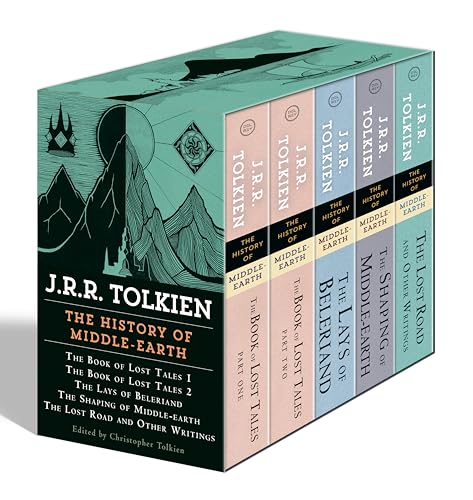
5 book box set containing: The Lays of Beleriand The Book of Lost Tales, Part One The Book of Lost Tales, Part Two The Lost Road and Other Writings The Shaping of Middle-Earth: The Quenta, the Ambarkanta and the Annals
The Book of Lost Tales (Part One and Two) not only contains the only full explanation of the fall of the secret elven city of Gondolin but also a fascinating account of the First Awakening of Men as told by the elf Gilfanon, as well as notes and commentary on the coming of the elves and the darkening of Valinor. The Lays of Beleriand features two epic poems dealing with the legends of the Elder Days: "The Lay of the Children of Hurin" in alliterative verse and "The Lay of Leithian" in octosyllabic couplets. The Shaping of Middle-earth contains prose fragments and historical tales of what would become The Silmarillion. Finally, The Lost Road and Other Writings is a companion work of sorts to C. S. Lewis's Out of the Silent Planet. (In 1968, the two authors agreed to write tales about what Lewis termed "what we really like in stories." Lewis tried his hand at space travel, while Tolkien took on time travel. The resulting work was The Lost Road.)
…
Cover unavailable
40
Tolkien On Fairy-Stories
Verlyn Flieger
4.3
Cover unavailable
41
Bilbo's Last Song
J. R. R. Tolkien, Pauline Baynes
4.3
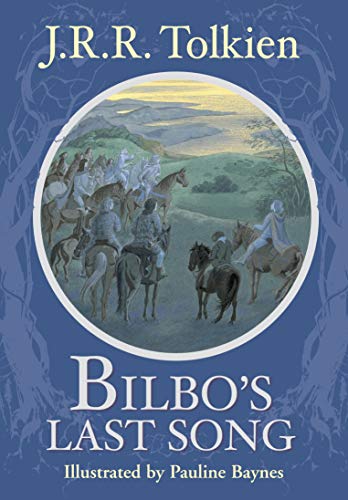
Bilbo’s Last Song is considered by many to be Tolkien’s epilogue to his classic work The Lord of the Rings. As Bilbo Baggins takes his final voyage to the Undying Lands, he must say goodbye to Middle-earth. Poignant and lyrical, the song is both a longing to set forth on his ultimate journey and a tender farewell to friends left behind.
Pauline Baynes’s jewel-like illustrations lushly depict both this final voyage and scenes from The Hobbit, as Bilbo remembers his first journey while he prepares for his last.
…
Cover unavailable
42
A Tolkien Bestiary
David Day
4.3
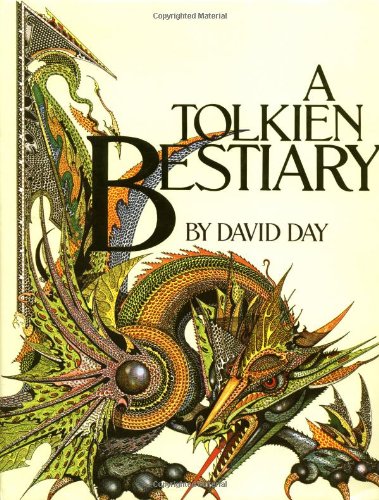
Here is the comprehensive reference guide for the millions of fans of the Hobbit and the Lord Of The Rings trilogy. All of the imaginary beasts, monsters, fauna, and flora of J.R.R. Tolkien's lush fantasy worlds of the Middle-Earth and the Undying Lands are presented in more that 100 black-and-white illustrations and 36 full color paintings. A Chronology of all the historical ages, a general index, genealogies of the races of men, maps, and a special index referring to Tolkien's original works are also included.
…
Cover unavailable
43
Sir Gawain and the Green Knight, Pearl, and Sir Orfeo
J.R.R. Tolkien
4.2
Sir Gawain and the Green Knight and Pearl are two poems by an unknown author written in about 1400. Sir Gawain is a romance, a fairy-tale for adults, full of life and colour; but it is also much more than this, being at the same time a powerful moral tale which examines religious and social values.
Pearl is apparently an elegy on the death of a child, a poem pervaded with a sense of great personal loss: but, like Gawain it is also a sophisticated and moving debate on much less tangible matters.
Sir Orfeo is a slighter romance, belonging to an earlier and different tradition. It was a special favourite of Tolkien's. The three translations represent the complete rhyme and alliterative schemes of the originals.
…
Cover unavailable
44
Farmer Giles of Ham
J. R. R. Tolkien, Christina Scull, Wayne G. Hammond
4.2
This is the 50th anniversary edition of Tolkien's best-loved short fairy story, originally told to his children in the 1920s and expanded for publication in 1949. Bluff Farmer Giles lives in a land-of-fable England, full of giants and dragons. A reluctant hero like the Brave Little Tailor or Bilbo in The Hobbit, Giles wins a great reputation by firing his blunderbuss at a wandering giant--who retreats not in fear but to avoid this tiresome stinging "insect". One thing leads to another, and despite all his excuses the now famous Giles is called to save his country from the marauding dragon Chrysophylax. He has a legendary anti-dragon sword and a lot of luck, but dragons can be as devious as politicians... Tolkien crammed much sly wit into his little story, plus jokey philological explanations that Giles's amazing adventures are commemorated in Thames Valley placenames like Worminghall and Thame. It's illustrated with nearly 50 line drawings by Paula Baynes: Tolkien loved these, but some look sadly faded here, like fourth-generation photocopies. As a bonus, the anniversary edition includes an introduction telling the story's history, a transcription of the original, unfinished draft, and 23 pages of notes on allusions and names (Chrysophylax means "keeper of gold", which is indeed what dragons do). A pleasant gift book. --David Langford
…
Cover unavailable
45
The Complete Guide to Middle-Earth
Robert Foster
4.2
Now in a gorgeous new hardcover format with a four-color map of Middle-earth, this is the completely revised guide to every creature, place, and event from the great fantasy epic.
Cover unavailable
46
The Tolkien Reader
J.R.R. Tolkien
4.2
An invitation to Tolkien's world. This rich treasury includes Tolkien's most beloved short fiction plus his essay on fantasy.
Publisher's Note Tolkien's Magic Ring, by Peter S. Beagle The Homecoming of Beorhtnoth Beorhthelm's Son Tree and Leaf On Fairy-Stories Leaf by Niggle Farmer Giles of Ham The Adventures of Tom Bombadil The Adventures of Tom Bombadil Bombadil Goes Boating Errantry Princess Mee The Man in the Moon Stayed Up Too Late The Man in the Moon Came Down Too Soon The Stone Troll Perry-the-Winkle The Mewlips Oliphaunt Fastitocalon Cat Shadow-bride The Hoard The Sea-Bell The Last Ship
…
Cover unavailable
47
The Road to Middle-Earth: How J.R.R. Tolkien Created A New Mythology
Tom Shippey
4.2
Shippey's classic work, now revised in paperback, explores J.R.R. Tolkien's creativity and the sources of his inspiration. Shippey shows in detail how Tolkien's professional background led him to write "The Hobbit" and how he created a timeless charm for millions of readers.
Cover unavailable
48
The Lay of Aotrou and Itroun
J.R.R. Tolkien and Verlyn Flieger
4.2
Unavailable for more than seventy years, this early but important work is published for the first time with Tolkien's "Corrigan" poems and other supporting material, including a prefatory note by Christopher Tolkien.
Set 'In Britain's land beyond the seas' during the Age of Chivalry, The Lay of Aotrou and Itroun tells of a childless Breton Lord and Lady (the 'Aotrou' and 'Itroun' of the title) and the tragedy that befalls them when Aotrou seeks to remedy their situation with the aid of a magic potion obtained from a corrigan, or malevolent fairy. When the potion succeeds and Itroun bears twins, the corrigan returns seeking her fee, and Aotrou is forced to choose between betraying his marriage and losing his life.
Coming from the darker side of J.R.R. Tolkien's imagination, The Lay of Aotrou and Itroun, together with the two shorter 'Corrigan' poems (which lead up to it and are also included in this volume), were the outcome of a comparatively short but intense period in Tolkien's life when he was deeply engaged with Celtic, and particularly Breton, myth and legend.
Originally written in 1930 and long out of print, this early but seminal work is an important addition to the non-Middle-earth portion of his canon and should be set alongside The Legend of Sigurd and Gudrun, The Fall of Arthur and The Story of Kullervo. Like these works, it belongs to a small but important corpus of his ventures into 'real-world' mythologies, each of which in its own way would be a formative influence on his own legendarium.
Edited with notes and commentary by Verlyn Flieger and a prefatory note on the text by Christopher Tolkien.
…
Cover unavailable
49
The Story of Kullervo
J.R.R. Tolkien and Verlyn Flieger
4.2
“Shows how Finnish mythology and folk tales were instrumental to how Tolkien created his own legendarium.”—Boston Globe
Kullervo, son of Kalervo, is perhaps the darkest and most tragic of all J.R.R. Tolkien’s characters. “Hapless Kullervo,” as Tolkien called him, is a luckless orphan boy with supernatural powers and a tragic destiny.
Brought up in the homestead of the dark magician Untamo, who killed his father, kidnapped his mother, and tried three times to kill him when he was still a boy, Kullervo is alone save for the love of his twin sister, Wanōna, and the magical powers of the black dog Musti, who guards him. When Kullervo is sold into slavery he swears revenge on the magician, but he will learn that even at the point of vengeance there is no escape from the cruelest of fates.
Tolkien himself said that The Story of Kullervo was “the germ of my attempt to write legends of my own,” and was “a major matter in the legends of the First Age.” Tolkien’s Kullervo is the clear ancestor of Túrin Turambar, the tragic incestuous hero of The Silmarillion. Published with the author’s drafts, notes, and lecture essays on its source work, the Kalevala, The Story of Kullervo is a foundation stone in the structure of Tolkien’s invented world.
“A fascinating read.”—NPR
…
Cover unavailable
50
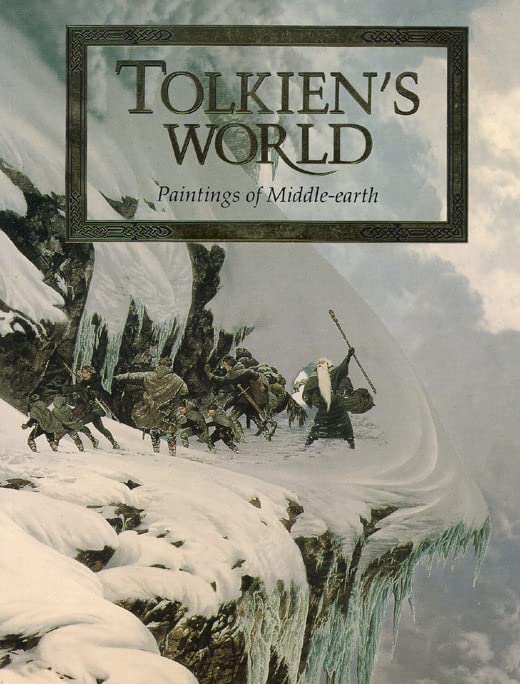
Tolkien's World: Paintings of Middle-Earth
J. R. R. Tolkien
4.2
If it is the author's job to paint word-pictures, few writers have accomplished the task more brilliantly than J.R.R. Tolkien, whose timeless fantasy classics have literally taken readers to another place.
And what a place it is! The Middle-earth so graphically depicted in The Hobbit, The Rings Trilogy, and The Silmarillion is a breathtaking world of misty valleys and craggy tors, placid lakes and raging rivers, steamy bogs and glad green glades -- a magical kingdom inhabited by such unforgettable characters as the Great Goblin, Smaug the dragon, and the great wizard Gandolf. Small wonder this wonderland has provided such a rich source of inspiration for artists!
In this book nine talented painters contribute powerful interpretations of Middle-earth, each one accompanied by the text that inspired it. Artists include Inger Edelfeldt, Tony Galuidi, Roger Garland, Robert Goldsmith, Michael Hague, John Howe, Alan Lee, Ted Nasmith, and Carol Emery Phenix.
…
Cover unavailable
51
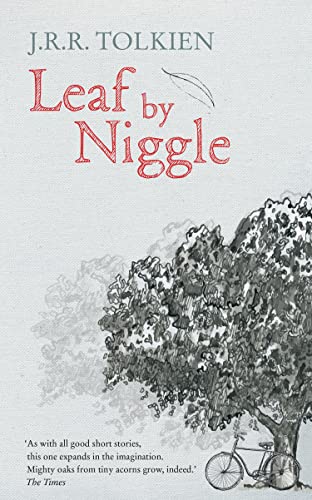
Leaf by Niggle
J.R.R. TOLKIEN
4.2
Leaf by Niggle is a short story about a painter whom is working on a picture leaf by leaf. Niggle, the painter, is a kind hearted soul and goes out of his way to help his friends and neighbours but eventually finds that this prevents him from completing his masterpiece. He has a hard decision to make; when engrossed in his work, his neighbour asks him to fix his roof using his art supplies.
Cover unavailable
52
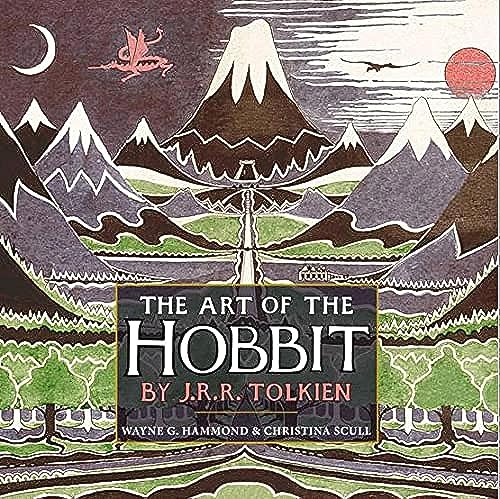
The Art of The Hobbit by J.R.R. Tolkien
J R R Tolkien
4.2
To celebrate the 75th Anniversary of the publication of The Hobbit, a sumptuous full-colour art book containing the complete collection of more than 100 Hobbit sketches, drawings, paintings and maps by J.R.R. Tolkien.
When J.R.R. Tolkien wrote The Hobbit, he was already an accomplished amateur artist, and drew illustrations for his book while it was still in manuscript. The Hobbit as first printed had ten black and white pictures, two maps, and binding and dust-jacket designs by its author. Later, Tolkien also painted five scenes for colour plates which are some of his best work. His illustrations for The Hobbit add an extra dimension to that remarkable book, and have long influenced how readers imagine Bilbo Baggins and his world.
To celebrate the 75th anniversary of the publication of The Hobbit, the complete artwork created by the author for his story has been collected in The Art of The Hobbit by J.R.R. Tolkien. Including related pictures, more than one hundred sketches, drawings, paintings, maps, and plans are presented here, preliminary and alternate versions and experimental designs as well as finished art. Some of these images are now published for the first time, and others for the first time in colour. Fresh digital scans from the Bodleian Libraries in Oxford and Marquette University in Wisconsin allow Tolkien’s Hobbit pictures to be seen more vividly than ever before.
The Art of The Hobbit by J.R.R. Tolkien has been written and edited by Wayne G. Hammond and Christina Scull, two of the leading experts on Tolkien and authors of the acclaimed J.R.R. Tolkien: Artist and Illustrator, The Lord of the Rings: A Reader’s Companion, and The J.R.R. Tolkien Companion and Guide.
…
Cover unavailable
53
The Monsters and the Critics and Other Essays
J. R. R. Tolkien and J.R.R. Tolkien
4.2
The seven ‘essays’ by J.R.R. Tolkien assembled in this new paperback edition were with one exception delivered as general lectures on particular occasions; and while they mostly arose out of Tolkien’s work in medieval literature, they are accessible to all. Two of them are concerned with Beowulf, including the well-known lecture whose title is taken for this book, and one with Sir Gawain and the Green Knight, given in the University of Glasgow in 1953.
Also included in this volume is the lecture English and Welsh; the Valedictory Address to the University of Oxford in 1959; and a paper on Invented Languages delivered in 1931, with exemplification from poems in the Elvish tongues. Most famous of all is On Fairy-Stories, a discussion of the nature of fairy-tales and fantasy, which gives insight into Tolkien’s approach to the whole genre.
The pieces in this collection cover a period of nearly thirty years, beginning six years before the publication of The Hobbit, with a unique ‘academic’ lecture on his invention (calling it A Secret Vice) and concluding with his farewell to professorship, five years after the publication of The Lord of the Rings.
…
Cover unavailable
54
The Lord of the Rings: A Reader's Companion
Wayne G. Hammond, Christina Scull
4.2
In The Lord of the Rings: A Reader's Companion internationally acclaimed scholars Wayne G. Hammond and Christina Scull examine Tolkien's masterpiece chapter by chapter, offering expert insights into its evolution, structure, and meaning. They discuss in close detail important literary and historical influences on the development of The Lord of the Rings, connections between that work and other writings by Tolkien, errors and inconsistencies, significant changes to the text during its fifty years of publication, archaic and unusual words used by Tolkien, and words and passages in his invented languages of Middle-earth. Thousands of notes, keyed to standard editions of The Lord of the Rings but universally accessible, reveal the richness and complexity of one of the most popular works of fiction in our time. In addition to their own expertise and that of other scholars and critics, Hammond and Scull frequently draw upon comments by Tolkien himself, made in letters to family, friends, and enthusiasts, in draft texts of The Lord of the Rings, and in works written in later years which amplify or illuminate characters and events in the story. Extensive reference is made also to writings by Tolkien not previously or widely published, including elaborate time-schemes, an unfinished manuscript index to The Lord of the Rings, and most notably, the important Nomenclature or guide to names in The Lord of the Rings prepared for the use of translators, long out of print and now newly transcribed and printed in its entirety. With these resources at hand, even the most seasoned reader of The Lord of the Rings will come to a greater enjoyment and appreciation of Tolkien's magnificent achievement.
…
Cover unavailable
55
The History of Middle Earth Index (The History of Middle-Earth, #13)
Christopher Tolkien
4.2
Complete integrated indices of History of Middle-earth volumes to complement new series.
For the first time every index from each of the twelve volumes of The History Of Middle-earth has been published together in a single volume – to create a supreme index charting the writing of Tolkien’s masterpieces The Lord of The Rings and The Silmarillion.
Cover unavailable
56
The Hobbit: An Unexpected Journey - Chronicles I: Art & Design
Daniel Falconer
4.2
This sumptuous book celebrates the creative vision of Academy Award®-winning filmmaker Peter Jackson’s The Hobbit: An Unexpected Journey. It is packed with more than 1,000 images of concept artwork, photographs and development paintings by the artists working behind the scenes to bring Middle-earth to life, who each provide detailed and entertaining commentary that reveals the story behind the vision. Compiled by Weta Workshop senior concept designer Daniel Falconer, this is the first in a series of lavish hardback books written and designed by the award-winning team at Weta, who are working closely with the production team to guarantee that these books will be bursting with insider information and stunning visual imagery.
…
Cover unavailable
57
Exploring J.R.R. Tolkien's The Hobbit
Corey Olsen
4.2
The Hobbit is one of the most widely read and best-loved books of the twentieth century. In December 2012, millions will be introduced or reintroduced to J.R.R. Tolkien's classic with the arrival of the first of two film adaptations by acclaimed director Peter Jackson. Exploring The Hobbit is a fun, thoughtful, and insightful companion volume, designed to bring a thorough and original new reading of this great work to a general audience. Professor Corey Olsen (also known as the Tolkien Professor) will take readers on an in-depth journey through The Hobbit chapter by chapter, revealing the stories within the story: the dark desires of dwarves and the sublime laughter of elves, the nature of evil and its hopelessness, the mystery of divine providence and human choice, and, most of all, the revolutions within the life of Bilbo Baggins. Exploring The Hobbit is a book that will make The Hobbit come alive for readers as never before.
…
Cover unavailable
58
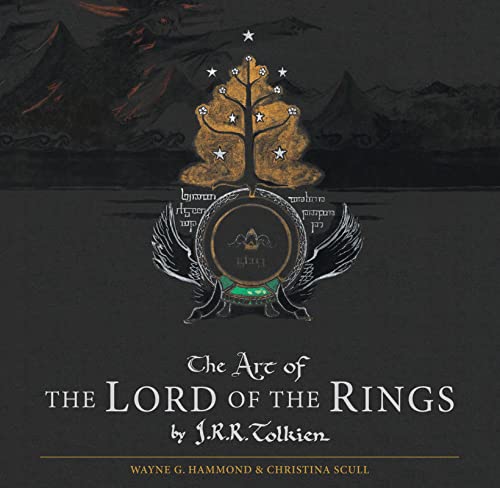
The Art of The Lord of the Rings by J.R.R. Tolkien
J.R.R. Tolkien, Christina Scull, Wayne G. Hammond
4.2
J.R.R. Tolkien's complete artwork for his magisterial novel, published on the sixtieth anniversary of The Lord of the Rings
As he wrote The Lord of the Rings, J.R.R. Tolkien’s mental pictures often found expression in drawing, from rough sketches made within the manuscript to more finished illustrations. Only a few of these were meant for publication; most were aids to help Tolkien conceive his complex story and keep it consistent. Many do not illustrate the final text, but represent moments of creation, illuminating Tolkien’s process of writing and design. In addition to pictorial sketches, numerous maps follow the development of the Shire and the larger landscape of Middle-earth, while inscriptions in runes and Elvish script, and "facsimile" leaves from the burned and blood-stained Book of Mazarbul, support Tolkien’s pose as an "editor" or "translator" of ancient records.
The Art of The Lord of the Rings by J.R.R. Tolkien collects these drawings, inscriptions, maps, and plans in one deluxe volume. More than 180 images are included, all of them printed in color from high-quality scans and photographs, more than half not previously published. Wayne G. Hammond and Christina Scull, two of the world’s leading Tolkien scholars, have edited the book and provide an expert introduction and comments.
…
Cover unavailable
59
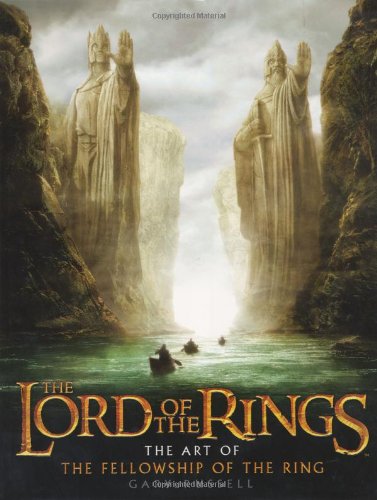
The Lord of the Rings: The Art of the Fellowship of the Ring
Gary Russell
4.2
With complete and unrestricted access to artowrk created over a five-year period, this authoritative and insightful book illustrates the creative development of The Fellowship of the Ring. This official publication contains 500 exclusive images, from the earliest pencil sketches and conceptual drawings to magnificant full-color paintings that shaped the look of the film. All the principal locations, costumes, armor and creatures are covered in stunning detail, including concepts, storyboards and images that did not make it into the final film.
As well as a wealth of sketches, paintings and digital images, The Art of The Fellowship of the Ring contains photographs showing how the creative process was realized and a number of stills from the film. Contributors include Alan Lee and John Howe, the two artists who inspired Peter Jackson's vision of Middle-earth and who worked with him to bring his trilogy to the big screen. They and a dozen other designers who created all of these diverse elements explain how they contributed to the development of the film, giving a fascinating insight into how Middle-earth was brought to life.
With text compiled from exclusive interviews with director Peter Jackson, special effects supervisor Richard Taylor, designers Grant Major, Ngila Dickson, Paul Lasaine and others, this unique book celebrates the pivotal contribution made by a handful of people which help turn the first Lord of the Rings movie into an award-winning global success.
…
Cover unavailable
60
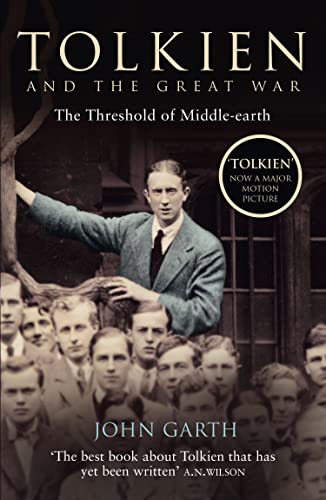
Tolkien and the Great War: The Threshold of Middle-earth
John Garth
4.2
• TOLKIEN • Now a major motion picture *
Acclaimed as ‘the best book about Tolkien’, this award-winning biography explores J.R.R. Tolkien’s wartime experiences and their impact on his life and his writing of The Hobbit and The Lord of The Rings.
“To be caught in youth by 1914 was no less hideous an experience than in 1939 … by 1918 all but one of my close friends were dead.”
So J.R.R. Tolkien responded to critics who saw The Lord of the Rings as a reaction to the Second World War. Tolkien and the Great War tells for the first time the full story of how he embarked on the creation of Middle-earth in his youth as the world around him was plunged into catastrophe. This biography reveals the horror and heroism that he experienced as a signals officer in the Battle of the Somme and introduces the circle of friends who spurred his mythology to life. It shows how, after two of these brilliant young men were killed, Tolkien pursued the dream they had all shared by launching his epic of good and evil.
John Garth argues that the foundation of tragic experience in the First World War is the key to Middle-earth’s enduring power. Tolkien used his mythic imagination not to escape from reality but to reflect and transform the cataclysm of his generatuion. While his contemporaries surrendered to disillusionment, he kept enchantment alive, reshaping an entire literary tradition into a form that resonates to this day.
This is the first substantially new biography of Tolkien since 1977, meticulously researched and distilled from his personal wartime papers and a multitude of other sources.
…
Cover unavailable
61
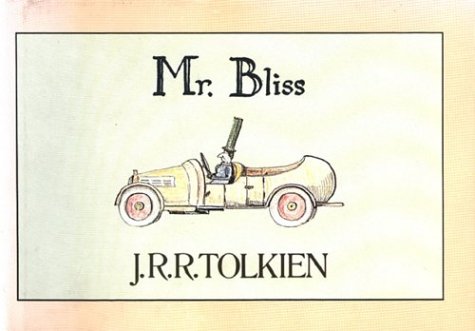
Mr. Bliss
J. R. R. Tolkien
4.2
Mr. Bliss's first outing in his new motor-car, shared with several friends, bears, dogs, and a donkey, though not the Girabbit, proves to be unconventional though not inexpensive.
Cover unavailable
62
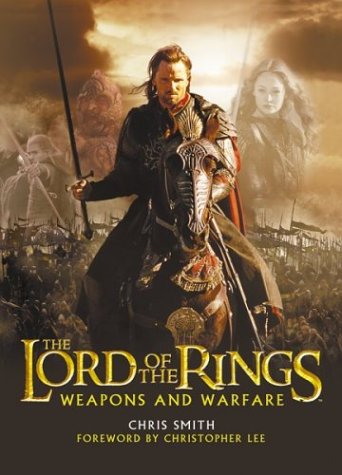
The Lord of the Rings: Weapons and Warfare
Chris Smith, Christopher Lee
4.1
Lavishly illustrated with 1,000 photos, paintings, maps, sculptures and sketches, most appearing here for the first time, Weapons and Warfare is an indispensable chronicle of The Lord of the Rings' many creatures, warriors, armies and battlegrounds. From the graceful and proficient Elves to the horrendous war machines of the Dark Lord, each culture's approach to warfare is explained - how they fought, why they were fighting, what armor they wore and what weapons they used against their enemies. Now you can get as close to a marauding Orc as you could ever wish, without suffering the consequences!
Treating the filmmakers' notes, designs and props as a true archive, Weapons and Warfare describes in detail every major conflict depicted in the film trilogy - from The Last Alliance of Elves and Men to the climactic Battle of the Pelennor Fields - each accompanied by a battle diagram from the films' chief designers.
Armed with a wealth of fascinating facts and unique imagery, and with an exclusive foreword by Christopher Lee and an introduction by the Academy Award winner Richard Taylor, Weapons and Warfare promises to be the most striking companion to The Lord of the Rings movie trilogy published to date.
…
Cover unavailable
63
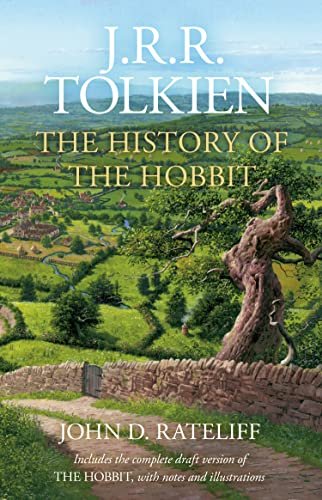
The History of the Hobbit, Part One: Mr. Baggins
John D. Rateliff
4.1
First published in 1938, The Hobbit is a story that “grew in the telling,” and many characters and events in the published book are completely different from what Tolkien first wrote to read aloud to his young sons as part of their “fireside reads.” For the first time, The History of the Hobbit reproduces the original version of one of literature’s most famous stories, and includes many little-known illustrations and previously unpublished maps for The Hobbit created by Tolkien himself. Also featured are extensive annotations and commentaries on the date of composition, how Tolkien’s professional and early mythological writings influenced the story, the imaginary geography he created, and how he came to revise the book in the years after publication to accommodate events in The Lord of the Rings.
…
Cover unavailable
64
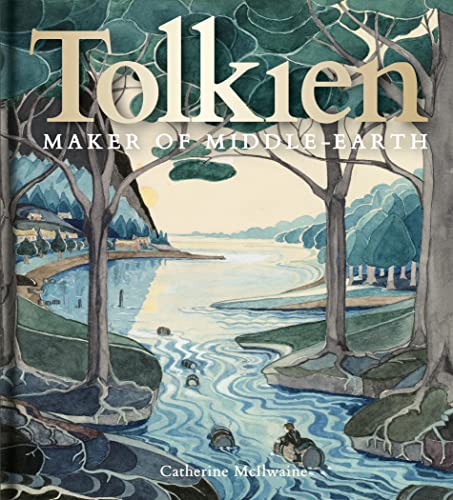
Tolkien: Maker of Middle-earth
Catherine McIlwaine
4.1
The range of J. R. R. Tolkien’s talents is remarkable. Not only was he an accomplished linguist and philologist, as well as a scholar of Anglo-Saxon and medieval literature and Norse folklore, but also a skillful illustrator and storyteller. Drawing on these talents, he created a universe which is for many readers as real as the physical world they inhabit daily.
Tolkien: Maker of Middle-earth explores the huge creative endeavor behind Tolkien’s enduring popularity. Lavishly illustrated with three hundred images of his manuscripts, drawings, maps, and letters, the book traces the creative process behind his most famous literary works—The Hobbit, The Lord of the Rings, and The Silmarillion—and reproduces personal photographs and private papers, many of which have never been seen before in print.
Six essays introduce the reader to the person of J. R. R. Tolkien and to main themes in his life and work, including the influence of northern languages and legends on the creation of his own legendarium; his concept of “Faërie” as an enchanted literary realm; the central importance of his invented languages in his fantasy writing; his visual imagination and its emergence in his artwork; and the encouragement he derived from his close friend C. S. Lewis and their literary group the Inklings.
The book brings together the largest collection of original Tolkien material ever assembled in a single volume. Drawing on the extensive archives of the Tolkien collections at the Bodleian Libraries, Oxford, which stretch to more than five hundred boxes, and Marquette University, Milwaukee, as well as private collections, this hugely ambitious and exquisitely produced book draws together the worlds of J. R. R. Tolkien – scholarly, literary, creative, and domestic—offering a rich and detailed understanding and appreciation of this extraordinary author.
This landmark publication, produced on the occasion of a major exhibition at the Bodleian Libraries in Oxford in 2018 and at the Morgan Library in New York in 2019, is set to become a standard work in the literature on J. R. R. Tolkien.
…
Cover unavailable
65
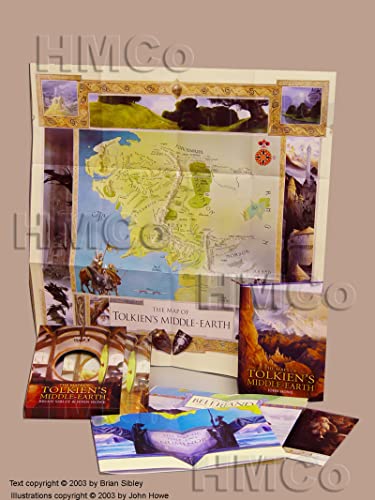
The Maps of Tolkien's Middle-earth
Brian Sibley, John Howe, J.R.R. Tolkien
4.1
Best-selling Tolkien expert Brian Sibley (The Lord of the Rings: The Making of the Movie Trilogy and The Lord of the Rings Official Movie Guide) presents a slipcased collection of four full-color, large-format maps of Tolkien's imaginary realm illustrated by John Howe, a conceptual designer for the blockbuster films directed by Peter Jackson. The set includes a hardcover book describing in detail the importance and evolution of geography within Tolkien's epic fiction and four color maps presented with minimal folds, including two (Beleriand and Númenor) never before published in this country.
…
Cover unavailable
66
Tolkien: The Illustrated Encyclopaedia
David Day
4.1
The first encyclopedic illustrated guide to the world of Middle Earth and the Undying Lands, this book brings together every important aspect of Tolkien's vast cosmology. More than five hundred alphabetical entries cover five major subject areas: history, geography, sociology, natural history and biography. The maps, genealogies and time-charts, together with the illustrations of characters, places and events, reveal to the reader the full dramatic sweep and splendor of Tolkien's world.
…
Cover unavailable
67
The History of the Hobbit, Part Two: Return to Bag-End
J.R.R. Tolkien, John D. Rateliff
4.1
Cover unavailable
68
The End of the Third Age: The History of The Lord of the Rings, Part Four (The History of Middle-earth, #9a)
J.R.R. Tolkien, Christopher Tolkien
4.1
The End of the Third Age is comprised of the first section of the hardcover volume published as Sauron Defeated, the ninth volume of The History of Middle-earth. It completes Christopher Tolkien's account of the creation of The Lord of the Rings begun in the earlier volumes, The Return of the Shadow, The Treason of Isengard, and The War of the Ring.
The End of the Third Age begins with Sam's rescue of Frodo from the Tower of Kirith Ungol, and giving a very different account of the Scouring of the Shire, this part ends with versions of the hitherto unpublished Epilogue, in which, years after the departure of Bilbo and Frodo from the Grey Havens, Sam attempts to answer his children's questions.
The book is illustrated with changing conceptions of Kirith Ungol and Mount Doom, as well as previously unpublished drawings of Orthanc and Dunharrow.
…
Cover unavailable
69
The Lord of the Rings: Official Movie Guide
Brian Sibley, J.R.R. Tolkien
4.1
An introduction to the talented actors and filmmakers who have labored for years to bring Tolkien's work to the screen.
For several years, a huge team of dedicated moviemakers has been transforming the exotic landscapes of New Zealand into the Middle-earth of J.R.R. Tolkien's epic masterwork, The Lord of the Rings. It is a massive production by fans of Tolkien's work for fans of Tolkien's work. This fully authorized Official Movie Guide is the perfect introduction to the total immersion in Tolkien's world that filmgoers will experience. In full color throughout, including lavish, full-bleed production stills, and with exclusive biographies of the stars and filmmakers, this book gives readers a privileged access to behind-the-scenes material found nowhere else. Featuring color photos of the cast, locations, sets, costumes, and creatures of the films, the book also includes an entertaining overview of the conception, design, and logistical challenges of a film project of this epic scale and grandeur.
…
Cover unavailable
70
The Lord of the Rings: The Return of the King: Visual Companion
Jude Fisher
4.1
From the New York Times best-selling author of The Two Towers Visual Companion comes a lavishly illustrated keepsake guide to The Return of the King. As Frodo, Sam, and Gollum slowly make their way into the depths of the Dark Lord's realm of Mordor in their desperate quest to destroy the One Ring, the scattered members of the fellowship, now scarred and battered from the Battle of Helm's Deep, must journey to the Gondorian stronghold of Minas Tirith for a last stand against the might of Sauron and his evil minions.
…
Cover unavailable
71
A Gateway to Sindarin: A Grammar of an Elvish Language from JRR Tolkien's Lord of the Rings
David Salo
4.1
From the 1910s to the 1970s, author and linguist J. R. R. Tolkien worked at creating plausibly realistic languages to be used by the creatures and characters in his novels. Like his other languages, Sindarin was a new invention, not based on any existing or artificial language. By the time of his death, he had established fairly complete descriptions of two languages, the "elvish" tongues Quenya and Sindarin. He was able to compose poetic and prose texts in both, and he also constructed a lengthy sequence of changes for both from an ancestral "proto-language," comparable to the development of historical languages and capable of analysis with the techniques of historical linguistics.
In A Gateway to Sindarin, David Salo has created a volume that is a serious look at an entertaining topic. Salo covers the grammar, morphology, and history of the language. Supplemental material includes a vocabulary, Sindarin names, a glossary of terms, and an annotated list of works relevant to Sindarin. What emerges is an homage to Tolkien's scholarly philological efforts.
…
Cover unavailable
72
Pictures by J.R.R. Tolkien
Christopher Tolkien, J.R.R. Tolkien
4.1
Cover unavailable
73
Splintered Light: Logos and Language in Tolkien's World
Verlyn Flieger
4.1
J. R. R. Tolkien is perhaps best known for The Hobbit and The Lord of the Rings, but it is in The Silmarillion that the true depth of Tolkien's Middle-earth can be understood. The Silmarillion was written before, during, and after Tolkien wrote The Hobbit and The Lord of the Rings. A collection of stories, it provides information alluded to in Tolkien's better known works and, in doing so, turns The Lord of the Rings into much more than a sequel to The Hobbit, making it instead a continuation of the mythology of Middle-earth. Verlyn Flieger's expanded and updated edition of Splintered Light, a classic study of Tolkien's fiction first published in 1983, examines The Silmarillion and The Lord of the Rings in light of Owen Barfield's linguistic theory of the fragmentation of meaning. Flieger demonstrates Tolkien's use of Barfield's concept throughout the fiction, showing how his central image of primary light splintered and refracted acts as a metaphor for the languages, peoples, and history of Middle-earth.
…
Cover unavailable
74
The Hobbit: The Desolation of Smaug - Chronicles III: Art & Design
Weta
4.1
The Hobbit: The Desolation of Smaug Chronicles III: Art & Design shares the design of Academy Award-winning filmmaker Peter Jackson's "The Hobbit: The Desolation of Smaug", the second film in the trilogy adapting the enduringly popular masterpiece The Hobbit, by JRR Tolkien. More than 220 pages long and including a special fold-out unique to this book, it is packed with more than 1000 images of concept artwork, photographs, development paintings and more by the artists working behind the scenes to bring MIddle-earth to life.
Through these images readers will be able to follow the continuing adventure of the title character, Bilbo Baggins, as he journeys with the Wizard Gandalf and thirteen Dwarves, led by Thorin Oakenshield on an epic quest to reclaim the lost Dwarf Kingdom of Erebor. This is the third in a series of lavish hardback books written and designed by the award-winning team at Weta, who are working closely with the production team to guarantee that these books will be bursting with insider information and stunning visual imagery.
…
Cover unavailable
75
Finn and Hengest: The Fragment and the Episode
J R R Tolkien
4.1
Professor J.R.R.Tolkien is most widely known as the author of The Lord of the Rings, but he was also a scholar in the field of Mediaeval English language and literature.
The story of Finn and Hengest, two fifth-century heroes in northern Europe, is told both in Beowulf and in a fragmentary Anglo-Saxon poem known as The Fight at Finnsburg, but so obscurely and allusively that its interpretation had been a matter of controversy for over 100 years. Bringing his unique combination of philological erudition and poetic imagination to the task, however, Tolkien revealed a classic tragedy of divided loyalties, of vengeance, blood and death. The story has the added attraction that it describes the events immediately preceding the first Germanic invasion of Britain which was led by Hengest himself.
…
Cover unavailable
76
The Lord of the Rings: The Making of the Movie Trilogy
Brian Sibley
4.1
The official inside story on the making of the award-winning movie trilogy
The Lord of the Rings: The Making of the Movie Trilogy is a lavishly illustrated, behind-the-scenes, definitive account of the creation of an epic film experience.
Hailed by critics worldwide, part one of the movie trilogy was a box-office smash, one of the most successful films of the decade. Peter Jackson's "fierce, imaginative movie takes high-flying risks and inspires with its power and scale," wrote Newsweek. "In every way this is moviemaking on a grand scale," wrote the San Francisco Chronicle, while Time proclaimed the "grandeur, moral heft and emotional depth" of the film, which received thirteen Academy Award(R) nominations. Including more than 300 photographs from all three films, most unique to this book, and exclusive interviews with all the cast and crew, Brian Sibley's fascinating book takes every fan inside the process of adapting J.R.R. Tolkien's masterwork for the screen. For the first time in history, three major movies were made at the same time, a triumphant and monumental undertaking that took the world by storm. Here can be found details about the hundreds of dedicated artists, craftspeople and cast and crew members who labored for years -- adding authenticity at every stage -- to bring one of the greatest stories ever told to an eager film audience. Sibley takes us inside the process of filmmaking to show us how the magic is made -- from the director, writers and actors to wardrobe, makeup, miniatures, music and digital special effects, it's all here.
"It was tiring, physically and mentally, but never dull. Three movies, one big story, and so much variety: one day shooting scenes of intimate heart-wrenching drama, the next, vast battle scenes involving hundreds of extras. Every day brought an opportunity to create something new on this enormous canvas that is The Lord of the Rings." -- Peter Jackson
…
Cover unavailable
77
The Inklings: C.S. Lewis, J.R.R. Tolkien, Charles Williams, and Their Friends
Humphrey Carpenter
4.1
During the 1930s at Oxford, C.S. Lewis, J.R.R. Tolkien, and Charles Williams met regularly to discuss philosophy and read aloud from their works. Carpenter's account brings to life those warm and enchanting evenings where their imaginations ran wild.
Cover unavailable
78
The Hobbit: An Unexpected Journey - Official Movie Guide
Brian Sibley
4.1
Enter Bilbo Baggins’ world through exclusive interviews with director Peter Jackson, Martin Freeman, Ian McKellen and all the principal cast and filmmakers, who share film-making secrets and tales of what it was actually like making movie magic in Middle-earth.
Lavishly illustrated with hundreds of behind-the-scenes photos of the actors, locations, sets, creatures and costumes, The Hobbit: An Unexpected Journey Official Movie Guide has been produced in collaboration with the filmmakers who have brought J.R.R. Tolkien’s classic novel into breathtaking three-dimensional life.
…
Cover unavailable
79
A Secret Vice
J. R. R. Tolkien, Dimitra Fimi, Andrew Higgins
4.0
A Secret Vice is the title of a lecture written by J. R. R. Tolkien in 1931, given at a conference. Some twenty years later, Tolkien revised the manuscript for a second presentation.
It deals with constructed languages in general, and the relation of a mythology to its language. Tolkien contrasts international auxiliary languages with artistic languages constructed for aesthetic pleasure. Tolkien also discusses phonaesthetics, citing Greek, Finnish, and Welsh as examples of "languages which have a very characteristic and in their different ways beautiful word-form".
Tolkien's opinion of the relation of mythology and language is reflected in examples cited in Quenya and Noldorin, the predecessors of Quenya and Sindarin. The essay contains three Quenya poems, Oilima Markirya ("The Last Ark"), Nieninque, and Earendel, as well as an eight-line passage in Noldorin.
From Wikipedia: https://en.wikipedia.org/wiki/A_Secre...
…
Cover unavailable
80
A Middle-earth Traveller: Sketches from Bag End to Mordor
J. Howe
4.0
Let acclaimed Tolkien artist John Howe take you on an unforgettable journey across Middle-earth, from Bag End to Mordor, in this richly illustrated sketchbook fully of previously unseen artwork, anecdotes and meditations on Middle-earth.
Middle-earth has been mapped, Bilbo’s and Frodo’s journeys plotted and measured, but Middle-earth remains a wilderland for all that. The roads as yet untraveled far outnumber those down which Tolkien had time to wander.
A Middle-Earth Traveller presents a walking tour of Tolkien’s Middle-earth, visiting not only places central to his stories, but also those just over the hill or beyond the horizon. Events from Tolkien’s books are explored – battles of the different ages that are almost part of legend by the time of The Lord of the Rings; lost kingdoms and ancient myths, as well as those places only hinted at: kingdoms of the far North and lands beyond the seas.
Sketches that have an ‘on-the-spot’ feel to them are interwoven with the artist’s observations gleaned from Tolkien’s books and recollections of his time spent in Middle-earth while working alongside Peter Jackson on the Lord of the Rings and Hobbit film trilogies. Combining concept work produced for films, existing Middle-earth art and many new paintings and sketches exclusive to this book, A Middle-earth Traveller will take the reader on a unique and unforgettable journey across Tolkien’s magical landscape.
…
Cover unavailable
81
Tolkien: A Dictionary
David Day
4.0
Arranged in a handy A-Z format, this book explores and explains the creatures, plats, events and places that make up these strange and wonderful lands.
Cover unavailable
82
The Lord of the Rings: The Art of The Two Towers
Gary Russell, J.R.R. Tolkien
4.0
Peter Jackson's The Fellowship of the Ring has become one of ther most successful and visually stunning movies ever made. But that was only the beginning. For The Two Towers, the second part of the trilogy, the artists and designers knew that they would have to surpass even their own outstanding achievements. Within the pages of this authoritative and insightful book are the incredible results of their work.
The Art of The Two Towers illustrates the creative development of the film from sketches to special effects, and features more than 600 images, most appearing nowhere else. This official, fully authorized book includes pencil sketches by Alan Lee and John Howe, costume designs by Oscar-nominated Ngila Dickson and magnificent full-color paintings, sculptures and digital artwork from Oscar-winner Richard Taylor's Weta Workshop. All the spectacular landscapes, costumes, buildings, armor and creatures are covered in stunning detail, including concepts for characters and scenes which did not make it into the film.
Accompanying this wealth of imagery are detailed and informative commentaries by all of the features artists, designers and other key personnel, together with a special afterword by Andy Serkis, the actor who breathed life into Gollum. Their thoughts and explanations give a unique and fascinating insight into how The Two Towers was brought to life, and how J.R.R. Tolkien's spellbinding literary descriptions were transformed into unforgettable movie magic.
…
Cover unavailable
83
The Lord of the Rings: The Two Towers: Visual Companion
Jude Fisher
4.0
The official, fully authorized companion to the second part of Peter Jackson's award-winning trilogy, The Lord of the Rings.
The Two Towers Visual Companion is a full-color guide to the characters, places and landscapes of J.R.R. Tolkien's Middle-earth as depicted in the second film in The Lord of the Rings Trilogy, and features a special introduction by Viggo Mortensen, who plays Aragorn.
Lavishly illustrated with more than 100 full-color photographs, including exclusive images of Gollum, Treebeard and the battle of Helm's Deep, The Two Towers Visual Companion offers a privileged tour through the principal events of the second film. It begins with a recounting of The Fellowship of the Ring, and then takes the reader on the separate journeys undertaken by the Fellowship in The Two Towers.
The Ring Quest: in which Frodo and Sam journey alone towards Mordor, alone that is, except for the sneaking figure of Gollum, who has been dogging their footsteps since Moria.
The Captives' Journey: in which Merry and Pippin are carried by the fearsome Uruk-hai towards a fateful encounter with the wizard, Saruman, at the stronghold of Isengard.
The Companions' Journey: in which Aragorn, Legolas and Gimli pursue the abducted hobbits across the Plains of Rohan and into the eaves of Fangorn Forest.
Also included are a brand new map of Rohan and Gondor and a specially commissioned battle plan of the climactic events at Helm's Deep, where a brave stand will be made by the Free Peoples of Middle-earth against Saruman's horde.
The companion offers an unforgettable tour of the haunted swamp of the Dead Marshes and the lovely but dangerous land of Ithilien which borders Mordor, the breathtaking kingdom of Rohan, home of the Horse-lords, its seat of power, Edoras, and the ancient stronghold of Helm's Deep, and provides an invaluable introduction to Peter Jackson's The Two Towers.
…
Cover unavailable
84
The Lord of the Rings: The Fellowship of the Ring: Visual Companion
Jude Fisher
4.0
Houghton Mifflin is proud to present a full-color, large-format, guide to the characters, cultures, and locations of J.R.R. Tolkien's extraordinary creation Middle-earth, as depicted in the movie The Fellowship of the Ring - the first of three blockbuster films from New Line Cinema. Filled with stunning imagery and with a thorough, informative narrative text, The Fellowship of the Ring Visual Companion will provide the reader with a rich feast of detail and information. Featuring exclusive photos of Frodo, Gandalf, the Ringwraiths, elves, and all the other main characters and creatures of the first film, the book also includes breathtaking pictures of Hobbiton, Rivendell, and Moria. The first of a projected three-book series that no Tolkien fan, from novice to expert, should be without, The Fellowship of the Ring Visual Companion contains a special eight-page gatefold of large-format images unique to this book.
…
Cover unavailable
85
The Fellowship: The Literary Lives of the Inklings: J. R. R. Tolkien, C. S. Lewis, Owen Barfield, Charles Williams
Philip Zaleski, Carol Zaleski
4.0
Best Book of June 2015 (The Christian Science Monitor)
Book of the Year by the Conference on Christianity and Literature
C. S. Lewis is the 20th century's most widely read Christian writer and J.R.R. Tolkien its most beloved mythmaker. For three decades, they and their closest associates formed a literary club known as the Inklings, which met every week in Lewis's Oxford rooms and in nearby pubs. They discussed literature, religion, and ideas; read aloud from works in progress; took philosophical rambles in woods and fields; gave one another companionship and criticism; and, in the process, rewrote the cultural history of modern times.
In The Fellowship, Philip and Carol Zaleski offer the first complete rendering of the Inklings' lives and works. The result is an extraordinary account of the ideas, affections and vexations that drove the group's most significant members. C. S. Lewis accepts Jesus Christ while riding in the sidecar of his brother's motorcycle, maps the medieval and Renaissance mind, becomes a world-famous evangelist and moral satirist, and creates new forms of religiously attuned fiction while wrestling with personal crises. J.R.R. Tolkien transmutes an invented mythology into gripping story in The Lord of the Rings, while conducting groundbreaking Old English scholarship and elucidating, for family and friends, the Catholic teachings at the heart of his vision. Owen Barfield, a philosopher for whom language is the key to all mysteries, becomes Lewis's favorite sparring partner, and, for a time, Saul Bellow's chosen guru. And Charles Williams, poet, author of "supernatural shockers," and strange acolyte of romantic love, turns his everyday life into a mystical pageant.
Romantics who scorned rebellion, fantasists who prized reality, wartime writers who believed in hope, Christians with cosmic reach, the Inklings sought to revitalize literature and faith in the twentieth century's darkest years-and did so in dazzling style.
…
Recommended by Glenn Hubbard.
Glenn Hubbard
I have always admired and enjoyed the writings and speeches of C. S. Lewis, the brilliant Christian apologist. Lewis’s ideas, like his carefully constructed sentences seem so fully formed from within. But my interest in Lewis got deeper and broader as I read The Fellowship: The Literary Lives of the Inklings. The intertwining of Lewis’s work with his relationships with mythmaker J. R. R. Tolkien and literary lions Owen Barfield and Charles Williams cast Lewis in a new and fascinating light. The story reminds us all that the fount of ideas in a great university is as much about conversations as it is about one’s original thoughts. [source]
Cover unavailable
86
Master of Middle-Earth: The Fiction of J.R.R. Tolkien
Paul Harold Kocher, Paul Harold Kocker
4.0
Cover unavailable
87
The Tolkien Companion
J. E. A. Tyler, S. A. Tyler, Kevin Reilly
4.0
Cover unavailable
88
The Ring of Words: Tolkien and the Oxford English Dictionary
Peter Gilliver, Jeremy Marshall, Edmund Weiner
4.0
Cover unavailable
89
The Hobbit: An Unexpected Journey - Chronicles II: Creatures & Characters
Weta
4.0
The Hobbit: An Unexpected Journey Chronicles, Creatures & Characters explores the amazing cast of heroes and villains, beasts and beings that populate Middle-earth in the first chapter of Peter Jackson’s film adaptations of J.R.R. Tolkien’s The Hobbit. Richly illustrated with behind-the-scenes photographs, digital renders and film stills, this comprehensive book goes species by species, character by character, through the film’s huge ensemble of characters and bustling menagerie of creatures, both physical and digital, telling the stories of how each came to be realized for the film.
In first-hand quotes from the actors, make-up artists, digital effects artists, dialect coaches, prosthetics technicians, movement coach and many other crew, the stories of the production unfold, processes are described and insights into characters shared.
As a bonus feature, unique to this book, there is a special fold-out Character Size Chart, which compares all the major creatures and characters of the film, from Radagast’s hedgehog friend to the towering Stone Giants!
Compiled by Weta Workshop designer Daniel Falconer, and featuring a wealth of stunning imagery, this book puts the reader face to face with the Dwarf heroes of The Hobbit: An Unexpected Journey, the dark denizens of Middle-earth, such as Orcs, Goblins, Trolls and Wargs, and of course, the hobbit himself, Bilbo Baggins.
…
Cover unavailable
90
Tolkien and C.S. Lewis: The Gift of a Friendship
Colin Duriez
4.0
Both Tolkien and C.S. Lewis are literary superstars, known around the world as the creators of Middle-earth and Narnia. But few of their readers and fans know about the important and complex friendship between Tolkien and his fellow Oxford academic C.S. Lewis. Without the persistent encouragement of his friend, Tolkien would never have completed The Lord of the Rings. This great tale, along with the connected matter of The Silmarillion, would have remained merely a private hobby. Likewise, all of Lewis' fiction, after the two met at Oxford University in 1926, bears the mark of Tolkien's influence, whether in names he used or in the creation of convincing fantasy worlds. They quickly discovered their affinity--a love of language and the imagination, a wide reading in northern myth and fairy tale, a desire to write stories themselves in both poetry and prose. The quality of their literary friendship invites comparisons with those of William Wordsworth and Samuel Taylor Coleridge, William Cowper and John Newton, and G.K. Chesterton and Hillaire Belloc. Both Tolkien and Lewis were central figures in the informal Oxford literary circle, the Inklings. This book explores their lives, unfolding the extraordinary story of their complex friendship that lasted, with its ups and downs, until Lewis's death in 1963. Despite their differences--differences of temperament, spiritual emphasis, and view of their storytelling art--what united them was much stronger, a shared vision that continues to inspire their millions of readers throughout the world.
…
Cover unavailable
91
Interrupted Music: The Making of Tolkien's Mythology
Verlyn Flieger
4.0
The content of Tolkien's Mythology, the Silmarillion, has been the subject of considerable exploration and analysis for many years, but the logistics of its development have been mostly ignored and deserve closer investigation. Nineteenth-and twentieth-century scholars understood the term "mythology" as a gathering of song and story that derived from and described an identifiable world. Tolkien made a continuous effort over several years to construct a comprehensive mythology, to include not only the stories themselves but also the storytellers, scribes, and bards who were the offspring of his thought. In Interrupted Music Flieger attempts to illuminate the structure of Tolkien's work, allowing the reader to appreciate its broad, overarching design and its careful, painstaking construction. She endeavors to "follow the music from its beginning as an idea in Tolkien's mind through to his final but never-implemented mechanism for realizing that idea, for bringing the voices of his story to the reading public." In addition, Flieger reviews attempts at myth-making in the history of English literature by Spenser, Milton, and Blake as well as by Joyce and Yeats. She reflects on the important differences between Tolkien and his predecessors and even more between Tolkien and his contemporaries. This in-depth study will fascinate those interested in Tolkien and fantasy literature.
…
Cover unavailable
92
The Road Goes Ever On
J. R. R. Tolkein, Donald Swann, Samuel Hanks Bryant
4.0
Cover unavailable
93
The Philosophy of Tolkien: The Worldview Behind The Lord of the Rings
Peter Kreeft
4.0
While nothing can equal or replace the adventure in reading Tolkien’s masterwork, The Lord of the Rings, Peter Kreeft says that the journey into its underlying philosophy can be another exhilarating adventure. Thus, Kreeft takes the reader on a voyage of discovery into the philosophical bones of Middle earth. He organizes the philosophical themes in The Lord of the Rings into 50 categories, accompanied by over 1,000 references to the text of Lord.Since many of the great questions of philosophy are included in the 50-theme outline, this book can also be read as an engaging introduction to philosophy. For each of the philosophical topics in Lord, Kreeft presents tools by which they can be understood. Illustrated.
…
Cover unavailable
94
The Hobbit: An Unexpected Journey - Visual Companion
Jude Fisher
4.0
This official tie-in photo guidebook is packed with exclusive photographs and in-depth text offering a sneak peek at the highly anticipated new film The Hobbit: An Unexpected Journey, directed by Peter Jackson.
Join the hobbit, Bilbo Baggins, Gandalf the wizard and the Company of Dwarves on their Quest to recover treasure stolen by the Dragon, Smaug the Magnificent. Leaving the comfort of Bilbo’s home they must face many perils before they can claim their long-lost gold -- Trolls, Elves, Goblins, Wargs, and worse…
Richly illustrated with more than 100 color photos from the film, and featuring a brand new fold-out map charting the journey from Bag End to Wilderland, The Hobbit: An Unexpected Journey Visual Companion begins the Quest for the Lonely Mountain in spectacular style.
…
Cover unavailable
95
A Hobbit, a Wardrobe, and a Great War: How J.R.R. Tolkien and C.S. Lewis Rediscovered Faith, Friendship, and Heroism in the Cataclysm of 1914-18
Joseph Loconte
4.0
The untold story of how the First World War shaped the lives, faith, and writings of J. R. R. Tolkien and C. S. Lewis
The First World War laid waste to a continent and permanently altered the political and religious landscape of the West. For a generation of men and women, it brought the end of innocence—and the end of faith. Yet for J. R. R. Tolkien and C. S. Lewis, the Great War deepened their spiritual quest. Both men served as soldiers on the Western Front, survived the trenches, and used the experience of that conflict to ignite their Christian imagination. Had there been no Great War, there would have been no Hobbit, no Lord of the Rings, no Narnia, and perhaps no conversion to Christianity by C. S. Lewis.
Unlike a generation of young writers who lost faith in the God of the Bible, Tolkien and Lewis produced epic stories infused with the themes of guilt and grace, sorrow and consolation. Giving an unabashedly Christian vision of hope in a world tortured by doubt and disillusionment, the two writers created works that changed the course of literature and shaped the faith of millions. This is the first book to explore their work in light of the spiritual crisis sparked by the conflict.
…
Cover unavailable
96
The Complete Tolkien Companion
J. E. A. Tyler, Kevin Reilly
4.0
For all those who journey to J.R.R. Tolkien's Middle Earth, here is the complete guide to its lands, legends, histories, languages, and people. The Tolkien Companion explains, translates, and links every single reference - names, dates, places, facts, famous weapons, even food and drink - to be found in Tolkien's world, which includes not only The Hobbit and The Lord of the Rings but also The Simarillion and many other posthumously published works. A detailed explanation of the various Elvish writing systems, together with maps, charts, and genealogical tables, bring the remarkable genius of Tolkien and the unforgettable world and wonder of Middle Earth to life with focus and accuracy. Presented in alphabetical order for quick and easy reference, this is an indispensable accompaniment for anyone who embarks on the reading journey of a lifetime. First published in 1976, this edition has been fully revised and updated for a new century of Tolkien lovers.
…
Cover unavailable
97
Journeys of Frodo: An Atlas of J.R.R.Tolkien's "The Lord of the Rings"
Barbara Strachey
4.0
Cover unavailable
98
The Hobbit: The Battle of the Five Armies - Chronicles V: Art & Design
Weta
4.0
A stunning look at the creative process behind The Hobbit: There and Back Again—the third and final installment of one of the world’s biggest motion picture franchises from Academy Award-winning filmmaker Peter Jackson
In this concluding chapter of Peter Jackson’s cinematic rendering of J.R.R. Tolkien’s popular masterpiece, The Hobbit, Bilbo, Gandalf the Grey, and Thorin’s Company of Dwarves enter the Lonely Mountain of Erebor, lair of the ferocious fire-breathing Dragon Smaug, to reclaim the dwarves’ stolen gold; battle against Azog, an Orc chief and his hoard of orcs; and come face to face with a terrifying Necromancer.
Working closely with the film’s production staff, the award-winning team at WETA brings together more than 240 pages of spectacular four-color visuals, including hundreds of images of concept artwork, photographs, development paintings, and more created by the artists and designers working behind the scenes. Movie photography and finished imagery accompany the sketches and drawings, showing how the artists’ vision was realized from design to final product.
Chock full of insider stories, details, and insights, The Hobbit: There and Back Again Chronicles: Art & Design also includes a special bonus feature—a three-page fold-out sure to delight fans and become a treasured collectible.
…
Cover unavailable
99
The Gospel According to Tolkien: Visions of the Kingdom in Middle-Earth
Ralph C. Wood
4.0
Readers have repeatedly called The Lord of the Rings the most important book of our age—absorbing all 1,500 of its pages with an almost fanatical interest and seeing the Peter Jackson movies in unprecedented numbers. Readers from ages 8 to 80 keep turning to Tolkien because here, in this magical kingdom, they are immersed in depth after depth of significance and meaning—perceiving the Hope that can be found amidst despair, the Charity that overcomes vengeance, and the Faith that springs from the strange power of weakness. The Gospel According to Tolkien examines biblical and Christian themes that are found in the works of J. R. R. Tolkien. Follow Ralph Wood as he takes us through the theological depths of Tolkien's literary legacy.
…
Cover unavailable
100
The Lord of the Rings: The Art of the Return of the King
Gary Russell, Peter Jackson
4.0
With Peter Jackson's Acadamy Award-winning epic motion picture trilogy drawing to a spectacular and triumphant close, Gary Russell's detailed research takes us back into the world of Middle-earth, to relive all the visual drama and excitement of The Return of the King.
The Art of The Return of the King illustrates the creative development of the film from sketch to special effect and features 600 images, most appearing nowhere else. This fully authorized book includes pencil sketches by Alan Lee and John Howe, costume designes by Ngila Dickson, magnificent full-color paintings by Jeremy Bennett, and prop designs, concepts, sculptures and digital artwork from Weta Workshop and Weta Digital. From Minas Tirith to Mount Doom, from the Army of the Dead to Shelob the monstrous spider, all the spectacular landscapes, characters and creatures are covered in stunning detail, including concepts that did not make it into the final film.
To accompany this wealth of imagery, detailed and informative commentaries appear by all the featured artists and designers, together with a special afterword by Peter Jackson. Their personal thoughts and explanations offer unique and fascinating insight into how The Return of the King was brought to life. An artistic journey begun in 1997 reaches its glorious conclusion within these pages, giving the reader a unique chance to witness the creative process that led to one of the most spectacular movies of all time.


 1
1