We've ranked the best theater books using expert recommendations, sales data, and millions of reader ratings. At Shortform, we know books. Our book guides are the best in the world. Learn why.
Cover unavailable
1
Hamlet
William Shakespeare
5.0
No Fear Shakespeare gives you the complete text of Hamlet on the left-hand page, side-by-side with an easy-to-understand translation on the right.
"Hamlet" is the story of the Prince of Denmark who learns of the death of his father at the hands of his uncle, Claudius. Claudius murders Hamlet's father, his own brother, to take the throne of Denmark and to marry Hamlet's widowed mother. Hamlet is sunk into a state of great despair as a result of discovering the murder of his father and the infidelity of his mother. Hamlet is torn between his great sadness and his desire for the revenge of his father's murder.

Philosophy runs through this play–all sorts of great lines. There are gems like “..for there is nothing either good or bad, but thinking makes it so” which I used in my last book and “Beware of entrance to a quarrel; but, being in, bear it, that the opposed may beware of thee.” was a favorite of Sherman. [source]
Tim Lott
I love the speech when Hamlet’s uncle Claudius admits to being inflicted with the primal eldest curse for killing his brother, and begs on his knees for forgiveness for this ultimate violation of the law of nature. [source]
Cover unavailable
2
Romeo and Juliet
William Shakespeare, Dr. Barbara A. Mowat, Paul Werstine Ph.D.
4.9
In Romeo and Juliet, Shakespeare creates a violent world, in which two young people fall in love. It is not simply that their families disapprove; the Montagues and the Capulets are engaged in a blood feud.
In this death-filled setting, the movement from love at first sight to the lovers’ final union in death seems almost inevitable. And yet, this play set in an extraordinary world has become the quintessential story of young love. In part because of its exquisite language, it is easy to respond as if it were about all young lovers.
…
Cover unavailable
3
Macbeth
William Shakespeare, Dr. Barbara A. Mowat, Paul Werstine Ph.D.
4.8
One night on the heath, the brave and respected general Macbeth encounters three witches who foretell that he will become king of Scotland. At first sceptical, he’s urged on by the ruthless, single-minded ambitions of Lady Macbeth, who suffers none of her husband’s doubt. But seeing the prophecy through to the bloody end leads them both spiralling into paranoia, tyranny, madness, and murder.
This shocking tragedy - a violent caution to those seeking power for its own sake - is, to this day, one of Shakespeare’s most popular and influential masterpieces.
…
Cover unavailable
4
Death of a Salesman
Arthur Miller
4.8
In the spring of 1948 Arthur Miller retreated to a log cabin in Connecticut with the first two lines of a new play already fixed in his mind. He emerged six weeks later with the final script of Death of a Salesman - a painful examination of American life and consumerism. Opening on Broadway the following year, Miller's extraordinary masterpiece changed the course of modern theatre. In creating Willy Loman, his destructively insecure anti-hero, Miller himself defined his aim as being 'to set forth what happens when a man does not have a grip on the forces of life'.
…
Recommended by Daniel Pink, Tim Lott, and 1 others.
Tim Lott
Death of a Salesman is more about the relationship between fathers and sons than brothers, but the motif of maimed brother relationships runs in all directions. [source]
Cover unavailable
5
King Lear
William Shakespeare
4.8
In King Lear, one of Shakespeare's greatest and most enduring plays, an aging father's demand that his daughters publicly declare their love for him triggers a reaction that involves nations and brings suffering and death to his entire family. The play takes ordinary jealousies, demands for love, sibling rivalries, desires for money and power, and petty cruelties to the extreme. In this play, we see ourselves and our small vices magnified to gigantic proportions; also, through the character of Lear, we see the end of our lives, with old age portrayed in all its vulnerability, helplessness, pride, and finally, perhaps, wisdom. THE NEW FOLGER LIBRARY SHAKESPEARE Designed to make Shakespeare's great plays available to all readers, the New Folger Library edition of Shakespeare's plays provides accurate texts in modern spelling and punctuation, as well as scene-by-scene action summaries, full explanatory notes, many pictures clarifying Shakespeare's language, and notes recording all significant departures from the early printed versions. Each play is prefaced by a brief introduction, by a guide to reading Shakespeare's language, and by accounts of his life and theater. Each play is followed by an annotated list of further readings and by a Modern Perspective written by an expert on that particular play.
Jobs told Walter Isaacson, the author of his biography, that he “loved King Lear”, which isn’t surprising. [source]
Kathleen Taylor
Lear is about all sorts of things but one of the things it’s about is people getting old and not ceding what their kids think they should to them and the kids trying to bully them. [source]
Cover unavailable
6
A Midsummer Night's Dream
William Shakespeare, John Gilbert, Ned Halley
4.8
A Midsummer Night's Dream is perhaps the best loved of Shakespeare's plays. It brings together aristocrats, workers, and fairies in a wood outside Athens, and from there the magic begins. A young woman flees Athens with her lover, only to be pursued by her would-be husband and by her best friend. Unwittingly, all four find themselves in an enchanted forest where fairies and sprites soon take an interest in human affairs, dispensing magical love potions and casting mischievous spells. In this dazzling comedy, confusion ends in harmony, as love is transformed, misplaced, and - ultimately - restored.
Illustrated throughout by Sir John Gilbert (1817-1897), famous for his depictions of historical scenes. As well as Shakespeare, he illustrated works of Sir Walter Scott, Cervantes, Wilkie Collins and Wordsworth.
With an Introduction by Ned Halley.
Designed to appeal to the book lover, Macmillan Collector's Library is a series of beautifully bound hardback gift editions of much loved classic titles. Bound in real cloth, printed on high quality paper, and featuring ribbon markers and gilt edges, Macmillan Collector's Library are books to love and treasure.
…
Cover unavailable
7
Waiting for Godot
Samuel Becket
4.8
The story revolves around two seemingly homeless men simply waiting for someone—or something—named Godot. Vladimir and Estragon wait near a tree, inhabiting a drama spun of their own consciousness. The result is a comical wordplay of poetry, dreamscapes, and nonsense, which has been interpreted as mankind’s inexhaustible search for meaning. Beckett’s language pioneered an expressionistic minimalism that captured the existential post-World War II Europe. His play remains one of the most magical and beautiful allegories of our time.
Have recently come to appreciate the awesome, absurdist humor of this book. [source]
Cover unavailable
8
Othello
William Shakespeare
4.7
Othello by William Shakespeare. One of the greatest classics of literary fiction, now available in high quality.
Cover unavailable
9
The Crucible
Arthur Miller, Christopher W. E. Bigsby
4.7
"I believe that the reader will discover here the essential nature of one of the strangest and most awful chapters in human history," Arthur Miller wrote of his classic play about the witch-hunts and trials in seventeenth-century Salem, Massachusetts. Based on historical people and real events, Miller's drama is a searing portrait of a community engulfed by hysteria. In the rigid theocracy of Salem, rumors that women are practicing witchcraft galvanize the town's most basic fears and suspicions; and when a young girl accuses Elizabeth Proctor of being a witch, self-righteous church leaders and townspeople insist that Elizabeth be brought to trial. The ruthlessness of the prosecutors and the eagerness of neighbor to testify against neighbor brilliantly illuminates the destructive power of socially sanctioned violence.
Written in 1953, The Crucible is a mirror Miller uses to reflect the anti-communist hysteria inspired by Senator Joseph McCarthy's "witch-hunts" in the United States. Within the text itself, Miller contemplates the parallels, writing, "Political opposition... is given an inhumane overlay, which then justifies the abrogation of all normally applied customs of civilized behavior. A political policy is equated with moral right, and opposition to it with diabolical malevolence."
WIth an introduction by Christopher Bigsby. (back cover)
…
Recommended by Claire Fox.
Claire Fox
This is the Salem witch hunt in the context of the McCarthy era. The reason I chose it is because I feel that we ourselves, in the contemporary period, are in danger of having our own heresy-calling and witch hunts. It is very popular to say this book proves what it is like when hysterical religions name people as witches, and how intolerant religion is. But I think we can see it in a much more contemporary light as just what happens in an atmosphere where people’s fear is exploited. [source]
Cover unavailable
10
The Tempest
William Shakespeare
4.7
Performed variously as escapist fantasy, celebratory fiction, and political allegory, The Tempest is one of the plays in which Shakespeare's genius as a poetic dramatist found its fullest expression. Significantly, it was placed first when published in the First Folio of 1623, and is now generally seen as the playwright's most penetrating statement about his art.
Stephen Orgel's wide-ranging introduction examines changing attitudes to The Tempest, and reassesses the evidence behind the various readings. He focuses on key characters and their roles and relationships, as well as on the dramatic, historical, and political context, finding the play to be both more open and more historically determined than traditional views have allowed.
ABOUT THE SERIES: For over 100 years Oxford World's Classics has made available the widest range of literature from around the globe. Each affordable volume reflects Oxford's commitment to scholarship, providing the most accurate text plus a wealth of other valuable features, including expert introductions by leading authorities, helpful notes to clarify the text, up-to-date bibliographies for further study, and much more.
…
Recommended by Peter Atkins.
Peter Atkins
There is a kind of allegory about scientific endeavour in The Tempest which I enjoy. It’s magical, and it is an allegory of human knowledge. [source]
Cover unavailable
11
The Importance of Being Earnest
Oscar Wilde
4.7
Oscar Wilde's madcap farce about mistaken identities, secret engagements, and lovers entanglements still delights readers more than a century after its 1895 publication and premiere performance. The rapid-fire wit and eccentric characters of The Importance of Being Earnest have made it a mainstay of the high school curriculum for decades.
Cecily Cardew and Gwendolen Fairfax are both in love with the same mythical suitor. Jack Worthing has wooed Gwendolen as Ernest while Algernon has also posed as Ernest to win the heart of Jack's ward, Cecily. When all four arrive at Jack's country home on the same weekend the "rivals" to fight for Ernest's undivided attention and the "Ernests" to claim their beloveds pandemonium breaks loose. Only a senile nursemaid and an old, discarded hand-bag can save the day!
…
Cover unavailable
12
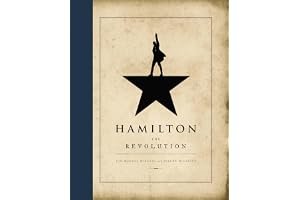
Hamilton: The Revolution
Lin-Manuel Miranda, Jeremy McCarter
4.7
Lin-Manuel Miranda's groundbreaking musical Hamilton is as revolutionary as its subject, the poor kid from the Caribbean who fought the British, defended the Constitution, and helped to found the United States. Fusing hip-hop, pop, R&B, and the best traditions of theater, this once-in-a-generation show broadens the sound of Broadway, reveals the storytelling power of rap, and claims our country's origins for a diverse new generation.
Hamilton: The Revolution gives readers an unprecedented view of both revolutions, from the only two writers able to provide it. Miranda and Jeremy McCarter, a cultural critic and theater artist who was involved in the project from its earliest stages--"since before this was even a show," according to Miranda--trace its development from an improbable performance at the White House to its landmark opening night on Broadway six years later. In addition, Miranda has written more than 200 funny, revealing footnotes for his award-winning libretto, the full text of which is published here.
Their account features photos by the renowned Frank Ockenfels and veteran Broadway photographer Joan Marcus; exclusive looks at notebooks and emails; interviews with Questlove, Stephen Sondheim, leading political commentators, and more than 40 people involved with the production; and multiple appearances by President Obama himself. The book does more than tell the surprising story of how a Broadway musical became a national phenomenon: It demonstrates that America has always been renewed by the brash upstarts and brilliant outsiders, the men and women who don't throw away their shot.
…
Recommended by André Rupp.
André Rupp
Finally some light reading, right? I chose this book because the work that we do specifically on the innovative edges of educational assessment is, as I said earlier, a mixture of scientific rigour and artful practice. Essentially, it is all about designing under constraints. The design decisions have to permeate everything, from the way you design the activities to the way you design your scoring to the way you design the reporting to the way you design how in teams you work together to make all of this happen. I am, personally, a big supporter and fan of performing arts: musicals, plays, concerts, comedy. I have seen over 900 shows in my life. [source]
Cover unavailable
13
A Streetcar Named Desire
Tennessee Williams
4.6
The Pulitzer Prize and Drama Critics Circle Award winning play—reissued with an introduction by Arthur Miller (Death of a Salesman and The Crucible), and Williams’ essay “The World I Live In.”
It is a very short list of 20th-century American plays that continue to have the same power and impact as when they first appeared—57 years after its Broadway premiere, Tennessee Williams’ A Streetcar Named Desire is one of those plays. The story famously recounts how the faded and promiscuous Blanche DuBois is pushed over the edge by her sexy and brutal brother-in-law, Stanley Kowalski. Streetcar launched the careers of Marlon Brando, Jessica Tandy, Kim Hunter, and Karl Malden, and solidified the position of Tennessee Williams as one of the most important young playwrights of his generation, as well as that of Elia Kazan as the greatest American stage director of the ’40s and ’50s.
…
Cover unavailable
14
Much Ado About Nothing
William Shakespeare, Barbara A. Mowat, Paul Werstine
4.6
In Much Ado About Nothing, Shakespeare includes two quite different stories of romantic love. Hero and Claudio fall in love almost at first sight, but an outsider, Don John, strikes out at their happiness. Beatrice and Benedick are kept apart by pride and mutual antagonism until others decide to play Cupid.
Cover unavailable
15
Twelfth Night
William Shakespeare, Dr. Barbara A. Mowat, Paul Werstine Ph.D.
4.6
Named for the twelfth night after Christmas, the end of the Christmas season, Twelfth Night plays with love and power. The Countess Olivia, a woman with her own household, attracts Duke (or Count) Orsino. Two other would-be suitors are her pretentious steward, Malvolio, and Sir Andrew Aguecheek.
Onto this scene arrive the twins Viola and Sebastian; caught in a shipwreck, each thinks the other has drowned. Viola disguises herself as a male page and enters Orsino’s service. Orsino sends her as his envoy to Olivia—only to have Olivia fall in love with the messenger. The play complicates, then wonderfully untangles, these relationships.
…
Cover unavailable
16
Harry Potter and the Cursed Child - Parts One and Two: The Official Playscript of the Original West End Production
J.K. Rowling
4.6
The official playscript of the original West End production of Harry Potter and the Cursed Child.
It was always difficult being Harry Potter and it isn't much easier now that he is an overworked employee of the Ministry of Magic, a husband, and father of three school-age children.
While Harry grapples with a past that refuses to stay where it belongs, his youngest son Albus must struggle with the weight of a family legacy he never wanted. As past and present fuse ominously, both father and son learn the uncomfortable truth: sometimes, darkness comes from unexpected places.
The playscript for Harry Potter and the Cursed Child was originally released as a 'special rehearsal edition' alongside the opening of Jack Thorne's play in London's West End in summer 2016. Based on an original story by J.K. Rowling, John Tiffany and Jack Thorne, the play opened to rapturous reviews from theatregoers and critics alike, while the official playscript became an immediate global bestseller.
This definitive and final playscript updates the 'special rehearsal edition' with the conclusive and final dialogue from the play, which has subtly changed since its rehearsals, as well as a conversation piece between director John Tiffany and writer Jack Thorne, who share stories and insights about reading playscripts. This edition also includes useful background information including the Potter family tree and a timeline of events from the Wizarding World prior to the beginning of Harry Potter and the Cursed Child.
…
Cover unavailable
17
The Taming of the Shrew
William Shakespeare, Dr. Barbara A. Mowat, Paul Werstine Ph.D.
4.5
Renowned as Shakespeare's most boisterous comedy, The Taming of the Shrew is the tale of two young men, the hopeful Lucentio and the worldly Petruchio, and the two sisters they meet in Padua. Lucentio falls in love with Bianca, the apparently ideal younger daughter of the wealthy Baptista Minola. But before they can marry, Bianca's formidable elder sister, Katherine, must be wed. Petruchio, interested only in the huge dowry, arranges to marry Katherine -against her will- and enters into a battle of the sexes that has endured as one of Shakespeare's most enjoyable works.
…
Cover unavailable
18
Julius Caesar
William Shakespeare, Dr. Barbara A. Mowat, Paul Werstine Ph.D.
4.5
Shakespeare may have written Julius Caesar as the first of his plays to be performed at the Globe, in 1599. For it, he turned to a key event in Roman history: Caesar’s death at the hands of friends and fellow politicians. Renaissance writers disagreed over the assassination, seeing Brutus, a leading conspirator, as either hero or villain. Shakespeare’s play keeps this debate alive.
Cover unavailable
19
The Merchant of Venice
William Shakespeare, Dr. Barbara A. Mowat, Paul Werstine Ph.D.
4.5
In this lively comedy of love and money in sixteenth-century Venice, Bassanio wants to impress the wealthy heiress Portia but lacks the necessary funds. He turns to his merchant friend, Antonio, who is forced to borrow from Shylock, a Jewish moneylender. When Antonio's business falters, repayment becomes impossible--and by the terms of the loan agreement, Shylock is able to demand a pound of Antonio's flesh. Portia cleverly intervenes, and all ends well (except of course for Shylock).
…
Cover unavailable
20
A Doll's House
Henrik Ibsen
4.5
A Doll's House (1879), is a masterpiece of theatrical craft which, for the first time portrayed the tragic hypocrisy of Victorian middle class marriage on the stage. The play ushered in a new social era and "exploded like a bomb into contemporary life".
The Student Edition contains these exclusive features:
· A chronology of the playwright's life and work
· An introduction giving the background of the play
· Commentary on themes, characters. language and style
· Notes on individual words and phrases in the text
· Questions for further study
· Bibliography for further reading.
…
Cover unavailable
21
The Glass Menagerie
Tennessee Williams, Robert Bray
4.5
No play in the modern theatre has so captured the imagination and heart of the American public as Tennessee Williams's The Glass Menagerie. As Williams's first popular success, it launched the brilliant, if somewhat controversial, career, of our pre-eminent lyric playwright. Since its premiere in Chicago in 1944, with the legendary Laurette Taylor in the role of Amanda, Menagaerie has been the bravura piece for great actresses from Jessica Tandy to Joanne Woodward, and is studied and performed in classrooms and theatres around the world.
The Glass Menagerie (in the reading text the author preferred) is now available only in its New Directions Paperbook edition. A new introduction by the editor of The Tennessee Williams Annual Review, Robert Bray, reappraises the play more than half a century after it won the New York Drama Critics Circle Award. This edition of The Glass Menagerie also includes Williams's essay on the impact of sudden fame on a struggling writer, "The Catastrophe of Success," as well as a short section of Williams's own "Production Notes." (back cover)
…
Cover unavailable
22
Oedipus Rex (The Theban Plays, #1)
Sophocles, Elizabeth Osborne, J.E. Thomas
4.4
"...what man wins more happiness than just its shape and the ruin when that shape collapses?"
Sophocles' Oedipus Rex has never been surpassed for the raw and terrible power with which its hero struggles to answer the eternal question, "Who am I?" The play, a story of a king who acting entirely in ignorance kills his father and marries his mother, unfolds with shattering power; we are helplessly carried along with Oedipus towards the final, horrific truth.
To make Oedipus more accessible for the modern reader, our Prestwick House Literary Touchstone Classics includes a glossary of the more difficult words, as well as convenient sidebar notes to enlighten the reader on aspects that may be confusing or overlooked. We hope that the reader may, through this edition, more fully enjoy the beauty of the verse, the wisdom of the insights, and the impact of the drama.
…
Cover unavailable
23
Henry V
William Shakespeare, Gary Taylor
4.4
The introduction includes an examination of the Quarto and texts, and of the relationship between them; a critical discussion of the play's historical and literary sources; an examination of conflicting critical attitudes to the play, and of its fluctuating theatrical fortunes; and a demonstration of the range and variety of Shakespeare's characterization.
About the Series: For over 100 years Oxford World's Classics has made available the broadest spectrum of literature from around the globe. Each affordable volume reflects Oxford's commitment to scholarship, providing the most accurate text plus a wealth of other valuable features, including expert introductions by leading authorities, voluminous notes to clarify the text, up-to-date bibliographies for further study, and much more.
…
Recommended by Jacob Weisberg.
Jacob Weisberg
Well, they have always been my favourite Shakespeare plays and they are about a family dynasty and the son of the king who is considered too irresponsible to rule but he, Hal, turns it around and becomes king himself and reverses everyone’s low expectations of him. Like Prince Hal, Bush did go from nothing, from having been written off by his family, to doing what nobody in the family thought he was capable of. But then in Henry V, when he is king, he is the most militaristic and the most religious king of all Shakespeare’s kings. It is a patriotic play and he is a triumphant leader but he drains the country’s resources with war. In reality Henry V was a much less successful king than he is Shakespeare’s play. There is a wonderful scene in Henry IV Part I where Hal picks up his father’s crown and is contemplating it. The whole sequence is full of incredible resonances. I suppose the plays are about the problems of dynastic power. [source]
Cover unavailable
24
Cyrano de Bergerac
Edmond Rostand
4.4
This acclaimed adaptation for the stage has garnered such reviews as: "Emotional depth Rostand himself would surely have envied...Burgess' extravagant verse keeps its contours, yet trips off the tongue almost as though it were contemporary speech." -London Times. Performance rights available from Applause.
Recommended by Aubrey Marcus, Jenny Davidson, and Ruth Harris.
Jenny Davidson
The love story that is told in Cyrano, with its bittersweet, heartbreaking ending, is one of the most powerful I’ve ever encountered. [source]
Ruth Harris
It is set in the 17th century. Cyrano de Bergerac is the play’s hero, a cadet – a nobleman serving as a solider in the French army – and he’s deformed, with a nose so enormous that people come from far and wide to view his “protuberance”. He falls madly in love with his cousin Roxane, who is witty and leaned, but because of what he believes to be his outward ugliness he cannot proclaim his love for her. Instead, an extraordinary triangle emerges. Christian de Neuvillette, who like Cyrano is a cadet, is absolutely beautiful but very inarticulate. What Cyrano does is lend him his words and between them they become the perfect man. But it’s Christian not Cyrano who takes the prize with Roxane not realising that she has fallen in love with the wrong person and it’s only at the end of the play, many years after Christian dies in the siege of Arras, that she comes to grips with this fact and understands that her real devotion should be for the ugly Cyrano. [source]
Cover unavailable
25
Antigone (The Theban Plays, #3)
Sophocles
4.4
The curse placed on Oedipus lingers and haunts a younger generation in this new and brilliant translation of Sophocles' classic drama. The daughter of Oedipus and Jocasta, Antigone is an unconventional heroine who pits her beliefs against the King of Thebes in a bloody test of wills that leaves few unharmed. Emotions fly as she challenges the king for the right to bury her own brother. Determined but doomed, Antigone shows her inner strength throughout the play.
Antigone raises issues of law and morality that are just as relevant today as they were more than two thousand years ago. Whether this is your first reading or your twentieth, Antigone will move you as few pieces of literature can.
To make this quintessential Greek drama more accessible to the modern reader, this Prestwick House Literary Touchstone Edition includes a glossary of difficult terms, a list of vocabulary words, and convenient sidebar notes. By providing these, it is our intention that readers will more fully enjoy the beauty, wisdom, and intent of the play.
…
Cover unavailable
26
Who's Afraid of Virginia Woolf?
Edward Albee
4.4
"Twelve times a week," answered Uta Hagen when asked how often she'd like to play Martha in Who's Afraid of Virginia Woolf? In the same way, audiences and critics alike could not get enough of Edward Albee's masterful play. A dark comedy, it portrays husband and wife George and Martha in a searing night of dangerous fun and games. By the evening's end, a stunning, almost unbearable revelation provides a climax that has shocked audiences for years. With the play's razor-sharp dialogue and the stripping away of social pretense, Newsweek rightly foresaw Who's Afraid of Virginia Woolf? as "a brilliantly original work of art--an excoriating theatrical experience, surging with shocks of recognition and dramatic fire [that] will be igniting Broadway for some time to come."
…
Cover unavailable
27
Drama
Raina Telgemeier
4.3
PLACES, EVERYONE!
Callie loves theater. And while she would totally try out for her middle school's production of Moon Over Mississippi, she can't really sing. Instead she's the set designer for the drama department stage crew, and this year she's determined to create a set worthy of Broadway on a middle-school budget. But how can she, when she doesn't know much about carpentry, ticket sales are down, and the crew members are having trouble working together? Not to mention the onstage AND offstage drama that occurs once the actors are chosen. And when two cute brothers enter the picture, things get even crazier!
…
Recommended by Helen.
Helen
It is a story book but it has tonnes of facts in it – especially about Shakespeare. [source]
Cover unavailable
28
Cat on a Hot Tin Roof
Tennessee Williams and Edward Albee
4.3
Cat on a Hot Tin Roof first heated up Broadway in 1955 with its gothic American story of brothers vying for their dying father’s inheritance amid a whirlwind of sexuality, untethered in the person of Maggie the Cat. The play also daringly showcased the burden of sexuality repressed in the agony of her husband, Brick Pollitt. In spite of the public controversy Cat stirred up, it was awarded the Pulitzer Prize and the Drama Critics Circle Award for that year. Williams, as he so often did with his plays, rewrote Cat on a Hot Tin Roof for many years—the present version was originally produced at the American Shakespeare Festival in 1974 with all the changes that made Williams finally declare the text to be definitive, and was most recently produced on Broadway in the 2003–2004 season. This definitive edition also includes Williams&rsquoi; essay “Person-to-Person,” Williams’ notes on the various endings, and a short chronology of the author’s life. One of America’s greatest living playwrights, as well as a friend and colleague of Williams, Edward Albee has written a concise introduction to the play from a playwright’s perspective, examining the candor, sensuality, power, and impact of Cat on a Hot Tin Roof then and now.
…
Cover unavailable
29
As You Like It
William Shakespeare, Paul Werstine Ph.D., et al.
4.3
Readers and audiences have long greeted As You Like It with delight. Its characters are brilliant conversationalists, including the princesses Rosalind and Celia and their Fool, Touchstone. Soon after Rosalind and Orlando meet and fall in love, the princesses and Touchstone go into exile in the Forest of Arden, where they find new conversational partners. Duke Frederick, younger brother to Duke Senior, has overthrown his brother and forced him to live homeless in the forest with his courtiers, including the cynical Jaques. Orlando, whose older brother Oliver plotted his death, has fled there, too.
Recent scholars have also grounded the play in the issues of its time. These include primogeniture, passing property from a father to his oldest son. As You Like It depicts intense conflict between brothers, exposing the human suffering that primogeniture entails. Another perspective concerns cross-dressing. Most of Orlando’s courtship of Rosalind takes place while Rosalind is disguised as a man, “Ganymede.” At her urging, Orlando pretends that Ganymede is his beloved Rosalind. But as the epilogue reveals, the sixteenth-century actor playing Rosalind was male, following the practice of the time. In other words, a boy played a girl playing a boy pretending to be a girl.
…
Cover unavailable
30
Medea
Euripides, Rex Warner
4.3
One of the most powerful and enduring of Greek tragedies, Medea centers on the myth of Jason, leader of the Argonauts, who has won the dragon-guarded treasure of the Golden Fleece with the help of the sorceress Medea. Having married Medea and fathered her two children, Jason abandons her for a more favorable match, never suspecting the terrible revenge she will take.
Euripides' masterly portrayal of the motives fiercely driving Medea's pursuit of vengeance for her husband's insult and betrayal has held theater audiences spellbound for more than twenty centuries. Rex Warner's authoritative translation brings this great classic of world literature vividly to life.
Reprint of the John Lane, The Bodley Head Limited, London, 1944 edition.
…
Cover unavailable
31
Richard III
William Shakespeare
4.3
Each edition includes:
Freshly edited text based on the best early printed version of the play Full explanatory notes conveniently placed on pages facing the text of the play Scene-by-scene plot summaries A key to famous lines and phrases An introduction to reading Shakespeare's language An essay by an outstanding scholar providing a modern perspective on the play Illustrations from the Folger Shakespeare Library's vast holdings of rare books Essay by Phyllis Rackin The Folger Shakespeare Library in Washington, D.C., is home to the world's largest collection of Shakespeare's printed works, and a magnet for Shakespeare scholars from around the globe. In addition to exhibitions open to the public throughout the year, the Folger offers a full calendar of performances and programs. For more information, visit www.folger.edu.
…
Cover unavailable
32
A Raisin in the Sun
Lorraine Hansberry
4.3
"Never before, in the entire history of the American theater, has so much of the truth of black people's lives been seen on the stage," observed James Baldwin shortly before A Raisin in the Sun opened on Broadway in 1959.
Indeed Lorraine Hansberry's award-winning drama about the hopes and aspirations of a struggling, working-class family living on the South Side of Chicago connected profoundly with the psyche of black America--and changed American theater forever. The play's title comes from a line in Langston Hughes's poem "Harlem," which warns that a dream deferred might "dry up/like a raisin in the sun."
"The events of every passing year add resonance to A Raisin in the Sun," said The New York Times. "It is as if history is conspiring to make the play a classic." This Modern Library edition presents the fully restored, uncut version of Hansberry's landmark work with an introduction by Robert Nemiroff.
…
Cover unavailable
33
Dr. Faustus
Christopher Marlowe
4.3
The Tragical History of the Life and Death of Doctor Faustus, commonly referred to simply as Doctor Faustus, is an Elizabethan tragedy by Christopher Marlowe, based on German stories about the title character Faust, that was first performed sometime between 1588 and Marlowe's death in 1593. Two different versions of the play were published in the Jacobean era, several years later. The powerful effect of early productions of the play is indicated by the legends that quickly accrued around them—that actual devils once appeared on the stage during a performance, "to the great amazement of both the actors and spectators", a sight that was said to have driven some spectators mad.
…
Cover unavailable
34
The Empty Space: A Book About the Theatre: Deadly, Holy, Rough, Immediate
Peter Brook
4.3
From director and cofounder of the Royal Shakespeare Company Peter Brook, The Empty Space is a timeless analysis of theatre from the most influential stage director of the twentieth century.
As relevant as when it was first published in 1968,groundbreaking director and cofounder of the Royal Shakespeare Company Peter Brook draws on a life in love with the stage to explore the issues facing a theatrical performance—of any scale. He describes important developments in theatre from the last century, as well as smaller scale events, from productions by Stanislavsky to the rise of Method Acting, from Brecht’s revolutionary alienation technique to the free form happenings of the 1960s, and from the different styles of such great Shakespearean actors as John Gielgud and Paul Scofield to a joyous impromptu performance in the burnt-out shell of the Hamburg Opera just after the war.
Passionate, unconventional, and fascinating, this book shows how theatre defies rules, builds and shatters illusions, and creates lasting memories for its audiences.
…
Recommended by Michael Billington.
Michael Billington
One reason why this book resonates is that things we take for granted now – that theatre should be a shared experience, that it should be communal – were things that Brook was writing about. [source]
Cover unavailable
35
No Exit and Three Other Plays
Jean-Paul Sartre
4.3
In these four plays, Jean-Paul Sartre, the great existentialist novelist and philosopher, displays his mastery of drama. NO EXIT is an unforgettable portrayal of hell. THE FLIES is a modern reworking of the Electra-Orestes story. DIRTY HANDS is about a young intellectual torn between theory and praxis. THE RESPECTFUL PROSTITUTE is an attack on American racism.
Cover unavailable
36
Long Day's Journey into Night
Eugene O'Neill, Harold Bloom
4.3
Eugene O'Neill's autobiographical play Long Day's Journey into Night is regarded as his finest work. First published by Yale University Press in 1956, it won the Pulitzer Prize in 1957 and has since sold more than one million copies. This edition includes a new foreword by Harold Bloom.
The action covers a fateful, heart-rending day from around 8:30 am to midnight, in August 1912 at the seaside Connecticut home of the Tyrones - the semi-autobiographical representations of O'Neill himself, his older brother, and their parents at their home, Monte Cristo Cottage.
One theme of the play is addiction and the resulting dysfunction of the family. All three males are alcoholics and Mary is addicted to morphine. They all constantly conceal, blame, resent, regret, accuse and deny in an escalating cycle of conflict with occasional desperate and half-sincere attempts at affection, encouragement and consolation.
…
Cover unavailable
37
Pygmalion
George Bernard Shaw
4.3
One of George Bernard Shaw's best-known plays, Pygmalion was a rousing success on the London and New York stages, an entertaining motion picture and a great hit with its musical version, My Fair Lady. An updated and considerably revised version of the ancient Greek legend of Pygmalion and Galatea, the 20th-century story pokes fun at the antiquated British class system.
In Shaw's clever adaptation, Professor Henry Higgins, a linguistic expert, takes on a bet that he can transform an awkward cockney flower seller into a refined young lady simply by polishing her manners and changing the way she speaks. In the process of convincing society that his creation is a mysterious royal figure, the Professor also falls in love with his elegant handiwork.
The irresistible theme of the emerging butterfly, together with Shaw's brilliant dialogue and splendid skills as a playwright, have made Pygmalion one of the most popular comedies in the English language. A staple of college drama courses, it is still widely performed.
…
Cover unavailable
38
Tartuffe
Martin Sorrell, Molière
4.3
Condemned and banned for five years in Molière’s day, Tartuffe is a satire on religious hypocrisy. Tartuffe worms his way into Orgon’s household, blinding the master of the house with his religious "devotion," and almost succeeds in his attempts to seduce his wife and disinherit his children before the final unmasking.
Cover unavailable
39
Our Town
Thornton Wilder, Donald Margulies
4.3
Our Town was first produced and published in 1938 to wide acclaim. This Pulitzer Prize-winning drama of life in the small village of Grover's Corners, an allegorical representation of all life, has become a classic. It is Thornton Wilder's most renowned and most frequently performed play.
Cover unavailable
40
The Oresteia: Agamemnon, The Libation Bearers, The Eumenides
Aeschylus, W. B. Stanford, Robert Fagles
4.3
Alternate cover edition can be found here, here, here, here
In the Oresteia—the only trilogy in Greek drama which survives from antiquity—Aeschylus took as his subject the bloody chain of murder and revenge within the royal family of Argos.
Moving from darkness to light, from rage to self-governance, from primitive ritual to civilized institution, their spirit of struggle and regeneration becomes an everlasting song of celebration.
…
Cover unavailable
41
Angels in America: A Gay Fantasia on National Themes (Angels in America, #1-2)
Tony Kushner
4.2
Winner of the Pulitzer Prize for Drama Angels in America: A Gay Fantasia on National Themes includes Part One, Millennium Approaches and Part Two, Perestroika
“Glorious. A monumental, subversive, altogether remarkable masterwork…Details of specific catastrophes may have changed since this Reagan-era AIDS epic won the Pulitzer and the Tony, but the real cosmic and human obsessions—power, religion, sex, responsibility, the future of the world—are as perilous, yet as falling-down funny, as ever.” –Linda Winer, Newsday
"A vast, miraculous play... provocative, witty and deeply upsetting... a searching and radical rethinking of American political drama." - Frank Rich, New York Times
"A victory for theater, for the transforming power of the imagination to turn devastation into beauty." - John Lahr, New Yorker
“An enormously impressive work of the imagination and intellect, a towering example of what theater stretched to its full potential can achieve.” -Philadelphia Inquirer
"Angels in America is the finest drama of our time, speaking to us of an entire era of life and death as no other play within memory. It ranks as nothing less than one of the greatest plays of the twentieth century." - John Heilpern, New York Observer
“Some playwrights want to change the world. Some want to revolutionize theater. Tony Kushner is that rarity of rarities: a writer who has the promise to do both.” -New York Times
This new edition of Tony Kushner's masterpiece is published with the author's recent changes and a new introduction in celebration of the twentieth anniversary of its original production. One of the most honored American plays in history, Angels in America was awarded two Tony Awards for Best Play and the Pulitzer Prize for Drama. It was made into an Emmy Award-winning HBO film directed by Mike Nichols. This two-part epic, subtitled "A Gay Fantasia on National Themes," has received hundreds of performances worldwide in more than twenty-six languages.
Tony Kushner’s plays include Angels in America; Hydriotaphia, or the Death of Dr. Brown; The Illusion, adapted from the play by Pierre Cornelle; Slavs!; A Bright Room Called Day; Homebody/Kabul; Caroline, or Change, a musical with composer Jeanine Tesori; and The Intelligent Homosexual’s Guide to Capitalism and Socialism with a Key to the Scriptures. He wrote the screenplays for Mike Nichols’s film of Angels in America and for Steven Spielberg’s Munich and Lincoln. His books include The Art of Maurice Sendak: 1980 to the Present; Brundibar, with illustrations by Maurice Sendak; and Wrestling with Zion: Progressive Jewish-American Responses to the Israeli-Palestinian Conflict, co-edited with Alisa Solomon. Among many honors, Kushner is the recipient of a Pulitzer Prize, two Tony Awards, three Obie Awards, two Evening Standard Awards, an Olivier Award, an Emmy Award, two Oscar nominations, and the Steinberg Distinguished Playwright Award. He is a member of the American Academy of Arts and Letters. In 2012, he was awarded a National Medal of Arts by President Barack Obama. He lives in Manhattan with his husband, Mark Harris.
…
Recommended by Mary Burkey.
Mary Burkey
Angels in America builds on that tradition of how audiobooks can bring stage plays into your home through the audio experience. Angels in America was a landmark, Pulitzer Prize winning drama and having it available on audio for everyone to experience in a different way—but in the out loud fashion that it was written for—is really important. [source]
Cover unavailable
42
The Vagina Monologues
Eve Ensler
4.2
I decided to talk to women about their vaginas, to do vagina interviews, which became vagina monologues...At first women were reluctant to talk. They were a little shy. But once they got going, you couldn't stop them. Women secretly love to talk about their vaginas. They get very excited, mainly because no one's ever asked them before.
William Shakespeare, Barbara A. Mowat, Paul Werstine
4.2
Cover unavailable
44
For colored girls who have considered suicide/when the rainbow is enuf
Ntozake Shange
4.2
A revolutionary, award-winning play by a lauded playwright and poet about the experiences of women of color.
From its inception in California in 1974 to its highly acclaimed critical success at Joseph Papp's Public Theater and on Broadway, the Obie Award-winning for colored girls who have considered suicide/when the rainbow is enuf has excited, inspired, and transformed audiences all over the country. Passionate and fearless, Shange's words reveal what it is to be of color and female in the twentieth century. First published in 1975 when it was praised by The New Yorker for "encompassing...every feeling and experience a woman has ever had," for colored girls who have considered suicide/when the rainbow is enuf will be read and performed for generations to come. Here is the complete text, with stage directions, of a groundbreaking dramatic prose poem written in vivid and powerful language that resonates with unusual beauty in its fierce message to the world.
…
Cover unavailable
45
The Oedipus Cycle: Oedipus Rex, Oedipus at Colonus, Antigone
. Sophocles
4.2
English versions of Sophocles’ three great tragedies based on the myth of Oedipus, translated for a modern audience by two gifted poets.
Cover unavailable
46
Arcadia
Tom Stoppard
4.2
Arcadia takes us back and forth between the nineteenth and twentieth centuries, ranging over the nature of truth and time, the difference between the Classical and the Romantic temperament, and the disruptive influence of sex on our orbits in life. Focusing on the mysteries--romantic, scientific, literary--that engage the minds and hearts of characters whose passions and lives intersect across scientific planes and centuries, it is "Stoppard's richest, most ravishing comedy to date, a play of wit, intellect, language, brio and... emotion. It's like a dream of levitation: you're instantaneously aloft, soaring, banking, doing loop-the-loops and then, when you think you're about to plummet to earth, swooping to a gentle touchdown of not easily described sweetness and sorrow... Exhilarating" (Vincent Canby, The New York Times).
…
Cover unavailable
47
The Importance of Being Earnest & Other Plays
Oscar Wilde
4.2
Designed to appeal to the book lover, the Macmillan Collector's Library is a series of beautifully bound pocket-sized gift editions of much loved classic titles. Bound in real cloth, printed on high quality paper, and featuring ribbon markers and gilt edges, Macmillan Collector's Library are books to love and treasure.
The four great comedies of Oscar Wilde, Lady Windermere's Fan, A Woman of No Importance, An Ideal Husbandand The Importance of Being Earnest, were all written at the height of the controversial Irish author's powers in his last, doomed decade, the 1890s. They remain among the most-loved, and most-quoted, of all drama in the English language. Along with Salome, his darkly decadent dramatization of the Bible story, these immortal plays have continued to pack theatres to this day, and have been adapted for every kind of media. The plays were originally published in book form at Wilde's own insistence, the better to spread his genius wide.
Illustrated by Aubrey Beardsley, with an afterword by Ned Halley.
…
Recommended by Sos Eltis.
Sos Eltis
In this play it is the women who are the ones with the real power and authority. [source]
Cover unavailable
48
Rhinocéros
Eugene Ionesco
4.2
"Tous les chats sont mortels. Socrate est mortel. Donc Socrate est un chat." Tout langage stéréotypé devient aberrant. C'est ce que Ionesco démontre dans Rhinocéros, pièce qui a tout d'abord vu le jour sous la forme d'une nouvelle. Partisan d'un théâtre total, il porte l'absurde à son paroxysme en l'incarnant matériellement. Allégorie des idéologies de masse, le rhinocéros, cruel et dévastateur, ne se déplace qu'en groupe et gagne du terrain à une vitesse vertigineuse. Seul et sans trop savoir pourquoi, Bérenger résiste à la mutation. Il résiste pour notre plus grande délectation, car sa lutte désespérée donne lieu à des caricatures savoureuses, à des variations de tons et de genres audacieuses et anticonformistes. La sclérose intellectuelle, l'incommunicabilité et la perversion du langage engendrent des situations tellement tragiques qu'elles en deviennent comiques, tellement grotesques qu'elles ne peuvent être que dramatiques. On a dit du théâtre de Ionesco qu'il était engagé ; il l'est, en faveur de l'individu, menacé de marginalisation quand, malgré ses faiblesses, il parvient à résister aux tentations avilissantes qu'il a lui-même fait naître.`
…
Cover unavailable
49
Hedda Gabler
Henrik Ibsen, William Archer, Edmund Gosse
4.2
Cover unavailable
50
Lysistrata
Aristophanes, Sarah Ruden
4.2
Aristophanes' comic masterpiece of war and sex remains one of the greatest plays ever written. Led by the title character, the women of the warring city-states of Greece agree to withhold sexual favours with their husbands until they agree to cease fighting. The war of the sexes that ensues makes Lysistrata a bawdy comedy without peer in the history of theatre.
Cover unavailable
51
Endgame
Samuel Beckett
4.2
Samuel Beckett was awarded the Nobel Prize for Literature in 1969; his literary output of plays, novels, stories, and poetry has earned him an uncontested place as one of the greatest writers of our time. Endgame, originally written in French and translated into English by Beckett himself, is now considered by many critics to be his greatest single work. A pinnacle of Beckett's characteristic raw minimalism, it is a pure and devastating distillation of the human essence in the face of approaching death.
…
Cover unavailable
52
Henry IV, Part I
William Shakespeare, David Bevington
4.1
During Shakespeare's lifetime, Henry IV was his most popular play. Today, Sir John Falstaff still towers above Shakespeare's other comic inventions. This edition considers the play in the context of various critical approaches, offers a history of the play in performance from Shakespeare's time to ours, and provides useful information on its historical background. Readers will also find detailed commentary on individual words and phrases, and selections from Shakespeare's sources.
About the Series: For over 100 years Oxford World's Classics has made available the broadest spectrum of literature from around the globe. Each affordable volume reflects Oxford's commitment to scholarship, providing the most accurate text plus a wealth of other valuable features, including expert introductions by leading authorities, voluminous notes to clarify the text, up-to-date bibliographies for further study, and much more.
…
Recommended by Meg Rosoff.
Meg Rosoff
Shakespeare’s version of a coming of age story. [source]
Cover unavailable
53
Millennium Approaches (Angels in America #1)
Tony Kushner
4.1
Angels in America is a play in two parts by American playwright Tony Kushner.
The play is a complex, often metaphorical, and at times symbolic examination of AIDS and homosexuality in America in the 1980s. Certain major and minor characters are supernatural beings (angels) or deceased persons (ghosts). The play contains multiple roles for several of the actors. Initially and primarily focusing on a gay couple in Manhattan, the play also has several other storylines, some of which occasionally intersect.
…
Cover unavailable
54
Fences (The Century Cycle #6)
August Wilson, Lloyd Richards
4.1
Winner of the Pulitzer Prize for Drama and the Tony Award for Best Play. Now a Major Motion Picture directed by and starring Denzel Washington.
From August Wilson, author of The Piano Lesson and the 1984-85 Broadway season's best play, Ma Rainey's Black Bottom, is another powerful, stunning dramatic work that has won him numerous critical acclaim including the 1987 Tony Award for Best Play and the Pulitzer Prize. The protagonist of Fences (part of Wilson's ten-part Pittsburgh Cycle plays), Troy Maxson, is a strong man, a hard man. He has had to be to survive. Troy Maxson has gone through life in an America where to be proud and black is to face pressures that could crush a man, body and soul. But the 1950s are yielding to the new spirit of liberation in the 1960s, a spirit that is changing the world Troy Maxson has learned to deal with the only way he can, a spirit that is making him a stranger, angry and afraid, in a world he never knew and to a wife and son he understands less and less.
…
Cover unavailable
55
Phèdre
Racine
4.1
En 1677, Phèdre, la dernière grande tragédie de Racine, met en scène la mythique descente aux enfers d'une incomprise. Vouée au malheur par son hérédité, Phèdre aime sans espoir son beau-fils Hippolyte. Lorsque son mari, Thésée, revient, il envoie injustement son fils à la mort. On assiste alors à l'empoisonnement d'une femme à la fois innocente et coupable. Ironie tragique qui démontre à quel point l'amour peut se vivre comme une malédiction.
…
Cover unavailable
56
Measure for Measure
William Shakespeare
4.1
Measure for Measure is among the most passionately discussed of Shakespeare’s plays. In it, a duke temporarily removes himself from governing his city-state, deputizing a member of his administration, Angelo, to enforce the laws more rigorously. Angelo chooses as his first victim Claudio, condemning him to death because he impregnated Juliet before their marriage.
Claudio’s sister Isabella, who is entering a convent, pleads for her brother’s life. Angelo attempts to extort sex from her, but Isabella preserves her chastity. The duke, in disguise, eavesdrops as she tells her brother about Angelo’s behavior, then offers to ally himself with her against Angelo.
…
Cover unavailable
57
The Pillowman
Martin McDonagh
4.1
A writer in a totalitarian state is interrogated about the gruesome content of his short stories and their similarities to a number of child-murders that are happening in his town.
'Sometimes you don't even know what you've been craving until the real thing comes along.' New York Times
'McDonagh is more than just a very clever theatrical stylist. His tricks and turns have a purpose. They are bridges over a deep pit of sympathy and sorrow, illuminated by a tragic vision of stunted and frustrated lives.' Fintan O'Toole, Irish Times
Martin McDonagh's searingly brilliant new play premi�res at the National Theatre, London in November 2003.
…
Cover unavailable
58
The Complete Works
William Shakespeare
4.1
Tempest Two Gentlemen of Verona Merry Wives of Windsor Measure for Measure Comedy of Errors Much Ado About Nothing Love's Labour's Lost Midsummer Night's Dream Merchant of Venice As You Like It Taming of the Shrew All's Well That Ends Well Twelfth Night Winter's Tale King John King Richard II King Henry IV. Part 1 King Henry IV. Part 2 King Henry V King Henry VI. Part 1 King Henry VI. Part 2 King Henry VI. Part 3 King Richard III King Henry VIII Troilus and Cressida Coriolanus Titus Andronicus Romeo and Juliet Timon of Athens Julius Caesar Macbeth Hamlet King Lear Othello Anthony and Cleopatra Cymbeline Pericles Venus and Adonis Rape of Lucrece Sonnets Lover's Complaint Passionate Pilgrim Sonnets to Sundry Notes of Music Phoenix and the Turtle
…
Cover unavailable
59
Equus
Peter Shaffer
4.1
In "Equus," which took critics and public alike by storm and has gone on to become a modern classic, Peter Shaffer depicts the story of a deranged youth who blinds six horses with a spike. Through a psychiatrist's analysis of the events, Shaffer creates a chilling portrait of how materialism and convenience have killed our capacity for worship and passion and, consequently, our capacity for pain. Rarely has a playwrite created an atmosphere and situation that so harshly pinpoint the spiritual and mental decay of modern man.
…
Cover unavailable
60
Proof
David Auburn
4.1
Proof is the winner of the 2001 Pulitzer Prize for Drama.
One of the most acclaimed plays of the 1999-2000 season, Proof is a work that explores the unknowability of love as much as it does the mysteries of science.
It focuses on Catherine, a young woman who has spent years caring for her father, Robert, a brilliant mathematician in his youth who was later unable to function without her help. His death has brought into her midst both her sister, Claire, who wants to take Catherine back to New York with her, and Hal, a former student of Catherine's father who hopes to find some hint of Robert's genius among his incoherent scribblings. The passion that Hal feels for math both moves and angers Catherine, who, in her exhaustion, is torn between missing her father and resenting the great sacrifices she made for him. For Catherine has inherited at least a part of her father's brilliance -- and perhaps some of his instability as well. As she and Hal become attracted to each other, they push at the edges of each other's knowledge, considering not only the unpredictability of genius but also the human instinct toward love and trust.
…
Cover unavailable
61
King Richard II
William Shakespeare
4.1
This richly annotated edition takes a fresh look at the first part of Shakespeare's second tetralogy of history plays, showing how it relates to the other plays in the sequence. Forker places the play in its political context, discussing its relation to competing theories of monarchy, how it faced censorship because of possible comparisons between Richard II and Elizabeth I, and how Bolingbroke's rebellion could be compared to the Essex rising of the time. This edition also reconsiders Shakespeare's use of sources, asking why he chose to emphasize one approach over another. Forker also looks at the play's rich afterlife, and the many interpretations that actors and directors have taken. Finally, the edition looks closely at the aesthetic relationship between language, character, structure, and political import. A textual analysis of the play's eight early editions, a doubling chart for casting, and geneological tables are included as appendices.
The Arden Shakespeare has developed a reputation as the pre-eminent critical edition of Shakespeare for its exceptional scholarship, reflected in the thoroughness of each volume. An introduction comprehensively contextualizes the play, chronicling the history and culture that surrounded and influenced Shakespeare at the time of its writing and performance, and closely surveying critical approaches to the work. Detailed appendices address problems like dating and casting, and analyze the differing Quarto and Folio sources. A full commentary by one or more of the play's foremost contemporary scholars illuminates the text, glossing unfamiliar terms and drawing from an abundance of research and expertise to explain allusions and significant background information. Highly informative and accessible, Arden offers the fullest experience of Shakespeare available to a reader.
Table of Contents
List of Illustrations
General Editors' Preface
Preface
Introduction
Politics
Historical Context and the Issue of Topicality
The Connection with Essex
Ideology: Competing Conceptions of Monarchy
Characterization: Attitudes towards Richard and Bolingbroke
Politics in Seventeenth- and Eighteenth- Century Stagings
Language
Style
Imagery, Major Themes, Symbolism, Patterns of Allusion
Rhetoric
Afterlife
The Date
The Relation to Edward II and Woodstock
Richard II and the Second Tetralogy
Probable Venues of Early Performance
Sources
Holinshed
Hall
The Mirror for Magistrates
Daniel
Woodstock
Froissart; Creton; Traison
Edward II
Minor Sources
Text
THE TRAGEDY OF KING RICHARD THE SECOND
Longer Notes
Appendices
1 Textual Analysis
2 Doubling Chart
3 Genealogical Tables
Abbreviations and references
Abbreviations used in notes
Works by and partly by Shakespeare
Editions of Shakespeare collated or referred to
Other works
Modern stage and television productions cited
Index
…
Cover unavailable
62
Six Characters in Search of an Author
Luigi Pirandello, Edward Storer
4.1
One of the major figures of modern theater, Luigi Pirandello (1867–1936) wrote dramas and satires that sparked controversy with their radical departures from conventional theatrical techniques. His most celebrated work, Six Characters in Search of an Author, embodies the Nobel Prize-winning playwright's innovations by presenting an open-ended drama on a stage without sets. First performed in 1923, this intellectual comedy introduces six individuals to a stage where a company of actors has assembled for a rehearsal. Claiming to be the incomplete, unused creations of an author's imagination, they demand lines for a story that will explain the details of their lives. In ensuing scenes, these "real-life characters," all professing to be part of an extended family, produce a drama of sorts — punctuated by disagreements, interruptions, and arguments. In the end they are dismissed by the irate manager, their dilemma unsolved and the "truth" a matter of individual viewpoints. A tour de force exploring the many faces of reality, this classic is now available in an inexpensive edition that will be welcomed by amateur theatrical groups as well as students of drama.
…
Cover unavailable
63
No Exit
Paul Bowles, Jean-Paul Sarte, Jean-Paul Sartre
4.1
Jean-Paul Sartre, the great French existentialist, displays his mastery of drama in NO EXIT, an unforgettable portrayal of hell. The play is a depiction of the afterlife in which three deceased characters are punished by being locked into a room together for all eternity. It is the source of Sartre's especially famous and often misinterpreted quotation "L'enfer, c'est les autres" or "Hell is other people", a reference to Sartre's ideas about the Look and the perpetual ontological struggle of being caused to see oneself as an object in the world of another consciousness.
…
Cover unavailable
64
Uncle Vanya
Anton Pavlovich Chekhov
4.1
Famous play by the great Russian short story writer and playwright. His major plays are frequently revived in modern productions.
Cover unavailable
65
La vida es sueño
Pedro Calderon de la Barca, Ciraco Moron
4.1
He aquí la creación más lograda y de carácter más universal de Calderón. La vida es sueño es, en síntesis, la plasmación barroca de la idea de la fugacidad de la vida con todos los aditamentos geniales de construcción, caracteres y estilo que el autor supo imprimirle. Con este pesimismo radical sobre el valor de la vida humana se interfiere el libre albedrío como afirmación personal de Segismundo —“¿y teniendo yo más vida / tengo menos libertad?”—. Estos dos principios combinados crean una riqueza enorme de sentidos, que en esta edición son desmenuzados críticamente por Ciriaco Morón Arroyo.
…
Cover unavailable
66
La casa de Bernarda Alba
Federico Garcia Lorca
4.1
«La casa de Bernarda Alba» constituye un exponente más de la capacidad de Federico García Lorca para aunar la tradición y la vanguardia por medio de un teatro simbólico de índole muy personal que le sitúa entre los valores más destacados del canon internacional. El autor granadino continúa en el camino de la experimentación con temas, personajes y géneros de la tradición teatral, a los que presenta desde inusitadas perspectivas y filtra por el tamiz de unas modernas técnicas expresivas deudoras de las más renovadoras vanguardias del momento, junto con una profundización en las posibilidades connotativas de los símbolos. Esta nueva edición se basa en el autógrafo conservado en la Fundación Federico García Lorca.
…
Cover unavailable
67
The Laramie Project
Moises Kaufman
4.1
For a year and a half following the murder of Matthew Shepard, Moisés Kaufman and his Tectonic Theater Project–whose previous play, Gross Indecency, was hailed as a work of unsurpassed originality–conducted hundreds of interviews with the citizens of Laramie, Wyoming, to create this portrait of a town struggling with a horrific event.
The savage killing of Shepard, a young gay man, has become a national symbol of the struggle against intolerance. But for the people of Laramie–both the friends of Matthew and those who hated him without knowing him–the tragedy was personal. In a chorus of voices that brings to mind Thornton Wilder’s Our Town, The Laramie Project allows those most deeply affected to speak, and the result is a brilliantly moving theatrical creation.
…
Cover unavailable
68
The Actor's Life: A Survival Guide
Jenna Fischer and Steve Carell
4.1
Jenna Fischer’s Hollywood journey began at the age of 22 when she moved to Los Angeles from her hometown of St. Louis. With a theater degree in hand, she was certain everything would fall easily into place. Never mind that she didn’t know a single person in the entertainment industry. She was determined, she was confident, she was ready to work hard. So, what could go wrong?
Uh, basically everything. It would be eight long years before she landed her Emmy-nominated role of Pam Beesley on The Office—nearly a decade of failure, struggle, rejection and doubt.
The path to professional acting was more competitive than she’d ever imagined. Headshots, agents, classes, auditions . . . there was a lot to learn. And with so many obstacles to navigate, it wasn’t always easy to fight off discouragement.
If only she’d had a handbook for the struggling actor. Or, better yet, someone to show her the way—an established actor who could manage her expectations, educate her about the business, and reassure her in those moments of despair.
Jenna Fischer wants to be that person for you.
With candor and wit, Fischer lays out what it takes to establish yourself in the profession. Based on her own memorable and hilarious experiences, she provides invaluable advice on how to get the right head shot, what to look for in representation, and the importance of getting out there and just doing something. She also provides helpful hints on how to be gutsy and take risks, the tricks to good auditioning and callbacks, and how not to fall for certain scams. (Auditions in a guy’s apartment are probably not legit—or at least not for the kind of part you’re looking for!)
Fischer’s inspiring guidance will make you feel like you have a trusted friend who’s made the journey and has now returned to walk beside you, pointing out the pitfalls as you blaze your own path toward the life of a professional actor.
…
Recommended by Matthew Weiner, Christina Applegate, Jon Hamm, and 2 others.
How lucky for those who dream that Jenna Fischer has written this book and candidly explained the hard work, persistence, and delusion required to become a working actor. This book is generous, practical, and in the right hands will be a talisman for the deserving few who refuse to give up. [source]
Christina Applegate
Actress / Married with Children
In The Actor's Life, Jenna Fischer lays out exactly what aspiring actors can expect from this crazy, unpredictable industry both practically and emotionally. Nothing is sugar-coated, nor is it cynical. It's just reality, plain and simple. At every level of success, we are all just artists trying to figure it out day by day. That’s the truth. [source]
Jon Hamm
Actor / Mad Men
I loved reading Jenna's honest and sincere appraisal of the actualities of breaking into, finding one’s way, and then thriving in this business. I hope it is given out as a guidebook of sorts to any young actor when they land at LAX. [source]
Cover unavailable
69
Wit
Margaret Edson
4.1
Winner of the Pulitzer Prize, the New York Drama Critics Circle Award, the Drama Desk Award, the Outer Critics Circle Award, the Lucille Lortel Award, and the Oppenheimer Award
Margaret Edson’s powerfully imagined Pulitzer Prize–winning play examines what makes life worth living through her exploration of one of existence’s unifying experiences—mortality—while she also probes the vital importance of human relationships.
What we as her audience take away from this remarkable drama is a keener sense that, while death is real and unavoidable, our lives are ours to cherish or throw away—a lesson that can be both uplifting and redemptive. As the playwright herself puts it, “The play is not about doctors or even about cancer. It’s about kindness, but it shows arrogance. It’s about compassion, but it shows insensitivity.”
In Wit, Edson delves into timeless questions with no final answers: How should we live our lives knowing that we will die? Is the way we live our lives and interact with others more important than what we achieve materially, professionally, or intellectually?
How does language figure into our lives? Can science and art help us conquer death, or our fear of it? What will seem most important to each of us about life as that life comes to an end?
The immediacy of the presentation, and the clarity and elegance of Edson’s writing, make this sophisticated, multilayered play accessible to almost any interested reader.
As the play begins, Vivian Bearing, a renowned professor of English who has spent years studying and teaching the intricate, difficult Holy Sonnets of the seventeenth-century poet John Donne, is diagnosed with advanced ovarian cancer. Confident of her ability to stay in control of events, she brings to her illness the same intensely rational and painstakingly methodical approach that has guided her stellar academic career.
But as her disease and its excruciatingly painful treatment inexorably progress, she begins to question the single-minded values and standards that have always directed her, finally coming to understand the aspects of life that make it truly worth living.
…
Cover unavailable
70
Respect for Acting
Uta Hagen
4.1
Respect for Acting
"This fascinating and detailed book about acting is Miss Hagen's credo, the accumulated wisdom of her years spent in intimate communion with her art. It is at once the voicing of her exacting standards for herself and those she [taught], and an explanation of the means to the end." --Publishers Weekly
"Hagen adds to the large corpus of titles on acting with vivid dicta drawn from experience, skill, and a sense of personal and professional worth. Her principal asset in this treatment is her truly significant imagination. Her 'object exercises' display a wealth of detail with which to stimulate the student preparing a scene for presentation." --Library Journal
"Uta Hagen's Respect for Acting . . . is a relatively small book. But within it, Miss Hagen tells the young actor about as much as can be conveyed in print of his craft." --Los Angeles Times
"There are almost no American actors uninfluenced by Uta Hagen." --Fritz Weaver
"This is a textbook for aspiring actors, but working thespians can profit much by it. Anyone with just a casual interest in the theater should also enjoy its behind-the-scenes flavor." --King Features Syndicate
…
Cover unavailable
71
The Comedy of Errors
William Shakespeare
4.1
Two sets of twins are separated at birth by a storm at sea: a pair of masters (both named Antipholus) and a pair of servants (both named Dromio). Years later, the Antipholus-and- Dromio pair raised in Syracuse happen to visit Ephesus, where the respective twins reside — providing the basis for ongoing incidents of mistaken identity, within a lively plot of quarrels, arrests, and a grand courtroom denouement. Based on a pair of comic dramas from ancient Rome, The Comedy of Errors presents a spectacle of pure farce in the spirit of utmost fun and — as the title suggests — hilarious confusion. One of Shakespeare's earliest dramatic efforts, the play abounds in his trademark conceits, puns, and other forms of fanciful wordplay. It also foreshadows his later and greatest comedies, offering students and scholars a valuable key to the playwright's development.
…
Cover unavailable
72
Le Misanthrope
Moliere
4.1
Le Misanthrope ou l’Atrabilaire amoureux est une comédie de mœurs en cinq actes et en vers.
C’est une des meilleures pièces de théâtre de Molière - et une des plus grandes comédies – se concentrant sur les absurdités de prétentions sociale et littéraire, dans le personage d’un homme qui est prompt à critiquer les fautes des autres, mais reste aveugle au siens. Cette pièce satirise les hypocrisies de la société aristocratique française, mais elle engage aussi un ton plus sérieux en indiquant les défauts qui sont propres à tous les humains. La pièce est différente d’autres farces du temps par l’emploi des personnages dynamiques comme Alceste et Célimène, par opposition aux personnages traditionnellement pâle utilisé par la plupart des satiristes pour critiquer les problèmes de la société. Elle diffère aussi de la plupart d’autres œuvres de Molière en se concentrant davantage sur le développement du caractère et de nuances que sur la progression de l’intrigue. La pièce, pas un succès commercial en son temps, est de nos jours considérée comme la pièce la plus connue de son œuvre.
…
Cover unavailable
73
The Seagull
Anton Chekhov, Chris Megson, Jenny Stevens, Michael Frayn
4.1
A Methuen Student Edition of Chekhov's classic play in Michael Frayn's acclaimed translation.
When it first opened in St Petersburg in 1896, The Seagull survived only five performances after a disastrous first opening night. Two years later it was revived by Nemirovich-Danchenko at the newly-founded Moscow Art Theatre with Stanslasky as Trigorin and was an immediate success. Checkhov's description of the play was characteristically self-mocking: "A comedy - 3F, 6M, four acts, rural scenery (a view over a lake); much talk of literature, little action, five bushels of love". Michael Frayn's translation was commissioned by the Oxford Playhouse Company.
…
Cover unavailable
74
Human Body Theater
Maris Wicks
4.1
Welcome to the Human Body Theater, where your master of ceremonies is going to lead you through a theatrical revue of each and every biological system of the human body! Starting out as a skeleton, the MC puts on a new layer of her costume (her body) with each "act." By turns goofy and intensely informative, the Human Body Theater is always accessible and always entertaining. Maris Wicks is a biology nerd, and by the time you've read this book, you will be too! Harnessing her passion for science (and her background as a science educator for elementary and middle-school students), she has created a comics-format introduction to the human body that will make an expert of any reader -- young or old!
…
Cover unavailable
75
Inherit the Wind
Jerome Lawrence, Robert E. Lee
4.0
The accused was a slight, frightened man who had deliberately broken the law. His trial was a Roman circus. The chief gladiators were two great legal giants of the century. Like two bull elephants locked in mortal combat, they bellowed and roared imprecations and abuse. The spectators sat uneasily in the sweltering heat with murder in their hearts, barely able to restrain themselves. At stake was the freedom of every American. One of the most moving and meaningful plays of our generation. "a tidal wave of a drama." -- "New York World-Telegram And Sun"
…
Recommended by Heather Brooke.
Heather Brooke
This is another allegorical tale, about a preacher who is against the teaching of evolution. He thinks it is a sin. The preacher’s power comes from his ability to control what people think, and this is done by controlling what they are allowed to know. [source]
Cover unavailable
76
The Cherry Orchard
Tom Murphy, Anton Chekhov
4.0
Published to tie in with the world premiere at the Abbey Theatre, Dublin.
In Chekhov's tragi-comedy - perhaps his most popular play - the Gayev family is torn by powerful forces, forces rooted deep in history, and in the society around them. Their estate is hopelessly in debt: urged to cut down their beautiful cherry orchard and sell the land for holiday cottages, they struggle to act decisively. Tom Murphy's fine vernacular version allows us to re-imagine the events of the play in the last days of Anglo-Irish colonialism. It gives this great play vivid new life within our own history and social consciousness.
…
Cover unavailable
77
An Actor Prepares
Constantin Stanislavski
4.0
Stanislavski's simple exercises fire the imagination, and help readers not only discover their own conception of reality but how to reproduce it as well.
Cover unavailable
78
Home Work: A Memoir of My Hollywood Years
Julie Andrews
4.0
NEW YORK TIMES BESTSELLER In this follow-up to her critically acclaimed memoir, Home, Julie Andrews shares reflections on her astonishing career, including such classics as Mary Poppins, The Sound of Music, and Victor/Victoria.
In Home, the number one New York Times international bestseller, Julie Andrews recounted her difficult childhood and her emergence as an acclaimed singer and performer on the stage. With this second memoir, Home Work: A Memoir of My Hollywood Years, Andrews picks up the story with her arrival in Hollywood and her phenomenal rise to fame in her earliest films--Mary Poppins and The Sound of Music. Andrews describes her years in the film industry -- from the incredible highs to the challenging lows. Not only does she discuss her work in now-classic films and her collaborations with giants of cinema and television, she also unveils her personal story of adjusting to a new and often daunting world, dealing with the demands of unimaginable success, being a new mother, the end of her first marriage, embracing two stepchildren, adopting two more children, and falling in love with the brilliant and mercurial Blake Edwards. The pair worked together in numerous films, including Victor/Victoria, the gender-bending comedy that garnered multiple Oscar nominations.
Cowritten with her daughter, Emma Walton Hamilton, and told with Andrews's trademark charm and candor, Home Work takes us on a rare and intimate journey into an extraordinary life that is funny, heartrending, and inspiring.
#DameJulieAndrews' brilliant new book 'Home Work' is out now! 📕 #TheGNShow https://t.co/9C5i8x54Ht [source]
Cover unavailable
79
An Ideal Husband
Oscar Wilde
4.0
Although Oscar Wilde (1854–1900) created a wide range of poetry, essays, and fairy tales (and one novel) in his brief, tragic life, he is perhaps best known as a dramatist. His witty, clever drama, populated by brilliant talkers skilled in the art of riposte and paradox, are still staples of the theatrical repertoire. An Ideal Husband revolves around a blackmail scheme that forces a married couple to reexamine their moral standards — providing, along the way, a wry commentary on the rarity of politicians who can claim to be ethically pure. A supporting cast of young lovers, society matrons, an overbearing father, and a formidable femme fatale continually exchange sparkling repartee, keeping the play moving at a lively pace. Like most of Wilde's plays, this scintillating drawing-room comedy is wise, well-constructed, and deeply satisfying. An instant success at its 1895 debut, the play continues to delight audiences over one hundred years later. An Ideal Husband is a must-read for Wilde fans, students of English literature, and anyone delighted by wit, urbanity, and timeless sophistication.
…
Cover unavailable
80
Amadeus
Peter Shaffer
4.0
Ambition and jealousyall set to music. Devout court composer Antonio Salieri plots against his rival, the dissolute but supremely talented Wolfgang Amadeus Mozart. How far will Salieri go to achieve the fame that Mozart disregards? The 1981 Tony Award winner for Best Play.
An L.A. Theatre Works full cast performance featuring:
Steven Brand as Baron van Swieten James Callis as Mozart Michael Emerson as Salieri Darren Richardson as Venticello 2 Alan Shearman as Count Orsini-Rosenberg Mark Jude Sullivan as Venticello 1 Simon Templeman as Joseph II Brian Tichnell as Count Johann Kilian Von Strack Jocelyn Towne as Constanze
Directed by Rosalind Ayres. Recorded in Los Angeles before a live audience at The James Bridges Theater, UCLA in September of 2016.
…
Cover unavailable
81
Station Eleven
Emily St. John Mandel, Vincent Chong
4.0
Set in the days of civilization's collapse, Station Eleven tells the story of a Hollywood star, his would-be savior, and a nomadic group of actors roaming the scattered outposts of the Great Lakes region, risking everything for art and humanity.
One snowy night a famous Hollywood actor slumps over and dies onstage during a production of King Lear. Hours later, the world as we know it begins to dissolve. Moving back and forth in time—from the actor's early days as a film star to fifteen years in the future, when a theater troupe known as the Traveling Symphony roams the wasteland of what remains—this suspenseful, elegiac, spellbinding novel charts the strange twists of fate that connect five people: the actor, the man who tried to save him, the actor's first wife, his oldest friend, and a young actress with the Traveling Symphony, caught in the crosshairs of a dangerous self-proclaimed prophet.
“What sets Station Eleven apart from so many other recent dystopian novels is the warmness of @EmilyMandel's writing, the lived-in details of each of these characters’ lives… It’s the kind of book that stays with you.” —@TomiObaro https://t.co/tWakW2L6Tq [source]
Holly Brockwell
@nmsonline @katebevan Great book though 🤷♀️ [source]
Cover unavailable
82
The Perfect Stage Crew: The Complete Technical Guide for High School, College, and Community Theater
John Kaluta
4.0
Here is a must-have book for anyone producing a stage show without a Broadway-sized budget. Written by a technical theater veteran, The Perfect Stage Crew explains the pitfalls to avoid and provides solutions to the most common—and the most complex—stage performance problems, even for theaters with a lack of resources. An invaluable guide for middle and high school theaters, college theaters, and community theaters, The Perfect Stage Crew teaches readers how to:
Stock, organize, and store the essential backstage supplies Conceptualize, design, and build sets Manage a stage crew effectively Paint scenery and backdrops Test, design, and hang lighting Operate and repair sound equipment Set cues Promote your show
This expanded second edition covers up-to-date technology, including for use with recording, sound, and lighting. Chapters also cover such crucial topics as running technical rehearsals, gathering props, and creating and selling tickets. Theater groups that need to learn the nuts and bolts of putting a show together will discover how to turn backstage workers into The Perfect Stage Crew.
Allworth Press, an imprint of Skyhorse Publishing, publishes a broad range of books on the visual and performing arts, with emphasis on the business of art. Our titles cover subjects such as graphic design, theater, branding, fine art, photography, interior design, writing, acting, film, how to start careers, business and legal forms, business practices, and more. While we don't aspire to publish a New York Times bestseller or a national bestseller, we are deeply committed to quality books that help creative professionals succeed and thrive. We often publish in areas overlooked by other publishers and welcome the author whose expertise can help our audience of readers.
…
Cover unavailable
83
Doubt
John Patrick Shanley
4.0
“A superb new drama written by John Patrick Shanley. It is an inspired study in moral uncertainty with the compellingly certain structure of an old-fashioned detective drama. Even as Doubt holds your conscious attention as an intelligently measured debate play, it sends off stealth charges that go deeper emotionally. One of the year’s ten best.”—Ben Brantley, The New York Times
“[The] #1 show of the year. How splendid it feels to be trusted with such passionate, exquisite ambiguity unlike anything we have seen from this prolific playwright so far. Blunt yet subtle, manipulative but full of empathy for all sides, the play is set in 1964 but could not be more timely. Doubt is a lean, potent drama . . . passionate, exquisite, important, and engrossing.”—Linda Winer, Newsday
Chosen as the best play of the year by over 10 newspapers and magazines, Doubt is set in a Bronx Catholic school in 1964, where a strong-minded woman wrestles with conscience and uncertainty as she is faced with concerns about one of her male colleagues. This new play by John Patrick Shanley—the Bronx-born-and-bred playwright and Academy Award-winning author of Moonstruck—dramatizes issues straight from today’s headlines within a world re-created with knowing detail and a judicious eye. After a stunning, sold-out production at Manhattan Theatre Club, the play has transferred to Broadway.
John Patrick Shanley is the author of numerous plays, including Danny and the Deep Blue Sea, Dirty Story, Four Dogs and a Bone, Psychopathia Sexualis, Sailor’s Song, Savage in Limbo, and Where’s My Money?. He has written extensively for TV and film, and his credits include the teleplay for Live from Baghdad and screenplays for Congo, Alive, Five Corners, Joe Versus the Volcano (which he also directed), and Moonstruck, for which he won an Academy Award for original screenplay.
…
Cover unavailable
84
Mother Courage and Her Children
Bertolt Brecht
4.0
Widely considered one of the great dramatic creations of the modern stage, "Mother Courage and Her Children" is Bertolt Brecht's most passionate and profound statement against war. Set in the seventeenth century, the play follows Anna Fierling -- "Mother Courage" -- an itinerant trader, as she pulls her wagon of wares and her children through the blood and carnage of Europe's religious wars. Battered by hardships, brutality, and the degradation and death of her children, she ultimately finds herself alone with the one thing in which she truly believes -- her ramshackle wagon with its tattered flag and freight of boots and brandy. Fitting herself in its harness, the old woman manages, with the last of her strength, to drag it onward to the next battle. In the enduring figure of Mother Courage, Bertolt Brecht has created one of the most extraordinary characters in the literature of drama.
…
Cover unavailable
85
The Art of Dramatic Writing: Its Basis in the Creative Interpretation of Human Motives
Lajos Egri
4.0
Among the many "how-to" playwriting books that have appeared over the years, there have been few that attempt to analyze the mysteries of play construction. Lajos Egri's classic, The Art of Dramatic Writing, does just that, with instruction that can be applied equally well to a short story, novel, or screenplay. Examining a play from the inside out, Egri starts with the heart of any drama: its characters. All good dramatic writing hinges on people and their relationships, which serve to move the story forward and give it life, as well as an understanding of human motives - why people act the way that they do. Using examples from everything from William Shakespeare's Romeo and Juliet to Henrik Ibsen's A Doll's House, Egri shows how it is essential for the author to have a basic premise - a thesis, demonstrated in terms of human behavior - and to develop the dramatic conflict on the basis of that behavior. Using Egri's ABCs of premise, character, and conflict, The Art of Dramatic Writing is a direct, jargon-free approach to the problem of achieving truth in writing.
‘One of my absolute favourite writers’ Decca Aitkenhead
Who would we be without stories?
Stories mould who we are, from our character to our cultural identity. They drive us to act out our dreams and ambitions, and shape our politics and beliefs. We use them to construct our relationships, to keep order in our law courts, to interpret events in our newspapers and social media. Storytelling is an essential part of what makes us human.
There have been many attempts to understand what makes a good story – from Joseph Campbell’s well-worn theories about myth and archetype to recent attempts to crack the ‘Bestseller Code’. But few have used a scientific approach. This is curious, for if we are to truly understand storytelling in its grandest sense, we must first come to understand the ultimate storyteller – the human brain.
In this scalpel-sharp, thought-provoking book, Will Storr demonstrates how master storytellers manipulate and compel us, leading us on a journey from the Hebrew scriptures to Mr Men, from Booker Prize-winning literature to box set TV. Applying dazzling psychological research and cutting-edge neuroscience to the foundations of our myths and archetypes, he shows how we can use these tools to tell better stories – and make sense of our chaotic modern world.
Tomorrow night at @WaterstonesTCR I’ll be in conversation with @wstorr about his brilliant book The Science of Storytelling - a book that has made me change how I write. Come. https://t.co/mbQpHfwysV [source]
Hannah Fry
This is the intro to The Science of Storytelling by @wstorr. Easily the best book I've read this year. https://t.co/WzpSWlzVGi https://t.co/RX9kdQANeB [source]
Cover unavailable
87
Finishing the Hat: Collected Lyrics, 1954-1981, With Attendant Comments, Principles, Heresies, Grudges, Whines, and Anecdotes
Stephen Sondheim
4.0
Stephen Sondheim has won seven Tonys, an Academy Award, seven Grammys, a Pulitzer Prize and the Kennedy Center Honors. His career has spanned more than half a century, his lyrics have become synonymous with musical theater and popular culture, and in Finishing the Hat—titled after perhaps his most autobiographical song, from Sunday in the Park with George—Sondheim has not only collected his lyrics for the first time, he is giving readers a rare personal look into his life as well as his remarkable productions.
Along with the lyrics for all of his musicals from 1954 to 1981—including West Side Story, Company, Follies, A Little Night Music and Sweeney Todd—Sondheim treats us to never-before-published songs from each show, songs that were cut or discarded before seeing the light of day. He discusses his relationship with his mentor, Oscar Hammerstein II, and his collaborations with extraordinary talents such as Leonard Bernstein, Arthur Laurents, Ethel Merman, Richard Rodgers, Angela Lansbury, Harold Prince and a panoply of others. The anecdotes—filled with history, pointed observations and intimate details—transport us back to a time when theater was a major pillar of American culture. Best of all, Sondheim appraises his work and dissects his lyrics, as well as those of others, offering unparalleled insights into songwriting that will be studied by fans and aspiring songwriters for years to come.
Accompanying Sondheim’s sparkling writing are behind-the-scenes photographs from each production, along with handwritten music and lyrics from the songwriter’s personal collection.
Penetrating and surprising, poignant, funny and sometimes provocative, Finishing the Hat is not only an informative look at the art and craft of lyric writing, it is a history of the theater that belongs on the same literary shelf as Moss Hart’s Act One and Arthur Miller’s Timebends. It is also a book that will leave you humming the final bars of Merrily We Roll Along, while eagerly anticipating the next volume, which begins with the opening lines of Sunday in the Park with George.
…
Recommended by Charles Isherwood.
Charles Isherwood
Stephen Sondheim’s appeal cuts across cultural hierarchies – he elevated the art form. He has never been immensely popular. A lot of his shows haven’t been very successful, financially. But he is the living master of American musical theatre. [source]
Cover unavailable
88
Antigone
Jean Anouilh, Lewis Galantibre
4.0
Antigone was originally produced in Paris in 1942, when France was an occupied nation and part of Hitler's Europe. The play depicts an authoritarian regime and the play's central character, the young Antigone, mirrored the predicament of the French people in the grips of tyranny. One of the masterpieces of the modern French stage.
Cover unavailable
89
L'Avare
Moliere
4.0
Harpagon est un vieillard odieux et avare. Avare jusqu'au ridicule, puisqu'il fait comparaître en justice le chat d'un de ses voisins pour lui avoir mangé le reste d'un gigot ! Avare jusqu'au sordide aussi. Ne cherche-t-il pas à prêter à un taux usuraire l'argent qu'il refuse à son fils ? N'est-il pas prêt à vendre sa fille à qui offre de la prendre sans dot ? Quant à sa prétendue attirance pour Mariane, elle ne résiste pas à sa fascination pour l'or. Peut-être la plus célèbre des comédies de Molière, L'Avare s'inspire largement de l'Aulularia, une pièce de théâtre écrite au IIIe siècle avant J-C par le poète latin Plaute.
…
Cover unavailable
90
M. Butterfly
David Henry Hwang
4.0
Winner of the Tony Award for Best Play, nominated for the Pulitzer Prize for Drama, and soon to be back on Broadway in a revival directed by the Lion King's Julie Taymor, starring Clive Owen
"A brilliant play of ideas... a visionary work that bridges the history and culture of two worlds."--Frank Rich, New York TimesBased on a true story that stunned the world, and inspired by Giacomo Puccini's opera Madama Butterfly, M. Butterfly was an immediate sensation when it premiered in 1988. It opens in the cramped prison cell where diplomat Rene Gallimard is being held captive by the French government--and by his own illusions. He recalls a time when Song Liling, the beautiful Chinese diva, touched him with a love as vivid, as seductive--and as elusive--as a butterfly.
How could he have known that his true love was, in fact, a spy for the Chinese government--and a man disguised as a woman? The diplomat relives the twenty-year affair from the temptation to the seduction, from its consummation to the scandal that ultimately consumed them both.
M. Butterfly is one of the most compelling, explosive, and slyly humorous dramas ever to light the Broadway stage, a work of unrivaled brilliance, illuminating the conflict between men and women, the differences between East and West, racial stereotypes--and the shadows we cast around our most cherished illusions.
The original cast included John Lithgow as Gallimard and BD Wong as Song Liling. During the show's 777-performance run, David Dukes, Anthony Hopkins, Tony Randall, and John Rubinstein were also cast as Gallimard. Hwang adapted the play for a 1993 film directed by David Cronenberg, starring Jeremy Irons and John Lone.
TEXT OF THE BROADWAY REVIVAL
…
Cover unavailable
91
Faust, First Part
Johann Wolfgang von Goethe, Peter Salm
4.0
Cover unavailable
92
The Winter's Tale
William Shakespeare, Susan Snyder, Deborah T. Curren-Aquino
4.0
You can find an alternative cover for this ISBN here.
The New Cambridge Shakespeare appeals to students worldwide for its up-to-date scholarship and emphasis on performance. The series features line-by-line commentaries and textual notes on the plays and poems and an extensive introduction. The Winter's Tale is one of Shakespeare's most varied, theatrically self-conscious, and emotionally wide-ranging plays. Much of the play's copiousness inheres in its generic intermingling of tragedy, comedy, romance, pastoral, and the history play. In addition to dates and sources, the introduction attends to iterative patterns, the nature and cause of Leontes' jealousy, the staging and meaning of the bear episode, and the thematic and structural implications of the figure of Time. Special attention is paid to the ending and its tempered happiness. Performance history is integrated throughout the introduction and commentary. Appendices include the theatrical practice of doubling.
…
Cover unavailable
93
Glengarry Glen Ross
David Mamet
4.0
Cover unavailable
94
Le Malade imaginaire
Moliere
4.0
Le Malade imaginaire est la dernière comédie et en même temps la dernière pièce écrite par Molière. Il s'agit d'une comédie-ballet en trois actes.
Dans la satire outrageante de Molière sur la médecine et ses praticiens on peut dire que le riche Argan “jouit” d'une mauvaise santé. Les laxatifs, suppositoires, saignées, et les opinions deuxième et troisième des charlatans éminents sont à l'ordre du jour et l’enfer de Toinette, sa servante qui ose lui contredire. Sa fille Angélique est amoureuse de Cléante, mais Argan veut la marier à Thomas Diafoirus, un médecin qui ne vaut rien, qui peut assurer à son beau-père des soins de santé pour la durée de sa vie. Cléante se déguise en professeur de musique pour pouvoir voir son amour, mais Béline, la deuxième épouse d’Argan, menace de les dénoncer. Une Toinette déguisée, des sages conseils de son frère Béralde, et une scène de mort truquée, vont enfin montrer à Argan qui il peut faire confiance.
…
Cover unavailable
95
Henry IV, Part 2
William Shakespeare
4.0
Henry IV, Part 2 is the only Shakespeare play that is a “sequel,” in the modern sense, to an earlier play of his. Like most sequels, it repeats many elements from the previous work, Henry IV, Part 1. This play again puts on stage Henry IV’s son, Prince Hal, who continues to conceal his potential greatness by consorting with tavern dwellers, including the witty Sir John Falstaff.
As in Part 1, Prince Hal and Falstaff seek to best each other in conversation, while Falstaff tries to ingratiate himself with Hal and Hal disdains him. Part 2 adds some fresh characters, the rural justices Shallow and Silence and Shallow’s household. Political rebellion, while important to the plot, does not loom as large as in Part 1. There are no glorious champions; combat is replaced by deception, cunning, and treachery.
The authoritative edition of Henry IV, Part 2 from The Folger Shakespeare Library, the trusted and widely used Shakespeare series for students and general readers, includes:
-Freshly edited text based on the best early printed version of the play -Full explanatory notes conveniently placed on pages facing the text of the play -Scene-by-scene plot summaries -A key to the play’s famous lines and phrases -An introduction to reading Shakespeare’s language -An essay by a leading Shakespeare scholar providing a modern perspective on the play -Fresh images from the Folger Shakespeare Library’s vast holdings of rare books -An annotated guide to further reading
Essay by A. R. Braunmuller
The Folger Shakespeare Library in Washington, DC, is home to the world’s largest collection of Shakespeare’s printed works, and a magnet for Shakespeare scholars from around the globe. In addition to exhibitions open to the public throughout the year, the Folger offers a full calendar of performances and programs. For more information, visit Folger.edu.
…
Cover unavailable
96
Holes (Holes, #1)
Louis Sachar
4.0
Stanley tries to dig up the truth in this inventive and darkly humorous tale of crime and punishment—and redemption.
Stanley Yelnats is under a curse. A curse that began with his no-good-dirty-rotten- pig-stealing-great-great-grandfather and has since followed generations of Yelnats. Now Stanley has been unjustly sent to a boys' detention center, Camp Green Lake, where the warden makes the boys "build character" by spending all day, every day, digging holes: five feet wide and five feet deep. It doesn't take long for Stanley to realize there's more than character improvement going on at Camp Green Lake. The boys are digging holes because the warden is looking for something. Stanley tries to dig up the truth in this inventive and darkly humorous tale of crime and punishment—and redemption.
…
Cover unavailable
97
The Threepenny Opera
Bertolt Brecht
4.0
The Threepenny Opera was Brecht's first and greatest commercial success, and it remains one of his best-loved and most-performed plays. Based on John Gay's eighteenth-century Beggar's Opera, the play is set in Victorian England's Soho but satirizes the bourgeois society of the Weimar Republic through its wry love story of Polly Peachum and "Mack the Knife" Macheath. With Kurt Weill's music, which was one of the earliest and most successful attempts to introduce jazz into the theater, it became a popular hit throughout the Western world.
Commissioned and authorized by the Brecht estate, Arcade's definitive edition contains the acclaimed translation by Ralph Manheim and John Willett that was first staged at the York Theatre Royal and subsequently at Lincoln Center in New York. Willett and Manheim, the joint editors of Brecht's complete dramatic work in English, also provide Brecht's own notes and discarded songs, as well as extensive editorial commentary on the genesis of his play.
…
Cover unavailable
98
Twelve Angry Men
Reginald Rose, David Mamet
4.0
A landmark American drama that inspired a classic film and a Broadway revival—featuring an introduction by David Mamet
A blistering character study and an examination of the American melting pot and the judicial system that keeps it in check, Twelve Angry Men holds at its core a deeply patriotic faith in the U.S. legal system. The play centers on Juror Eight, who is at first the sole holdout in an 11-1 guilty vote. Eight sets his sights not on proving the other jurors wrong but rather on getting them to look at the situation in a clear-eyed way not affected by their personal prejudices or biases. Reginald Rose deliberately and carefully peels away the layers of artifice from the men and allows a fuller picture to form of them—and of America, at its best and worst.
After the critically acclaimed teleplay aired in 1954, this landmark American drama went on to become a cinematic masterpiece in 1957 starring Henry Fonda, for which Rose wrote the adaptation. More recently, Twelve Angry Men had a successful, and award-winning, run on Broadway.
For more than seventy years, Penguin has been the leading publisher of classic literature in the English-speaking world. With more than 1,700 titles, Penguin Classics represents a global bookshelf of the best works throughout history and across genres and disciplines. Readers trust the series to provide authoritative texts enhanced by introductions and notes by distinguished scholars and contemporary authors, as well as up-to-date translations by award-winning translators.
…
Cover unavailable
99
Lady Windermere's Fan
Oscar Wilde
4.0
Cover unavailable
100
Ghosts
Henrik Ibsen
4.0
Ghosts is the story of Helen Alving, a widow who is haunted by the many mistresses of her deceased husband and by her son who has inherited syphilis from his philandering father. Ghosts is a scathing indictment of Victorian society in which Ibsen refutes the notion that if one simply fulfills one's duty rather than following one's desires then a good and noble life will be achieved. Scandalous in its day for its frank discussion of venereal disease and marriage infidelity, Ghosts remains to this day an intense psychological drama and sharp social criticism.
Ghosts was written during the autumn of 1881 and was published in December of the same year. It was not performed in the theatre until May 1882, when a Danish touring company produced it in the Aurora Turner Hall in Chicago. Ibsen disliked the translator William Archer's use of the word 'Ghosts' as the play's title, whereas the Norwegian Gengangere would be more accurately translated as The Revenants, which literally means The Ones who Return.