We've ranked the best schizophrenia books using expert recommendations, sales data, and millions of reader ratings. At Shortform, we know books. Our book guides are the best in the world. Learn why.
Cover unavailable
1
The Center Cannot Hold: My Journey Through Madness
Elyn Saks
5.0
Elyn Saks is a success by any measure: she's an endowed professor at the prestigious University of Southern California Gould School of Law. She has managed to achieve this in spite of being diagnosed as schizophrenic and given a "grave" prognosis—and suffering the effects of her illness throughout her life.
Saks was only eight, and living an otherwise idyllic childhood in sunny 1960s Miami, when her first symptoms appeared in the form of obsessions and night terrors. But it was not until she reached Oxford University as a Marshall Scholar that her first full-blown episode, complete with voices in her head and terrifying suicidal fantasies, forced her into a psychiatric hospital.
Saks would later attend Yale Law School where one night, during her first term, she had a breakdown that left her singing on the roof of the law school library at midnight. She was taken to the emergency room, force-fed antipsychotic medication, and tied hand-and-foot to the cold metal of a hospital bed. She spent the next five months in a psychiatric ward.
So began Saks's long war with her own internal demons and the equally powerful forces of stigma. Today she is a chaired professor of law who researches and writes about the rights of the mentally ill. She is married to a wonderful man.
In The Center Cannot Hold, Elyn Saks discusses frankly and movingly the paranoia, the inability to tell imaginary fears from real ones, and the voices in her head insisting she do terrible things, as well as the many obstacles she overcame to become the woman she is today. It is destined to become a classic in the genre.
…
Cover unavailable
2
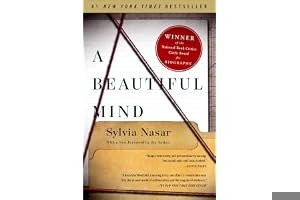
A Beautiful Mind
Sylvia Nasar
4.8
Stories of famously eccentric Princetonians abound—such as that of chemist Hubert Alyea, the model for The Absent-Minded Professor, or Ralph Nader, said to have had his own key to the library as an undergraduate. Or the "Phantom of Fine Hall," a figure many students had seen shuffling around the corridors of the math and physics building wearing purple sneakers and writing numerology treatises on the blackboards. The Phantom was John Nash, one of the most brilliant mathematicians of his generation, who had spiraled into schizophrenia in the 1950s. His most important work had been in game theory, which by the 1980s was underpinning a large part of economics. When the Nobel Prize committee began debating a prize for game theory, Nash's name inevitably came up—only to be dismissed, since the prize clearly could not go to a madman. But in 1994 Nash, in remission from schizophrenia, shared the Nobel Prize in economics for work done some 45 years previously.
Economist and journalist Sylvia Nasar has written a biography of Nash that looks at all sides of his life. She gives an intelligent, understandable exposition of his mathematical ideas and a picture of schizophrenia that is evocative but decidedly unromantic. Her story of the machinations behind Nash's Nobel is fascinating and one of very few such accounts available in print (the CIA could learn a thing or two from the Nobel committees).
…
Recommended by Ariel Rubinstein and Diane Coyle.
Ariel Rubinstein
The story of John Nash is really a human story – I don’t think it sheds much light on game theory. But it gives hope to people dealing with this disease. [source]
Diane Coyle
This is a terrific book for just saying something about what game theory helps to do, without plunging you into all the complicated mathematics of how to do it in practice. [source]
"Mukherjee wrote this book for a lay audience, because he knows that the new genome technologies are at the cusp of affecting us all in profound ways," Gates wrote. Mukherjee is what Gates calls a "quadruple threat." He's a practicing physician, teacher, researcher, and author. [source]
Amit Paranjape
@vikramsathaye @DrSidMukherjee @kiranshaw Great book. [source]
The Quiet Room: A Journey Out of the Torment of Madness
Lori Schiller, Amanda Bennett
4.8
At seventeen Lori Schiller was the perfect child -- the only daughter of an affluent, close-knit family. Six years later she made her first suicide attempt, then wandered the streets of New York City dressed in ragged clothes, tormenting voices crying out in her mind. Lori Schiller had entered the horrifying world of full-blown schizophrenia. She began an ordeal of hospitalizations, halfway houses, relapses, more suicide attempts, and constant, withering despair. But against all odds, she survived. Now in this personal account, she tells how she did it, taking us not only into her own shattered world, but drawing on the words of the doctors who treated her and family members who suffered with her.
In this new edition, Lori Schiller recounts the dramatic years following the original publication -- a period involving addiction, relapse, and ultimately, love and recovery.
Moving, harrowing, and ultimately uplifting, THE QUIET ROOM is a classic testimony to the ravages of mental illness and the power of perseverance and courage.
…
Cover unavailable
5
The Collected Schizophrenias: Essays
Esmé Weijun Wang
4.8
An intimate, moving book written with the immediacy and directness of one who still struggles with the effects of mental and chronic illness, The Collected Schizophrenias cuts right to the core. Schizophrenia is not a single unifying diagnosis, and Esmé Weijun Wang writes not just to her fellow members of the "collected schizophrenias" but to those who wish to understand it as well. Opening with the journey toward her diagnosis of schizoaffective disorder, Wang discusses the medical community's own disagreement about labels and procedures for diagnosing those with mental illness, and then follows an arc that examines the manifestations of schizophrenia in her life. In essays that range from using fashion to present as high-functioning to the depths of a rare form of psychosis, and from the failures of the higher education system and the dangers of institutionalization to the complexity of compounding factors such as PTSD and Lyme disease, Wang's analytical eye, honed as a former lab researcher at Stanford, allows her to balance research with personal narrative. An essay collection of undeniable power, The Collected Schizophrenias dispels misconceptions and provides insight into a condition long misunderstood.


…
Cover unavailable
6
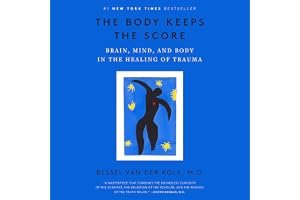
The Body Keeps the Score: Brain, Mind, and Body in the Healing of Trauma
“Packed with science and human stories, the book is an intense read. . . . The struggle and resilience of [van der Kolk’s] patients is very moving.” —New Scientist
A pioneering researcher transforms our understanding of trauma and offers a bold new paradigm for healing
Trauma is a fact of life. Veterans and their families deal with the painful aftermath of combat; one in five Americans has been molested; one in four grew up with alcoholics; one in three couples have engaged in physical violence. Dr. Bessel van der Kolk, one of the world’s foremost experts on trauma, has spent over three decades working with survivors. In The Body Keeps the Score, he uses recent scientific advances to show how trauma literally reshapes both body and brain, compromising sufferers’ capacities for pleasure, engagement, self-control, and trust. He explores innovative treatments—from neurofeedback and meditation to sports, drama, and yoga—that offer new paths to recovery by activating the brain’s natural neuroplasticity. Based on Dr. van der Kolk’s own research and that of other leading specialists, The Body Keeps the Score exposes the tremendous power of our relationships both to hurt and to heal—and offers new hope for reclaiming lives.
…
Recommended by Matthew Green.
Matthew Green
Reading The Body Keeps the Score was a eureka moment for me. [source]
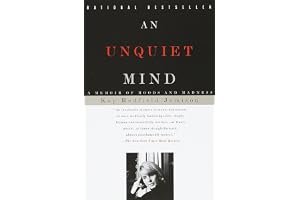
The personal memoir of a manic depressive and an authority on the subject describes the onset of the illness during her teenage years and her determined journey through the realm of available treatments.
Recommended by Jonathan Glover and Tanya Byron.
Jonathan Glover
Kay Redfield Jamison is a psychologist who has co-authored the major psychiatric textbook on manic depression. It authoritatively covers every aspect of the science, from genetics to pharmacology, and also has chapters on the links with creativity and on what the illness feels like. The chapters on the subjective experience are enriched with vivid quotations from patients. In her autobiography, An Unquiet Mind, Kay Jamison came out as not only an expert on the illness but also someone who has it. The power of her book comes from her understanding it both scientifically and from the inside. [source]
Tanya Byron
This is a divine book. A patient of mine who suffers with a bipolar illness, an absolutely inspiring young genius, recommended it to me. So I read it, and then we discussed it in a lot of our sessions together. [source]
Cover unavailable
8
I Know This Much Is True
Wally Lamb
4.6
#1 New York Times Bestseller and Oprah Book Club selection
"Thoughtful . . . heart-wrenching . . . . An exercise in soul-baring storytelling—with the soul belonging to 20th-century America itself. It's hard to read and to stop reading, and impossible to forget." — USA Today
Dominick Birdsey, a forty-year-old housepainter living in Three Rivers, Connecticut, finds his subdued life greatly disturbed when his identical twin brother Thomas, a paranoid schizophrenic, commits a shocking act of self-mutilation. Dominick is forced to care for his brother as well as confront dark secrets and pain he has buried deep within himself—a journey of the soul that takes him beyond his blue-collar New England town to Sicily’s Mount Etna, the birthplace of his grandfather and namesake. Coming to terms with his life and lineage, Dominick struggles to find forgiveness and finally rebuild himself beyond the haunted shadow of his troubled twin.
I Know This Much Is True is a masterfully told story of alienation and connection, power and abuse, devastation and renewal—an unforgettable masterpiece.
…
Cover unavailable
9
Challenger Deep
Neal Shusterman and Brendan Shusterma
4.5
Alternate Cover Edition for ASIN B00M70ESPO
Caden Bosch is on a ship that's headed for the deepest point on Earth: Challenger Deep, the southern part of the Marianas Trench.
Caden Bosch is a brilliant high school student whose friends are starting to notice his odd behaviour.
Caden Bosch is designated the ship's artist in residence to document the journey with images.
Caden Bosch pretends to join the school track team but spends his days walking for miles, absorbed by the thoughts in his head.
Caden Bosch is split between his allegiance to the captain and the allure of mutiny.
Caden Bosch is torn.
…
Cover unavailable
10
Hidden Valley Road: Inside the Mind of an American Family
Robert Kolker
4.5
The heartrending story of a midcentury American family with twelve children, six of them diagnosed with schizophrenia, that became science's great hope in the quest to understand the disease.
Don and Mimi Galvin seemed to be living the American dream. After World War II, Don's work with the Air Force brought them to Colorado, where their twelve children perfectly spanned the baby boom: the oldest born in 1945, the youngest in 1965. In those years, there was an established script for a family like the Galvins--aspiration, hard work, upward mobility, domestic harmony--and they worked hard to play their parts. But behind the scenes was a different story: psychological breakdown, sudden shocking violence, hidden abuse. By the mid-1970s, six of the ten Galvin boys, one after another, were diagnosed as schizophrenic. How could all this happen to one family? What took place inside the house on Hidden Valley Road was so extraordinary that the Galvins became one of the first families to be studied by the National Institute of Mental Health. Their story offers a shadow history of the science of schizophrenia, from the era of institutionalization, lobotomy, and the schizophrenogenic mother to the search for genetic markers for the disease, always amid profound disagreements about the nature of the illness itself. And unbeknownst to the Galvins, samples of their DNA informed decades of genetic research that continues today, offering paths to treatment, prediction, and even eradication of the disease for future generations. With clarity and compassion, bestselling and award-winning author Robert Kolker uncovers one family's unforgettable legacy of suffering, love, and hope.
…
Cover unavailable
11
Made You Up
Francesca Zappia
4.4
Reality, it turns out, is often not what you perceive it to be—sometimes, there really is someone out to get you. Made You Up tells the story of Alex, a high school senior unable to tell the difference between real life and delusion. This is a compelling and provoking literary debut that will appeal to fans of Wes Anderson, Silver Linings Playbook and Liar.
Alex fights a daily battle to figure out the difference between reality and delusion. Armed with a take-no-prisoners attitude, her camera, a Magic 8-Ball, and her only ally (her little sister), Alex wages a war against her schizophrenia, determined to stay sane long enough to get into college. She’s pretty optimistic about her chances until classes begin, and she runs into Miles. Didn't she imagine him? Before she knows it, Alex is making friends, going to parties, falling in love, and experiencing all the usual rites of passage for teenagers. But Alex is used to being crazy. She’s not prepared for normal.
Funny, provoking, and ultimately moving, this debut novel featuring the quintessential unreliable narrator will have readers turning the pages and trying to figure out what is real and what is made up.
…
Cover unavailable
12
Divided Minds: Twin Sisters and Their Journey Through Schizophrenia
Pamela Spiro Wagner and Carolyn Spiro
4.4
Growing up in the fifties, Carolyn Spiro was always in the shadow of her more intellectually dominant and social outgoing twin, Pamela. But as the twins approached adolescence, Pamela began to succumb to schizophrenia, hearing disembodied voices and eventually suffering many breakdowns and hospitalizations.
Divided Minds is a dual memoir of identical twins, one of whom faces a life sentence of schizophrenia, and the other who becomes a psychiatrist, after entering the spotlight that had for so long been focused on her sister. Told in the alternating voices of the sisters, Divided Minds is a heartbreaking account of the far reaches of madness, as well as the depths of ambivalence and love between twins. It is a true and unusually frank story of identical twins with very different identities and wildly different experiences of the world around them.
…
Cover unavailable
13
I Never Promised You a Rose Garden
Joanne Greenberg
4.4
I Never Promised You a Rose Garden is the story of a sixteen-year-old who retreats from reality into the bondage of a lushly imagined but threatening kingdom, and her slow and painful journey back to sanity.
Chronicles the three-year battle of a mentally ill, but perceptive, teenage girl against a world of her own creation, emphasizing her relationship with the doctor who gave her the ammunition of self-understanding with which to help herself.
"I wrote this novel, which is a fictionalized autobiography, to give a picture of what being schizophrenic feels like and what can be accomplished with a trusting relationship between a gifted therapist and a willing patient. It is not a case history or study. I like to think it is a hymn to reality." —Joanne Greenberg
…
Cover unavailable
14
I Am Not Sick I Don't Need Help!: How to Help Someone with Mental Illness Accept Treatment
Xavier Amador
4.4
Cover unavailable
15
Me, Myself, and Them: A Firsthand Account of One Young Person's Experience with Schizophrenia
Kurt Snyder, Raquel E. Gur, et al.
4.4
During his second semester at college, Kurt Snyder became convinced that he was about to discover a fabulously important mathematical principle, spending hours lost in daydreams about numbers and symbols. In time, his thoughts took a darker turn, and he became preoccupied with the idea that cars were following him, or that strangers wanted to harm him. Kurt's mind had been hijacked by schizophrenia, a severe mental disorder that typically strikes during the late teen or young adult years. In Me, Myself, and Them, Kurt, now an adult, looks back from the vantage point of recovery and eloquently describes the debilitating changes in thoughts and perceptions that took hold of his life during his teens and twenties. As a memoir, this book is remarkable for its unvarnished look at the slow and difficult process of coming back from severe mental illness. Yet Kurt's memoir is only half the story. With the help of psychiatrist Raquel E. Gur, M.D., Ph.D., and veteran science writer Linda Wasmer Andrews, Kurt paints the big picture for others affected by adolescent schizophrenia. Drawing on the latest scientific and medical evidence, he explains how to recognize warning signs, where to find help, and what treatments have proved effective. Kurt also offers practical advice on topics of particular interest to young people, such as suggestions on managing the illness at home, school, and work, and in relationships with family and friends. Part of the Adolescent Mental Health Initiative series of books written specifically for teens and young adults, My, Myself, and Them offers hope to young people who are struggling with schizophrenia, helping them to understand and manage the challenges of this illness and go on to lead healthy lives.
…
Cover unavailable
16
The Complete Family Guide to Schizophrenia: Helping Your Loved One Get the Most Out of Life
Kim T. Mueser and Susan Gingerich
4.4
Will the person you love ever get better? Chances are you've grappled with the question. With care and support from their families, people with schizophrenia can and do make vast improvements. Noted therapists Kim Mueser and Susan Gingerich deepen your understanding of the illness and cover a wide range of effective treatments. Based on decades of research and experience, they offer pragmatic suggestions for dealing with depression, psychosis, and other symptoms. They show you how to prioritize needs, resolve everyday problems, and encourage your loved one to set life goals. Plus, individual sections highlight special issues for parents, children, siblings, and partners. Whether you’re facing schizophrenia for the first time or you’ve dealt with its impact for years, you’ll discover innovative ways to handle challenges that arise over the course of treatment, from reducing the chances of relapse to making friends and finding work. Recovery isn't an endpoint--it's a lifelong journey. With love, hope, and realistic optimism, striving for it can lead to a richer, more rewarding life for your entire family.
Winner, NAMI/Ken Book Award
…
Cover unavailable
17
Surviving Schizophrenia, 6th Edition: A Family Manual
E. Fuller Torrey
4.4
Since its first publication nearly twenty years ago, Surviving Schizophrenia has become the standard reference book on the disease, helping thousands of patients, families, and mental health professionals to better deal with the condition. In clear and compassionate language, Dr. E. Fuller Torrey explains the nature causes, symptoms, and treatment of this often misunderstood illness. The classic guide also addresses the many issues of living with the disease, for both patient and family, and includes the latest research findings on the causes of and treatments for schizophrenia. Also here are lucid answers to the questions most commonly asked by families, consumers, and providers. This fully revised fourth edition of Surviving Schizophrenia is a must-have for the multitude of people affected — both directly and indirectly — by this serious, yet treatable, disorder.
…
Cover unavailable
18
Words on Bathroom Walls
Julia Walton
4.3
Adam has just been diagnosed with schizophrenia. He sees and hears people who aren’t there: Rebecca, a beautiful girl who understands him; the Mob Boss, who harasses him; and Jason, the naked guy who’s unfailingly polite. It should be easy to separate the real from the not real, but Adam can't.
Still, there’s hope. As Adam starts fresh at a new school, he begins a drug trial that helps him ignore his visions. Suddenly everything seems possible, even love. When he meets Maya, a fiercely intelligent girl, he desperately wants to be the great guy that she thinks he is. But then the miracle drug begins to fail, and Adam will do anything to keep Maya from discovering his secret.
…
Cover unavailable
19
The Day the Voices Stopped
Ken Steele, Claire Berman
4.3
For thirty-two years Ken Steele lived with the devastating symptoms of schizophrenia, tortured by inner voices commanding him to kill himself, ravaged by the delusions of paranoia, barely surviving on the ragged edges of society. In this inspiring story, Steele tells the story of his hard-won recovery from schizophrenia and how activism and advocacy helped him regain his sanity and go on to give hope and support to so many others like him.
…
Cover unavailable
20
January First: A Child's Descent into Madness and Her Father's Struggle to Save Her
Michael Schofield
4.3
A brilliant and harrowingly honest memoir, January First is the extraordinary story of a father's fight to save his child from an extremely severe case of mental illness in the face of overwhelming adversity.
At six years old, Michael Schofield's daughter, January, was diagnosed with one of the most severe cases of child-onset schizophrenia that doctors had ever seen. In January's case, she is hallucinating 95 percent of the time that she is awake. Potent psychiatric drugs that would level most adults barely faze her. January, "Jani" to her family, has literally hundreds of imaginary friends. They go by names like 400-the-Cat, 100 Degrees, and 24 Hours and live on an island called "Calalini," which she describes as existing "on the border of my world and your world." Some of these friends are good, and some of them, such as 400, are very bad. They tell her to jump off buildings, attack her brother, and scream at strangers.
In the middle of these never-ending delusions, hallucinations, and paroxysms of rage are Jani's parents, who have gone to the ends of the earth to keep both of their children alive and unharmed. They live in separate one-bedroom apartments in order to keep her little brother, Bohdi, safe from his big sister—and wage a daily war against a social system that has all but completely failed them. January First is the story of the daily struggles and challenges they face as they do everything they can to help their daughter while trying to keep their family together. It is the inspiring tale of their resolute determination and faith.
…
Cover unavailable
21
The Soloist: A Lost Dream, an Unlikely Friendship, and the Redemptive Power of Music
Steve Lopez
4.3
"When Steve Lopez sees Nathaniel Ayers playing his heart out on a two-string violin on Los Angeles' Skid Row, he finds it impossible to walk away. At first, he is drawn by the opportunity to crank out another column for the Los Angeles Times, just one more item on an ever-growing to-do list: "Violin Man."
But what Lopez begins to unearth about the mysterious street musician leaves an indelible impression." "More than thirty years earlier, Ayers had been a promising classical bass student at Juilliard - ambitious, charming, and one of the few African-Americans - until he gradually lost his ability to function, overcome by a mental breakdown. When Lopez finds him, Ayers is alone, suspicious of everyone, and deeply troubled, but glimmers of that brilliance are still there."
From an impromptu concert of Beethoven's Eighth in the Second Street tunnel to a performance of Bach's Unaccompanied Cello Suites on Skid Row, the two men learn to communicate through Ayers's music.
The Soloist is a story about unwavering commitment, artistic devotion, and the transformative magic of music.
…
Cover unavailable
22
Is There No Place on Earth for Me?
Susan Sheehan
4.3
"Sylvia Frumkin," a highly intelligent young girl, became a schizophrenic in her late teens and spent most of the next seventeen years in and out of mental institutions. Susan Sheehan, a talented reporter, followed "Sylvia" for almost a year talking with and observing her, listening to her monologues, sitting in on consultations with doctors - even for a period sleeping in the bed next to her in a psychiatric hospital.
…
Cover unavailable
23
Far from the Tree: Parents, Children, and the Search for Identity
Andrew Solomon and Simon & Schuster Audi
4.3
Andrew Solomon’s startling proposition in Far from the Tree is that being exceptional is at the core of the human condition—that difference is what unites us. He writes about families coping with deafness, dwarfism, Down's syndrome, autism, schizophrenia, or multiple severe disabilities; with children who are prodigies, who are conceived in rape, who become criminals, who are transgender. While each of these characteristics is potentially isolating, the experience of difference within families is universal, and Solomon documents triumphs of love over prejudice in every chapter.
All parenting turns on a crucial question: to what extent should parents accept their children for who they are, and to what extent they should help them become their best selves. Drawing on ten years of research and interviews with more than three hundred families, Solomon mines the eloquence of ordinary people facing extreme challenges.
Elegantly reported by a spectacularly original and compassionate thinker, Far from the Tree explores how people who love each other must struggle to accept each other—a theme in every family’s life.
…
Recommended by Chelsea Frank.
Chelsea Frank
I’m reading “Far From The Tree: Parents, Children and the Search for Identity” By: Andrew Solomon and have nearly finished it. It is quite long at nearly 40 hours, and a little depressing at times, but very insightful. When children are born that do not share the same identities with their parents and are considered “different” by being deaf, autistic, transgender, or genius, parents often struggle to relate, connect, and support their child appropriately. On the other hand, perhaps diversity is what unites us. Hundreds of stories of parent-child relationships are presented over his 10 years extensively researching for this book and over 200 pages of citations support his work. [source]
Cover unavailable
24
The Divided Self: An Existential Study in Sanity and Madness
R D Laing
4.3
Dr. Laing's first purpose is to make madness and the process of going mad comprehensible. In this, with case studies of schizophrenic patients, he succeeds brilliantly, but he does more: through a vision of sanity and madness as 'degrees of conjunction and disjunction between two persons where the one is sane by common consent' he offers a rich existential analysis of personal alienation.
The outsider, estranged from himself and society, cannot experience either himself or others as 'real'. He invents a false self and with it he confronts both the outside world and his own despair. The disintegration of his real self keeps pace with the growing unreality of his false self until, in the extremes of schizophrenic breakdown, the whole personality disintegrates.
…
Recommended by Simon Critchley.
Simon Critchley
The question that he’s asking in the book is about how we categorise the mad and the sane. [source]
Cover unavailable
25
The Shock of the Fall
Nathan Filer
4.3
What begins as the story of a lost boy turns into a story of a brave man yearning to understand what happened that night, in the years since, and to his very person.
While on vacation with their parents, Matthew Homes and his older brother snuck out in the middle of the night. Only Matthew came home safely. Ten years later, Matthew tells us, he has found a way to bring his brother back...
What begins as the story of a lost boy turns into a story of a brave man yearning to understand what happened that night, in the years since, and to his very person. Unafraid to look at the shadows of our hearts, Nathan Filer's rare and brilliant debut shows us the strength that is rooted in resilience and love.
Editor's Note Feb 10, 2014: St Martin's Press have just announced that Where The Moon Isn't will be republished under the UK title, The Shock and The Fall this week in digital format and later this fall in paperback. They said that the title change was necessary "because otherwise there's a lot of confusion" - The Shock and The Fall recently won the Costa Book of the Year award, which is UK based but has international renown.
…
Cover unavailable
26
Fight Club
Chuck Palahniuk
4.2
"THE FIRST RULE ABOUT FIGHT CLUB IS YOU DON'T TALK ABOUT CLUB."
Every weekend, in the basements and parking lots of bars across the country, young men with good white-collar jobs and absent fathers take off their shoes and shirts and fight each other barehanded for as long as they have to. Then they go back to those jobs with blackened eyes and loosened teeth and the sense that they can handle anything. Fight Club is the invention of Tyler Durden, projectionist, waiter, and dark, anarchic genius, and it's only the beginning of his plans for revenge on a world where cancer support groups have the corner on human warmth. As the narrator of Fight Club puts it: "If people thought you were dying, they gave you their full attention."
"THE SECOND RULE ABOUT FIGHT CLUB IS YOU DON'T TALK ABOUT CLUB."
Where does Tyler Durden come from? Why do his violent schemes so capture the troubled, insomniac narrator? What events bring them to the roof of the world's tallest building, wired to explode in ten minutes? The answers in Fight Club reveal a world poised on the brink of mayhem—and introduce a blazingly original literary scene.
"THE THIRD RULE ABOUT FIGHT CLUB IS TWO MEN PER FIGHT."
What will the end of the millennium feel like? Readers of Chuck Palahniuk's brilliantly apocalyptic and unnerving first novel are going to find out.
I’m amazed how many young people haven’t read this book. Truly life-changing. This is the classic of my generation; it is the book that defines our age and ultimately, how to find meaning in it. It’s a cautionary tale too—about being too caught up in revolutionary ideas. [source]
Van Badham
SUPER EXCITED to receive my copy of “Solved! How Other Countries Have Cracked the World’s Biggest Problems and We Can, Too” by Andrew Wear. SO GREAT to read a political book that’s about both pragmatic action *and* hope. Squee! #auspol https://t.co/jIYgr36kZO [source]
Cover unavailable
27
The Memory Palace: A Memoir
Mira Bartok
4.2
In the tradition of The Glass Castle, two sisters confront schizophrenia in this poignant literary memoir about family and mental illness. Through stunning prose and original art, The Memory Palace captures the love between mother and daughter, the complex meaning of truth, and family’s capacity for forgiveness.
“People have abandoned their loved ones for much less than you’ve been through,” Mira Bartók is told at her mother’s memorial service. It is a poignant observation about the relationship between Mira, her sister, and their mentally ill mother. Before she was struck with schizophrenia at the age of nineteen, beautiful piano protégé Norma Herr had been the most vibrant personality in the room. She loved her daughters and did her best to raise them well, but as her mental state deteriorated, Norma spoke less about Chopin and more about Nazis and her fear that her daughters would be kidnapped, murdered, or raped.
When the girls left for college, the harassment escalated—Norma called them obsessively, appeared at their apartments or jobs, threatened to kill herself if they did not return home. After a traumatic encounter, Mira and her sister were left with no choice but to change their names and sever all contact with Norma in order to stay safe. But while Mira pursued her career as an artist—exploring the ancient romance of Florence, the eerie mysticism of northern Norway, and the raw desert of Israel—the haunting memories of her mother were never far away.
Then one day, a debilitating car accident changes Mira’s life forever. Struggling to recover from a traumatic brain injury, she was confronted with a need to recontextualize her life—she had to relearn how to paint, read, and interact with the outside world. In her search for a way back to her lost self, Mira reached out to the homeless shelter where she believed her mother was living and discovered that Norma was dying.
Mira and her sister traveled to Cleveland, where they shared an extraordinary reconciliation with their mother that none of them had thought possible. At the hospital, Mira discovered a set of keys that opened a storage unit Norma had been keeping for seventeen years. Filled with family photos, childhood toys, and ephemera from Norma’s life, the storage unit brought back a flood of previous memories that Mira had thought were lost to her forever.
…
Cover unavailable
28
Inside Out
Terry Trueman
4.2
In a busy coffee shop, a robbery goes wrong. Two gunmen hold seven hostages, including teenager Zach Wahhsted. What nobody realizes at first is that Zach is anything but ordinary and his troubled mind is more dangerous than any weapon. Terry Trueman has created a compelling character with the same shocking power and heartbreaking compassion as his Printz Honor Award debut novel, Stuck in Neutral.
Ages 12+
…
Cover unavailable
29
Anti-Oedipus: Capitalism and Schizophrenia
Gilles Deleuze, Felix Guattari
4.2
A major work in the development of critical theory in the late 20th century, ANTI-OEDIPUS is an essential text for feminists, literary theorists, social scientists, philosophers, and other interested in the problems of contemporary Western culture. "An important text in the rethinking of sexuality and sexual politics spurred by the feminist and gay liberation movements".--Margaret Cerullo, Hampshire College.
…
Cover unavailable
30
Mad in America: Bad Science, Bad Medicine, and the Enduring Mistreatment of the Mentally Ill
Robert Whitaker
4.2
In Mad in America, medical journalist Robert Whitaker reveals an astounding truth: Schizophrenics in the United States currently fare worse than patients in the world's poorest countries, and quite possibly worse than asylum patients did in the early nineteenth century. With a muckraker's passion, Whitaker argues that modern treatments for the severely mentally ill are just old medicine in new bottles, and that we as a society are deeply deluded about their efficacy. Tracing over three centuries of "cures" for madness, Whitaker shows how medical therapies have been used to silence patients and dull their minds. He tells of the eighteenth- and nineteenth-century practices of "spinning" the insane, extracting their teeth, ovaries, and intestines, and submerging patients in freezing water. The "cures" in the 1920s and 1930s were no less barbaric as eugenic attitudes toward the mentally ill led to brain-damaging lobotomies and electroshock therapy. Perhaps Whitaker's most damning revelation, however, is his report of how drug companies in the 1980s and 1990s skewed their studies in an effort to prove the effectiveness of their products. Based on exhaustive research culled from old patient medical records, historical accounts, numerous interviews, and hundreds of government documents, Mad in America raises important questions about our obligations to the mad, what it means to be "insane," and what we value most about the human mind.
…
Cover unavailable
31
Tell Me I'm Here: One Family's Experience of Schizophrenia
Anne Deveson, E. Fuller Torrey
4.2
Writer, broadcaster, filmmaker, and a founder of the National Schizophrenia Australia Organization, Anne Deveson writes her own deeply personal story of her teenage son's experience of schizophrenia and a mother's realization of her child's insanity.
The book won Australia's 1991 Human Rights Nonfiction Award.
Cover unavailable
32
The Protest Psychosis: How Schizophrenia Became a Black Disease
Jonathan Metzl
4.2
A powerful account of how cultural anxieties about race shaped American notions of mental illness
The civil rights era is largely remembered as a time of sit-ins, boycotts, and riots. But a very different civil rights history evolved at the Ionia State Hospital for the Criminally Insane in Ionia, Michigan. In The Protest Psychosis, psychiatrist and cultural critic Jonathan Metzl tells the shocking story of how schizophrenia became the diagnostic term overwhelmingly applied to African American protesters at Ionia—for political reasons as well as clinical ones. Expertly sifting through a vast array of cultural documents, Metzl shows how associations between schizophrenia and blackness emerged during the tumultuous decades of the 1960s and 1970s—and he provides a cautionary tale of how anxieties about race continue to impact doctor-patient interactions in our seemingly postracial America.
From the Trade Paperback edition.
…
Cover unavailable
33
Freaks Like Us
Susan Vaught
4.2
When Jason Milwaukee's best friend Sunshine vanishes, Jason knows that something is terribly wrong, but solving her disappearance will require pushing through all the voices in his head and then getting the world to listen to him. His schizophrenia is stopping him from remembering the events leading up to her disappearance, and often he discounts his own memories, and his own impressions. But his deep knowledge that he would never hurt his friend, plus the faith of his parents and a few others in the town bring him to the point of solving the mystery. In the end, it's Sunshine's own love for Jason (Freak) that persuades him of his own strength and goodness.
By turns brilliantly witty and searingly honest, Susan Vaught's newest novel is a laugh-out-loud, tear-jerking, coming-of-age story.
…
Cover unavailable
34
The Heartland: Finding and Losing Schizophrenia
Nathan Filer
4.2
Schizophrenia: whether it's the associations it conjures or the people it brings to mind, it is a word we all have a view on. How we perceive it—and how we treat people living with it—is at the core of how we understand mental health. But what do we really know? How much time do we spend listening? Do we truly comprehend this complex and often contradictory diagnosis?
In The Heartland , Nathan Filer, mental-health nurse and award-winning writer, takes us on a journey into the psychiatric wards he once worked on. He also invites us to spend time with world-leading experts, and with some extraordinary people who share their stories about living with this strange and misunderstood condition. The Heartland debunks myths, challenges assumptions, and offers fresh insight into what it means to be mad, and what it means to be human.
…
Recommended by Matt Haig, Matt Haig, Suzi Gage, and 1 others.
Ooh look - @nathanfiler's brilliant book in Liverpool airport's WH Smiths! https://t.co/XrdVy0lGtD [source]
Cover unavailable
35
Sooner Than Tomorrow: A Mother's Diary about Mental Illness, Family, and Everyday Life
Dede Ranahan
4.2
Welcome to my world.
My story is written in diary format. I wrote it from June 16, 2013, to June 15, 2014. What I didn't know, as I was writing, was that I was capturing the last year of my son's life. Pat died, unexpectedly, on July 23, 2014, in a hospital psych ward. Suddenly, my diary morphed into a more poignant record than I'd anticipated, and after he died, I discovered Pat had been making regular posts on Facebook. I decided to add his comments to my own.
I like stories where I can extrapolate from the singular to the universal--that is where I can identify with a common denominator in another person's experience. One early reader of my diary said, "Your story is so relatable." That's what I hope other readers will say.
You may relate to my story if:
You have a child (chilldren) you love more than your own life.
You have a child who suffers from serious mental illness.
You've lost a child--no matter what age.
You're a member of the sandwich generation.
You treasure conversations with children--especially when they're your grandchildren.
Your cat or your dog is in charge of your household.
Your bones are beginning to creak.
You wake up each morning with a huge hole in your heart but you know, somehow, some way, you have to get up and put one foot in front of the other.
You enjoy reading the other side of history--about ordinary people and their daily lives.
You have a sense of humor.
You've been thinking of leaving something for your descendants--a letter, story, diary, song, painting, or poem--but you haven't gotten around to it. Maybe my diary will spur you on.
More notes about the format:
I've added a Before section (Scenes from the Trenches). Going in, I want the reader to know "Yes, Houston, we really do have a problem." I've divided my diary into quarters--Summer, Fall, Winter, Spring. I introduce each with a poem--three of them are Pat's. I end with an After section I didn't see coming.
As I was writing, I had no idea, from day to day, what stories were unfolding. I learn, right along with the reader, what will happen next. We're all on a journey. Thank you for going on this journey with me. Dede
Dede posted her story in two-week increments at www.soonerthantomorrow.com. The following are readers' responses.
Beautiful words with an undertone that has caught me . . . carrying me up and down. Such a good writer that I am grateful to be with you. I can borrow some courage here.
--Janet
So happy for the readers who will discover you.
--Liz
Dede, every one of your blog posts has a portion that I love so much that I take a screenshot and read it over and over.
--Stacey
Dede, I anxiously await each posting from your blog/book. You write with such skill, and not easy when it's so personal, but your passion sprinkled with humor are the reasons that this is successful.
--Joan L.
I've done this, the primal scream and the mother animal instinct. There can't be anything more painful, not even death. My son was a normal little boy and a normal young man until schizophrenia came calling. Now I feel so shattered. I love your diary.
--J.H.D.
I only this was a contrived drama. It's so visceral. You're an artist.
--Heidi F.
…
Cover unavailable
36
House of Leaves
Mark Z. Danielewski
4.2
Years ago, when House of Leaves was first being passed around, it was nothing more than a badly bundled heap of paper, parts of which would occasionally surface on the Internet. No one could have anticipated the small but devoted following this terrifying story would soon command. Starting with an odd assortment of marginalized youth—musicians, tattoo artists, programmers, strippers, environmentalists, and adrenaline junkies—the book eventually made its way into the hands of older generations, who not only found themselves in those strangely arranged pages but also discovered a way back into the lives of their estranged children.
Now, for the first time, this astonishing novel is made available in book form, complete with the original colored words, vertical footnotes, and newly added second and third appendices.
The story remains unchanged, focusing on a young family that moves into a small home on Ash Tree Lane where they discover something is terribly wrong: their house is bigger on the inside than it is on the outside.
Of course, neither Pulitzer Prize-winning photojournalist Will Navidson nor his companion Karen Green was prepared to face the consequences of that impossibility, until the day their two little children wandered off and their voices eerily began to return another story—of creature darkness, of an ever-growing abyss behind a closet door, and of that unholy growl which soon enough would tear through their walls and consume all their dreams.
…
Recommended by Amelia Boone.
Amelia Boone
This is a book that you have to hold, because there are parts of it where you need to turn it upside down to read it. There are certain pages where, you are reading it, and it turns in a circle... This is a book that's an entire sensory experience. [source]
Cover unavailable
37
Ben Behind His Voices: One Family's Journey from the Chaos of Schizophrenia to Hope
Randye Kaye
4.2
When readers first meet Ben, he is a sweet, intelligent, seemingly well-adjusted youngster. Fast forward to his teenage years, though, and Ben's life has spun out of control. Ben is swept along by an illness over which he has no control--one that results in runaway episodes, periods of homelessness, seven psychotic breaks, seven hospitalizations, and finally a diagnosis and treatment plan that begins to work. Schizophrenia strikes an estimated one in a hundred people worldwide by some estimates, and yet understanding of the illness is lacking. Through Ben's experiences, and those of his mother and sister, who supported Ben through every stage of his illness and treatment, readers gain a better understanding of schizophrenia, as well as mental illness in general, and the way it affects individuals and families. Here, Kaye encourages families to stay together and find strength while accepting the reality of a loved one's illness; she illustrates, through her experiences as Ben's mother, the delicate balance between letting go and staying involved. She honors the courage of anyone who suffers with mental illness and is trying to improve his life and participate in his own recovery. Ben Behind His Voices also reminds professionals in the psychiatric field that every patient who comes through their doors has a life, one that he has lost through no fault of his own. It shows what goes right when professionals treat the family as part of the recovery process and help them find support, education, and acceptance. And it reminds readers that those who suffer from mental illness, and their families, deserve respect, concern, and dignity.
…
Cover unavailable
38
Trust Your Eyes
Linwood Barclay
4.2
Thomas Kilbride is a map-obsessed schizophrenic so affected that he rarely leaves the self-imposed bastion of his bedroom. But with a computer program called Whirl360.com, he travels the world while never stepping out the door. That is until he sees something in a street view of downtown New York City. Thomas's keen eyes have detected an image in a window...an image that looks like a woman being murdered.
Thomas's brother, Ray, takes care of him, cooking for him, dealing with the outside world on his behalf, and listening to his intricate and increasingly paranoid theories. When Thomas tells Ray what he has seen, Ray humors him with a half-hearted investigation. But Ray soon realizes he and his brother have stumbled onto a deadly conspiracy.
And now they are in the crosshairs...
…
Cover unavailable
39
The Eden Express: A Memoir of Insanity
Mark Vonnegut, Kurt Vonnegut
4.2
The Eden Express describes from the inside Mark Vonnegut's experience in the late '60s and early '70s--a recent college grad; in love; living communally on a farm, with a famous and doting father, cherished dog, and prized jalopy--and then the nervous breakdowns in all their slow-motion intimacy, the taste of mortality and opportunity for humor they provided, and the grim despair they afforded as well. That he emerged to write this funny and true book and then moved on to find the meaningful life that for a while had seemed beyond reach is what ultimately happens in The Eden Express. But the real story here is that throughout his harrowing experience his sense of humor let him see the humanity of what he was going through, and his gift of language let him describe it in such a moving way that others could begin to imagine both its utter ordinariness as well as the madness we all share.
…
Cover unavailable
40
Anatomy of an Epidemic: Magic Bullets, Psychiatric Drugs, and the Astonishing Rise of Mental Illness in America
Robert Whitaker
4.2
Now with bonus material, including a new foreword and afterword with updated research
In this astonishing and startling book, award-winning science and history writer Robert Whitaker investigates a medical mystery: Why has the number of disabled mentally ill in the United States tripled over the past two decades? Every day, 1,100 adults and children are added to the government disability rolls because they have become newly disabled by mental illness, with this epidemic spreading most rapidly among our nation’s children. What is going on? Anatomy of an Epidemic challenges readers to think through that question themselves. First, Whitaker investigates what is known today about the biological causes of mental disorders. Do psychiatric medications fix “chemical imbalances” in the brain, or do they, in fact, create them? Researchers spent decades studying that question, and by the late 1980s, they had their answer. Readers will be startled—and dismayed—to discover what was reported in the scientific journals.
Then comes the scientific query at the heart of this book: During the past fifty years, when investigators looked at how psychiatric drugs affected long-term outcomes, what did they find? Did they discover that the drugs help people stay well? Function better? Enjoy good physical health? Or did they find that these medications, for some paradoxical reason, increase the likelihood that people will become chronically ill, less able to function well, more prone to physical illness?
This is the first book to look at the merits of psychiatric medications through the prism of long-term results. Are long-term recovery rates higher for medicated or unmedicated schizophrenia patients? Does taking an antidepressant decrease or increase the risk that a depressed person will become disabled by the disorder? Do bipolar patients fare better today than they did forty years ago, or much worse? When the National Institute of Mental Health (NIMH) studied the long-term outcomes of children with ADHD, did they determine that stimulants provide any benefit?
By the end of this review of the outcomes literature, readers are certain to have a haunting question of their own: Why have the results from these long-term studies—all of which point to the same startling conclusion—been kept from the public?
In this compelling history, Whitaker also tells the personal stories of children and adults swept up in this epidemic. Finally, he reports on innovative programs of psychiatric care in Europe and the United States that are producing good long-term outcomes. Our nation has been hit by an epidemic of disabling mental illness, and yet, as Anatomy of an Epidemic reveals, the medical blueprints for curbing that epidemic have already been drawn up.
…
Cover unavailable
41
Finding Alice
Melody Carlson
4.2
Sliding into the Rabbit Hole… Would She Ever Return?
On the surface, Alice Laxton seems no different from any other college girl: bright, inquisitive, excited about the life ahead of her. But for years, a genetic time bomb has been ticking away. Because of Alice’s near-genius intelligence, teachers and counselors have always made excuses for her “little idiosyncrasies.” But during a stress-filled senior year at college, a new world of voices, visions, and unexplainable “knowledge” causes Alice to begin to lose her grip on reality.
As Alice’s schizophrenia progresses, she experiences a disturbing religious “awakening,” believing that God and angels and demons are speaking to her. When others attempt to intervene, Alice is subjected to a wide range of “treatments” even more frightening and painful than her illness.
Powerfully raw and brutally honest, Finding Alice is a story of individual suffering and hope, a family’s shared ordeal, and a search for true mental and spiritual healing.
…
Cover unavailable
42
The Professor and the Madman: A Tale of Murder, Insanity and the Making of the Oxford English Dictionary
Simon Winchester
4.2
The Professor and the Madman, masterfully researched and eloquently written, is an extraordinary tale of madness, genius, and the incredible obsessions of two remarkable men that led to the making of the Oxford English Dictionary -- and literary history. The compilation of the OED, begun in 1857, was one of the most ambitious projects ever undertaken. As definitions were collected, the overseeing committee, led by Professor James Murray, discovered that one man, Dr. W. C. Minor, had submitted more than ten thousand. When the committee insisted on honoring him, a shocking truth came to light: Dr. Minor, an American Civil War veteran, was also an inmate at an asylum for the criminally insane.
…
Recommended by Peter Gilliver.
Peter Gilliver
W.C. Minor was a member of the public, but he just happened to be a murderer who was banged up in Broadmoor. [source]
Cover unavailable
43
Angelhead: My Brother's Descent into Madness
Greg Bottoms
4.2
A taut, powerful memoir of madness, Angelhead documents the violent, drug-addled descent of the author's brother, Michael, into schizophrenia. Beginning with Michael's first psychotic break—seeing God in his suburban bedroom window while high on LSD—Greg Bottoms recounts, in gripping, dramatic prose, the bizarre disappearances, suicide attempts, and the shocking crime that land Michael in the psychiatric wing of a maximum security prison. A work of nonfiction with the form and imagery of a novel, Angelhead enables the reader to witness not only the fragmenting of a mind, but of a family as well.
"A tour-de-force memoir. . . . Bottoms writes like a poet, he writes like he is on fire."—Esquire, Book of the Year, 2000
"Angelhead is a brilliant, albeit inconceivably sad book. The fact that Bottoms survived the ordeal is incredible. But the fact that he could write about it with such pathos and insight is nothing less than extraordinary."—Atlanta Journal-Constitution
"Greg Bottoms has provided a biographical novel about his brother that may be as close as most of us will ever get to knowing what it is to be truly mad. Angelhead is a story nearly as terrifying as the disease it describes."—Psychology Today
…
Cover unavailable
44
No One Cares About Crazy People: The Chaos and Heartbreak of Mental Health in America
Ron Powers
4.2
New York Times-bestselling author Ron Powers offers a searching, richly researched narrative of the social history of mental illness in America paired with the deeply personal story of his two sons' battles with schizophrenia.
From the centuries of torture of "lunatiks" at Bedlam Asylum to the infamous eugenics era to the follies of the anti-psychiatry movement to the current landscape in which too many families struggle alone to manage afflicted love ones, Powers limns our fears and myths about mental illness and the fractured public policies that have resulted.
Braided with that history is the moving story of Powers's beloved son Kevin--spirited, endearing, and gifted--who triumphed even while suffering from schizophrenia until finally he did not, and the story of his courageous surviving son Dean, who is also schizophrenic.
A blend of history, biography, memoir, and current affairs ending with a consideration of where we might go from here, this is a thought-provoking look at a dreaded illness that has long been misunderstood.
Ron Powers writes eloquently, passionately, and persuasively about the failure to properly treat mental illness in America. What makes this book really powerful is Powers's personal story-the harrowing, wrenching tale of his two sons wrestling with the unholy demon of schizophrenia. [source]
Cover unavailable
45
One Flew Over the Cuckoo's Nest
Ken Kesey, John C. Reilly, et al
4.2
Tyrannical Nurse Ratched rules her ward in an Oregon State mental hospital with a strict and unbending routine, unopposed by her patients, who remain cowed by mind-numbing medication and the threat of electric shock therapy. But her regime is disrupted by the arrival of McMurphy – the swaggering, fun-loving trickster with a devilish grin who resolves to oppose her rules on behalf of his fellow inmates. His struggle is seen through the eyes of Chief Bromden, a seemingly mute half-Indian patient who understands McMurphy's heroic attempt to do battle with the powers that keep them imprisoned. Ken Kesey's extraordinary first novel is an exuberant, ribald and devastatingly honest portrayal of the boundaries between sanity and madness.
…
Cover unavailable
46
Sybil: The Classic True Story of a Woman Possessed by Sixteen Personalities
Flora Rheta Schreiber
4.2
Here is the unbelievable yet true story of Sybil Dorsett, a survivor of terrible childhood abuse who as an adult was a victim of sudden and mysterious blackouts. What happened during those blackouts has made Sybil's experience one of the most famous psychological cases in the world.
Cover unavailable
47
Schizophrenia For Dummies
Jerome Levine and Irene S. Levine
4.1
Practical tools for leading a happy, productive life
Schizophrenia is a chronic, severe, and disabling mental disorder that afflicts one percent of the population, an estimated 2.5 million people in America alone. The firsthand advice in this reassuring guide will empower the families and caregivers of schizophrenia patients to take charge, offering expert advice on identifying the warning signs, choosing the right health professional, understanding currently available drugs and those on the horizon (as well as their side effects), and evaluating traditional and alternative therapies.
…
Cover unavailable
48
Henry's Demons: Living with Schizophrenia, A Father and Son's Story
Patrick Cockburn, Henry Cockburn
4.1
On a cold February day two months after his twentieth birthday, Henry Cockburn waded into the Newhaven estuary outside Brighton, England, and nearly drowned. Voices, he said, had urged him to do it. Nearly halfway around the world in Afghanistan, journalist Patrick Cockburn learned from his wife, Jan, that his son had suffered a breakdown and had been admitted to a hospital. Ten days later, Henry was diagnosed with schizophrenia. Narrated by both Patrick and Henry, this is the extraordinary story of the eight years since Henry’s descent into schizophrenia—years he has spent almost entirely in hospitals—and his family’s struggle to help him recover.
With remarkable frankness, Patrick writes of Henry’s transformation from art student to mental patient and of the agonizing and difficult task of helping his son get well. Any hope of recovery lies in medication, yet Henry, who does not believe he is ill, secretly stops taking it and frequently runs away. Hopeful periods of stability are followed by frightening disappearances, then relapses that bleed into one another, until at last there is the promise of real improvement. In Henry’s own raw, beautiful chapters, he describes his psychosis from the inside. He vividly relates what it is like to hear trees and bushes speaking to him, voices compelling him to wander the countryside or live in the streets, the loneliness of life within hospital walls, harrowing “polka dot days” that incapacitate him, and finally, his steps towards recovery.
Patrick’s and Henry’s parallel stories reveal the complex intersections of sanity, madness, and identity; the vagaries of mental illness and its treatment; and a family’s steadfast response to a bewildering condition. Haunting, intimate, and profoundly moving, their unique narrative will resonate with every parent and anyone who has been touched by mental illness.
…
Cover unavailable
49
A Head Full of Ghosts
Paul Tremblay
4.1
The lives of the Barretts, a normal suburban New England family, are torn apart when fourteen-year-old Marjorie begins to display signs of acute schizophrenia.
To her parents' despair, the doctors are unable to stop Marjorie's descent into madness. As their stable home devolves into a house of horrors, they reluctantly turn to a local Catholic priest for help. Father Wanderly suggests an exorcism; he believes the vulnerable teenager is the victim of demonic possession. He also contacts a production company that is eager to document the Barretts' plight. With John, Marjorie's father, out of work for more than a year and the medical bills looming, the family agrees to be filmed, and soon find themselves the unwitting stars of The Possession, a hit reality television show. When events in the Barrett household explode in tragedy, the show and the shocking incidents it captures become the stuff of urban legend.
Fifteen years later, a bestselling writer interviews Marjorie's younger sister, Merry. As she recalls those long ago events that took place when she was just eight years old, long-buried secrets and painful memories that clash with what was broadcast on television begin to surface--and a mind-bending tale of psychological horror is unleashed, raising vexing questions about memory and reality, science and religion, and the very nature of evil.
…
Cover unavailable
50
I Am Not Sick I Don’t Need Help!: How to Help Someone Accept Treatment - 20th Anniversary Edition
Xavier Amador
4.1
Dr. Amador's research on poor insight was inspired by his success helping his brother Henry, who had schizophrenia, accept treatment. Like tens of millions of others diagnosed with schizophrenia, bipolar disorder, and addictions, Henry did not believe he was ill.In this latest edition, all chapters have been updated with new research on anosognosia (lack of insight) and much more detail on LEAP. Listeners will find expanded guidance on how to learn and use LEAP. New advice, relying on lessons learned from tens of thousands of LEAP seminar participants, is given to help listeners quickly and effectively use Dr. Amador's method for helping someone accept treatment.I Am Not Sick, I Don't Need Help! is not just a reference for mental health practitioners and criminal justice professionals. It is a must-listen to guide for family members whose loved ones are battling mental illness and addictions. Listen, and learn as have hundreds of thousands of others...to LEAP—listen, empathize, agree, and partner—and help your patients and loved ones accept the treatment they need.PLEASE NOTE: When you purchase this title, the accompanying PDF will be available in your Audible Library along with the audio.
…
Cover unavailable
51
Schizo
Nic Sheff
4.1
The fascinating, shocking, and ultimately quite hopeful story of one teen’s downward spiral into mental illness by the bestselling author of Tweak.
Miles is the ultimate unreliable narrator—a teen recovering from a schizophrenic breakdown who believes he is getting better . . . when in reality he is growing worse.
Driven to the point of obsession to find his missing younger brother, Teddy, and wrapped up in a romance that may or may not be the real thing, Miles is forever chasing shadows. As Miles feels his world closing around him, he struggles to keep it open, but what you think you know about his world is actually a blur of gray, and the sharp focus of reality proves startling.
Written by theNew York Times bestselling author of Tweak, Schizo is the fascinating, and ultimately quite hopeful, story of one teen's downward spiral into mental illness as he chases the clues to a missing brother. Perfect for fans of Thirteen Reasons Why, The Perks of Being a Wallflower, and It’s Kind of a Funny Story.
…
Cover unavailable
52
Breakfast of Champions
Kurt Vonnegut
4.1
In Breakfast of Champions, one of Kurt Vonnegut’s most beloved characters, the aging writer Kilgore Trout, finds to his horror that a Midwest car dealer is taking his fiction as truth. What follows is murderously funny satire, as Vonnegut looks at war, sex, racism, success, politics, and pollution in America and reminds us how to see the truth.
Cover unavailable
53
The Bride Collector
dekker-ted
4.1
A string of exquisite young women have been murdered by a single individual who leaves his signature with each body: a pristine bridal veil. FBI agent Brad Raines must turn to a most unusual source for help.
Cover unavailable
54
Mind Estranged: My Journey from Schizophrenia and Homelessness to Recovery
Bethany Yeiser
4.1
MIND ESTRANGED tells the story of Bethany’s life, from her years as a promising university student through her gradual descent into schizophrenia, and unexpected, full recovery. While slowly losing her sanity, she traveled the world. She returned to the U.S. unable to work or study—and soon found herself homeless, delusional, and controlled by voices that talked to her and gave her orders in her mind.
Bethany’s memoir enables the reader to enter into the mind of a person with schizophrenia, homeless and roaming the streets. While living in the shadows of society, her illness drove her to refuse all contact with her family and friends, and eventually led to her arrest and hospitalization. Against all odds, she recovered from schizophrenia, returned to college, and graduated with honors.
Henry A. Nasrallah, MD, a professor of psychiatry who treated Bethany, writes, “Bethany is living proof that recovery from schizophrenia is possible with good medical care, solid family support and the courage to keep fighting the tormenting voices that ordered her every move and controlled her every thought. MIND ESTRANGED is also a powerful message of encouragement and support for any human being facing an overwhelming challenge at some point in life.”
…
Cover unavailable
55
Die Therapie
Sebastian Fitzek
4.1
Keine Zeugen, keine Spuren, keine Leiche. Josy, die zwölfjährige Tochter des bekannten Psychiaters Viktor Larenz, verschwindet unter mysteriösen Umständen. Ihr Schicksal bleibt ungeklärt. Vier Jahre später: Der trauernde Viktor hat sich in ein abgelegenes Ferienhaus zurückgezogen. Doch eine schöne Unbekannte spürt ihn dort auf. Sie wird von Wahnvorstellungen gequält. Darin erscheint ihr immer wieder ein kleines Mädchen, das ebenso spurlos verschwindet wie einst Josy. Viktor beginnt mit der Therapie, die mehr und mehr zum dramatischen Verhör wird...
…
Cover unavailable
56
The Memory of Light
Francisco X. Stork
4.1
16-year-old Vicky Cruz wakes up in a hospital's mental ward after a failed suicide attempt. Now she must find a path to recovery - and perhaps rescue some others along the way.
When Vicky Cruz wakes up in the Lakeview Hospital Mental Disorders ward, she knows one thing: After her suicide attempt, she shouldn't be alive. But then she meets Mona, the live wire; Gabriel, the saint; E.M., always angry; and Dr. Desai, a quiet force. With stories and honesty, kindness and hard work, they push her to reconsider her life before Lakeview, and offer her an acceptance she's never had.
But Vicky's newfound peace is as fragile as the roses that grow around the hospital. And when a crisis forces the group to split up, sending Vick back to the life that drove her to suicide, she must try to find her own courage and strength. She may not have them. She doesn't know.
Inspired in part by the author's own experience with depression, The Memory of Light is the rare young adult novel that focuses not on the events leading up to a suicide attempt, but the recovery from one - about living when life doesn't seem worth it, and how we go on anyway.
…
Cover unavailable
57
Grace for the Afflicted: A Clinical and Biblical Perspective on Mental Illness
Matthew S. Stanford
4.1
Why has the church struggled in ministering to those with mental illnesses?
Each day men and women diagnosed with mental disorders are told they need to pray more and turn from their sin. Mental illness is equated with demonic possession, weak faith, and generational sin. As both a church leader and a professor of psychology and behavioral sciences, Matthew S. Stanford has seen far too many mentally ill brothers and sisters damaged by well-meaning believers who respond to them out of fear or misinformation rather than grace.
Grace for the Afflicted is written to educate Christians about mental illness from both biblical and scientific perspectives. Stanford presents insights into our physical and spiritual nature and discusses the appropriate role of psychology and psychiatry in the life of the believer. Describing common mental disorders, Stanford probes what science says and what the Bible says about each illness.
Consistent with DSM-5 diagnoses, this revised and expanded edition is thoroughly updated with new material throughout, including eight new chapters that cover
• bipolar disorders • trauma- and stressor-related disorders • dementia • cerebrovascular accidents (stroke) • traumatic brain injury • suicide • a holistic approach to recovery • mental health and the church
…
Cover unavailable
58
The Boy Who Could See Demons
Carolyn Jess-Cooke
4.1
"I first met my demon the morning that Mum said Dad had gone."
Alex Connolly is ten years old, likes onions on toast, and can balance on the back legs of his chair for fourteen minutes. His best friend is a 9000-year-old demon called Ruen. When his depressive mother attempts suicide yet again, Alex meets child psychiatrist Anya. Still bearing the scars of her own daughter's battle with schizophrenia, Anya fears for Alex's mental health and attempts to convince him that Ruen doesn't exist. But as she runs out of medical proof for many of Alex's claims, she is faced with a question: does Alex suffer from schizophrenia, or can he really see demons?
…
Cover unavailable
59
The Dialectical Behavior Therapy Skills Workbook for Psychosis: Manage Your Emotions, Reduce Symptoms, and Get Back to Your Life
Maggie Mullen LCSW and Douglas Turkington MD
4.1
Powerful and effective skills to help you manage psychosis, take charge of your emotions, and get back to living your life.
Based in dialectical behavior therapy (DBT), this first-of-its-kind workbook offers real skills to help you balance your emotions and stay grounded in reality. You’ll find self-assessments, worksheets, and guided activities to help you understand your symptoms and manage them in day-to-day life. You’ll also gain self-awareness, learn to navigate difficult or stressful situations, and discover healthier ways of interacting with others.
If you have a history of psychosis or suffer from psychotic spectrum disorder, you know how difficult it can be. You may experience paranoia, auditory hallucinations, and emotional dysregulation. In addition, you may feel alienated from your friends and family if they have trouble understanding what you’re going through. The good news is that you can move beyond the stigma of psychosis, regain hope, and rebuild your life. This compassionate workbook will help you get started.
In this workbook, you’ll learn the core skills of DBT to help you feel better:
Mindfulness Distress tolerance Emotion regulation Interpersonal effectiveness You’ll also find important information on relapse prevention—including warning signs to watch out for, what to do if you have another episode, and an extensive resource list to help you manage your symptoms. And finally, you’ll find a wealth of practical tools that can be used every day for long-lasting psychosis recovery.
…
Cover unavailable
60
Gut and Psychology Syndrome: Natural Treatment for Autism, ADD/ADHD, Dyslexia, Dyspraxia, Depression, Schizophrenia
Natasha Campbell-McBride
4.1
Gut and Psychology Syndrome provides the information you need to heal a damaged digestive system. The perfect book for anyone suffering from Autism, Dyslexia, Depression, Dyspraxia, ADD, ADHD, Schizophrenia, and any other condition that has a link with gut dysbiosis.
Cover unavailable
61
Stalking Irish Madness: Searching for the Roots of My Family's Schizophrenia
Patrick Tracey
4.1
Recommended by John Cusack.
John Cusack
The immortal Irishman also a great newer book @ECroydon: Professor Patrick Tracey write a marvelous book about effects of starvation on Irish people called “Stalking Irish Madness” recommend it to anyone but you may really enjoy it, @johncusack Slainte https://t.co/0n8T5cpdU5” [source]
Cover unavailable
62
Iron House
John Hart
4.1
An old man is dying. When the old man is dead they will come for him. And they will come for her, to make him hurt.
John Hart delivers his fourth novel -- a gut-wrenching, heart-stopping thriller no reader will soon forget.
He would go to Hell At the Iron Mountain Home for Boys, there was nothing but time. Time to burn and time to kill, time for two young orphans to learn that life isn’t won without a fight. Julian survives only because his older brother, Michael, is fearless and fiercely protective. When tensions boil over and a boy is brutally killed, there is only one sacrifice left for Michael to make: He flees the orphanage and takes the blame with him.
To keep her safe... For two decades, Michael has been an enforcer in New York’s world of organized crime, a prince of the streets so widely feared he rarely has to kill anymore. But the life he’s fought to build unravels when he meets Elena, a beautiful innocent who teaches him the meaning and power of love. He wants a fresh start with her, the chance to start a family like the one he and Julian never had. But someone else is holding the strings. And escape is not that easy. . . .
Go to Hell, and come back burning.... The mob boss who gave Michael his blessing to begin anew is dying, and his son is intent on making Michael pay for his betrayal. Determined to protect the ones he loves, Michael spirits Elena—who knows nothing of his past crimes, or the peril he’s laid at her door— back to North Carolina, to the place he was born and the brother he lost so long ago. There, he will encounter a whole new level of danger, a thicket of deceit and violence that leads inexorably to the one place he’s been running from his whole life: Iron House.
…
Cover unavailable
63
Everything Here Is Beautiful
Mira T. Lee
4.1
Two Chinese-American sisters—Miranda, the older, responsible one, always her younger sister’s protector; Lucia, the headstrong, unpredictable one, whose impulses are huge and, often, life changing. When Lucia starts hearing voices, it is Miranda who must find a way to reach her sister. Lucia impetuously plows ahead, but the bitter constant is that she is, in fact, mentally ill. Lucia lives life on a grand scale, until, inevitably, she crashes to earth.
Miranda leaves her own self-contained life in Switzerland to rescue her sister again—but only Lucia can decide whether she wants to be saved. The bonds of sisterly devotion stretch across oceans—but what does it take to break them?
Everything Here Is Beautiful is, at its heart, an immigrant story, and a young woman’s quest to find fulfillment and a life unconstrained by her illness. But it’s also an unforgettable, gut-wrenching story of the sacrifices we make to truly love someone—and when loyalty to one’s self must prevail over all.
…
Cover unavailable
64
ACT Made Simple: An Easy-To-Read Primer on Acceptance and Commitment Therapy
Russ Harris
4.1
Now fully-revised and updated, this second edition of ACT Made Simple includes new information and chapters on self-compassion, flexible perspective taking, working with trauma, and more.
Why is it so hard to be happy? Why is life so difficult? Why do humans suffer so much? And what can we realistically do about it? No matter how rewarding your job, as a mental health professional, you may sometimes feel helpless in the face of these questions. You are also well aware of the challenges and frustrations that can present during therapy.
If you’re looking for ways to optimize your client sessions, consider joining the many thousands of therapists and life coaches worldwide who are learning acceptance and commitment therapy (ACT). With a focus on mindfulness, client values, and a commitment to change, ACT is proven-effective in treating depression, anxiety, stress, addictions, eating disorders, schizophrenia, borderline personality disorder (BPD), and myriad other psychological issues. It’s also a revolutionary new way to view the human condition—packed full of exciting new tools, techniques, and strategies for promoting profound behavioral change.
A practical primer, ideal for ACT newcomers and experienced ACT professionals alike, ACT Made Simple offers clear explanations of the six ACT processes and a set of real-world tips and solutions for rapidly and effectively implementing them in your practice. This book gives you everything you need to start using ACT with your clients for impressive results. Inside, you’ll find: scripts, exercises, metaphors, and worksheets to use with your clients; a session-by-session guide to implementing ACT; transcripts from therapy sessions; guidance for creating your own therapeutic techniques and exercises; and practical tips to overcome “therapy roadblocks.”
This book aims to take the complex theory and practice of ACT and make it accessible and enjoyable for therapists and clients.
…
Cover unavailable
65
Sophie's Choice
William Styron
4.1
Three stories are told: a young Southerner wants to become a writer; a turbulent love-hate affair between a brilliant Jew and a beautiful Polish woman; and of an awful wound in that woman's past--one that impels both Sophie and Nathan toward destruction.
Cover unavailable
66
Calvin
Martine Leavitt
4.1
As a child, Calvin felt an affinity with the comic book character from Bill Watterson’s Calvin & Hobbes.
He was born on the day the last strip was published; his grandpa left a stuffed tiger named Hobbes in his crib; and he even had a best friend named Susie. Then Calvin’s mom washed Hobbes to death, Susie grew up beautiful and stopped talking to him, and Calvin pretty much forgot about the strip—until now. Now he is seventeen years old and has been diagnosed with schizophrenia. Hobbes is back, as a delusion, and Calvin can’t control him. Calvin decides that Watterson is the key to everything—if he would just make one more comic strip, but without Hobbes, Calvin would be cured. Calvin and Susie (is she real?) and Hobbes (he can’t be real, can he?) set out on a dangerous trek across frozen Lake Erie to track down Watterson.
…
Cover unavailable
67
Recovered, Not Cured: A Journey Through Schizophrenia
Richard McLean
4.1
This very personal exploration of schizophrenia explores each stage, from the early signs and reactions from friends and family to seeking help and the challenges of recovery. McLean bravely shares his paranoid delusions and offers both a verbal and a visual experience by including digital artwork he created to help objectify and control his impulses and fears. As McLean relates his experiences step by step, issues of sexuality, identity, and drug abuse are discussed, along with the overarching issues relating to mental health and the medical profession. Messages from online posters who either have suffered from mental illness or have cared for the mentally ill are included throughout, adding more perspectives to the author's personal experiences. This powerful combination of words and pictures provides a unique and poignant insight into a hidden, internal world.
…
Cover unavailable
68
Crazy: A Father's Search Through America's Mental Health Madness
Pete Earley
4.1
Former Washington Post reporter Pete Earley had written extensively about the criminal justice system. But it was only when his own son-in the throes of a manic episode-broke into a neighbor's house that he learned what happens to mentally ill people who break a law.
This is the Earley family's compelling story, a troubling look at bureaucratic apathy and the countless thousands who suffer confinement instead of care, brutal conditions instead of treatment, in the "revolving doors" between hospital and jail. With mass deinstitutionalization, large numbers of state mental patients are homeless or in jail-an experience little better than the horrors of a century ago. Earley takes us directly into that experience-and into that of a father and award-winning journalist trying to fight for a better way.
…
Cover unavailable
69
A Blue So Dark
Holly Schindler
4.1
Fifteen-year-old Aura Ambrose has been hiding a secret. Her mother, a talented artist and art teacher, is slowly being consumed by schizophrenia, and Aura has been her sole caretaker ever since Aura's dad left them. Convinced that "creative" equals crazy, Aura shuns her own artistic talent. But as her mother sinks deeper into the darkness of mental illness, the hunger for a creative outlet draws Aura toward the depths of her imagination. Just as desperation threatens to swallow her whole, Aura discovers that art, love, and family are profoundly linked—and together may offer an escape from her fears.
…
Cover unavailable
70
Psycho (Psycho #1)
Bloch Robert
4.1
It was a dark and stormy night when Mary Crane glimpsed the unlit neon sign announcing the vacancy at the Bates motel. Exhausted, lost, and at the end of her rope, she was eager for a hot shower and a bed for the night. Her room was musty but clean and the plumbing worked. Norman Bates, the manager, seemed nice, if a little odd.
Cover unavailable
71
Tender Is the Night
F. Scott Fitzgerald
4.1
F. Scott Fitzgerald wrote in a friend's copy of Tender Is the Night, "If you liked The Great Gatsby, for God's sake read this. Gatsby was a tour de force but this is a confession of faith." Set in the South of France in the decade after World War I, Tender Is the Night is the story of a brilliant and magnetic psychiatrist named Dick Diver; the bewitching, wealthy, and dangerously unstable mental patient, Nicole, who becomes his wife; and the beautiful, harrowing ten-year pas de deux they act out along the border between sanity and madness. In Tender Is the Night, Fitzgerald deliberately set out to write the most ambitious and far-reaching novel of his career, experimenting radically with narrative conventions of chronology and point of view and drawing on early breakthroughs in psychiatry to enrich his account of the makeup and breakdown of character and culture. Tender Is the Night is also the most intensely, even painfully, autobiographical of Fitzgerald's novels; it smolders with a dark, bitter vitality because it is so utterly true. This account of a caring man who disintegrates under the twin strains of his wife's derangement and a lifestyle that gnaws away at his sense of moral values offers an authorial cri de coeur, while Dick Diver's downward spiral into alcoholic dissolution is an eerie portent of Fitzgerald's own fate. F. Scott Fitzgerald literally put his soul into Tender Is the Night, and the novel's lack of commercial success upon its initial publication in 1934 shattered him. He would die six years later without having published another novel, and without knowing that Tender Is the Night would come to be seen as perhaps its author's most poignant masterpiece. In Mabel Dodge Luhan's words, it raised him to the heights of "a modern Orpheus."
…
Recommended by Leo Babauta.
Cover unavailable
72
EMDR Toolbox: Theory and Treatment of Complex PTSD and Dissociation
James Knipe
4.1
[R]eading this book has given me a whole host of new ideas about working with complex and dissociative clients... Clear and engaging, peppered with relevant case histories, this book would make an important addition to anyone's EMDR-related book collection. -- Dr. Robin Logie, EMDR UK & Ireland
This book is the first to bring together in one volume an overview of the principal issues in treatment of dissociative disorders in complex PTSD, and a description of the integration of specific EMDR-related interventions or tools with other psychotherapeutic treatments. These tools can significantly extend the therapeutic power of EMDR-related methods. Each intervention is examined in detail with accompanying transcripts illustrating the nuances and variations in how the intervention is applied. It is written by a highly esteemed EMDR scholar, trainer, international speaker, and author who is an EMDRIA-designated Master Clinician.
The book discusses how the concepts and vocabulary of other models of dissociation (particularly the Theory of Structural Dissociation of the Personality, and the Internal Family Systems model) translate directly into EMDR's Adaptive Information Processing language. It presents detailed descriptions of specific EMDR-related tools that are useful in facilitating and safely accelerating therapeutic progress with clients suffering from Complex PTSD. These include such standard EMDR procedures as Trauma Processing and Resource Installation, several conceptual/cognitive/phenomenological models of dissociative personality structures and symptoms, and specific EMDR interventions for resolving dysfunctionally stored post-traumatic elements. The book will be of great value to therapists who wish to extend their use of basic EMDR with easier clients to using it effectively with more complex clients.
Key Features:
Provides a theoretical framework to guide assessment and treatment of clients with Complex PTSD Serves as a hands-on resource for using specific EMDR procedures Describes each intervention in detail, illustrating the nuances and variations in different applications Includes specific AIP tools, actual therapy scripts, and client drawings Covers DSM-V PSTD criteria
…
Cover unavailable
73
American Female SERIAL KILLERS: Coloring Book for Adults. Over 60 killers to color (True Crime Gifts)
Brian Berry
4.1
Cover unavailable
74
Handbook of Clinical Psychopharmacology for Therapists
John D. Preston, Bret A. Moore, John H. O'Neal, and Mary C. Talaga
4.1
Cover unavailable
75
Your Voice Is All I Hear
Leah Scheier
4.1
I was the one he trusted. I was the one he loved, the only one who believed him, even when his own mother had locked him up and thrown away the key.
And now, I was going to pass down the white tiled hallway, knock on his doctor’s office door, slam his secret notebook on her desk and make her read it, make her understand what he was hiding, make her see what only I had seen.
April won’t let Jonah go without a fight.
He’s her boyfriend—her best friend. She’ll do anything to keep him safe. But as Jonah slips into a dark depression, trying to escape the traumatic past that haunts him, April is torn. To protect Jonah, she risks losing everything: family, friends, an opportunity to attend a prestigious music school. How much must she sacrifice? And will her voice be loud enough to drown out the dissenters—and the ones in his head?
…
Cover unavailable
76
The Yellow Wall-Paper
Charlotte Perkins Gilman, Elaine Hedges
4.0
‘It is stripped off - the paper - in great patches . . . The colour is repellent . . . In the places where it isn’t faded and where the sun is just so - I can see a strange, provoking, formless sort of figure, that seems to skulk about . . .’
Based on the author’s own experiences, 'The Yellow Wallpaper' is the chilling tale of a woman driven to the brink of insanity by the ‘rest cure’ prescribed after the birth of her child. Isolated in a crumbling colonial mansion, in a room with bars on the windows, the tortuous pattern of the yellow wallpaper winds its way into the recesses of her mind.
Charlotte Perkins Gilman was America’s leading feminist intellectual of the early twentieth century. In addition to her masterpiece 'The Yellow Wallpaper', this new edition includes a selection of her best short fiction and extracts from her autobiography.
…
Cover unavailable
77
Schizophrenia: Cognitive Theory, Research, and Therapy
Aaron T. Beck, Neil A. Rector, et al.
4.0
From Aaron T. Beck and colleagues, this is the definitive work on the cognitive model of schizophrenia and its treatment. The volume integrates cognitive-behavioral and biological knowledge into a comprehensive conceptual framework. It examines the origins, development, and maintenance of key symptom areas: delusions, hallucinations, negative symptoms, and formal thought disorder. Treatment chapters then offer concrete guidance for addressing each type of symptom, complete with case examples and session outlines. Anyone who treats or studies serious mental illness will find a new level of understanding together with theoretically and empirically grounded clinical techniques.
…
Cover unavailable
78
Ordinary Hazards
Nikki Grimes
4.0
In her own voice, author and poet Nikki Grimes explores the truth of a harrowing childhood in a memoir in verse.
Growing up with a mother suffering from paranoid schizophrenia and a mostly absent father, Nikki Grimes found herself terrorized by babysitters, shunted from foster family to foster family, and preyed upon by those she trusted. At the age of six, she poured her pain onto a piece of paper late one night - and discovered the magic and impact of writing. For many years, Nikki's notebooks were her most enduing companions. In this memoir, Nikki shows how the power of those words helped her conquer the hazards - ordinary and extraordinary - of her life.
…
Cover unavailable
79
Legion (Legion, #1)
Brandon Sanderson
4.0
"Stephen Leeds, AKA 'Legion,' is a man whose unique mental condition allows him to generate a multitude of personae: hallucinatory entities with a wide variety of personal characteristics and a vast array of highly specialized skills. As the story begins, Leeds and his 'aspects' are drawn into the search for the missing Balubal Razon, inventor of a camera whose astonishing properties could alter our understanding of human history and change the very structure of society"--From publisher's description
…
Cover unavailable
80
Autism in Heels: The Untold Story of a Female Life on the Spectrum
Jennifer Cook O'Toole
4.0
The face of autism is changing. And more often than we realize, that face is wearing lipstick.
Autism in Heels, an intimate memoir, reveals the woman inside one of autism's most prominent figures, Jennifer O'Toole. At the age of thirty-five, Jennifer was diagnosed with Asperger's syndrome, and for the first time in her life, things made sense. Now, Jennifer exposes the constant struggle between carefully crafted persona and authentic existence, editing the autism script with wit, candor, passion, and power. Her journey is one of reverse-self-discovery not only as an Aspie but--more importantly--as a thoroughly modern woman.
Beyond being a memoir, Autism in Heels is a love letter to all women. It's a conversation starter. A game changer. And a firsthand account of what it is to walk in Jennifer's shoes (especially those iconic red stilettos).
Whether it's bad perms or body image, sexuality or self-esteem, Jennifer's is as much a human journey as one on the spectrum. Because autism "looks a bit different in pink," most girls and women who fit the profile are not identified, facing years of avoidable anxiety, eating disorders, volatile relationships, self-harm, and stunted independence. Jennifer has been there, too. Autism in Heels takes that message to the mainstream.
From her own struggles and self-discovery, she has built an empire of empowerment, inspiring women the world over to realize they aren't mistakes. They are misunderstood miracles.
…
Cover unavailable
81
The Gargoyle
Andrew Davidson
4.0
An extraordinary debut novel of love that survives the fires of hell and transcends the boundaries of time.
The narrator of The Gargoyle is a very contemporary cynic, physically beautiful and sexually adept, who dwells in the moral vacuum that is modern life. As the book opens, he is driving along a dark road when he is distracted by what seems to be a flight of arrows. He crashes into a ravine and suffers horrible burns over much of his body. As he recovers in a burn ward, undergoing the tortures of the damned, he awaits the day when he can leave the hospital and commit carefully planned suicide—for he is now a monster in appearance as well as in soul.
A beautiful and compelling, but clearly unhinged, sculptress of gargoyles by the name of Marianne Engel appears at the foot of his bed and insists that they were once lovers in medieval Germany. In her telling, he was a badly injured mercenary and she was a nun and scribe in the famed monastery of Engelthal who nursed him back to health. As she spins their tale in Scheherazade fashion and relates equally mesmerizing stories of deathless love in Japan, Iceland, Italy, and England, he finds himself drawn back to life—and, finally, in love. He is released into Marianne's care and takes up residence in her huge stone house. But all is not well. For one thing, the pull of his past sins becomes ever more powerful as the morphine he is prescribed becomes ever more addictive. For another, Marianne receives word from God that she has only twenty-seven sculptures left to complete—and her time on earth will be finished.
Already an international literary sensation, the Gargoyle is an Inferno for our time. It will have you believing in the impossible.
…
Cover unavailable
82
Niacin: The Real Story: Learn about the Wonderful Healing Properties of Niacin
Abram Hoffer M.D.Ph.D., Andrew W. Saul Ph.D., et al.
4.0
This book is for people who want to learn more about niacin and its wonderful healing properties.
Cover unavailable
83
When Elephants Fly
Nancy Richardson Fischer
4.0
There are some battles worth fighting even if it means losing yourself.
T. Lily Decker is a high school senior with a twelve-year plan: avoid stress, drugs, alcohol and boyfriends, and take regular psych quizzes administered by her best friend, Sawyer, to make sure she's not developing schizophrenia.Genetics are not on Lily's side.
When she was seven, her mother, who had paranoid schizophrenia, tried to kill her. And a secret has revealed that Lily's odds are even worse than she thought. Still, there's a chance to avoid triggering the mental health condition, if Lily can live a careful life from ages eighteen to thirty, when schizophrenia most commonly manifests.
But when a newspaper internship results in Lily witnessing a mother elephant try to kill her three-week-old calf, Swifty, Lily can't abandon the story or the calf. With Swifty in danger of dying from grief, Lily must choose whether to risk everything, including her sanity and a first love, on a desperate road trip to save the calf's life, perhaps finding her own version of freedom along the way.
…
Cover unavailable
84
Cognitive Behavioral Therapy Made Simple: 10 Strategies for Managing Anxiety, Depression, Anger, Panic, and Worry
Seth J. Gillihan PhD
4.0
Cover unavailable
85
Welcome to My Country
Lauren Slater
4.0
Lauren Slater, a brilliant writer who is a young therapist, takes us on a mesmerizing personal and professional journey in this remarkable memoir about her work with mental and emotional illness. The territory of the mind and of madness can seem a foreign, even frightening place—until you read Welcome to My Country.
Writing in a powerful and original voice, Lauren Slater closes the distance between "us" and "them," transporting us into the country of Lenny, Moxi, Oscar, and Marie. She lets us watch as she interacts with and strives to understand patients suffering from mental and emotional distress—the schizophrenic, the depressed, the suicidal. As the young psychologist responds to, reflects on, and re-creates her interactions with the inner realities of the dispossessed, she moves us to a deeper understanding of the complexities of the human mind and spirit. And then, in a stunning final chapter, the psychologist confronts herself, when she is asked to treat a young woman, bulimic and suicidal, who is on the same ward where Slater herself was once such a patient.
Like An Unquiet Mind, Listening to Prozac and Girl, Interrupted, Welcome to My Country is a beautifully written, captivating, and revealing book, an unusual personal and professional memoir that brings us closer to understanding ourselves, one another, and the human condition.
…
Cover unavailable
86
The Social Rhythm Therapy Workbook for Bipolar Disorder: Stabilize Your Circadian Rhythms to Reduce Stress, Manage Moods, and Prevent Future Episodes
Holly A. Swartz MD
4.0
Reset your body clock and overcome your worst bipolar symptoms with this innovative workbook. If you have bipolar disorder, you may be especially vulnerable to changes in circadian rhythms—also known as your biologic or body clock. If you’ve ever had low energy during the day, but couldn’t sleep at night, you’ve experienced a dysregulated body clock. You’ve also likely experienced the myriad negative physical and mental consequences of compromised, out-of-sync circadian rhythms, including changes in mood, sleep, and behavior. So, how do you stabilize this biologic clock, and in turn, stabilize your mood? In The Social Rhythm Therapy Skills Workbook for Bipolar Disorder, bipolar and mood disorder expert Holly Swartz offers a fresh approach to help you reset your body clock, overcome shifts in mood, and find relief from your bipolar symptoms. Drawn from proven-effective social rhythm therapy (SRT), this groundbreaking workbook is filled with tools and actionable skills for creating a consistent schedule for sleeping, eating, and interacting with others. You’ll also learn how to combat the effects of social media scrolling in the evening—the dreaded enemy of a well-regulated sleep schedule. Finally, you’ll discover how to anticipate and plan for potentially rhythm-disrupting events such as out-of-town guests, pandemic-related disruptions, or even a hospital stay. Our biologic clocks are running virtually nonstop, controlling an amazing array of processes—including sleep, energy, concentration, and appetite. If you’re ready to take charge of your circadian rhythms and set yourself up for a better mood and quick relief from bipolar symptoms, pick up this friendly guide and set your clock for success.
…
Cover unavailable
87
Recovery from Schizophrenia: Psychiatry and Political Economy
Richard Warner
4.0
Recovery from Schizophrenia, from its first publication, was acclaimed as a work of major importance. It demonstrated convincingly, but controversially, how political, economic and labour market forces shape social responses to the mentally ill, mould psychiatric treatment philosophy, and influence the onset and course of one of the most common forms of mental illness.
In this revised and updated third edition, Dr Warner analyses the latest research to extend the conclusions of the original work and tells us whether conditions and outcomes for people with schizophrenia are getting better or worse for people in Britain and America in recent years. In addition, he * critiques recent approaches to preventing the occurrence of schizophrenia * suggests innovative strategies for advancing the economic situation of people with mental illness * describes the latest advances in the rehabilitation of people with schizophrenia * provides a guide on how to combat the stigma of mental illness at local and national level.
Recovery from Schizophrenia's radical analysis of the factors affecting the outcome of schizophrenia is essential reading for all psychiatrists, mental health professional, mental health advocates, social workers, rehabilitation personnel, and psychologists.
…
Cover unavailable
88
Madness and Modernism: Insanity in the Light of Modern Art, Literature, and Thought
Louis A. Sass
4.0
The similarities between madness and modernism are striking: defiance of authority, nihilism, extreme relativism, distortions of time, strange transformations of self, and much more. In this book, Louis Sass, a clinical psychologist, offers a new vision of schizophrenia, comparing it with the works of such artists and writers as Kafka, Beckett, and Duchamp and philosophers including Nietzsche, Heidegger, Foucault and Derrida. It provides a portrait of the world of the madman, along with a commentary on modernist and postmodernist culture.
…
Cover unavailable
89
The Drowning Girl
Caitlin R. Kiernan
4.0
India Morgan Phelps--Imp to her friends--is schizophrenic. She can no longer trust her own mind, because she is convinced that her memories have somehow betrayed her, forcing her to question her very identity.
Struggling with her perception of reality, Imp must uncover the truth about an encounter with a vicious siren, or a helpless wolf that came to her as a feral girl, or neither of these things but something far, far stranger...
…
Cover unavailable
90
A Disability of the Soul: An Ethnography of Schizophrenia and Mental Illness in Contemporary Japan
Karen Nakamura
4.0
Cover unavailable
91
The Best Minds: A Story of Friendship, Madness, and the Tragedy of Good Intentions
Jonathan Rosen
4.0
Cover unavailable
92
Steps to an Ecology of Mind: Collected Essays in Anthropology, Psychiatry, Evolution, and Epistemology
Gregory Bateson
4.0
Gregory Bateson was a philosopher, anthropologist, photographer, naturalist, and poet, as well as the husband and collaborator of Margaret Mead. With a new foreword by his daughter Mary Katherine Bateson, this classic anthology of his major work will continue to delight and inform generations of readers.
"This collection amounts to a retrospective exhibition of a working life. . . . Bateson has come to this position during a career that carried him not only into anthropology, for which he was first trained, but into psychiatry, genetics, and communication theory. . . . He . . . examines the nature of the mind, seeing it not as a nebulous something, somehow lodged somewhere in the body of each man, but as a network of interactions relating the individual with his society and his species and with the universe at large."—D. W. Harding, New York Review of Books
"[Bateson's] view of the world, of science, of culture, and of man is vast and challenging. His efforts at synthesis are tantalizingly and cryptically suggestive. . . .This is a book we should all read and ponder."—Roger Keesing, American Anthropologist
…
Cover unavailable
93
Where the Watermelons Grow
Cindy Baldwin
4.0
A debut middle grade about a girl coming to terms with her mother’s mental illness.
When twelve-year-old Della Kelly finds her mother furiously digging black seeds from a watermelon in the middle of the night and talking to people who aren't there, Della worries that it’s happening again—that the sickness that put her mama in the hospital four years ago is back. That her mama is going to be hospitalized for months like she was last time.
With her daddy struggling to save the farm and her mama in denial about what’s happening, it’s up to Della to heal her mama for good. And she knows just how she’ll do it: with a jar of the Bee Lady’s magic honey, which has mended the wounds and woes of Maryville, North Carolina, for generations.
But when the Bee Lady says that the solution might have less to do with fixing Mama’s brain and more to do with healing her own heart, Della must learn that love means accepting her mama just as she is.
…
Cover unavailable
94
Symbols of Transformation (Collected Works 5)
C. G. Jung
4.0
Cover unavailable
95
Cognitive-Behavioral Social Skills Training for Schizophrenia: A Practical Treatment Guide
Eric L. Granholm, John R. McQuaid, et al.
4.0
This unique manual presents cognitive-behavioral social skills training (CBSST), a step-by-step, empirically supported intervention that helps clients with schizophrenia achieve recovery goals related to living, learning, working, and socializing. CBSST interweaves three evidence-based practices--cognitive-behavioral therapy, social skills training, and problem-solving training--and can be delivered in individual or group contexts. Highly user friendly, the manual includes provider scripts, teaching tools, and engaging exercises and activities. Reproducible consumer workbooks for each module include skills summaries and worksheets. The large-size format facilitates photocopying; purchasers also get access to a Web page where they can download and print the reproducible materials.
Listed in SAMHSA's National Registry of Evidence-Based Programs and Practices
…
Cover unavailable
96
Grayson
Lynne Cox
4.0
An insane love that will keep you from falling---or push you right off the edge.
All she needed was a job… The last thing twenty-four year old grad student Angie Roberts needs is to worry about her new boss’s father. After all, she’s never even seen him. He remains sequestered upstairs in a house that looks like it should be the main feature in an episode of Hoarders. She had no idea the house was such a dump when she took the job. But she’s concerned about the safety and health of the old man living under such horrid conditions.
What she got was a mystery… Despite warnings not to venture upstairs, she wanders up to the second floor. What she sees is shocking. The man she finds is a gorgeous, sexy, middle-aged man-- and he's stepping out of the shower. But something is definitely not right. Why would this wealthy, handsome man live in a house in such disrepair while his nine-teen year old son resides in a lavish penthouse? Why does he hide away from society? Why does he come to her rescue and then run away?
What she discovered was heartbreaking… Angie learns that forty-four year old Grayson Whitmore suffers from schizophrenia. Paranoid, he retreats into his own world.
What she ended up with was a treasure… Angie is determined to get through to Grayson. They form a friendship that blazes into an inconceivable love fired with raging passion. Angie must now come to Grayson’s rescue because the wicked that has been perpetrated on him is unconscionable. First, though, she must gain the trust of a man whose mind does not allow for such a thing.
…
Cover unavailable
97
The Other Brain: From Dementia to Schizophrenia, How New Discoveries about the Brain Are Revolutionizing Medicine and Science
R. Douglas Fields
4.0
Despite everything that has been written about the brain, a very important part of this vital organ has been overlooked in most books -- until now. The Other Brain is the story of glia, which make up approximately 85 percent of the cells in the brain. Long neglected as little more than cerebral packing material ("glia" means glue), glia are sparking a revolution in brain science.
Glia are completely different from neurons, the brain cells that we are familiar with. Scientists are discovering that glia have their own communication network, which operates in parallel to the more familiar communication among neurons. Glia provide the insulation for the neurons, and glia even regulate the flow of information between neurons.
But it is the potential breakthroughs for medical science that are the most exciting frontier in glia research today. Diseases such as brain cancer and multiple sclerosis are caused by diseased glia. Glia are now believed to play an important role in such psychiatric illnesses as schizophrenia and depression, and in neurodegenerative diseases such as Parkinson's and Alzheimer's. They are linked to infectious diseases such as HIV and prion disease (mad cow disease, for example) and to chronic pain. Scientists have discovered that glia repair the brain and spinal cord after injury and stroke. The more we learn about these cells that make up the "other" brain, the more important they seem to be.
Written by a neuroscientist who is a leader in the research to reveal the secrets of these brain cells, The Other Brain offers a firsthand account of science in action. It takes us into the laboratories where important discoveries are being made, and it explains how scientists are learning that glial cells come in different types, with different capabilities. It tells the story of glia research from its origins to the most recent discoveries and gives readers a much more complete understanding of how the brain works and where the next breakthroughs in brain science and medicine are likely to come.
…
Cover unavailable
98
The Schizophrenia Spectrum, a volume in the series Advances in Psychotherapy - Evidence-Based Practice
William D. Spaulding, Steven M. Silverstein, et al.
4.0
Cover unavailable
99
The Escape Artist
Brad Meltzer
4.0
Who is Nola Brown? Nola is a mystery. Nola is trouble. And Nola is supposed to be dead.
Her body was found on a plane that mysteriously fell from the sky as it left a secret military base in the Alaskan wilderness. Her commanding officer verifies she's dead. The US government confirms it. But Jim "Zig" Zigarowski has just found out the truth: Nola is still alive. And on the run.
Zig works at Dover Air Force Base, helping put to rest the bodies of those who die on top-secret missions. Nola was a childhood friend of Zig's daughter and someone who once saved his daughter's life. So when Zig realizes Nola is still alive, he's determined to find her. Yet as Zig digs into Nola's past, he learns that trouble follows Nola everywhere she goes.
Nola is the US Army's artist-in-residence-a painter and trained soldier who rushes into battle, making art from war's aftermath and sharing observations about today's wars that would otherwise go overlooked. On her last mission, Nola saw something nobody was supposed to see, earning her an enemy unlike any other, one who will do whatever it takes to keep Nola quiet.
Together, Nola and Zig will either reveal a sleight of hand being played at the highest levels of power or die trying to uncover the US Army's most mysterious secret-a centuries-old conspiracy that traces back through history to the greatest escape artist of all: Harry Houdini.
…
Recommended by Greta Van Susteren and 1 others.
Greta Van Susteren
The next book I’m reading? THE ESCAPE ARTIST by @BradMeltzer. Support nice people who write amazing books. #EscapeArtist Buy it here: https://t.co/I11X0ZXv7V [source]
Cover unavailable
100
Tell Your Children: The Truth About Marijuana, Mental Illness, and Violence
Alex Berenson
4.0
An eye-opening report from an award-winning author and former New York Times reporter reveals the link between teenage marijuana use and mental illness, and a hidden epidemic of violence caused by the drug—facts the media have ignored as the United States rushes to legalize cannabis.
Recreational marijuana is now legal in nine states. Almost all Americans believe the drug should be legal for medical use. Advocates argue cannabis can help everyone from veterans to cancer sufferers. But legalization has been built on myths– that marijuana arrests fill prisons; that most doctors want to use cannabis as medicine; that it can somehow stem the opiate epidemic; that it is not just harmless but beneficial for mental health. In this meticulously reported book, Alex Berenson, a former New York Times reporter, explodes those myths:
• Almost no one is in prison for marijuana; • A tiny fraction of doctors write most authorizations for medical marijuana, mostly for people who have already used; • Marijuana use is linked to opiate and cocaine use. Since 2008, the US and Canada have seen soaring marijuana use and an opiate epidemic. Britain has falling marijuana use and no epidemic; • Most of all, THC—the chemical in marijuana responsible for the drug’s high—can cause psychotic episodes. After decades of studies, scientists no longer seriously debate if marijuana causes psychosis.
Psychosis brings violence, and cannabis-linked violence is spreading. In the four states that first legalized, murders have risen 25 percent since legalization, even more than the recent national increase. In Uruguay, which allowed retail sales in July 2017, murders have soared this year.
Berenson’s reporting ranges from the London institute that is home to the scientists who helped prove the cannabis-psychosis link to the Colorado prison where a man now serves a thirty-year sentence after eating a THC-laced candy bar and killing his wife. He sticks to the facts, and they are devastating.
With the US already gripped by one drug epidemic, this book will make readers reconsider if marijuana use is worth the risk.